







Brass Standish
| Categories | Bronze - Brass - Copper |
| Type | Standish |
| Material | Brass |
| Markings | Unmarked |
| Manufacturer | Undetermined |
| Origin | England |
| Date or Era | circa 1840 |
| Measuring | 6 ⅞” across; 5 ⅛” high |
Description
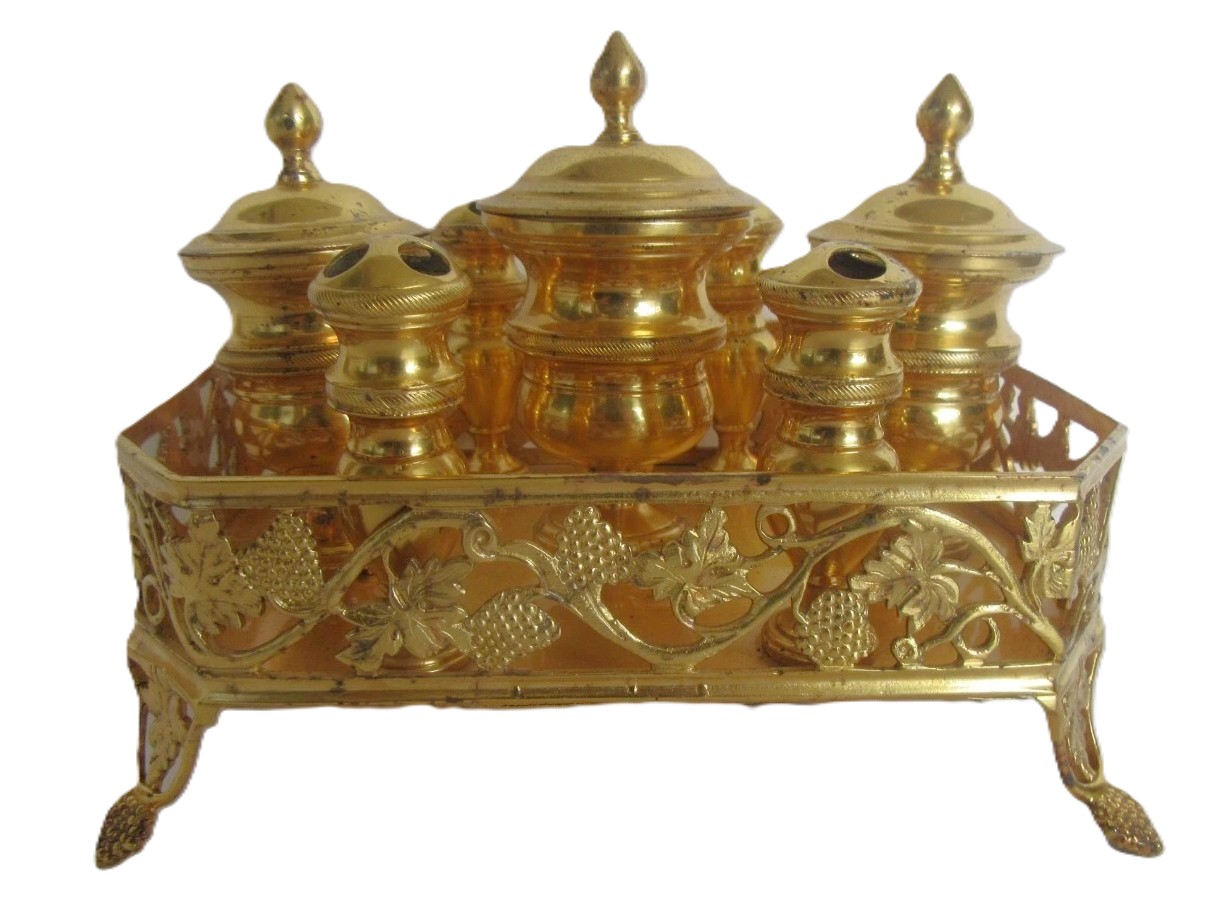
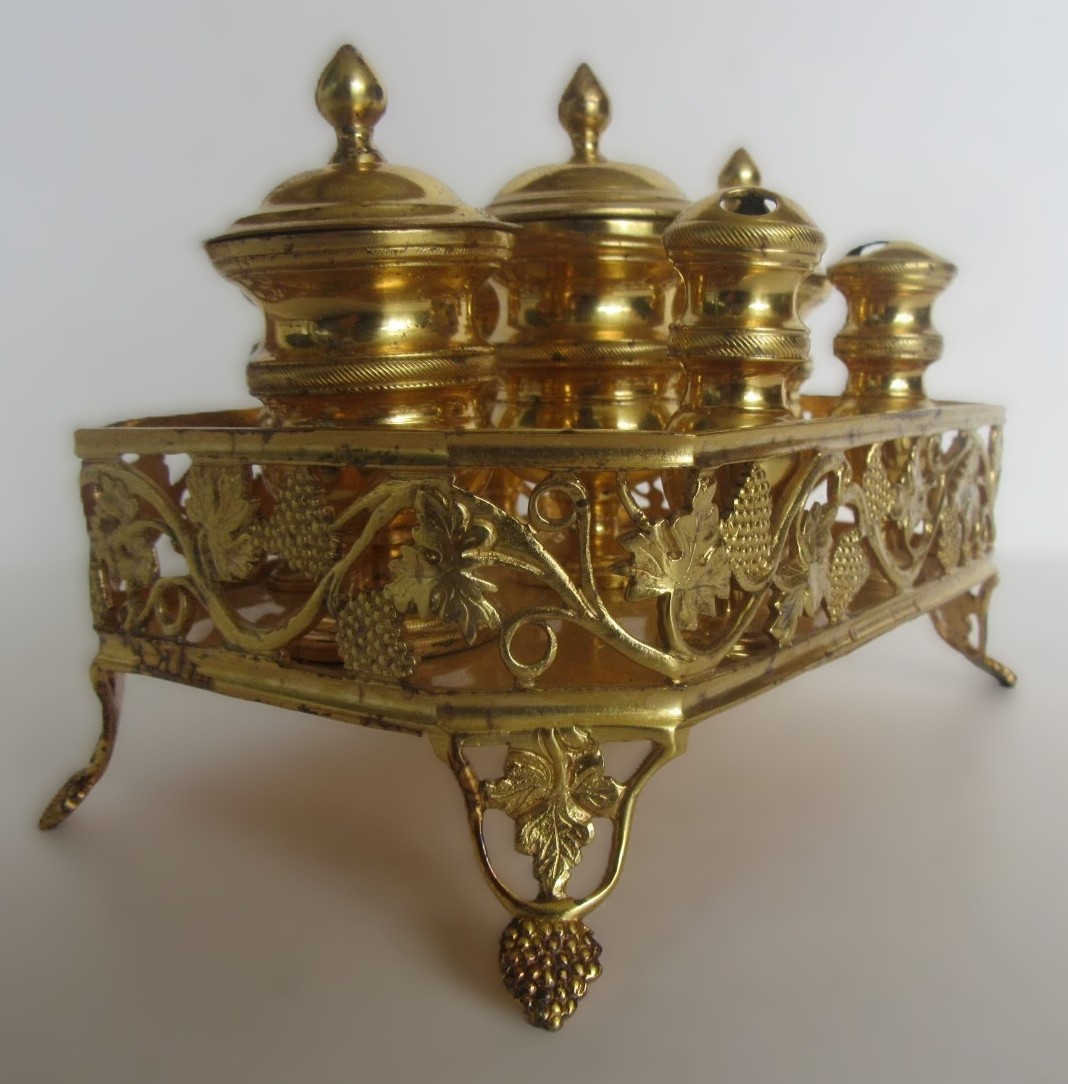
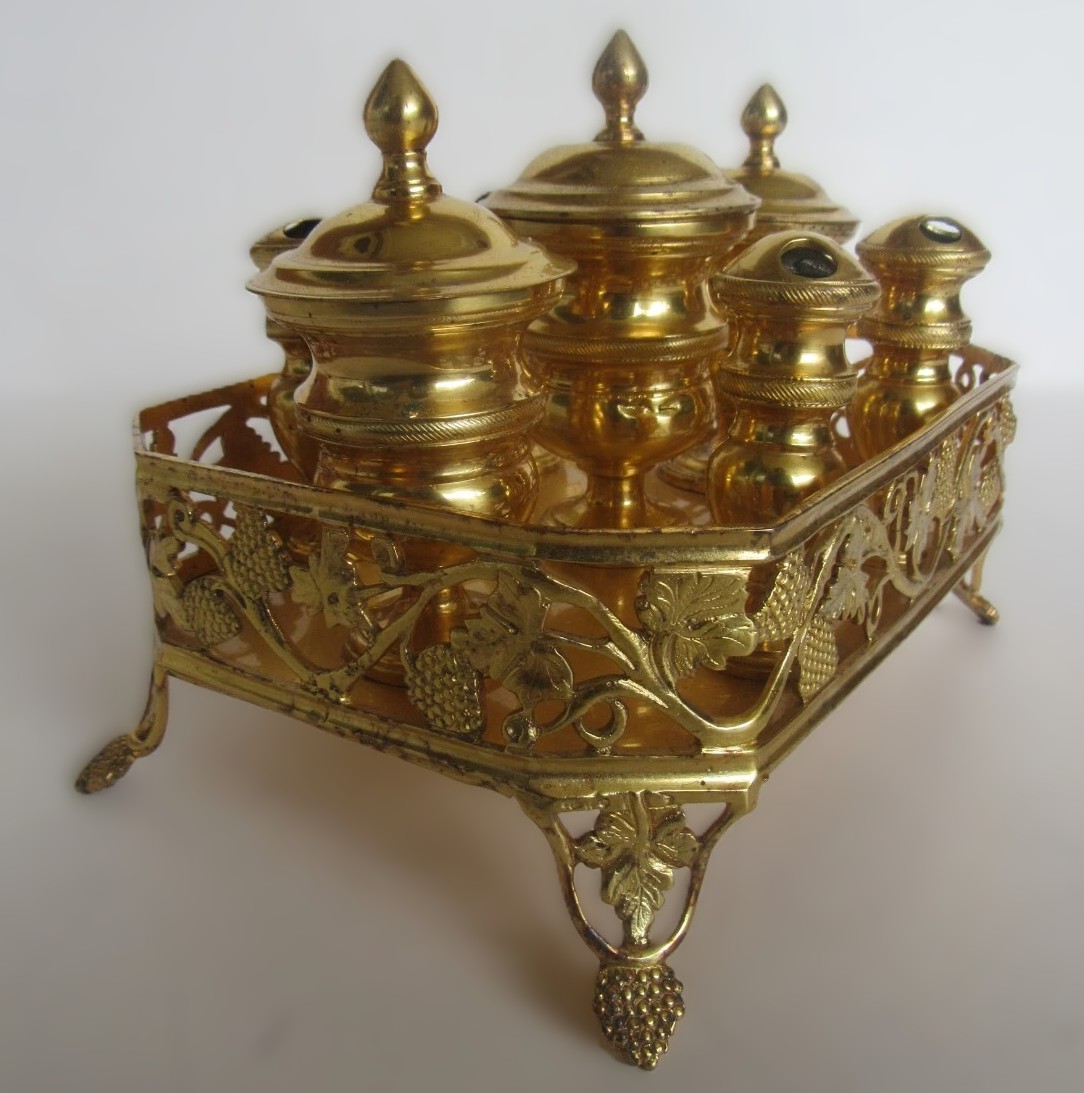
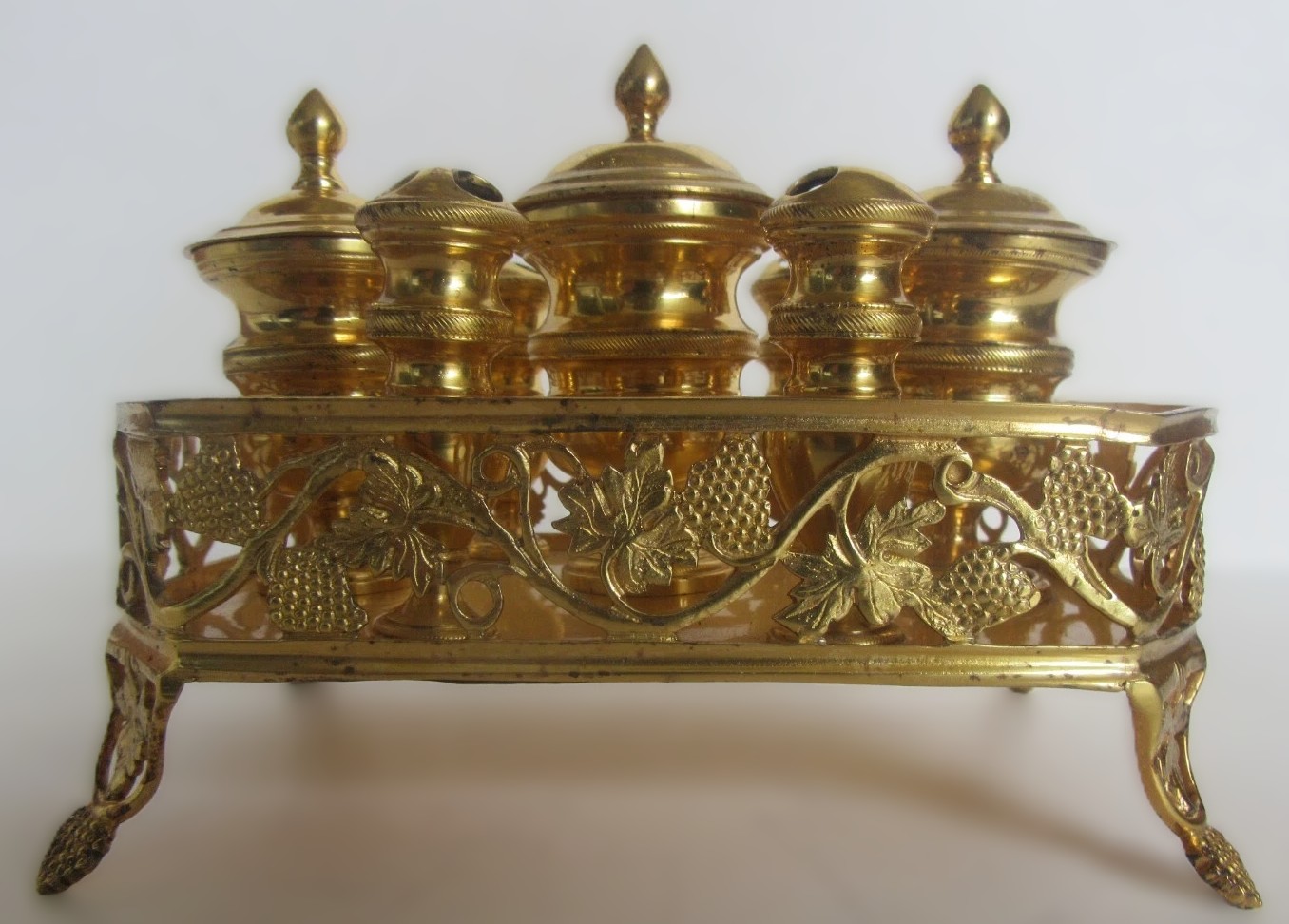
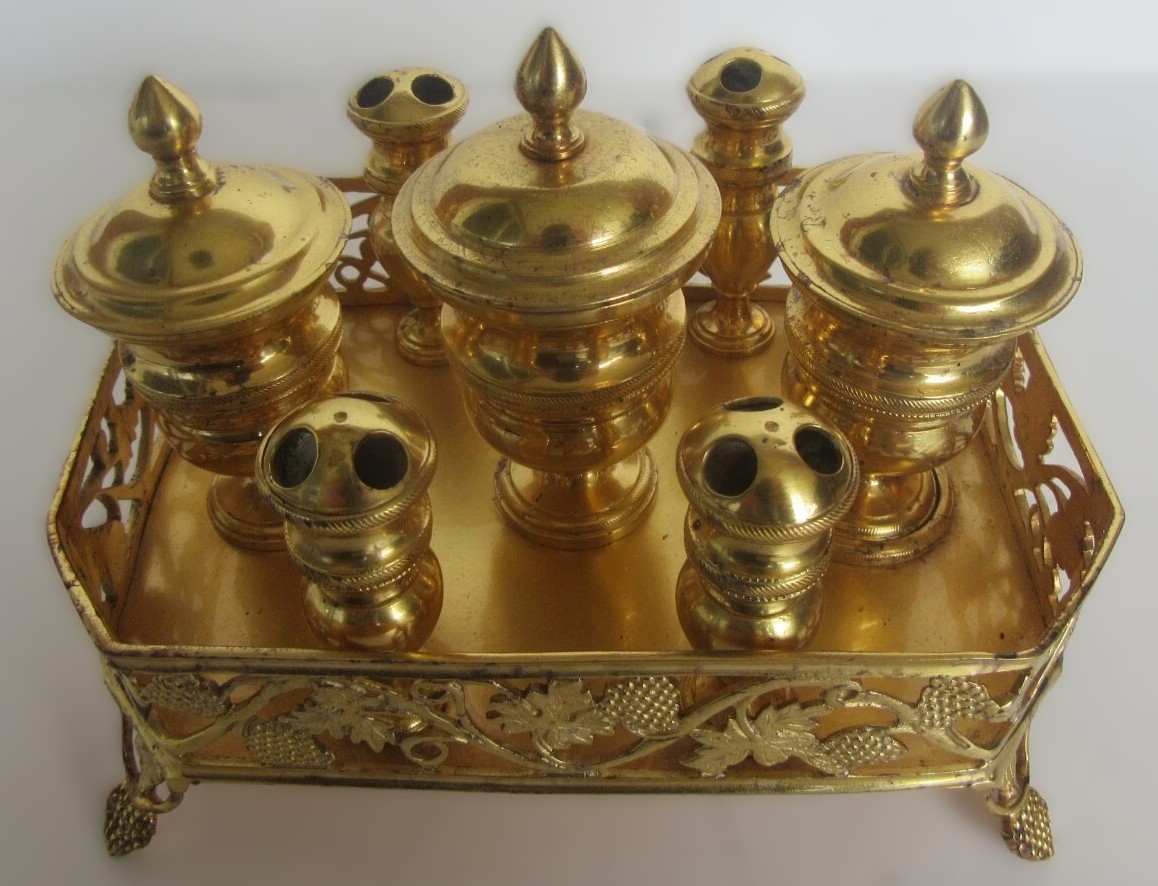
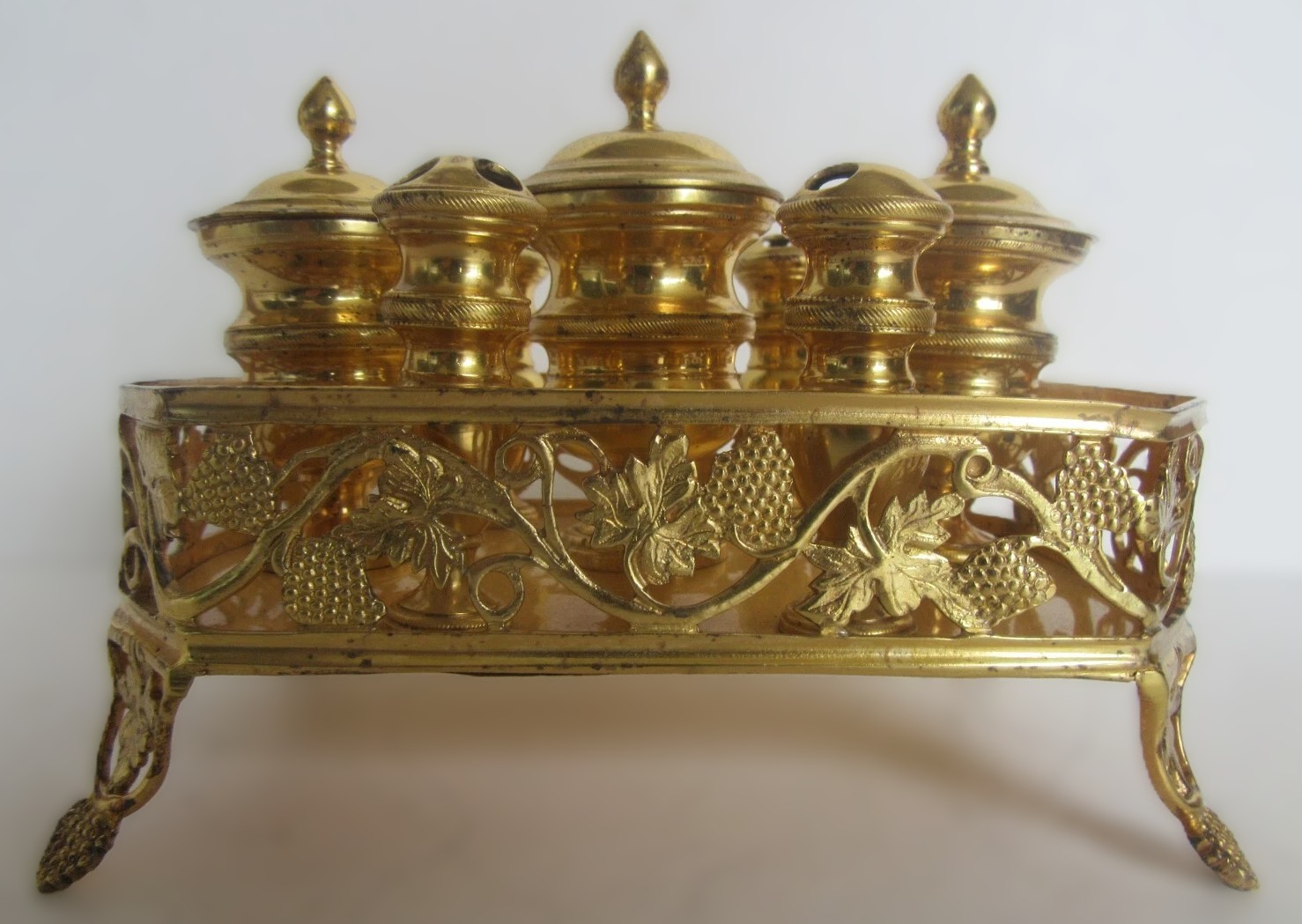
This brass standish (or inkstand) features a bright, polished brass finish. It consists of a rectangular tray with clipped corners supported by four elegant, integrated legs. The most prominent feature of the tray is its intricate, openwork pierced gallery railing, which depicts an organic grapevine motif complete with detailed clusters of grapes and curling leaves. The feet of the standish beautifully mirror this theme, terminating in cast grape clusters.
Origin, Era, and Manufacturer
Where & When Was It Made?
This standish was manufactured in Birmingham, England, which was the global hub for high-quality brass founding and desk metalware during the 19th century. Based on the stylistic elements—specifically the Revivalist grapevine openwork gallery, the distinctive baluster shapes of the vessels, and the specific construction hardware visible on the underside—this piece dates to the Late Georgian to Early Victorian era, roughly between 1835 and 1850.
Who Manufactured It?
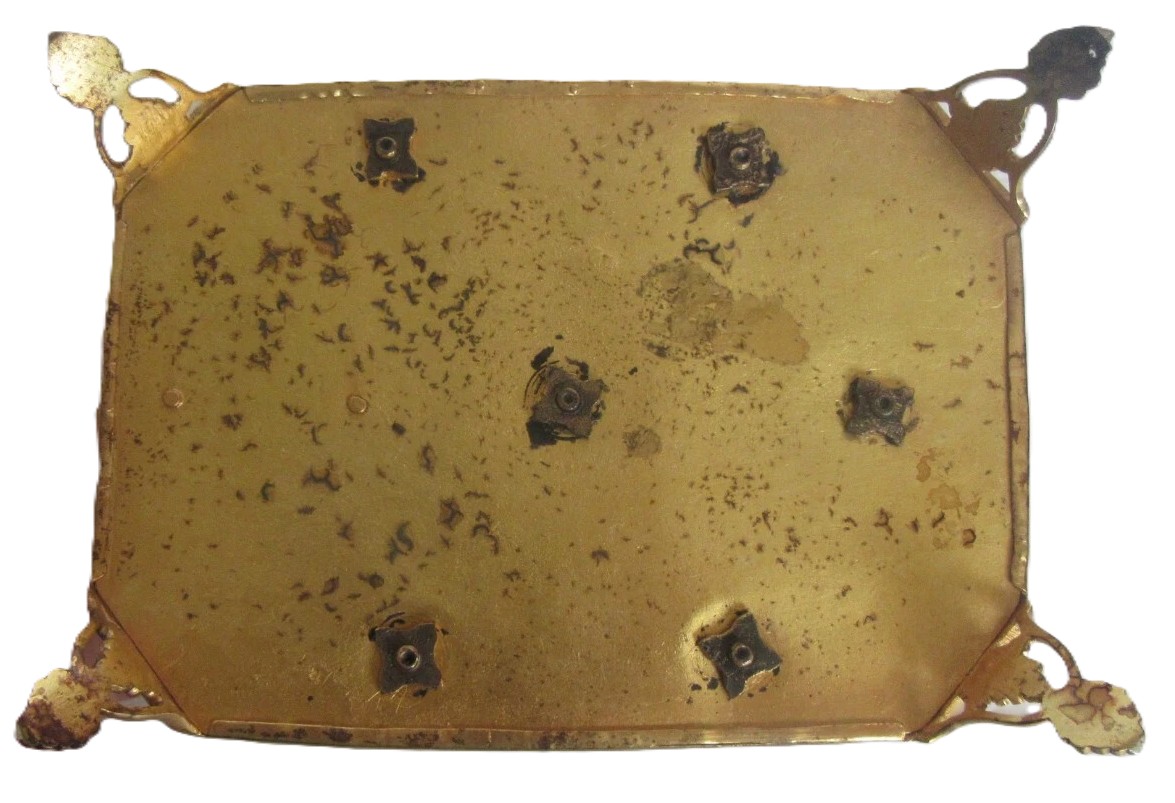
While many English brass inkstands from this era do not bear a prominent maker’s name, the underside of the tray provides manufacturing clues.
Looking at the bottom of the tray, several vessels are secured permanently from below using distinct, four-pointed star nuts wrapped around threaded brass posts. This specific style of star-shaped retention nut is a known signature of premier Birmingham brass founders of the mid-19th century – most notably firms like R. W. Winfield or William Tonks & Sons. These manufacturers frequently utilized specialized, decorative structural hardware to assemble their complex, multi-vessel desk sets.
Purpose of Each Component
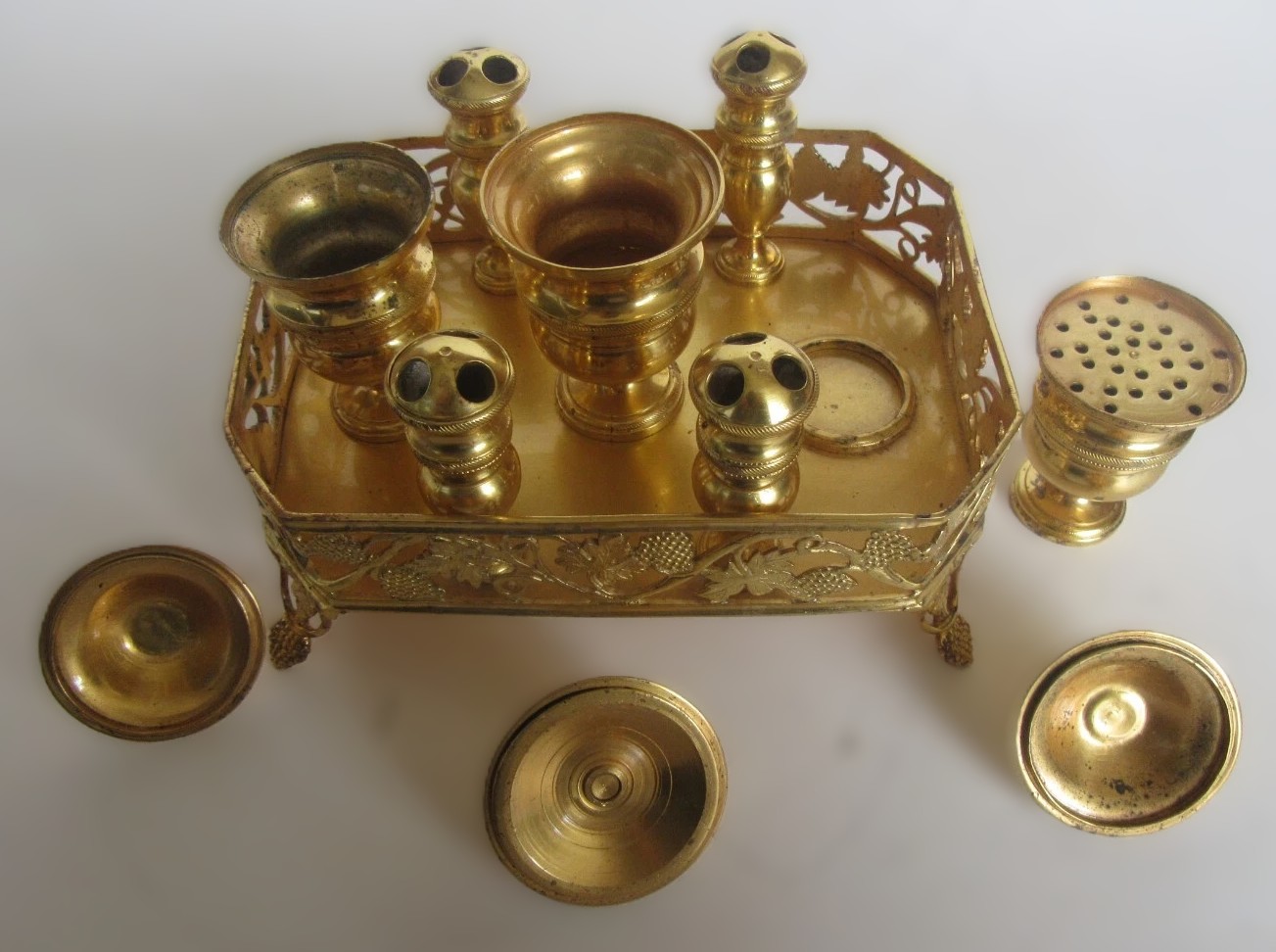
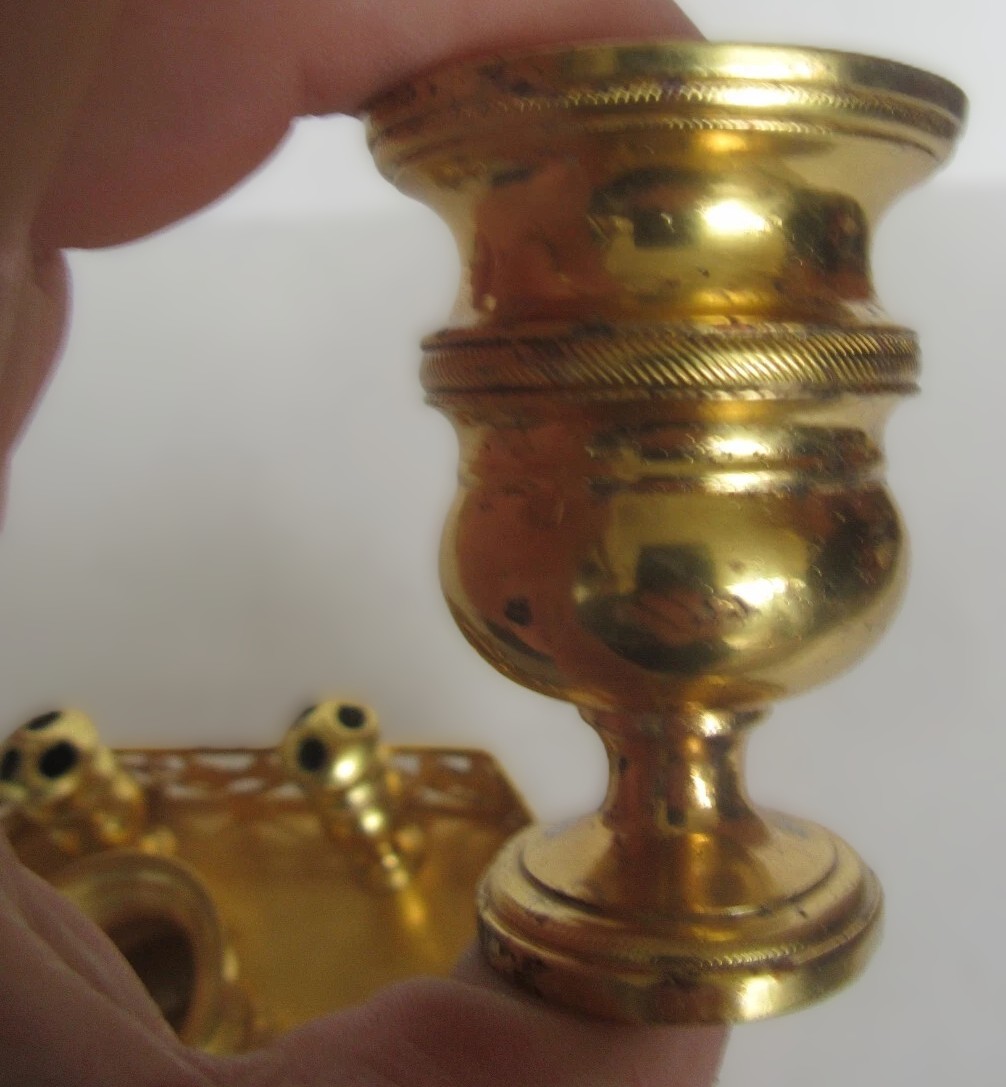
The standish holds distinct elements (three large lidded jars and four smaller perimeter pillars). Here is the purpose of each section:
- The Central Large Lidded Jar
- Purpose: The Wafer Box / Stamp Box
- Explanation: Positioned right in the middle, this taller jar was used to store wafers—small discs of dried flour paste or starch gel used to seal letters before the widespread adoption of gummed envelopes.
- The Two Flanking Large Lidded Jars
- Purpose: Inkwell and Sander
- Explanation: While matching the design of the inkwell, the container on the right functioned as a pounce pot or sander. Before blotting paper became common, writers sprinkled a fine powder called pounce (made from pulverized sandarac resin or cuttlefish bone) onto rough paper to make it accept ink cleanly. Alternatively, fine sand was sifted over the wet ink to dry it quickly and prevent smudging.
- The Front and Rear Pillars (with 3 large holes)
- Purpose: Pen Taper / Quill Holders
- Explanation: These small, ornate pillars feature three distinct, smooth apertures on top. They served as holders to stand quills or early dip pens upright so the wet nibs wouldn’t touch the desk or stain the tray.
Sold for $133 in May 2026
Content disclaimer. The information posted is the owner’s best knowledge and may not have been vetted by the SOIC. We welcome comments, corrections, and additions, working to make our website information comprehensive and accurate.
Join the Society of Inkwell Collectors (SOIC) – it’s free!
Founded in 1981 as a non-profit organization,
we are documenting inkwells (and accessories).
We’re here to help and inform!