

Inkipedia

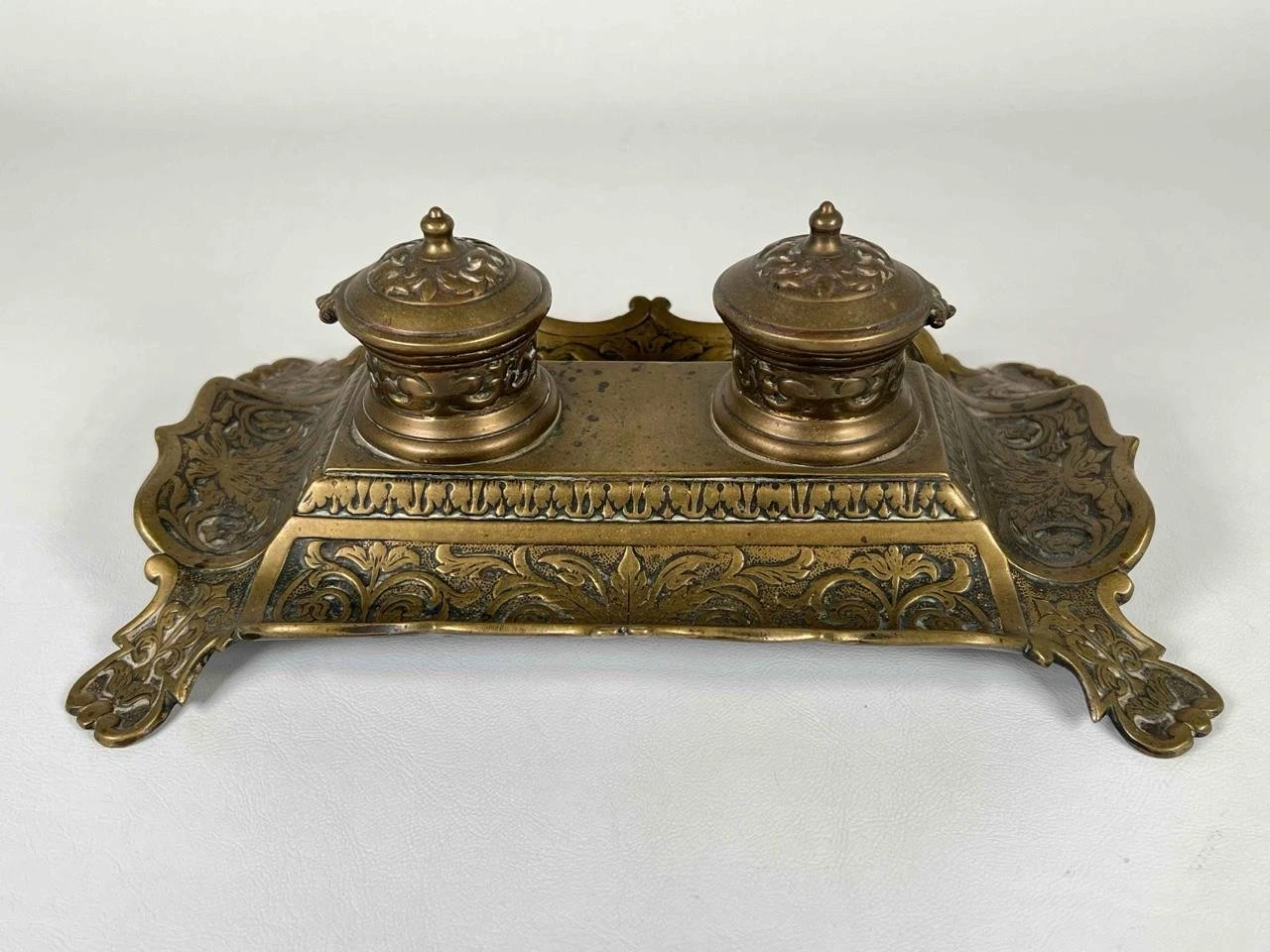
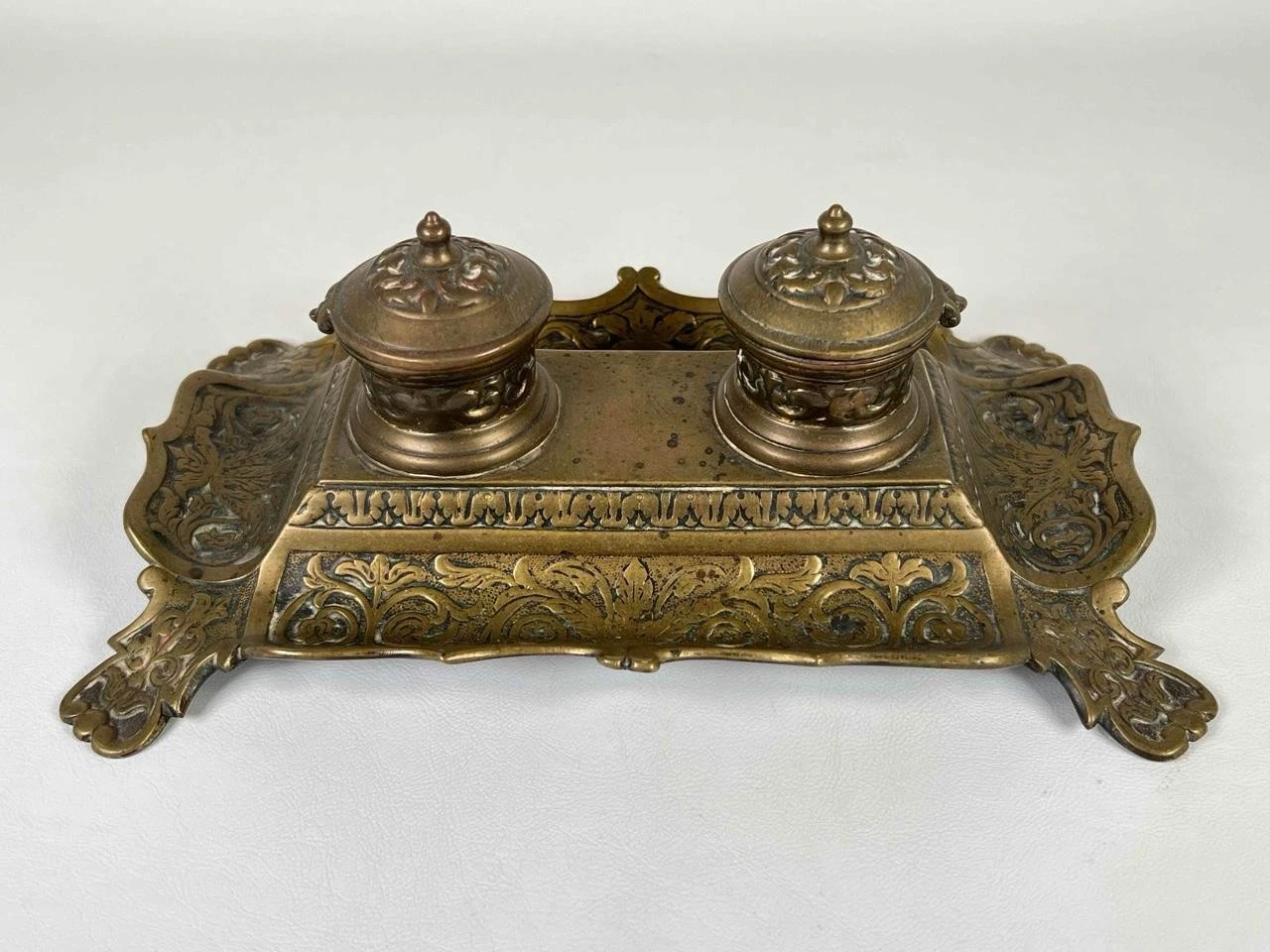
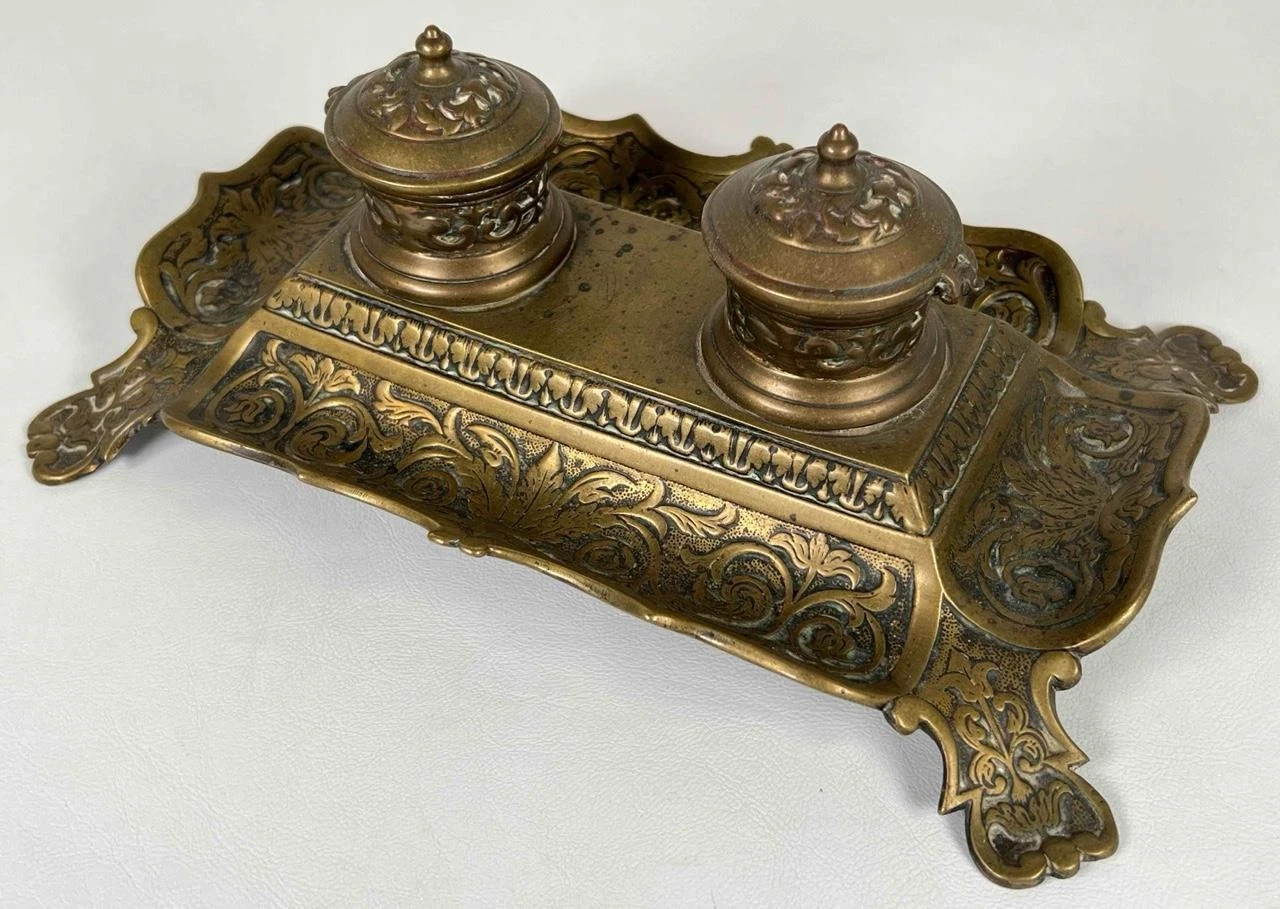
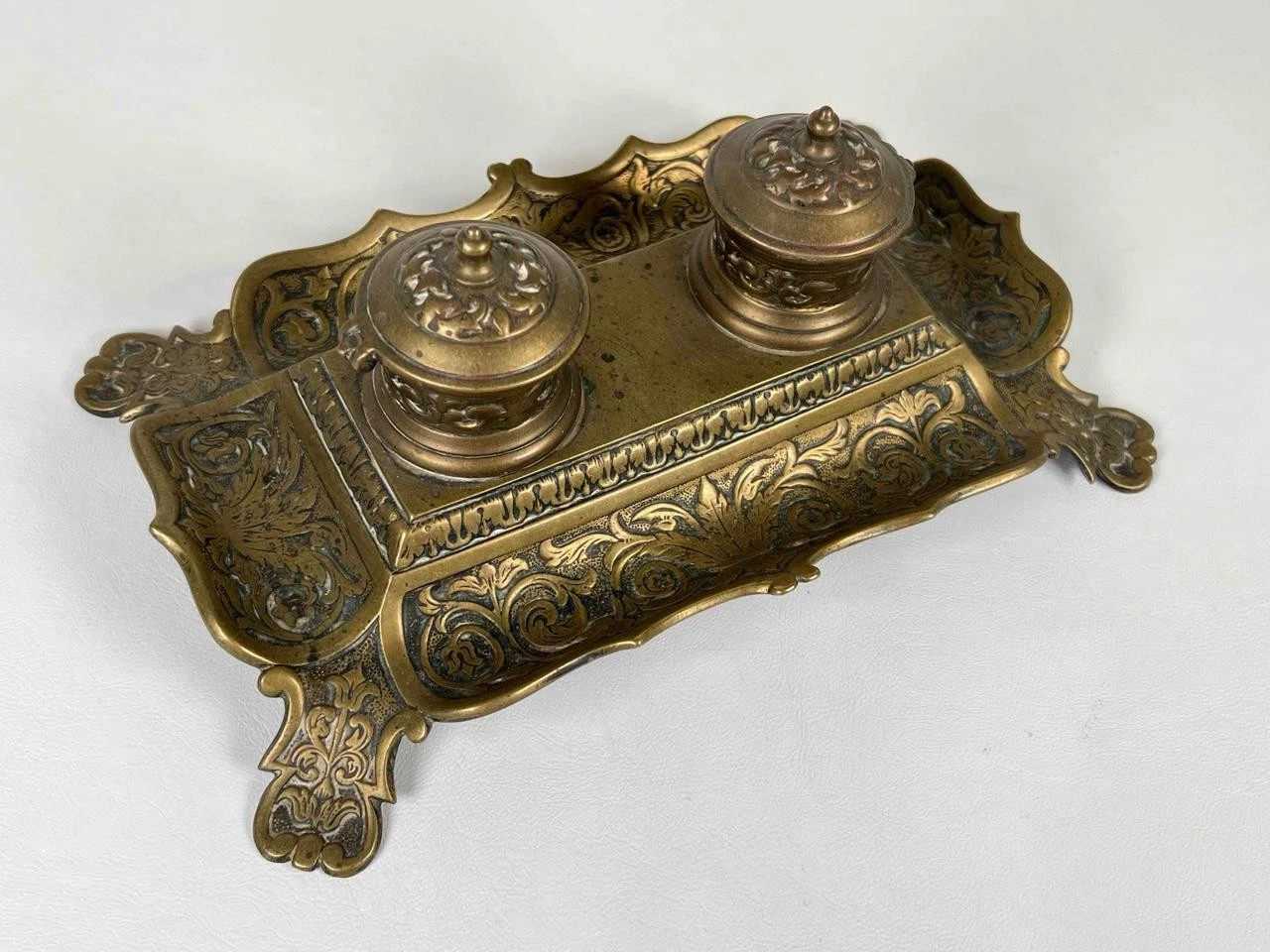
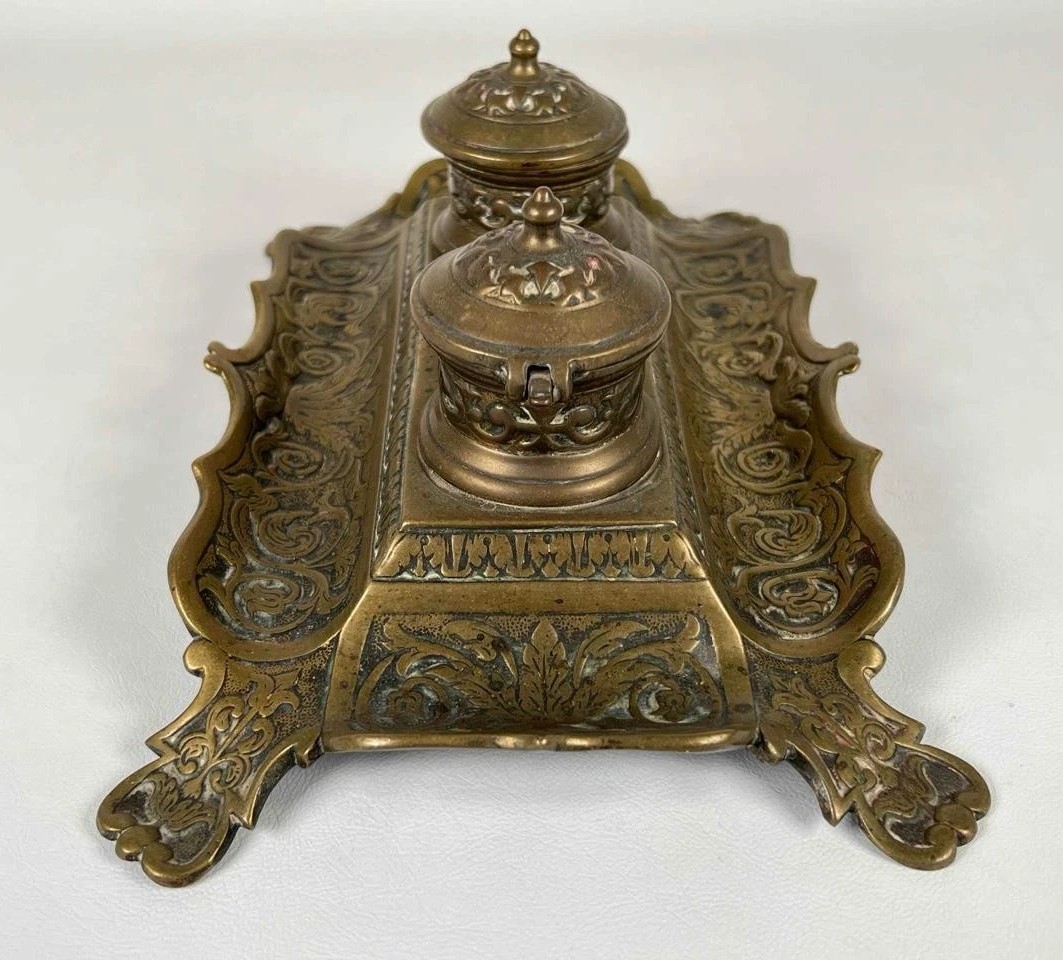


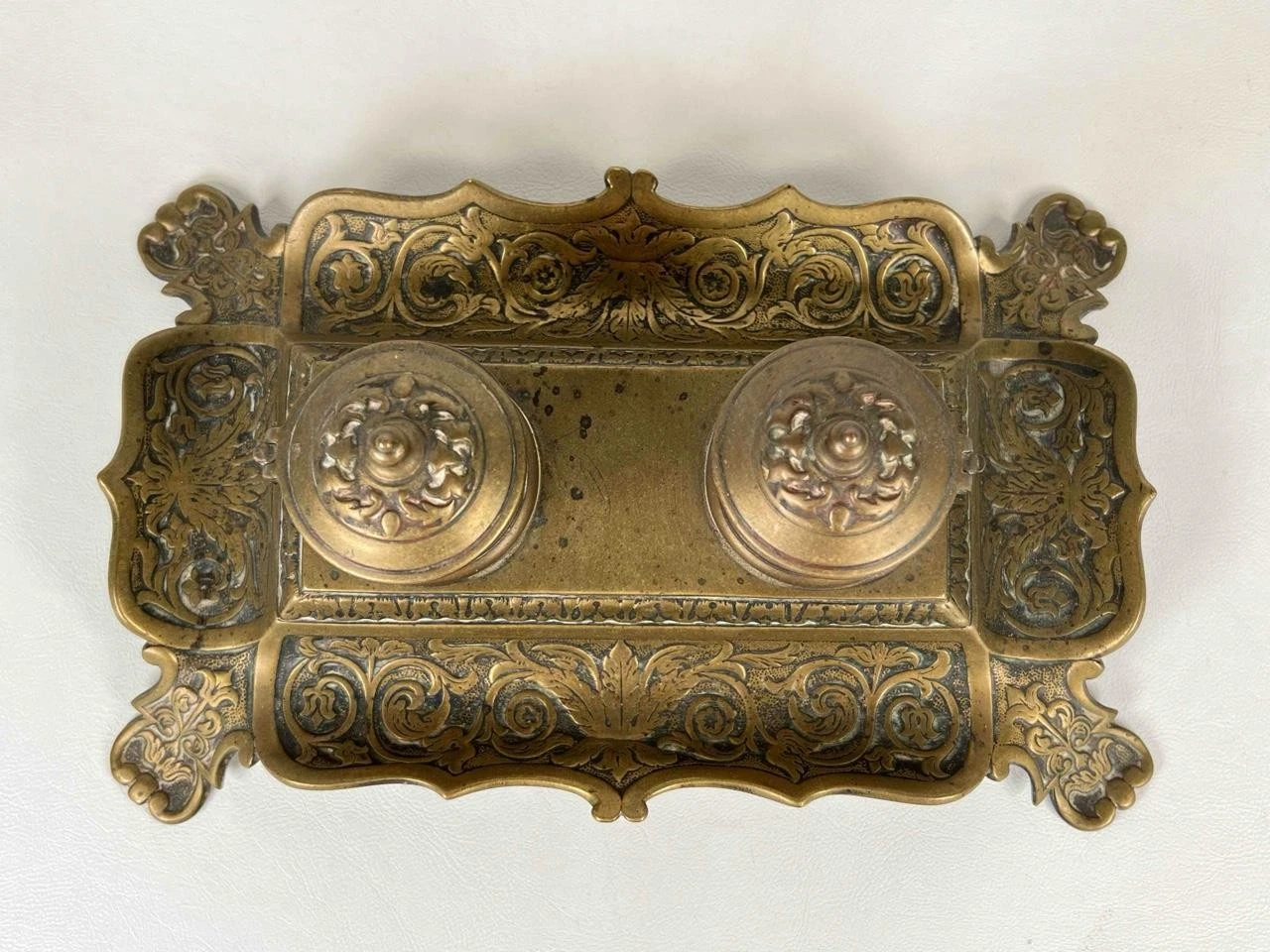
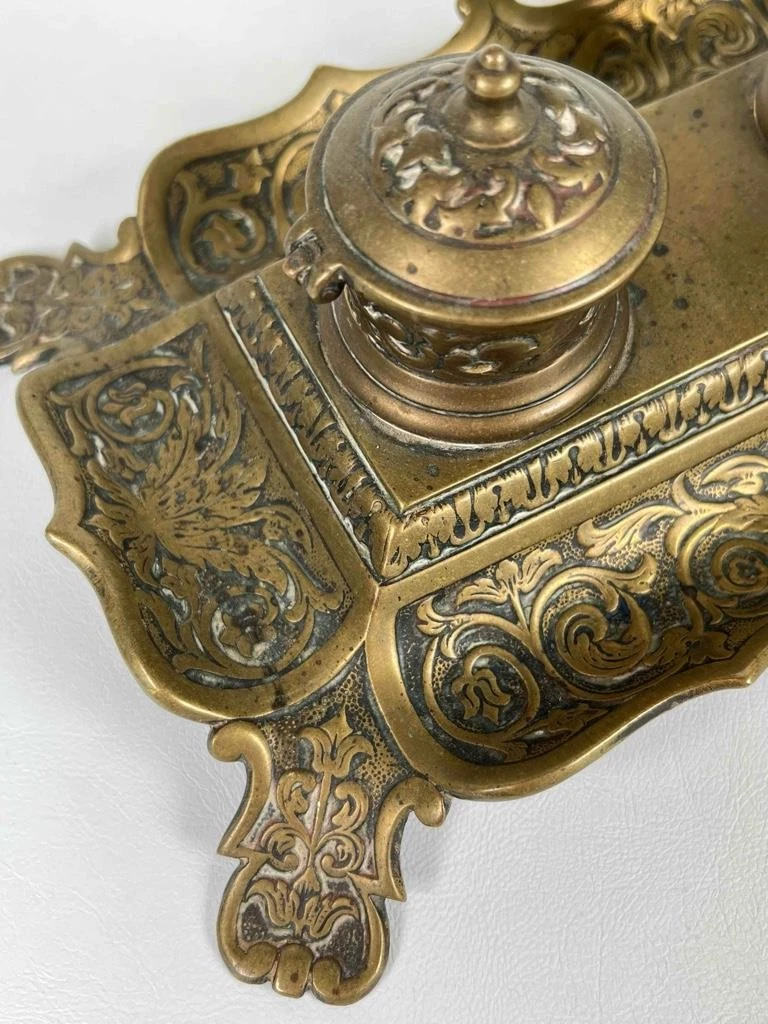

Brass Double Inkstand
| Categories | Bronze - Brass - Copper |
| Material | Brass |
| Markings | Unmarked |
| Manufacturer | Undetermined |
| Origin | Undetermined |
| Date or Era | circa 1890 |
| Measuring | 10 ¼” x 6 ⅜” x 3 ½” high |
Description
- Form & Structure: This is a classic double inkstand (or standish) featuring a rectangular, stepped architecture. Two cylindrical inkwells with heavily ornamented, domed, hinged lids rest on a raised central platform. The central platform is flanked on all four sides by lower, curved depressions designed to serve as convenient pen trays for dip pens or quills.
- Ornamentation: The piece is cast with rich, deep-relief ornamentation in the Renaissance Revival / Rococo Revival style. The borders, pen trays, and inkwell lids are intricately adorned with scrolling acanthus leaves, stylized foliated patterns, and finely chased, stippled (textured) backgrounds.
- Feet: It sits elevated on four splayed bracket feet decorated with matching classical foliage scrolls.
- Interior & Underside:
- Opening the lidded pots reveals that the left reservoir contains a dark, aged liner shell/residue (likely from long-term exposure to iron-gall ink), while the right reservoir retains a clear glass ink liner.
- The underside confirms it is a hollow-cast piece showing significant historic age, authentic casting texture, and localized green oxidation (verdigris). The components are securely joined together using four period-correct, slotted iron screws.
Country of Origin & Estimated Date
- Where it Was Made: Most likely France or England (Birmingham). During the late 19th century, prominent foundries in Paris and the English West Midlands specialized heavily in casting decorative brassware for domestic offices and export. Many of these high-quality pieces were produced completely unmarked to allow retail stationers to sell them under their own names, or because they were part of larger, unsigned desk sets.
- When it Was Made: Circa 1880–1900 (Late Victorian / French Second Empire to Belle Époque era). The heavy casting quality, the specific use of slotted structural underside screws, and the historical choice of classical revival design motifs pin it to the final two decades of the 19th century, right before Art Nouveau gained widespread prominence.
Sold for $102 in May 2026
Content disclaimer. The information posted is the owner’s best knowledge and may not have been vetted by the SOIC. We welcome comments, corrections, and additions, working to make our website information comprehensive and accurate.
Join the Society of Inkwell Collectors (SOIC) – it’s free!
Founded in 1981 as a non-profit organization,
we are documenting inkwells (and accessories).
We’re here to help and inform!