



Brass and Copper Double Inkwell – Benedict Studio
| Categories | Arts & Crafts |
| Material | Brass, Coppered metal |
| Markings | See Narrative |
| Manufacturer | Benedict Art Studios |
| Origin | United States |
| Date or Era | circa 1910 |
| Measuring | 6 ½” x 6 ½” x 5” high |
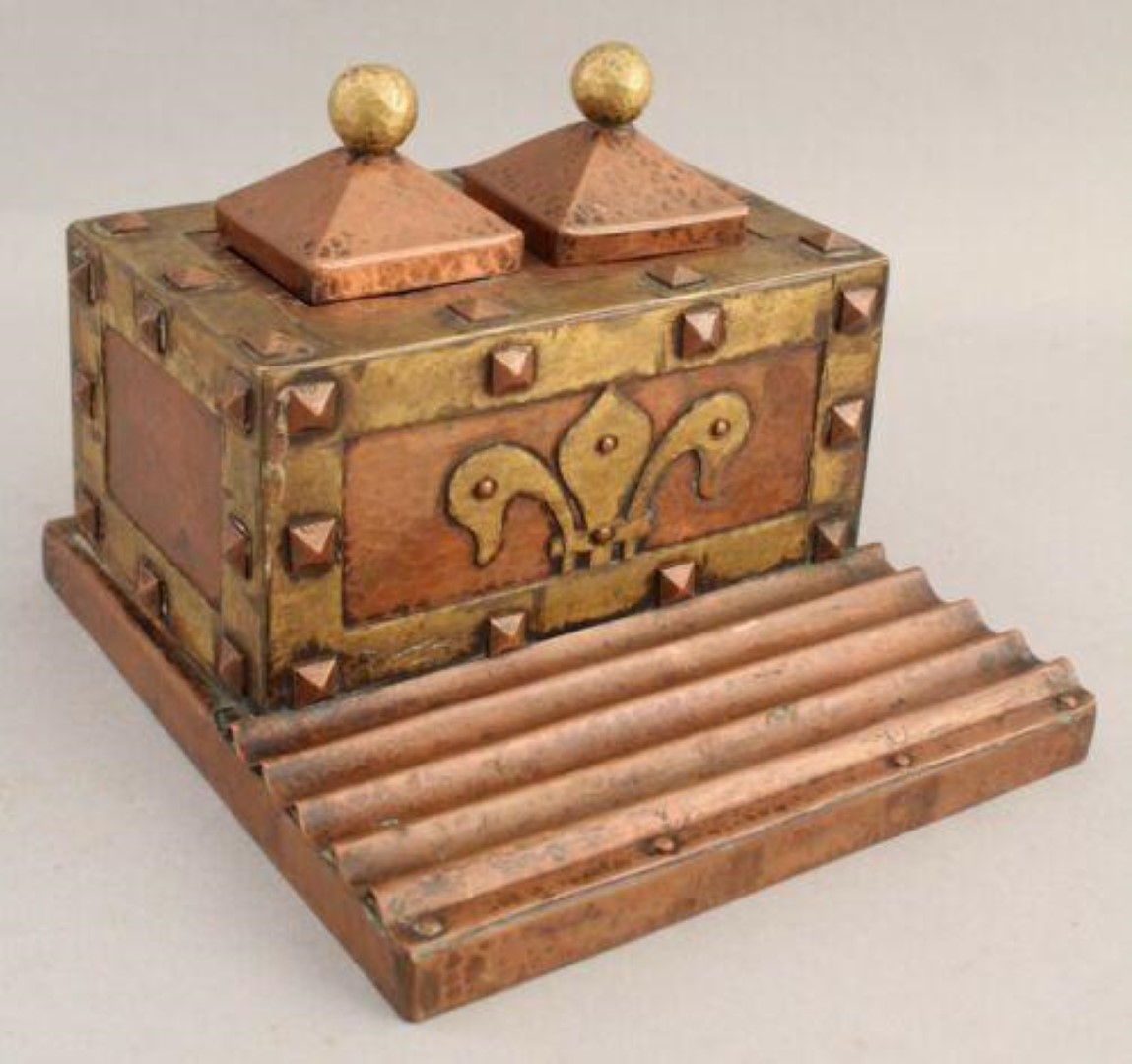
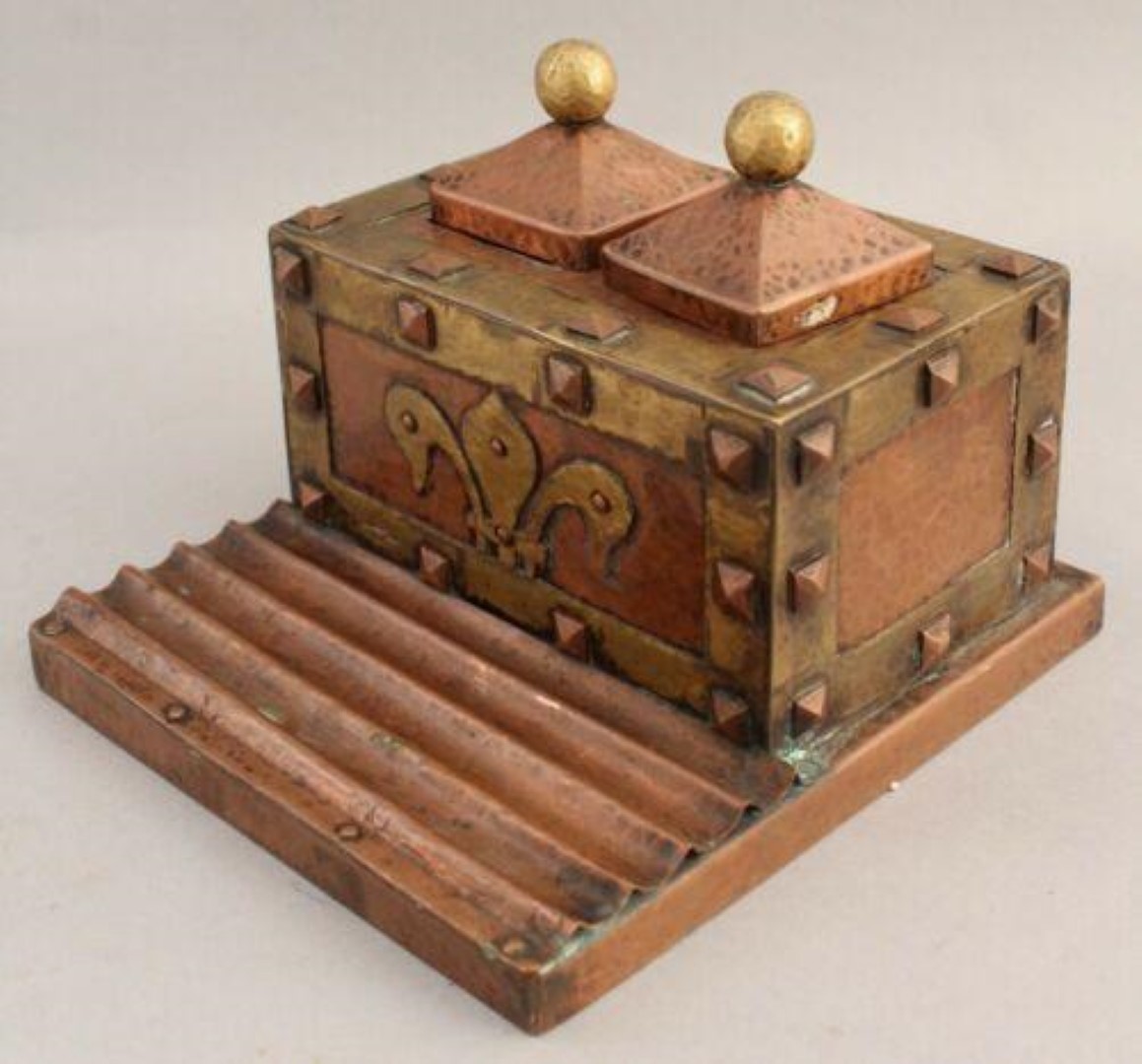
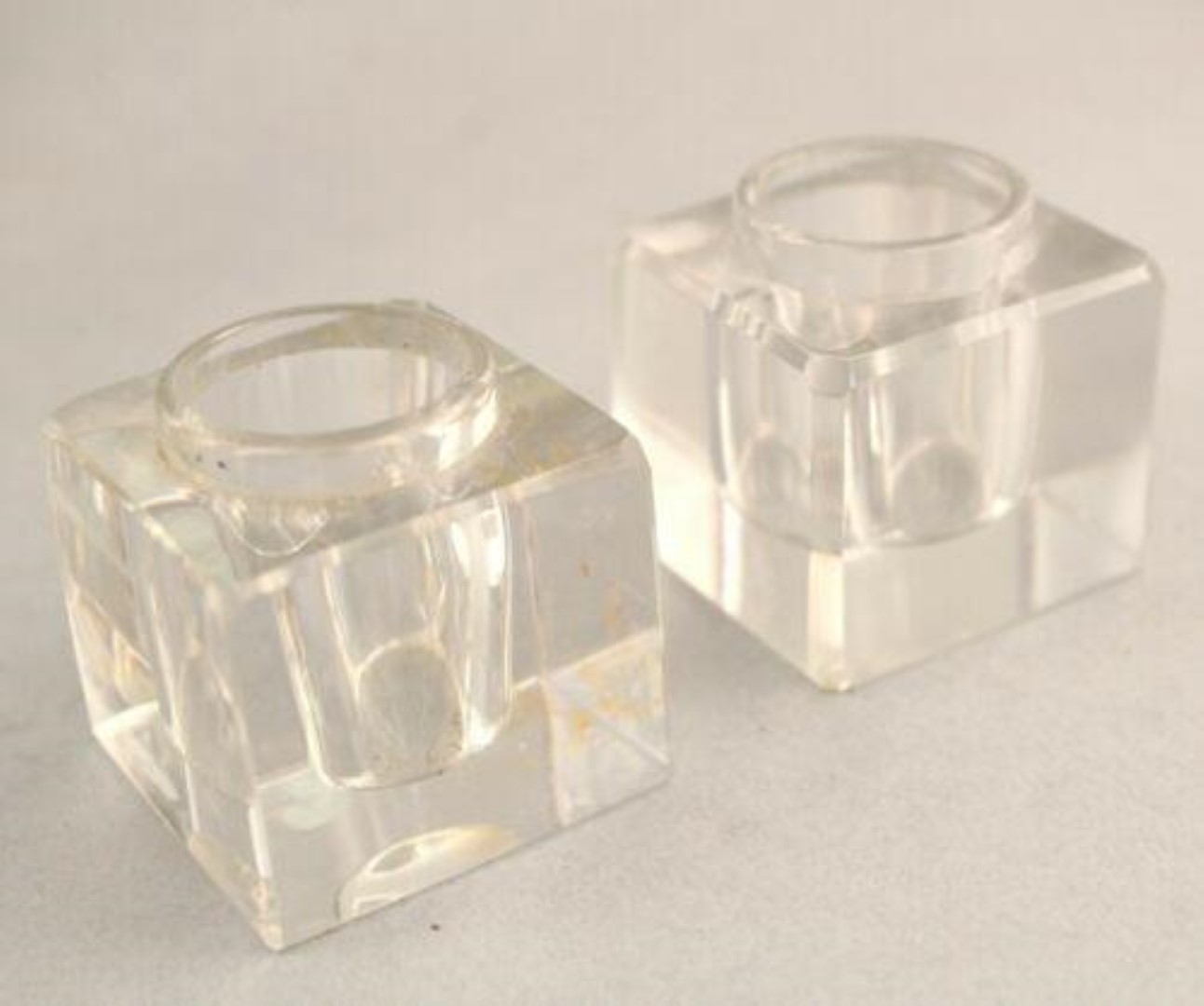
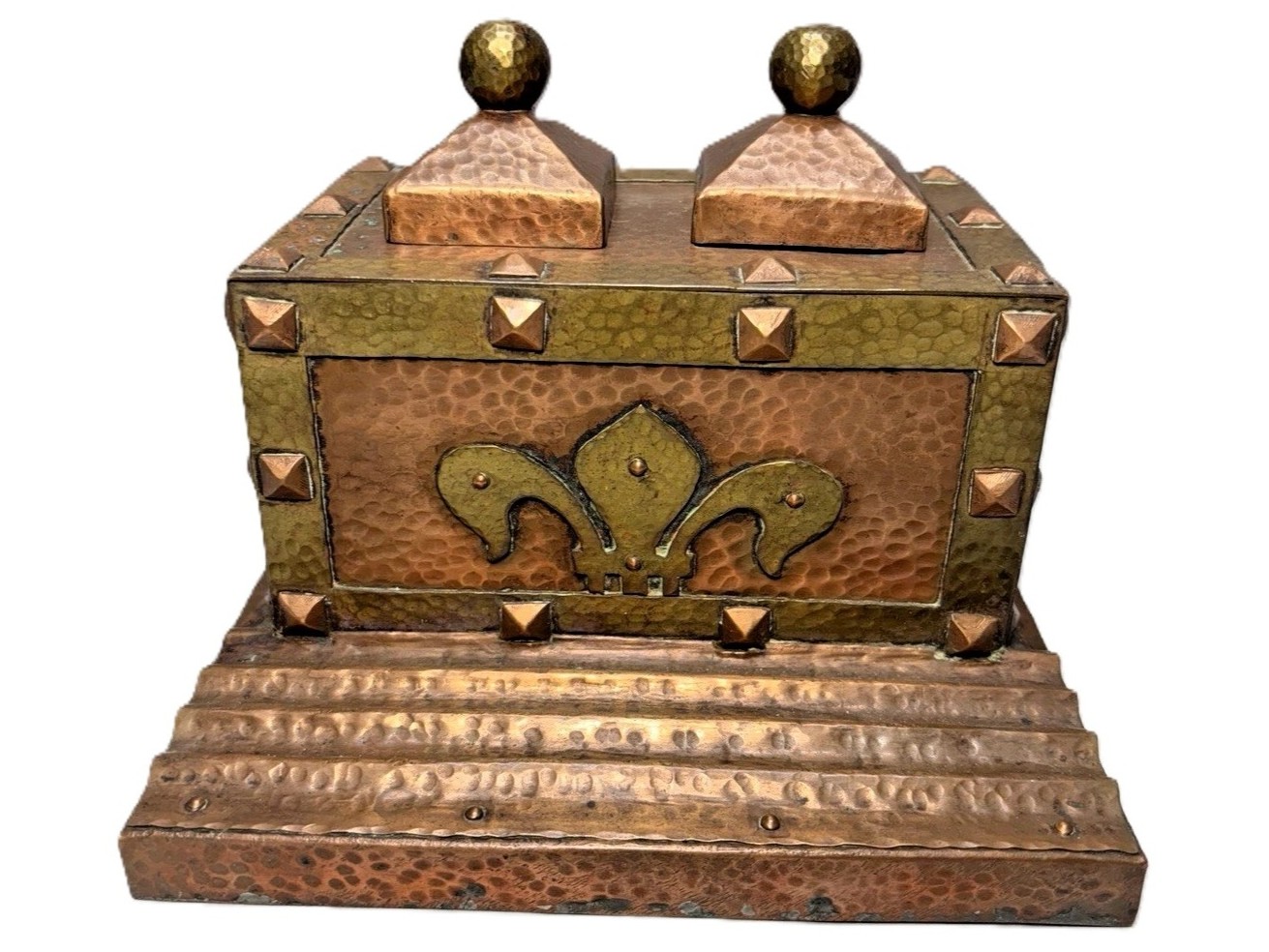
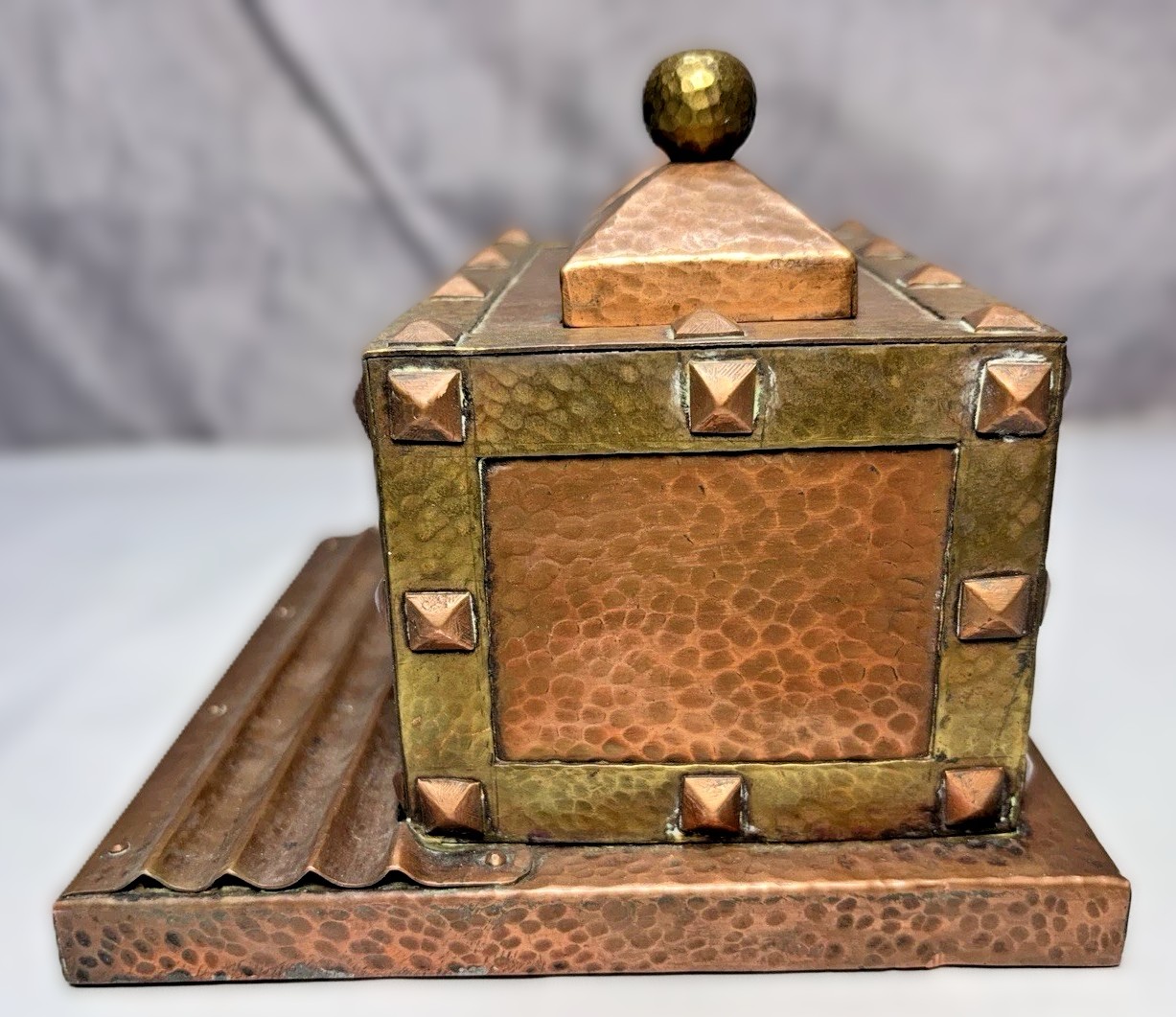
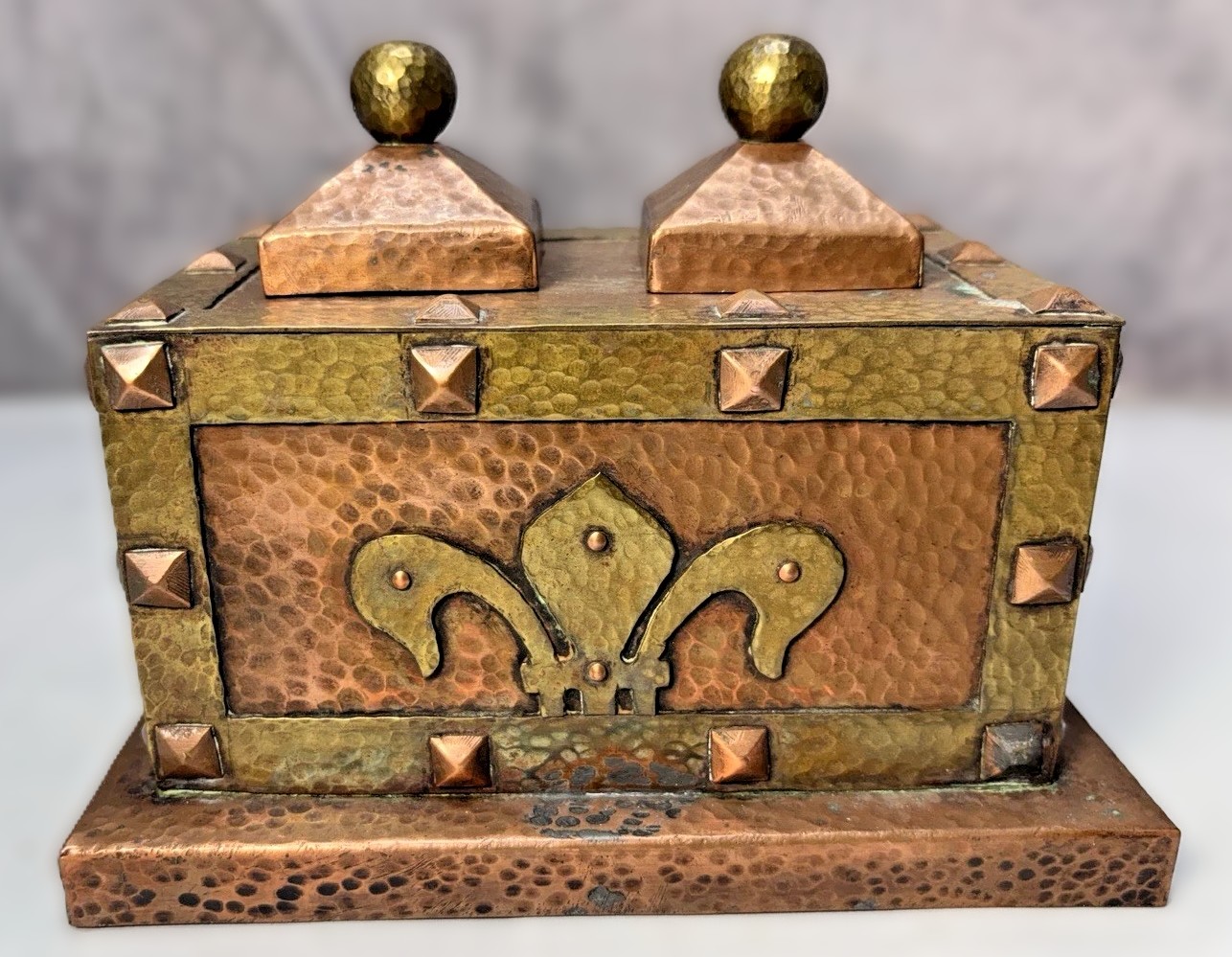
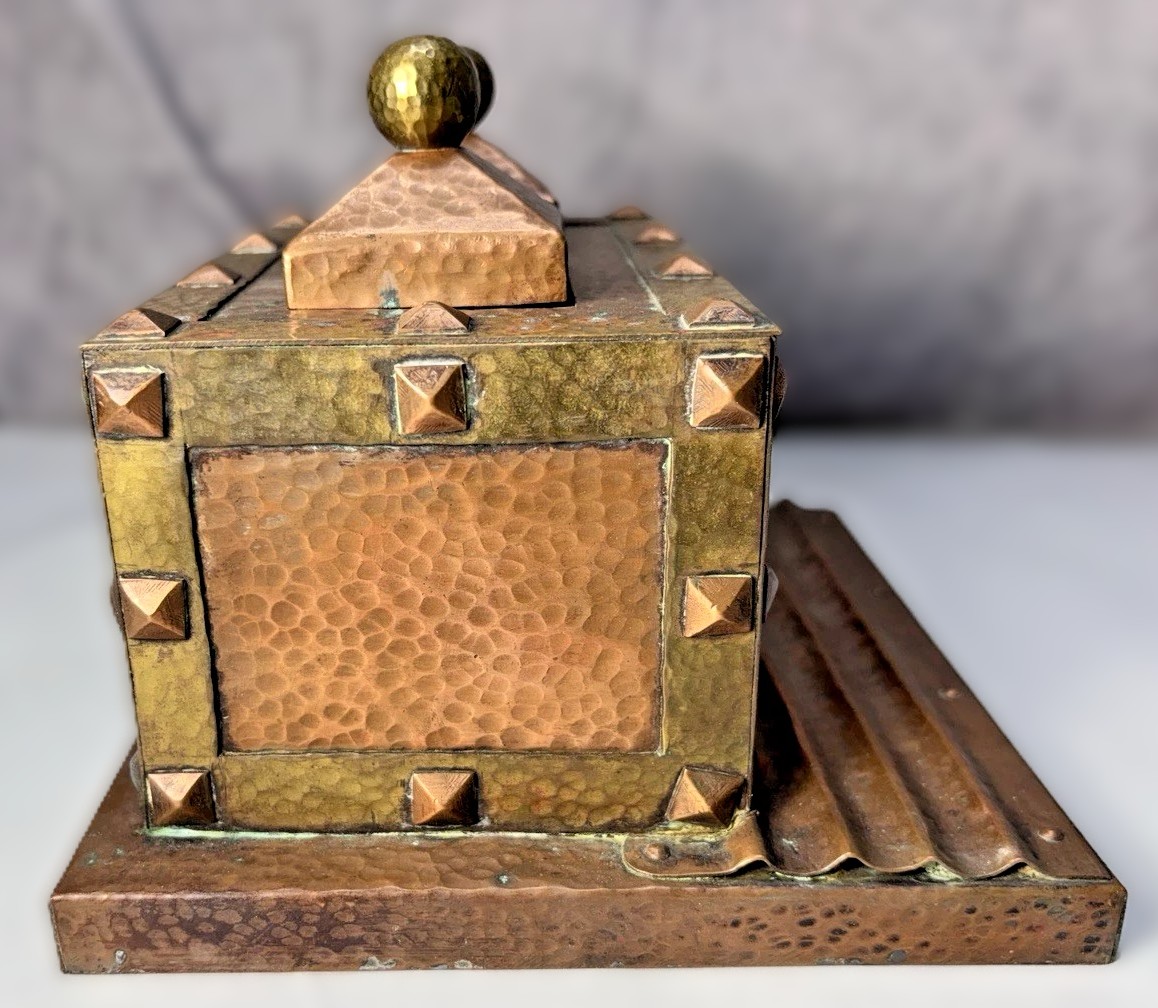
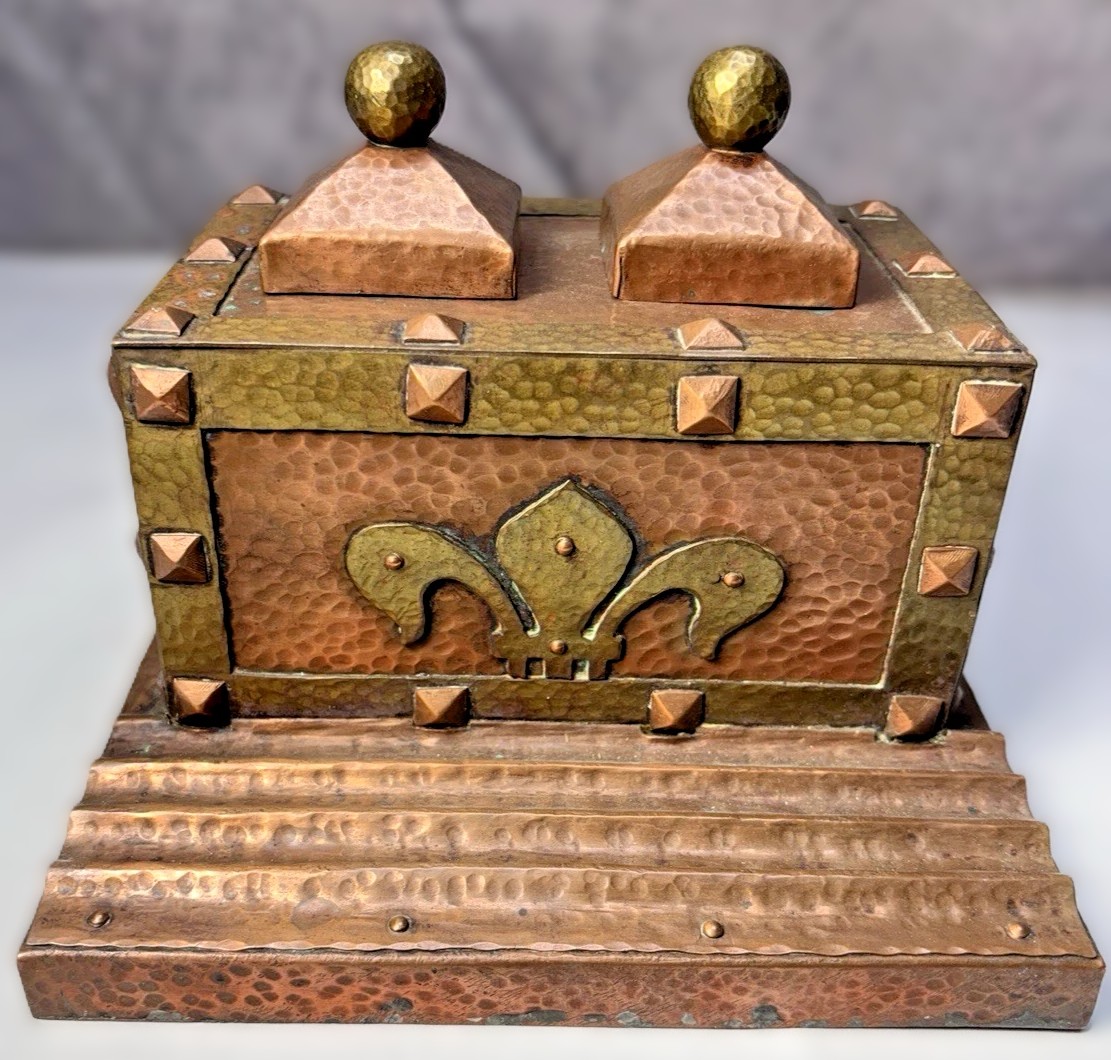
This double inkstand is a classic example of Arts and Crafts (also known as Mission style) metalwork. Two examples are pictured.
Description
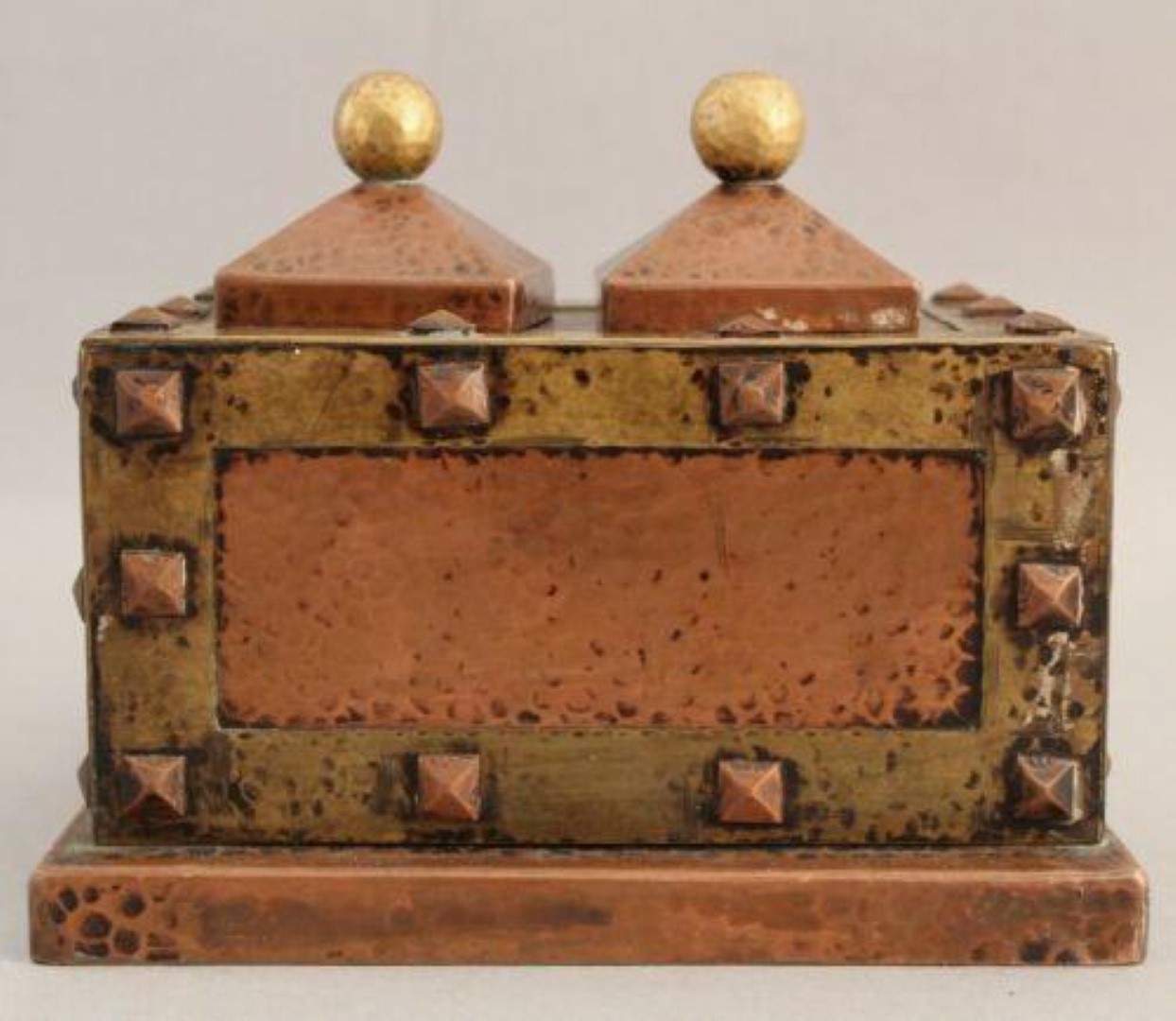
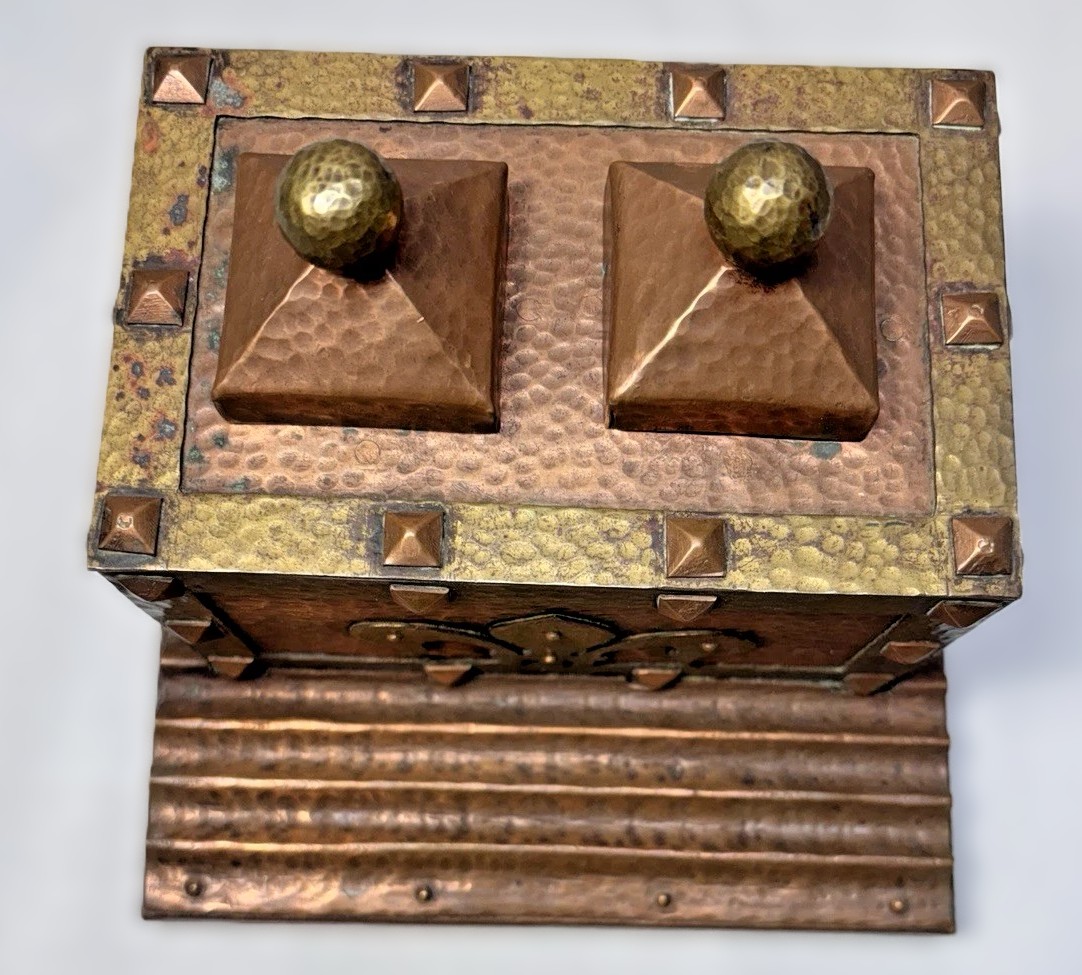
- Mixed Metal Design: The inkstand features a contrast between hand-hammered copper and brass. Benedict Art Studios was specifically known for this “mixed metal” aesthetic, often using brass for decorative banding, handles, and trim to accent a copper base.
- Fleur-de-lis & Finials: The front is dominated by a large, applied brass fleur-de-lis, a popular motif in the early 20th century that added a touch of heraldic elegance to the rustic hammered finish. The pyramid-shaped lids are topped with hammered brass ball finials.
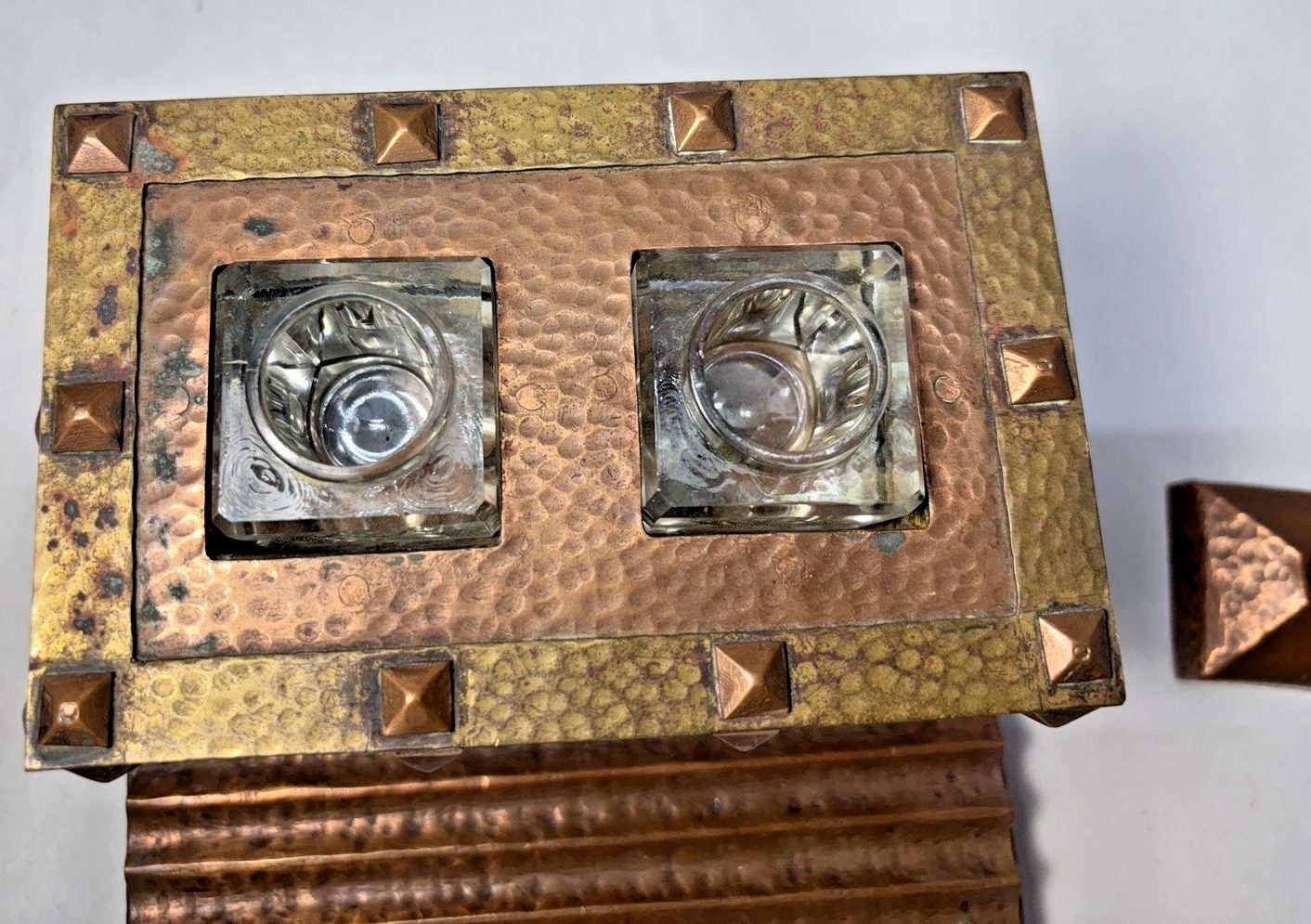
- Construction Details: The copper body is “banded” in brass and secured with prominent copper pyramid-head tacks (or rivets). The front features a tiered, ridged pen tray, which is integrated into the heavy copper base.
- Inkwells: It contains two original faceted glass inkwells.
About the Maker: Benedict Studio
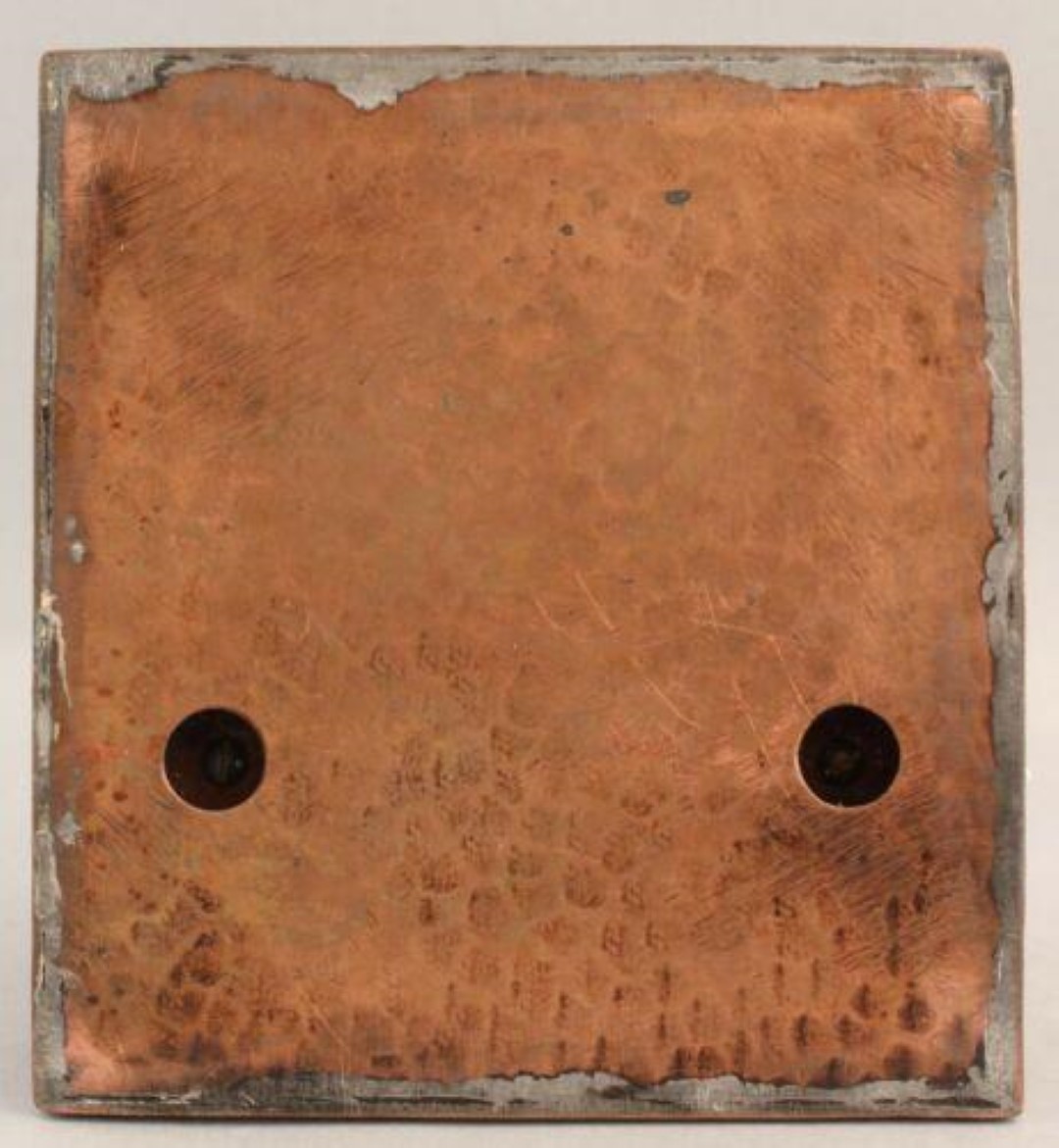
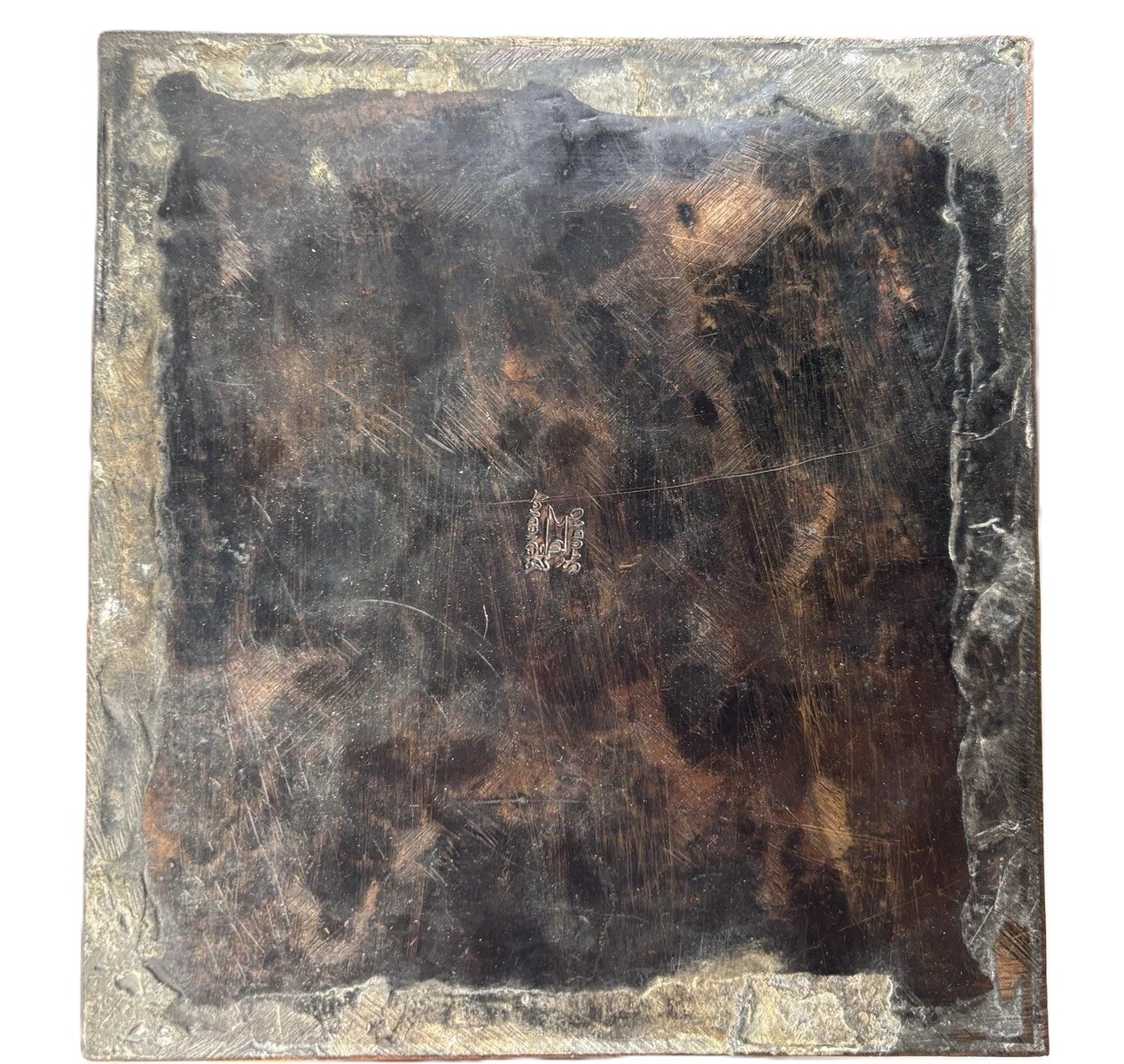
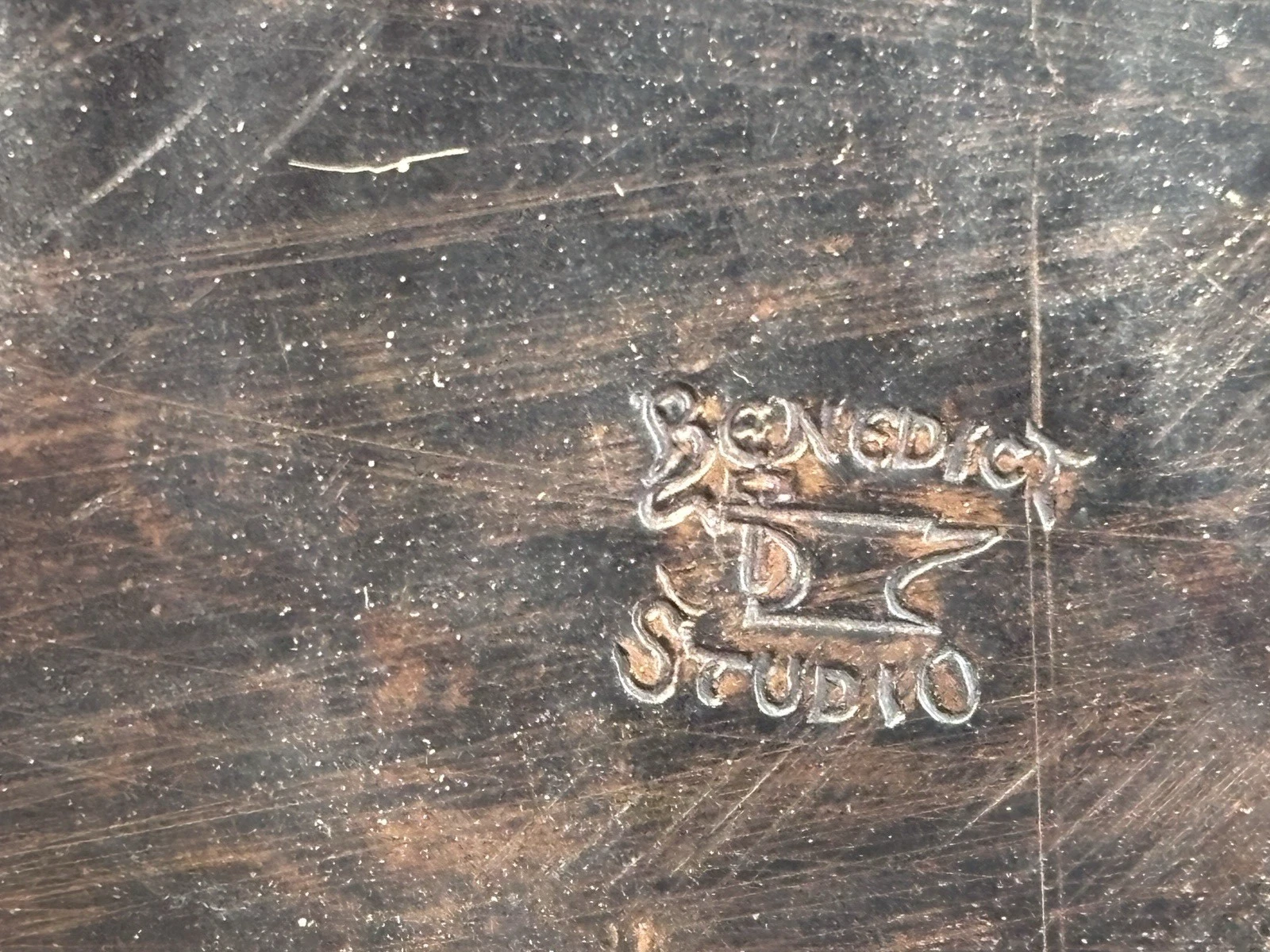
The mark on the underside – a hammer and anvil with the words “Benedict Studio” identifies this as a product of Benedict Art Studios of East Syracuse, New York.
- History: The company began as the M.S. Benedict Manufacturing Company (founded in 1894), which primarily made silver-plated goods. In October 1906, Harry L. Benedict purchased the Onondaga Metal Shops (OMS), a small, bankrupt firm that had been producing high-quality Arts and Crafts metalwork.
- Production: Benedict renamed the division “Benedict Art Studios” and began mass-producing the OMS designs. While their competitors like Gustav Stickley or Roycroft often preferred a more “natural” look, Benedict’s work was celebrated for its more “deliberate” and deep hammer marks, as well as its unique blending of copper and brass.
Date of Manufacture
This inkstand was likely made between 1906 and 1912. The “hammer and anvil” mark is the earlier shop mark used shortly after the 1906 acquisition. By 1912, the company’s style began to shift toward “Karnak Brass” (Egyptian-themed) and more traditional silver-plate, moving away from the heavy hand-hammered copper look of the Arts and Crafts era.
Sold for $140 in January 2021
Content disclaimer. The information posted is the owner’s best knowledge and may not have been vetted by the SOIC. We welcome comments, corrections, and additions, working to make our website information comprehensive and accurate.
Join the Society of Inkwell Collectors (SOIC) – it’s free!
Founded in 1981 as a non-profit organization,
we are documenting inkwells (and accessories).
We’re here to help and inform!