

Inkipedia
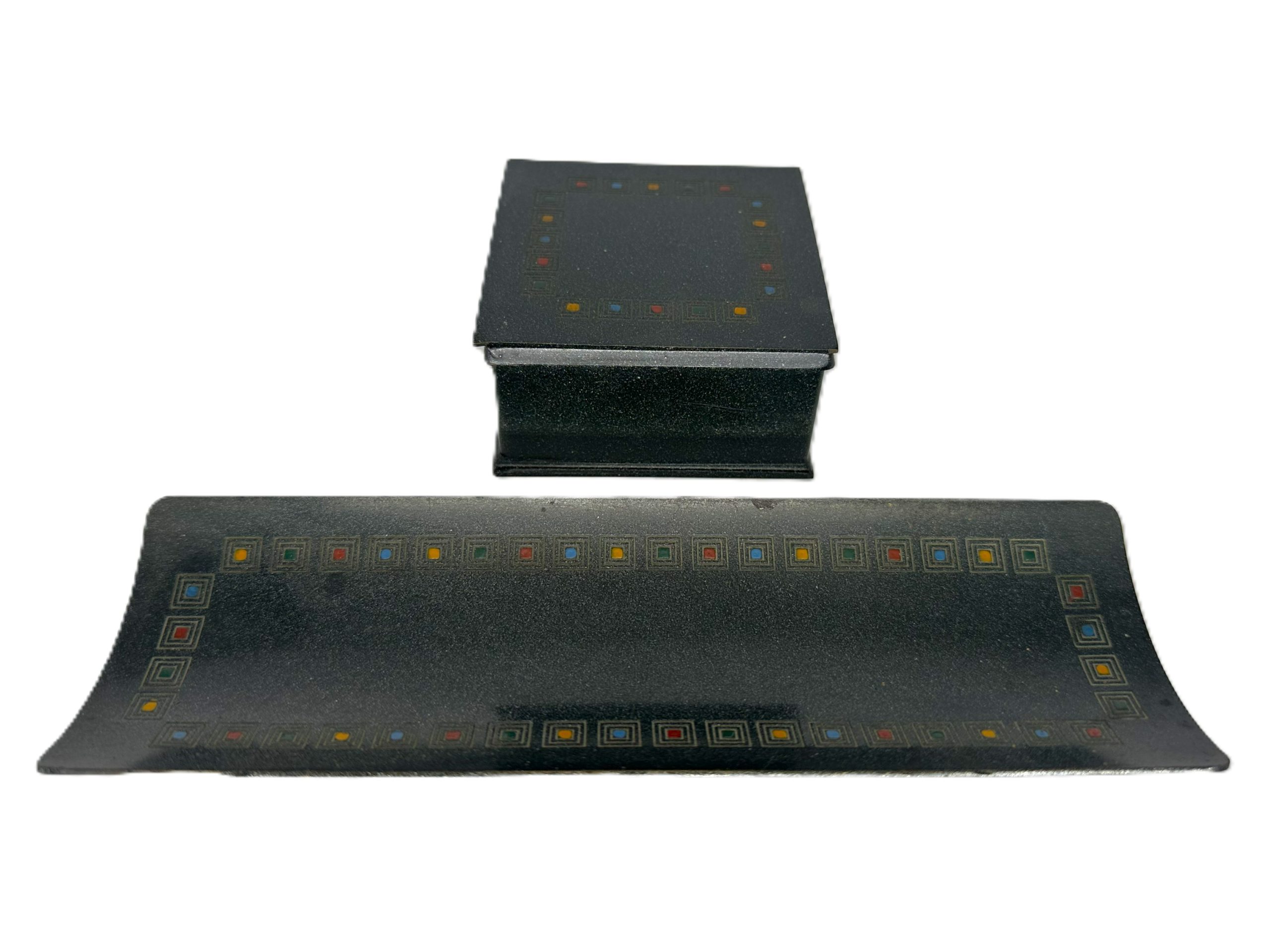
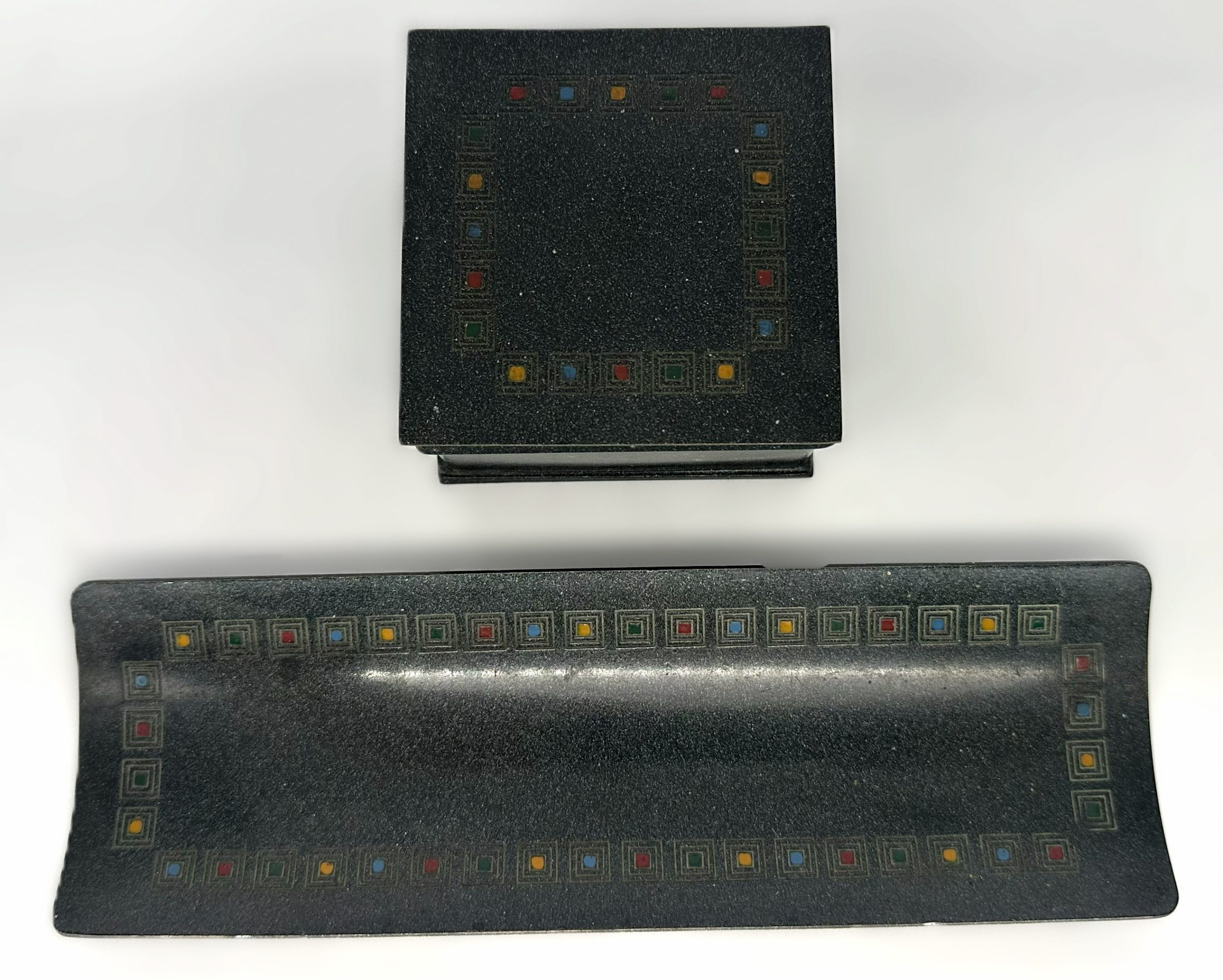
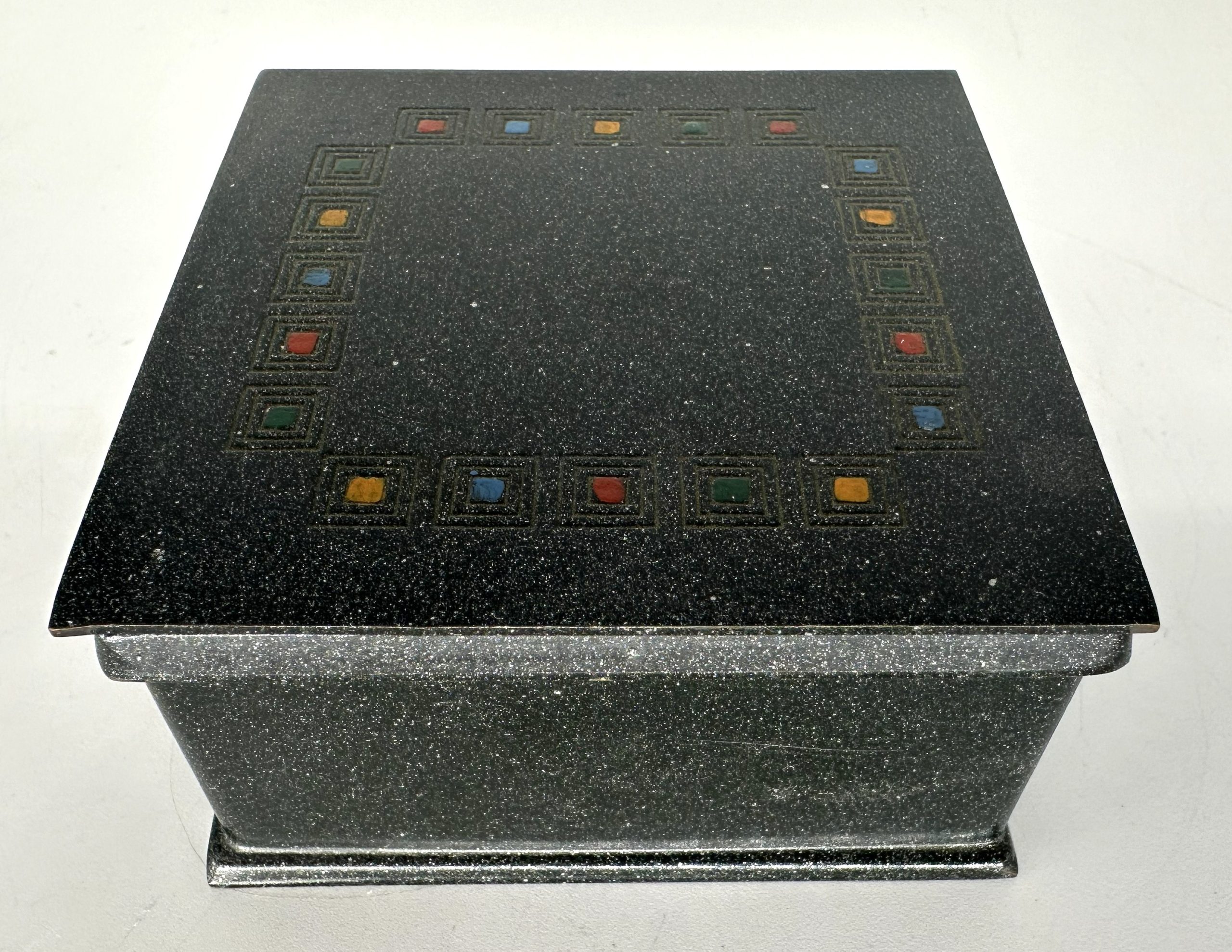
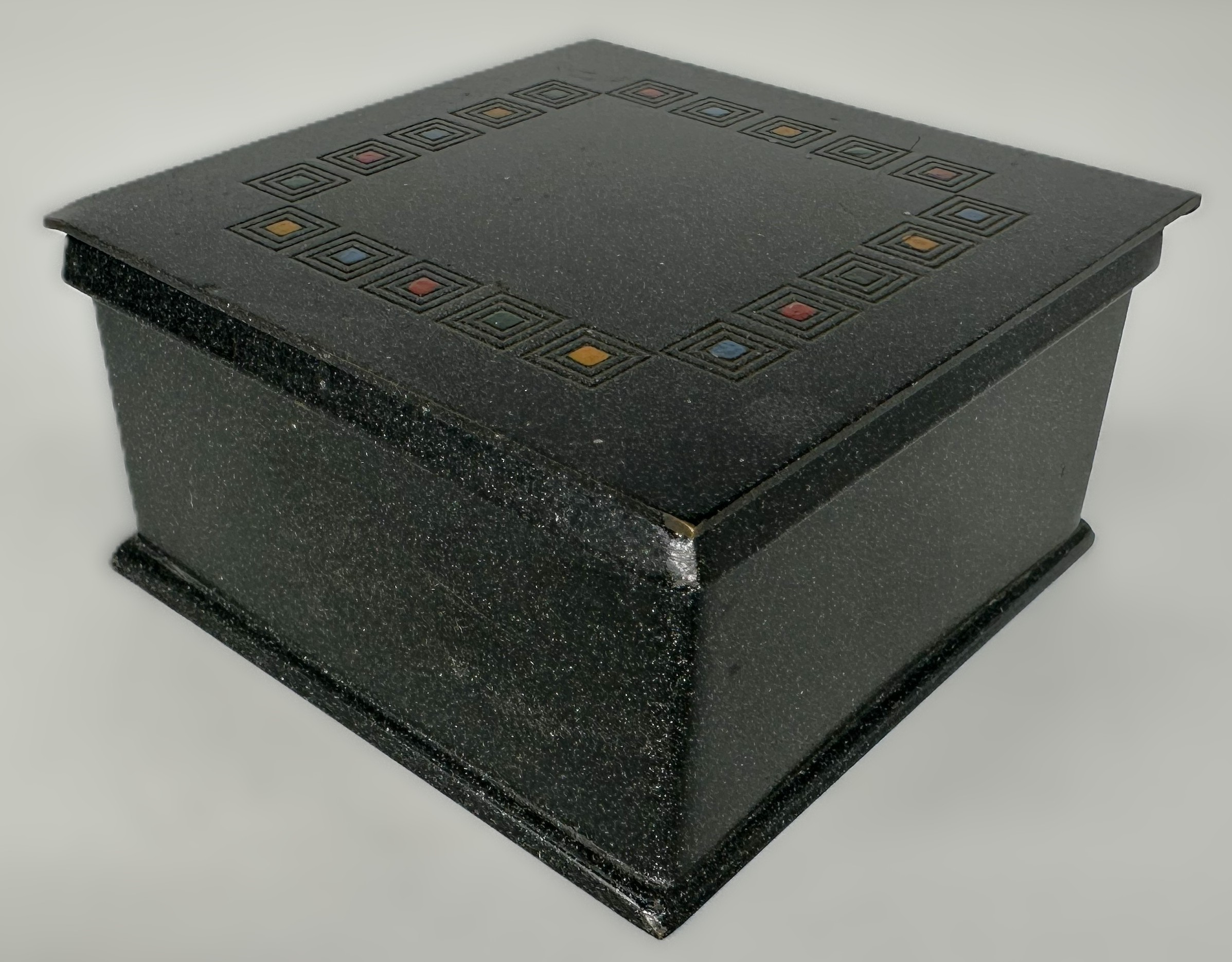
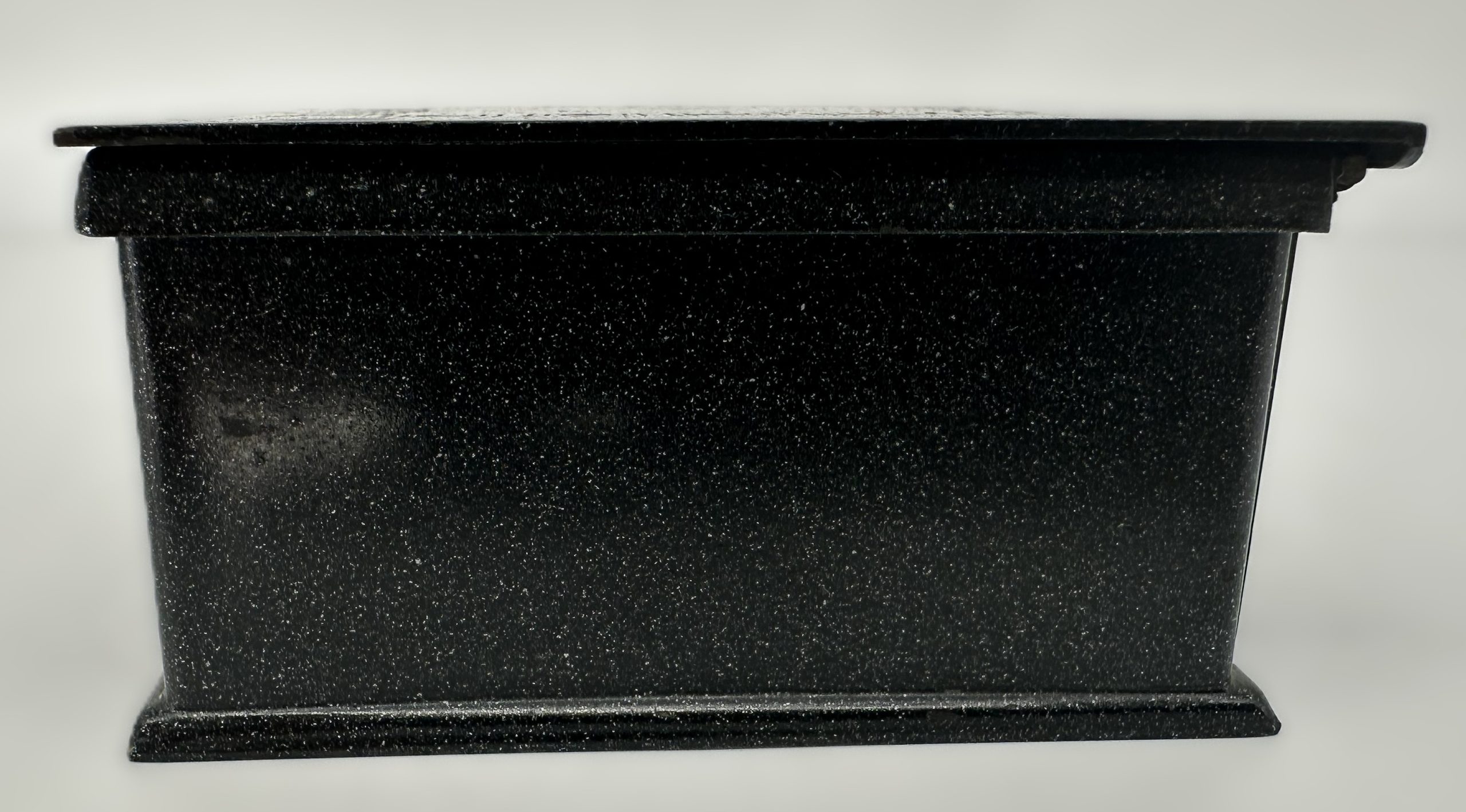
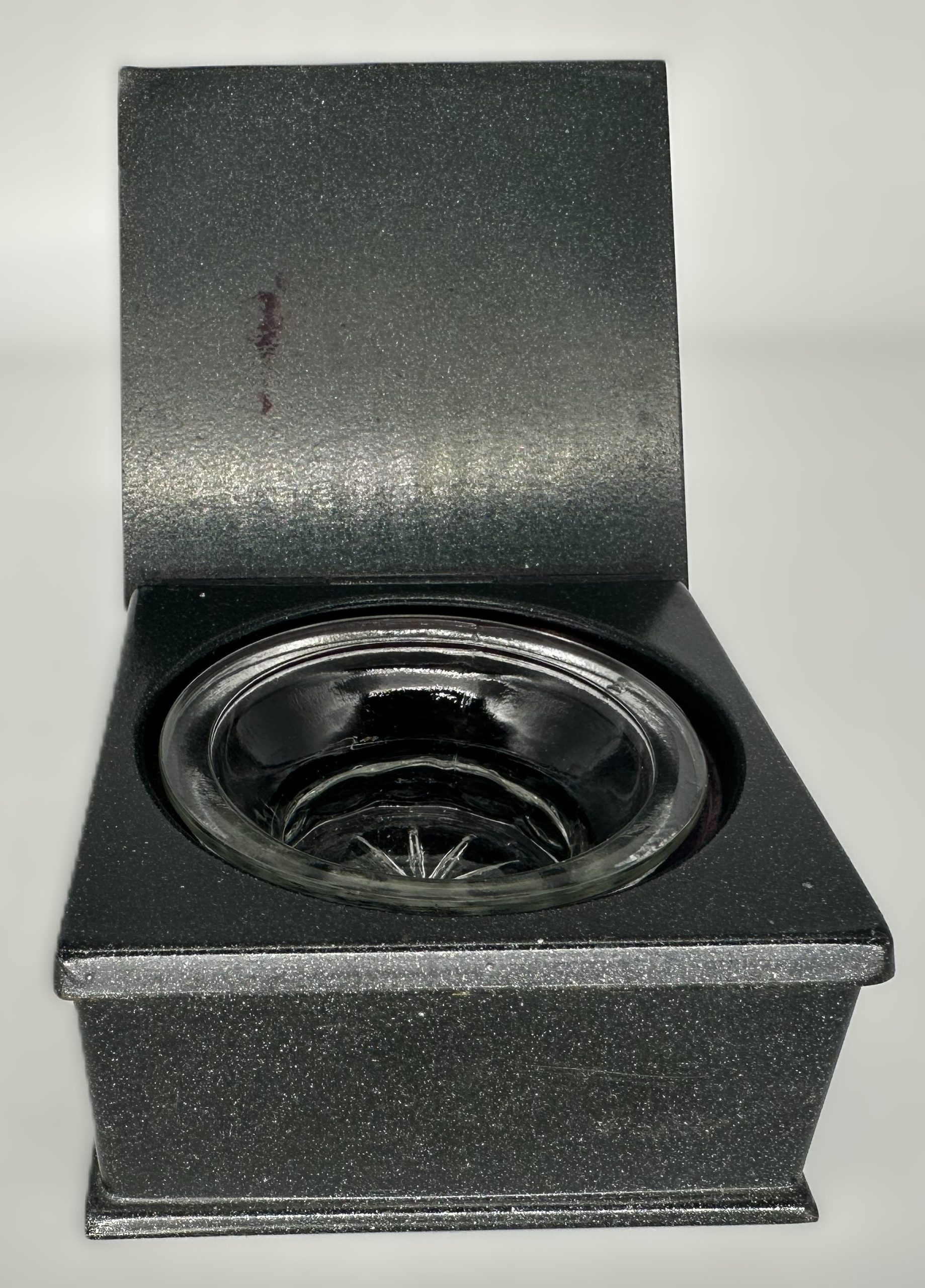
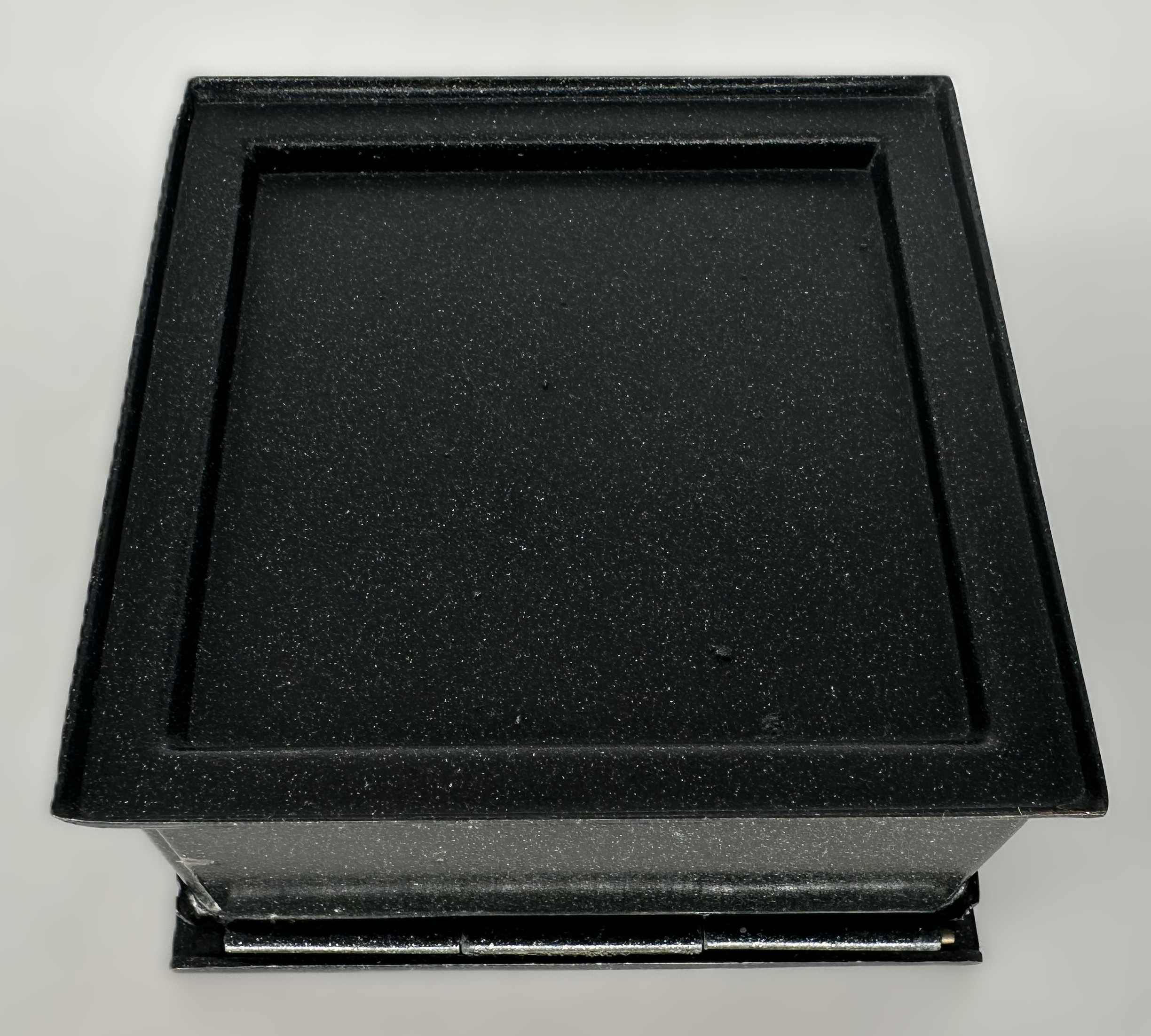
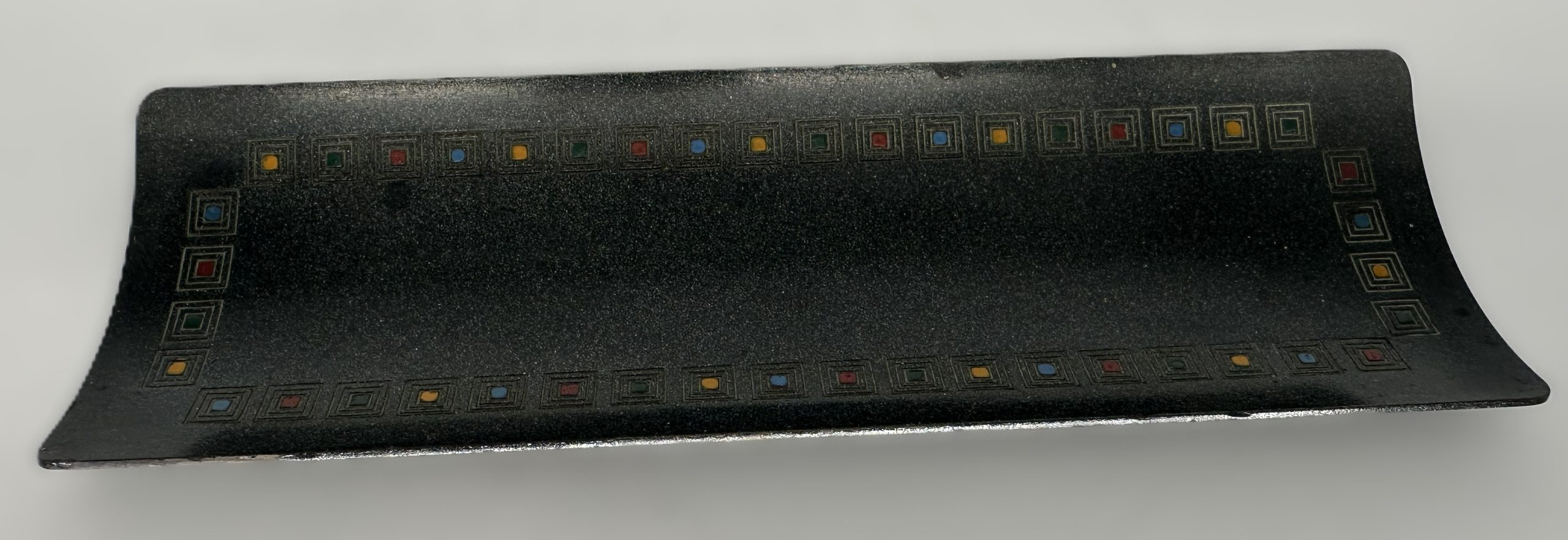
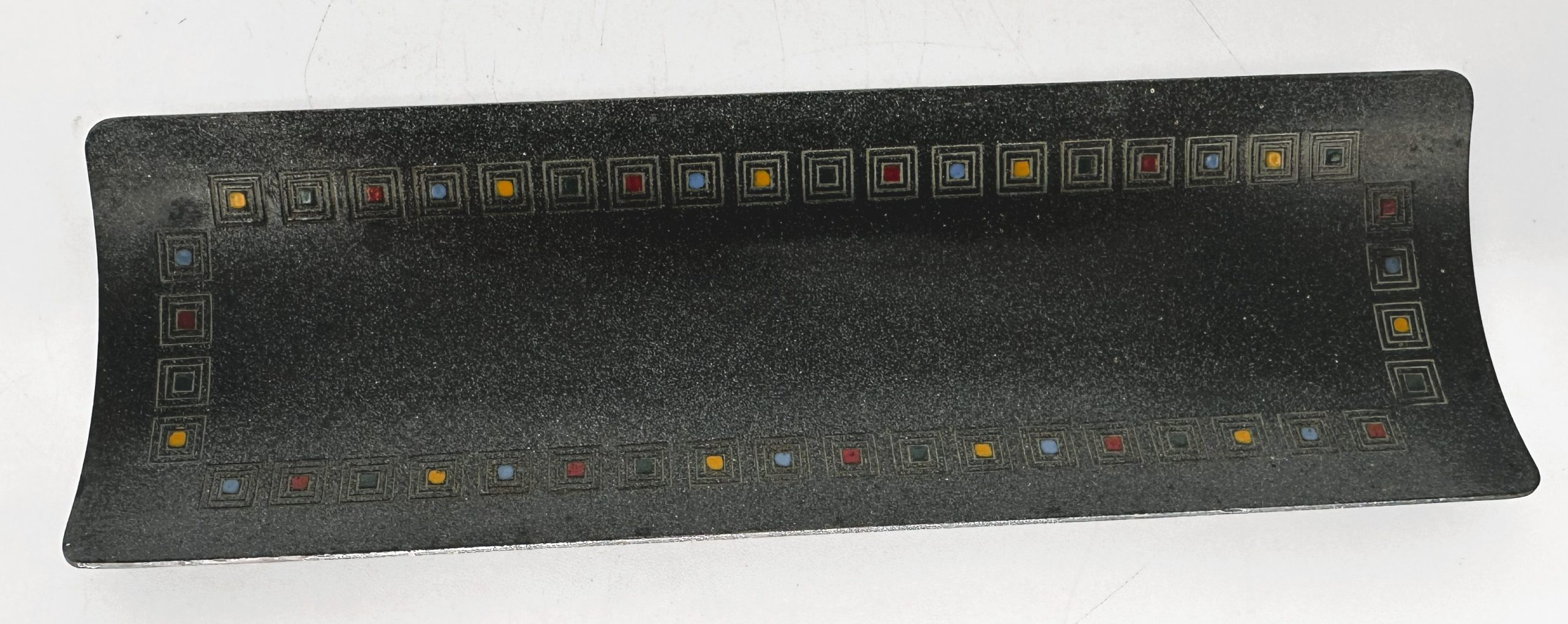

Bradley & Hubbard Mission-Style Enameled Desk Set
| Categories | Arts & Crafts |
| Material | Metal |
| Markings | See Narrative |
| Manufacturer | Bradley & Hubbard |
| Origin | United States |
| Date or Era | circa 1915 |
| Measuring | Inkwell: 3” x 3” x 1 ½” high; tray: 8” x 2 ½” |
This desk set (inkwell and pen tray) captures a transitional aesthetic bridging the heavy geometric emphasis of the Arts & Crafts / Mission period with the vibrant, stylized abstraction of early 20th-century European design (such as Wiener Werkstätte or early Art Deco/Secessionist movements).
Description
- The Metal Base & Construction: The set is formed from cast metal (a coated non-ferrous alloy). It features a dark, speckled or spatter-finished textured enamel coating—a “crackle” finish.
- The Inkwell: A square, blocky container featuring crisp, clean lines and stepped panel borders. The hinged lid lifts to reveal its original clear pressed-glass insert.
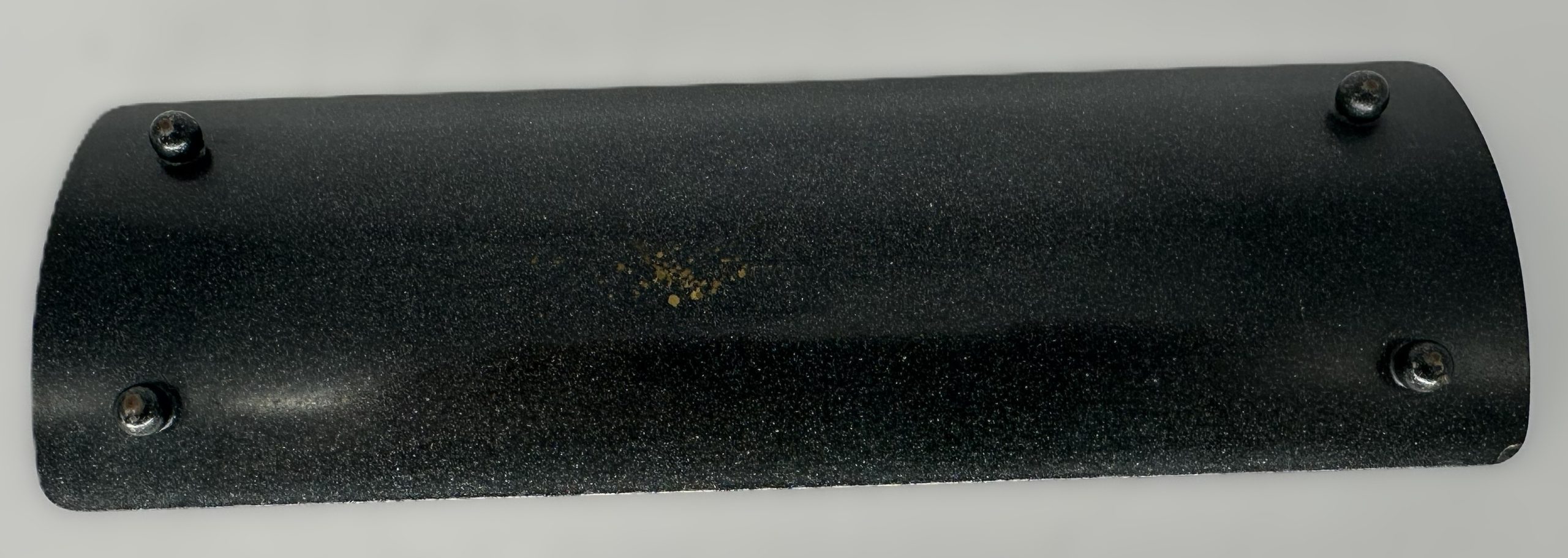
- The Pen Tray: A long, gently curved trough with small balled feet, designed to hold dip pens.
- The Motif & Enamel Detailing: Both pieces are adorned with engraved or incised geometric frames enclosing neat, alternating squares. These geometric boxes are enameled in a palette of primary and secondary jewel tones—including mustard yellow, cobalt blue, terracotta red, and forest green. This use of colorful champlevé-style enamel set into dark geometric metalwork is a hallmark of modernist desk wares from the early decades of the 20th century.
Maker, Era, and Attribution
- The Maker: The underside bears the trademark of the Bradley & Hubbard Manufacturing Co. (Meriden, Connecticut)—stamped with their iconic triangular logo featuring a resting bird inside an outlined triangle, surrounded by the company name and “MFG. CO.”
- Dating the Design: Bradley & Hubbard was prolific from the mid-19th century through the 1930s, producing everything from cast-iron parlor lamps to high-end art metal desk accessories. While much of their catalog leaned heavily into Victorian, Gothic Revival, and traditional Art Nouveau, they also embraced the cleaner geometric lines of the Arts & Crafts and Mission eras (circa 1905–1920).
- The Pattern: In Bradley & Hubbard’s comprehensive production ledgers, specialized enameled or geometric-incised lines like this were often designated by catalog numbers rather than formal commercial names. Pieces featuring this specific style of geometric squares reflect the strong influence of Austrian Secessionist and Viennese modern design filtering into American decorative arts around 1910–1920.
Content disclaimer. The information posted is the owner’s best knowledge and may not have been vetted by the SOIC. We welcome comments, corrections, and additions, working to make our website information comprehensive and accurate.
Join the Society of Inkwell Collectors (SOIC) – it’s free!
Founded in 1981 as a non-profit organization,
we are documenting inkwells (and accessories).
We’re here to help and inform!