

Bohemian Art Glass “Satyr” Inkwell
| Categories | Bohemian Art Glass |
| Material | Brass, Glass |
| Markings | See Narrative |
| Manufacturer | Stölzle |
| Origin | Bohemia |
| Date or Era | circa 1902 |
| Measuring | 4” diameter; 3 ½” high |
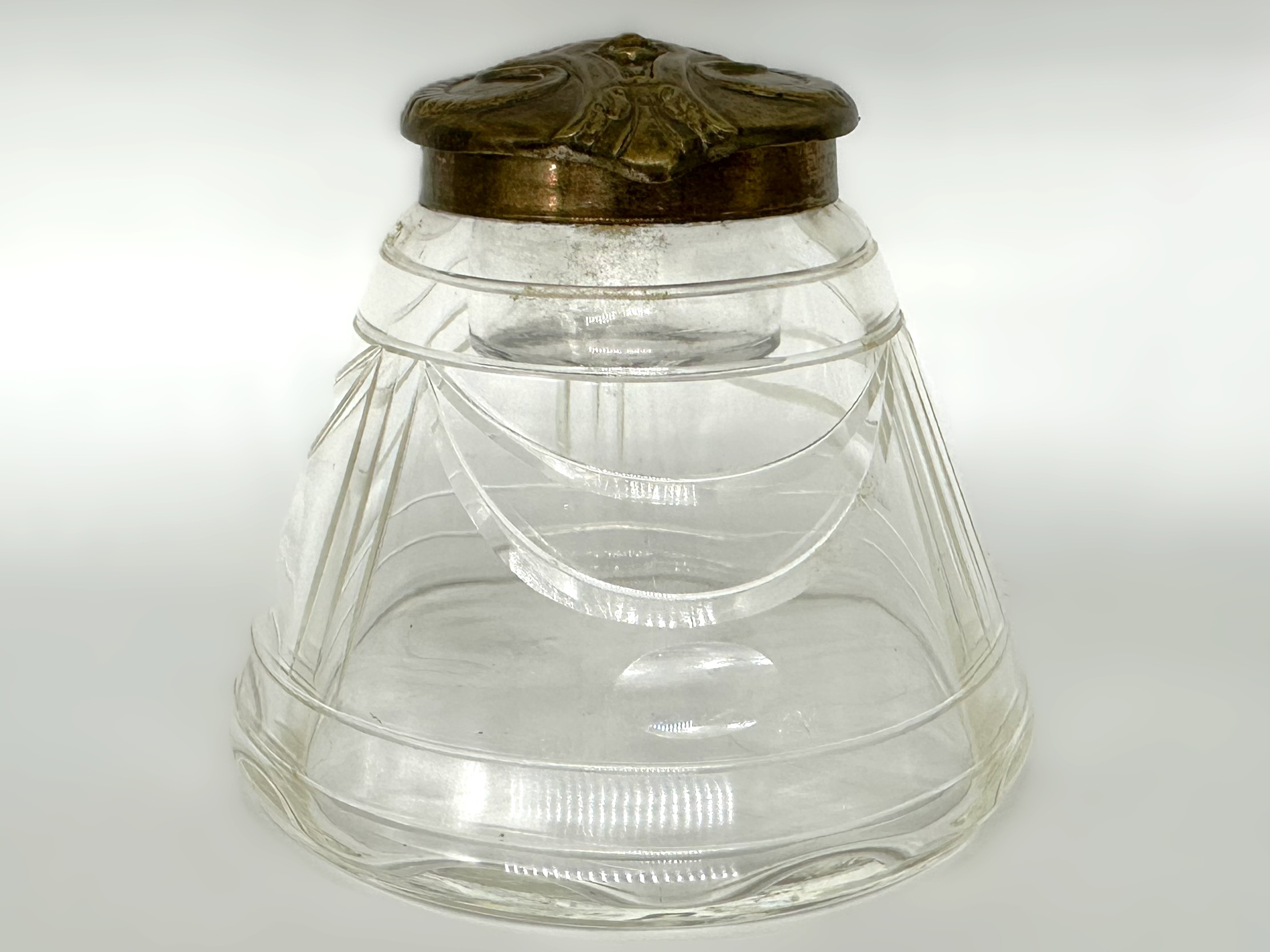
Attributed to: Stölzle & Sons (Suchenthal Factory) Period: Circa 1901–1905 Material: Mold-blown clear glass with a patinated brass/bronze-finish hinged lid.
Design & Aesthetic
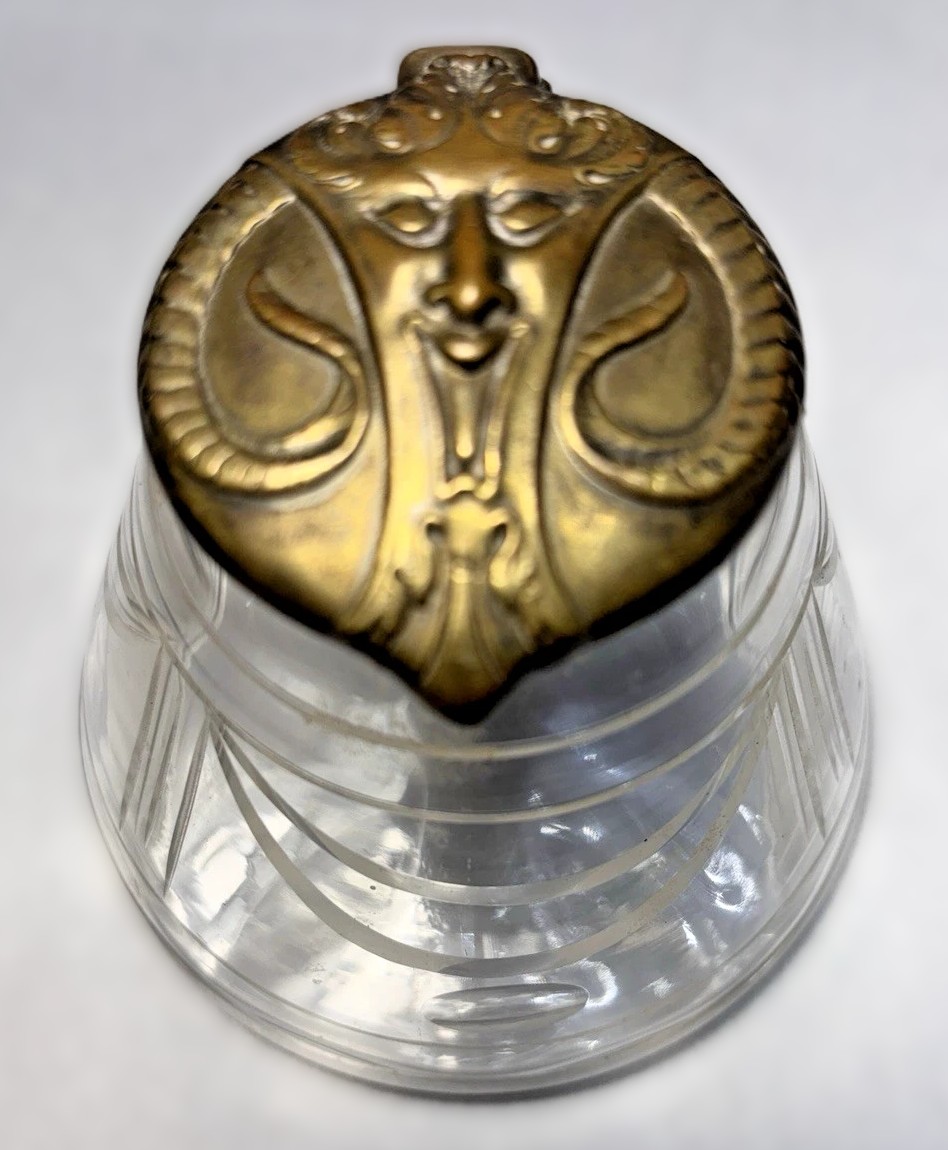
This inkwell is a masterclass in the Neo-Renaissance and Art Nouveau styles popular in Bohemia at the turn of the century.
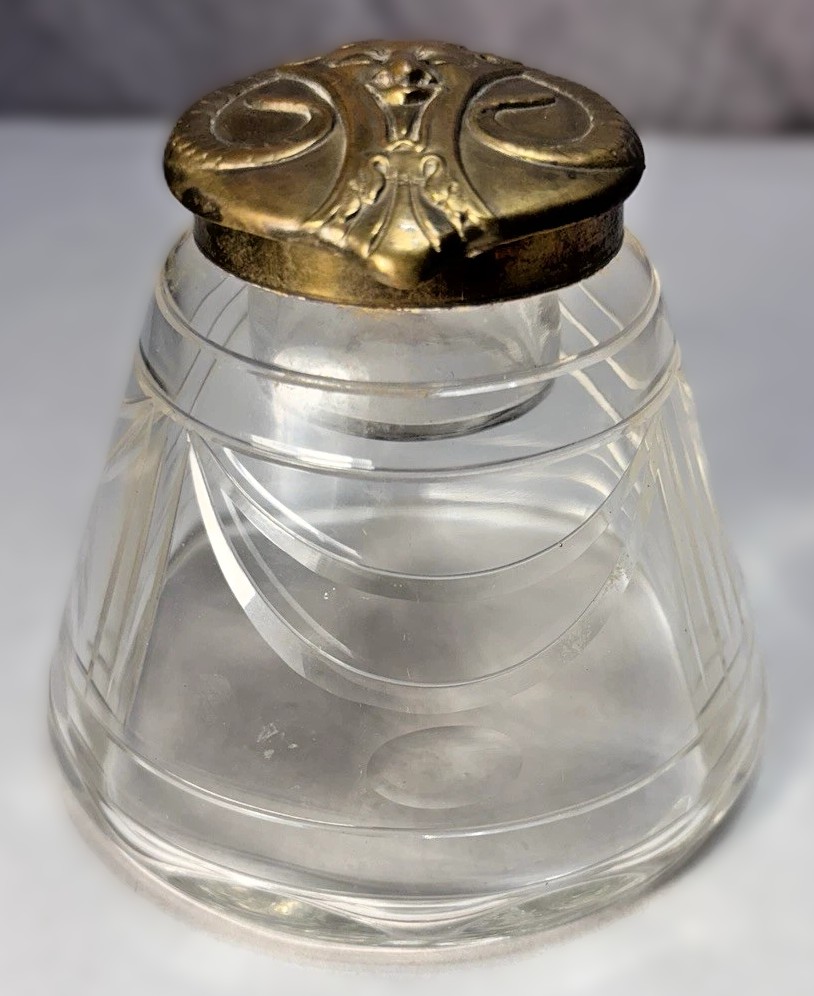
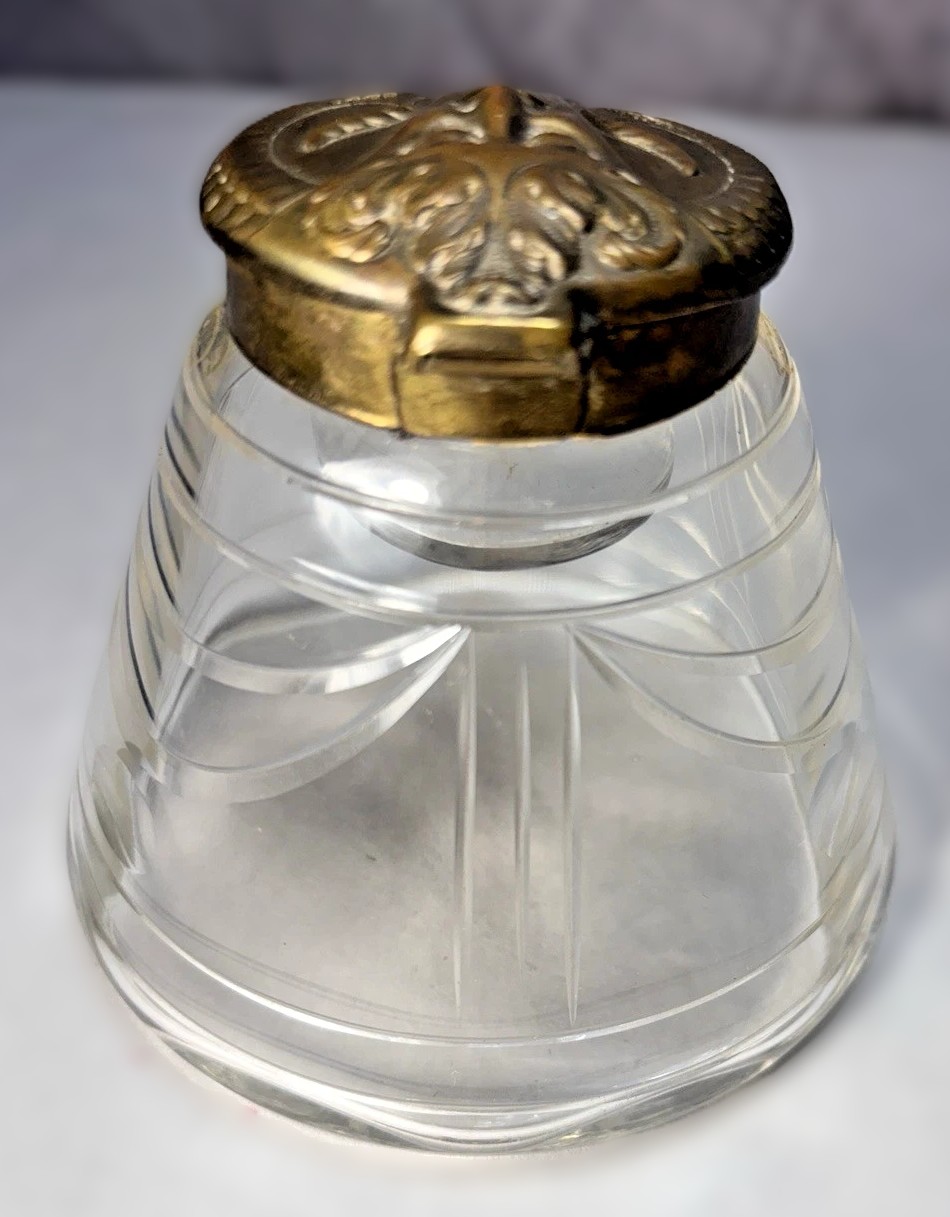
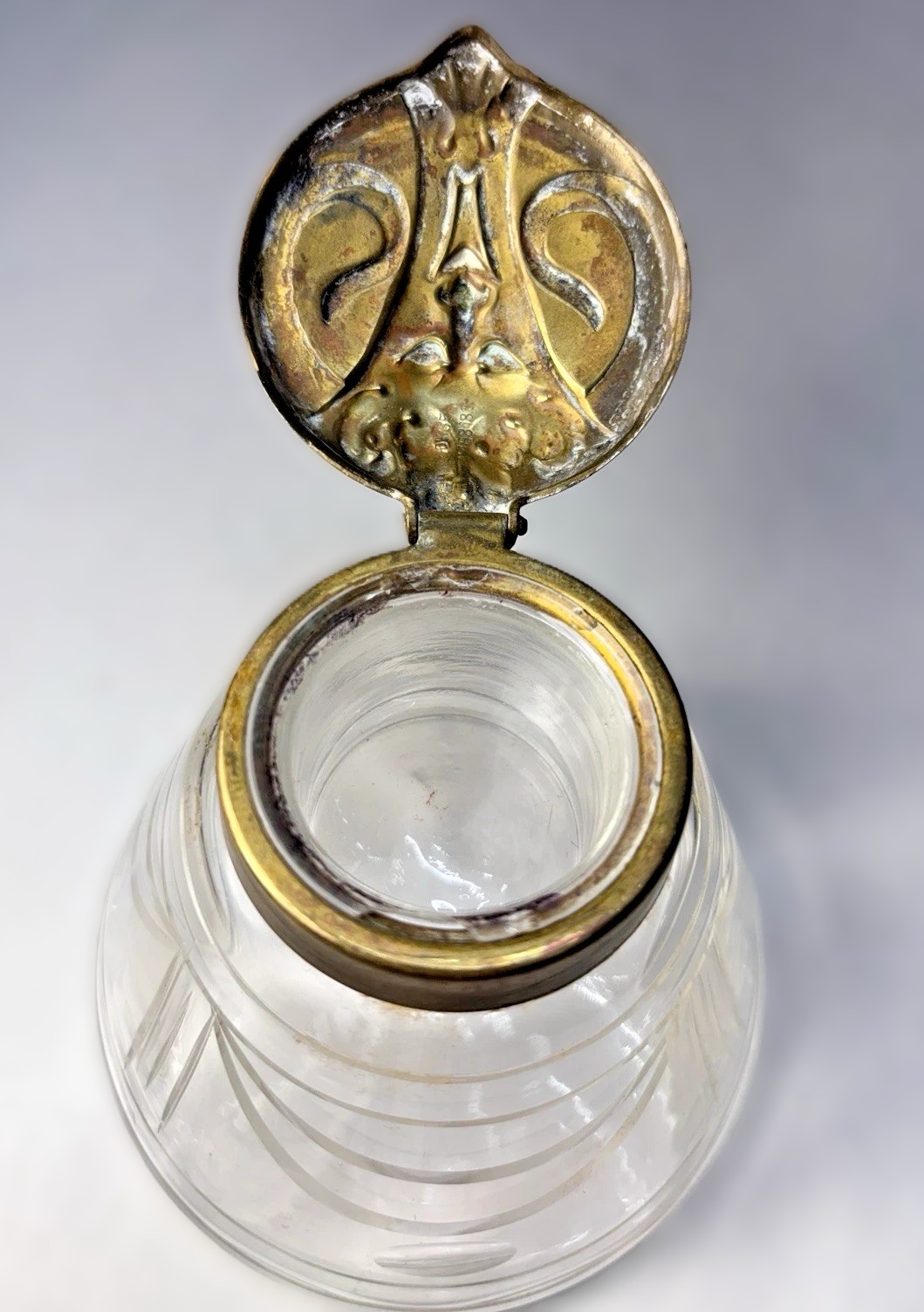
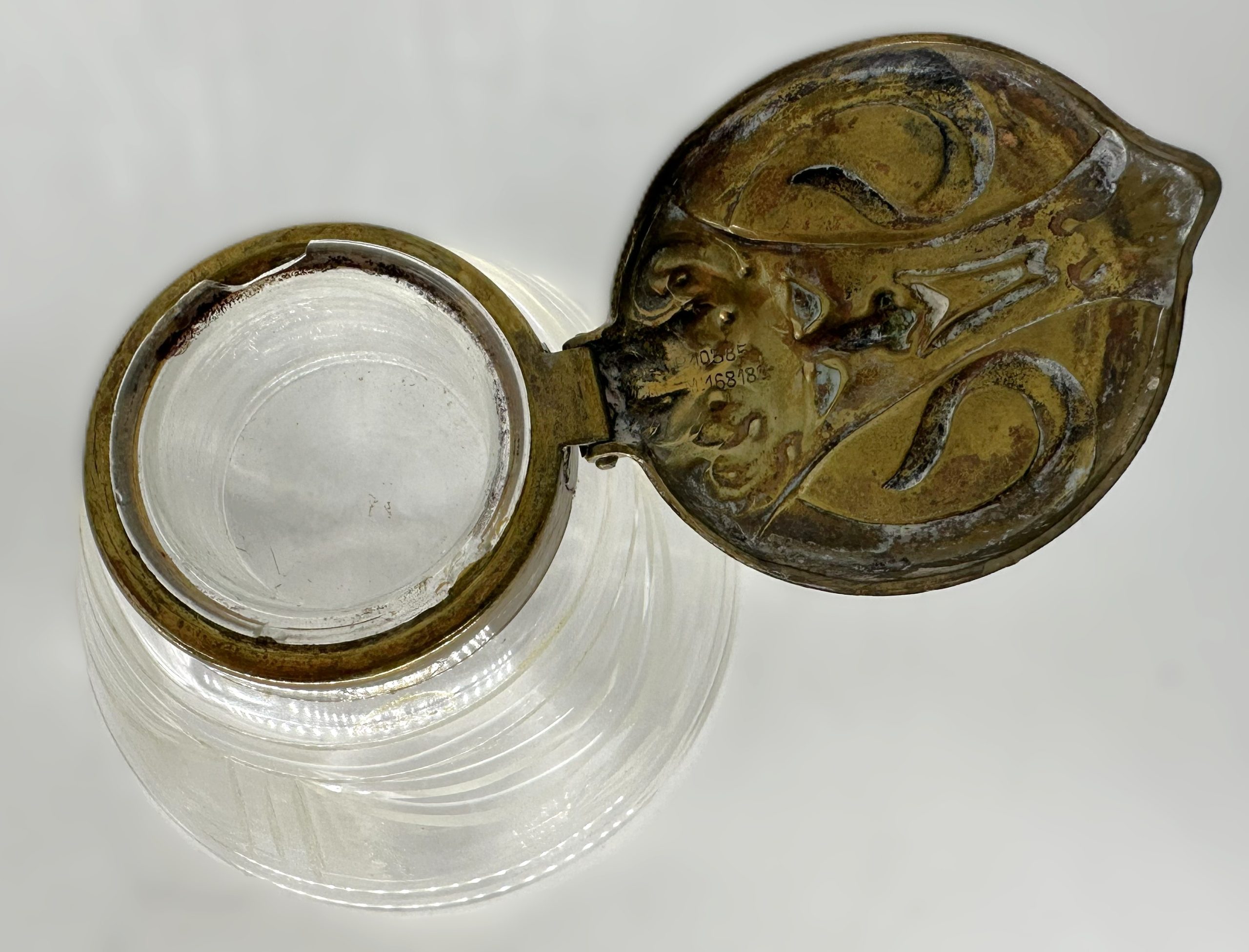
- The Satyr Mask: The hinged lid features a highly detailed, relief-cast Satyr. His face is expressive, framed by stylized curving horns that double as the lid’s border, and pointed ears that blend into the hinge. In the context of a writing desk, the Satyr often symbolized wit and creative impulse.
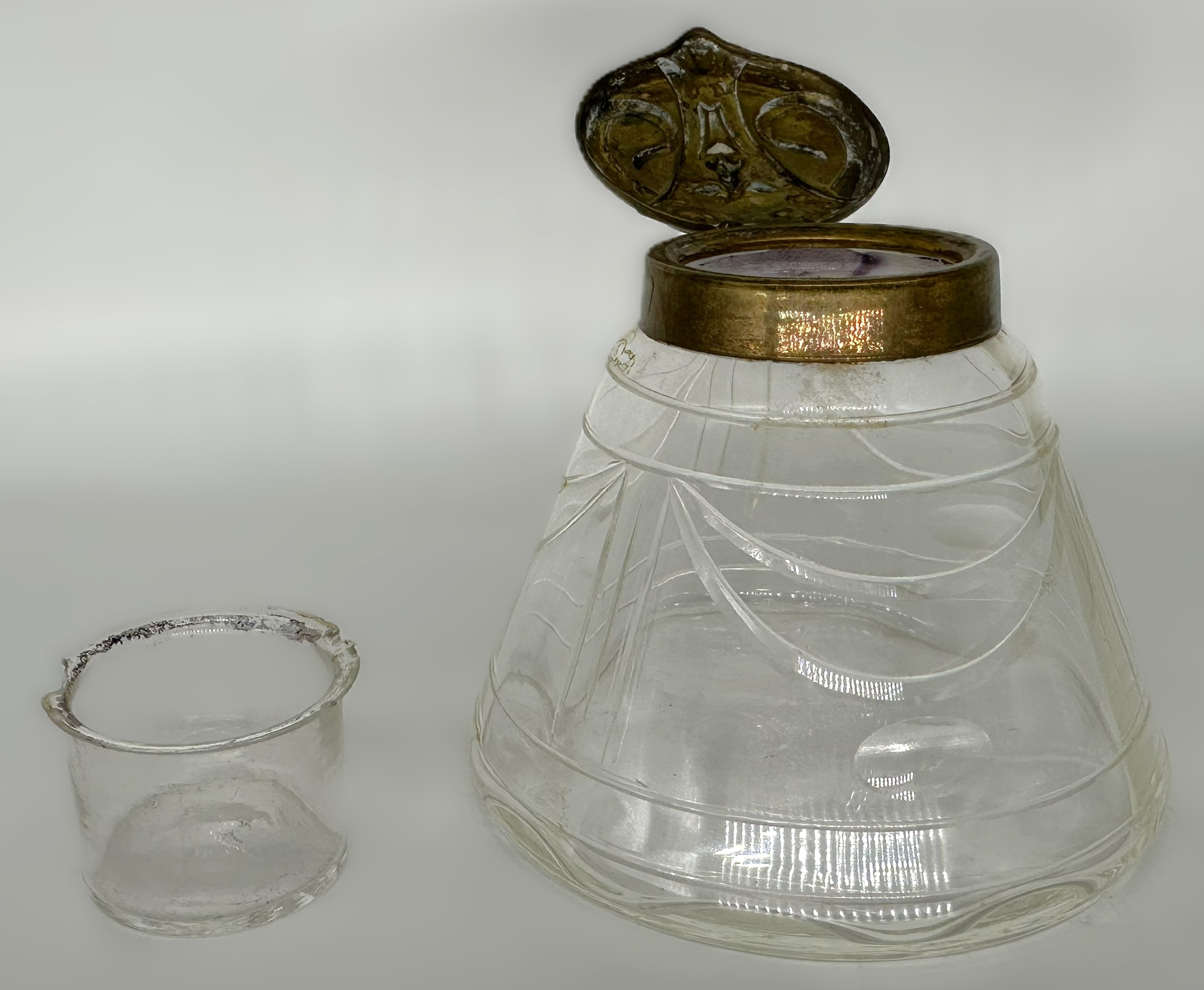
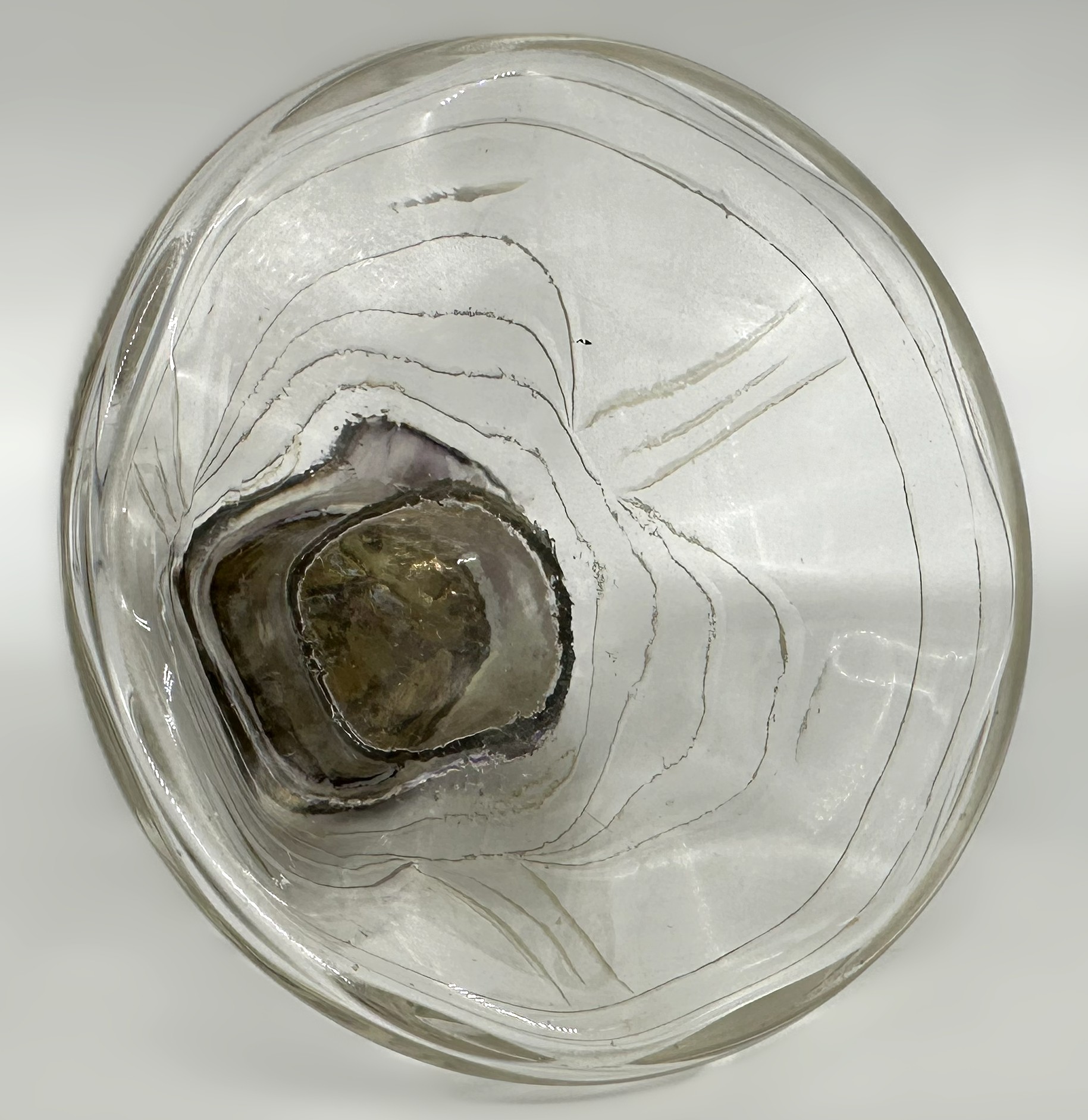
- The Glass Reservoir: The clear glass body is “bell-shaped” or a truncated cone. It features a sophisticated molded pattern consisting of draped swags (festoons) and vertical ribs. The base is particularly notable for its undulating, wavy rim, which provides a sense of movement and “softness” to the heavy glass.
- The Insert: The piece retains its original, removable clear glass ink insert.
Documented Markings & Authenticity
The underside of the lid provides evidence of its origin and age:
- O.E.P. 10385: Confirming the Österreichisches Patent (Austrian Patent).
- D.R.G.M. 168180: Confirming the Deutsches Reichsgebrauchsmuster (German Utility Model).
Note: The registration number 168180 dates the design to approximately 1901–1902, aligning perfectly with the height of the Suchenthal factory’s art glass production.
Historical Significance: The Stölzle Empire
By the time this inkwell was produced, Stölzle & Sons had evolved from Carl Anton Stölzle’s 1835 beginnings into a “Glass Empire.” While they produced everything from industrial bottles to fine stemware, the Suchenthal factory (located in Chlum u Třeboně) was the jewel in their crown.
Suchenthal was famous for its “luxury” glass that rivaled famous neighbors like Loetz and Kralik. This inkwell represents the factory’s ability to combine industrial precision (the patented hinge and mold-blown body) with the artistic flair required for the high-end European export market.
Looking through the bottom, you can see the thickness and clarity of the glass. The “wavy” internal lines suggest this was mold-blown rather than pressed, which gives the glass its characteristic Bohemian brilliance and fire when it catches the light.
The Patent “Fingerprint” (1901–1902)
The markings on the lid are the “smoking gun” for the dating of this piece:
- D.R.G.M. 168180: This German utility model was registered in late 1901. It specifically protected the design of the hinge and the airtight collar used on these glass reservoirs.
- O.E.P. 10385: This is the corresponding Austrian patent (Österreichisches Patent).
Because these metal mounts were so successful, they were occasionally sold to other Bohemian glasshouses (like Kralik or Loetz), leading to the frequent “mis-attribution” you see in many antique shops today. However, the Suchenthal factory was the primary manufacturer that paired this specific “Satyr” lid with their distinctive molded clear and iridescent glass.
The Suchenthal “Satyr” Series
At the turn of the century, the Suchenthal factory (now Chlum u Třeboně) specialized in high-end export wares. The “Satyr” (or sometimes referred to as “Mephisto”) was part of a broader series of mythological desk accessories.
- Pattern Characteristics: In Stölzle’s internal pattern books, these pieces were often listed under “Schreibtisch-Garnituren” (Desk Sets).
- Visual Variants: This glass body, with its draped swags (festoons) and wavy base, was a signature Suchenthal mold. While Loetz focused on free-form iridized shapes, Stölzle’s Suchenthal factory excelled at this “molded Art Nouveau” style—blending geometric precision with organic motifs.
Historical Context
This design represents the peak of Stölzle’s ‘Empire’ period, specifically the Suchenthal production line. The use of the D.R.G.M. 168180 mount identifies the piece as part of the post-1901 luxury export line. The Satyr motif reflects the Neo-Renaissance influence that remained popular in Austrian-Bohemian glass design even as the Art Nouveau movement (Jugendstil) introduced more fluid, rhythmic patterns like the festoons seen on this reservoir.
Estimated value: $125
Content disclaimer. The information posted is the owner’s best knowledge and may not have been vetted by the SOIC. We welcome comments, corrections, and additions, working to make our website information comprehensive and accurate.
Join the Society of Inkwell Collectors (SOIC) – it’s free!
Founded in 1981 as a non-profit organization,
we are documenting inkwells (and accessories).
We’re here to help and inform!