

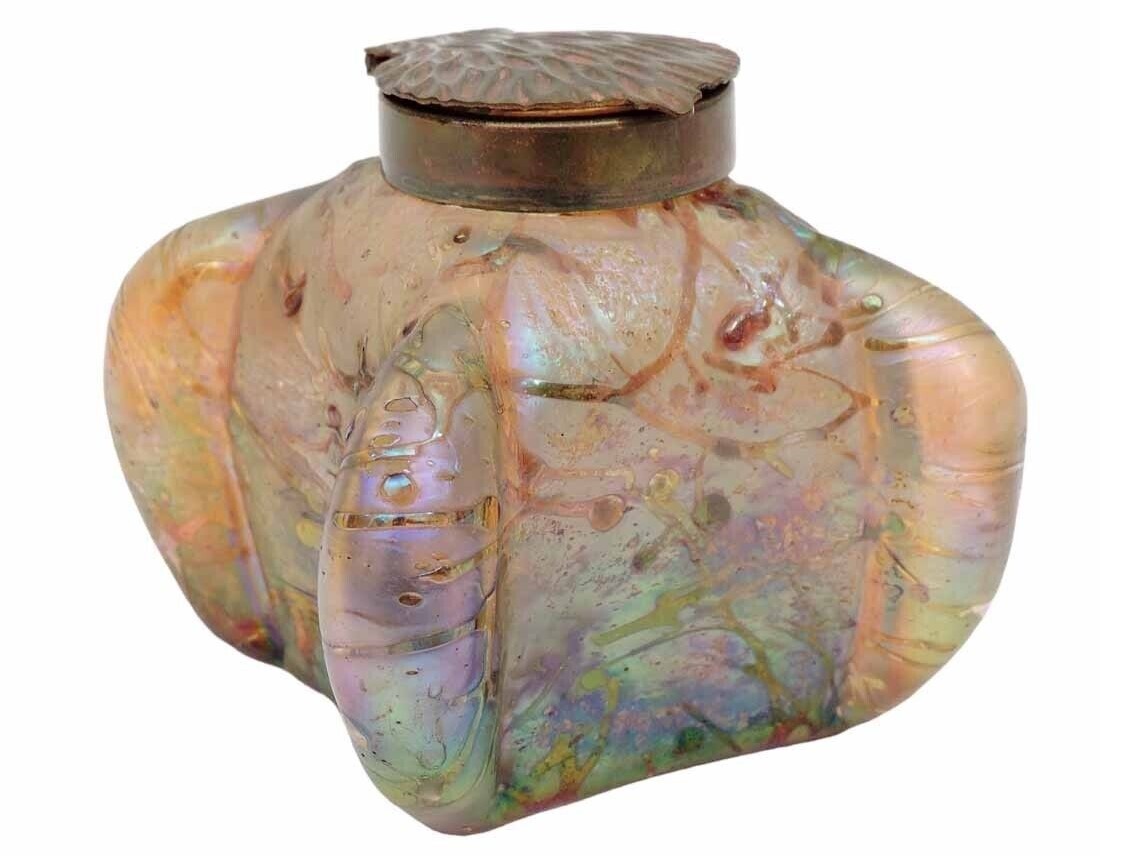
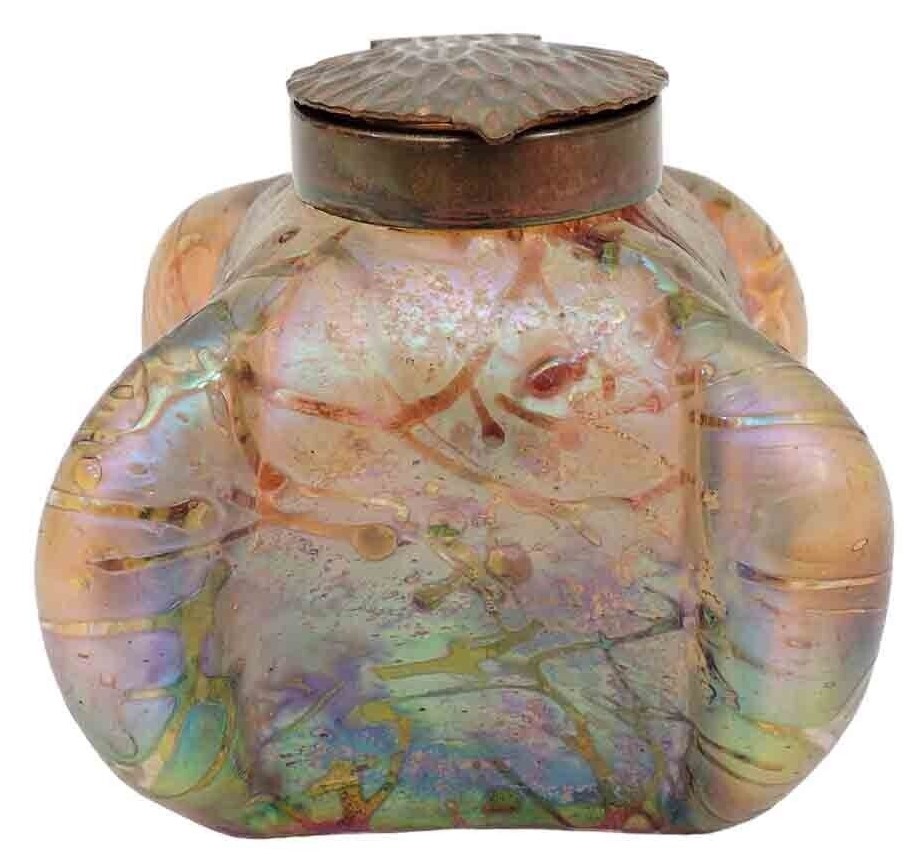
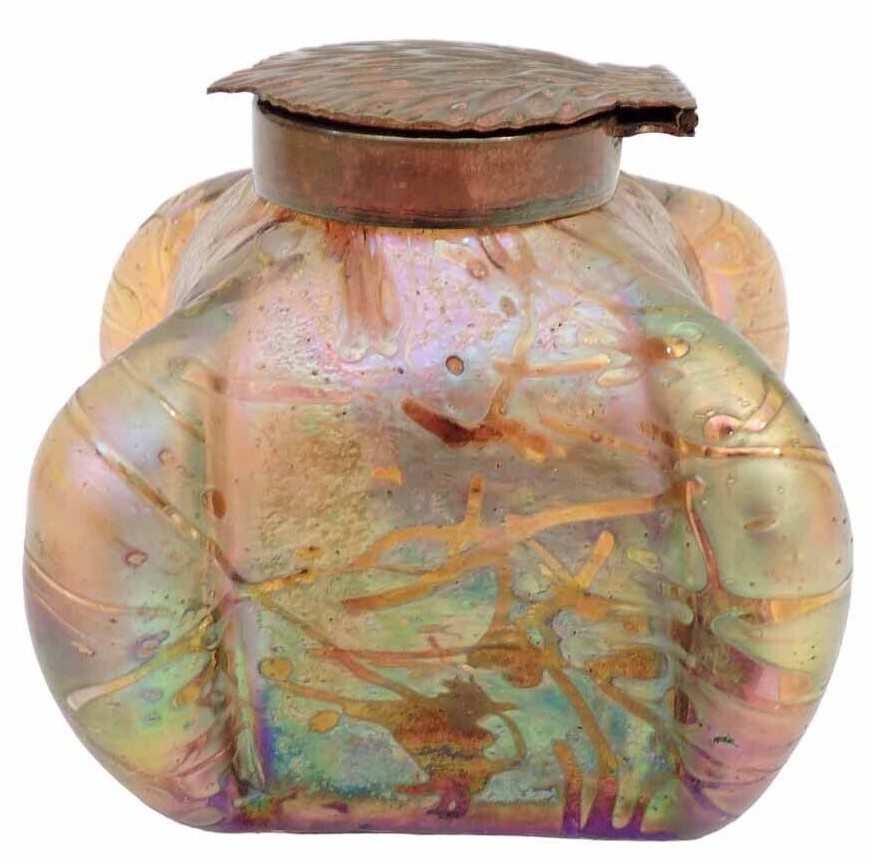
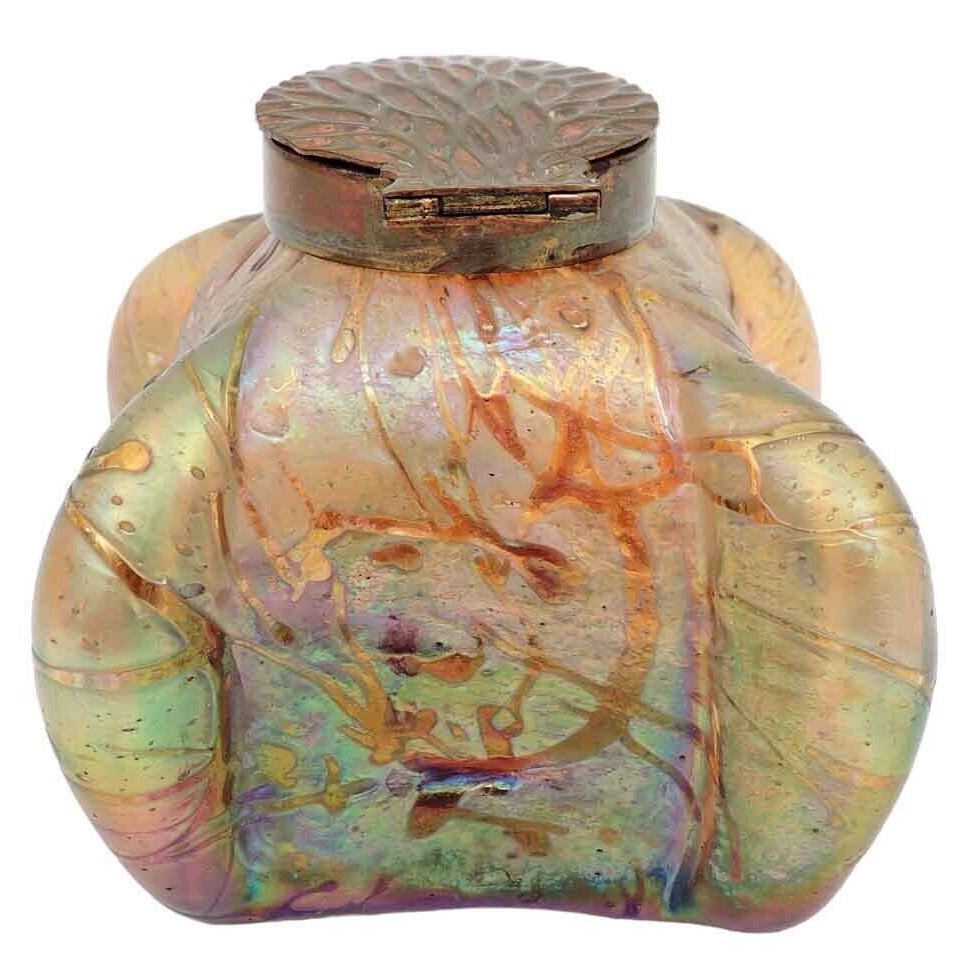
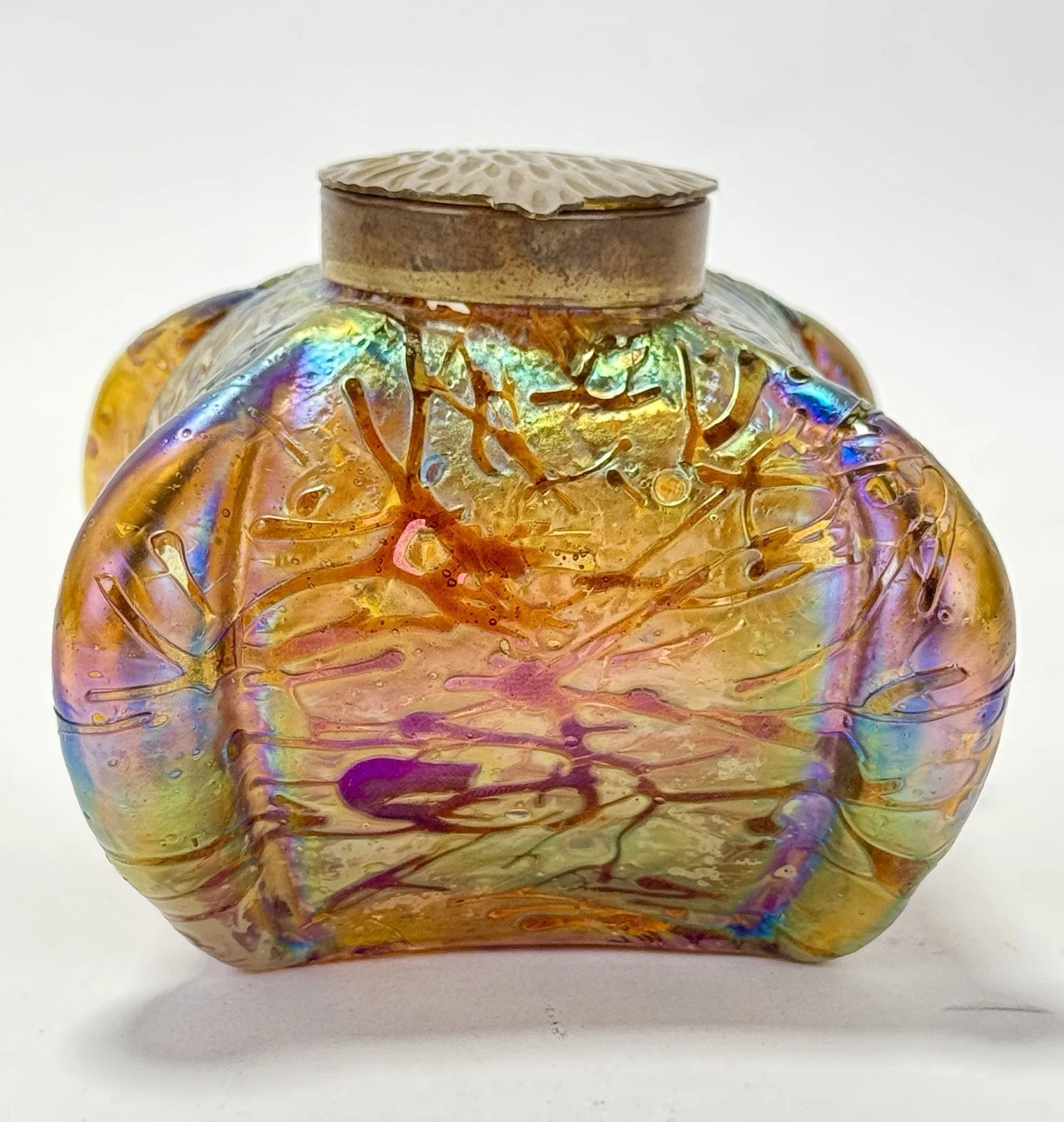
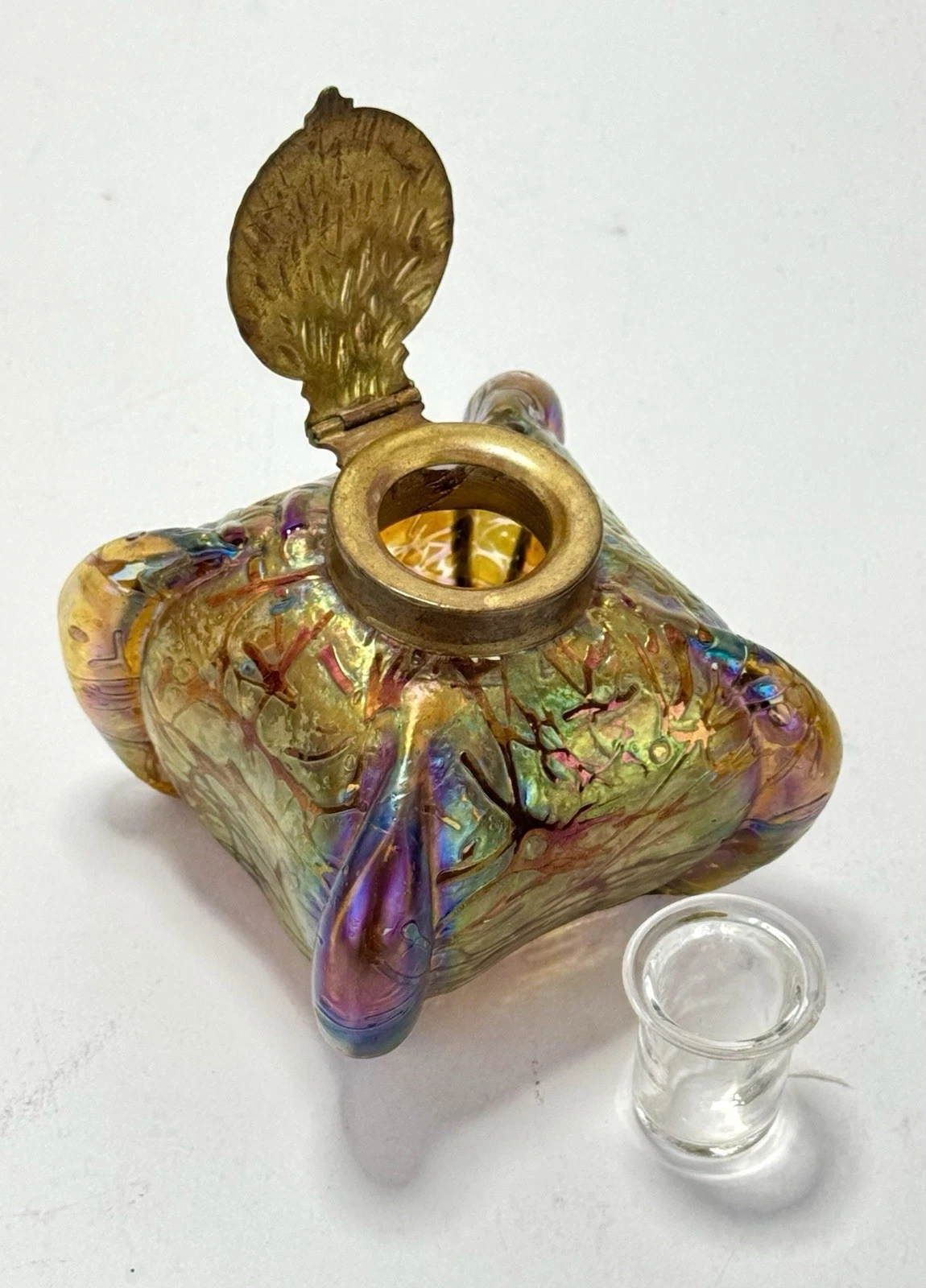
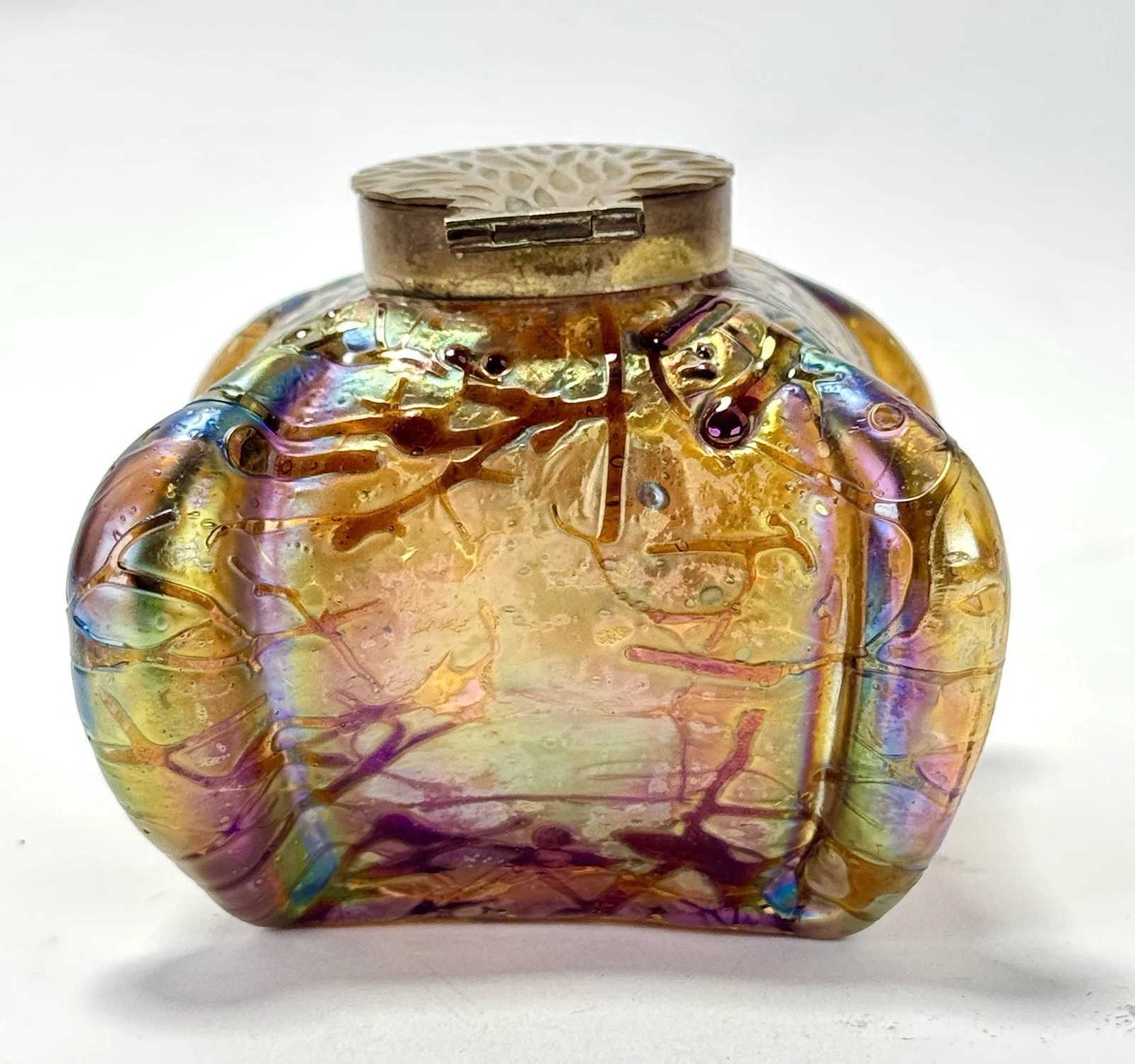
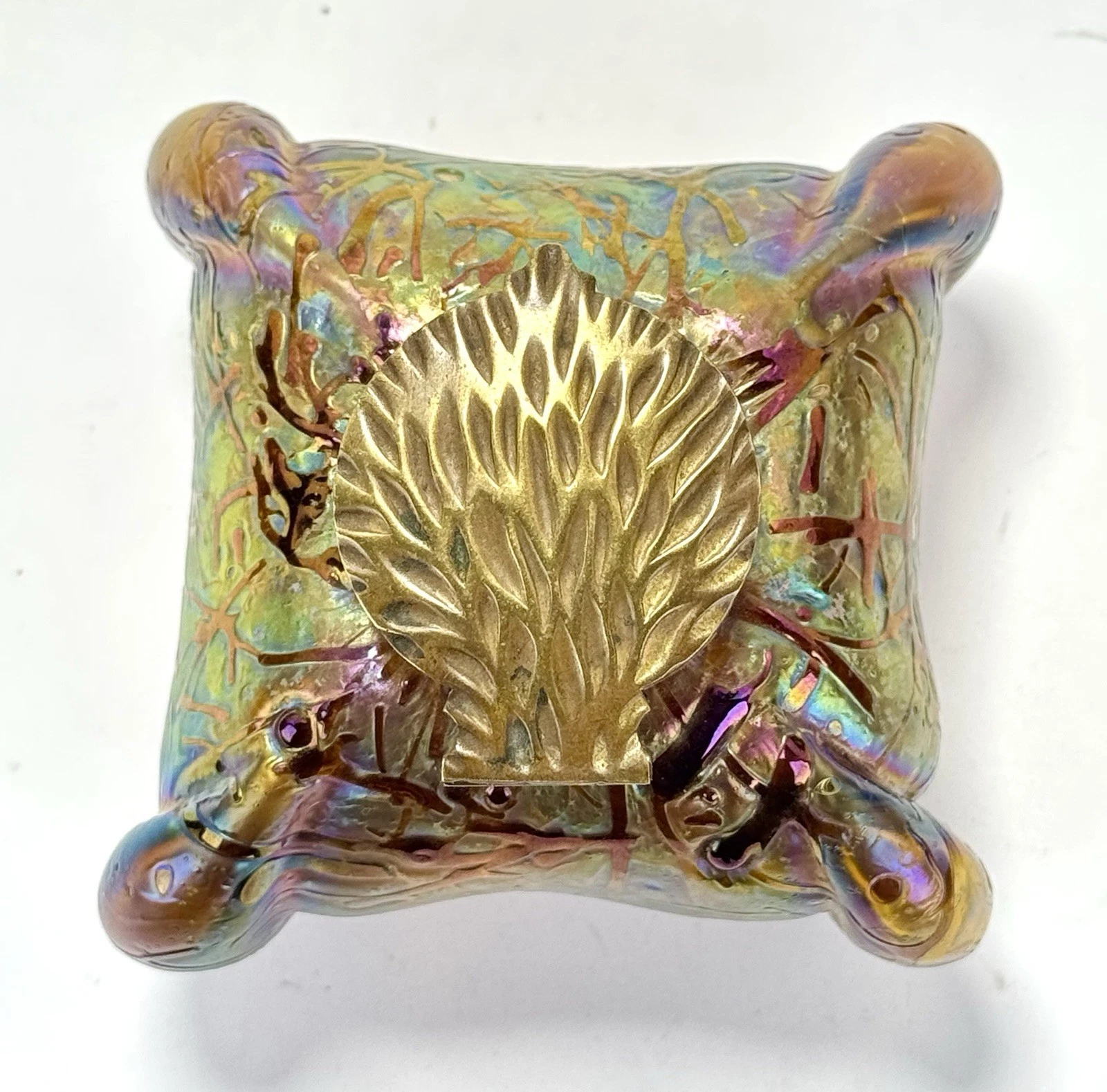
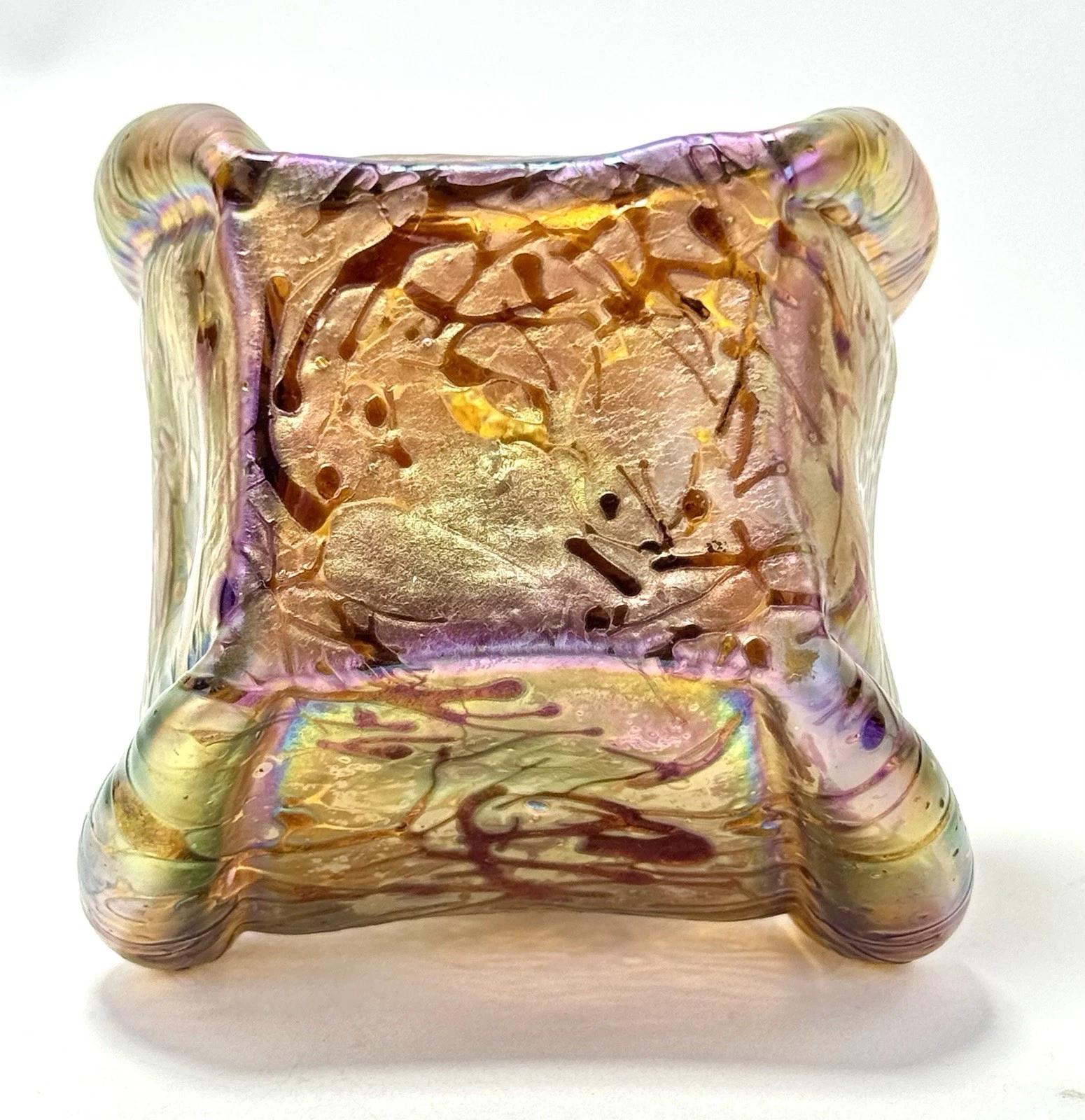
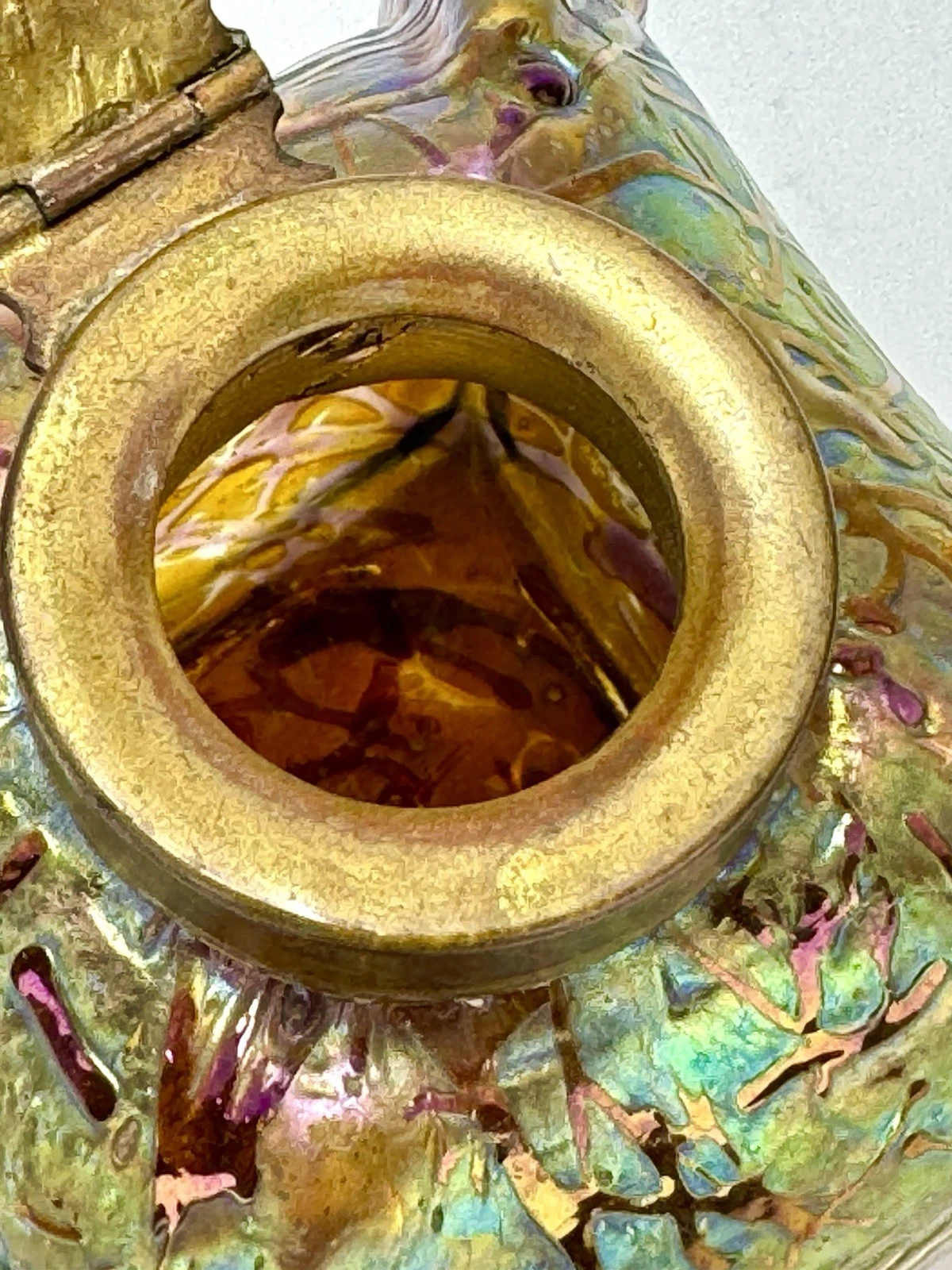
Four-Lobed Kralik Iridescent Glass Inkwell
| Categories | Bohemian Art Glass |
| Material | Glass |
| Markings | Unmarked |
| Manufacturer | Kralik |
| Origin | Bohemia |
| Date or Era | circa 1900 |
| Measuring | 3 ¼” square; 2 ¾” high |
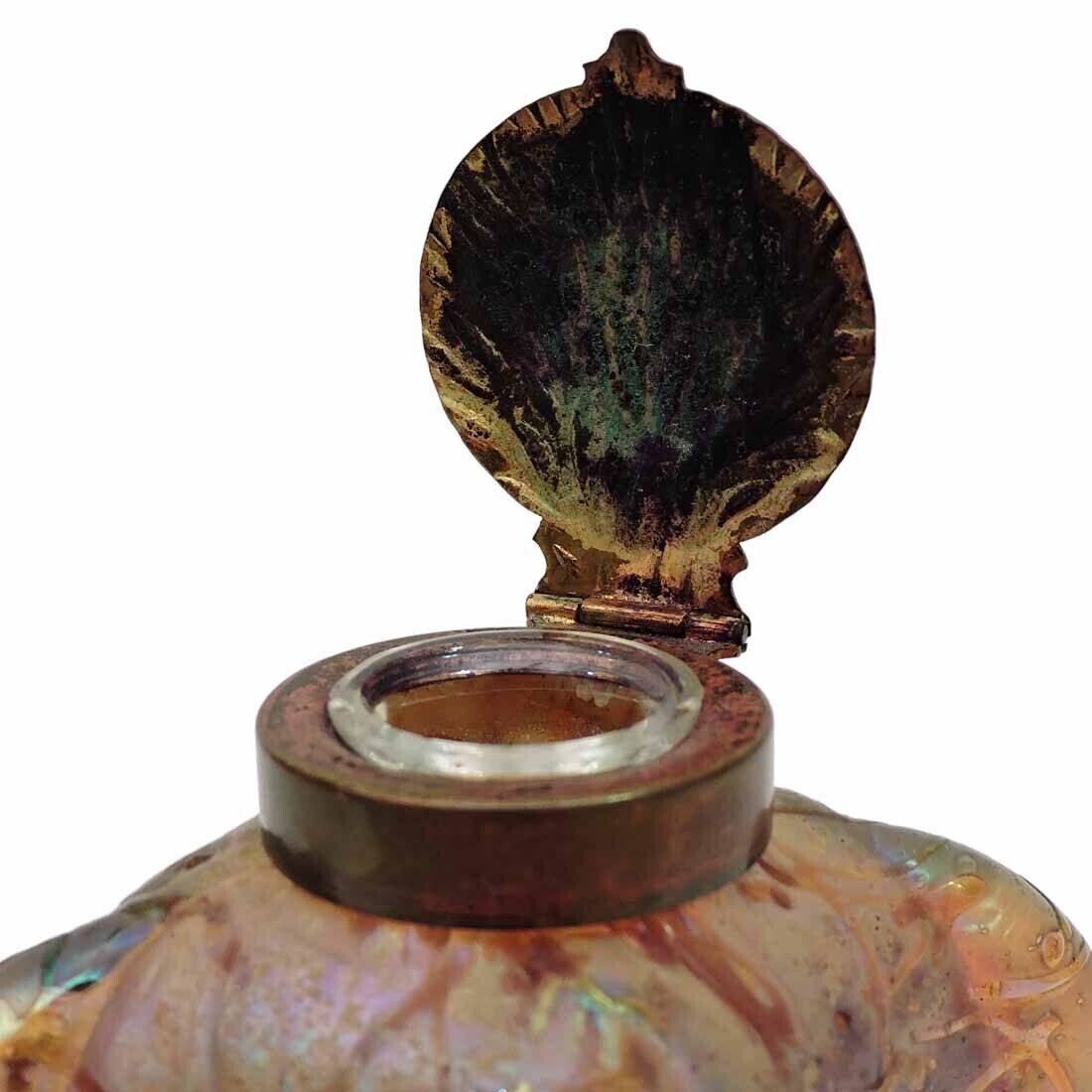
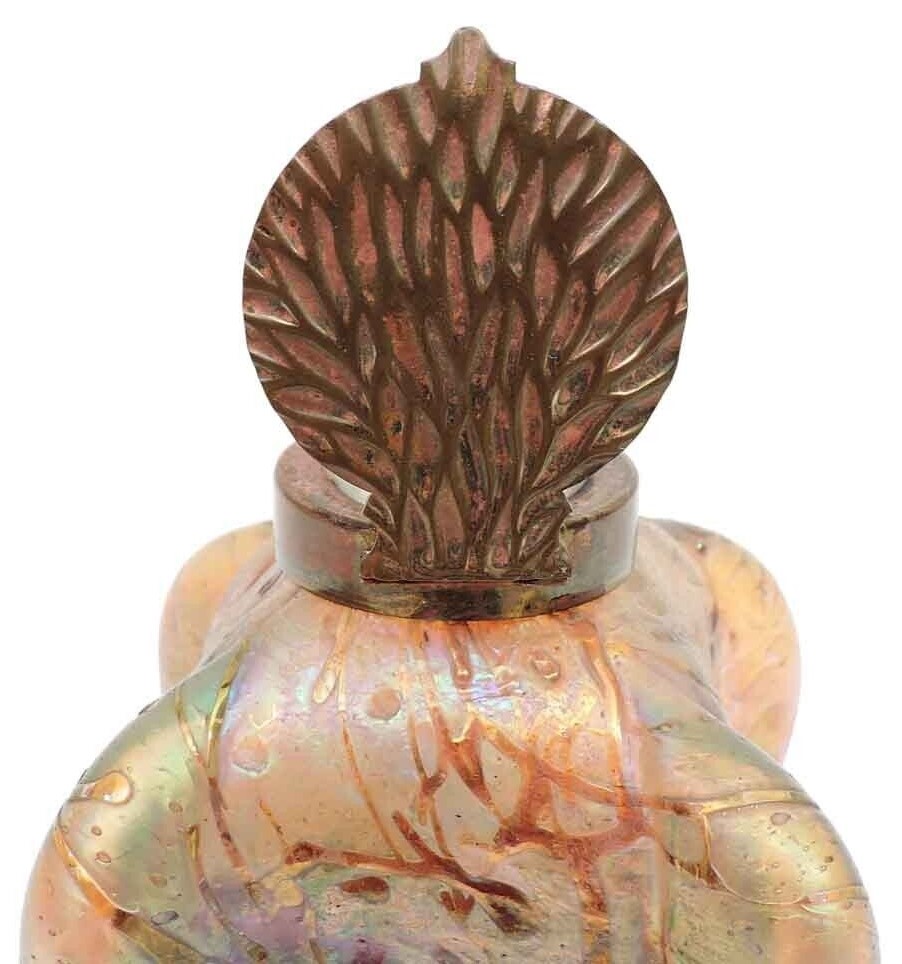
Pictured are two inkwells believed to be products of the Wilhelm Kralik Söhne glassworks (Bohemia, circa 1900–1910). While it is often mistaken for the more famous Loetz, this specific combination of a “crested” four-lobed shape and a cast brass leaf-pattern lid is a classic hallmark of Kralik’s high-volume, high-quality production.
Description
- Maker: Wilhelm Kralik Söhne (Bohemian/Austro-Hungarian).
- Decor: “Pampas” (also commonly referred to as “Veined”). This decor is characterized by a “ground” of iridescent glass (often green or amber) that has been “lashed” or wrapped with random, web-like glass threads while still molten. These threads catch the light differently than the base glass, creating the “veined” effect.
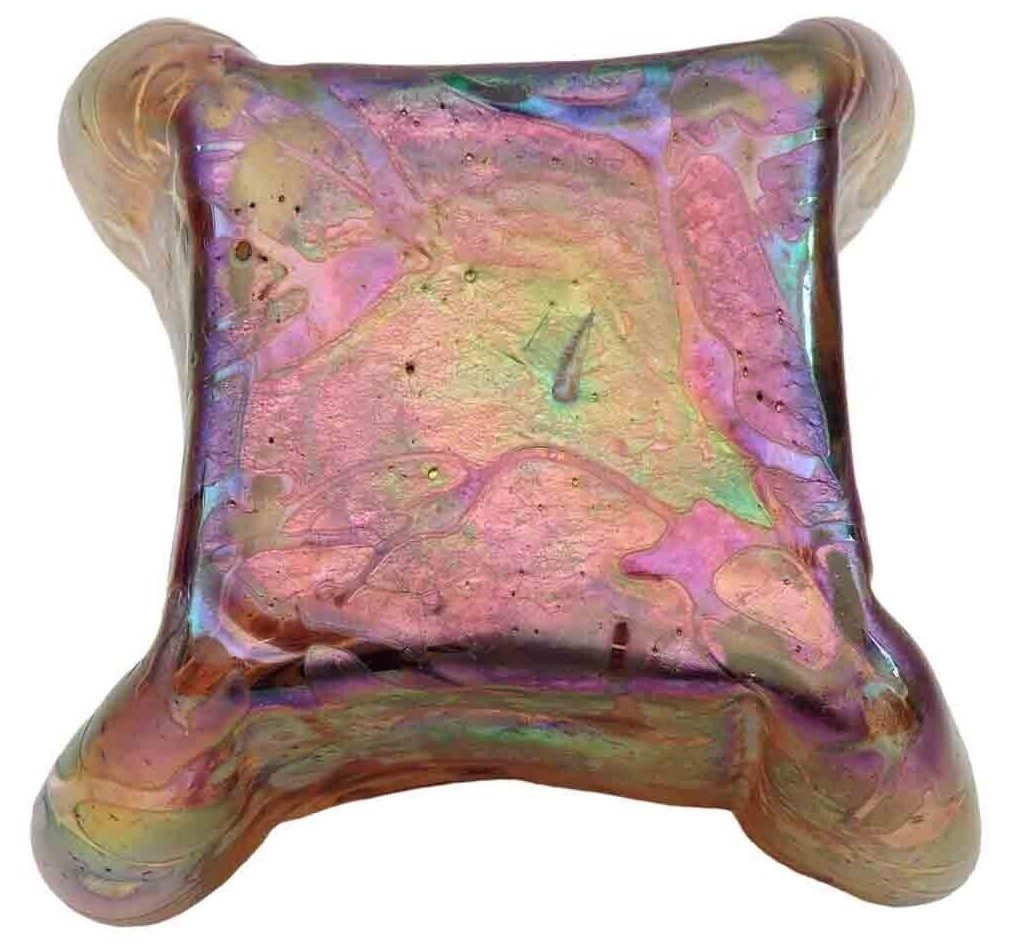
- Form: A “Four-Lobed” or “Crested” squat bun shape. Note the four “buttresses” or lugs at each corner that extend downward to form stylized feet. This is a well-documented Kralik shape.
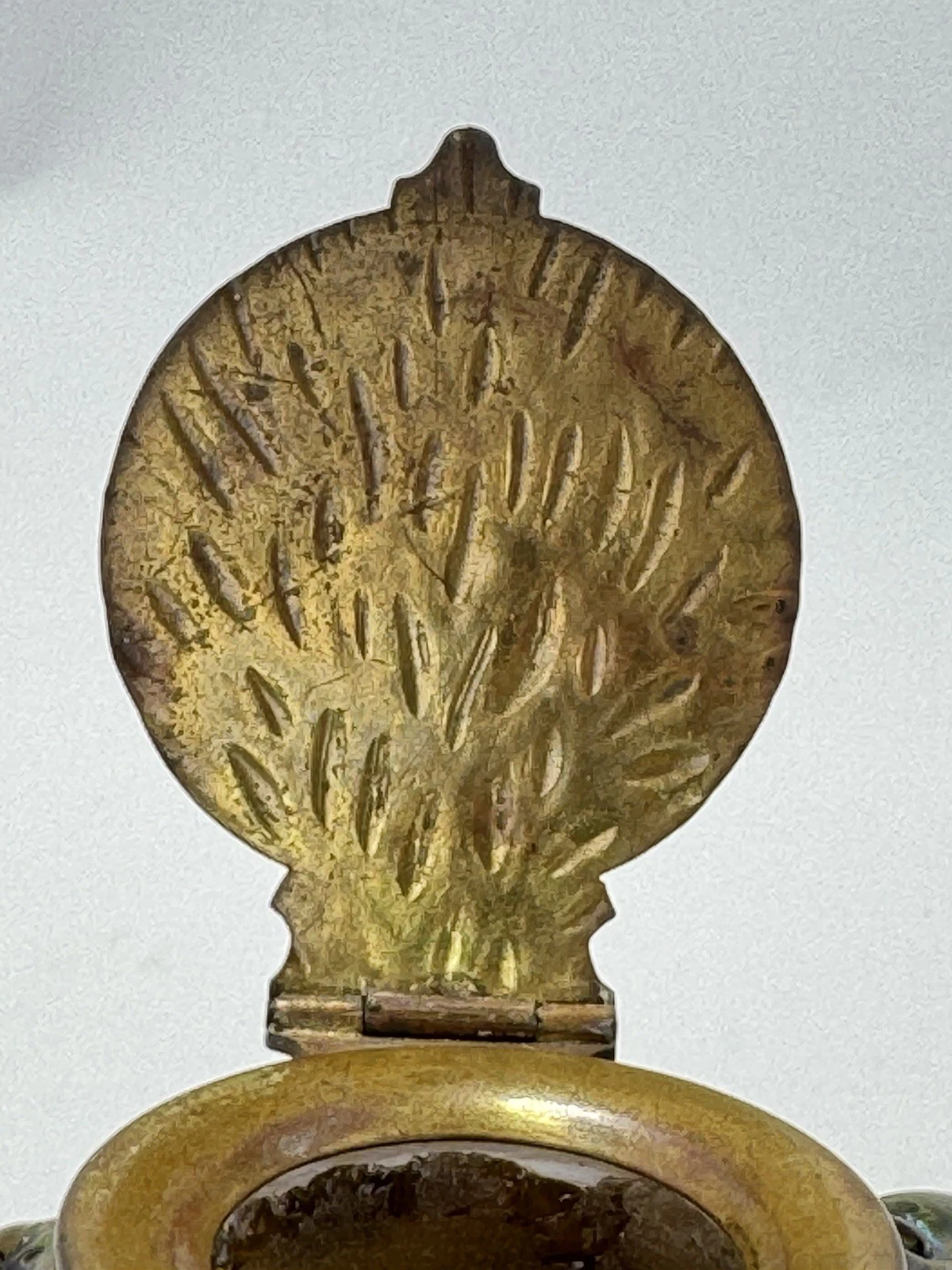
- Lid: A hinged, cast brass (or copper alloy) lid with a relief design of stylized leaf veins. The asymmetrical, lobed tab used to lift the lid is typical of the Jugendstil (Art Nouveau) period.
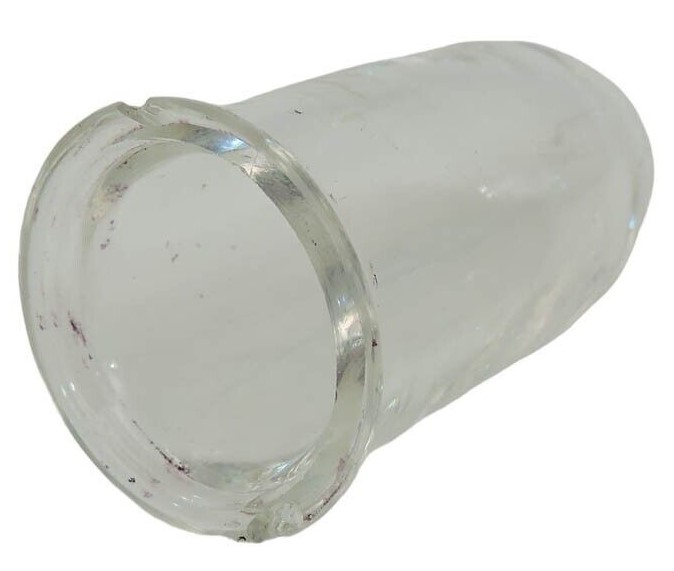
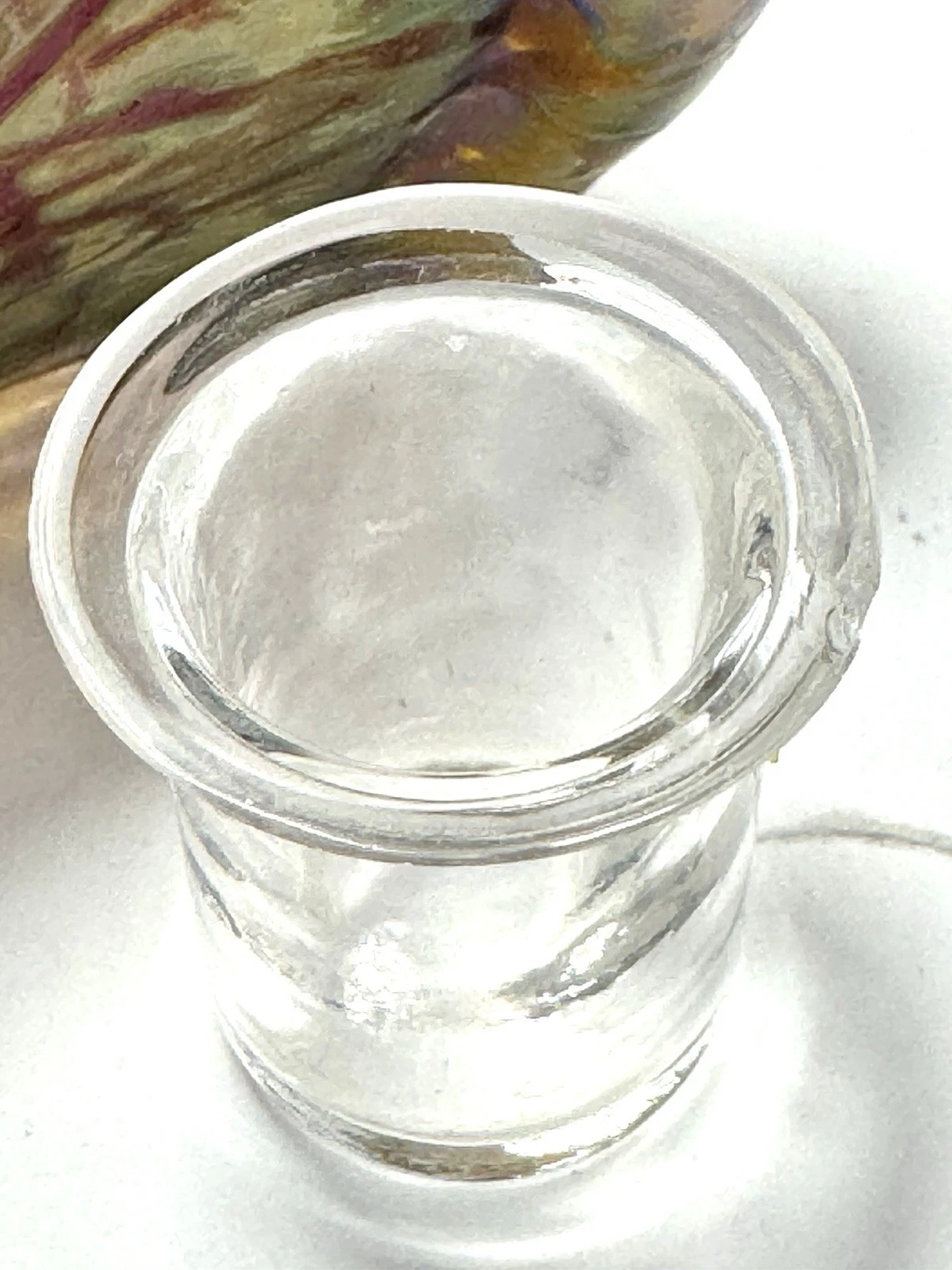
- Condition Details: The piece includes its original clear glass liner (insert).
How to Distinguish: Kralik vs. Loetz
Identifying Bohemian art glass can be tricky because these firms were rivals who frequently copied each other’s successful forms and decoration. Here are things to consider:
- The “Texture” of the Webbing
- Kralik (Pampas/Veined): The webbing on Kralik pieces (like this one) is usually applied as “raised” threads. If you run your fingernail over the glass, you can often feel the slight texture of the threads on the surface.
- Loetz (Phänomen/Papillon): Loetz decors like Papillon (oil spots) or Phänomen (combed waves) are usually “marvered” or rolled flat into the glass while hot, resulting in a surface that is perfectly smooth to the touch.
- The Metalwork (Lids and Collars)
- Kralik: They were masters of the “utility” art glass market. They frequently paired their inkwells with specific patented brass lids. Many Kralik lids carry Austrian or German patent marks (like D.R.G.M. or OE. P.) on the underside. Even when unmarked, the “leaf vein” and “berry” motifs are heavily associated with Kralik’s assembly line.
- Loetz: Their metal mounts were often more elaborate, sometimes made of silver or silver-plated pewter, and frequently designed by specific artists like Kolo Moser. Loetz inkwells are less likely to have these standard relief-cast brass leaf lids.
- The Base and “Pontil”
- Kralik: The base of this inkwell has a ground and polished pontil (a circular, smooth indentation where the glass was snapped off the blowing rod).
- Loetz: While Loetz also used polished pontils, their higher-end pieces are sometimes marked with an etched “Loetz Austria” or a crossed arrows mark. Unmarked Loetz is generally identified by matching the shape to its specific Production Number (PN) in historical archives—a level of documentation that rarely exists for Kralik.
Tip
If you ever find a piece with a very similar shape but the threads are much thicker and the glass looks almost like it’s covered in “drool,” it might be Pallme-König, another Bohemian contemporary known for much heavier, thicker glass “veining.”
Example #1 sold for $291 in September 2023.
Example #2 sold for $613 in March 2026
Content disclaimer. The information posted is the owner’s best knowledge and may not have been vetted by the SOIC. We welcome comments, corrections, and additions, working to make our website information comprehensive and accurate.
Join the Society of Inkwell Collectors (SOIC) – it’s free!
Founded in 1981 as a non-profit organization,
we are documenting inkwells (and accessories).
We’re here to help and inform!