

Inkipedia
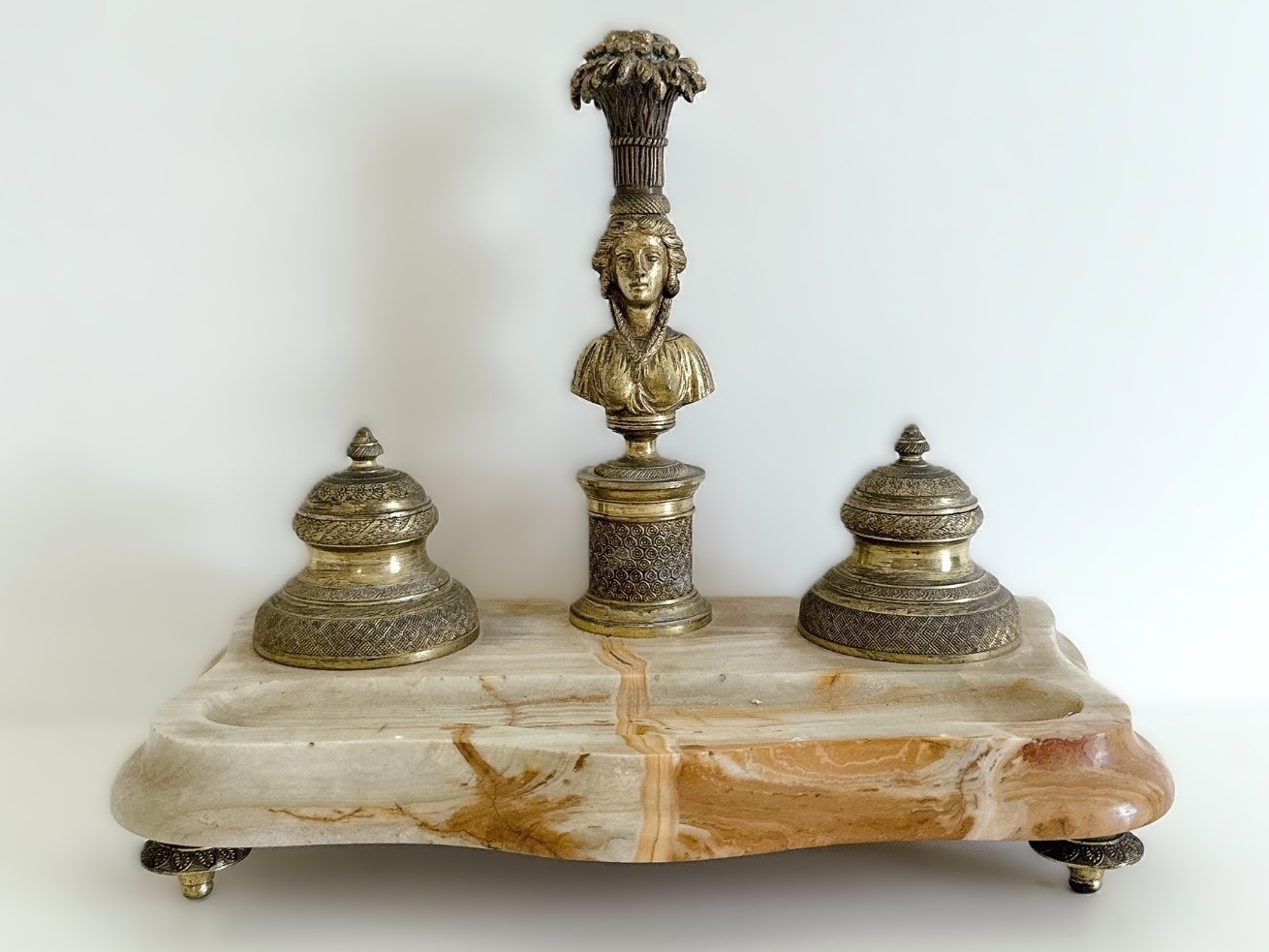
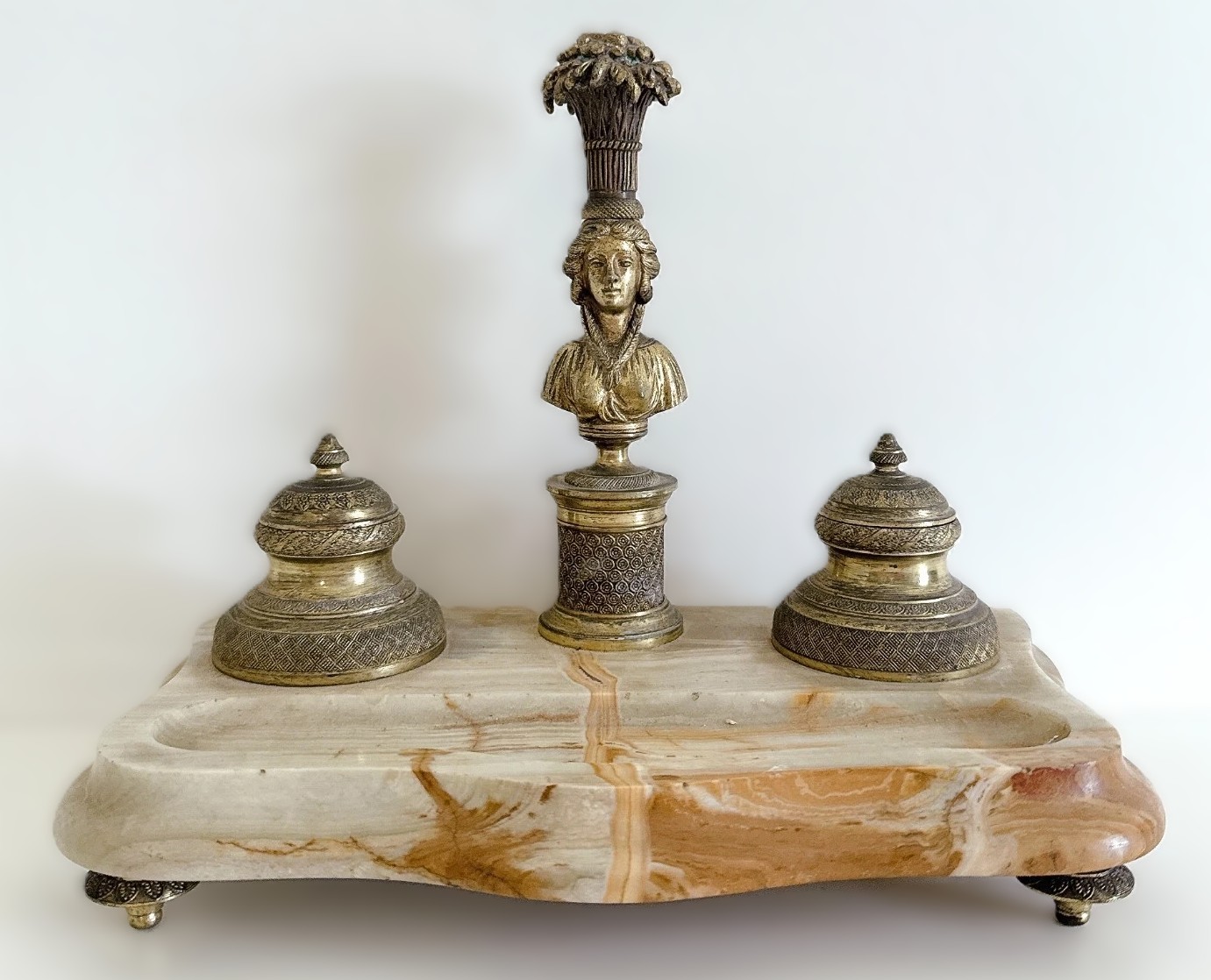
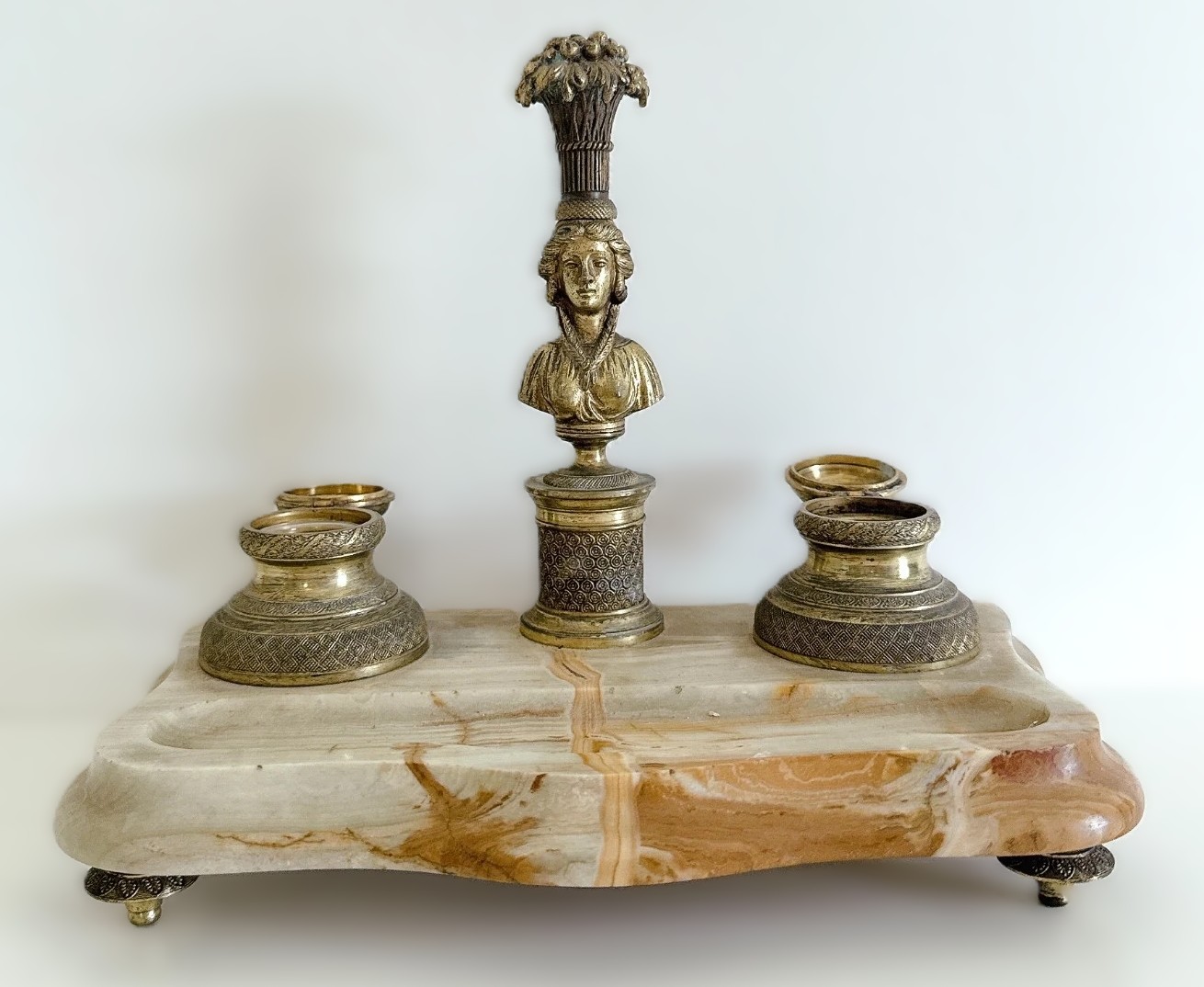
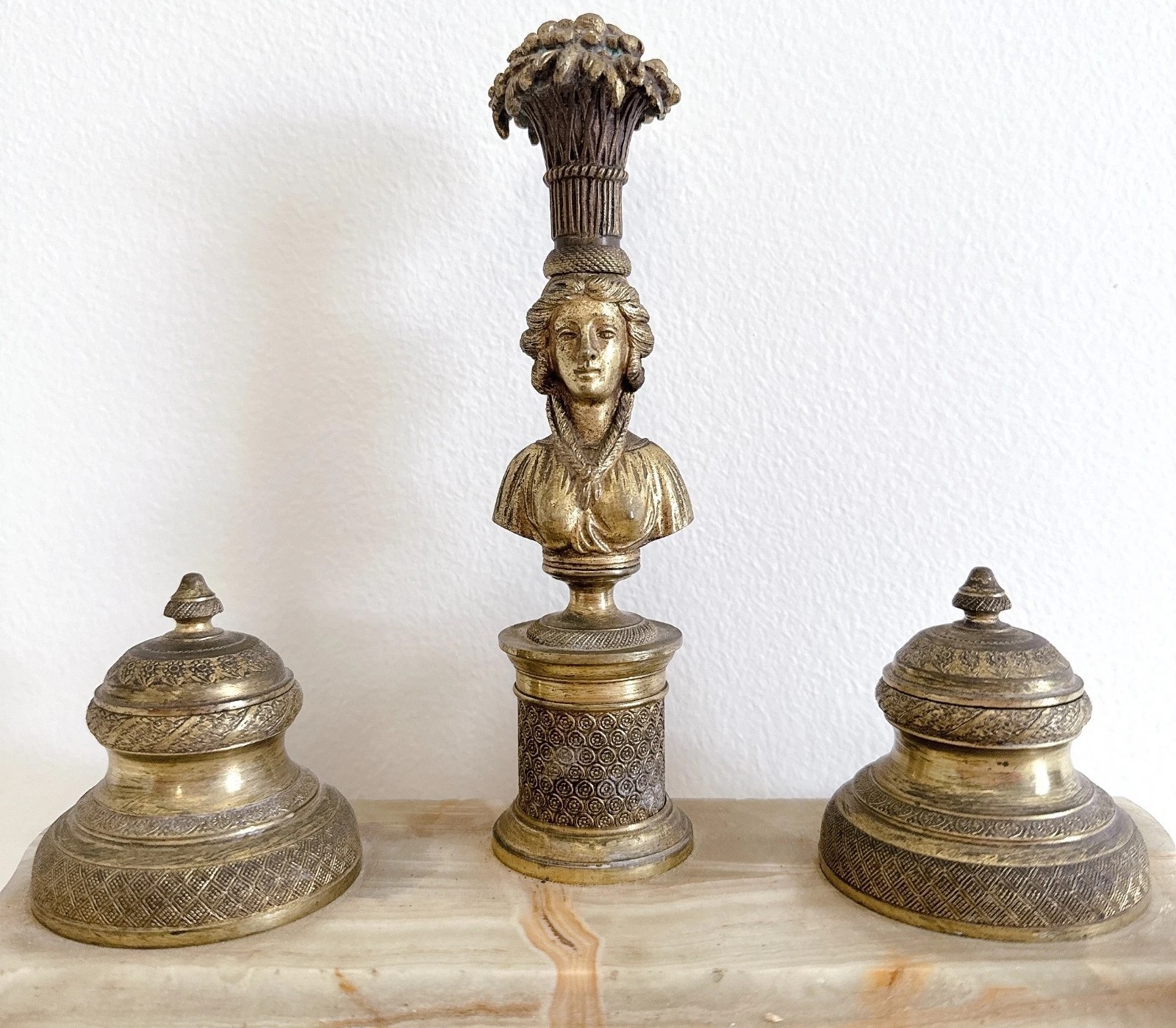
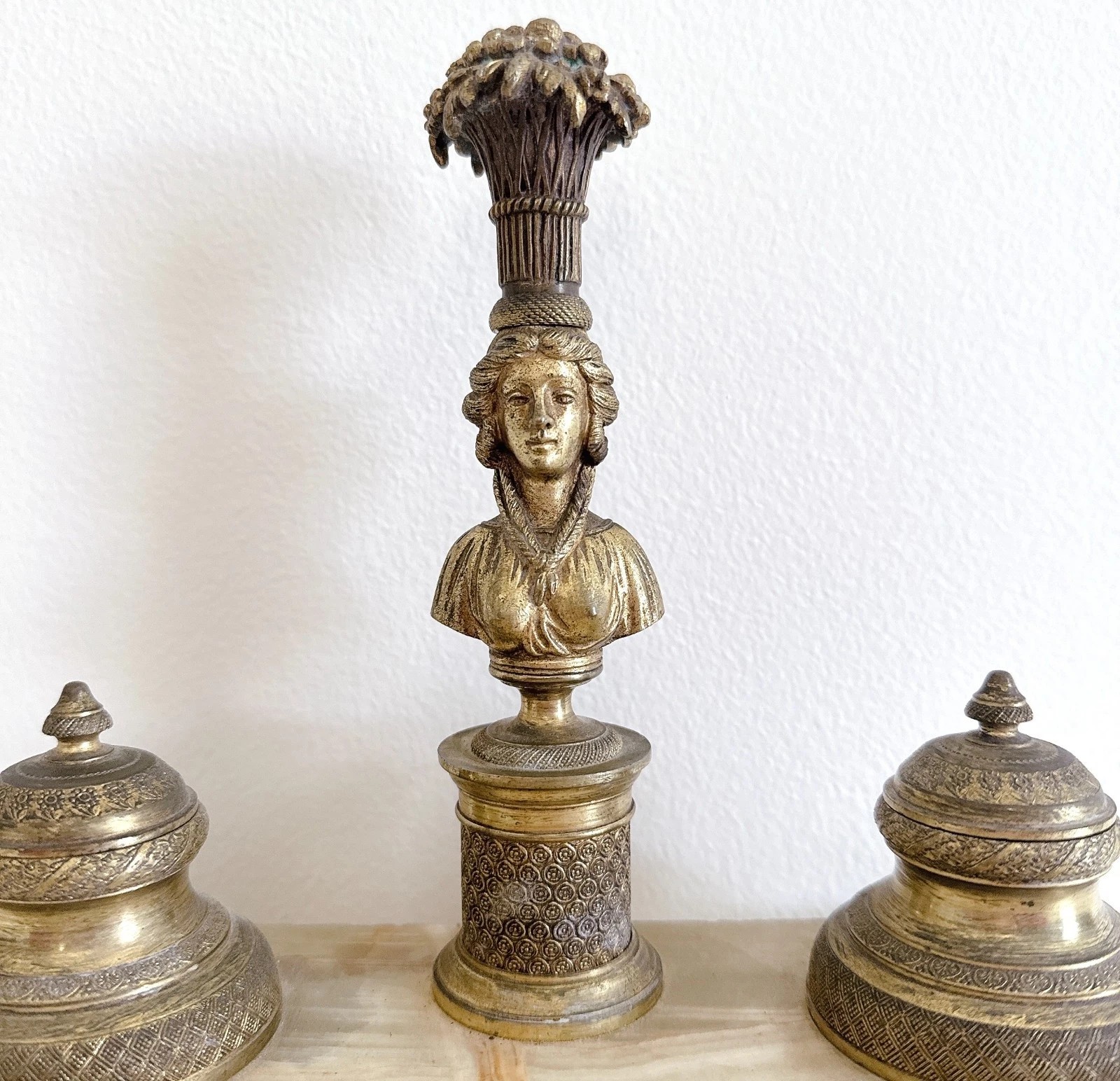
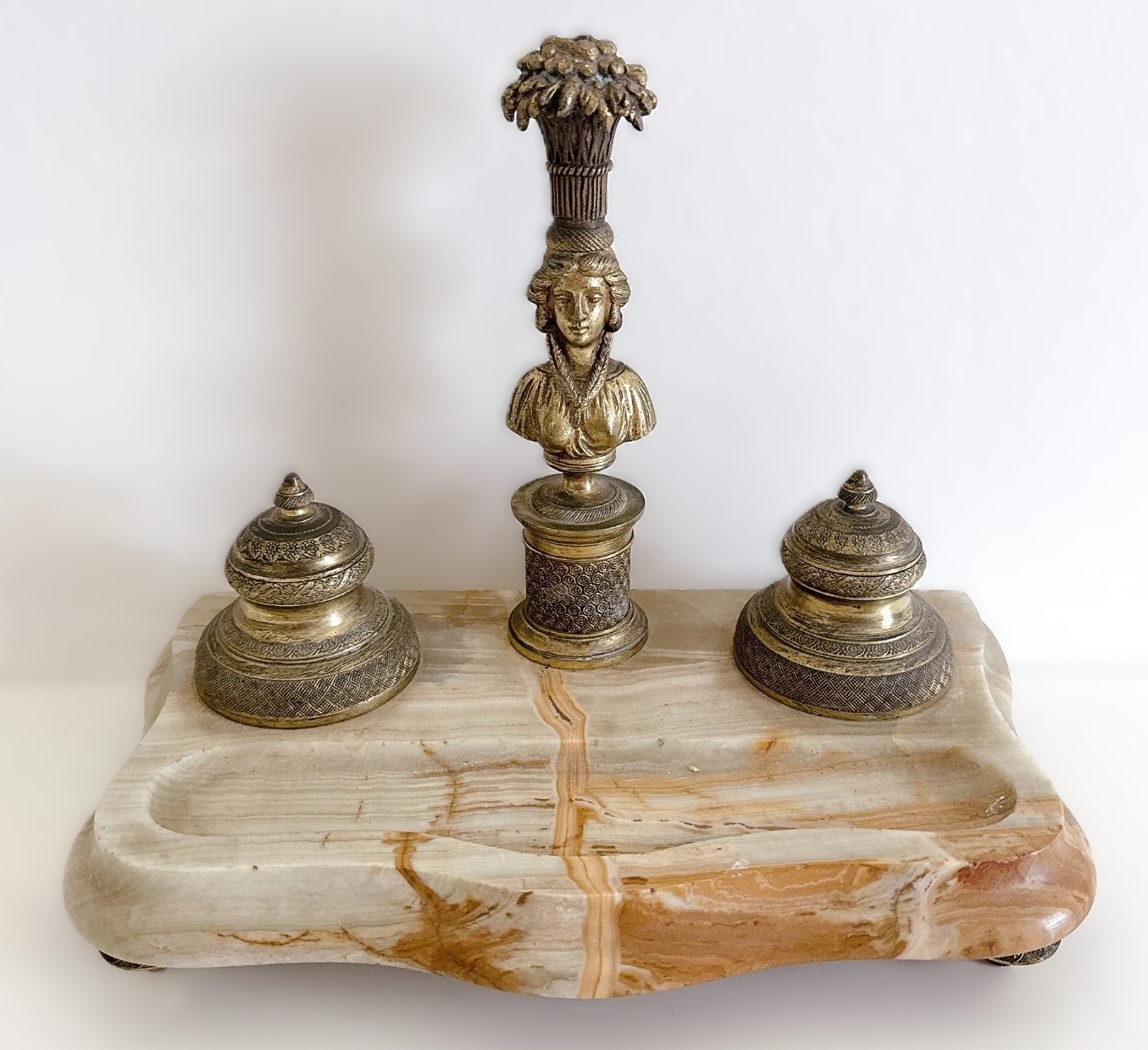
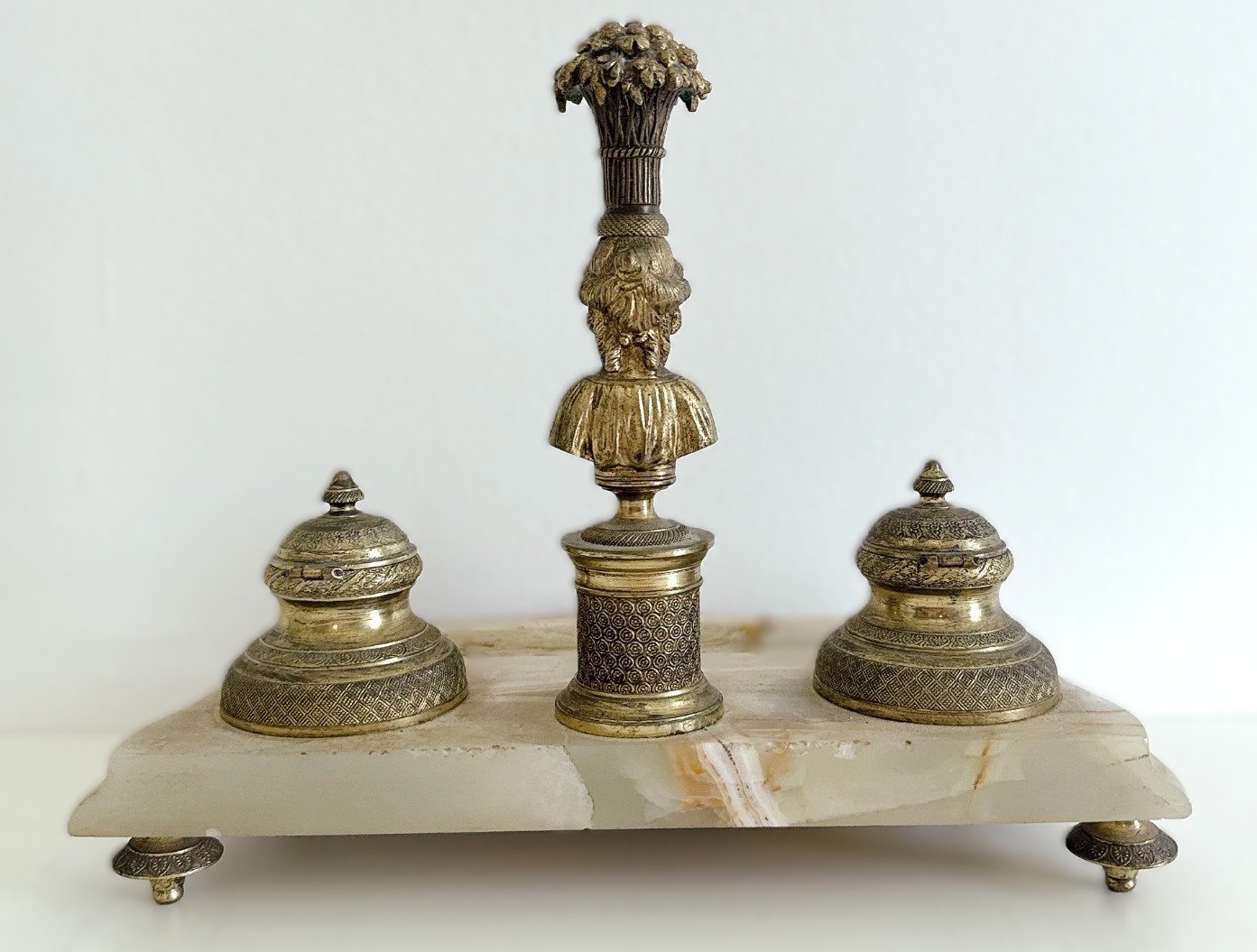
Banded Onyx & Brass Double Inkstand with Bust of Ceres
| Categories | Figural - Mythology; Literature; Religion; Fictional, Stone/Marble/Ivory/Bone/Hoof/Leather |
| Material | Brass, Marble |
| Markings | Unmarked |
| Manufacturer | Undetermined |
| Origin | France |
| Date or Era | circa 1880 |
| Measuring | 11” x 6” x 8 ½” high |
Description This double inkstand is made from carved banded onyx-marble with cast brass mounts.
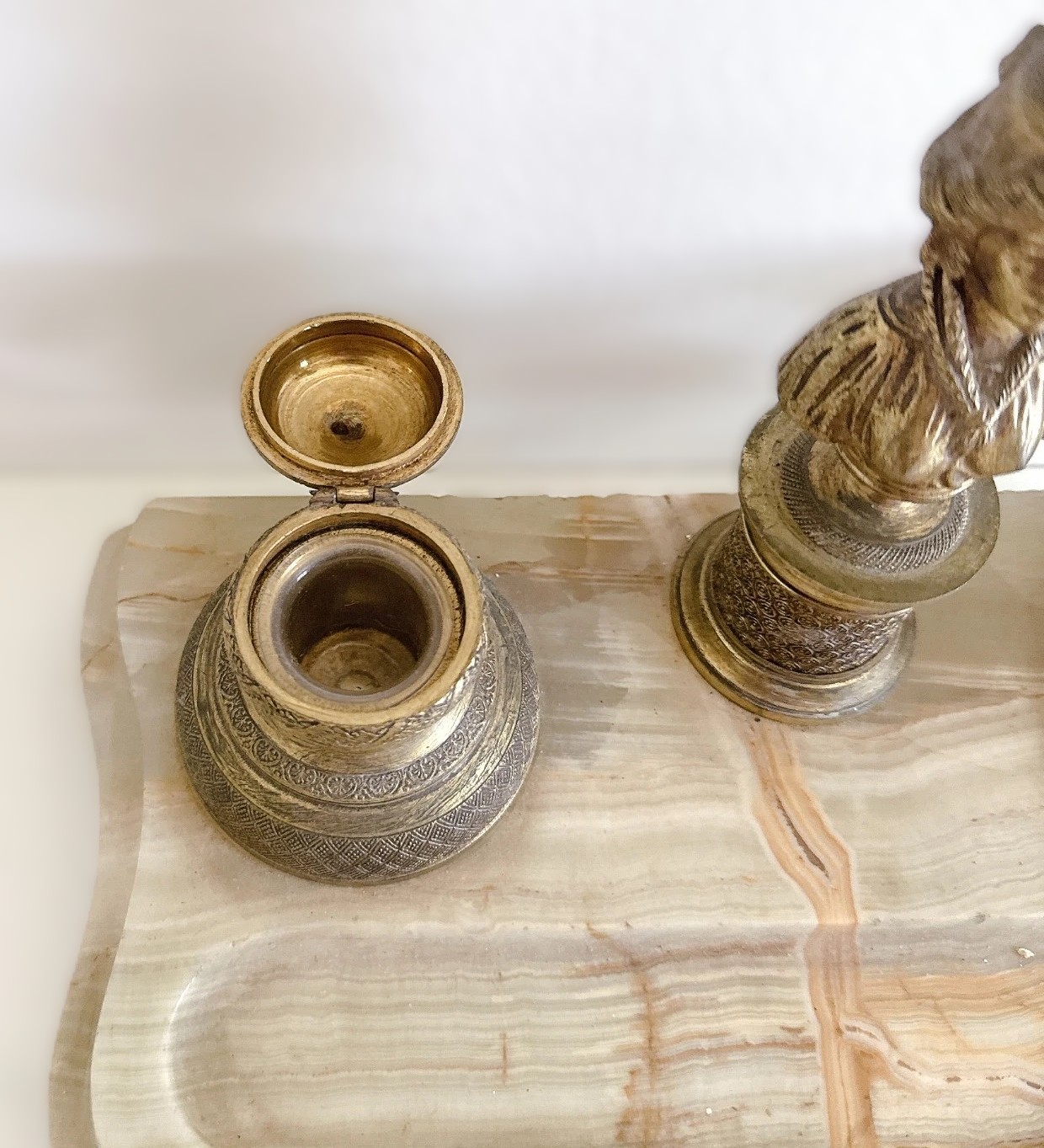
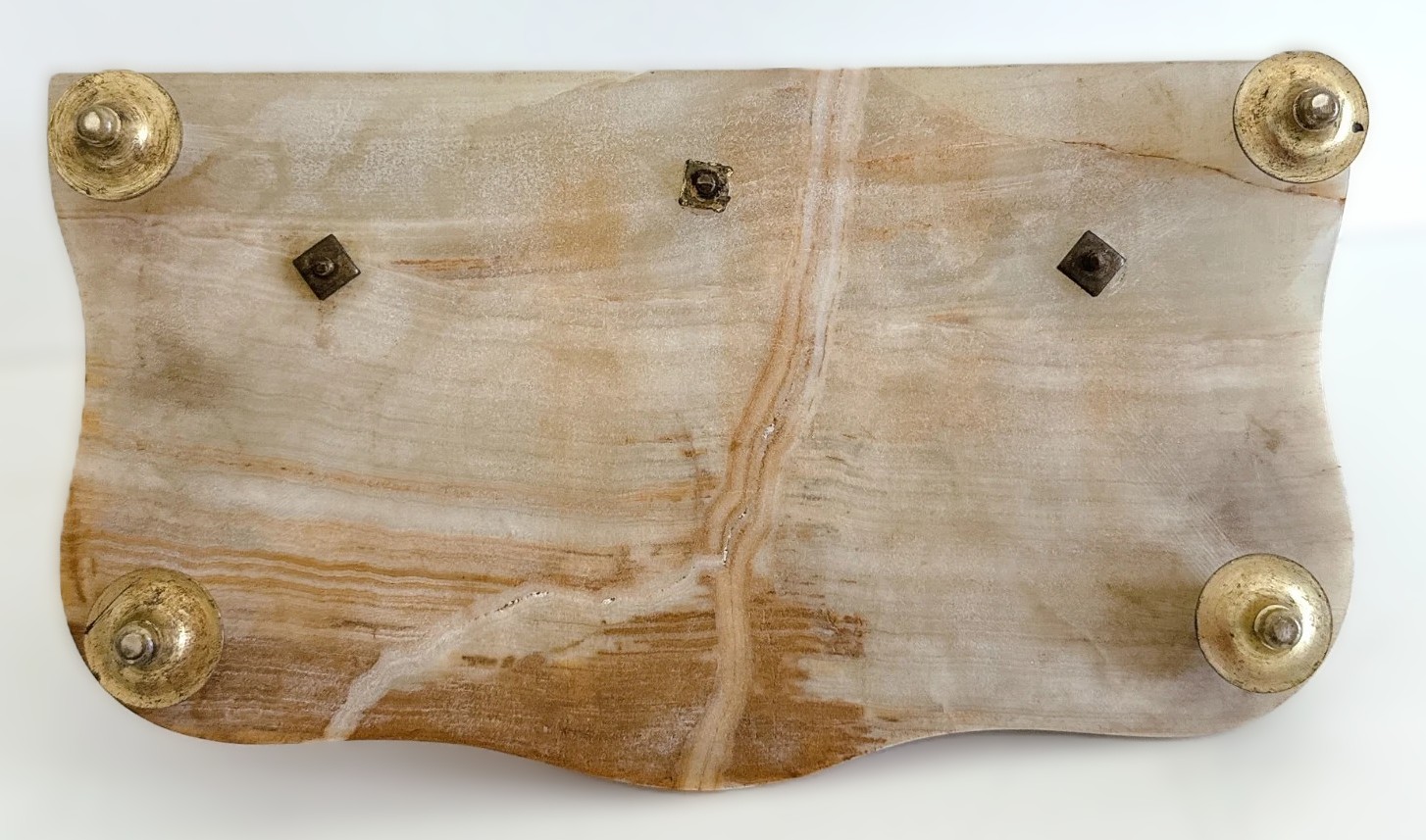
- Base: Carved from banded cream and caramel onyx-marble (often called Algerian onyx or travertine onyx) featuring a deep, sculpted pen trough along the front and resting on four cast foliate feet.
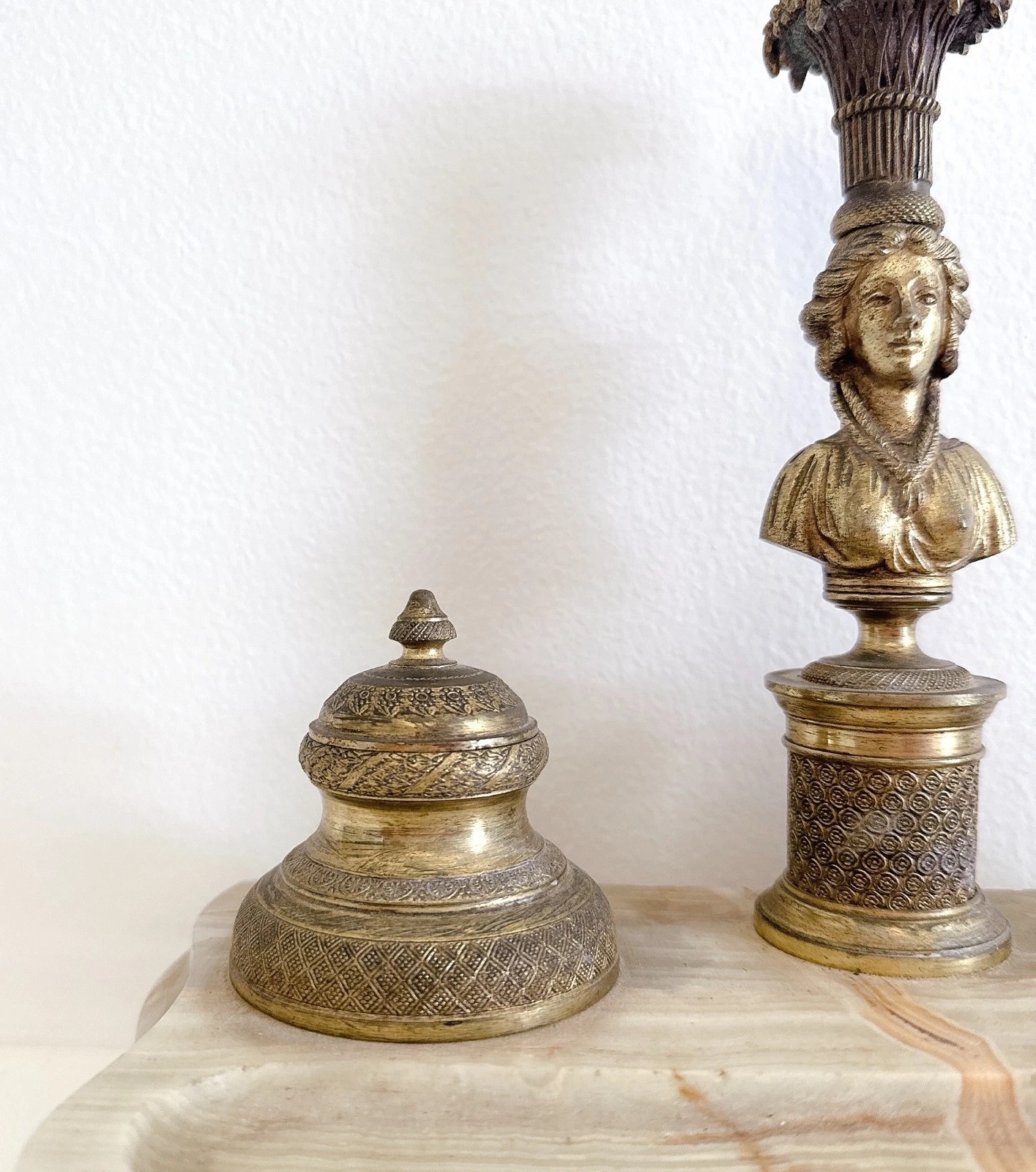
- Inkwells: Symmetrically placed on either side, the two inkwells feature heavy banded borders with diaper-pattern (crosshatch) and scroll engraving, topped by domed, hinged lids with finials and fitted with removable clear glass inserts.
- Central Figure: A neoclassical bust raised on a cylindrical diaper-patterned plinth, capped by a tied sheaf of wheat (sheaf of grain) rising vertically above her head.
Subject & Symbolism
- Identity: The bust represents Ceres (the Roman goddess of agriculture, grain crops, and the harvest—equivalent to the Greek goddess Demeter), or an allegory of Summer / The Harvest (L’Été / La Moisson).
- Iconography: The prominent sheaf of wheat bound with stalks above her headdress and her classical drapery are classic 18th- and 19th-century allegorical emblems of abundance and fertility.
Origin, Date & Maker
- Where Made: Most likely France (Paris). French foundries specialized in pairing fine banded onyx with detailed cast bronze and brass desk sets during this era. (Northern Italy is a secondary possibility, though the assembly and pattern work strongly point to French manufacture).
- When Made: Circa 1870–1890 (Napoleon III / Late 19th-Century Neoclassical Revival).
- Maker: An unattributed Parisian decorative arts foundry or workshop. Such luxury desk accessories were produced in small batches by commercial casting ateliers and sold through high-end retailers (marchands-merciers). Unless a foundry cachet or retailer stamp is hidden on the bottom rim of the central plinth or stamped into the base castings, individual makers on these pieces typically remain anonymous.
Sold for $137 in July 2026
Content disclaimer. The information posted is the owner’s best knowledge and may not have been vetted by the SOIC. We welcome comments, corrections, and additions, working to make our website information comprehensive and accurate.
Join the Society of Inkwell Collectors (SOIC) – it’s free!
Founded in 1981 as a non-profit organization,
we are documenting inkwells (and accessories).
We’re here to help and inform!