

Arts & Crafts Knox-Attributed Celtic Knotwork Inkstand & Glass Well
| Categories | Arts & Crafts |
| Material | Glass, White metal |
| Markings | Unmarked |
| Manufacturer | Archibald Knox |
| Origin | England |
| Date or Era | circa 1905 |
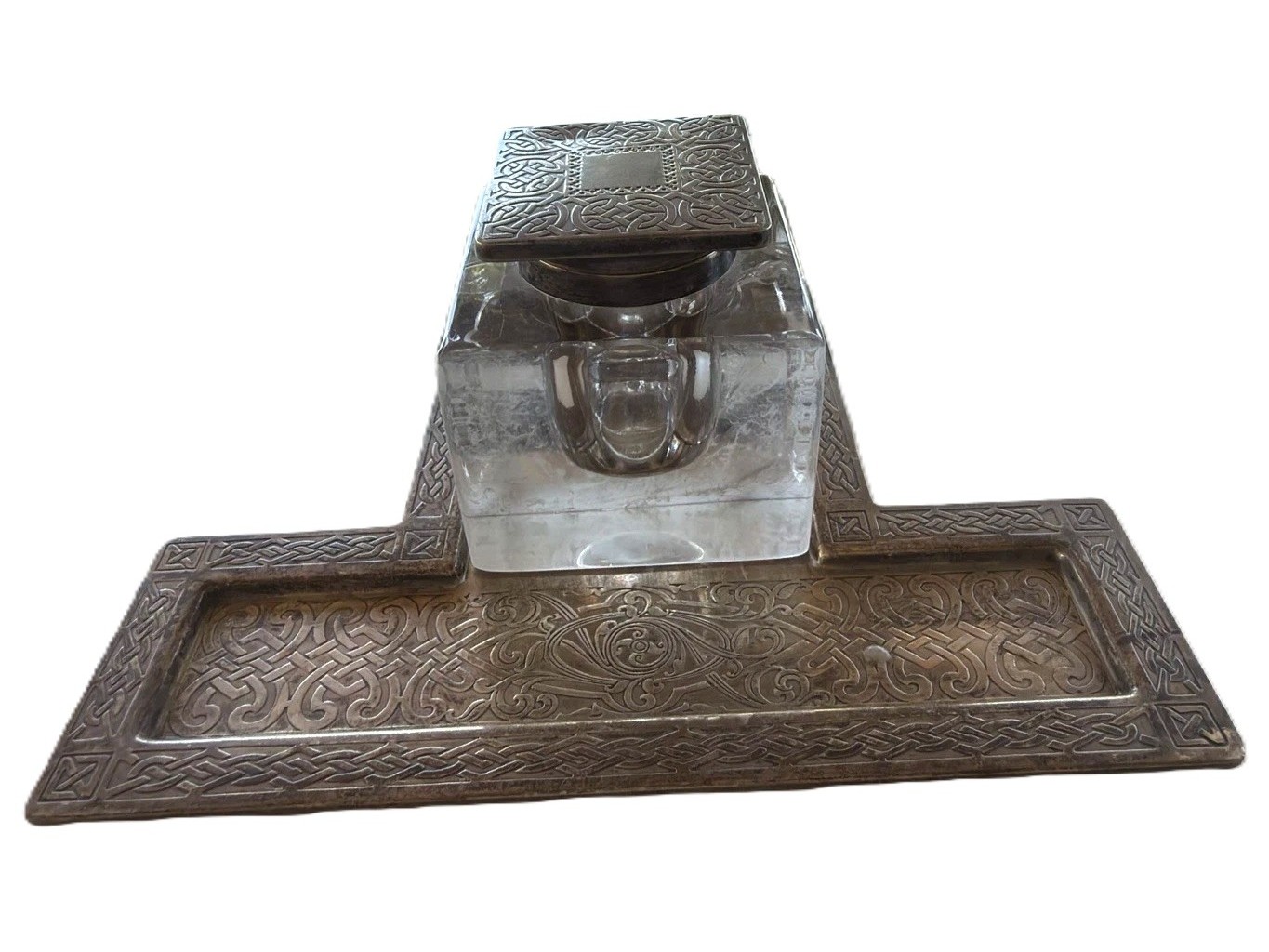
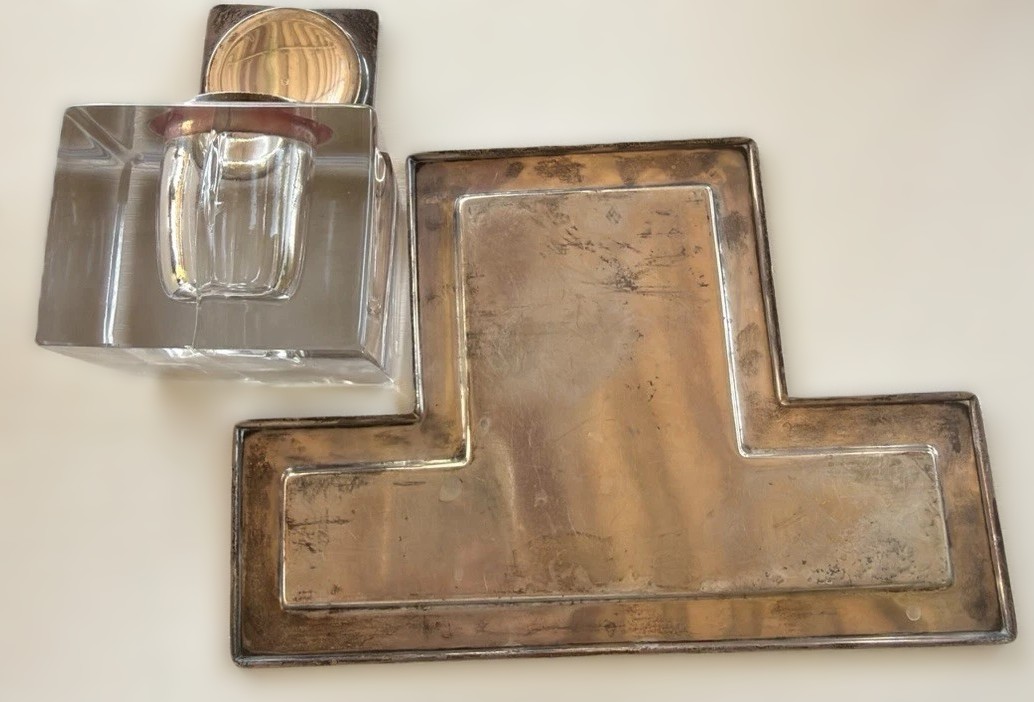
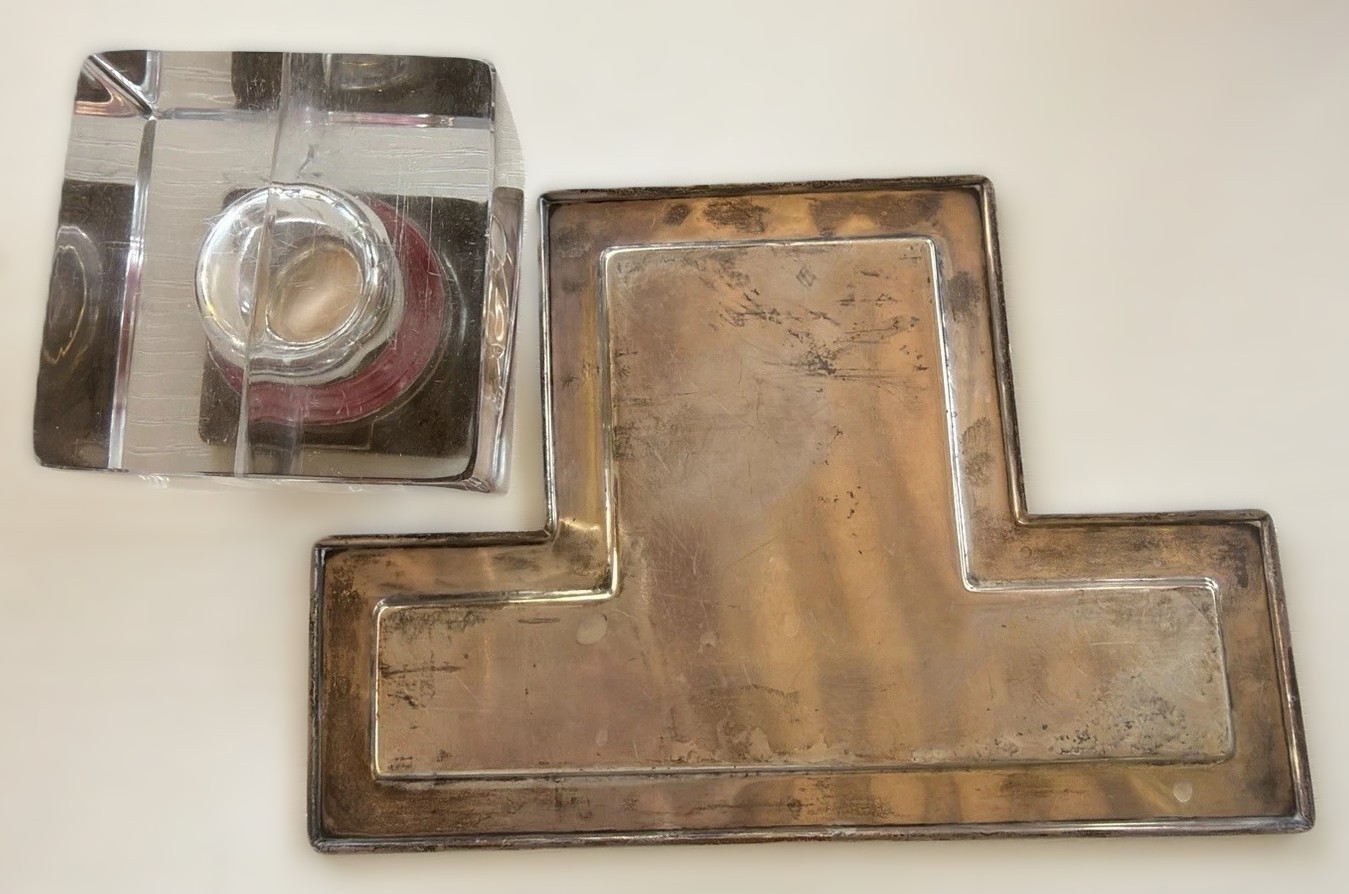
Description This is a British Arts & Crafts / Celtic Revival desk inkstand featuring a T-shaped base and a heavy, clear block glass inkwell fitted with a matching hinged metal cap.
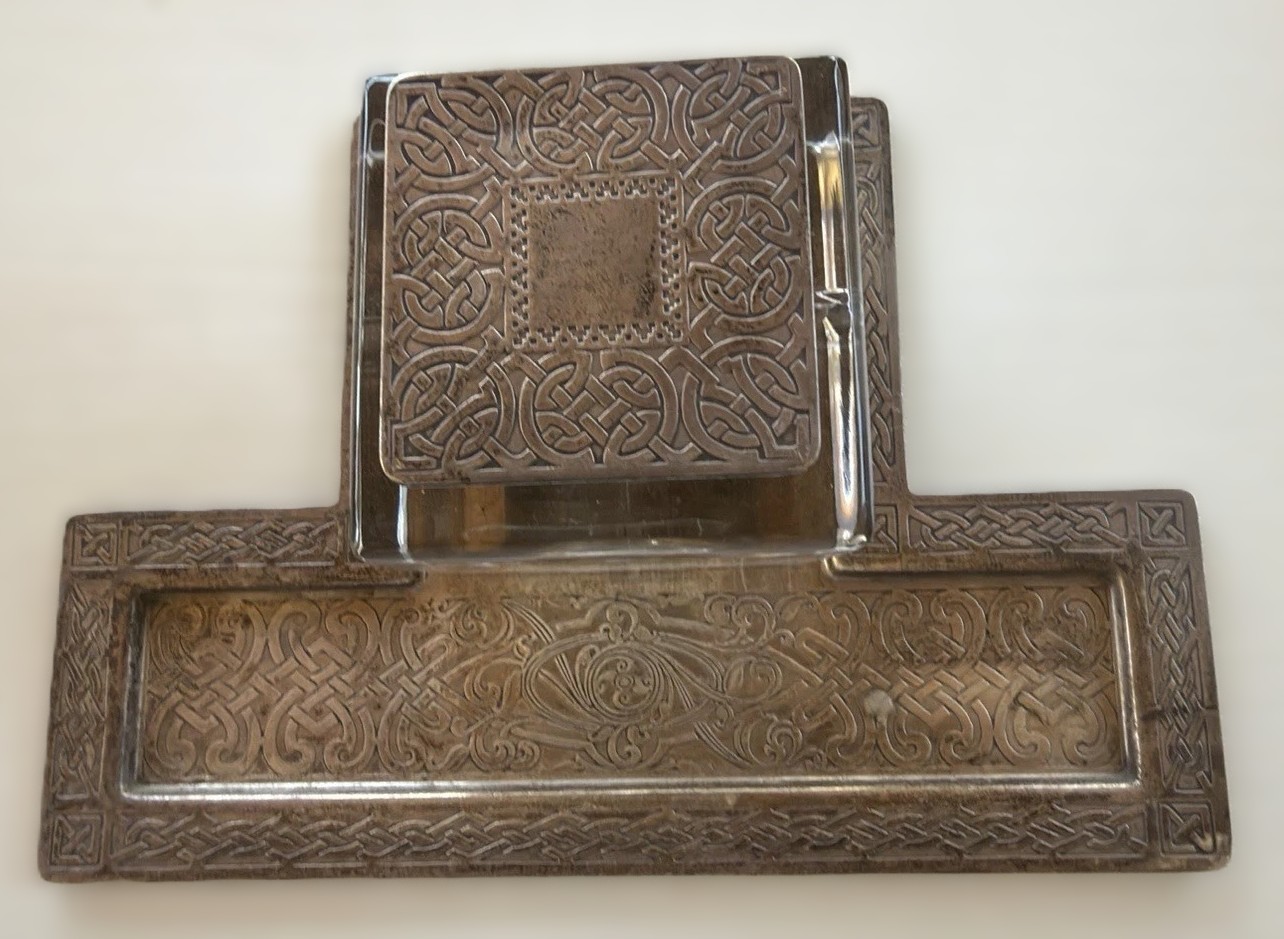
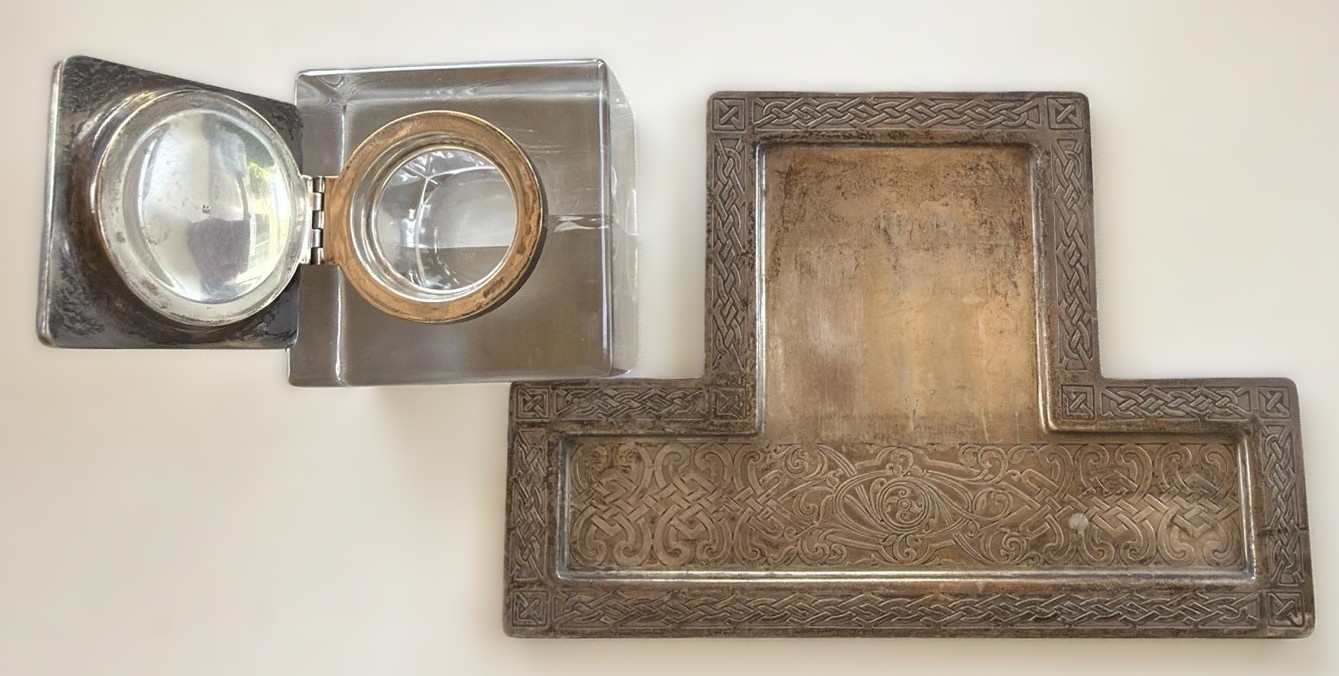
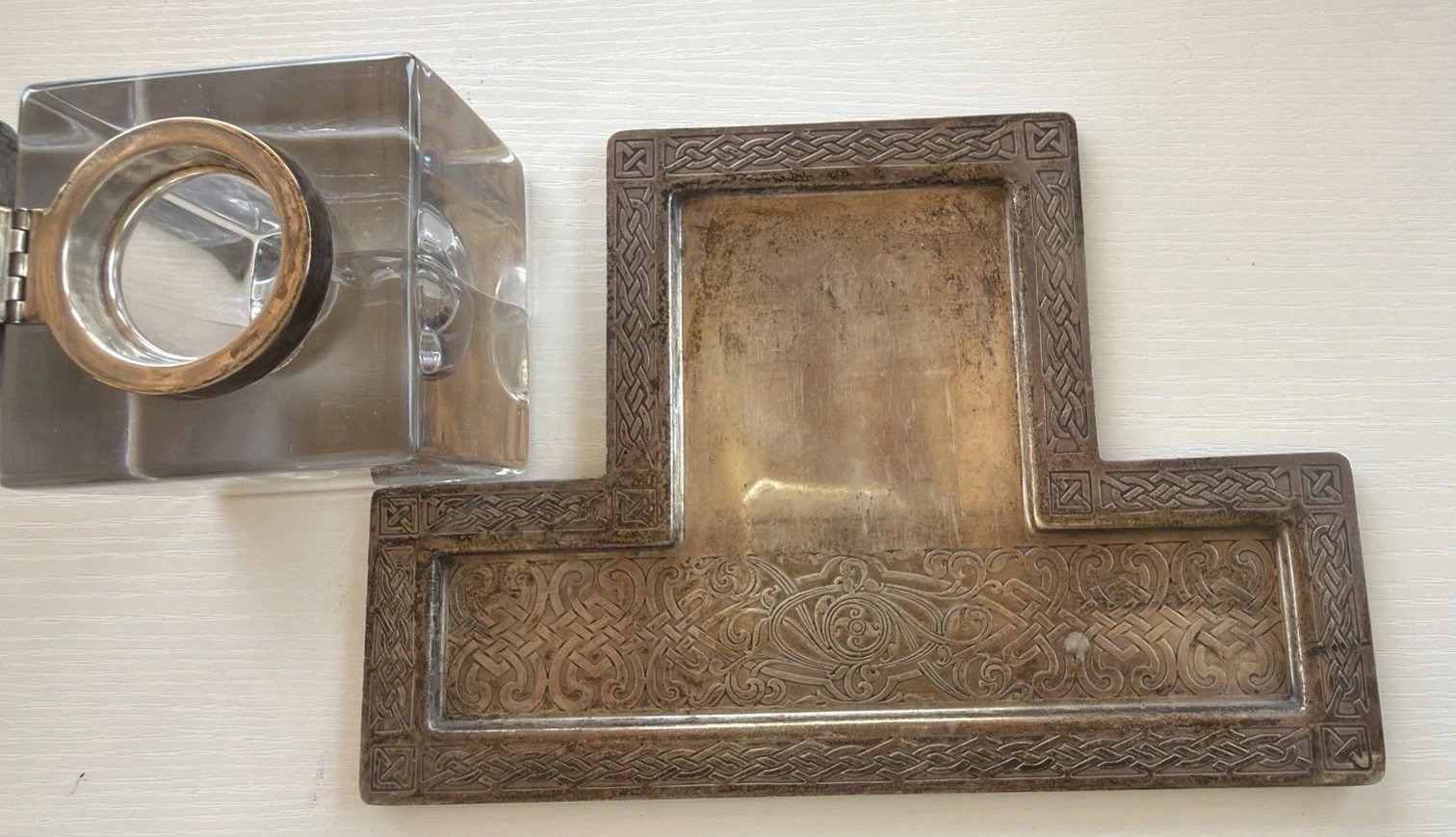
- Base Tray: Features a stepped T-form profile. The sunken pen tray at the front and the elevated glass holder at the back are both bordered by a continuous relief band of entwined Celtic knotwork and geometric corner motifs. The interior surface of the tray is decorated with fine low-relief Celtic interlace and spiraling triskele tendril patterns.
- Inkwell: A heavy, square-cut, bevel-edged glass well with a deep cylindrical reservoir. It is topped with a hinged, square metal cover bearing a matching dense Celtic knot pattern around a central plain reserve, opening on a metal collar.
Origin & Manufacturer
- Manufacturer: Produced for Liberty & Co. of London, likely as part of their famous Cymric line of silver deskware and accessories.
- Designer: The distinctive Celtic interlace, geometric borders, and fluid, elongated knotwork are characteristic signatures of the Manx artist Archibald Knox (1864–1933), Liberty’s leading designer of the Celtic Revival and Modern Style (British Art Nouveau).
- Place of Manufacture: Made in England (most likely Birmingham or London, where Liberty’s silver workshops and manufacturing partners such as W.H. Haseler were based).
Date of Production
- Period: Circa 1900–1905 (during the height of the Arts & Crafts and British Celtic Revival movement).
Attribution to Liberty & Co. This inkstand corresponds directly to Liberty & Co.’s catalog model design (model 500/series in their Cymric silver/plated range).
- The T-Shape Form: The stepped, T-shaped footprint designed to hold a heavy square glass inkwell behind a recessed pen channel is a documented, proprietary Liberty design manufactured by W.H. Haseler of Birmingham.
- Anonymity Practice: Liberty & Co. maintained a strict policy of keeping their designers and makers anonymous to control the brand. While most pewter/silver items received stamped serial numbers or manufacturer marks underneath (e.g., TUDRIC, ENGLISH PEWTER, or model digits), unmarked examples or pieces with worn/polished-out marks are well-documented in Liberty production runs.
Attribution to Archibald Knox The design is attributed to Archibald Knox (1864–1933). Knox was Liberty’s primary designer for the Celtic Revival and British Art Nouveau lines. His authorship is verified through several hallmarks of his stylistic vocabulary:
- Manx Celtic Interlace: Growing up on the Isle of Man, Knox spent years studying and drawing early medieval Celtic stone crosses and illuminated manuscripts.
- Fluid Organic Integration: Rather than applying flat patterns onto a surface, Knox’s signature technique treats the knotwork as organic tendrils that split, weave, and merge into central triskele motifs, as seen in the pen trough’s center panel.
- Geometric/Knotwork Fusion: The crisp border of interlace framing the rectangular steps and the square-capped lid are classic Knox motifs used across his desk ware, clocks, and belt buckles for Liberty.
Application of the Knotwork The decorative knotwork was produced using historic stamping techniques:
- Drop-Forging / Press-Stamping (for Plated Base Metals): For silver-plated wares, heavy steel dies carved with Knox’s patterns were stamped onto metal sheets under high pressure. The tray and lid borders were embossed/stamped from these dies, assembled, hand-chased to sharpen the details, and then given an oxidized or hand-polished patina to make the relief pop against the darker recessed areas.
This inkstand is made of white metal (specifically electroplated nickel silver / EPNS), not solid silver or electroplated sterling.
- The Metal Body: The warm, subtle golden-brass undertones visible through the high points of wear—particularly on the flat base tray beneath the glass block and along the underside—reveal a nickel silver or brass base alloy (often called “white metal”) underneath thin silver plating.
- Silverplate Finish: The collar and hinged cover over the glass liner show clear silverplating that has oxidized into a deep gray patina over time. While Knox’s model 0403/0404 designs were primarily cast in solid pewter for Liberty’s Tudric line, Liberty & Co. also produced parallel runs in electroplated white metal under their Cymric and electroplate ranges.
Sold for $58 in August 2026
Content disclaimer. The information posted is the owner’s best knowledge and may not have been vetted by the SOIC. We welcome comments, corrections, and additions, working to make our website information comprehensive and accurate.
Join the Society of Inkwell Collectors (SOIC) – it’s free!
Founded in 1981 as a non-profit organization,
we are documenting inkwells (and accessories).
We’re here to help and inform!