

Inkipedia





Art Nouveau Woman’s Bust
| Categories | Art Nouveau |
| Material | White metal |
| Markings | Unmarked |
| Manufacturer | Undetermined |
| Origin | United States |
| Date or Era | circa 1910 |
| Measuring | 2 ¾” x 2” x 2 ¾” high |
This Art Nouveau figural inkwell dates to the early 20th century (c. 1900–1915).
- Description and Style
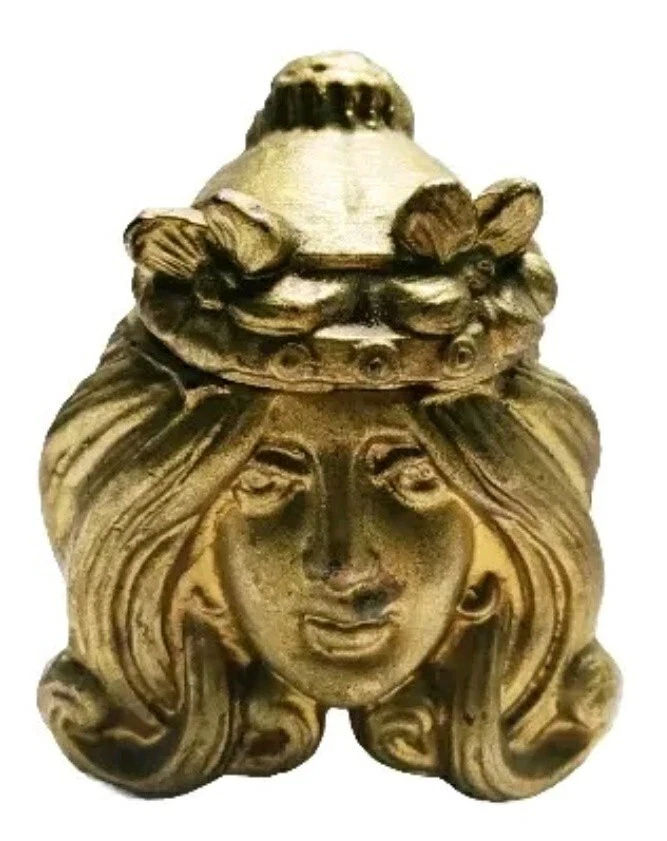
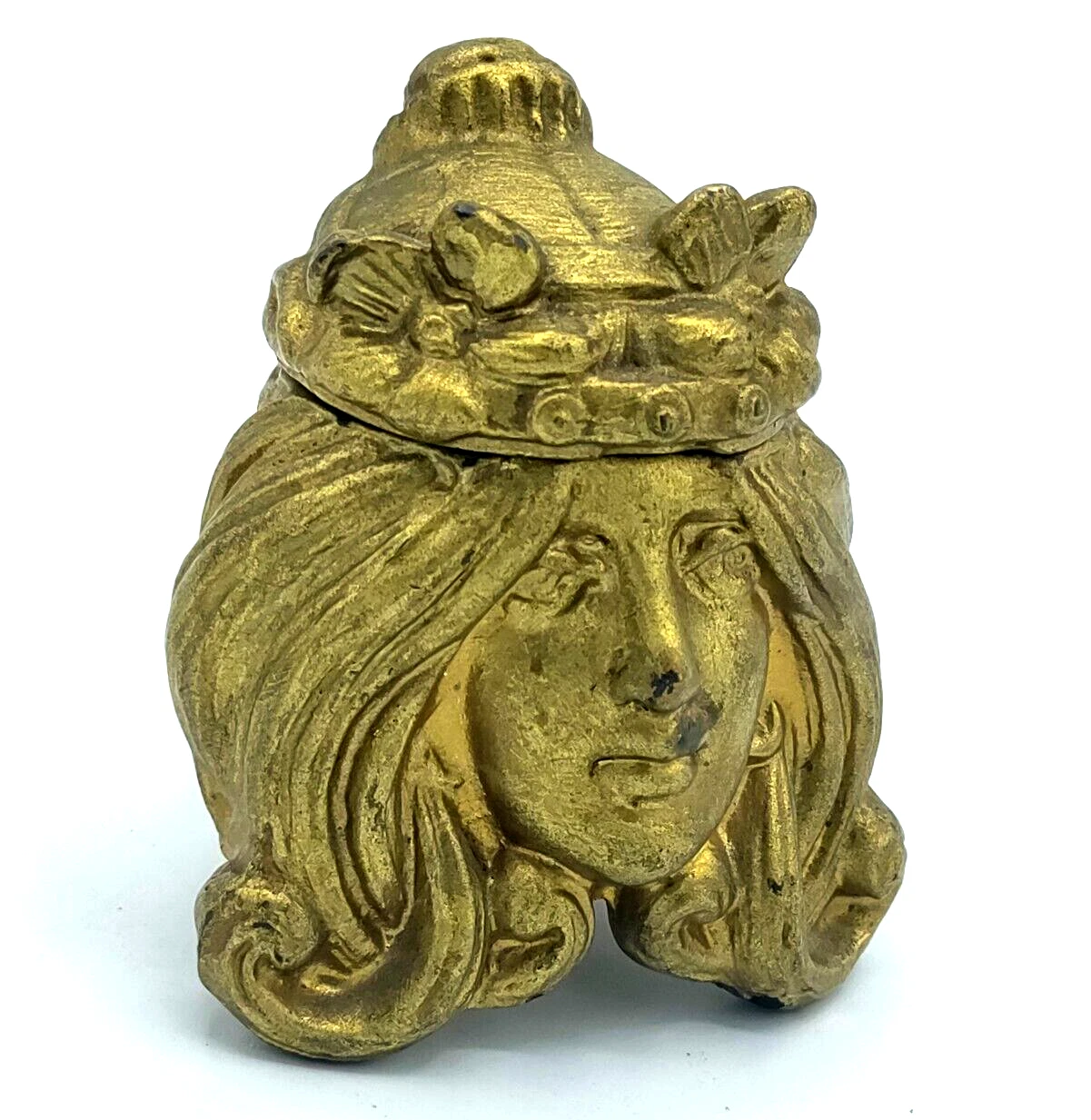
- Form: The inkwell is modeled as a bust of a woman in the Art Nouveau style.
- The Hair: Her long, flowing hair cascades down to form the base of the inkwell. This emphasis on organic, sinuous lines is the defining characteristic of the Art Nouveau movement.
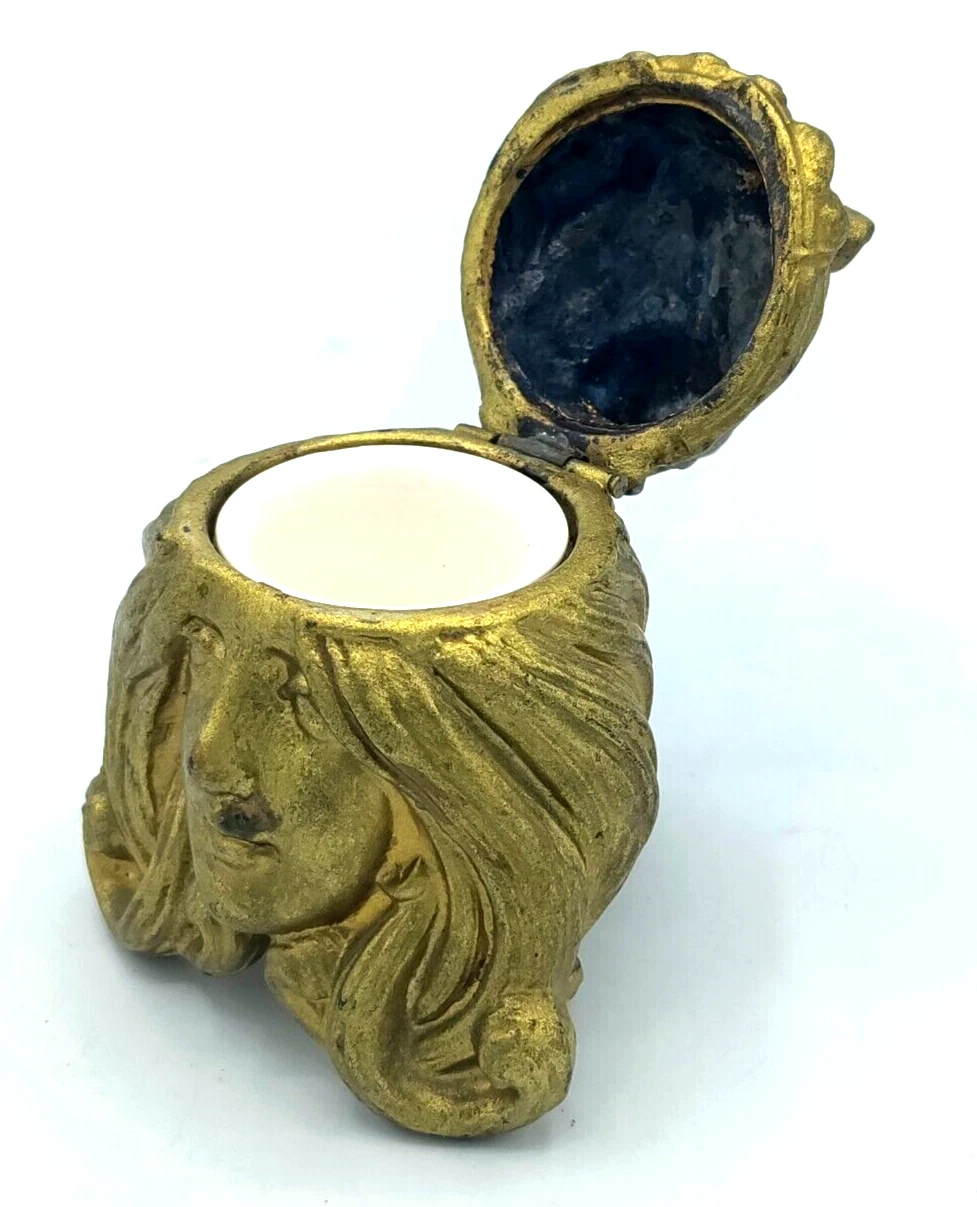
- The Garland: She wears a wreath or garland of flowers and leaves around her head, which functions as the hinged lid.
- Mechanism: The top of the head flips open to reveal a white ceramic ink insert nestled inside the hollow metal head.
- Material: It is made of a white metal alloy (spelter or a lead-antimony alloy) which was then gilded (coated in a gold finish).
- Origin and Maker
- Origin: Likely United States
- The “Dreamy Maiden” motif was popular.
- The casting style and the use of gold-painted spelter (often called “French Bronze” or “Pompeian Gold” in catalogs) strongly points to American manufacturing centers like Connecticut or New York.
- Age
- Date: Circa 1900–1915.
- This “Gibson Girl” or “Nouveau Nymph” aesthetic went out of fashion after World War I, replaced by the geometric Art Deco style.
Sold for $120 in November 2025
Content disclaimer. The information posted is the owner’s best knowledge and may not have been vetted by the SOIC. We welcome comments, corrections, and additions, working to make our website information comprehensive and accurate.
Join the Society of Inkwell Collectors (SOIC) – it’s free!
Founded in 1981 as a non-profit organization,
we are documenting inkwells (and accessories).
We’re here to help and inform!