

Art Nouveau Brass-Inlaid Rosewood Inkwell
| Categories | Art Nouveau, Wood Inkstands |
| Material | Brass, Glass, Wood |
| Markings | Unmarked |
| Manufacturer | Erhard & Söhne |
| Origin | Germany |
| Date or Era | circa 1905 |
| Measuring | 8 ½” x 5” x 2” high |
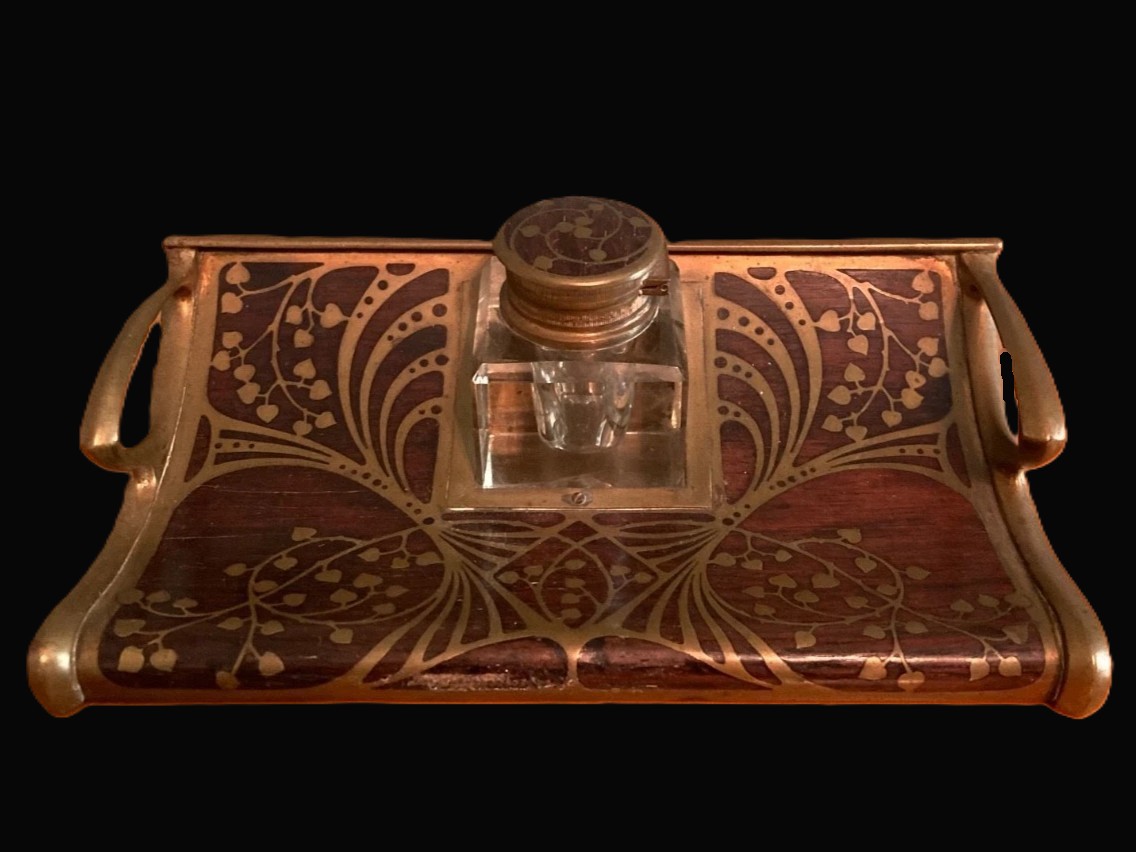
This inkstand is a nice example of German Jugendstil (Art Nouveau) decorative metalwork.
Description
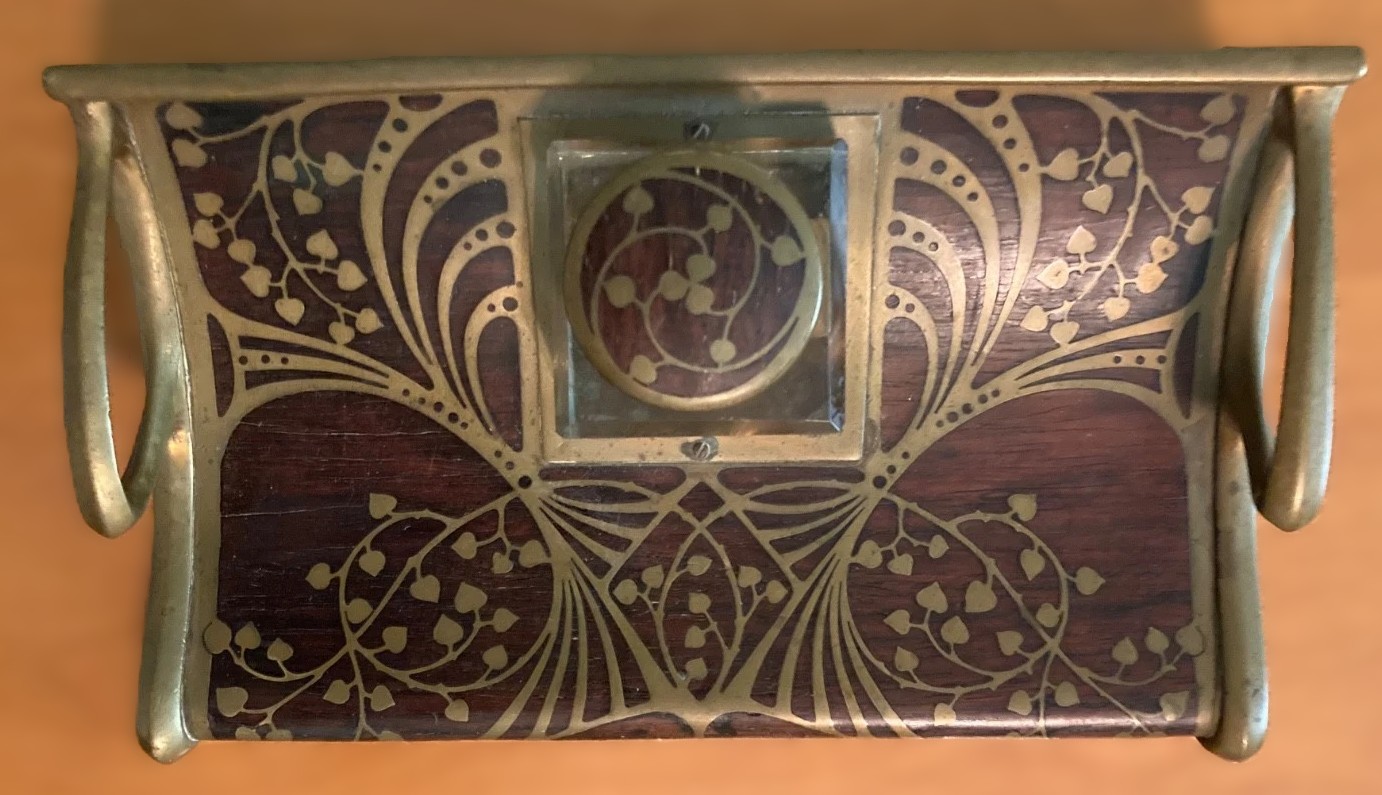
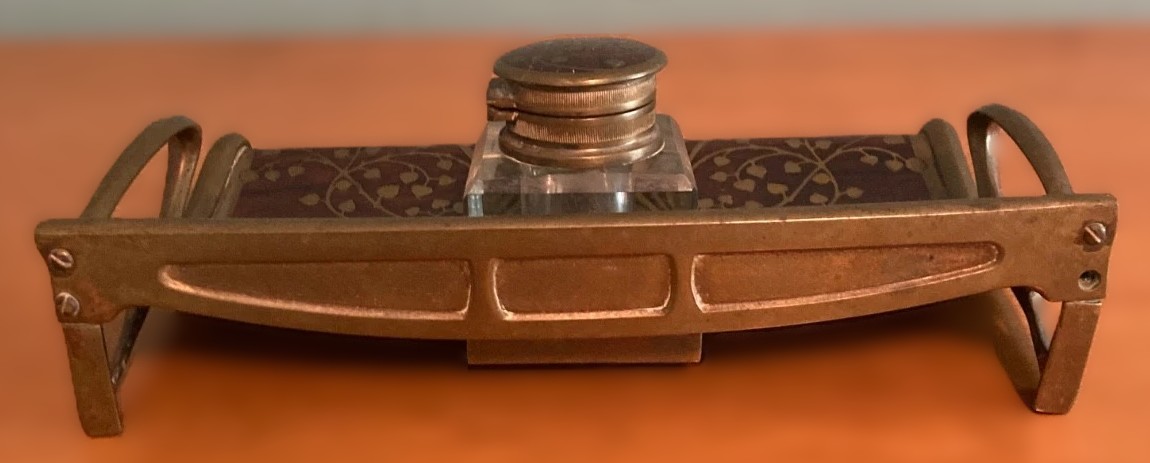
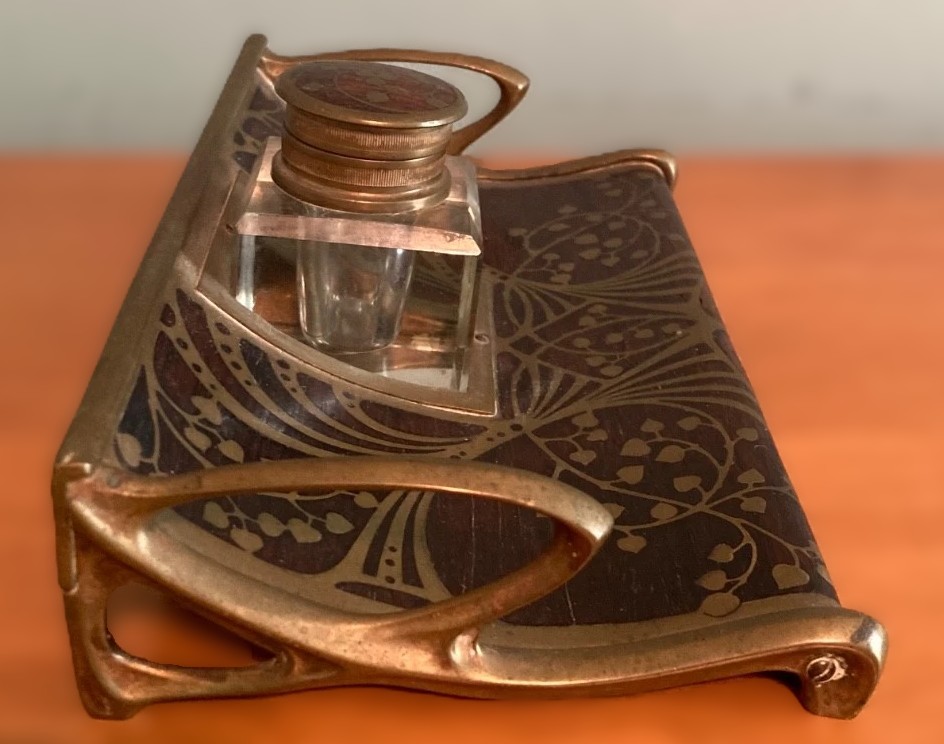
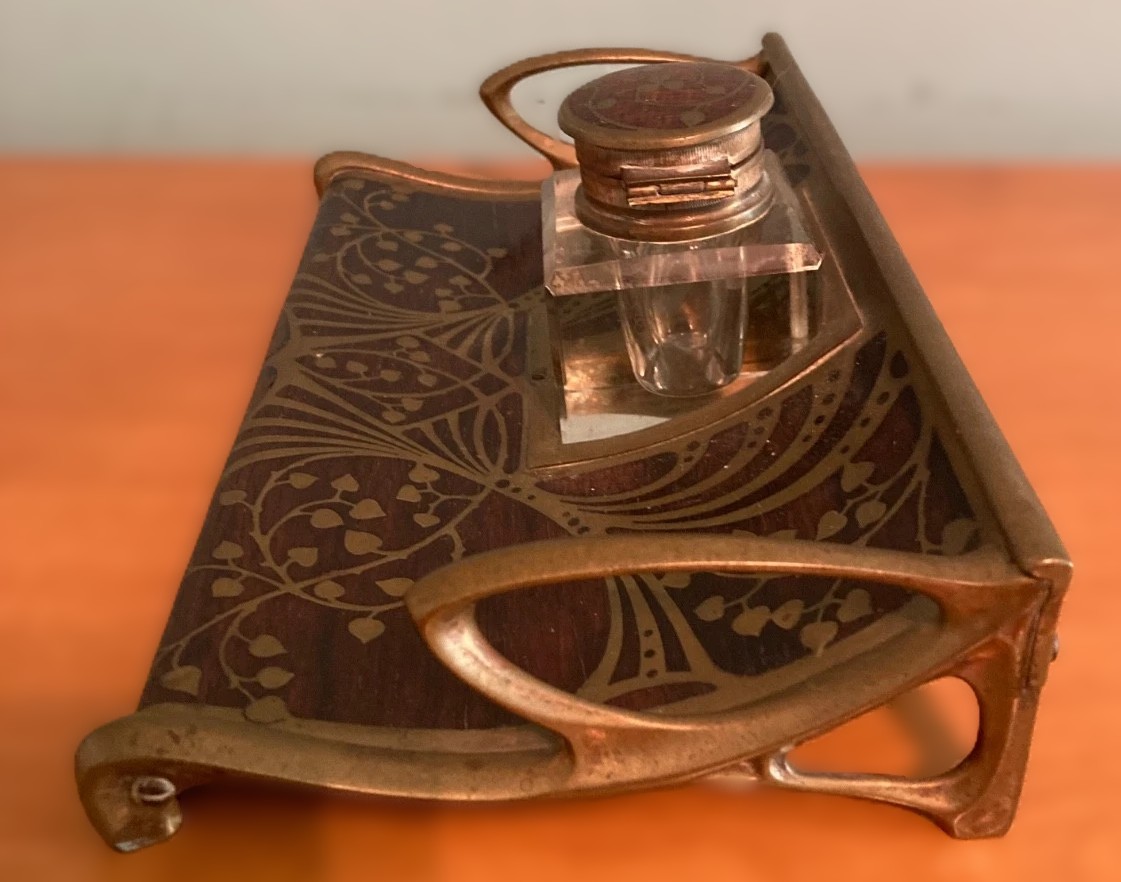
- Form & Material: The inkstand consists of a gently curved tray serving as a pen rest, bordered by sweeping, integrated cast brass side mounts that form stylized, organic loop handles. The base wood is a rich, dark rosewood.
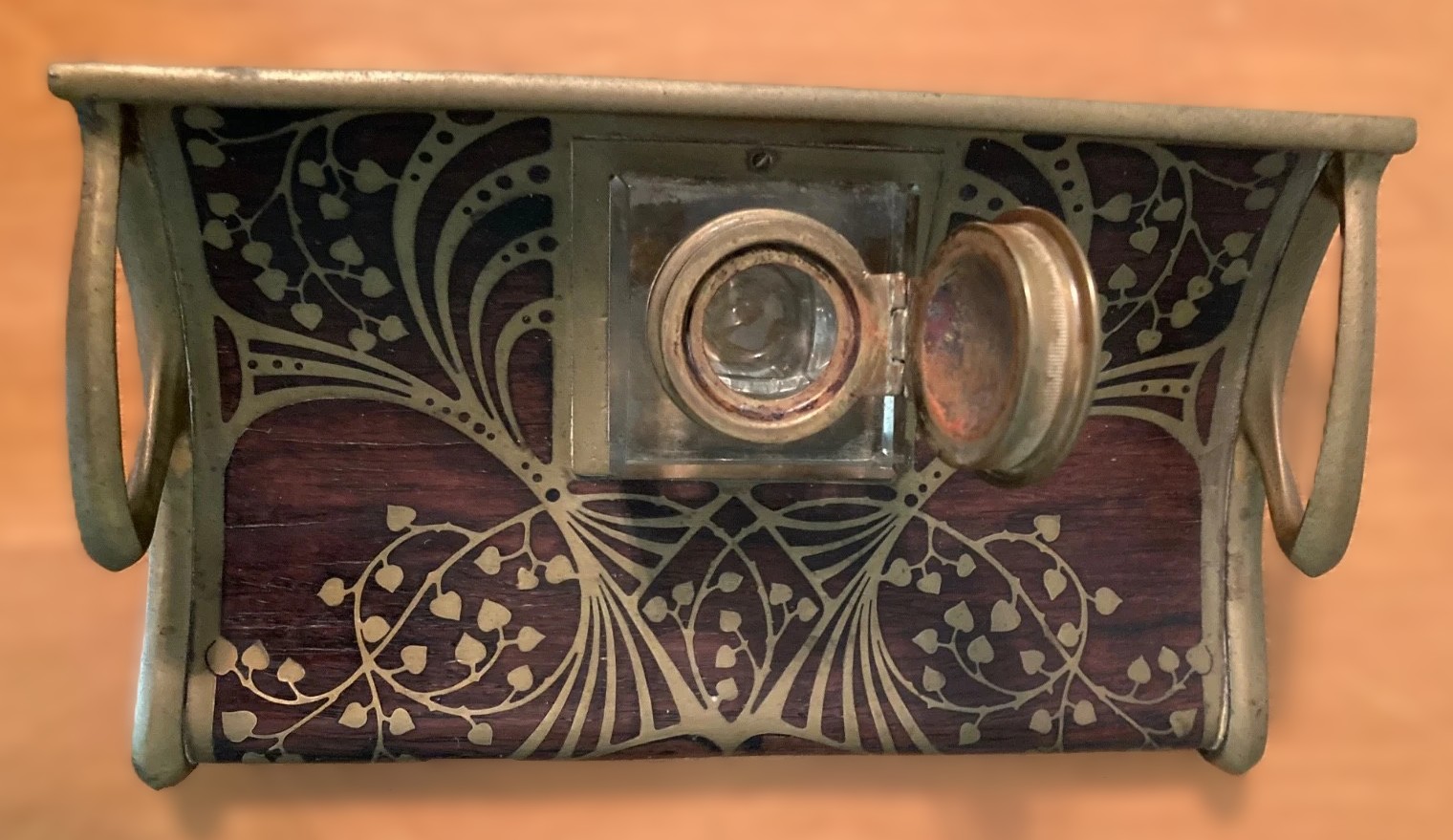
- The Inlay: It features Erhard & Söhne’s signature micro-inlay technique. The brass inlay forms a beautiful, symmetrical Art Nouveau pattern of stylized vines, flowing tendrils, and heart-shaped foliage/leaves radiating outward from the center.
- The Inkwell: Positioned in the center is a square, heavy clear-glass inkwell. It is topped by a hinged brass collar and lid, which features a matching circular rosewood and brass-inlay insert on top.
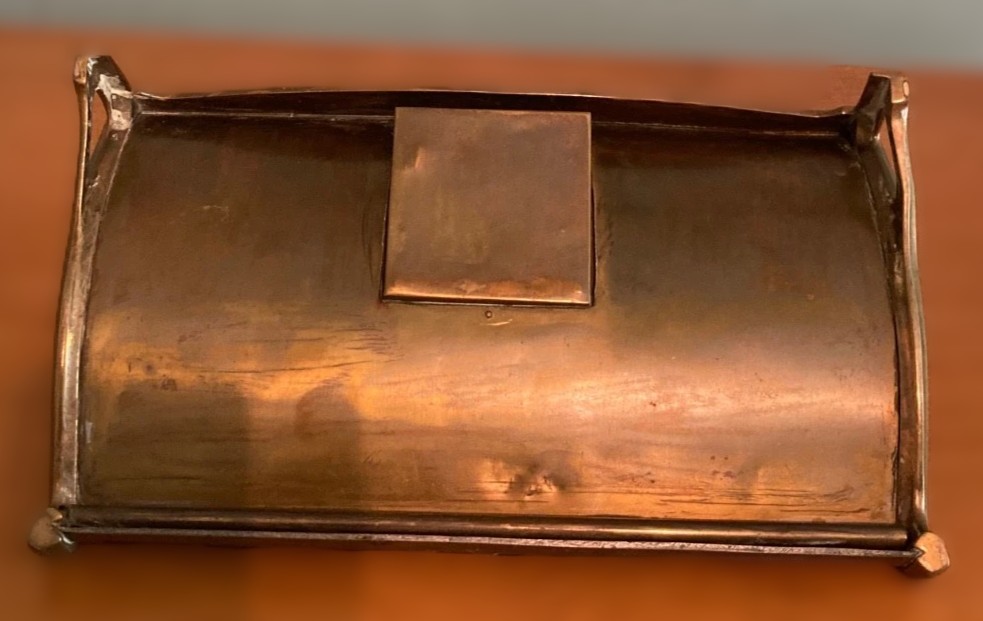
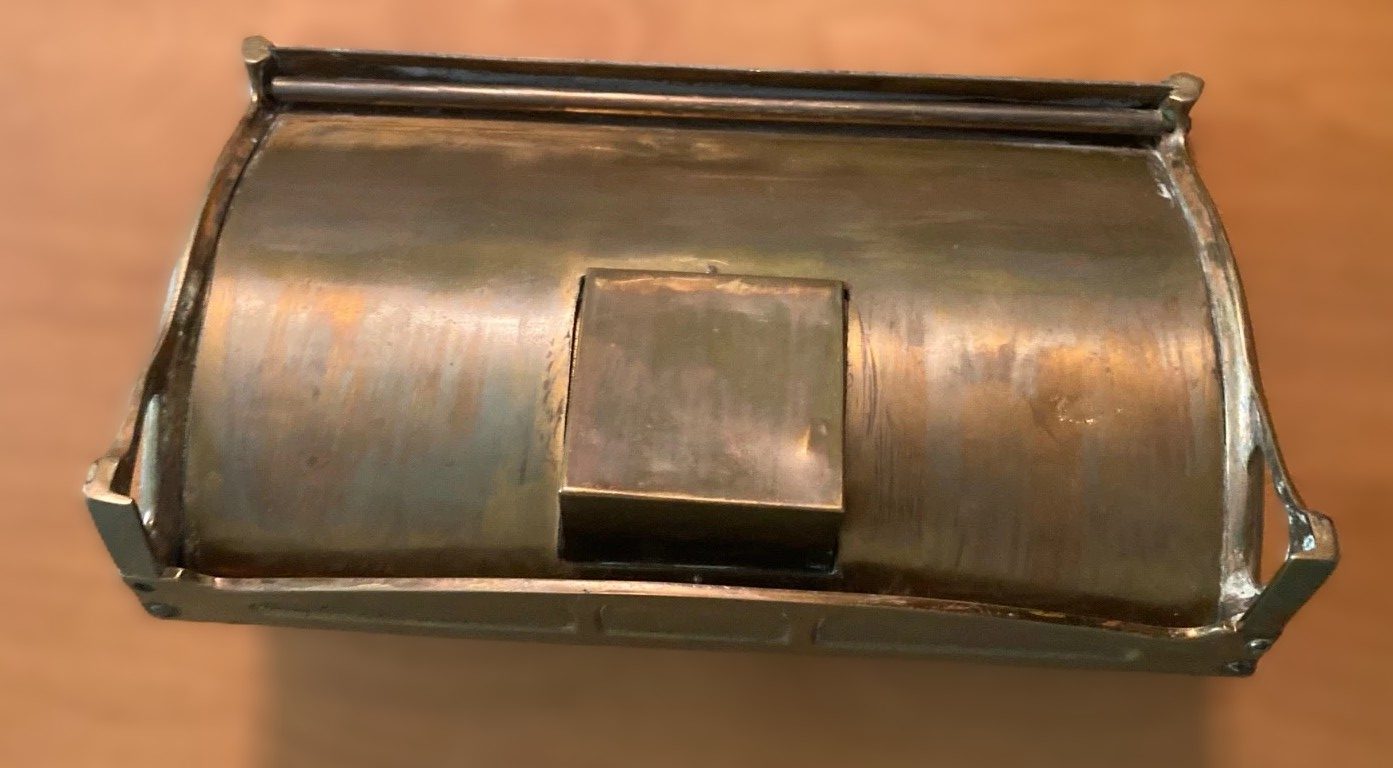
- Underside: The bottom shows a solid, clean brass backing plate with a central square recess accommodating the depth of the glass inkwell.
When Was It Made?
This inkstand was manufactured circa 1904–1914. Erhard & Söhne secured a world patent for this specific method of bonding flush brass inlay into wood in 1904. This patented technique allowed them to produce these highly sought-after, intricate Art Nouveau desk accessories and luxury goods until the onset of World War I.
About the Maker: Erhard & Söhne
- Foundation: The company was founded in 1844 by Carl Gottlieb Erhard and his two sons, Carl and Julius, in Schwäbisch Gmünd (Baden-Württemberg, Germany). Julius drove the creative artistic designs, while Carl managed the business side.
- The “Testing Factory”: Known for constant innovation, the firm expanded rapidly, processing brass, bronze, copper, and precious metals. By 1900, they employed around 3,000 workers.
- Famous Specialties:
- Prior to their adult-sized luxury goods, they were world-renowned for producing detailed, high-quality ormolu (gilt-brass) miniature dollhouse furniture and toys.
- They are also credited with inventing the Schleudascher (the mechanical spin-ashtray).
- Post-WWII Transformation: Following World War II, the company shifted completely away from artisanal luxury goods and toys into heavy automotive engineering. They became instrumental in the development and manufacturing of the famous Unimog (Universal-Motor-Gerät) four-wheel-drive utility vehicles for Mercedes-Benz.
Sold for $214 in June 2026
Content disclaimer. The information posted is the owner’s best knowledge and may not have been vetted by the SOIC. We welcome comments, corrections, and additions, working to make our website information comprehensive and accurate.
Join the Society of Inkwell Collectors (SOIC) – it’s free!
Founded in 1981 as a non-profit organization,
we are documenting inkwells (and accessories).
We’re here to help and inform!