

Inkipedia
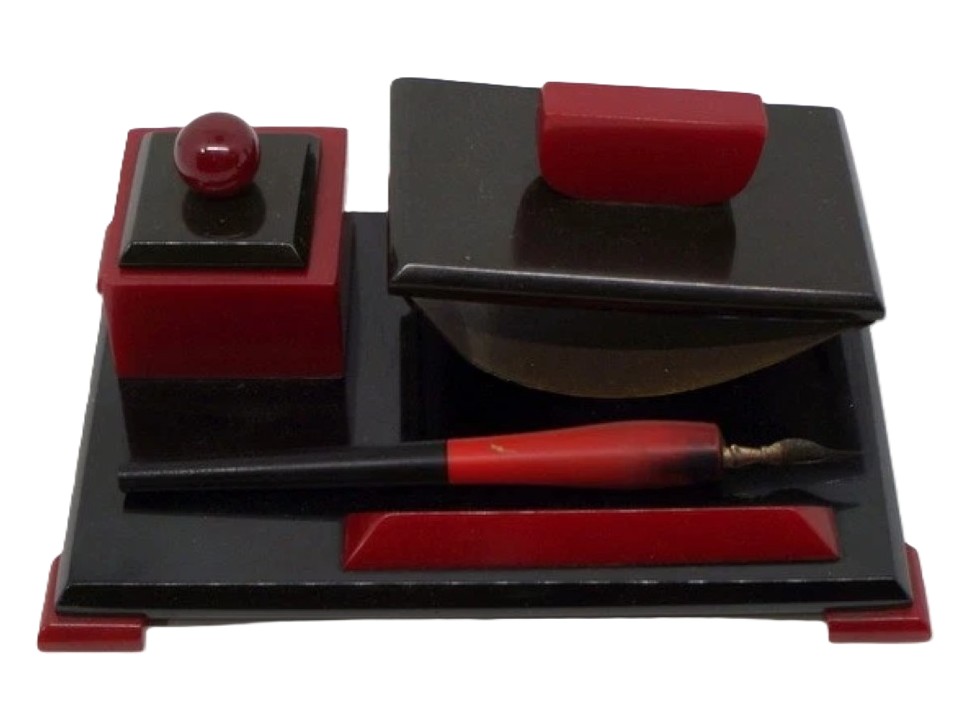
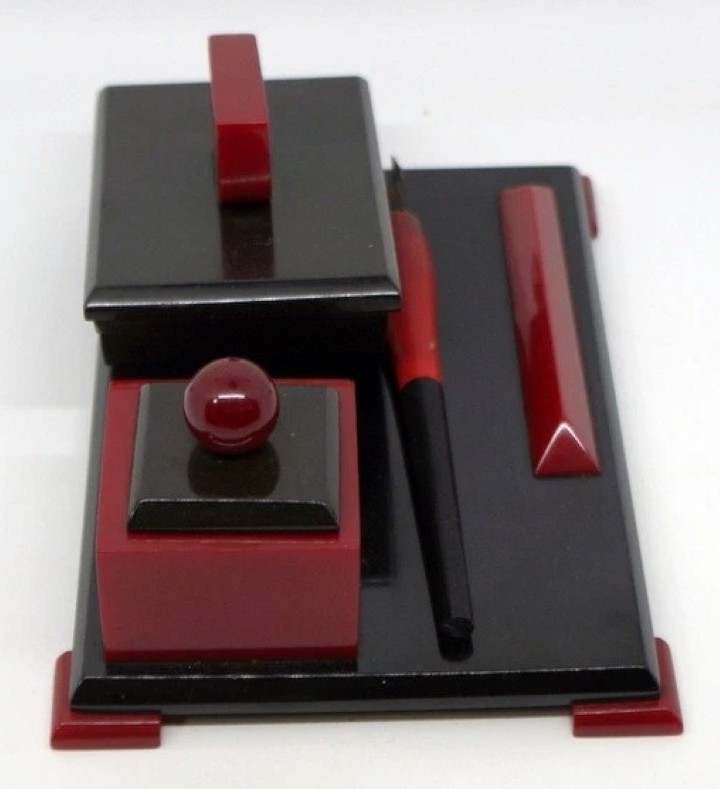
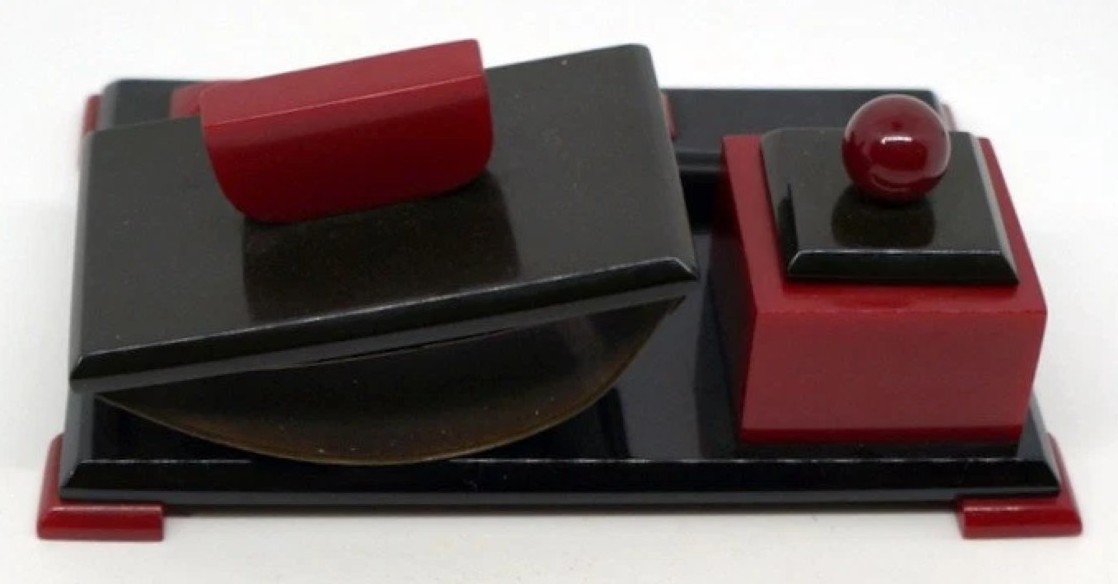
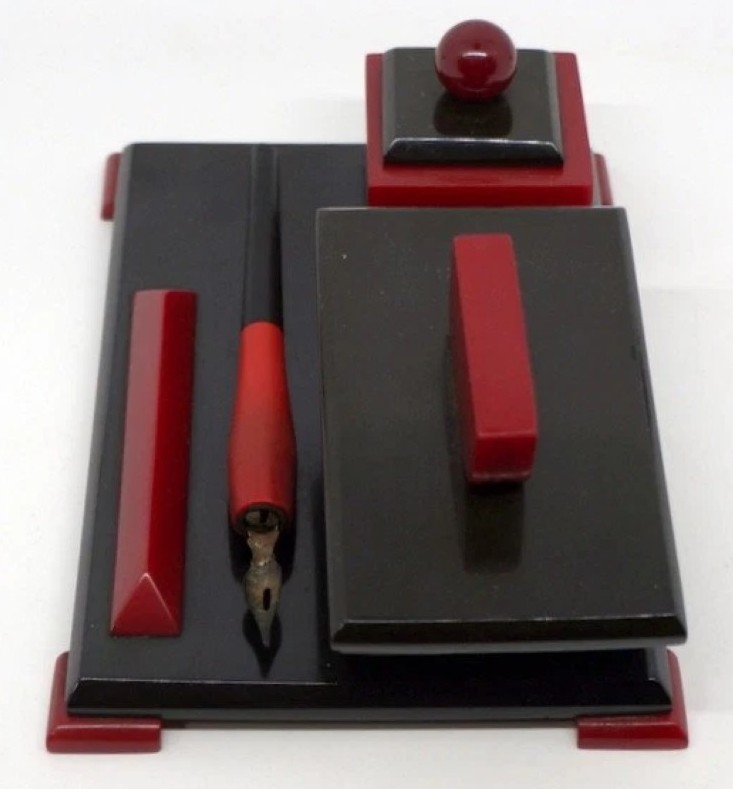
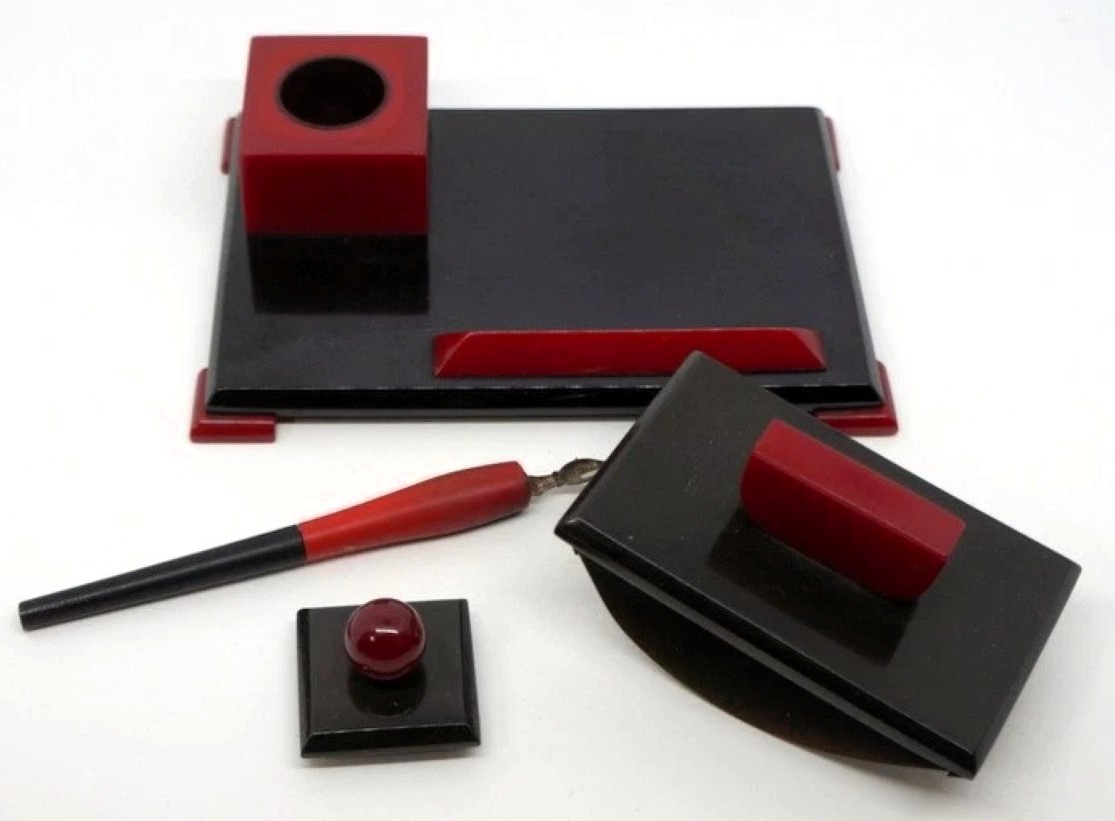
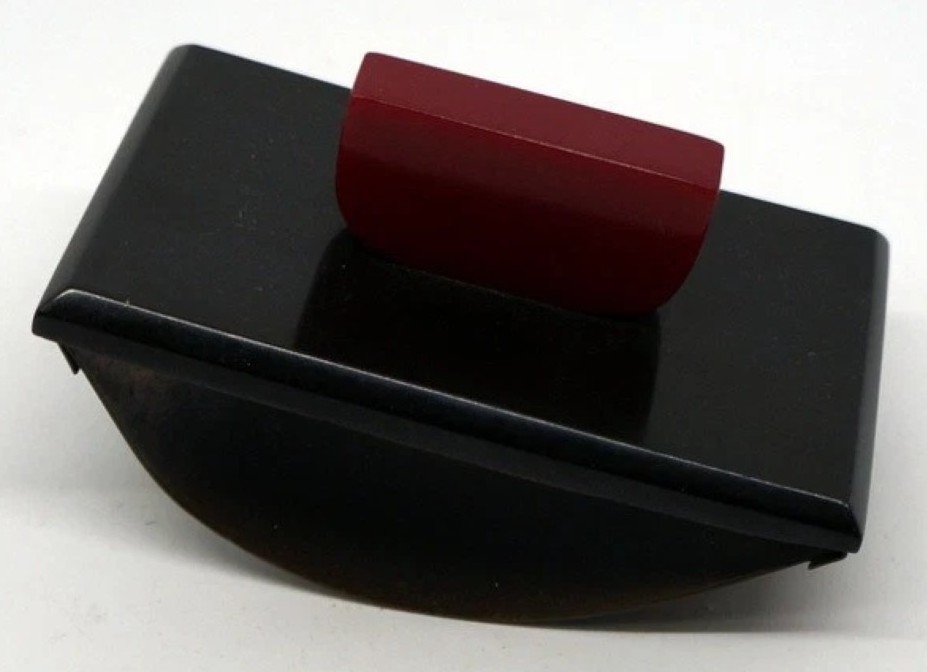
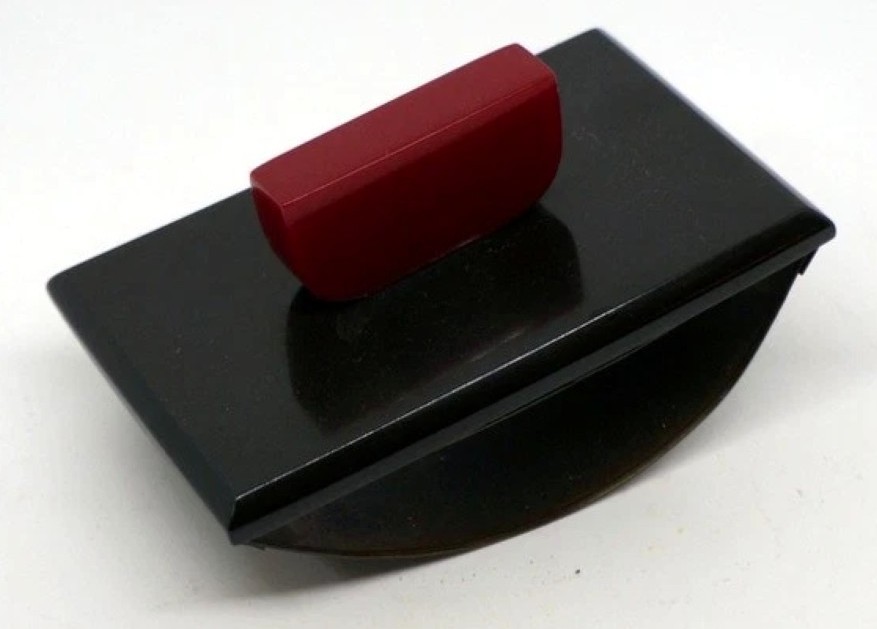

Art Deco “Skyscraper” Desk Set
| Categories | Art Deco |
| Material | Brass, Plastic/Celluloid, Wood |
| Markings | Unmarked |
| Manufacturer | Undetermined |
| Origin | Undetermined |
| Date or Era | circa 1930 |
| Measuring | 6” x 4” x 2 ¾” high |
Style: European Art Deco / Streamline Moderne
Circa: 1930–1935
Materials: Cast Phenolic Resin (Catalin/Bakelite), Lacquered Wood, and Brass
Material Breakdown
This set is a mixed-media construction, which was common for high-end European desk sets of the 1930s:
- The Resin: The cherry red components (the inkwell, the feet, the pen barrel, and the blotter handle) are Cast Phenolic Resin (often referred to by the brand names Catalin or Bakelite). This material is famous for its depth of color and “glow.”
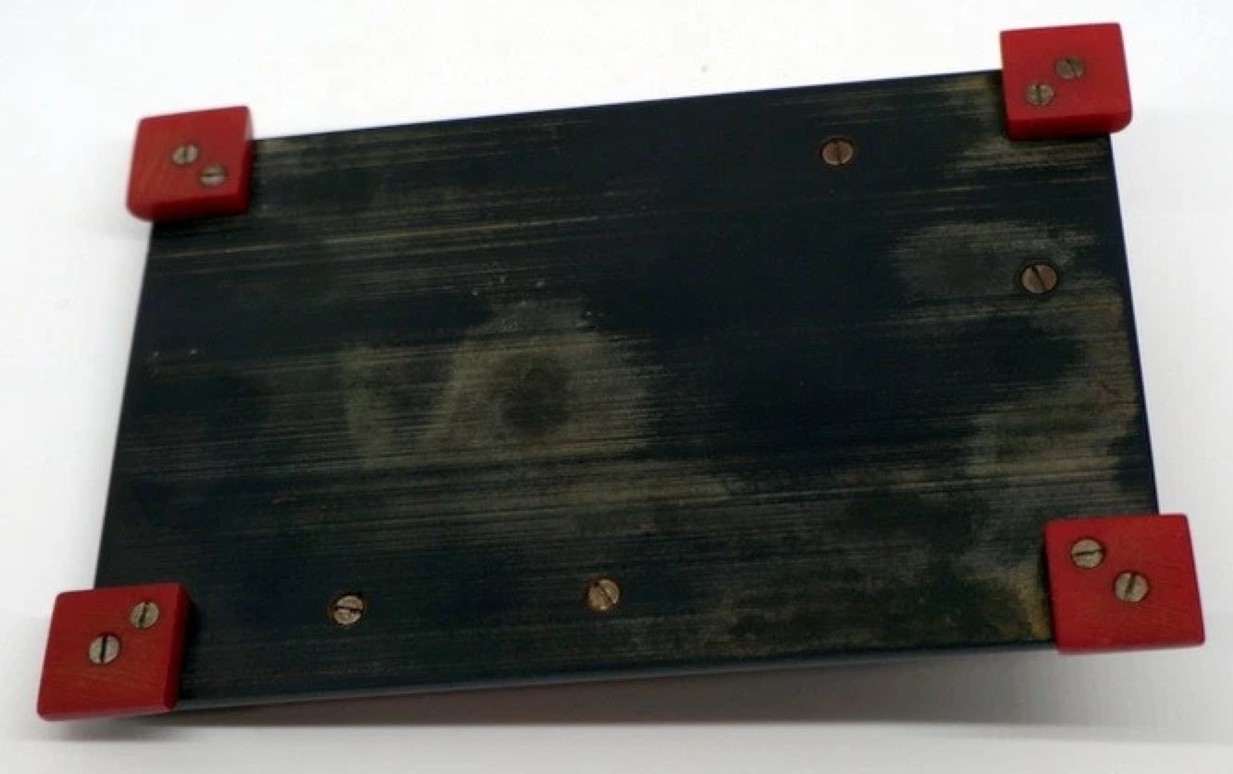
- The Base: The underside reveals a clear horizontal grain and flathead screws. This confirms the main slab of the base is hardwood, likely ebonized (stained black) or finished with a high-gloss Nitrocellulose lacquer to match the plastic components.
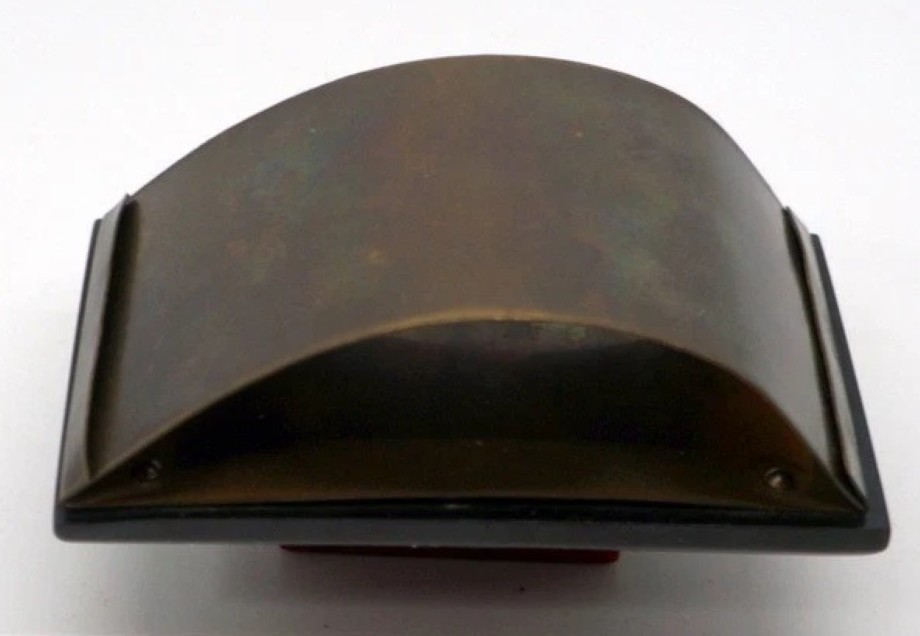
- The Rocker: The underside of the blotter features a curved brass plated steel plate to hold the blotting paper.
Component Details
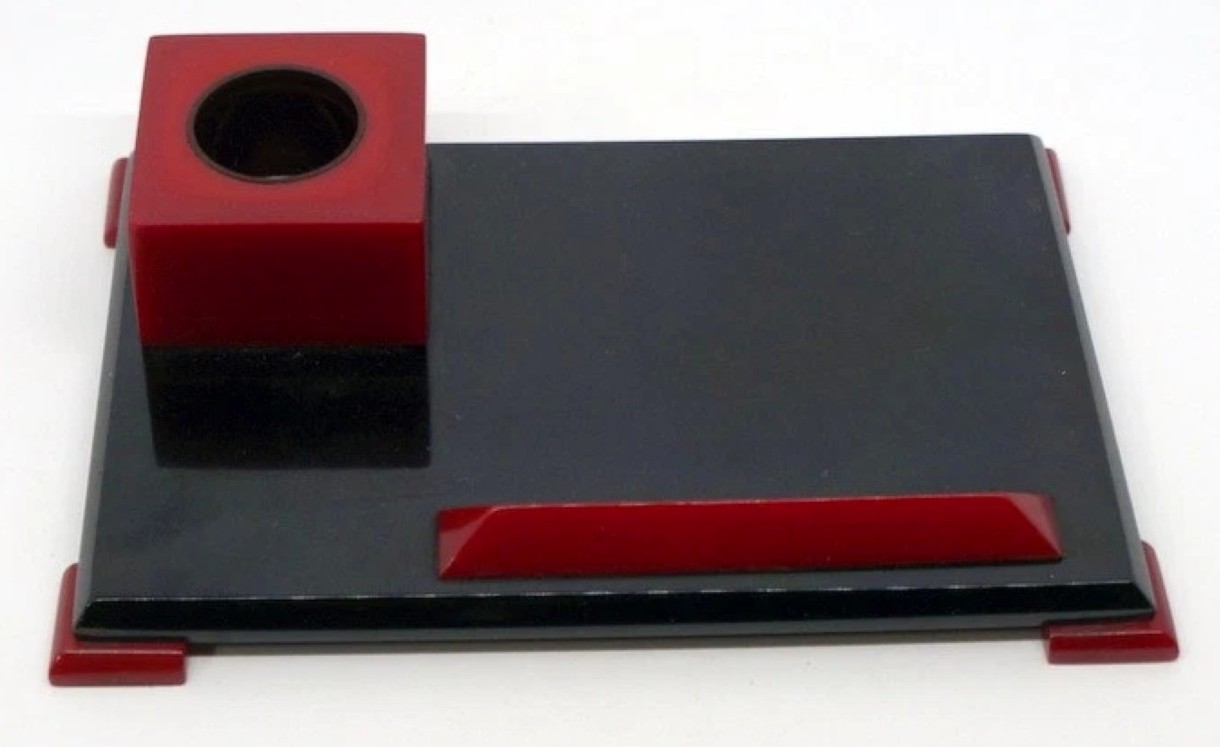
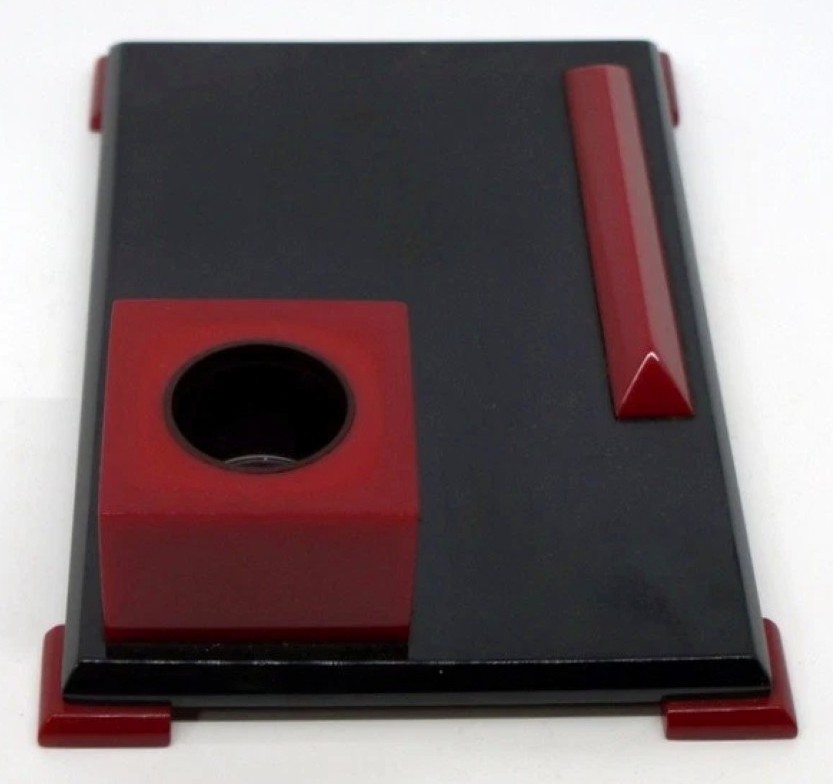
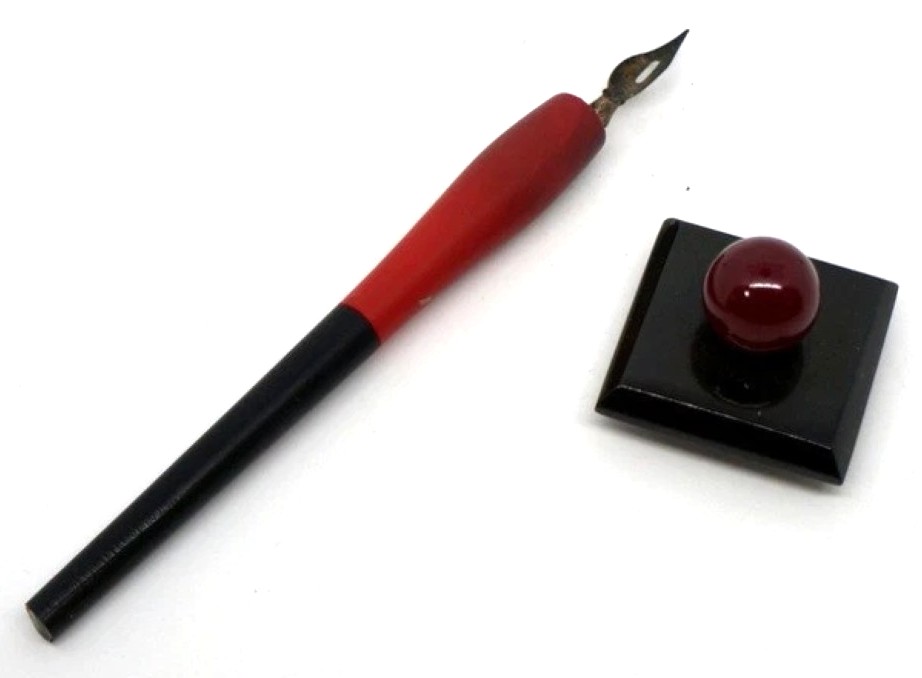
- The Inkstand: Features a “Ziggurat” or tiered geometric motif. The inkwell is a solid red cube set into the base, topped with a black lid and a spherical “orb” finial.
- Integrated Pen Rest: A red, trapezoidal “bar” rest is mounted to the front of the base, providing a dedicated cradle for the dip pen.
- Rocker Blotter: A classic “Skyscraper” silhouette with a black rectangular top and a large, ergonomic red handle.
- Dip Pen: A two-tone “taper” pen. The red section is the grip, providing a comfortable weight, while the black tail balances the aesthetic. It retains its original steel nib.
Origin & Date
- Origin: Most likely France or Germany. The “stepped” geometric design is very reminiscent of the French Exposition Internationale des Arts Décoratifs style, while the stark, functional color blocking suggests German Bauhaus or Werkbund influence.
- Date: The use of flathead screws, the specific “orb” finial style, and the transition from pure Bakelite to more colorful Phenolic resins firmly place this in the early 1930s.
Sold for $300 in April 2026
Content disclaimer. The information posted is the owner’s best knowledge and may not have been vetted by the SOIC. We welcome comments, corrections, and additions, working to make our website information comprehensive and accurate.
Join the Society of Inkwell Collectors (SOIC) – it’s free!
Founded in 1981 as a non-profit organization,
we are documenting inkwells (and accessories).
We’re here to help and inform!