

Inkipedia
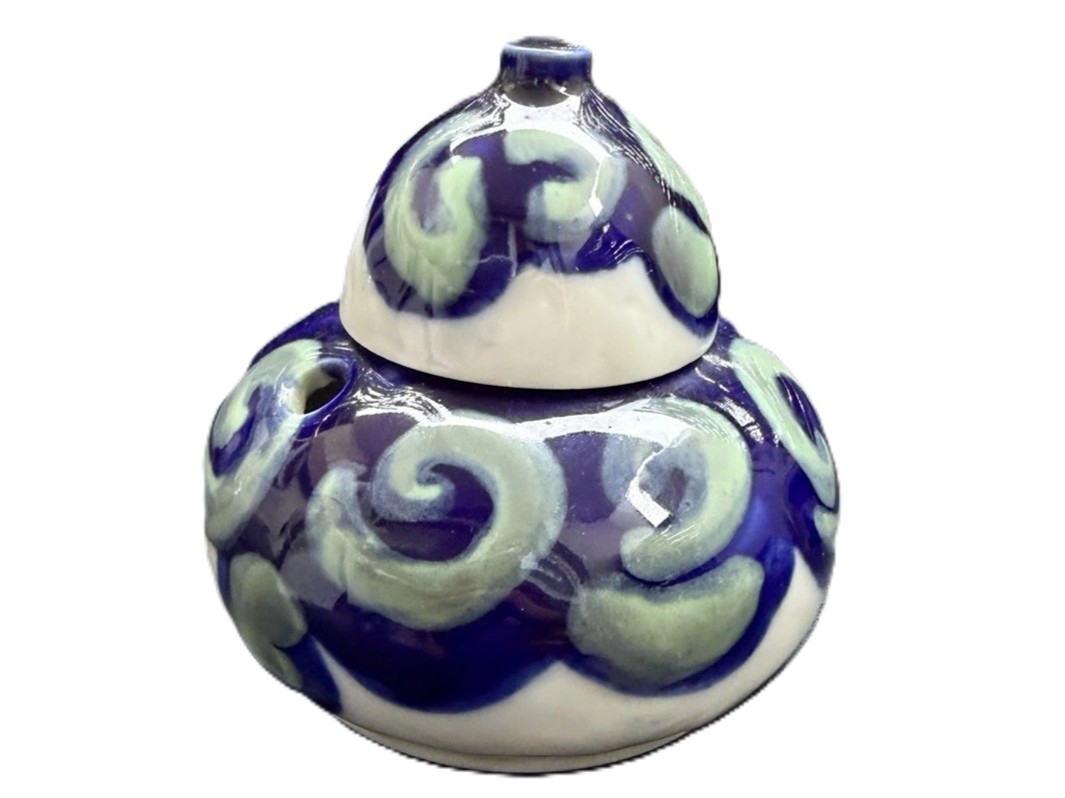
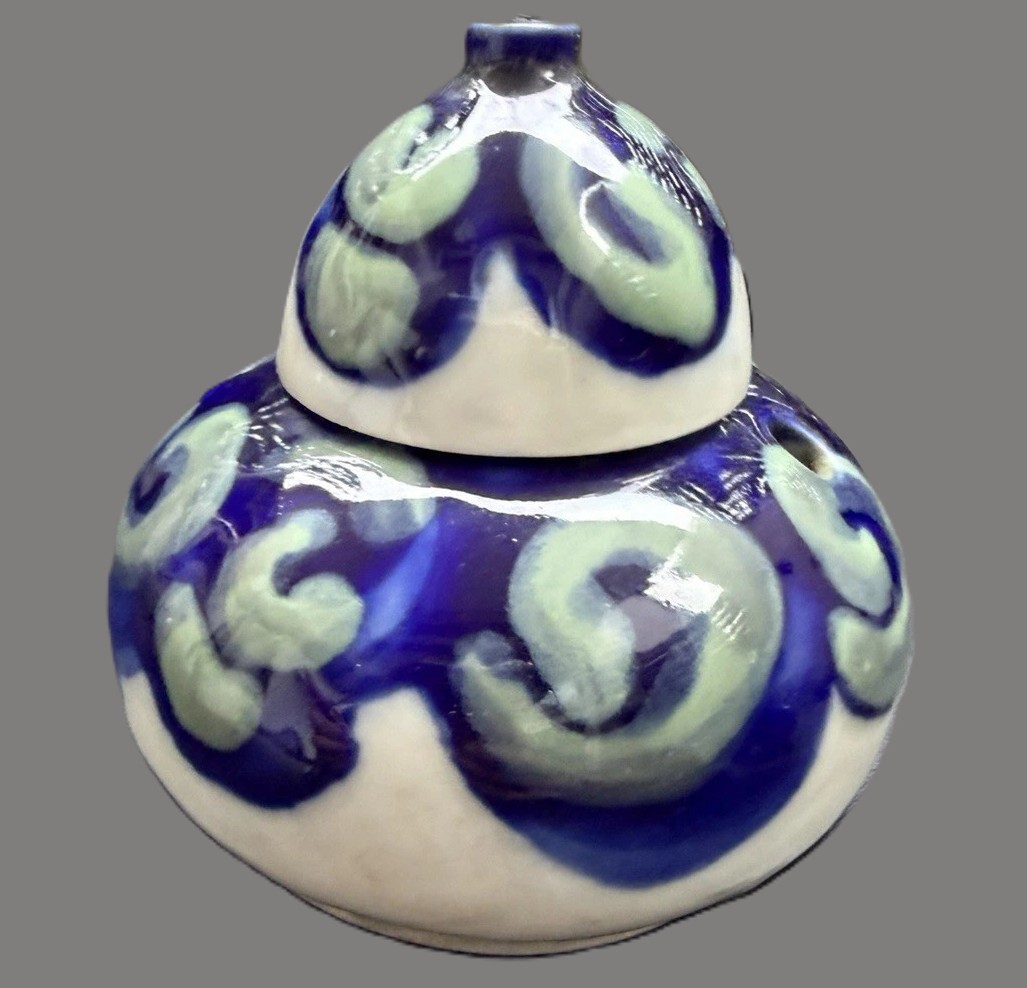
Art Deco Limoges Porcelain Inkwell by Camille Tharaud
| Categories | Art Deco |
| Material | Porcelain |
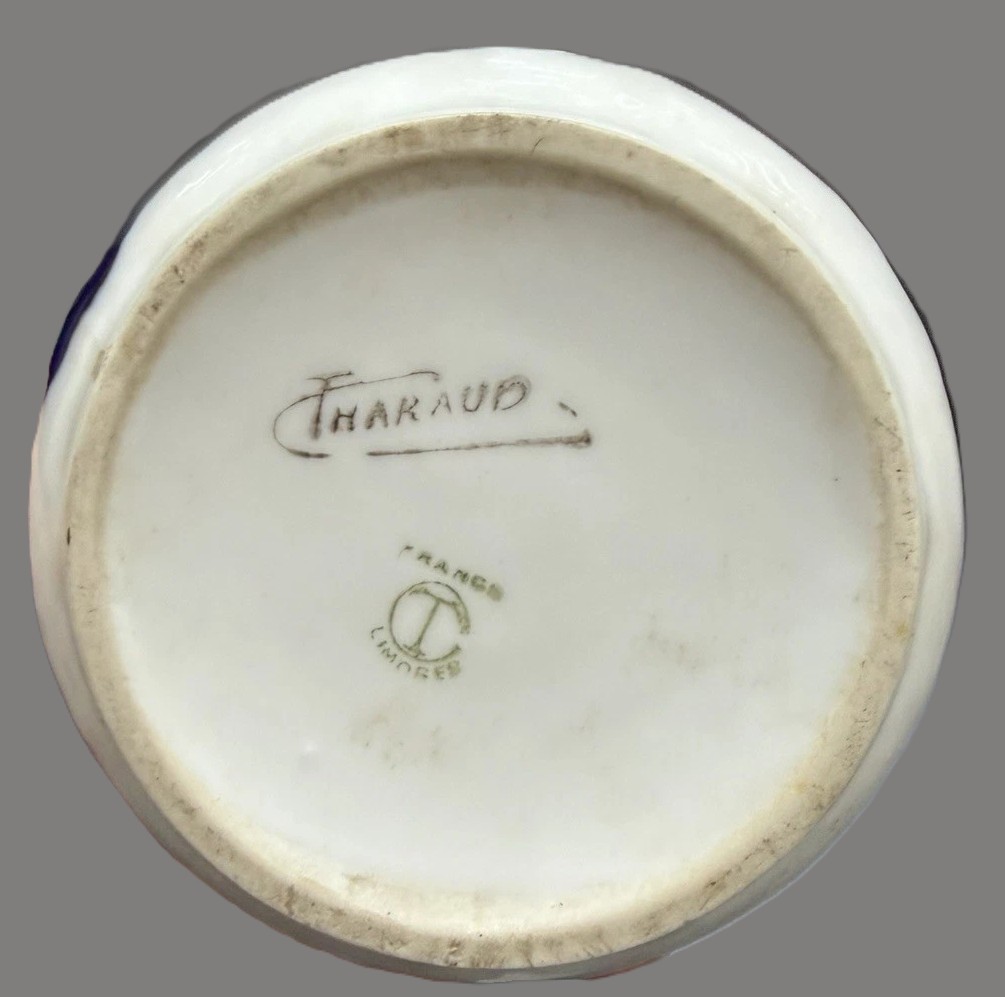
| Markings | See Narrative |
| Manufacturer | Camille Tharaud |
| Origin | France |
| Date or Era | circa 1930 |
| Measuring | 3 ½” diameter; 3 ⅜” high |
Description
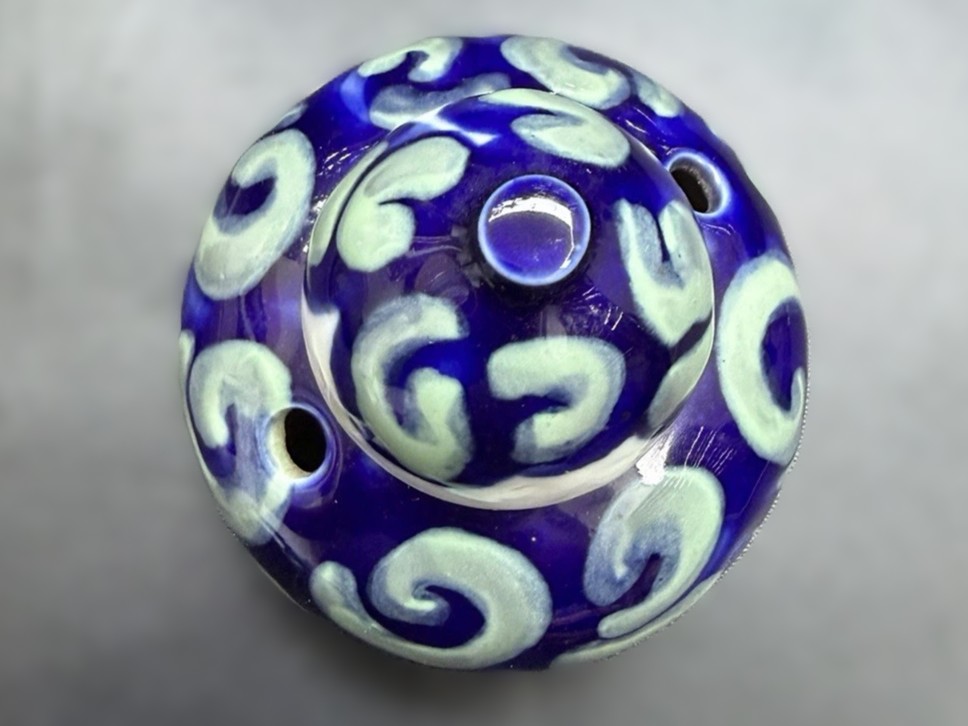
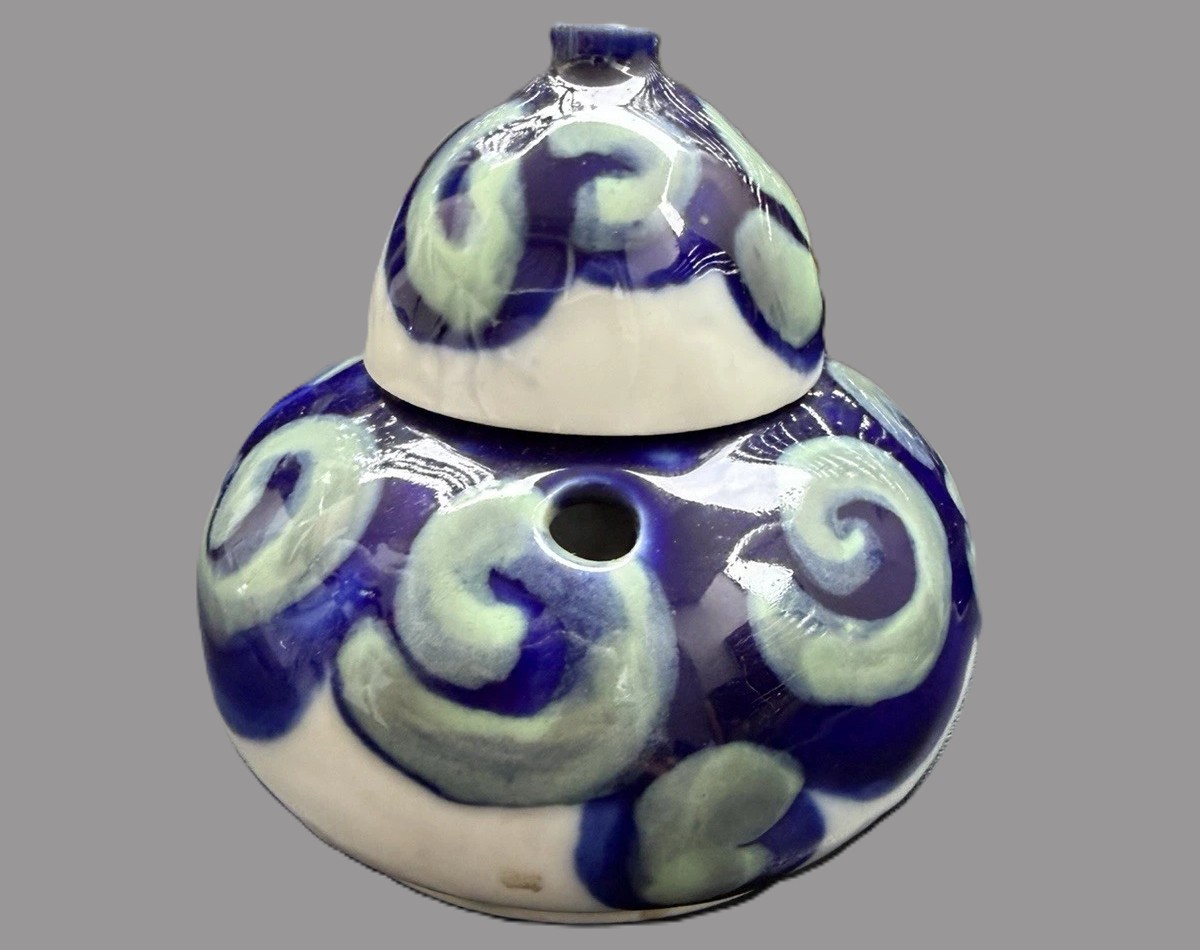
- Form & Structure: This two-tiered, domed porcelain inkwell features a rounded, squat globular base paired with a bell- or dome-shaped lid topped by a small, cylindrical finial knob.
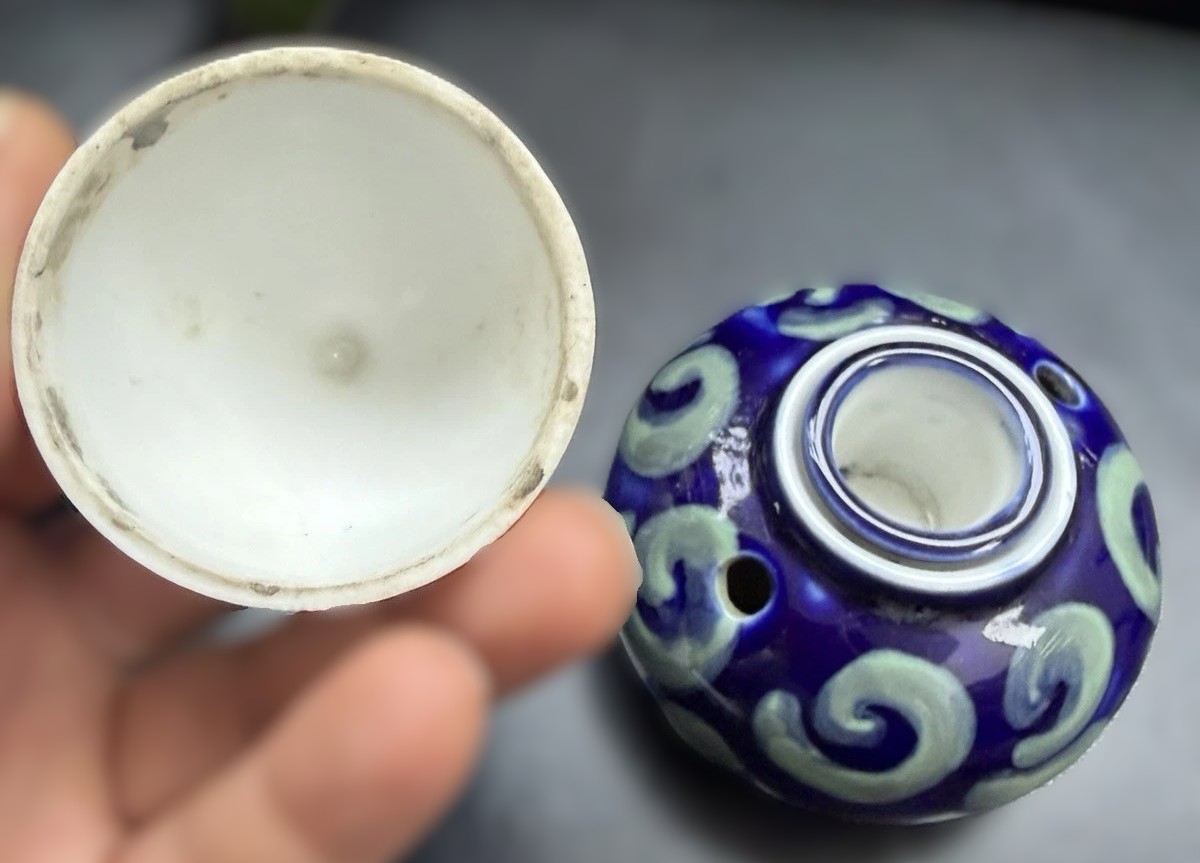
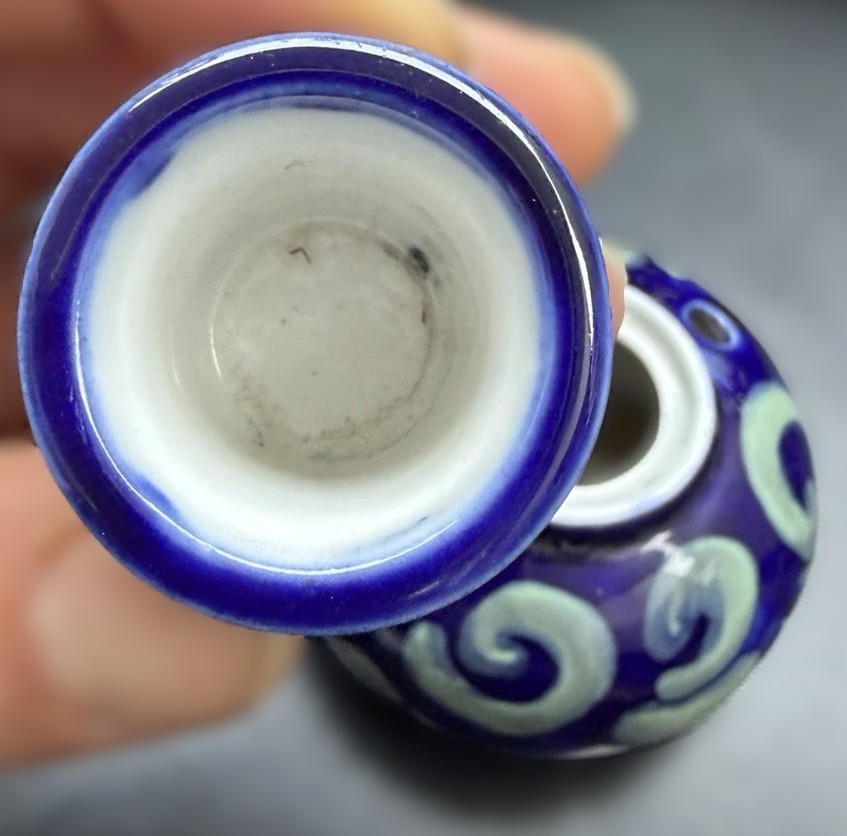
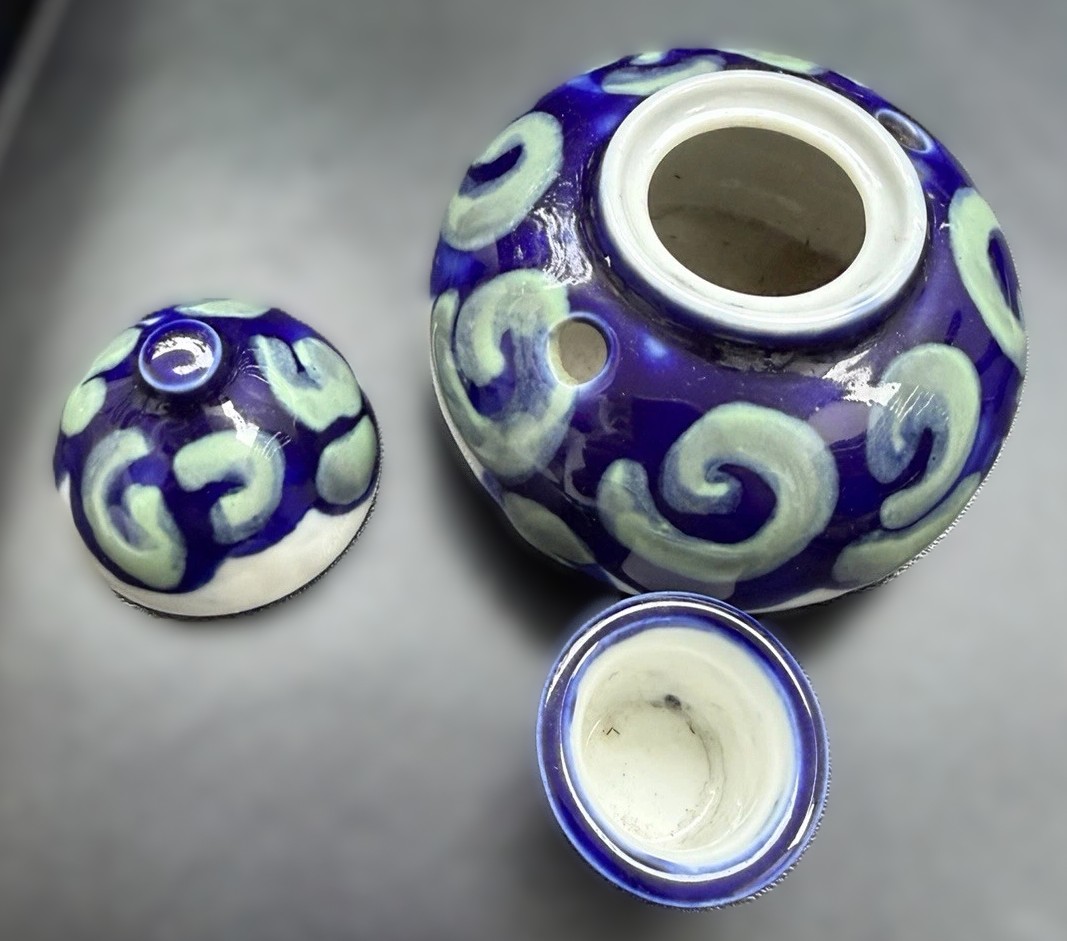
- Components: Lifting the dome lid reveals a deep collar containing a removable porcelain insert with a flared rim, alongside a “quill hole” on the shoulder of the main body.
- Palette & Motif: Executed in vivid Art Deco styling, the glaze work combines a rich cobalt blue ground with thick, stylized seafoam or celadon green scrolling volutes. The organic, painterly swirls sit atop a milky-white porcelain reserve, showing the soft, melting transitions characteristic of high-fire grand feu glazes.
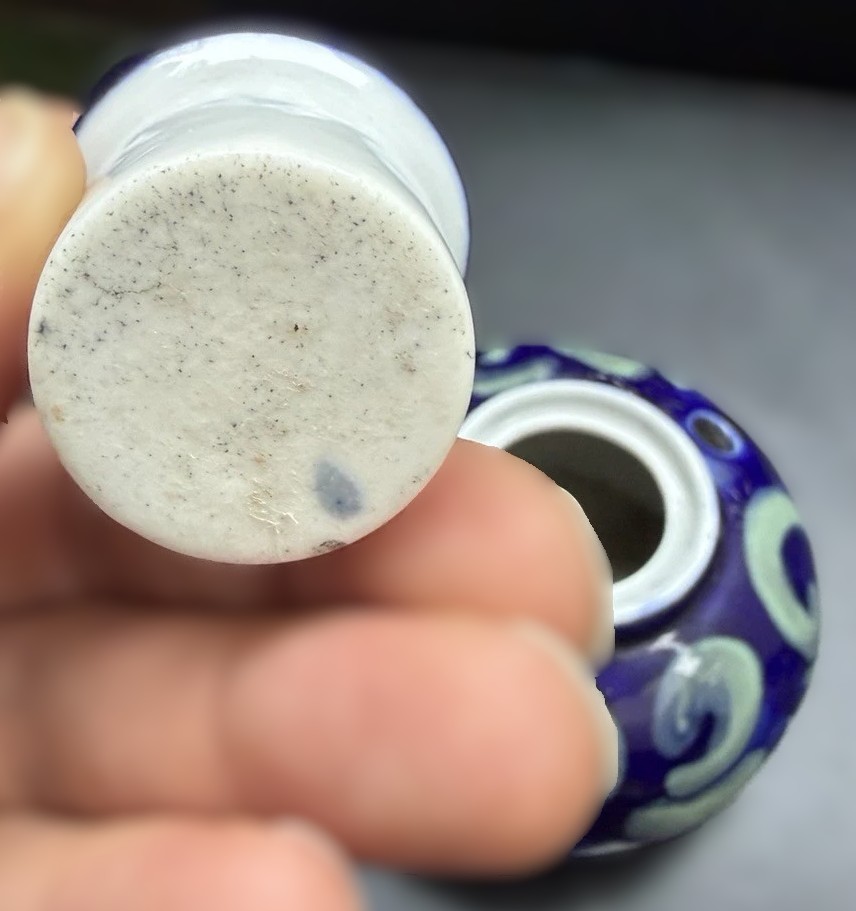
- Markings: The underside bears a handwritten overglaze script signature, THARAUD with a flourished tail, along with the stamped green factory backstamp FRANCE over a monogram CT inside an open circle, above LIMOGES.
Dating
This piece dates to the 1920s to 1930s (circa 1925–1935). The green stamped “CT / Limoges / France” circular mark combined with the stylized hand-painted cursive signature is typical of Tharaud’s interwar Art Deco production.
Background: Camille Tharaud (1878–1956)
- The Limoges Innovator: Born in Limoges, Camille Tharaud initially studied chemistry, which profoundly shaped his approach to ceramics. While Limoges was renowned worldwide for refined white dinnerware decorated over the glaze, Tharaud sought to reinvent porcelain as a fine art medium.
- The Factory: In 1920, following his recovery from injuries sustained in World War I, he took over an abandoned 19th-century porcelain factory in Limoges (originally belonging to Louis Tharaud, to whom he was unrelated). He modernized the kilns and began extensive experiments formulating colored vitreous glazes.
- Technical Mastery (Grand Feu): Tharaud’s defining technical achievement was coloring the porcelain enamel underglaze and firing it in a single grand feu (high-temperature kiln, around 1,400°C). Rather than sitting on top of the glaze, the pigments vitrified directly into the enamel, creating distinctive depth, subtle tonal bleeds, and a silky, tactile surface.
- Art Deco Acclaim: Tharaud gained international renown at the landmark 1925 Exposition Internationale des Arts Décoratifs et Industriels Modernes in Paris, where his rich cobalt, celadon, turquoise, and flambé glazes stood out as icons of modern French decorative arts.
Sold for $200 in August 2026
Content disclaimer. The information posted is the owner’s best knowledge and may not have been vetted by the SOIC. We welcome comments, corrections, and additions, working to make our website information comprehensive and accurate.
Join the Society of Inkwell Collectors (SOIC) – it’s free!
Founded in 1981 as a non-profit organization,
we are documenting inkwells (and accessories).
We’re here to help and inform!