






Art Deco Guilloche Enamel and Cut-Glass Desk Set
| Categories | Enameled Metal |
| Material | Enamel, Glass |
| Markings | See narrative |
| Manufacturer | T.G. Hawkes & Co. |
| Origin | United States |
| Date or Era | circa 1920 |
| Measuring | Inkwell: 2 ¾” diameter; 2” high |
The pairing of a heavy, colorless crystal base by T.G. Hawkes with vibrant pink enamel silverwork represents the height of luxury from the Flapper era.
- The Inkwell
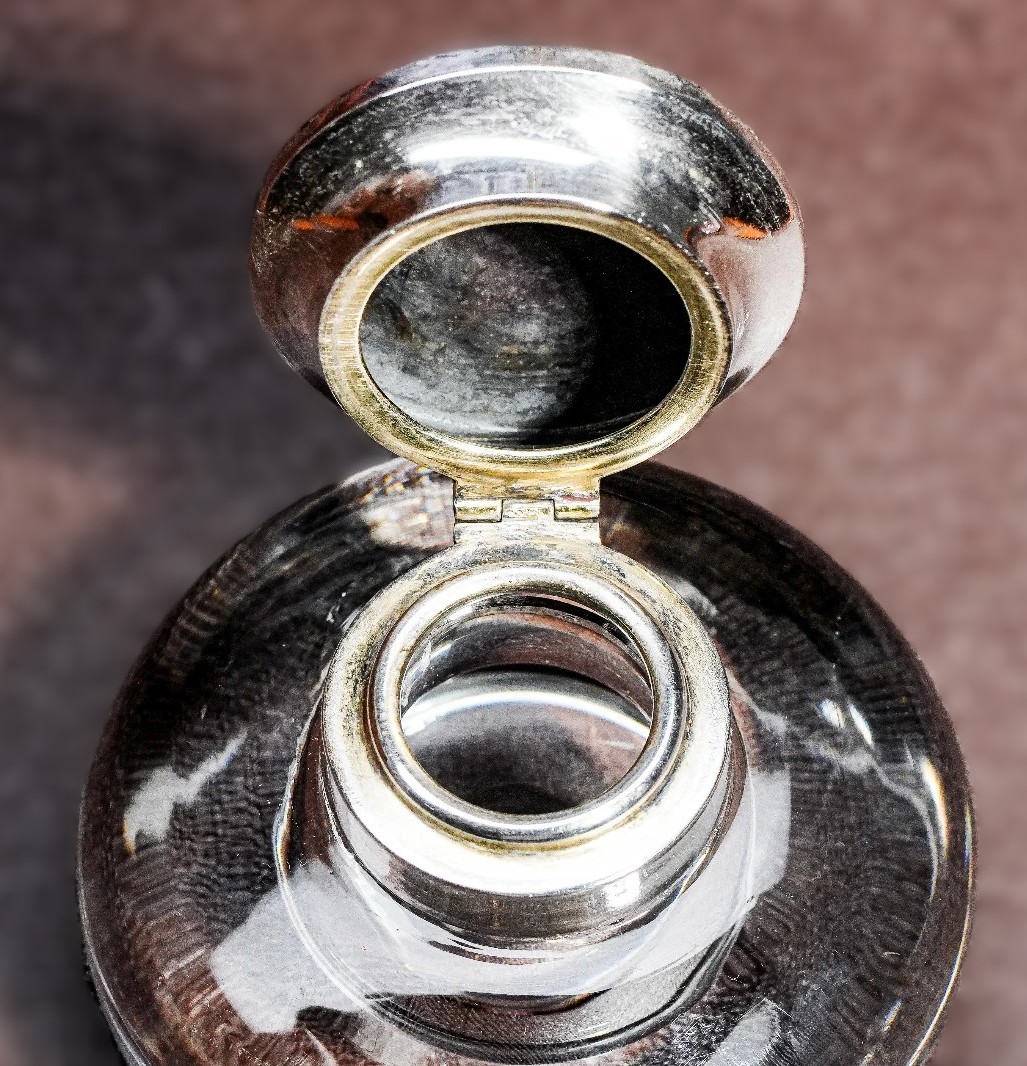
- The Glass Body: The base is a heavy, squat “bun” shape made of high-quality lead crystal. The bottom is acid-stamped “HAWKES”.
- T.G. Hawkes & Co. (Corning, NY): Hawkes was one of the premier American cut glass manufacturers. Interestingly, Hawkes did not make their own glass blanks; they bought high-quality blanks (often from Steuben, which T.G. Hawkes founded) and then cut and polished them. The clarity and lack of flaws in this heavy piece are typical of Steuben/Hawkes quality.
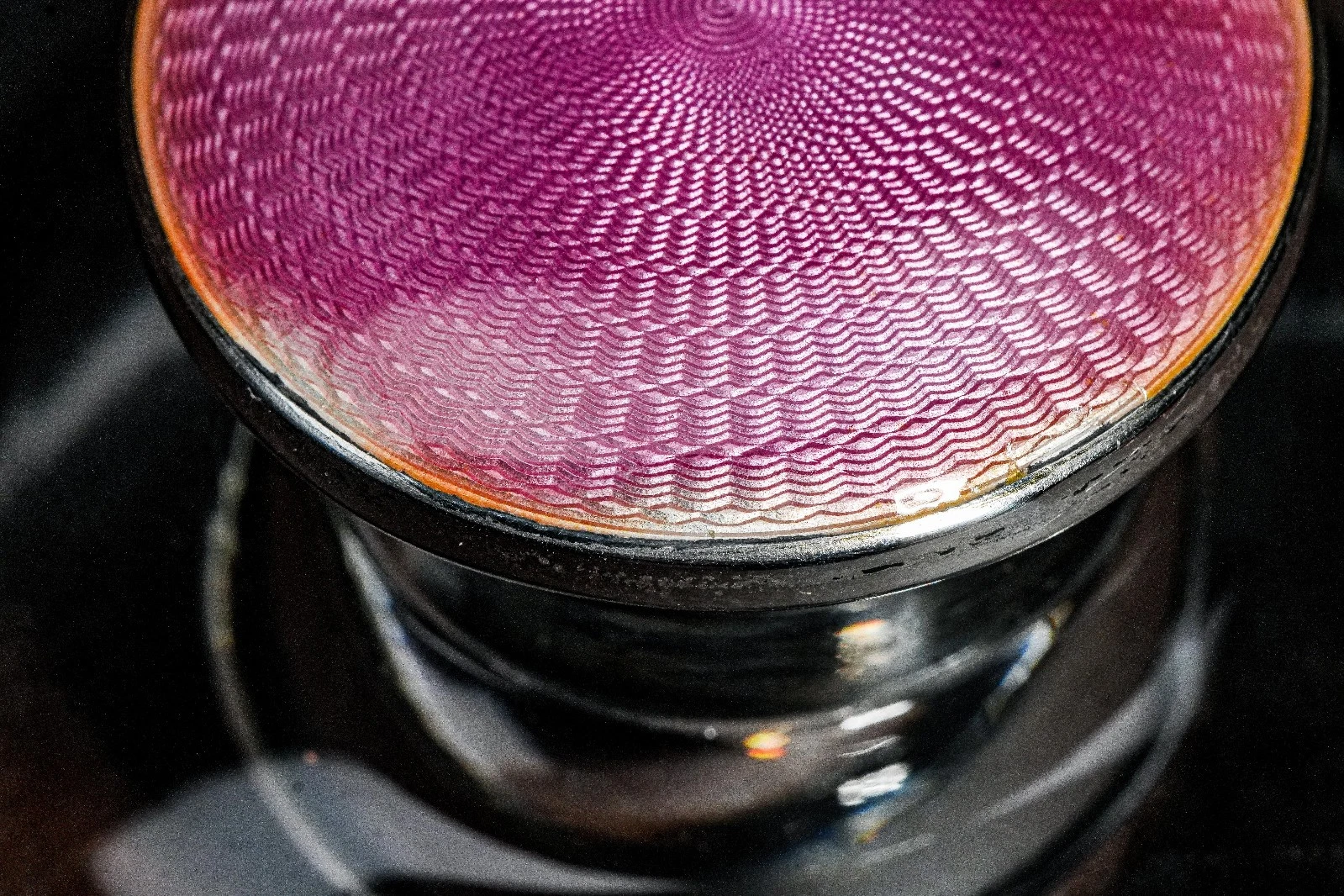
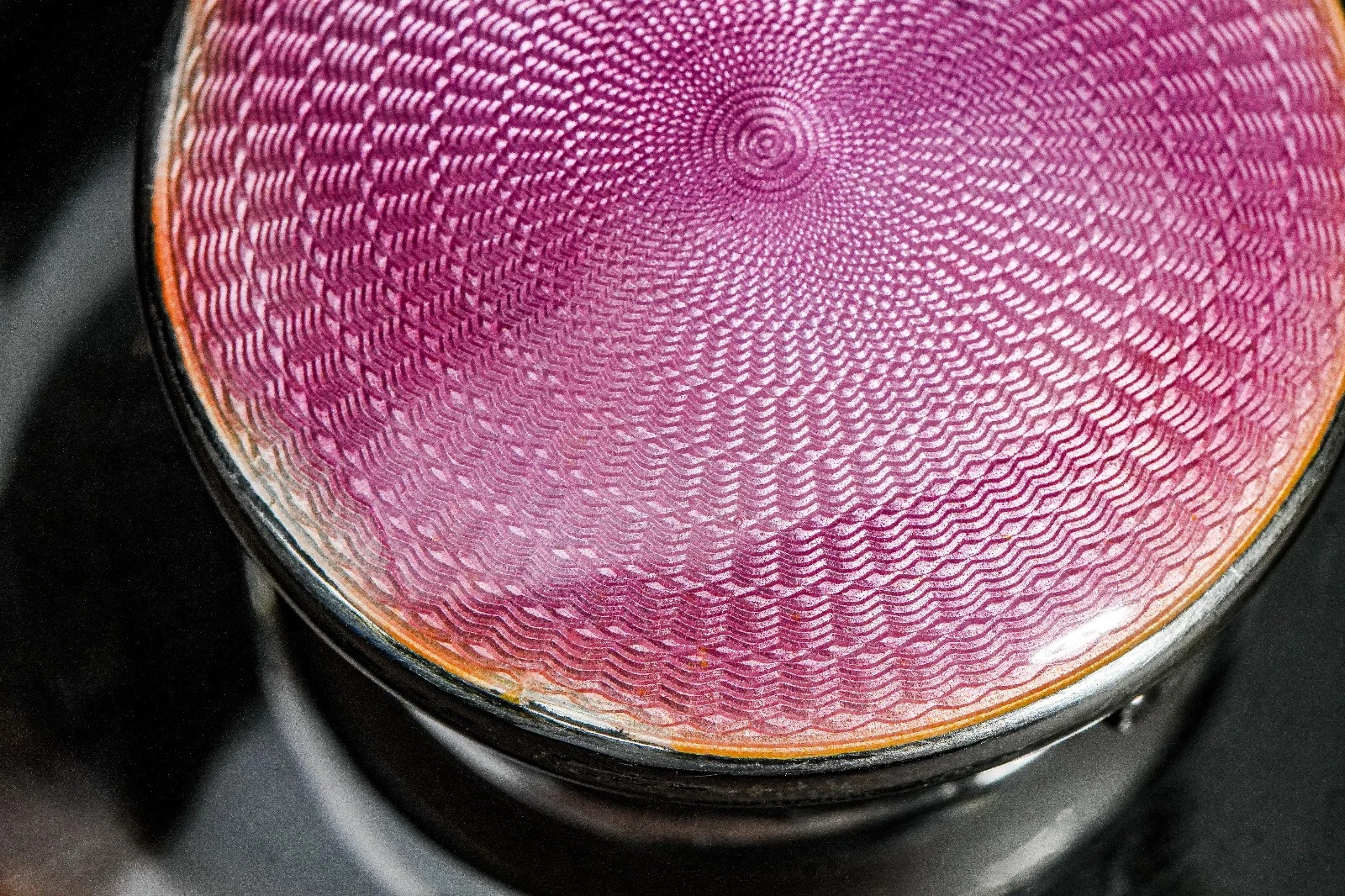
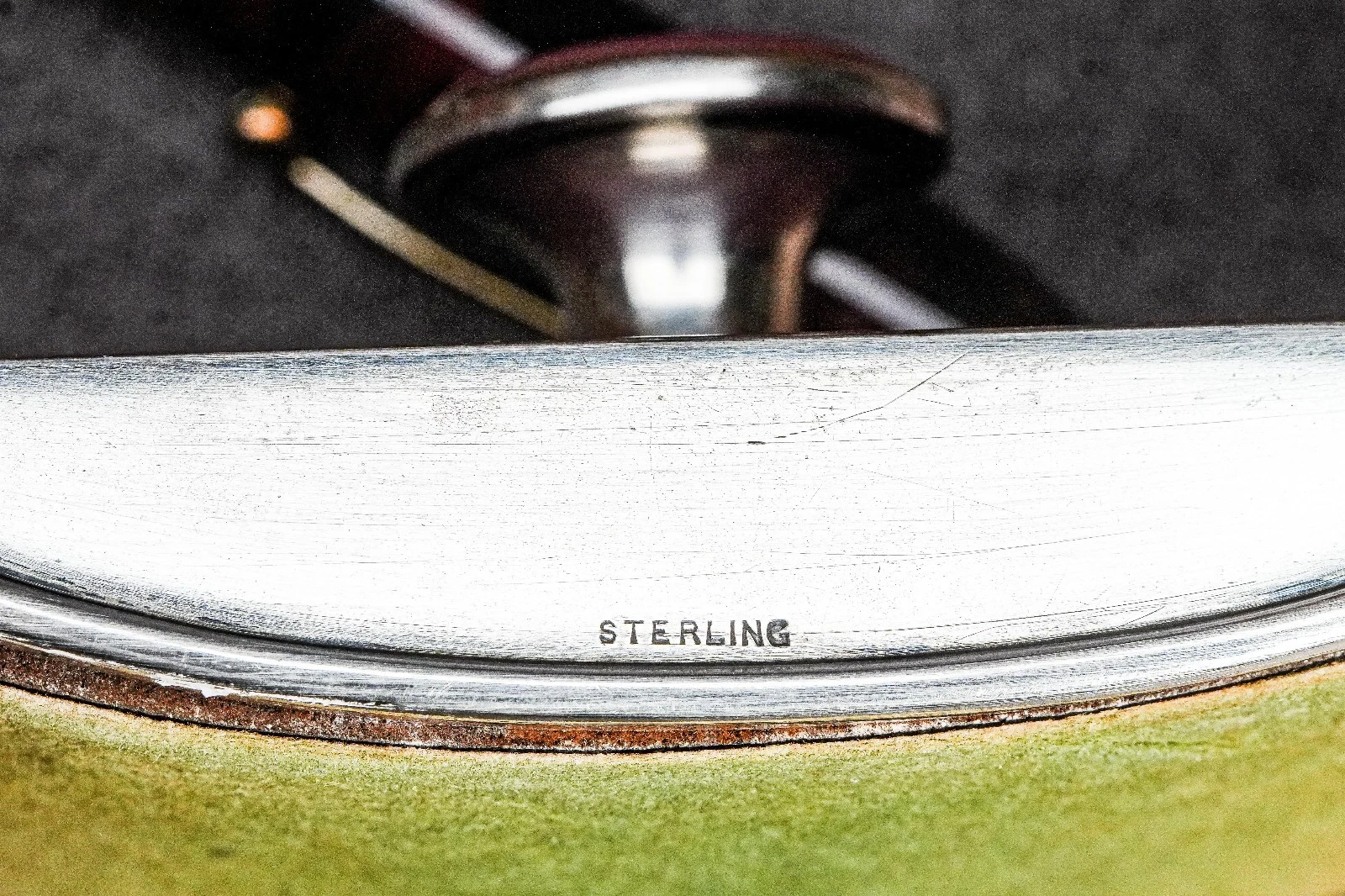
- The Enamel Lid: The collar and hinged lid are made of Sterling Silver (marked on the collar). The top features a mesmerizing Pink Guilloche Enamel panel.
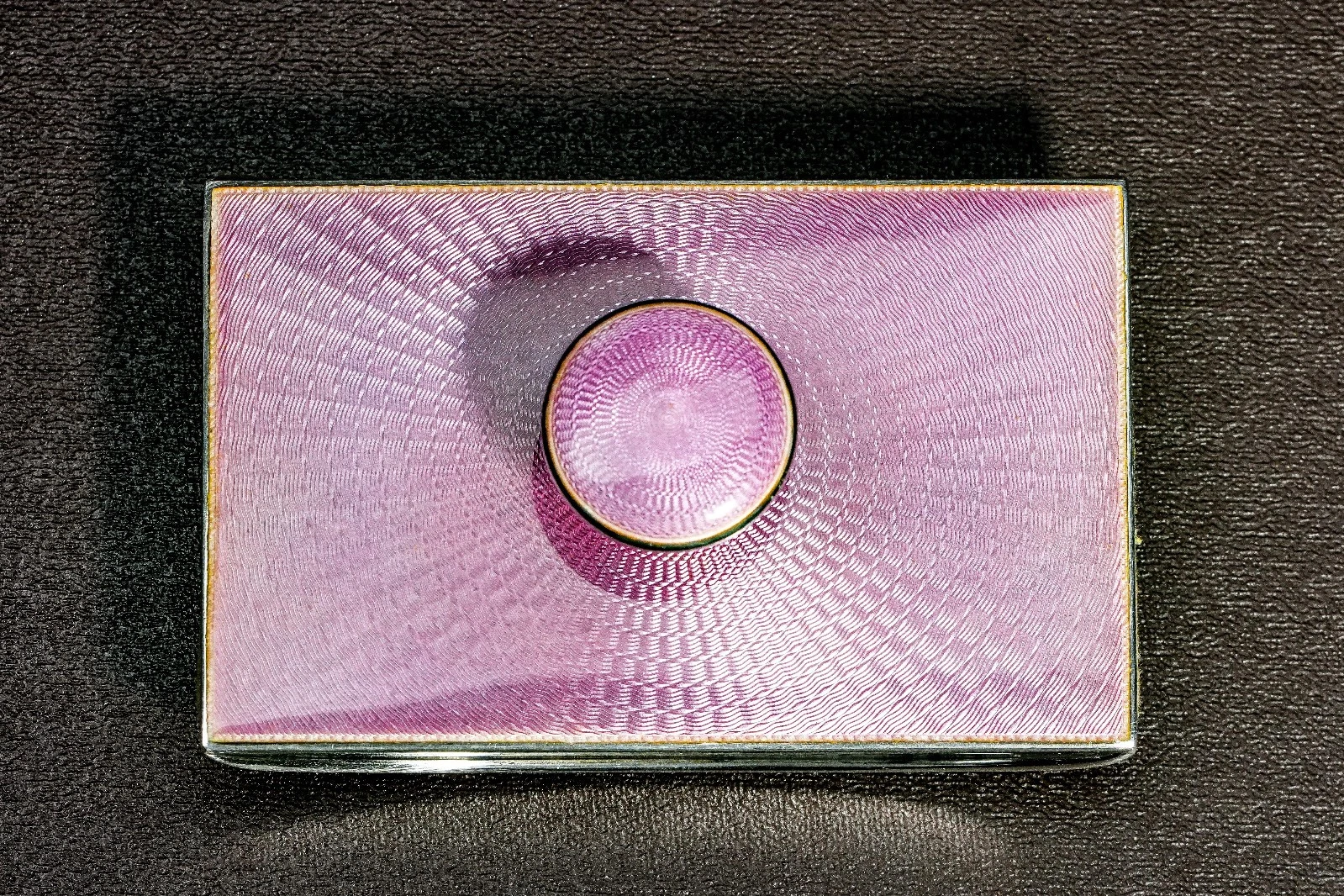
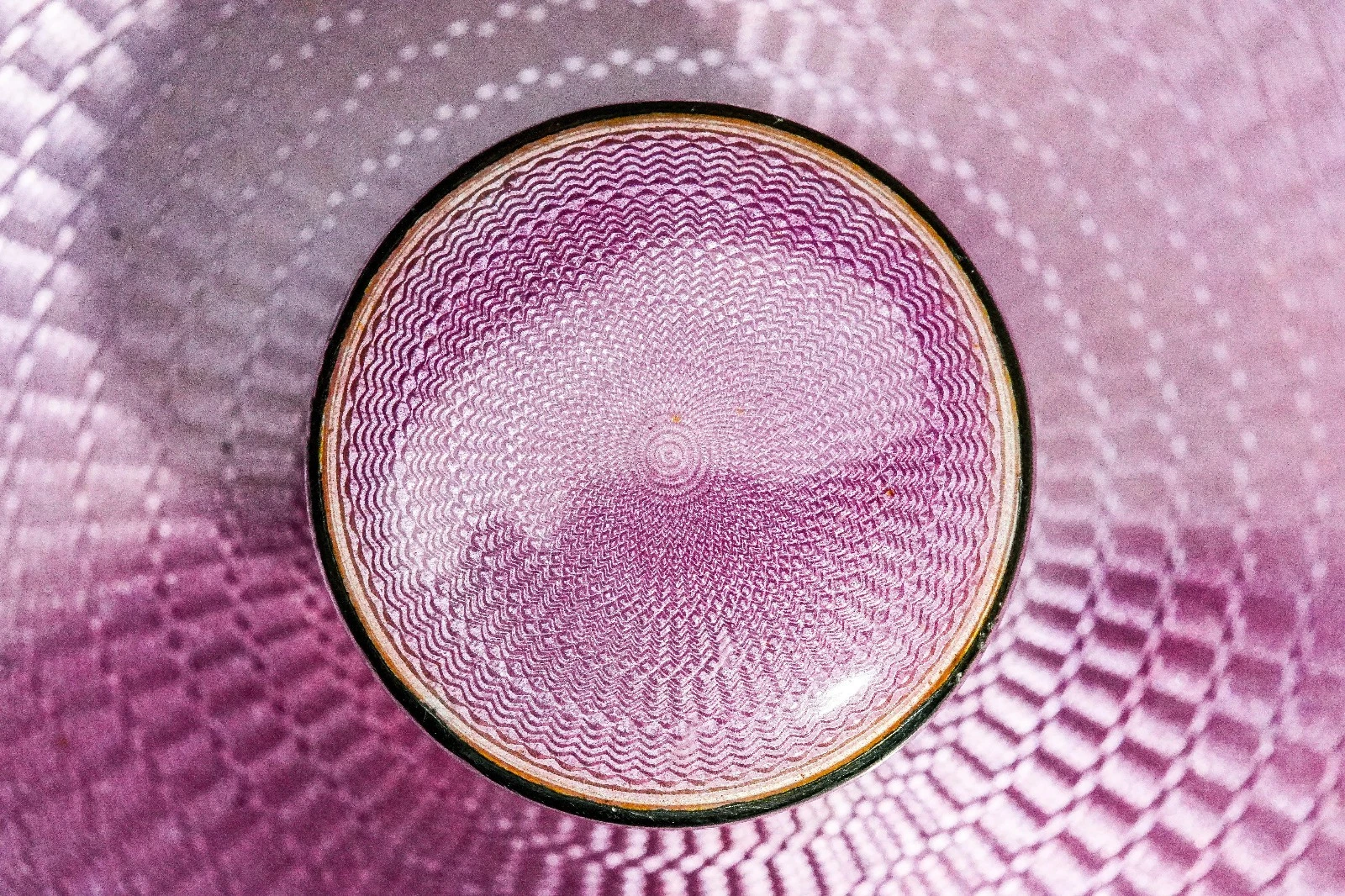
- The Pattern: The underlying metal has been engine-turned with a radial sunburst or wavy pattern that emanates from the center. This geometric precision catches the light through the translucent pink glass enamel, creating a shimmering, moiré silk effect.
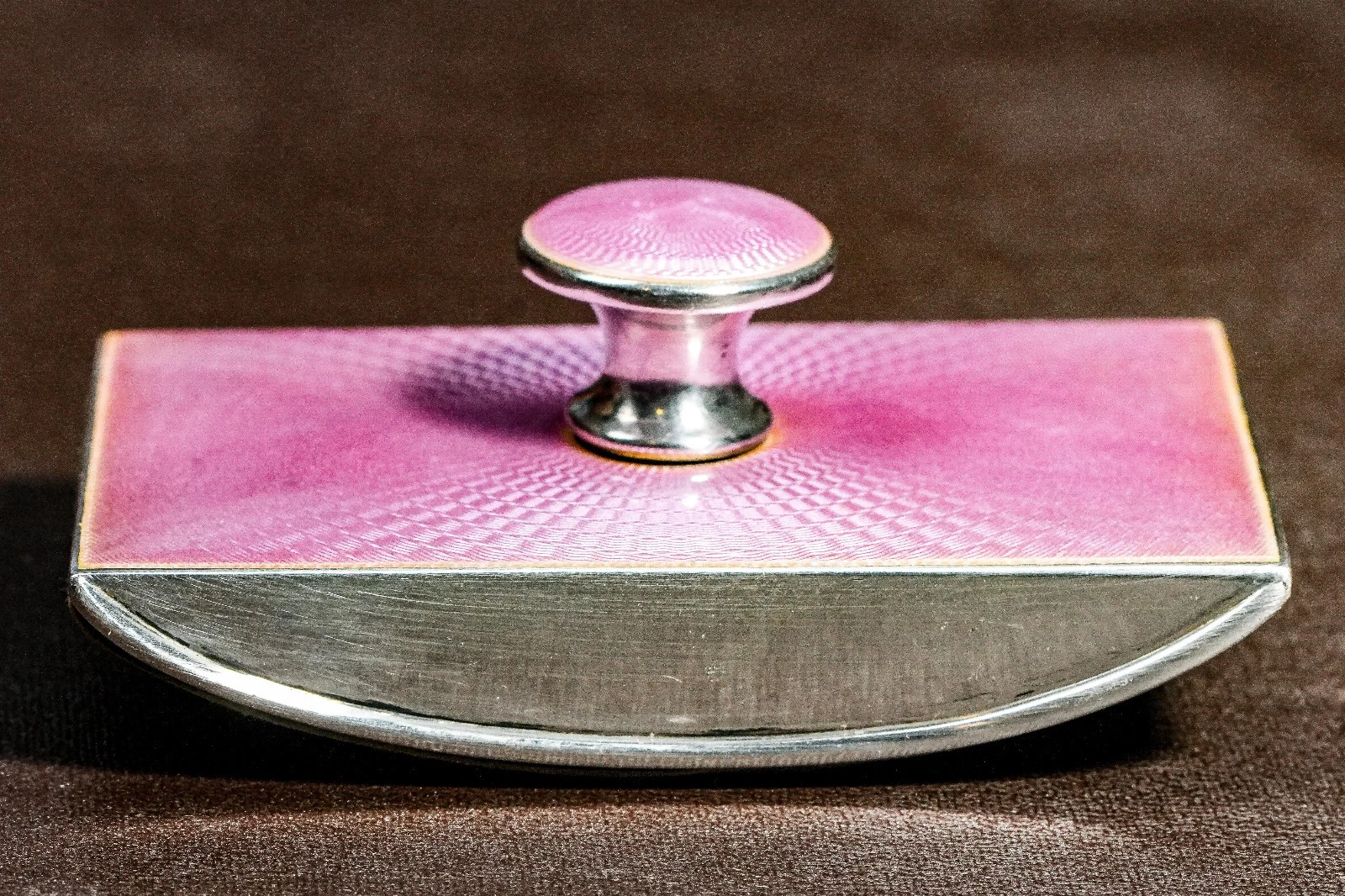
- The Rocker Blotter
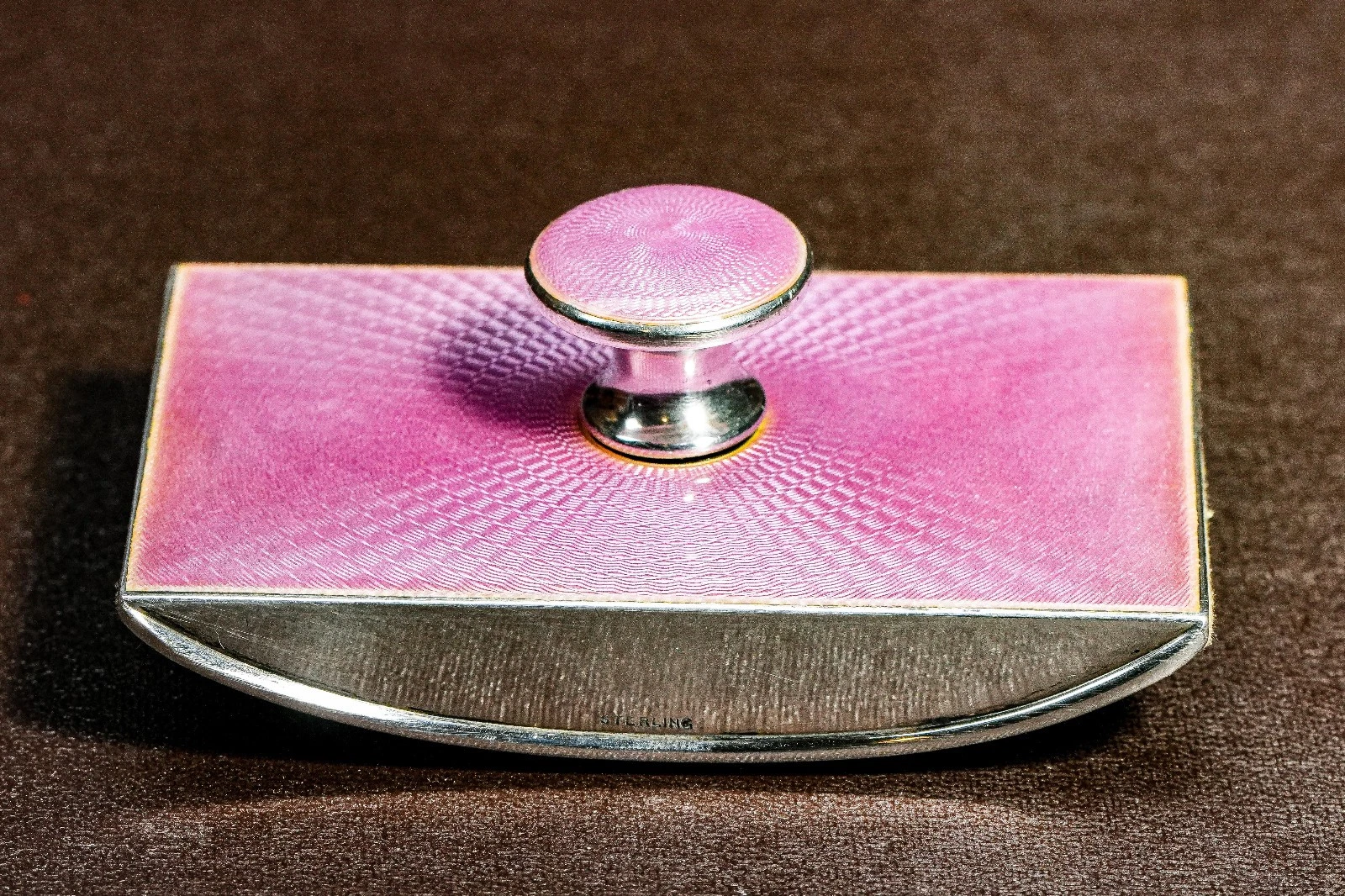
- Design: This handheld “rocker” blotter features a matching sterling silver top plate completely covered in the same pink guilloche enamel.
- Handle: It is fitted with a central knob handle that is also enameled, allowing the user to rock the curved base over wet ink to dry it without smudging.
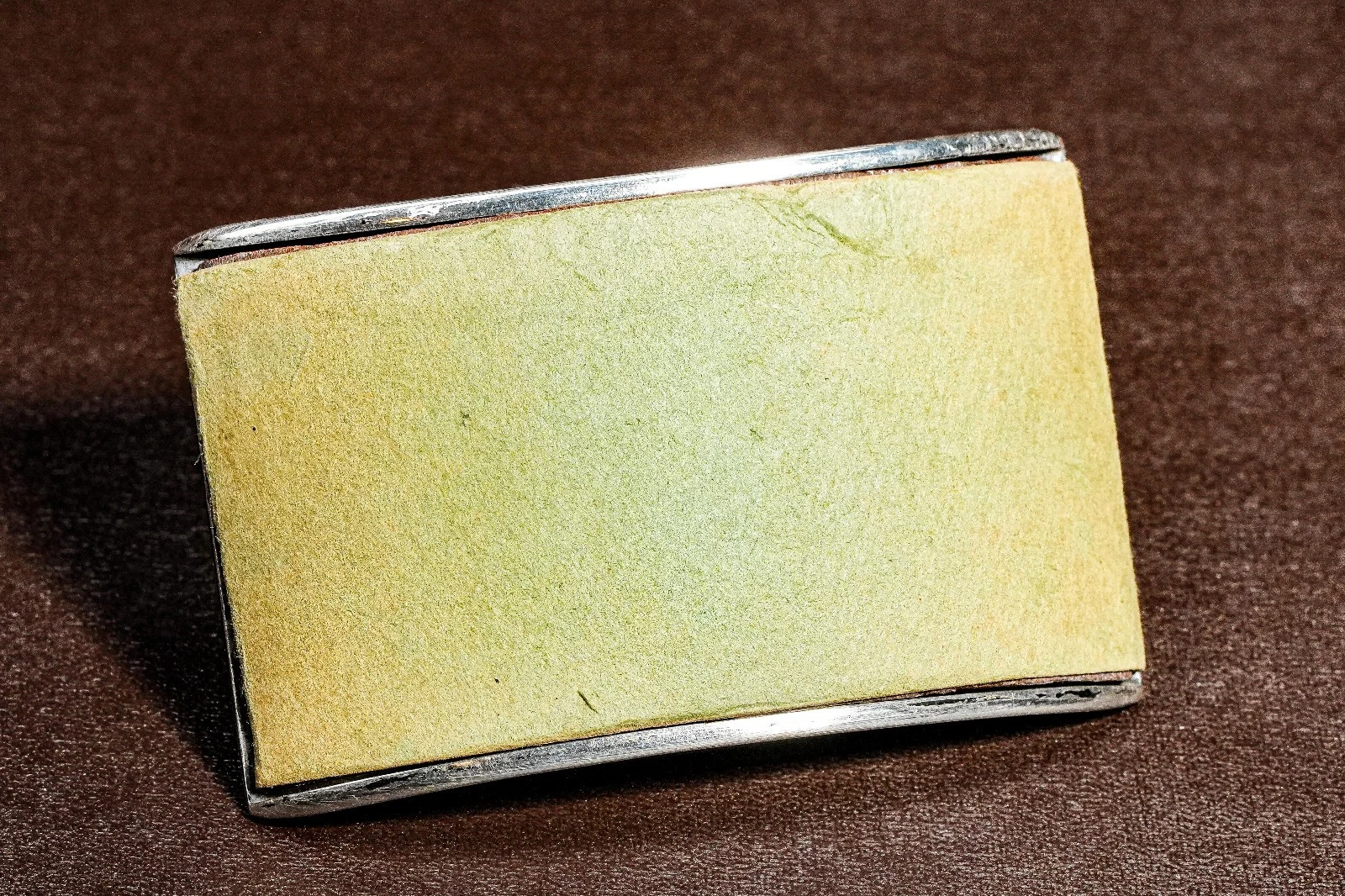
- Function: The blotting paper would be wrapped around the curved wooden base and clamped in place by the silver top.
- Technique: What is Guilloche?
- Guilloche (pronounced gee-yosh) is a decorative technique where a precise, intricate pattern is mechanically engraved into the base metal (usually silver or gold) using a rose engine lathe.
- Translucent Enamel: After the metal is engraved, it is covered with a layer of translucent colored glass (enamel) and fired in a kiln. The translucency allows the engraved pattern underneath to show through, creating a depth and sparkle that painted enamel cannot achieve.
- Maker and Markings
- Glass: T.G. Hawkes.
- Silver: While Hawkes made the glass, they did not manufacture silver. They purchased silver mounts from high-end American silversmiths to fit their glass bodies.
- The Mark: In photo, there is a small maker’s mark to the left of “STERLING.” While difficult to decipher fully, the style of the guilloche work is very characteristic of The Thomae Company (Attleboro, MA) or The Webster Company, both of whom specialized in these high-quality enamel vanity and desk accessories in the 1920s.
Note: Pink is one of the most sought-after colors for guilloche enamel collectors. Finding a matched set where the enamel is free of chips or cracks is rare, as the glass enamel is brittle and easily damaged. The connection to Hawkes adds a layer of pedigree that elevates this set above standard sets of the era.
Set sold for $903 in November 2025
Content disclaimer. The information posted is the owner’s best knowledge and may not have been vetted by the SOIC. We welcome comments, corrections, and additions, working to make our website information comprehensive and accurate.
Join the Society of Inkwell Collectors (SOIC) – it’s free!
Founded in 1981 as a non-profit organization,
we are documenting inkwells (and accessories).
We’re here to help and inform!