

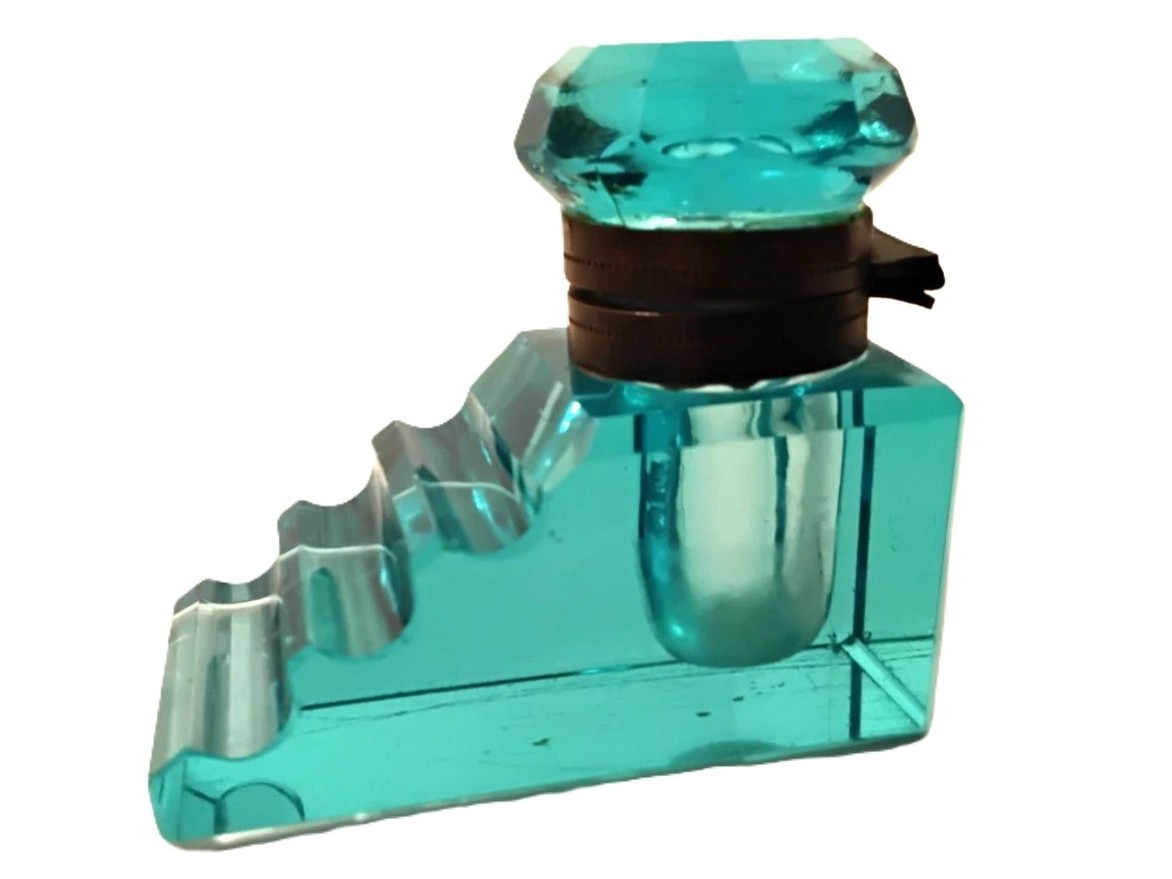




Aquamarine Cut Glass Inkwell
| Categories | Glass - Non-figural |
| Material | Glass |
| Markings | Unmarked |
| Manufacturer | Undetermined |
| Origin | Undetermined |
| Date or Era | circa 1900 |
| Measuring | 2 ¼” x 1” x 2” high |
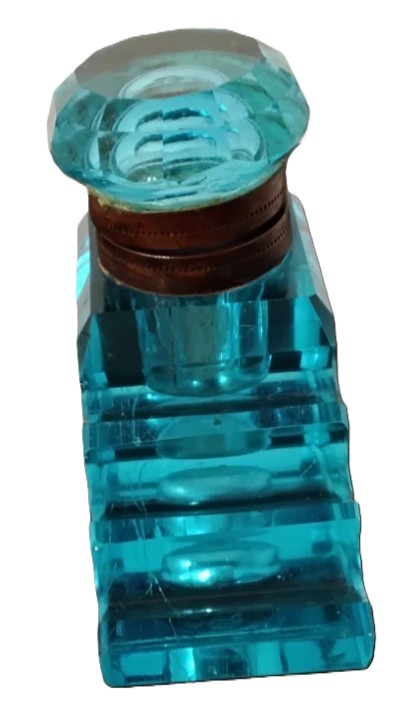
This aquamarine cut glass inkwell combines geometric precision with the glass chemistry of the era.
Detailed Physical Description
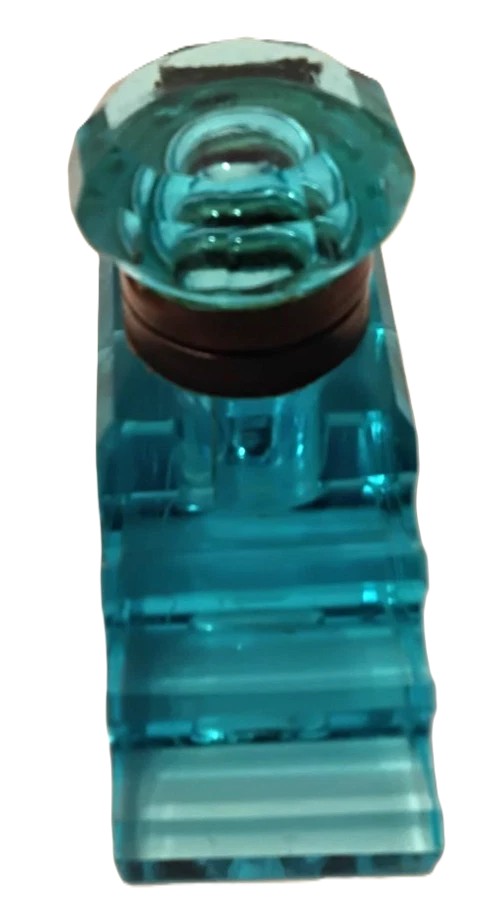
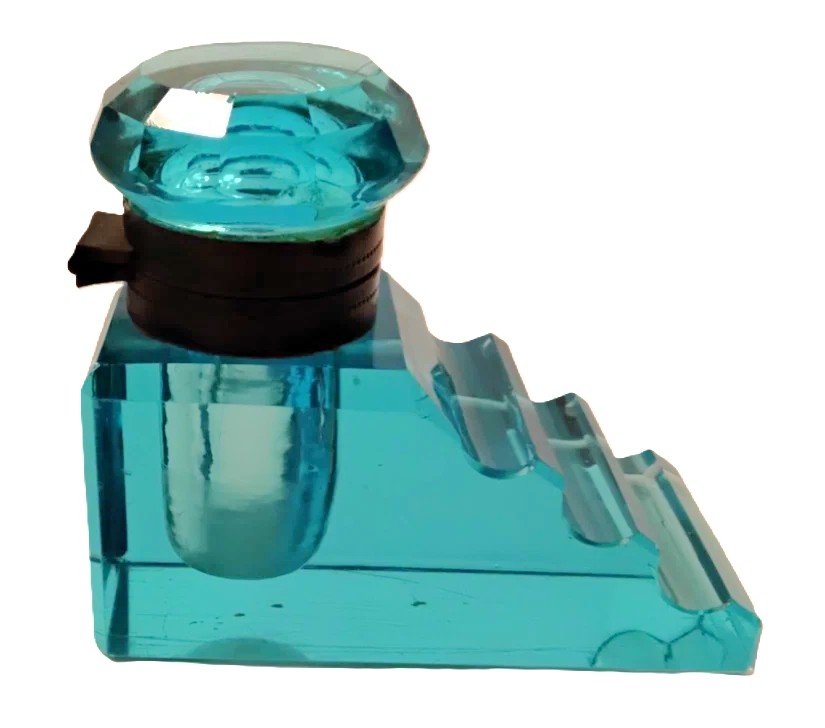
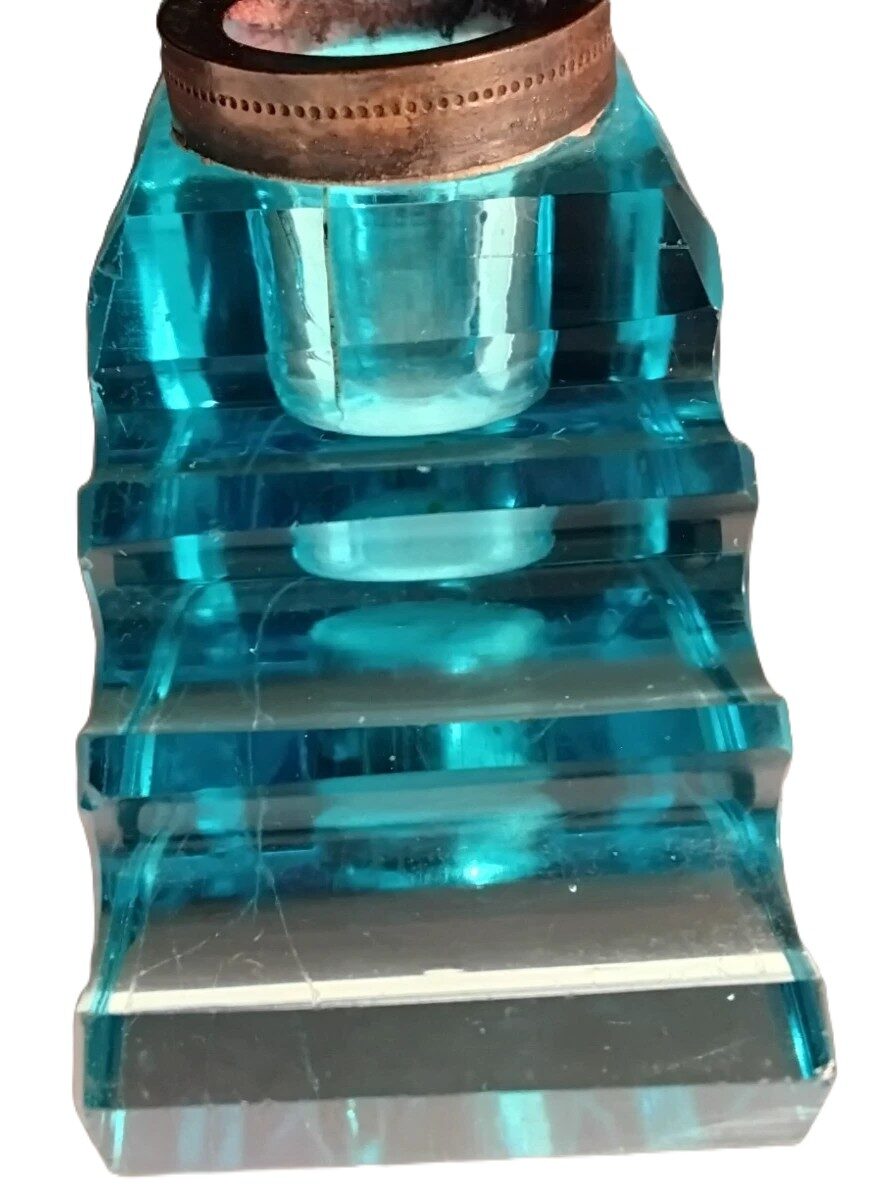
- Form: The inkwell features a “step-sided” or “tapered prism” body. The front of the well descends in four distinct, polished steps, while the back remains vertical. One can rest a pen on any of the steps.
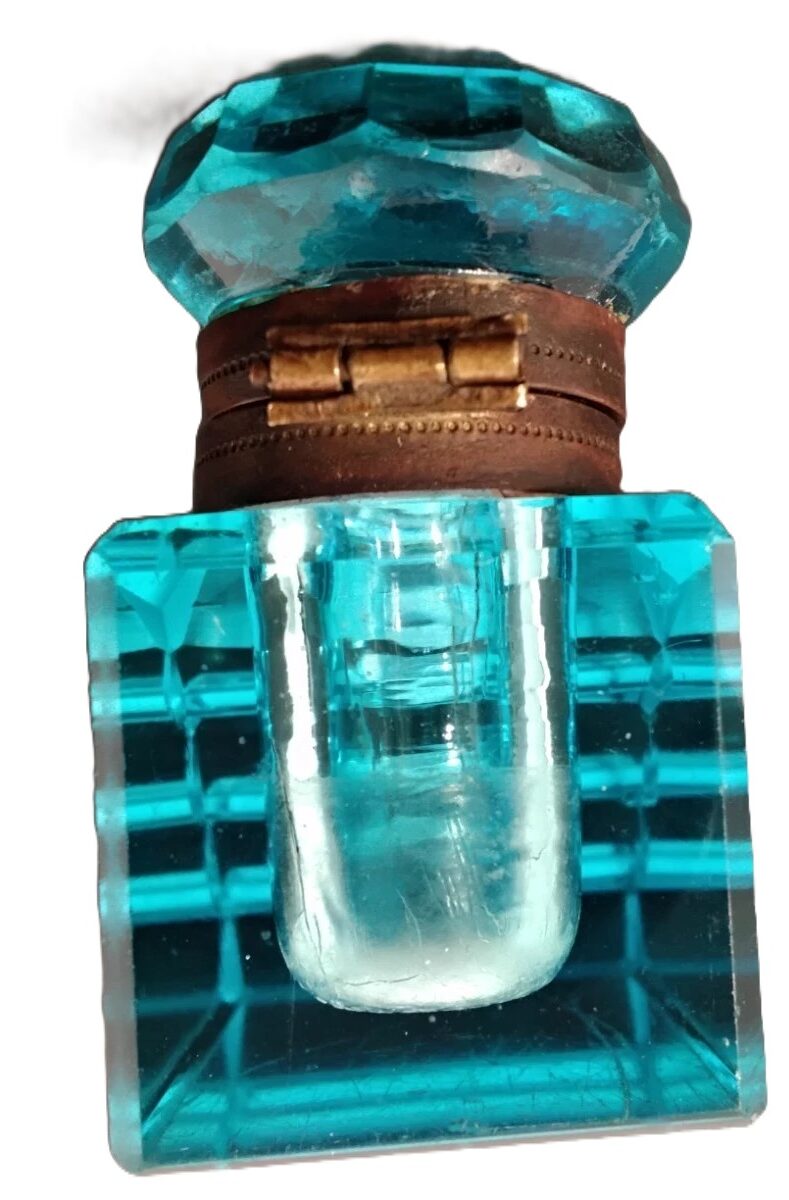
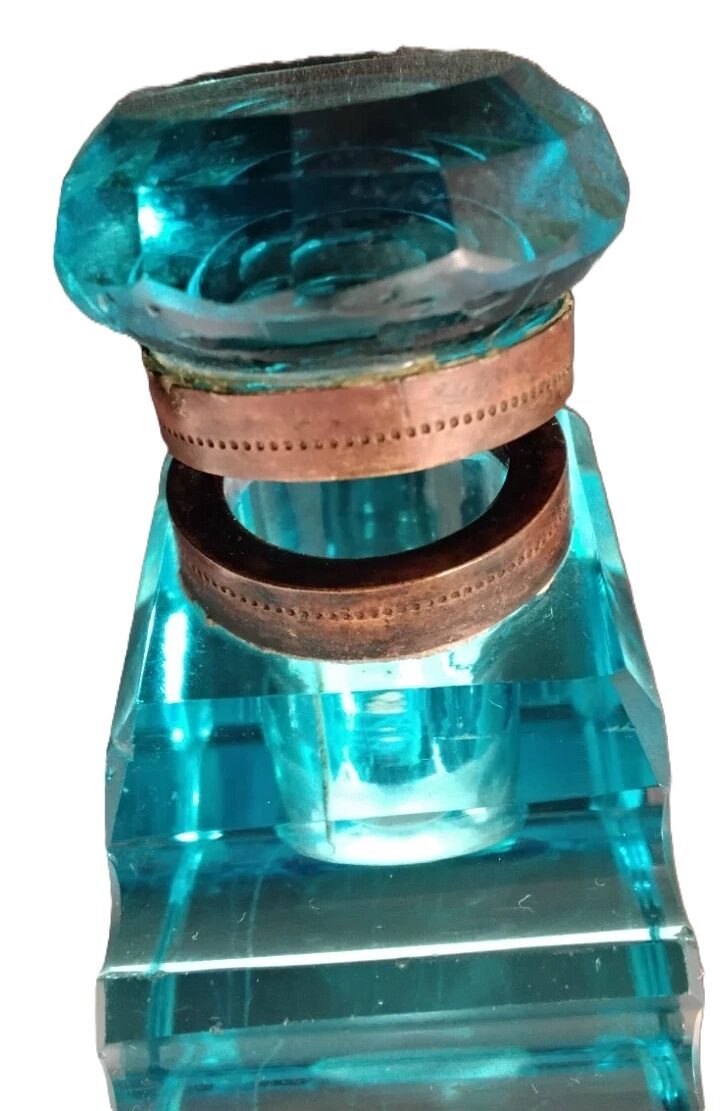
- The Lid: It is equipped with a faceted glass lid in a “diamond” or “jewel” cut, which is attached by a decorative brass hinge. The brass collar is embellished with a fine “beaded” or “dot” pattern around the rim.
The Color: Aquamarine / Teal
The shade of this glass is best described as Aquamarine or Light Teal.
- How it was achieved: In the 19th century, this specific blue-green hue was primarily achieved by adding copper oxide to the molten glass batch. Depending on the furnace atmosphere (oxidation vs. reduction), copper can produce anything from a deep ruby red to the bright turquoise/aquamarine seen here.
Manufacturing and Process
This piece was produced using a combination of industrial and hand-finishing techniques:
- Molding: The basic shape was likely press-molded or blown into a metal mold to create the stepped silhouette.
- Cutting and Polishing: After cooling, the piece underwent extensive hand-finishing on a glass-cutter’s wheel. The sharp, crisp edges of the steps and the facets on the lid were ground down and then polished to achieve their high-refractive shine.
- Assembly: The brass collar was fitted to the glass neck and secured, often using a mixture of plaster of Paris and glue common in Victorian manufacturing.
Age
- Estimated Age: Circa 1880–1910. This specific “stepped” design and the use of vibrant colored glass were highly popular during the Late Victorian and Edwardian periods.
Sold for $95 in December 2025
Content disclaimer. The information posted is the owner’s best knowledge and may not have been vetted by the SOIC. We welcome comments, corrections, and additions, working to make our website information comprehensive and accurate.
Join the Society of Inkwell Collectors (SOIC) – it’s free!
Founded in 1981 as a non-profit organization,
we are documenting inkwells (and accessories).
We’re here to help and inform!