


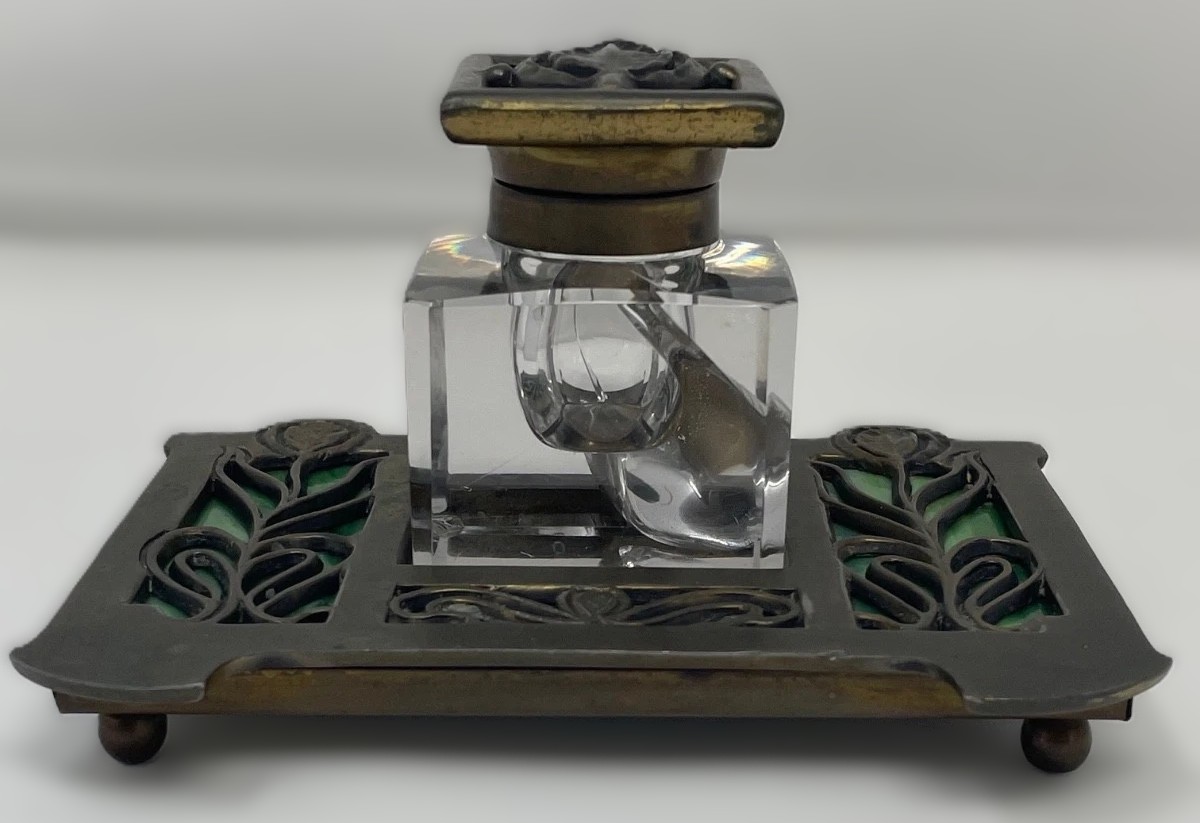
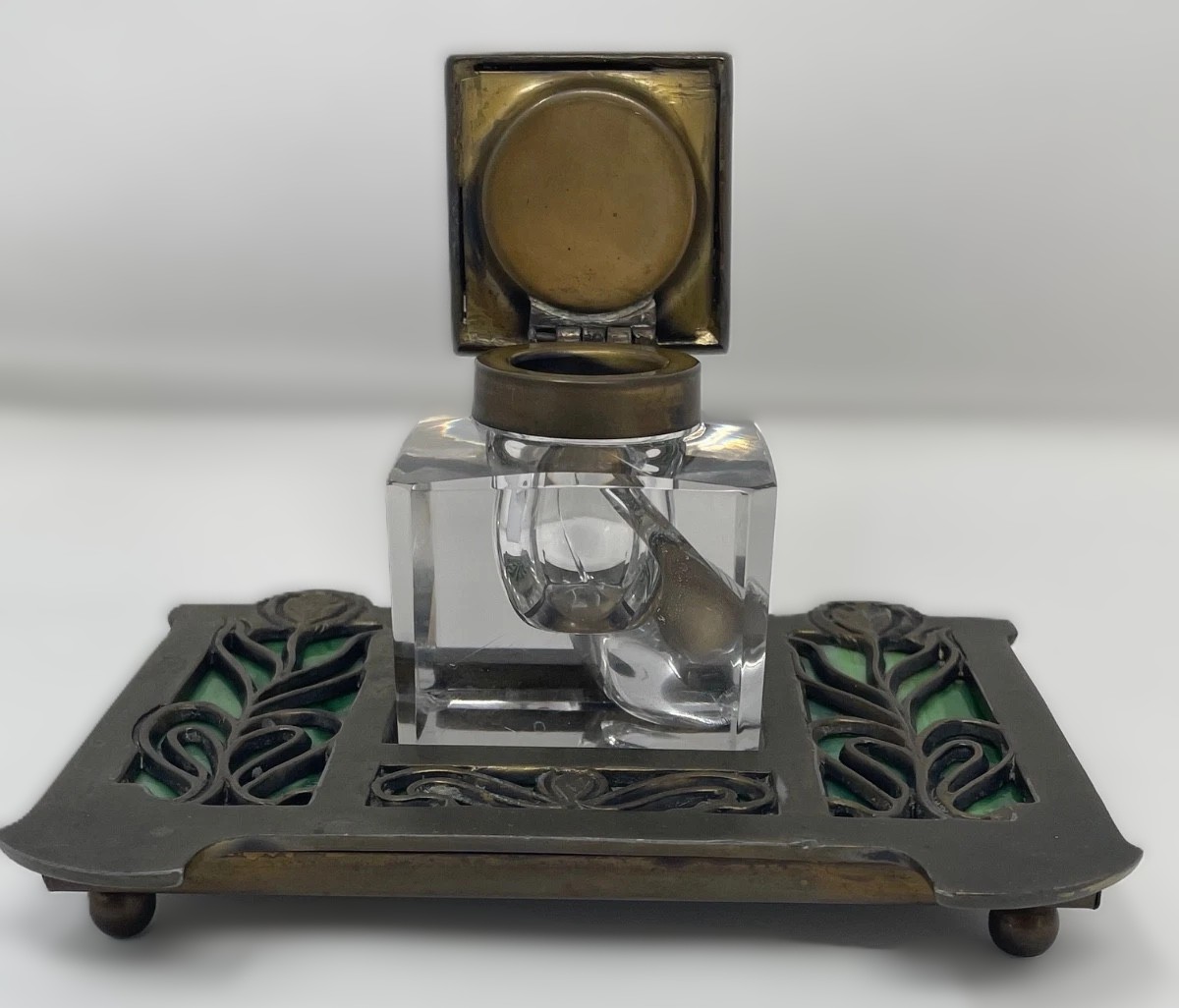
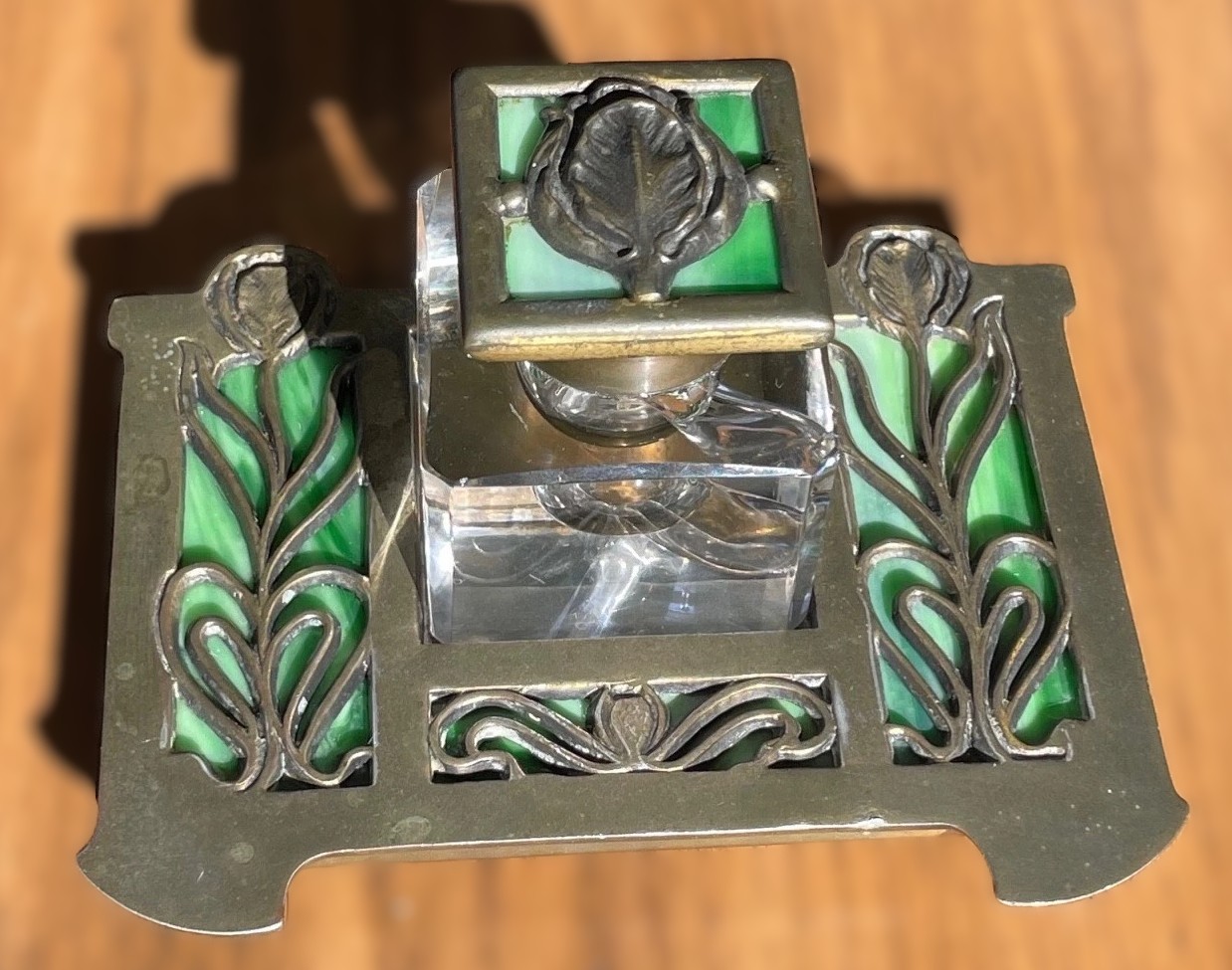
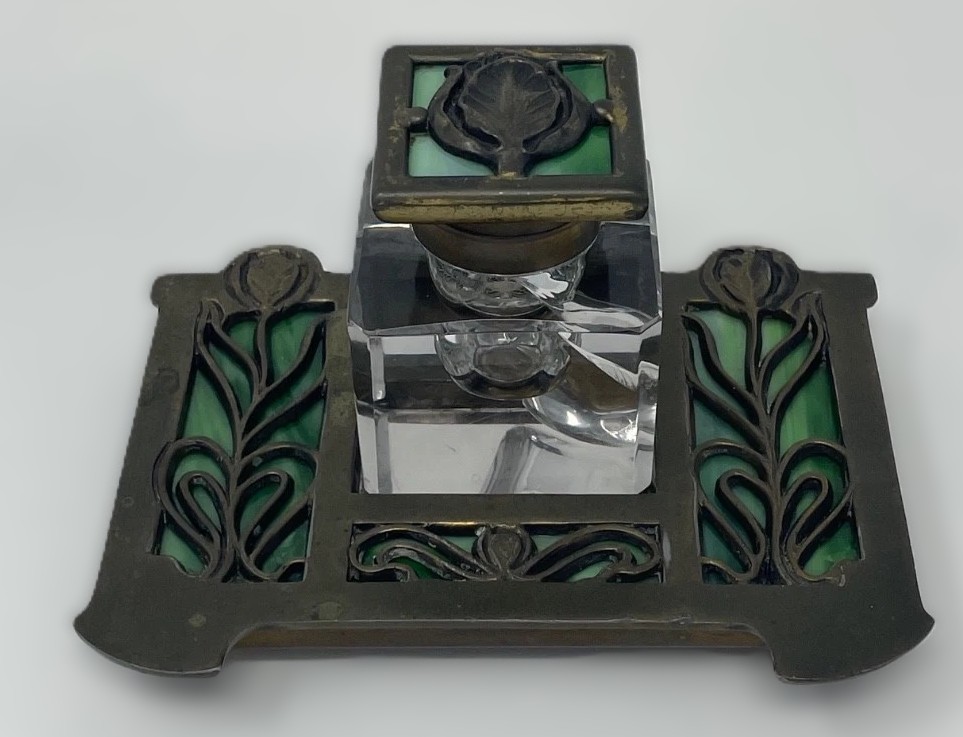
Apollo Studios Double Inkstand
| Categories | Art Nouveau |
| Material | Brass, Glass |
| Markings | See Narrative |
| Manufacturer | Apollo Studios |
| Origin | United States |
| Date or Era | circa 1910 |
| Measuring | 8 ½” x 5” x 3 ½” high (Double); 5 ½” x 4 ½” x 3 ½” high (Single) |
Description
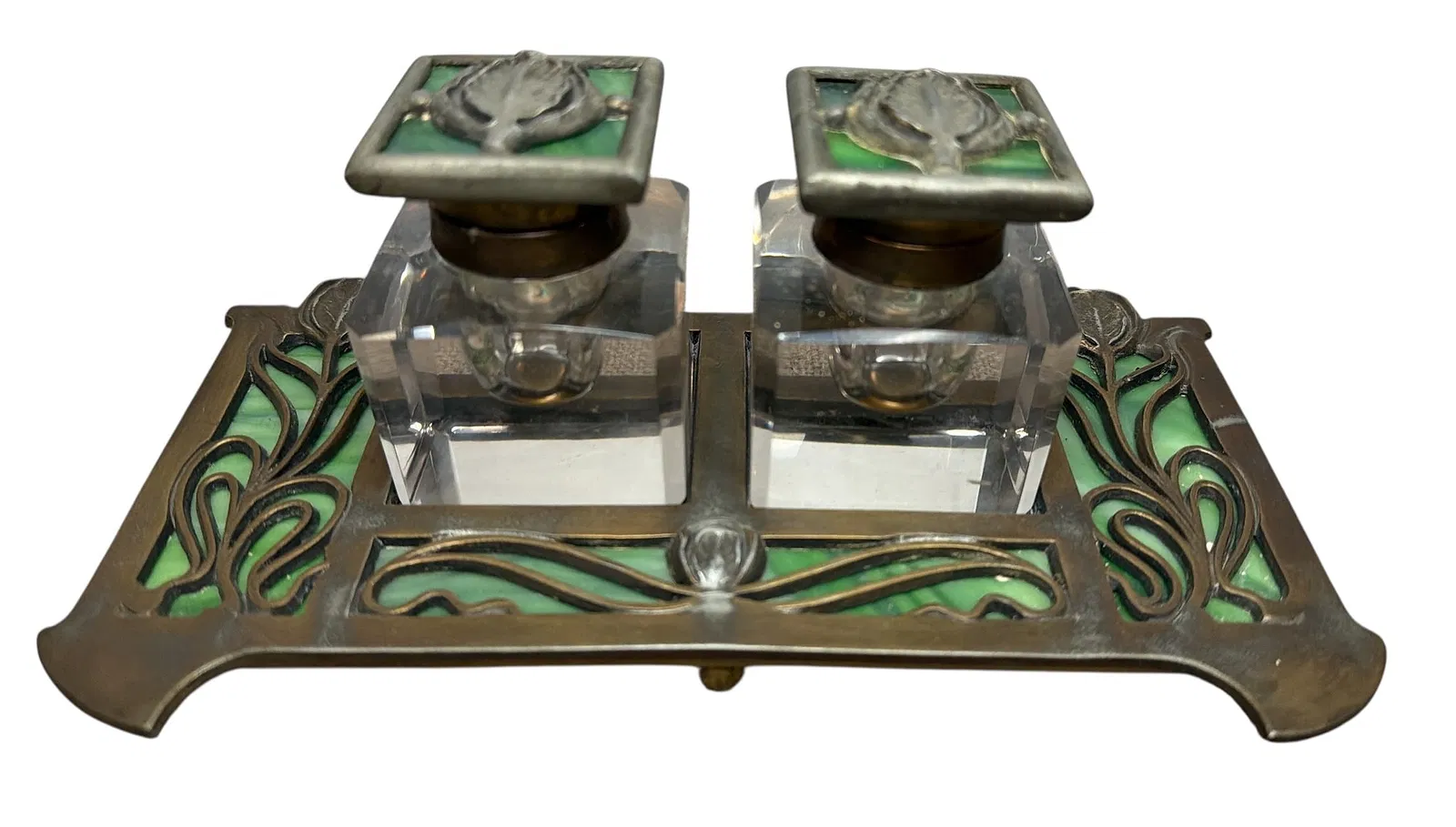
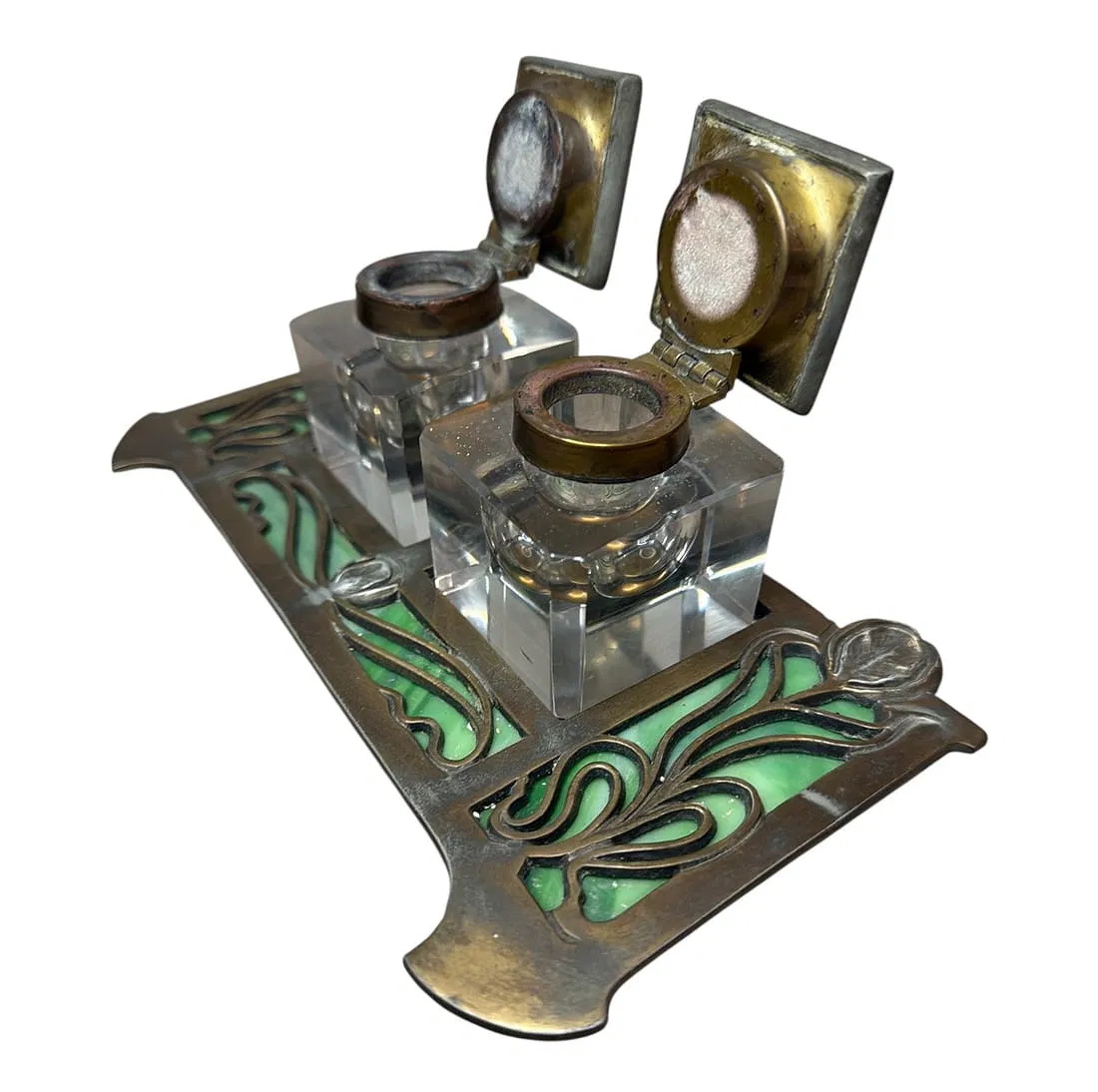
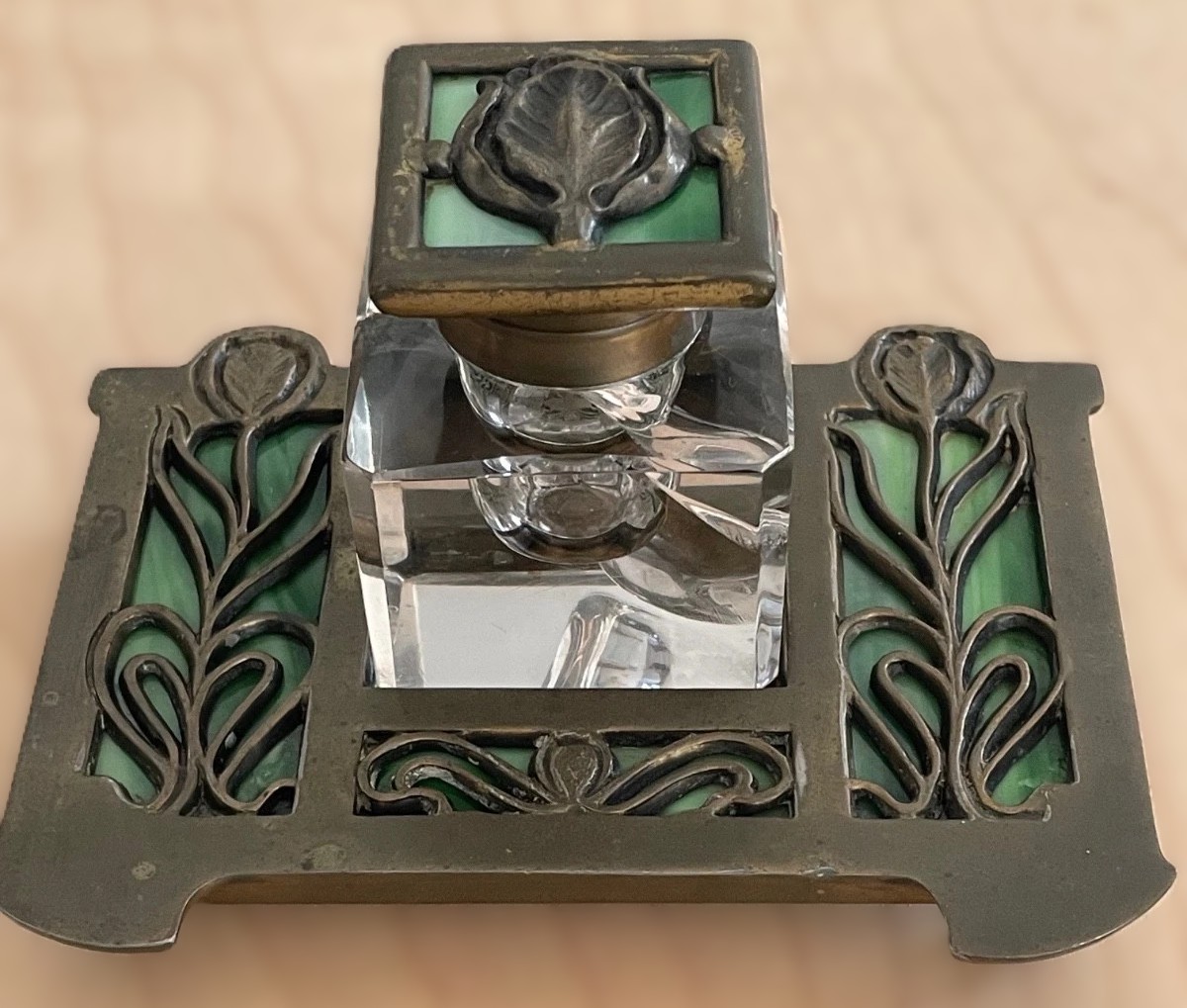
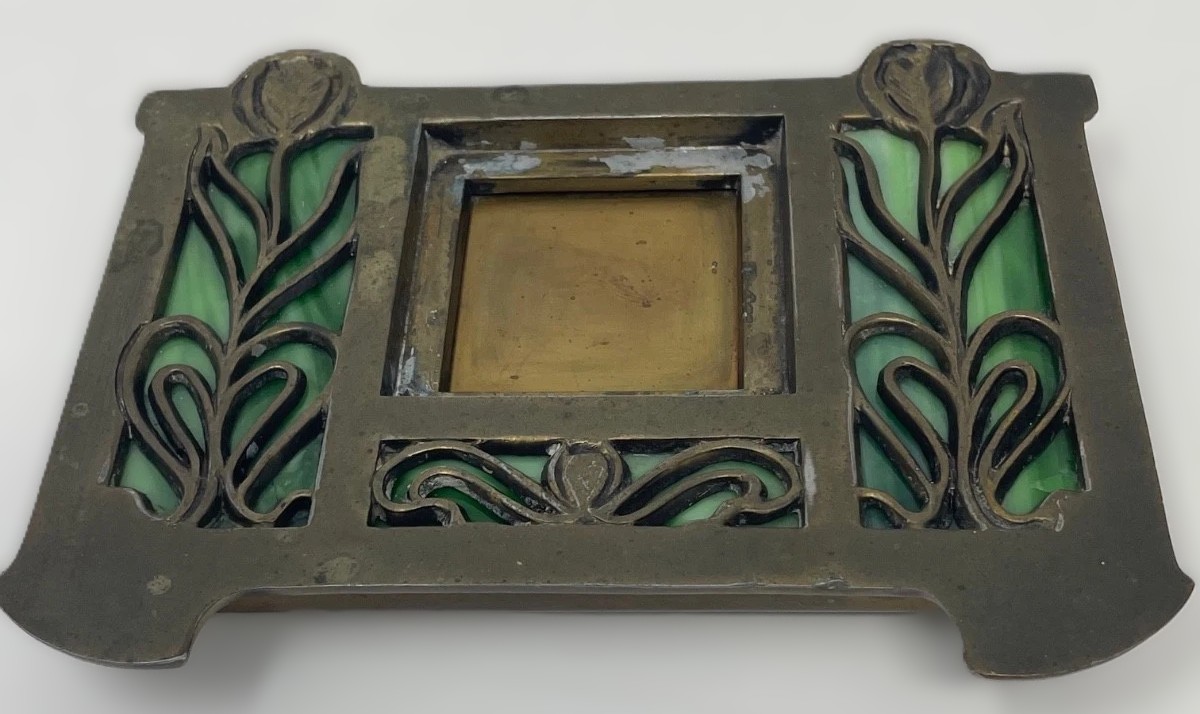
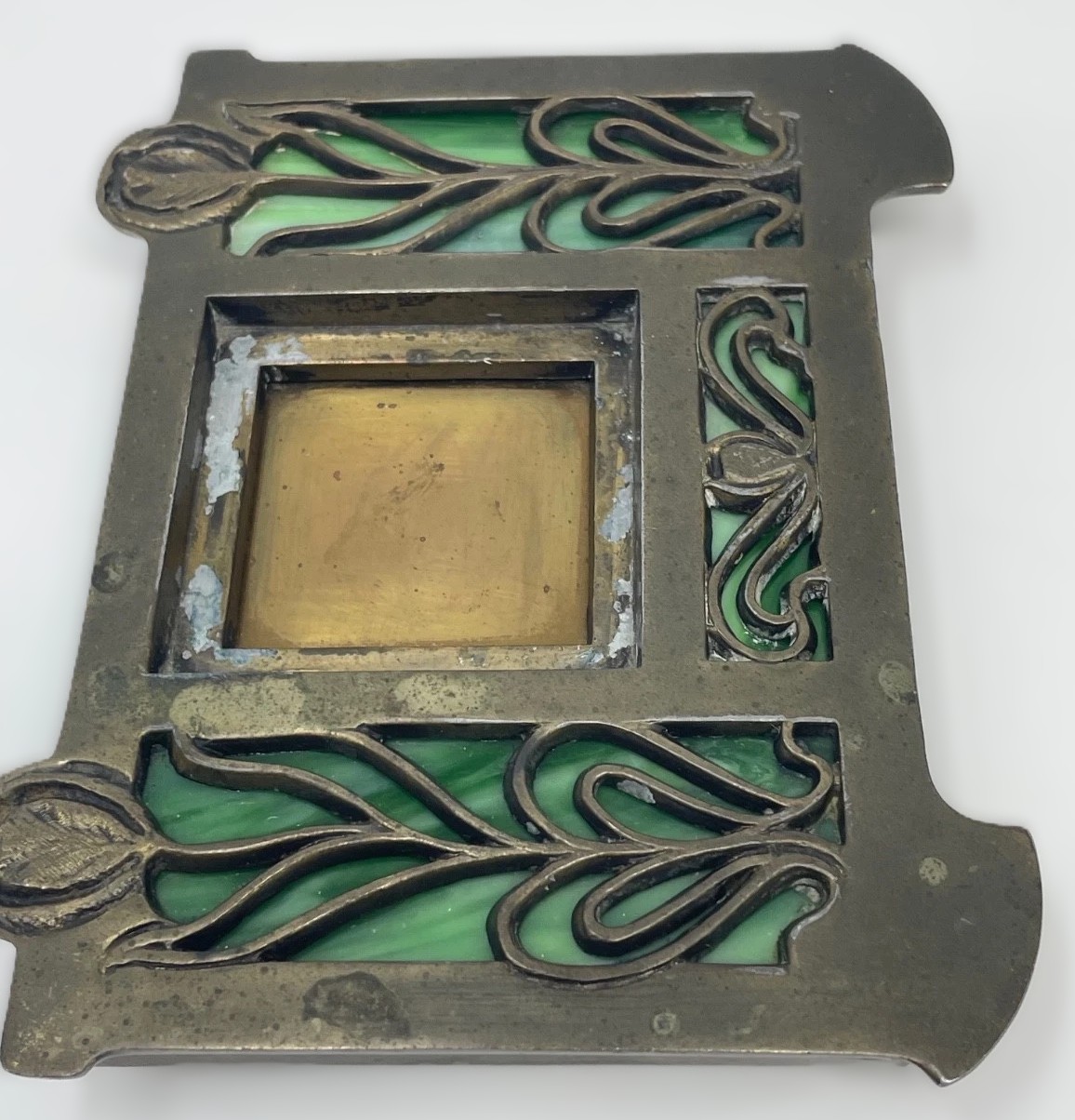
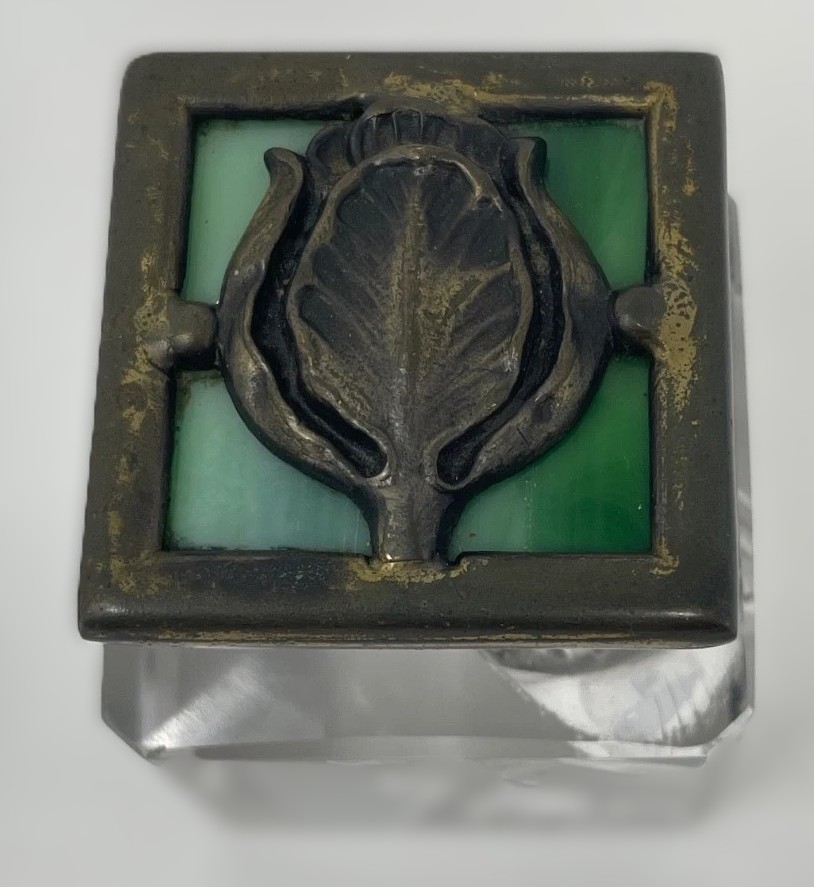
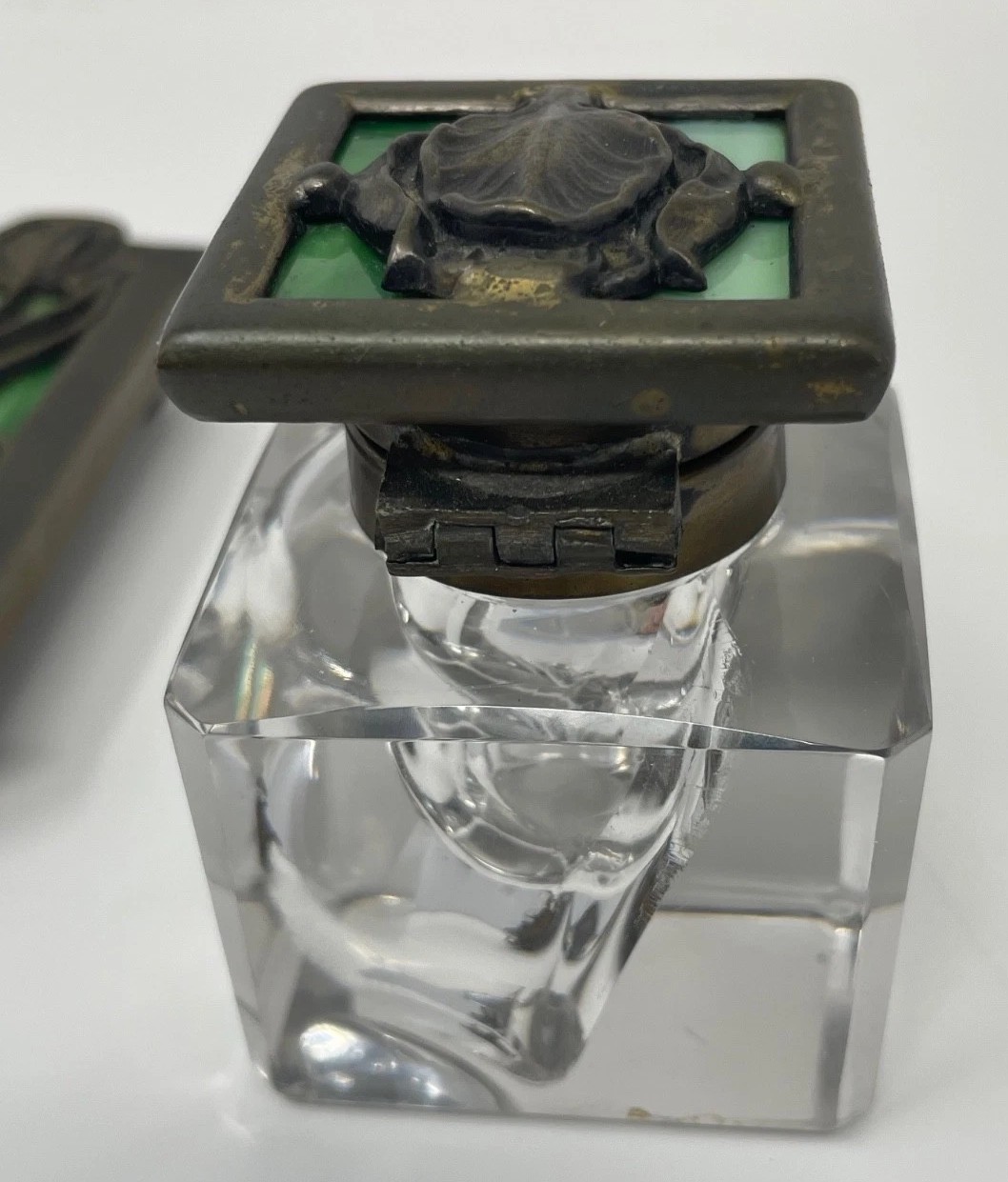
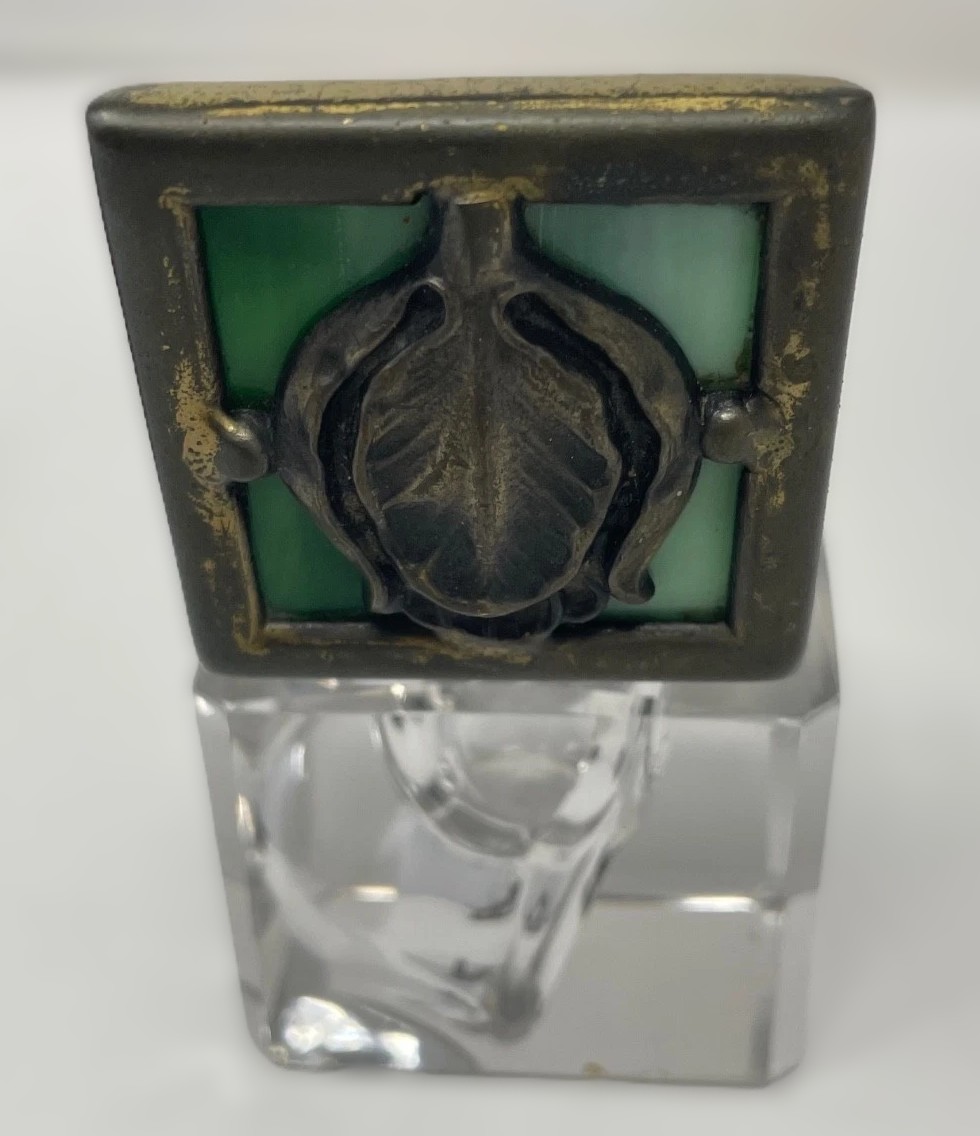
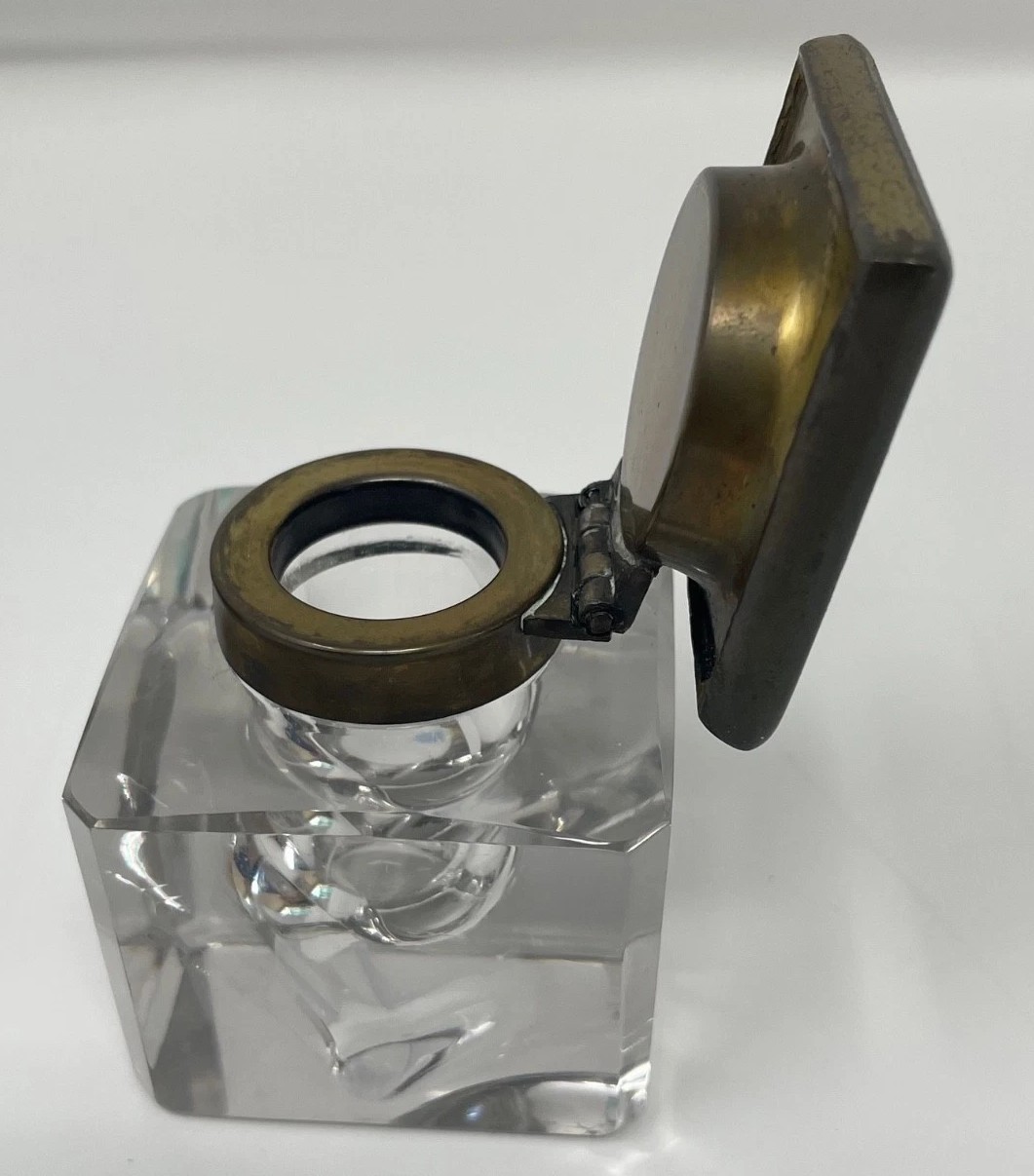
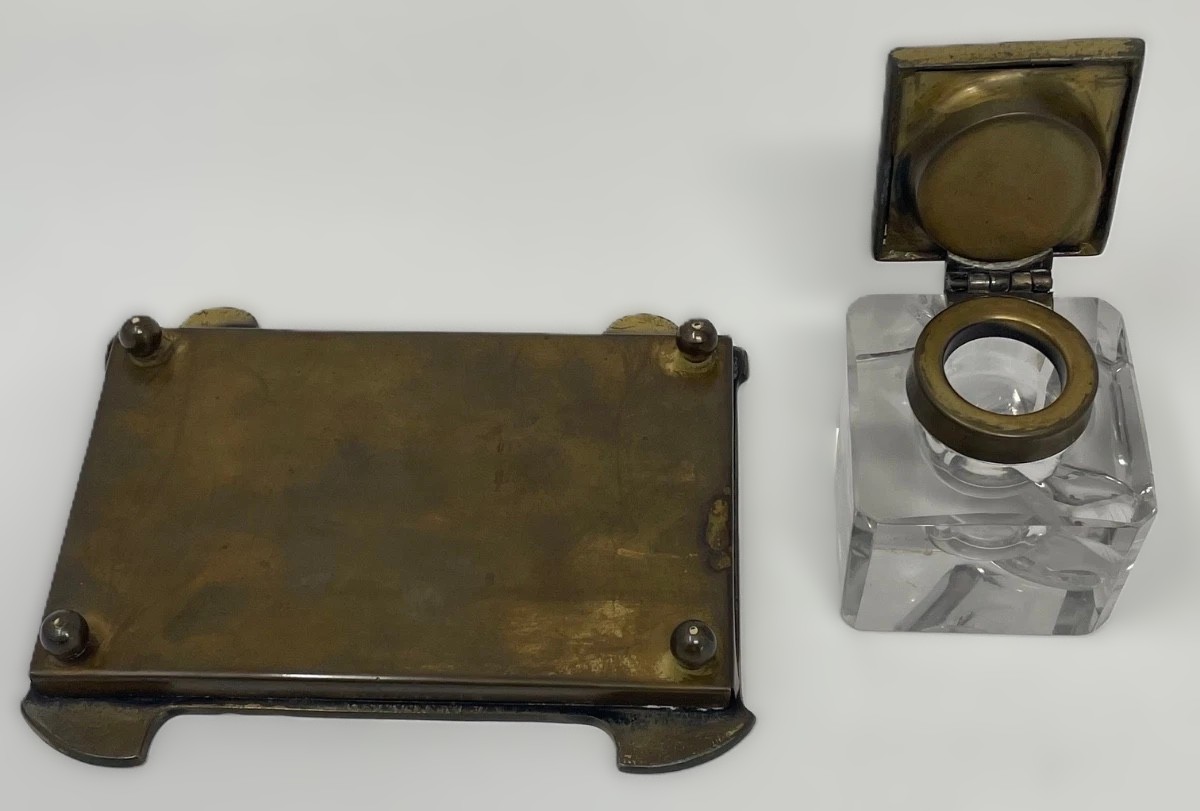
The inkstand features a wide, rectangular metal base with two heavy, square-cut clear glass (leaded crystal) inkwells. The design is unified by the use of green marbled “slag” glass (also known as opalescent glass) which is visible through the openwork metal of the base and the square hinged lids.
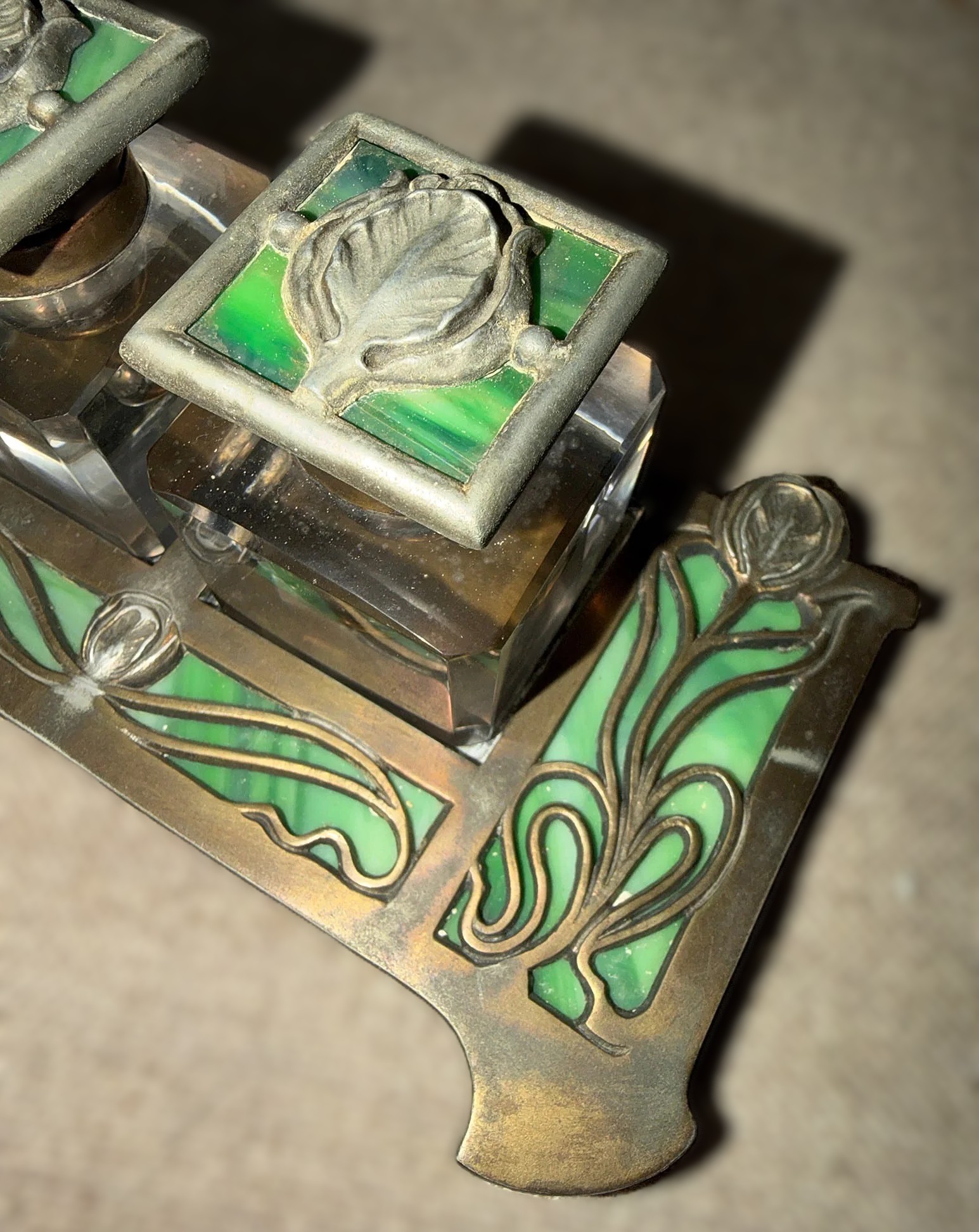
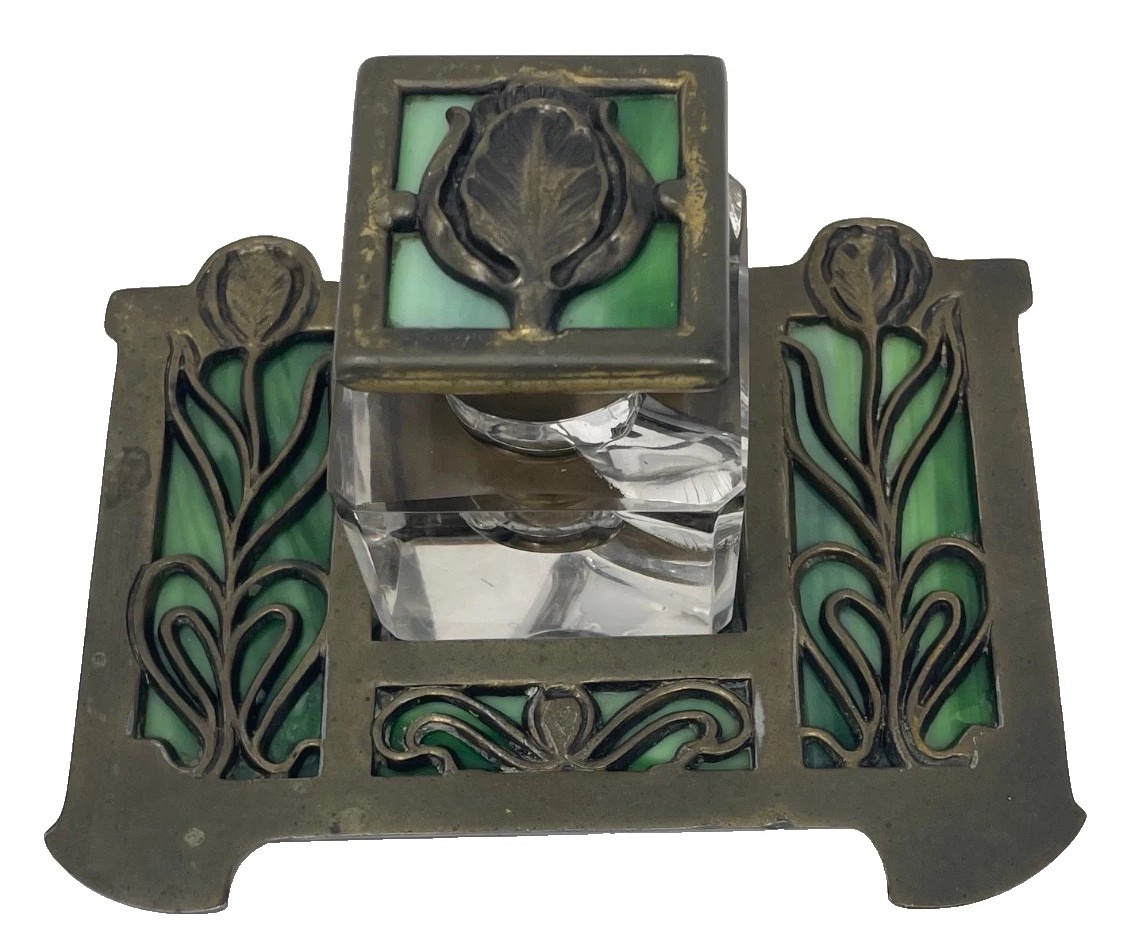
- The Lids: Each square lid is hinged and features a centrally embossed stylized tulip or leaf motif. This metalwork is set against a panel of the green slag glass, creating a glowing effect when it catches the light.
- The Base: The metal frame of the base is decorative, utilizing an openwork (filigree) design. It features sweeping, organic “whiplash” curves and stylized floral buds that frame the glass inserts.
- The Inkwells: The glass wells are thick and polished, typical of high-end desk sets from this era.
(Note: also pictured is a “single” inkwell version)
Art Nouveau Characteristics
The defining features are the fluid, asymmetrical “whiplash” lines in the metalwork and the botanical, organic themes. The stylized, elongated tulip buds and the emphasis on decorative curves are hallmarks of this style.
About Apollo Studios
Apollo Studios was a prestigious New York-based firm active primarily from the late 19th century through the 1920s. It was a division of Bernard Rice’s Sons, and they were contemporaries—and often competitors—of Tiffany Studios.
- Specialty: They were renowned for high-quality desk sets, boudoir items (like mirrors and brushes), and smoking accessories.
- Distinction: While Tiffany focused on favrile glass and bronze, Apollo frequently used brass, copper, and silver-plated finishes, often incorporating intricate filigree and slag glass panels. Their work offers the “Tiffany look” with exceptional detail and build quality.
- Markings: Stamped on the underside “APOLLO STUDIOS NY”.
Estimated Age
Based on the specific transition between the height of Art Nouveau and the early Arts & Crafts era, this inkstand most likely dates to circa 1910–1915. By the 1920s, Apollo Studios’ designs began to shift toward the sharper, more geometric lines of the Art Deco period, making this piece a classic representative of their earlier, more organic phase.
Double sold for $195 in April 2026.
Single sold for $235 in June 2026.
Content disclaimer. The information posted is the owner’s best knowledge and may not have been vetted by the SOIC. We welcome comments, corrections, and additions, working to make our website information comprehensive and accurate.
Join the Society of Inkwell Collectors (SOIC) – it’s free!
Founded in 1981 as a non-profit organization,
we are documenting inkwells (and accessories).
We’re here to help and inform!