

Antler Inkstand: A Menagerie of Bone and Silver
| Categories | Stone/Marble/Ivory/Bone/Hoof/Leather |
| Material | Horn/Bone/Tusk, Silver |
| Markings | See Narrative |
| Manufacturer | W. I. Broadway & Co. |
| Origin | England |
| Date or Era | circa 1950 |
Description
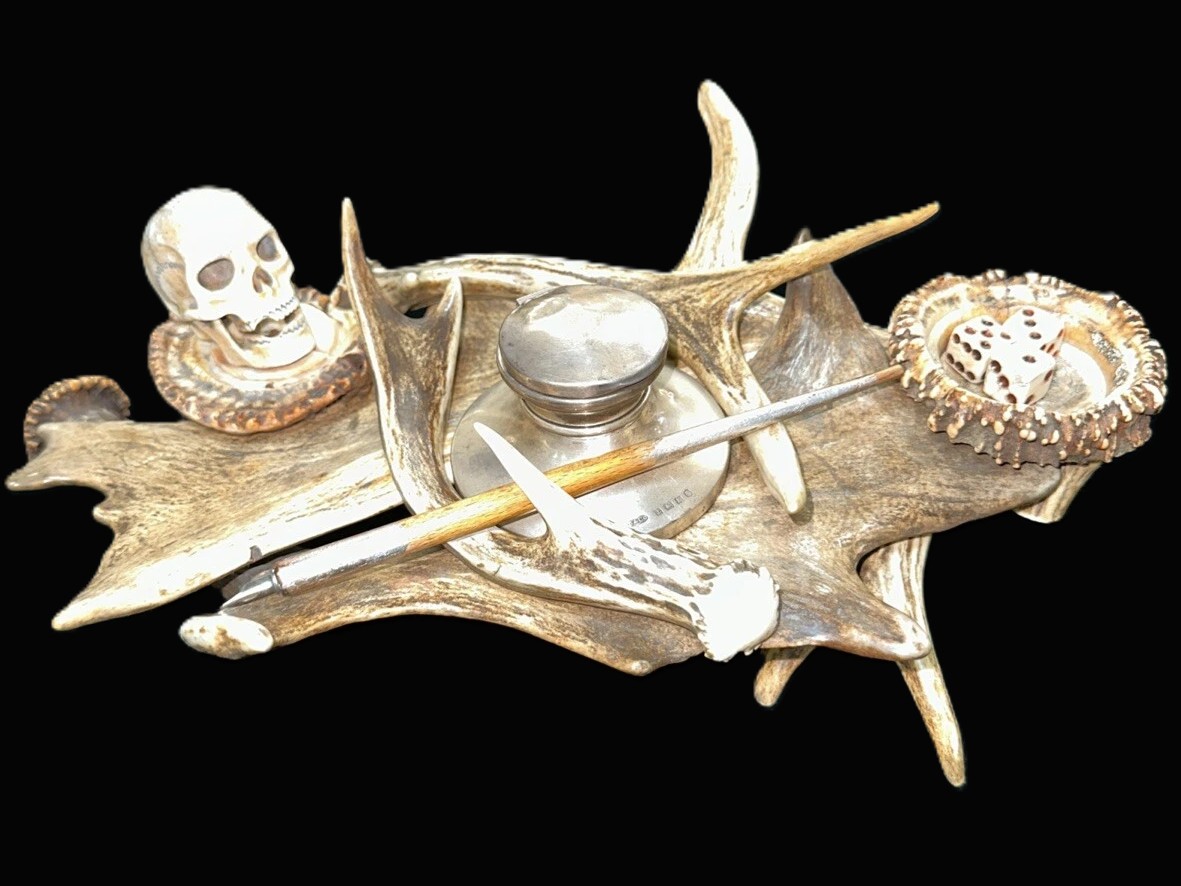
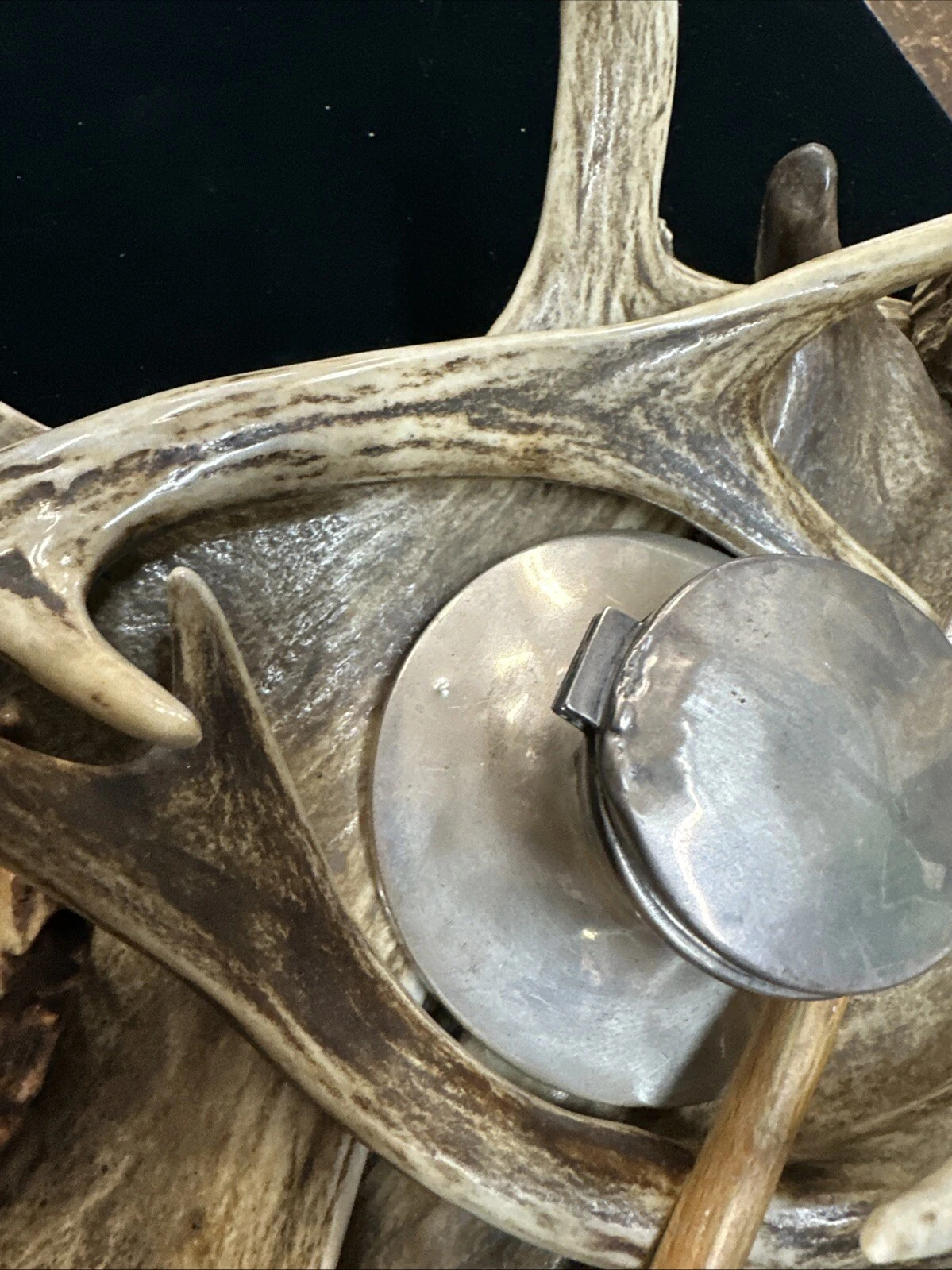
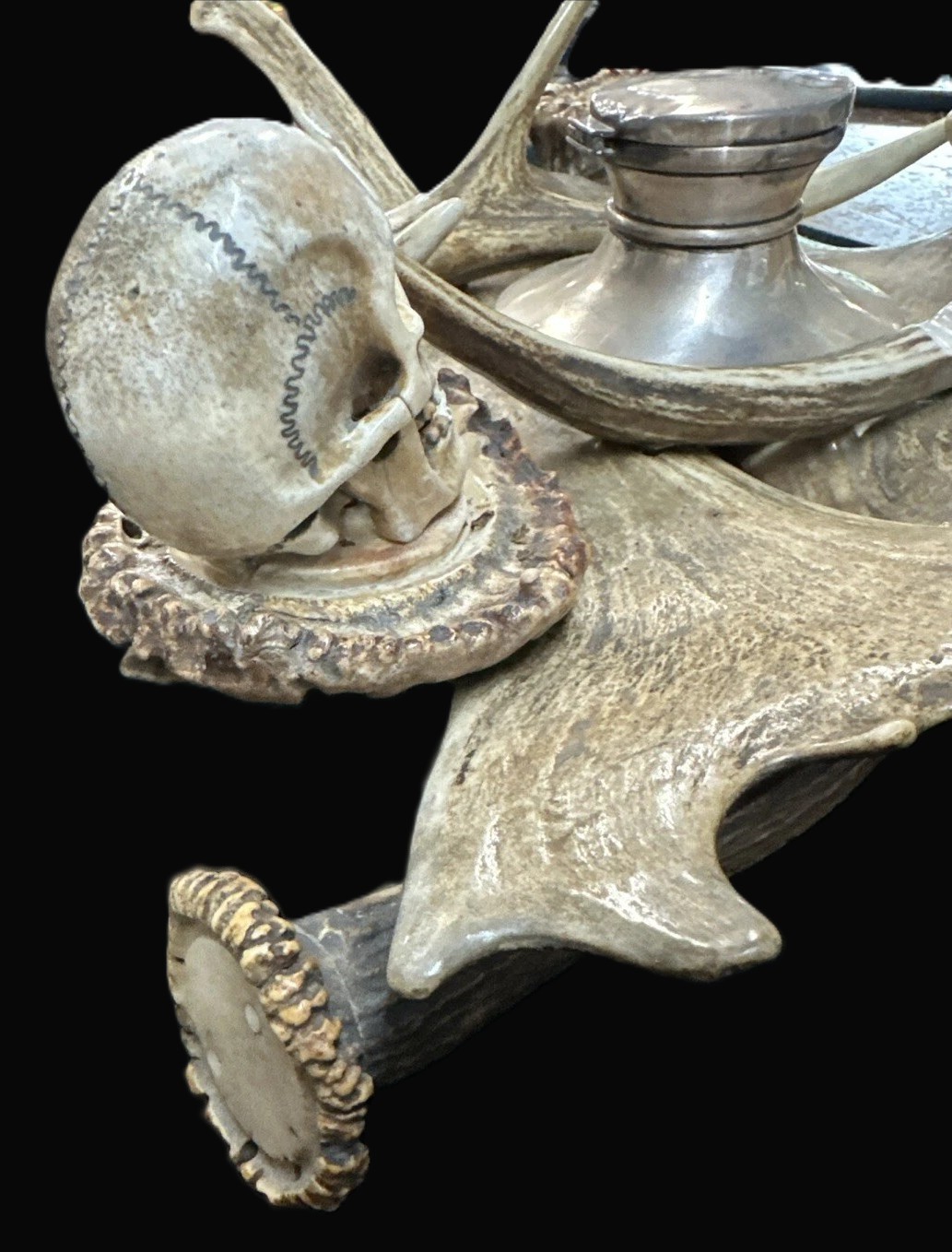
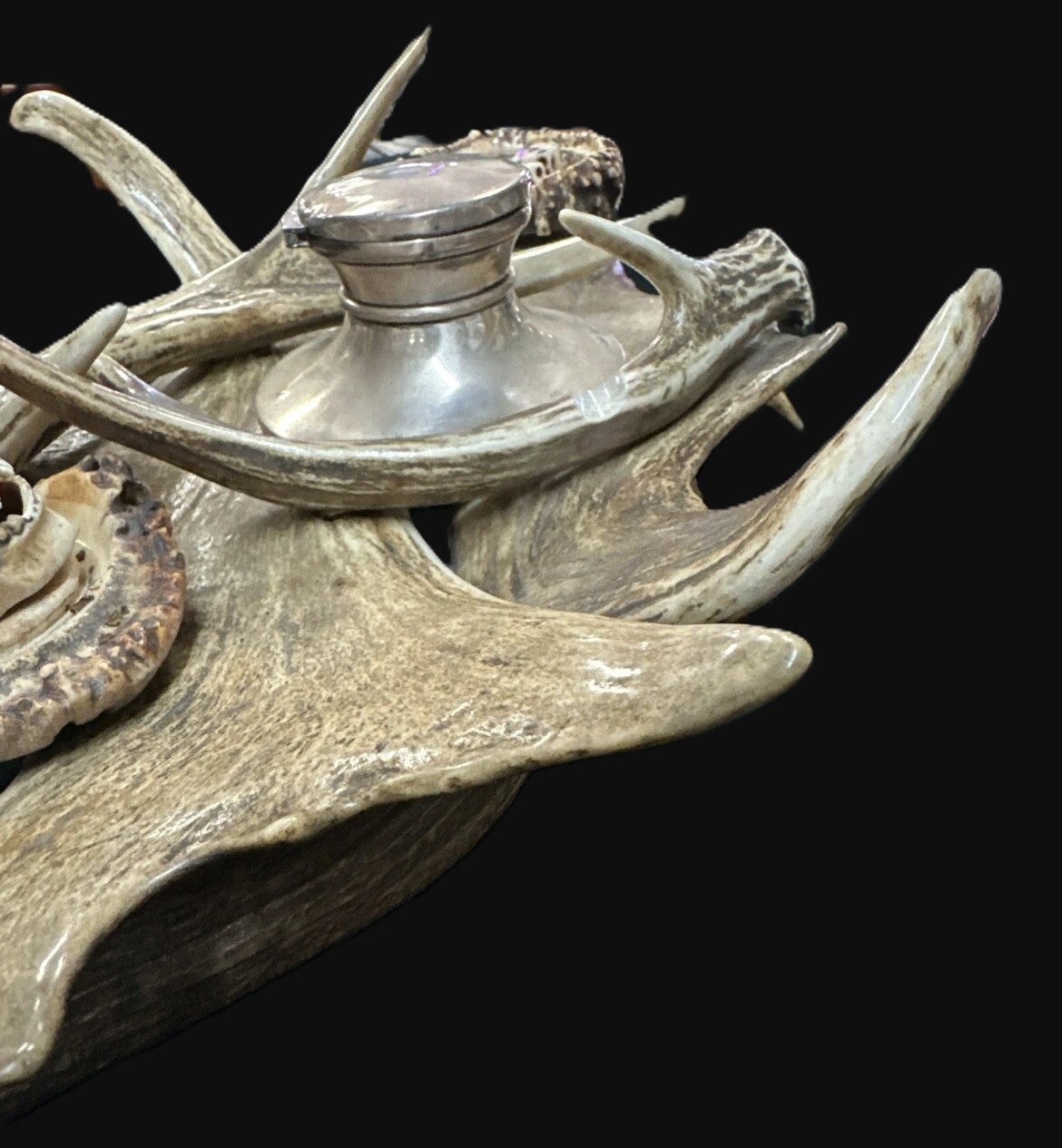
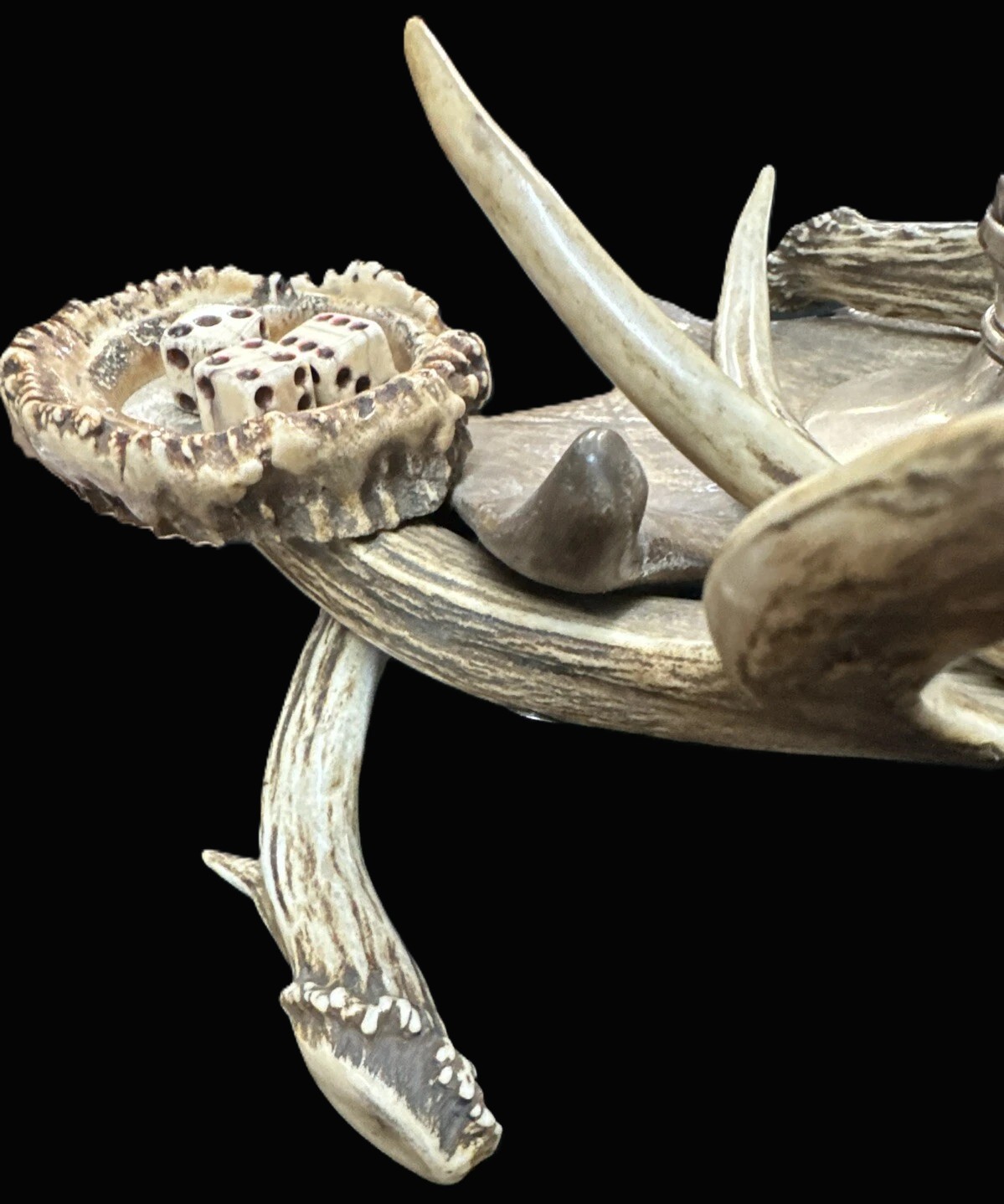
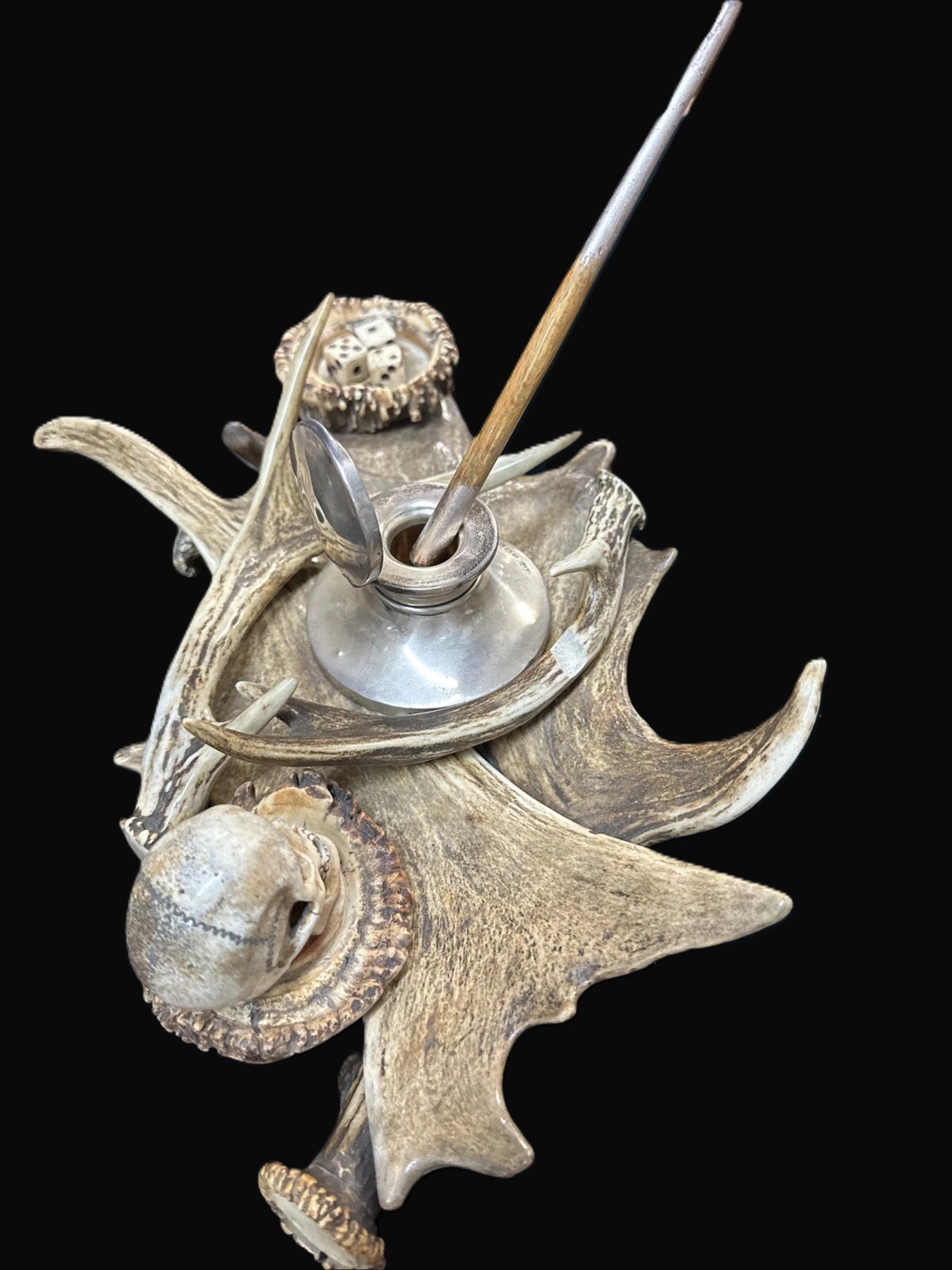
This eccentric folk art desk accessory takes the form of an inkstand crafted from North American cervid antlers and mounted with English silver and curiosities.
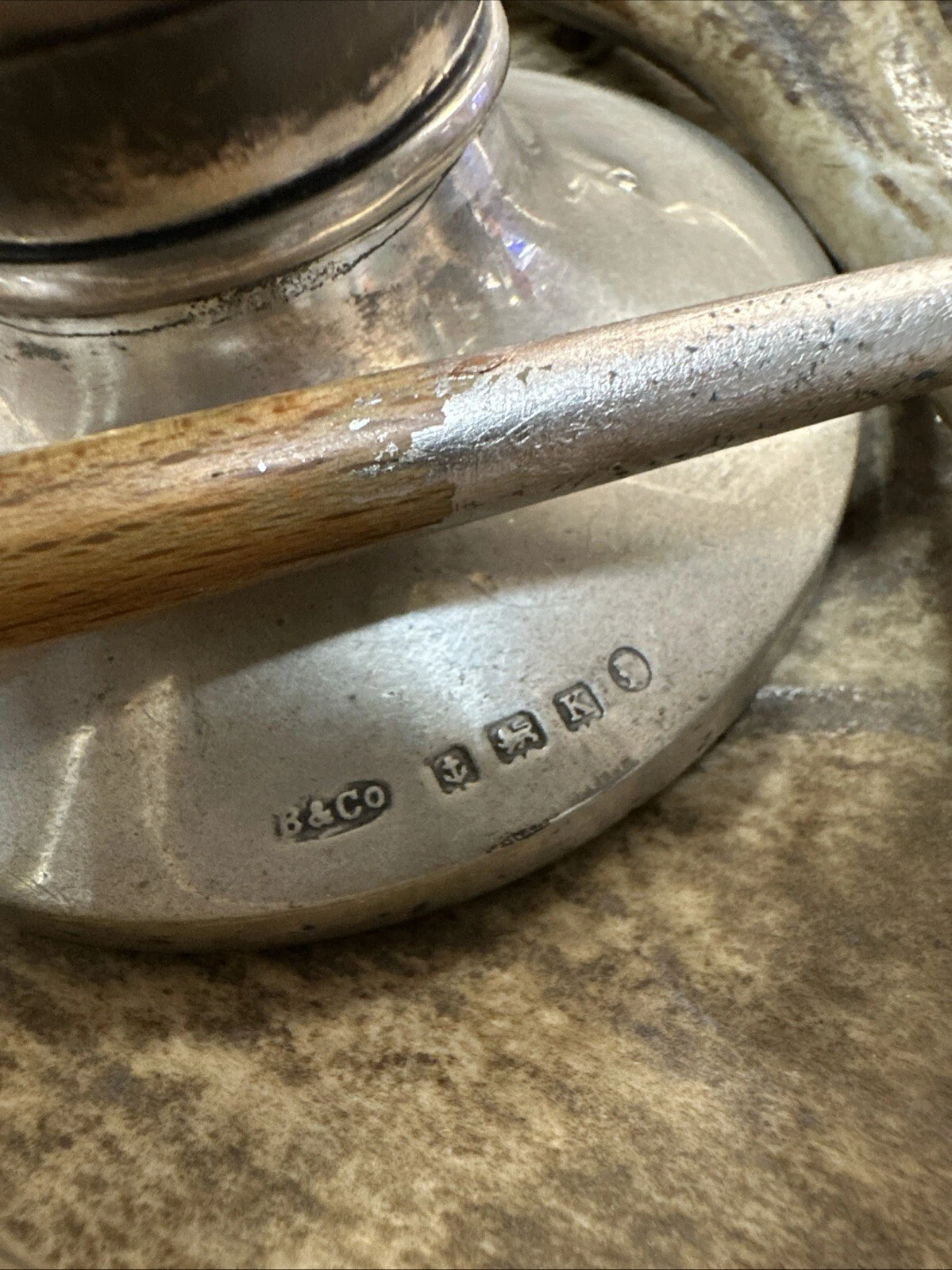
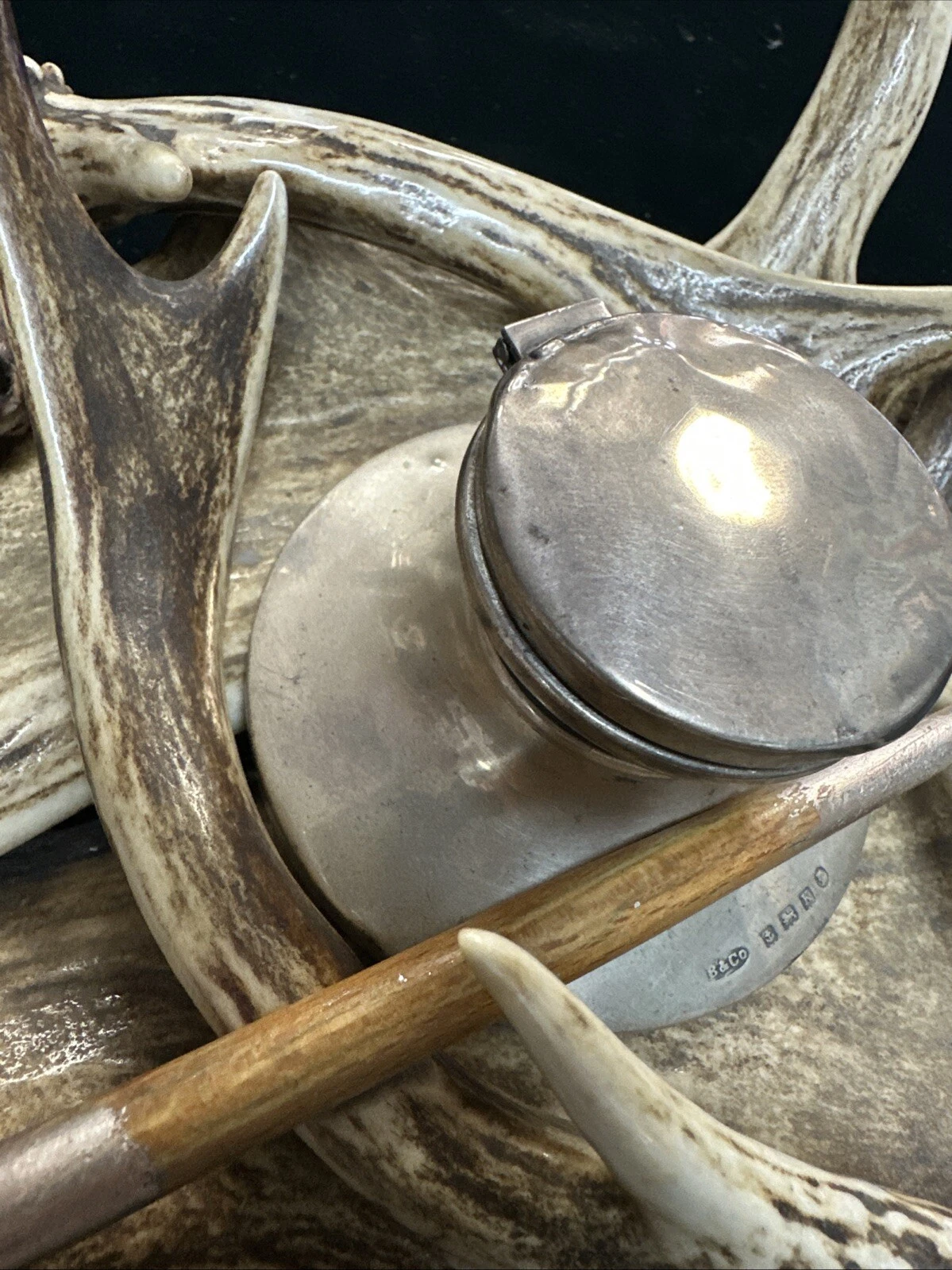
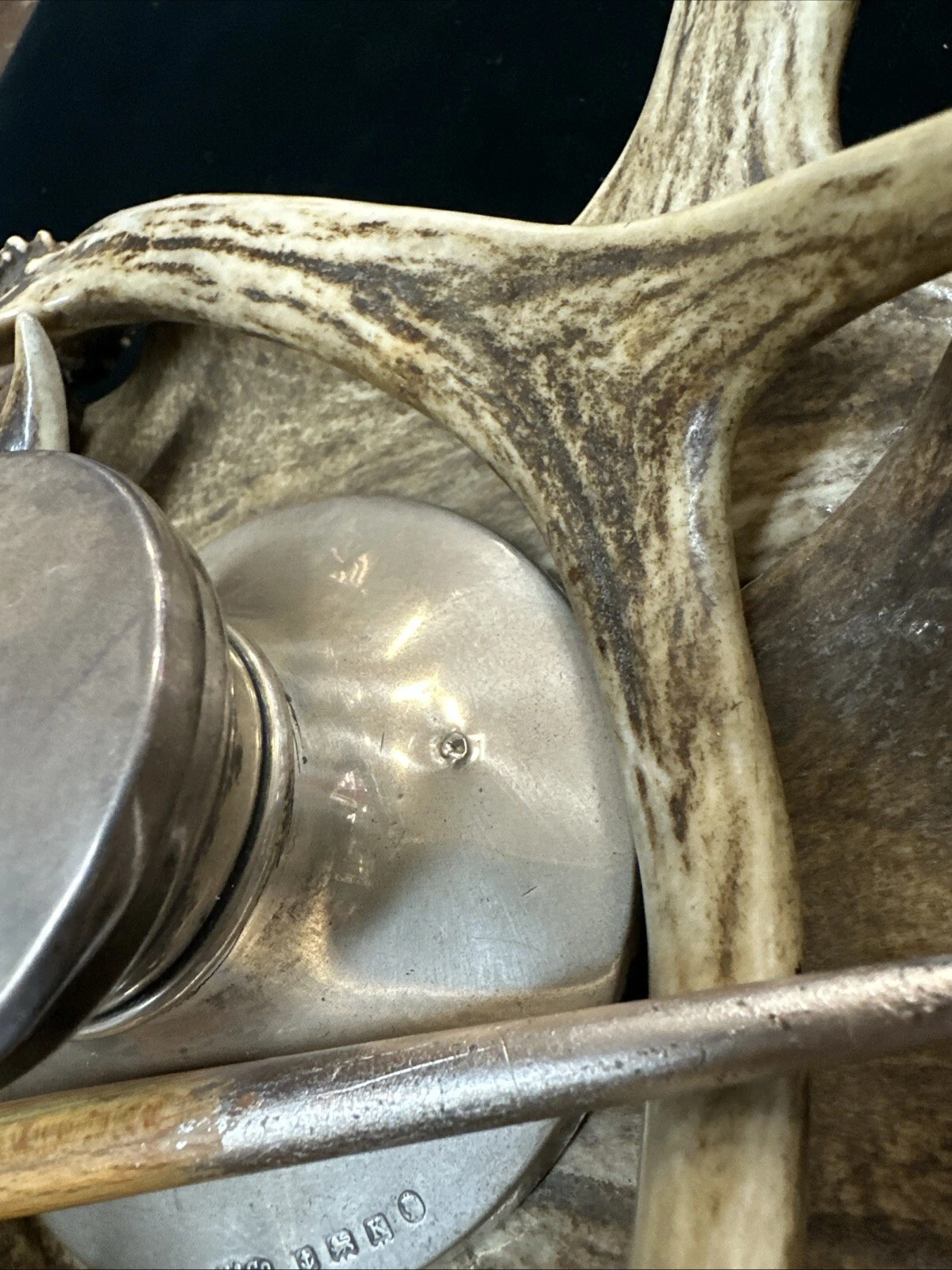
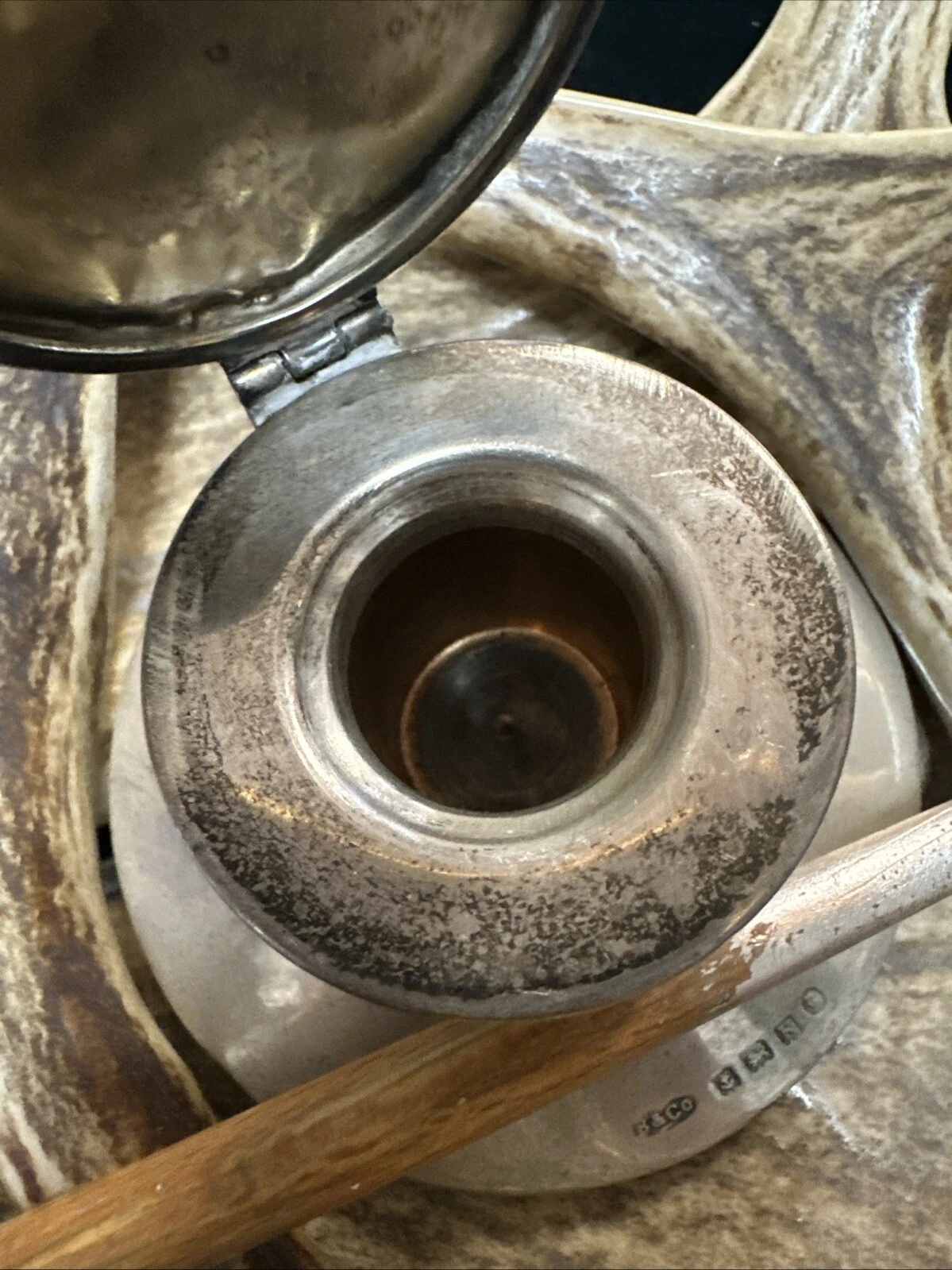
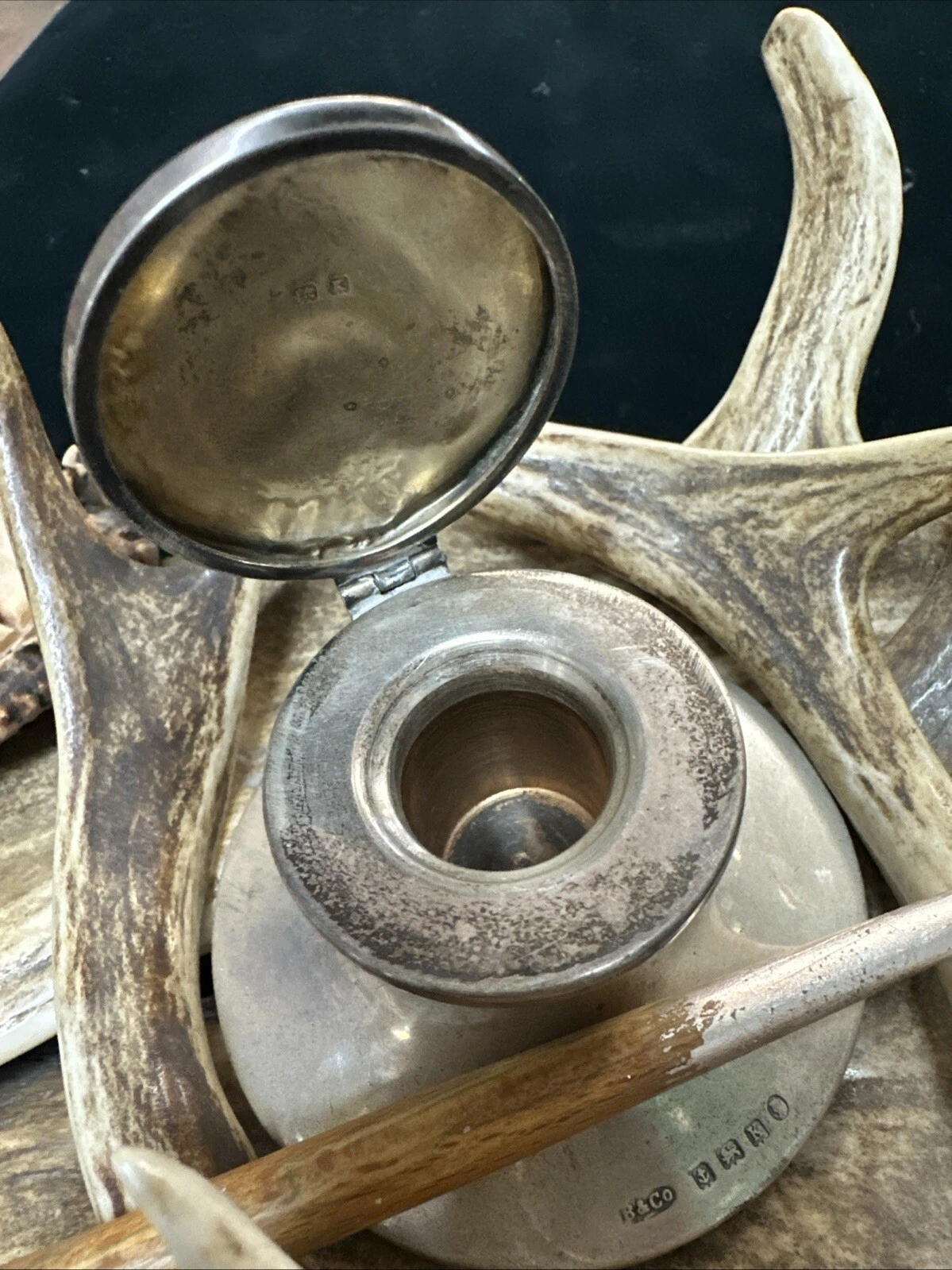
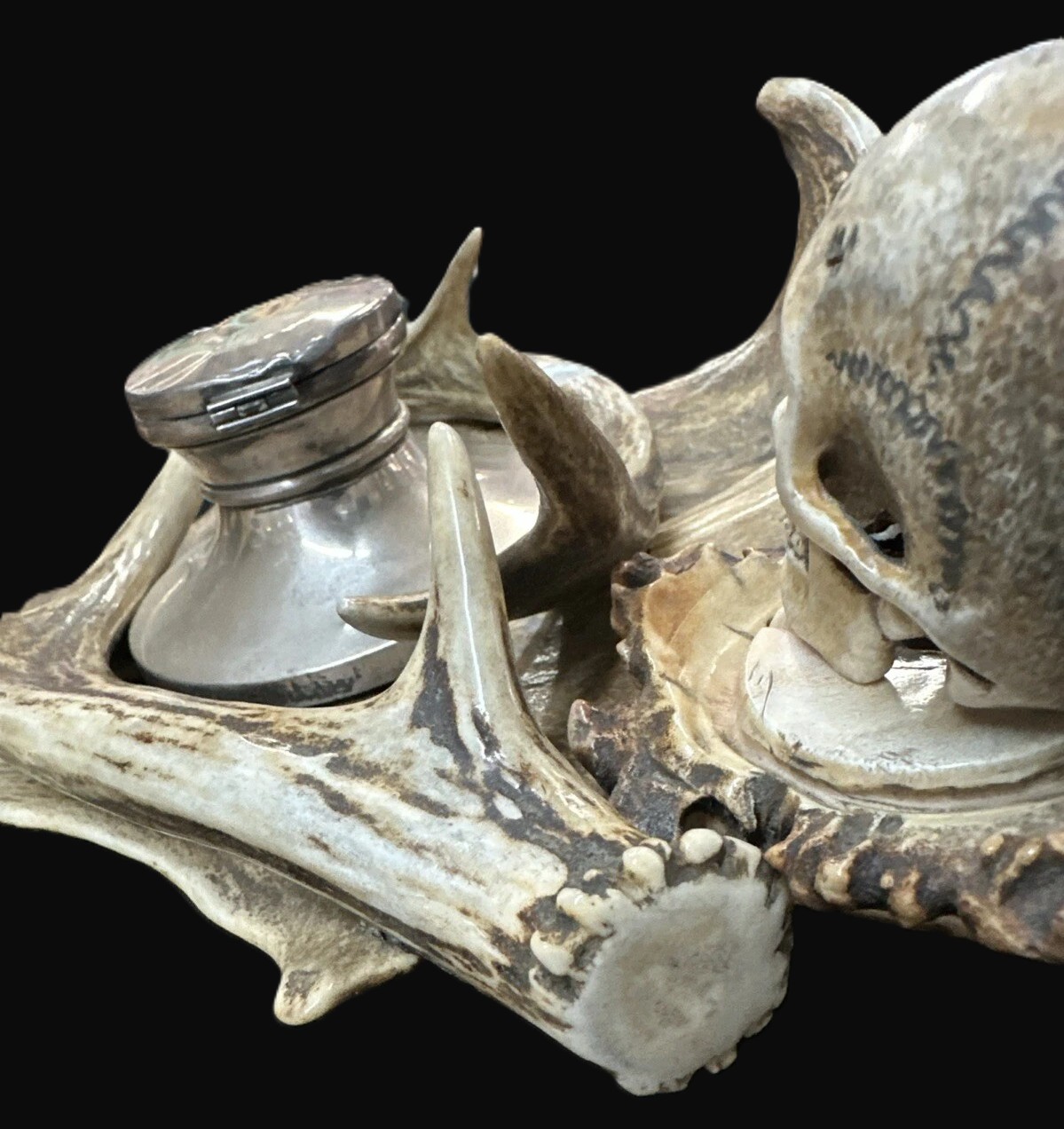
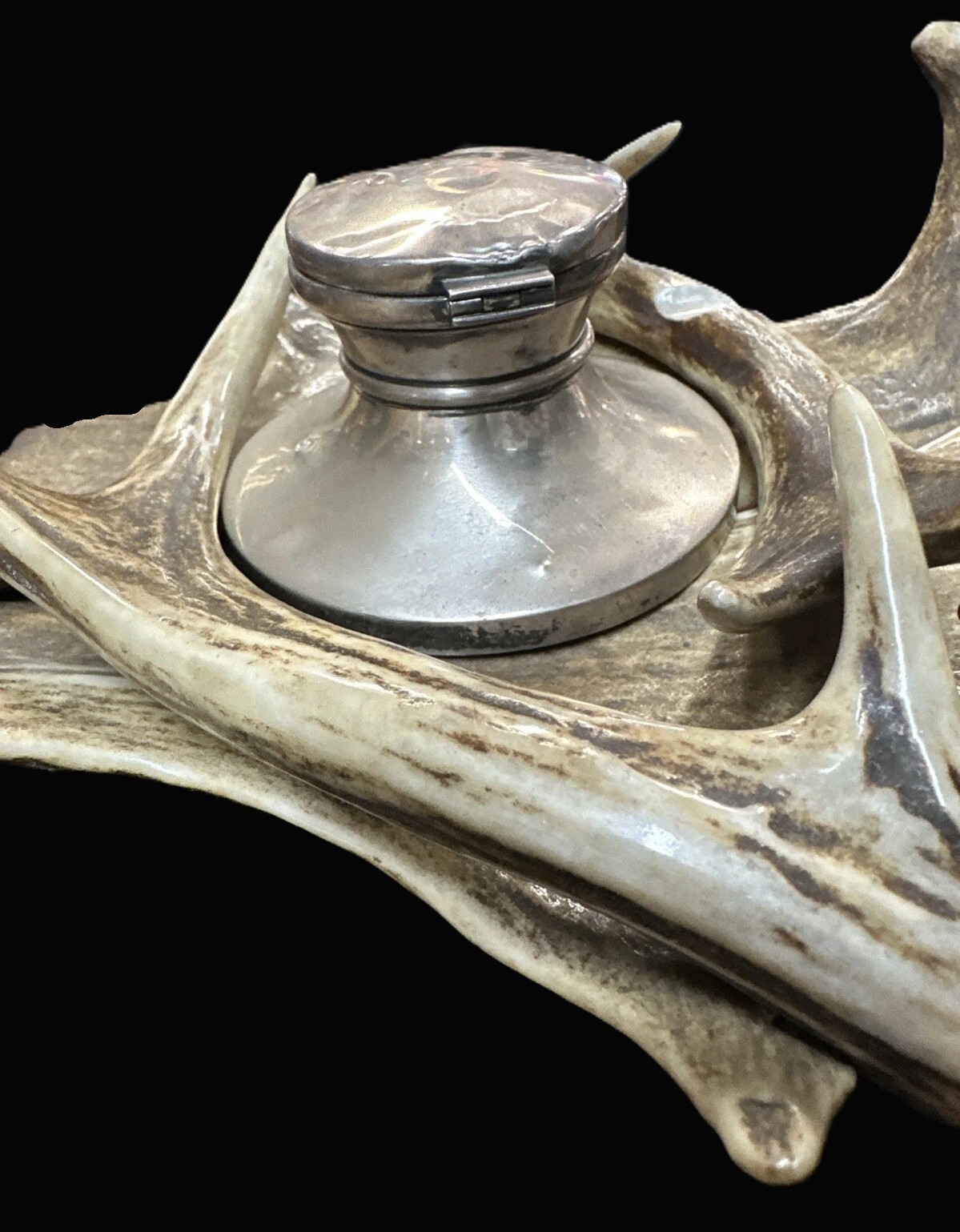
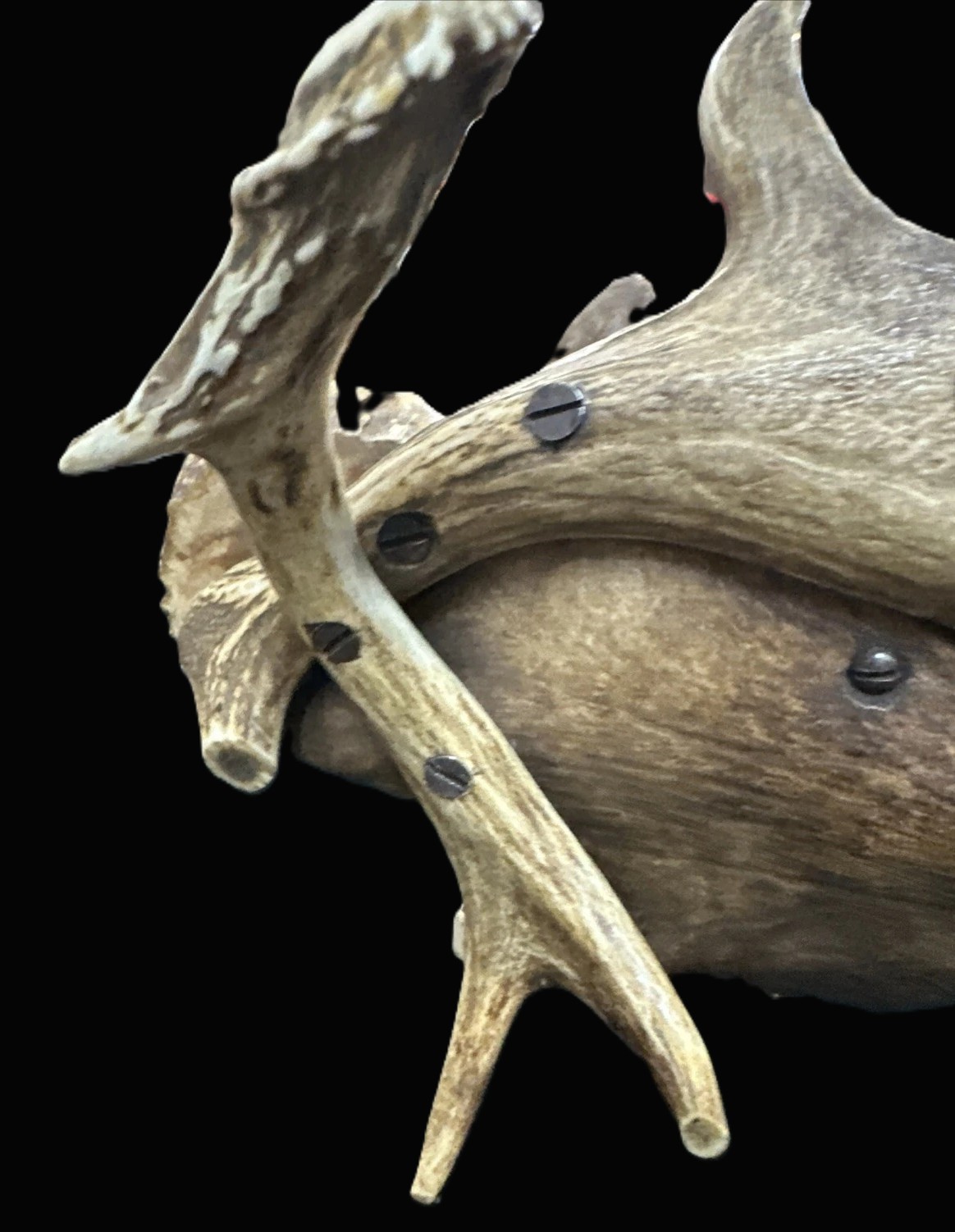
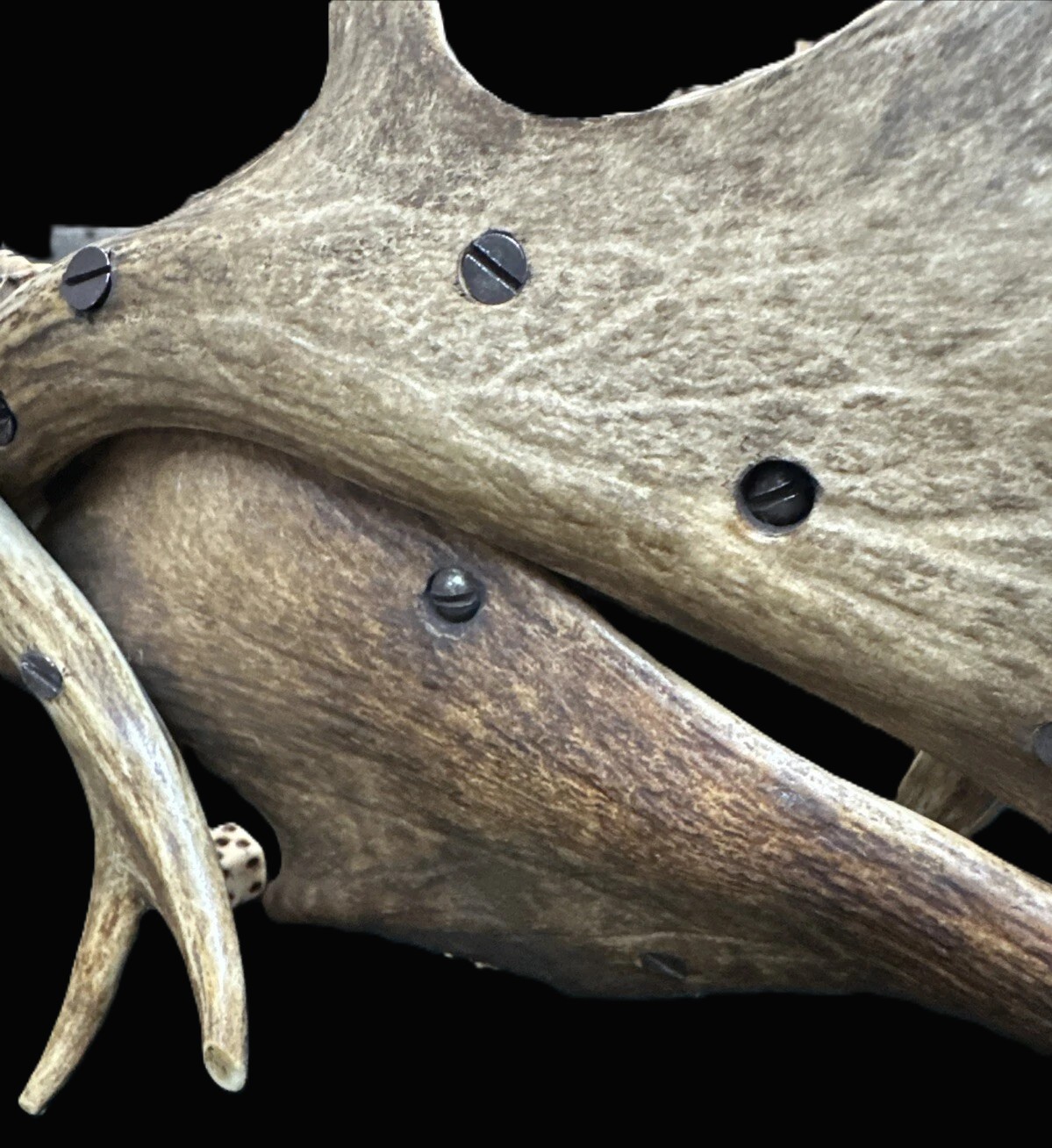
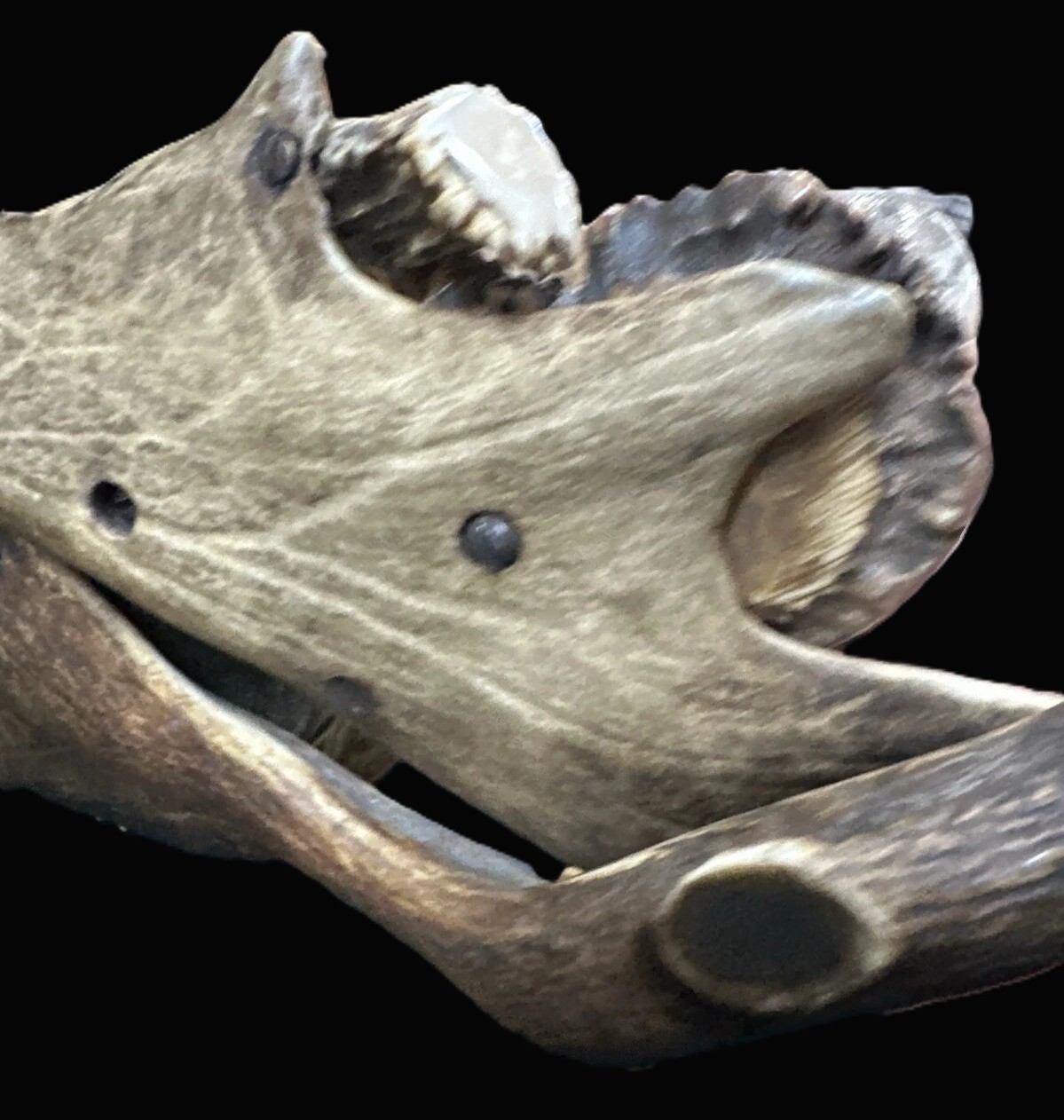
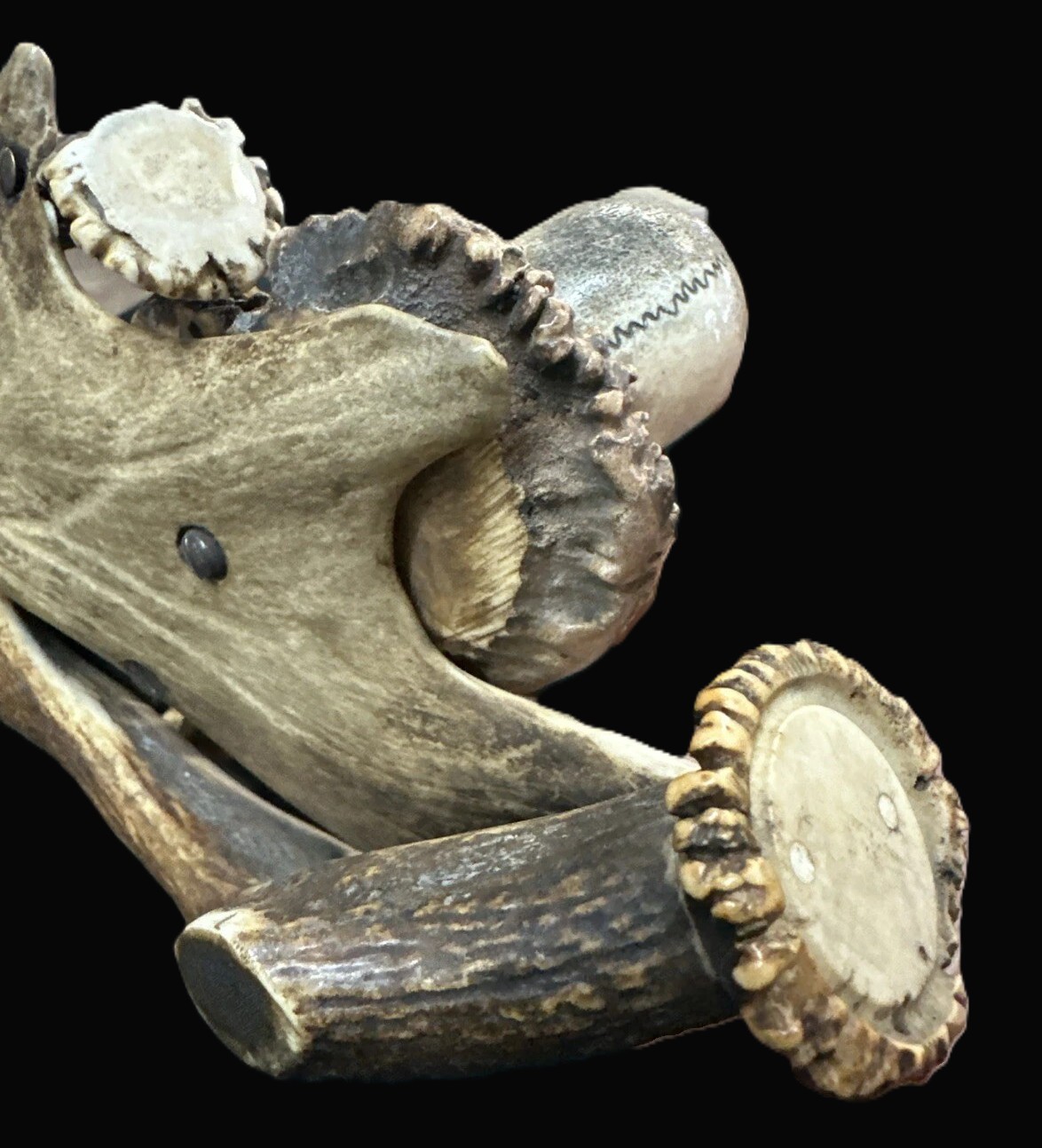
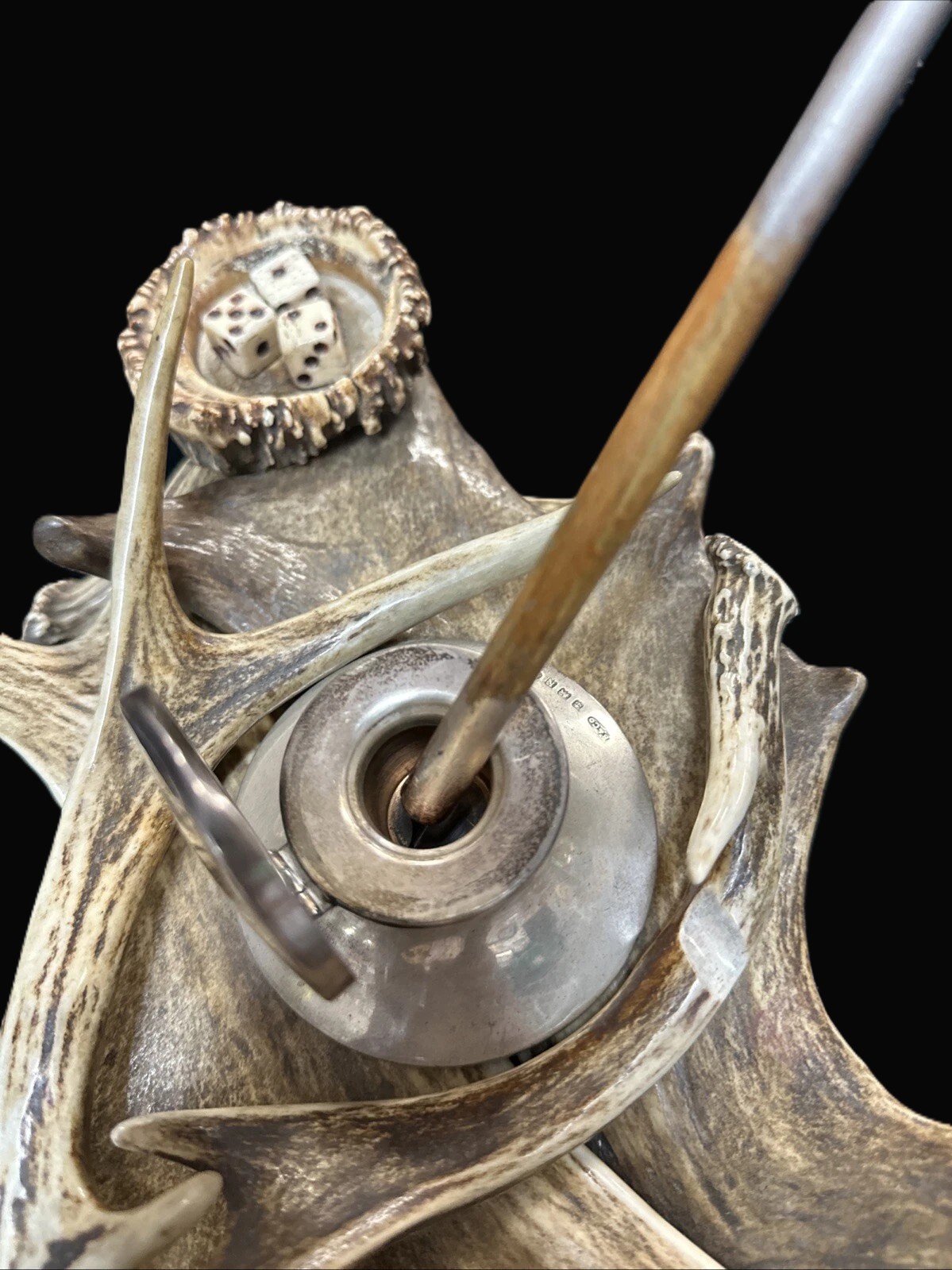
The primary foundation consists of a broad, natural palmate section of a moose antler, which serves as a rustic tray. Radiating across and layered over this base are several matched and contrasting white-tailed or mule deer antler tines, tightly secured from the reverse by slotted iron screws. Centered prominently within the antler matrix sits a heavy, domed English sterling silver inkwell featuring a hinged lid, bearing the hallmarks for W. I. Broadway & Co., the Birmingham anchor, and the lion passant.
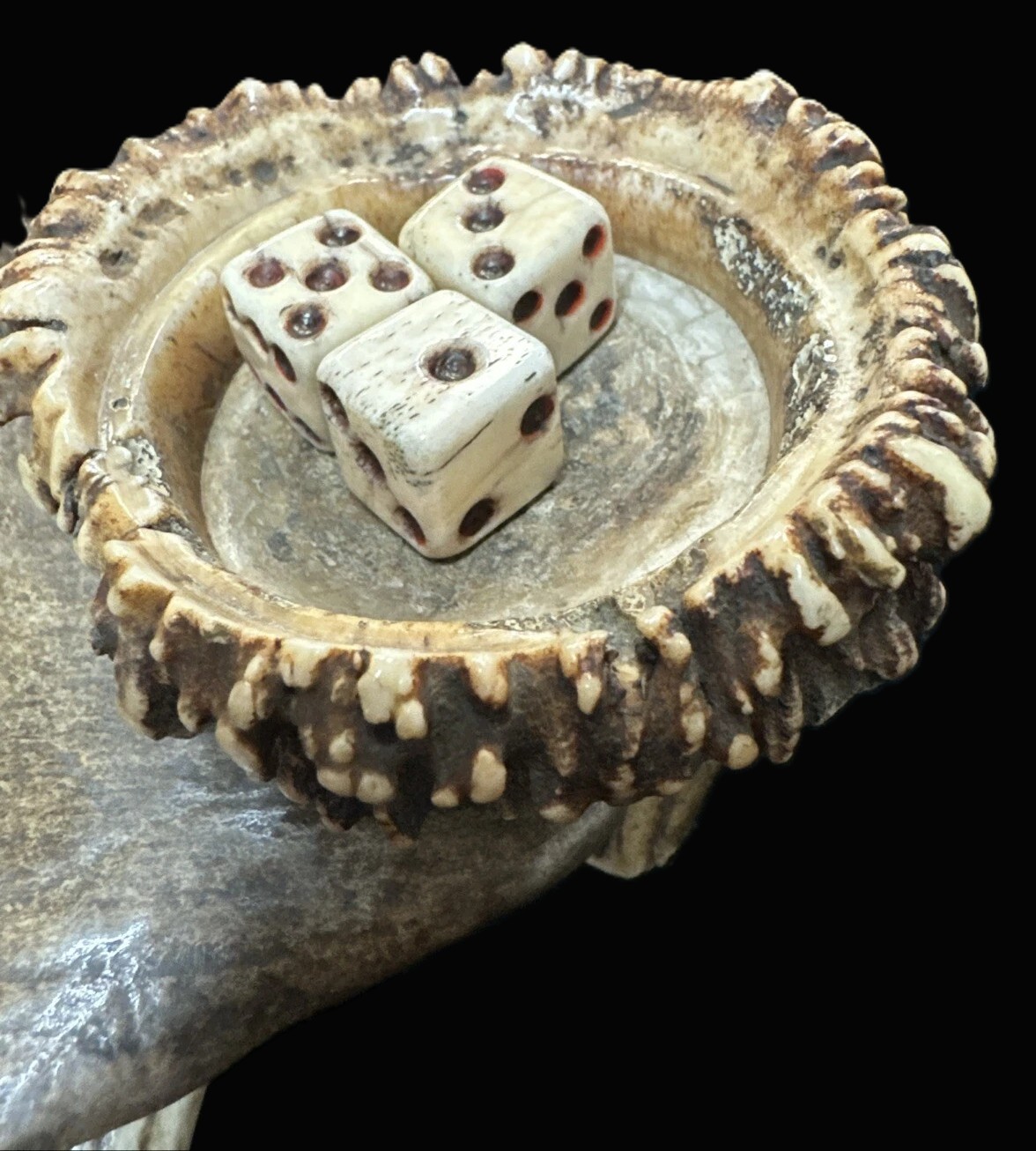
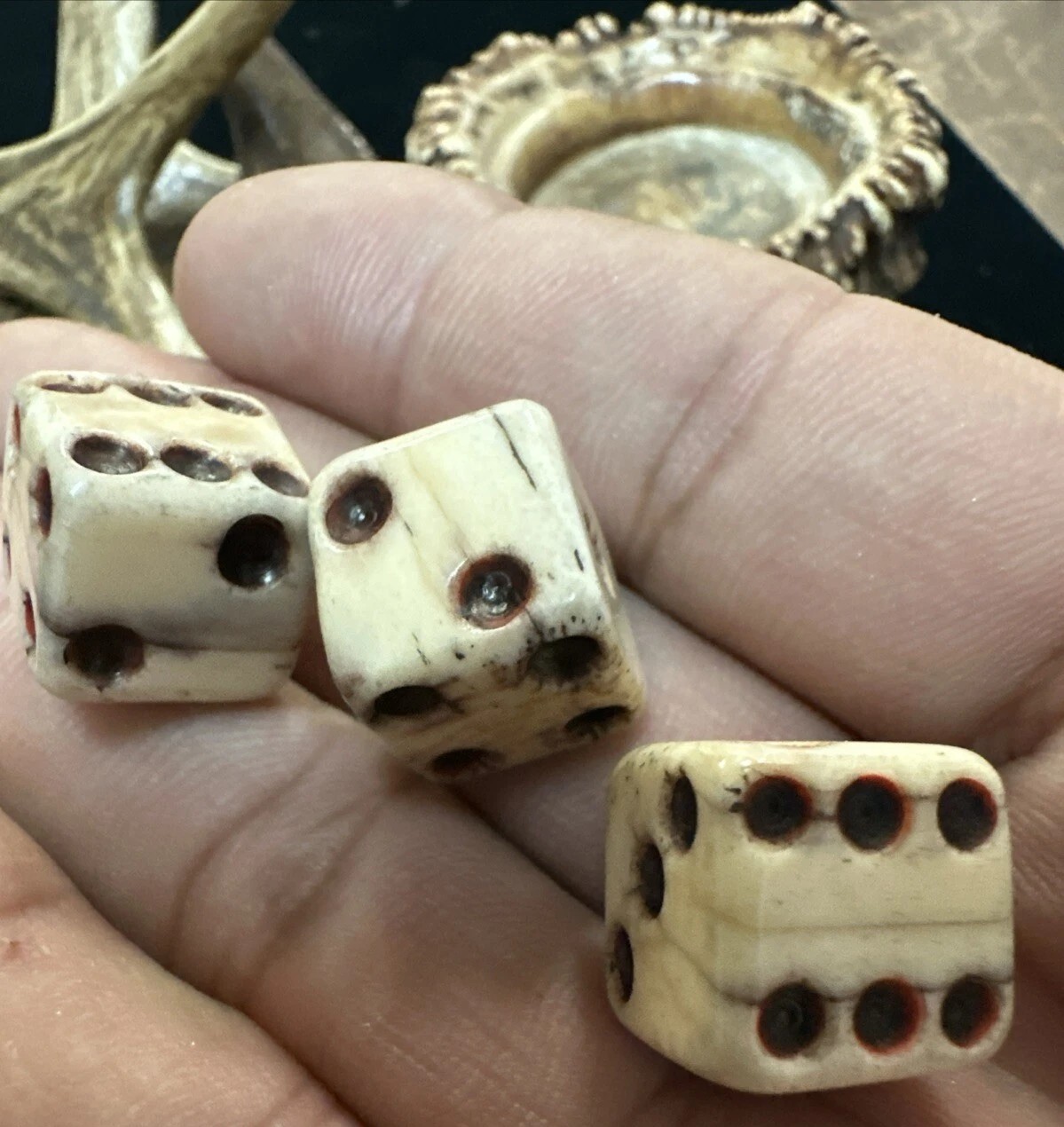
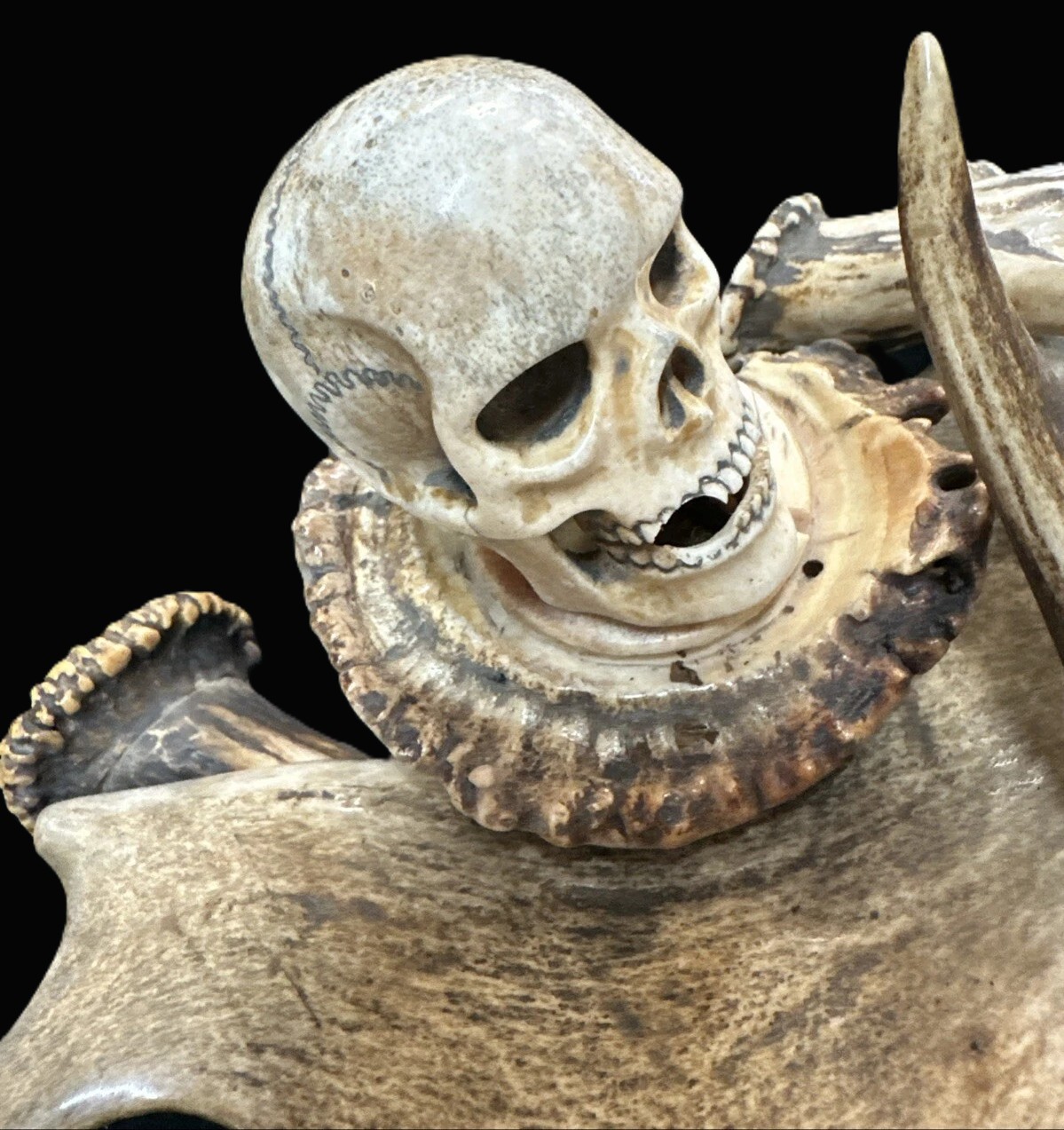
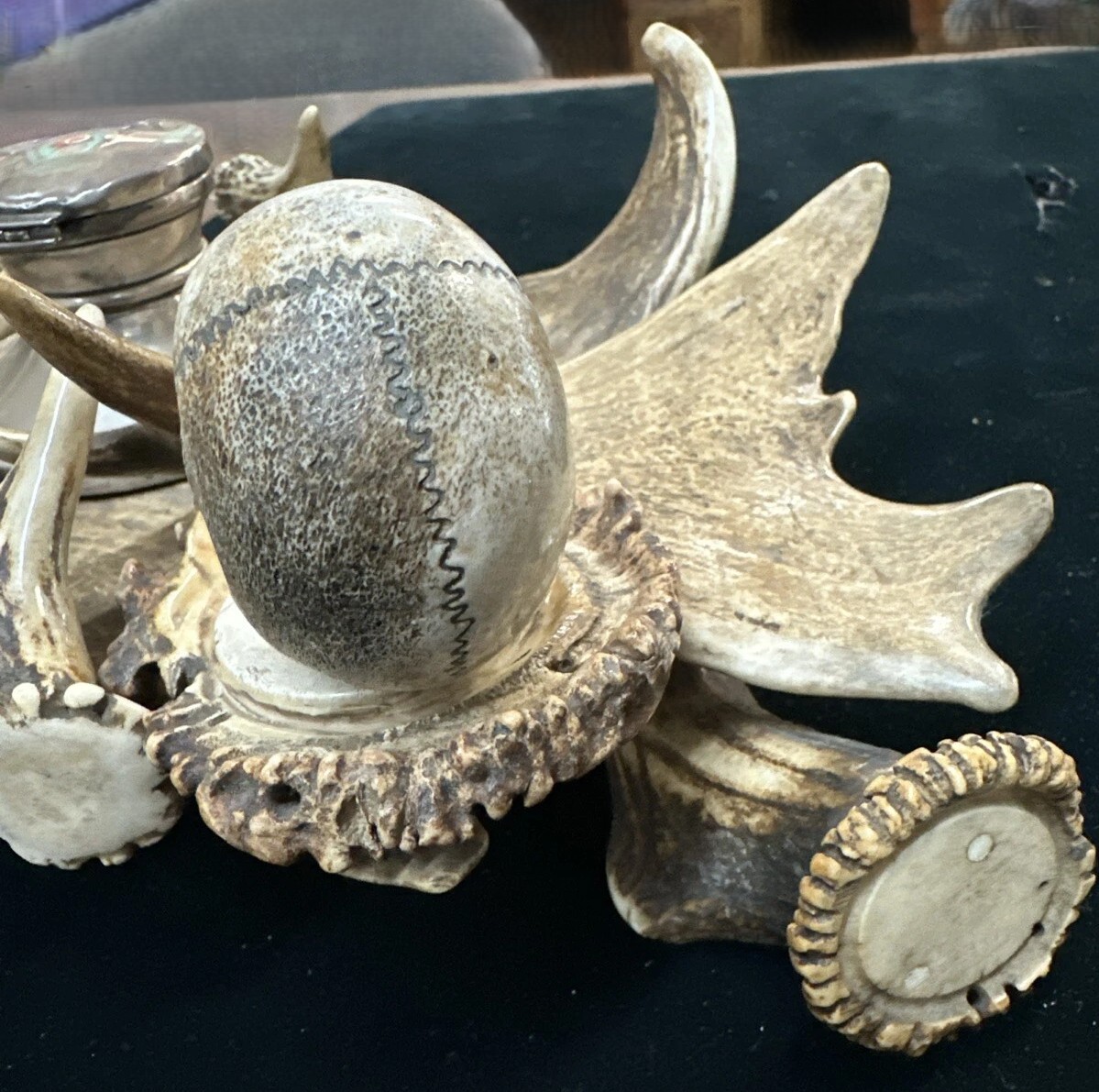
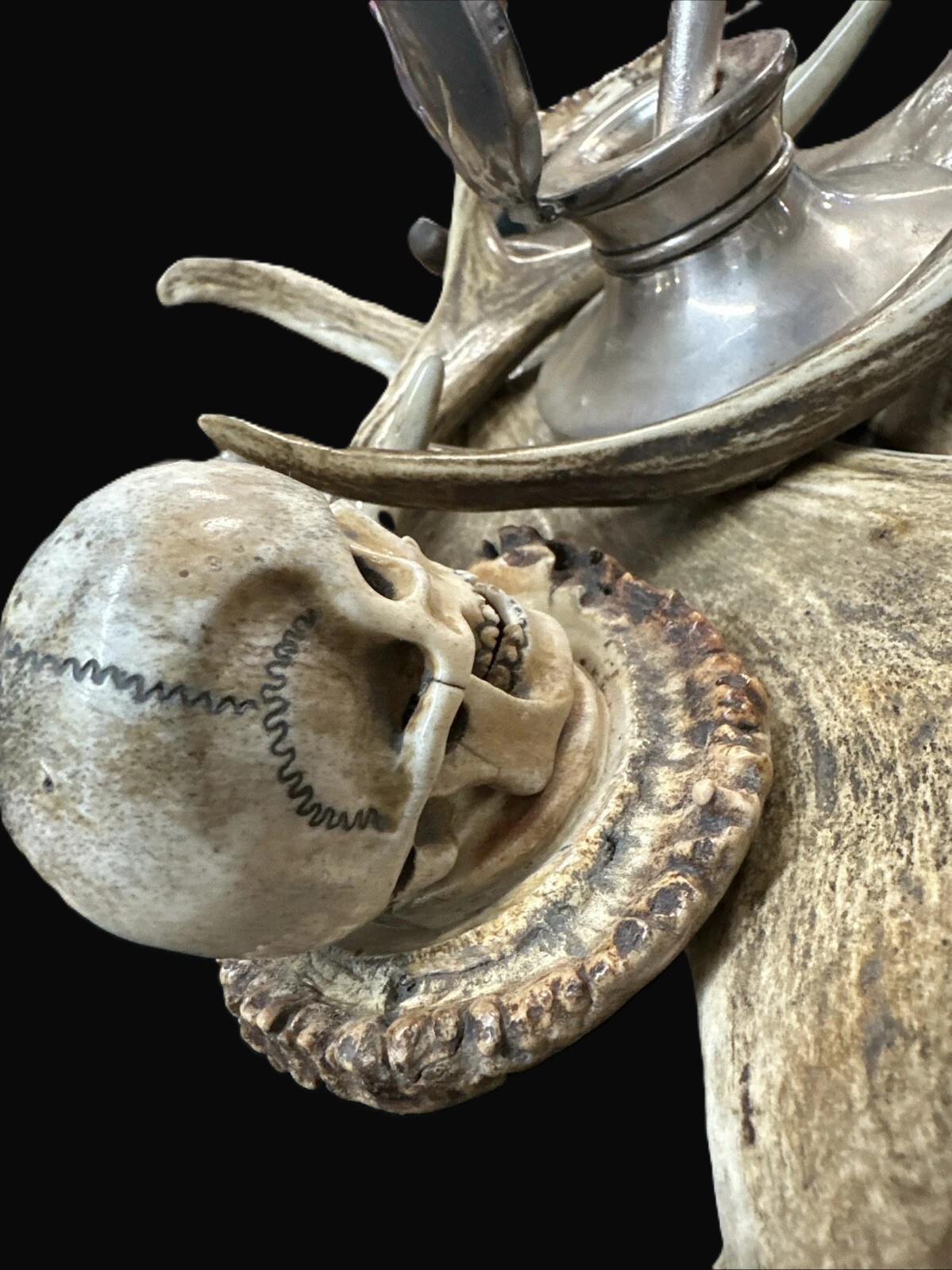
Flanking the central inkwell are two distinct natural antler burr receptacles: one on the left cradling a small, finely carved bone or ivory human skull, and one on the right serving as a shallow tray holding three antique bone gaming dice marked with dark pips. The entire piece marries rugged wilderness motifs with traditional Victorian dark academia aesthetics, presenting a striking conversation object bridging American folk taxidermy craftsmanship with formal British silver.
Decoding the Silver Marks
The hallmarks confirm that the inkwell is solid sterling silver made in England. Reading from left to right, the stamps indicate:
- Maker’s Mark (B&Co): The stamp of I. Broadway & Co. (a notable Birmingham silversmith firm established in the early 20th century).
- Standard Mark (Lion Passant): The English sterling silver standard purity mark (indicating .925 silver).
- Assay Office Mark (Anchor): Indicates the piece was officially tested and assayed in Birmingham.
- Date Letter: The lowercase block/cursive letter inside the cartouche corresponds to a specific assay year. Given the maker’s active timeline, this style of silver inkwell insert points toward the mid-20th century (or potentially an incorporated older/associated component), aligning with styles produced around the 1950s.
Materials Breakdown
- The Base & Framework: Composed of a large, flattened section of a moose palm combined with various shed deer antlers, bolted together securely from the underside with old iron/steel slotted screws.
- The Miniature Skull: Likely carved from bone, bovine horn, or corozo nut (often called vegetable ivory), a common practice in folk art and maritime scrimshaw to represent memento mori or cabinet-of-curiosities themes.
- The Dice: Authentic vintage gaming dice made of carved bone or ivory, featuring characteristic dot-and-circle (pips) hand-drilled markings, nestled neatly inside a natural antler burr (the rough, circular crown where the antler meets the skull).
Sold for $1200 in August 2026
Content disclaimer. The information posted is the owner’s best knowledge and may not have been vetted by the SOIC. We welcome comments, corrections, and additions, working to make our website information comprehensive and accurate.
Join the Society of Inkwell Collectors (SOIC) – it’s free!
Founded in 1981 as a non-profit organization,
we are documenting inkwells (and accessories).
We’re here to help and inform!