

Inkipedia
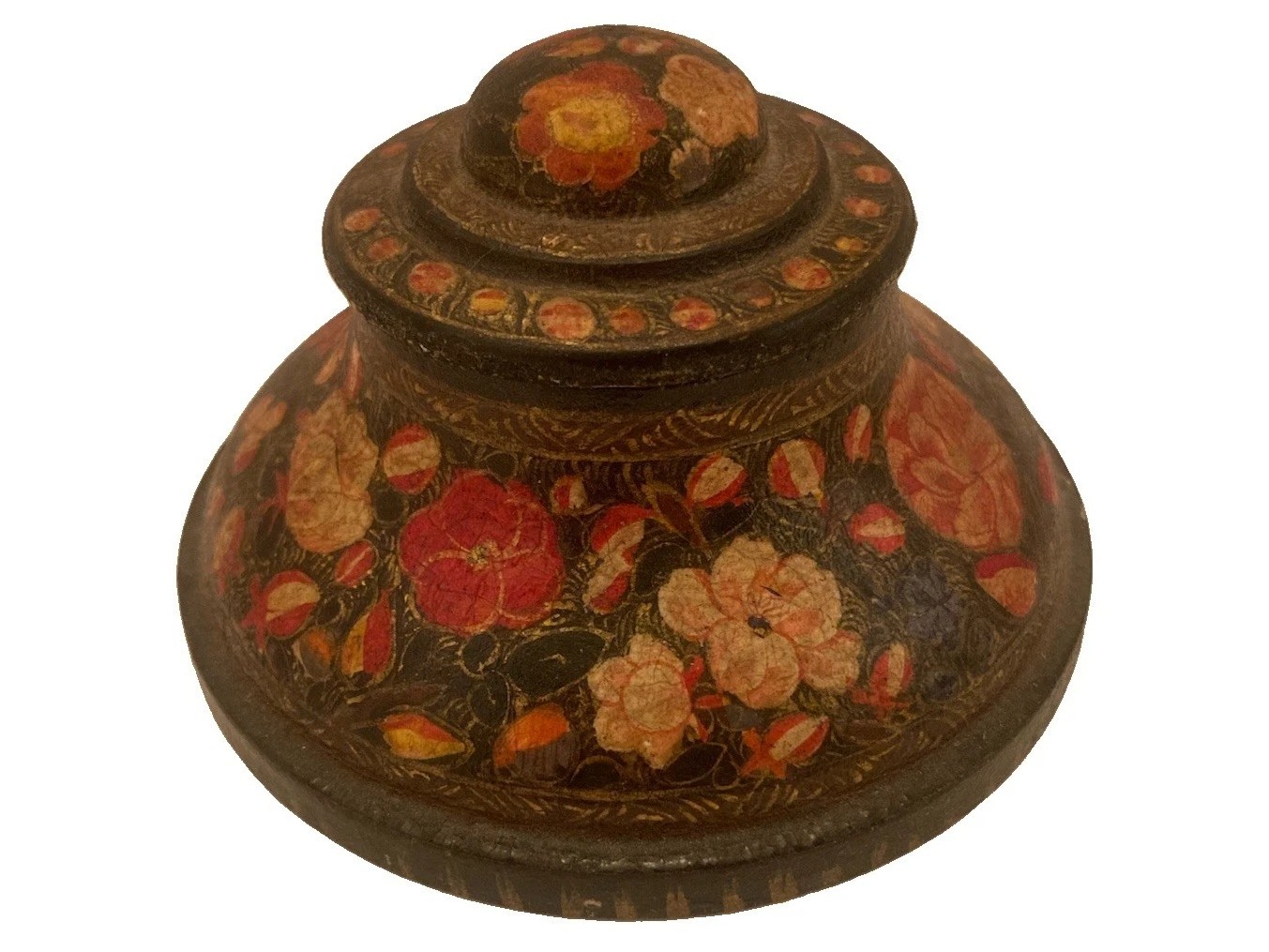
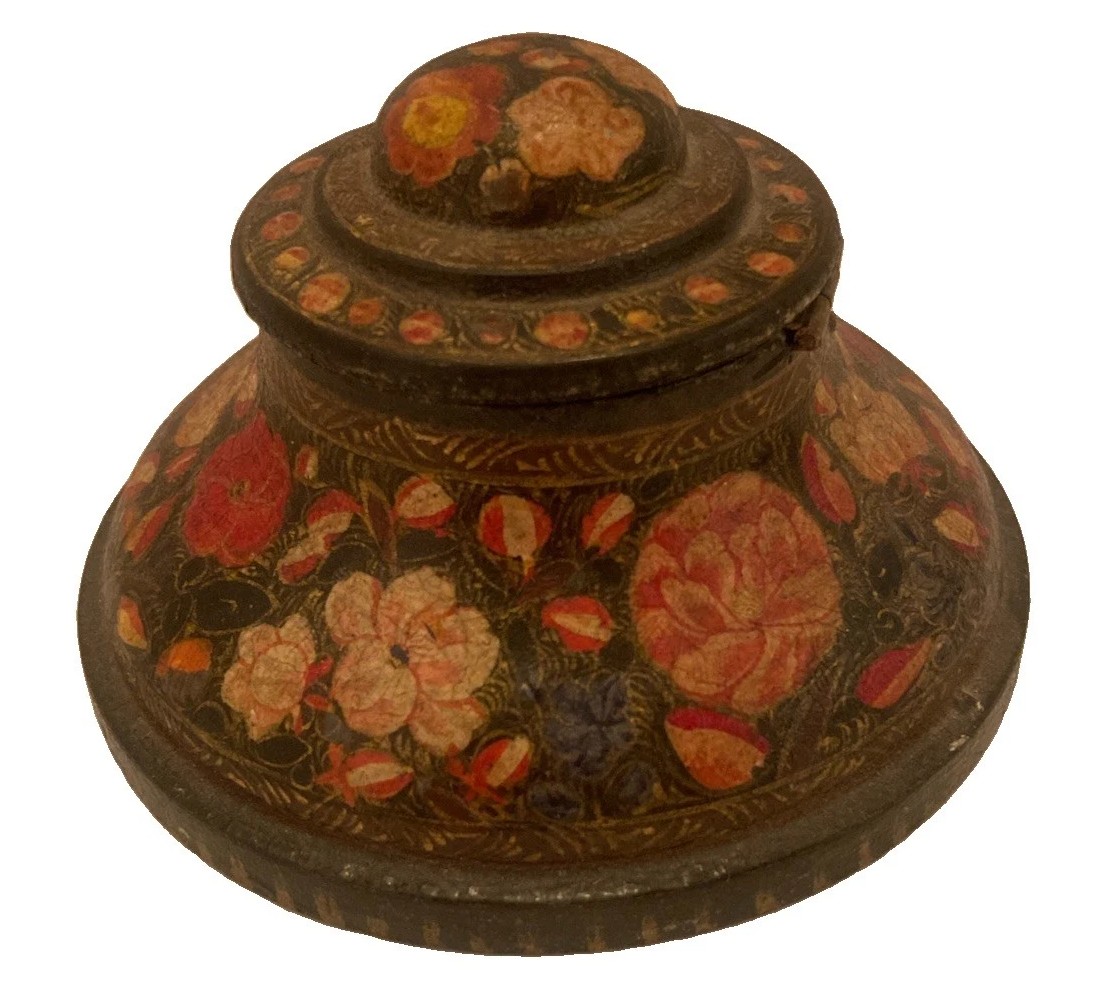
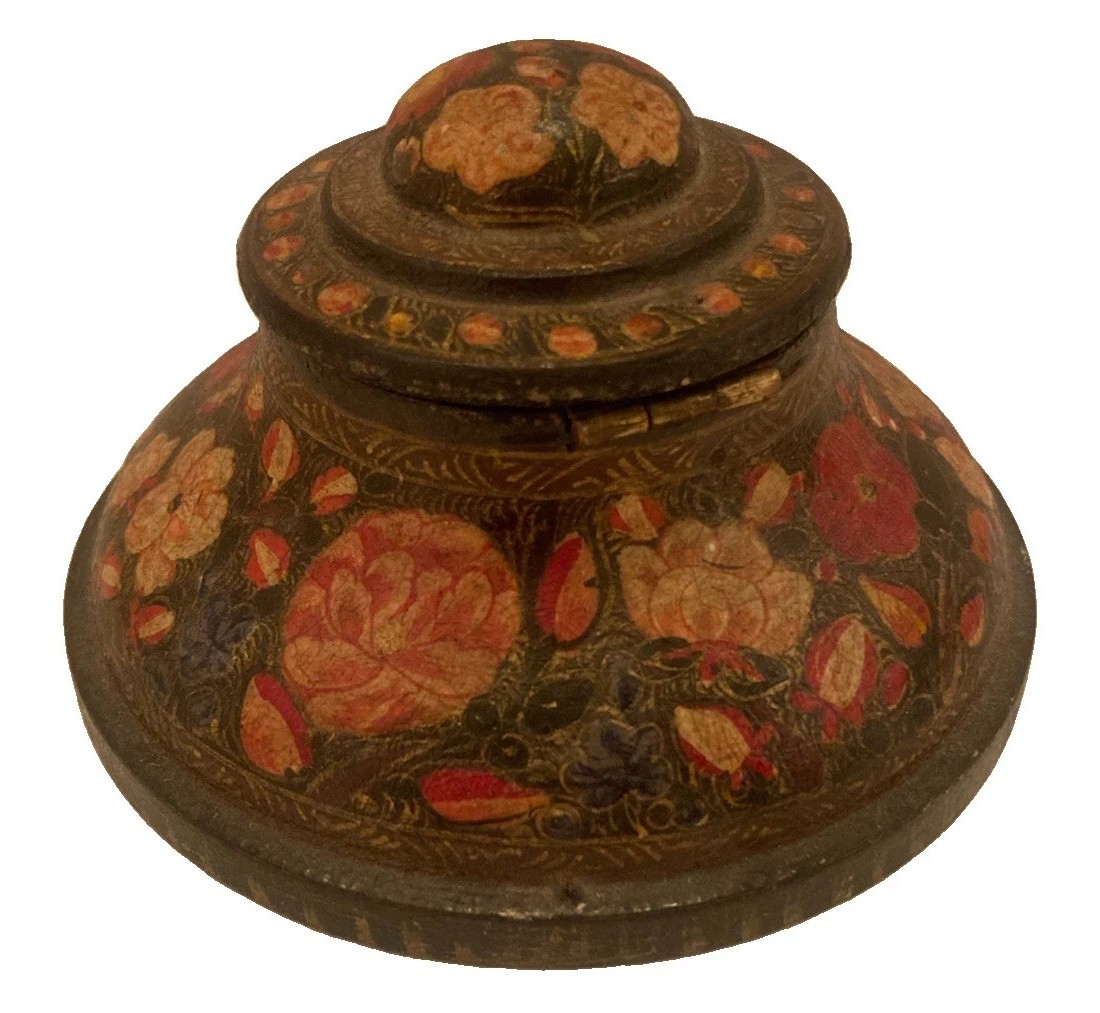
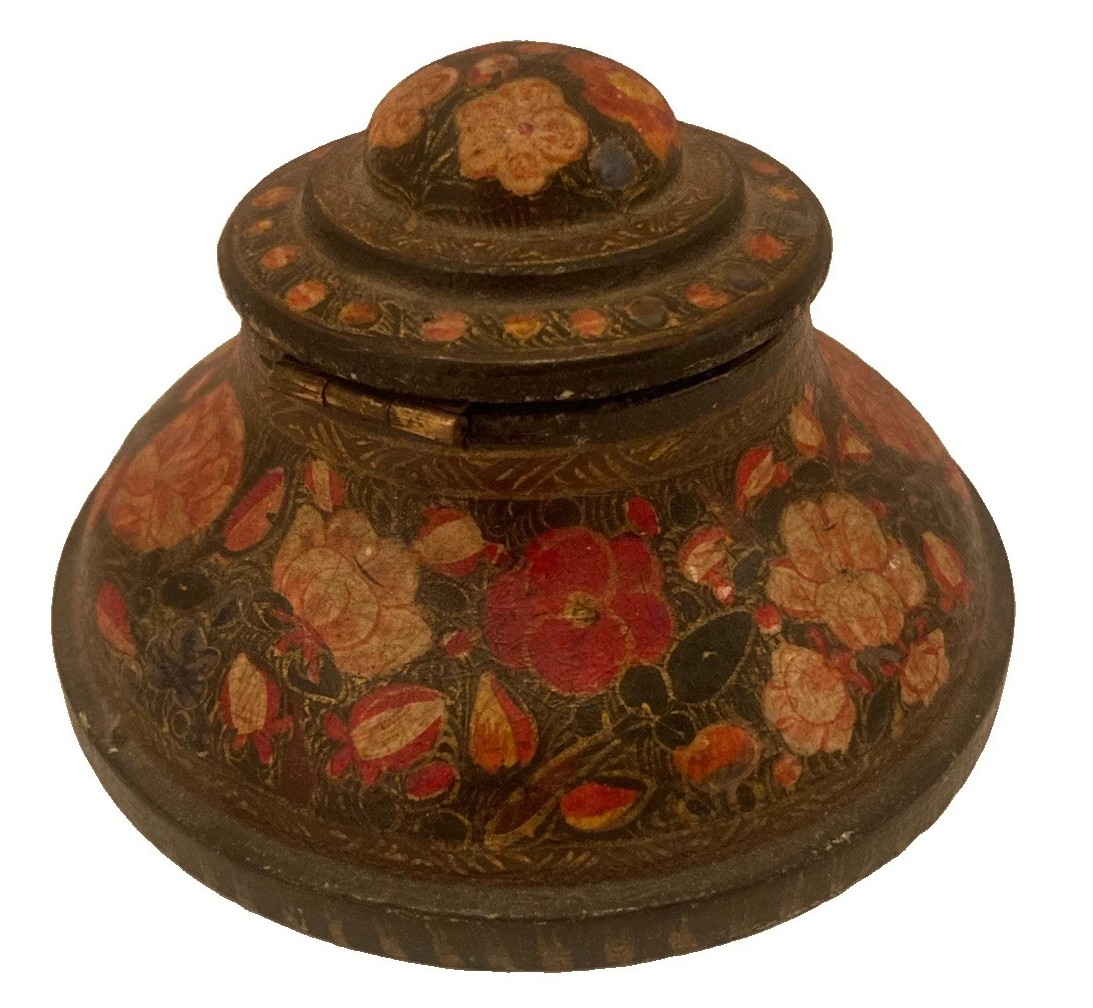
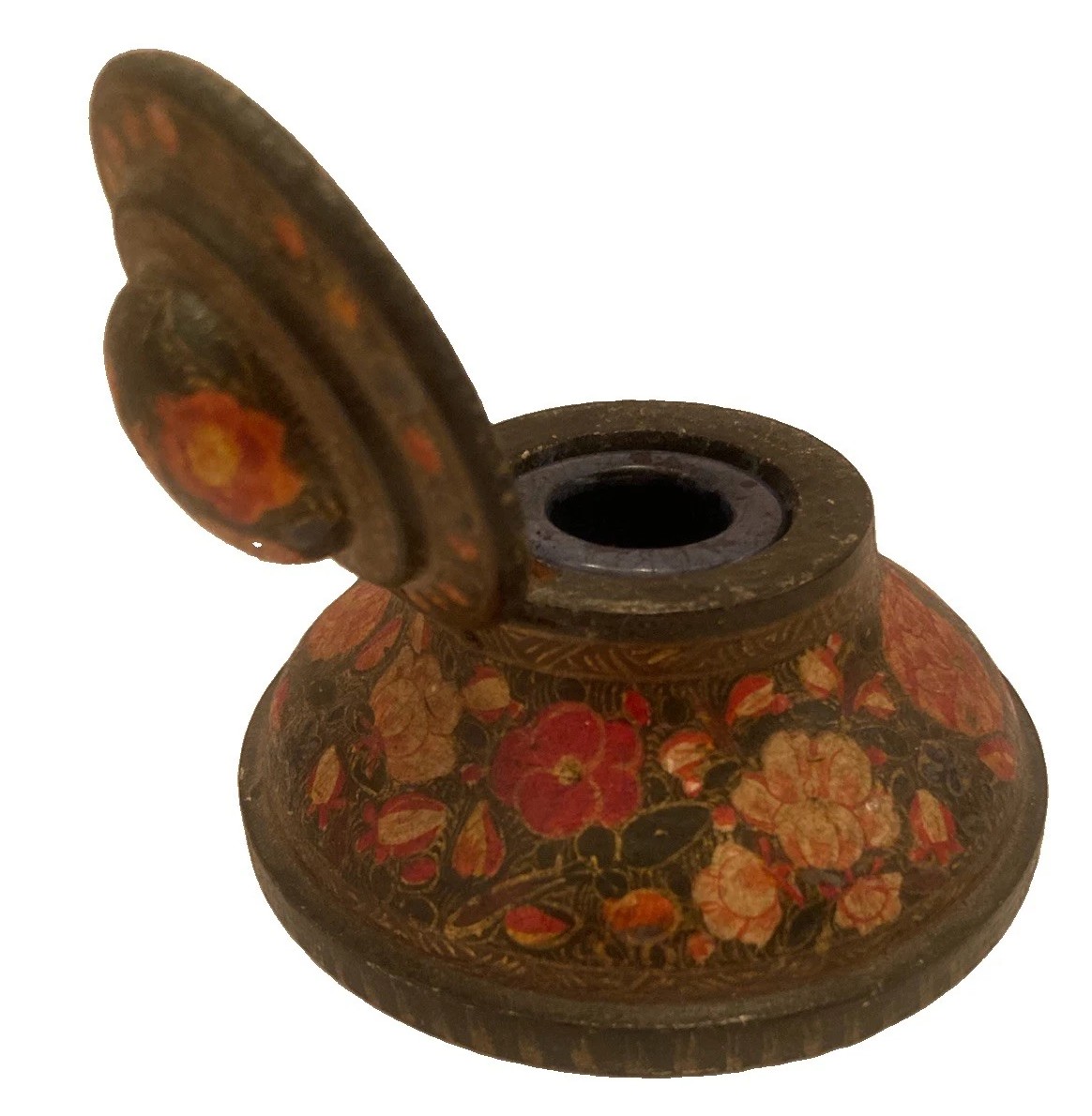
Anglo-Indian Floral Lacquerware Inkwell
| Categories | Wood Inkstands |
| Material | Wood |
| Markings | Unmarked |
| Manufacturer | Undetermined |
| Origin | India |
| Date or Era | circa 1900 |
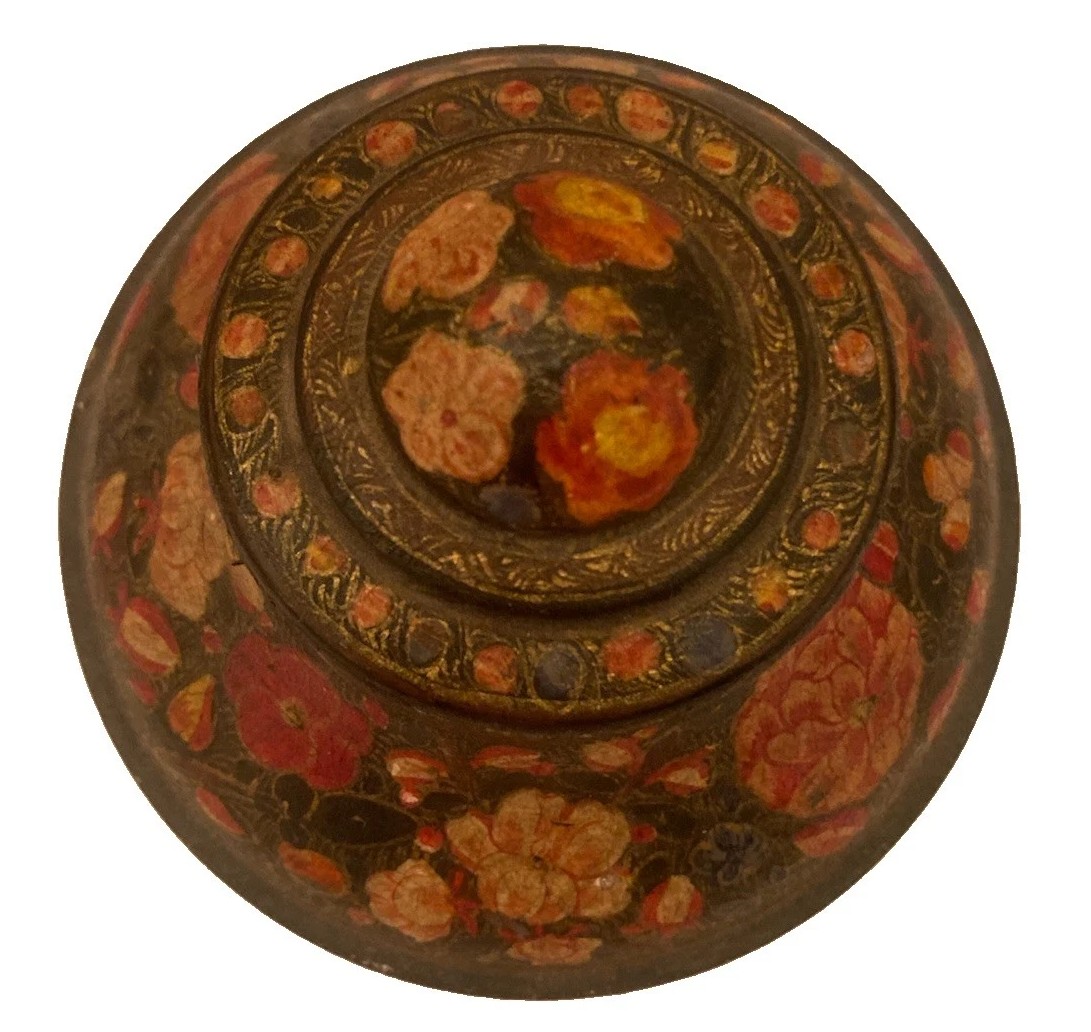
This desktop inkwell is a piece of turned-wood lacquerware decorated in the Anglo-Indian / Kashmiri tradition (often termed Kashmir papier-mâché / lacquerware or late Victorian japanned desk ware).
Physical Description
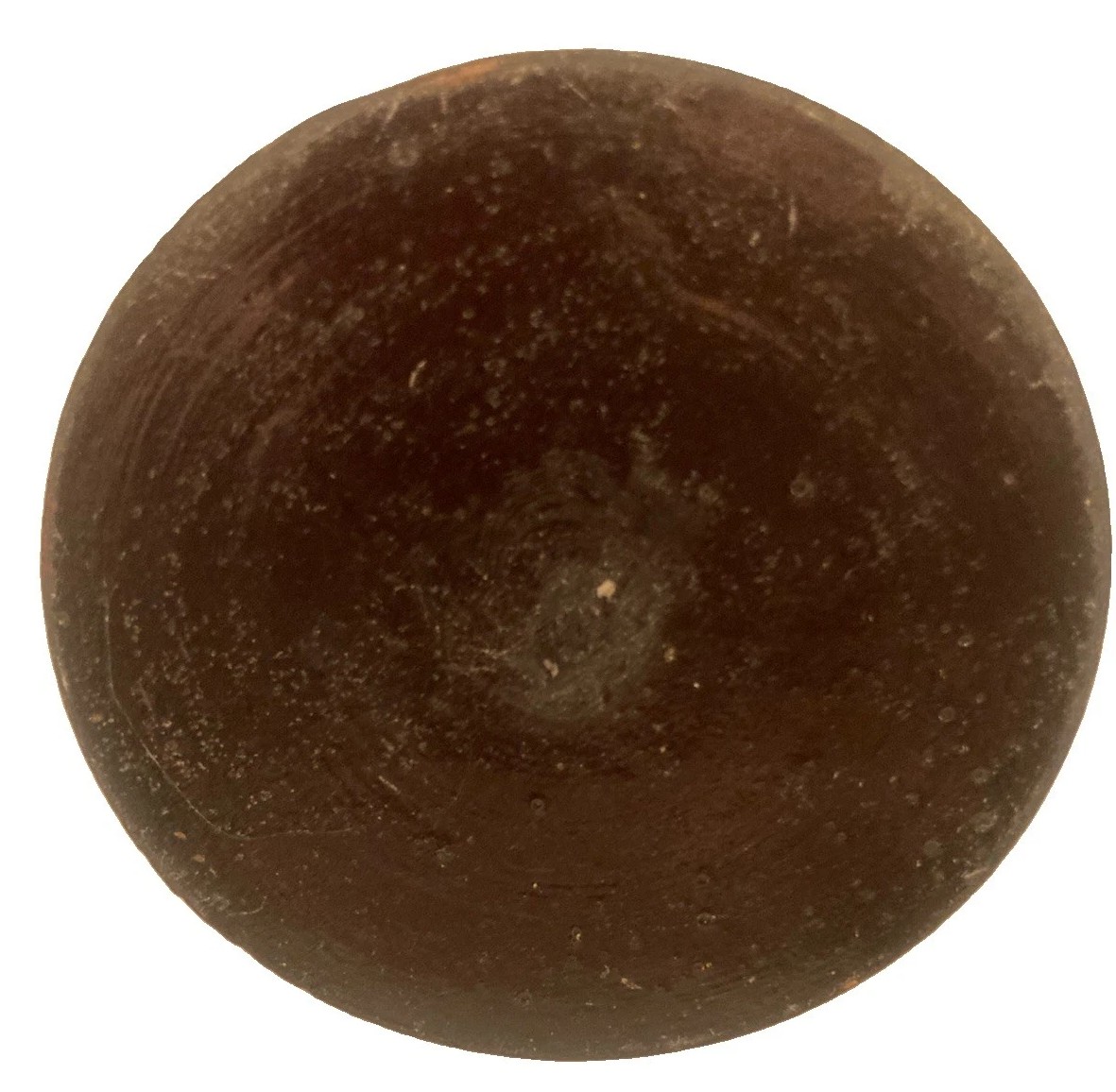
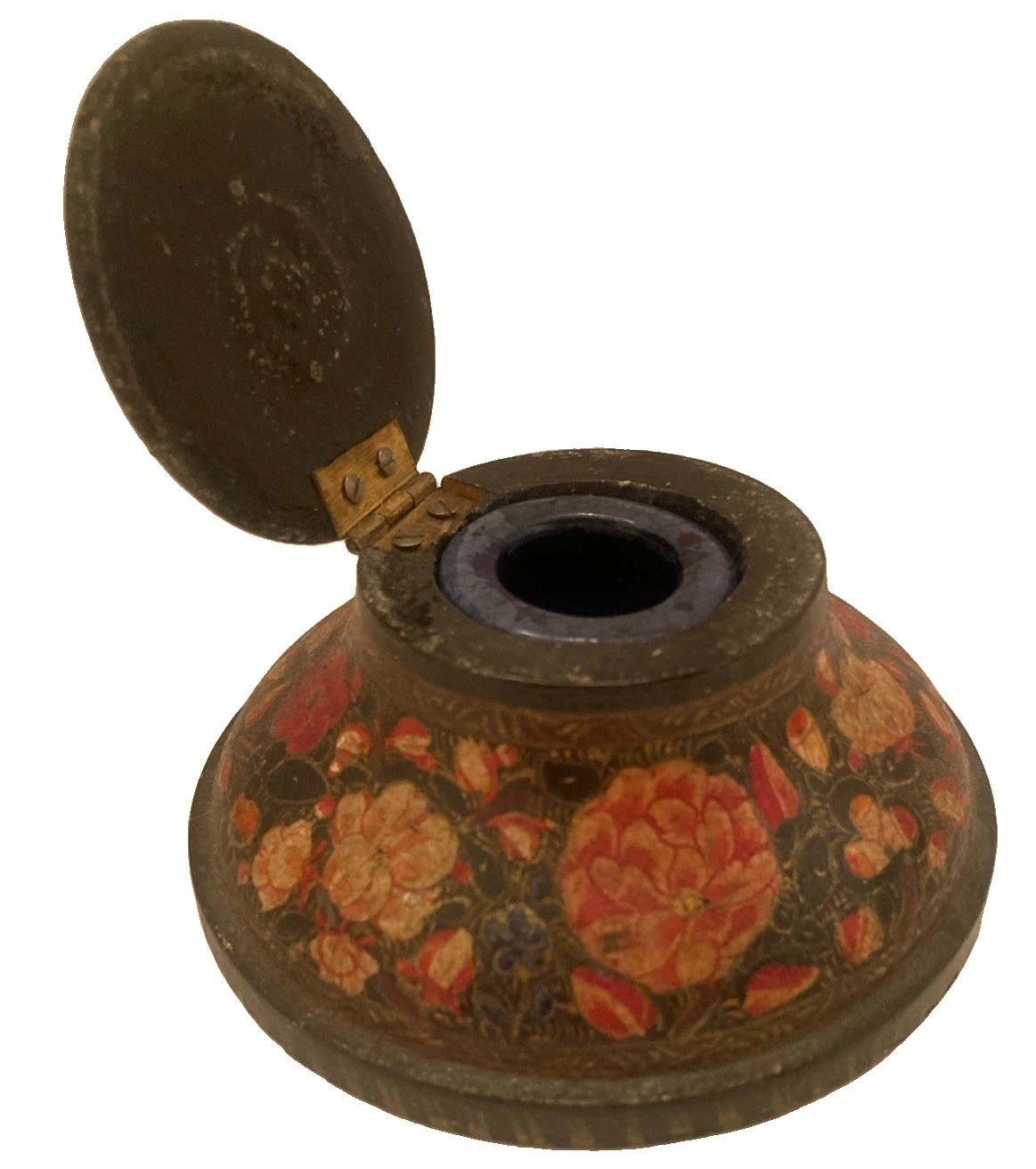
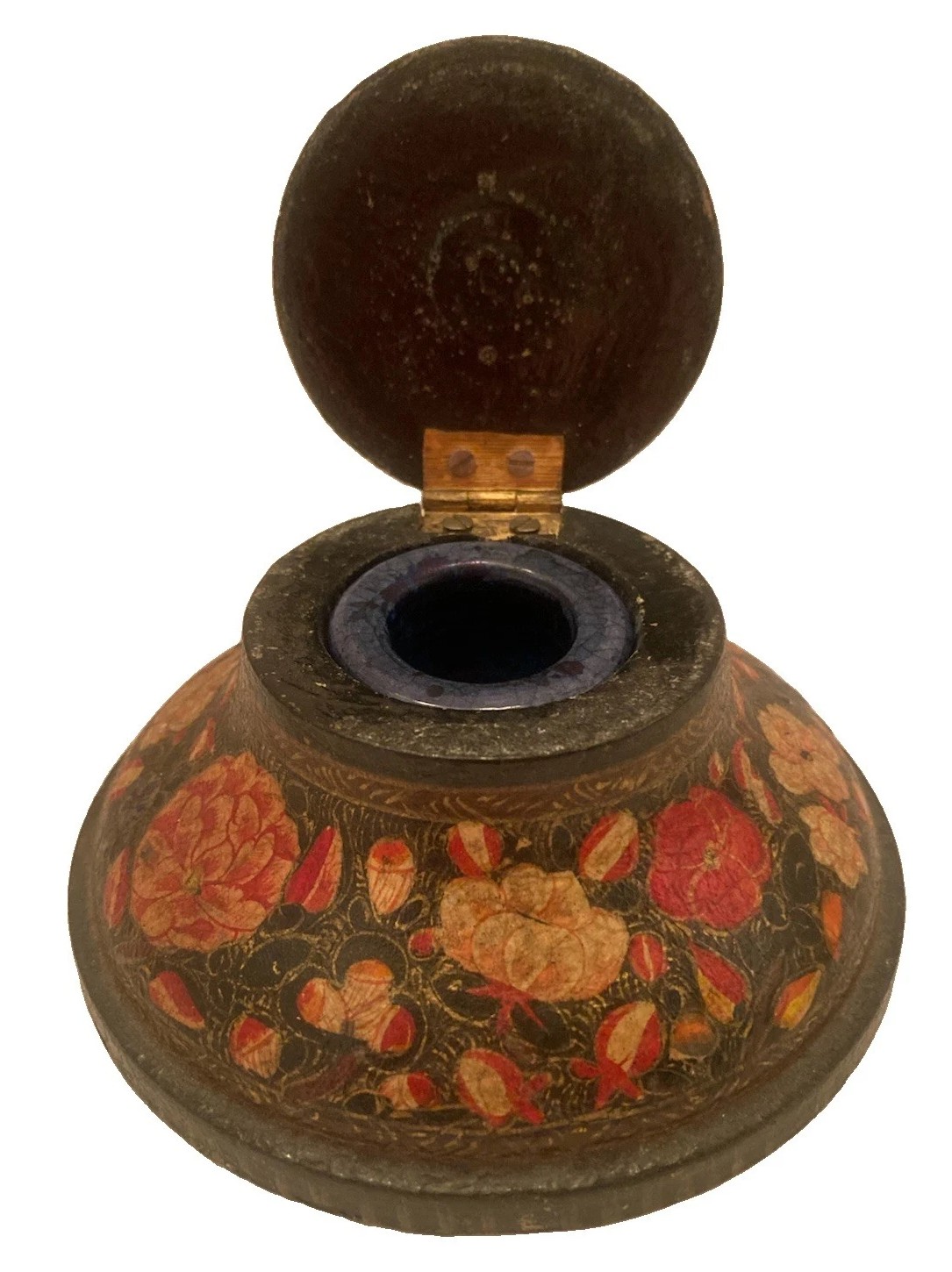
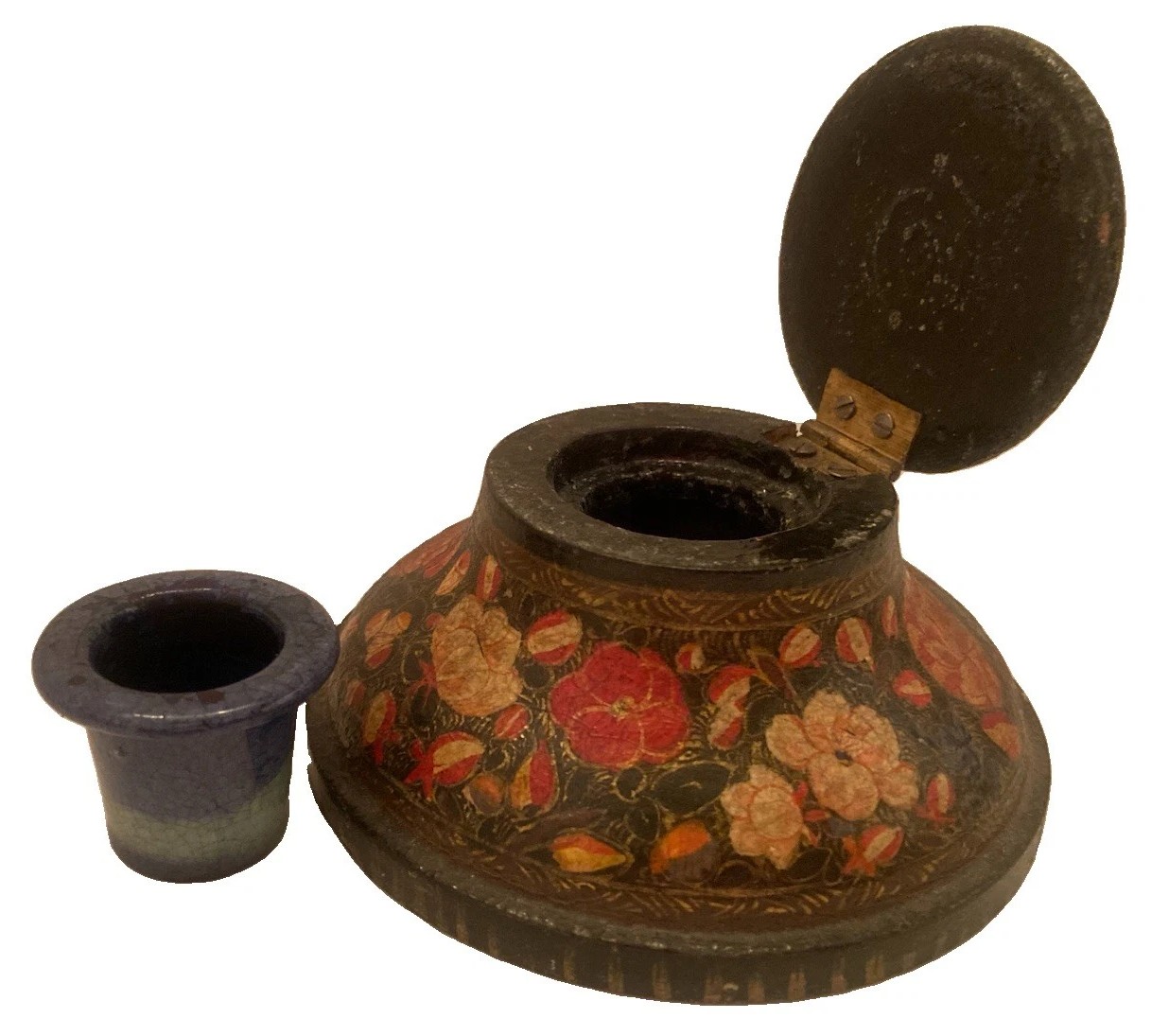
- Form & Structure: Lathe-turned hardwood shaped into a squat, bell-tapered body resting on a flat, recessed circular base.
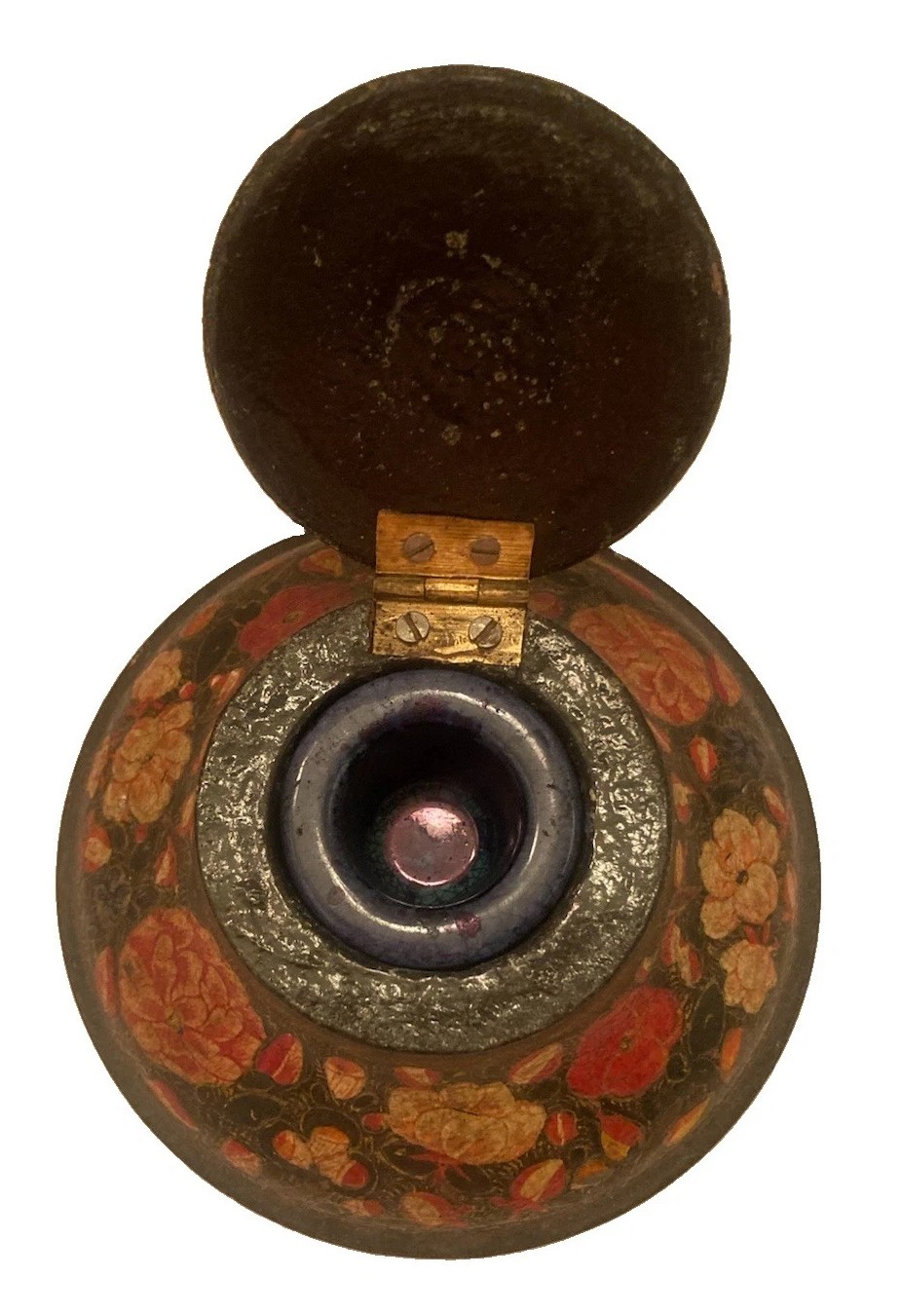
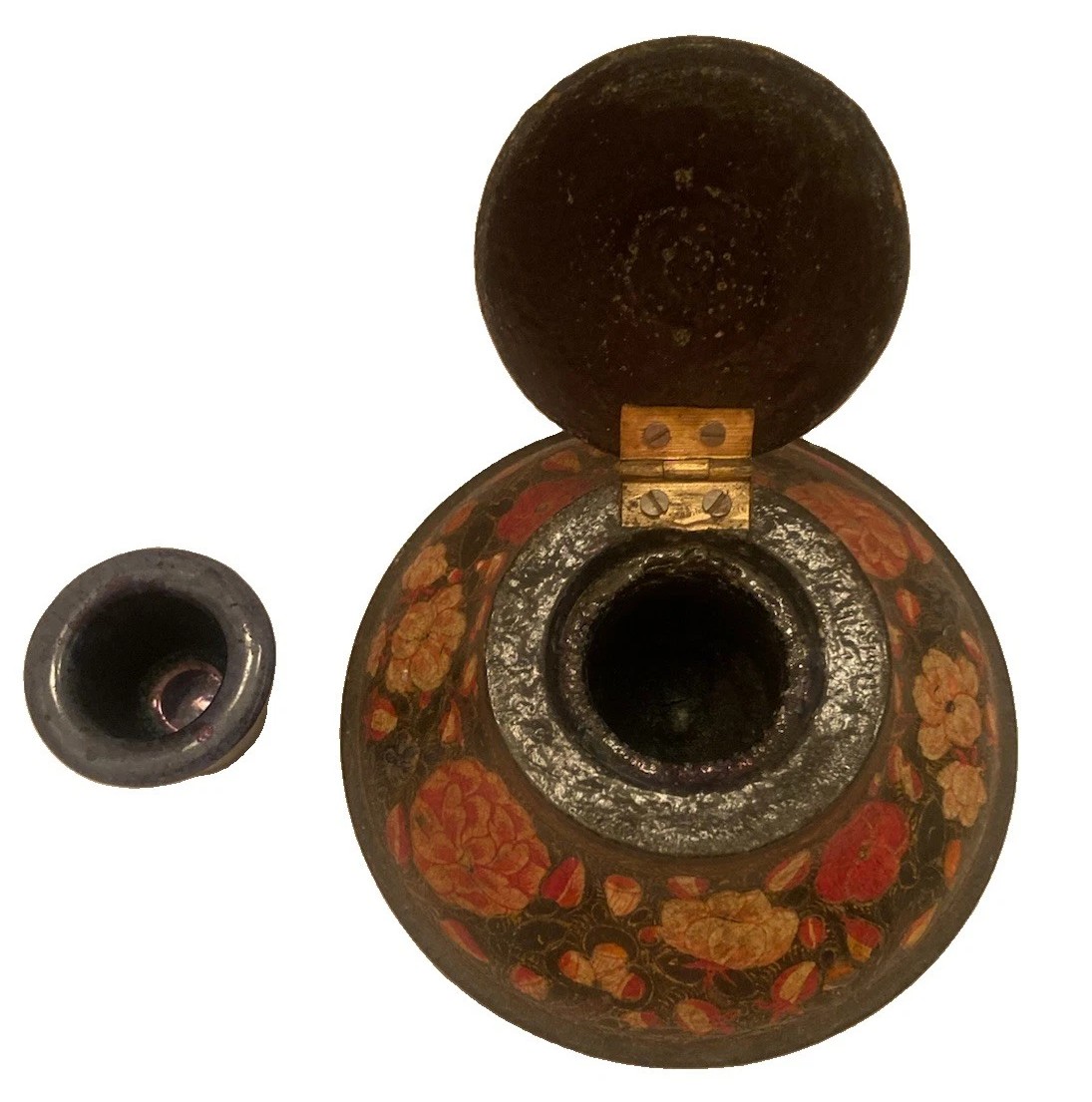
- Lid & Hardware: Features a stepped, domed lid connected by an exterior flat brass butt hinge secured with four slotted, flathead screws.
- Interior Well: The hollowed core holds a removable, stoneware insert.
Origin, Maker, and Era
- Where It Was Made: Most likely Kashmir (Northern India) during the British colonial period, though Victorian English workshops also produced turned-wood lacquerware imitating these styles for the domestic and export markets.
- Who Made It: Anonymous skilled artisans in a specialized craft workshop (in Kashmir, known as naqqash painters). Such items were produced for commercial trade and high-end desk sets and were virtually never signed or backstamped.
- When It Was Made: Late 19th to early 20th century (circa 1880–1915, spanning the late Victorian to early Edwardian eras), consistent with the slotted screw design, hinge type, and glaze on the insert.
Decoration Technique: Hand-Painted vs. Transfer
- Hand-Painted: The decoration is entirely freehand-painted, not transfer-printed.
- Details: Visible brushwork defines each multi-petaled rose, leaf, and bud. Fine gold-pigment tracery, dotting, and geometric border bands outline the shoulder and lid rim. The surface displays natural, organic brush layering underneath a traditional copal or shellac clear coat.
How It Was Constructed
- Woodturning: The body and stepped lid were turned on a lathe from a single block of dense, close-grained wood, bored out in the center to receive the liner, and planned smooth.
- Ground & Basecoat: The raw wood was sealed with a smooth ground (often a chalk or gesso primer) and coated with a dense black or dark charcoal lacquer base.
- Miniature Painting: An artisan hand-rendered the polychrome botanical motifs using opaque mineral- and plant-based pigments using fine hairbrushes.
- Gilding & Finishing: Fine metallic gold paint or bronze powder was applied for the foliate scrollwork and beaded borders. The piece was then sealed with multiple coats of natural clear varnish for gloss and durability.
- Assembly: The lid was mortised and fastened with the brass hinge and screws, and the fired, glazed ceramic ink cup was seated into the cavity.
Sold for $77 in August 2026
Content disclaimer. The information posted is the owner’s best knowledge and may not have been vetted by the SOIC. We welcome comments, corrections, and additions, working to make our website information comprehensive and accurate.
Join the Society of Inkwell Collectors (SOIC) – it’s free!
Founded in 1981 as a non-profit organization,
we are documenting inkwells (and accessories).
We’re here to help and inform!