


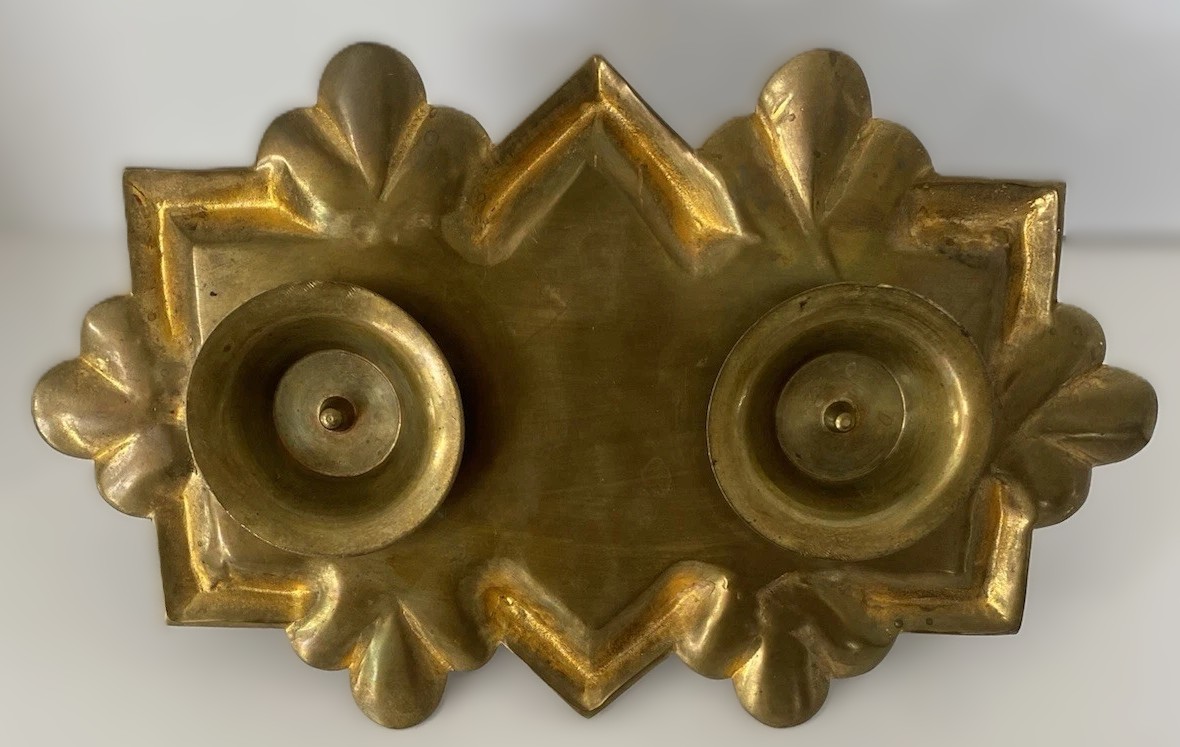
Anglo-Chinoiserie Brass Double Inkstand with Pagoda-Top Wells
| Categories | Bronze - Brass - Copper |
| Material | Brass |
| Markings | Unmarked |
| Manufacturer | Undetermined |
| Origin | England |
| Date or Era | circa 1880 |
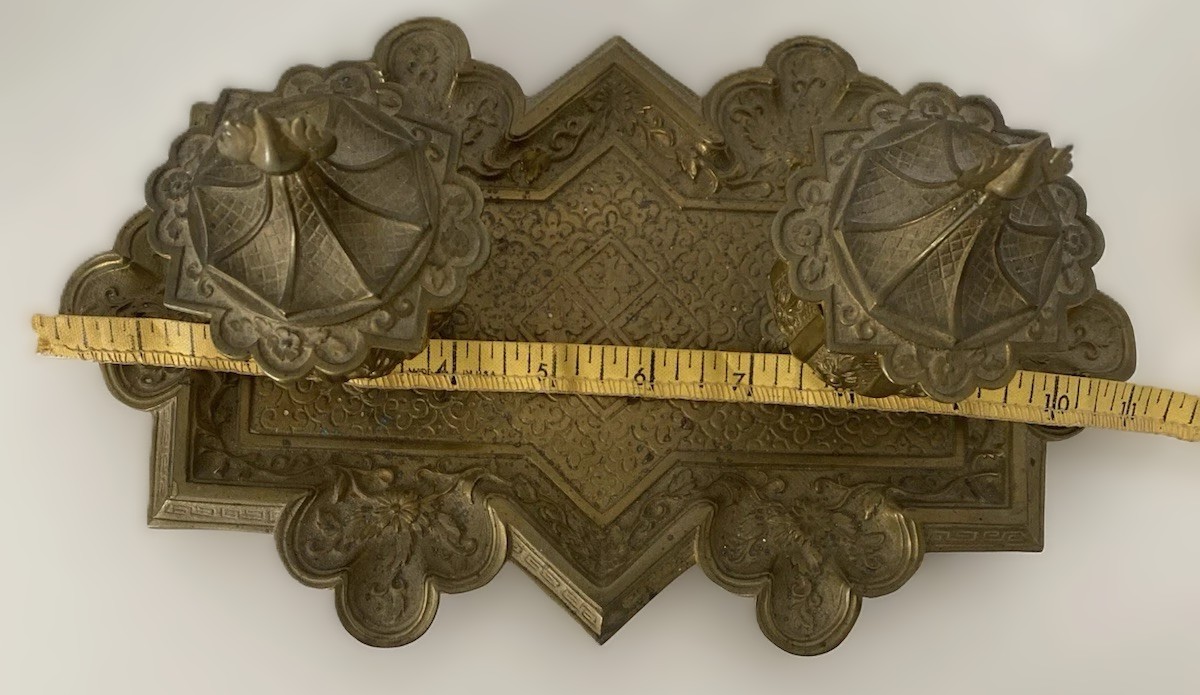
| Measuring | 11 ½” across; 4 ¼” high |
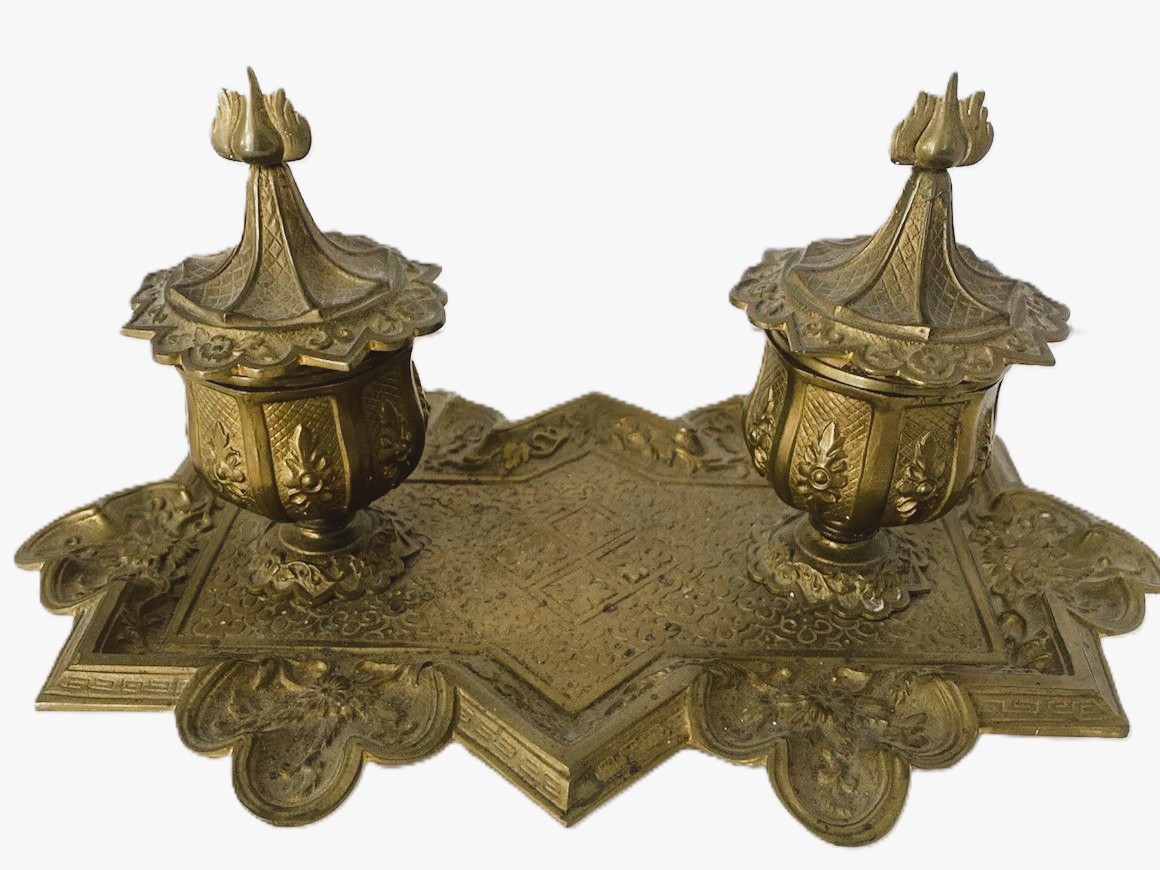
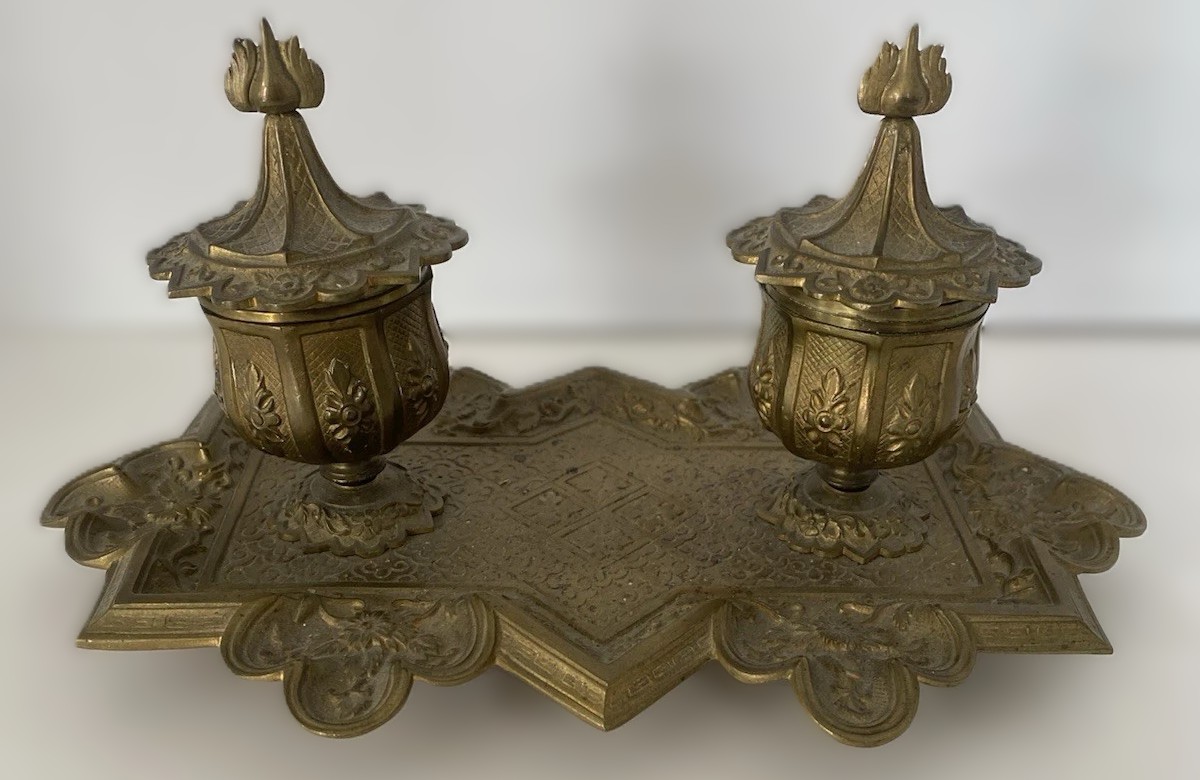
The ensemble consists of a flat, geometric base tray featuring two integrated, elevated inkwells.
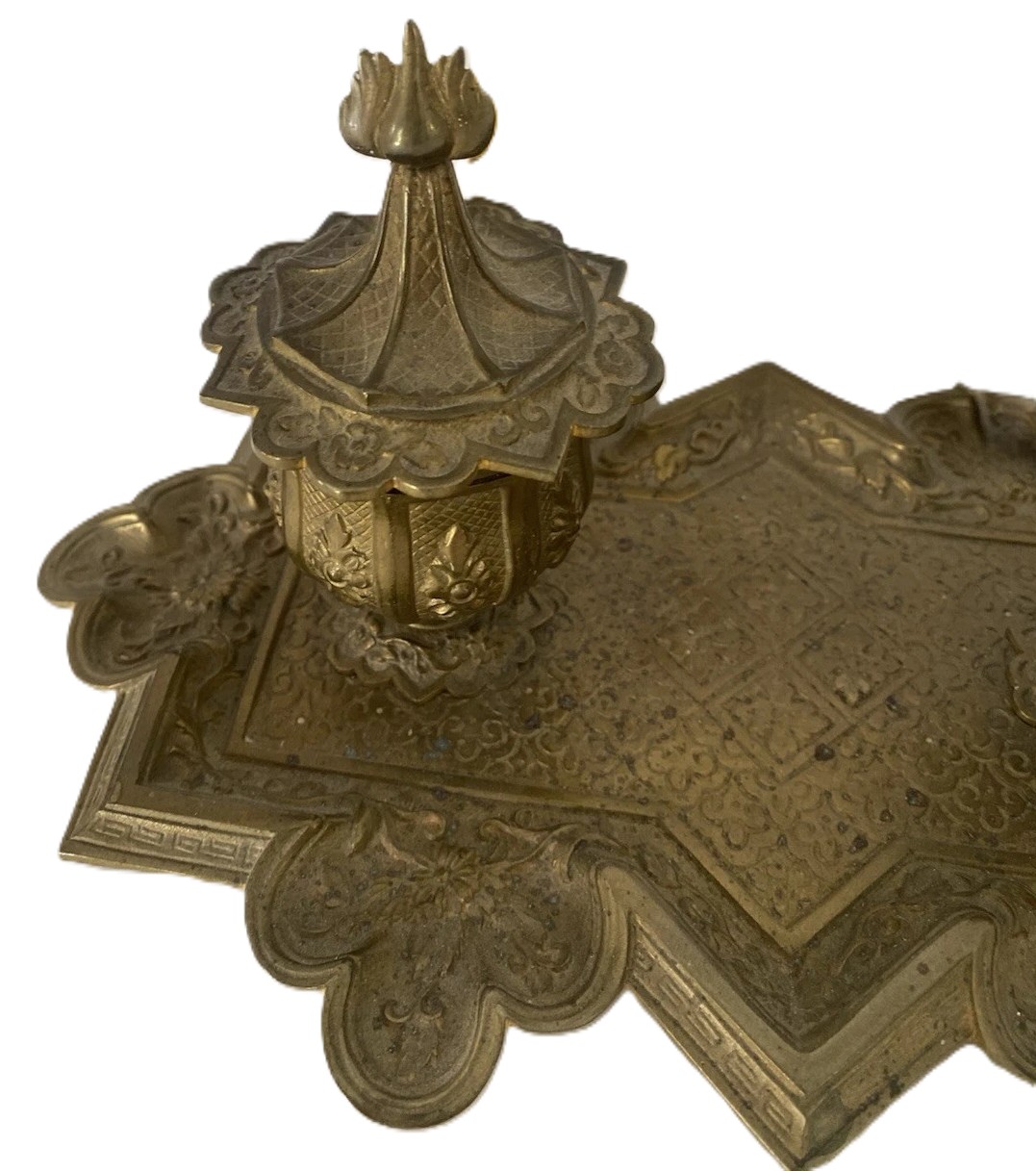
- The Base Tray: The tray is designed in a complex geometric shape that mimics an eight-pointed star layout, complete with an outer fretwork pattern. The flat horizontal surface is textured with a stippled, repeating circular punch-work background. The center features a diamond enclosing four small squares. The perimeter of the tray is decorated with prominent, repeating tri-lobed leaf or scalloped shell-like handles and extensions, detailed with cast floral blooms and scrolling foliage. The straight-edged margins of the base feature an incised Greek key (meander) border pattern.
- The Inkwells: The two matching inkwells are urn-shaped, raised on short flared pedestals that sit atop scalloped collar bases. The main bodies of the inkwells are divided into vertical panels decorated with a crosshatched (diamond-matted) texture and central embossed floral sprigs.
- Lids and Inserts: Each inkwell has a hinged lid with a distinctive pagoda-style or tiered roof silhouette, featuring a scalloped edge and an upright finial shaped like a stylized lotus bud or flame. Flipping the lids back reveals that they house two ceramic inserts.
- Underside Construction: The inkwells are secured directly to the tray from underneath using integral threaded brass studs and nuts, a classic method for 19th-century bench-assembled metalware.
Classification of Style
This inkstand is a quintessential example of Victorian Eclecticism, specifically combining elements of the Aesthetic Movement and Chinoiserie / Orientalism revival styles.
During the late 19th century, designers threw out rigid rules and blended global motifs on a single object. We can see three distinct stylistic influences working together here:
- Chinoiserie / Asian Influence: The most dominant visual feature is the silhouette of the inkwell lids. They resemble East Asian pagoda roofs, capped off by Buddhist-style lotus or flame finials.
- Neoclassical / Greek Revival: Running along the straight edges of the star-shaped base is a classic Greek key or meander border pattern.
- Rococo Revival / Naturalism: The large, sprawling handles and feet extending past the star border are filled with rich, swirling foliage, textured crosshatching, and realistic floral blossoms.
Origin and Date of Manufacture
- Where it was made: This inkstand was almost certainly manufactured in England – most likely in Birmingham, which was the global epicenter for fine cast brassware and novelty “desk standishes” during the 19th century. While the design borrows East Asian and Mediterranean motifs, the casting technique, the specific formulation of the brass alloy, the style of the hinges, and the white porcelain drop-in liners are all classic indicators of British industrial manufacturing meant for Western domestic writing desks.
- When it was made: It dates to the late Victorian era, circa 1875–1890. This specific window marks the height of the Aesthetic Movement, a period when the Western market was obsessed with Anglo-Japanese and Chinoiserie accents, geometric framework, and richly ornamented metal desk accessories.
Sold for $87 in May 2026
Content disclaimer. The information posted is the owner’s best knowledge and may not have been vetted by the SOIC. We welcome comments, corrections, and additions, working to make our website information comprehensive and accurate.
Join the Society of Inkwell Collectors (SOIC) – it’s free!
Founded in 1981 as a non-profit organization,
we are documenting inkwells (and accessories).
We’re here to help and inform!