

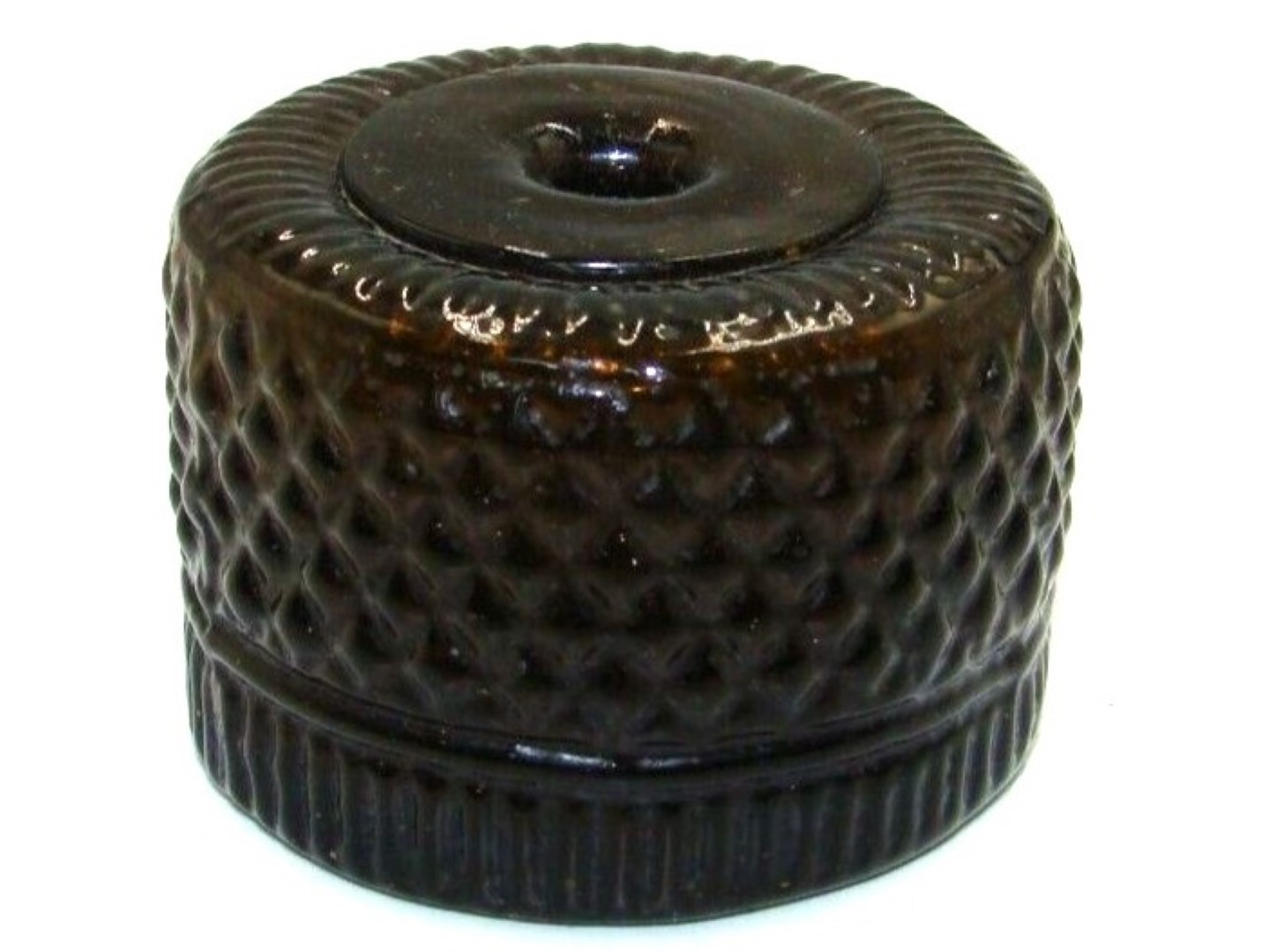
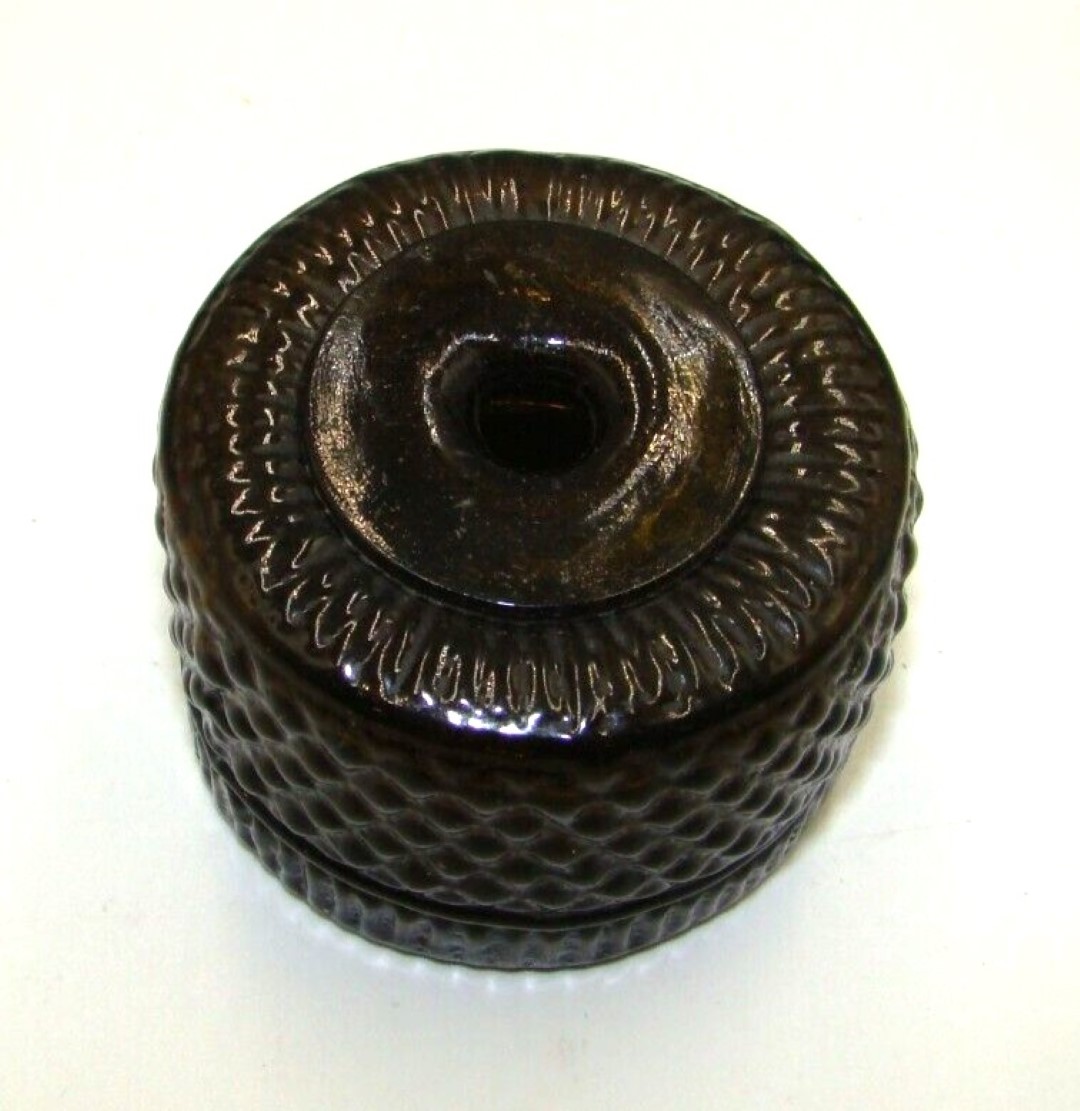
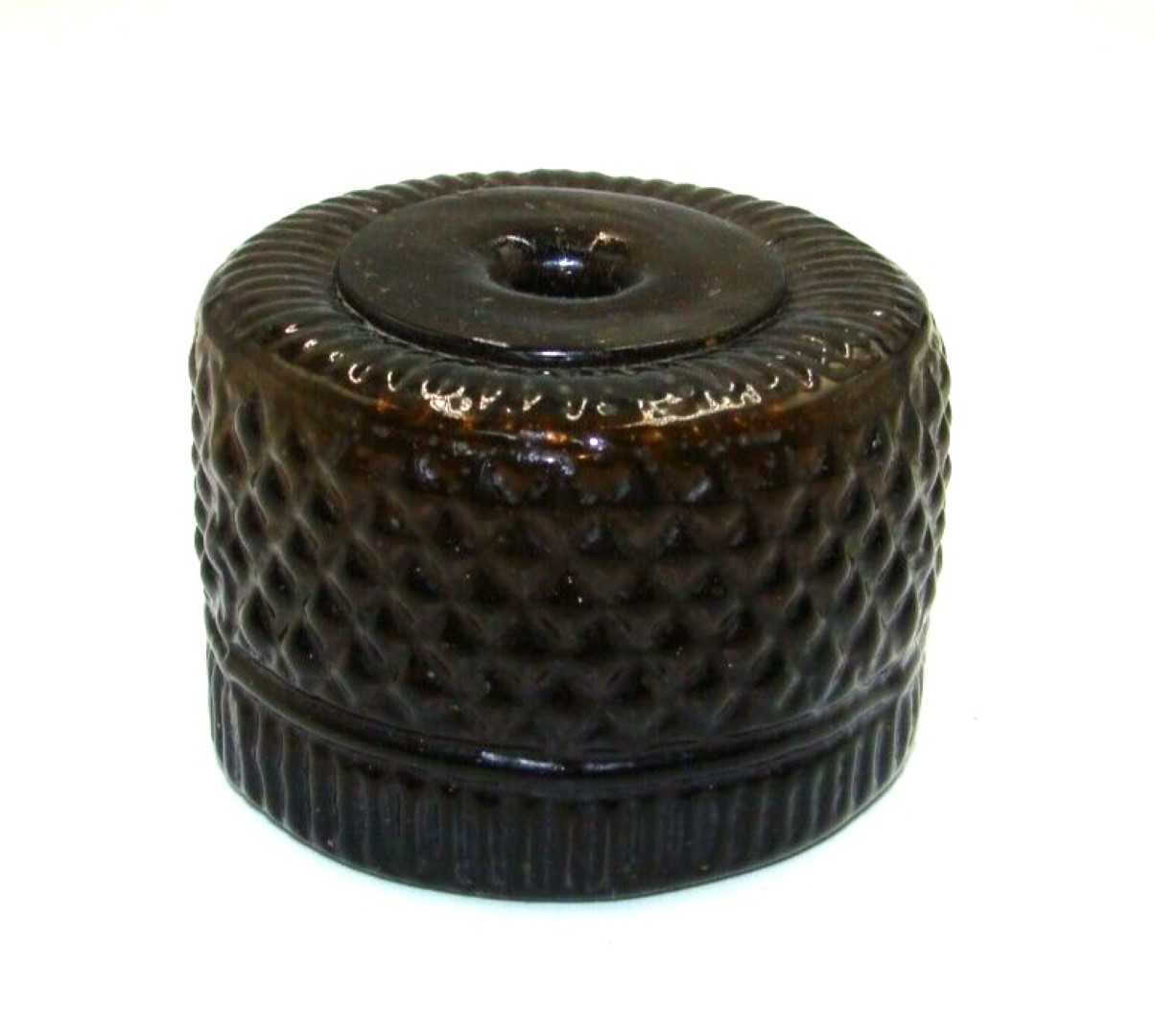
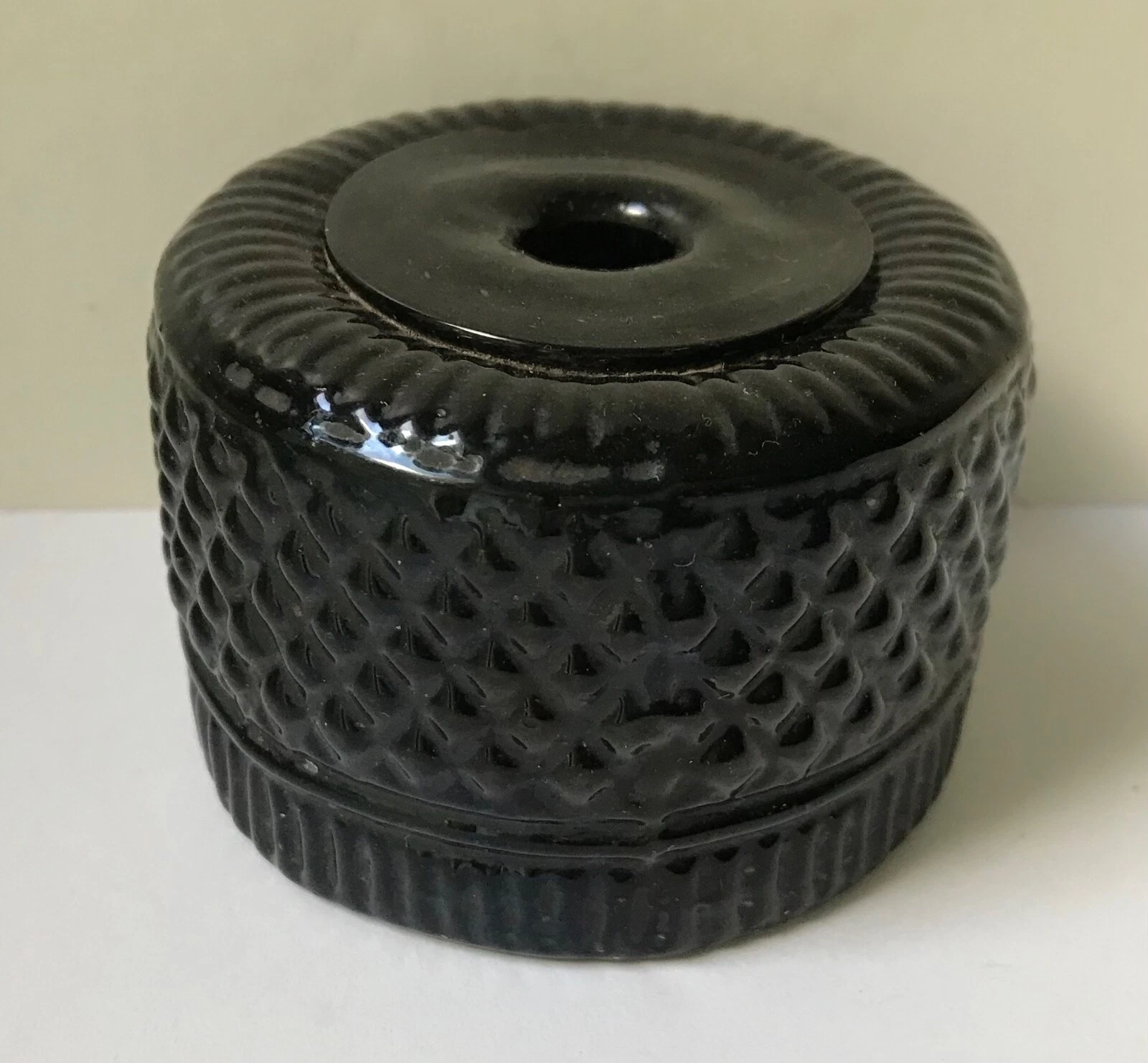
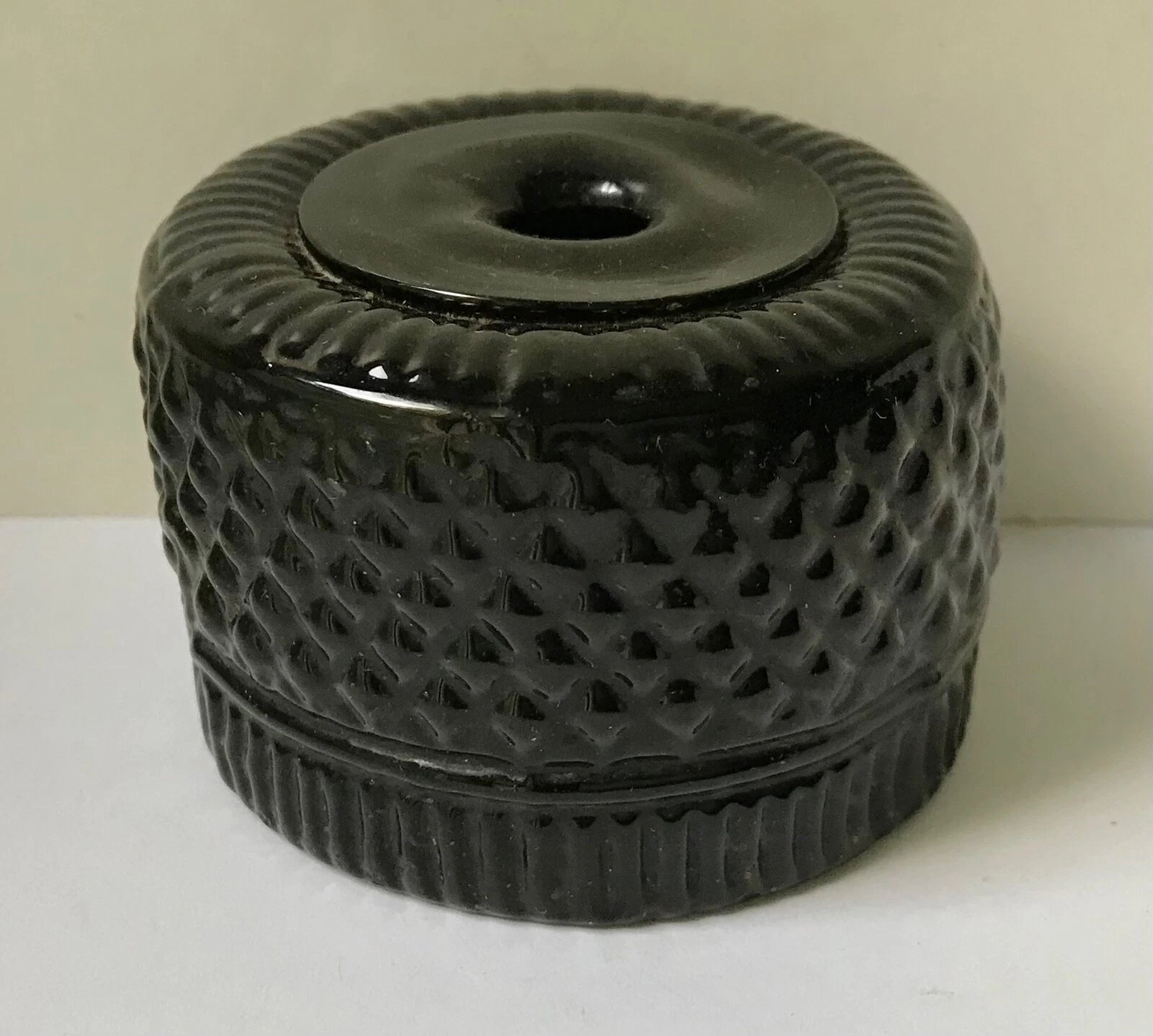
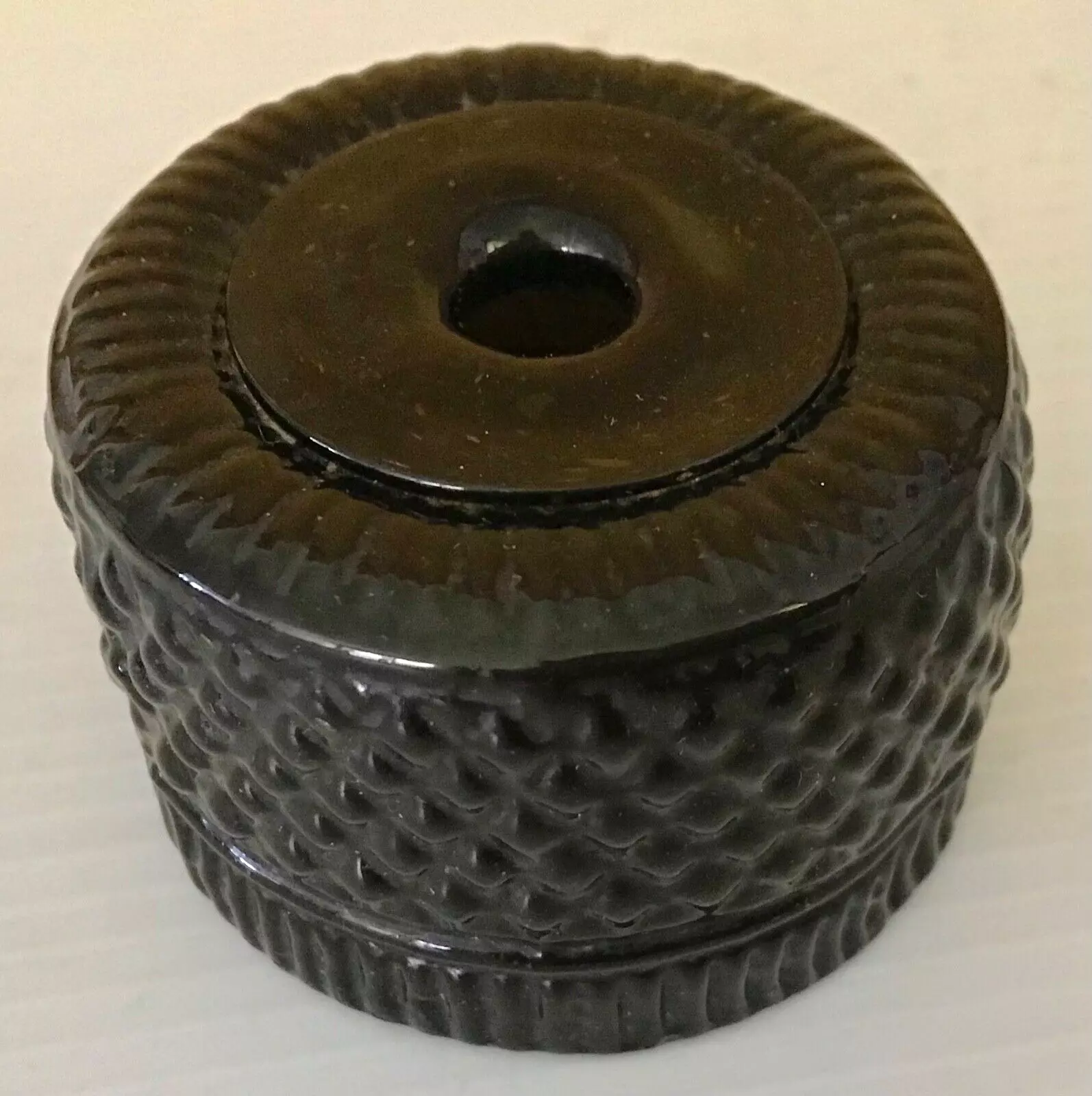
3 Mold Amber Glass Inkwell
| Categories | Glass - Non-figural |
| Type | 3 Mold |
| Material | Glass |
| Manufacturer | Marlboro Street Glassworks |
| Origin | United States |
| Date or Era | circa 1830 |
| Measuring | 2 ¾” wide and 1 ¾” high |
- Identification: Blown Three Mold GII-16 Inkwell
Two examples identified as GII-16 blown inkwells. In the language of American glass collecting (based on the McKearin charts), the distinction between the famous Keene inkwell patterns often comes down to the base:
- GII-18 (The most common): Features the same diamond-and-ribs body pattern but typically has a rayed or geometric patterned base.
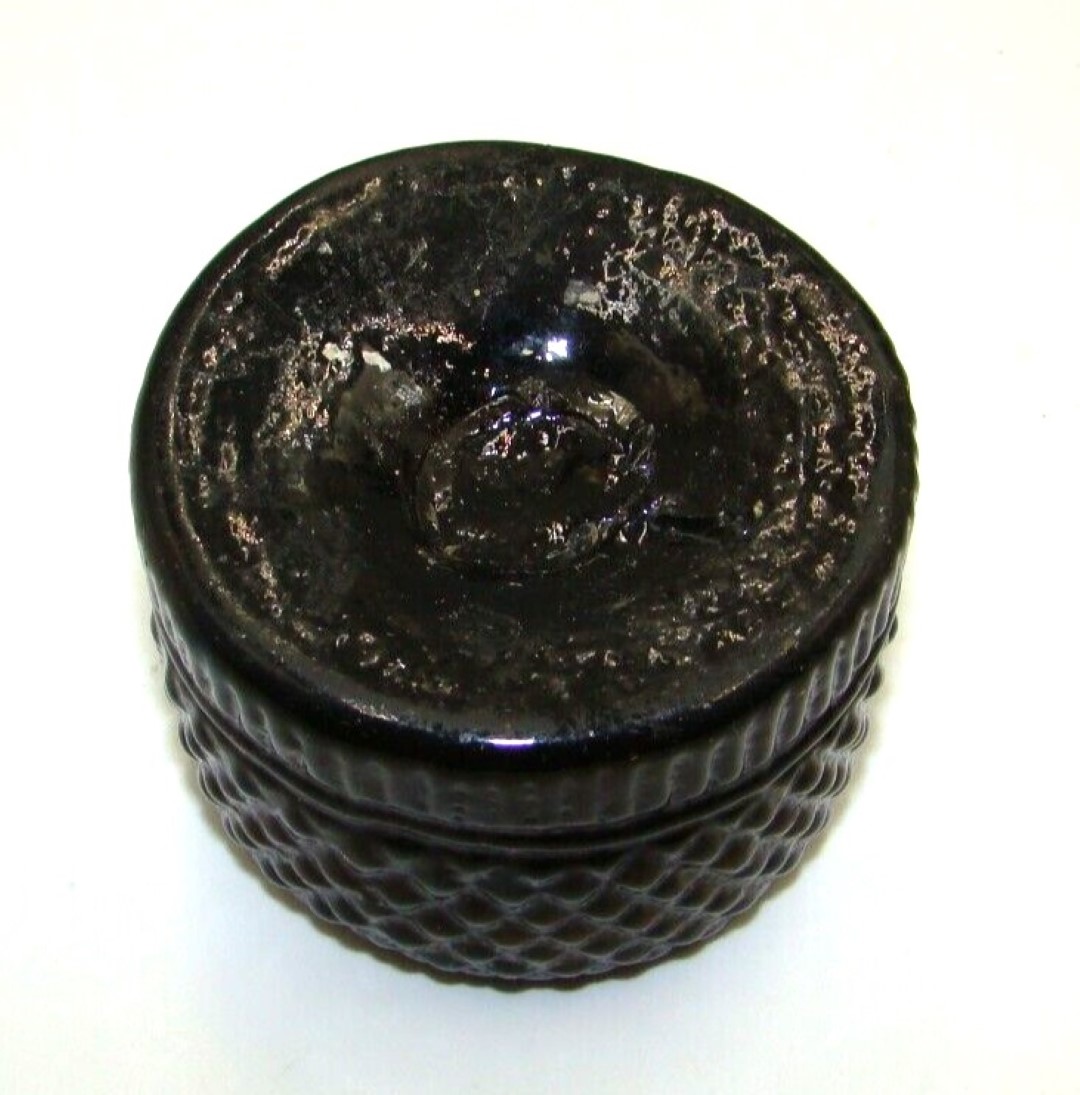
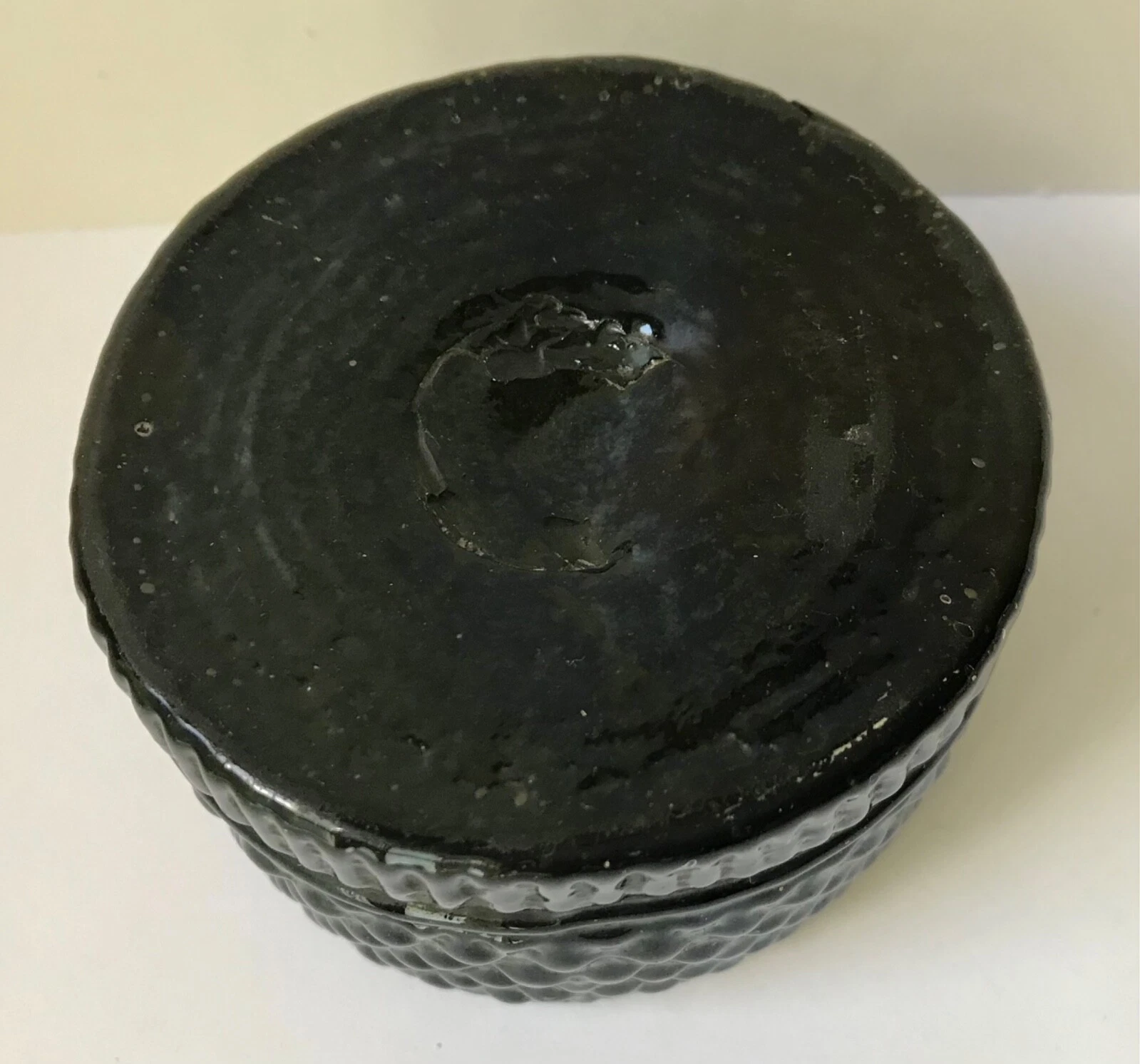
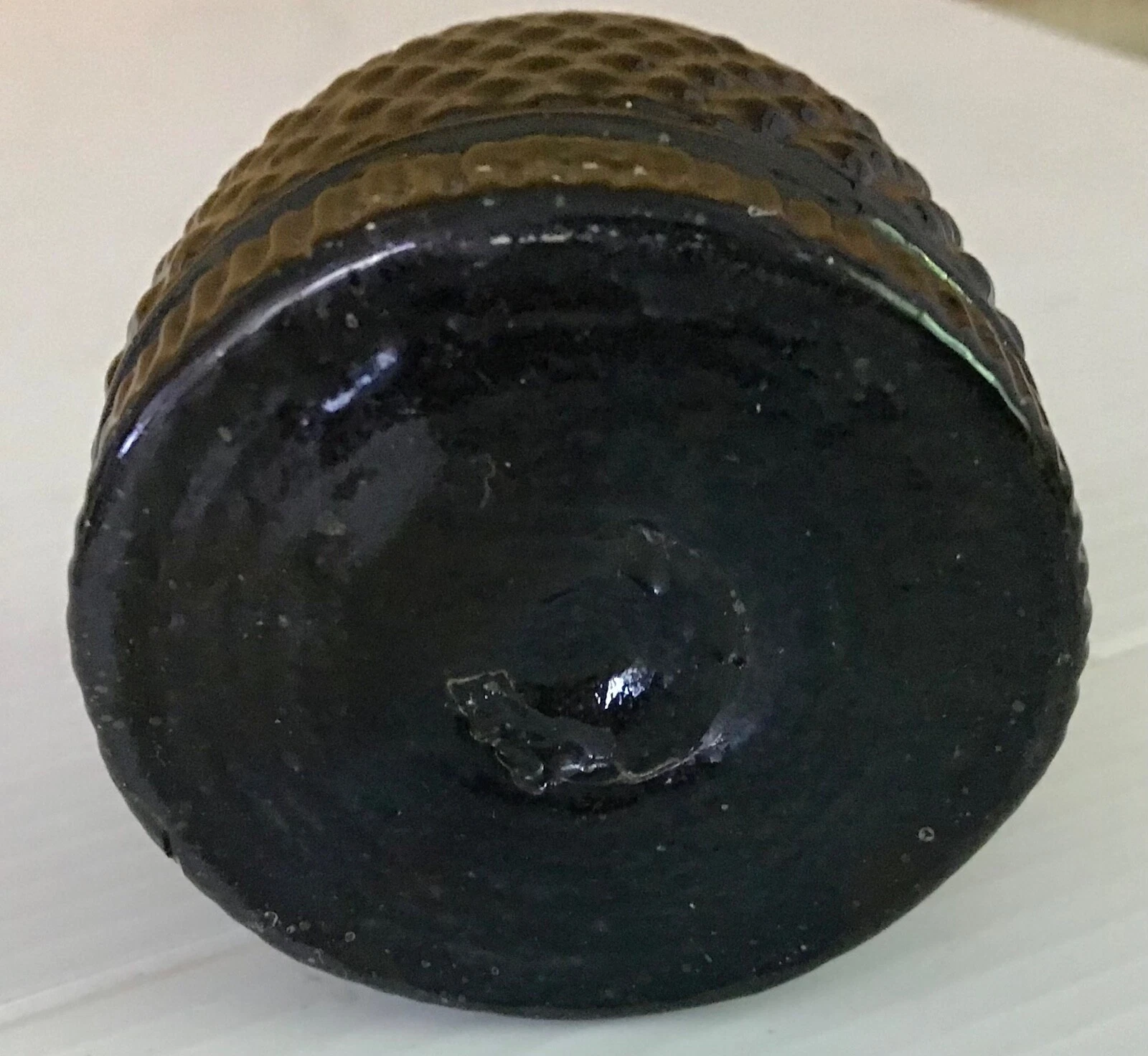
- GII-16 (Theses examples): Features the diamond-and-ribs body pattern but has a plain base (smooth glass with no molded pattern on the bottom, just the pontil scar).
- Origin: Keene, New Hampshire (Marlboro St.)
- Maker: Attributed to the Marlboro Street Glass Works in Keene, New Hampshire.
- Date: c. 1820–1840 (Late Federal to Early Victorian period).
- Context: This glassworks was famous for producing “Blown Three Mold” wares (using a hinged mold of 3 pieces) in dark, earth-toned colors. The geometric “Diamonds & Ribs” pattern is the signature design of this factory’s inkwell production.
- Color: “Black Glass” vs. “Dark Amber”
- The Collector’s Term: In the antique market, this is broadly categorized as “Black Glass.” This refers to any glass from this era that is so dense and dark it appears opaque black on the shelf.
- The True Color: When strong light hits the glass, it reveals its true color. Thess appear to be Deep Olive Amber (a brownish-green). Keene glass is famous for this specific hue, which was created by the natural iron impurities in the local sand.
- Note: It is not “pure” amber (which would be orange-brown) or “pure” olive (which would be green), but the distinct murky mix of both that is characteristic of New England glasshouses.
- Manufacturing Technique
- Blown Three Mold: The glassblower blew a bubble of glass into a mold made of three hinged leaves. This created the sharp geometric pattern on the outside (and a corresponding reverse pattern on the inside).
- Pontil: The rough, broken scar on the bottom is an Open Pontil scar. This confirms the bottle was blown, attached to a rod (pontil) at the base to hold it while the top disc mouth was finished, and then cracked off the rod.
Summary Description:
Early American Blown Three Mold Inkwell (GII-16)
- Origin: Attributed to Marlboro Street Glass Works, Keene, New Hampshire (c. 1820–1840).
- Pattern: Geometric “Diamonds & Ribs” (McKearin GII-16). Band of diamond diapering between bands of vertical ribbing.
- Base: Plain base with open pontil scar (distinguishing it from the rayed-base GII-18).
- Color: Deep Olive Amber (Black Glass).
Example #1: Sold for $168 in July 2023
Example #2: Sold for $252 in November 2025
Content disclaimer. The information posted is the owner’s best knowledge and may not have been vetted by the SOIC. We welcome comments, corrections, and additions, working to make our website information comprehensive and accurate.
Join the Society of Inkwell Collectors (SOIC) – it’s free!
Founded in 1981 as a non-profit organization,
we are documenting inkwells (and accessories).
We’re here to help and inform!