




1897 Gustave Lhotte Presentation Inkstand
| Categories | Presentation Piece |
| Material | Brass |
| Markings | See Narrative |
| Manufacturer | Undetermined |
| Origin | France |
| Date or Era | circa 1897 |
This late 19th-century French desk set is an exceptional example of heavy, highly detailed cast-bronze decorative art, merging fine metalwork with political history. This ensemble features a large, footed presentation inkstand with two integrated inkwells and its original, independent matching rocker blotter.
The set is designed in the ornate Renaissance Revival (Henri II or Neo-Renaissance) style popular in France during the late 19th century. The centerpiece of the structure is a deeply recessed, rectangular central pen tray (plumier) embellished with low-relief foliate volutes, scrolling arabesques, and intricately cast flourishes. Flanking this central tray are two fixed inkwells with steeply pitched pagoda-style architectural lids topped with decorative cast finials. The hinged lids open to reveal their removable liners (one of which appears to be a replacement).
The front rim of the inkstand is bordered by a pierced openwork gallery of scrolling vines and stylized lily pads, while the reverse features an architectural backstand supporting two outward-curving decorative brackets.
The Central Figure and Its Symbolism
The definitive focal point of the backstand is a dramatic, majestic winged female sphinx. Cast in a seated position on its haunches, the figure features raised, feathered bird wings, a powerful feline body, and a stylized, fierce lioness head. The chest showcases distinct feminine anatomy, framed by classical Renaissance-style strapped body armor or an ornamental cartouche.
In the context of 19th-century statecraft and French administration, the sphinx carries profound classical symbolism:
- Intellect and Human Reason: Since antiquity, the sphinx has represented the triumph of intellect and human reason over primal instinct. For a high-ranking magistrate, it stands as a monument to wisdom, careful foresight, and judicial calculation.
- Guardianship and Authority: Traditionally viewed as eternal protectors of sacred spaces and secrets, the sphinx sitting atop an official desk set visually guards the state’s legal decrees, municipal secrets, and official correspondence.
- Administrative Discretion: The proverbial silence of the sphinx reflects the diplomatic discretion, confidentiality, and quiet authority required of high-level government leadership.
Archival History & The Presentation Inscription
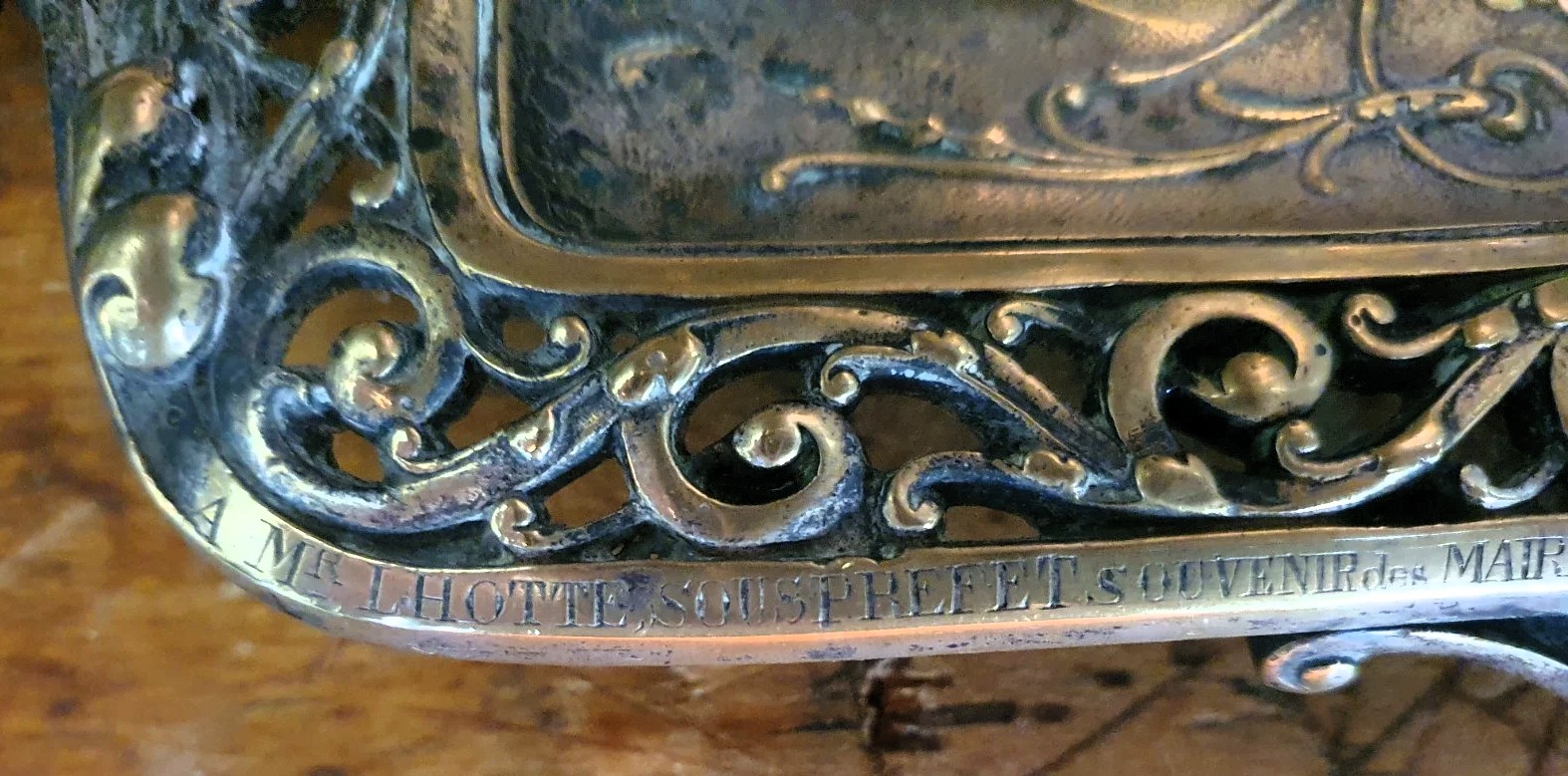
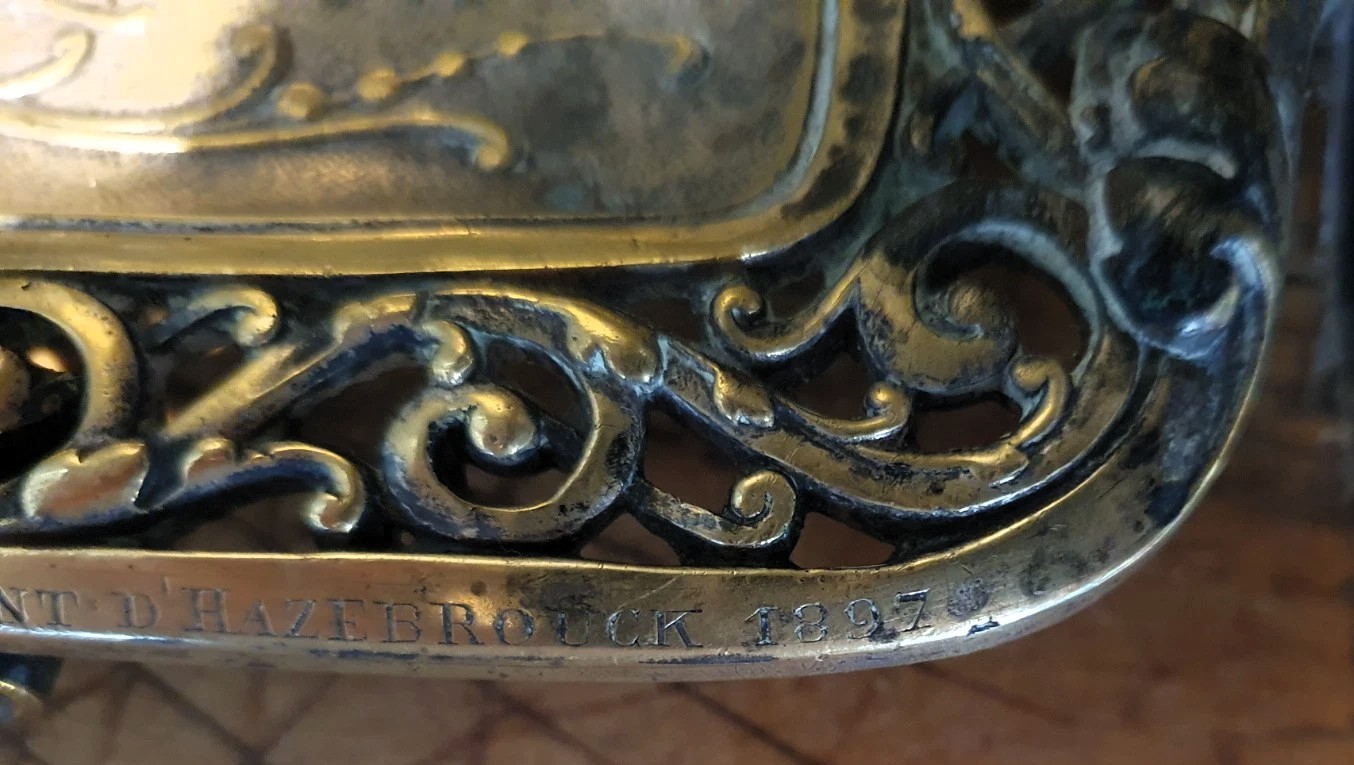
The crisp, hand-engraved formal presentation inscription is marked cleanly across the central front bracket of the openwork gallery:
- Left Side: “A MR LHOTTE, SOUS-PREFET, SOUVENIR des MAIRES”
- Right Side: “DE L’ARRONDISSEMENT D’HAZEBROUCK 1897”
Translated to English, the inscription states: “To Mr. Lhotte, Sub-Prefect, a token of remembrance from the Mayors of the Arrondissement of Hazebrouck, 1897.”
Historical Context & Archival Confirmation
This luxury piece is a documented artifact of French municipal history from the region of French Flanders (Nord department):
- The Recipient: Gustave Lhotte was a prominent civil servant who assumed office as the Sub-Prefect (sous-préfet) of the Hazebrouck arrondissement on June 20, 1888.
- The Occasion: Archival records confirm that after an exceptionally long and stable tenure of more than nine years governing the district, Mr. Lhotte officially concluded his service in Hazebrouck on September 13, 1897.
- The Gift: Upon his departure, the collective mayors of the various communes within his administrative district commissioned this high-quality cast bronze inkstand as an official parting gift. During the 19th century, a monumental desk inkstand was considered the ultimate symbolic gift for a departing administrator—representing the literal power of the pen, bureaucratic authority, and a lifetime spent drafting official state documents.
Accompanying Components & Technical Details
- The Rocker Blotter: The standalone matching rocker blotter features a heavily cast rectangular bronze top plate that mirrors the dense scrollwork of the main tray. It is finished with a sweeping, centrally mounted handle. The curved wooden under-block remains intact, designed to wrap with blotting paper to dry wet ink from dip pens.
- Dual Desk Well Functionality: The symmetrical balance of the double inkwells provided both aesthetic grandeur and practical utility on a busy administrative desk, allowing the sub-prefect to quickly switch between ink colors.
This magnificent presentation ensemble beautifully merges late-19th-century political history with the pinnacle of French industrial art metal casting.
Sold for $250 in May 2026
Content disclaimer. The information posted is the owner’s best knowledge and may not have been vetted by the SOIC. We welcome comments, corrections, and additions, working to make our website information comprehensive and accurate.
Join the Society of Inkwell Collectors (SOIC) – it’s free!
Founded in 1981 as a non-profit organization,
we are documenting inkwells (and accessories).
We’re here to help and inform!