


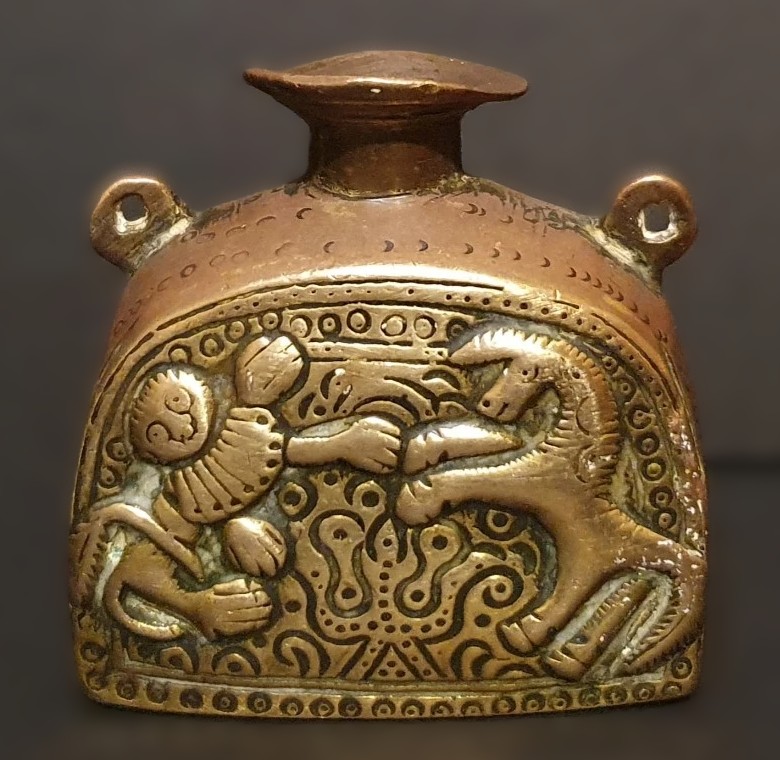
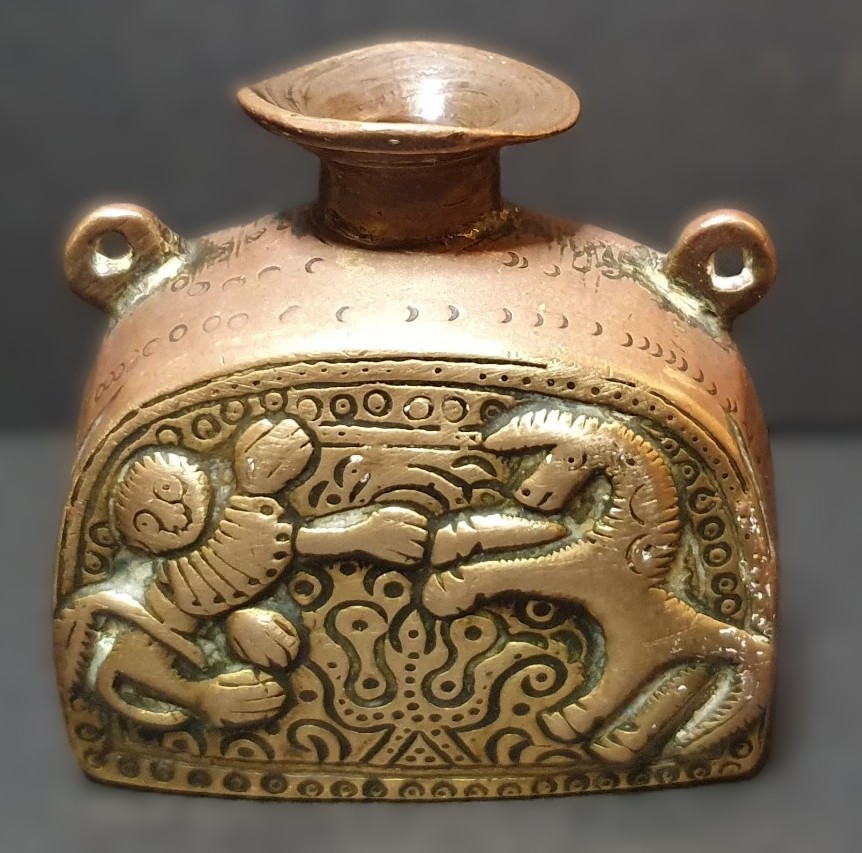
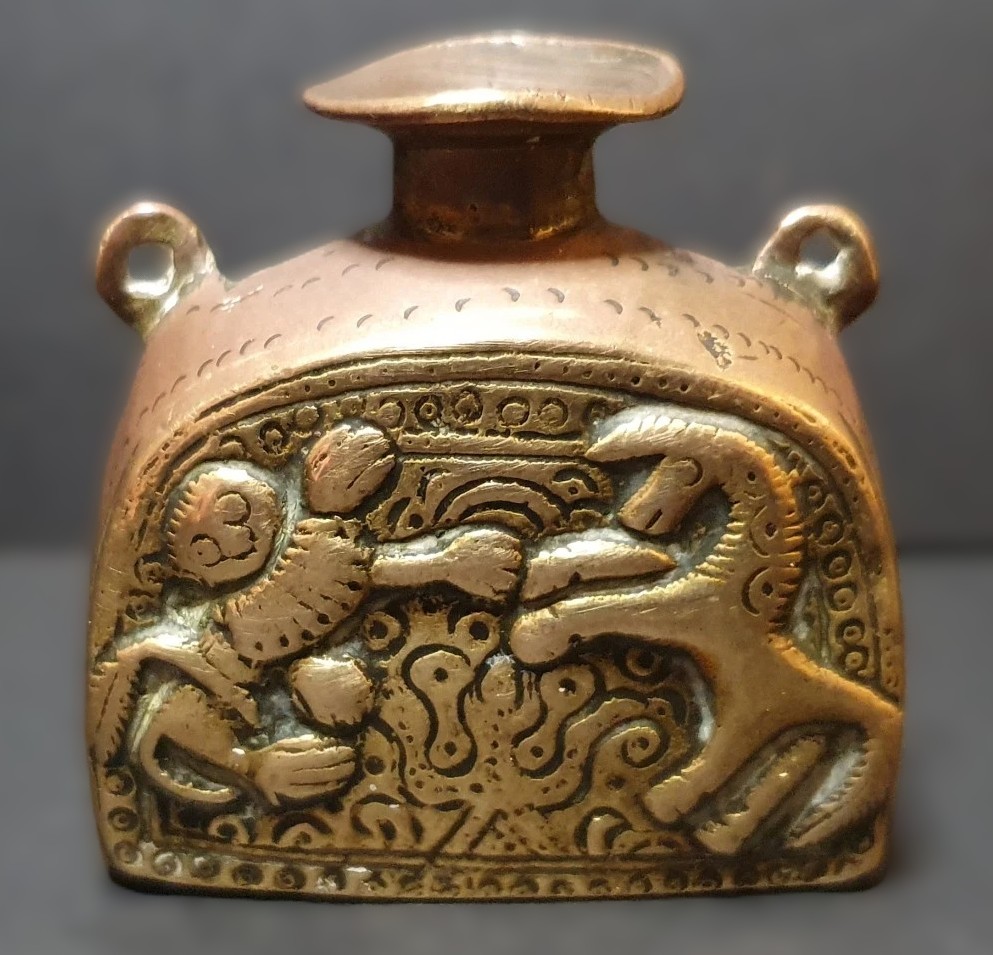
17th to 18th Century Bronze Russian Inkwell
| Categories | Early - Primitive |
| Material | Bronze |
| Origin | Russia |
| Date or Era | 17th to 18th Century |
A Rare Portable Bronze Alloy Inkwell Region: Russia or Ukraine Date: 17th–Early 18th Century Medium: Cast copper-alloy (bronze/brass)
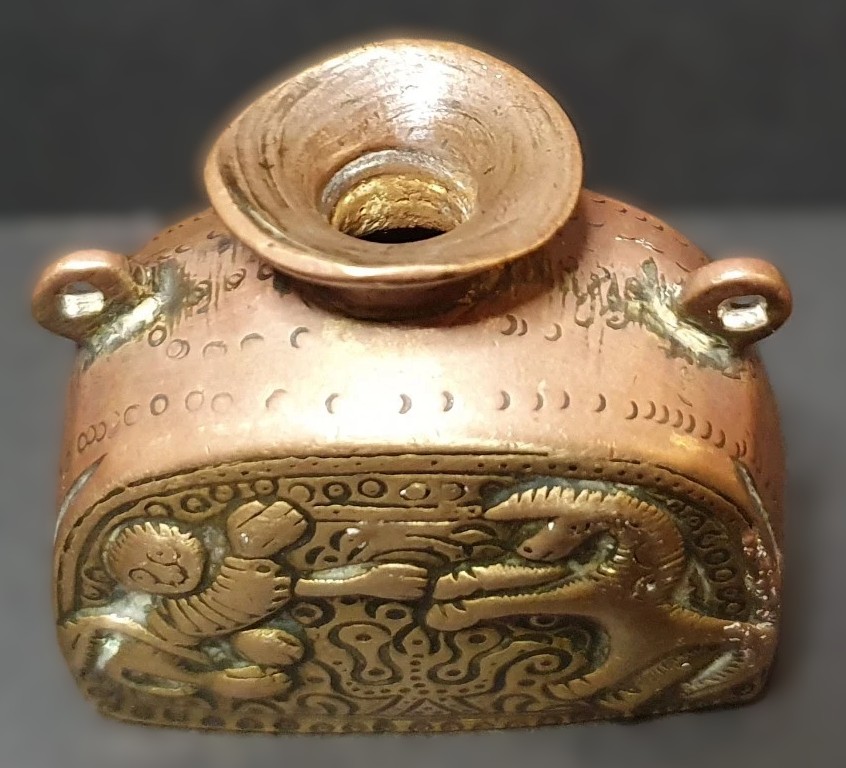
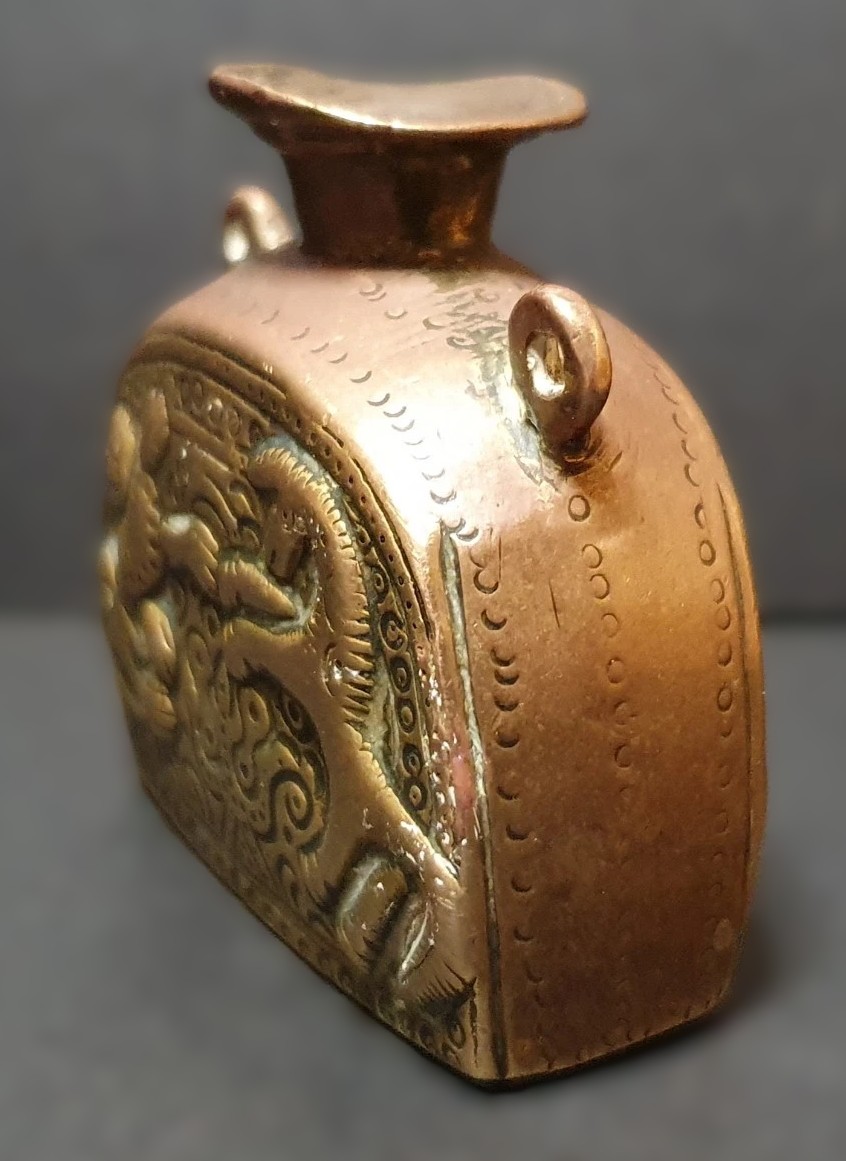
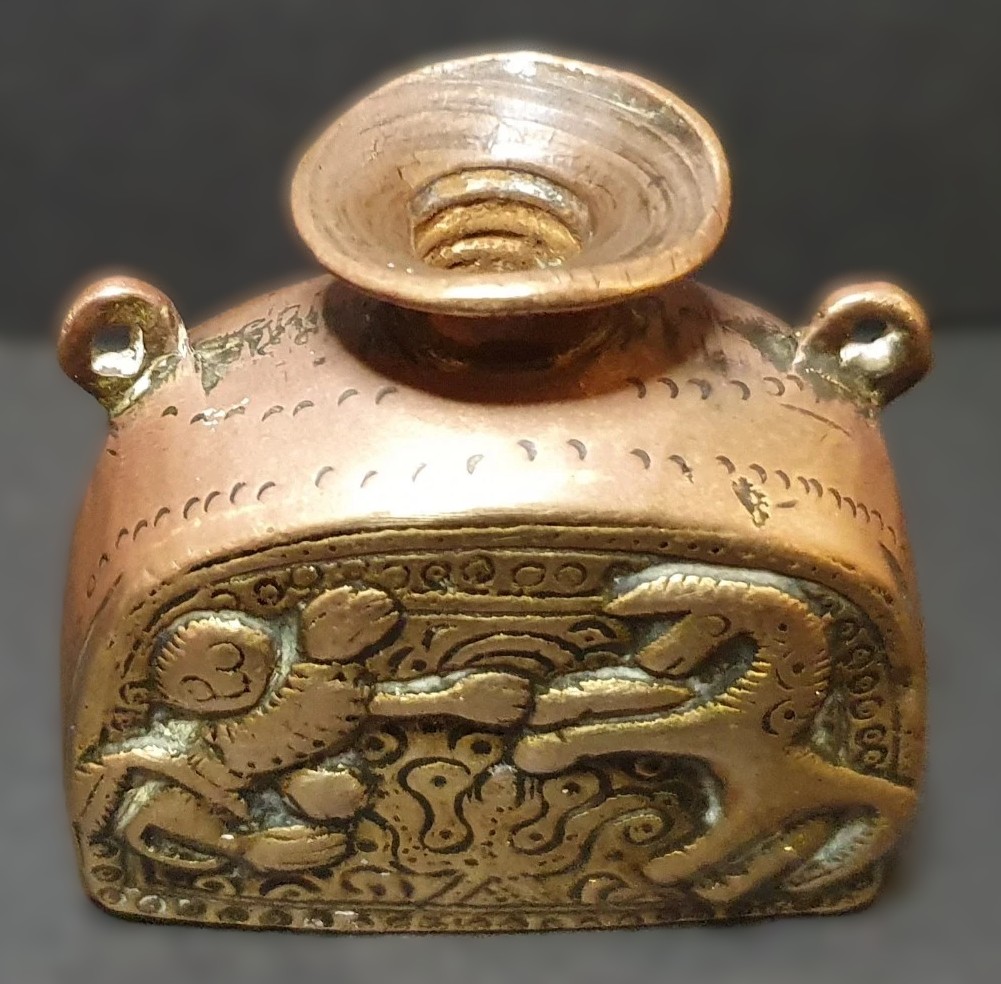
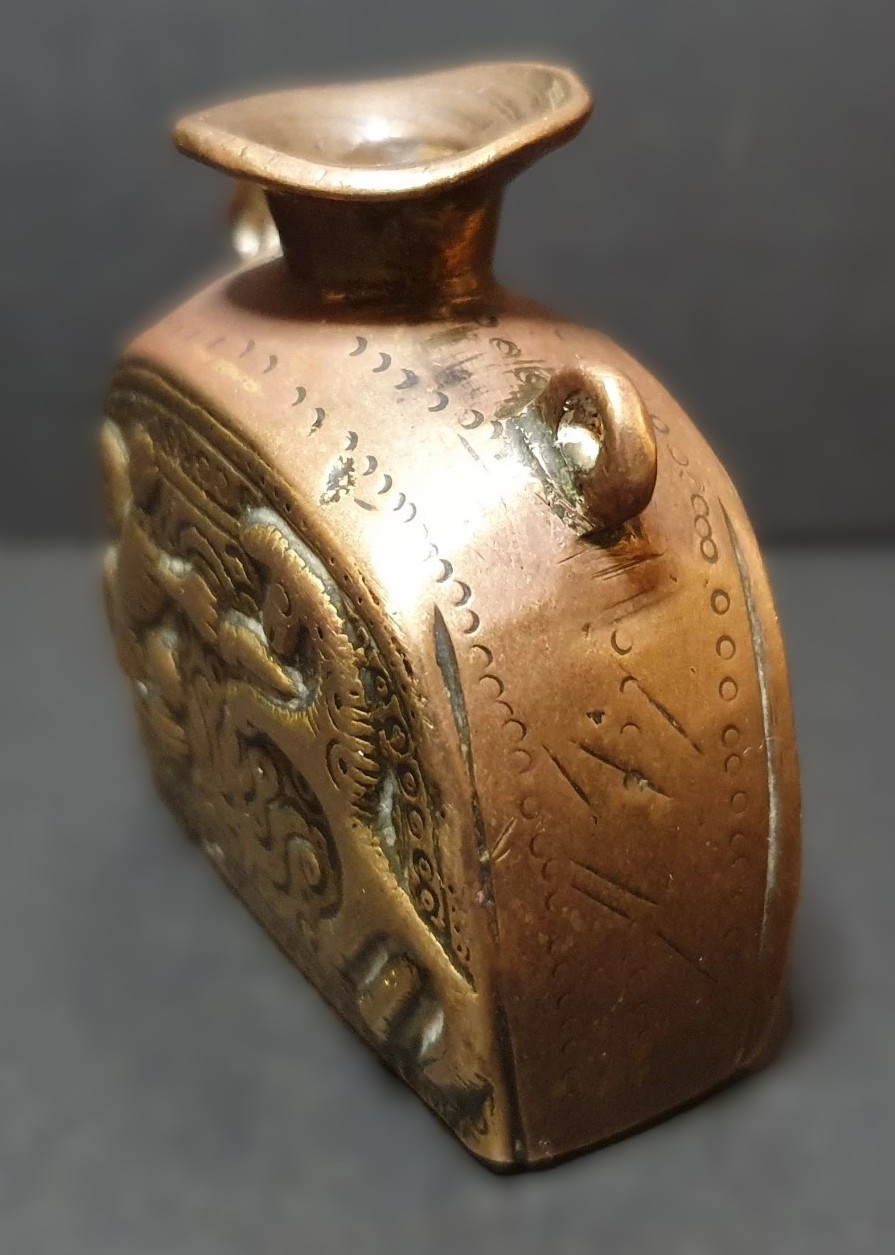
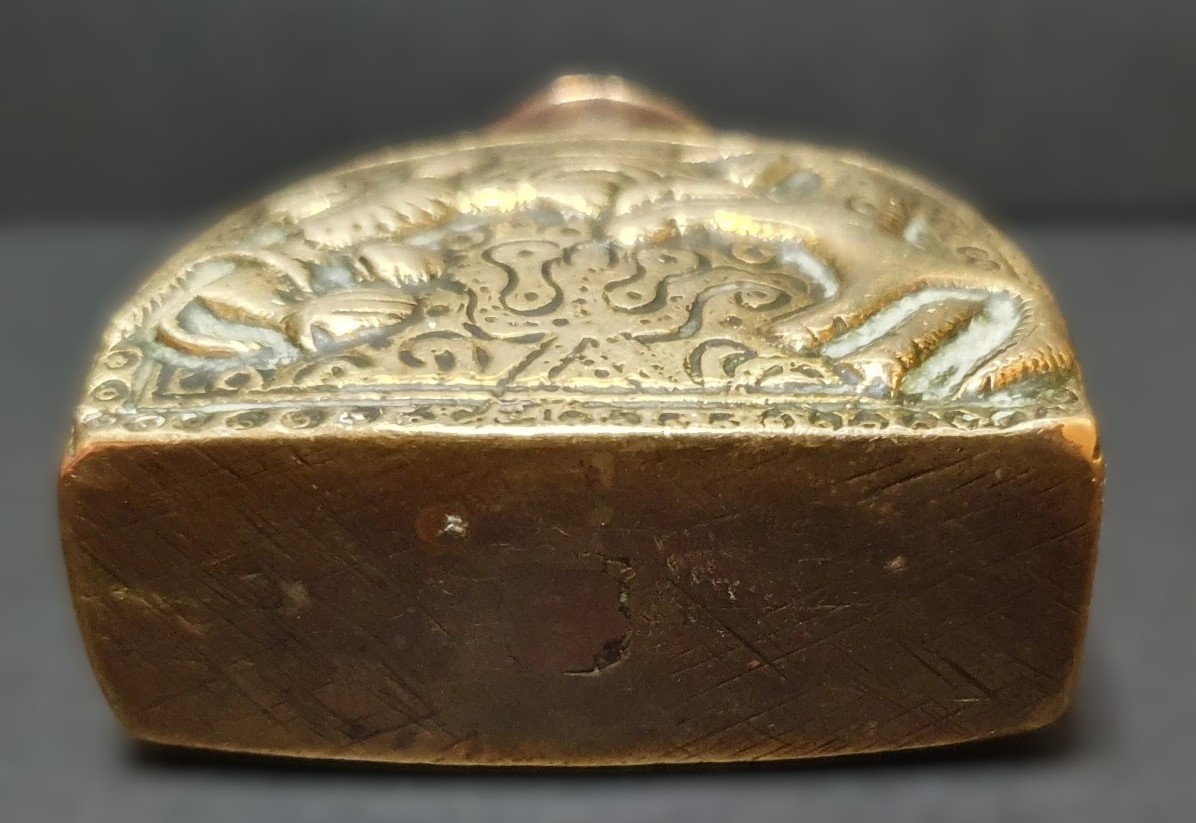
Description: Cast in a flattened flask configuration featuring a broad, flaring funnel mouth and dual opposing side suspension loops for belt or cord attachment. Both the obverse and reverse faces display finely chased low-relief and incised decoration enclosed within a framed arch. The central motif depicts the traditional East European folk theme of the lion and unicorn flanking a stylized Tree of Life, accented by punch-work dotting and geometric borders. Retains a rich, warm historical patina commensurate with age and practical field use.
Detailed Elaboration and Analysis
- Dating and Provenance (17th to Early 18th Century)
- Verification: These inkwells are typically ascribed to the 17th or early 18th century (often associated with the late Muscovite period or the Cossack era in Ukraine).
- Cultural Context: Portable inkwells of this shape were indispensable for scribes, merchants, traveling officials, and clergy who needed to write on the go. They were frequently cast using traditional lost-wax or split-mold techniques by regional metalworkers.
- Material and Form (Copper-Alloy Flask with Suspension Loops)
- Verification: The material is a copper or bronze alloy (often a high-copper brass or bronze composition).
- Form & Function: The flattened flask body (often called a pouch- or purse-form flask) features a wide, flaring mouth designed to catch ink securely while allowing easy dipping of a quill. The lateral suspension loops (lugs) were functional: a cord, leather thong, or chain was threaded through them so the writer could suspend the inkwell from a belt, sash, or travel pouch (making it a true portable “desk” accessory).
- Iconography: The “Fight of the Lion and Unicorn”
- Verification & Adjustment: While often described colloquially as a “fight,” this motif carries deeper heraldic, symbolic, and folkloric weight in Russian and broader European traditions.
- Symbolism: The lion and unicorn motif frequently appeared in 17th-century Russian decorative arts, lubok prints, wood carvings, and manuscript illuminations. Rather than a simple predatory clash, it heavily mirrored themes of cosmic duality, the balancing of opposing forces, or royal heraldry (as both creatures populated European and Muscovite symbolic imagination, eventually finding prominent placement on royal regalia).
- Stylistic Elements: The central tree or floral/vegetative column (often stylized as a Tree of Life) separating or anchoring the two beasts is a hallmark of folk ornamentation of this era, representing growth, eternity, or paradise.
- Literary References and Museum Exhibitions
- Tatyana Razina’s Folk Art in the Soviet Union: Similar primitive and medieval Russian metalwork pieces are cataloged in standard Soviet-era art surveys addressing folk metal casting.
- Broader Institutional Parallels: Comparable examples of these portable East European inkwells have surfaced in major exhibitions and high-end auction houses, such as the “Russian Art from the Scythians to the Present Day” exhibition at the Grand Palais in Paris (1967–1968), as well as specialist sales focusing on early Russian works of art.
Sold for $200 in December 2023; Sold for $250 in August 2026
Content disclaimer. The information posted is the owner’s best knowledge and may not have been vetted by the SOIC. We welcome comments, corrections, and additions, working to make our website information comprehensive and accurate.
Join the Society of Inkwell Collectors (SOIC) – it’s free!
Founded in 1981 as a non-profit organization,
we are documenting inkwells (and accessories).
We’re here to help and inform!