

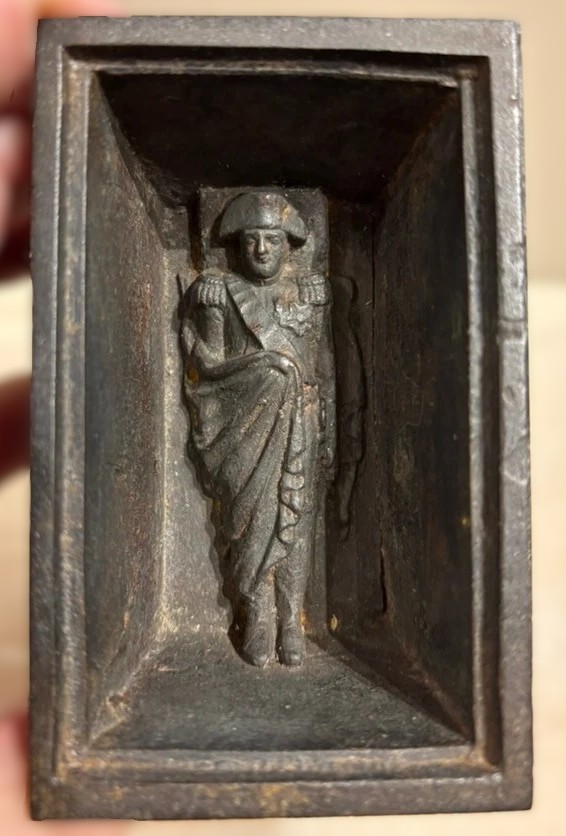
Napoleon’s Tomb Inkstand
| Categories | Figural - Inanimate |
| Type | Historical |
| Material | Cast iron |
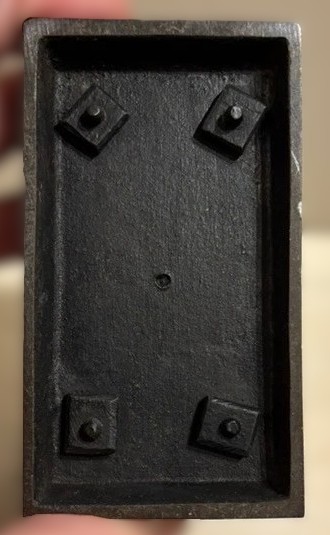
| Markings | See narrative |
| Manufacturer | Undetermined |
| Origin | France |
| Date or Era | circa 1840 |
| Measuring | 3 ¾” x 2 ¼” x 4 ½” high |
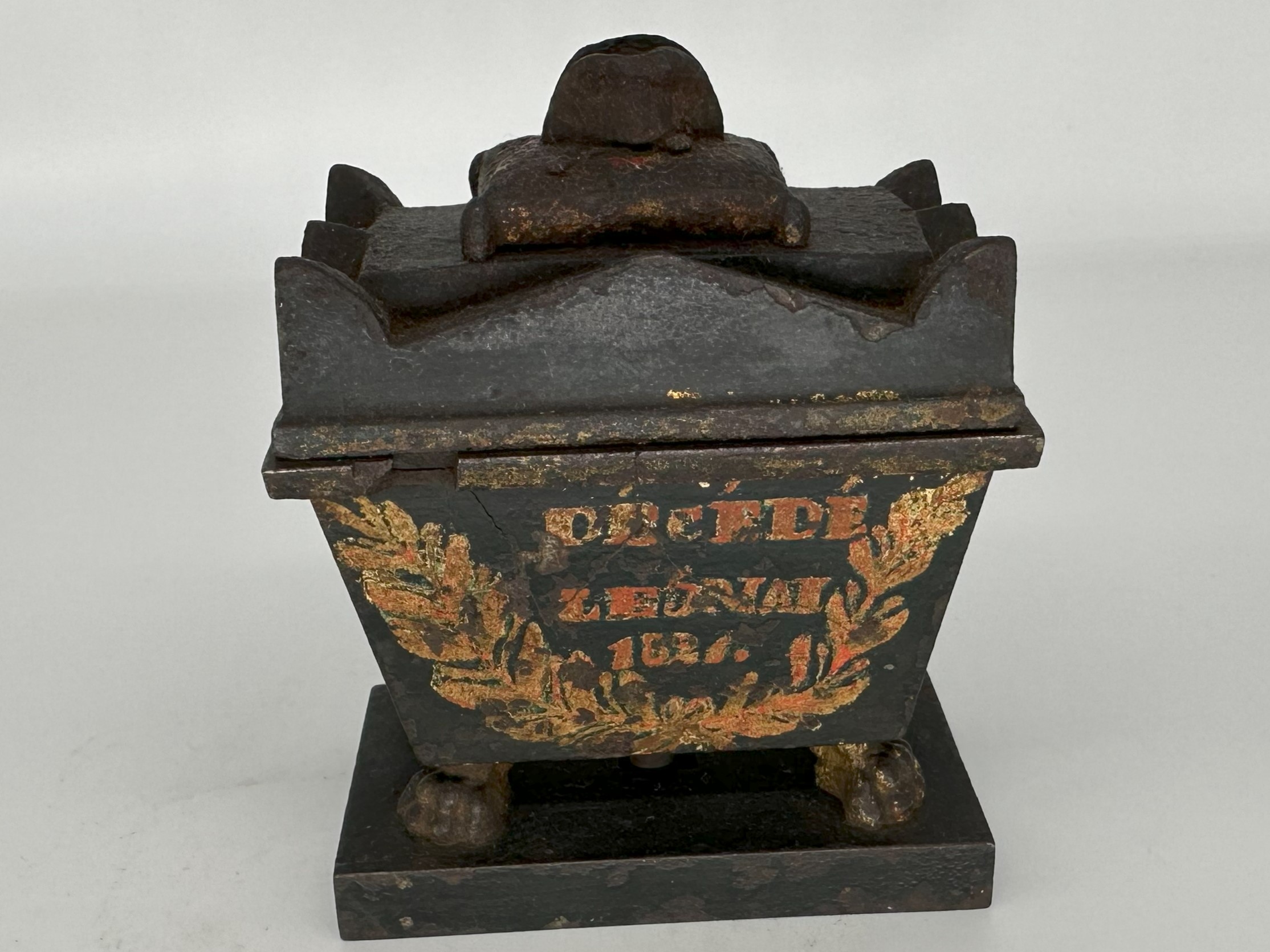
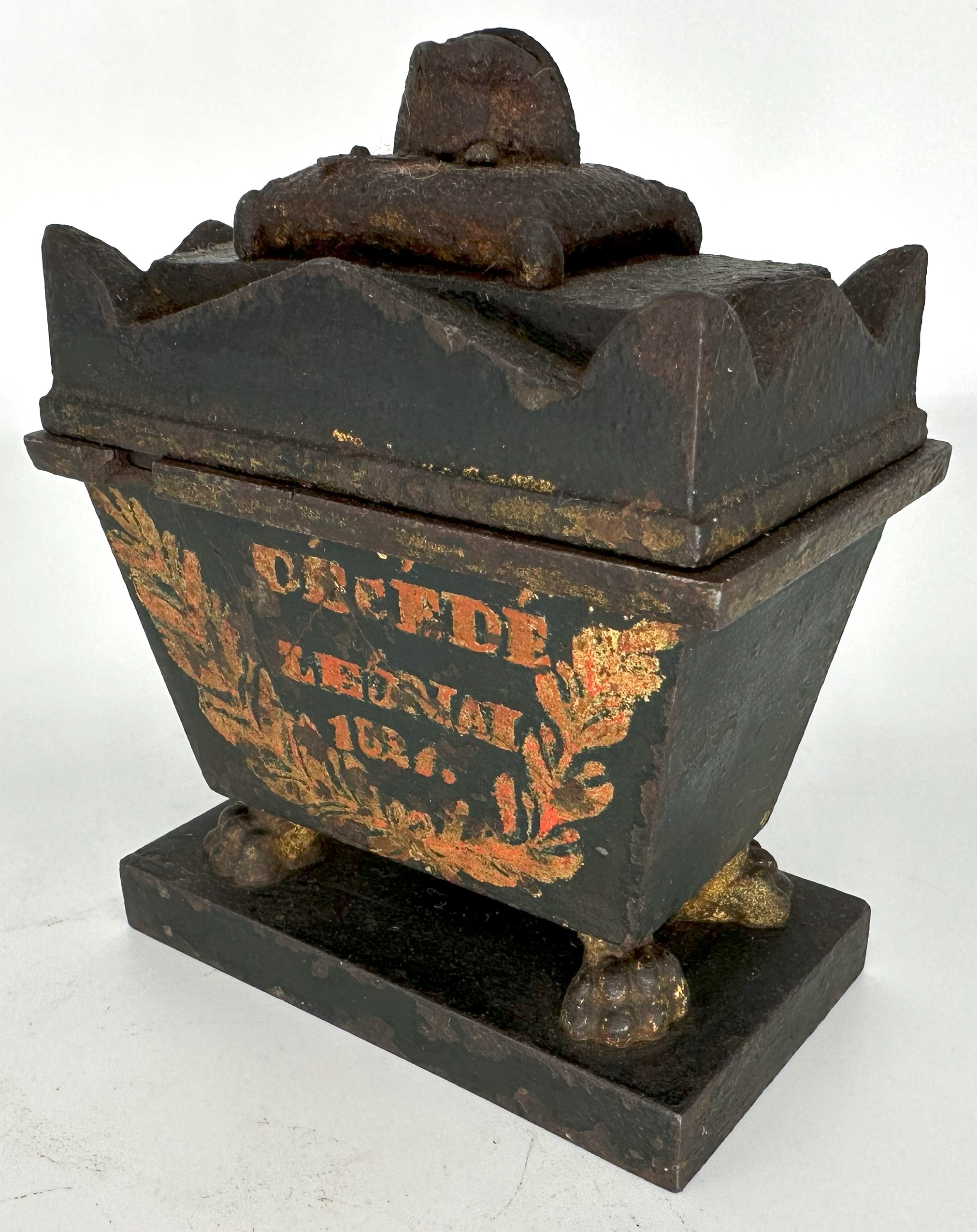
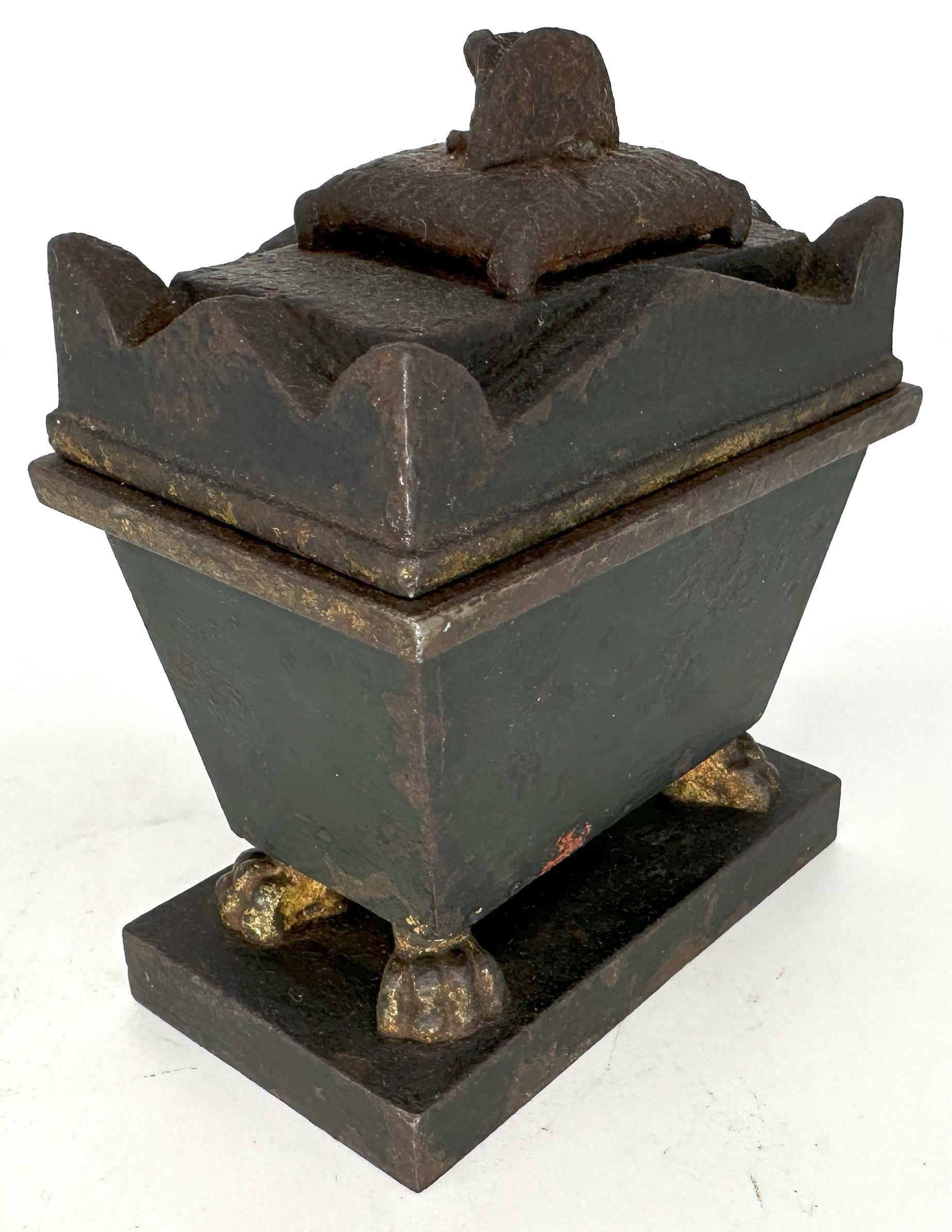
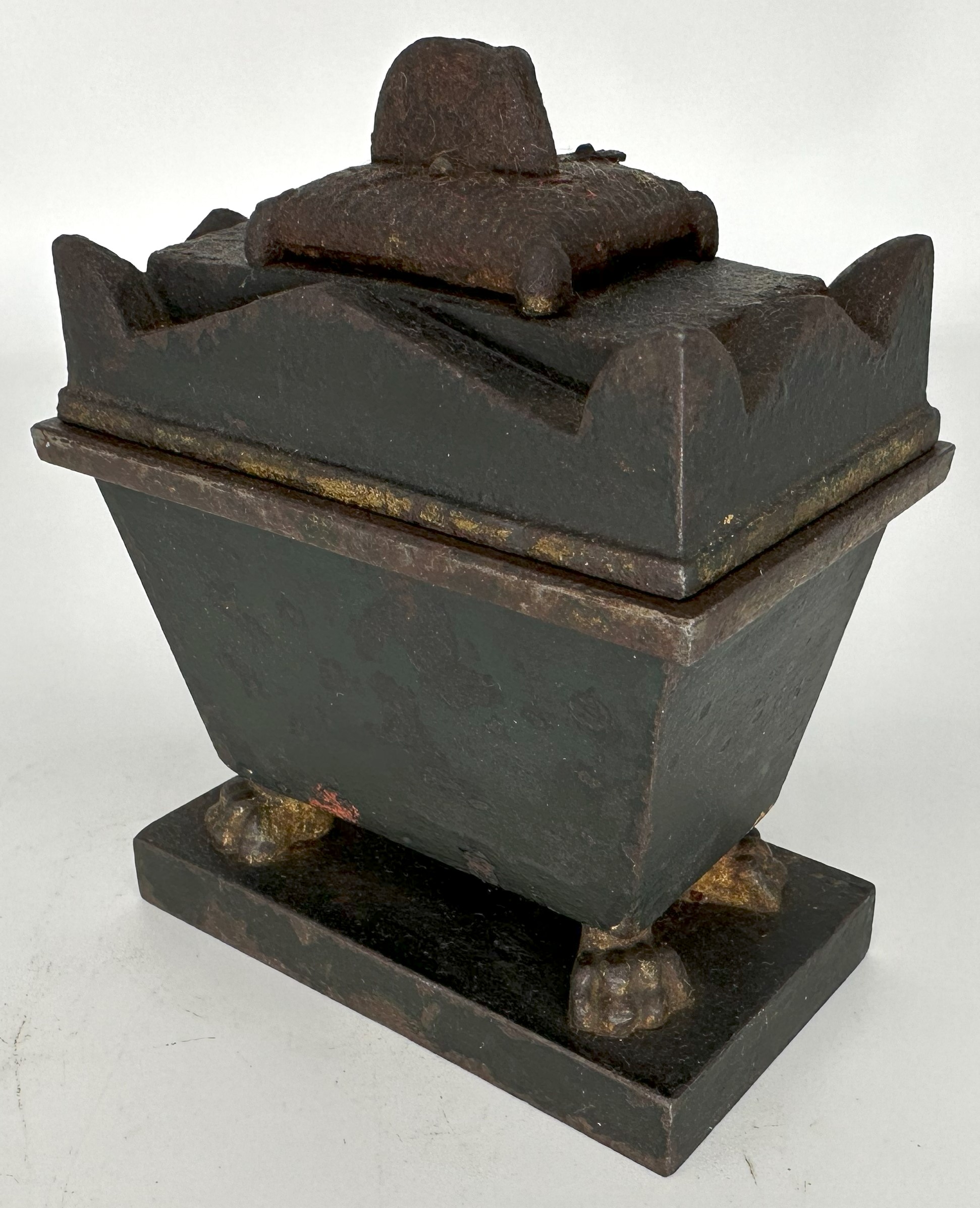
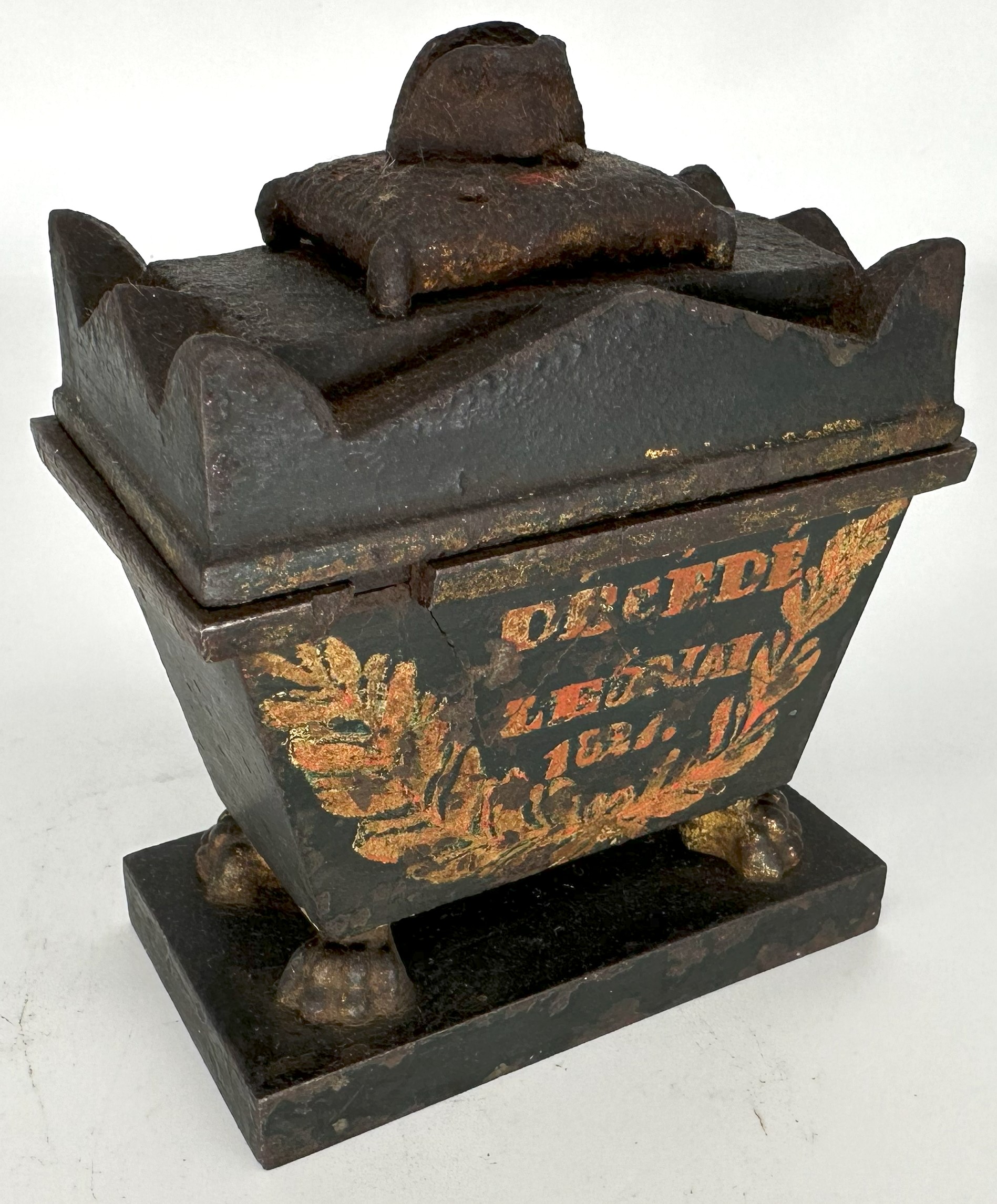
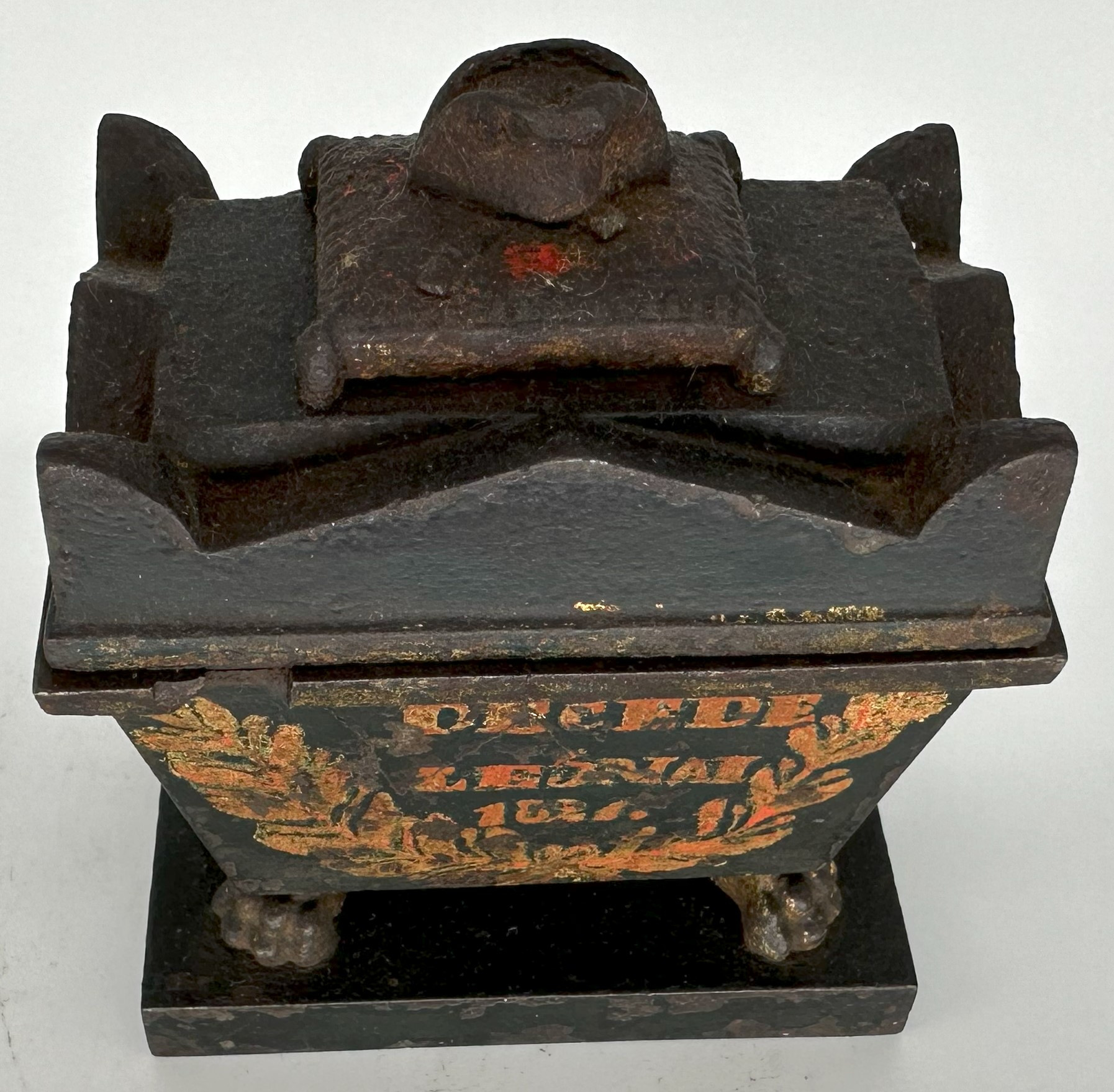
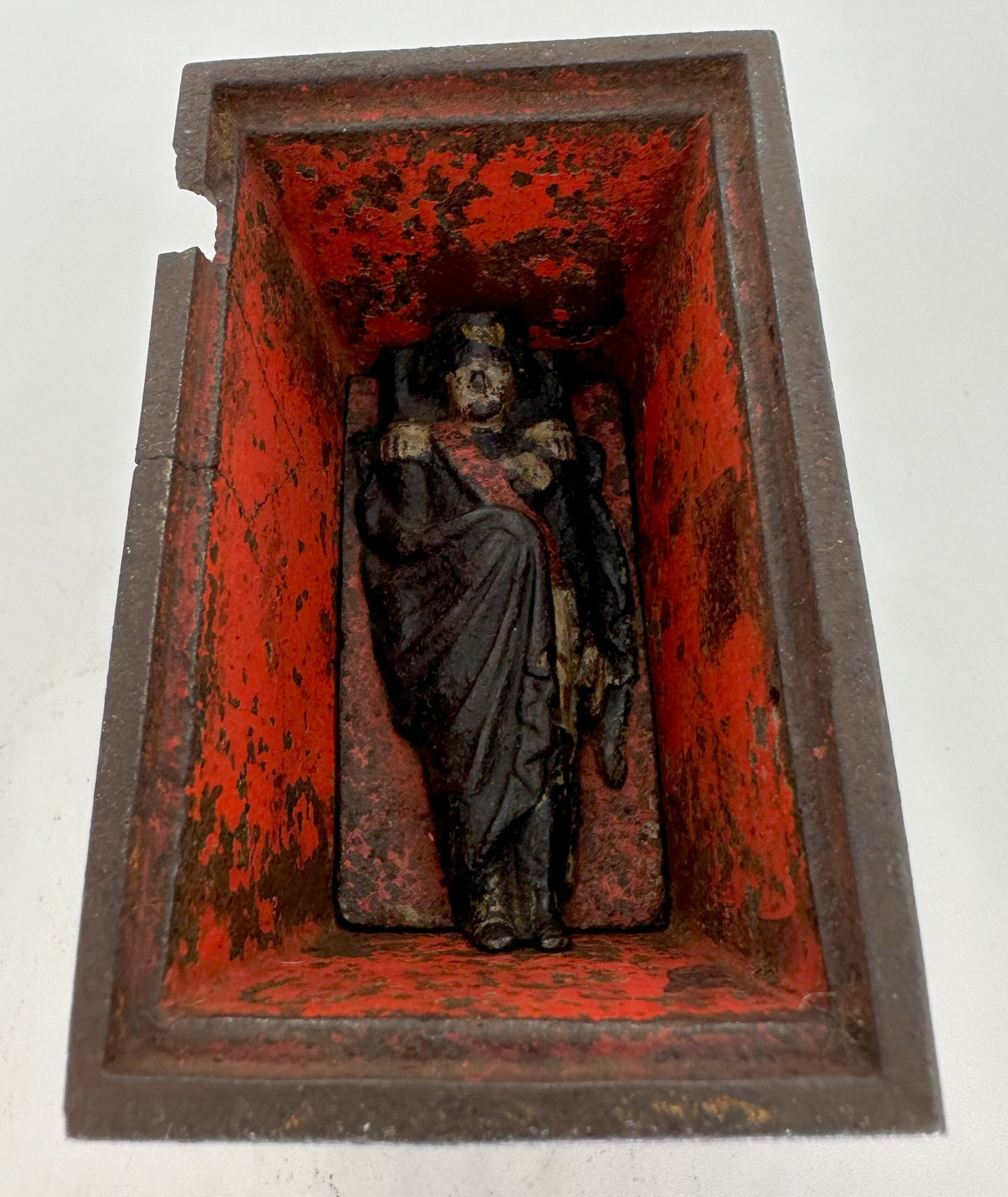
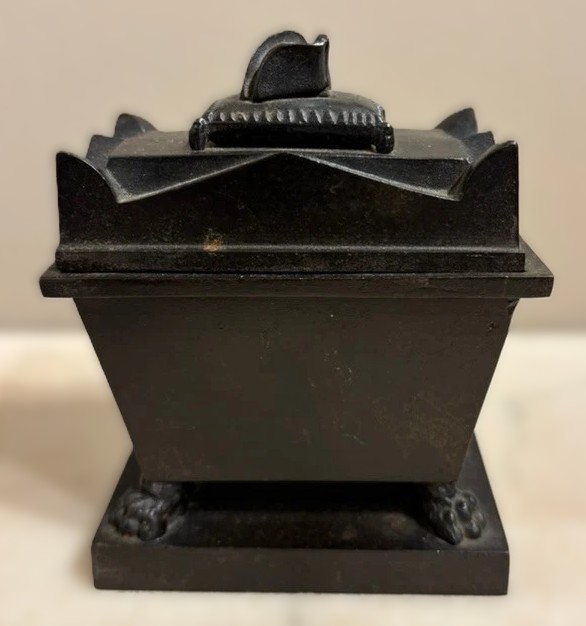
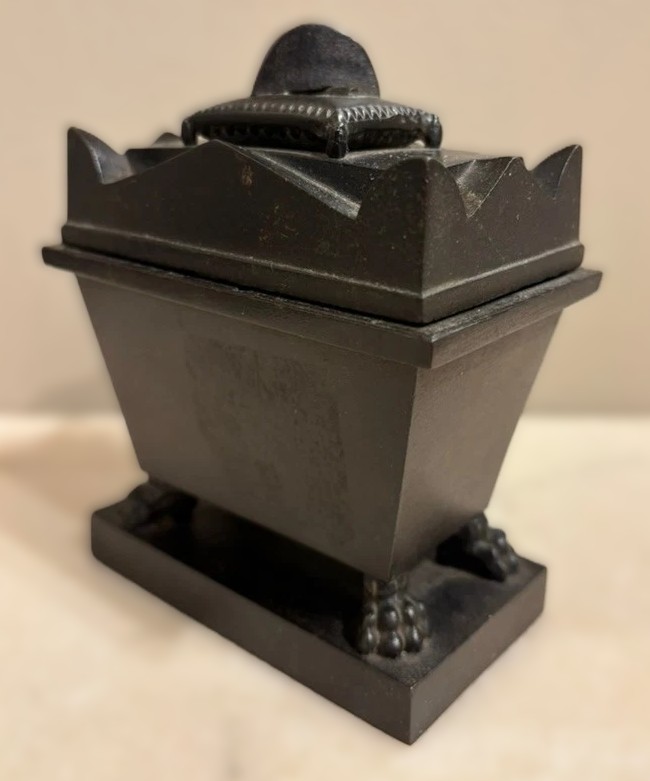
Two examples are pictured – one with painted markings.
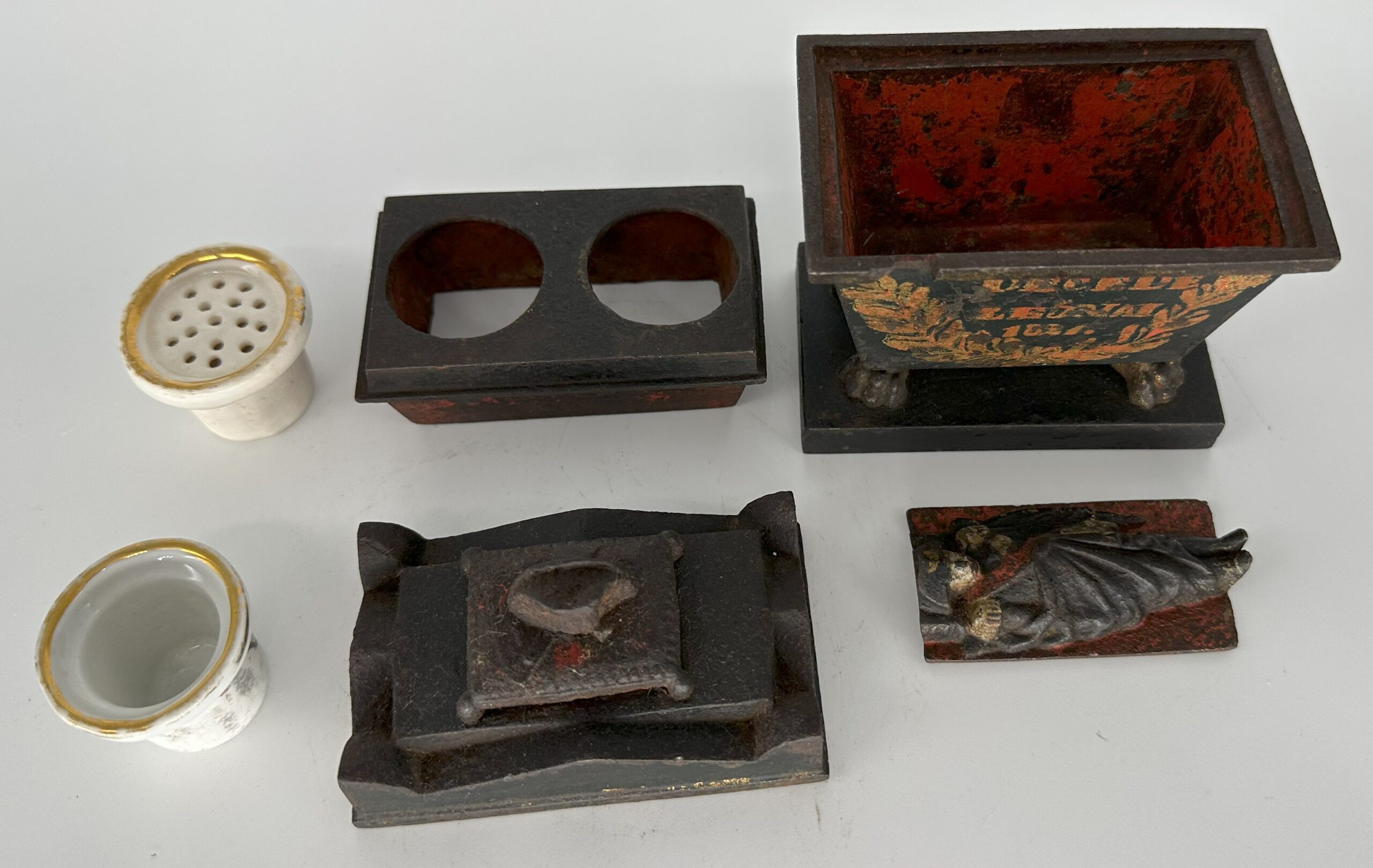
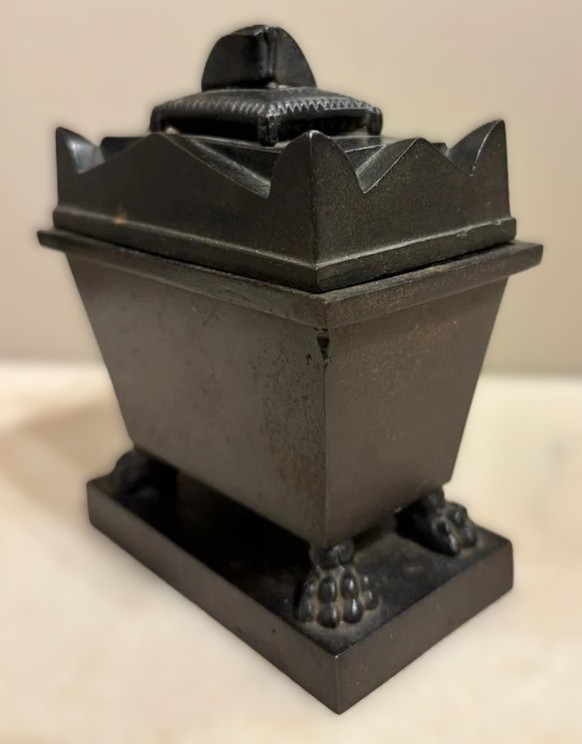
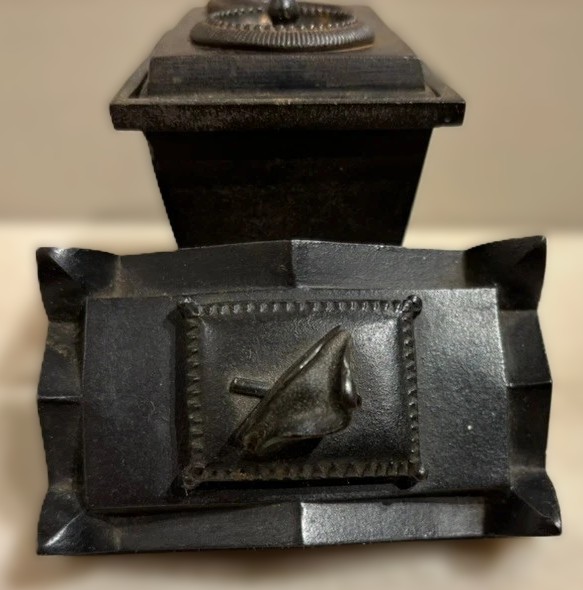
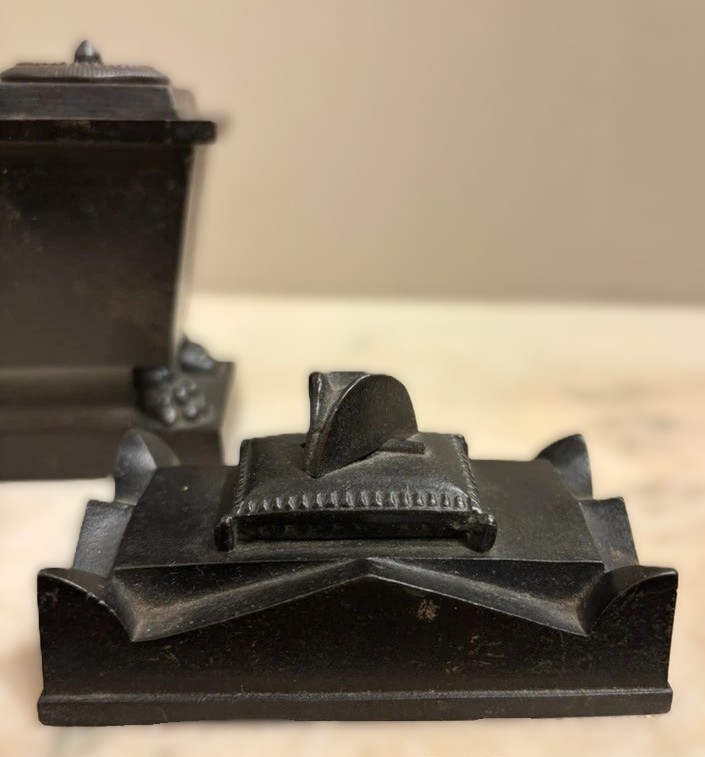
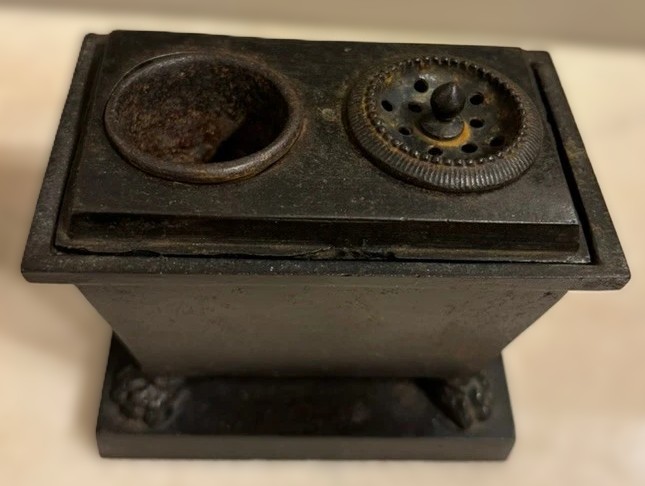
This Napoleonic inkstand is a cast iron model of Napoleon’s tomb. The sarcophagus with paw feet stands on an attached rectangular plinth. The lid features Napoleon’s hat on a cushion. On the front is written: Décédé Le 5. Mai 1821 (Deceased May 5, 1821). Napoleon is buried in the Dome des Invalids in Paris.
This cast iron inkstand is an example of Napoleonic commemorative art, specifically designed as a “memento mori” from the 19th century.
Description
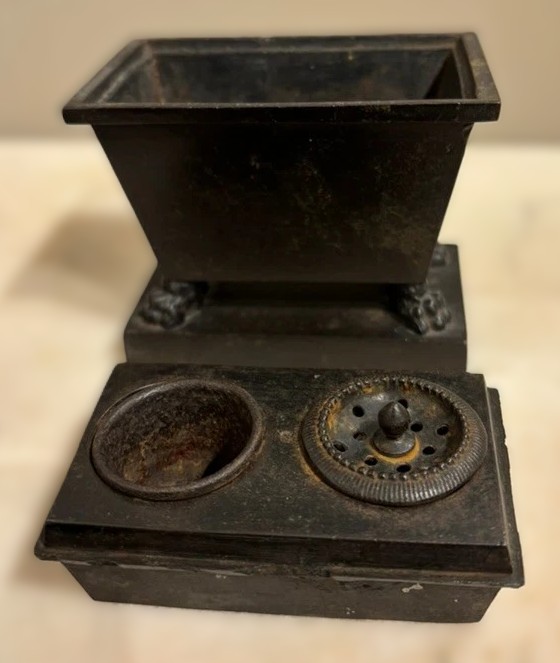
- The Tomb Structure: The inkstand is modeled after the Sarcophagus of Napoleon. It features a rectangular body with architectural molding, standing on four lion-paw feet which rest upon a heavy, rectangular plinth.
- The Lid: The top of the tomb is surmounted by a casting of Napoleon’s famous Bicorn Hat (the petit chapeau).
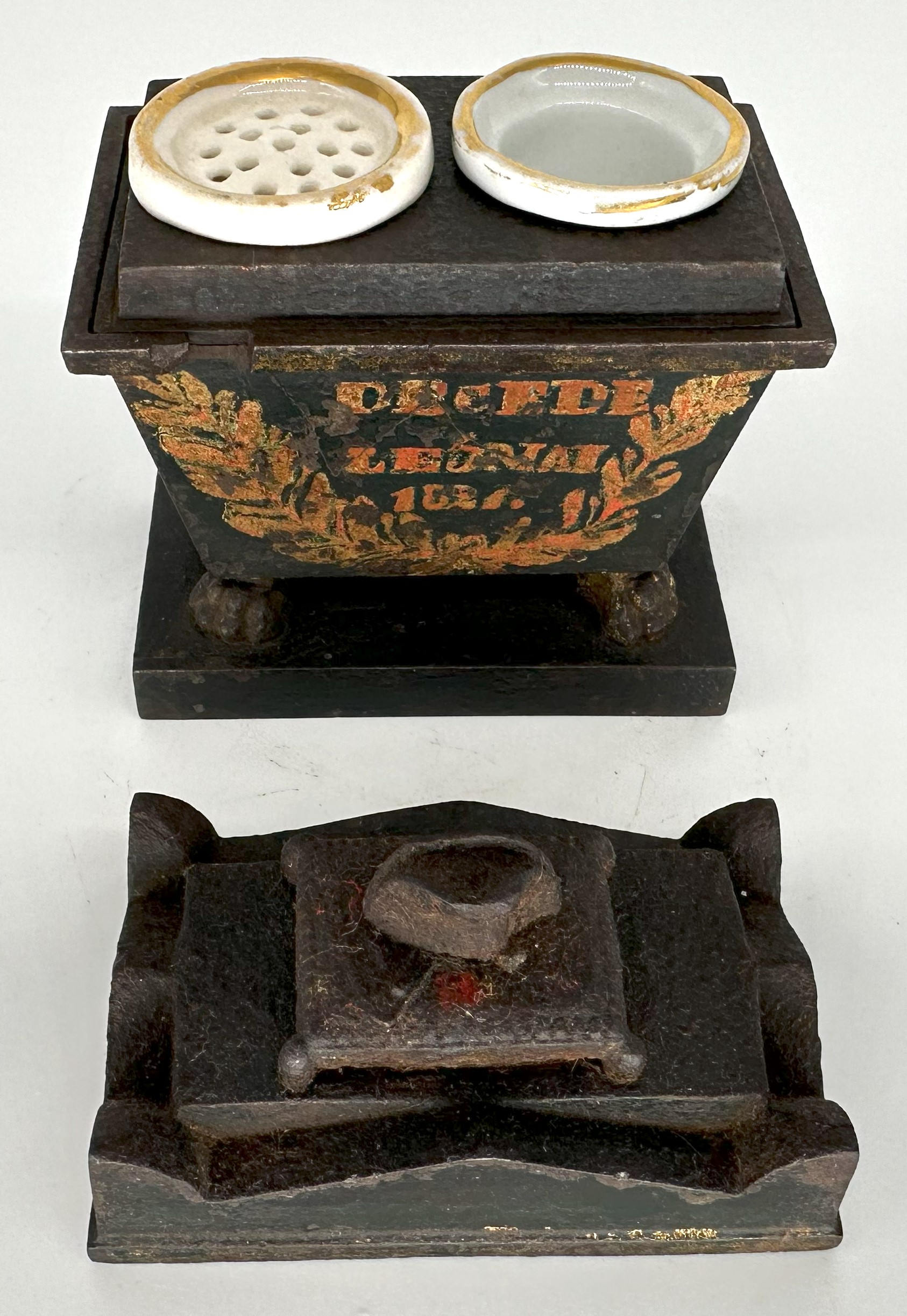
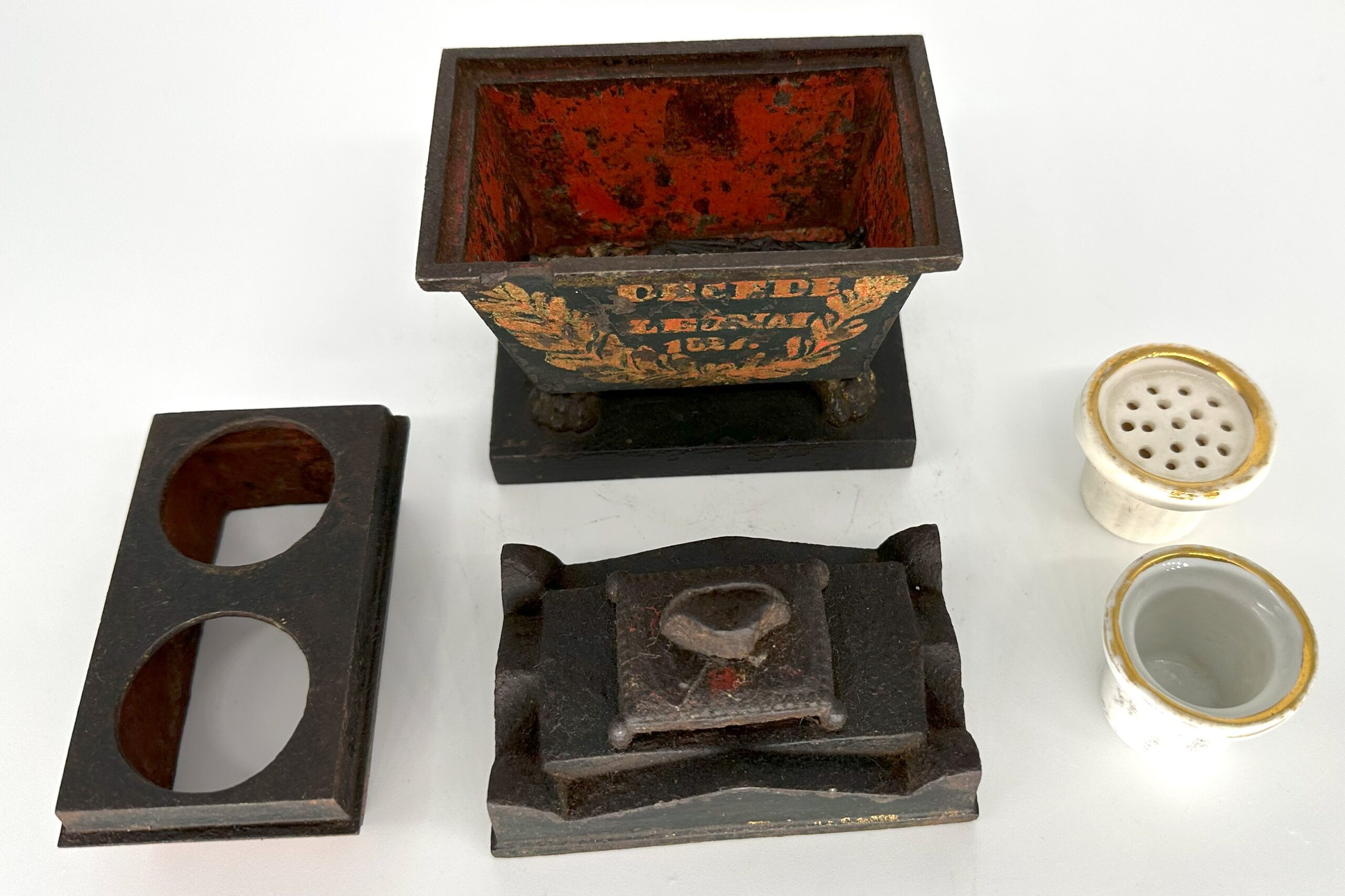
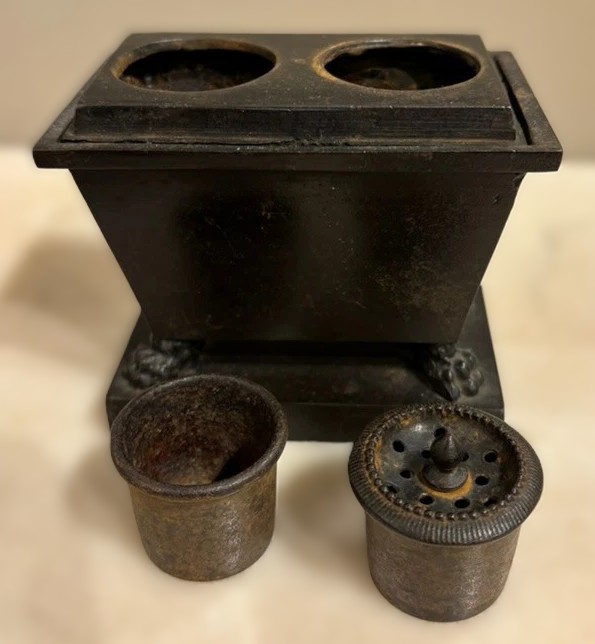
- The Hidden Interior: The lid lifts to reveal a dual-compartment interior designed for an inkwell and a matching sander (pounce pot).
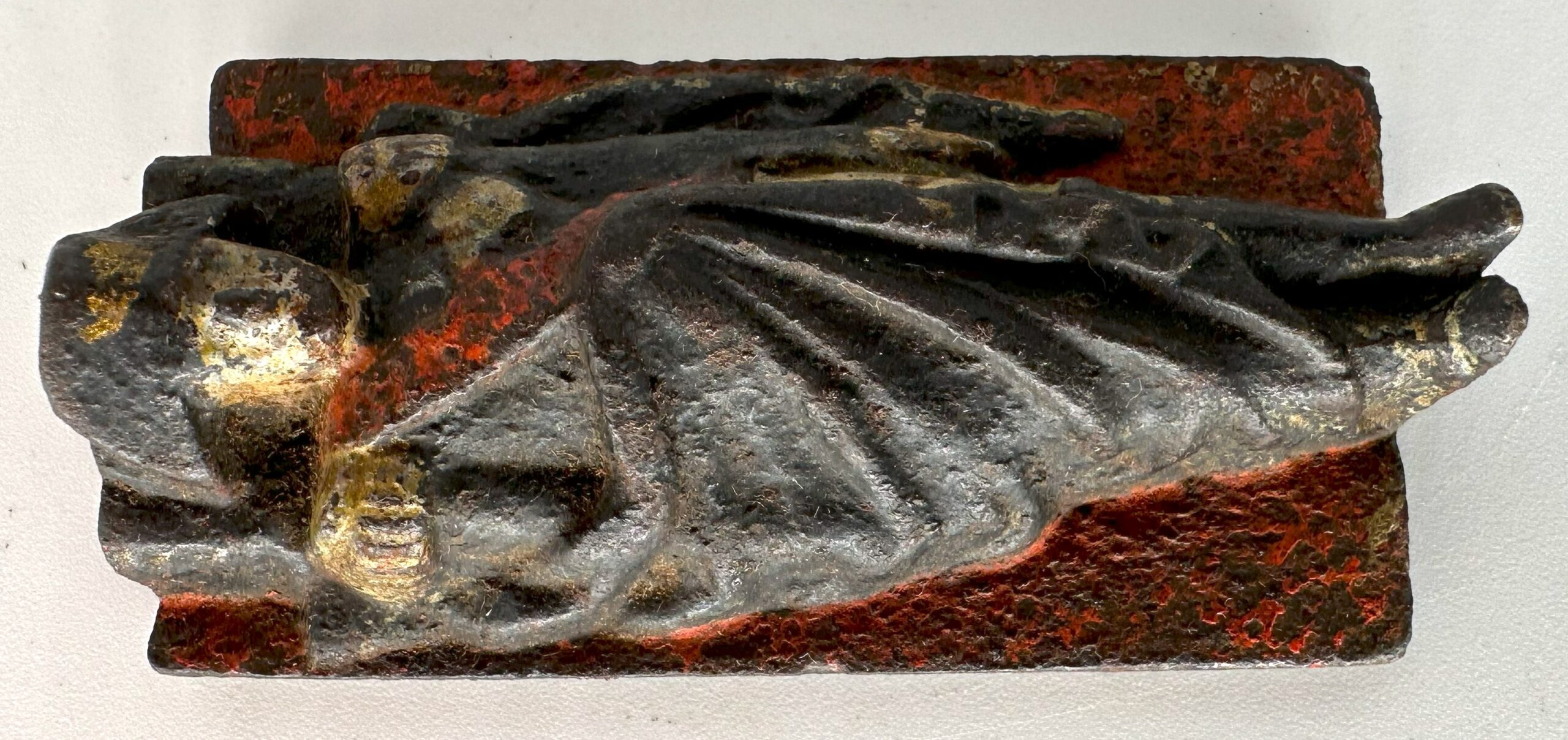
- The Concealed Effigy: The most unique feature is the “secret” compartment. When the inkwell/sander tray is removed, it reveals a small cast-metal figure of Napoleon lying in state, hidden within the depths of the tomb.
Historical Context & The “Cult of Napoleon”
This piece belongs to a specific genre of European decorative arts known as Napoleonic memorabilia.
- The Occasion: Many of these tomb-style inkstands were produced around 1840, the year of the Retour des cendres (The Return of the Ashes). This was the massive national event when Napoleon’s remains were brought back from St. Helena to Paris to be interred at Les Invalides.
- The Manufacturer: While unmarked, the highest quality cast-iron versions were produced various French foundries like Cailar, Bayard & Cie in Paris.
- Symbolism: In the mid-19th century, owning such a piece was a political statement, signaling a “Bonapartist” allegiance or a romanticized nostalgia for the Empire.
Materials & Production
- Material: Cast Iron
- Date: Circa 1840–1850.
Estimated value: $500
Unpainted version sold for $1500 in December 2025
Content disclaimer. The information posted is the owner’s best knowledge and may not have been vetted by the SOIC. We welcome comments, corrections, and additions, working to make our website information comprehensive and accurate.
Join the Society of Inkwell Collectors (SOIC) – it’s free!
Founded in 1981 as a non-profit organization,
we are documenting inkwells (and accessories).
We’re here to help and inform!