

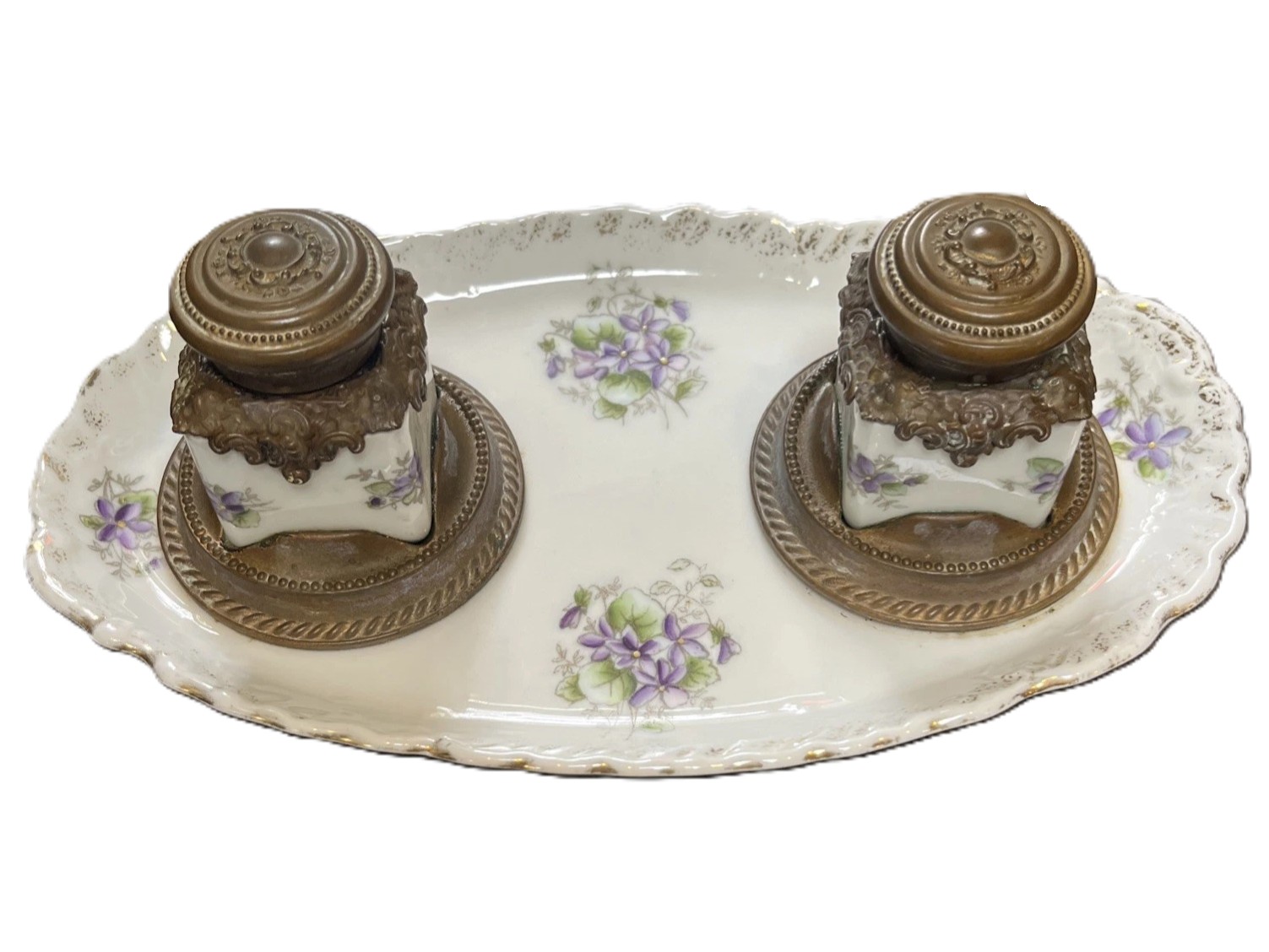
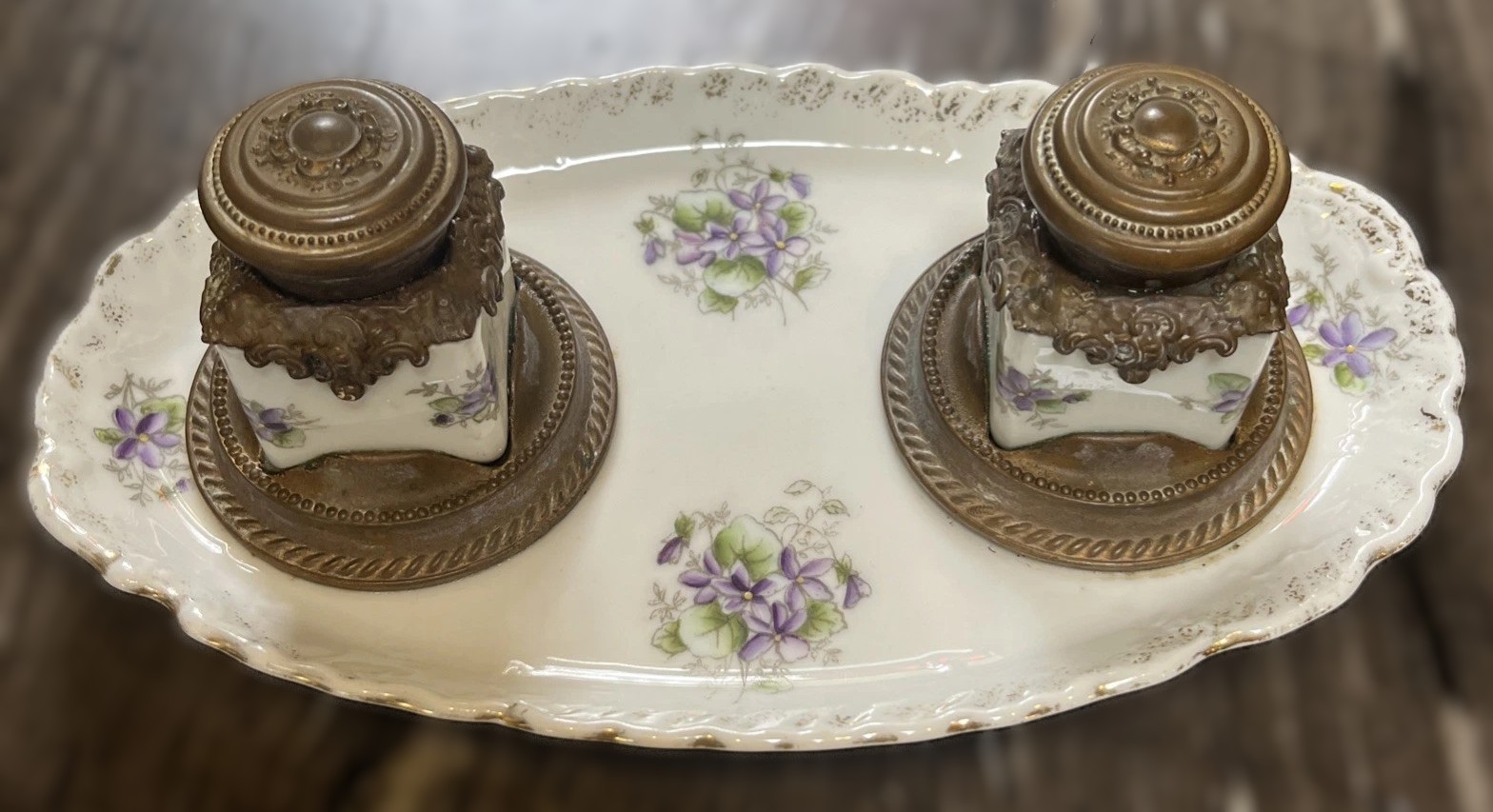
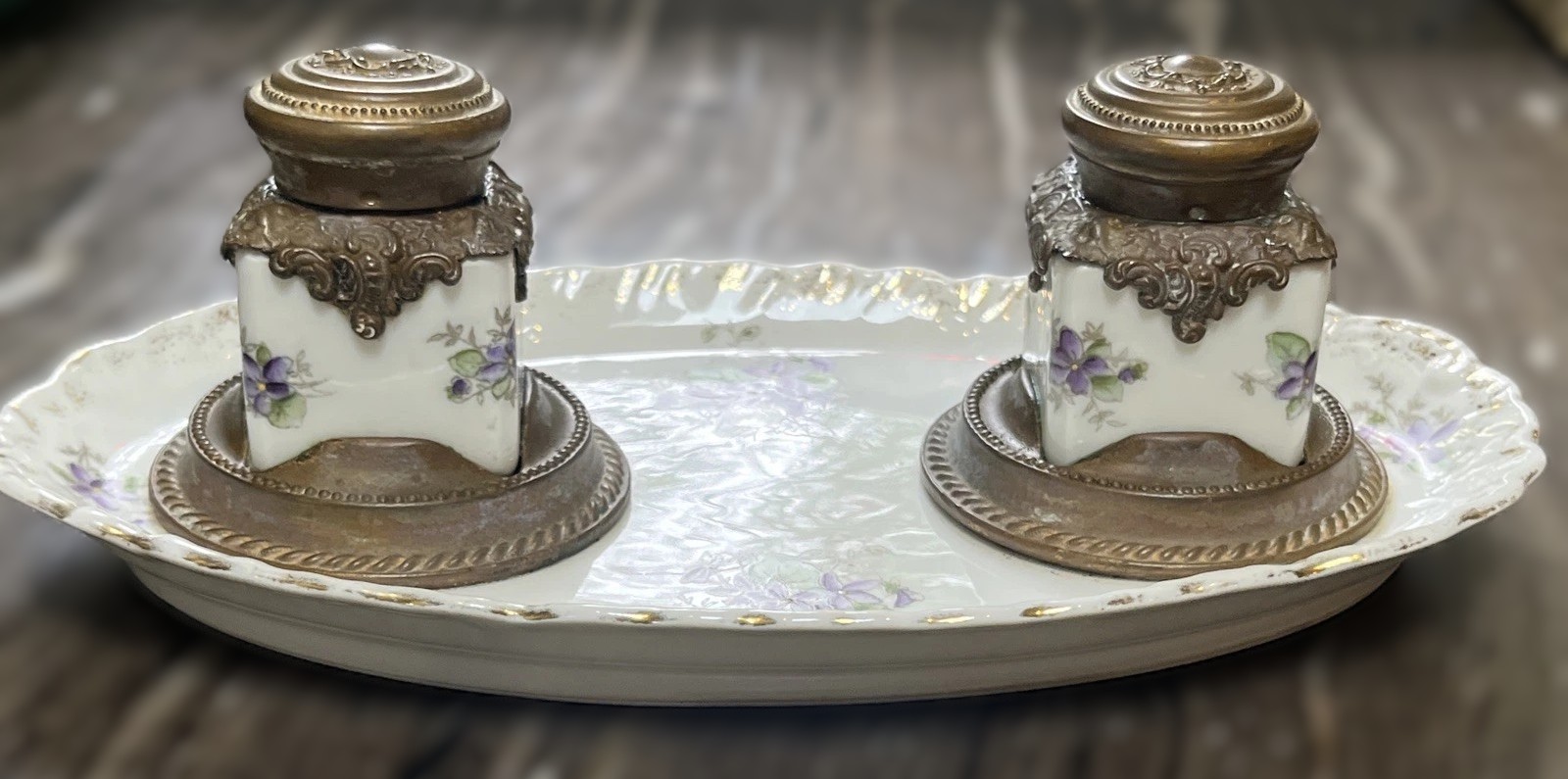
Limoges Hand-Painted Violets Double Inkstand
| Categories | Ceramics/Porcelain "Named" Makers |
| Material | Brass, Porcelain |
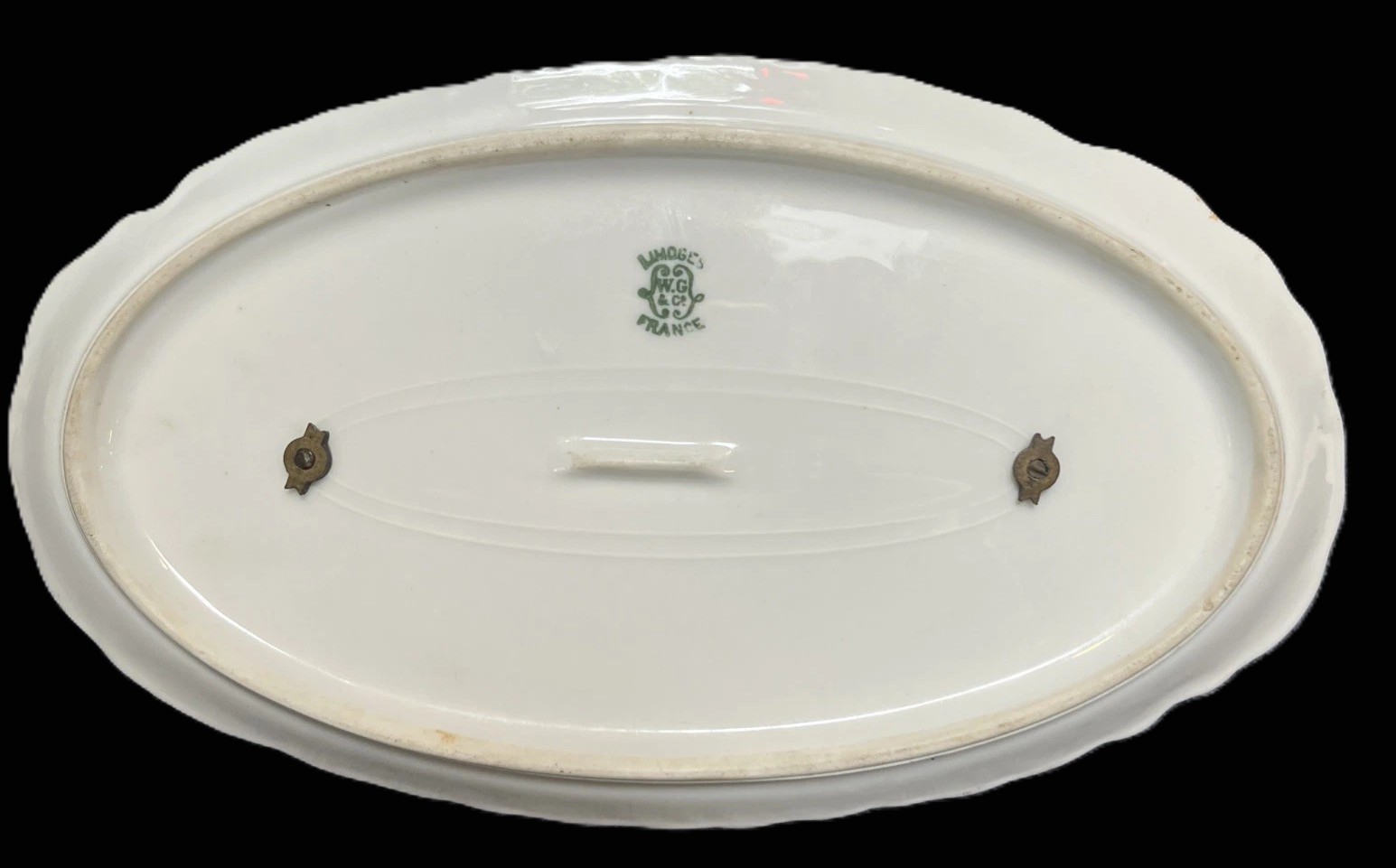
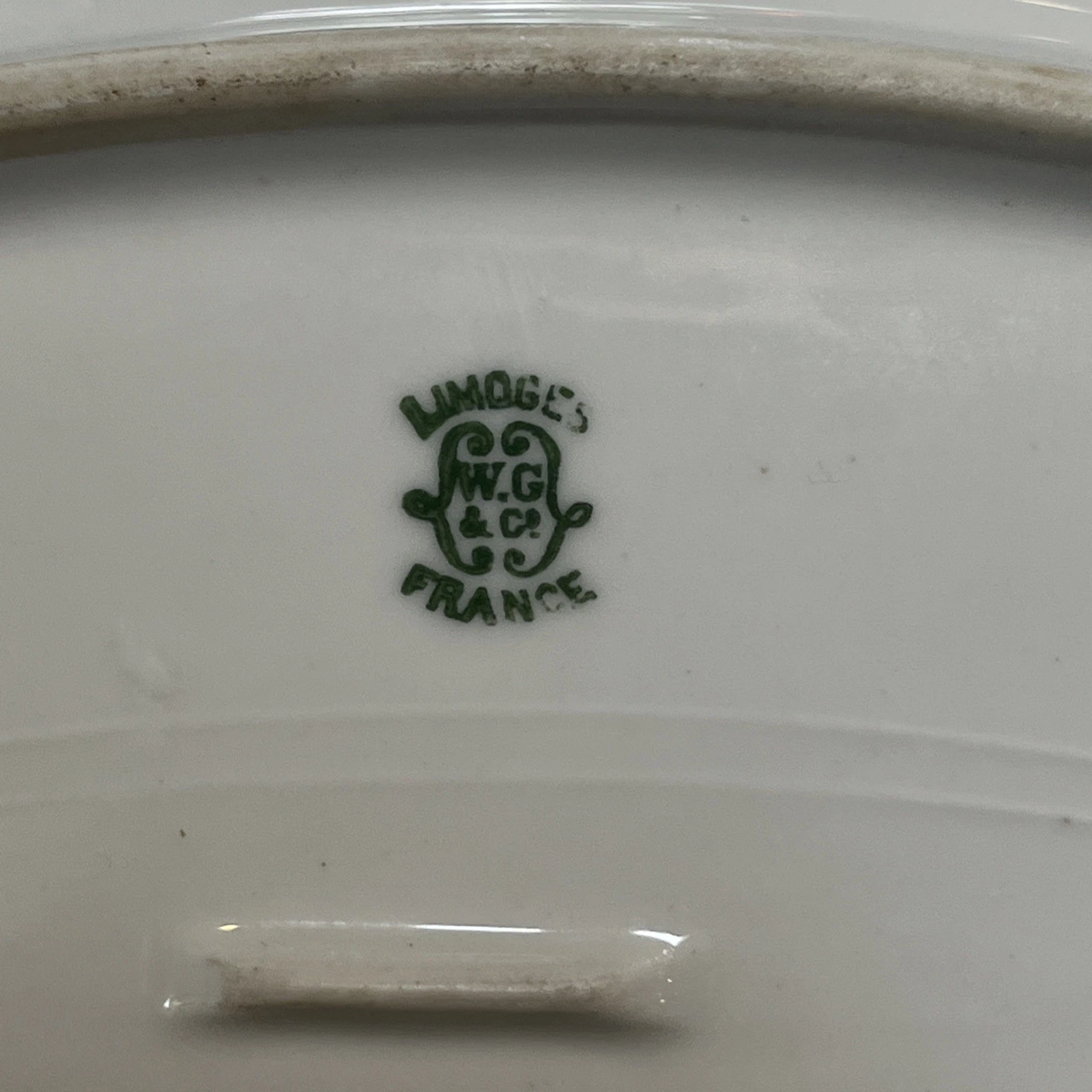
| Markings | See Narrative |
| Manufacturer | Limoges |
| Origin | France |
| Date or Era | circa 1900 |
| Measuring | 9 ½” across; 2 ½” high |
Description
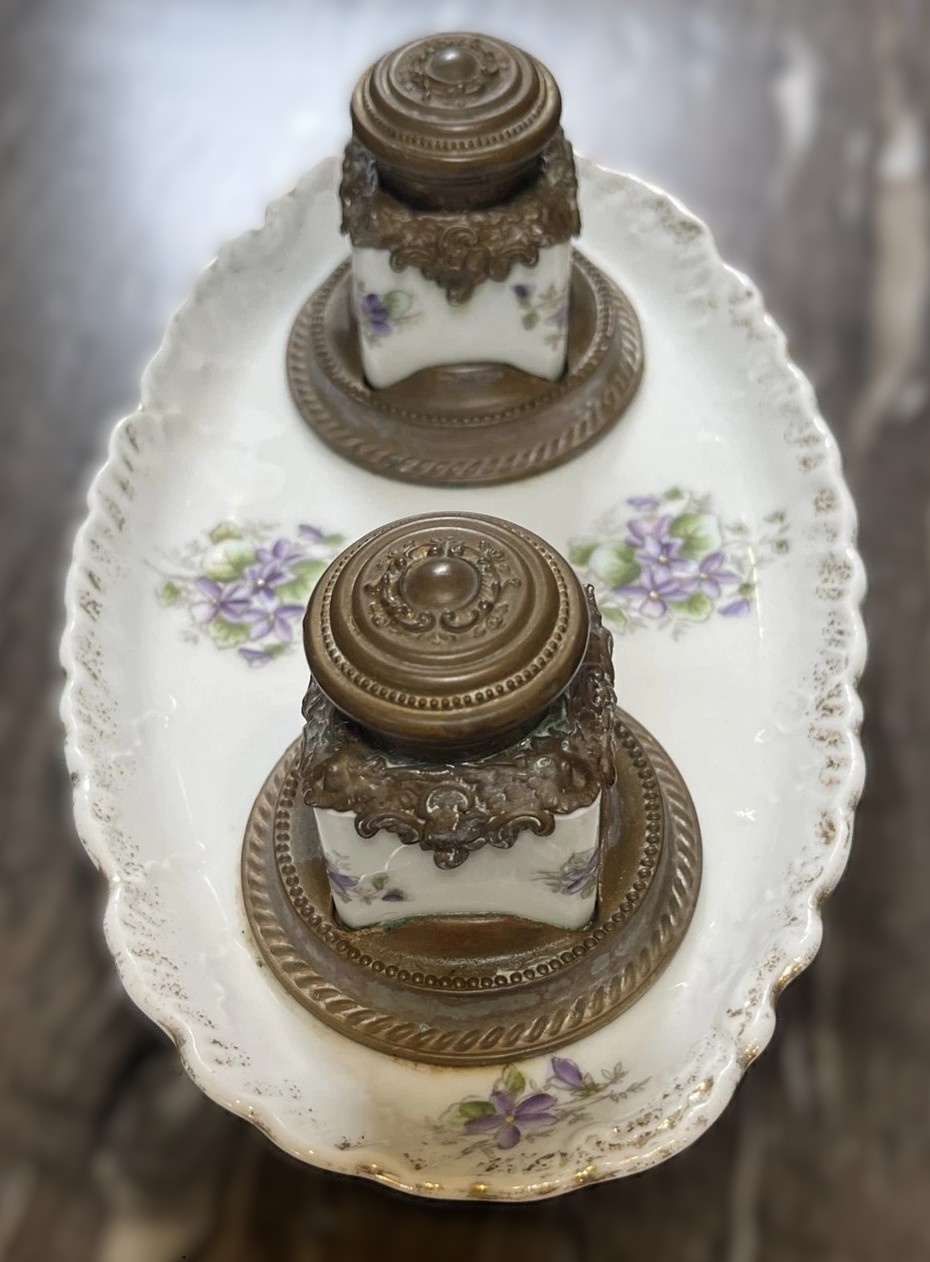
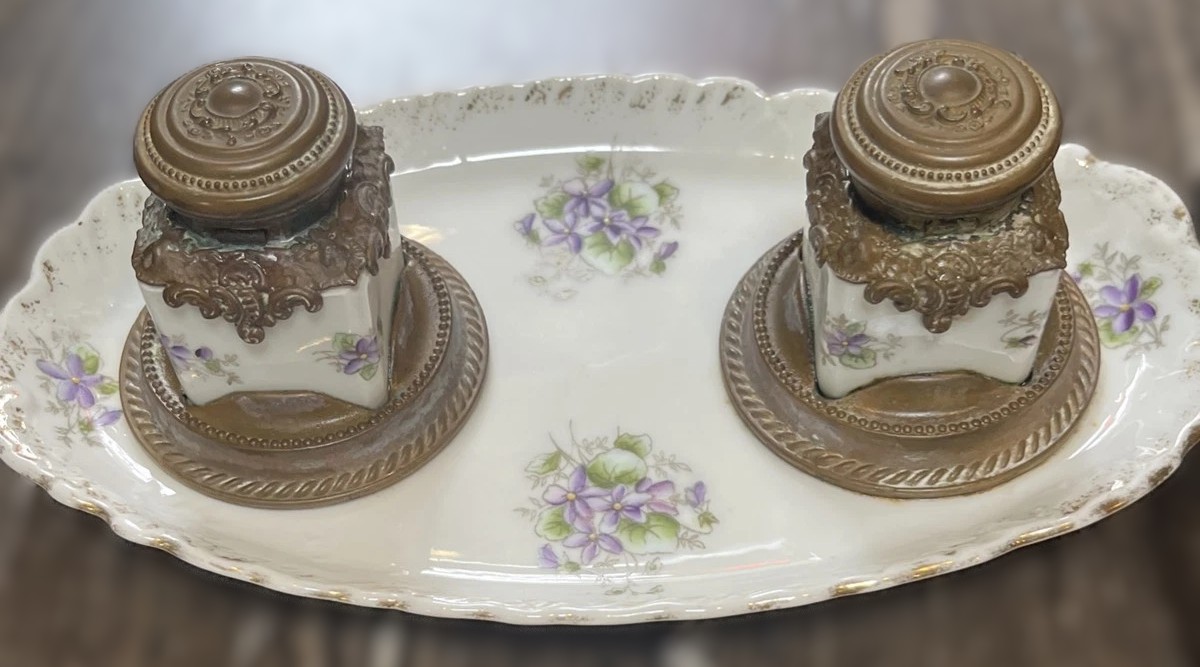
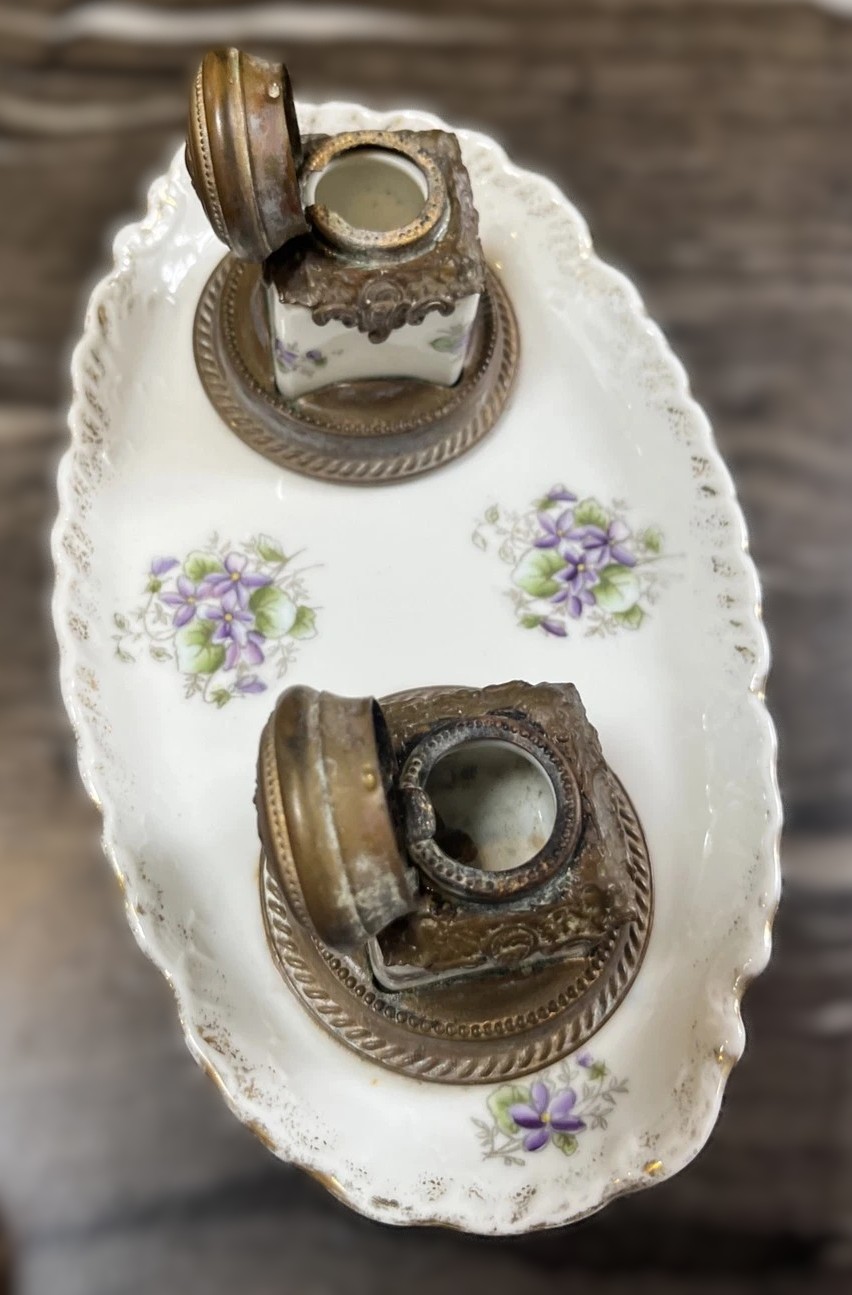
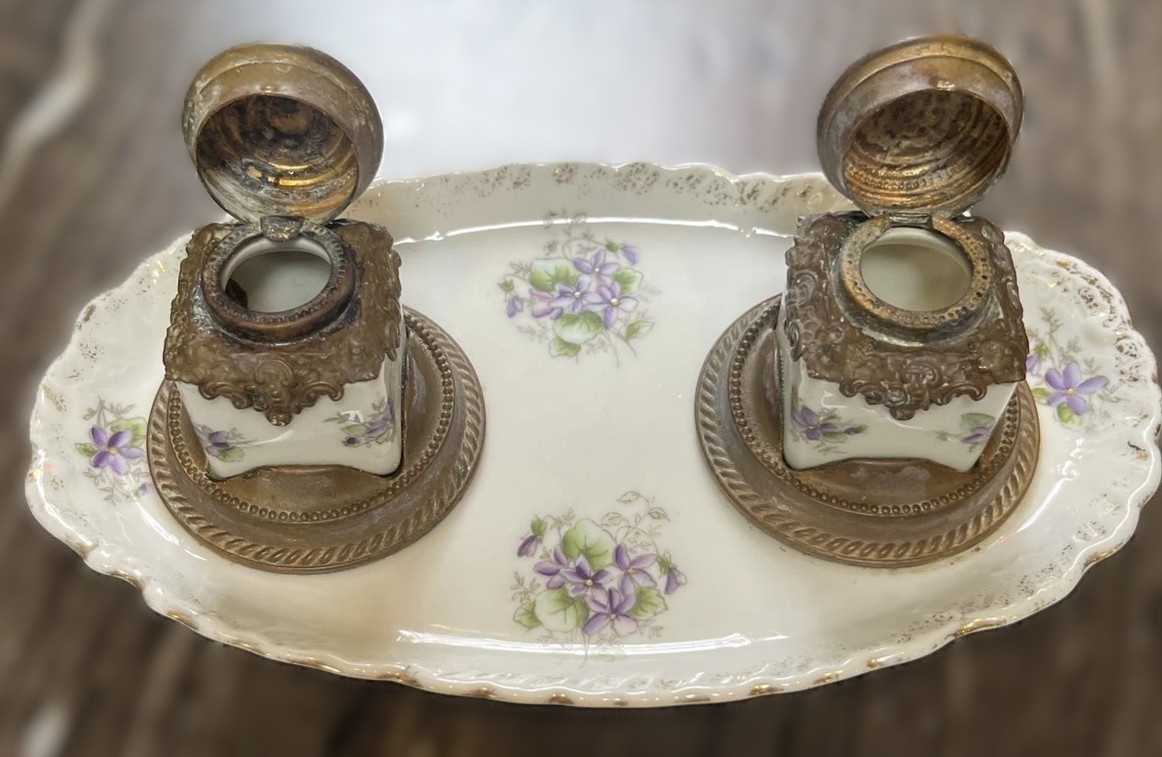
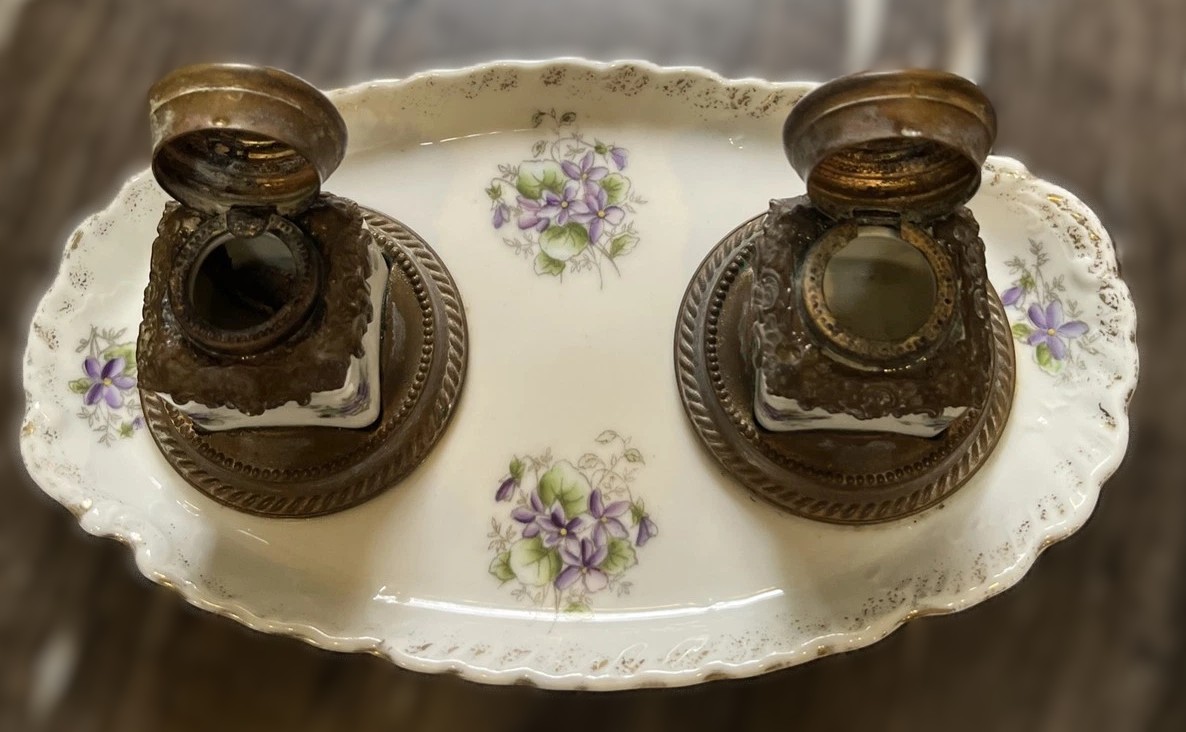
This French porcelain double inkstand features a delicate and elegant design highlighted by hand-painted floral motifs:
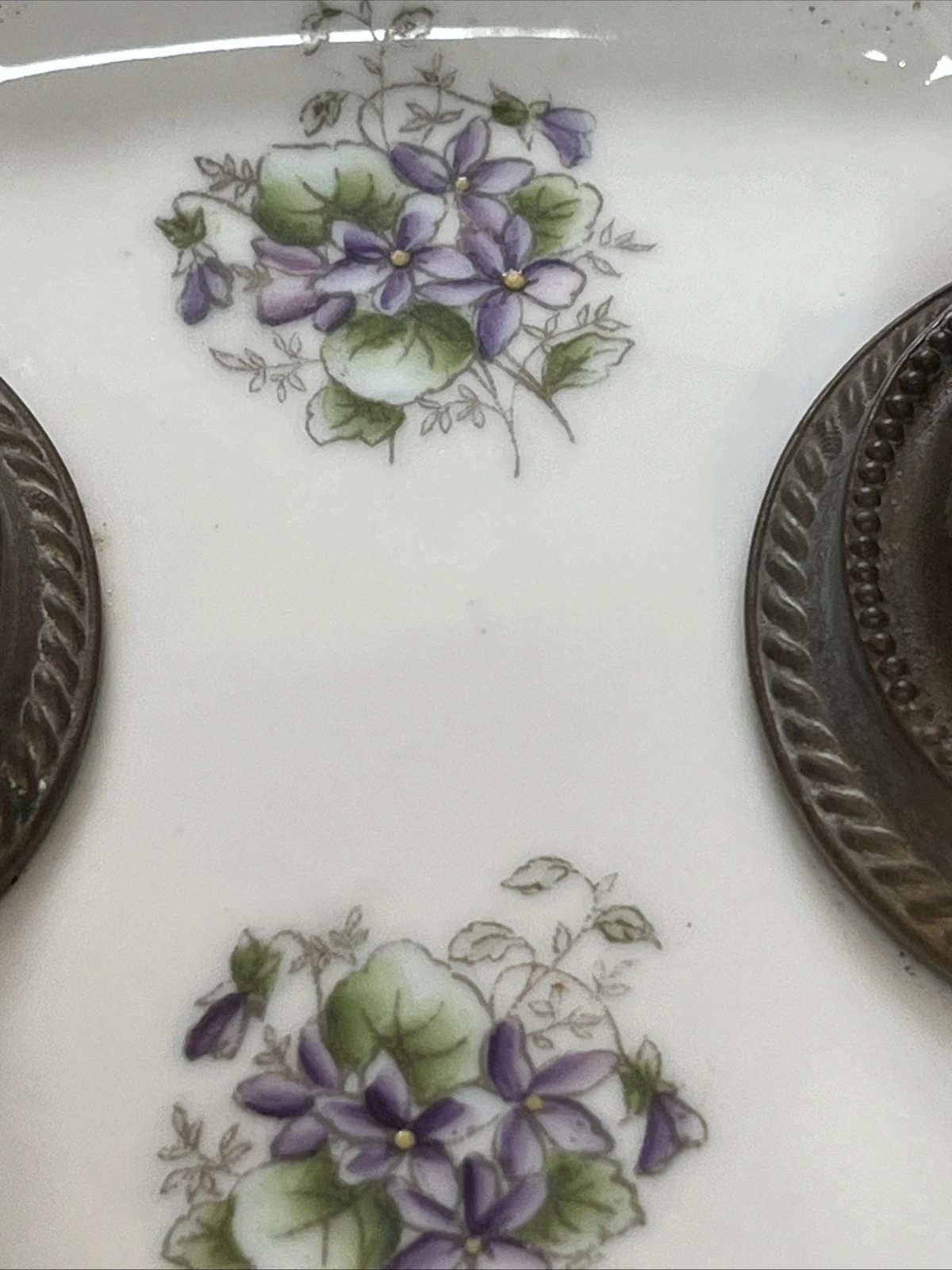
- The Base & Tray: The piece is set upon an oval, scalloped white porcelain tray with a raised rim and subtle, ornate gilt-gold trimming along its scalloped edges. Beautiful clusters of purple and violet flowers with green leaves are hand-painted centrally on the tray, as well as interspersed along the sides.
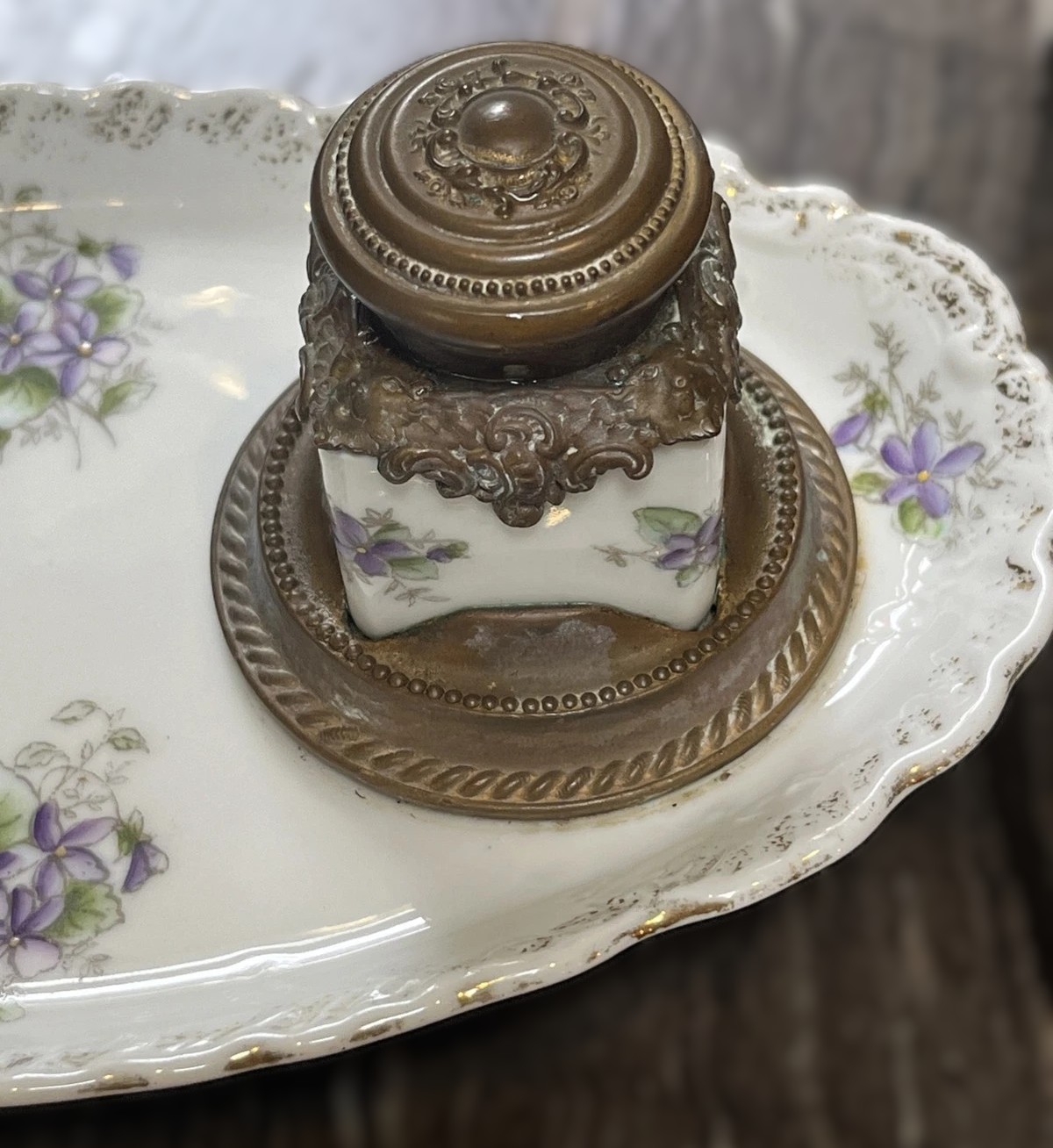
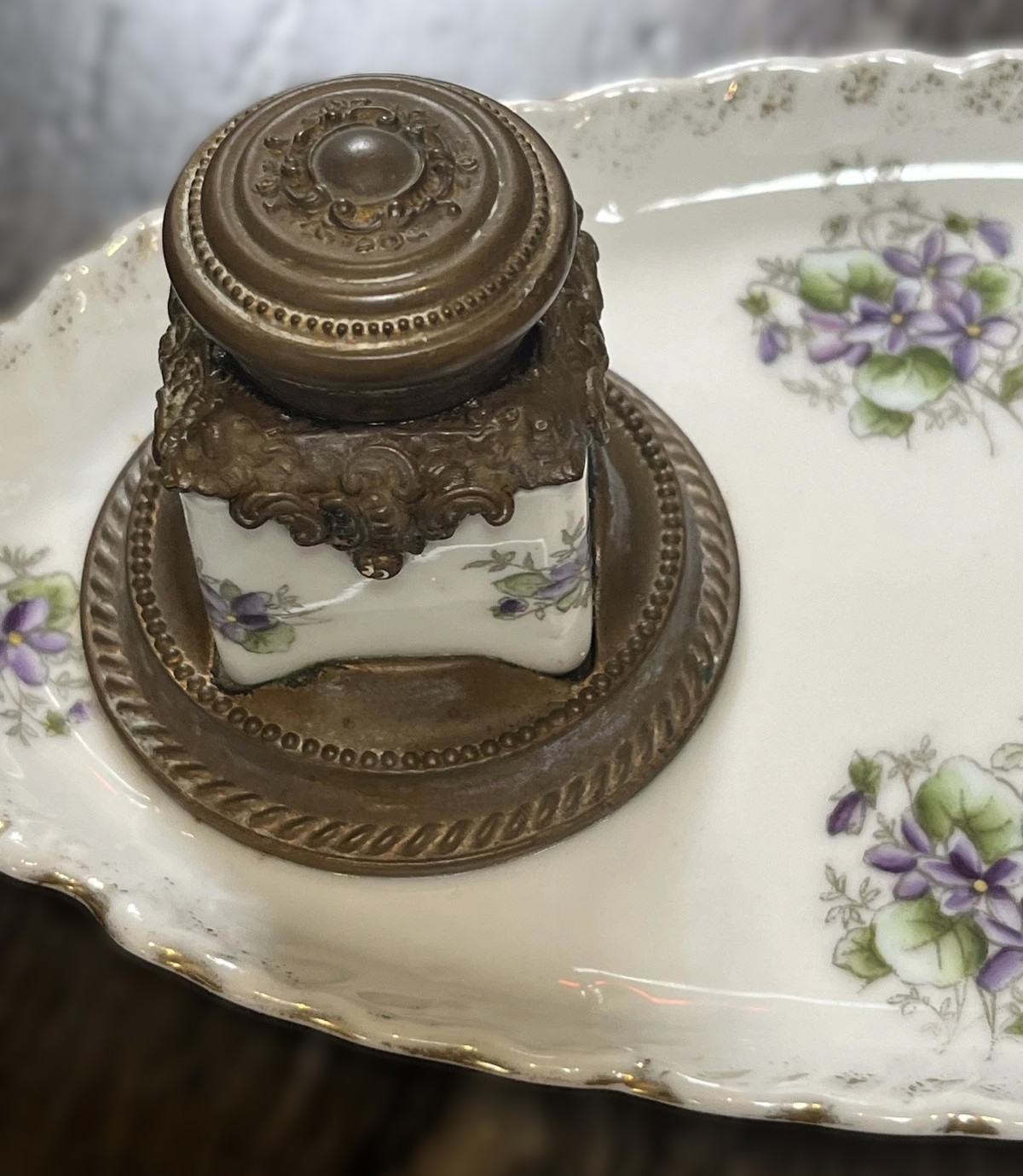
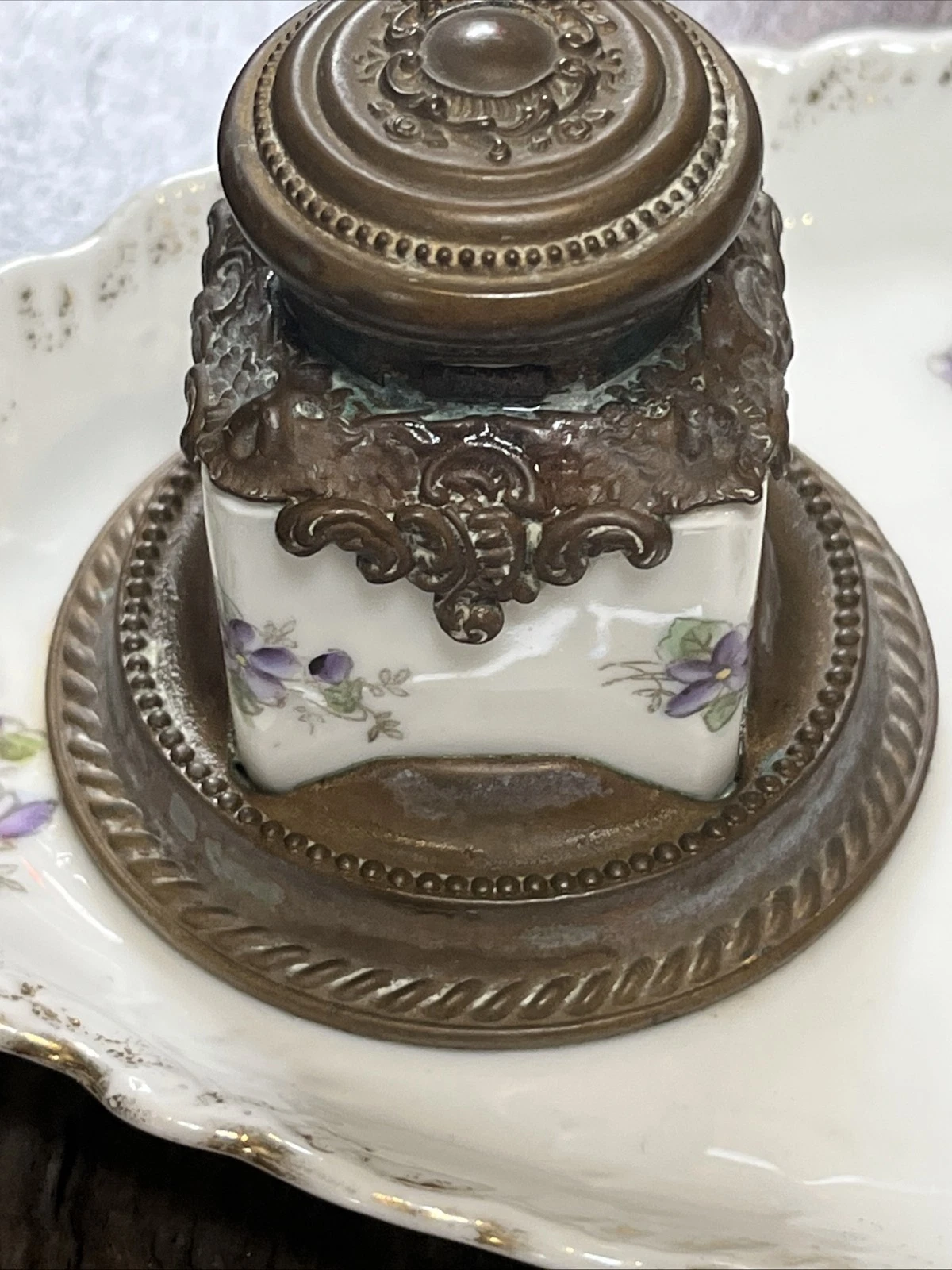
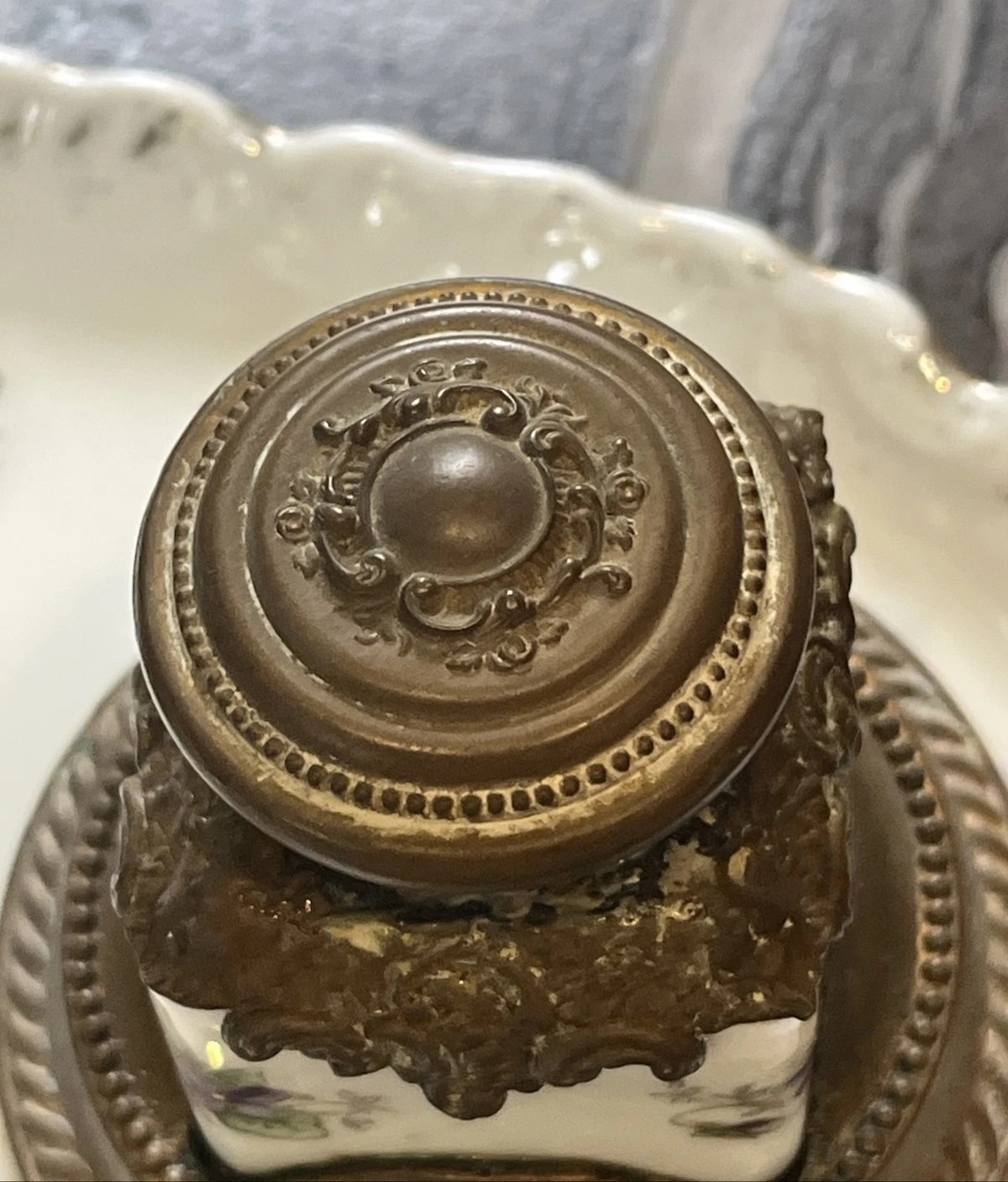
- The Inkwells: Two matching square-shaped porcelain inkwells sit on textured, round bronze-tone mounts attached to the tray. Each inkwell features matching painted violet accents on its porcelain body, crowned by ornate scrolling metal collars and domed, stepped metal lids with intricate stamped decorative borders.
Date of Manufacture
Based on the style, hand-painted floral aesthetic, and specific green underglaze factory mark (“LIMOGES / W.G. & Co. / FRANCE”), this inkstand can be narrowed down to the 1900s–1910s (specifically circa 1900–1915).
Why This Decade?
- The Hand-Painted Violet Motif: Hand-painted floral motifs—especially delicate, naturalistic themes like violets, pansies, and roses—were popular during the height of the Arts and Crafts and Art Nouveau periods spanning from the turn of the 20th century up until the First World War.
- Bronze-Tone Metal Mountings: The combination of fine Limoges porcelain blanks fitted with intricate, stamped brass/bronze-tone hardware (such as the scalloped inkwell collars and hinged, domed lids) was a hallmark of desk accessories produced during the early 20th century.
- The Factory Mark Context: While William Guerin & Co. used variations of this green factory mark between 1891 and 1932, the soft, realistic botanical hand-painting paired with classical gilt-scalloped molding aligns with pieces predominantly exported and retailed during the first two decades of the 20th century, prior to the design shifts of the 1920s Art Deco movement.
Information About the Maker (William Guerin & Co.)
- Founding & History: William Guérin established operations in Limoges, France, in the 1870s (acquiring an existing decorating workshop and factory assets from Lebon & Cie and Utzschneider). The company grew into a prominent manufacturer and exporter of fine white porcelain and finished tableware.
- Partnerships and Evolution: In 1903, Guérin’s sons, William and André, joined the business. The firm later merged with the historic J. Pouyat factory in 1911 and was subsequently acquired/managed alongside Bawo & Dotter Ltd. structures in the 1920s.
- Legacy: The factory ultimately closed its doors in 1932. William Guerin & Co. pieces are renowned for their fine white porcelain blanks, exquisite hand-painted floral designs, and lavish gold-gilt accents frequently created for export to American and international markets.
Sold for $72 in September 2026
Content disclaimer. The information posted is the owner’s best knowledge and may not have been vetted by the SOIC. We welcome comments, corrections, and additions, working to make our website information comprehensive and accurate.
Join the Society of Inkwell Collectors (SOIC) – it’s free!
Founded in 1981 as a non-profit organization,
we are documenting inkwells (and accessories).
We’re here to help and inform!