

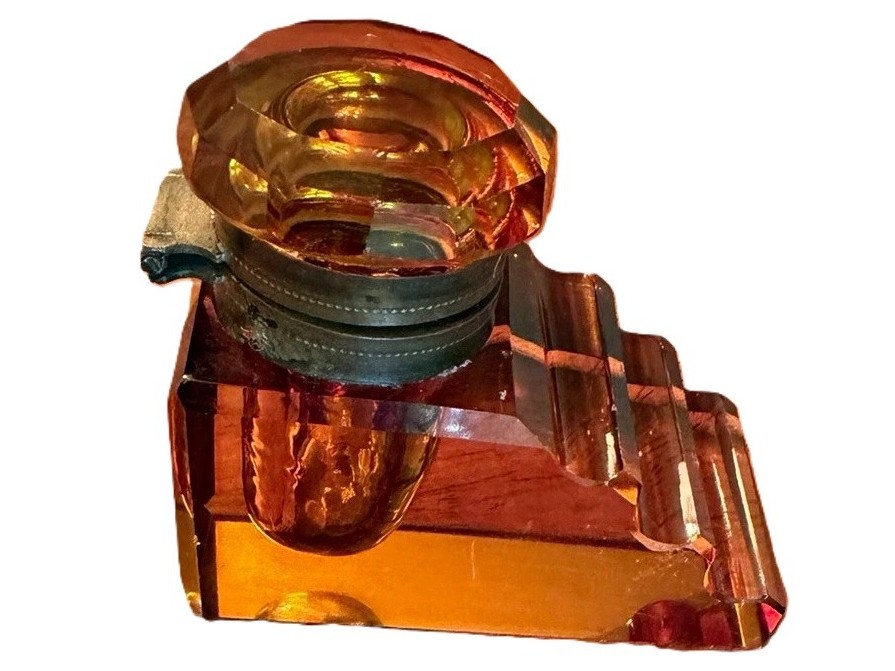
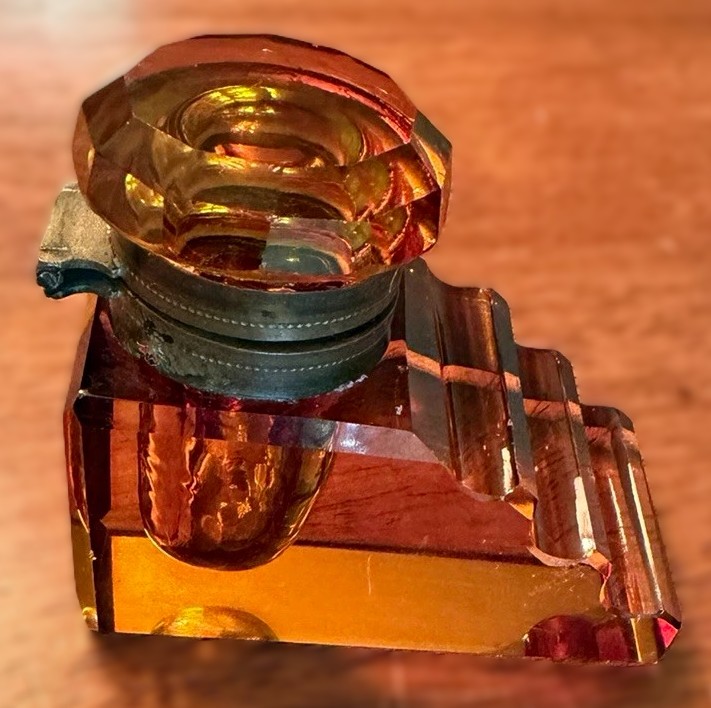
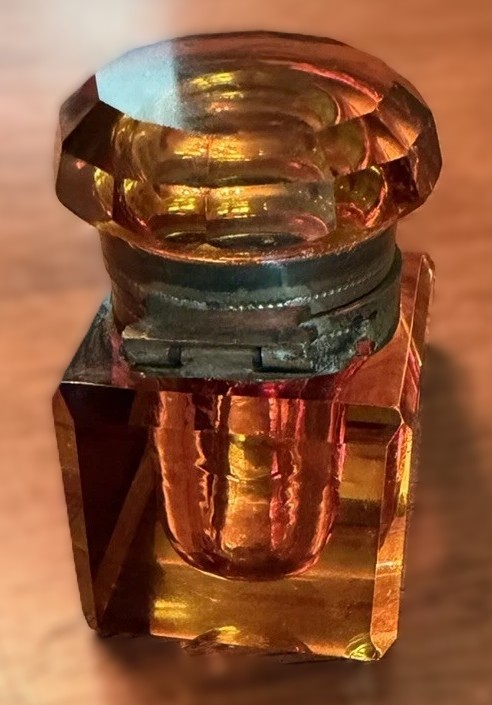
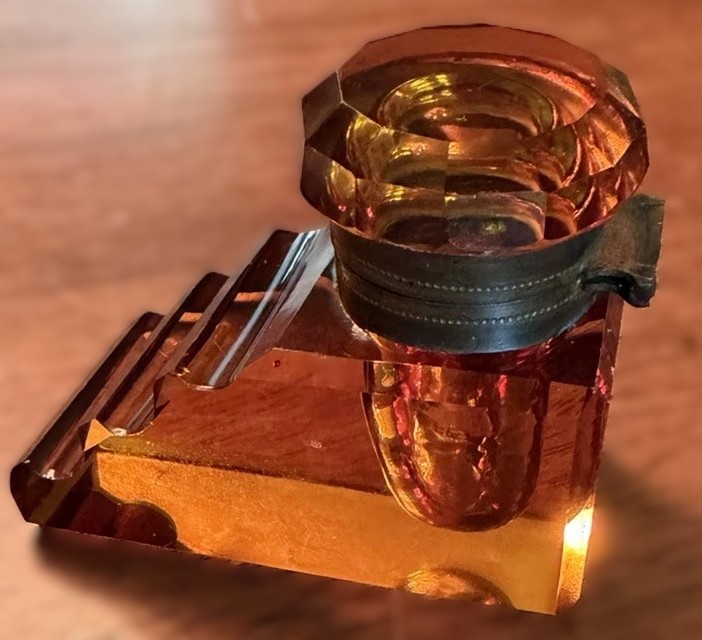
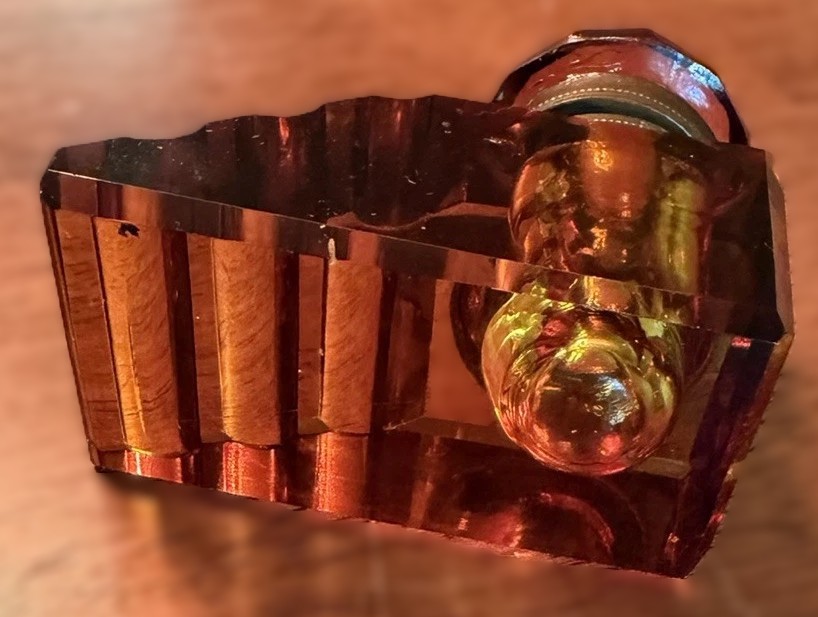
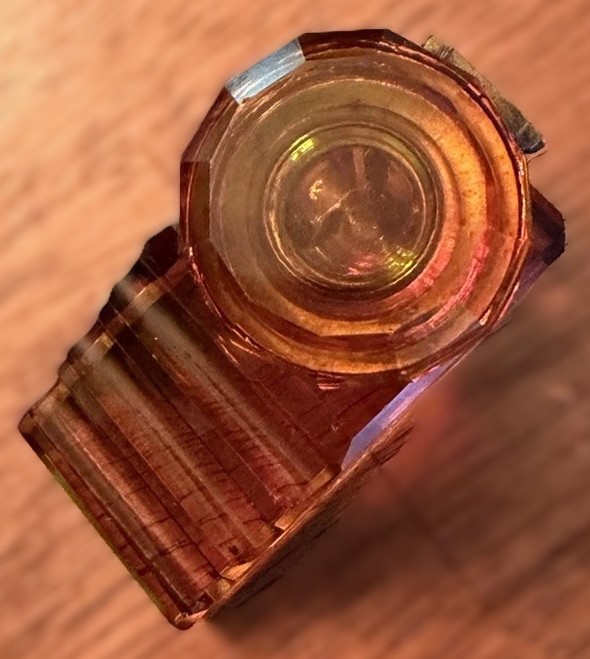
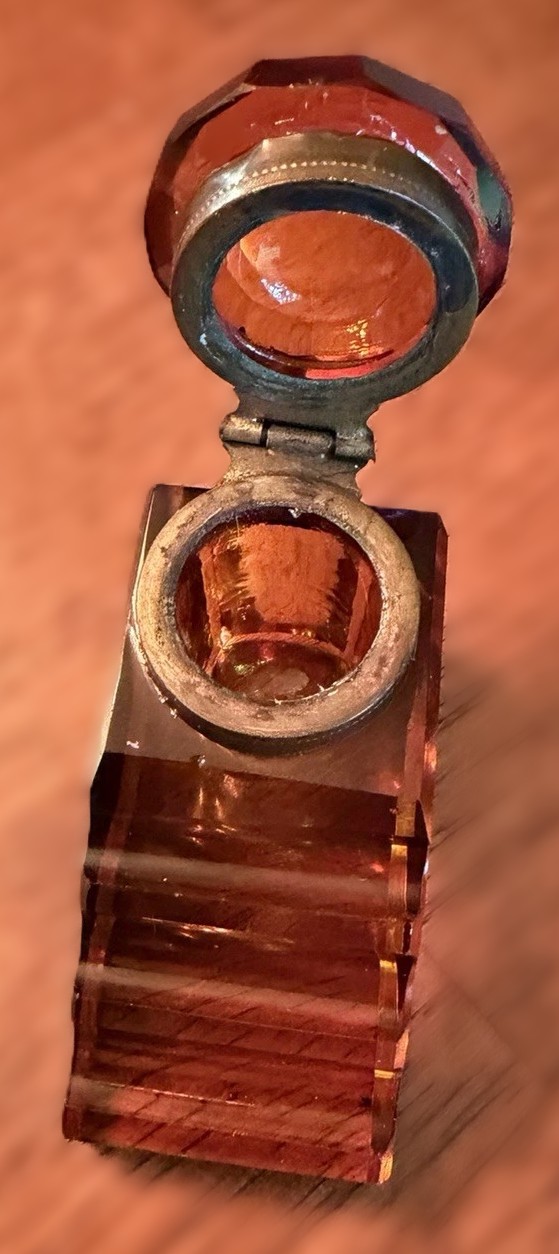
Amber Glass Inkwell with “Stepped” Pen Rest
| Categories | Glass - Non-figural |
| Material | Glass |
| Markings | Unmarked |
| Manufacturer | Undetermined |
| Origin | Undetermined |
| Date or Era | circa 1900 |
| Measuring | 2 ½” x 1 ¼” x 2” high |
Description
- Body and Form: This inkwell features a block-cut glass base that transitions into a stepped or terraced front platform.
- Lid and Collar: It is fitted with a metal collar (nickel-plated brass) secured around the neck of the glass, featuring a hinged metal-and-glass cover. The hinged cap is topped with a heavy, multi-faceted matching amber glass dome that repeats the geometric theme.
- Cutting and Facets: The glass exhibits sharp, mold-blown and polished flat facets along the stepped tiers, sides, and lid.
How was the amber color achieved?
The rich amber color in antique glassware of this type was typically achieved by adding specific metallic oxides to the molten glass batch during production:
- Sulfur and Carbon (Coal/Wood smoke): A classic amber or “brown” glass (often referred to in historical manufacturing as carbon-sulfur amber) was produced by combining iron, sulfur, and carbon compounds.
- Iron and Manganese: Small, controlled amounts of iron oxide combined with carbon under reducing furnace conditions create warm honey, amber, and golden-brown hues.
Pen Holder
The terraced, grooved steps at the front of the inkwell functioned as an integrated pen rest. When writing with a dip pen, the user could lay the wet pen across the horizontal channels or steps between strokes.
When and Where was this made?
- Date (Era): This style of inkwell—combining heavy cut or molded colored glass with a metal hinged collar—was popular during the Victorian and Edwardian eras, spanning roughly from the late 19th century to the early 20th century (c. 1880–1915).
- Origin (Where):
- Bohemia (modern-day Czech Republic) and Germany: These regions were world-renowned for producing high-quality colored, cut, and pressed glassware, often exporting desk sets and inkwells globally.
- United Kingdom or United States: Major manufacturers in Birmingham, England (a hub for desk accessory hardware and glass mounting), or American glass houses (such as Hobbs, Brockunier & Co., or Boston & Sandwich Glass Co., though they more frequently produced pressed patterns) also created similar desk pieces. Given the precise faceting and metal mount style, a Bohemian or British origin from the turn of the 20th century is most likely.
Estimated value: $50
Content disclaimer. The information posted is the owner’s best knowledge and may not have been vetted by the SOIC. We welcome comments, corrections, and additions, working to make our website information comprehensive and accurate.
Join the Society of Inkwell Collectors (SOIC) – it’s free!
Founded in 1981 as a non-profit organization,
we are documenting inkwells (and accessories).
We’re here to help and inform!