

Presentation Inkstand to a Teacher
| Categories | Presentation Piece |
| Material | Glass, Wood |
| Markings | See Narrative |
| Manufacturer | Undetermined |
| Origin | England |
| Date or Era | circa 1901 |
| Measuring | 18” x 9” x 4” high |
Description
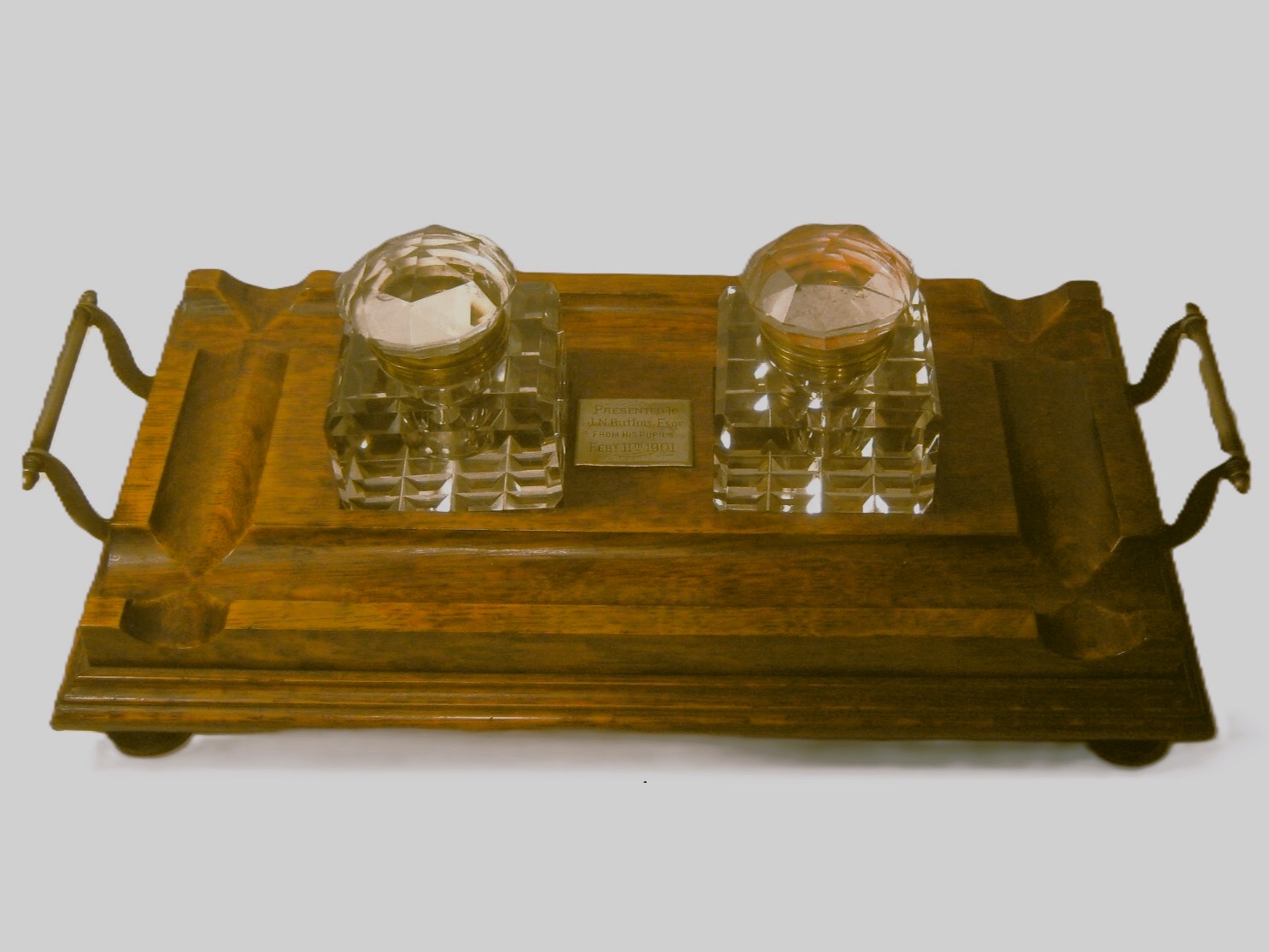
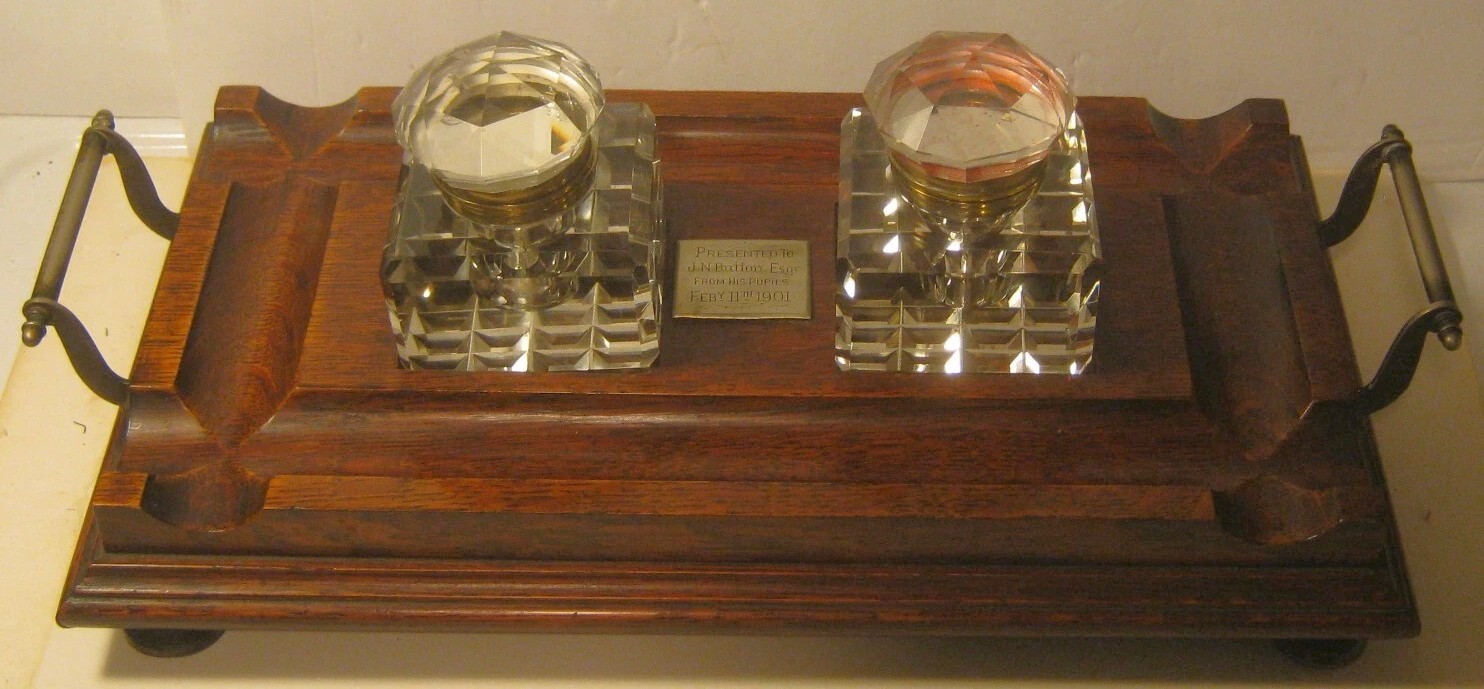
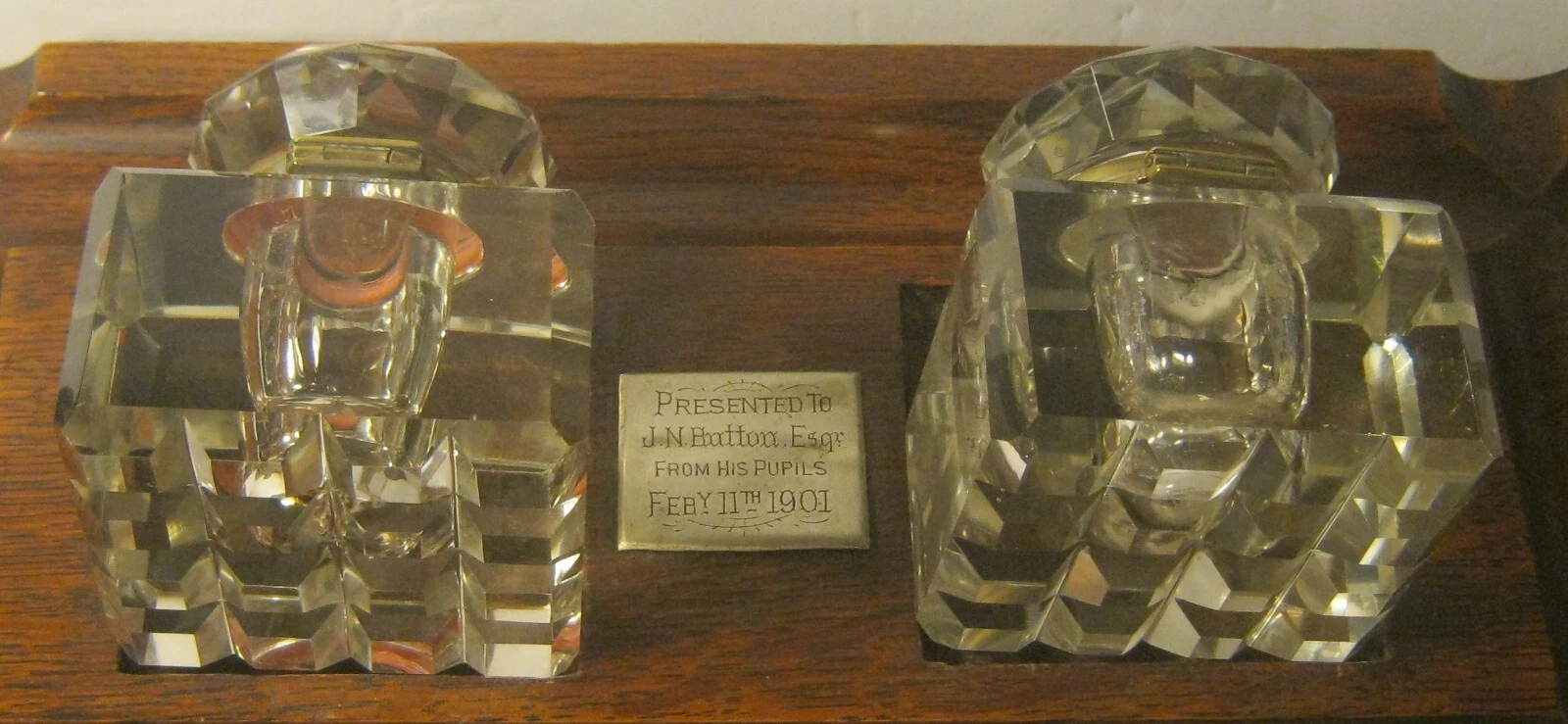
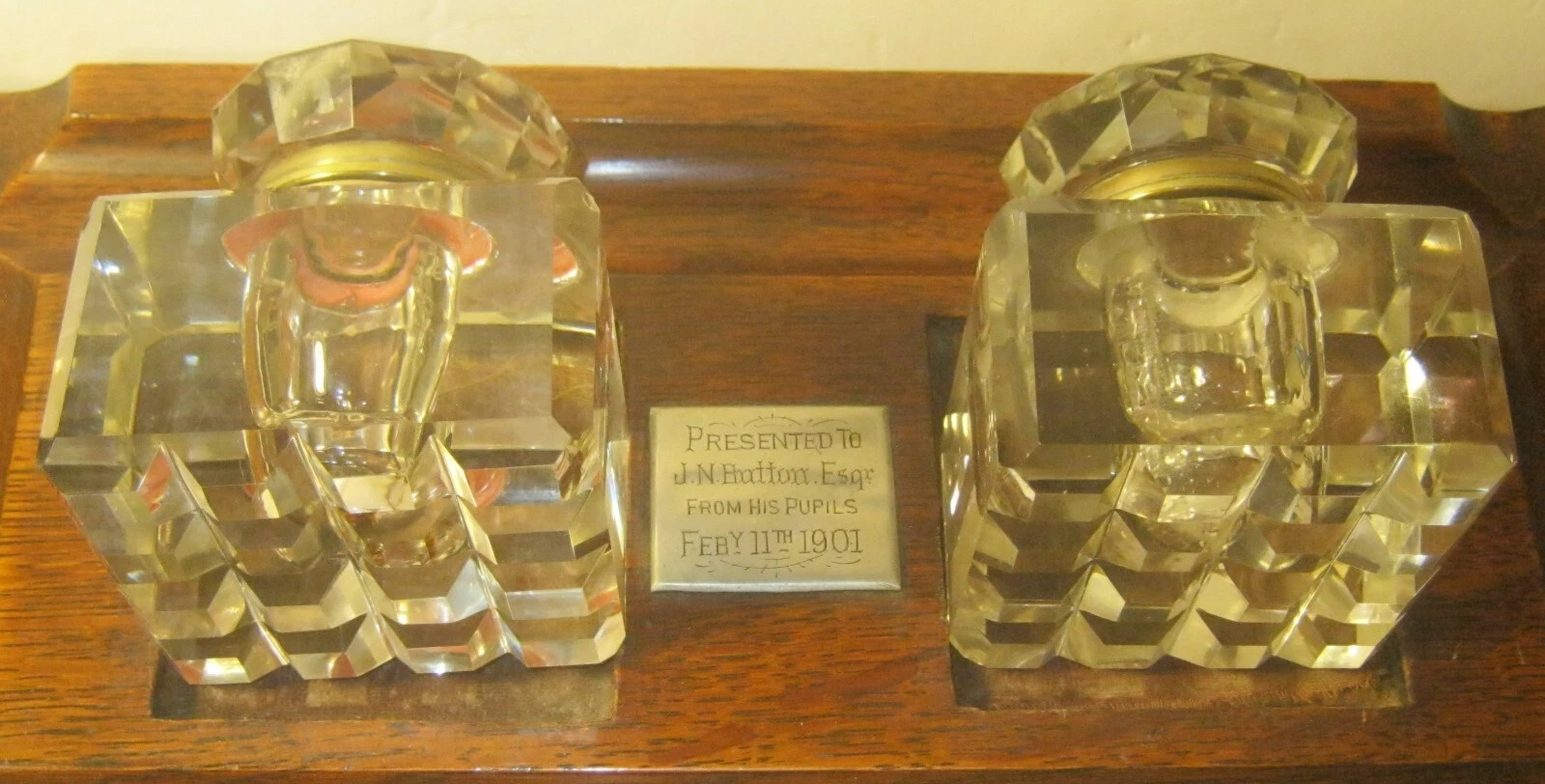
This substantial double inkstand was made around the turn of the twentieth century (circa 1900–1901), the piece exhibits the exceptional craftsmanship, materials, and utility characteristic of high-end British desk accessories of the era.
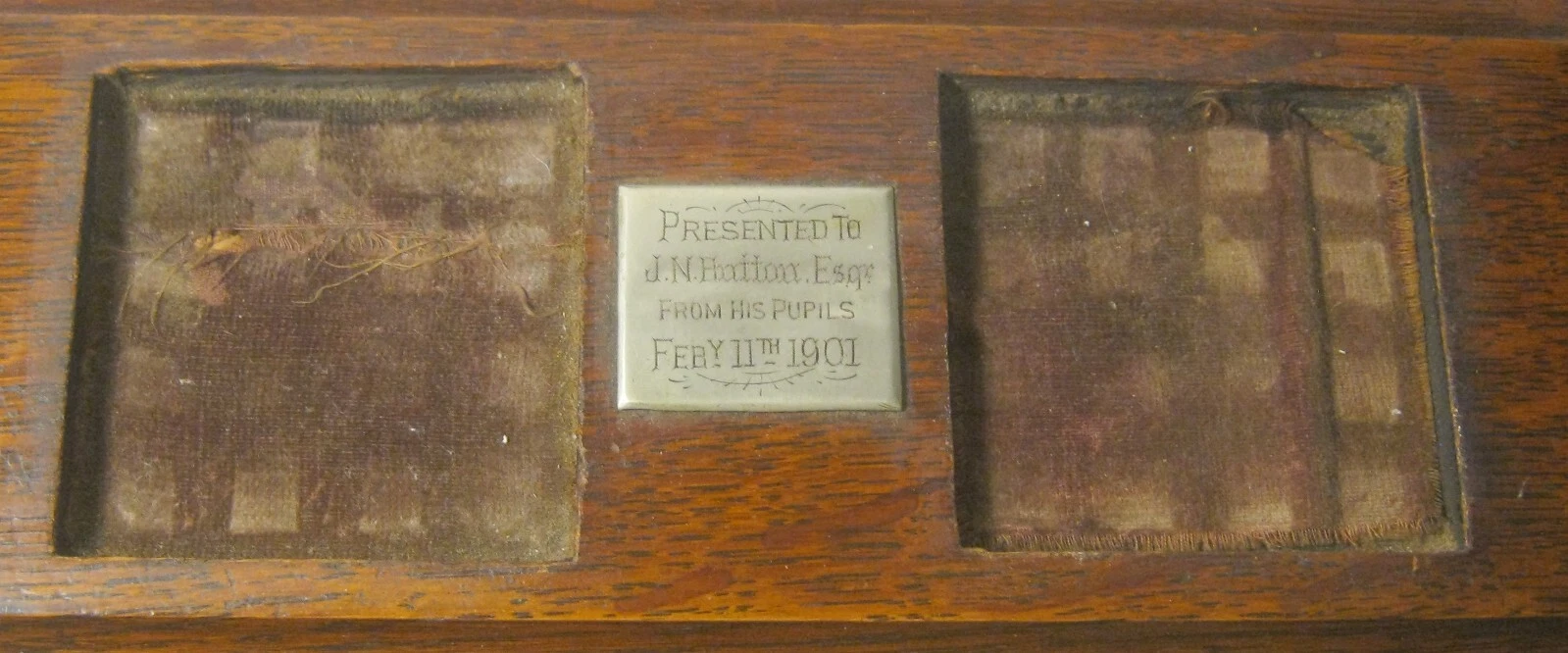
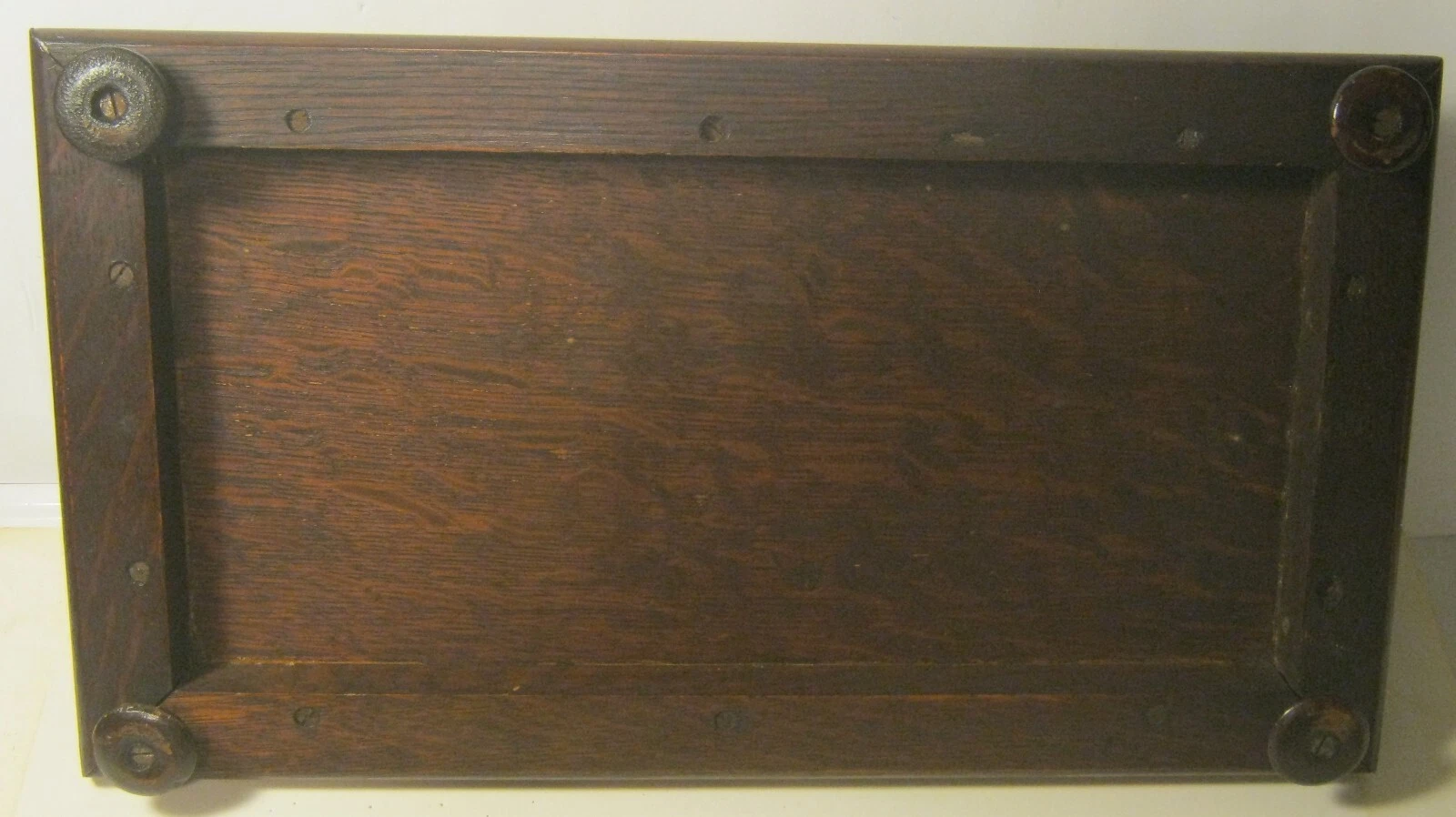
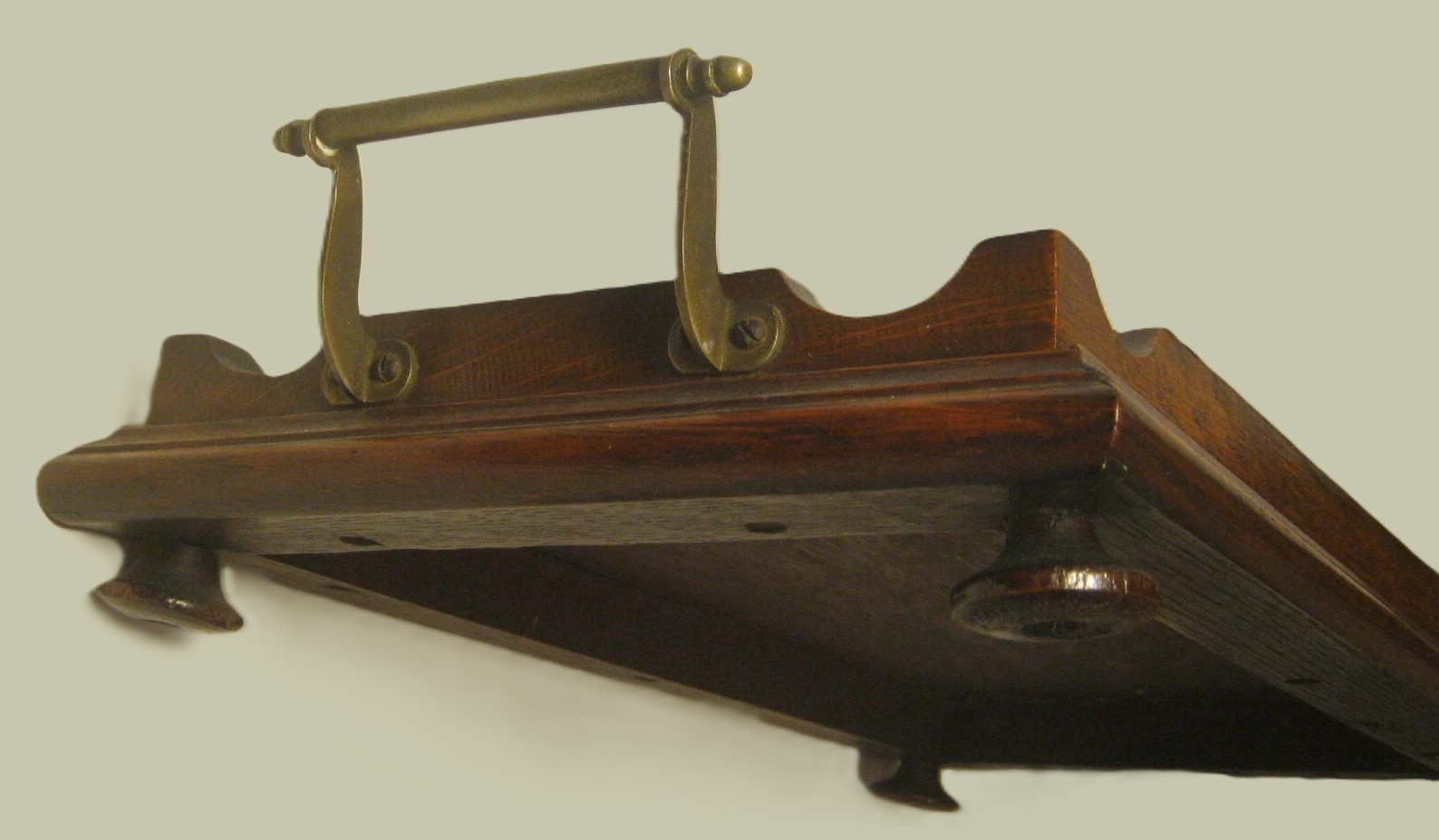
- Base and Tray: The inkstand features a stepped, rectangular plinth base constructed from solid English oak (fumed and quarter-sawn). Integrated pen rests are carved directly into the front and rear ends. The base rests upon four small turned wooden bun feet and is flanked by matching patinated brass carrying handles.
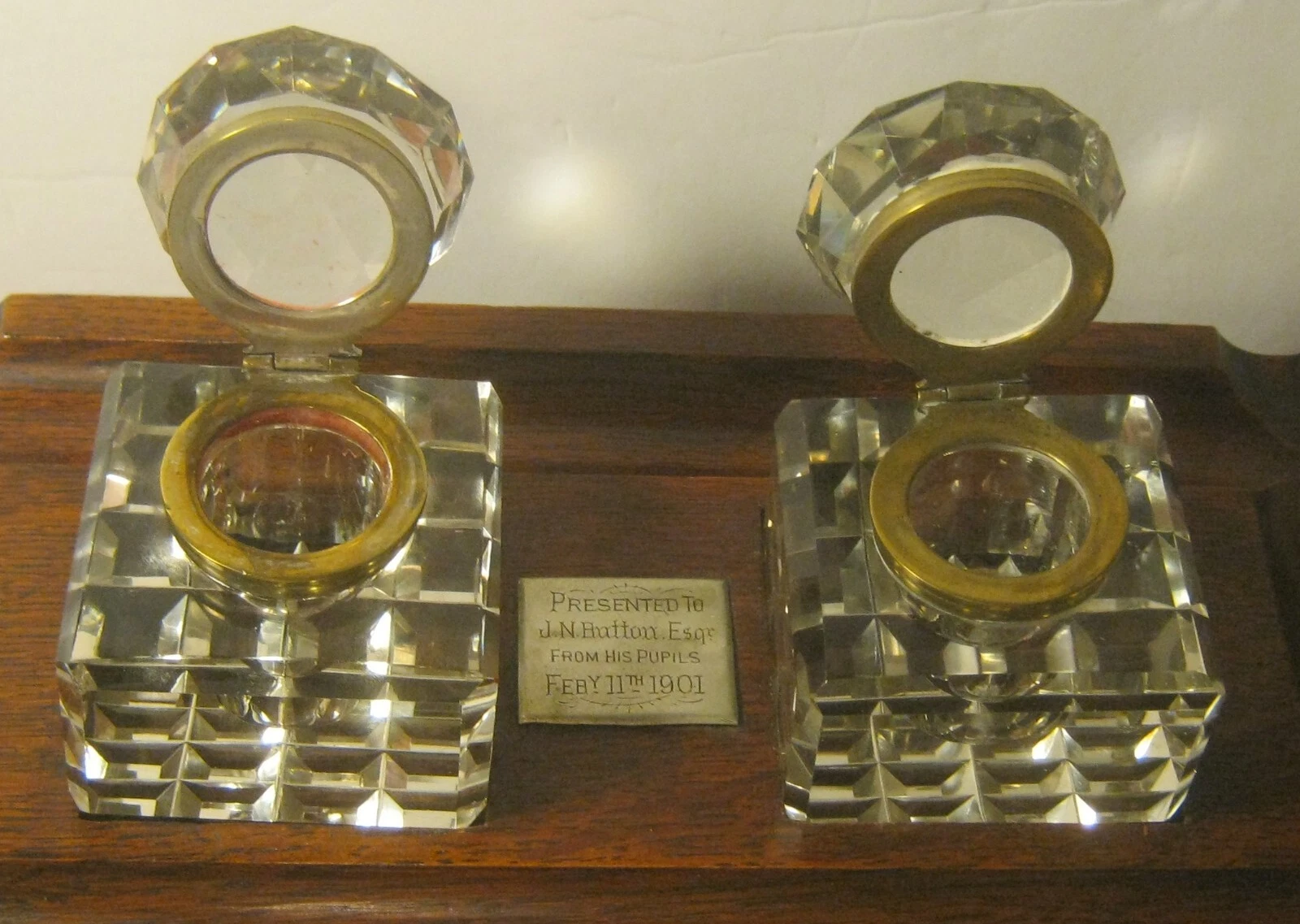
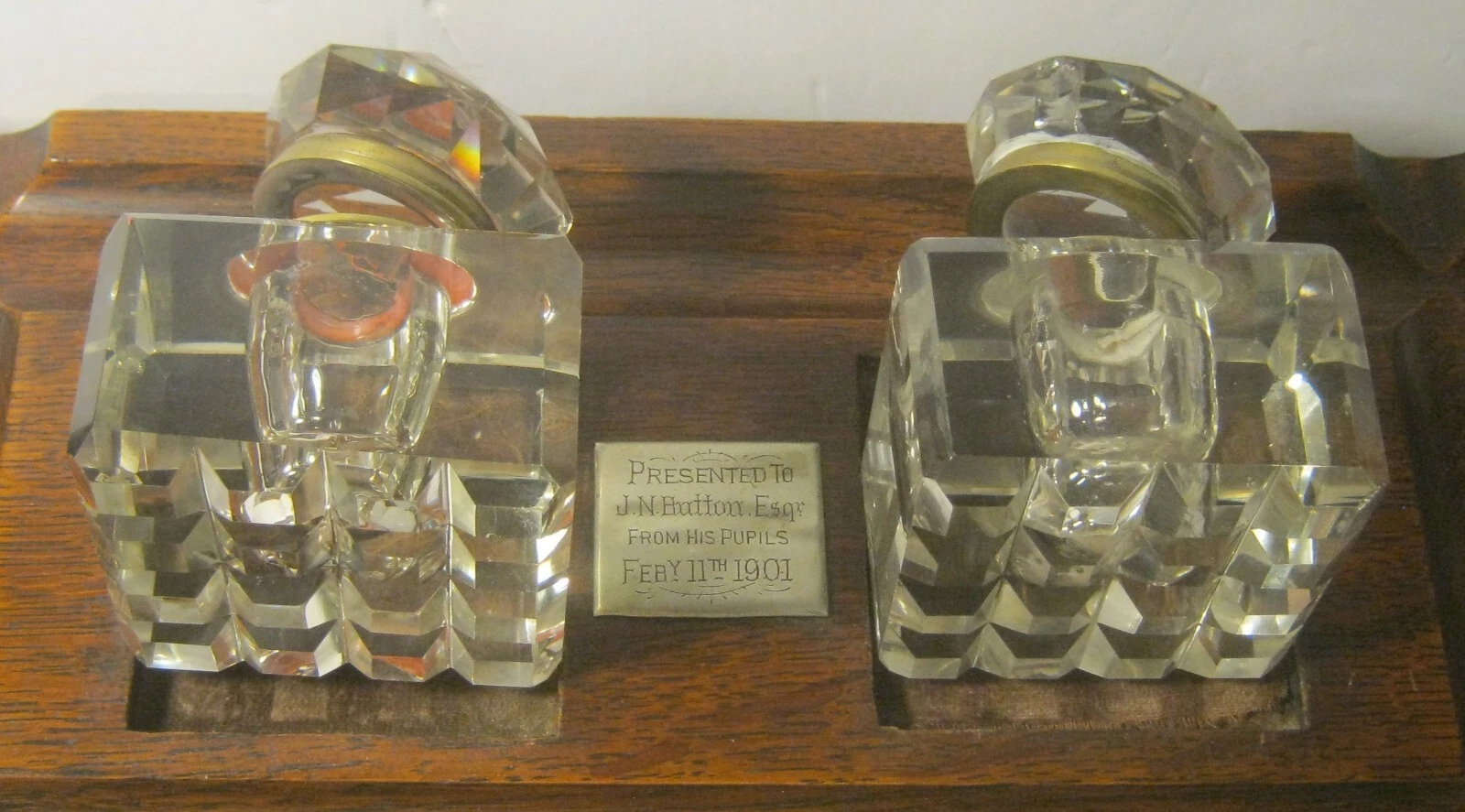
- Inkwells: Fitted into the base are two heavy, square, machine-cut crystal glass inkwells decorated with a deep hobnail and prism-cut geometric pattern on their sides and bottoms. Each well features a brass collar and a hinged, faceted cut-glass dome lid.
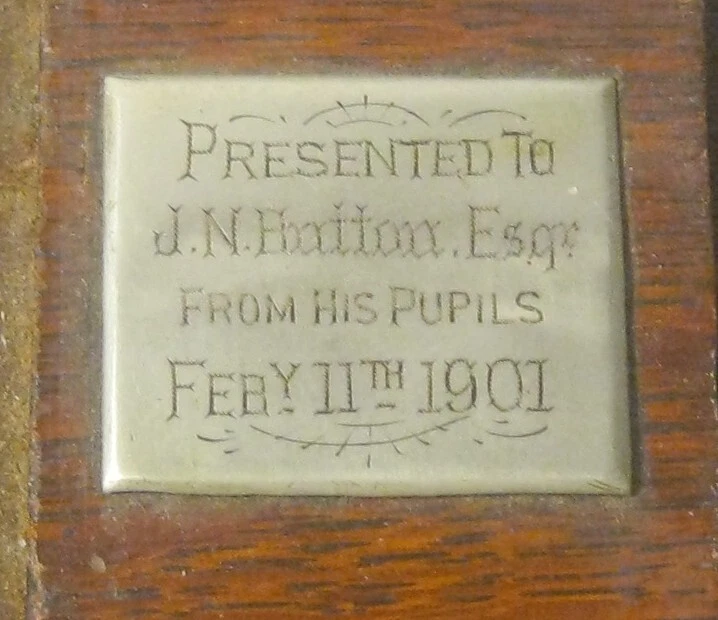
- Dedication Plaque: Centered between the two inkwells is an engraved rectangular silver-plated presentation plaque adorned with delicate starburst and scroll framing. The crisp inscription reads:
PRESENTED TO
- N. HATTON, ESQ.
FROM HIS PUPILS
FEBY. 1901
Historical Context and Attribution
Items inscribed with precise calendar dates, such as February 11, 1901, typically commemorated significant academic milestones, term completions, or faculty anniversaries within Victorian academic culture.
- The Recipient: The dedication points directly to John Leigh Smeathman Hatton (J. L. S. Hatton, 1865–1933), a prominent British mathematician and educator. In early 1901, Hatton was actively leading the scientific and technical departments of the East London Technical College (which later became East London College and eventually Queen Mary University of London) as Director of Studies and Principal.
- The Inscription Nuance: While the plaque is engraved with the initials “J. N. Hatton,” nineteenth- and early-twentieth-century script frequently stylized capitals, making an ornate cursive “L” easily misread as an “N.” The exact timeline, professional context, and high caliber of a presentation desk set funded by a student body align seamlessly with Hatton’s foundational leadership tenure in London.
Manufacturing & Design Summary
- Origin: Made in Great Britain (circa 1900–1901), likely produced by specialized metalwork and glass-cutting manufacturers in Birmingham, Sheffield, or London for the professional scholastic and executive market.
- Materials: Solid English quarter-sawn oak, high-clarity lead crystal glass, cast brass hardware, and an engraved silver-plated presentation plaque.
- Cultural Significance: In late-Victorian academia, presenting a revered mentor or director with a substantial desk set symbolized the “tools of the trade” and stood as one of the highest tokens of respect a student body could bestow.
Sold for $250 in September 2026
Content disclaimer. The information posted is the owner’s best knowledge and may not have been vetted by the SOIC. We welcome comments, corrections, and additions, working to make our website information comprehensive and accurate.
Join the Society of Inkwell Collectors (SOIC) – it’s free!
Founded in 1981 as a non-profit organization,
we are documenting inkwells (and accessories).
We’re here to help and inform!