

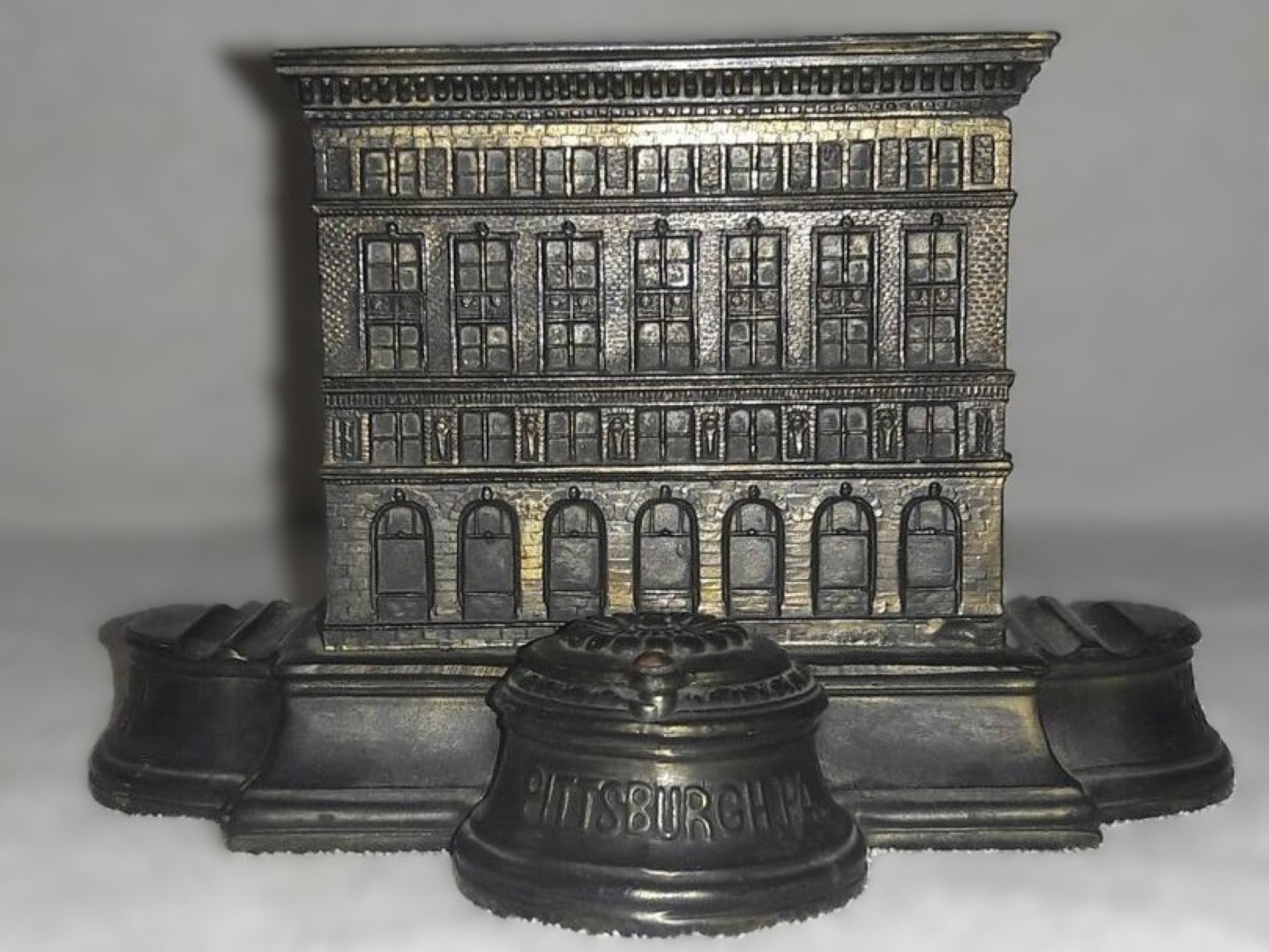
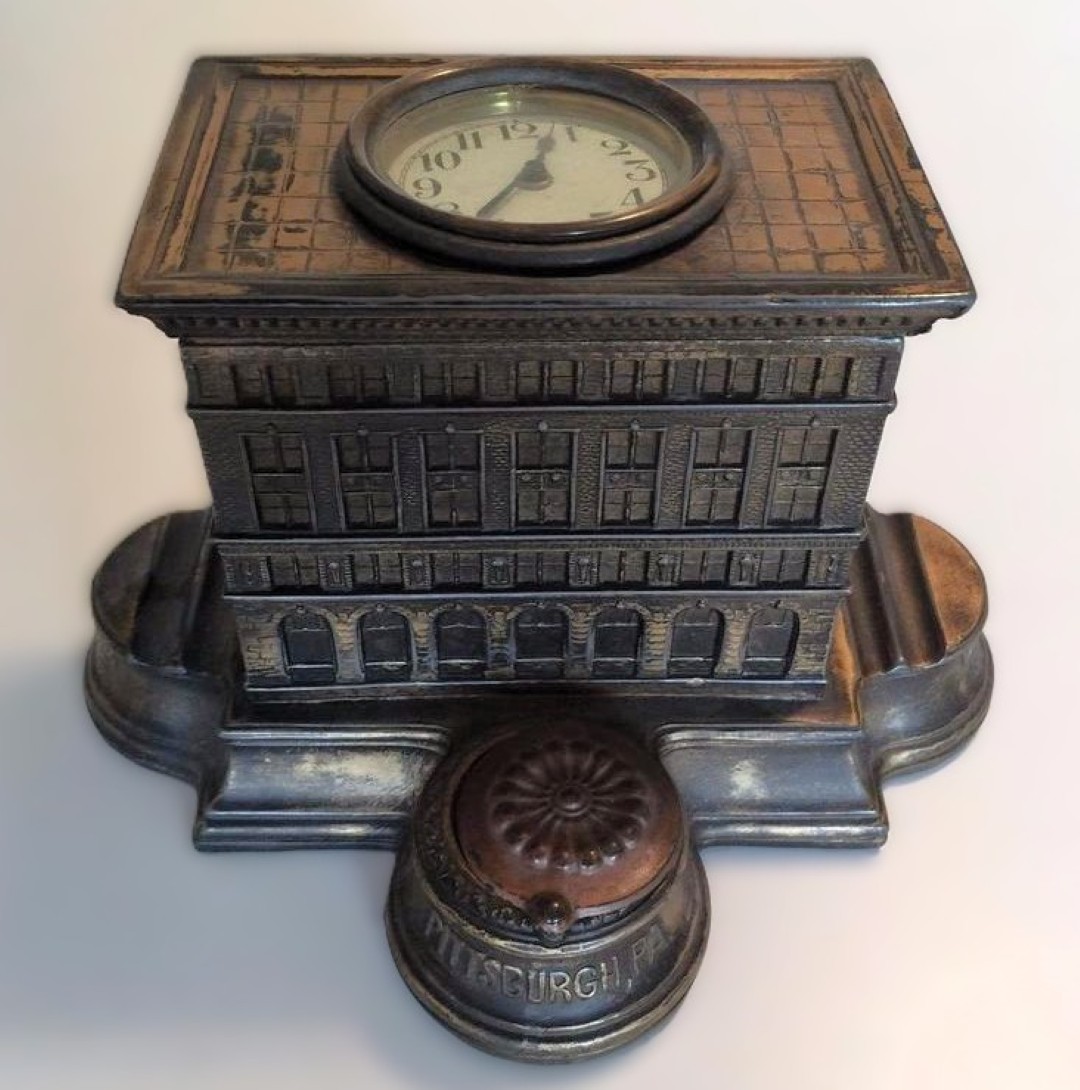
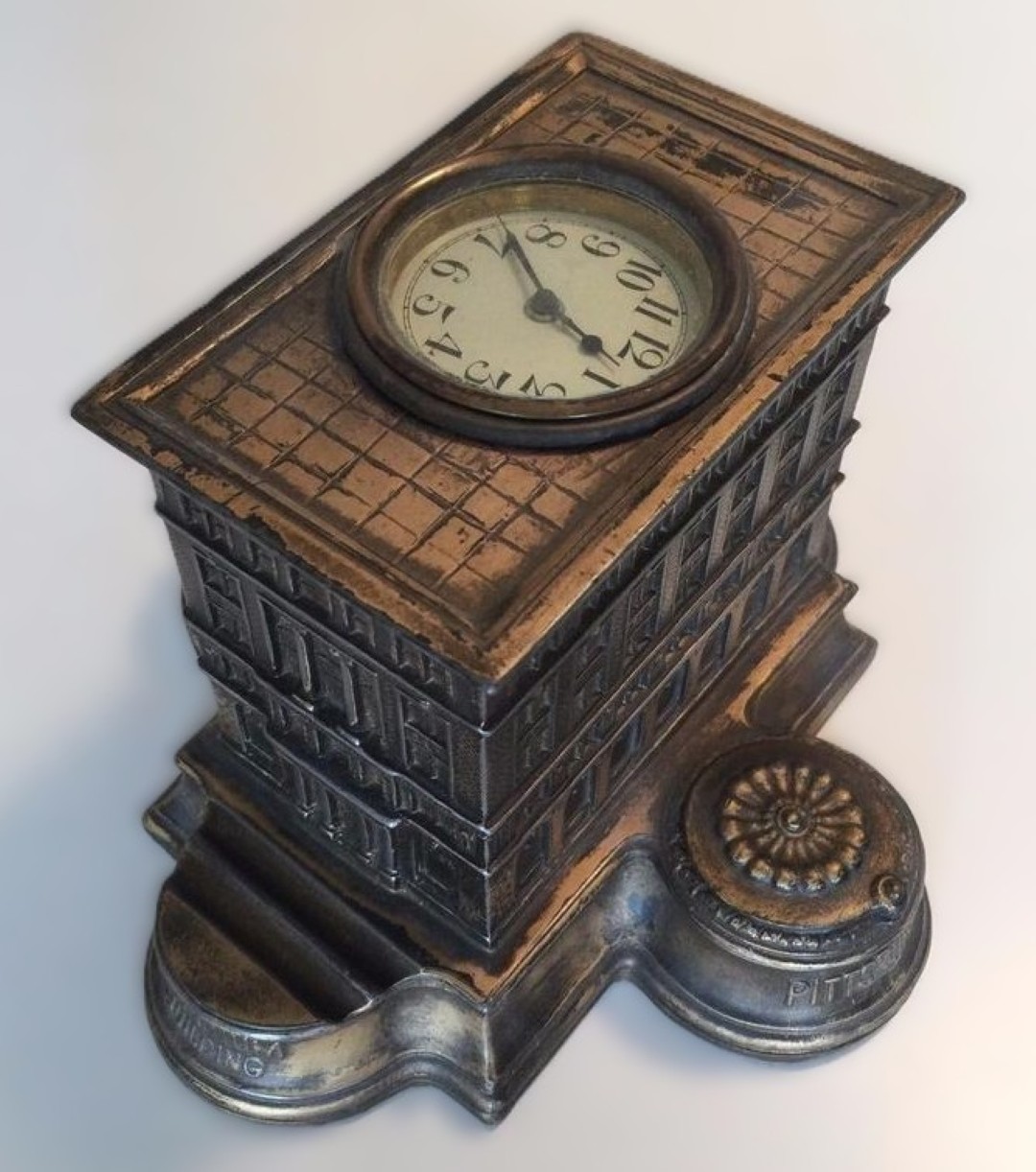
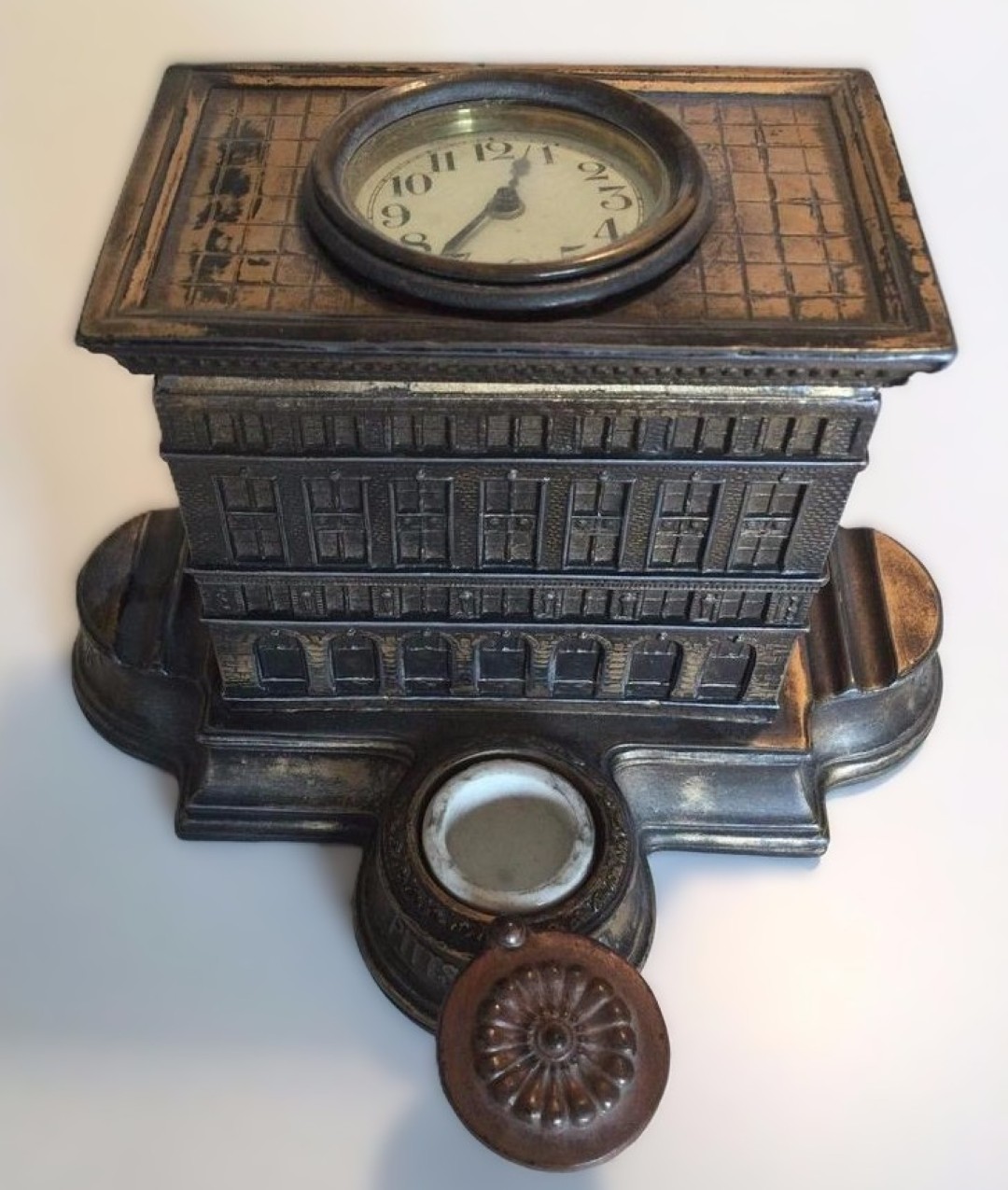
Vanadium Building Inkstand, Pittsburgh PA
| Categories | Figural - Inanimate |
| Type | Buildings / Structures |
| Material | White metal |
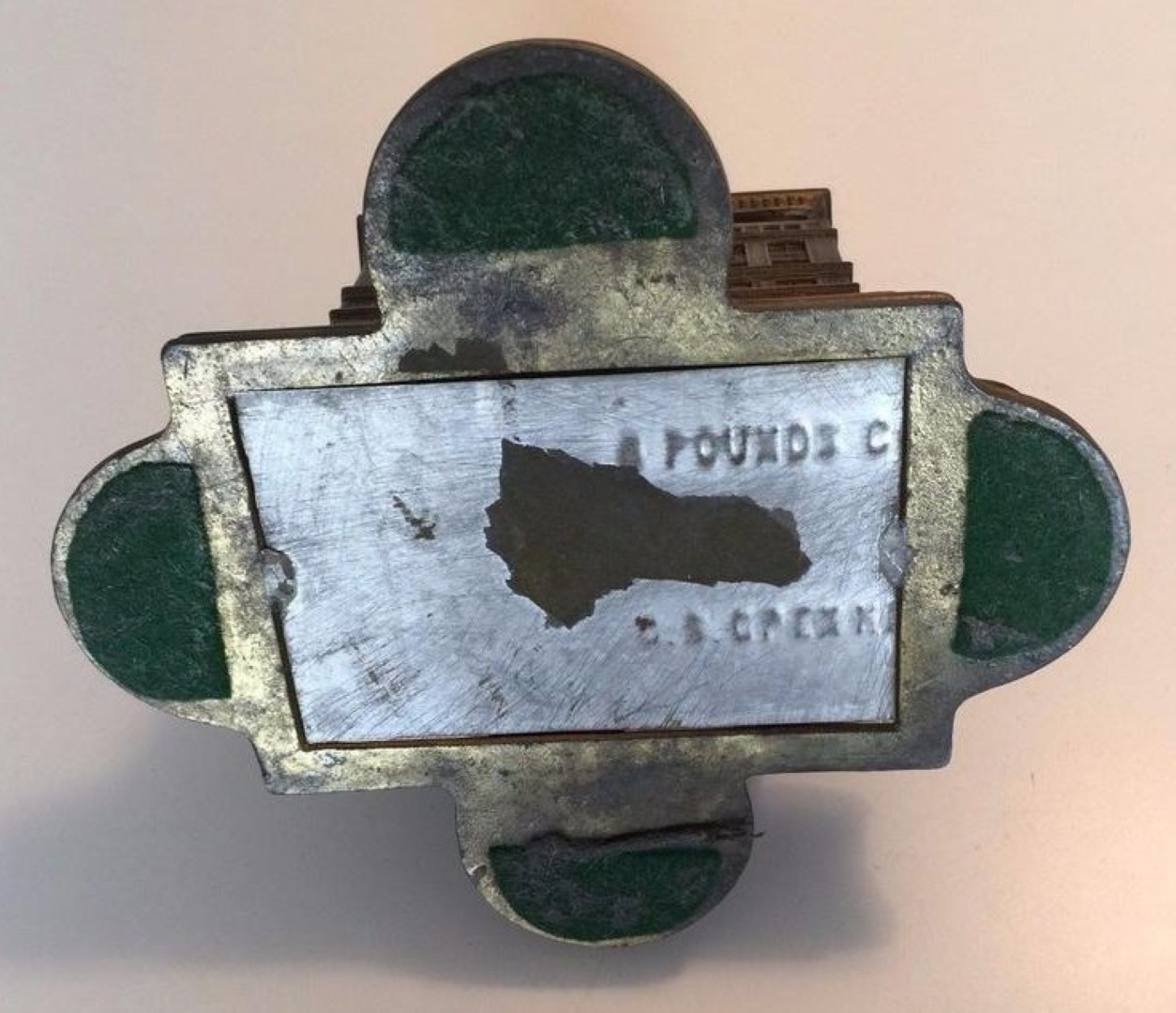
| Markings | See Narrative |
| Manufacturer | Art Metal Works |
| Origin | United States |
| Date or Era | circa 1912 |
| Measuring | 7 ⅝ x 7 ⅛” x 5” high |
Circa 1912 Art Metal Works (Ronson) Vanadium Building Inkstand with Clock
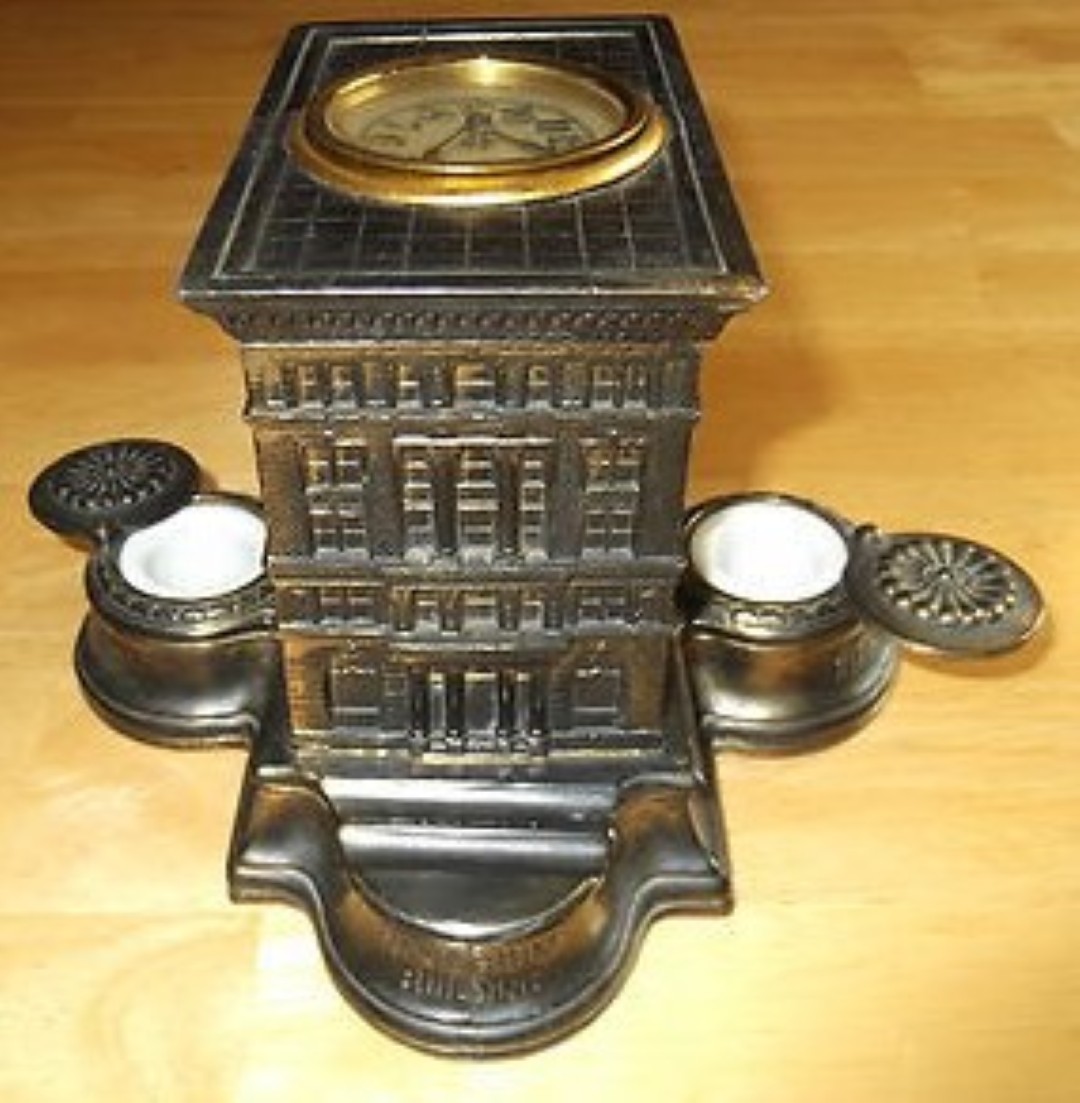
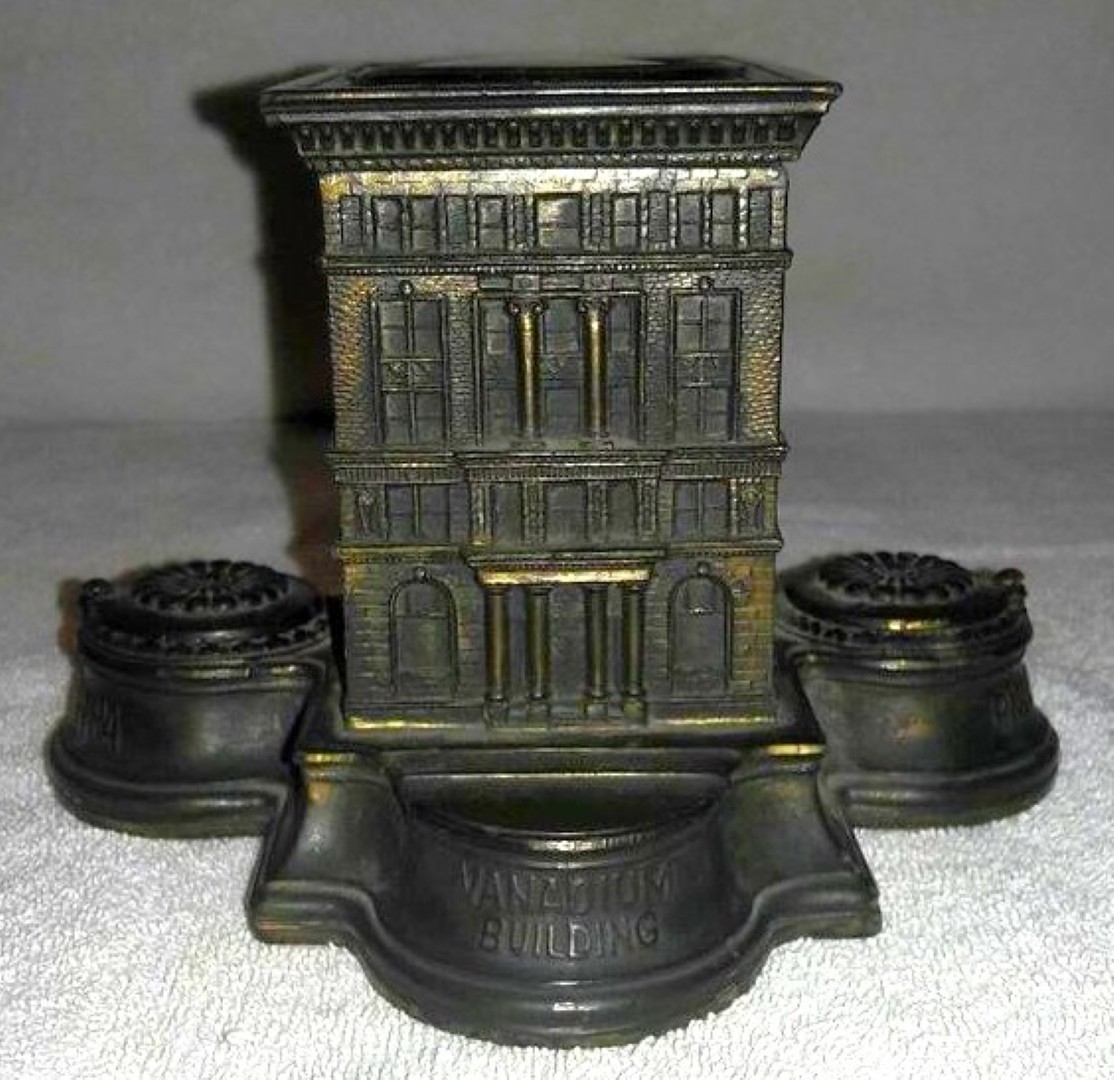
This detailed dark bronze-patinated white metal souvenir building replica and desk accessory was manufactured circa 1912 by Louis Aronson’s The Art Metal Works Company (later known as Ronson) of Newark, New Jersey. Modeled after the famous Flannery (Vanadium) Building in Pittsburgh, Pennsylvania, this elaborate piece functions as a “partners” desk inkstand, allowing two users sitting opposite each other to share access to ink wells, pen rests, and a built-in pocket watch clock.
Architectural & Historical Significance
Built in 1911 by industrialist Joseph Flannery—president of the Vanadium Corporation of America and the Standard Chemical Company—the original Vanadium Building was located at the corner of Meyran and Forbes Avenues in Pittsburgh’s Oakland neighborhood. Flannery championed vanadium for high-strength steel alloys but later turned his attention to radium.
The top floors of the building housed Standard Chemical Company’s laboratory, which refined and processed radium through the 1920s and 1930s — at one point holding more than half the world’s inventory of processed radium. This remarkable facility famously attracted a visit from Mme. Marie Curie in 1921.
Design & Features
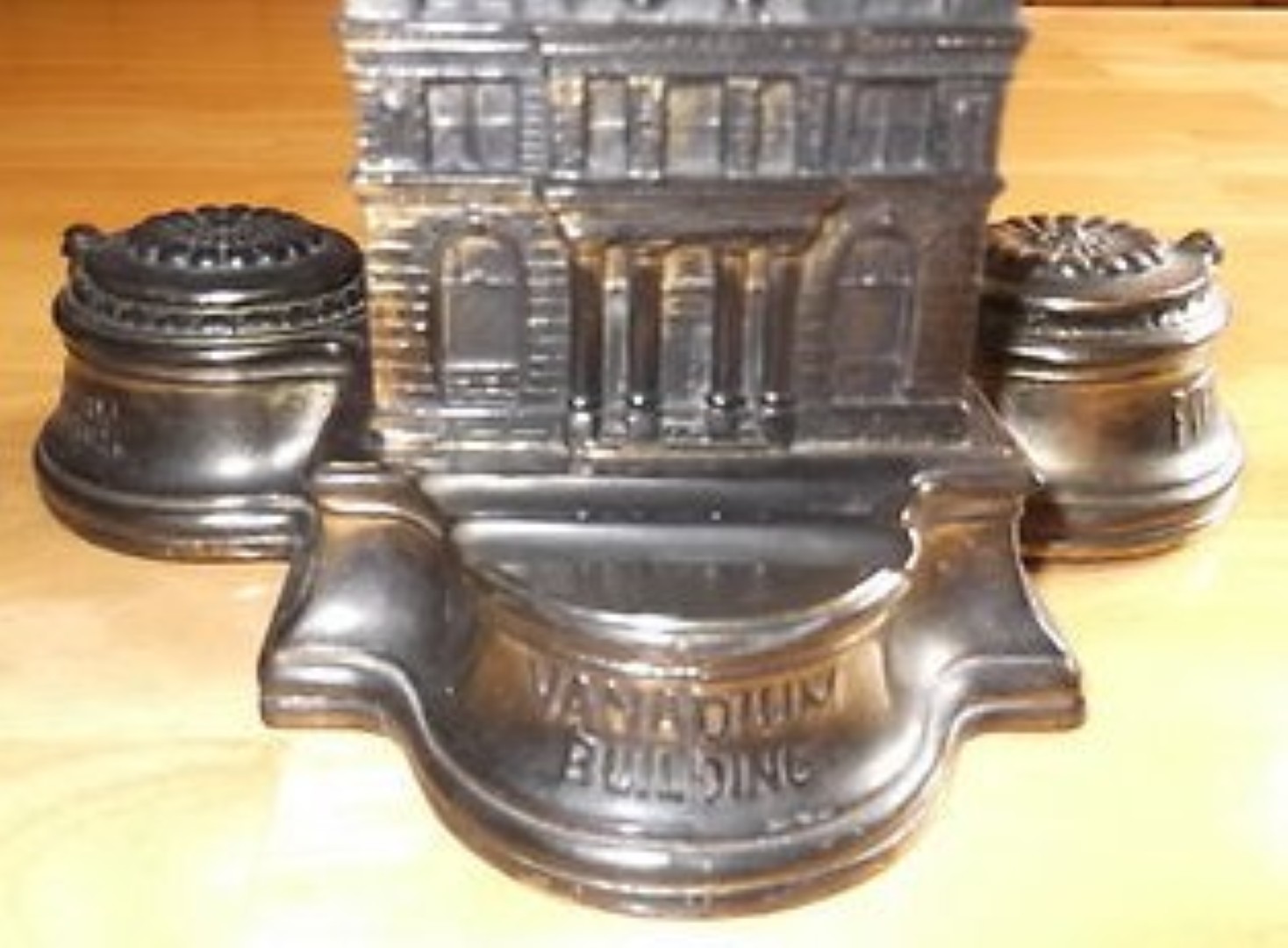
- Exterior & Relief Details: The miniature building captures architectural features, including classical pillars, arched entryways, multi-paned windows, and brickwork texture. The front and back inkwells are embossed with “PITTSBURGH, PA.” in raised lettering, while the rounded pen-rest ends on either side read “VANADIUM BUILDING”.
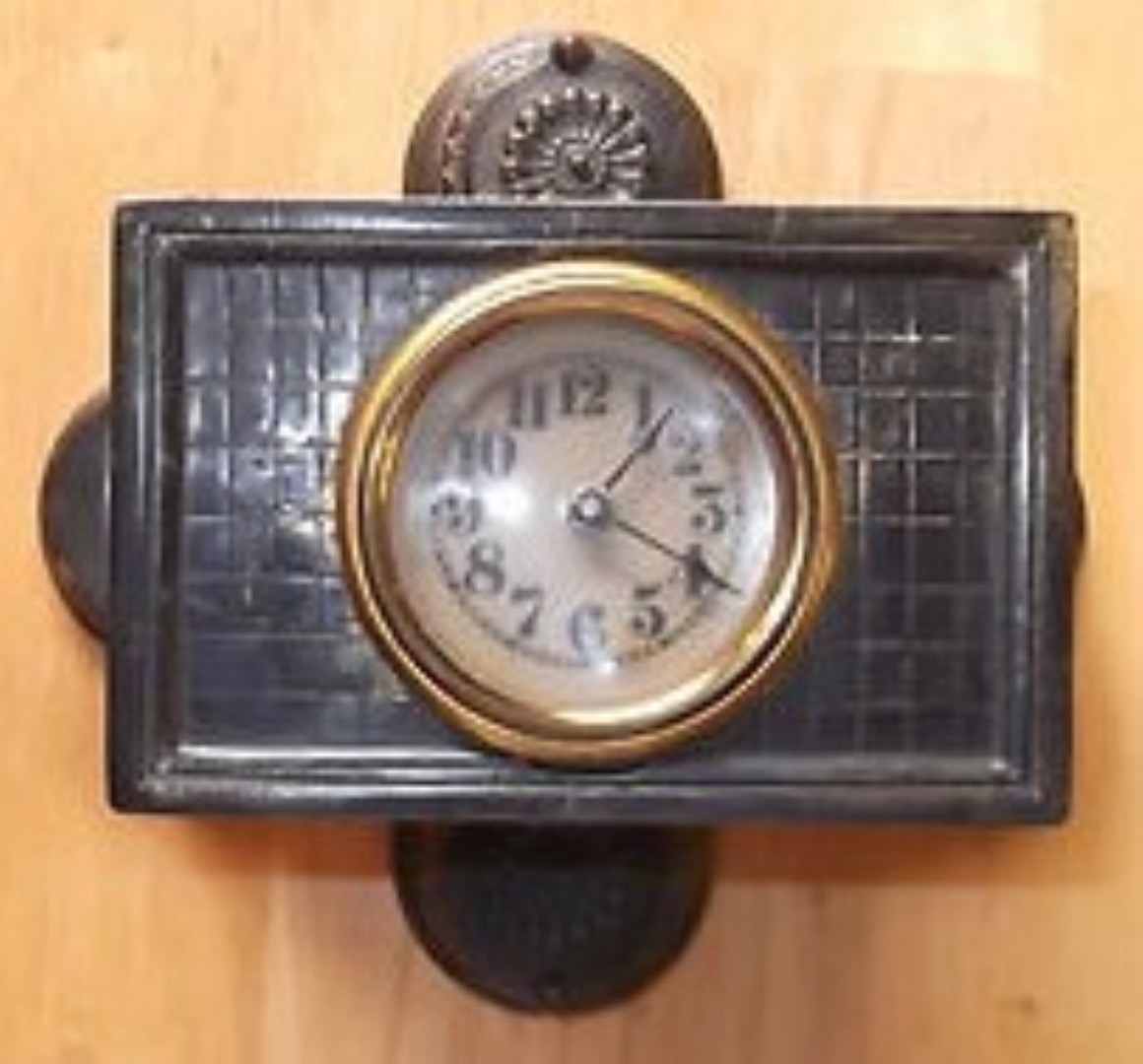
- The Clock: The roof lifts off completely to expose the interior storage cavity (originally intended for stamps or desk items) and houses a working wind-up clock made by the Waterbury Clock Company. The clock face features time-only hands (no second hand), and the back casing is engraved with “U.S.A.”.
- Partners Inkwells: Features original double white porcelain inkwell inserts on opposing sides that easily lift out. Both inserts include matching metal lids with decorative floral/sunburst patterns that slide open and shut on pivot pins.
Condition & Markings
- Maker’s Marks: The underside of the lid features a raised shield reading “MADE BY THE ART METAL WORKS NEWARK, N.J.”. A metal inventory/identification plate is attached to the underside base.
- Dimensions: Measures approximately 7-5/8 inches wide across the pen rests, 7-1/8 inches from front to back, and stands 5 inches high.
- Condition: Retains a striking dark bronze patina with honest age wear appropriate for a 1912 desk piece.
Could it have been used as a humidor?
Technically yes, but practically it was primarily a general desk/stationery storage box.
When you lift the roof off the Vanadium Building, the hollow interior is sized nicely for small items. While some collectors colloquially speculate about or repurpose these cavities as mini cigar or cigarette humidors, true period humidors made by Art Metal Works (and later Ronson) typically featured dedicated interior linings—such as raw Spanish cedar wood or specialized moisture compartments/sponges designed to preserve tobacco.
Because the interior of this building model is bare white metal/bronze finish without a wood lining or humidification element, it was originally intended as a desk caddy or stamp box to accompany the inkwells. However, because smoking accessories (like match safes, ashtrays, and lighter-desk sets) were heavily produced by Art Metal Works during the era, users at the time certainly could have dropped a few small cigars or cigarettes inside.
Historical Background: Art Metal Works & Souvenir Buildings
- Louis Aronson and The Art Metal Works Company
The piece was manufactured by The Art Metal Works (AMW), founded in Newark, New Jersey, in 1897 by Louis V. Aronson. Aronson was a brilliant industrial inventor, metallurgist, and artist who held scores of patents. While the company is globally famous today for its later “Ronson” lighters (a brand name derived from his own surname that became official corporate identity later on), the pre-World War I era was defined by high-art decorative metalware.
- The Craze for Architectural Souvenirs (c. 1910–1915)
Around 1910 to 1915, Art Metal Works produced a celebrated line of miniature architectural desk accessories and souvenir buildings. These weren’t cheap tourist trinkets; they were heavy, high-end executive desk pieces cast in white metal with rich applied patinas (often simulating antique bronze, brass, or silver).
AMW capitalized on America’s skyscraper boom by turning famous corporate headquarters, banks, and iconic structures into functional desk items—such as inkstands, calendar frames, and stamp boxes. Replicating the Vanadium Building was a deliberate nod to modern industrial prowess:
- Built in 1911 in Pittsburgh’s Oakland district, the building symbolized the cutting edge of metallurgy because Joseph Flannery made his fortune pioneering vanadium steel alloys.
- The inclusion of a Waterbury Clock Company movement in the roof was a common hallmark of AMW’s higher-end executive pieces, combining utility (timekeeping and ink wells) with corporate promotion.
- The Waterbury Clock Connection
The Waterbury Clock Company (founded in Waterbury, Connecticut, in 1857) was one of the titans of American horology. In the late 19th and early 20th centuries, they mass-produced reliable, inexpensive mechanical movements. Providing small, specialized clock inserts for desktop novelty manufacturers like Art Metal Works was a major sector of their business. Finding a Waterbury movement with “U.S.A.” stamped on the back solidly anchors the piece to the pre-1930s American manufacturing epoch, aligning perfectly with the 1912 introduction of the Vanadium Building replica.
Estimated value: $500
Content disclaimer. The information posted is the owner’s best knowledge and may not have been vetted by the SOIC. We welcome comments, corrections, and additions, working to make our website information comprehensive and accurate.
Join the Society of Inkwell Collectors (SOIC) – it’s free!
Founded in 1981 as a non-profit organization,
we are documenting inkwells (and accessories).
We’re here to help and inform!