

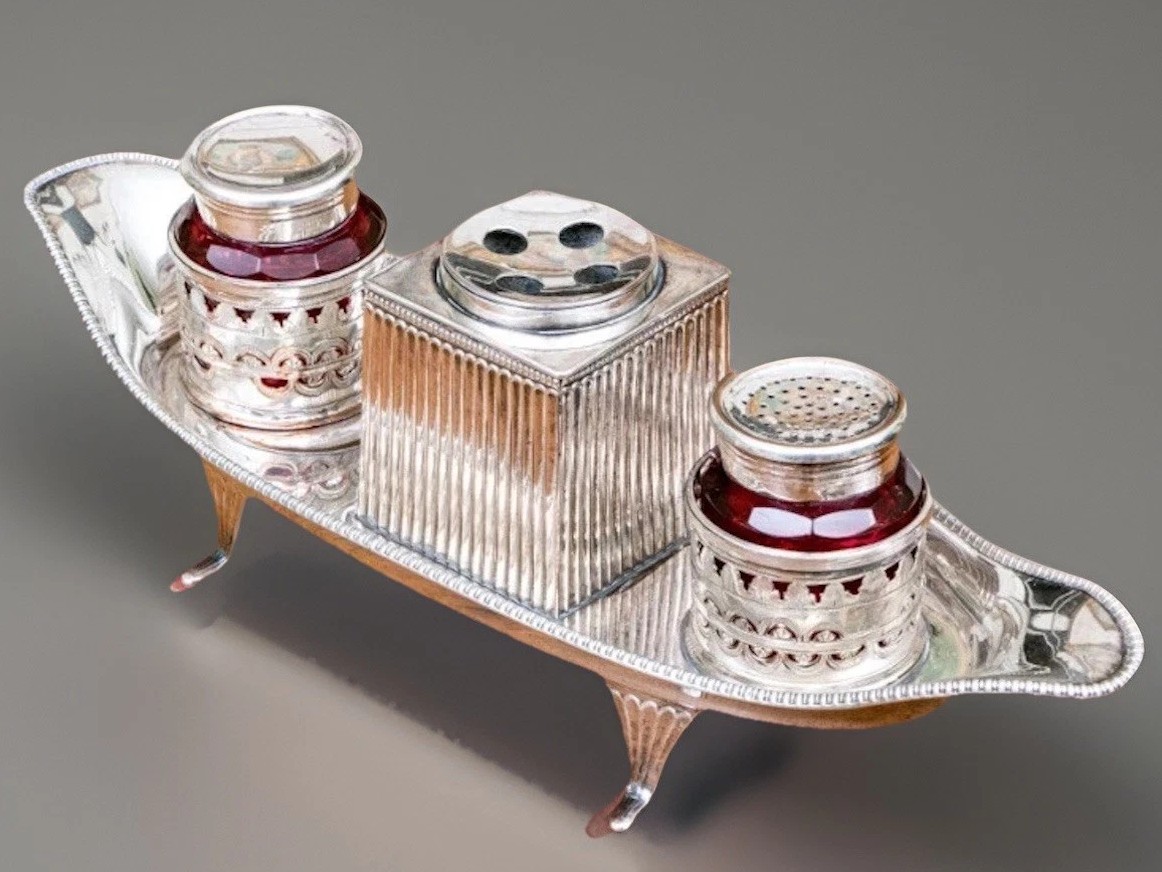
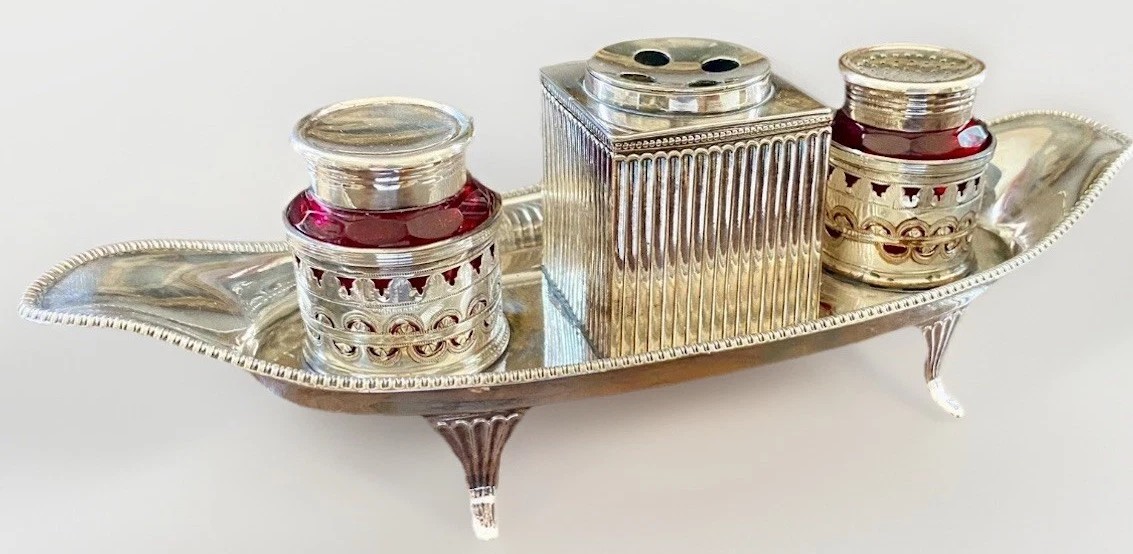
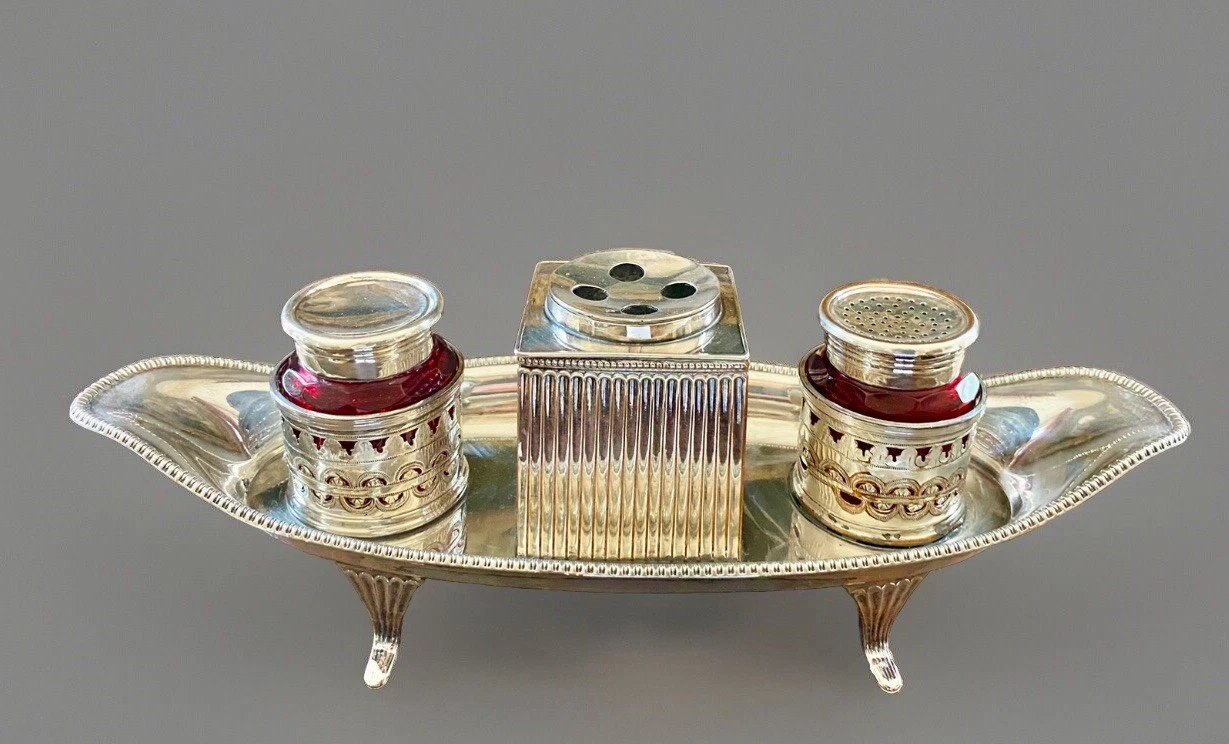
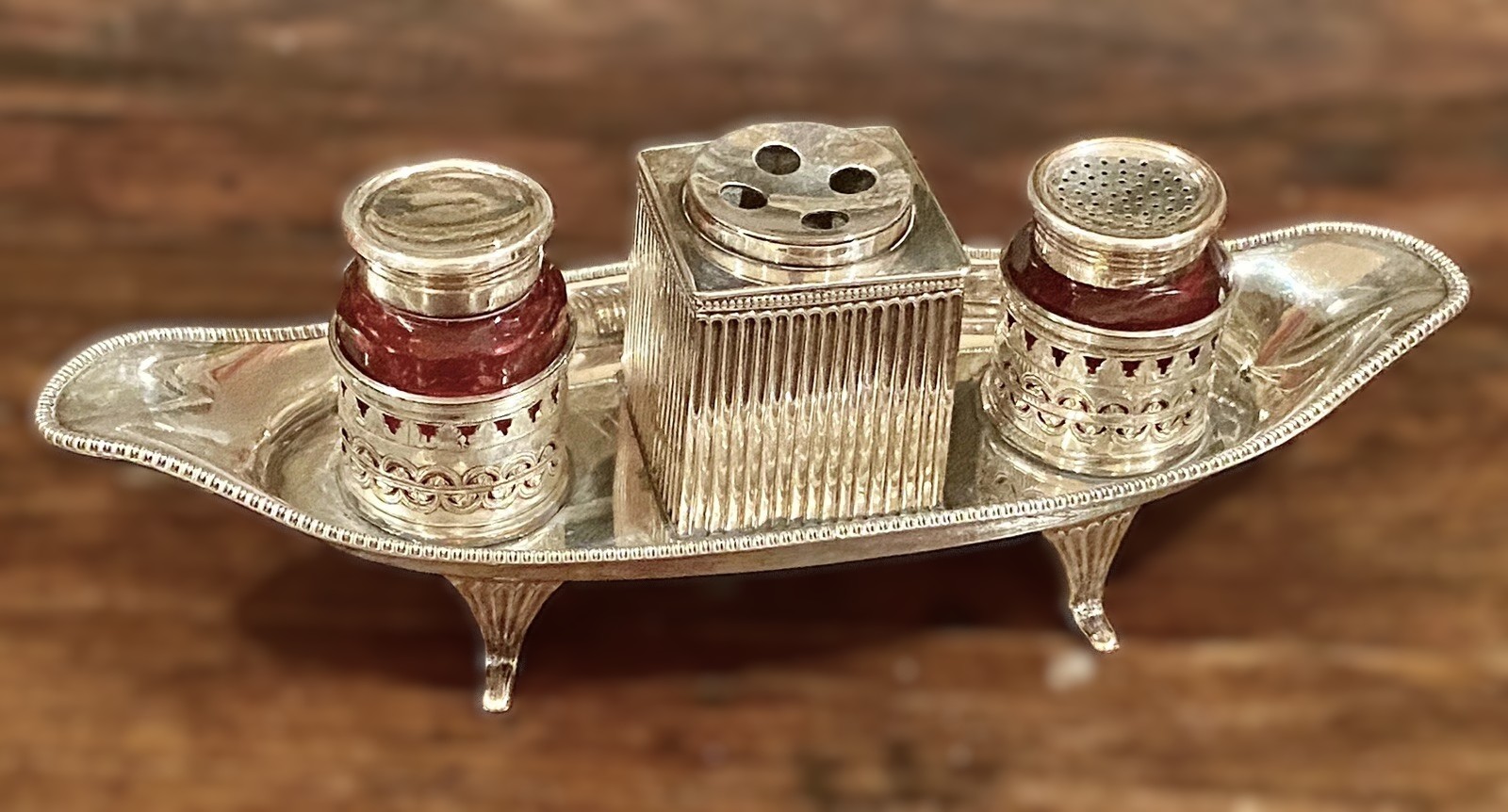
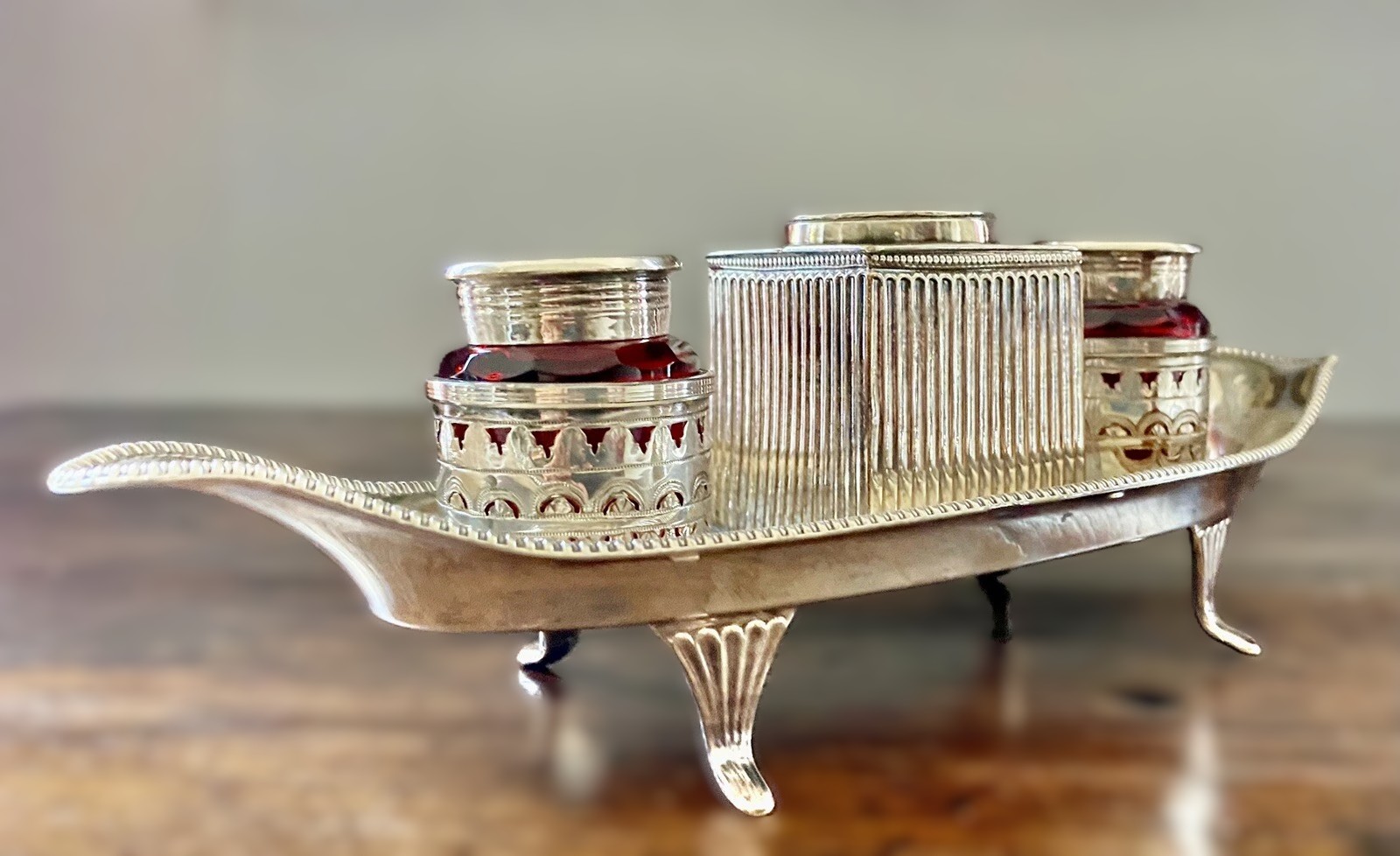
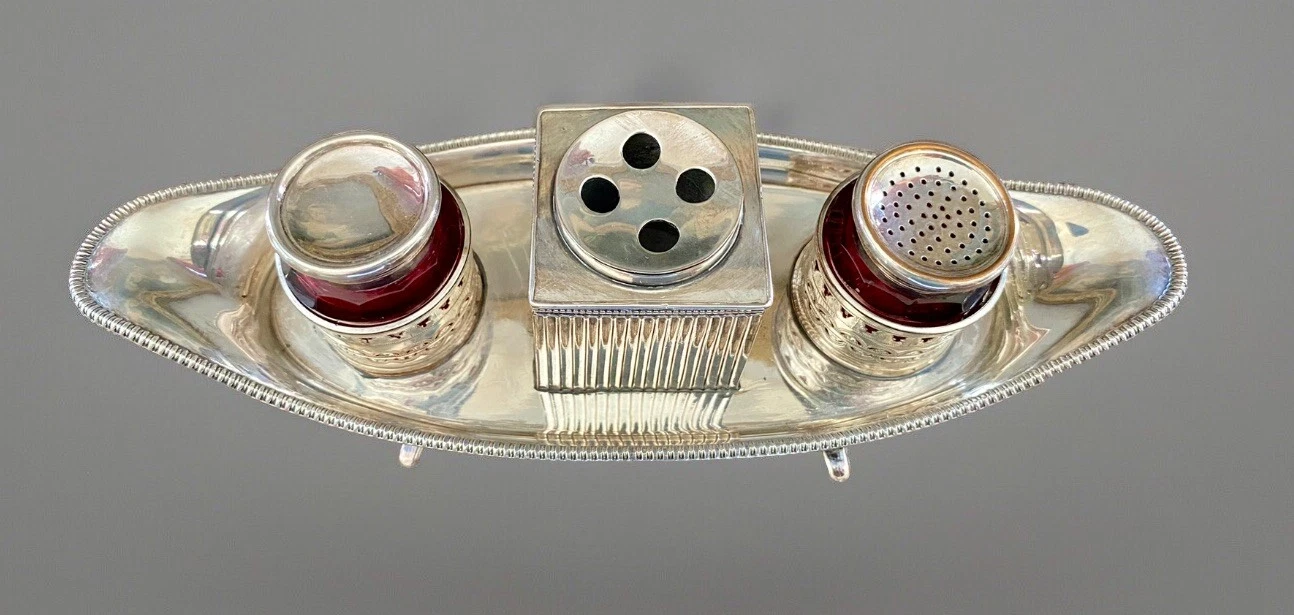
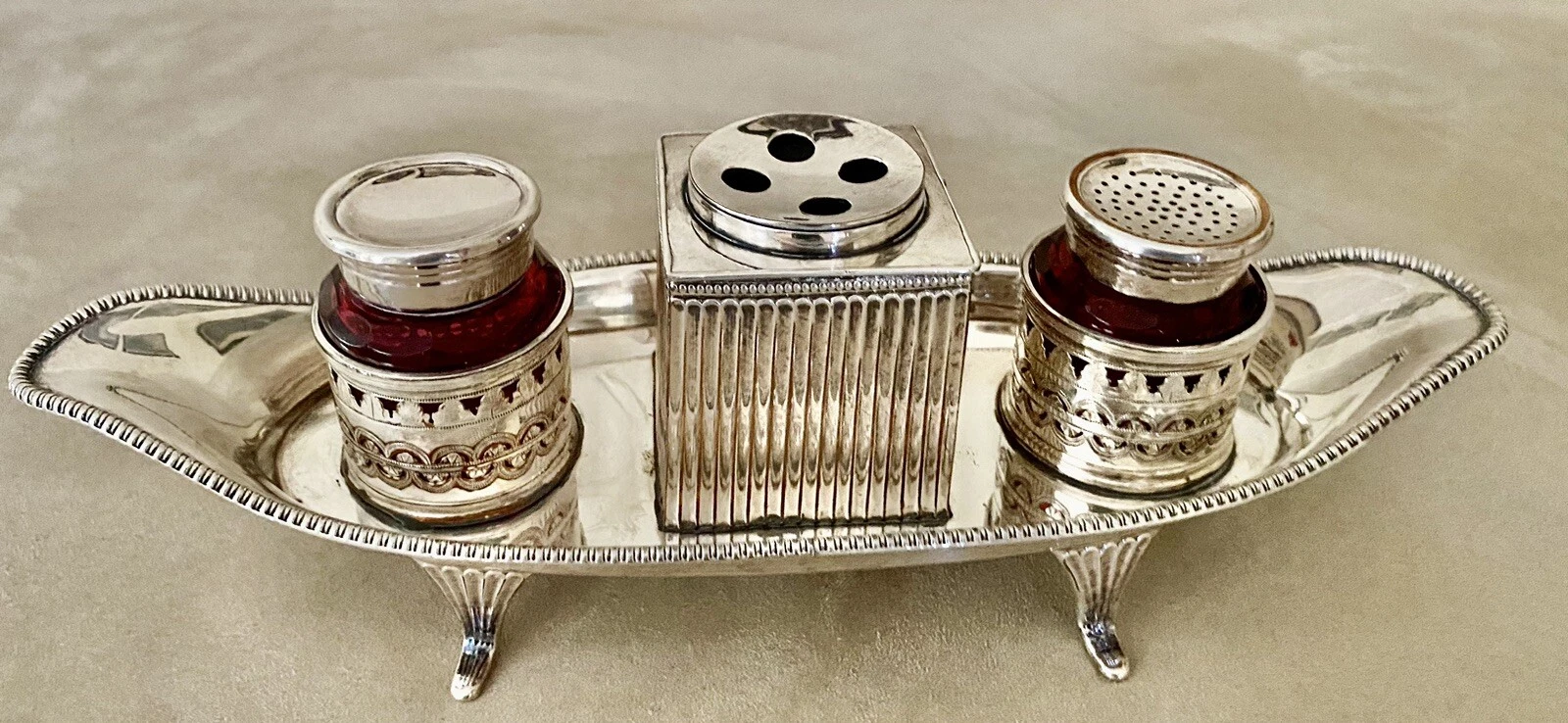
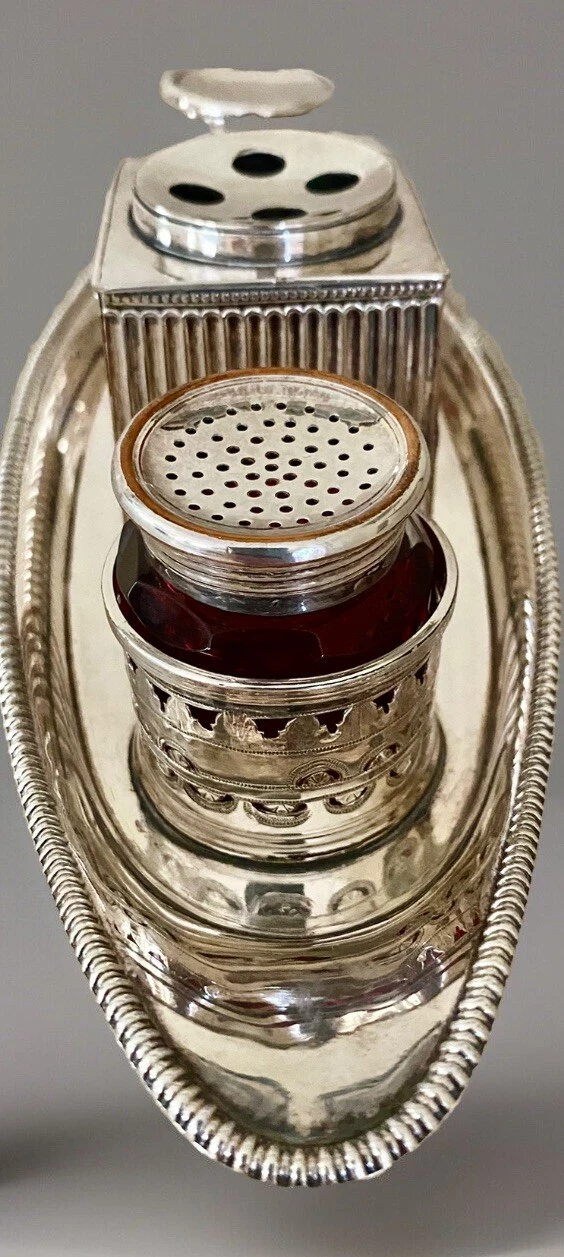
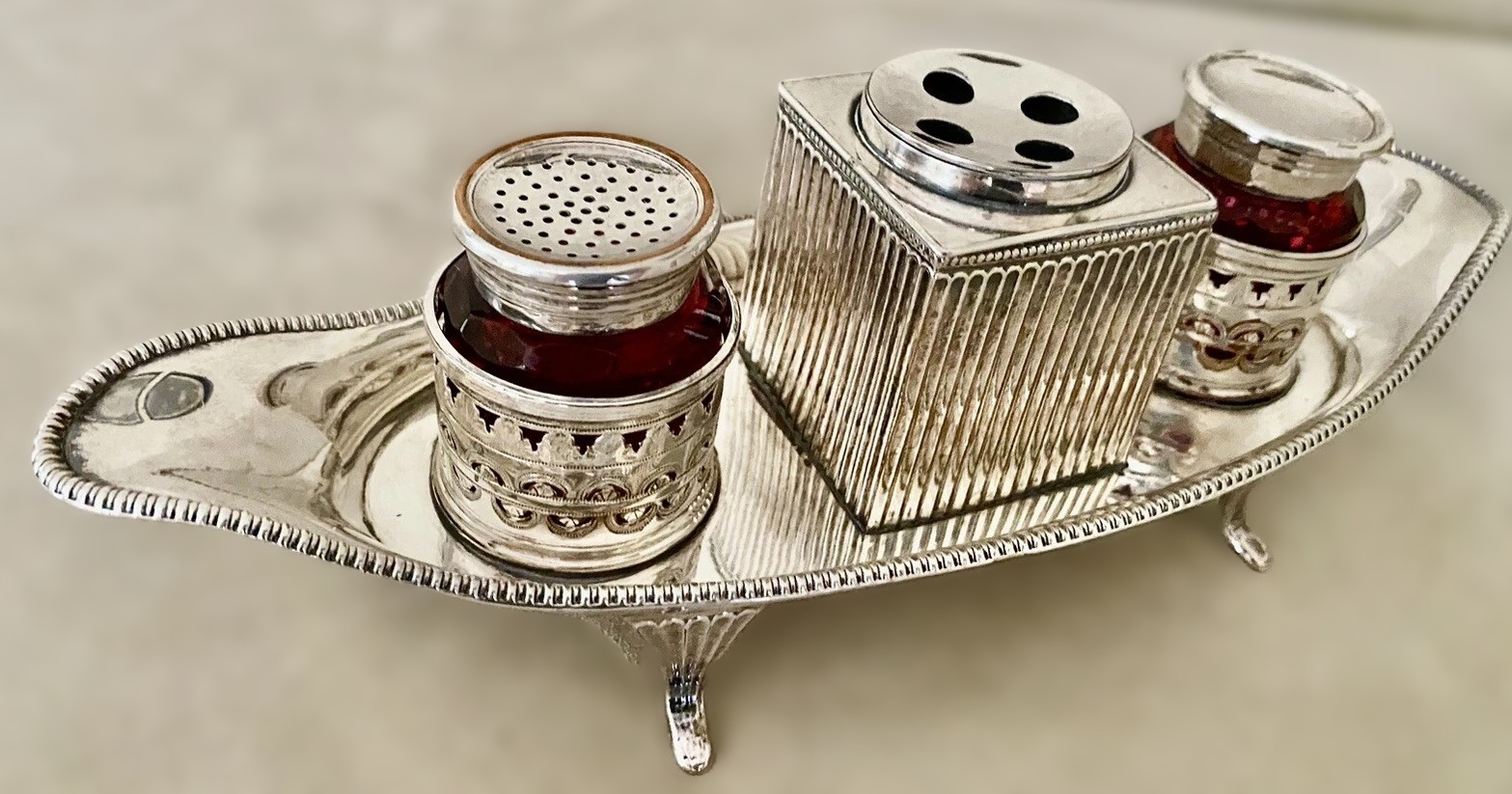
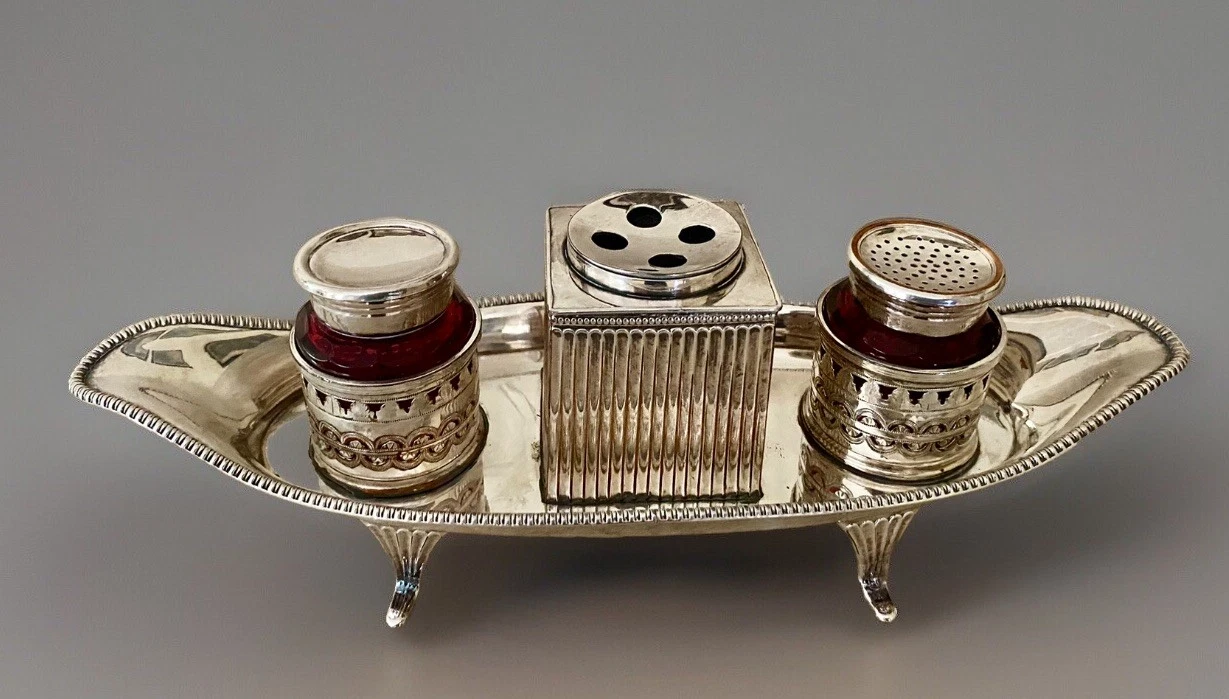
Sheffield Silverplate and Ruby Glass Inkstand
| Categories | Silver |
| Type | Standish |
| Material | Glass, Silverplate |
| Markings | Unmarked |
| Manufacturer | Undetermined |
| Origin | England |
| Date or Era | circa 1820 |
| Measuring | 11” long |
Description
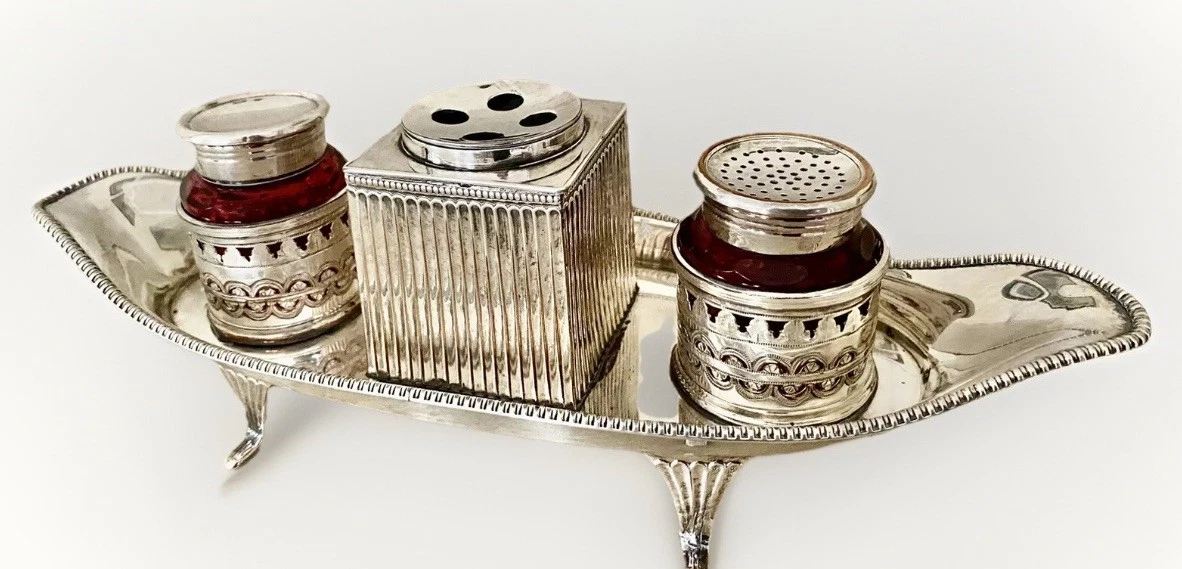
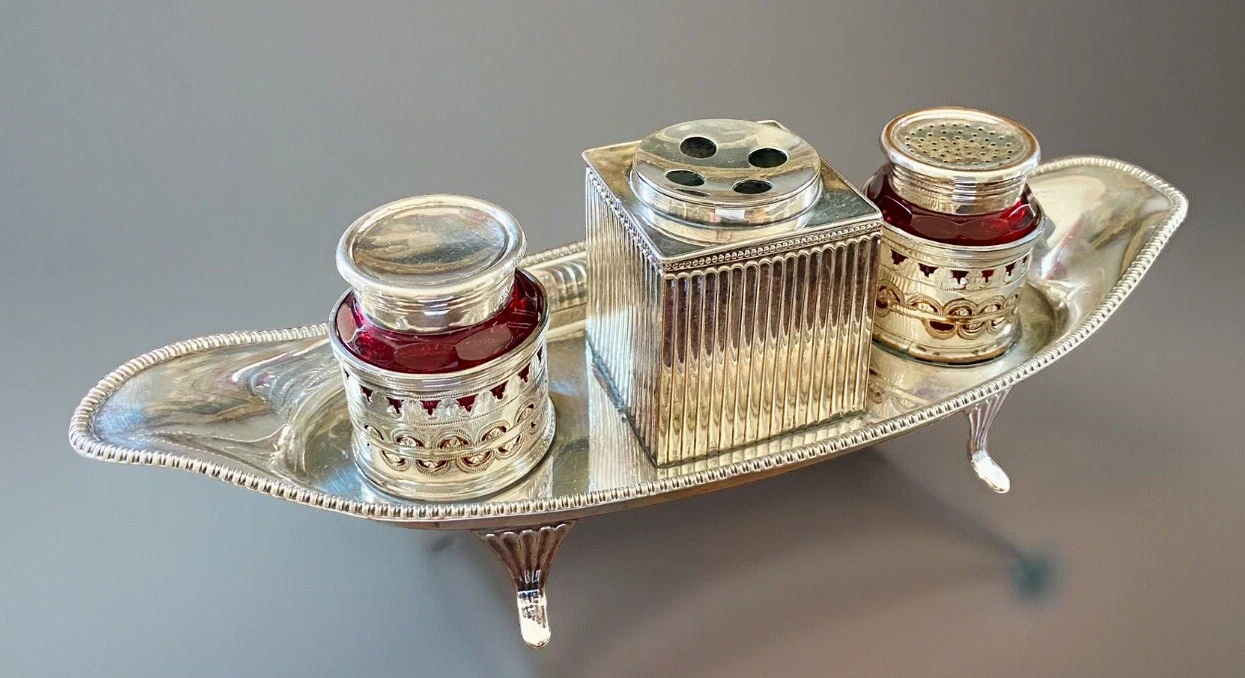
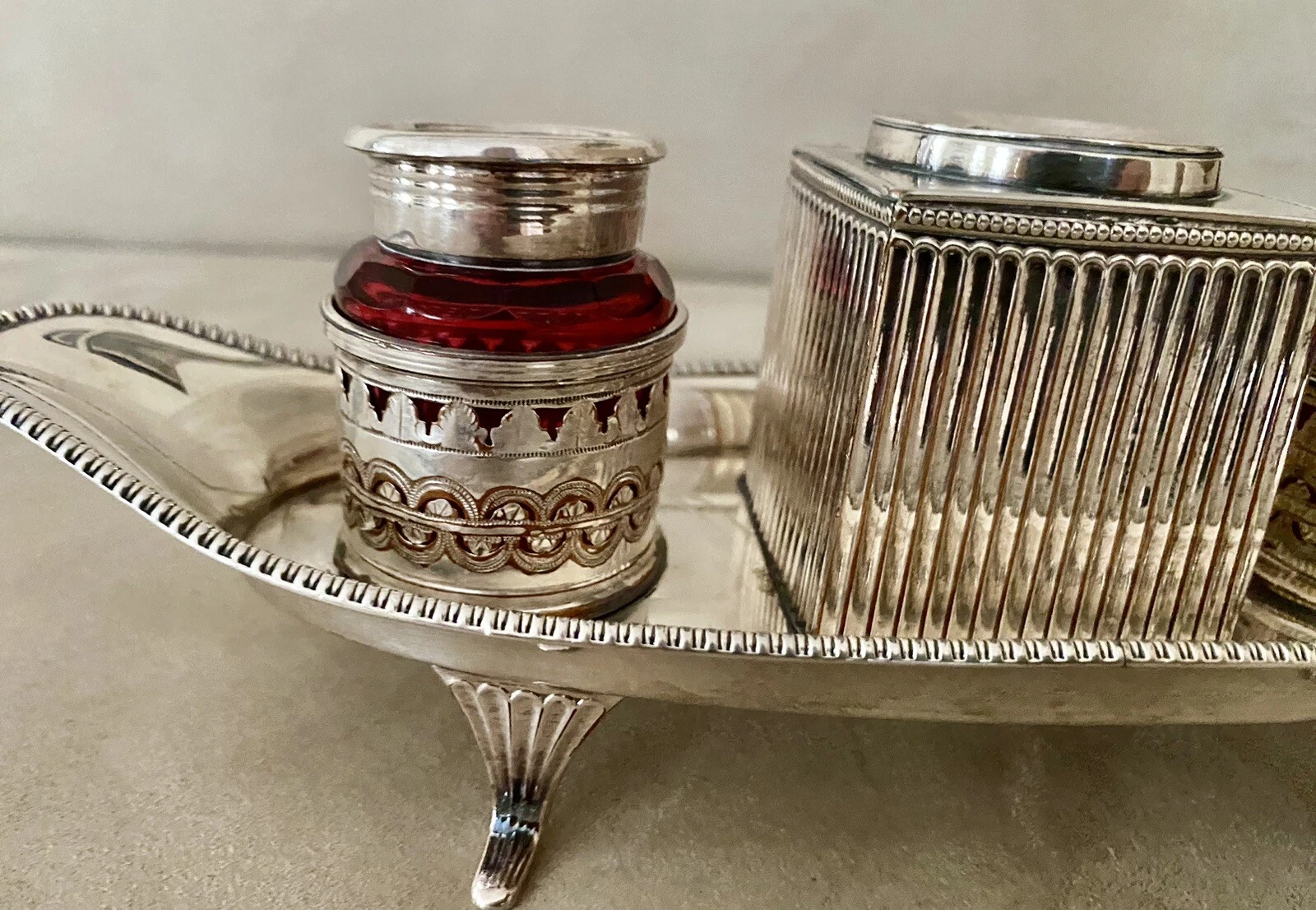
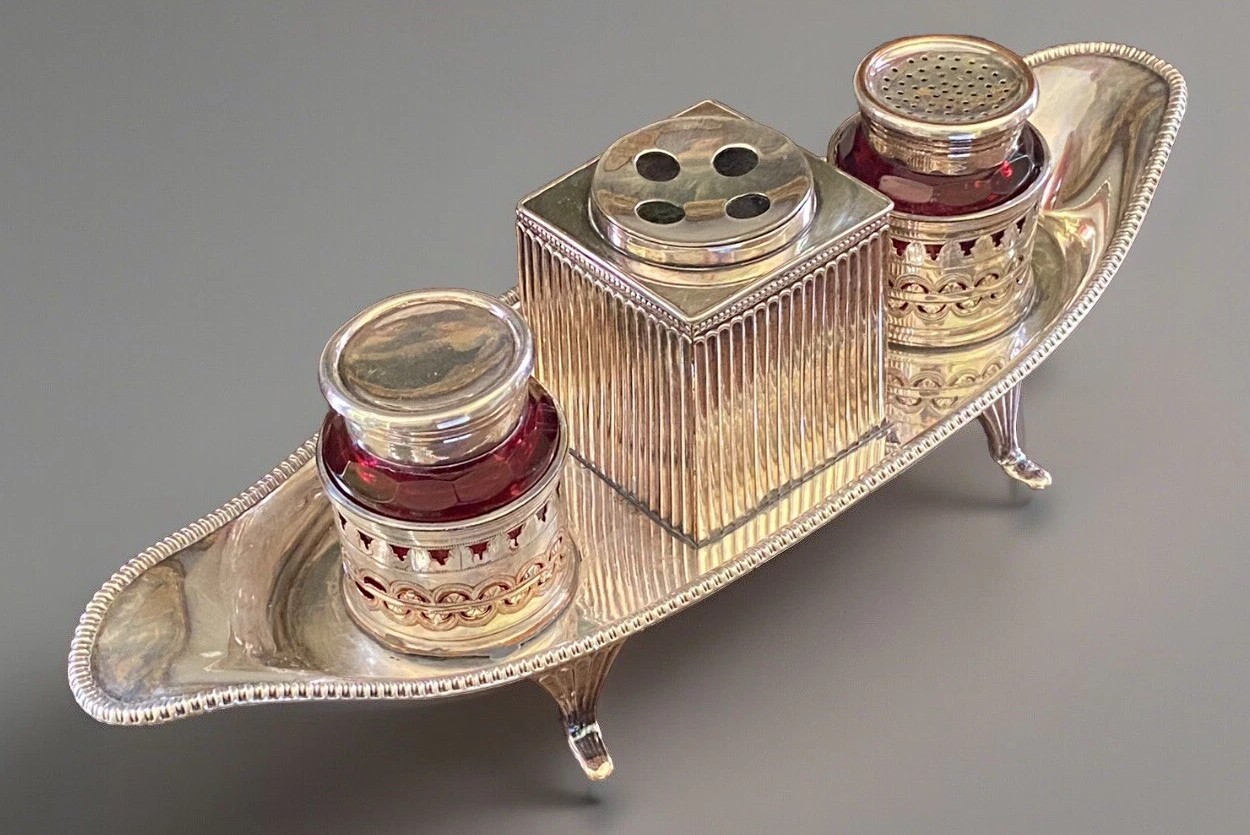
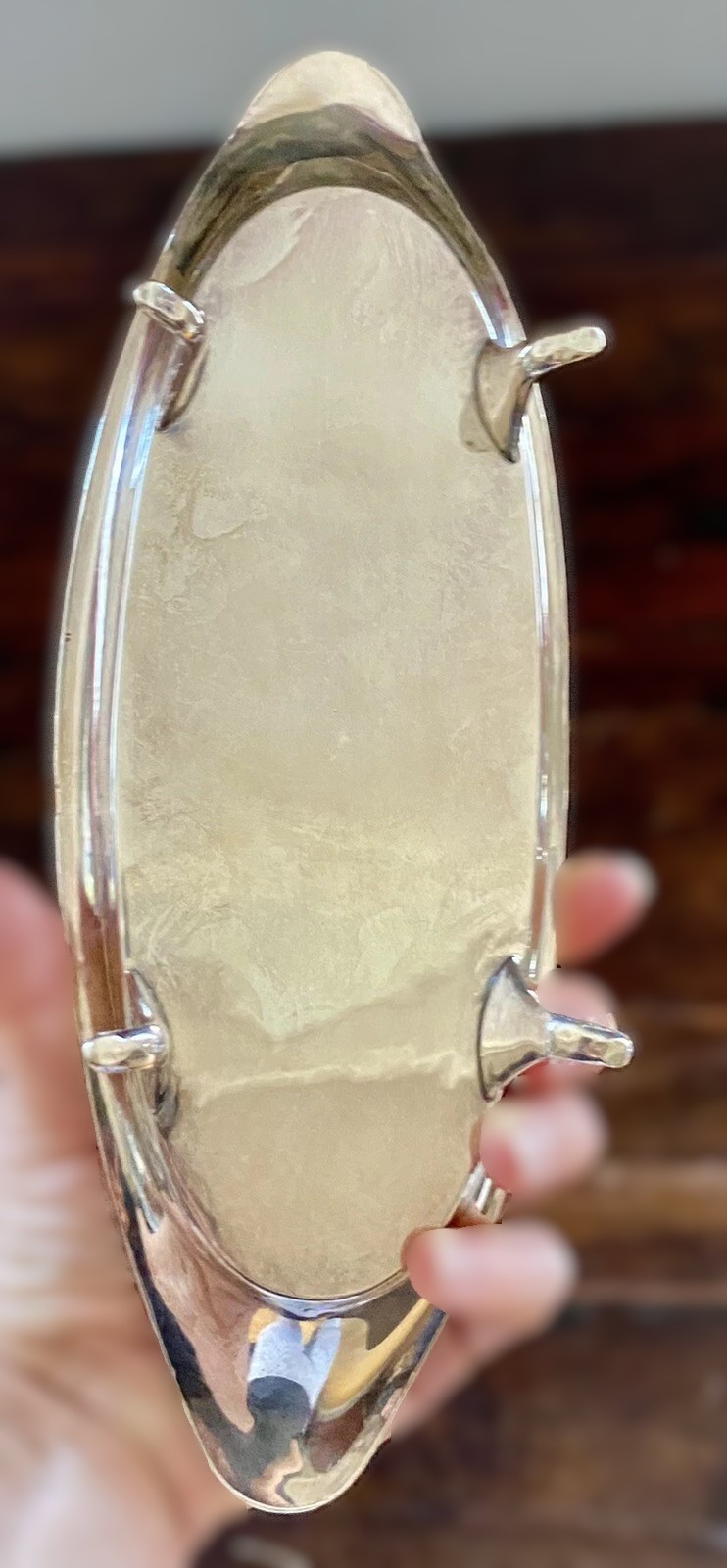
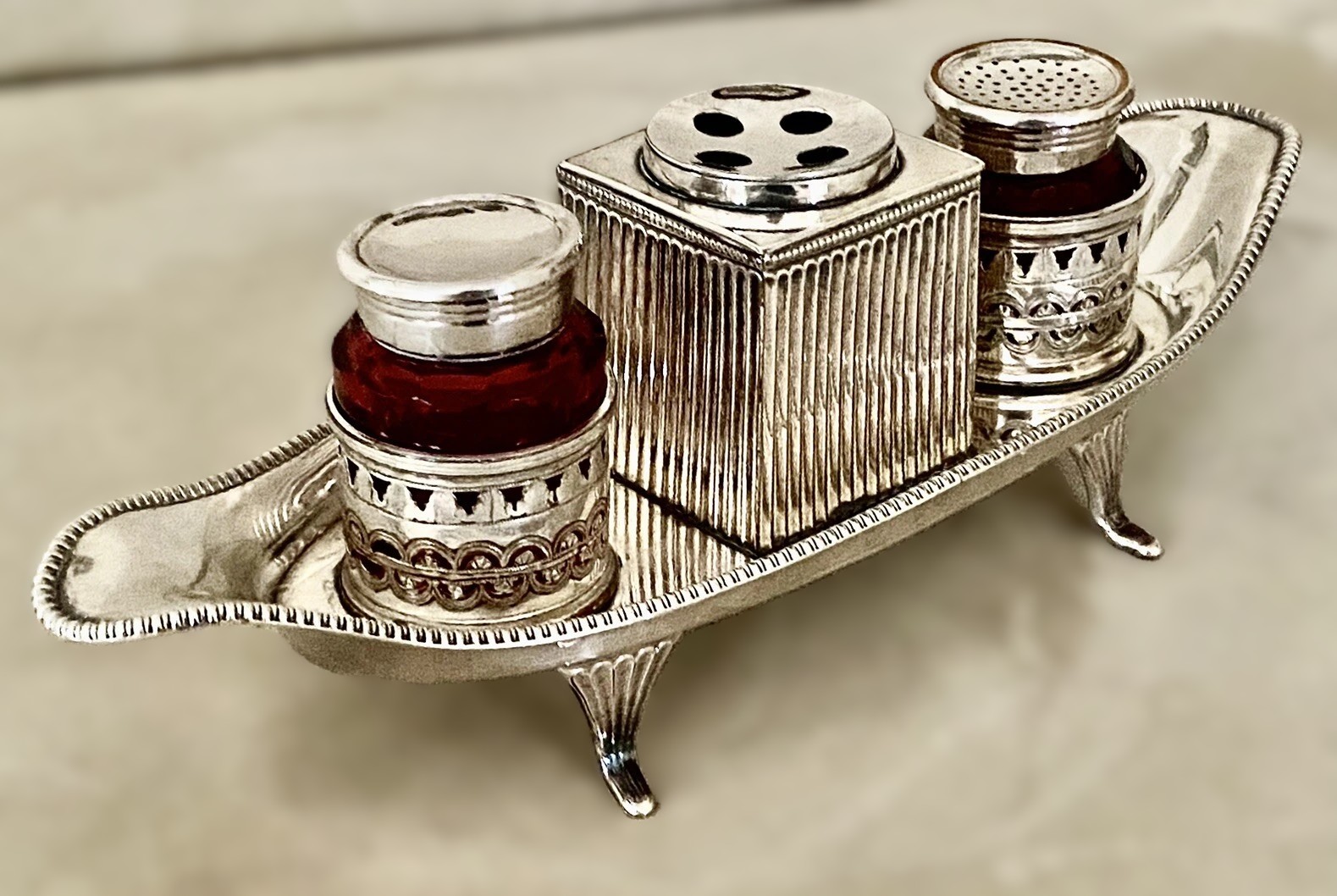
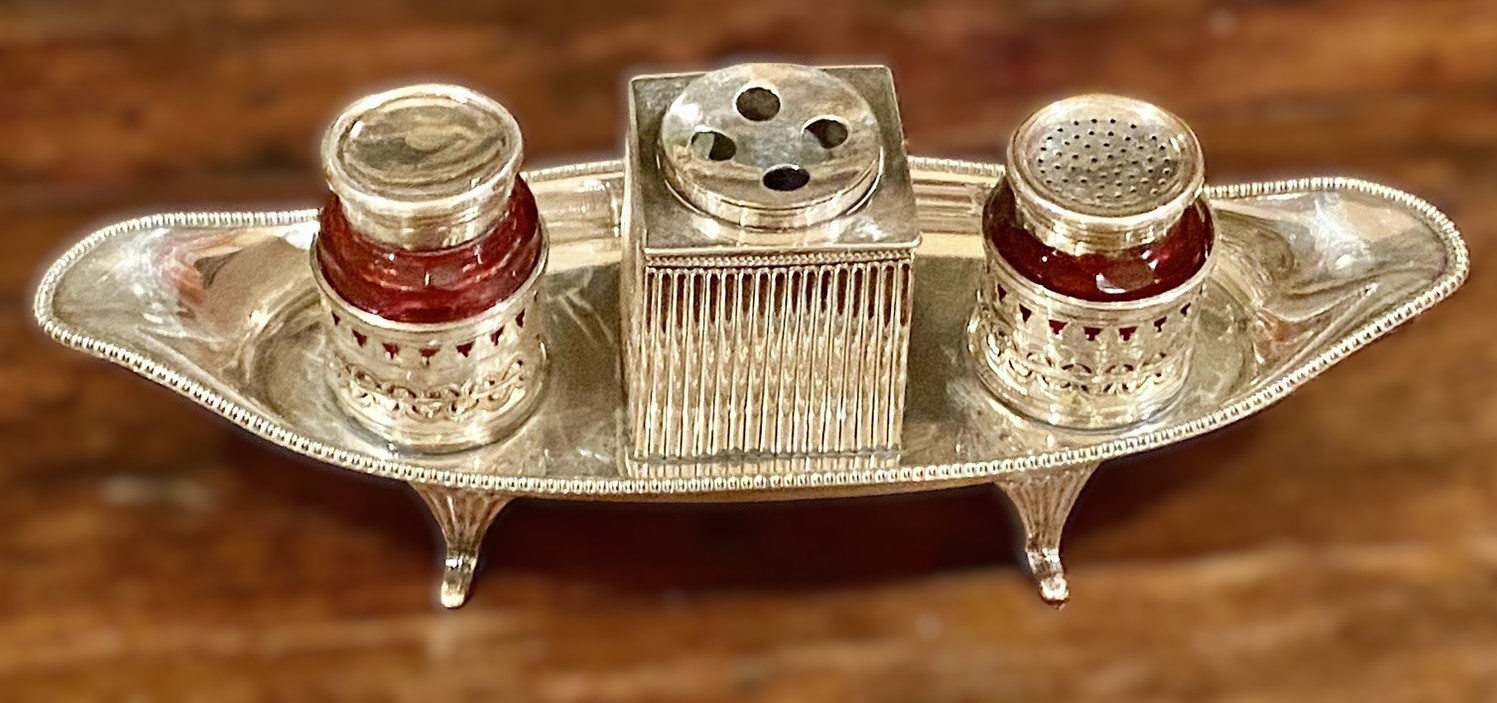
- The Stand (Tray): The piece rests upon four cast, scrolled bracket feet with ribbed or fluted detailing. The boat-shaped (navette) tray features a pronounced gallery rim outlined with a fine beaded border (beaded wire edge), and elegant upturned ends or handles at either terminus that echo the sweeping contour.
- The Containers: The stand securely holds three matching vessels encased in pierced and repoussé silverplated frames:
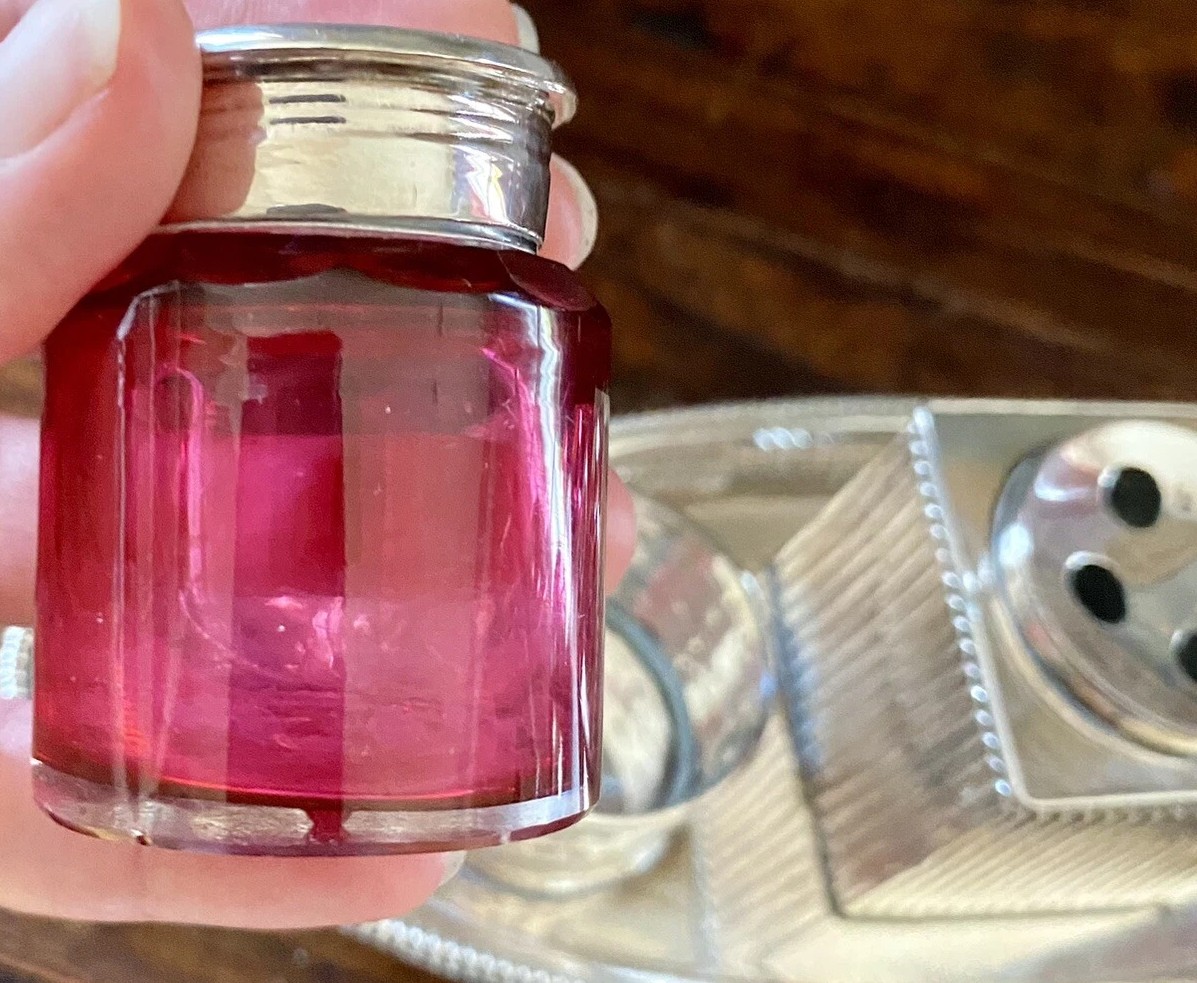
- An Inkwell: Retaining its fitted silverplated lid. The deep ruby-cut glass bottle features vertical fluting/paneling.
- A Sander: Featuring a pierced shaker top used for sprinkling fine sand over wet ink to blot excess moisture before envelopes or blotting paper became commonplace. Like its counterpart, it sits in an ornate pierced gallery mount depicting stylized arches and scrollwork.
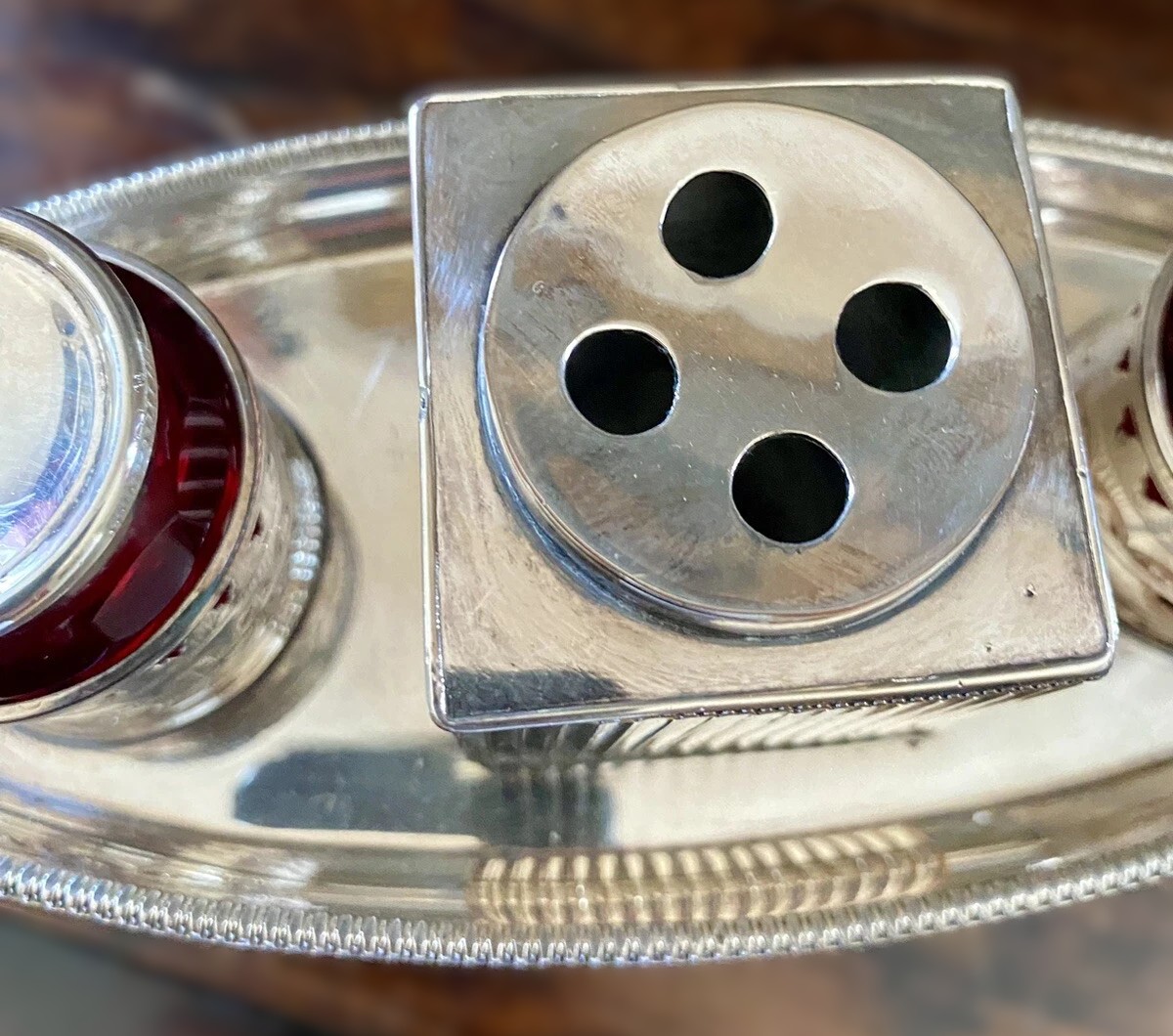
- A Central Pen Holder: Positioned centrally between the inkwell and sander is a square columnar container. It features crisp vertical fluting along its sides, bordered by a delicate beaded line just beneath the shoulder, and is topped with a circular insert pierced with four distinct circular apertures (typically used to hold quill pens or tapers).
Materials & Technique
- Sheffield Silverplate: The pieces are crafted using early silverplating techniques (fusing a thin sheet of sterling silver to a copper base, often visible subtly at high-wear or interior junctions, typical of authentic antique Sheffield plate).
- Glass: Rich ruby-red (cranberry/pot-ash gold or copper ruby) glass, expertly cut with faceted panels.
Estimated Date of Manufacture
- Period: Regency / Late Georgian
- Circa: 1810 – 1830
Stylistic Rationale for Dating:
- Navette Shape & Beaded Edges: The boat-shaped tray form standing on delicate bracket feet, combined with the ubiquitous use of beaded wire trim, was popular in English silver and Sheffield plate from the late 1780s through the 1820s.
- Pierced Gallery Work: The intricate, pierced gallery mounts wrapping the glass ink and sand bottles—featuring Gothic-revival or neo-classical pointed arches and looped scroll bands—point firmly toward the Regency era (c. 1810–1830), a period when compact, multifaceted desk stands incorporating colored glass inserts reached their design zenith.
The Distinction Between “Old Sheffield Plate” and “Electroplate”:
- Old Sheffield Plate (c. 1743–1840s): Created by physically fusing a thin sheet of sterling silver to a thick copper base using heat, then rolling the composite metal into sheets. Items made this way often feature subtle clues like a faint copper “bleed-through” along high-wear edges, seams, or undersides.
- Electroplate / EPNS (introduced c. 1840): Created via an electrical chemical bath that bonded a microscopic layer of silver onto a base metal (often nickel-silver).
Because this inkstand utilizes the older fused-plate method and stylistic traits typical of the late Georgian/Regency transition, an 1810–1830 window remains historically sound. If it were an electroplated piece from the later 19th century, the manufacturing method, mount styles, and crispness of the borders would look quite different.
Sold for $613 in September 2026
Content disclaimer. The information posted is the owner’s best knowledge and may not have been vetted by the SOIC. We welcome comments, corrections, and additions, working to make our website information comprehensive and accurate.
Join the Society of Inkwell Collectors (SOIC) – it’s free!
Founded in 1981 as a non-profit organization,
we are documenting inkwells (and accessories).
We’re here to help and inform!