

Brilliant-Cut Glass Inkwell
| Categories | Glass - Non-figural |
| Material | Glass |
| Markings | Unmarked |
| Manufacturer | Undetermined |
| Origin | Undetermined |
| Date or Era | circa 1890 |
| Measuring | 4” x 4” x 3 ¼” high |
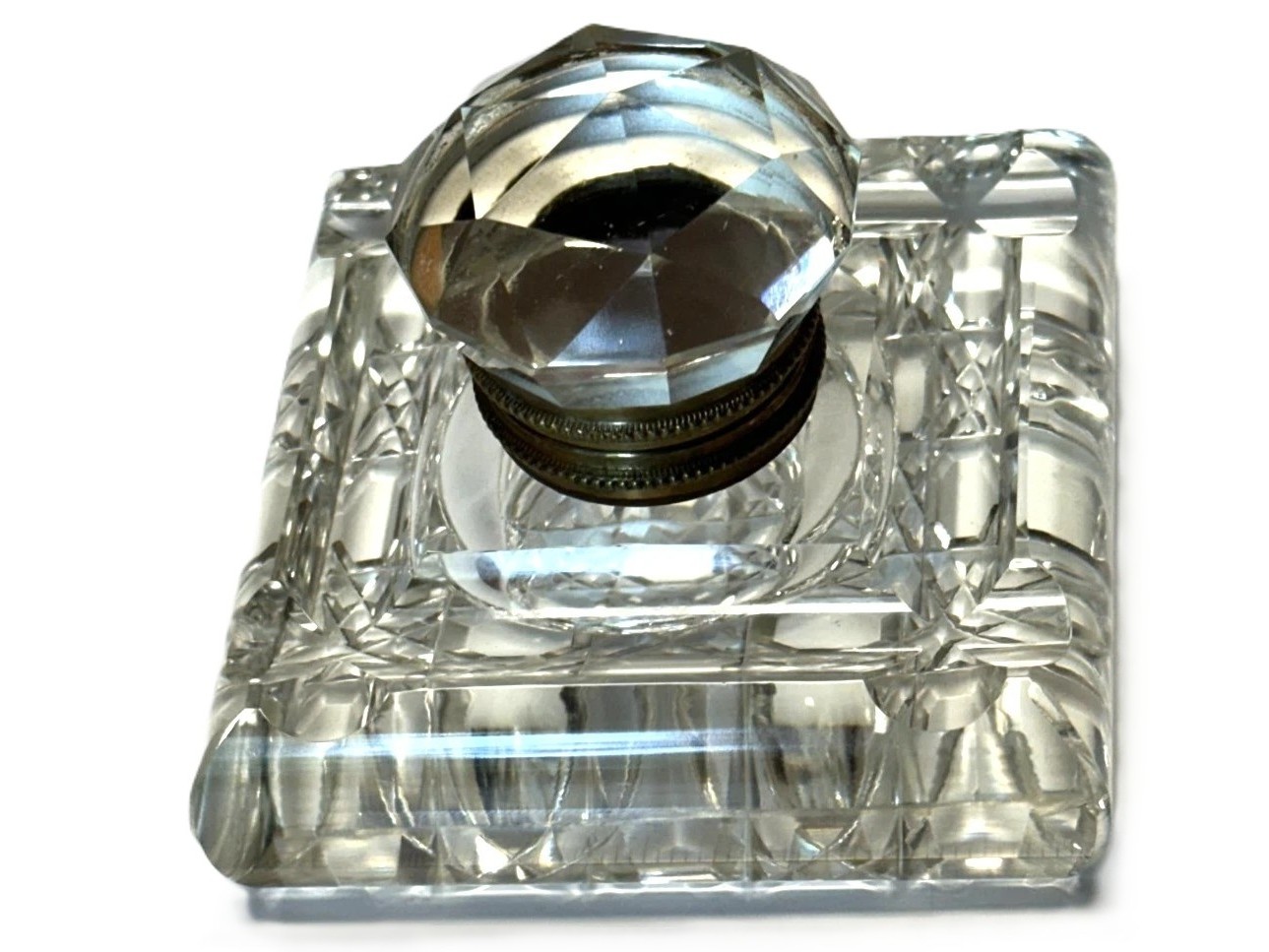
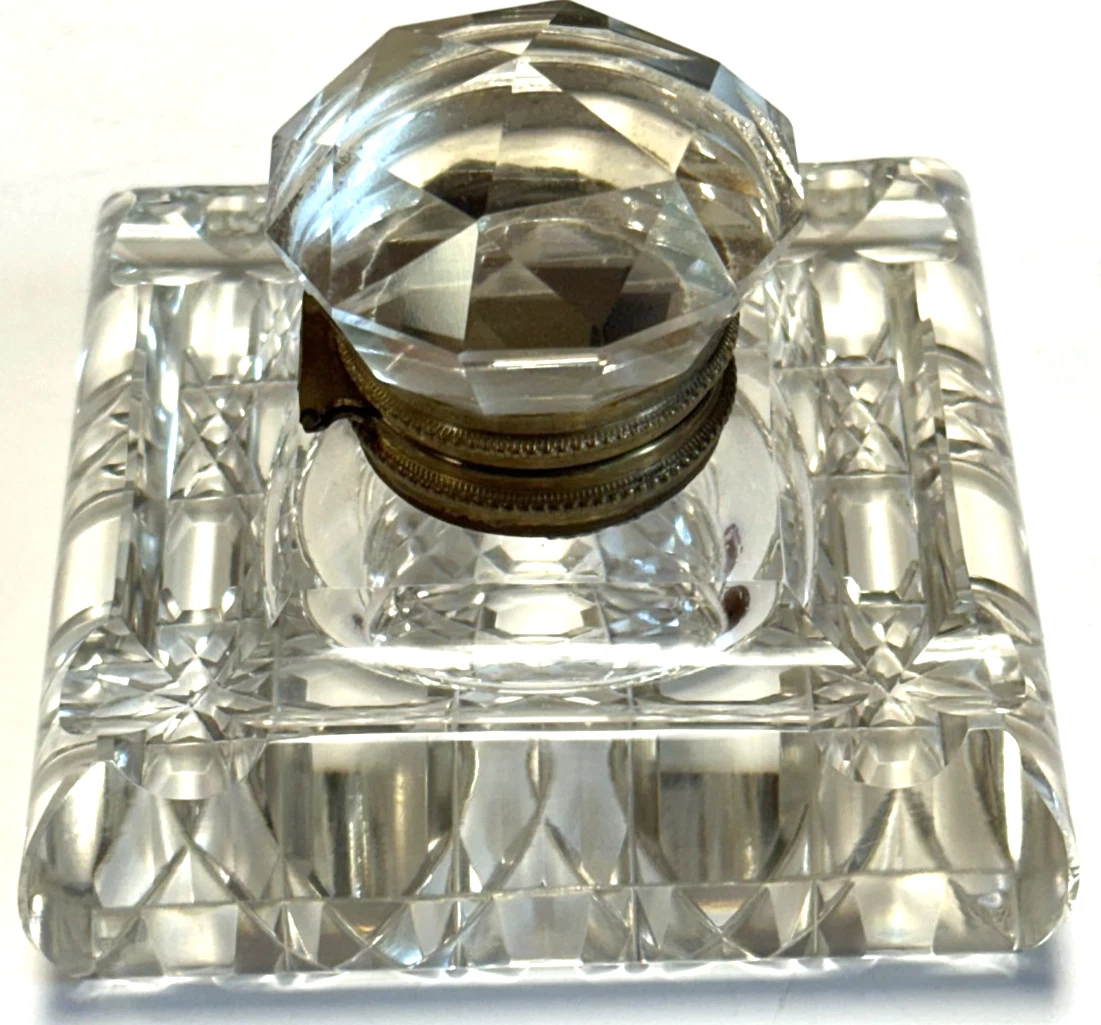
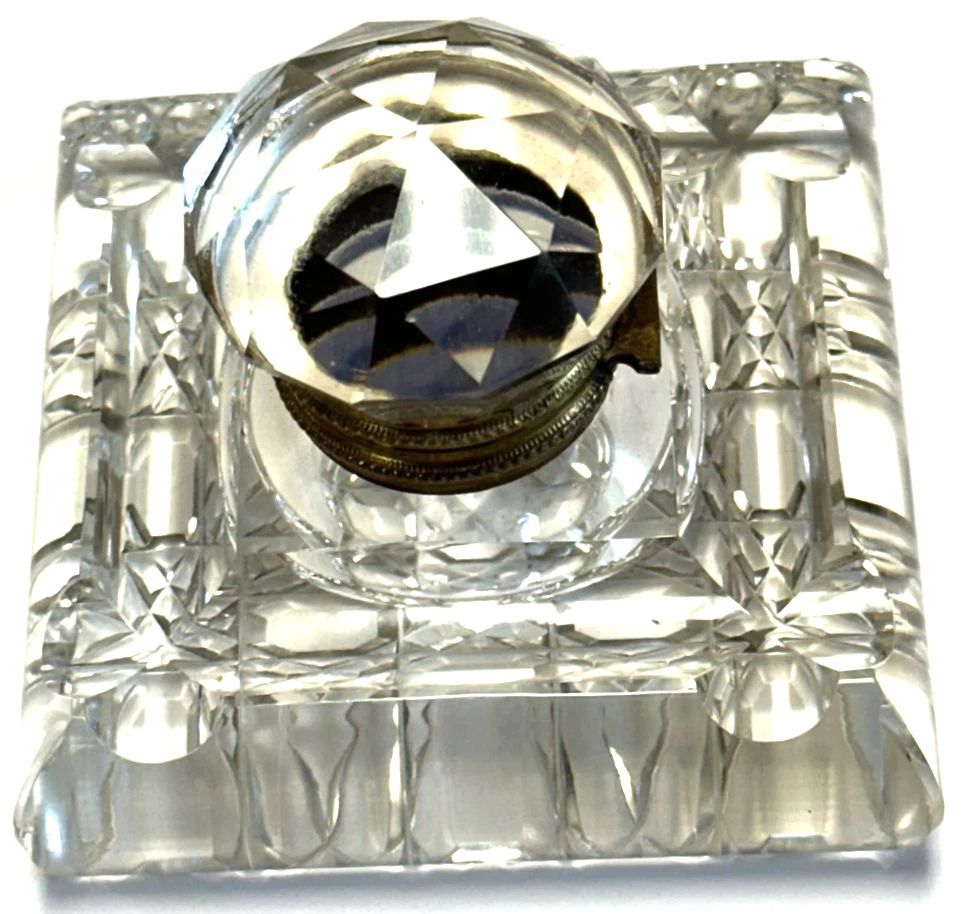
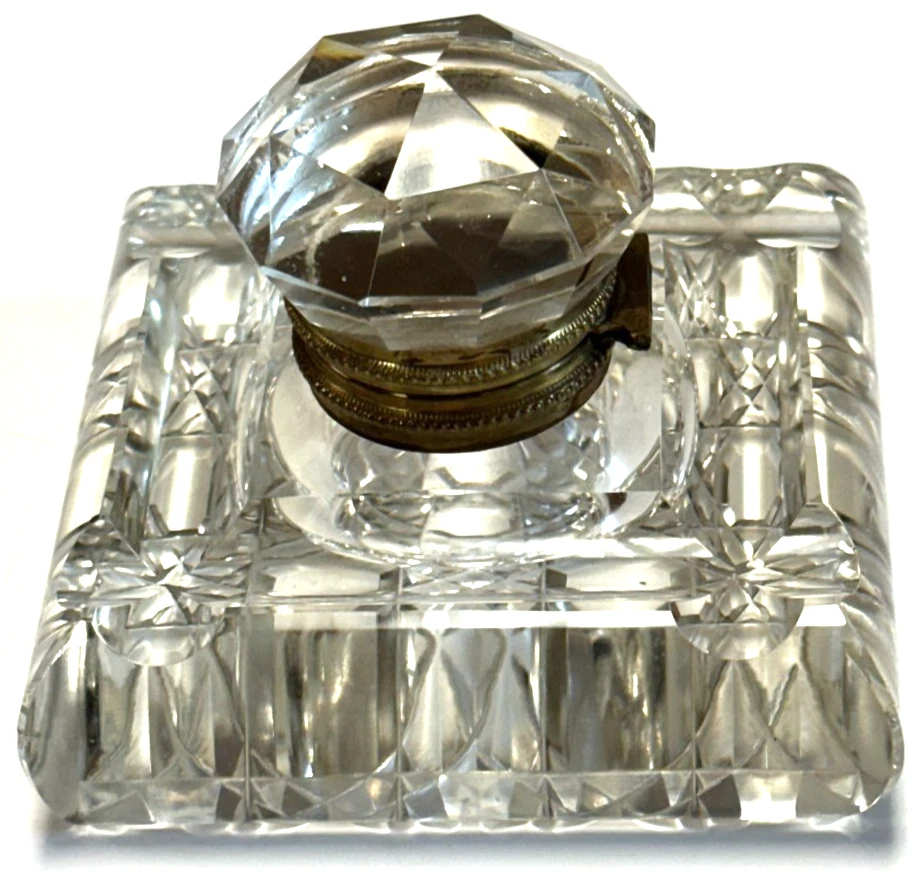
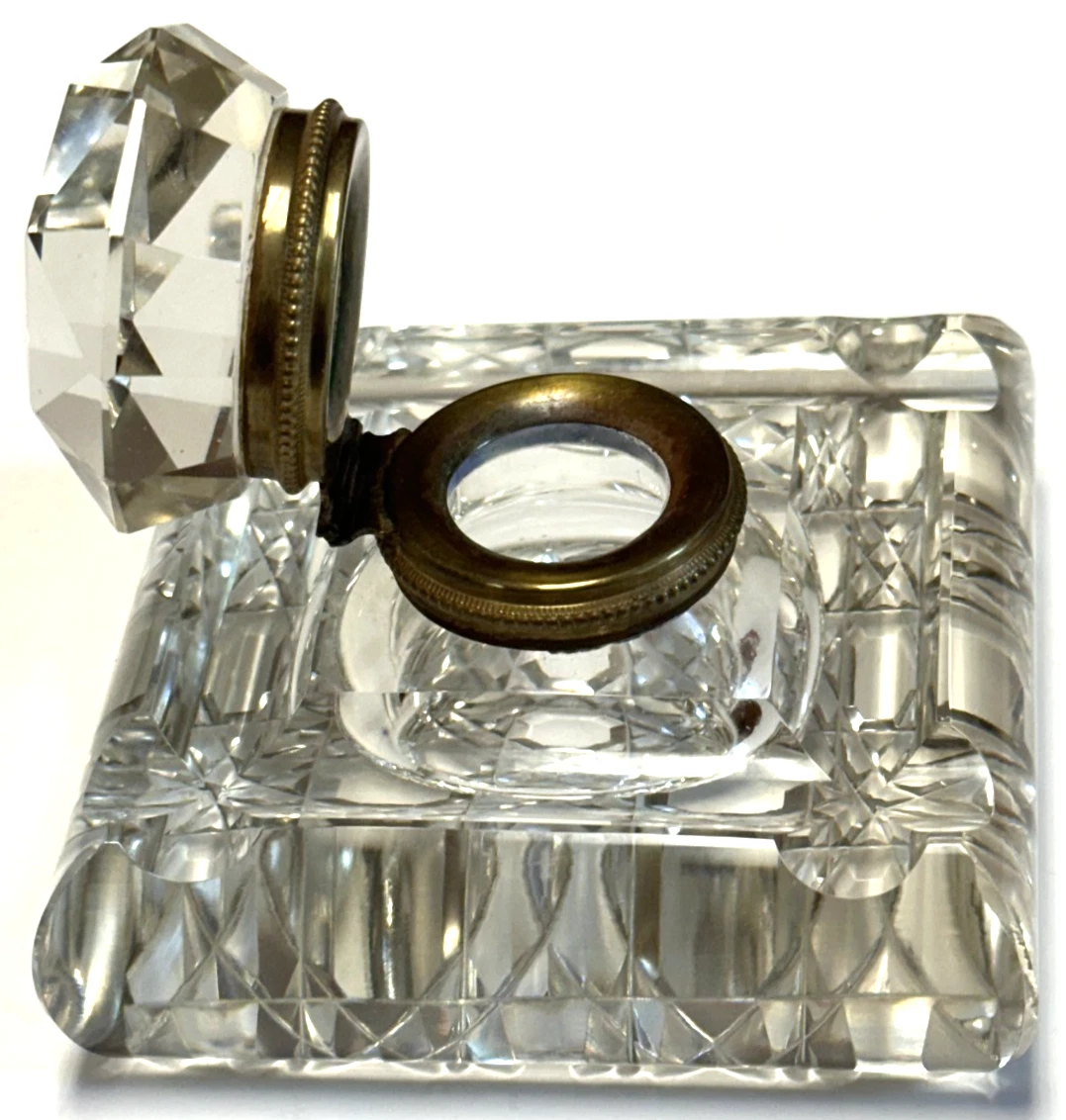
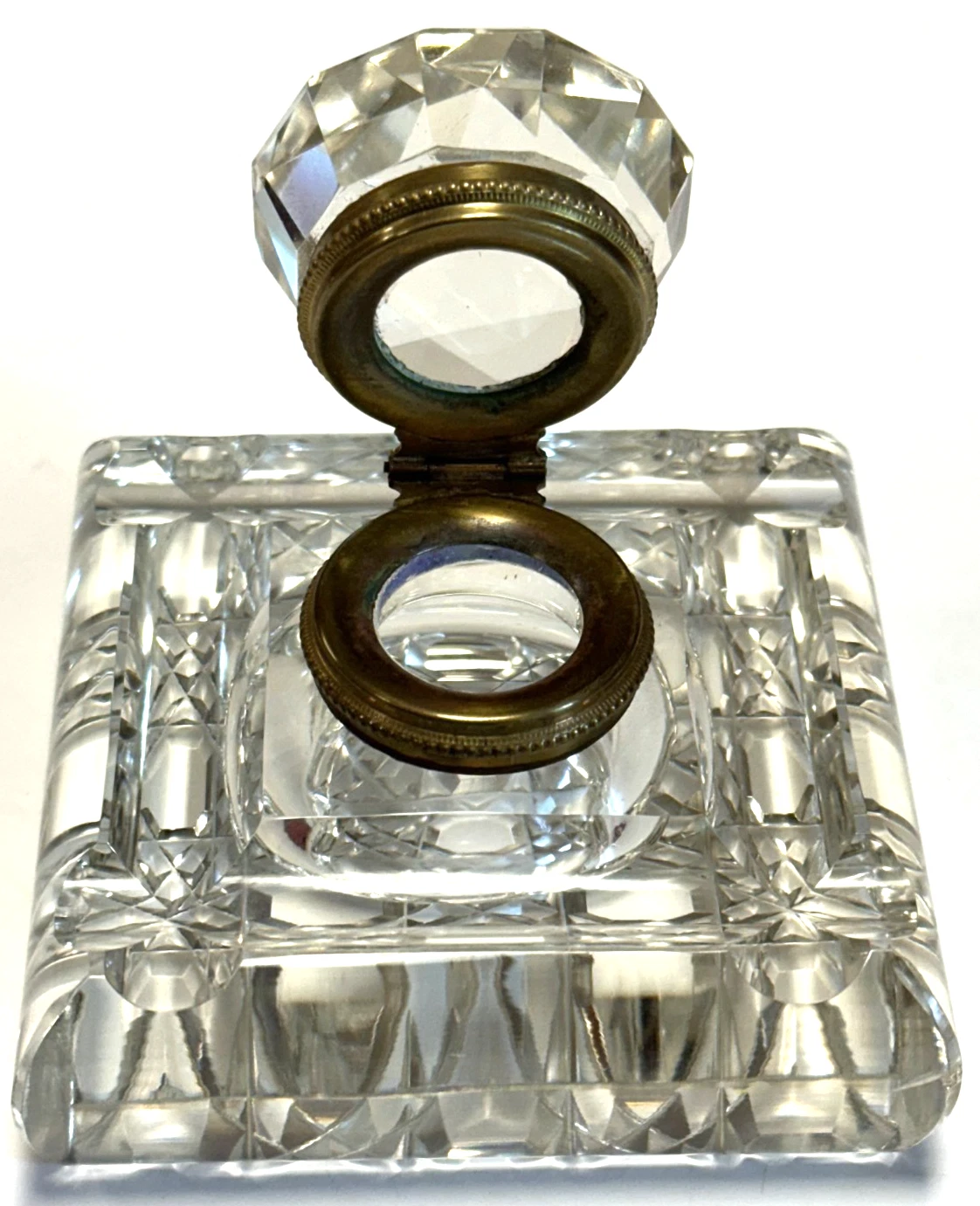
This heavy-cut crystal square inkwell features intricate geometric cutting, a stepped collar, and a faceted matching crystal-ball lid mounted in a hinged brass collar.
Description
- Body: A substantial 4″ x 4″ x 3.25″ square block of lead crystal. The exterior is extensively cut with a combination of deep flutes or panels along the vertical sides, framing crisp cross-hatching and starburst (or hobstar-style) motifs at the corners. The top shoulders step inward toward a central circular collar surround.
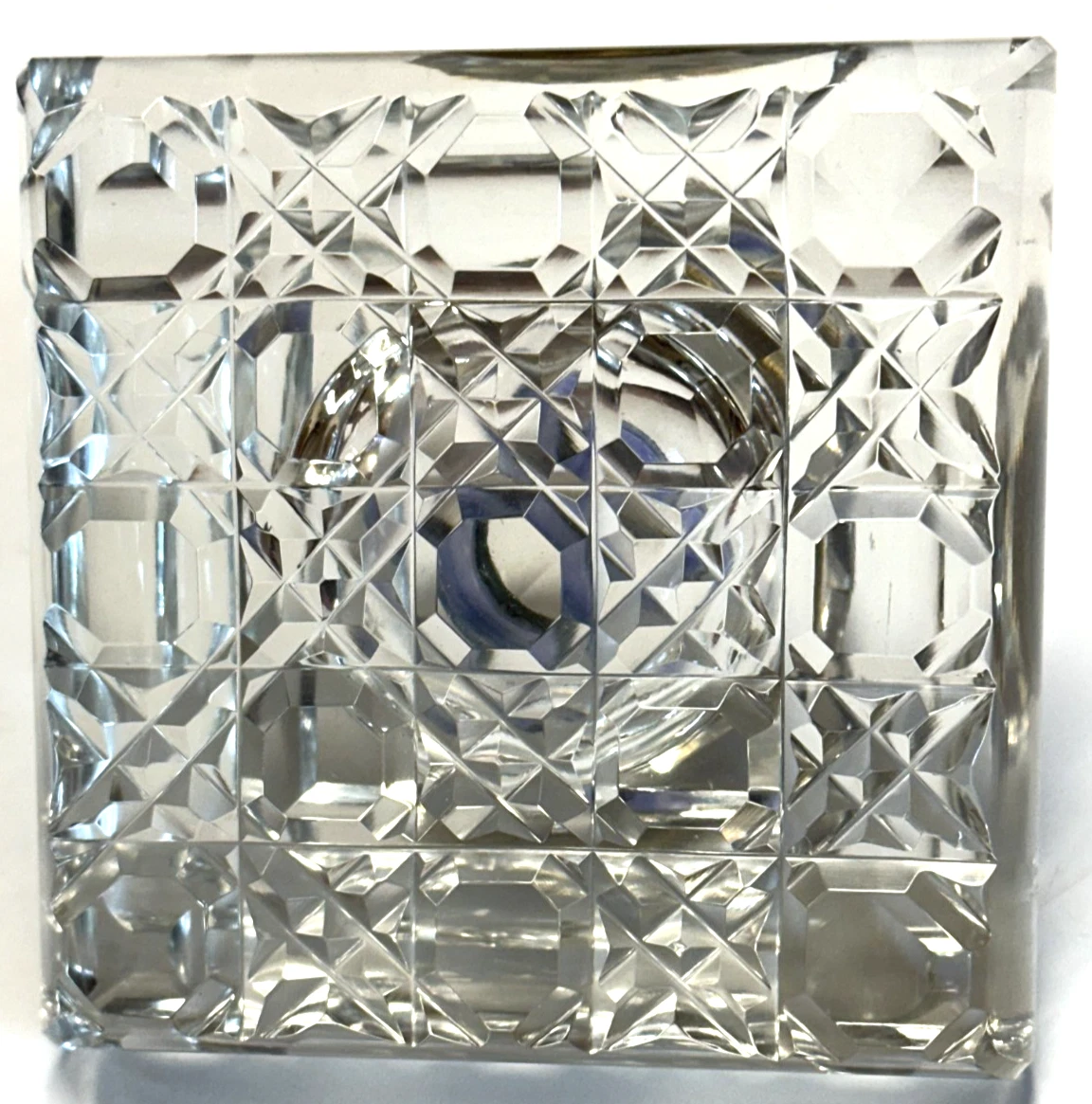
- Base: The underside features a deep, geometric hobstar or star-cut base pattern that refracts light brilliantly through the thick glass body.
- Pen Rests: The top surface is designed with four indented sloping grooves (one on each side of the collar platform) intended to rest dip pens when not in use.
- Collar & Lid: The inkwell opens via a hinged brass collar with a decorative beaded border. The attached matching lid consists of a faceted, heavy cut-crystal dome/finial that mirrors the geometric brilliance of the base.
Origin & Dating
- Where was it made?
Heavy cut-glass inkwells of this caliber and style were predominantly produced in Great Britain (particularly the major glass-making hubs of England, such as Stourbridge, or Anglo-Irish manufactories) as well as by elite American glassmakers (such as T.G. Hawkes or Corning in New York, drawing heavy inspiration from British Victorian design). Without a distinct acid-etched manufacturer’s mark (which was uncommon on the heavy brass-collared mounts of this era), pinning it to a single specific workshop is difficult, but British or American brilliant-period production is standard for this quality.
- When was it made?
This piece dates to c. 1880–1910.
-
- Stylistic Evidence: The heavy reliance on deep, brilliant-cut geometric patterns (hobs, fans, and prisms) coupled with brass-hinged collars became immensely popular during the American Brilliant Cut Glass era and late-19th-century British stationery opulence (often referred to as a “compendium” or library inkwell).
- Functional Context: Heavy, wide-base square inkwells of this weight were specifically engineered for executive desks, law offices, and high-end Victorian libraries to prevent tipping while providing multiple integrated pen rests.
Sold for $39 in September 2026
Content disclaimer. The information posted is the owner’s best knowledge and may not have been vetted by the SOIC. We welcome comments, corrections, and additions, working to make our website information comprehensive and accurate.
Join the Society of Inkwell Collectors (SOIC) – it’s free!
Founded in 1981 as a non-profit organization,
we are documenting inkwells (and accessories).
We’re here to help and inform!