

Staffordshire Figural “Gossip” Inkwells
| Categories | Ceramics/Porcelain Figural |
| Type | Face |
| Material | Earthenware |
| Markings | Unmarked |
| Manufacturer | Staffordshire |
| Origin | England |
| Date or Era | circa 1860 |
| Measuring | 2 ¼” x 2” x 2 ¾” high |
Origin: Staffordshire, England
Period: Mid-to-Late 19th Century (c. 1850–1880)
Materials: Molded Glazed Earthenware/Porcelain & Buff Caneware
Dimensions: Approximately 2 ¼” x 2” x 2 ¾” high
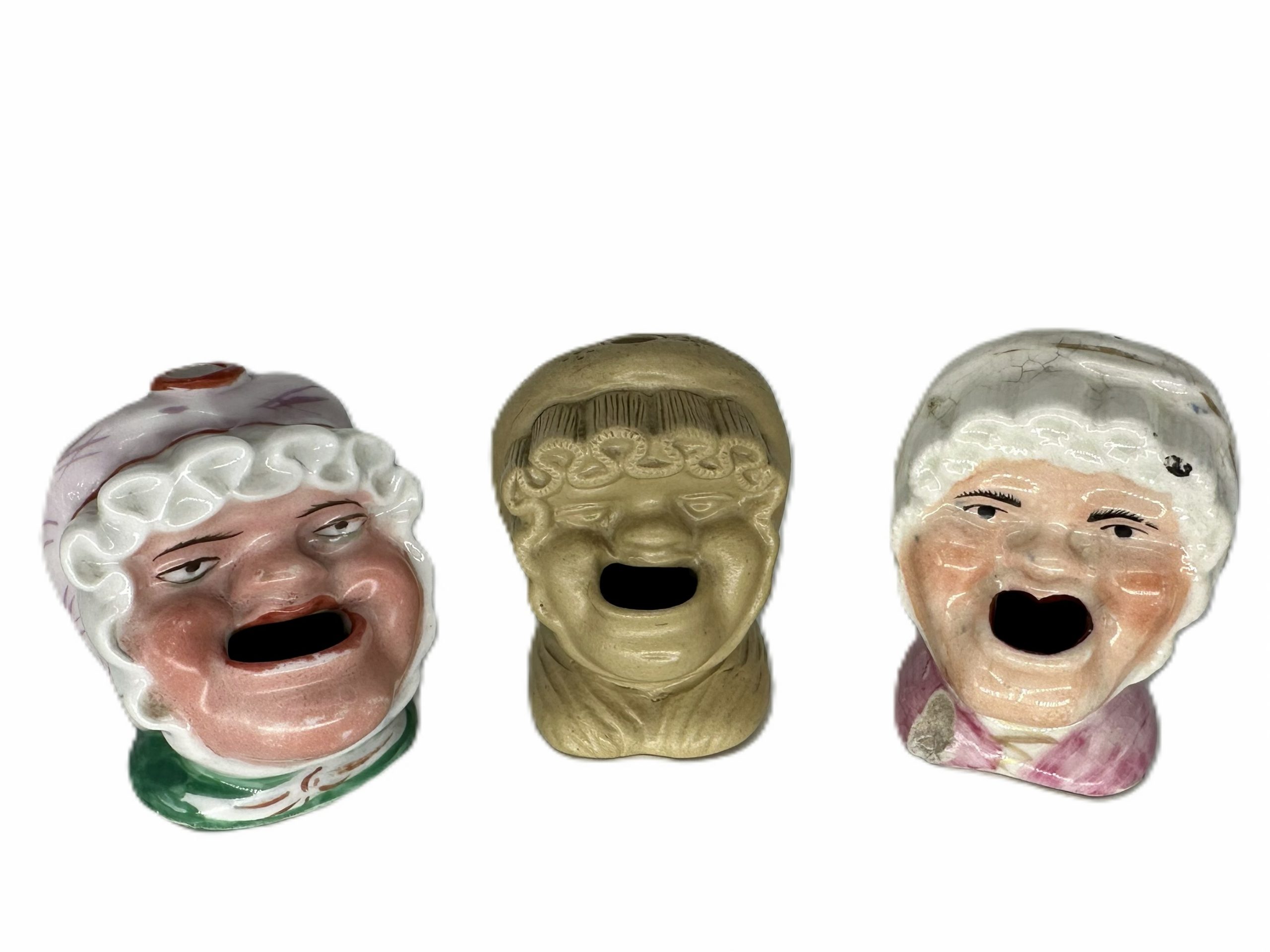
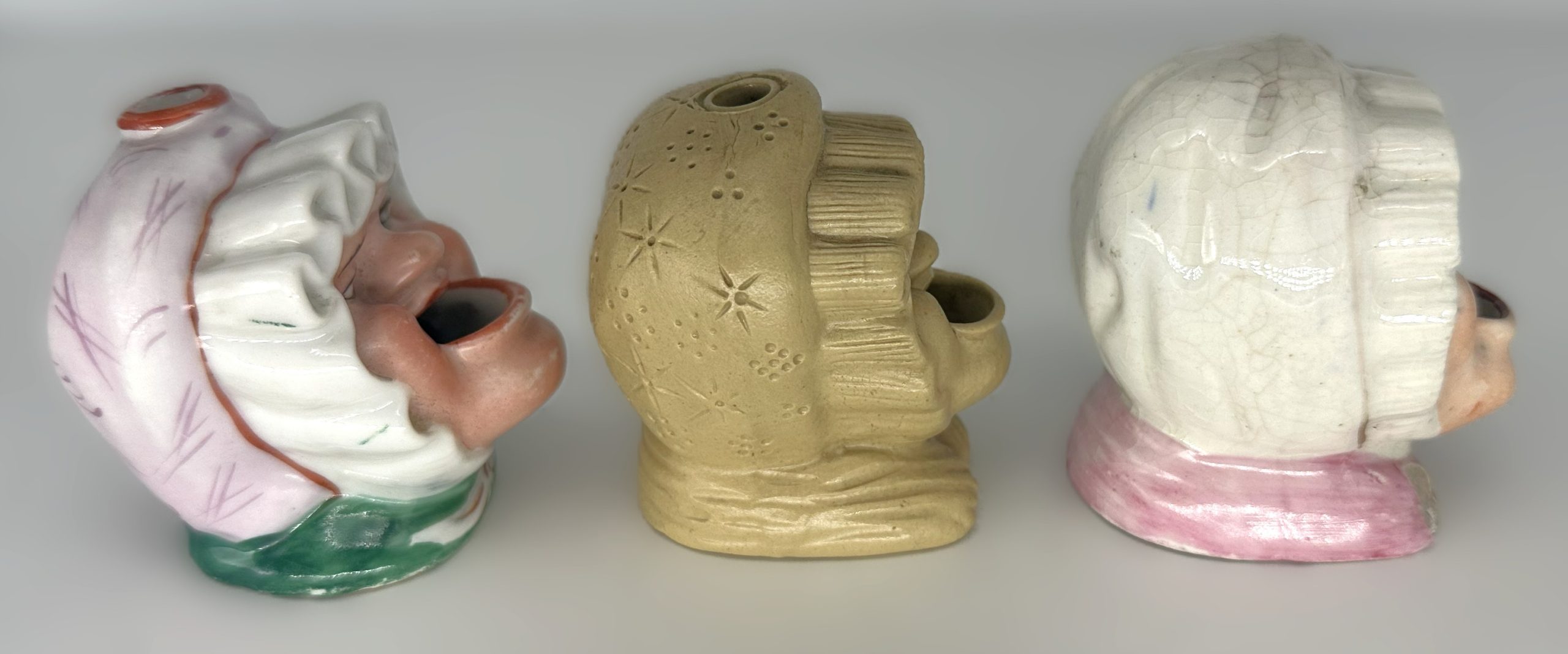
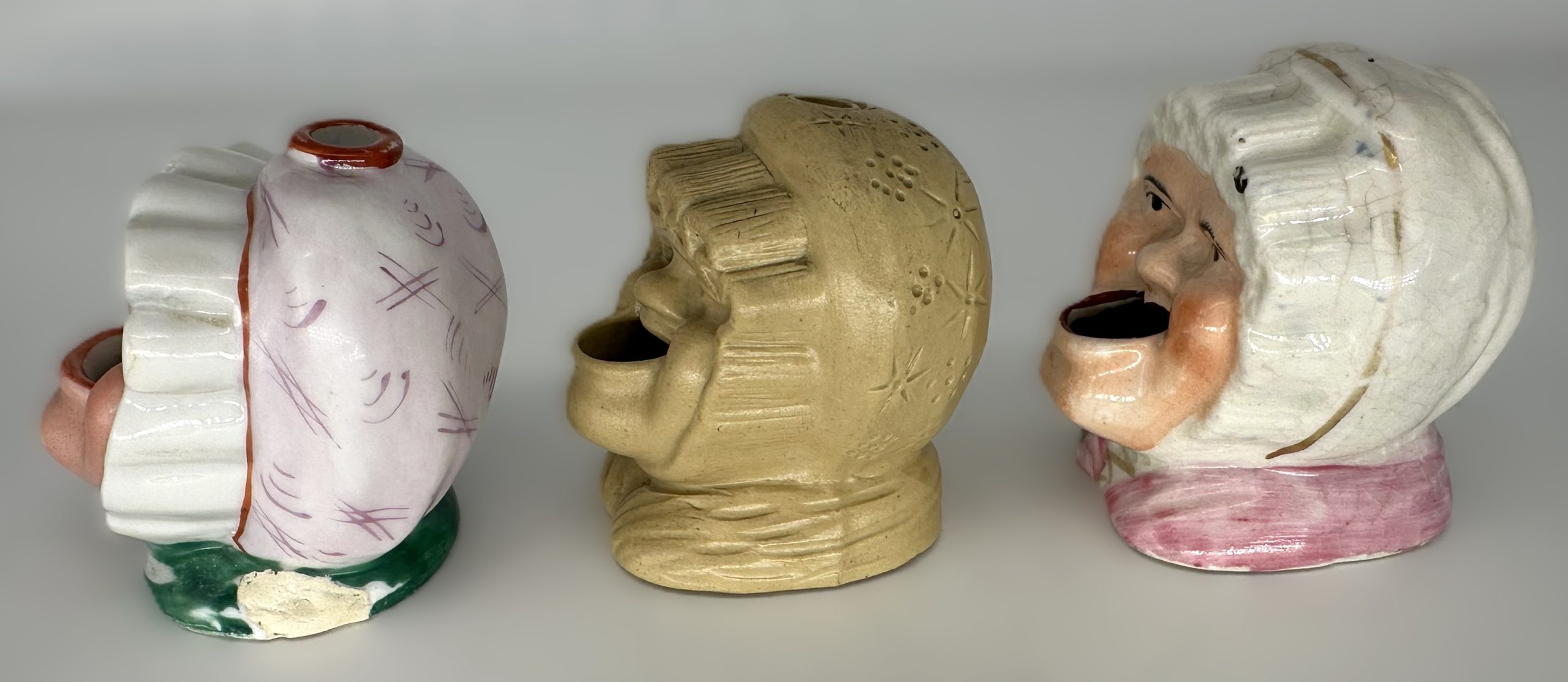
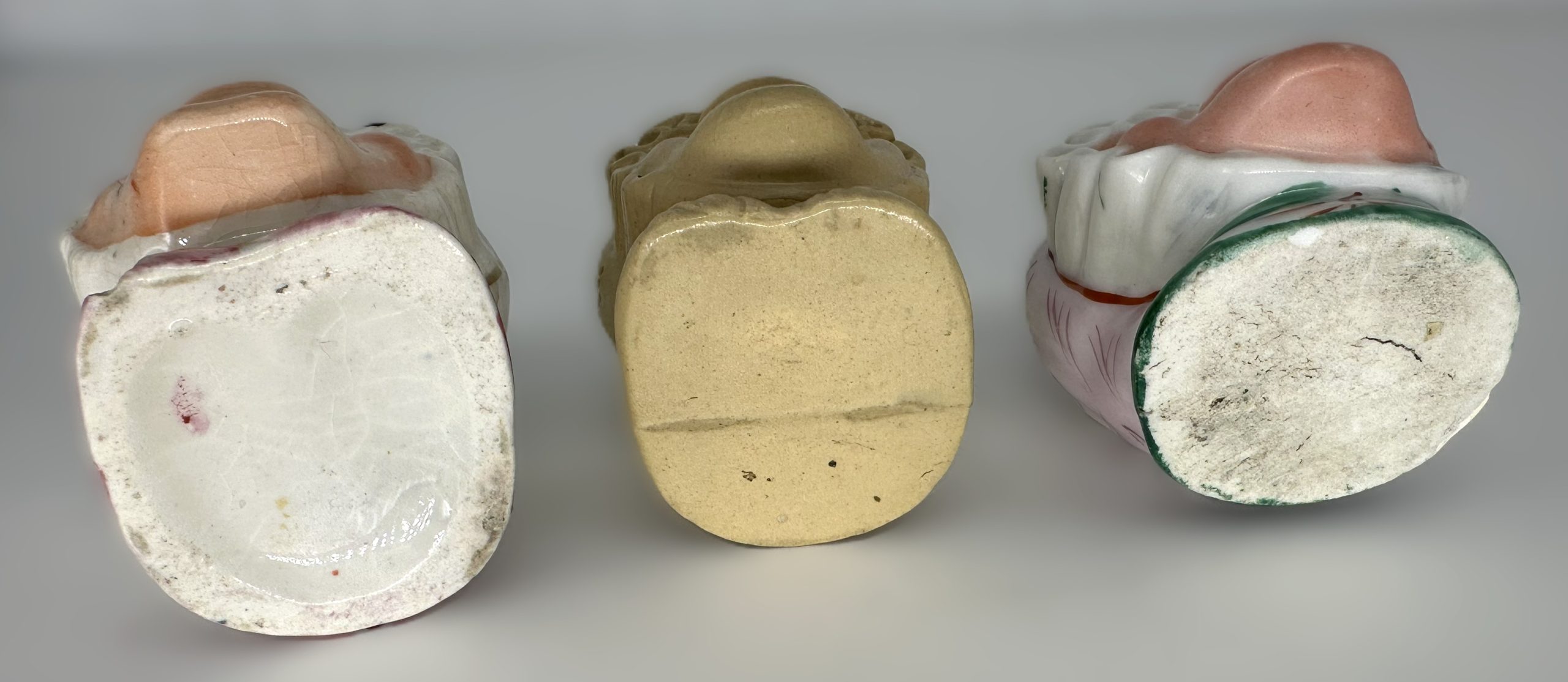
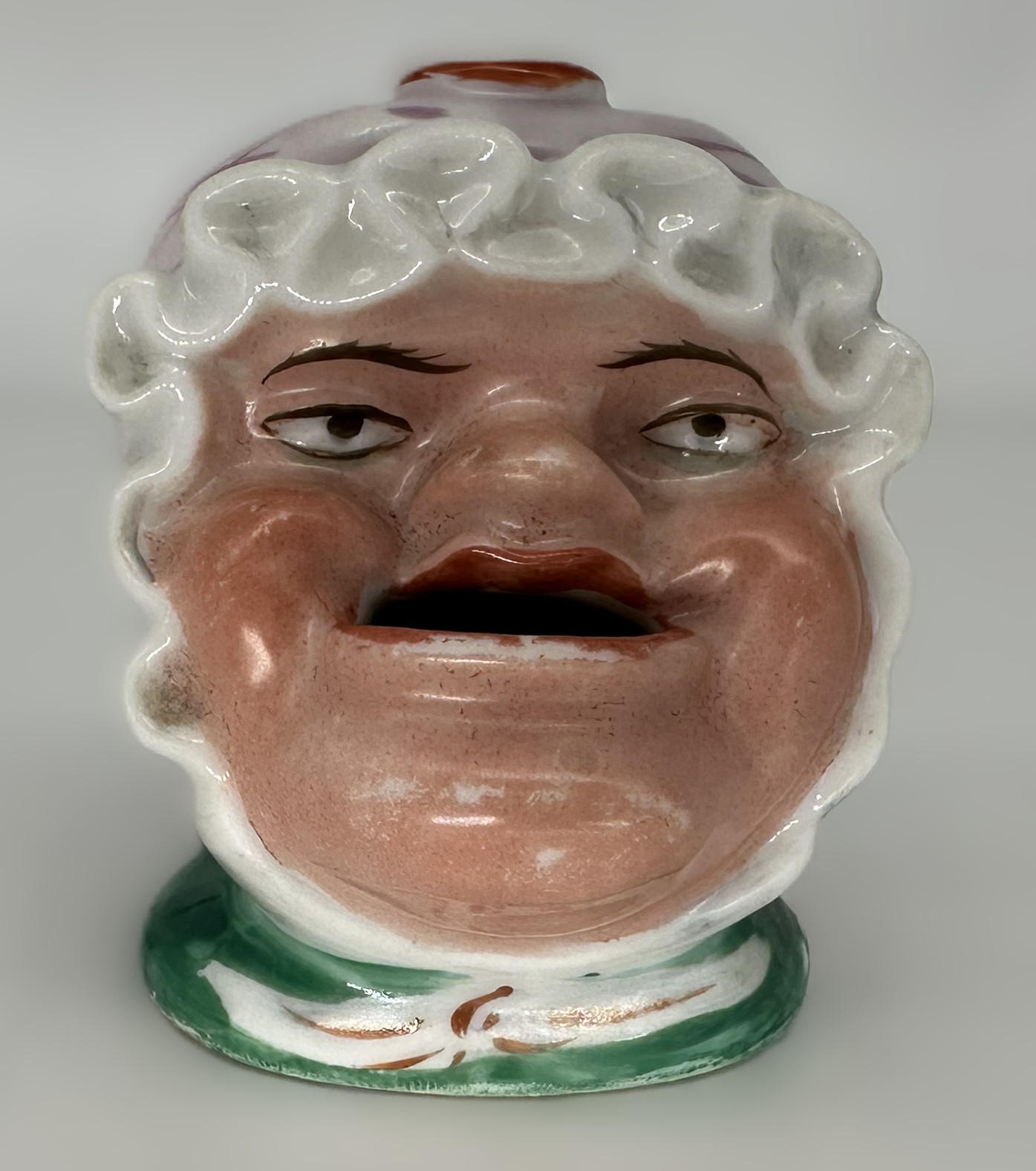
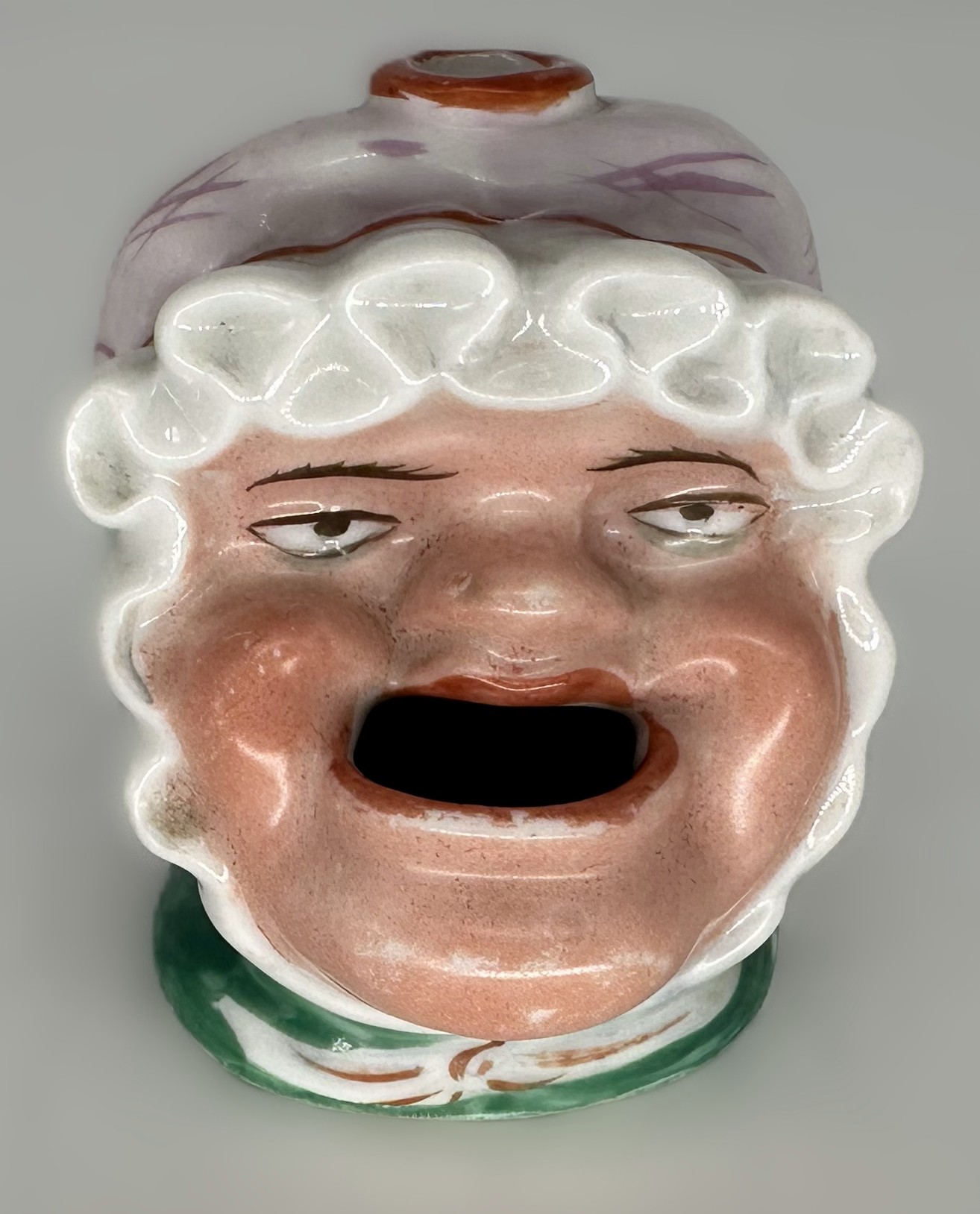
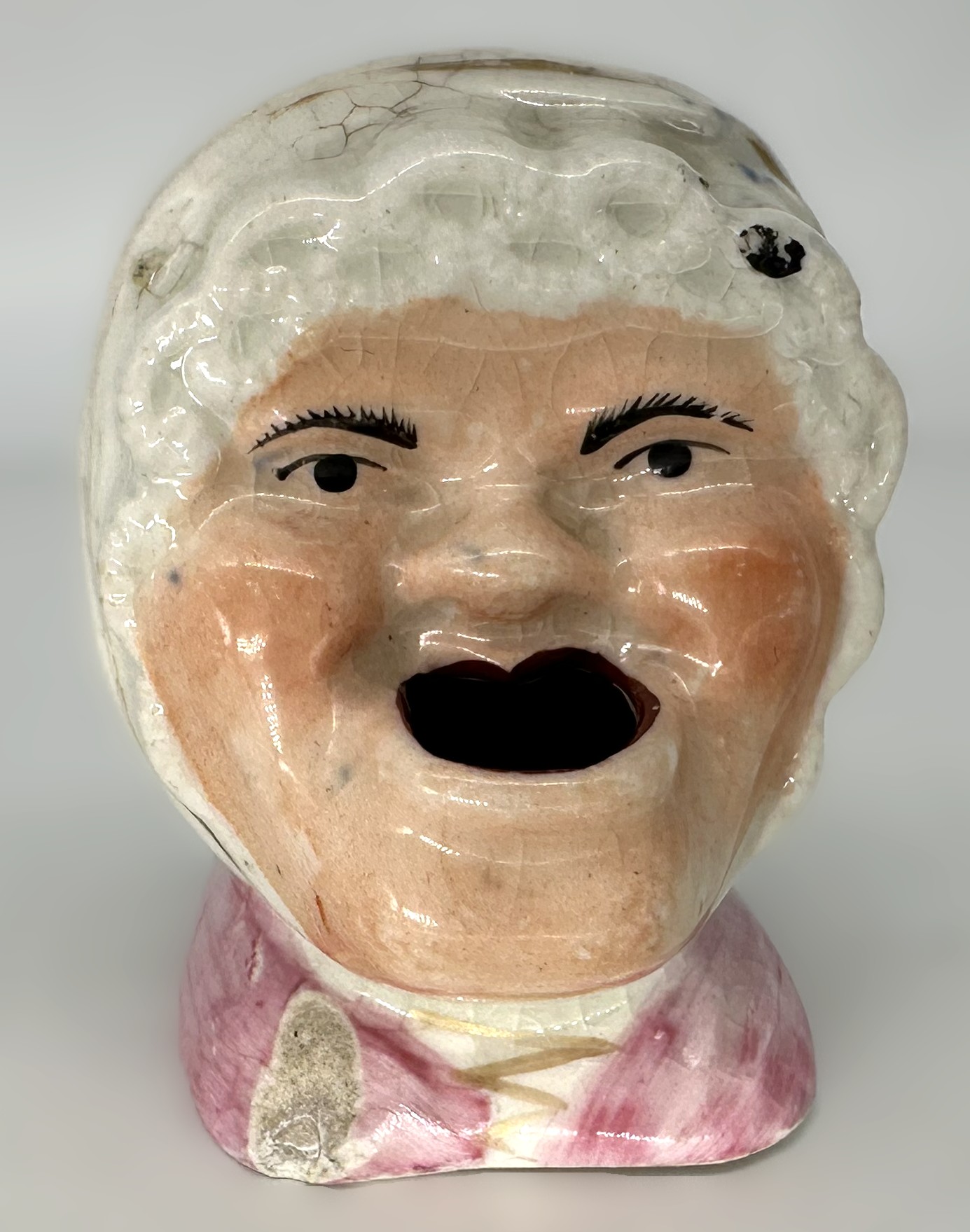
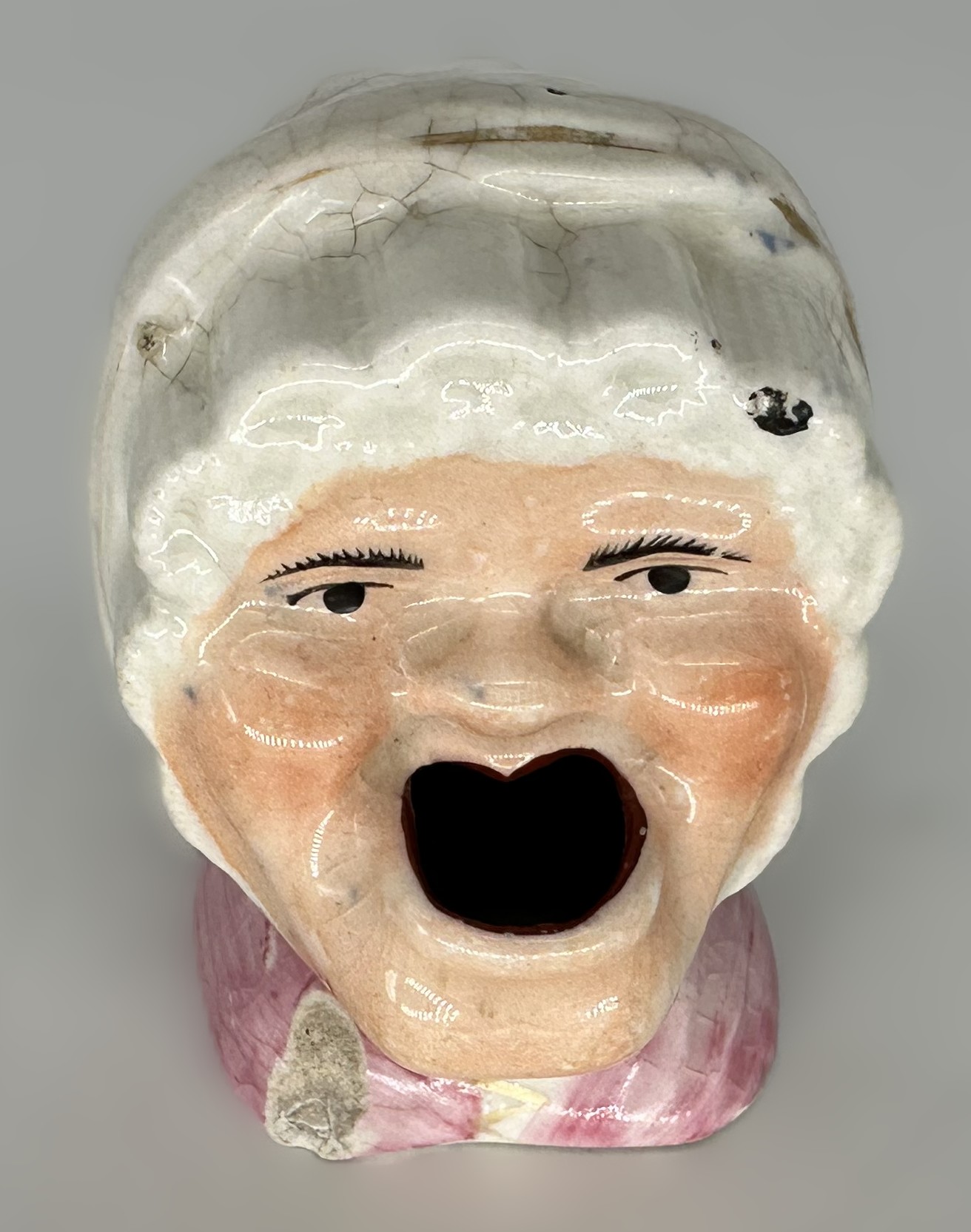
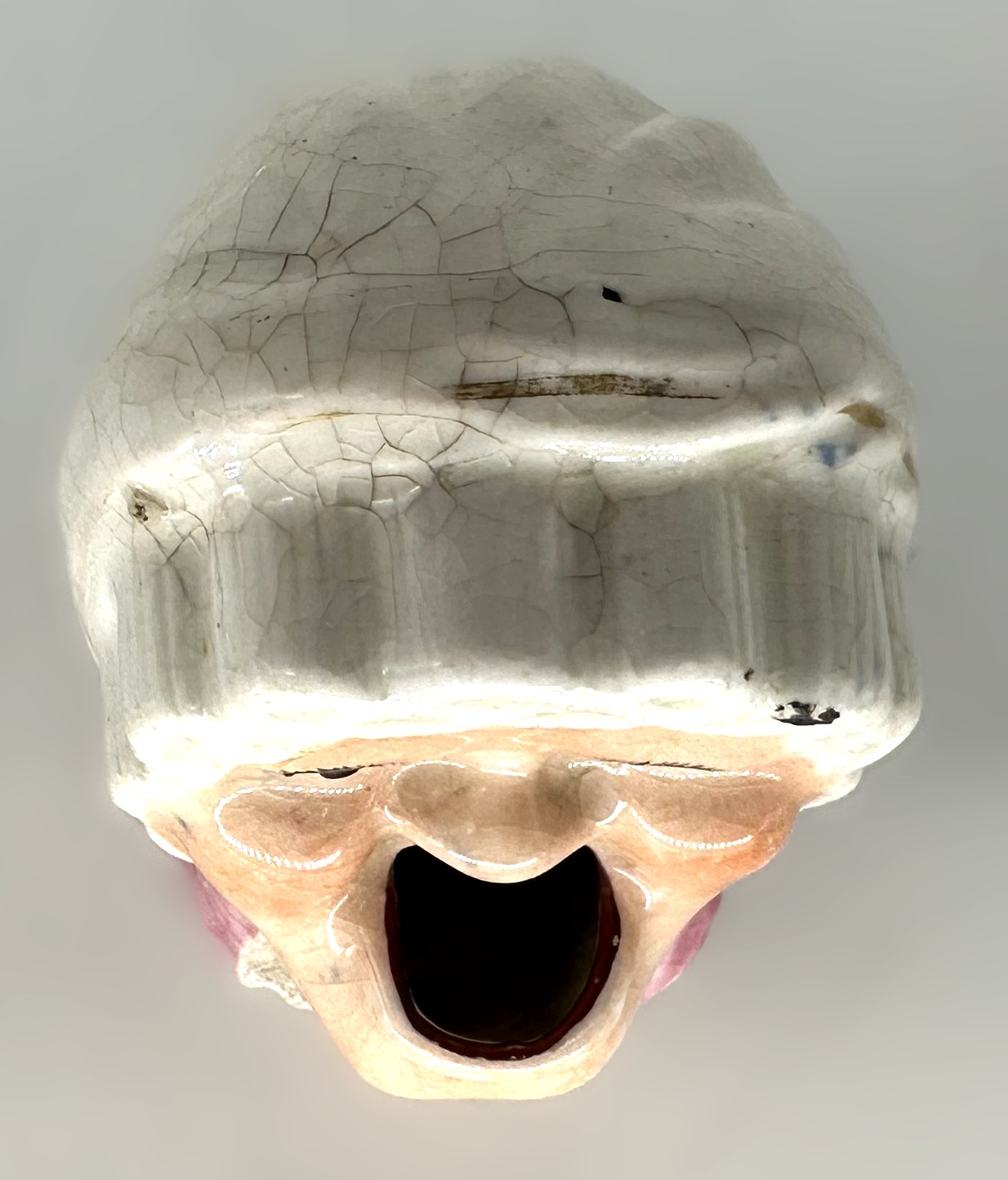
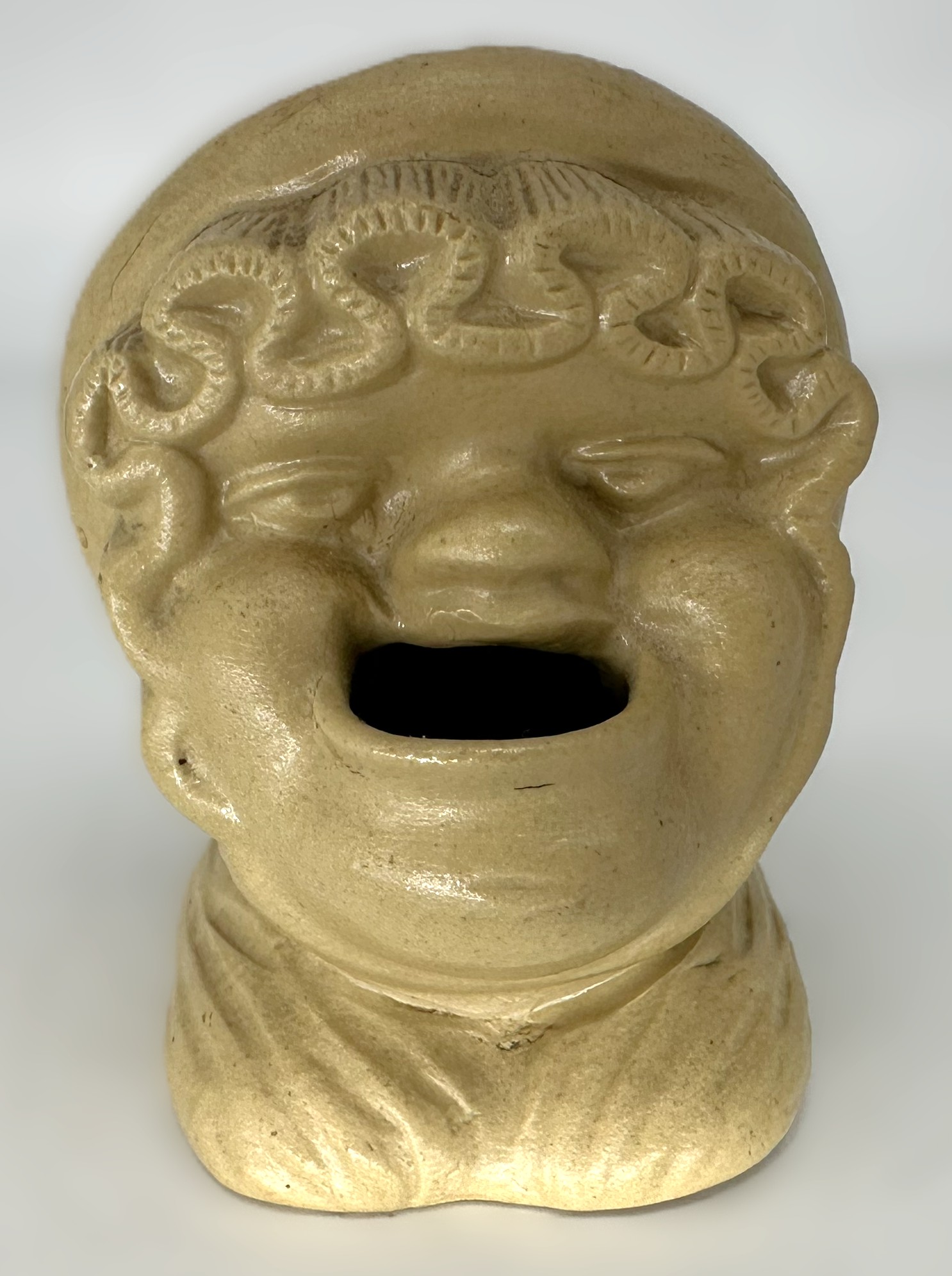
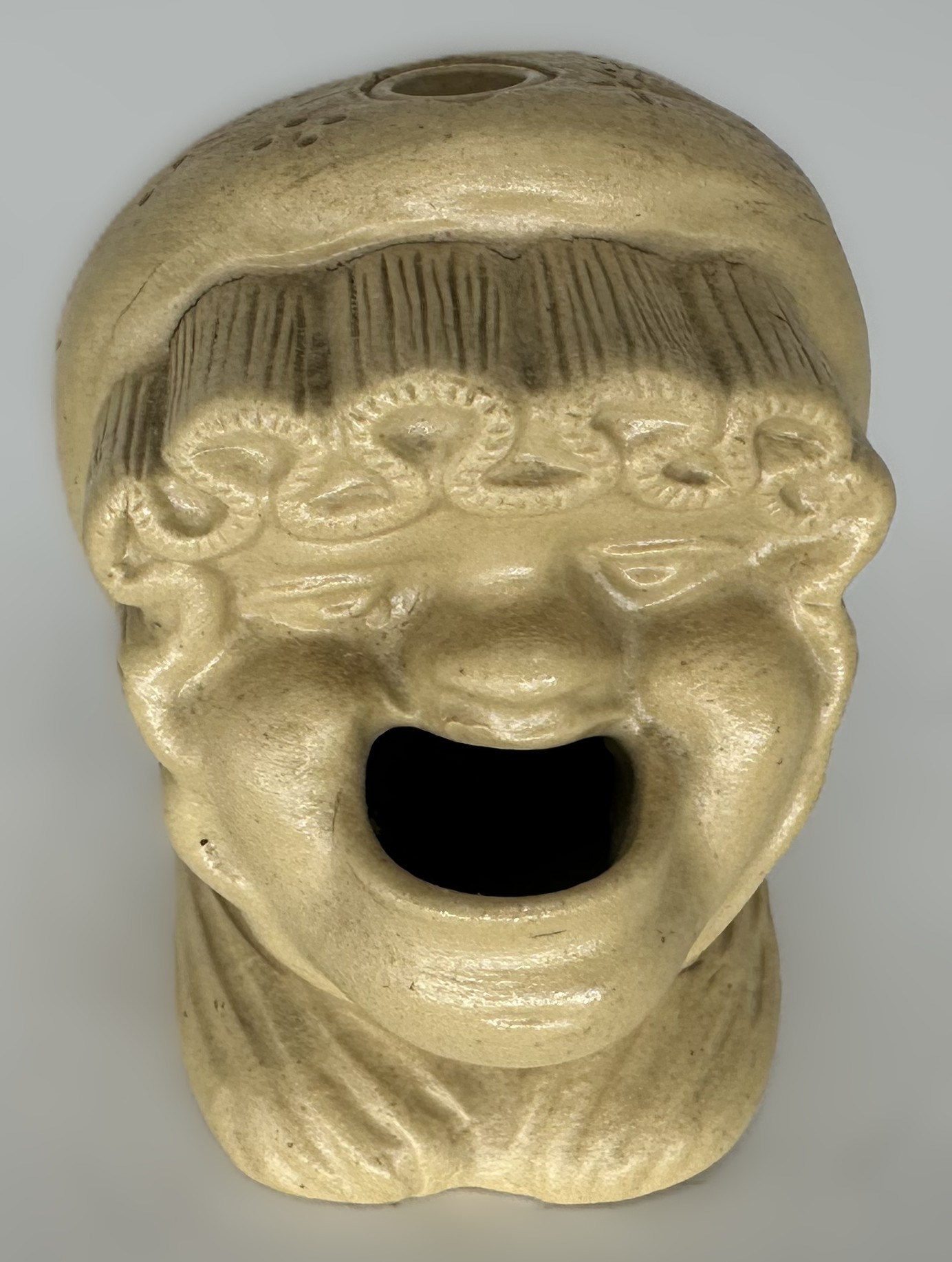
Pictured is a group of three Staffordshire novelty inkwells modeled as an old woman’s head wearing a ruffled bonnet – a charming Granny. Designed with an open-mouthed underbite serving as the ink font, these satirical pieces caricatured town gossips. Pictured are two hand-painted glazed examples alongside an uncolored textured caneware version.
Historical Origin & Production Context
Attribution & Place of Manufacture
These novelty figural inkwells originated in Staffordshire, England, during the mid-to-late 19th century (c. 1840s–1870s). Staffordshire potteries were famous for producing whimsical, folk-art earthenware and porcelain desk accessories aimed at the growing Victorian literate middle class.
The “Sophia Ridgway” Connection
The legend connecting these inkwells to Sophia Ridgway (wife of Master Potter John Ridgway of Cauldon Place, Shelton) is a piece of ceramic folklore. While John and Sophia Ridgway were prominent Staffordshire figures during the 19th century, no official factory documentation or catalog records tie this specific caricature design to her. Victorian collectors and dealers often attached colorfully named anecdotes to unattributed novelty wares, transforming a generic satire into a specific local personality.
Symbolism & Function
These pieces represent classic Victorian social satire, specifically caricaturing a “gossip,” “scold,” or “loudmouth”. The exaggerated open mouth serves two complementary purposes:
- Practical: The pronounced lower lip and protruding underbite create a natural basin/reservoir and font.
- Humorous: The physical action of dipping a pen nib directly into the open mouth visually plays on “stopping the mouth” of a town gossip with ink.
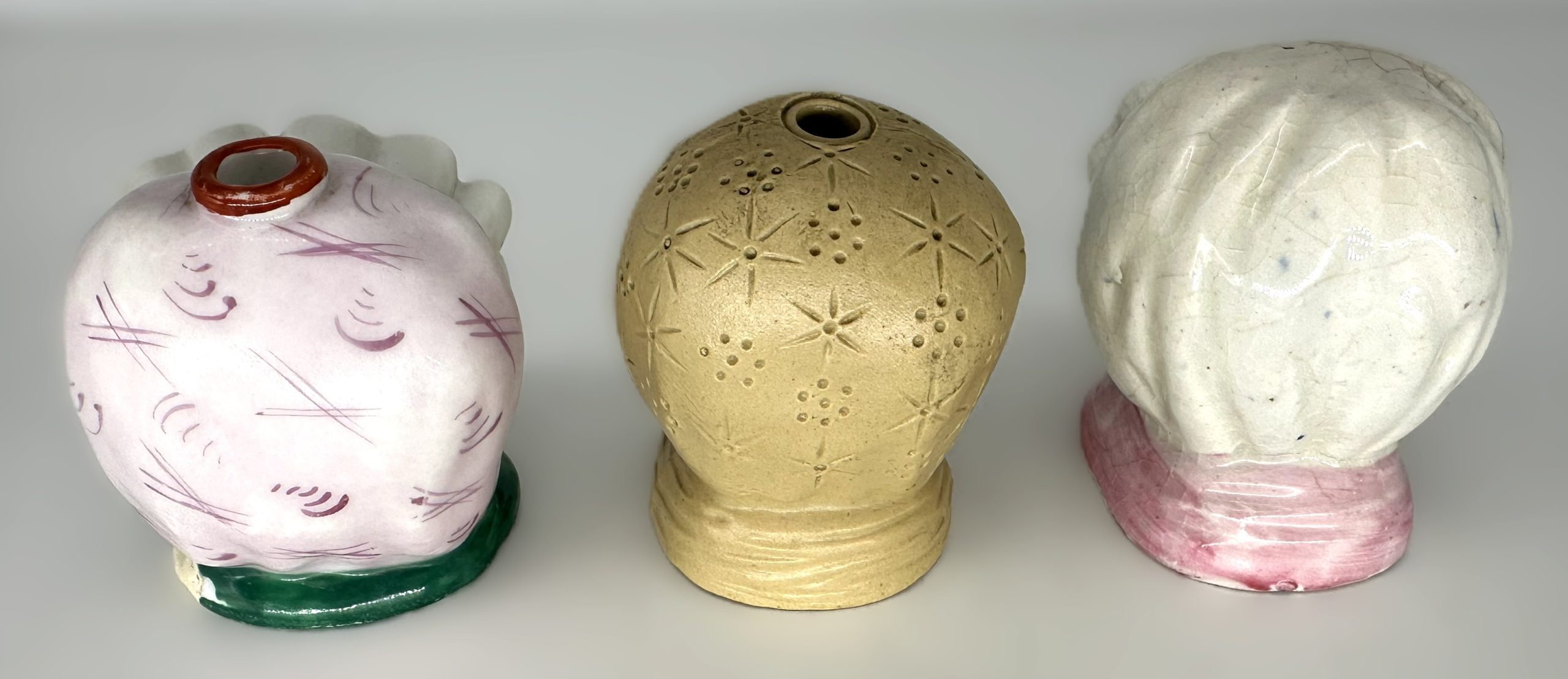
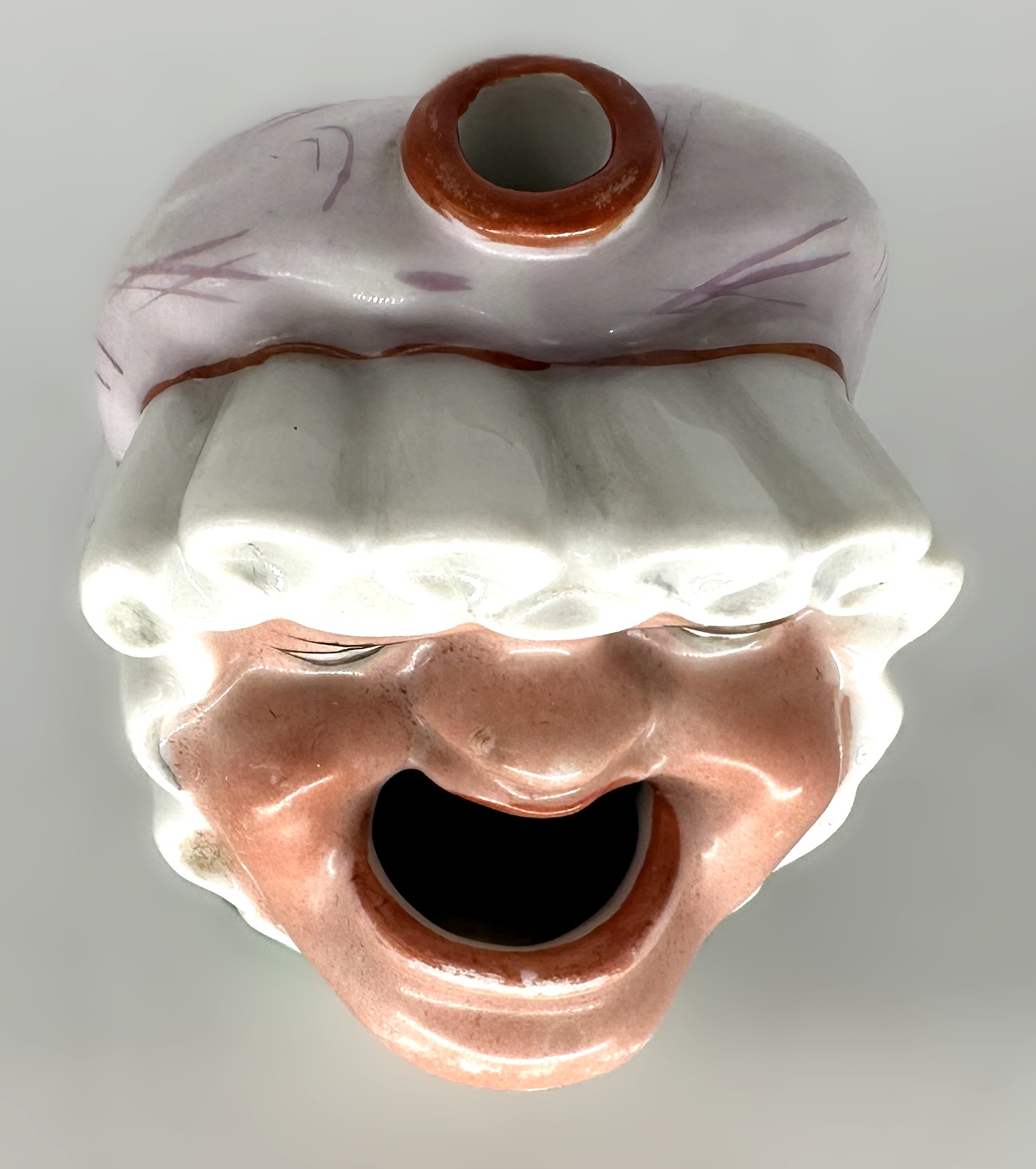
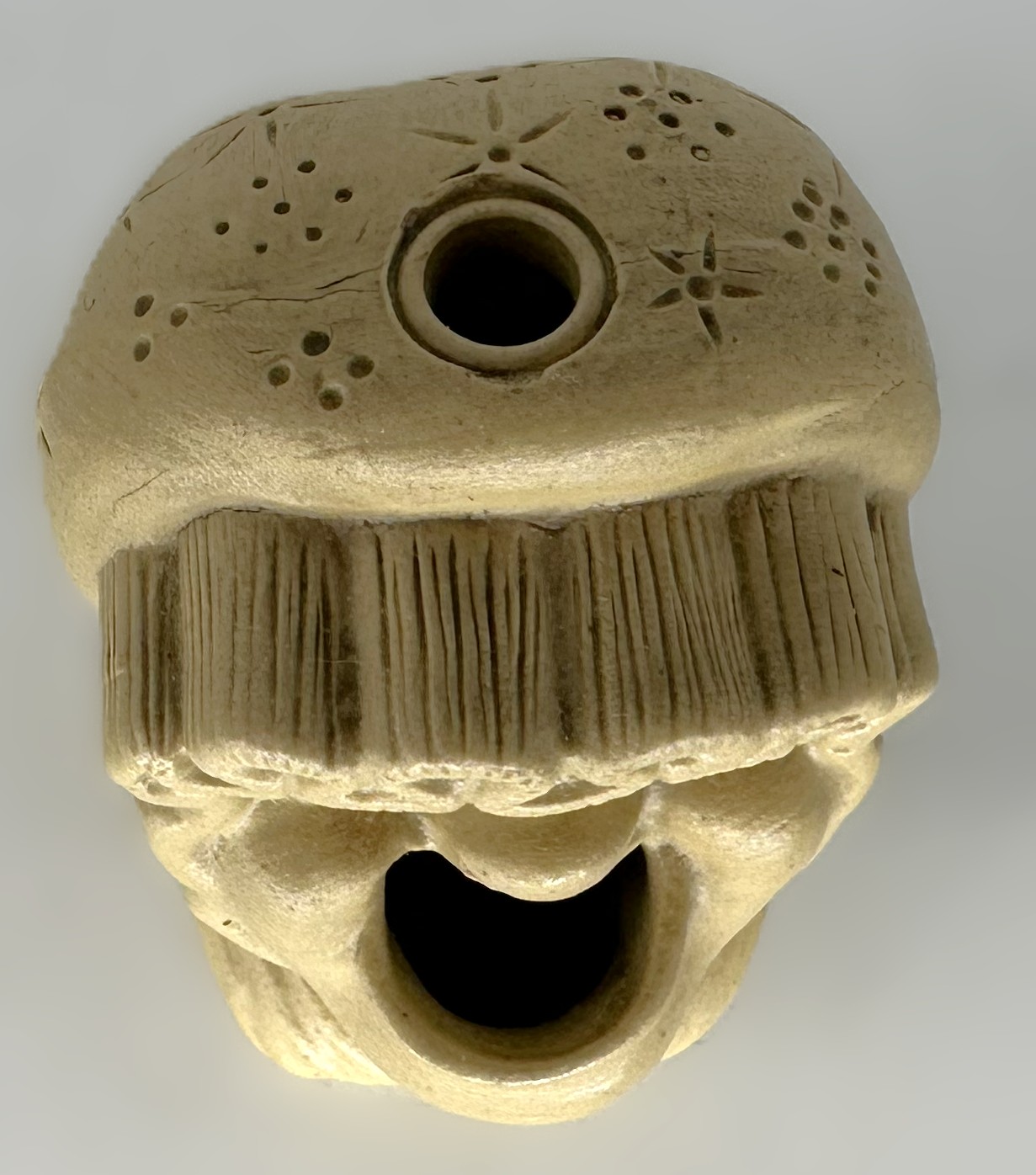
- Pen Socket / Pen Holder: The circular opening at the top crown of the bonnet is designed as an upright pen socket (or pen holder).
- How It Worked: When taking a brief break from writing, the user rested their dip pen vertically (nib-down or barrel-down) into the hole. This kept the wet pen nib elevated off the desktop surface, preventing ink stains on paper, blotters, or wood.
- Quill vs. Dip Pen Construction: By the 1850s–1870s when these were made, steel dip pens with turned wood or bone shafts had largely replaced goose quills. The size and depth of these top openings were tailored to accommodate the slender shaft of standard Victorian dip pens.
Detailed Description of the Three Examples
- Glazed & Hand-Painted Porcelain/Earthenware Inkwell (Left)
- Form & Expression: Features a wide, grimacing face with narrow, heavy-lidded eyes looking slightly sideways and pronounced rosy cheeks.
- Headwear & Garments: Wears a deeply ruffled white bonnet trim framing the face, with a pink/lavender patterned bonnet cap adorned with a dark orange top loop/finial. A rich green cloak or collar with a white tied ribbon accentuates the base. There is a pen socket in the middle of her bonnet.
- Finish & Condition: Finished in high gloss overglaze polychrome enamels. Minor paint wear along the bonnet trim and slight chipping near the base ring.
- Uncolored Buff Caneware / Stoneware Inkwell (Center)
- Form & Expression: Cast from the same basic mold family as the glazed examples but left in an unglazed or lightly salt-glazed buff/tan body (commonly referred to as caneware or drabware).
- Headwear & Patterning: The bonnet features intricate impasto-style starburst, rosette, and pinwheel stippled textures across the cap, with a heavy ribbed front band above a ruffled inner border. There is a pen socket in the middle of her bonnet.
- Material & Condition: Shows sharp mold definition that is often softened under thick glaze in polychrome versions. Flat, unglazed underside with visible press-mold seam lines.
- Crazed Glaze Porcelain Inkwell with Pink Collar (Right)
- Form & Expression: Depicts an open-mouthed expression with hand-painted black eyebrows and pupils, and soft blush on the cheeks.
- Headwear & Garments: Wearing a white mob-cap bonnet with subtle gold/gilt accent lines along the ruffled folds. The shoulders/base are glazed in a soft magenta/pink wash.
- Finish & Condition: Displays distinct fine surface crazing throughout the lead glaze, characteristic of 19th-century English earthenware/soft-paste porcelain. Shows light wear around the lip and base.
Estimated value: $125 – $175
Content disclaimer. The information posted is the owner’s best knowledge and may not have been vetted by the SOIC. We welcome comments, corrections, and additions, working to make our website information comprehensive and accurate.
Join the Society of Inkwell Collectors (SOIC) – it’s free!
Founded in 1981 as a non-profit organization,
we are documenting inkwells (and accessories).
We’re here to help and inform!