

Art Deco Porcelain Duck Inkwell
| Categories | Art Deco, Ceramics/Porcelain Figural |
| Type | Duck |
| Material | Porcelain |
| Markings | See Narrative |
| Manufacturer | Undetermined |
| Origin | France |
| Date or Era | circa 1930 |
| Measuring | 4” x 3” x 5 ¼” high |
Description
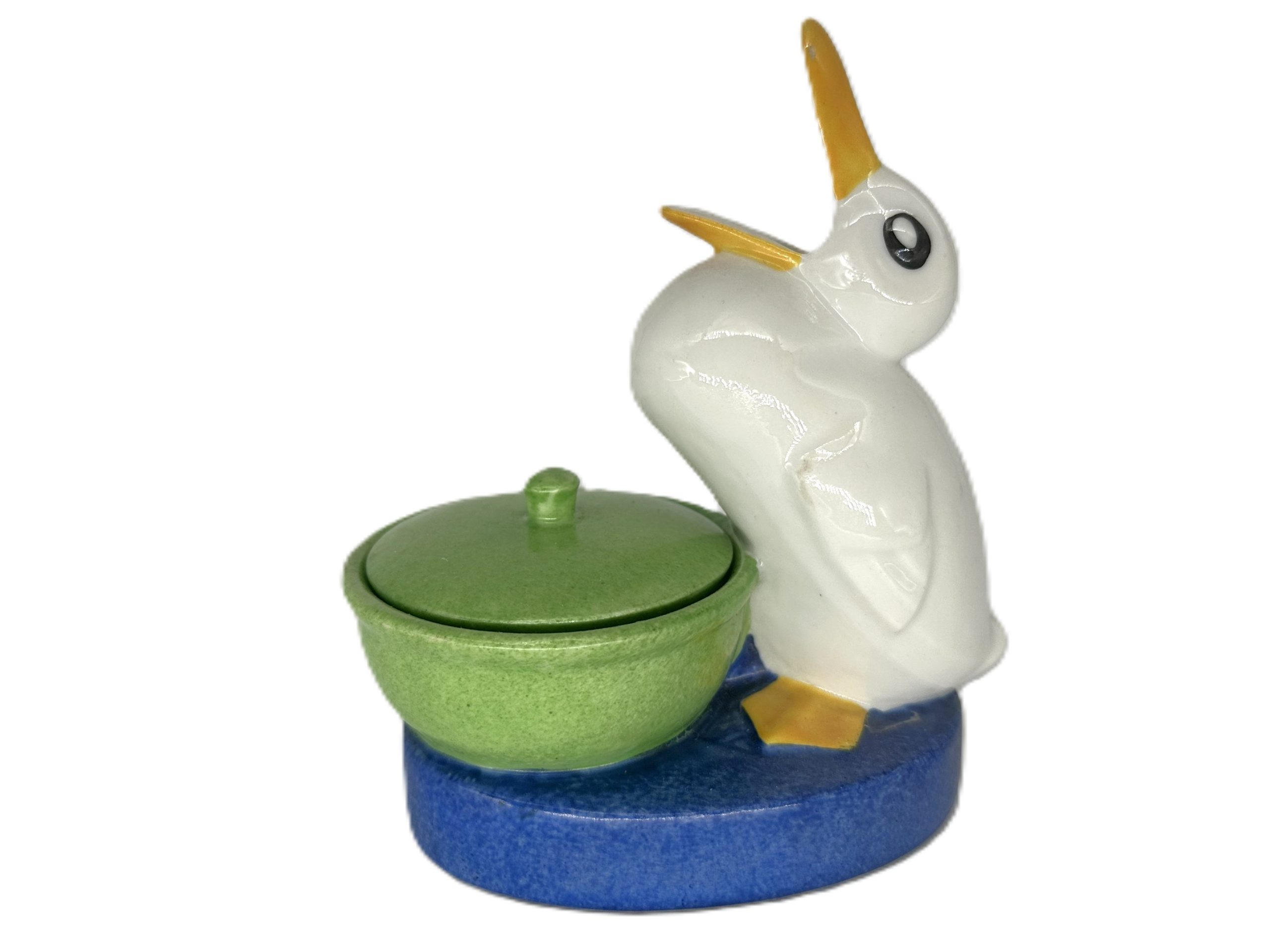
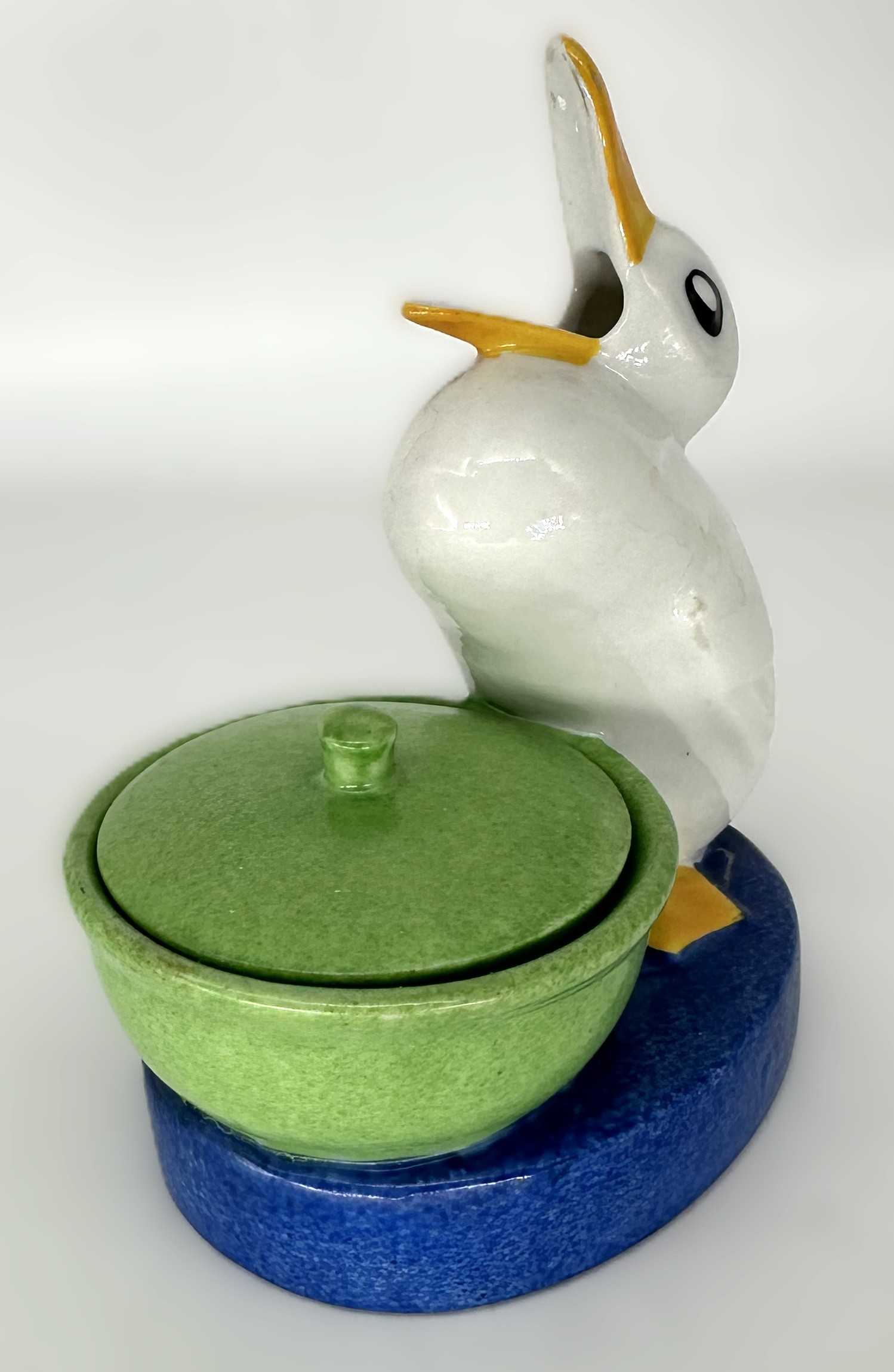
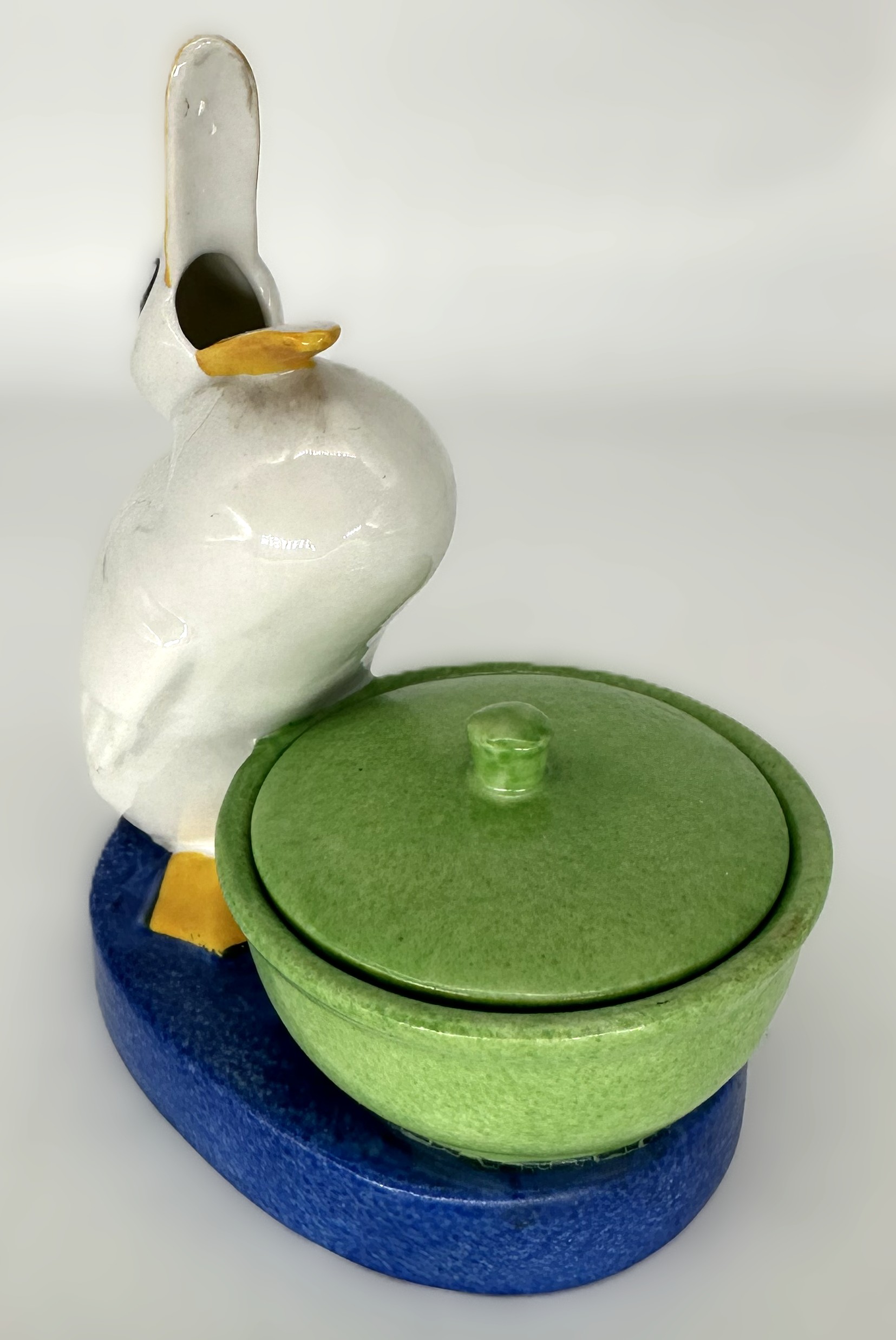
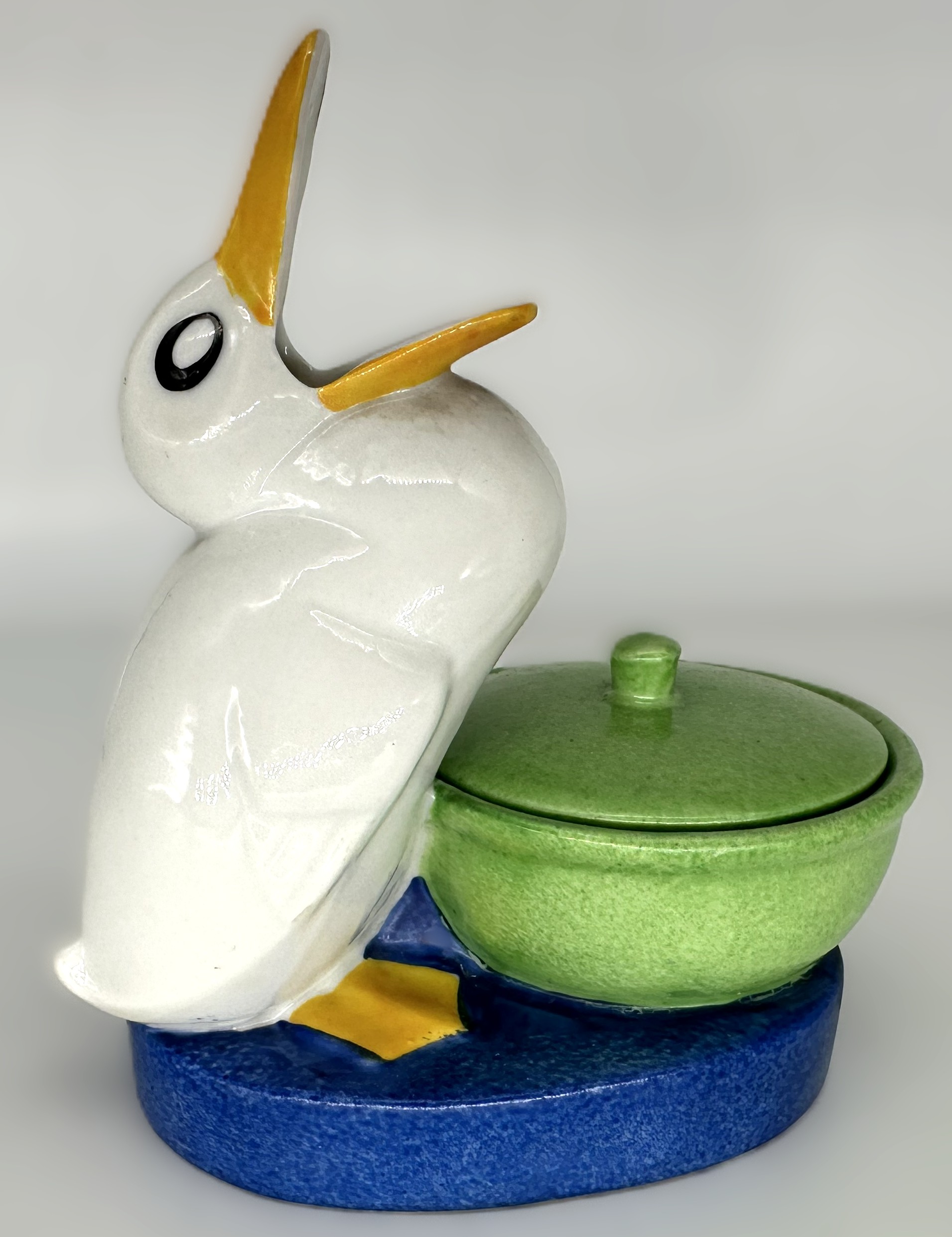
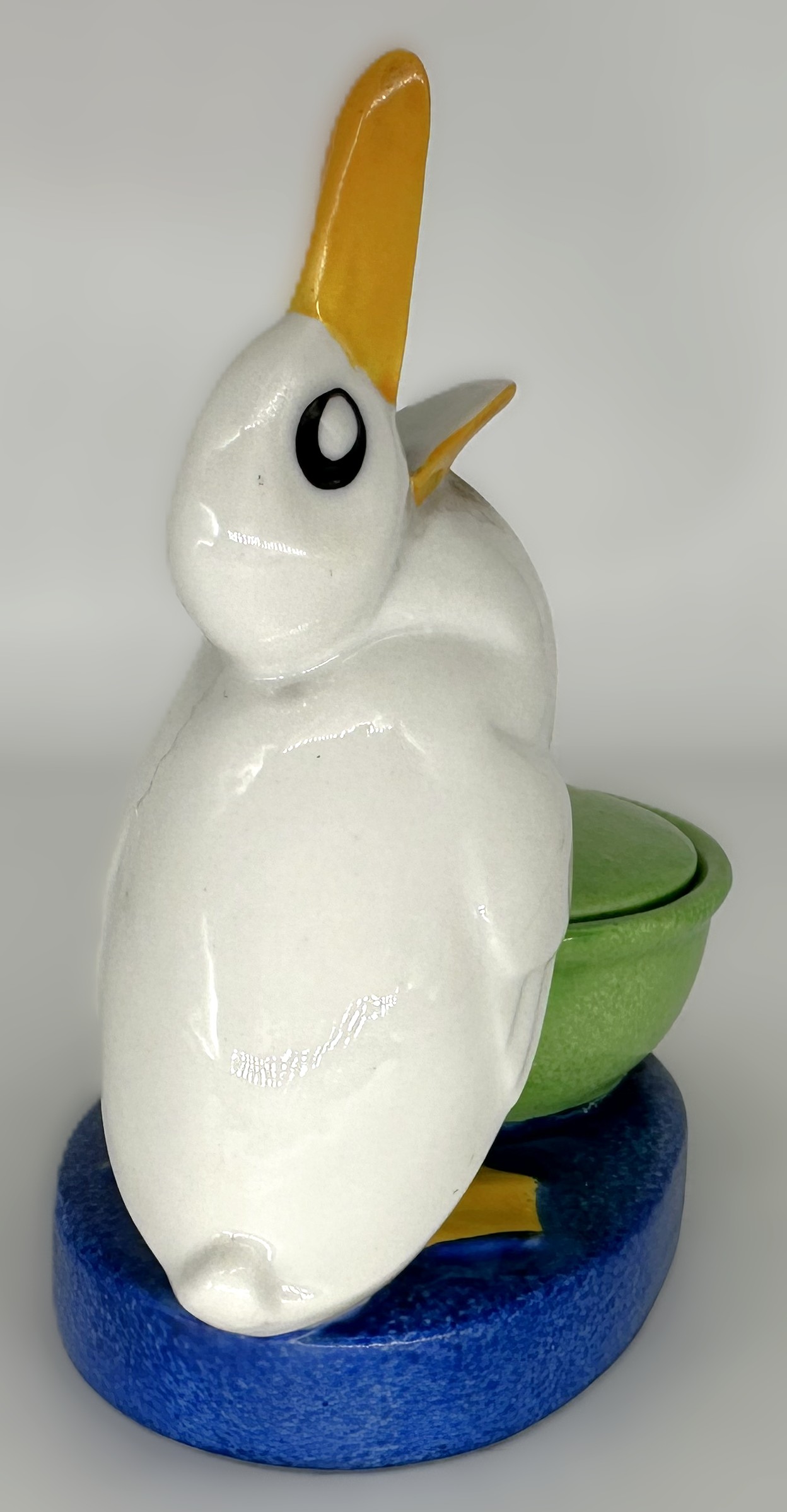
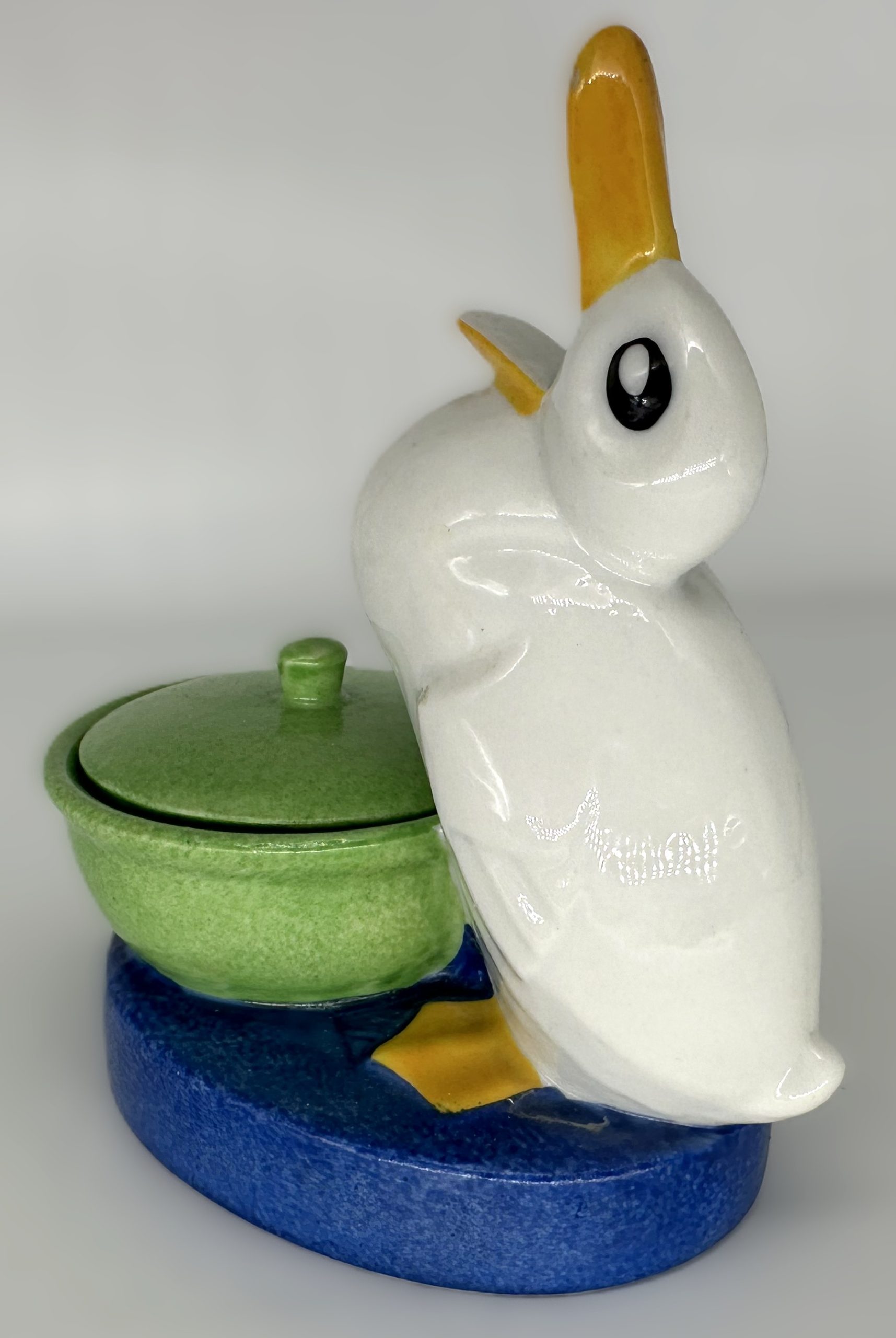
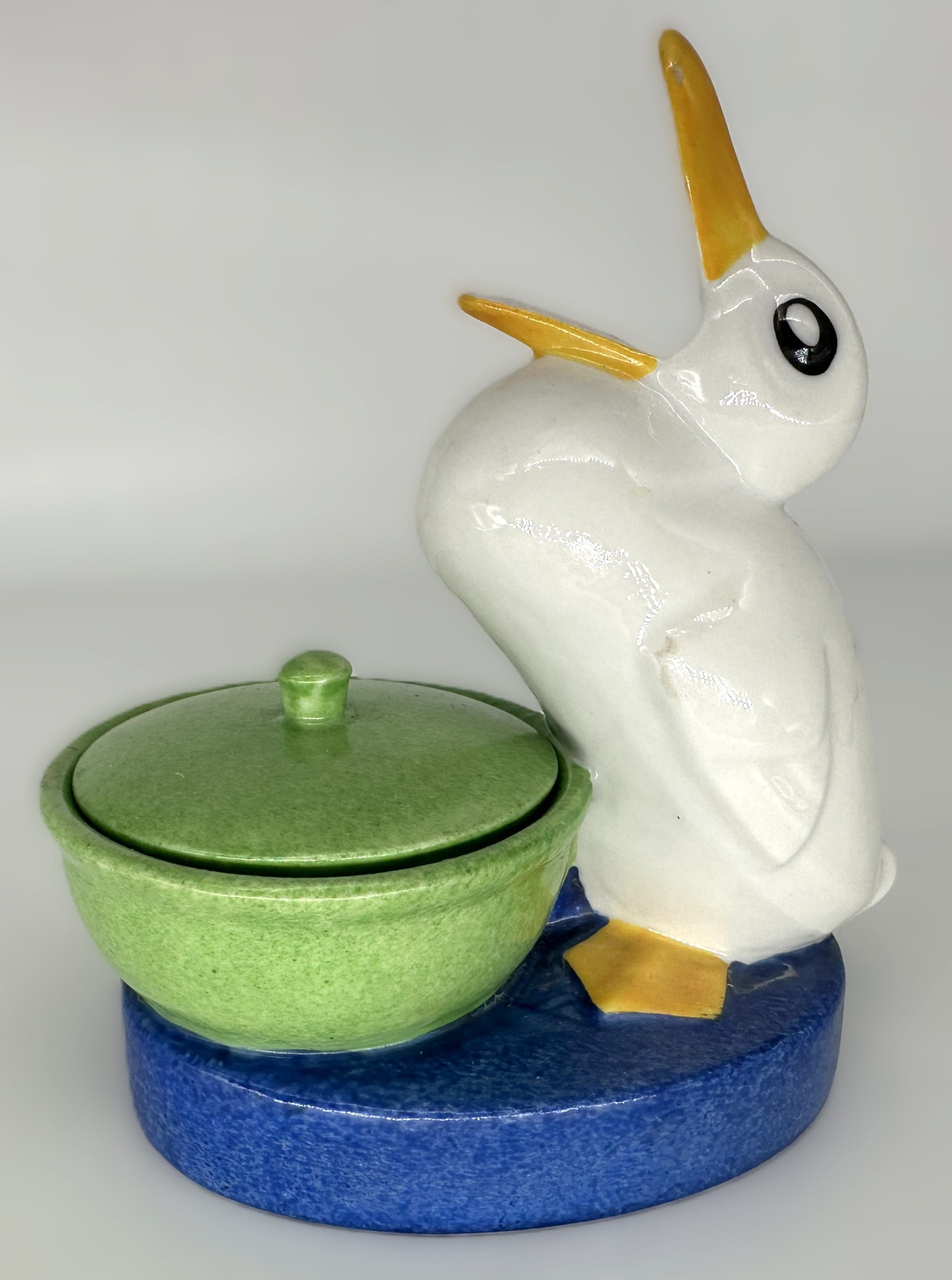
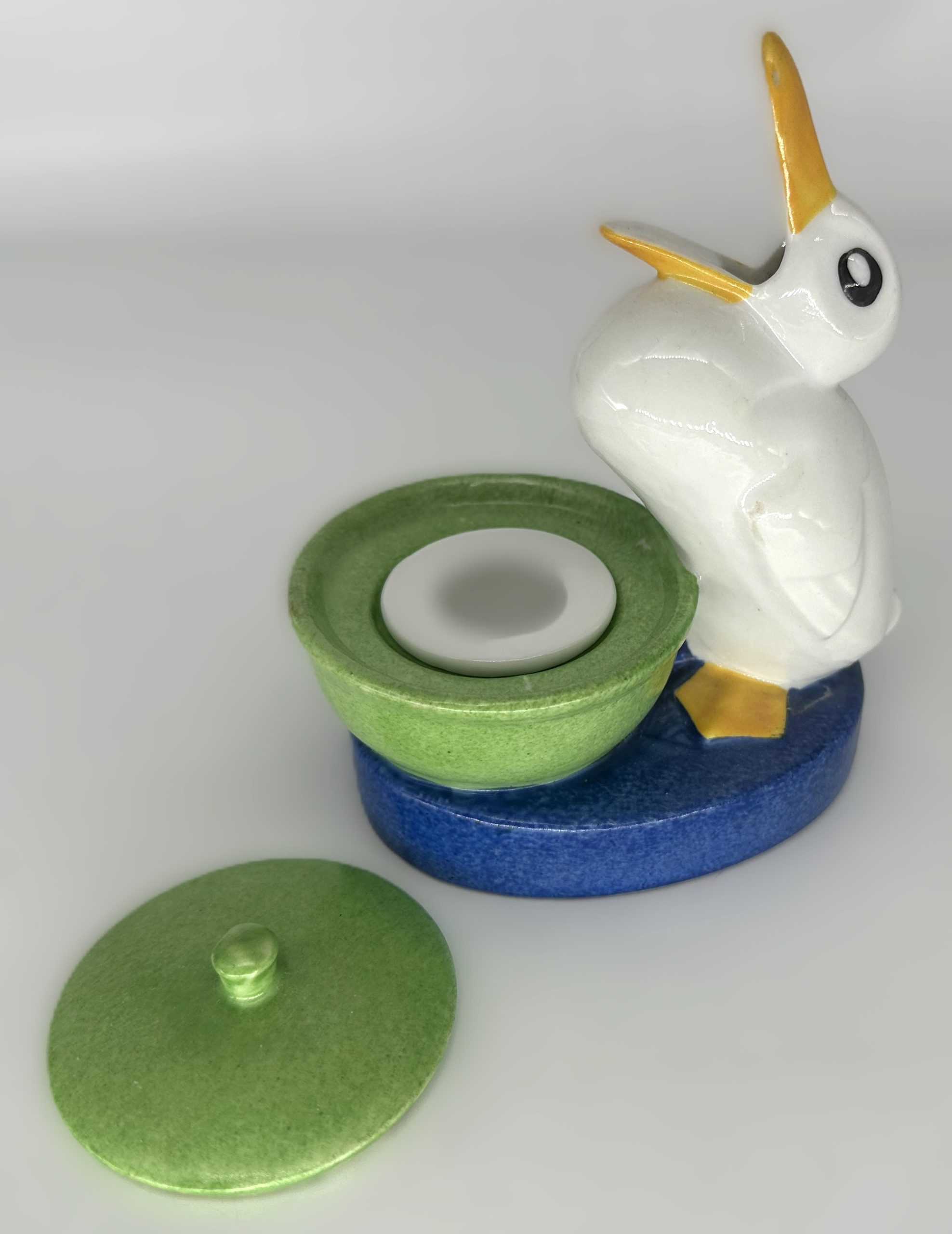
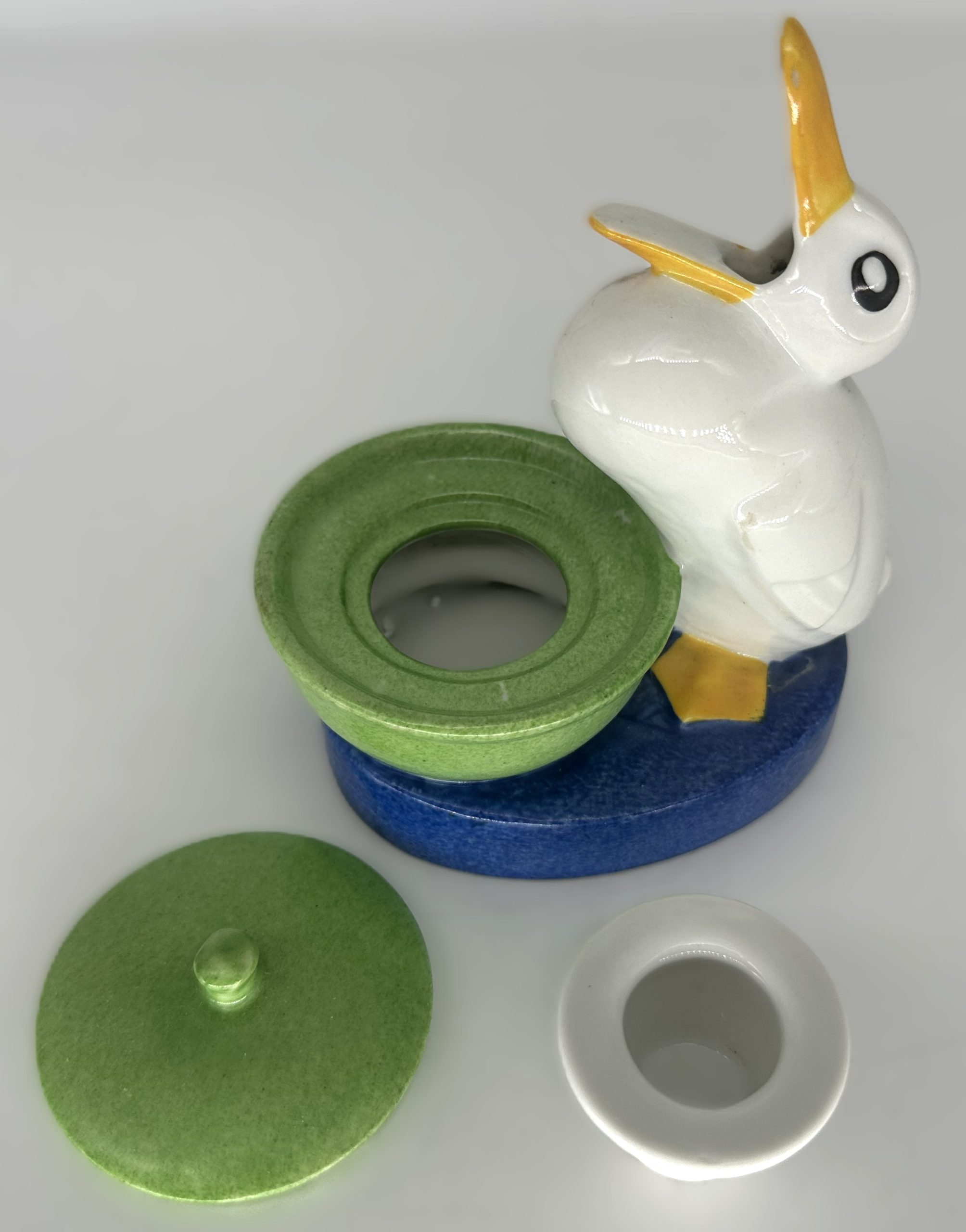
- Overall Form: The inkwell is designed as a figural desk set in glazed, hand-painted porcelain. It features a stylized, white-bodied duck with vibrant yellow-orange bill and feet, seated upright on a rich mottle-glazed cobalt blue oval base.
- Pen Rest / Holder: The duck’s neck is stretched upward with its bill thrown wide open to serve as a vertical pen holder.
- Inkwell Assembly: Positioned in front of the duck is a green bowl-shaped holder that houses a removable, white porcelain insert (liner). A matching green “lift-off” domed lid with a small button finial covers the inkwell.
Underside Markings & Manufacturer Details
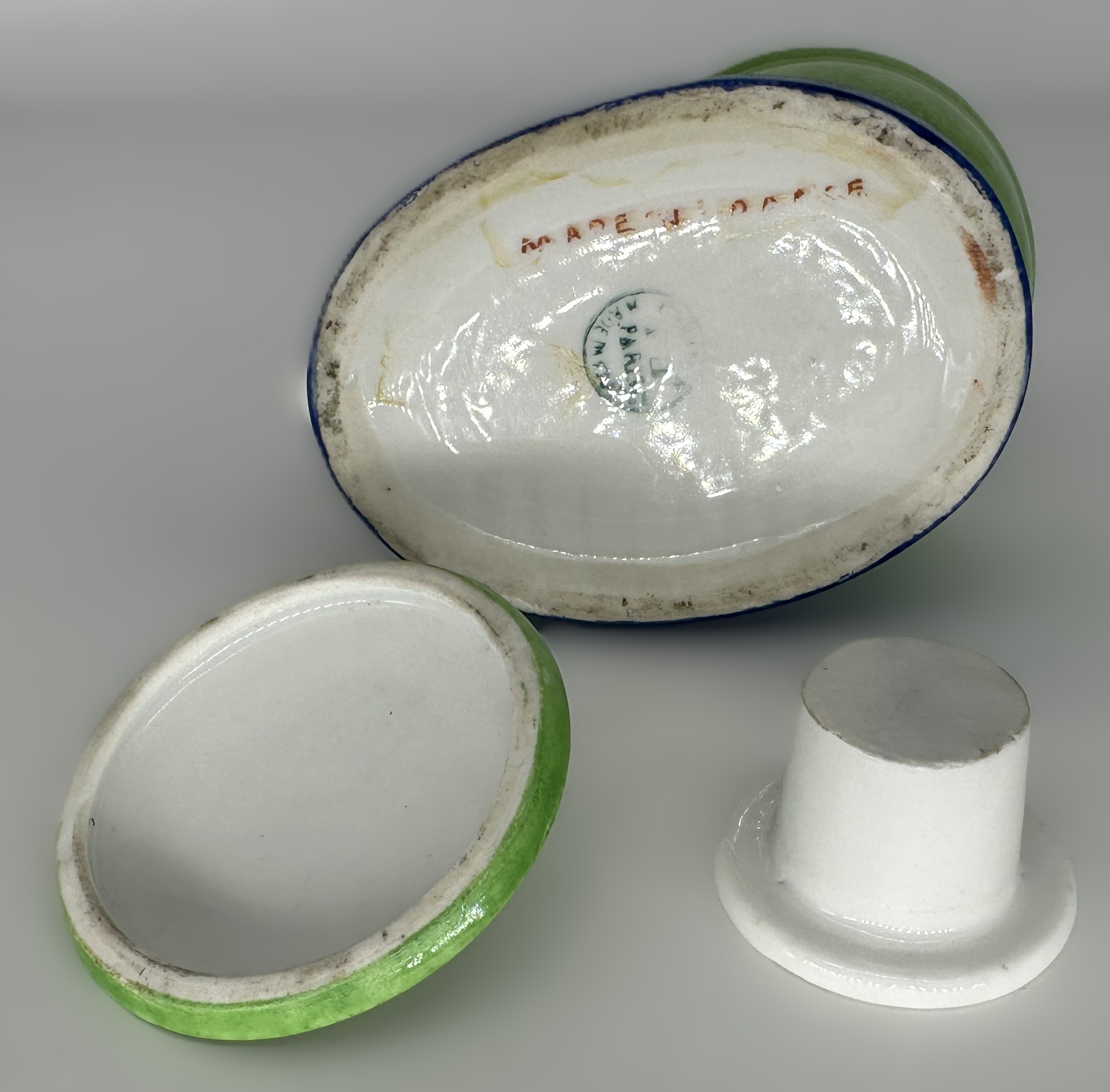
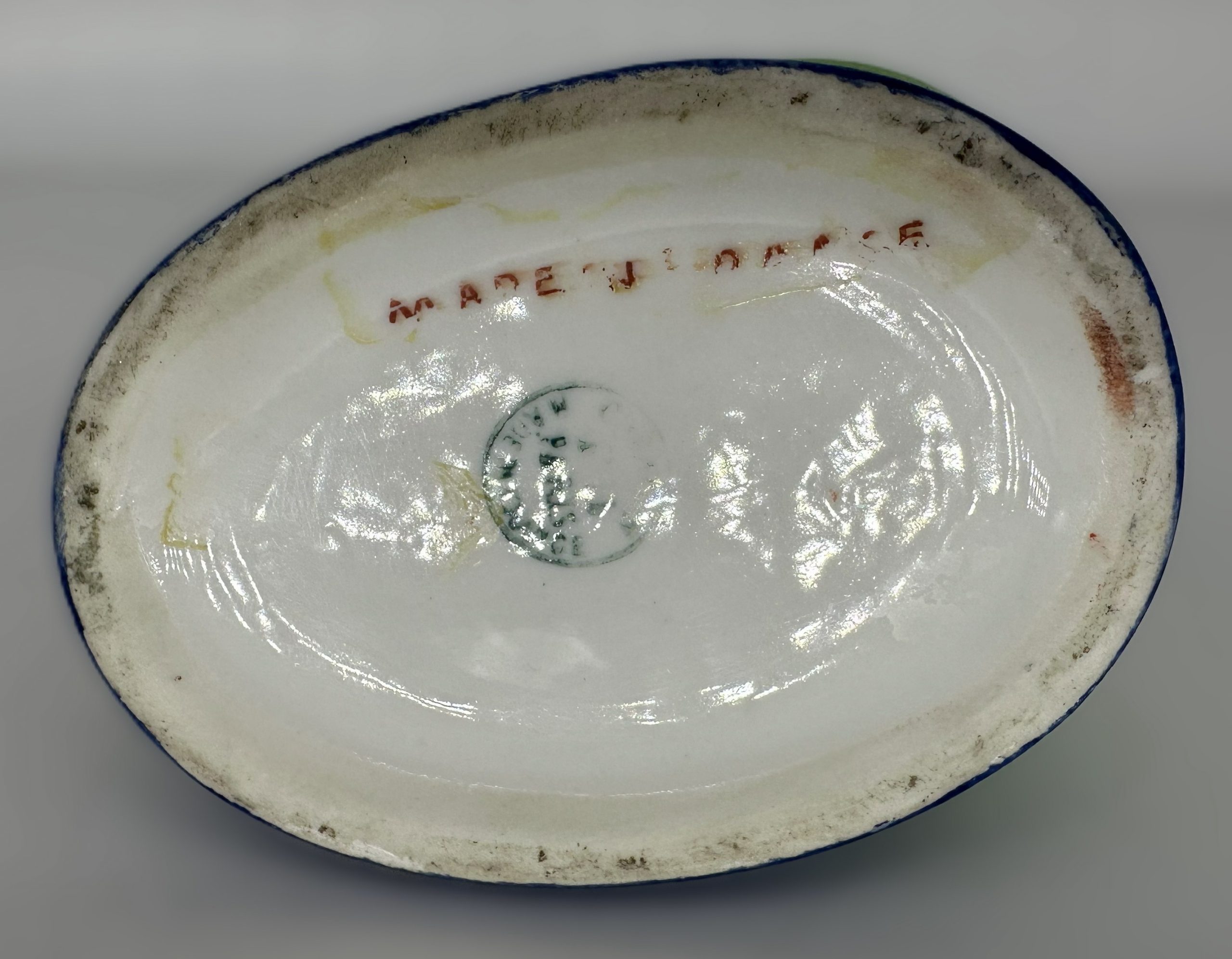
The underside features two distinct marks:
- Underglaze/Printed Round Stamp: Contains the wording “Creation PB Paris” (or Création PB Paris) arranged in a circular logo.
- Manufacturer Context: “Creation PB” refers to a Parisian decorating/design firm or distributor (éditeur / créateur) active in the Art Deco through post-WWII period. These firms designed or commissioned whimsical earthenware and porcelain novelties from French ceramic centers (such as Limoges, Desvres, or Sainte-Radegonde) and sold them under their brand in Paris.
- Overglaze Stenciled/Hand-Stamped Mark: Reads “MADE IN FRANCE” in reddish-brown enamel.
Date & Target Audience
Period / Date of Manufacture
- Circa: 1930s – 1950s (Late Art Deco to Mid-Century French Period).
- Stylistic Identifiers: The bold geometric color blocking (cobalt blue, jade green, vibrant yellow/orange, and stark white) along with the simplified, smooth cartoon-like contours are classic markers of 1930s–1950s French Art Deco and mid-century novelty ceramics. The “Made in France” export marking in English was standard for items exported to English-speaking markets during this era.
Was it designed for children?
- Dual Appeal (Novelty Desk Set): While its bright primary colors, playful expression, and expressive wide-open bill evoke a child’s storybook character, these whimsies were equally popular as novelties for adults’ writing desks during the 1930s–1950s. It could comfortably serve either as a child’s study desk inkwell or a lighthearted decorative accessory for an adult.
This piece can be characterized as French Art Deco—specifically within the genre of 1930s novelty or whimsical Art Deco ceramics.
While it doesn’t feature the stark geometric zigzagging or sleek industrial lines associated with high architectural Art Deco, it displays key markers of the broader late Deco movement:
- Stylized, Streamlined Forms: Rather than capturing anatomical realism, the duck is reduced to smooth, sweeping curves, an oversized rounded body, and exaggerated facial features. Streamlining animal figures into smooth, sculptural forms was a major trend among French Art Deco ceramicists.
- Bold, Saturated Color Palette: Art Deco ceramics frequently featured high-contrast, unblended color blocking. Here, the deep cobalt blue base, jade green bowl, bright yellow bill/feet, and stark white porcelain body rely on clean, distinct color fields rather than subtle shading.
- Functional Whimsy: French Deco decorative arts from the late 1920s and 1930s frequently incorporated playful humor into everyday household items, transforming a pen holder into an open duck bill or a frog’s mouth while maintaining clean aesthetic lines.
It fits comfortably alongside the 1930s work of French ceramic houses like Sainte-Radegonde, Keller & Guérin (St. Clément), or Craquelé Craquelins, which popularized playful, colorful animal desk accessories in the late Art Deco era.
The inclusion of the 1950s in that date range comes down to three main factors:
- Post-War Continuation of the Style: While the Art Deco movement peaked in the 1920s and 1930s, French novelty ceramics with cartoonish, streamlined animal forms continued to be produced directly after World War II through the 1950s. Many French potteries resumed manufacturing mid-century novelty items using their existing pre-war molds and aesthetic templates.
Narrowing it strictly to the 1930s–1940s is certainly a strong attribution given the Art Deco aesthetic but extending the window into the early 1950s accounts for post-war French export ceramics that maintained these popular pre-war novelty designs before inkwells phased out.
Estimated value: $100
Content disclaimer. The information posted is the owner’s best knowledge and may not have been vetted by the SOIC. We welcome comments, corrections, and additions, working to make our website information comprehensive and accurate.
Join the Society of Inkwell Collectors (SOIC) – it’s free!
Founded in 1981 as a non-profit organization,
we are documenting inkwells (and accessories).
We’re here to help and inform!