

Inkipedia
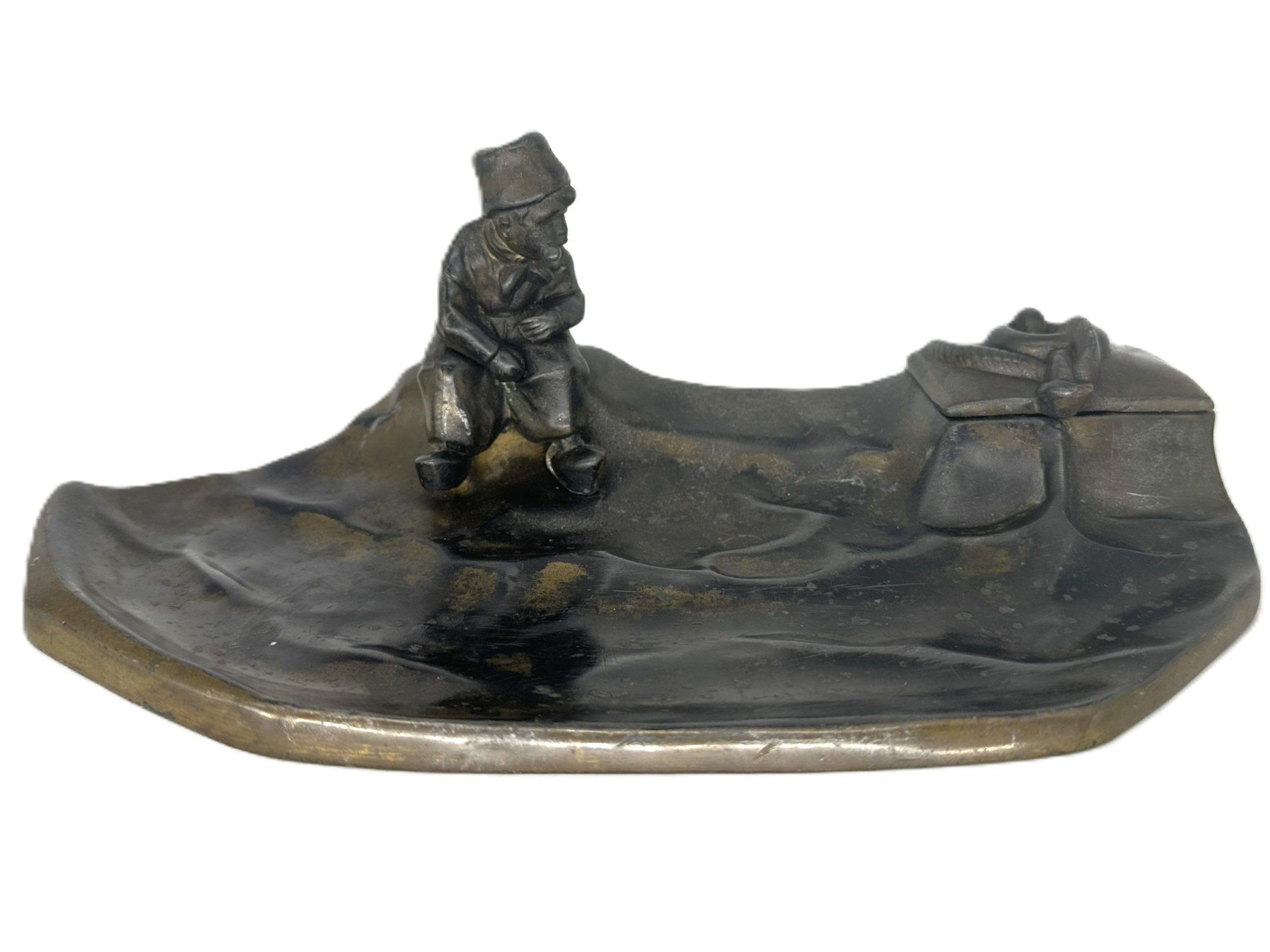
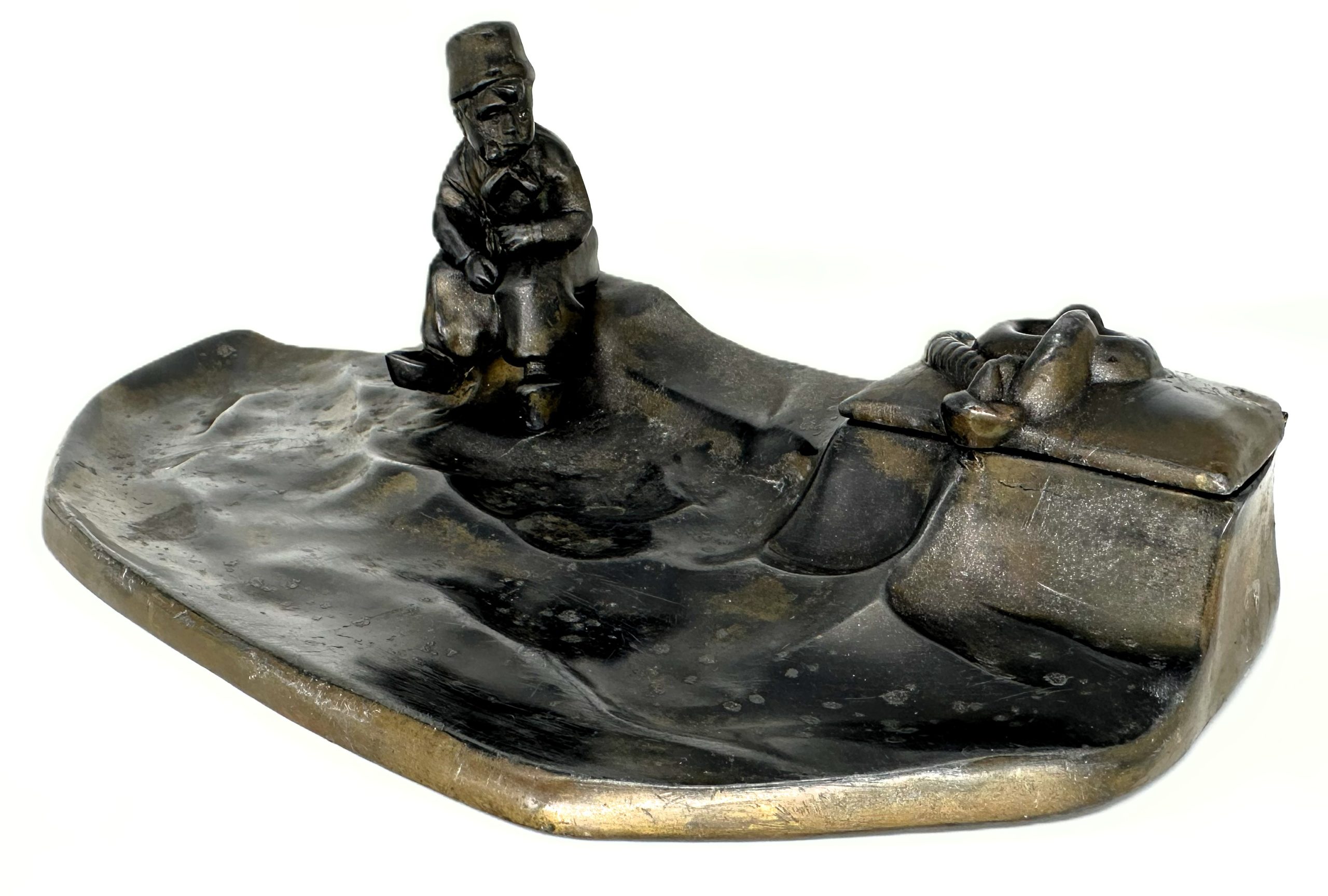
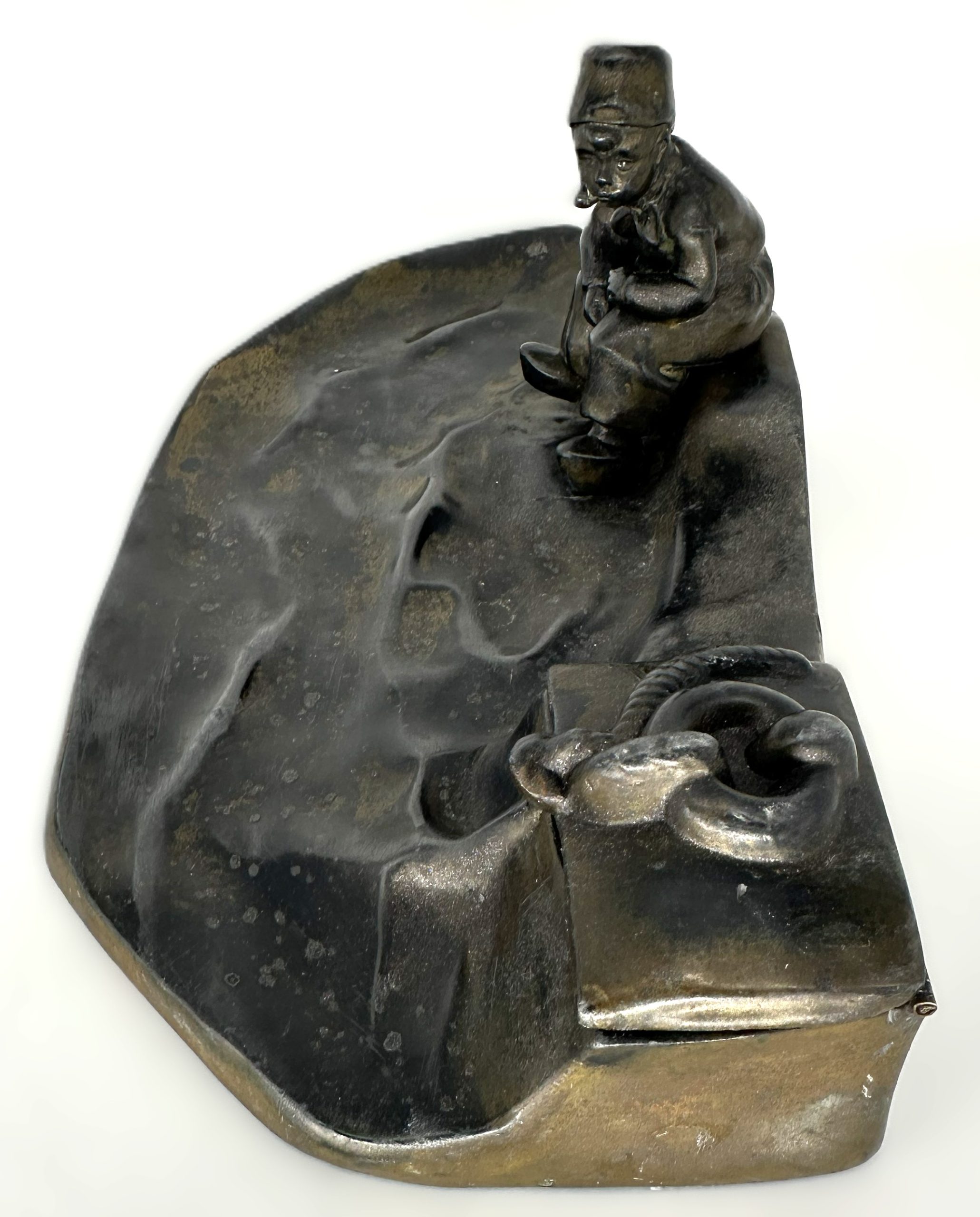
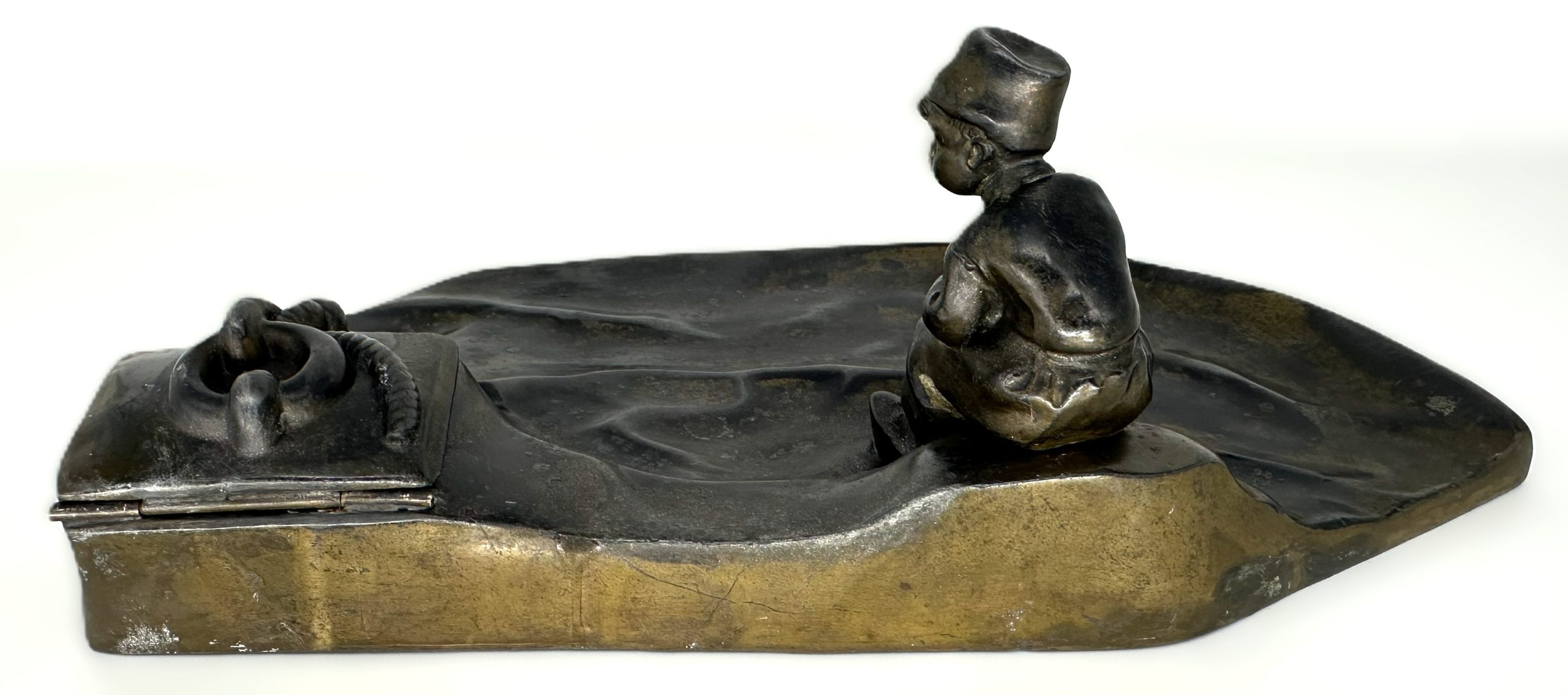
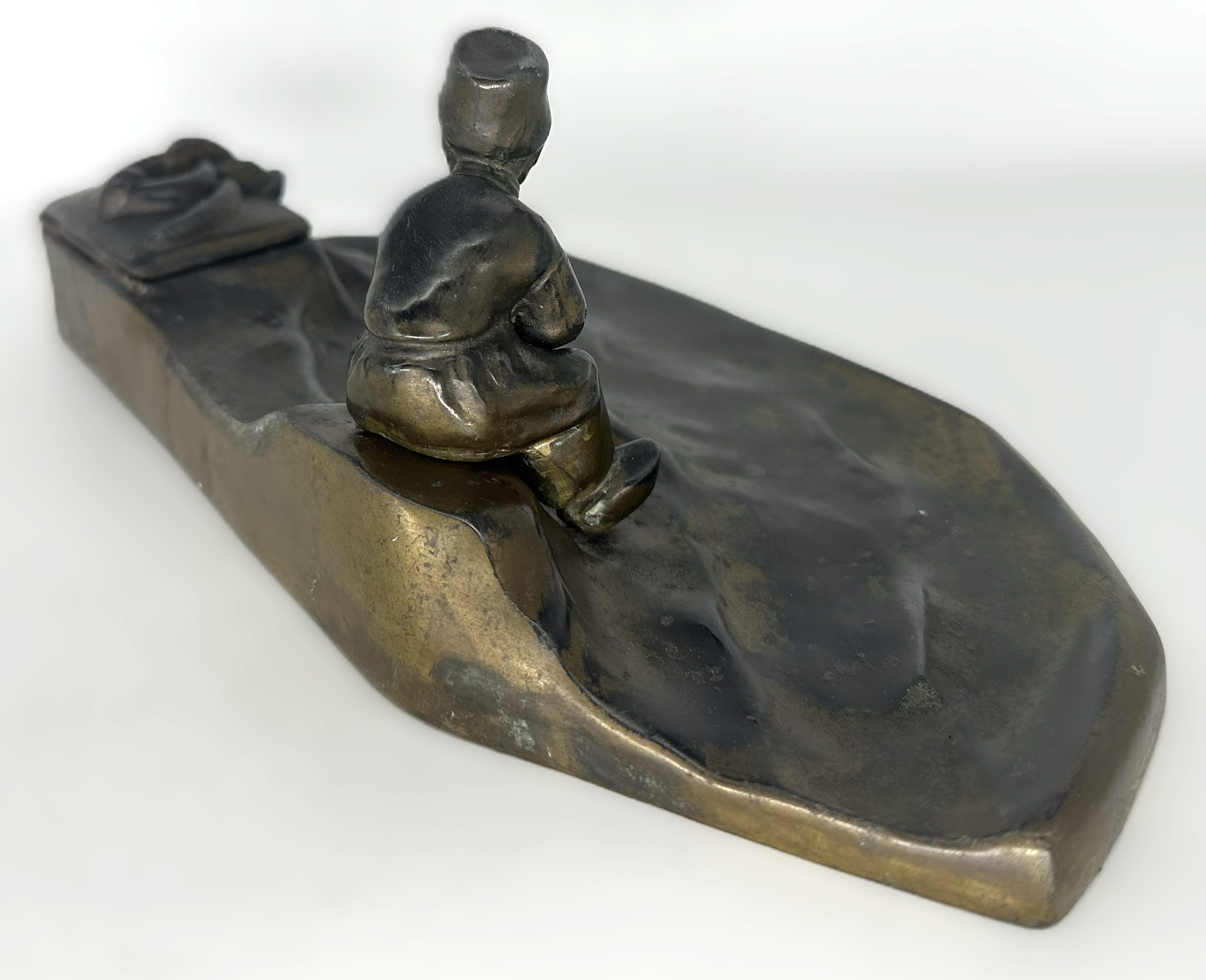
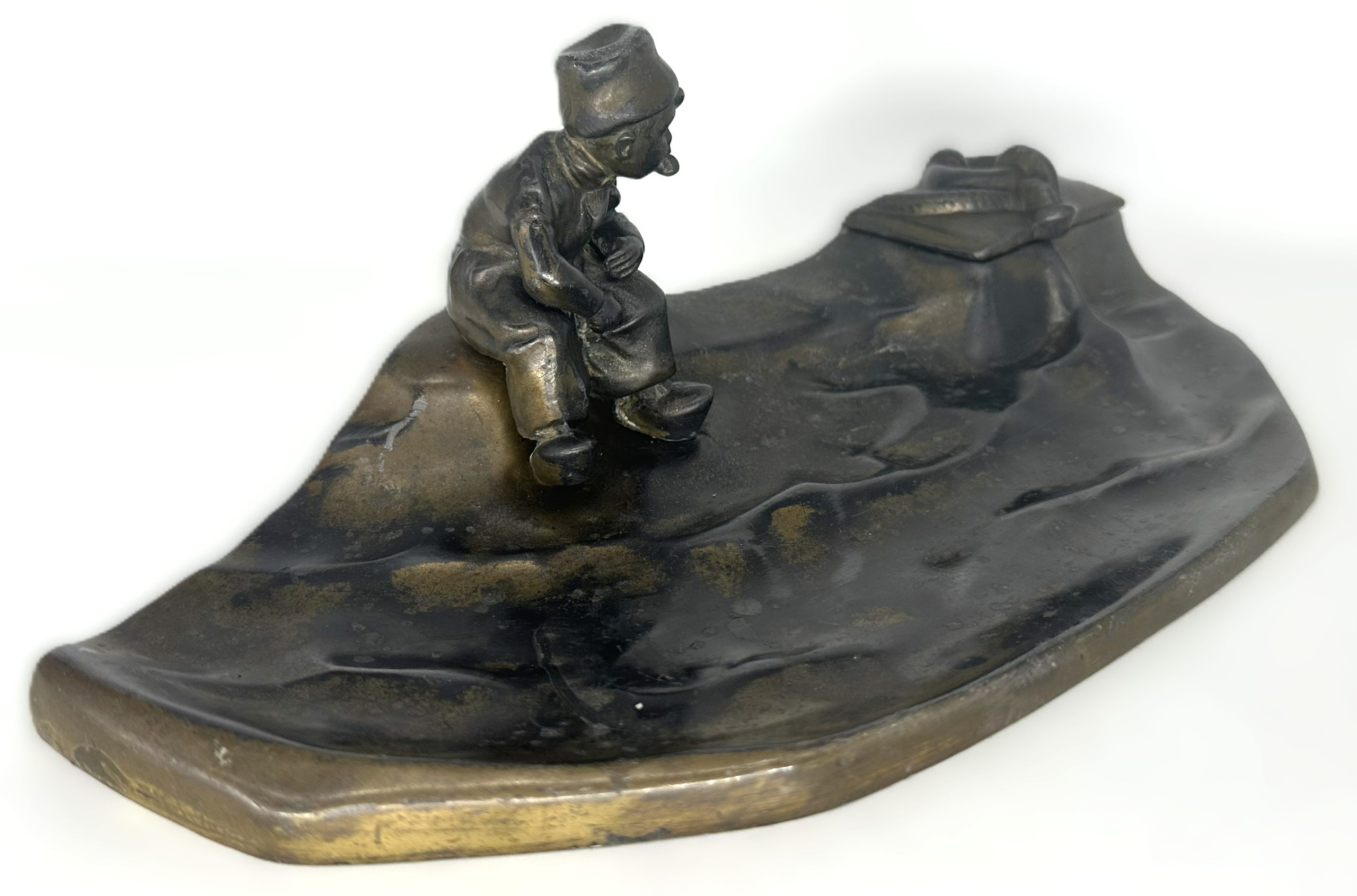
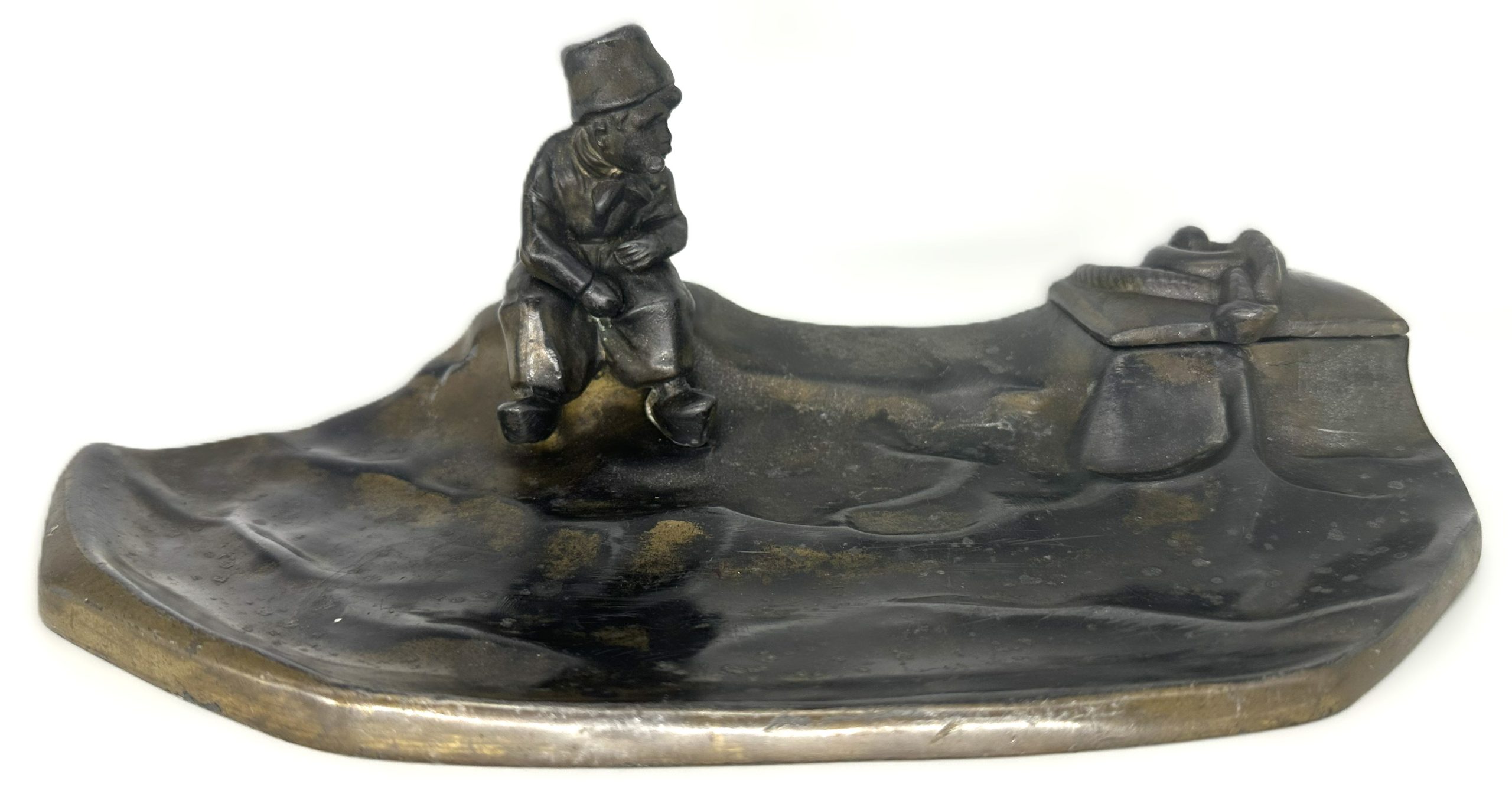
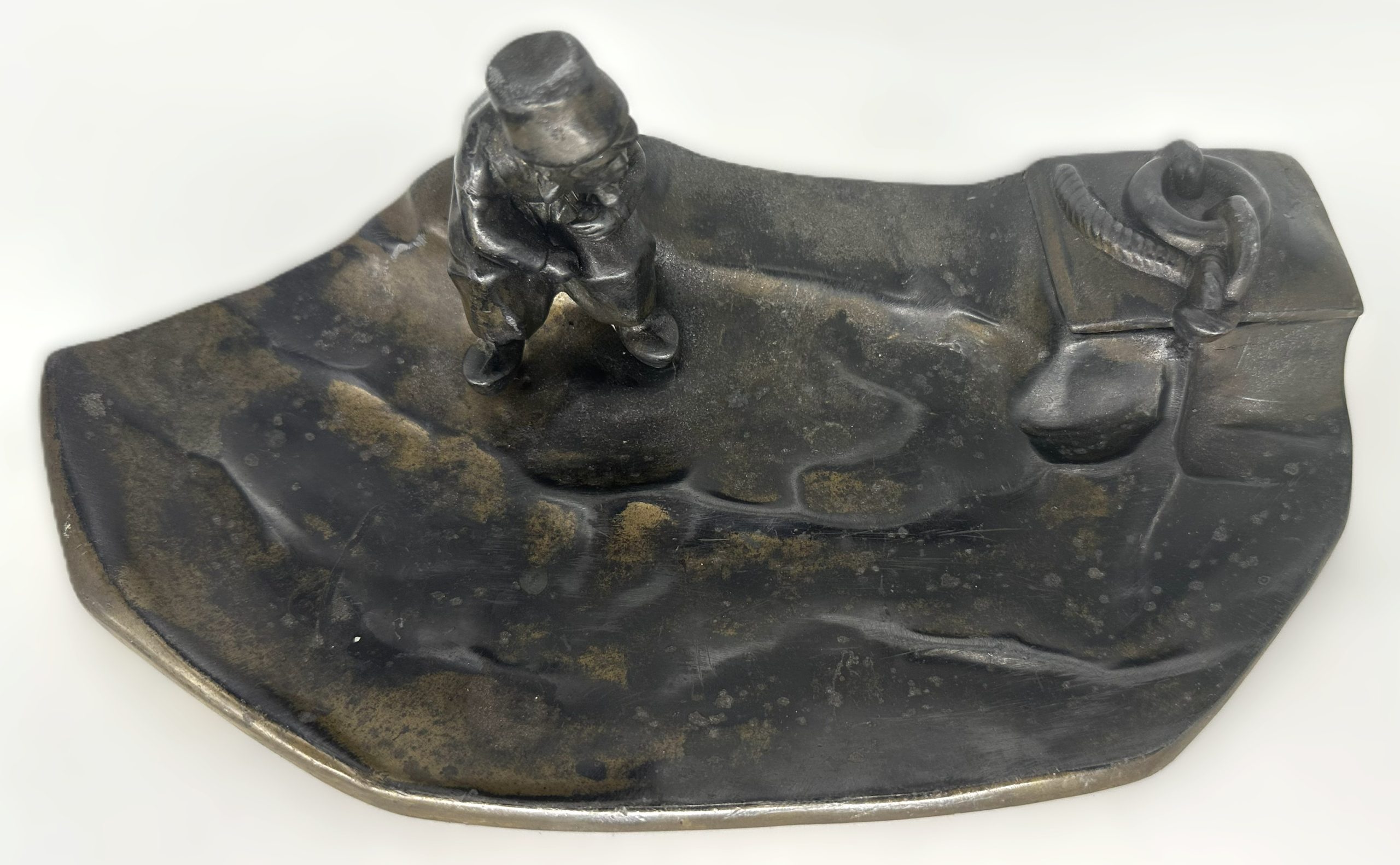

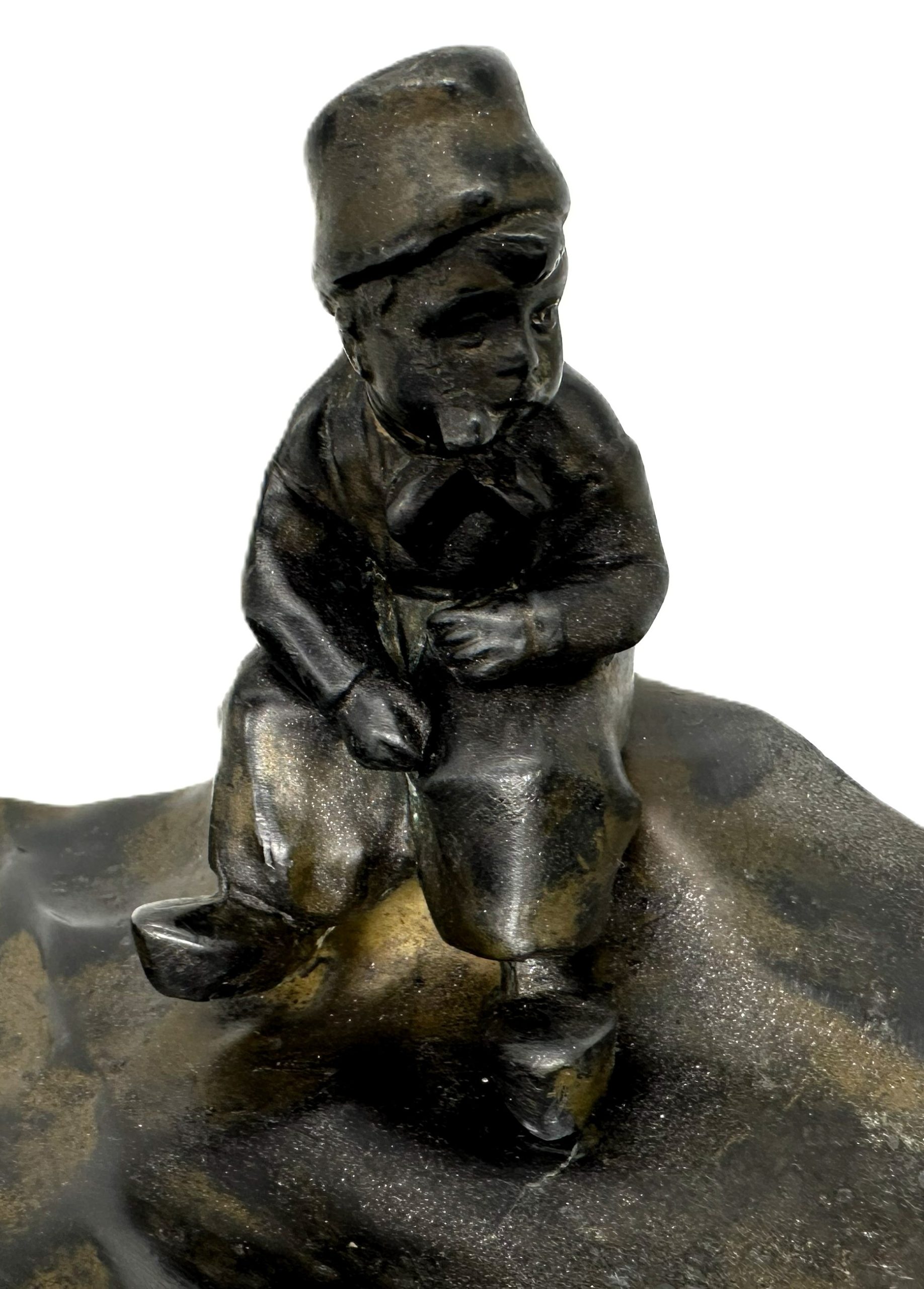
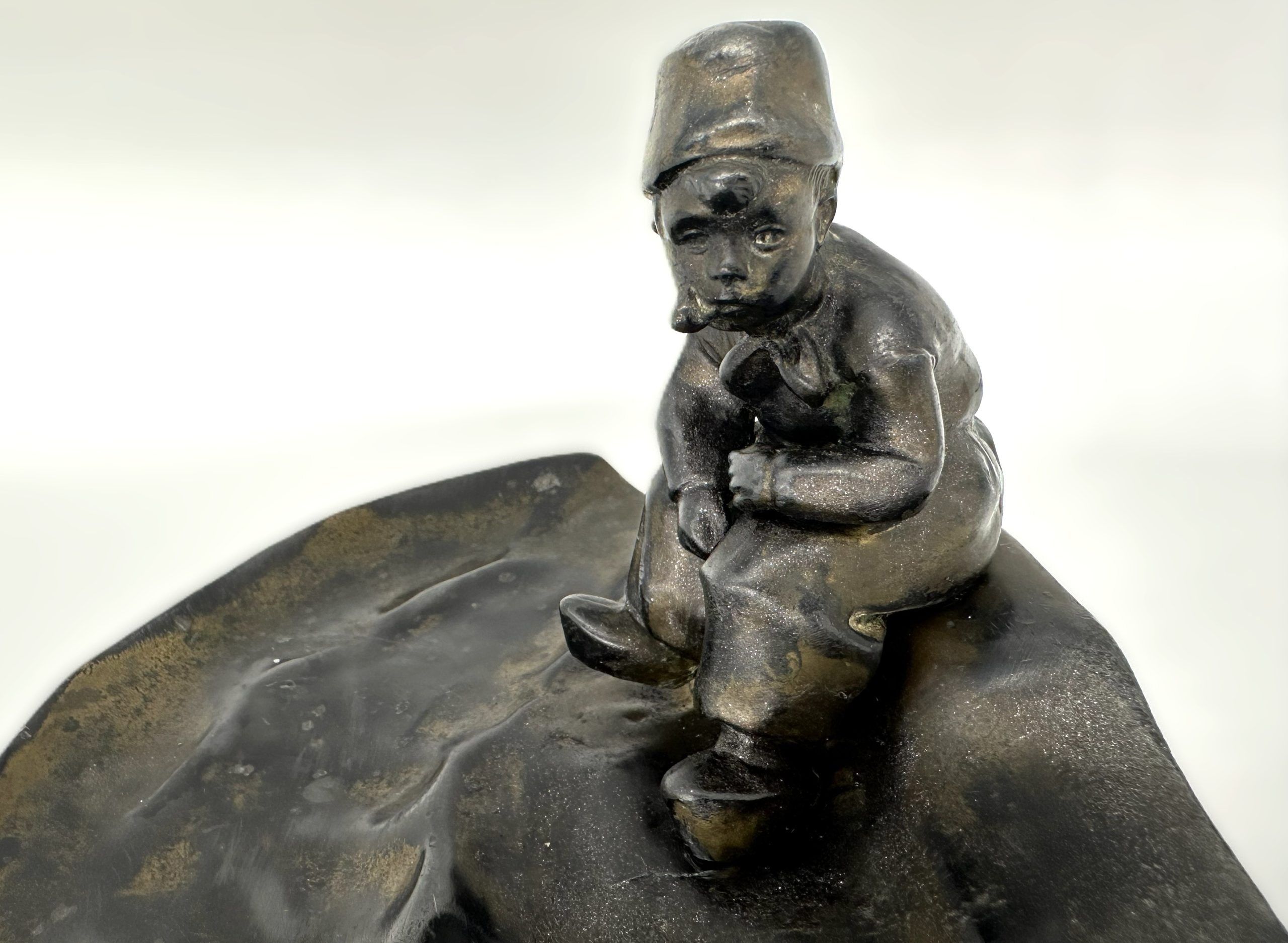
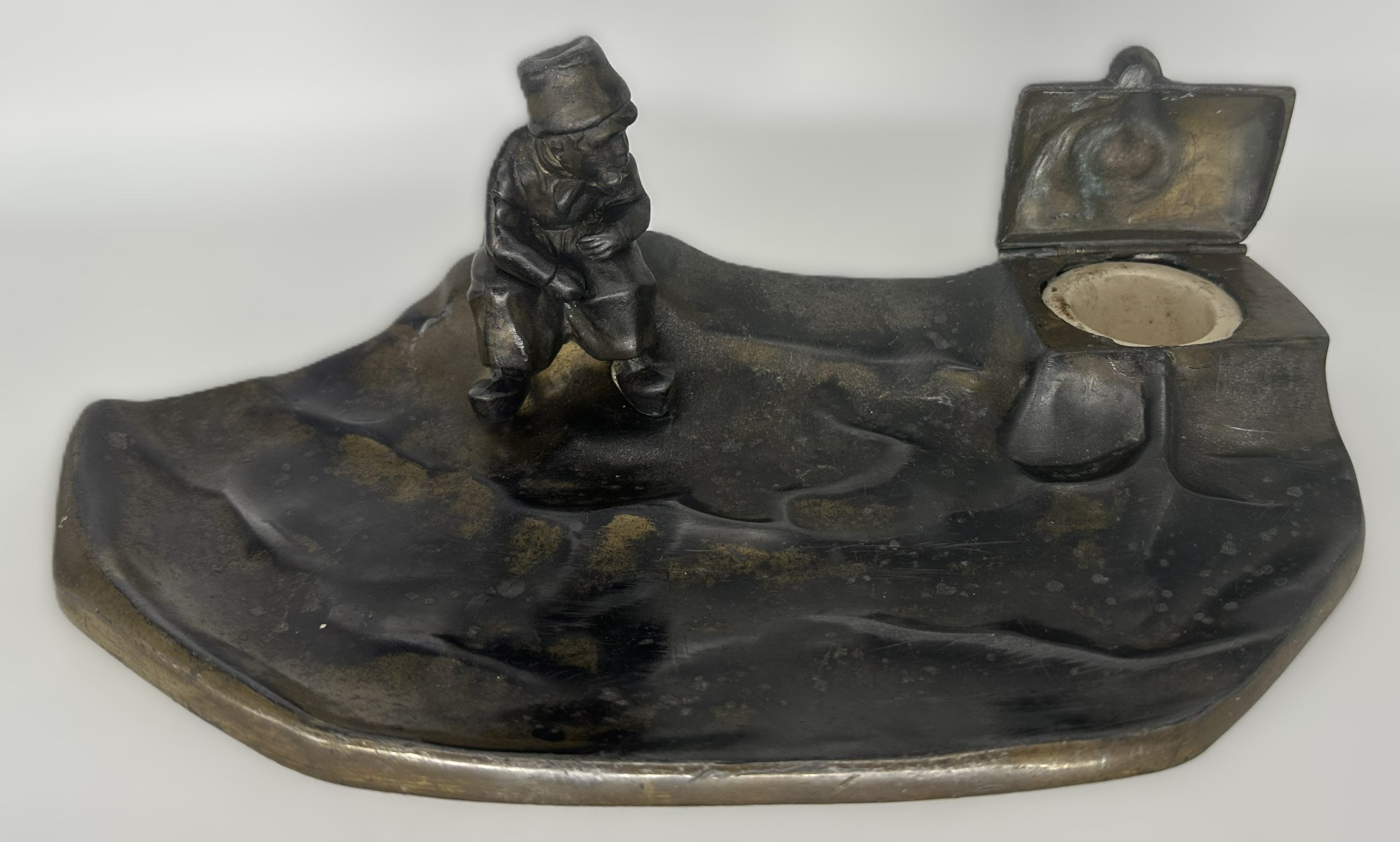
Dock Worker Sitting at the Wharf
| Categories | Figural - Persons |
| Type | Laborer |
| Material | White metal |
| Markings | Unmarked |
| Manufacturer | Undetermined |
| Origin | Undetermined |
| Date or Era | circa 1910 |
| Measuring | 11” x 5 ½” x 4 ⅛” high |
This figural inkstand depicts a genre scene set along a dock or harbor wharf.
- The Figure: A young boy sits perched at the edge of the wharf with his feet dangling. He is clad in traditional Dutch folk attire, including classic wooden clogs (klompen), baggy trousers (pantalon), a long-sleeved shirt with a folded kerchief/scarf tied around his neck, and a cap. He holds a pipe in his mouth, puffing contentedly while staring out toward the water. Rather than performing heavy labor as a dock worker, he is portrayed as a youth lounging or taking a quiet break along the harbor front.
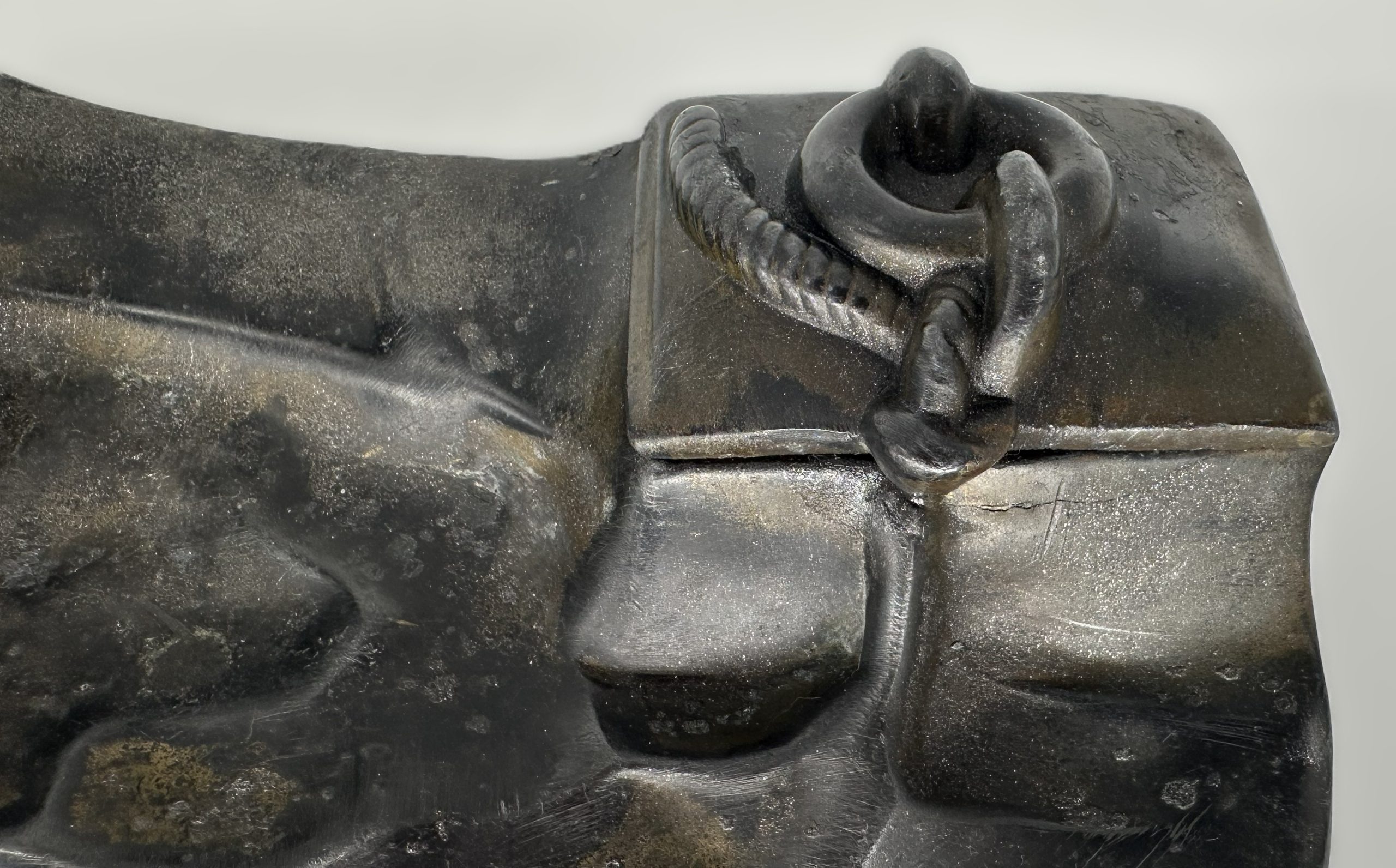
- The Inkwell & Dock Element: The inkwell housing is modeled as part of the dock structure or wharf fixture. The hinged lid is cast with a life preserver (buoy) and a thick coiled mooring line/rope running through a ring cleat. The wide, gently undulating surface of the base represents the rippling surface of the water, which doubles as a generous tray/pen rest.
- Internal Reservoir: The hinged lid opens to reveal a ceramic insert.
Material & Construction
- Metal & Finish: The piece is cast in white metal (commonly referred to as pot metal, spelter, or régule). It features a dark bronzed finish with golden highlights.
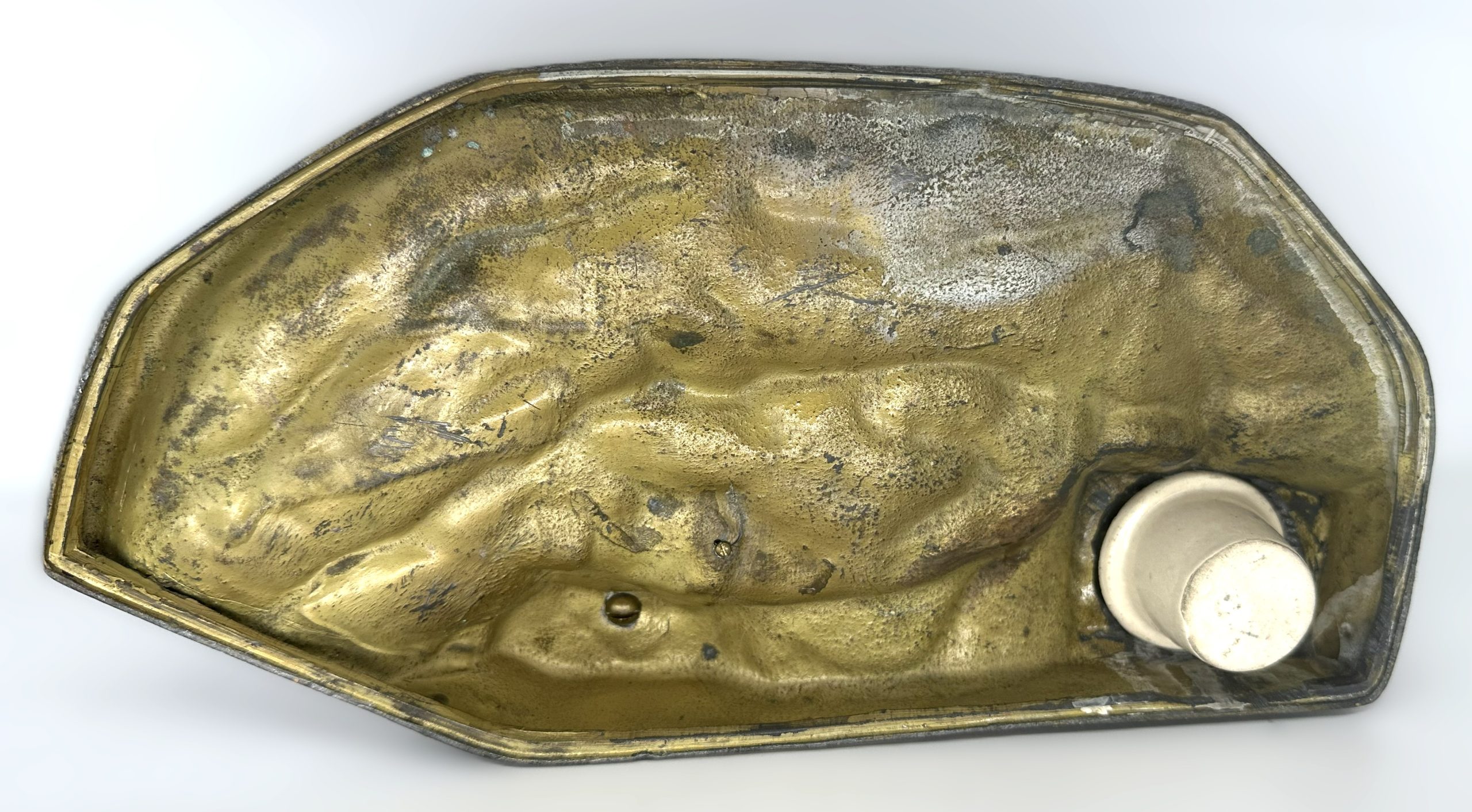
- Casting & Underside: The underside shows the hollow-cast shell characteristic of spelter/white metal casting, complete with the securing screw mount holding the seated boy figure to the base.
Origin, Manufacturer & Date
- Origin: European, most likely French or German/Austrian, where spelter (régule) genre inkstands featuring regional subjects—particularly romanticized Dutch children, fisherfolk, and harbor scenes—were widely produced for export.
- Maker: Unmarked. Cast-spelter desk accessories of this type were produced by numerous foundries without distinctive maker’s marks or logos.
- Estimated Date: circa 1900–1920s. The Art Nouveau influence in the fluid, organic representation of the water surface combined with early 20th-century figurative genre themes points directly to the 1900 through the 1920s era.
Estimated value: $125 – Sold for $100 in September 2026
Content disclaimer. The information posted is the owner’s best knowledge and may not have been vetted by the SOIC. We welcome comments, corrections, and additions, working to make our website information comprehensive and accurate.
Join the Society of Inkwell Collectors (SOIC) – it’s free!
Founded in 1981 as a non-profit organization,
we are documenting inkwells (and accessories).
We’re here to help and inform!