

The Princess and the Frog
| Categories | Art Nouveau, Figural - Mythology; Literature; Religion; Fictional |
| Type | Fictional |
| Material | Spelter |
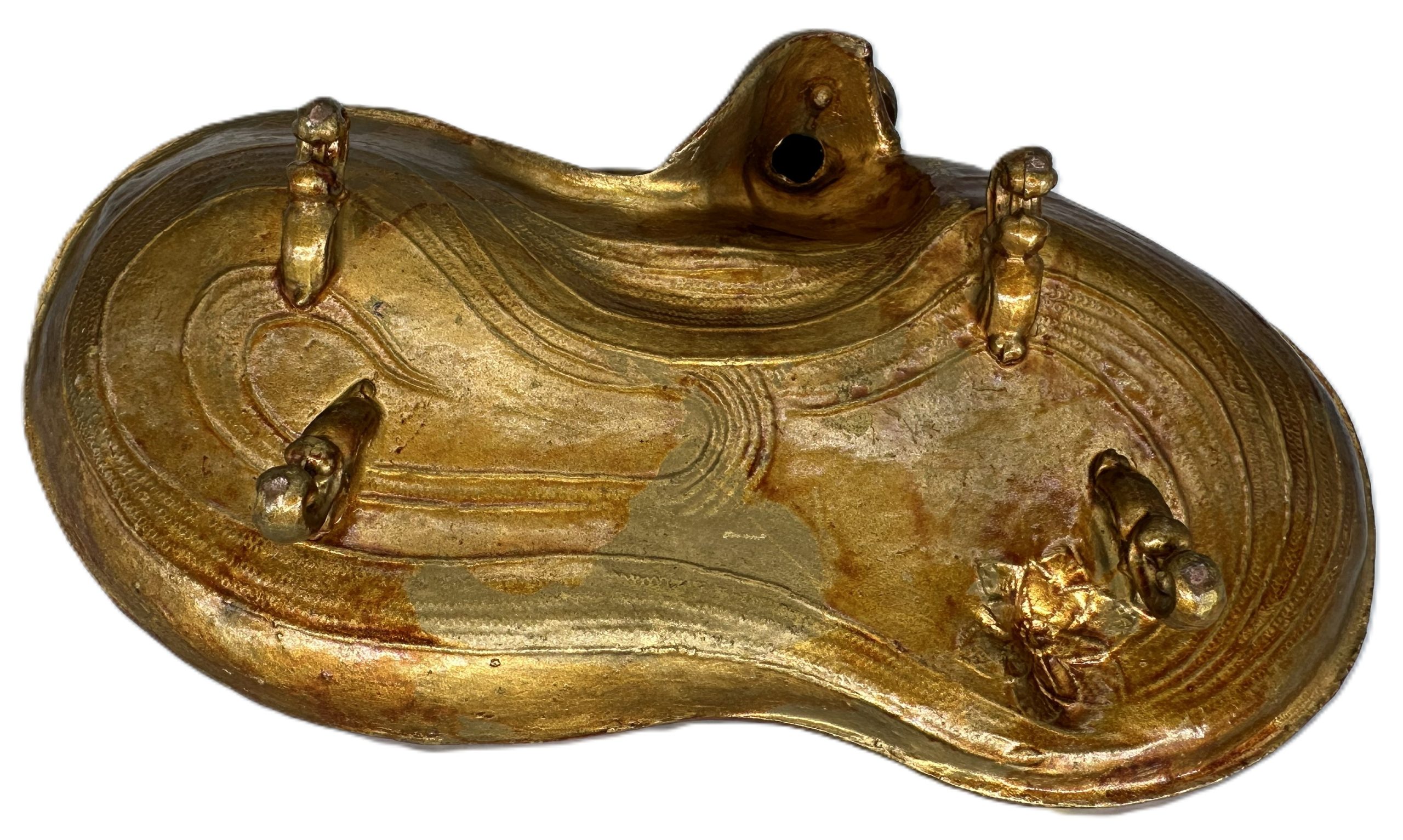
| Markings | Unmarked |
| Manufacturer | Undetermined |
| Origin | Undetermined |
| Date or Era | circa 1900 |
| Measuring | 6 ¾” x 4” x 4” high |
Description
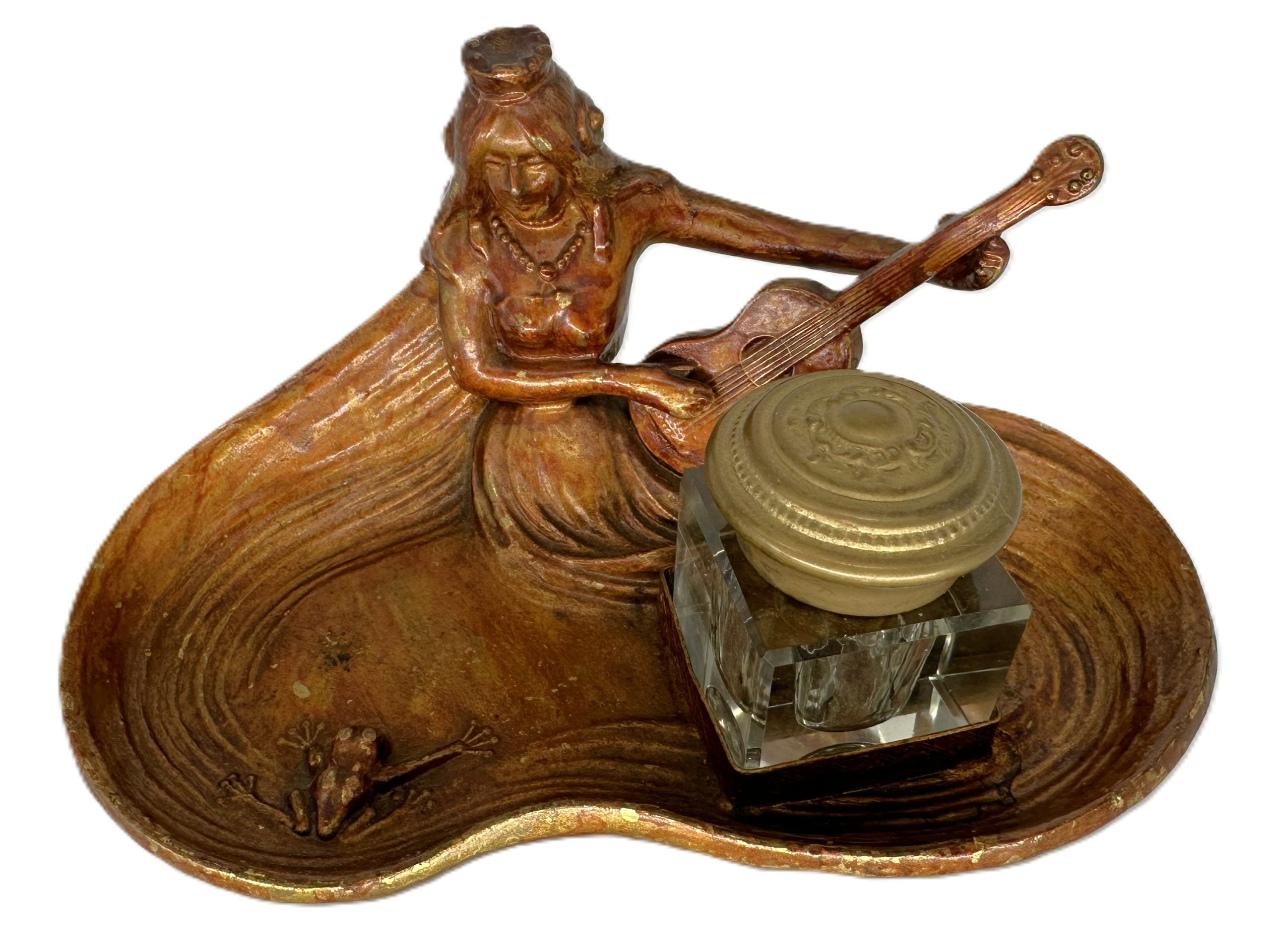
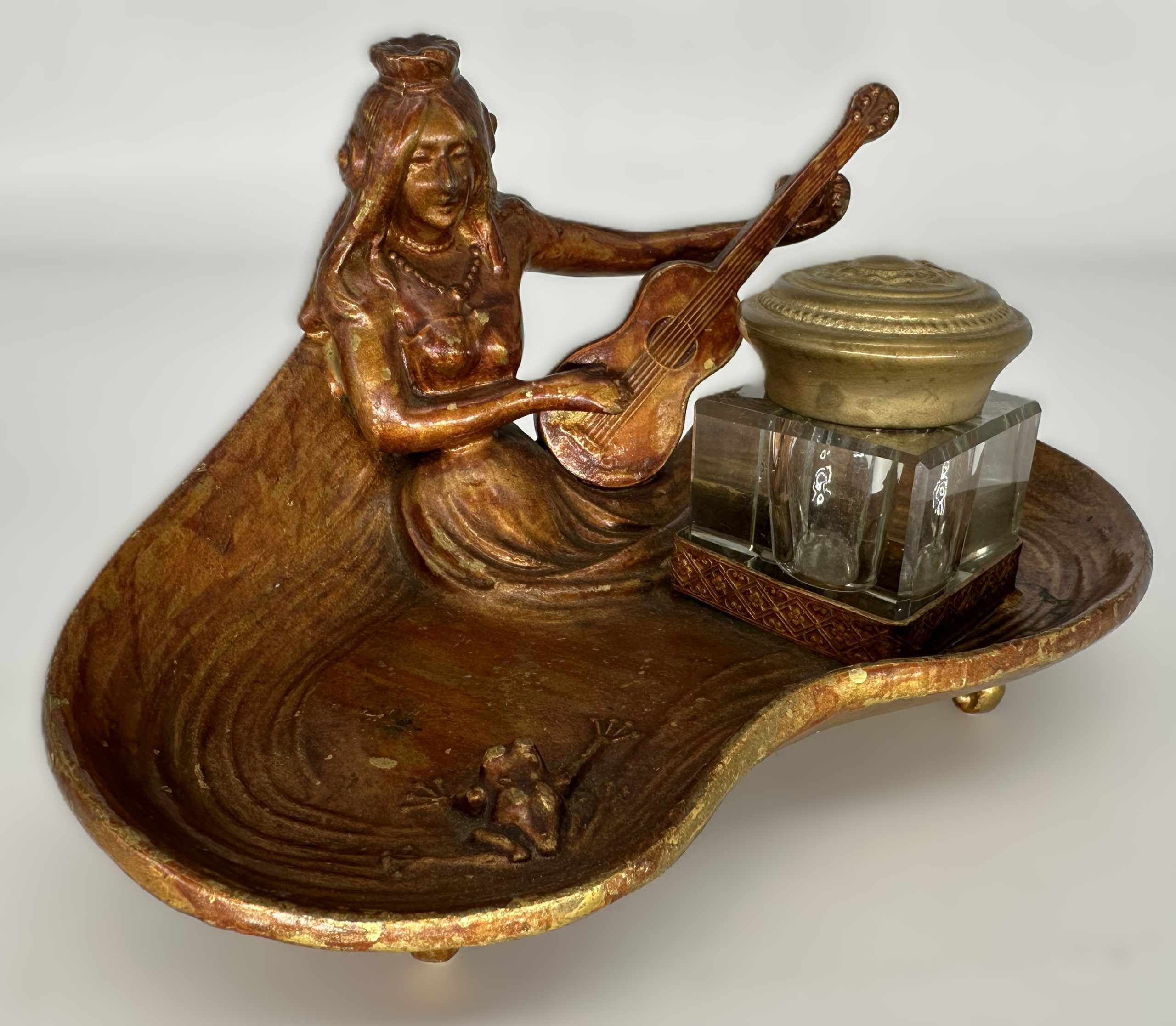
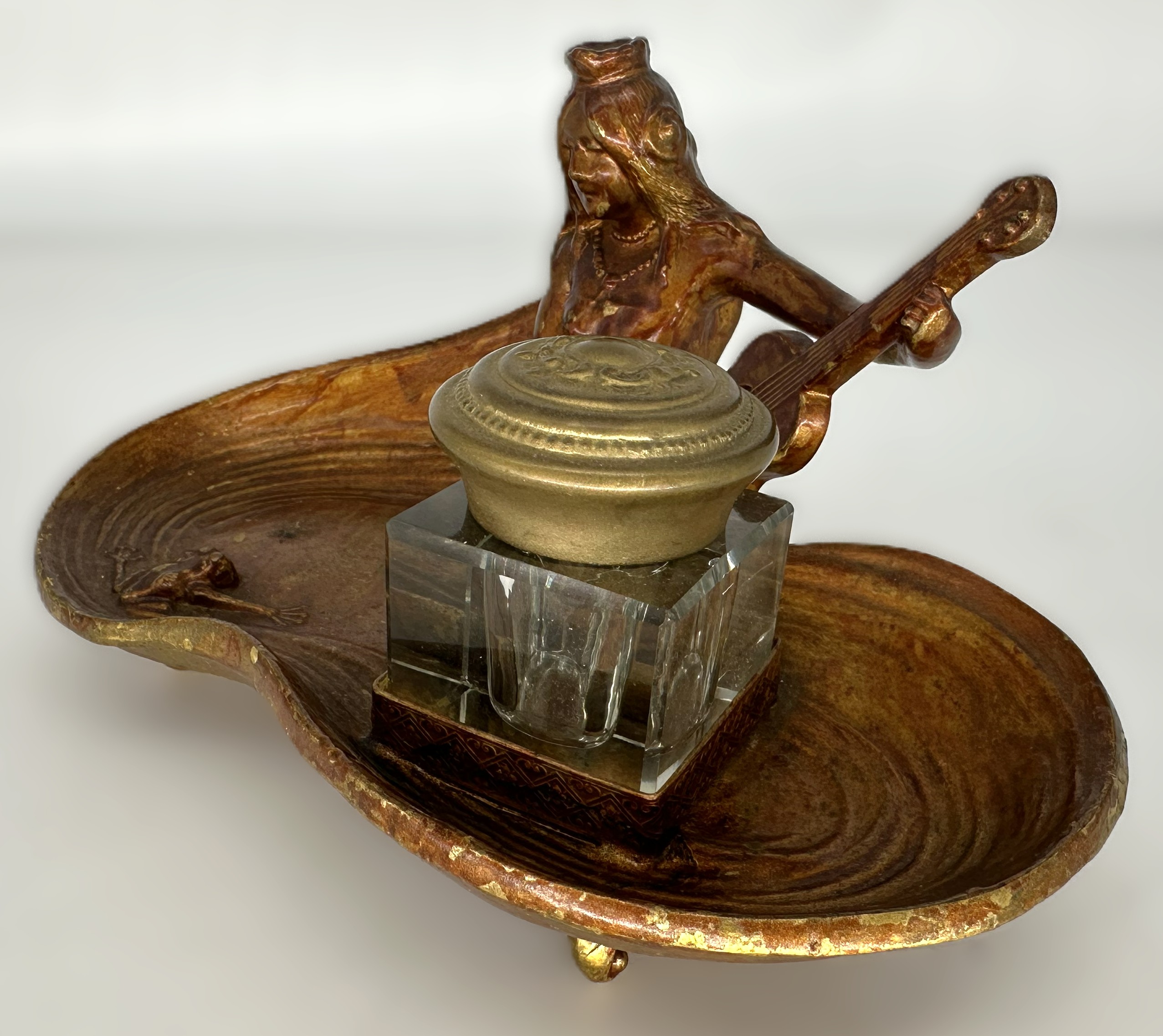
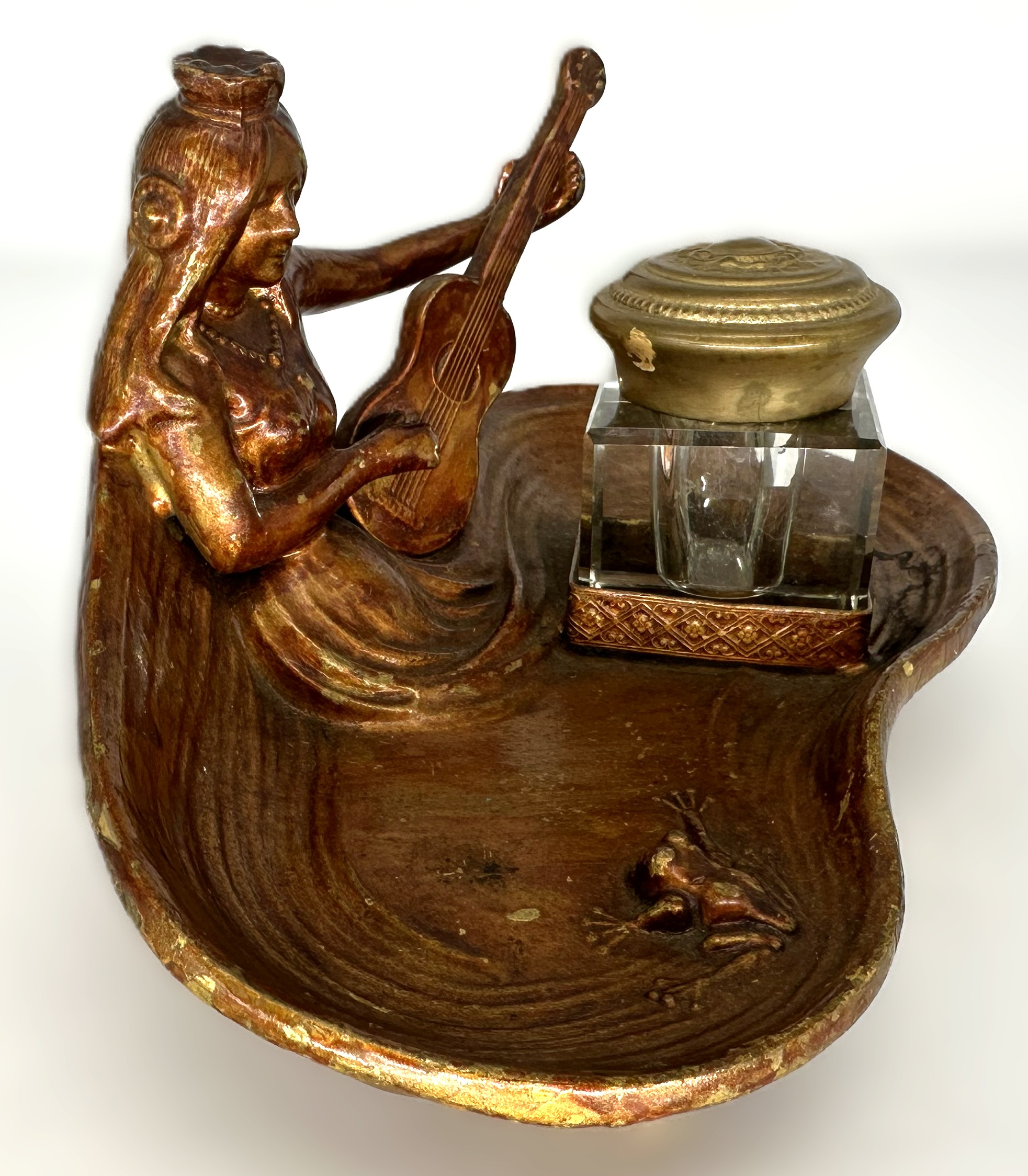
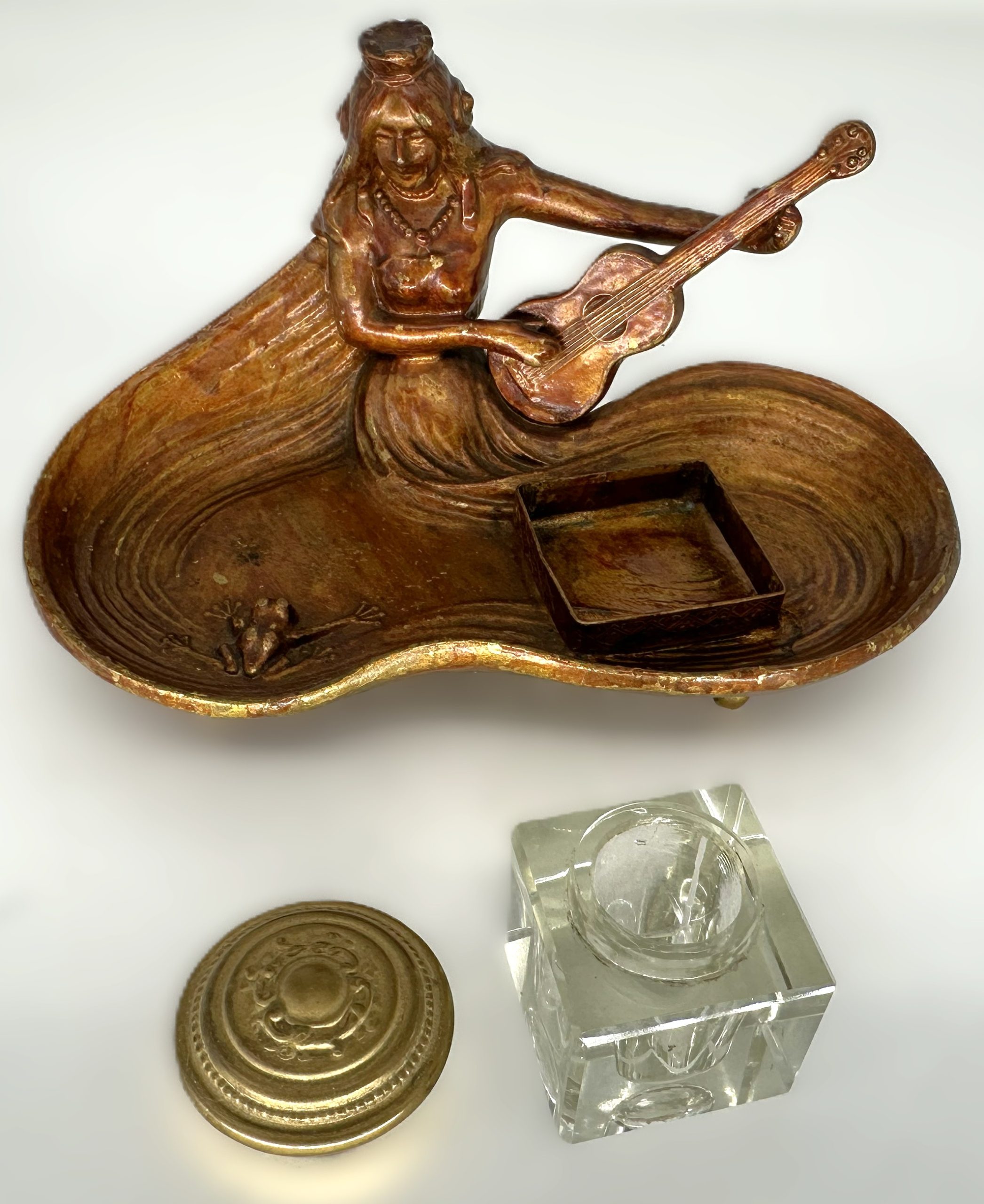
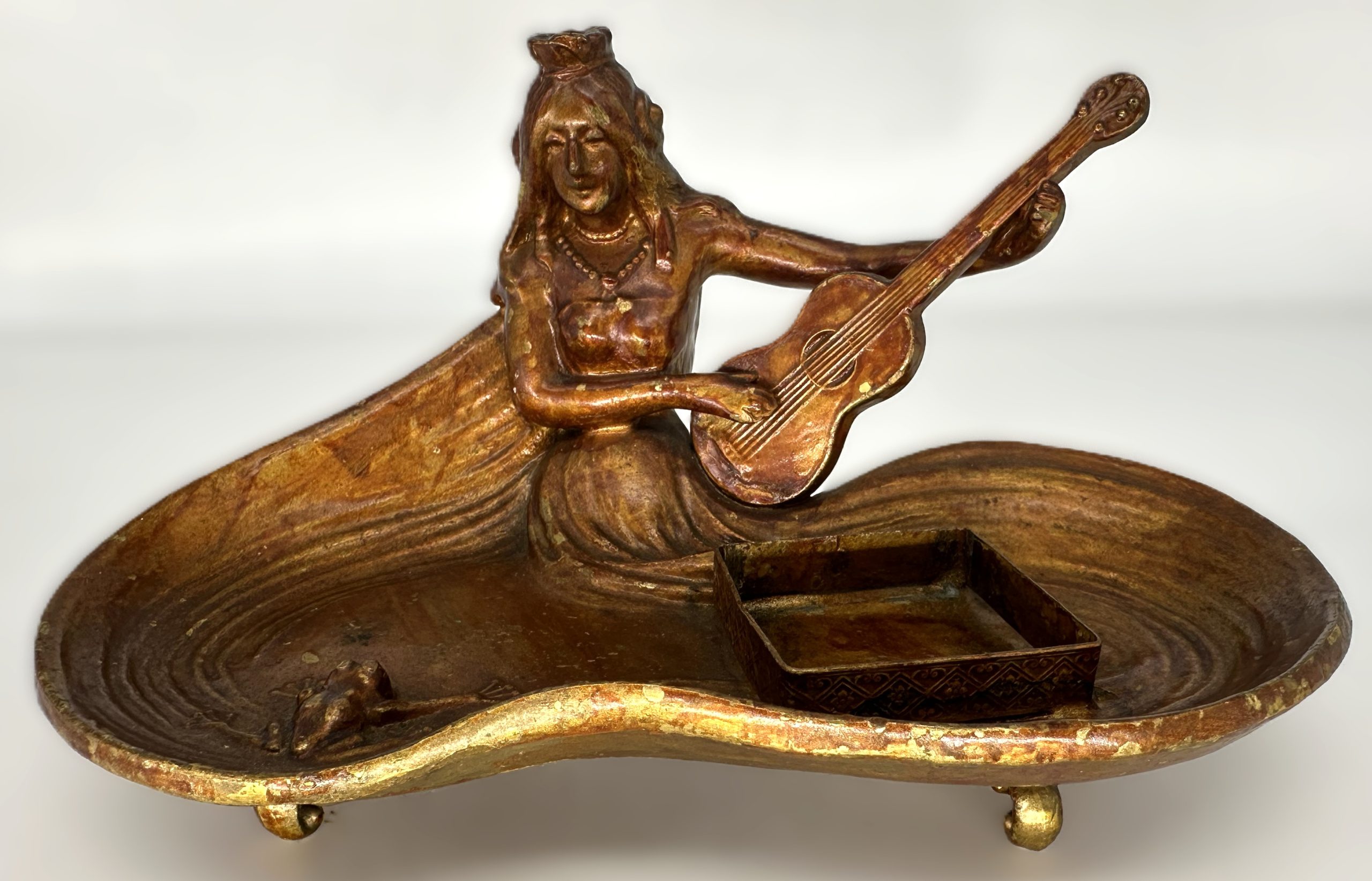
This Art Nouveau desk inkstand is crafted from gilt spelter (régule) with a warm bronze/gold patina.
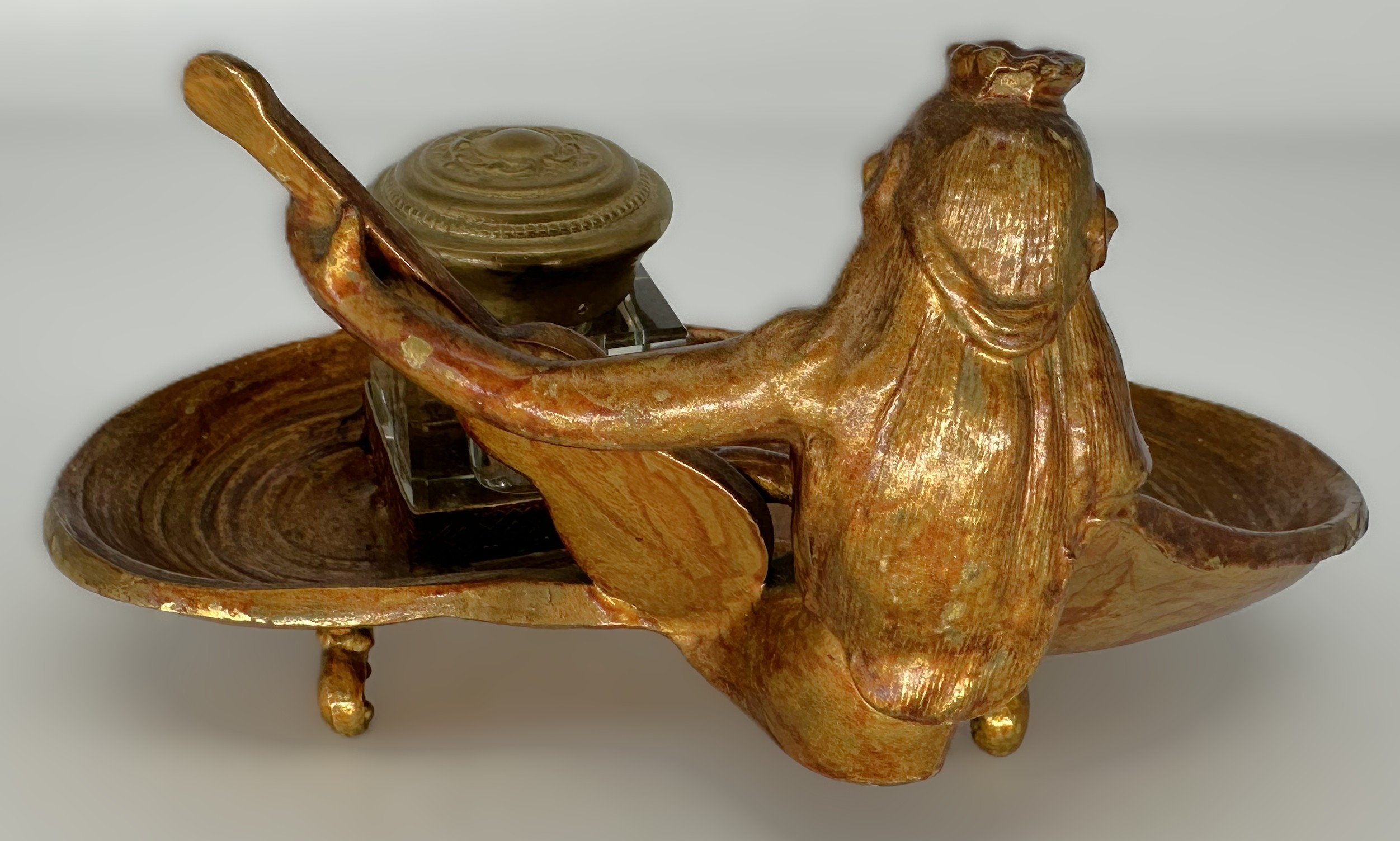
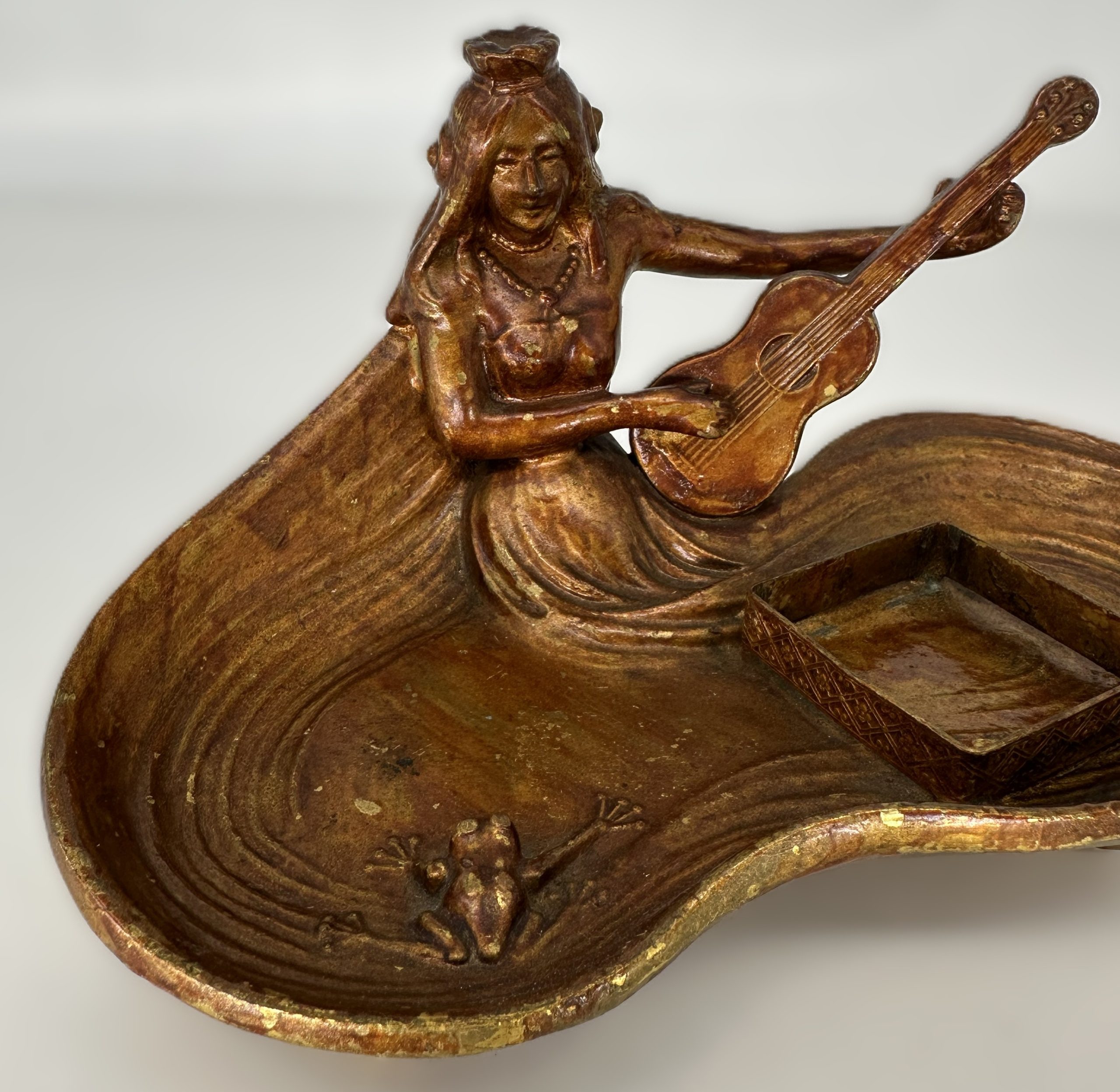
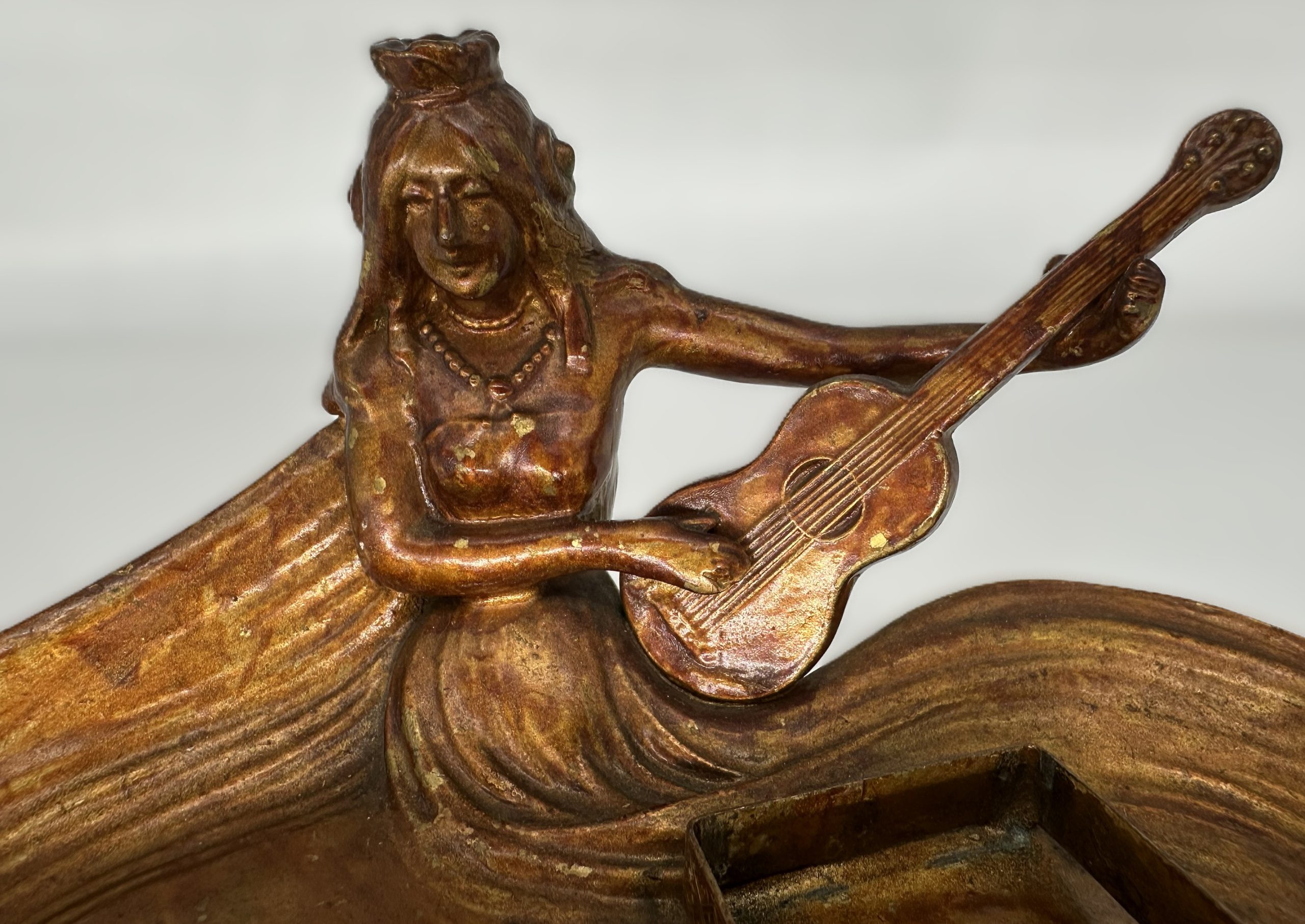
- The Figure & Fluid Gown: The back of the piece features a sculpted maiden wearing a low-cut bodice and a small tiara or crown atop her hair. While her hair falls down her back and terminates near her shoulders, it is her long, draped gown that billows outward from her waist. The fluid folds of her skirt sweep across the tray, creating the rippled floor of the basin and curving around to form the outer border.
- The Instrument: The maiden is playing a small, six-stringed guitar (note the figure-eight contoured body, circular sound hole, straight fretted neck, and headstock with tuning pegs). While lutes traditionally feature a rounded, bowl-back shell and an angled neck, this instrument explicitly exhibits guitar construction.
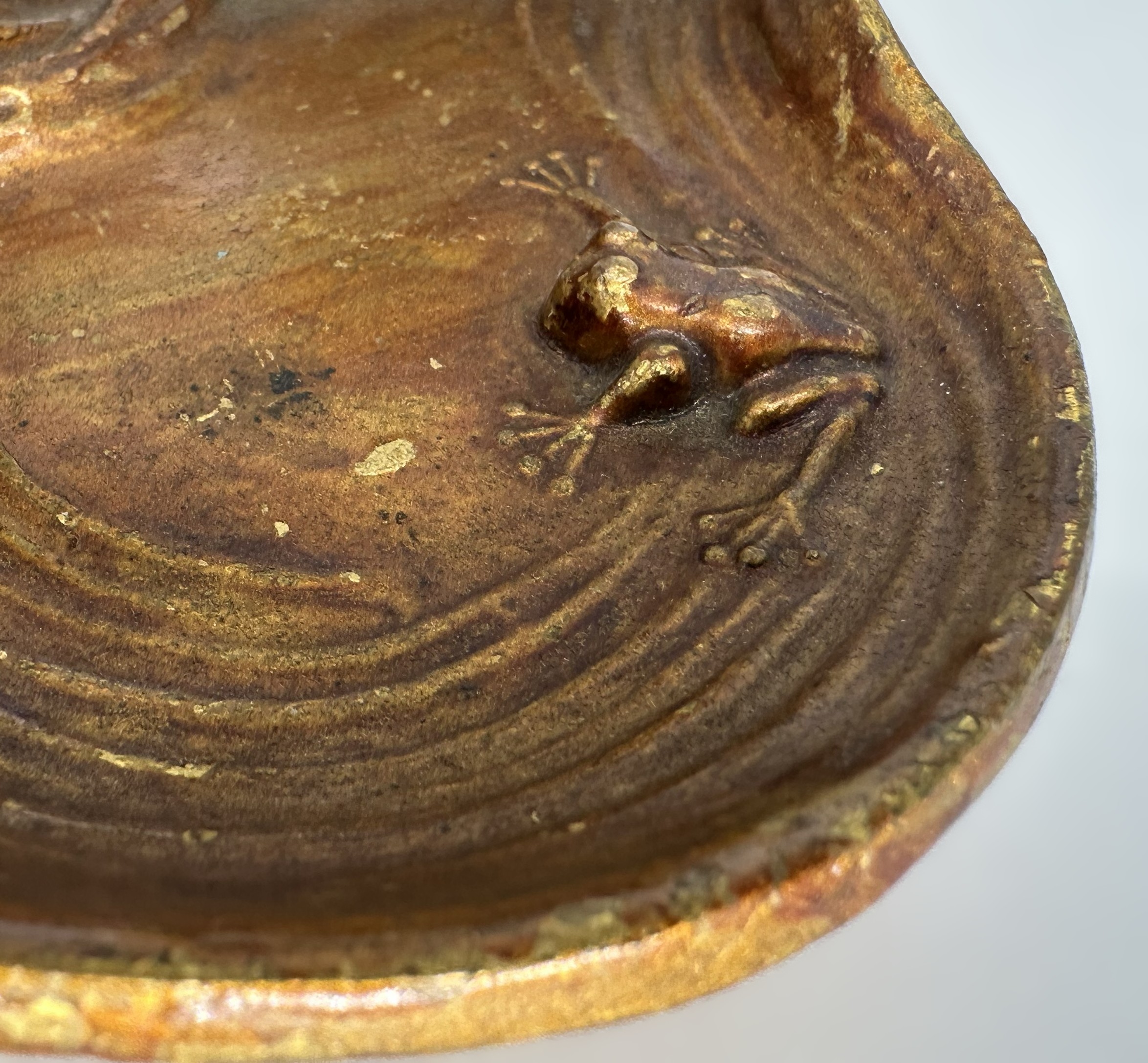
- The Frog & Pond Motif: Perched directly in the shallow basin formed by her cascading skirt is a small relief-sculpted frog with outstretched legs. The concentric, swirling ridges etched into the floor of her gown resemble ripples across a pond’s surface, making the frog appear as if it is looking up at her from the water.
- Inkwell & Desk Tray Base: Beside the maiden sits a raised square frame designed to hold a cut-glass inkwell. The removable square glass base has a round, gilt-metal lid. The tray rests on four ornate feet, one of which is decorated with a lotus or water lily bloom.
Symbolic & Narrative Theme: Fairy Tale vs. Siren Motif
While a crowned maiden and a frog near water immediately evoke the classic Brothers Grimm fairy tale “The Frog Prince” (or “Iron Henry”), the scene leans heavily into Art Nouveau symbolism:
- The Frog Prince Narrative: The small crown worn on the maiden’s head and the perched frog gazing up at her suggest a playful nod to the princess and her amphibious suitor.
- Nymph / Siren Symbolism: Art Nouveau artists frequently merged organic elements with human figures, blending garments seamlessly into nature. Here, her dress flows outward like liquid waves or river currents, casting her as a water nymph or siren whose enchanted guitar music entrances the creature in her pond.
Attribution, Origin, and Date
- Manufacturer: Unmarked cast-metal pieces of this nature were produced in large quantities by French foundries (such as those in Paris) and Austro-German makers (e.g., Vienna bronze/spelter foundries). Without a maker’s mark or foundry stamp on the underside, a single specific attribution cannot be confirmed.
- Materials & Construction: The tray body is cast from spelter (régule—a zinc alloy common in turn-of-the-century decorative arts) with a gilded brass wash. The base features a square brass receiver ring soldered onto the tray to secure the cut-glass inkpot.
- Place of Origin: Likely France or Austria/Germany.
- Date: Circa 1895–1910 (the peak of the classic Art Nouveau movement).
Estimated value: $150
Content disclaimer. The information posted is the owner’s best knowledge and may not have been vetted by the SOIC. We welcome comments, corrections, and additions, working to make our website information comprehensive and accurate.
Join the Society of Inkwell Collectors (SOIC) – it’s free!
Founded in 1981 as a non-profit organization,
we are documenting inkwells (and accessories).
We’re here to help and inform!