

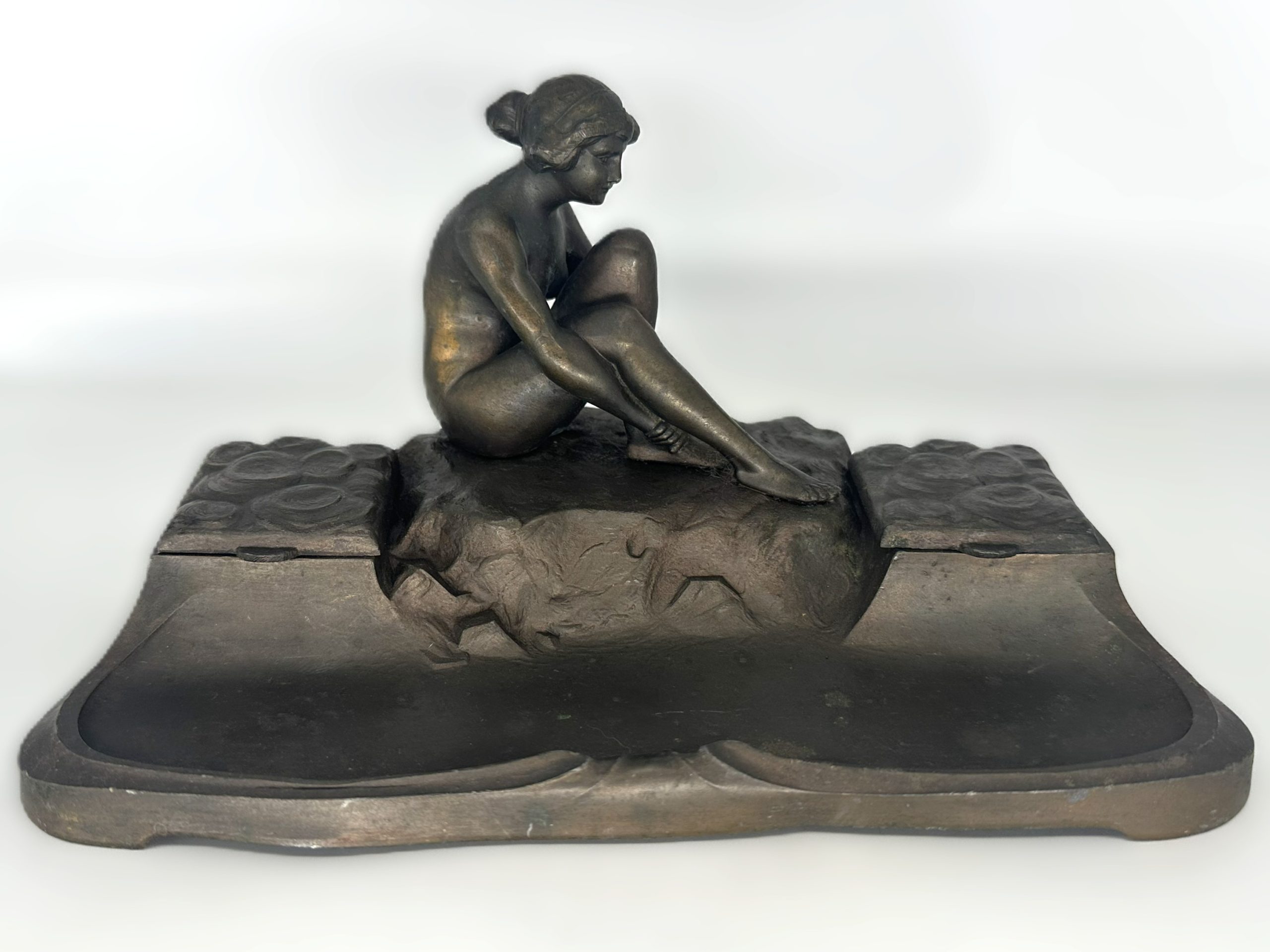
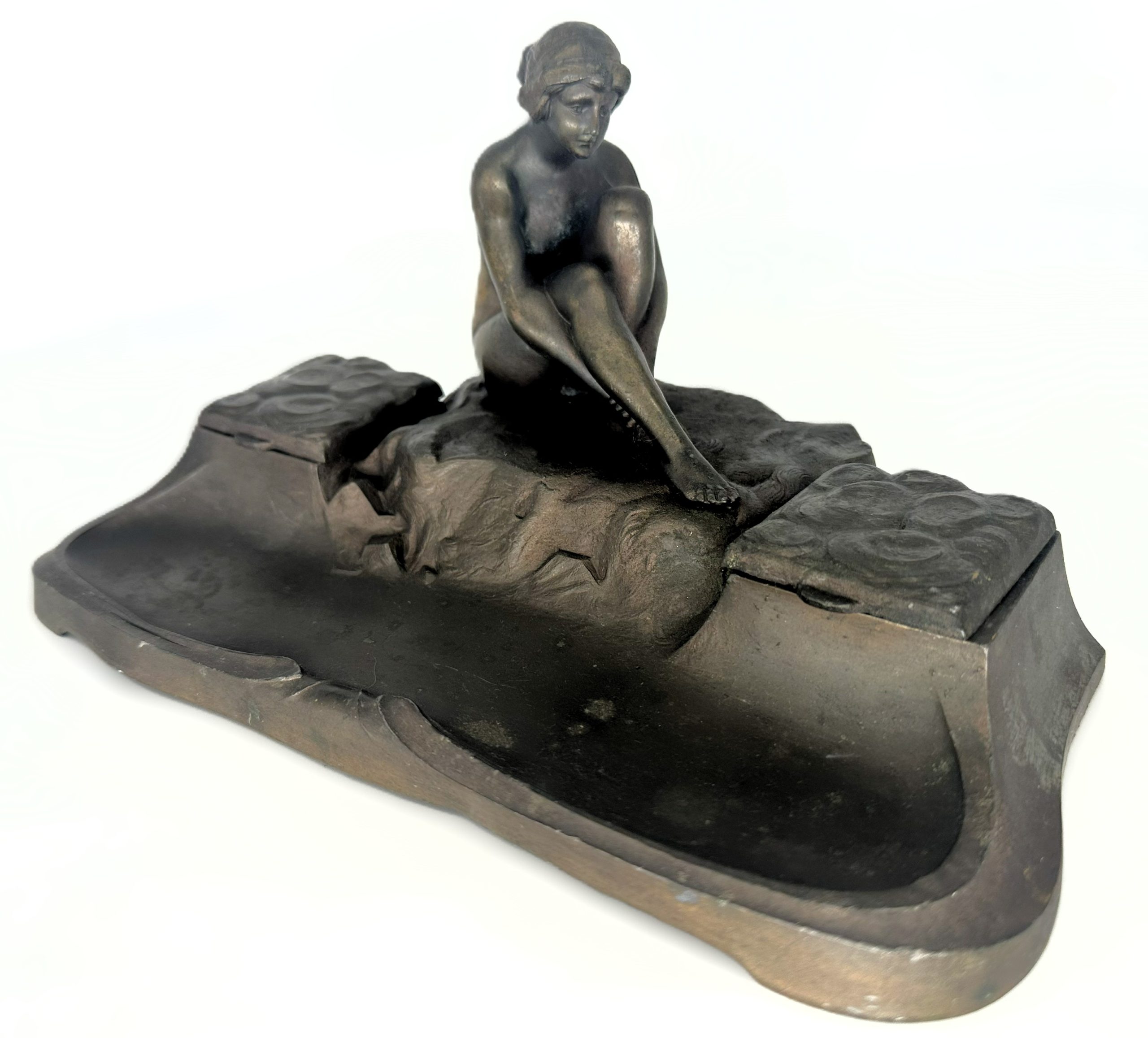
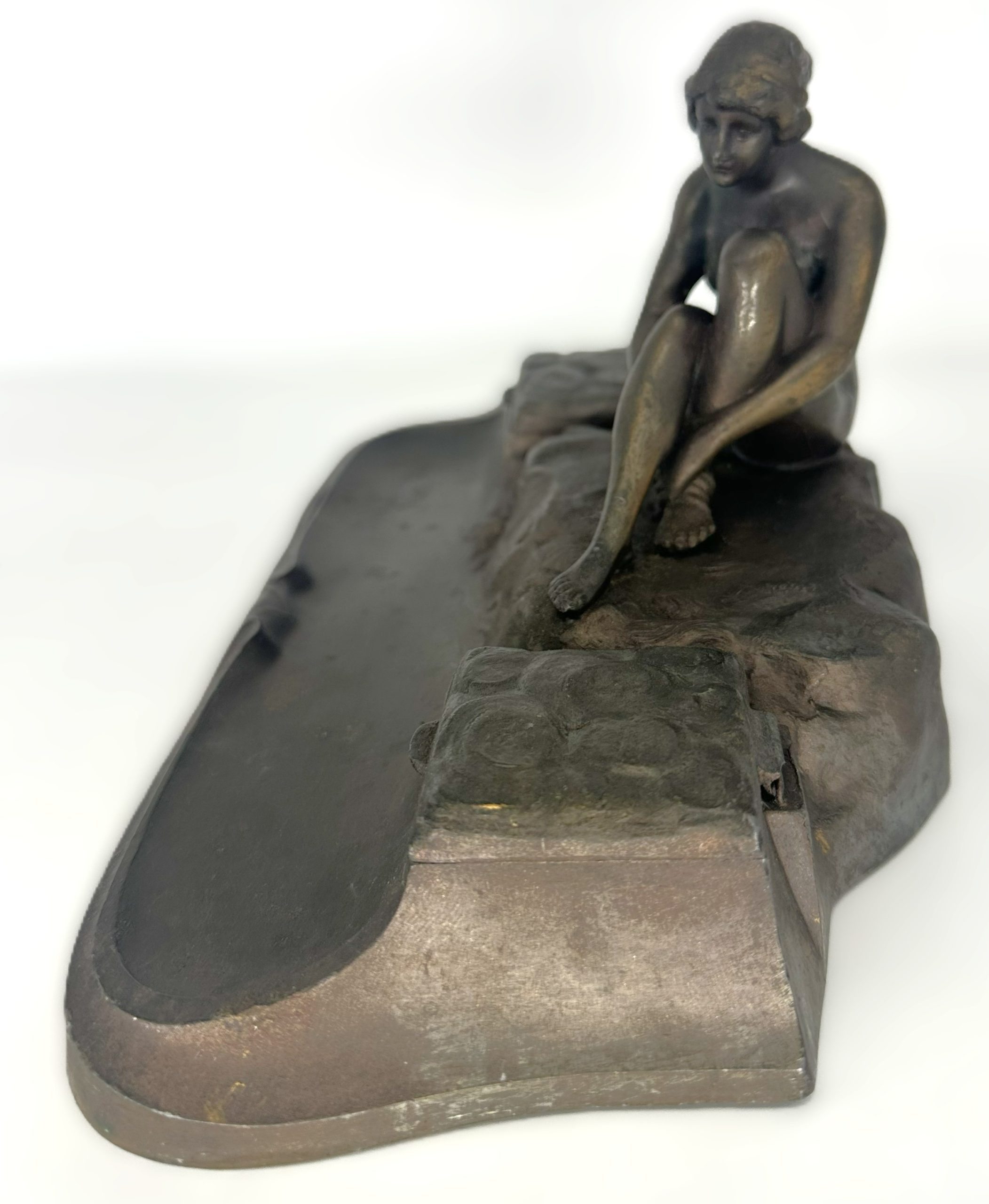
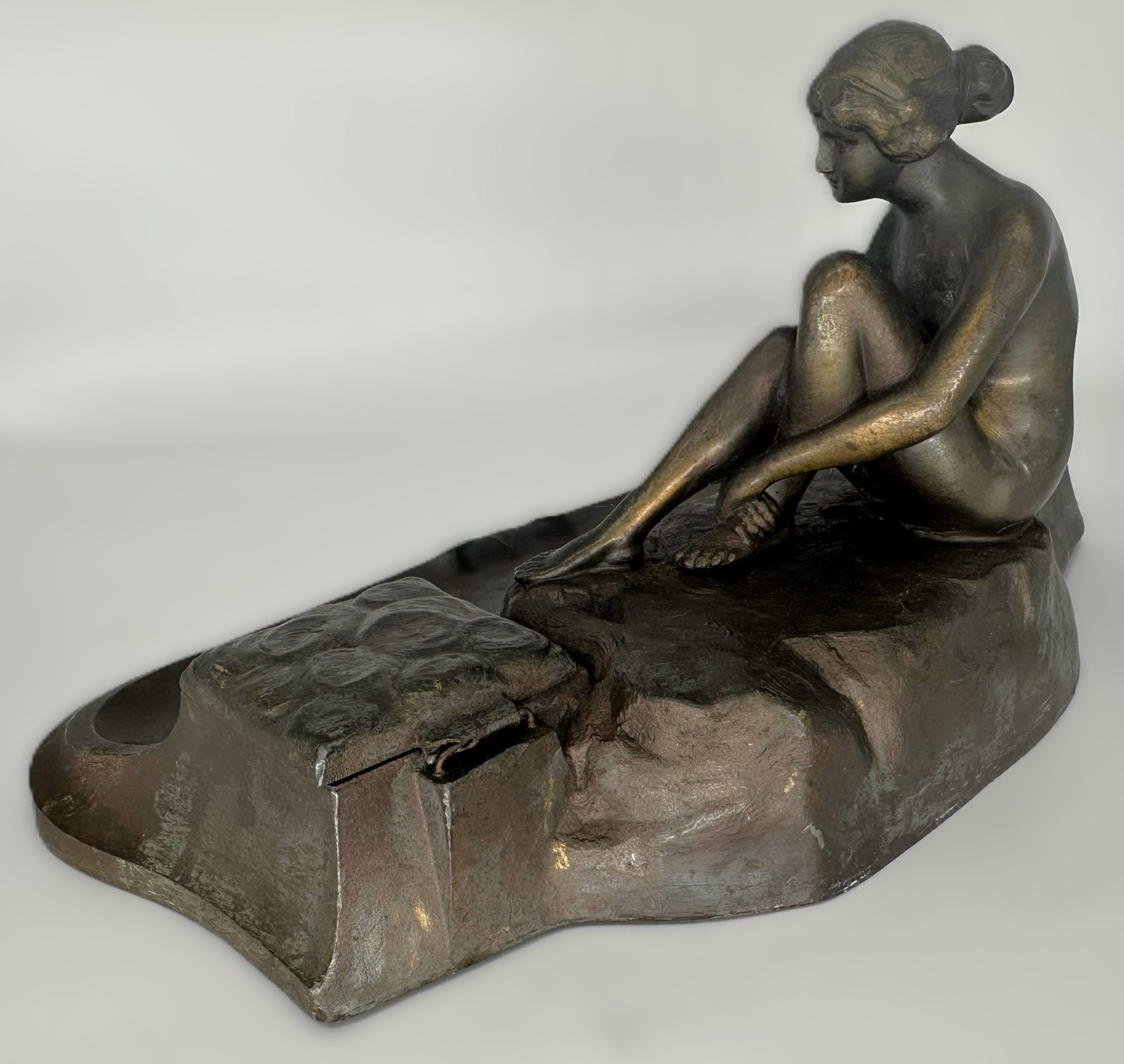
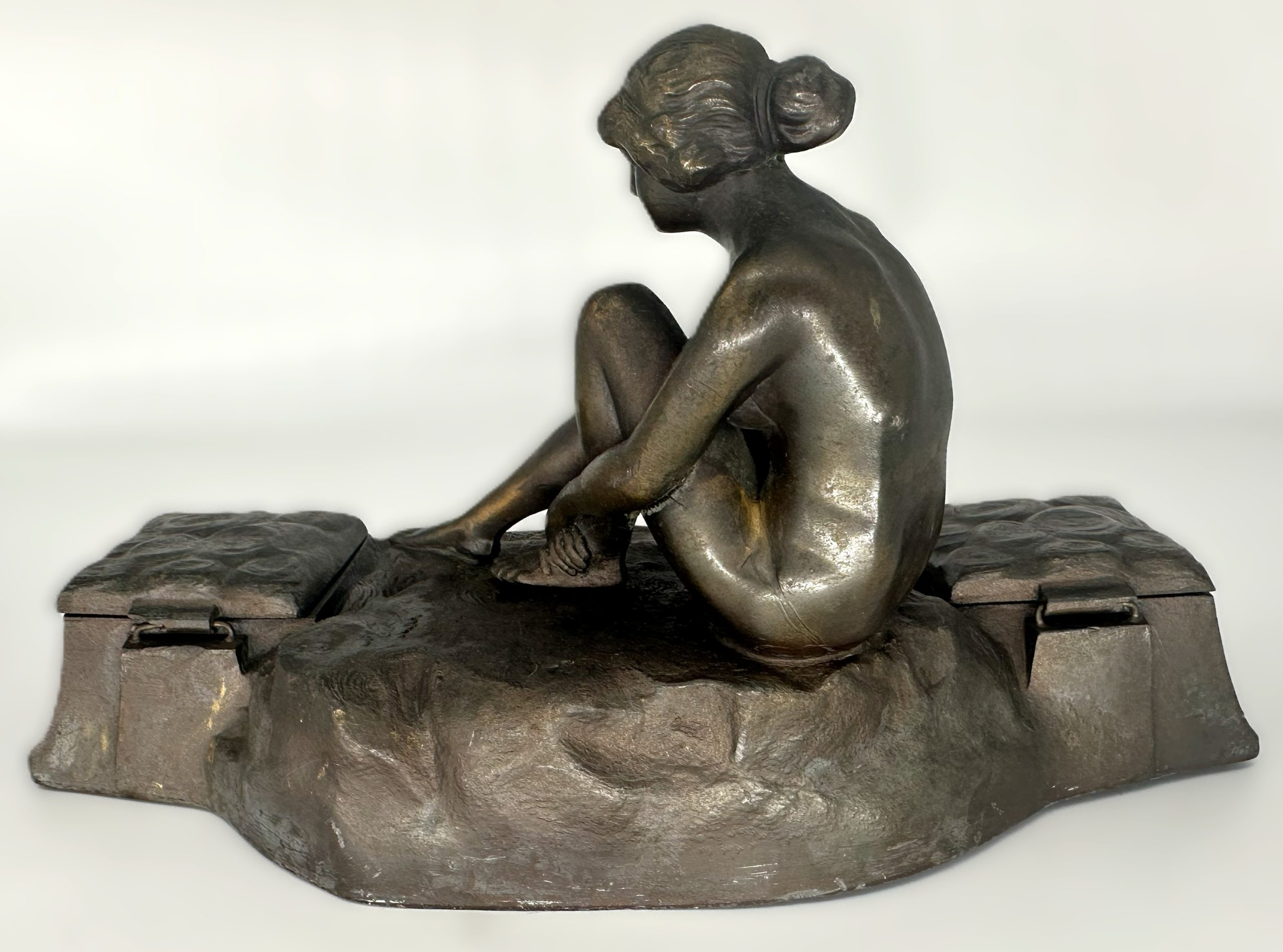
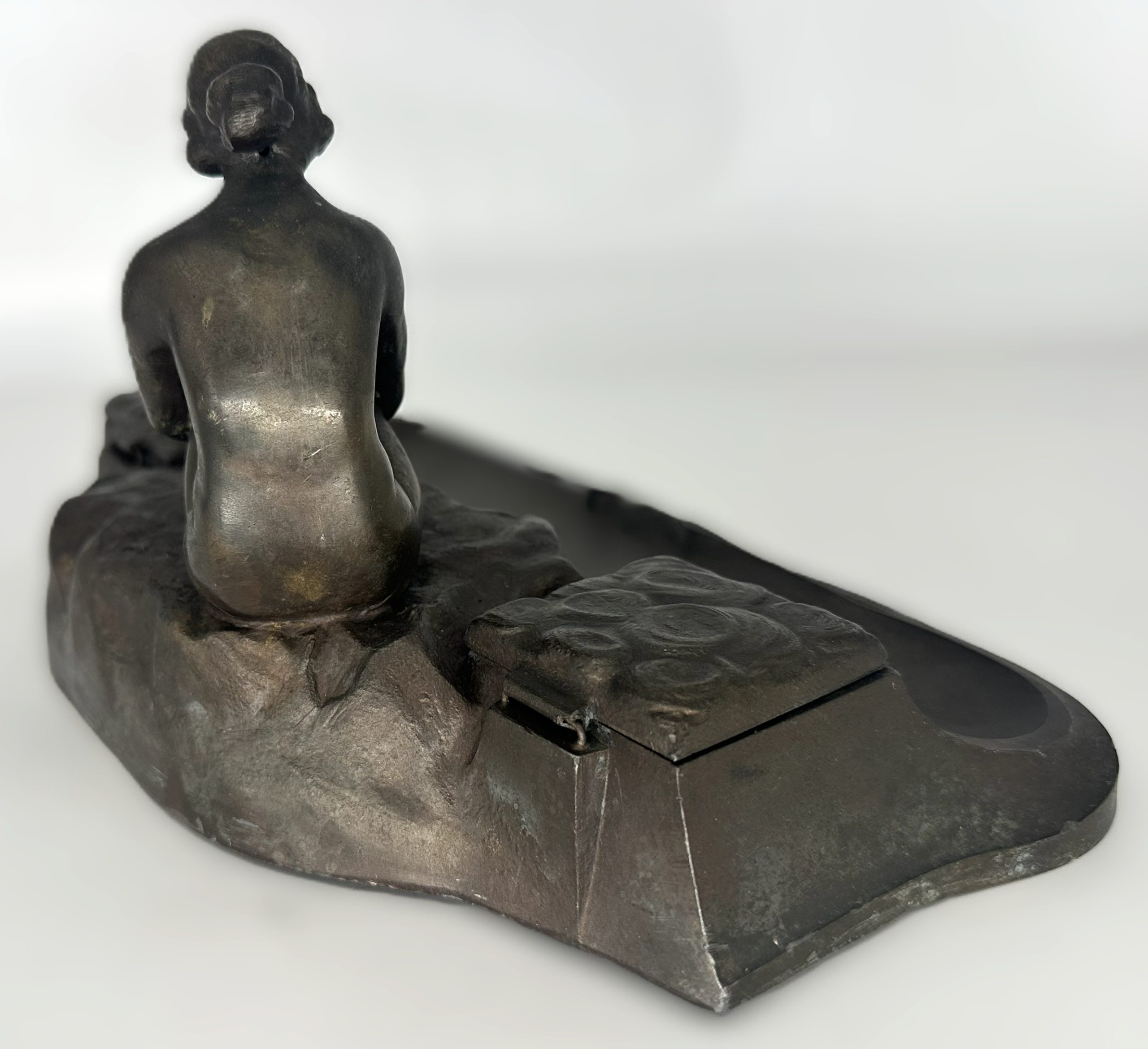
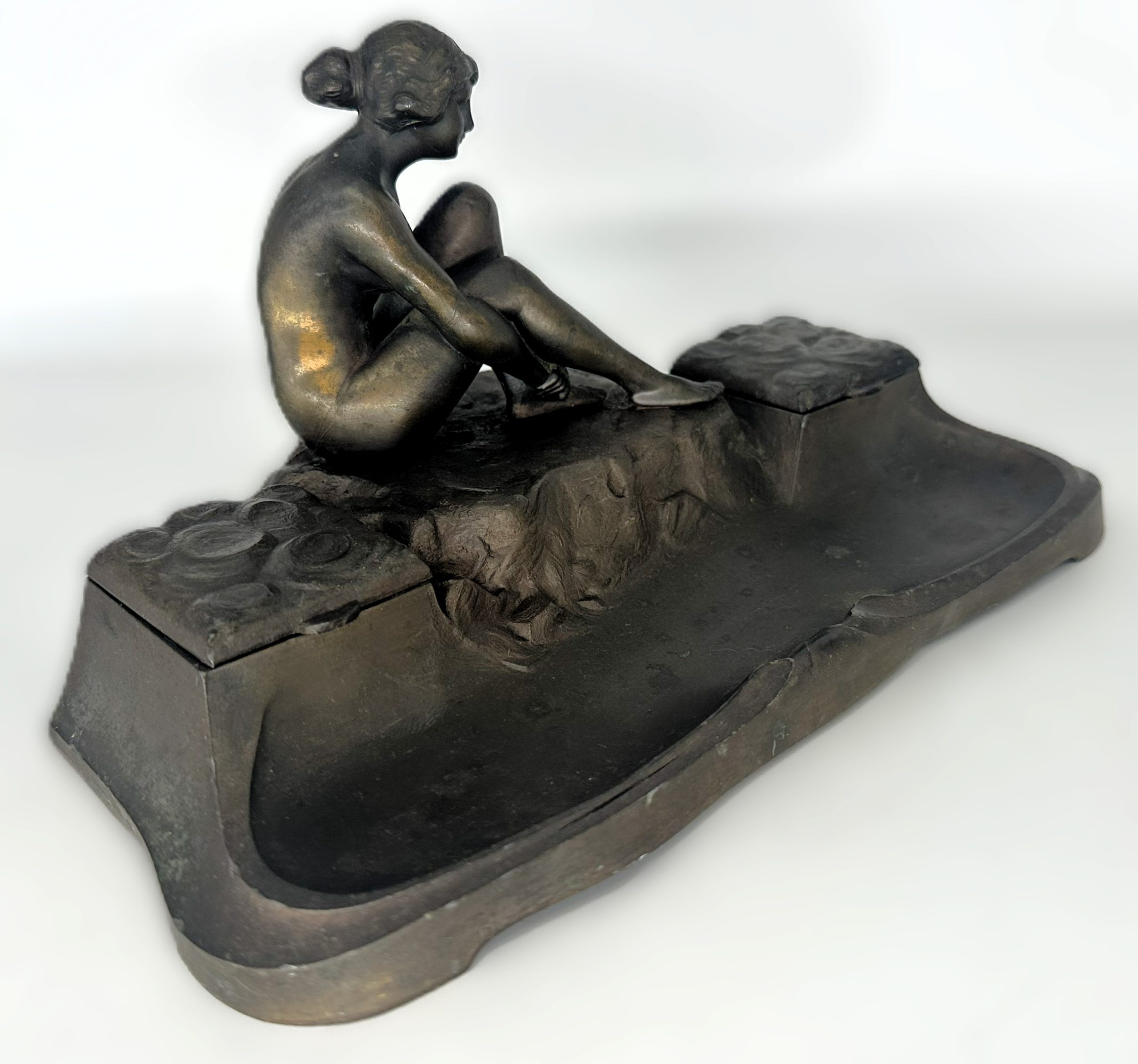
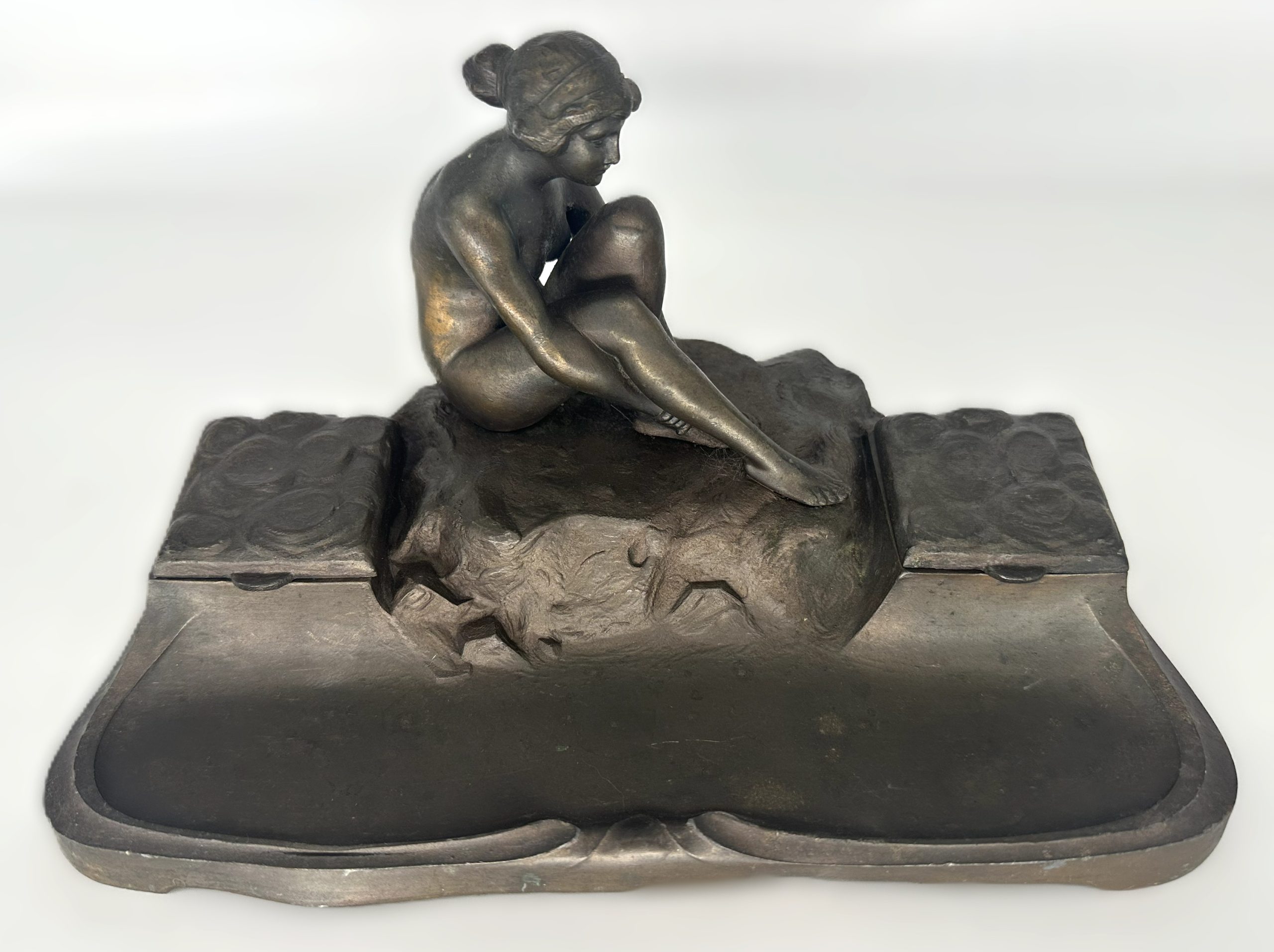
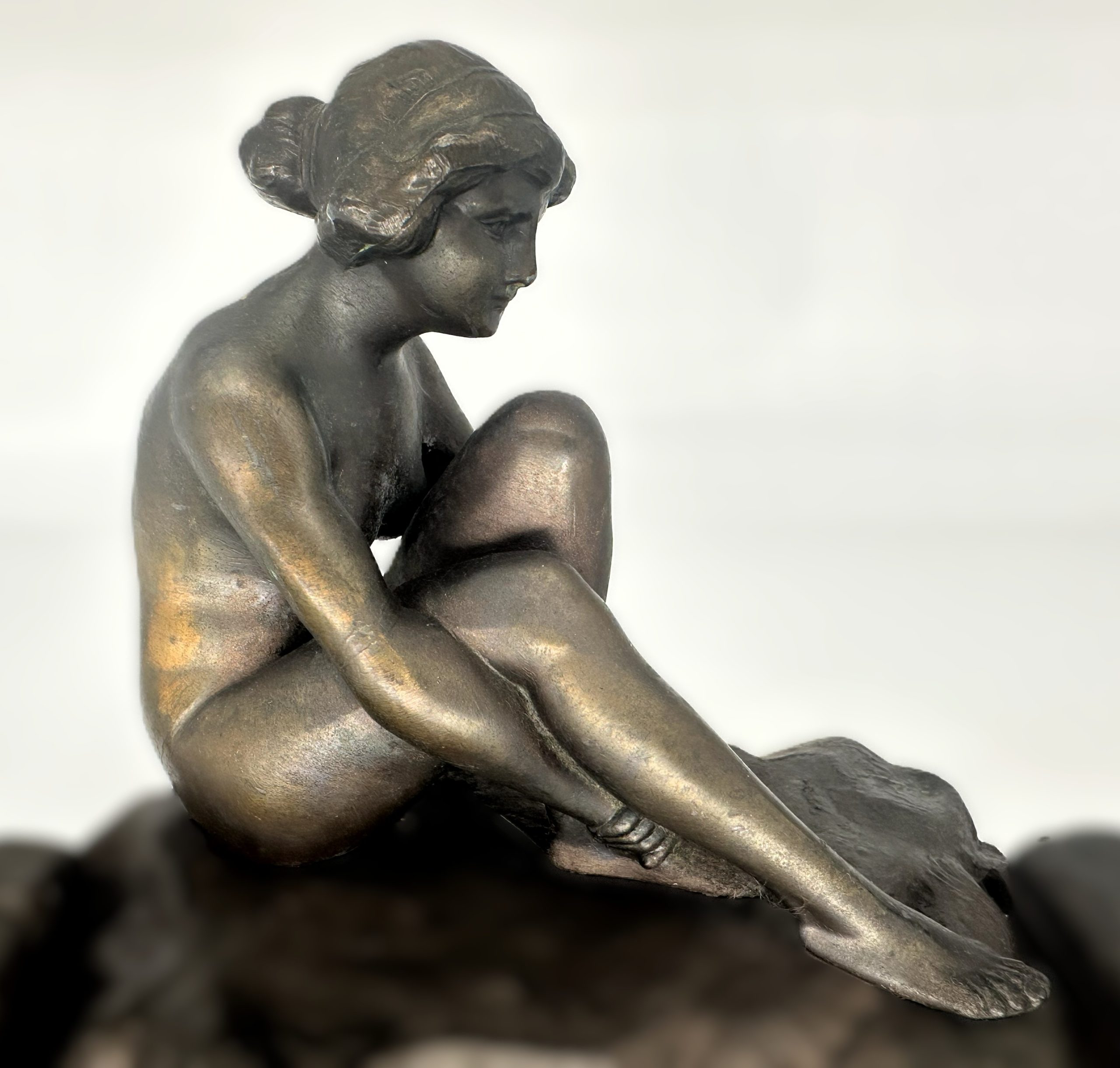
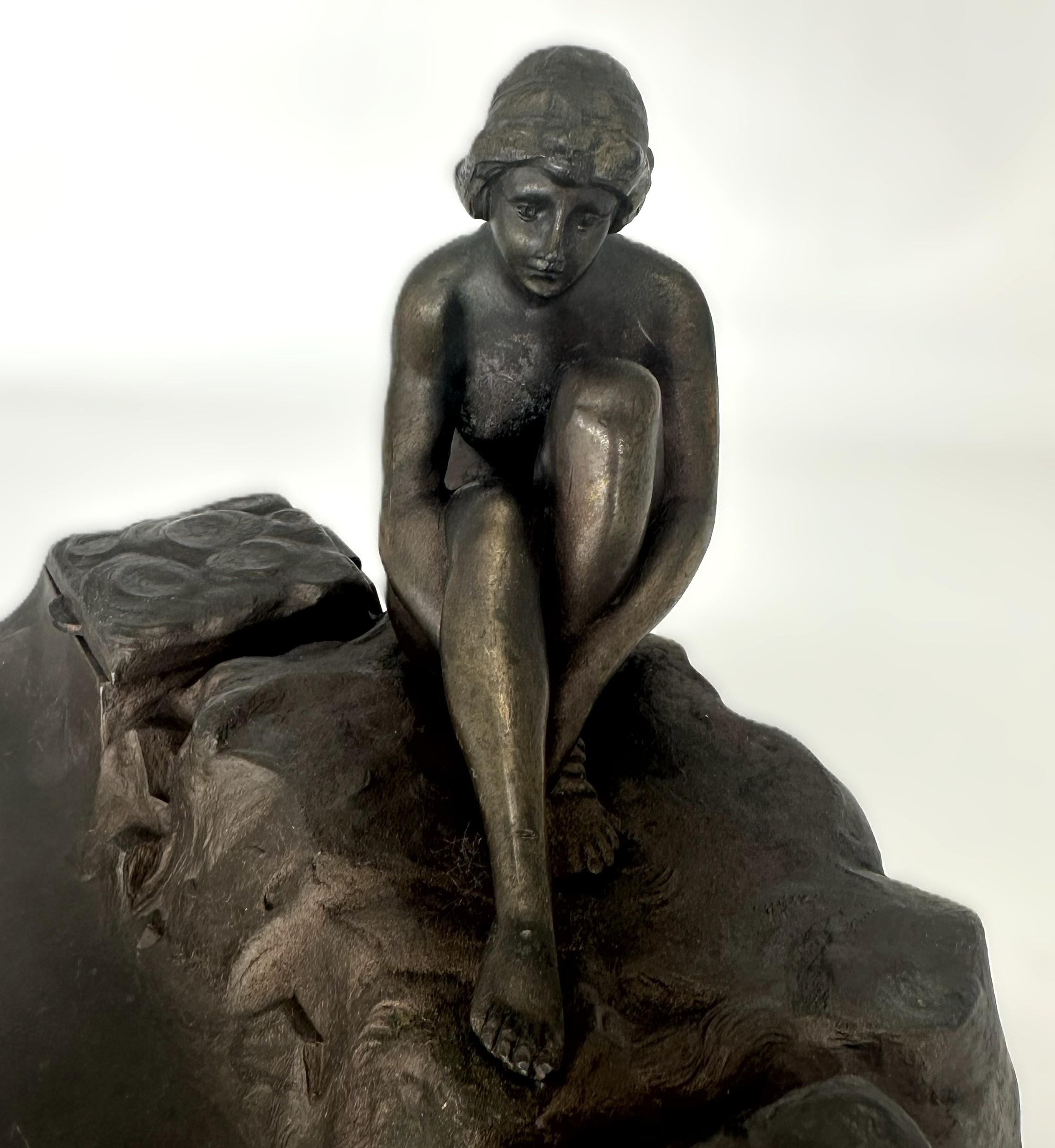
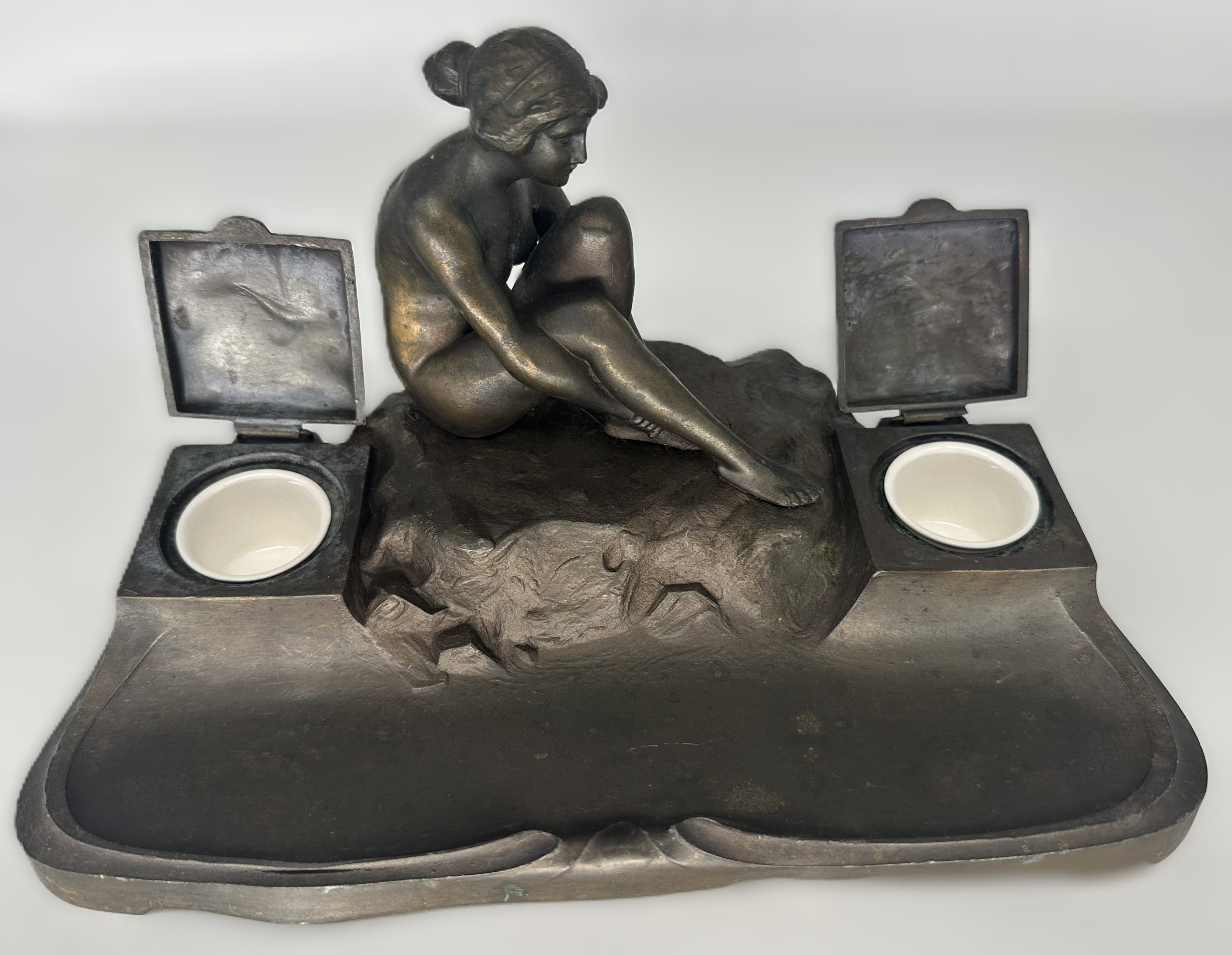
Spelter Double Inkstand with Seated Nude
| Categories | Art Nouveau |
| Type | Nude Woman |
| Material | Spelter |
| Markings | Unmarked |
| Manufacturer | Undetermined |
| Origin | Undetermined |
| Date or Era | circa 1900 |
| Measuring | 9 ¾” x 5 ¾” x 5 ½” high |
Origin: European (likely France or Germany), c. 1900–1910
Material: Cast spelter metal (régule) with dark bronze patination; porcelain insert liners
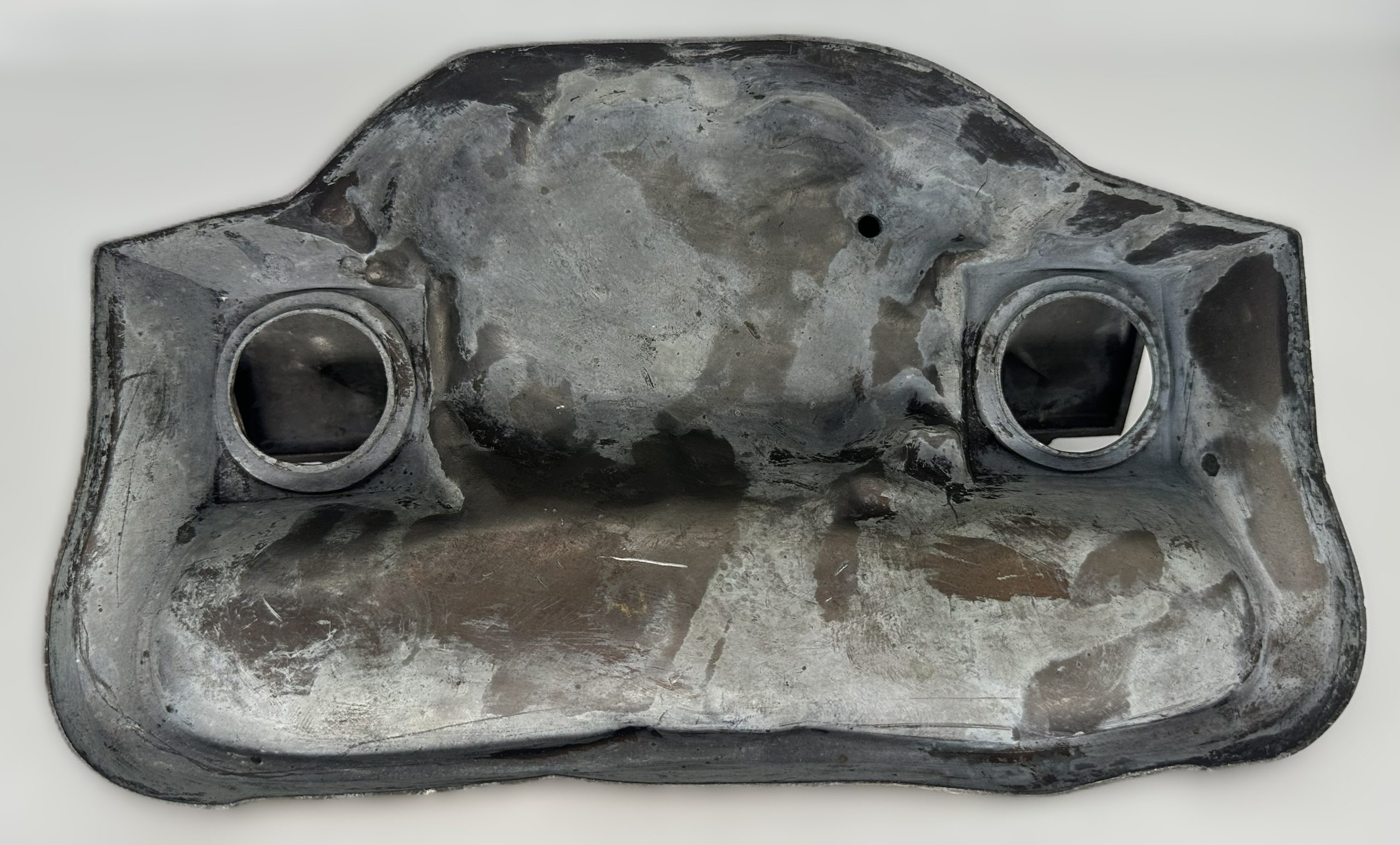
A turn-of-the-century Art Nouveau spelter double inkstand, centered by a sculptural figure of a seated female nude resting upon a naturalistic rock formation. The figure is flanked by two square, hinged inkwell compartments decorated with low relief rockwork lids, opening to reveal removable white porcelain inserts. A wide, curving front pen tray runs along the base, framed by characteristic whiplash border contours. The underside reveals classic hollow-cast spelter construction.
This double inkstand is an example of European Art Nouveau decorative metalwork, featuring a classical female nude figure perched atop a naturalistic outcrop.
Overview & Attribution
- Origin & Region: Produced in Western Europe, most likely France or Germany. France was the birthplace and capital of Art Nouveau figural metalwork, while German foundries (such as WMF) produced vast quantities of spelter and polished metal desk accessories in this style during the same period.
- Manufacturer: Unidentified foundry/maker. Because spelter (régule) was used for commercial, accessible production, many of these pieces were issued with cold-painted or patinated bronze finishes without maker’s marks or artist signatures.
- Date of Manufacture: Circa 1900–1910 (Peak Art Nouveau period).
- Medium: Cast spelter metal (zinc alloy) with a multi-tone dark brown/bronze patinated finish, featuring two integrated, hinged square lids, porcelain liners, and an underside showing raw hollow-cast spelter.
Was this considered erotica in its time?
No. By turn-of-the-century standards, this piece was not classified as secret or underground erotica (unlike explicit “Vienna bronzes” or erotic miniatures of the era).
- The Academic Nude Tradition: In late 19th- and early 20th-century European art, the female nude—particularly when portrayed as a nymph, siren, or allegorical figure resting in nature—was regarded as a classic, elevated fine art motif.
- Stylistic Presentation: The figure is posed modestly, tucked inward in reflection rather than in an explicit or suggestive stance. This idealization allowed manufacturers to market such pieces as artful home decor rather than illicit adult goods.
- Art Nouveau Popularity: The Art Nouveau movement celebrated organic forms, fluid feminine silhouettes, and natural elements (rocks, water, plants). Desk accessories were one of the primary commercial avenues through which Art Nouveau design entered everyday household interiors.
Estimated value: $150
Content disclaimer. The information posted is the owner’s best knowledge and may not have been vetted by the SOIC. We welcome comments, corrections, and additions, working to make our website information comprehensive and accurate.
Join the Society of Inkwell Collectors (SOIC) – it’s free!
Founded in 1981 as a non-profit organization,
we are documenting inkwells (and accessories).
We’re here to help and inform!