

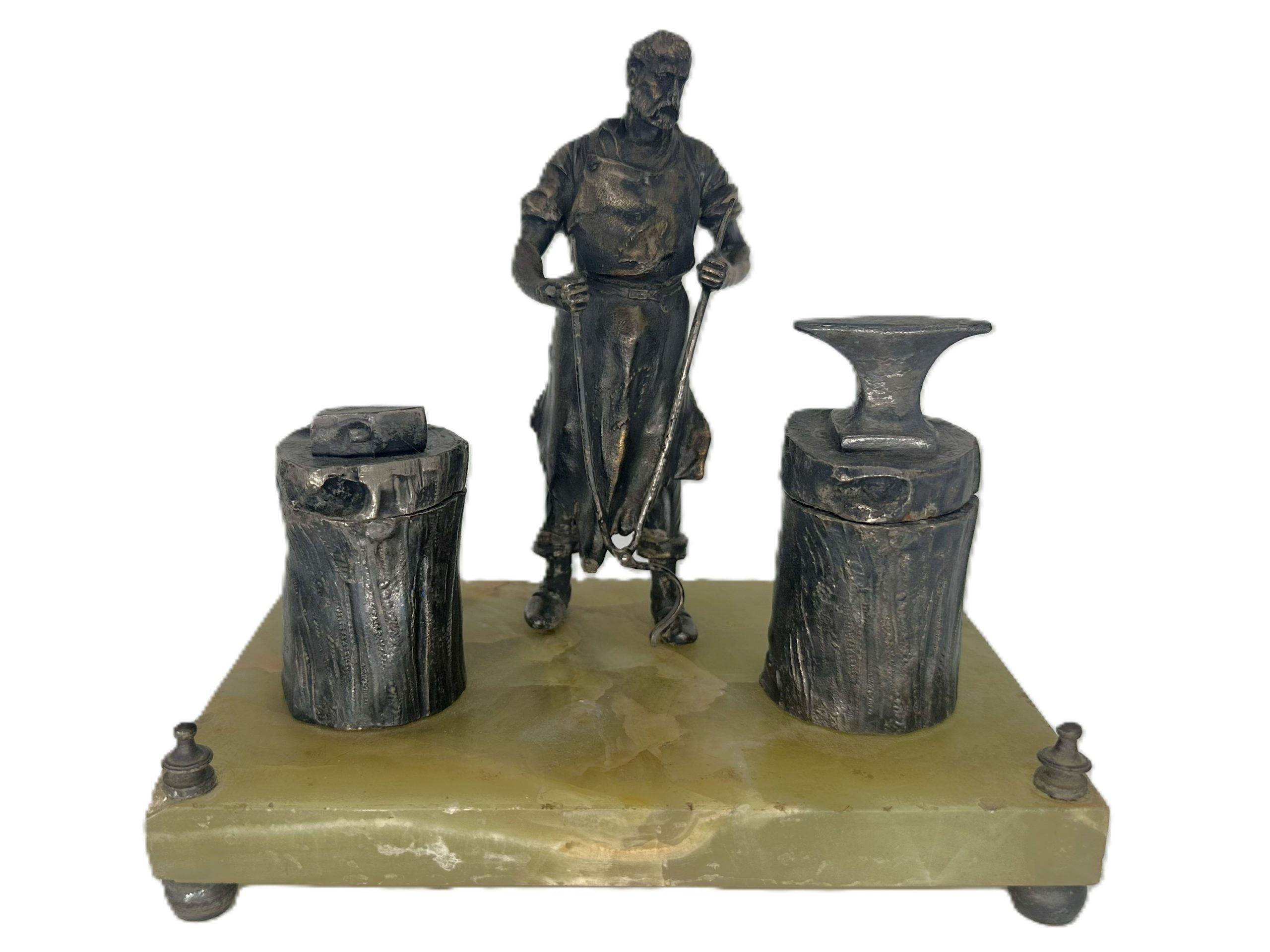
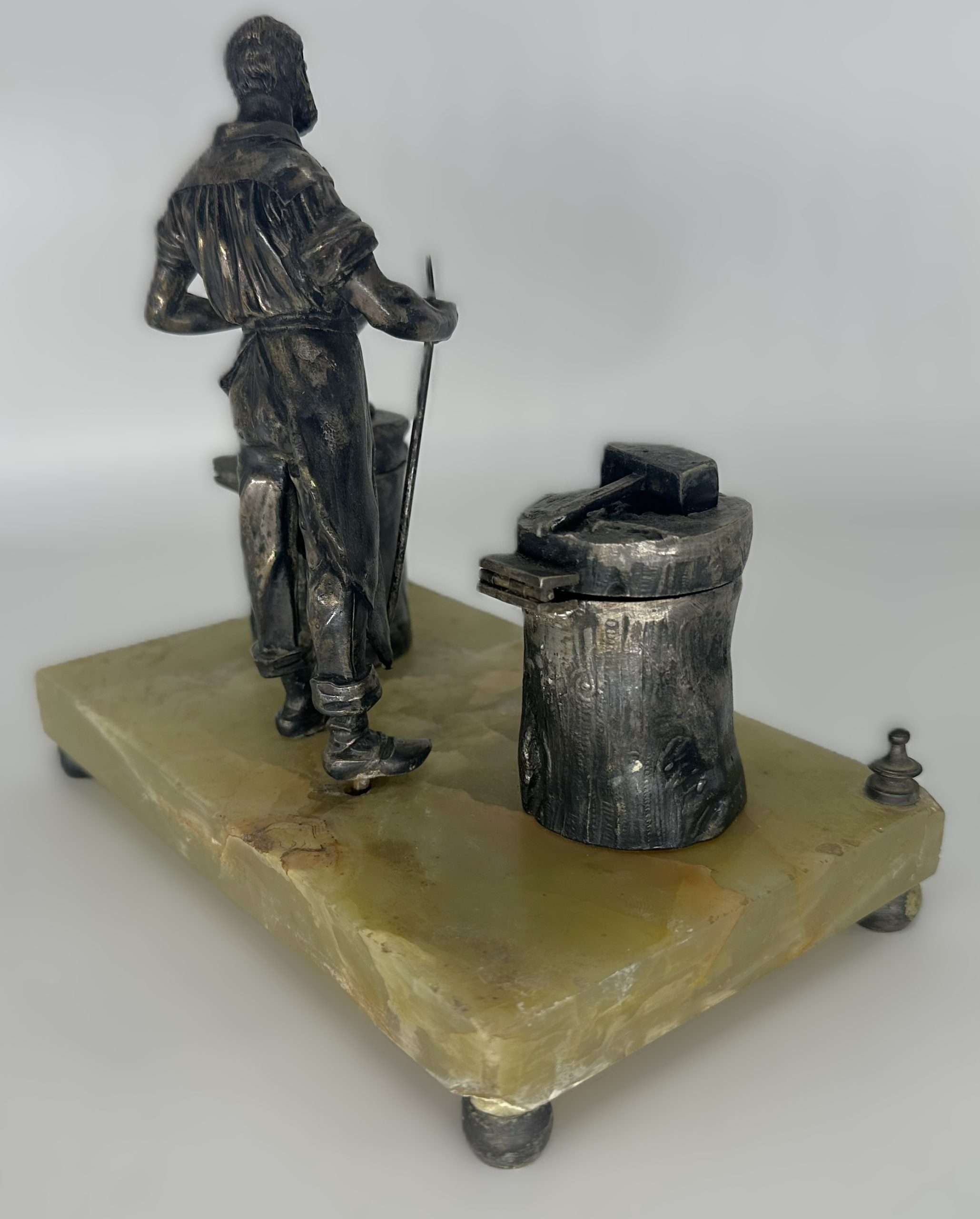
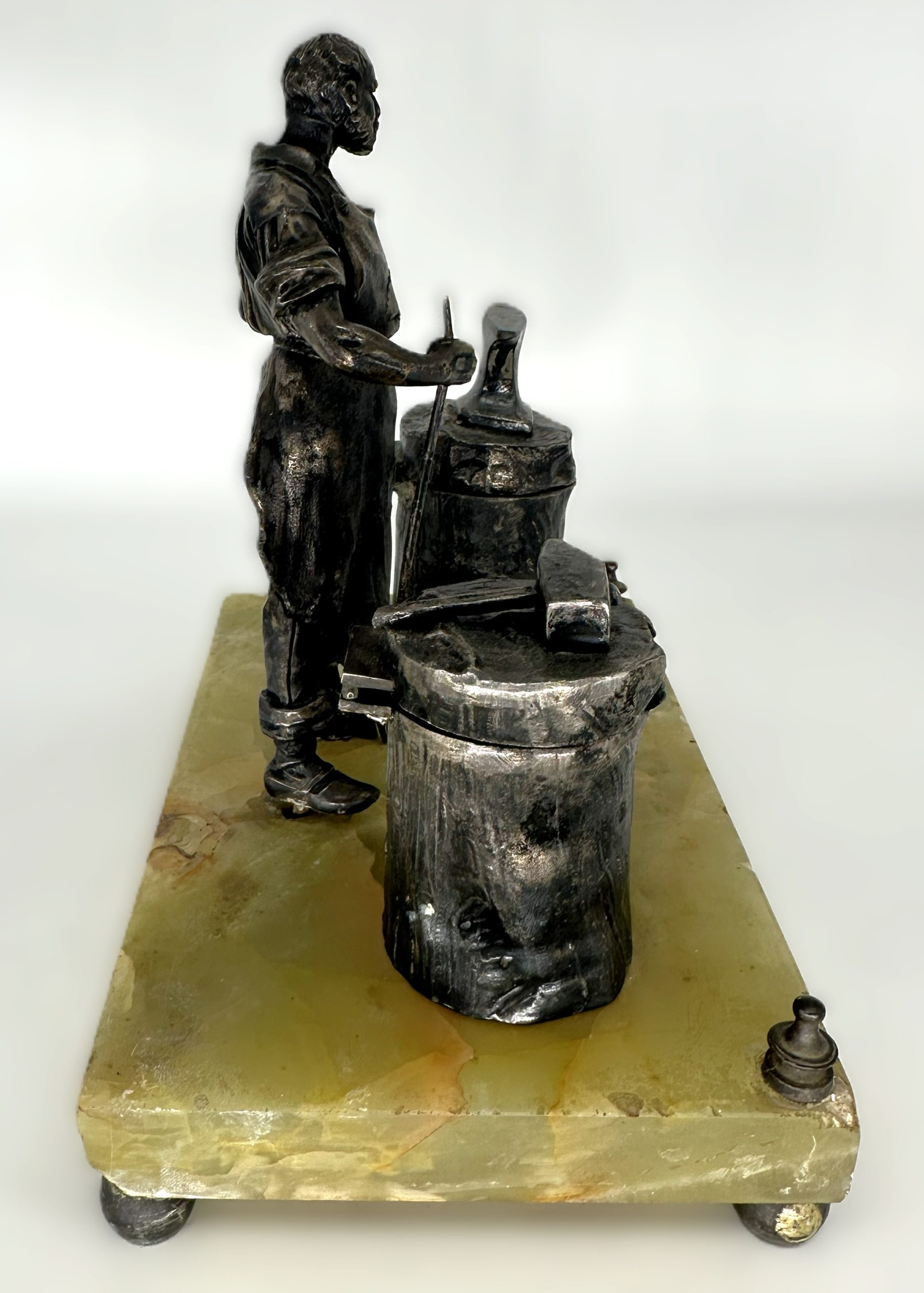
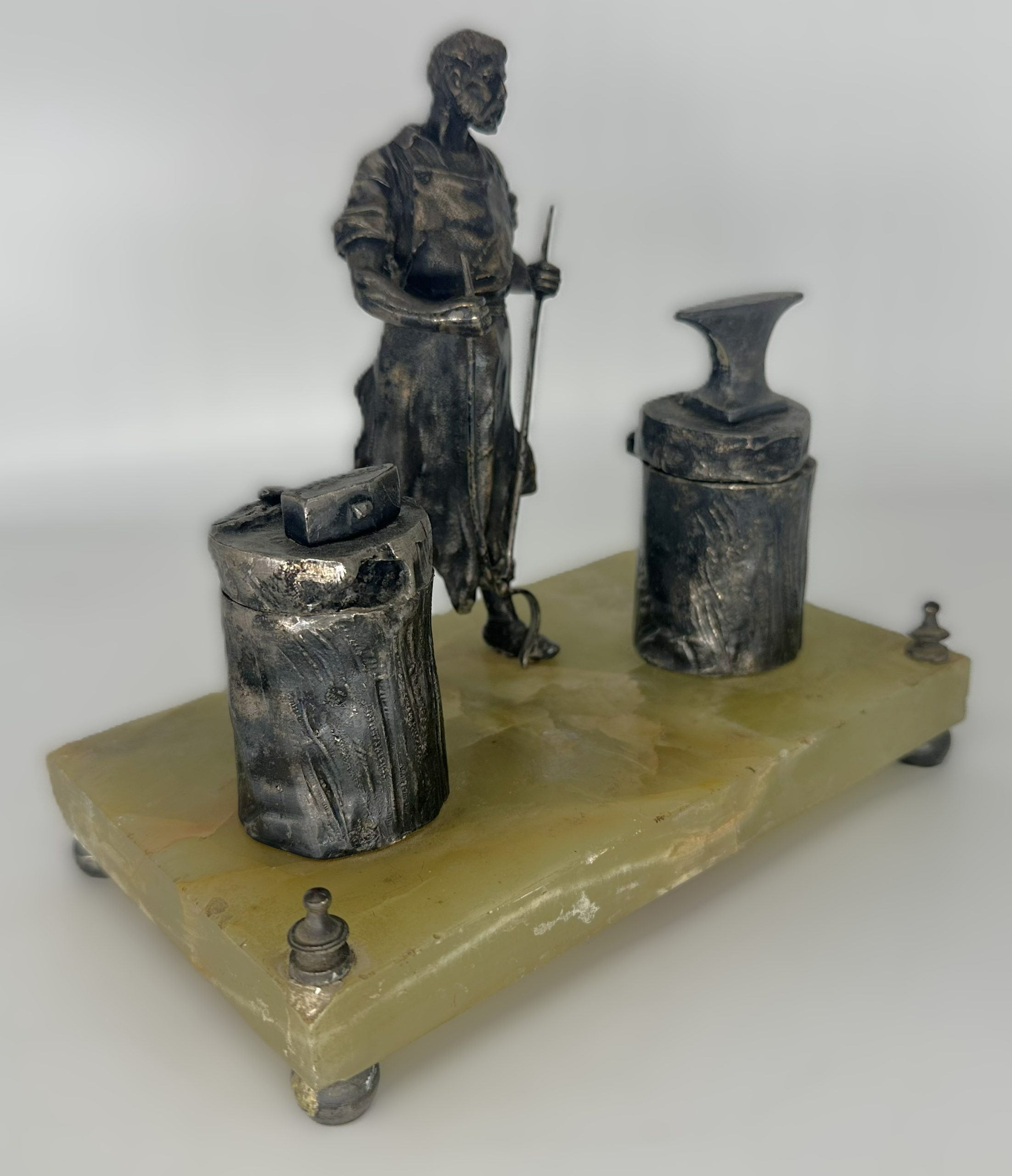
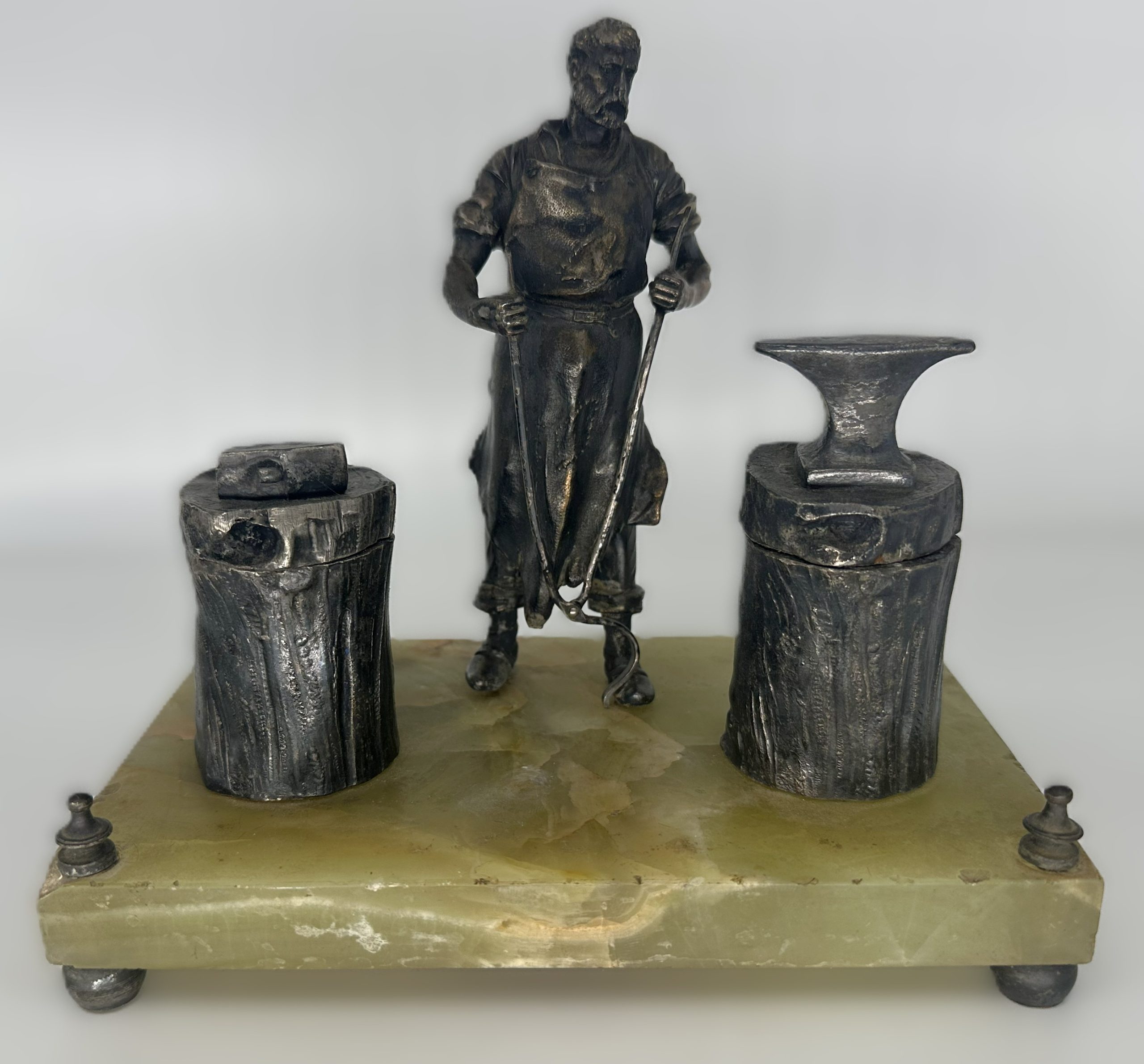
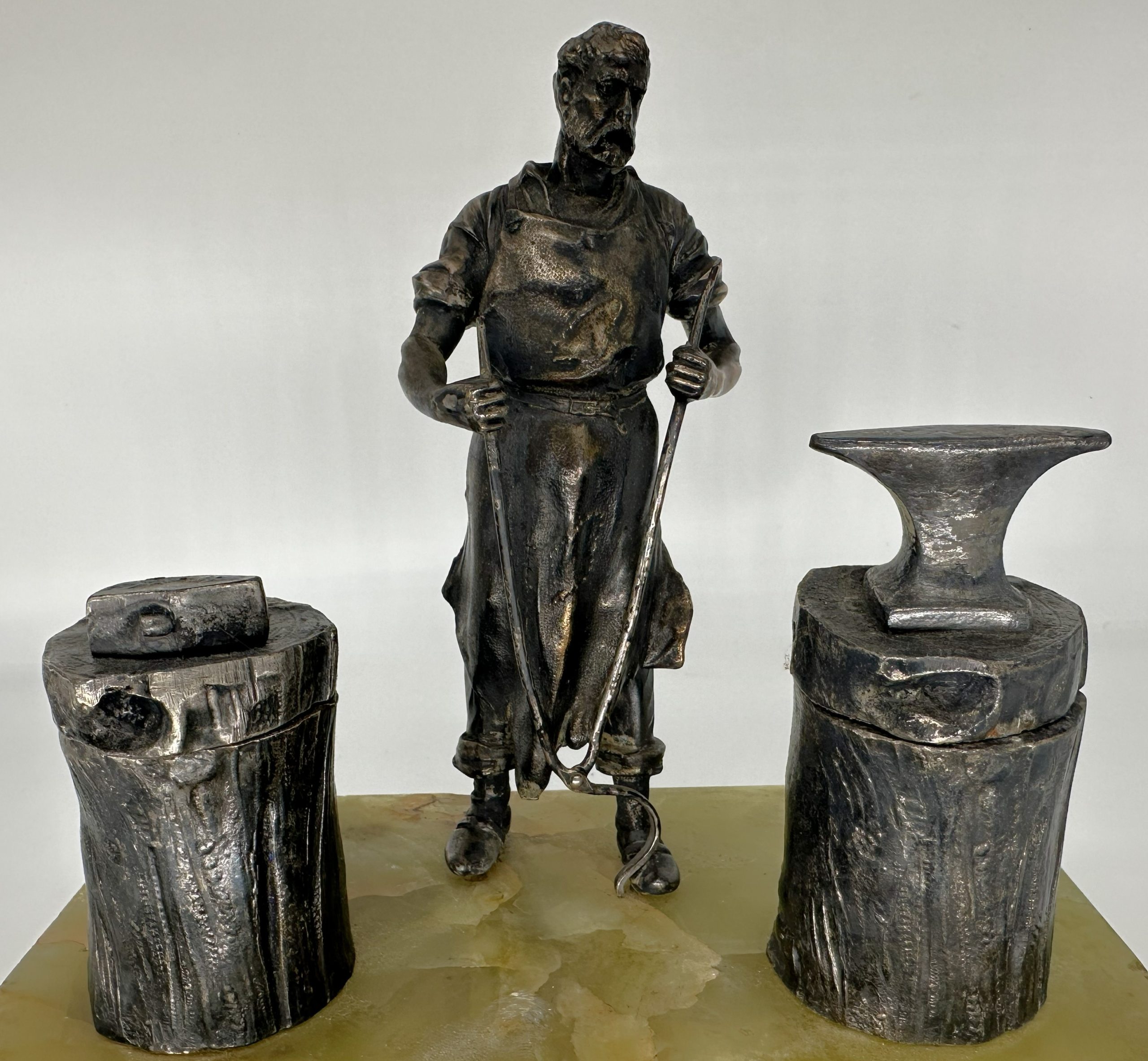
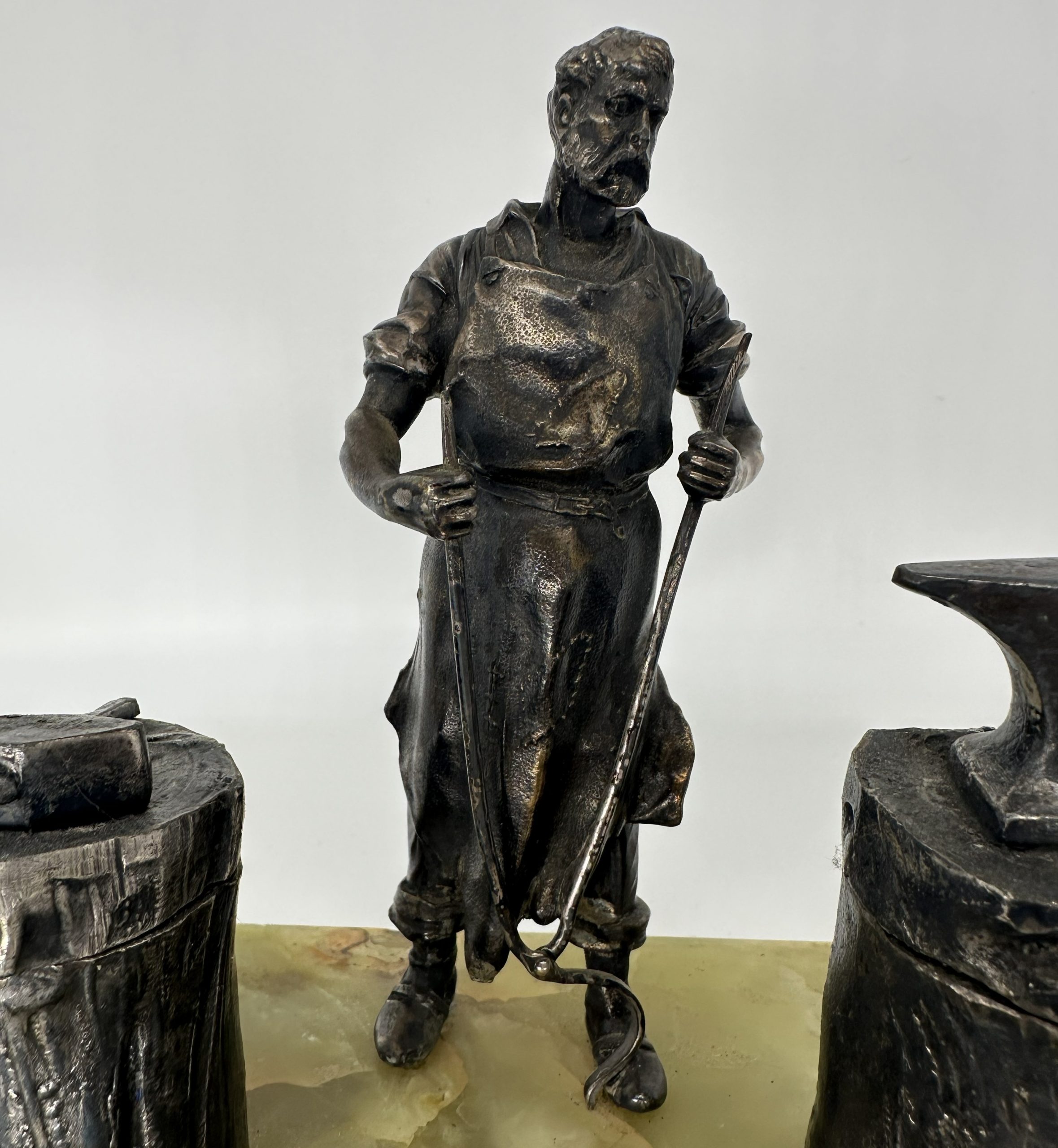
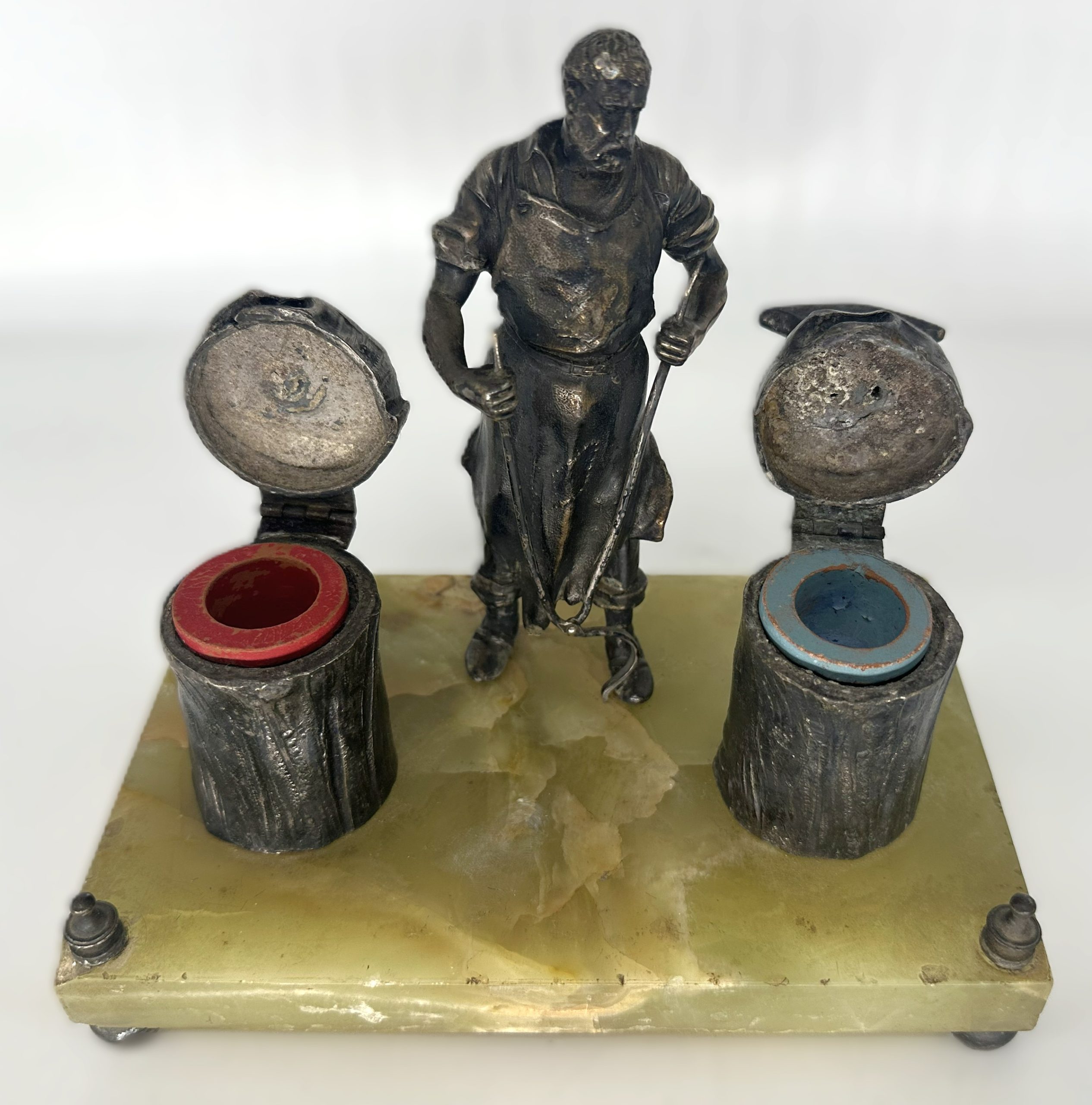
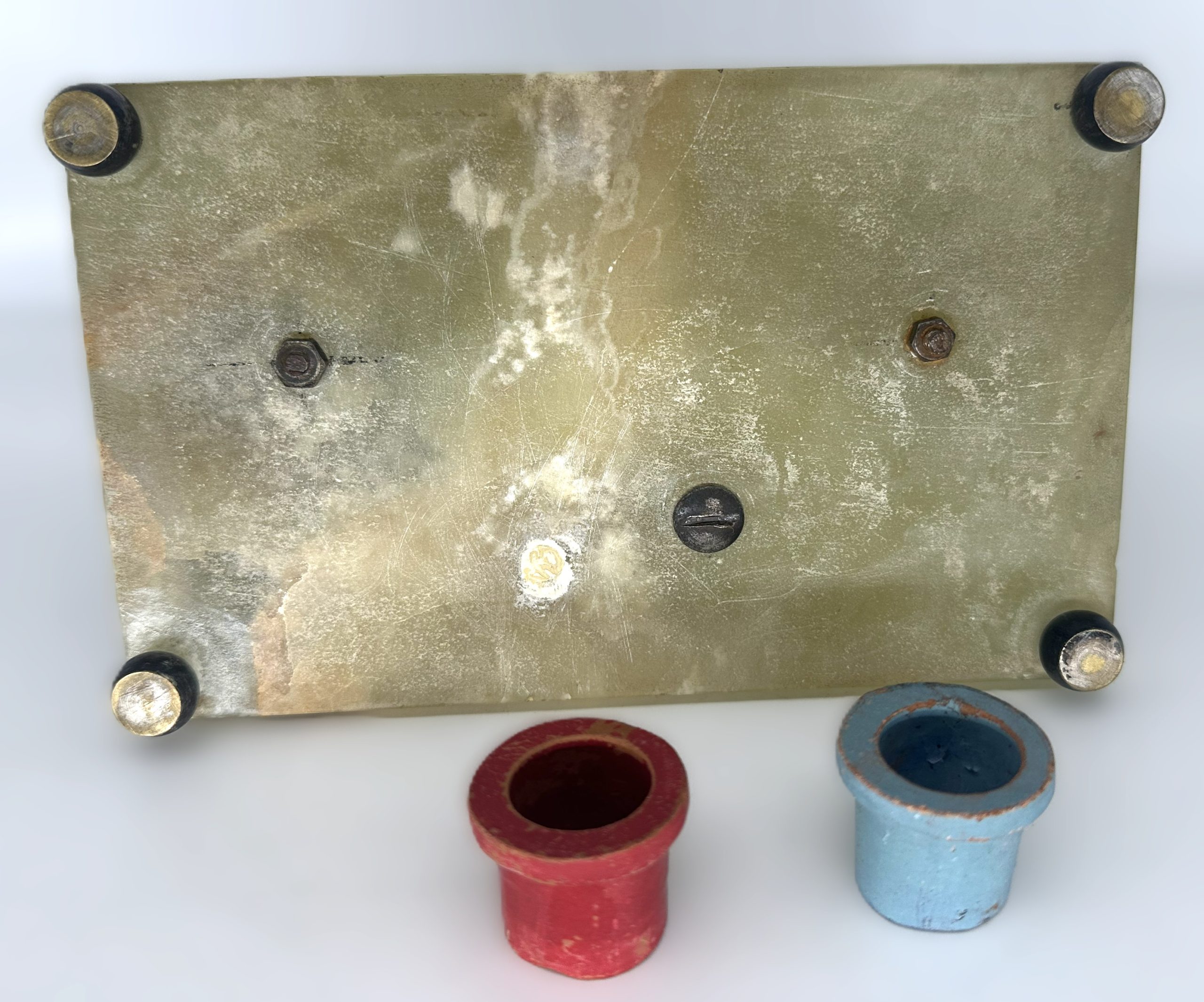
Figural Blacksmith Double Inkstand
| Categories | Figural - Persons |
| Type | Laborer |
| Material | Onyx, White metal |
| Markings | Unmarked |
| Manufacturer | Undetermined |
| Origin | Undetermined |
| Date or Era | circa 1900 |
| Measuring | 7 ⅛” x 4 ⅜” x 7” high |
Description
Title: Antique European Spelter & Green Onyx Figural Blacksmith Double Inkstand, c. 1900
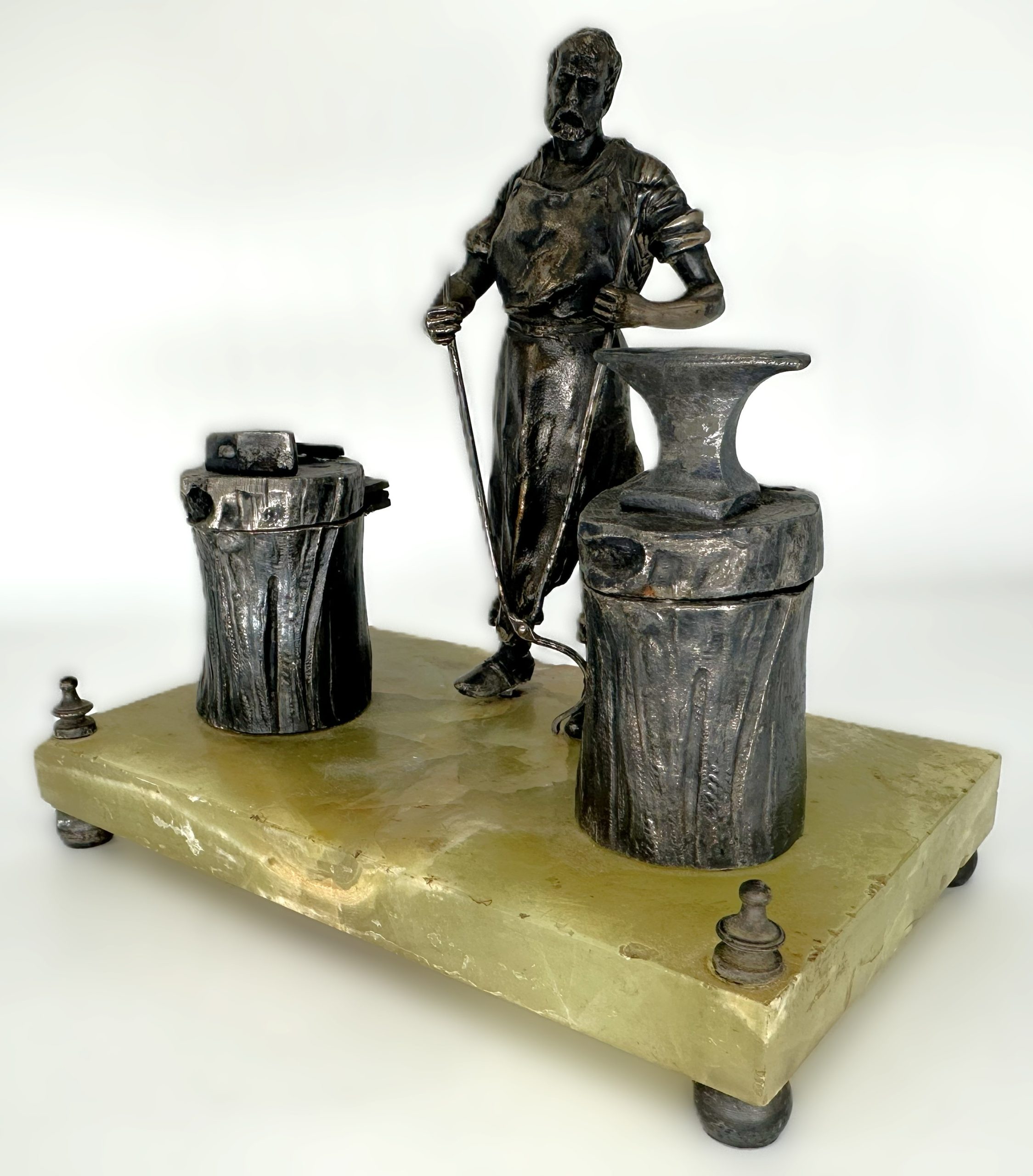
Description: A 19th-century European figural double inkstand featuring a full-standing blacksmith flanked by two rustic tree stumps. Cast in non-magnetic spelter (régule) with a dark antiqued silver-bronze patina, the central figure is sculpted with fine detail, wearing a heavy work apron and rolled sleeves while holding a large pair of long-handled forge tongs.
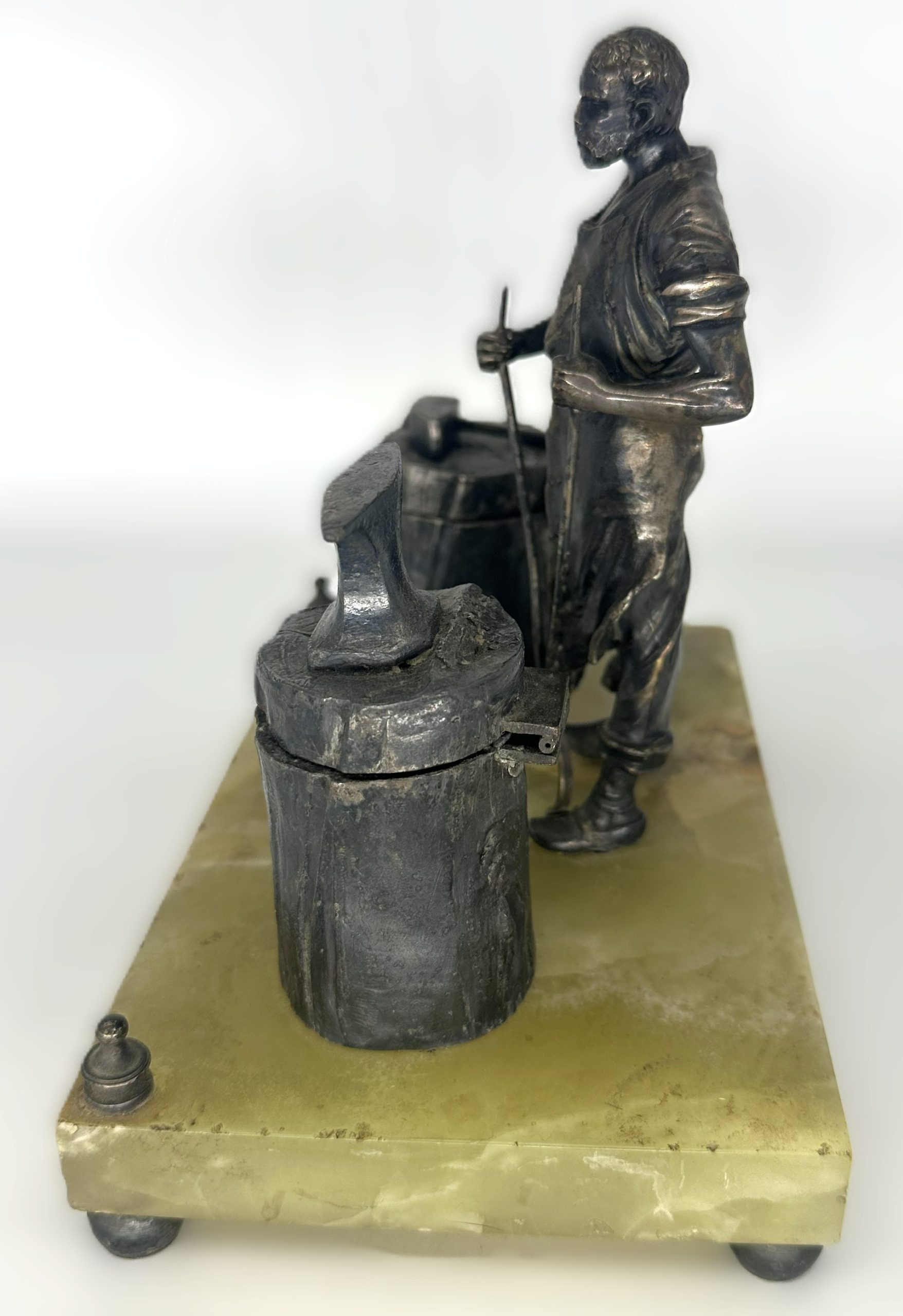
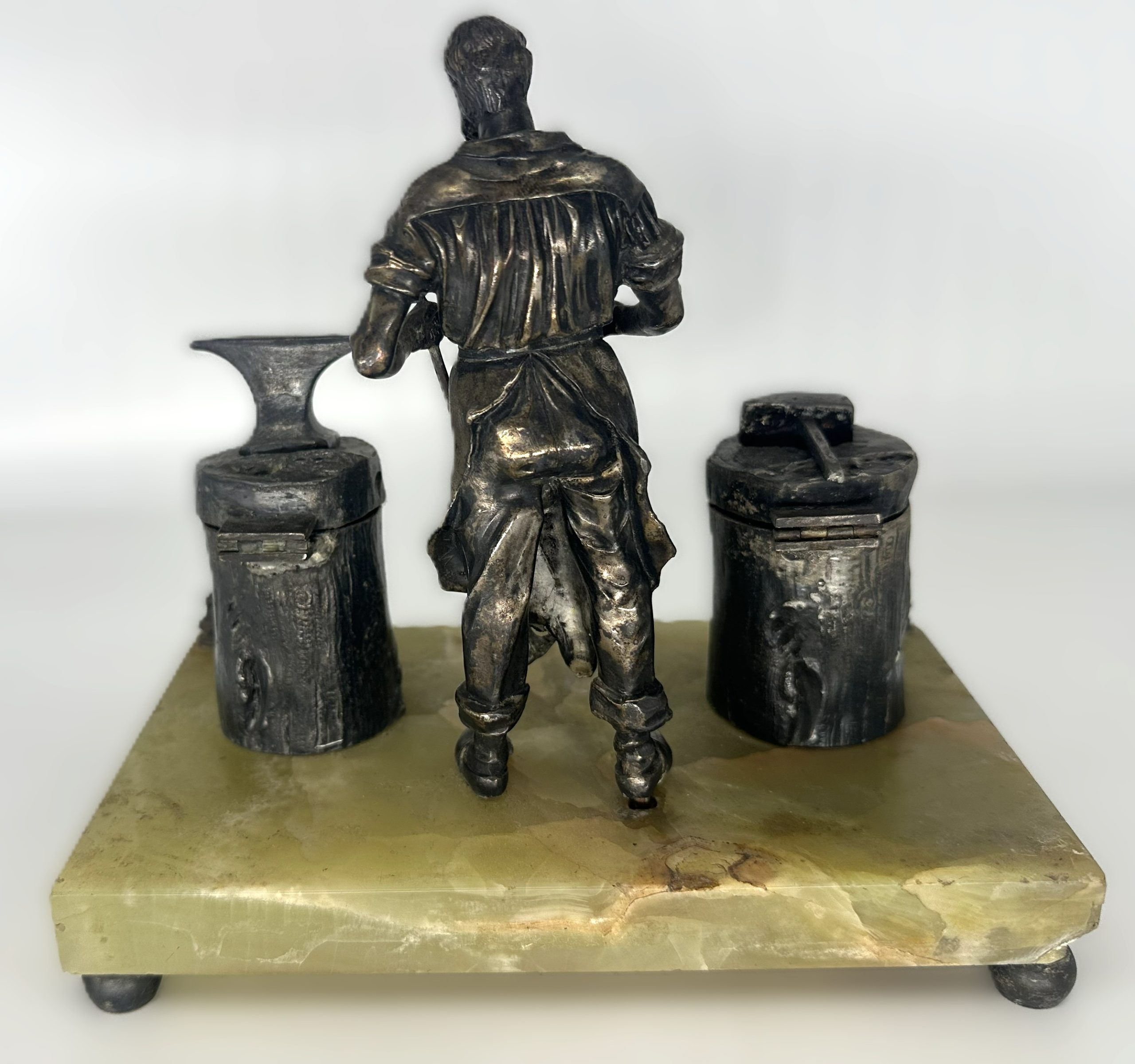
The two tree stump inkwells flank the blacksmith—one capped with a miniature anvil and the other topped with a heavy sledgehammer. Both stumps feature hinged lids that open to reveal their original inkwell inserts (one red, one blue). The entire metal assembly is mounted atop a thick, slab-cut green onyx base raised on round metal feet with small corner finials.
Dimensions:
- Base: 7 ⅛” x 4 ⅜”
- Material: Spelter / Zinc Alloy, Green Onyx
- Country of Origin: France or Central Europe
- Date: c. 1890–1910
This figural double inkstand is an exemplary piece of late 19th to early 20th-century European industrial genre art, celebrating traditional manual labor and industrial prowess.
Identifying Details & Origin
- Classification: European Figural Double Inkstand (Desk Set).
- Period/Date: Circa 1890–1910.
- Origin: Most likely France or Austria/Germany. During the late Industrial Revolution, French manufacturers (often casting in régule) and Austro-German foundries frequently produced desk accessories celebrating tradesmen, laborers, and industrial motifs.
- Materials:
- Base: Green onyx slab featuring polished bevels, small brass finial corner accents, and brass/spelter bun feet underneath.
- Metalwork: Non-magnetic spelter (a zinc-based alloy, often called régule in France) given a patinated silver tone finish.
- Inserts: Removable painted ceramic inserts (red and blue, likely meant to distinguish red ink for bookkeeping/editing and blue/black ink for standard correspondence).
Laborer & Tools
- Type of Laborer: A Blacksmith / Forge Worker (Ironworker). He wears a heavy leather or canvas protective apron tied at the waist, a collared shirt with rolled sleeves, sturdy trousers tucked at the bottom, and heavy work boots.
- Tools in Hands: He is holding a large pair of long-handled blacksmith’s tongs (or forge tongs). The lower working end curves around down near his feet, designed for gripping and maneuvering hot iron bars into the forge or on the anvil.
- Inkstand Components:
- Right Log/Stump: Serves as the base for a miniature anvil (representing the blacksmith’s anvil block). The lid hinges back to reveal the right ink insert.
- Left Log/Stump: Serves as the rest for a heavy blacksmith’s sledgehammer. The lid hinges back to reveal the left ink insert.
Estimated value: $200
Content disclaimer. The information posted is the owner’s best knowledge and may not have been vetted by the SOIC. We welcome comments, corrections, and additions, working to make our website information comprehensive and accurate.
Join the Society of Inkwell Collectors (SOIC) – it’s free!
Founded in 1981 as a non-profit organization,
we are documenting inkwells (and accessories).
We’re here to help and inform!