

Young Blacksmith Inkstand
| Categories | Figural - Persons |
| Type | Child, Laborer |
| Material | Gold Gilt Finish, White metal |
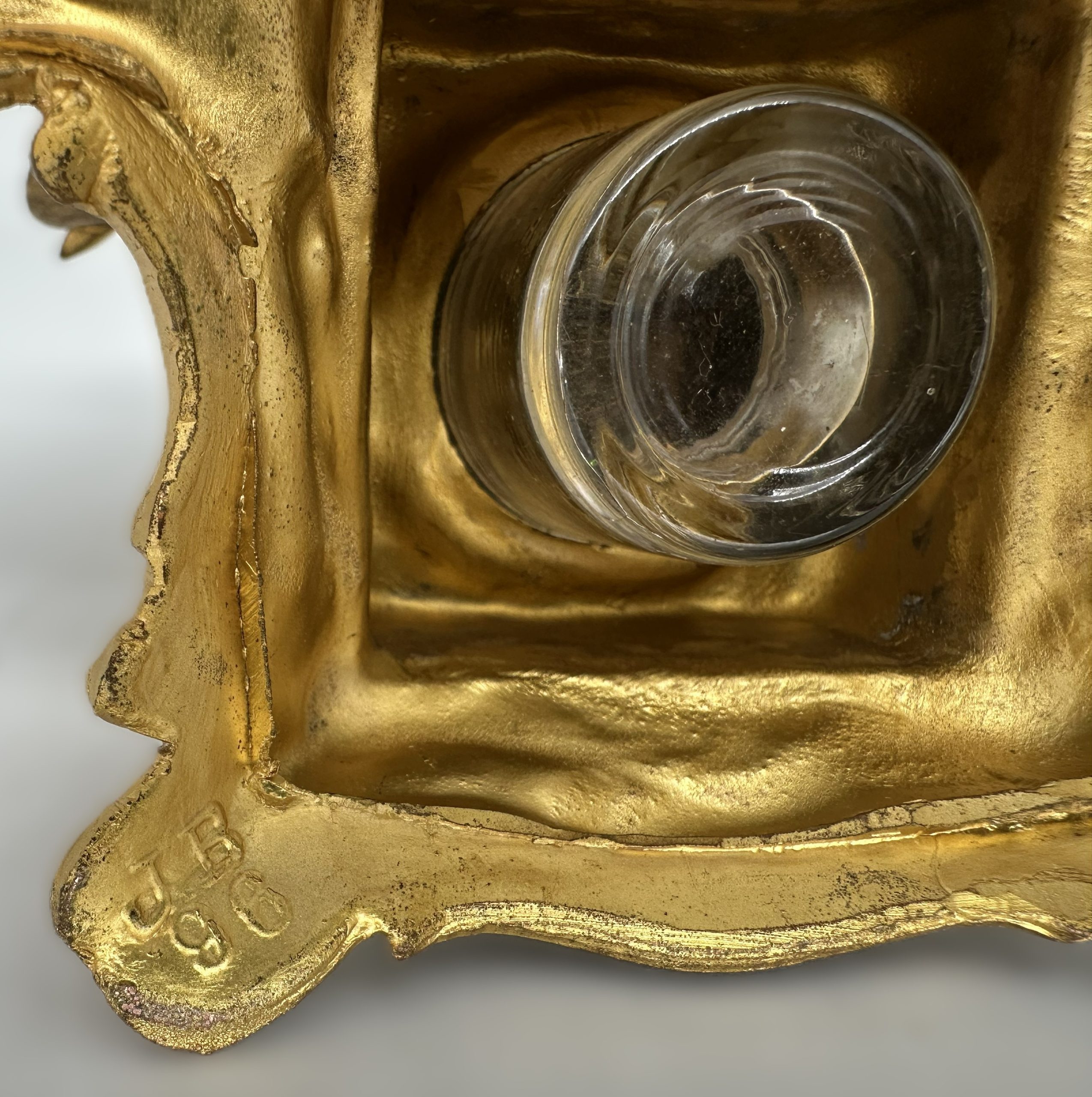
| Markings | JB 96 |
| Manufacturer | Jennings Brothers |
| Origin | United States |
| Date or Era | circa 1900 |
| Measuring | 6 ½” x 4 ½” x 4” high |
This piece is a classic Jennings Brothers French-gilt (Ormolu Gold) spelter metal inkstand, created around 1900–1910.
Description
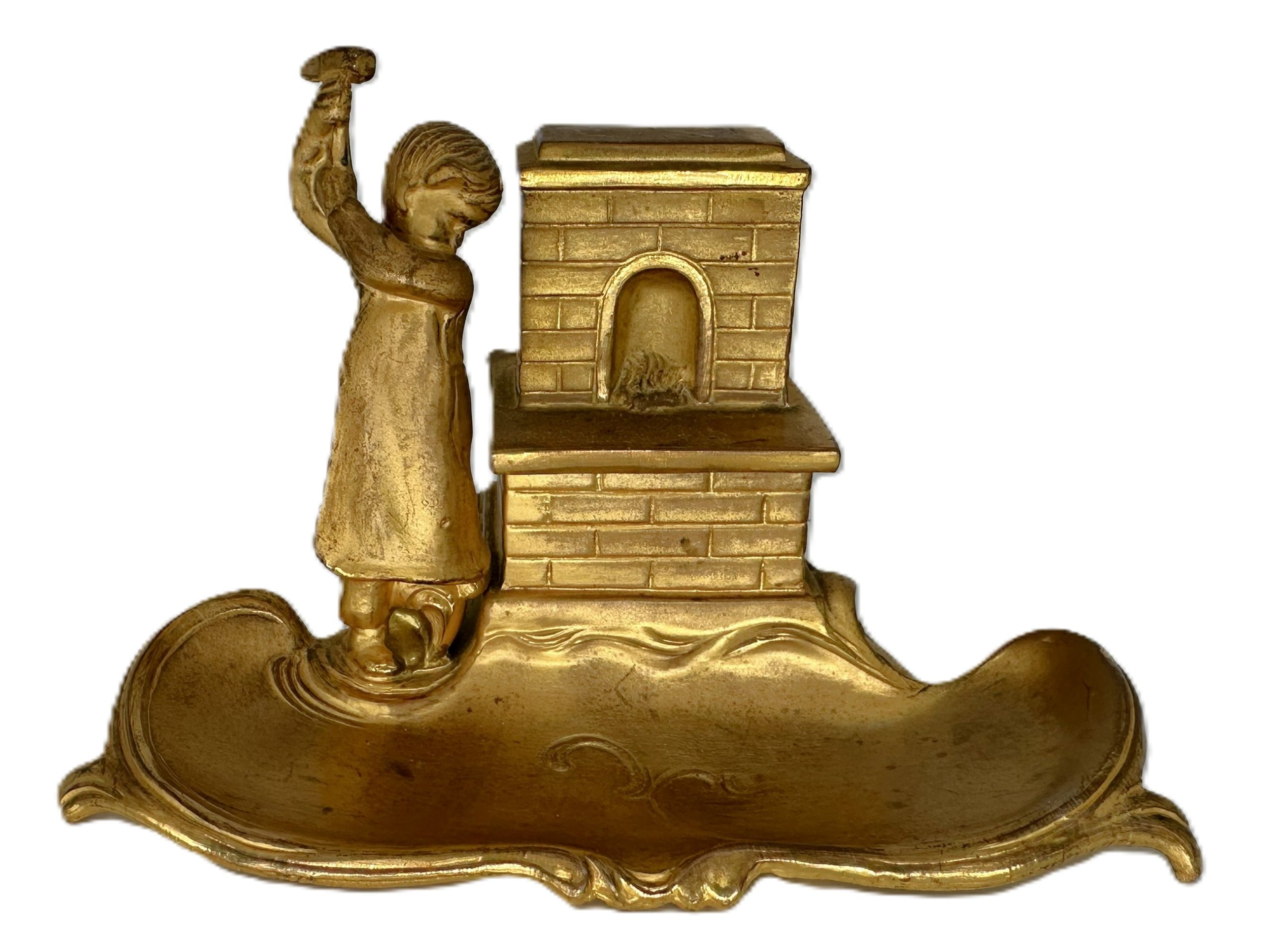
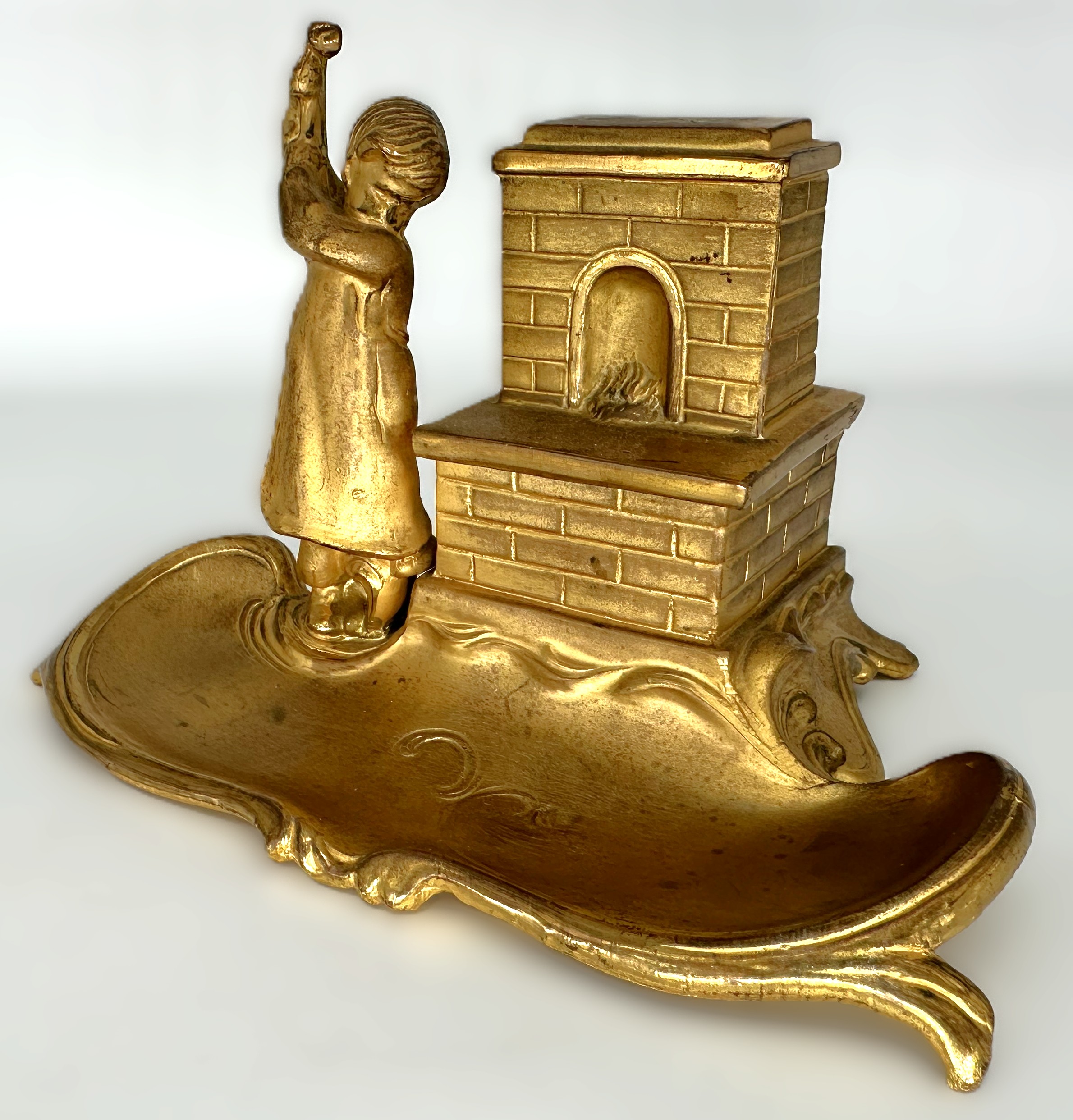
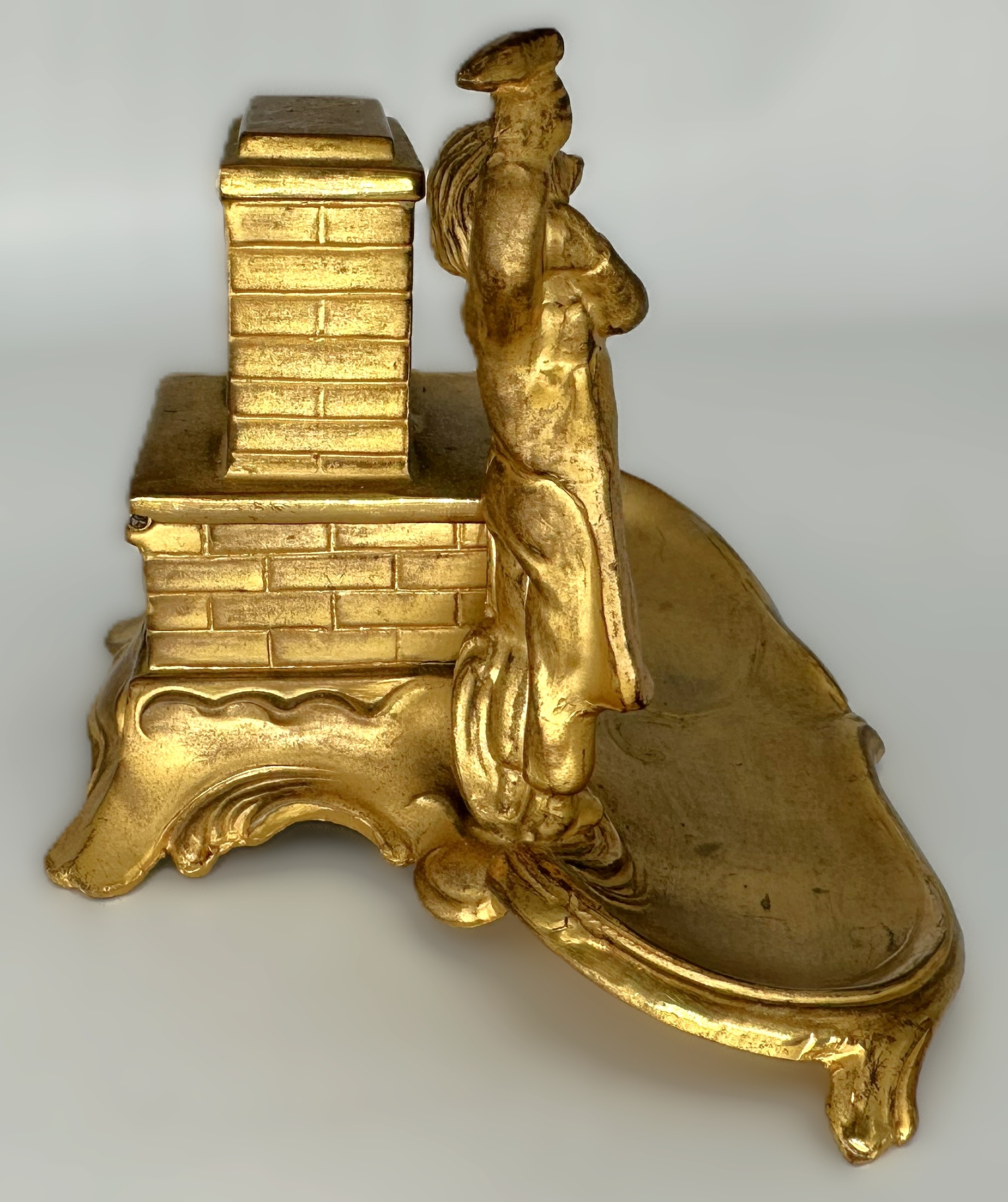
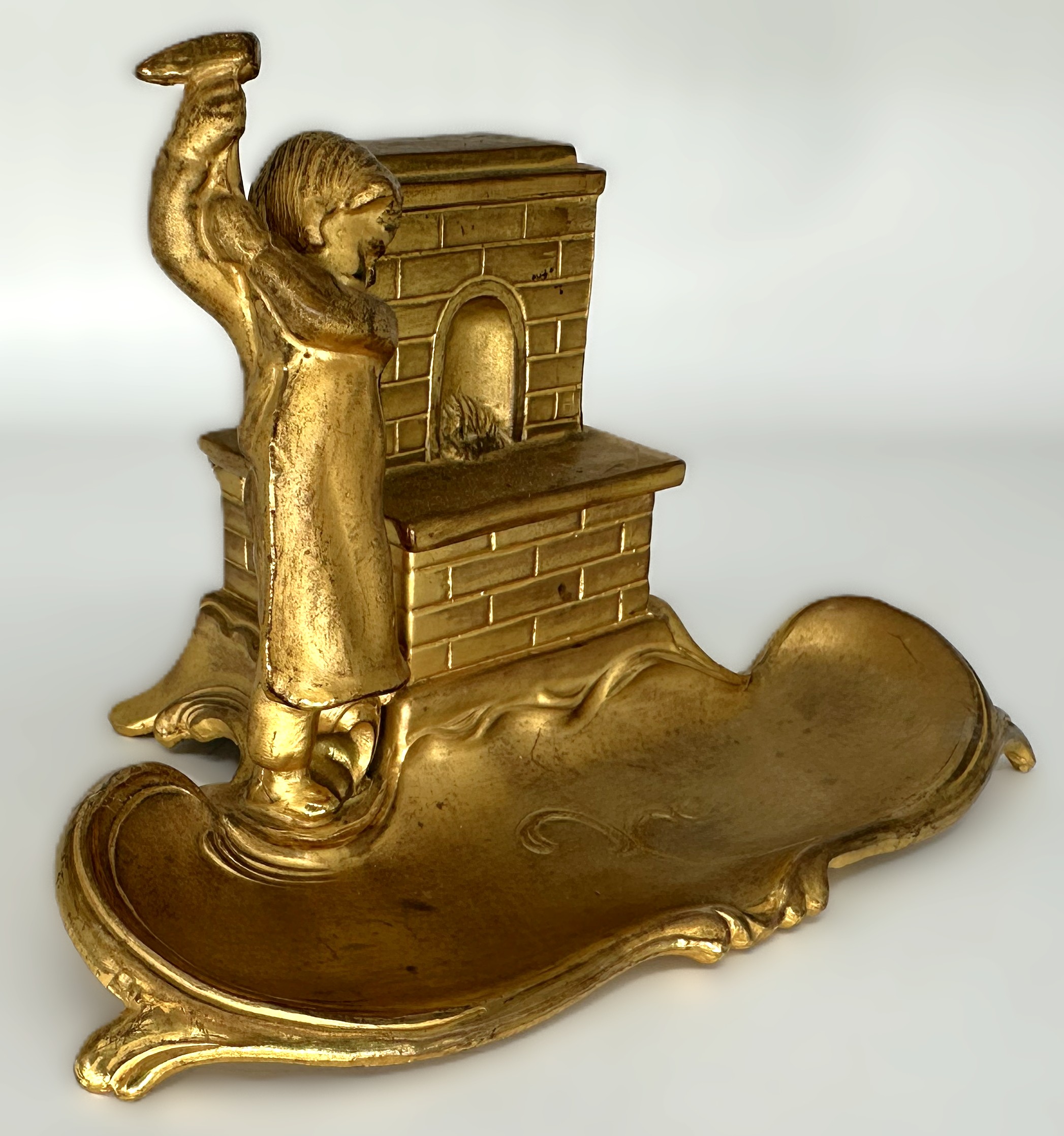
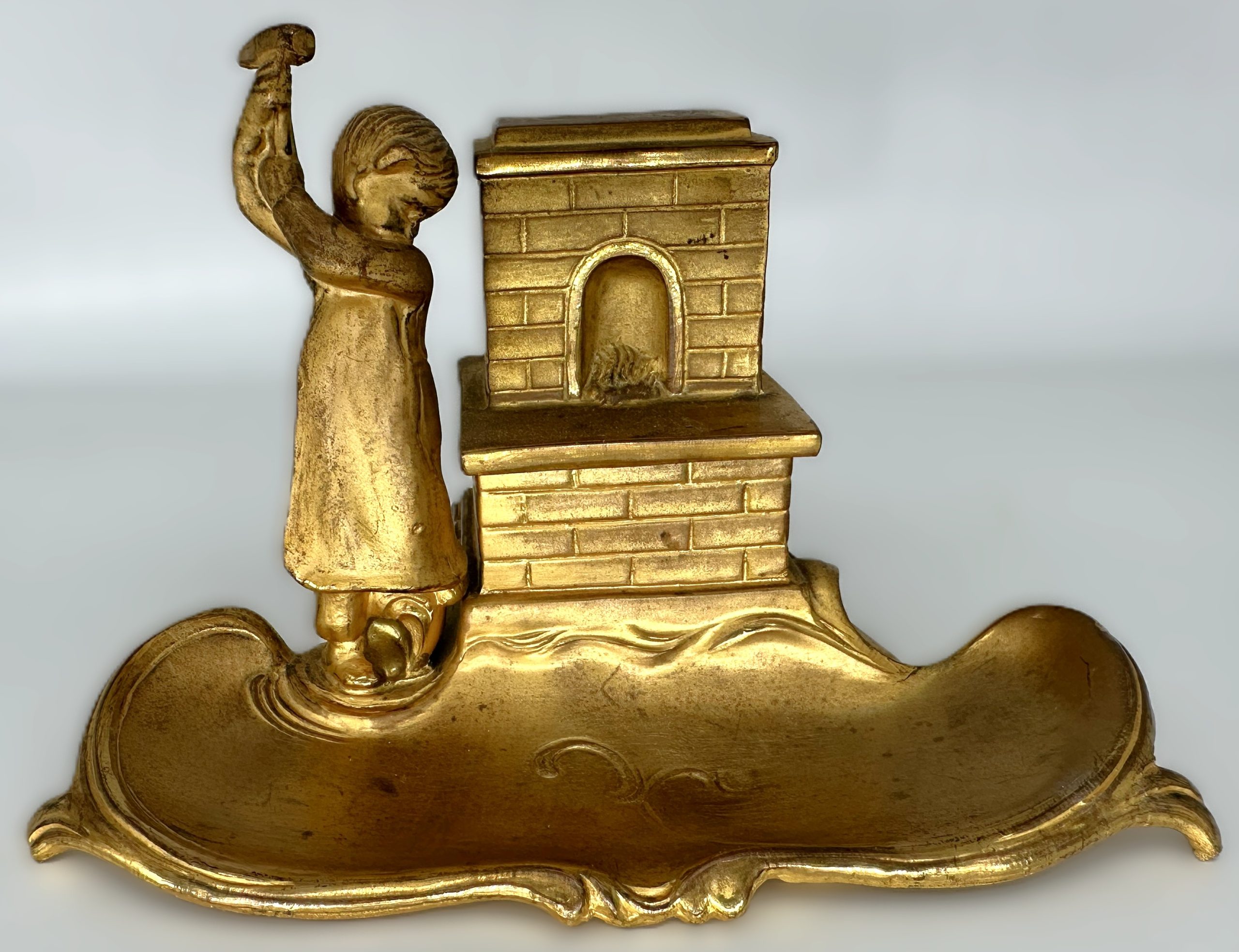
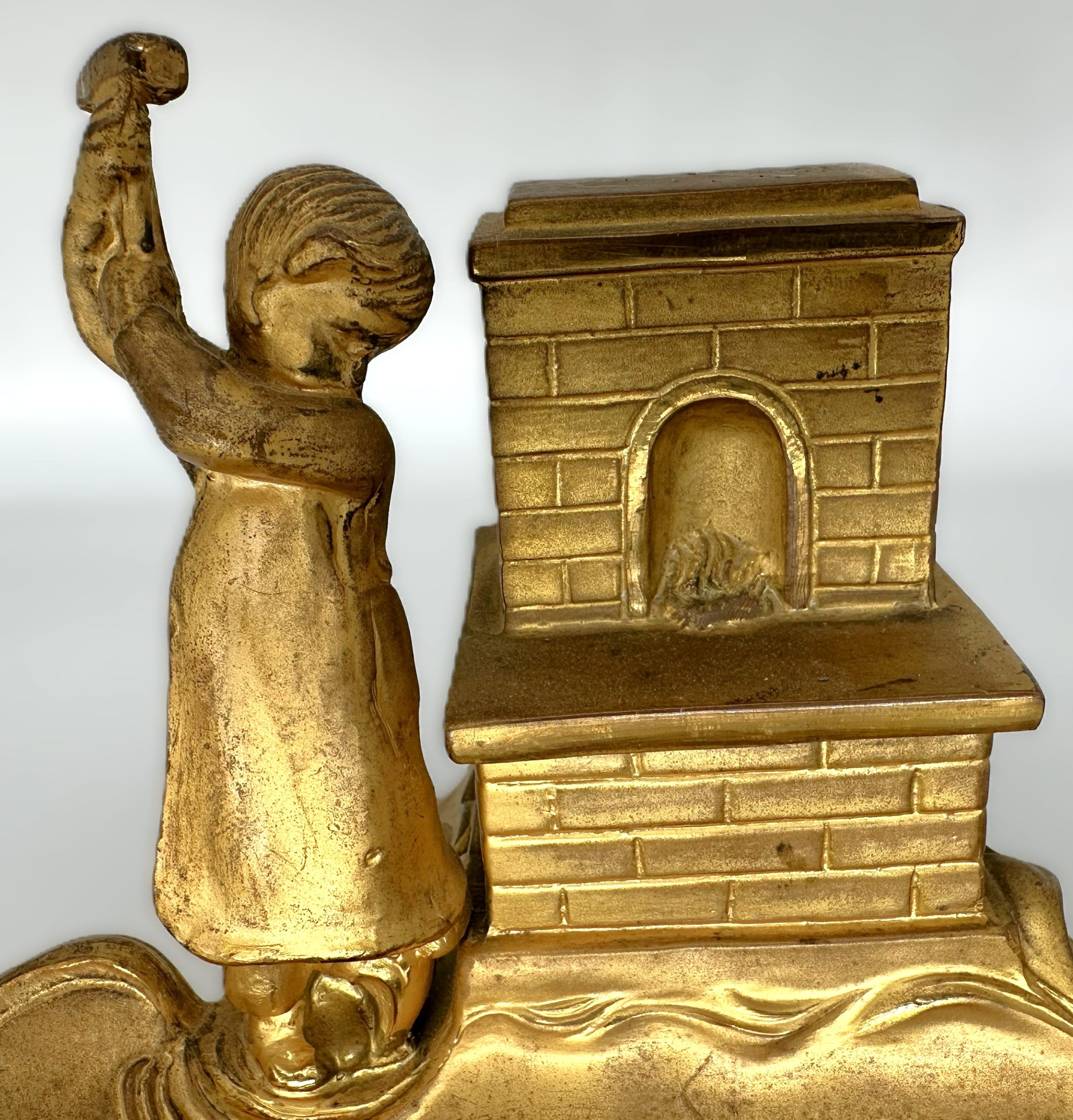
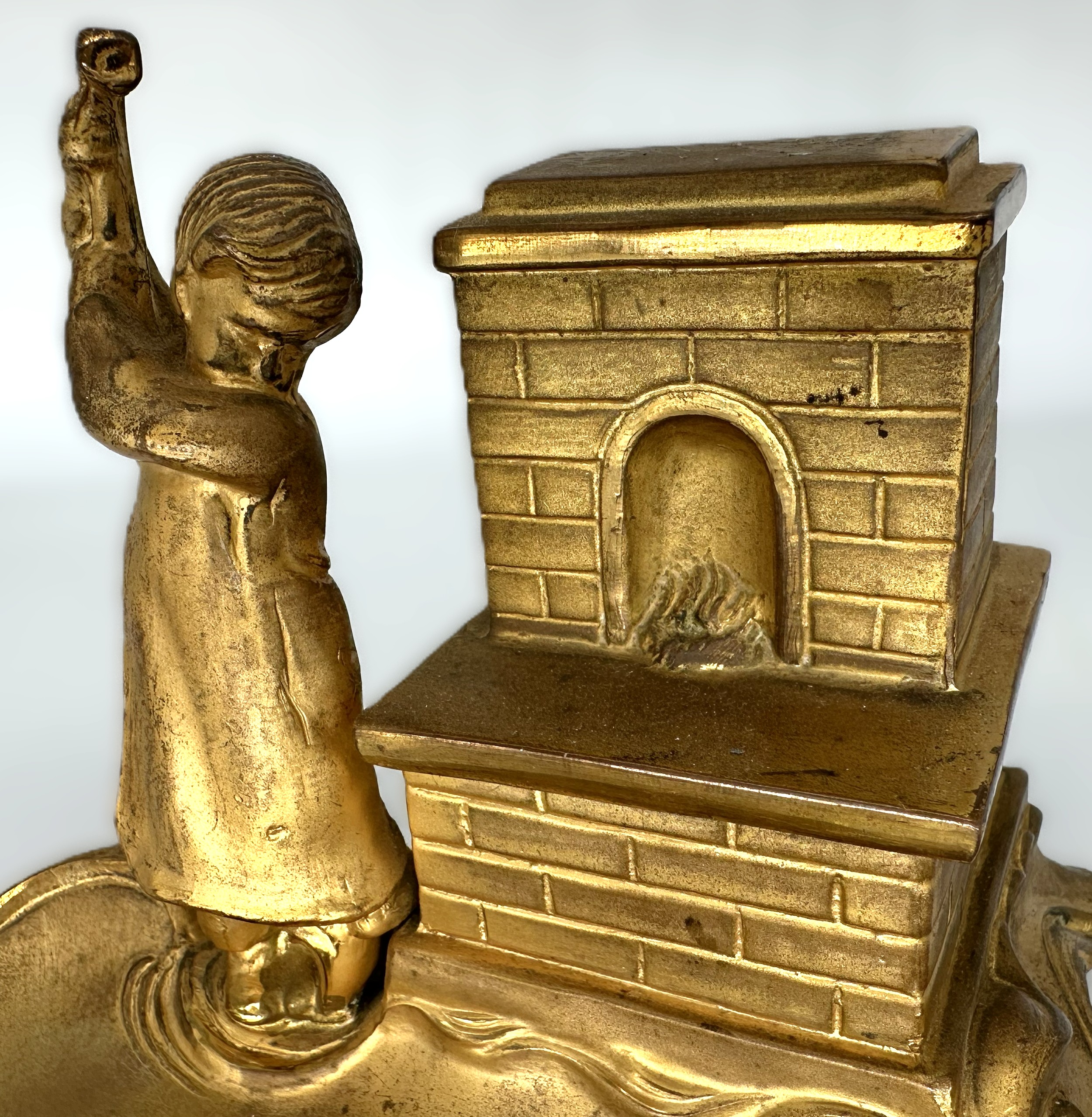
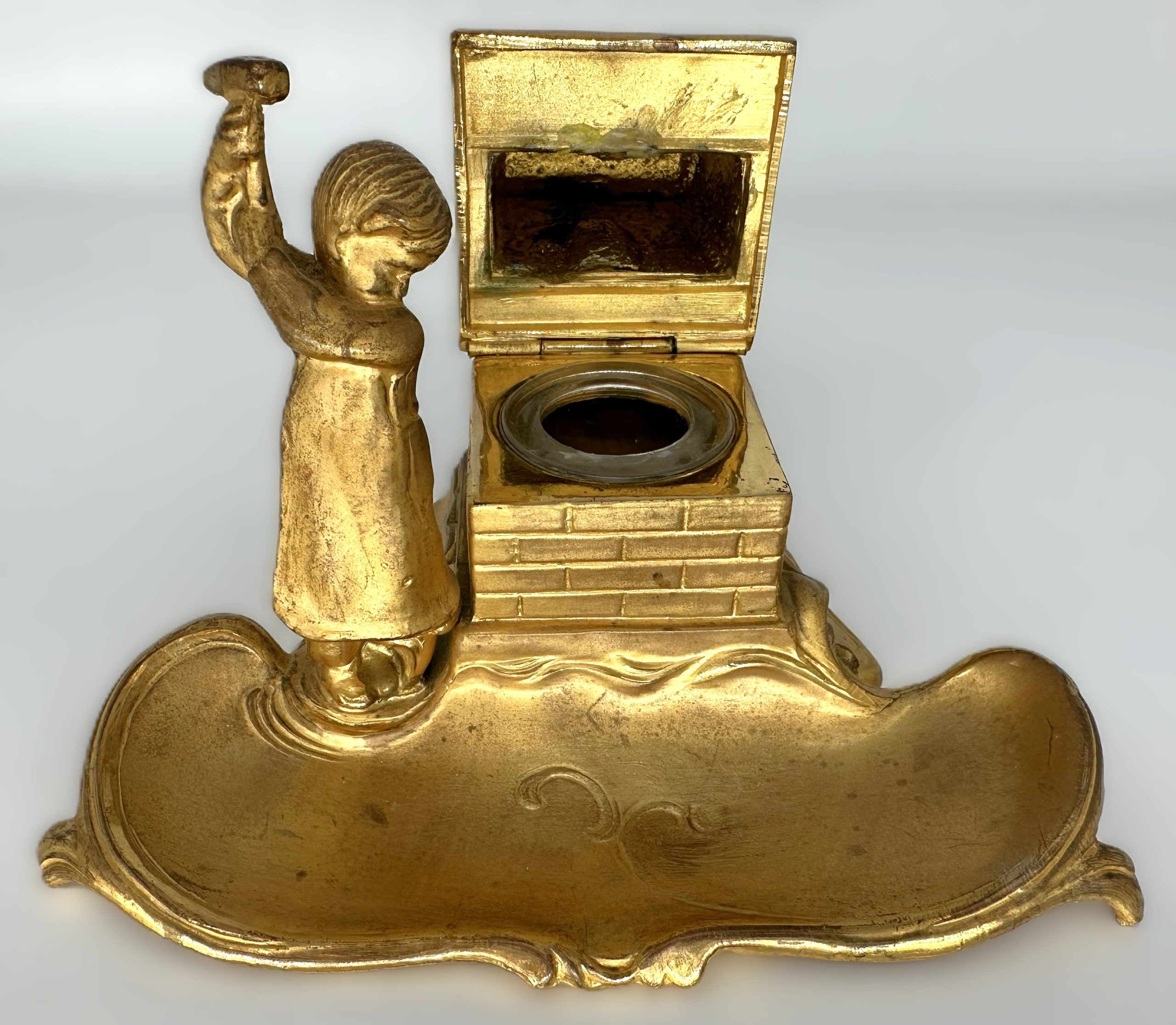
- Figure: A young apprentice or child blacksmith wearing a long protective apron over trousers/smock. He stands with raised hammer held high overhead, posed mid-strike in front of a brick masonry forge.
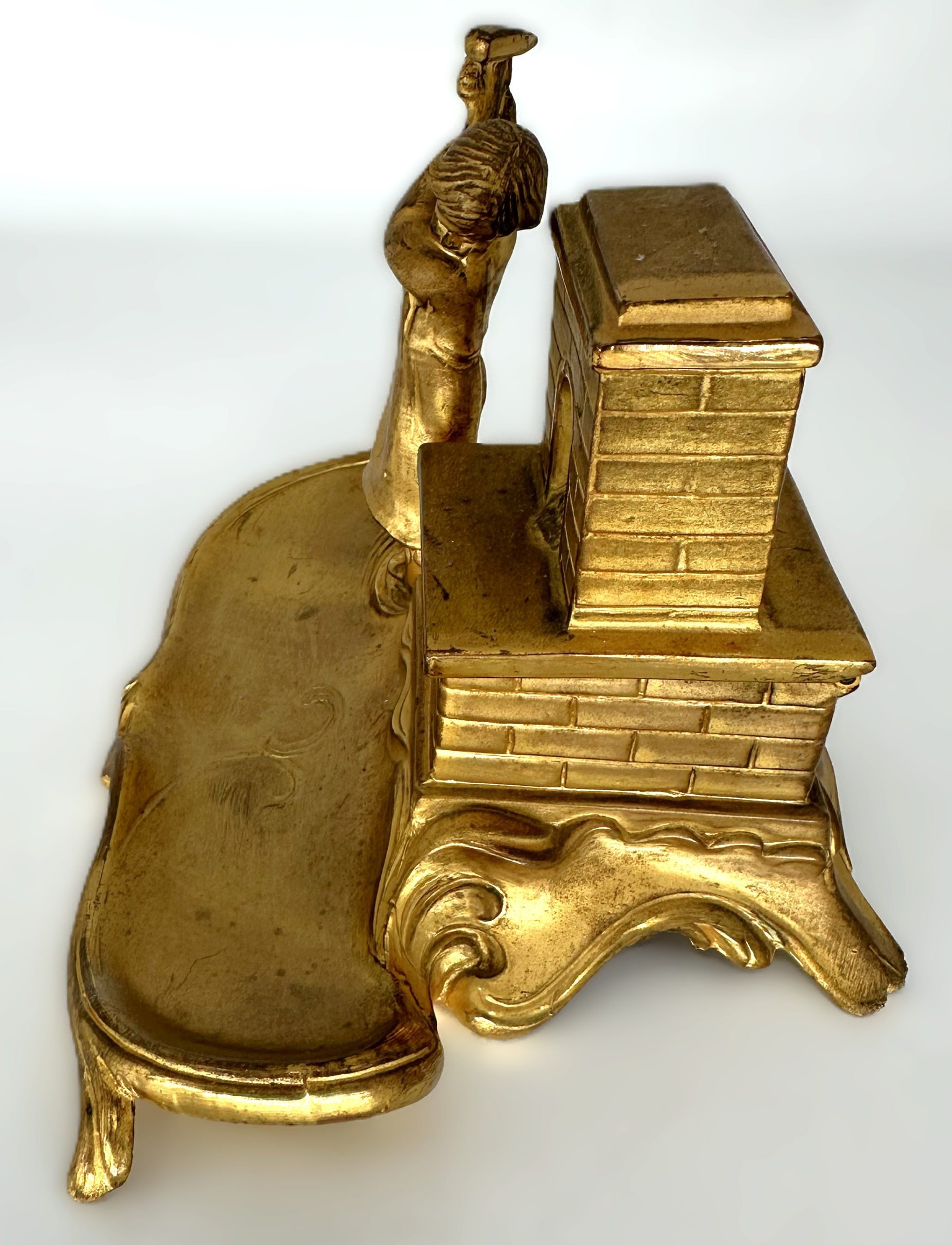
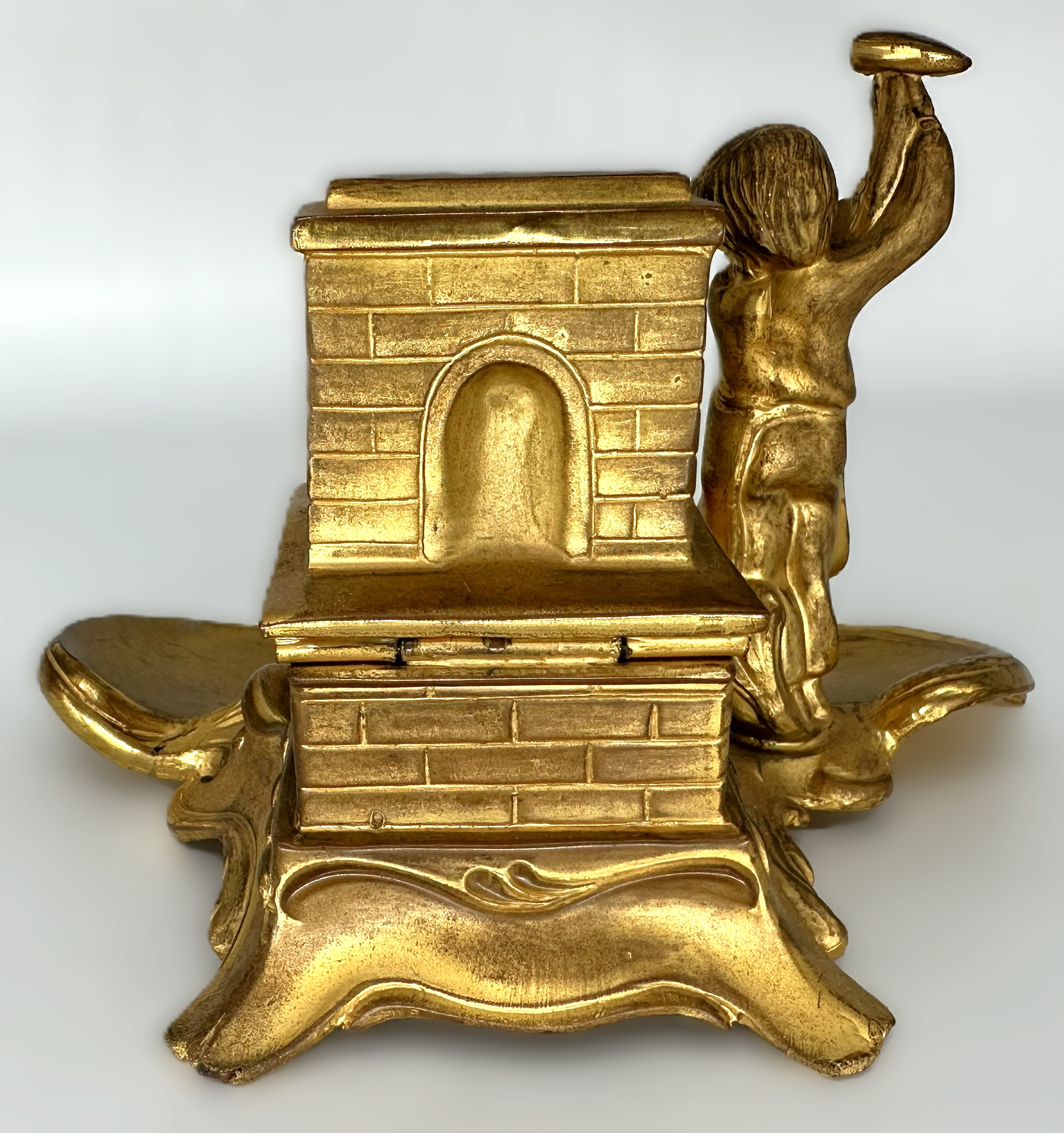
- Forge / Inkwell: The brick forge unit houses an arched opening with stylized flames. The entire brick structure hinges open at the back to reveal a clear glass insert.
- Base & Tray: The sculpted base features a long, flowing curvilinear pen trough adorned with stylized Art Nouveau cresting along the rim and subtle scrollwork embossed in the basin.
- Finish: Factory-applied French gilt / “Ormolu Gold” lacquer finish over cast spelter (white metal).
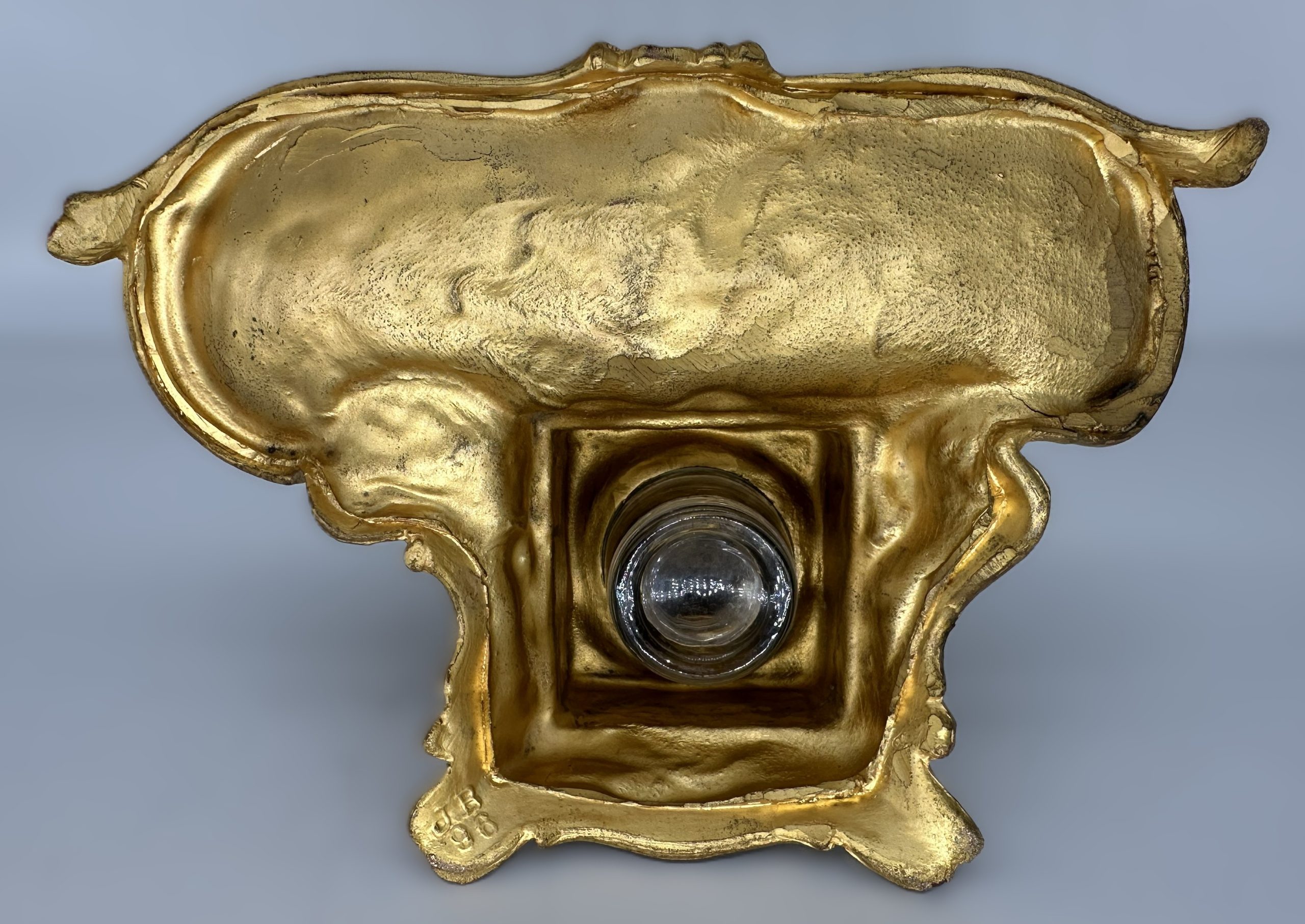
- Markings: Stamped “J.B. 96” on the underside foot corner.
Jennings Brothers Manufacturing Company History
Founded in 1890 in Bridgeport, Connecticut, by three brothers—Erwin, Edward, and Henry Jennings—the Jennings Brothers Metal Foundry (later Jennings Brothers Manufacturing Co.) became one of America’s premier producers of artistic metal decor.
- Craftsmanship: Unlike large-scale industrial founders who prioritized mass production, Jennings Brothers employed skilled sculptors, patternmakers, and metal artisans to create finely detailed mold castings.
- Signature Finishes: They were renowned for high-grade finishes, including their proprietary trademarked “Ormolu Gold” (a multi-step gold lacquered/plated finish) and “Nouveau Bronze”.
- Production Run: The company operated successfully through the Victorian, Art Nouveau, and Art Deco eras until World War II, when they pivoted to wartime manufacturing. The business officially closed in 1953.
“J.B. 96” (Dating & Catalog Numbers)
- Maker’s Mark: The initials J.B. explicitly stand for Jennings Brothers.
- Catalog/Mold Number: The number 96 is a design mold/catalog number, not a date of manufacture.
- Dating the Piece: Jennings Brothers used sequential 2-digit, 3-digit, and eventually 4-digit catalog numbers throughout their production history. Low 2-digit mold numbers (such as 96) indicate an early production design, dating the master mold design to roughly 1900–1910.
Was This Intended for a Child? (Iconography & Context)
Despite the youthful appearance of the blacksmith, this inkstand was not intended for a child’s use. It was designed as an adult desk accessory for home libraries, parlors, or office desks.
- The Cherub / Putto Tradition: In European decorative arts (especially French late-19th-century bronzes and spelter groups), sculptors routinely depicted traditional trades (blacksmiths, harvesters, sailors, cobblers) using putti or youthful allegorical figures.
- Symbolism of the Blacksmith: Industrial and trade allegories were immensely popular themes around the turn of the 20th century. The blacksmith symbolized hard work, industry, strength, and forging one’s future.
- Vignette Storytelling: Capturing an apprentice working at the hearth added a narrative, genre-art quality to functional desk objects.
Summary
Early Art Nouveau “Ormolu Gold” Blacksmith Inkstand
Jennings Brothers Mfg. Co., Bridgeport, CT — Circa 1900–1910
A sculpted gilt spelter inkstand produced by the Jennings Brothers Foundry. The piece features a youthful apprentice blacksmith in an apron, hammer raised in mid-strike before a brick masonry forge. The upper section of the forge hinges open to reveal the inkwell.
The integrated base incorporates a sweeping, flowing Art Nouveau pen trough with shell-and-scroll rim detailing. Finished in original factory “Ormolu Gold” gilded lacquer. Stamped on the underside corner foot “J.B. 96” (Jennings Brothers, Mold No. 96).
Estimated value: $125
Content disclaimer. The information posted is the owner’s best knowledge and may not have been vetted by the SOIC. We welcome comments, corrections, and additions, working to make our website information comprehensive and accurate.
Join the Society of Inkwell Collectors (SOIC) – it’s free!
Founded in 1981 as a non-profit organization,
we are documenting inkwells (and accessories).
We’re here to help and inform!