

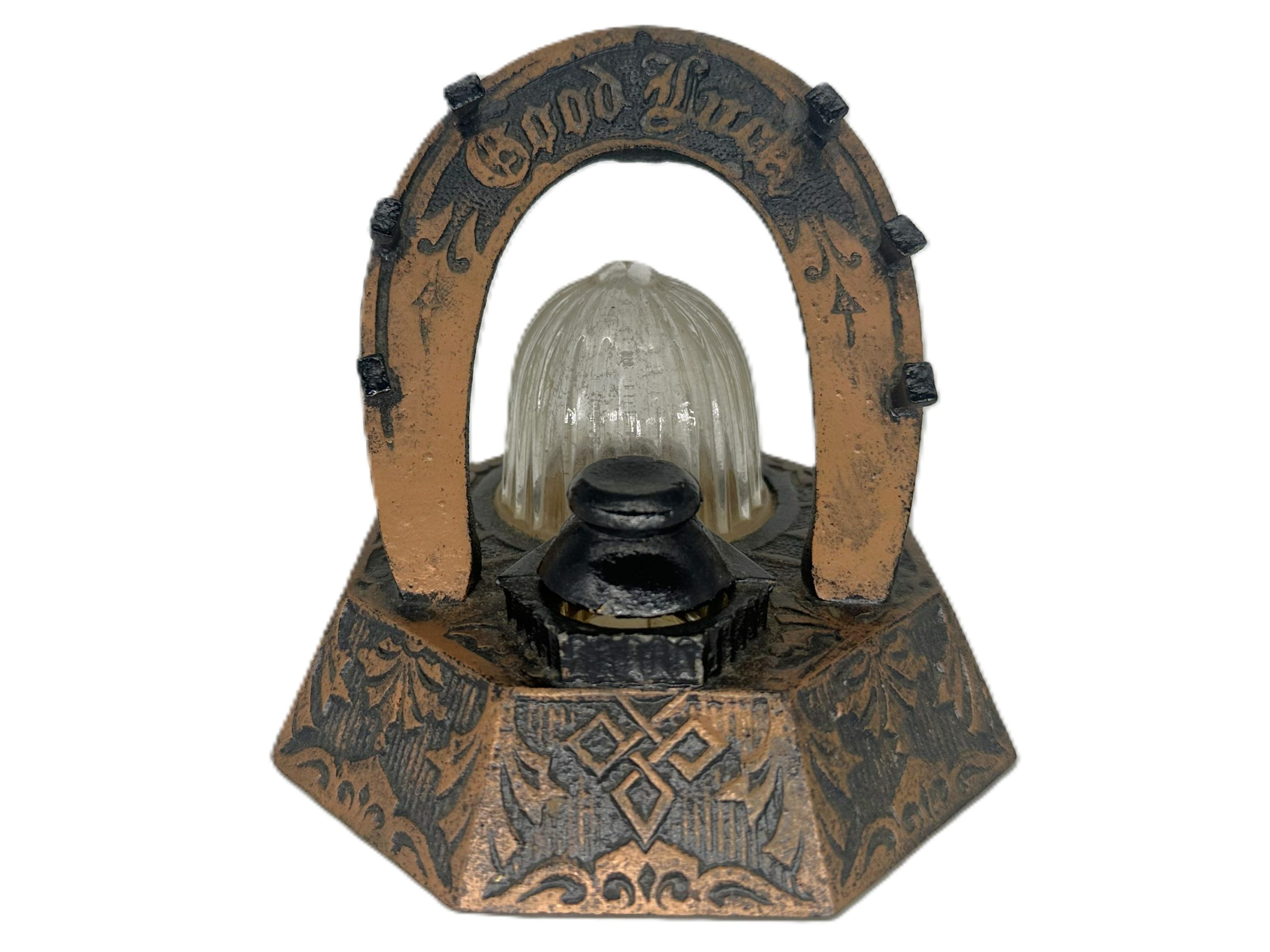
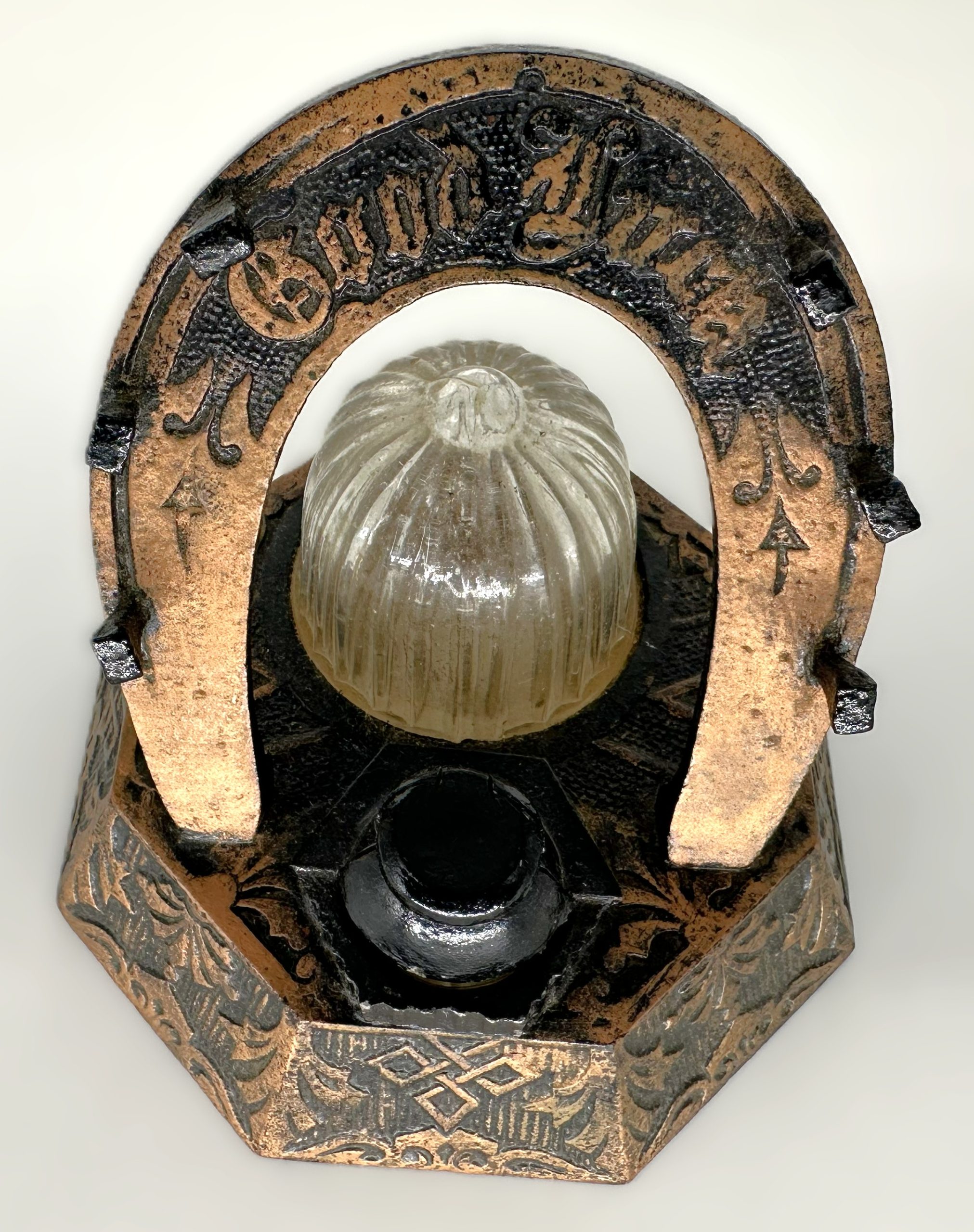
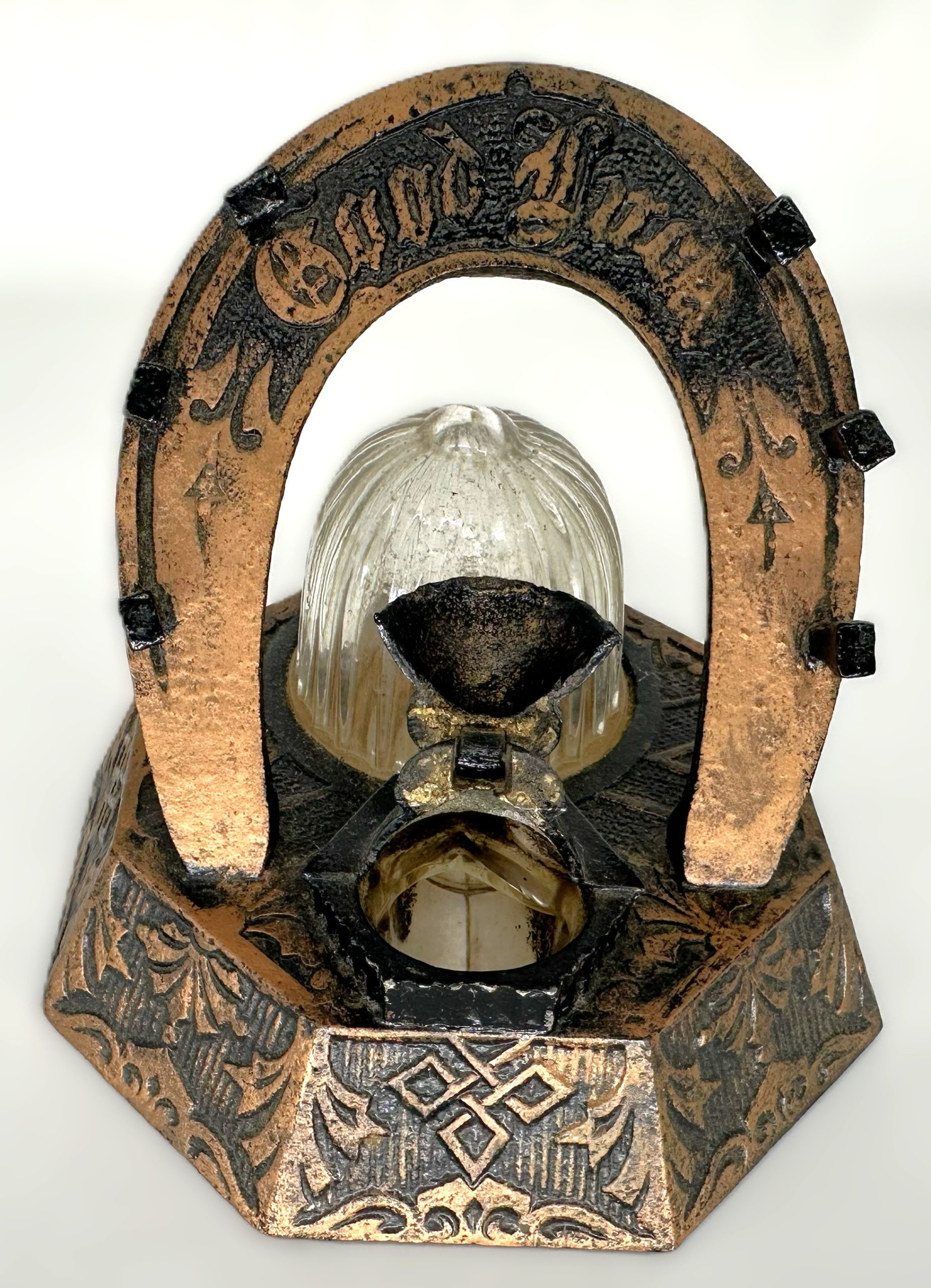
“Good Luck” Barometric Inkstand
| Categories | Mechanical - Pump / Siphon |
| Type | Siphon |
| Material | Cast iron |
| Markings | See Narrative |
| Manufacturer | Undetermined |
| Origin | United States |
| Date or Era | circa 1875 |
| Measuring | 5 ⅛” x 5 ⅛” x 4 ¾” high |
Description
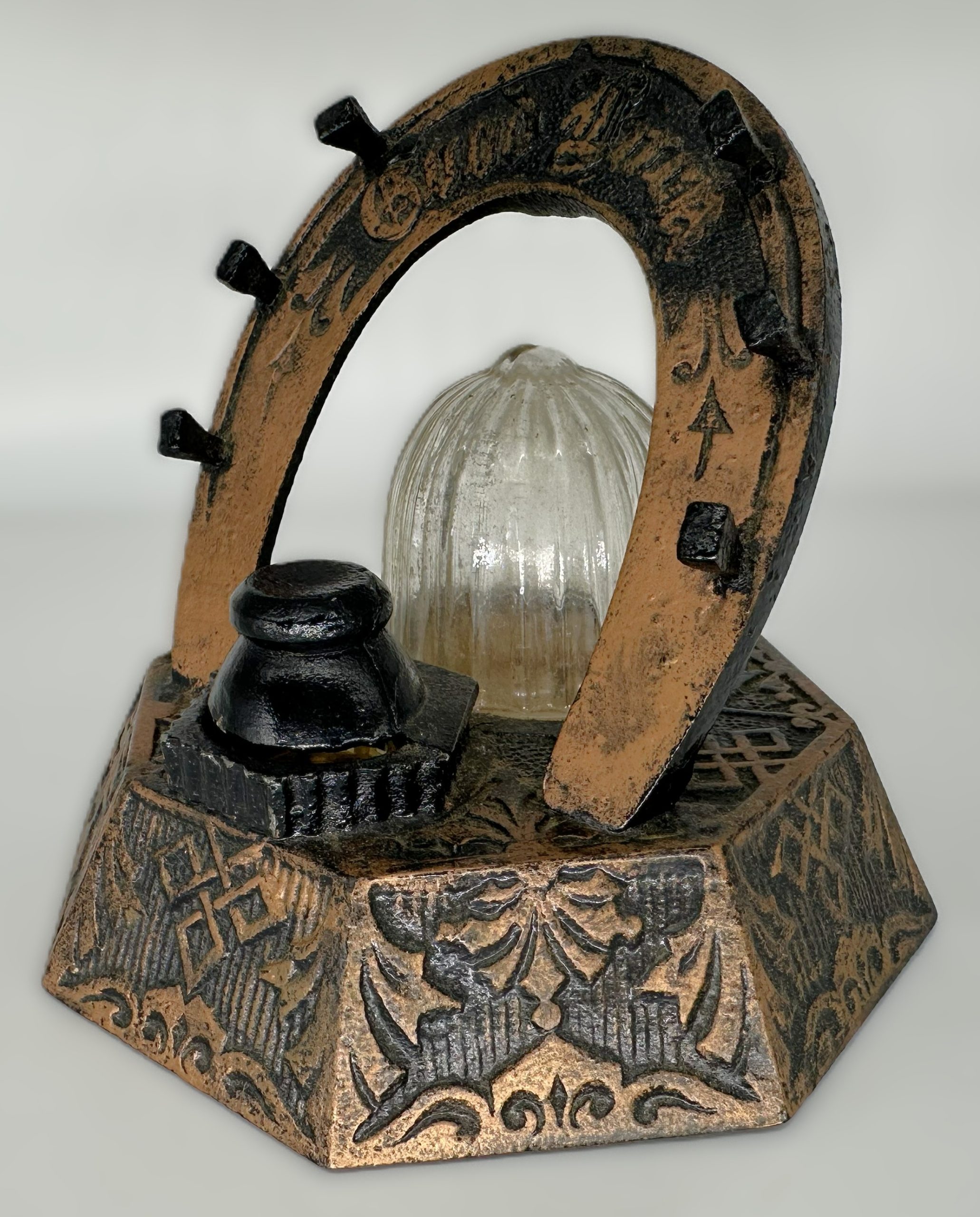
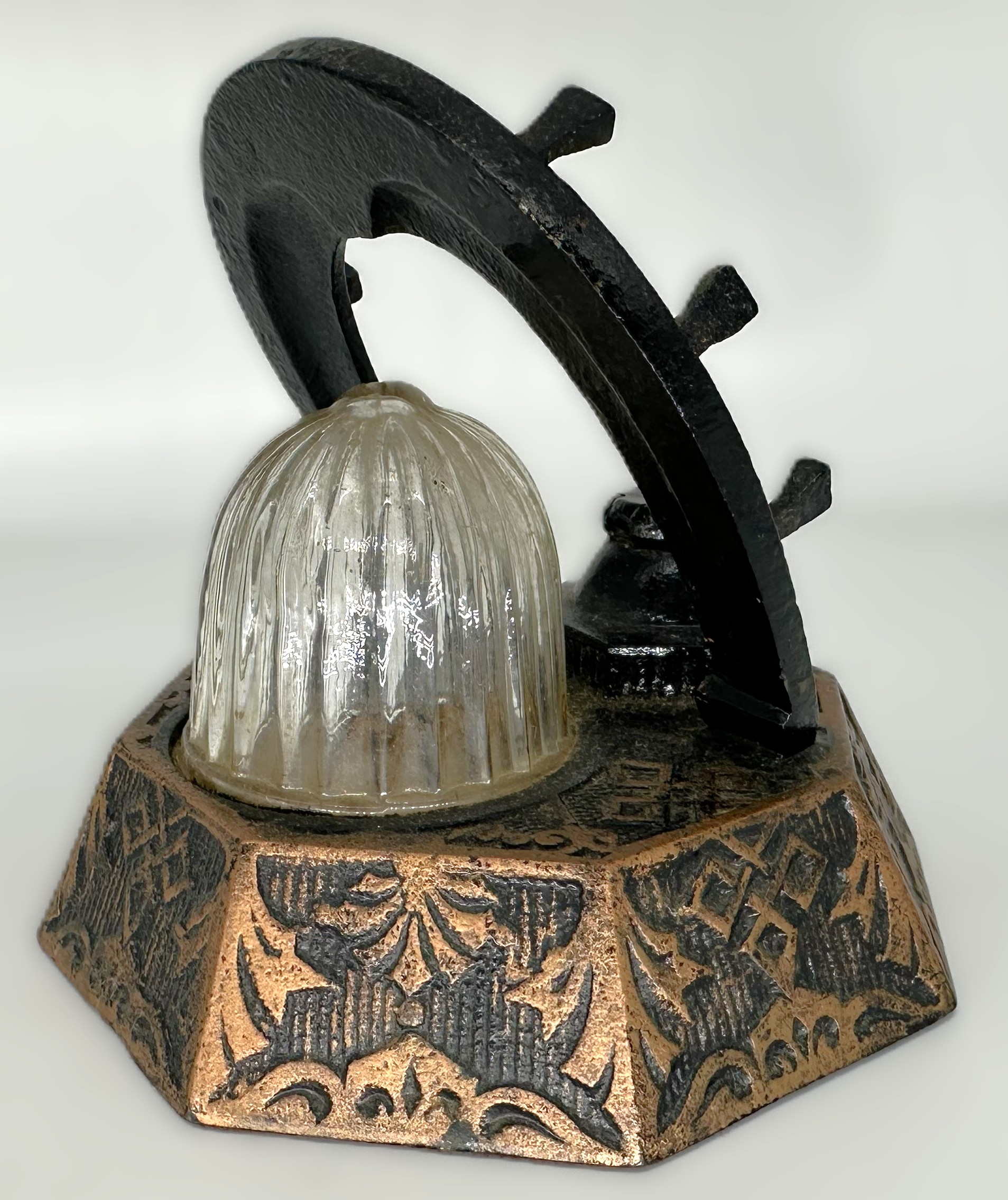
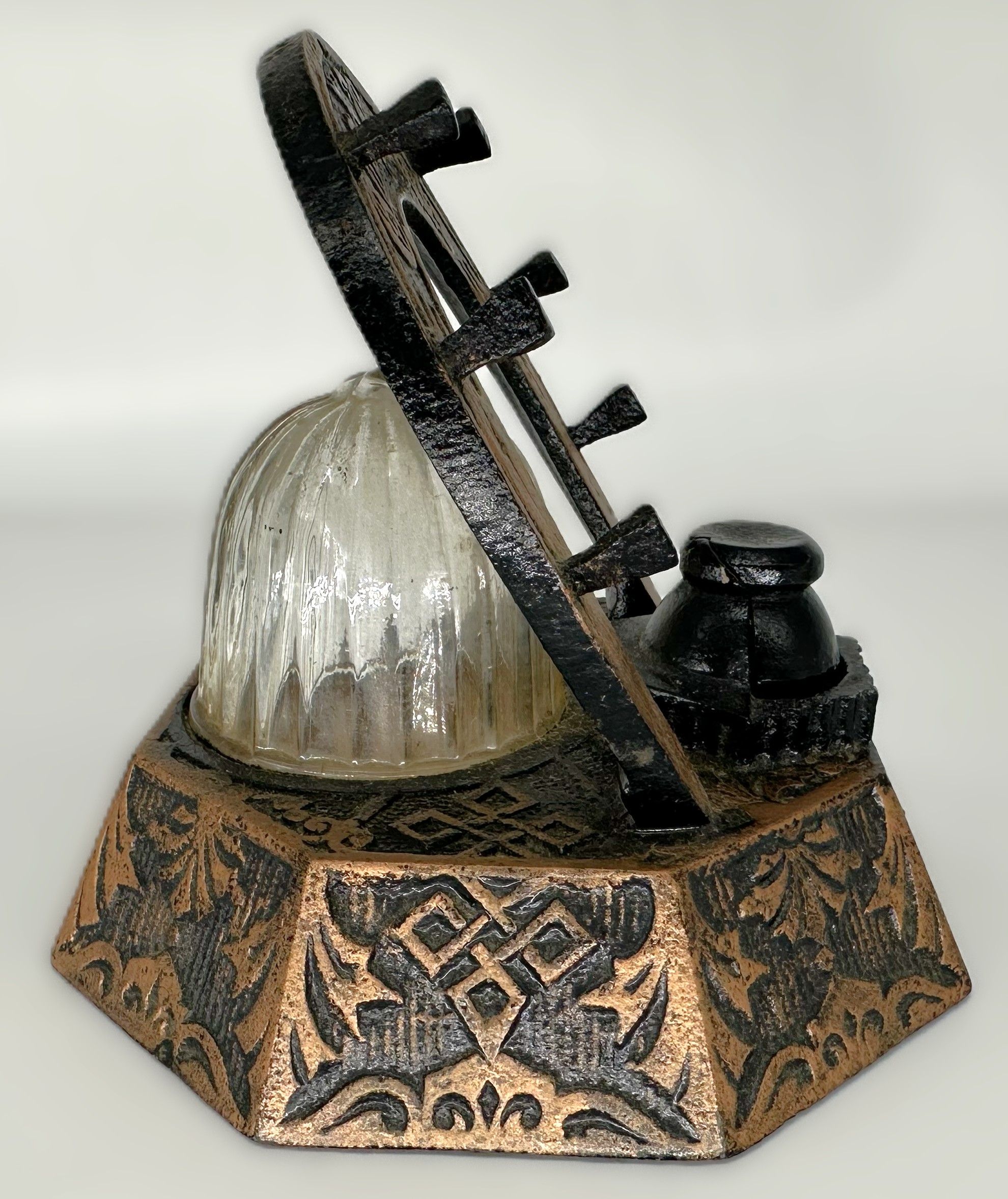
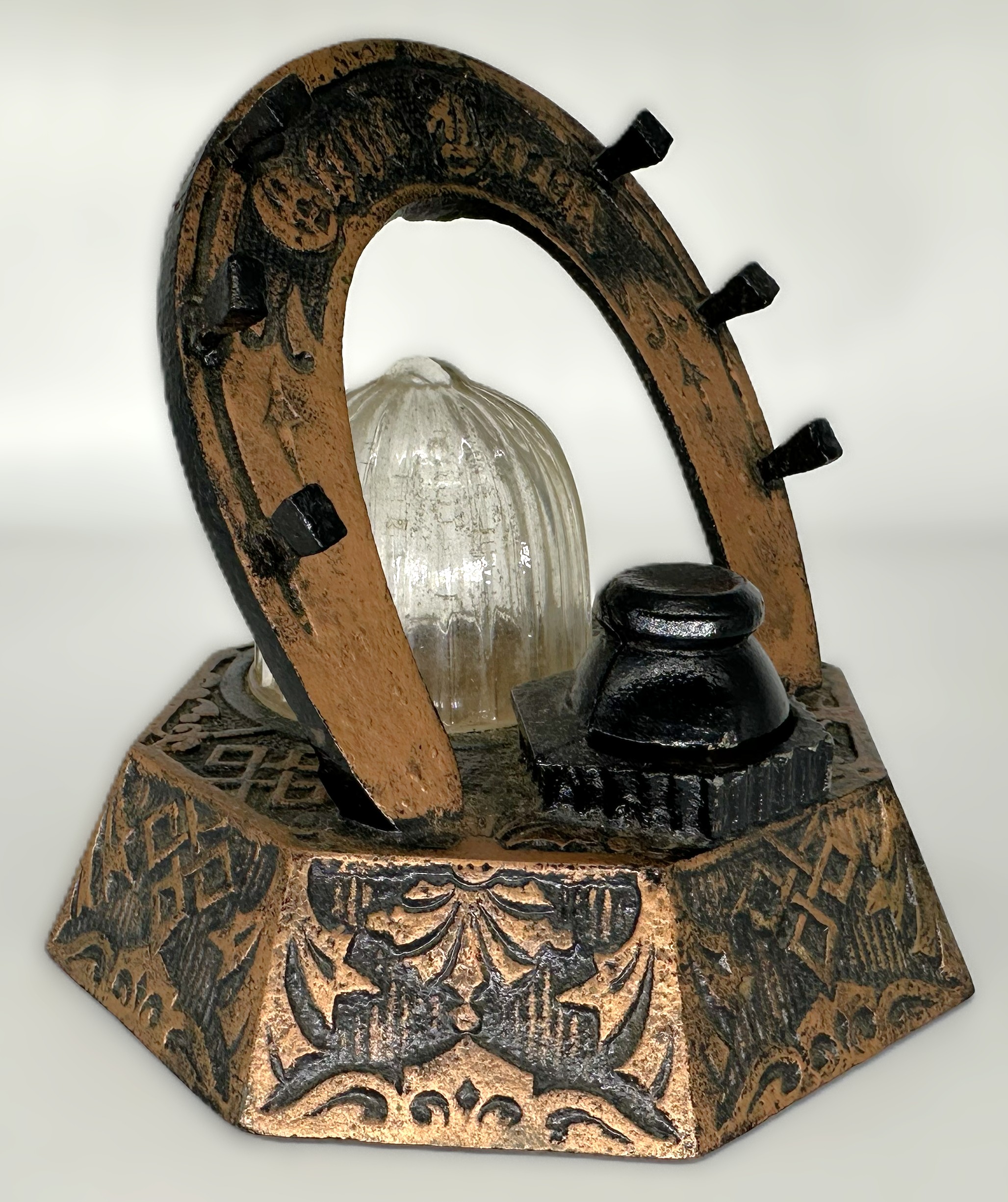
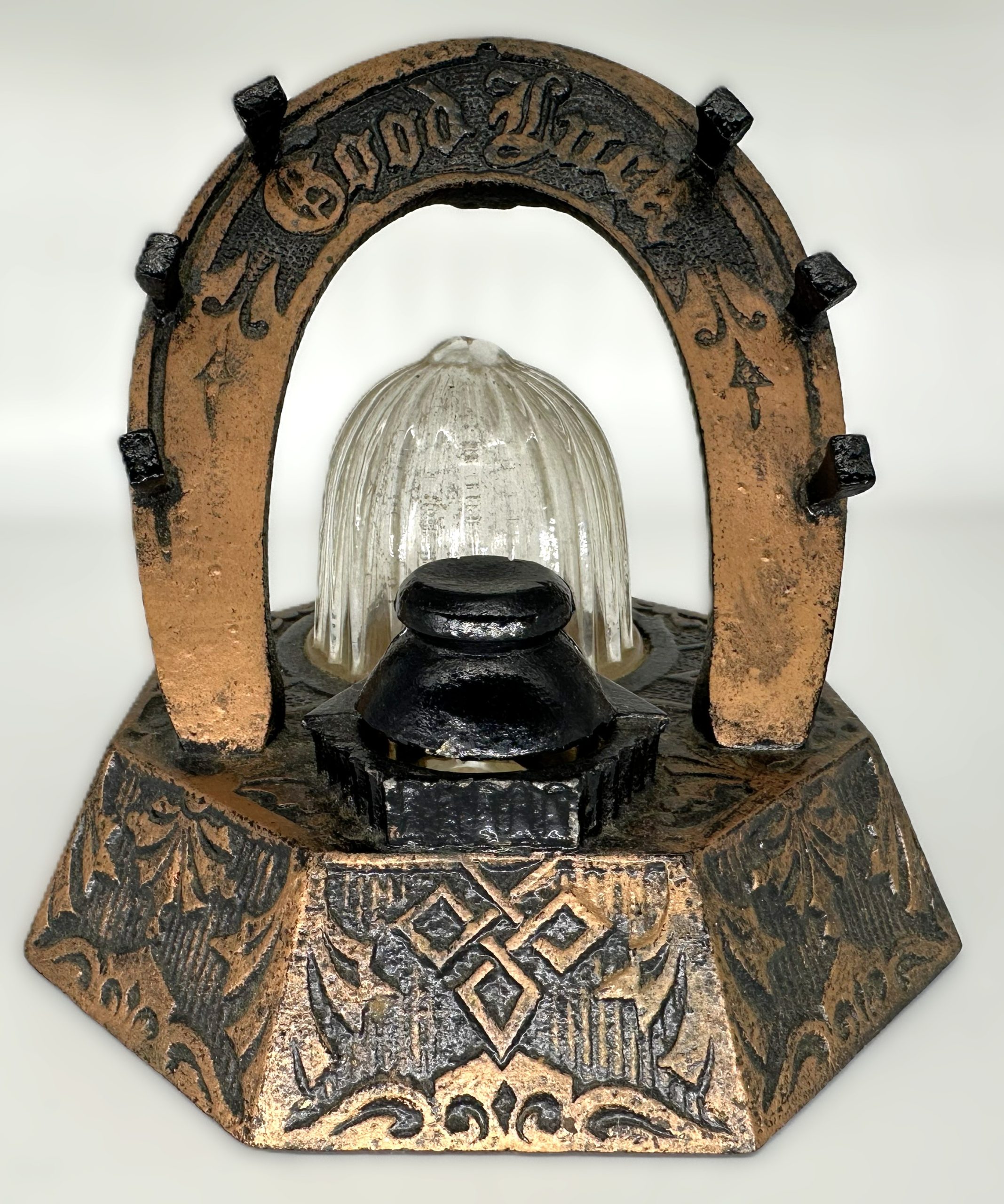
This cast iron desk inkstand features a molded octagonal base decorated with low-relief geometric knotwork and stylized foliate patterns.
- Horseshoe Pen Rack: Arching over the center is an oversized horseshoe carrying the raised Gothic lettering “Good Luck” across its top curve. Projecting from the outer face are five integrated square-headed horseshoe nails that serve as slots/rests to hold dip pens.
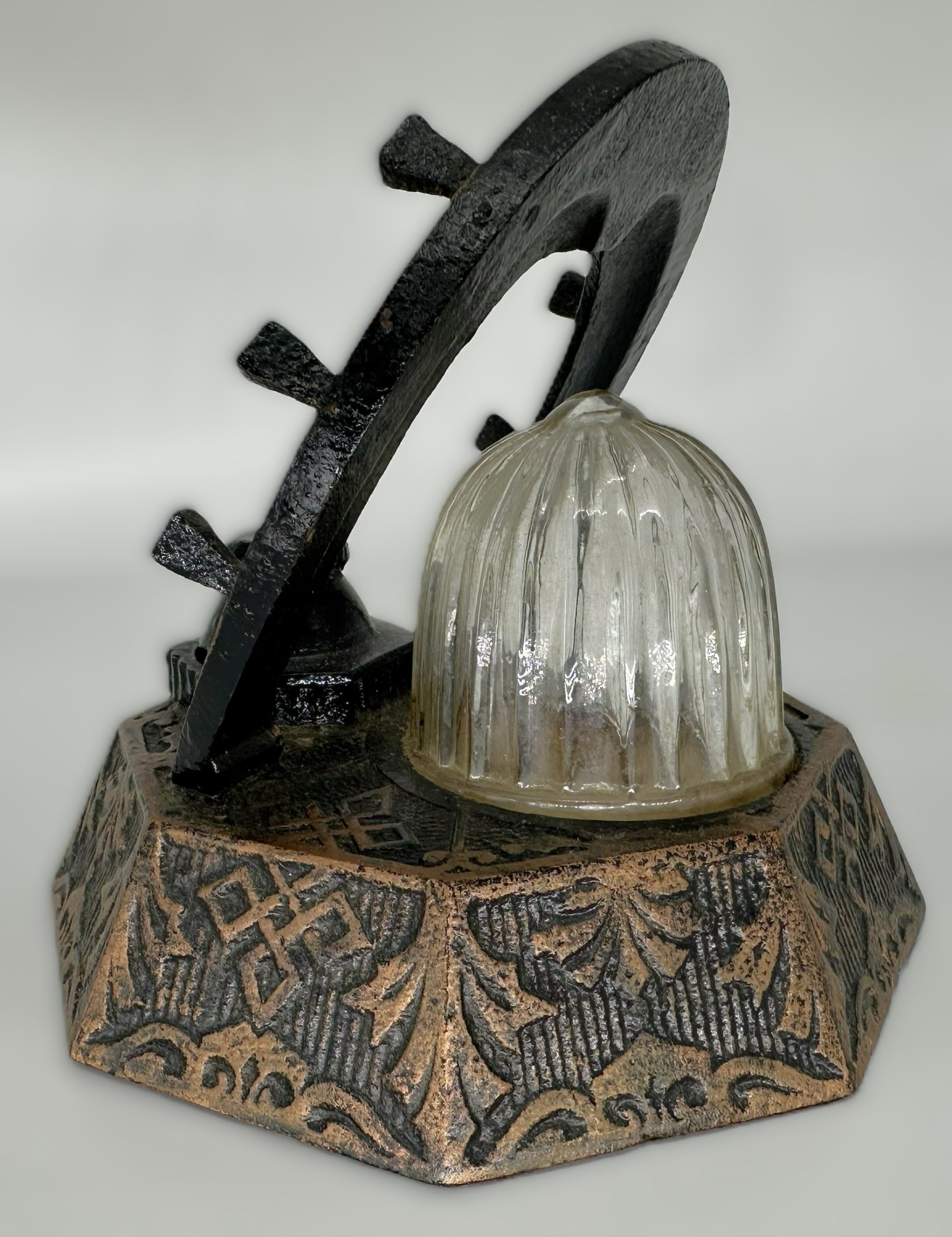
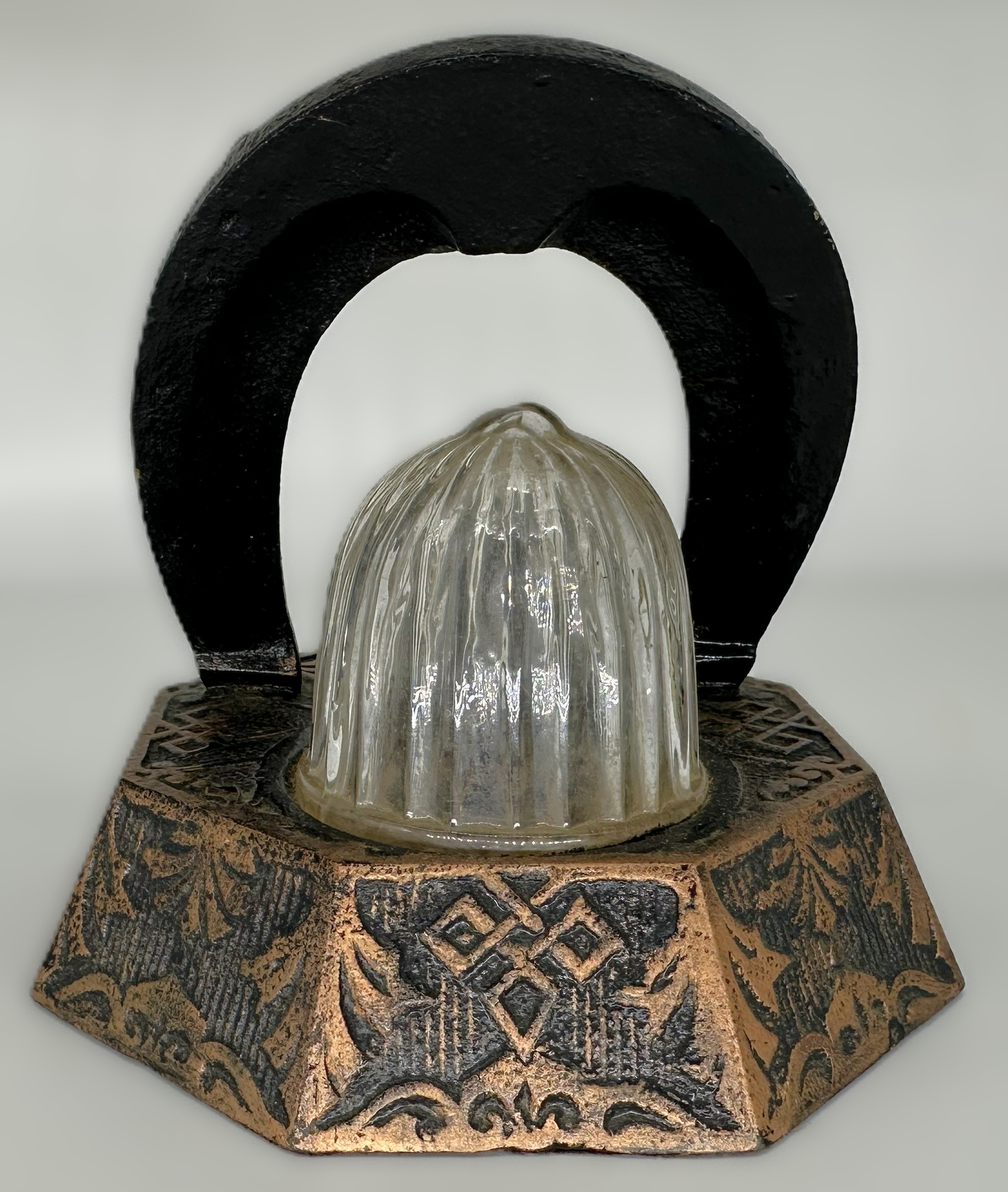
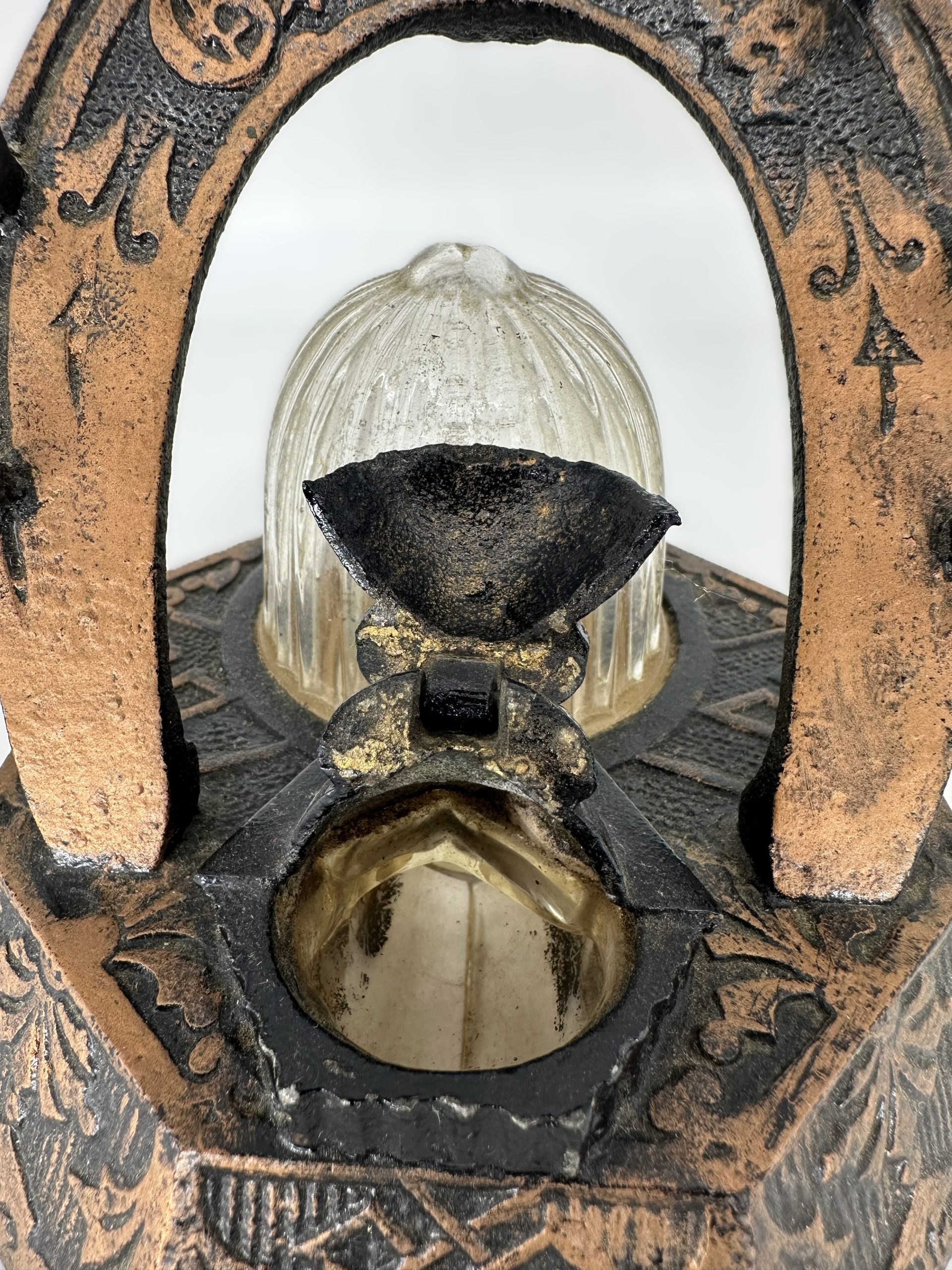
- Component Layout: Set within the footprint of the base is a central fluted glass dome reservoir behind a forward-positioned, hinged metal dipping font. Opening the hinged metal cap reveals the small open dipping basin connected to the internal reservoir glass.
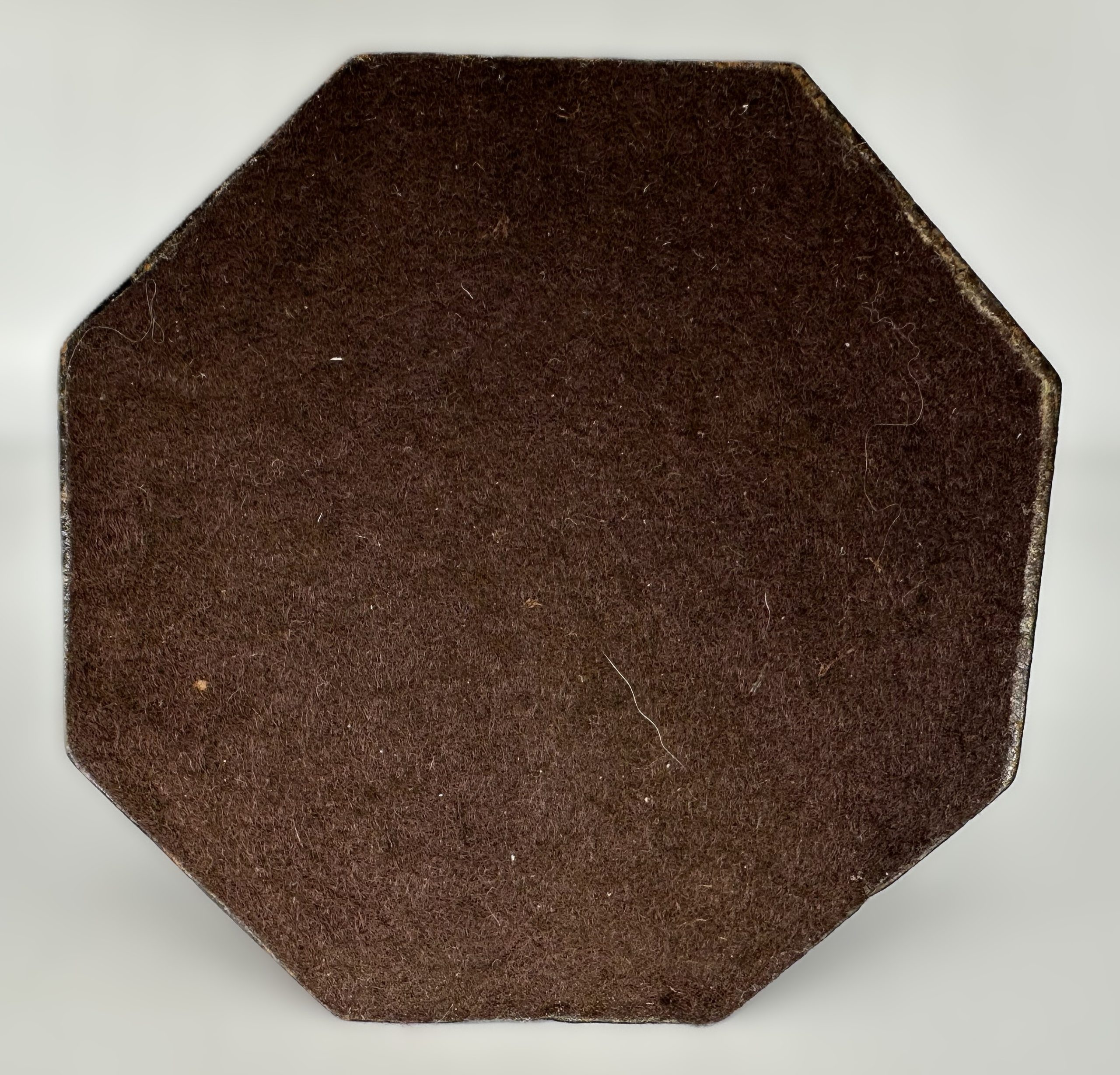
- Finish: The inkstand originally featured a metallic copper-toned finish across the cast iron surface. At a later point, black paint was applied over the piece, coating the dipping font cap, the horseshoe nails, and the recessed areas of the casting. This secondary paint layer creates a two-tone effect, leaving the original copper finish exposed along the raised relief patterns of the base and the front face of the horseshoe. The underside is lined with a fitted brown felt pad.
Origin & Date of Manufacture
- Country of Origin: Made in the United States.
- Estimated Age: Circa 1860s to 1880s.
- Background: The barometric atmospheric inkstand mechanism was pioneered and patented in the U.S. during the 1860s (most notably by inventors like Thomas Hudson in 1861, with production expanded by Boston desk supply firms such as Cutter Tower Co., as well as foundry manufacturers like Bradley & Hubbard and Peck, Stow & Wilcox). Foundries produced varying cast iron designs incorporating atmospheric reservoirs paired with popular novelty themes such as horseshoes for good fortune.
How the Barometric System Works
Despite the name, a barometric inkstand does not measure the weather; rather, it uses atmospheric pressure and fluid dynamics (the same principles as a barometer) to maintain a constant ink level in the dipping font without overflowing.
- Air-Tight Hydrostatic Seal: The reeded glass dome acts as the main ink reservoir. When filled with ink and inverted into its sealed base fitting, a vacuum/negative pressure forms in the sealed air space at the top of the glass dome.
- Atmospheric Balance: Down in the open dipping font, external atmospheric pressure pushes down on the small, exposed surface of the ink. This ambient air pressure balances the weight of the ink column inside the glass globe, keeping the ink from spilling out of the front basin.
- Self-Feeding Dipping Well: As ink is used up by dipping a pen (or lost to evaporation), the fluid level in the front font drops slightly. This allows a small bubble of air to enter through the dipping font and rise to the top of the glass dome, displacing just enough ink to restore the level in the dipping well before sealing itself off again.
Estimated value: $75.00
Content disclaimer. The information posted is the owner’s best knowledge and may not have been vetted by the SOIC. We welcome comments, corrections, and additions, working to make our website information comprehensive and accurate.
Join the Society of Inkwell Collectors (SOIC) – it’s free!
Founded in 1981 as a non-profit organization,
we are documenting inkwells (and accessories).
We’re here to help and inform!