

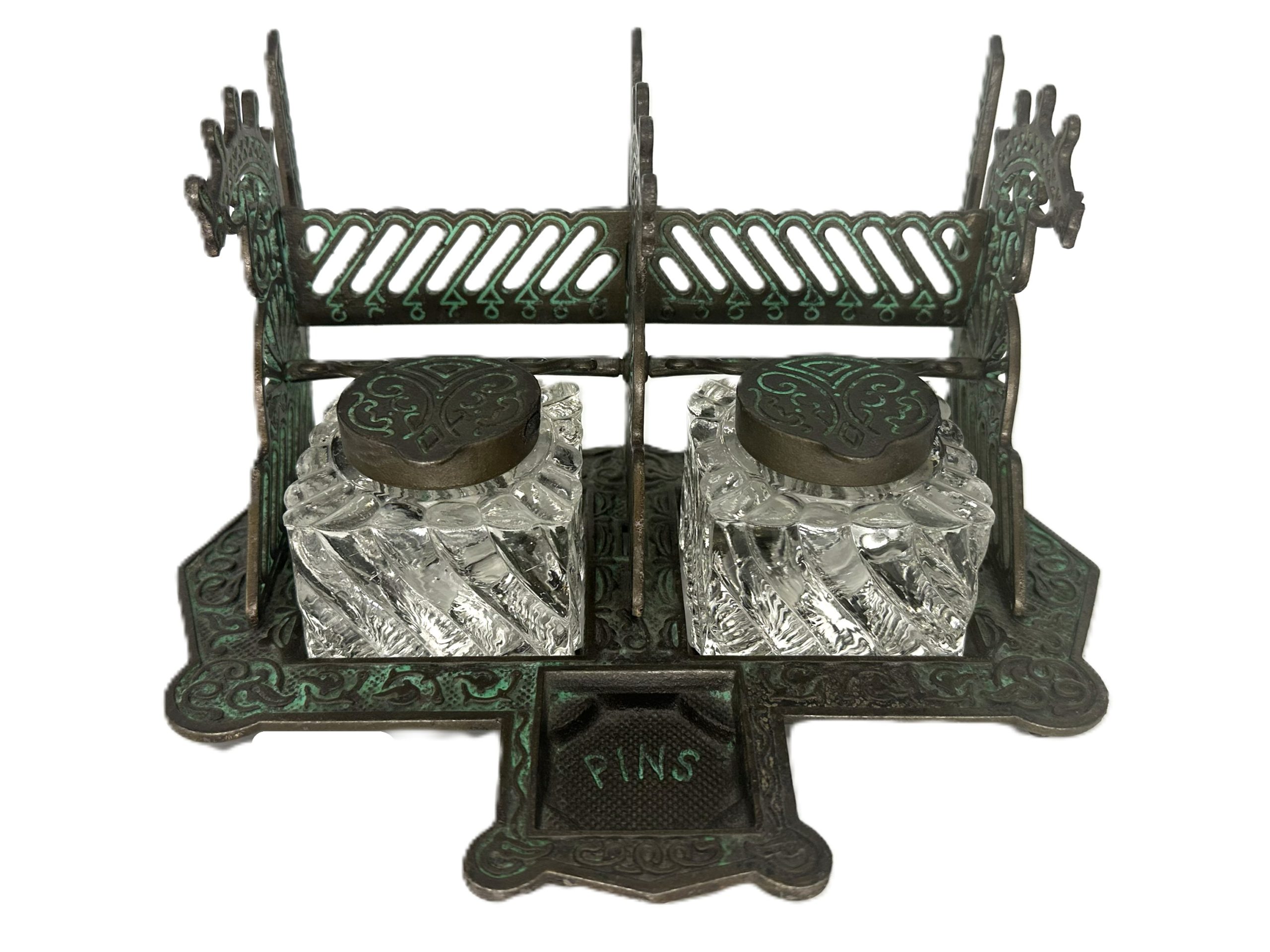
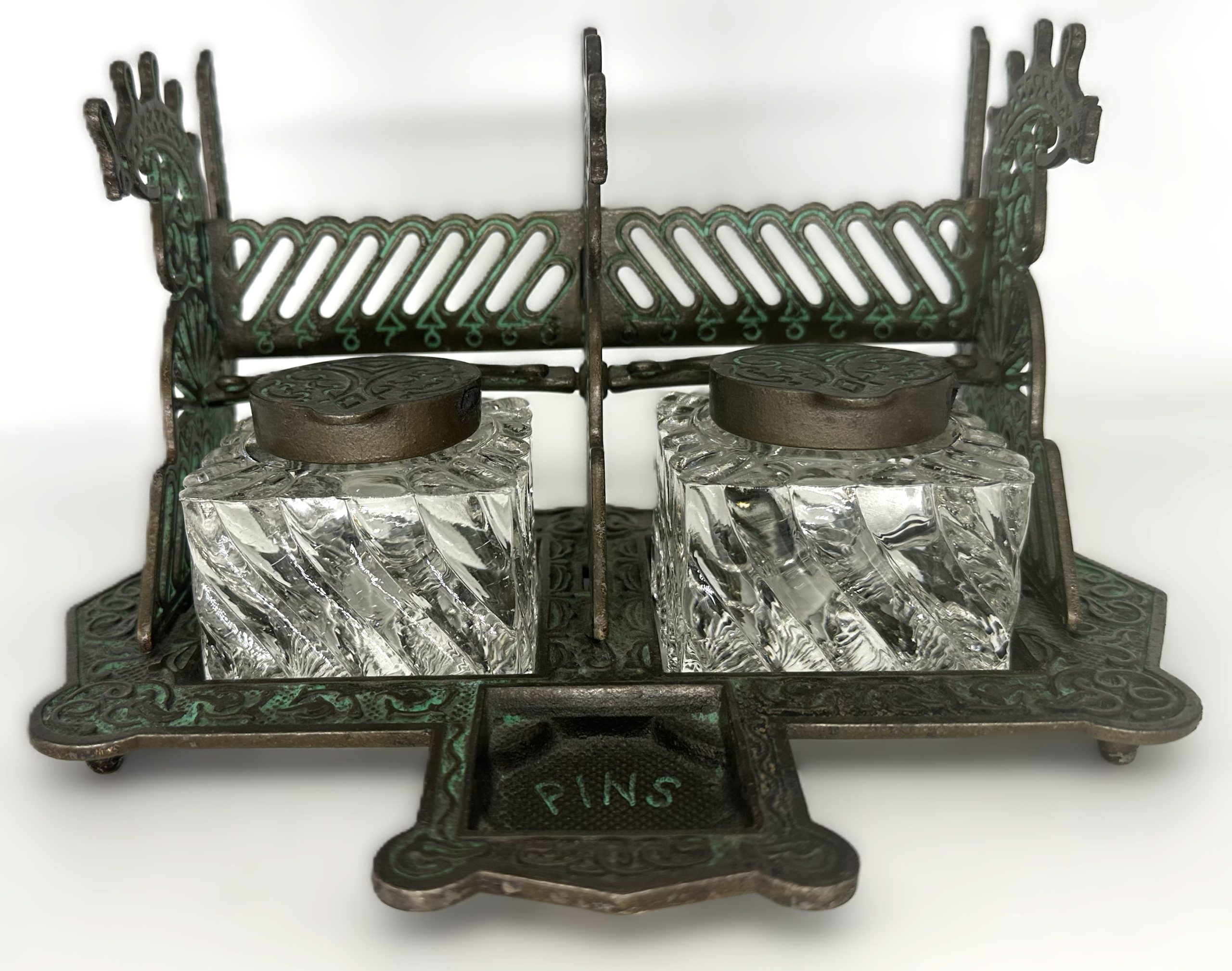
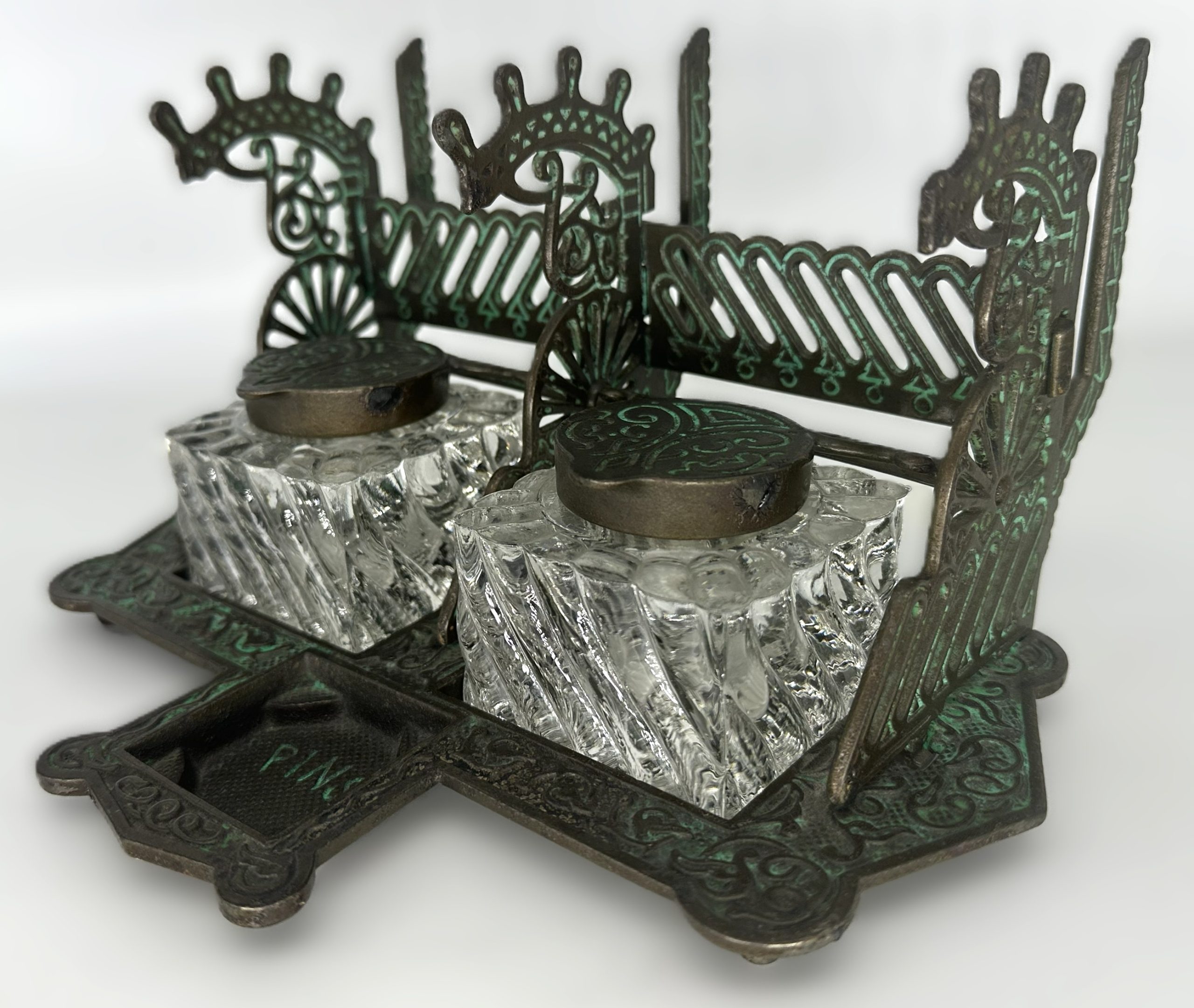
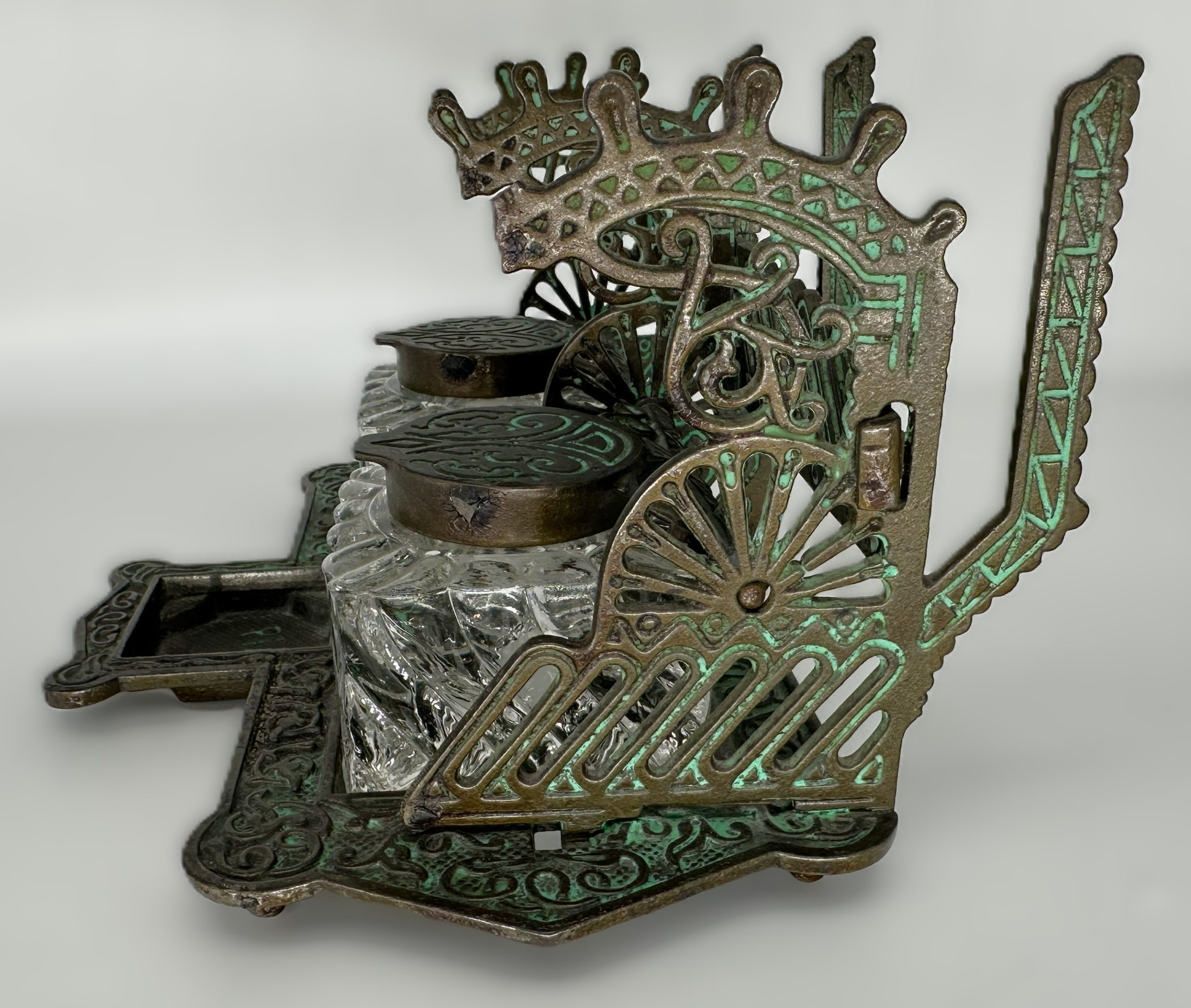
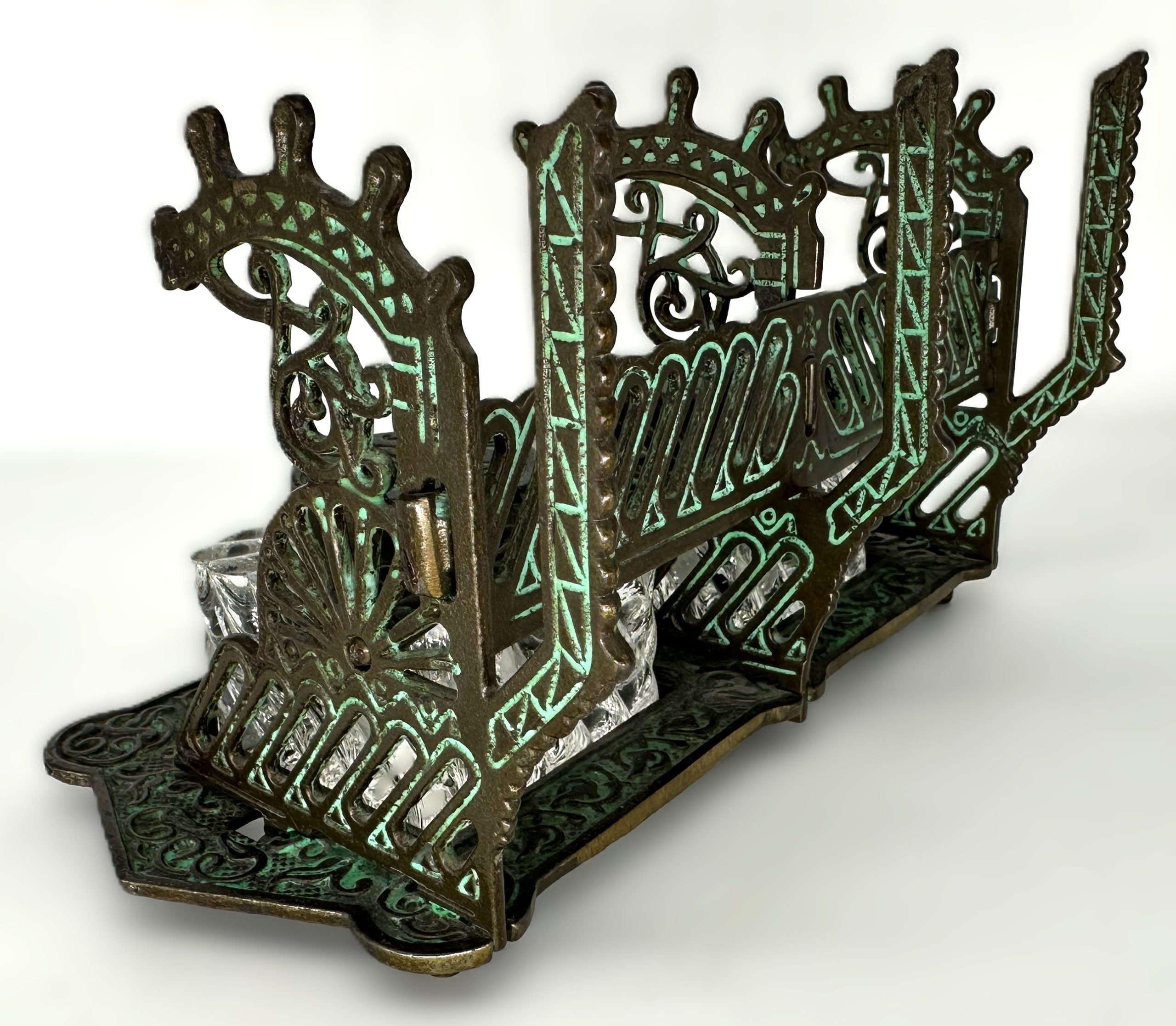
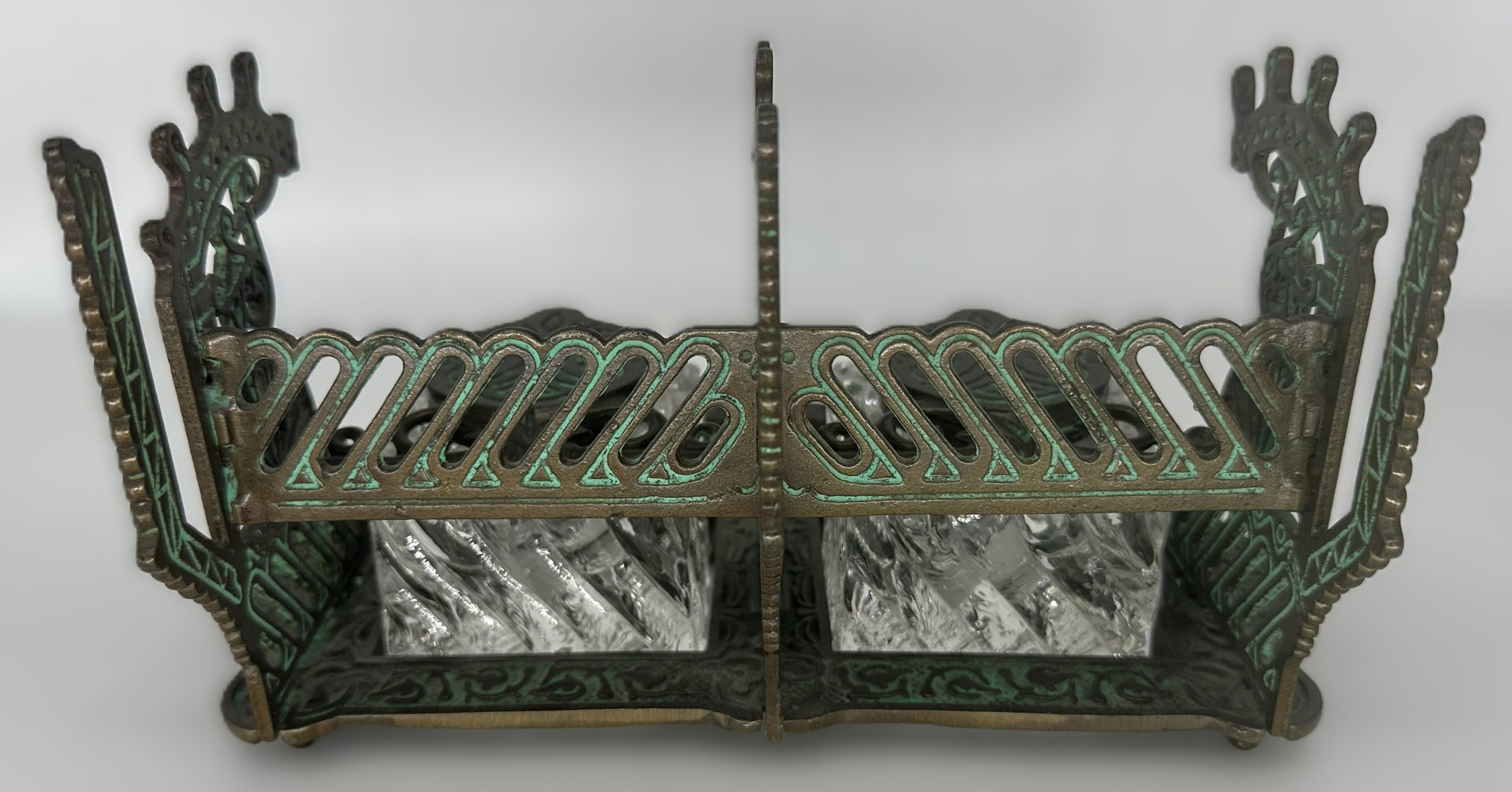
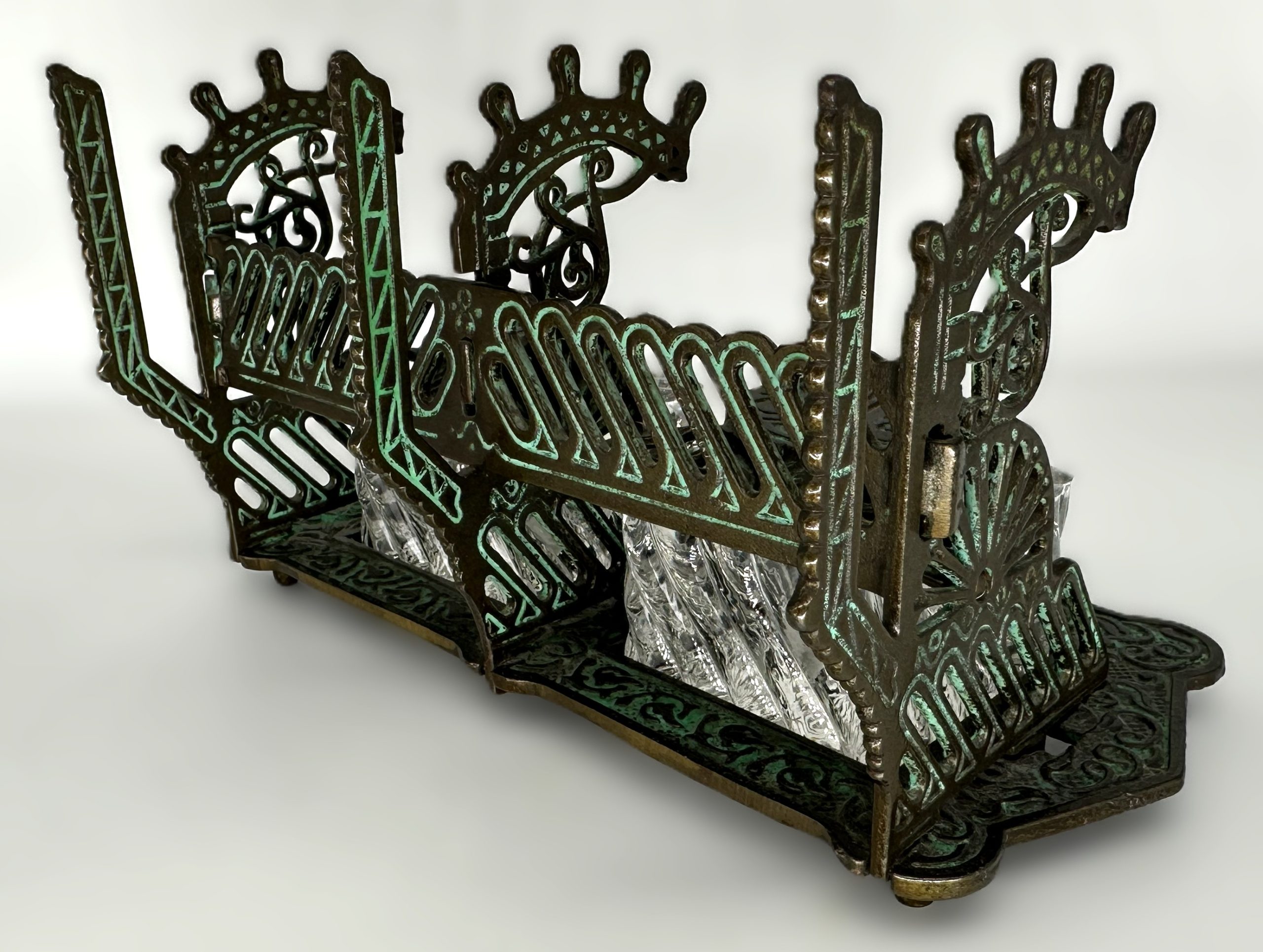
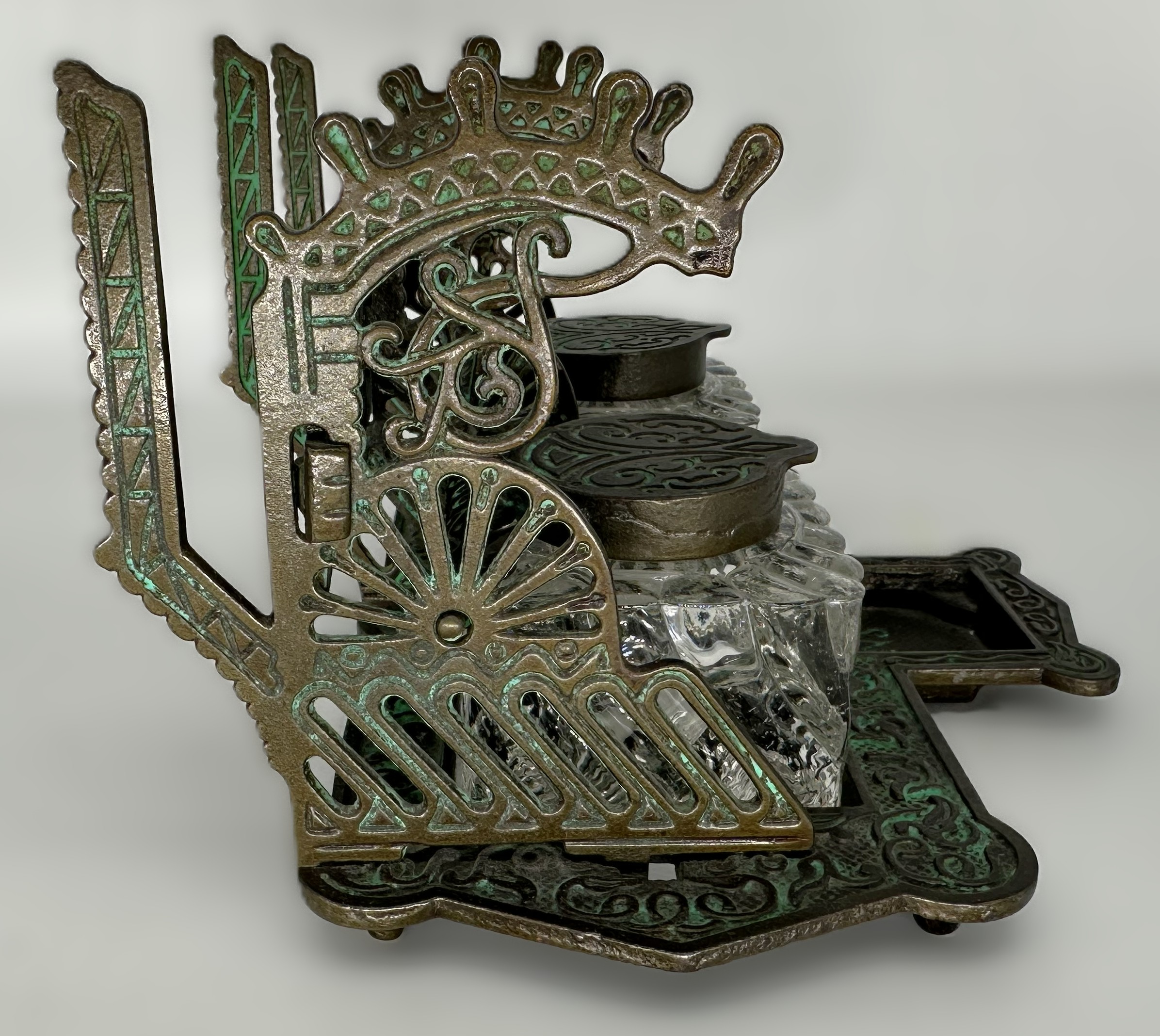
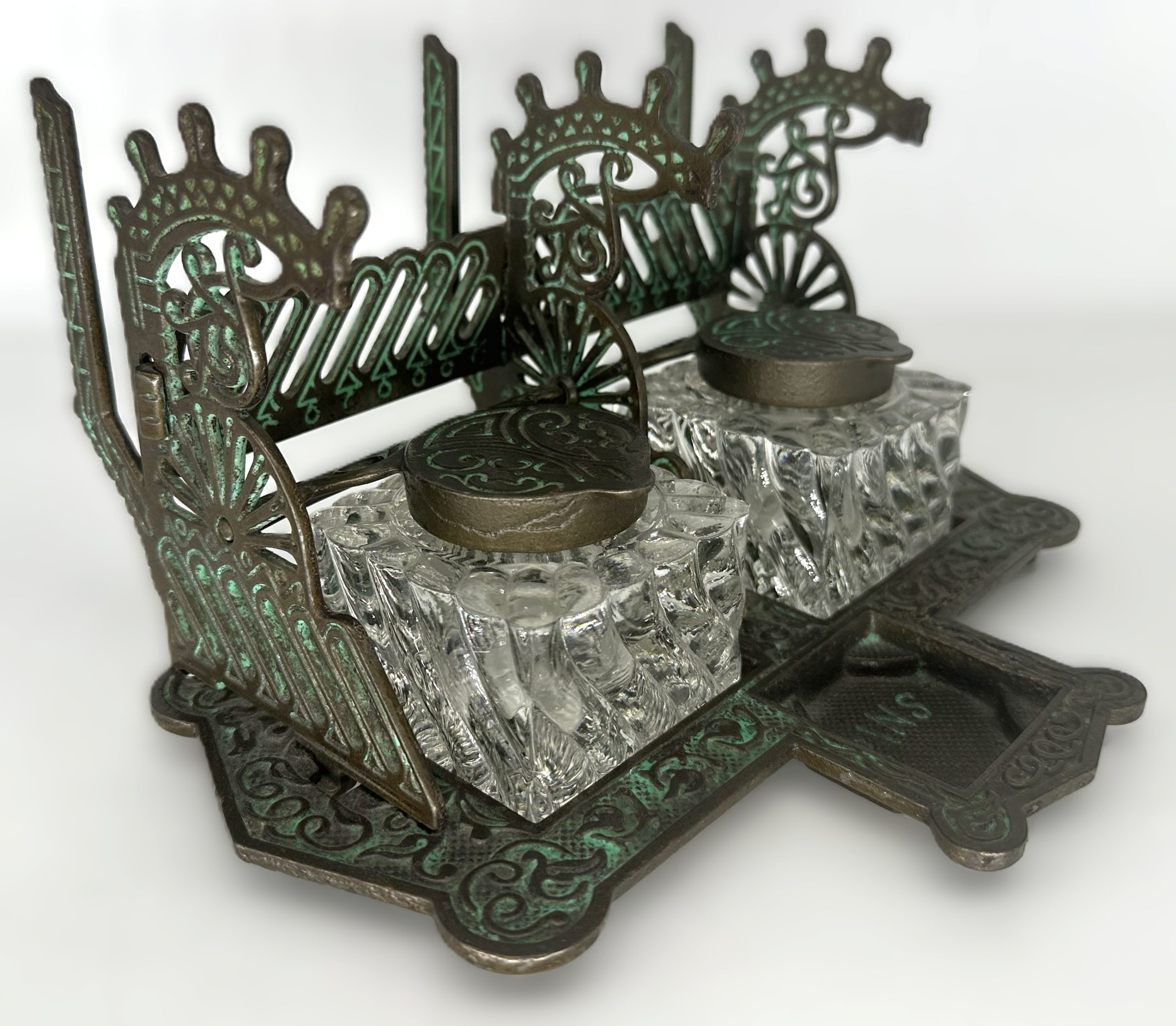
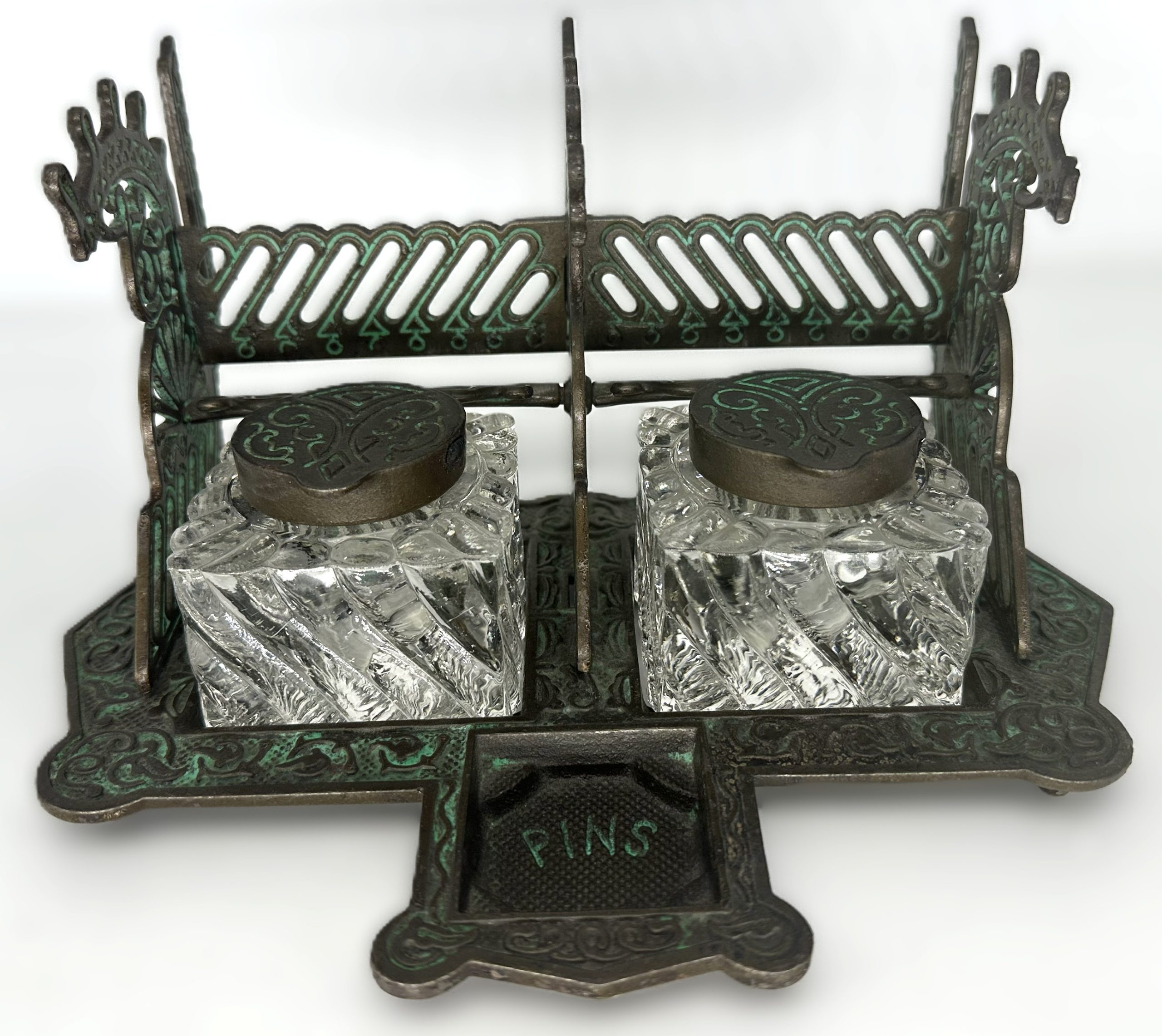
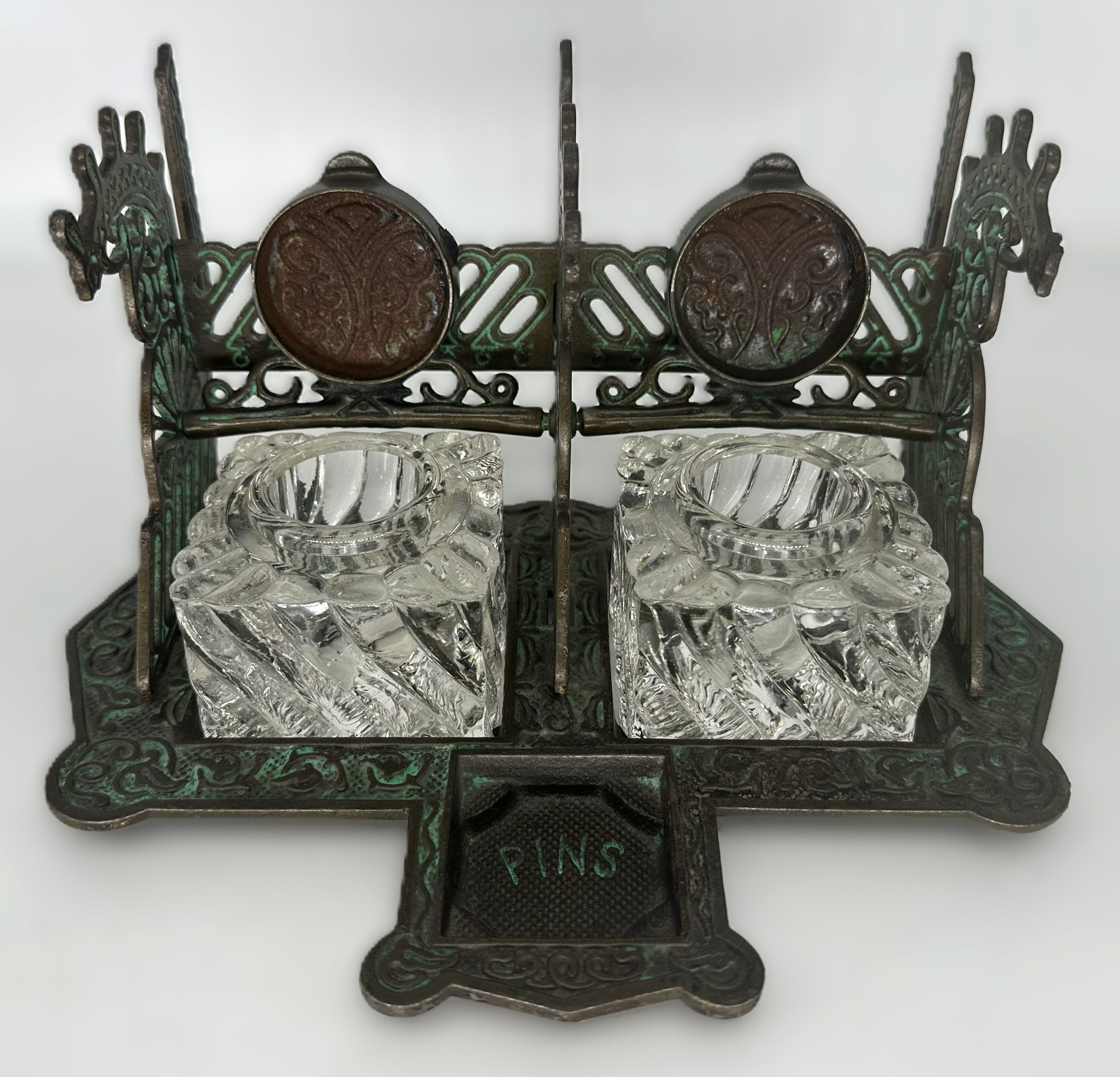
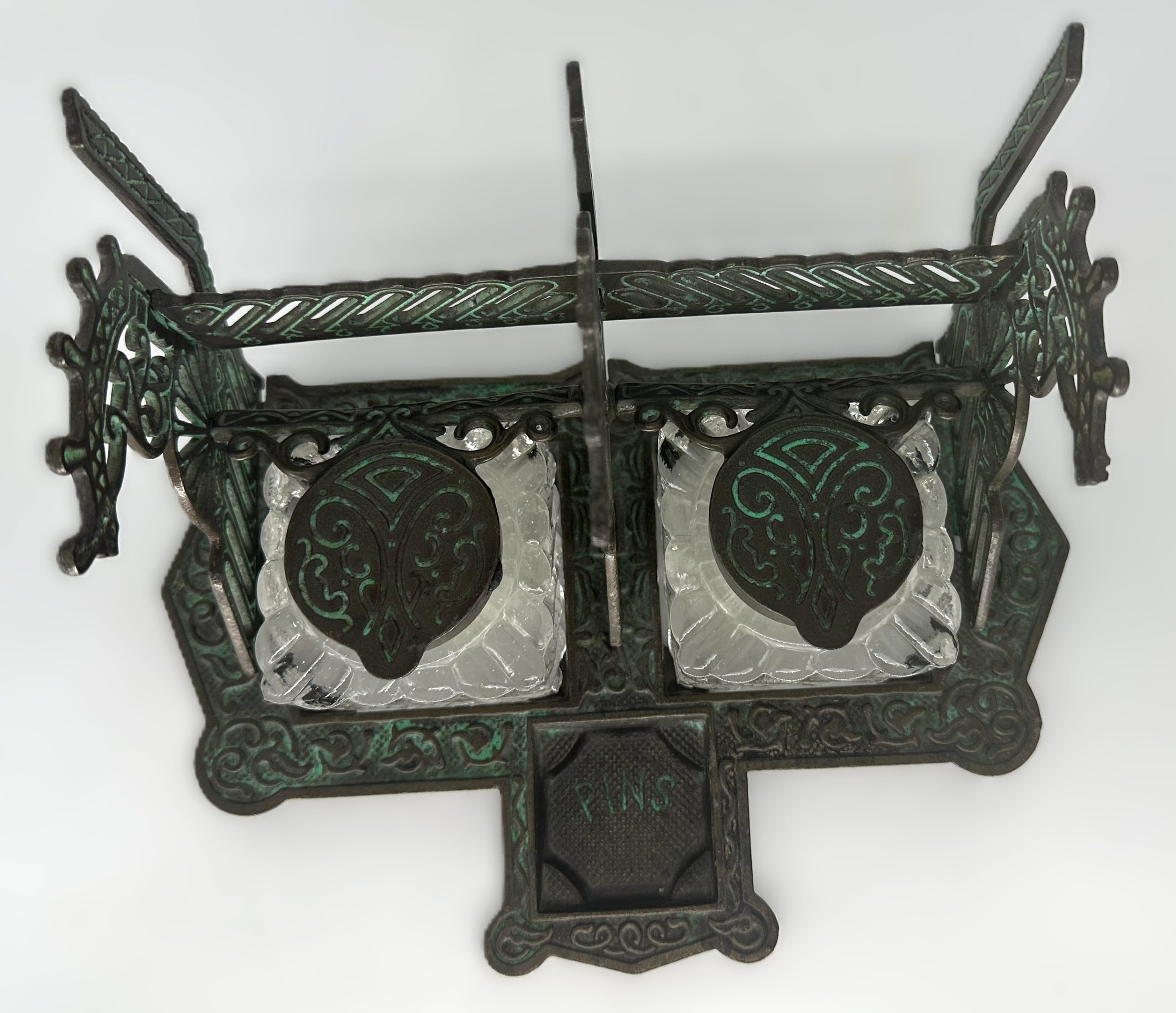
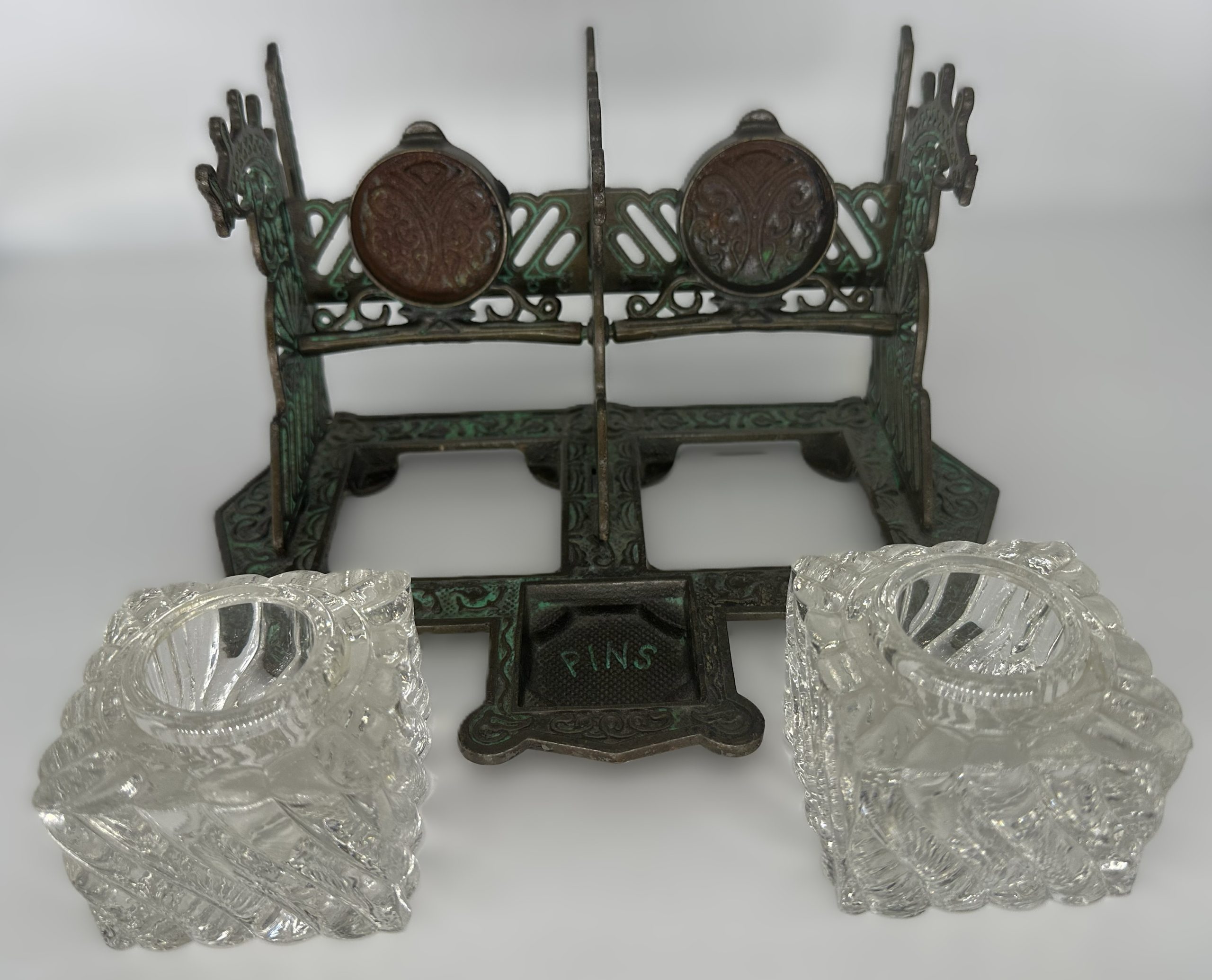
Cast Iron Double Inkstand with “Verde Bronze” Finish
| Categories | Cast Iron, Mechanical - Levered or Rotating Lids |
| Material | Cast iron, Glass |
| Markings | Unmarked |
| Manufacturer | Undetermined |
| Origin | United States |
| Date or Era | circa 1880 |
| Measuring | 9 ¼” x 7” x 4 ⅞” high |
Overview: This late 19th-century American office inkstand features a blend of Eastlake Victorian and early Art Nouveau geometric styling, characterized by decorative piercing, stylized scrollwork along the top rack, and swirling diagonal ribs on the pressed glass inkwells.
Finish: Verde Bronze / Antique Bronze Patina
- The Look: The greenish-tinted finish in the recessed detailing is an intentional, factory-applied decorative treatment known historically as “Verde Bronze,” “Verd Antique,” or “Bronzed Green.”
- Popularity: During the late Victorian era (ca. 1880–1900), manufacturers actively sought to imitate the aged, oxidized verdigris patina of ancient Greek and Roman bronzes.
- Method: Because cast iron oxidized quickly, foundry makers cold-painted, japanned, or electro-flatted cast iron with a dark copper or bronzed basecoat, then highlighted deep recessed areas with a green pigment wash or wax highlight to simulate centuries-old bronze.
The “PINS” Tray Purpose The small forward basin marked “PINS” served a vital late-19th-century office function:
- Before modern wire paperclips (such as the Gem clip, which did not become standard until the 1890s–1900s) and modern staplers, office clerks and correspondents fastened documents using straight steel pins or T-pins.
- This pin tray was built directly into the inkstand to keep loose straight pins readily accessible for bundling letters, receipts, and pages while writing.
Manufacturer & Attribution
- Attribution: While unbranded (common for cast iron desk ware of this era), the construction style, specific casting methods, and design elements point strongly to major late 19th-century American hardware and art-metal founders.
- Key Indicators:
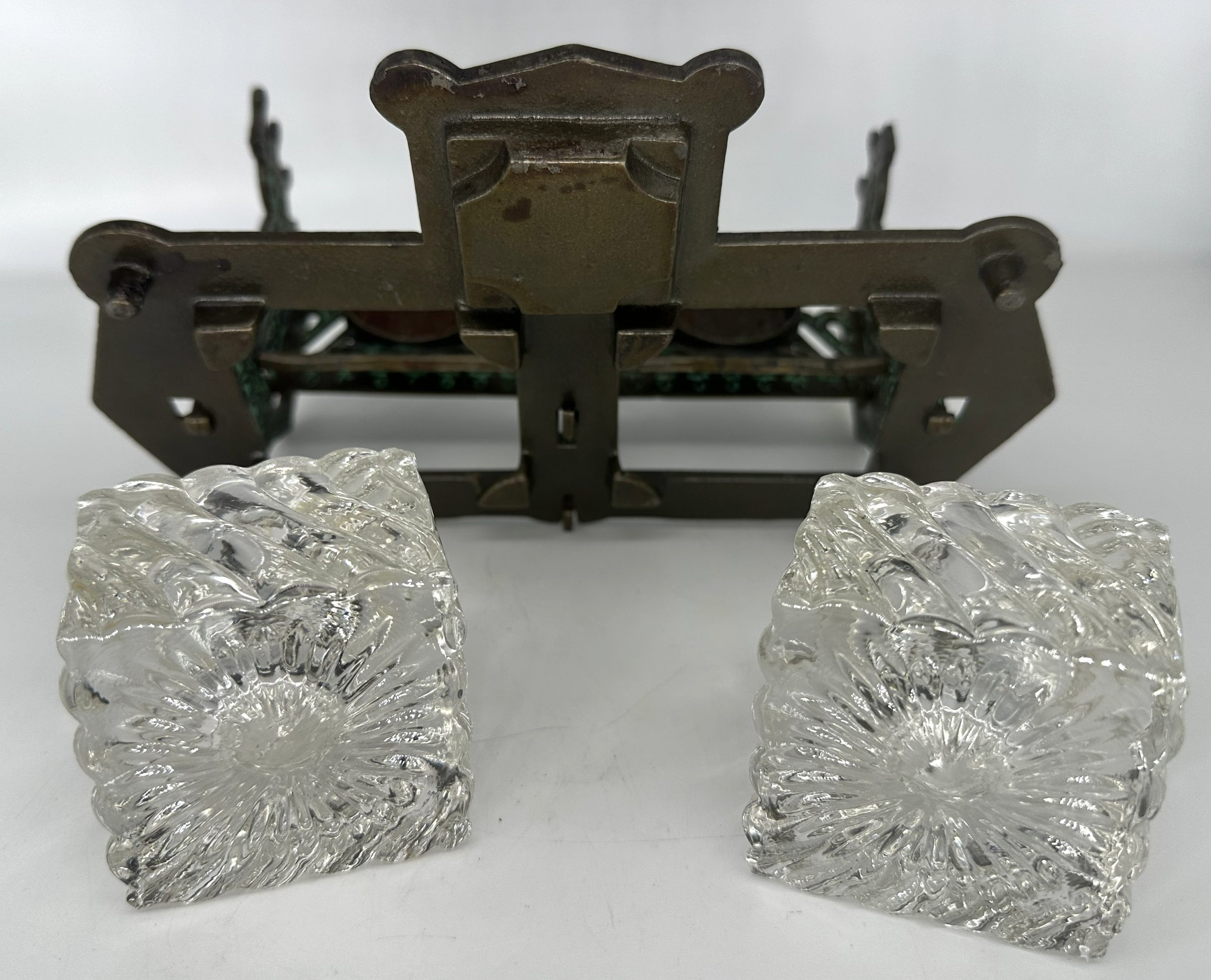
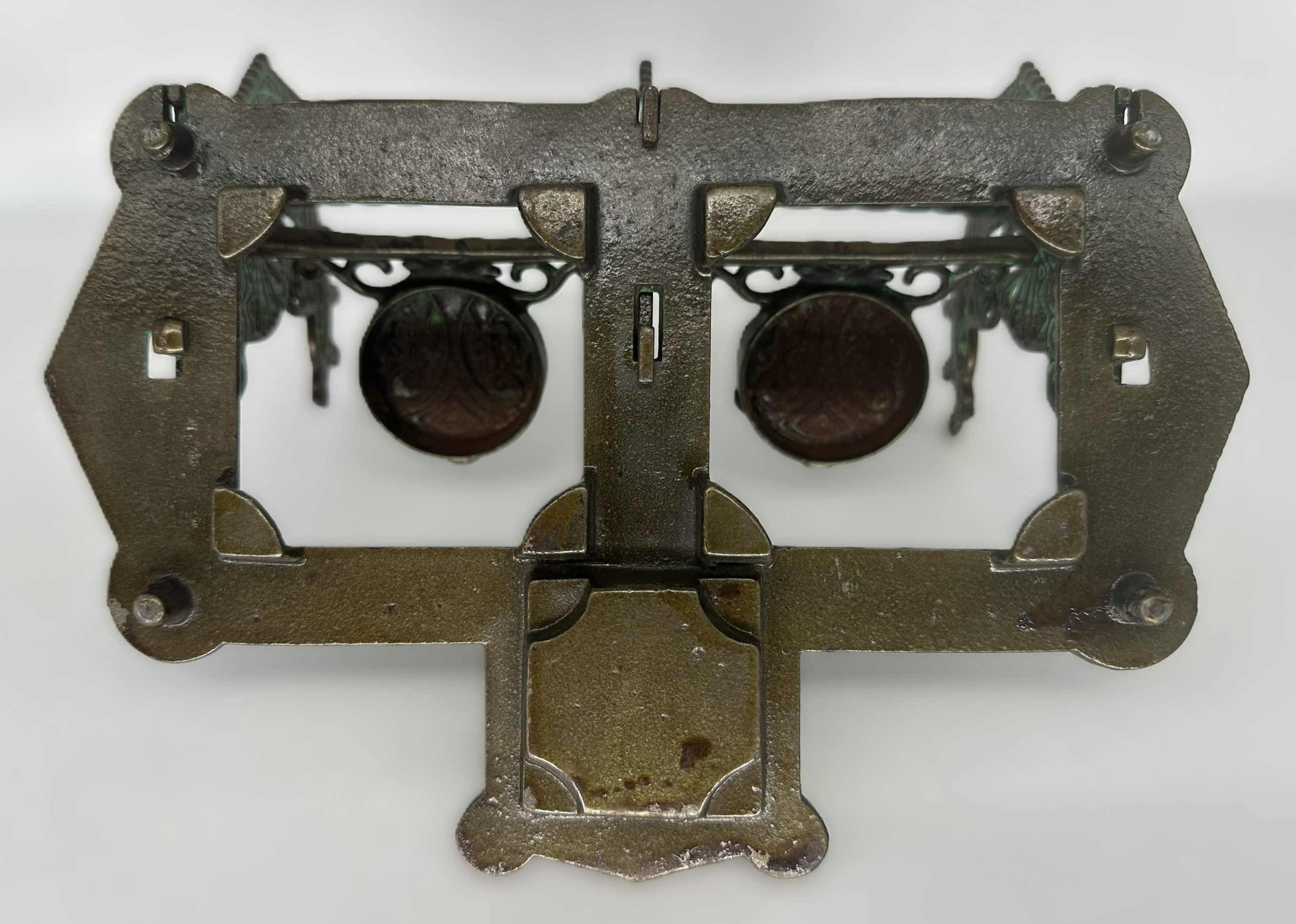
- The frame relies on slotted tab-and-wedge assembly on the underside.
- H.L. Judd, in particular, was famous for producing cast iron inkstands finished in Japanese bronze, copper wash, and green-highlighted patinas, often leaving piece numbers off their standard commercial desk accessories.
Estimated Date & Period
- Era: Circa 1880 – 1900.
- Rationale: The combination of an explicit straight-pin receptacle, flip-lid mechanical inkwell linkage, geometric scrollwork, and pressed glass swirl inkwells anchors this design to the late Gilded Age commercial market prior to the widespread adoption of the modern wire paperclip around the turn of the century.
Estimated value: $150
Content disclaimer. The information posted is the owner’s best knowledge and may not have been vetted by the SOIC. We welcome comments, corrections, and additions, working to make our website information comprehensive and accurate.
Join the Society of Inkwell Collectors (SOIC) – it’s free!
Founded in 1981 as a non-profit organization,
we are documenting inkwells (and accessories).
We’re here to help and inform!