

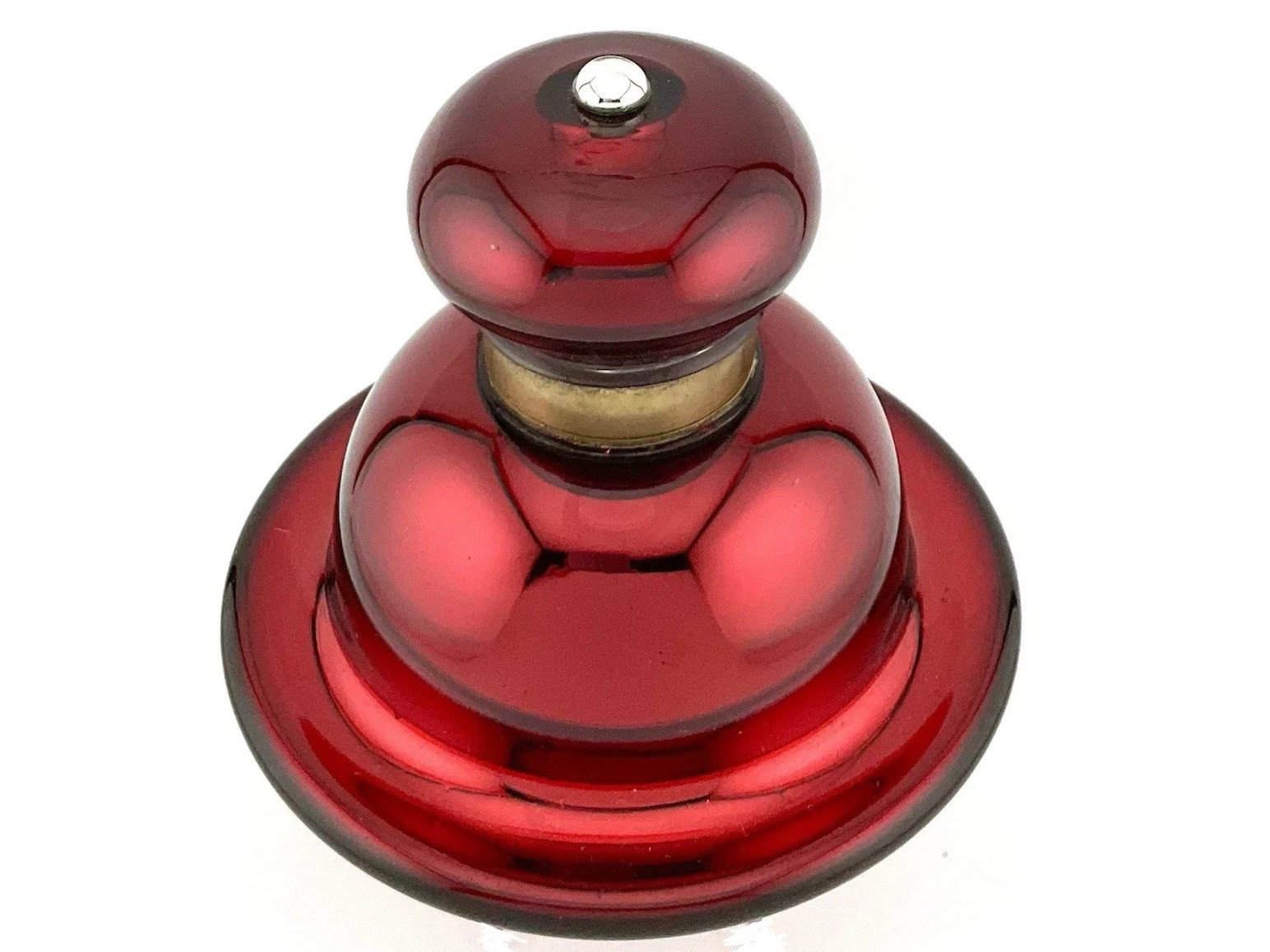
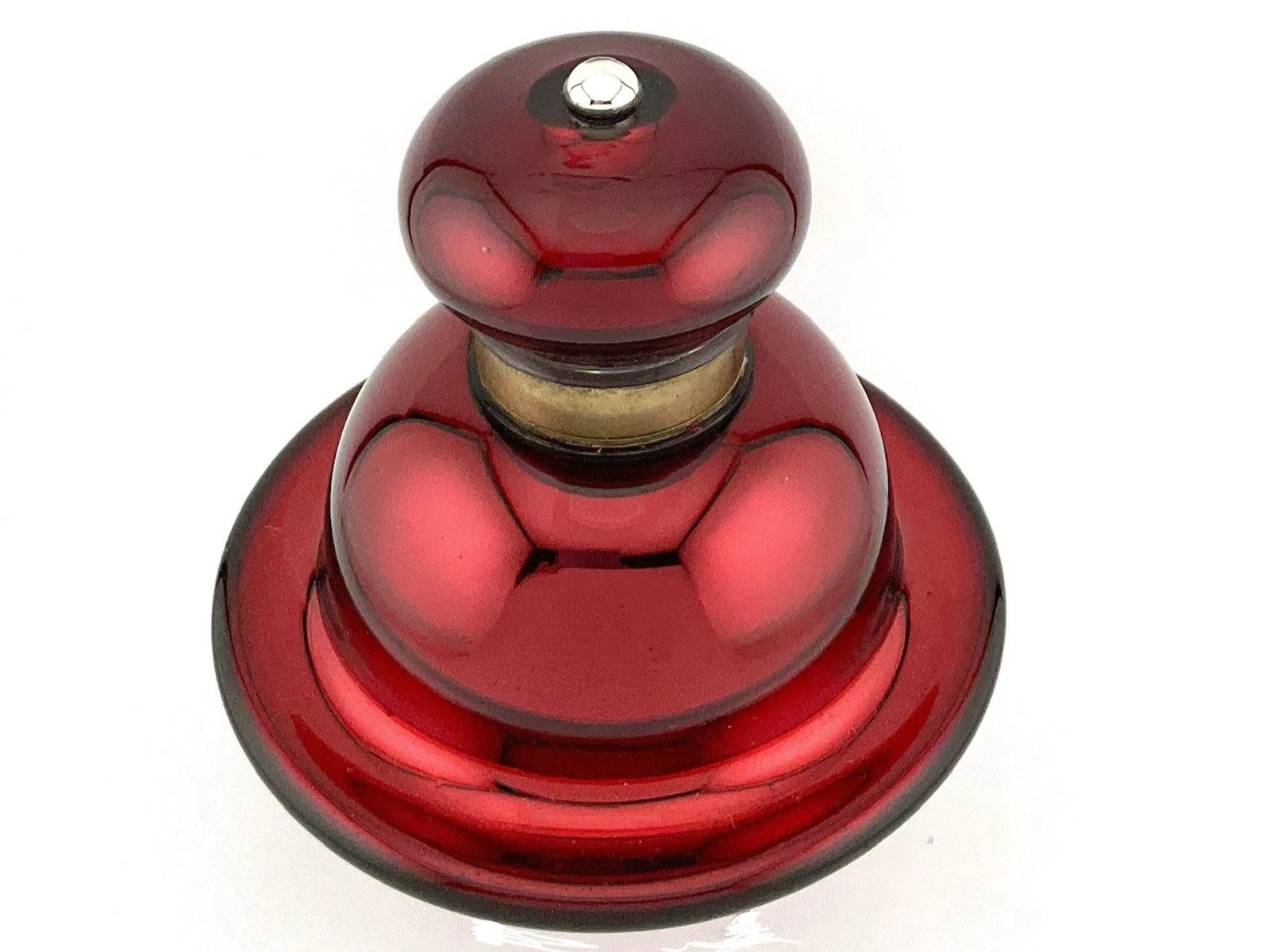
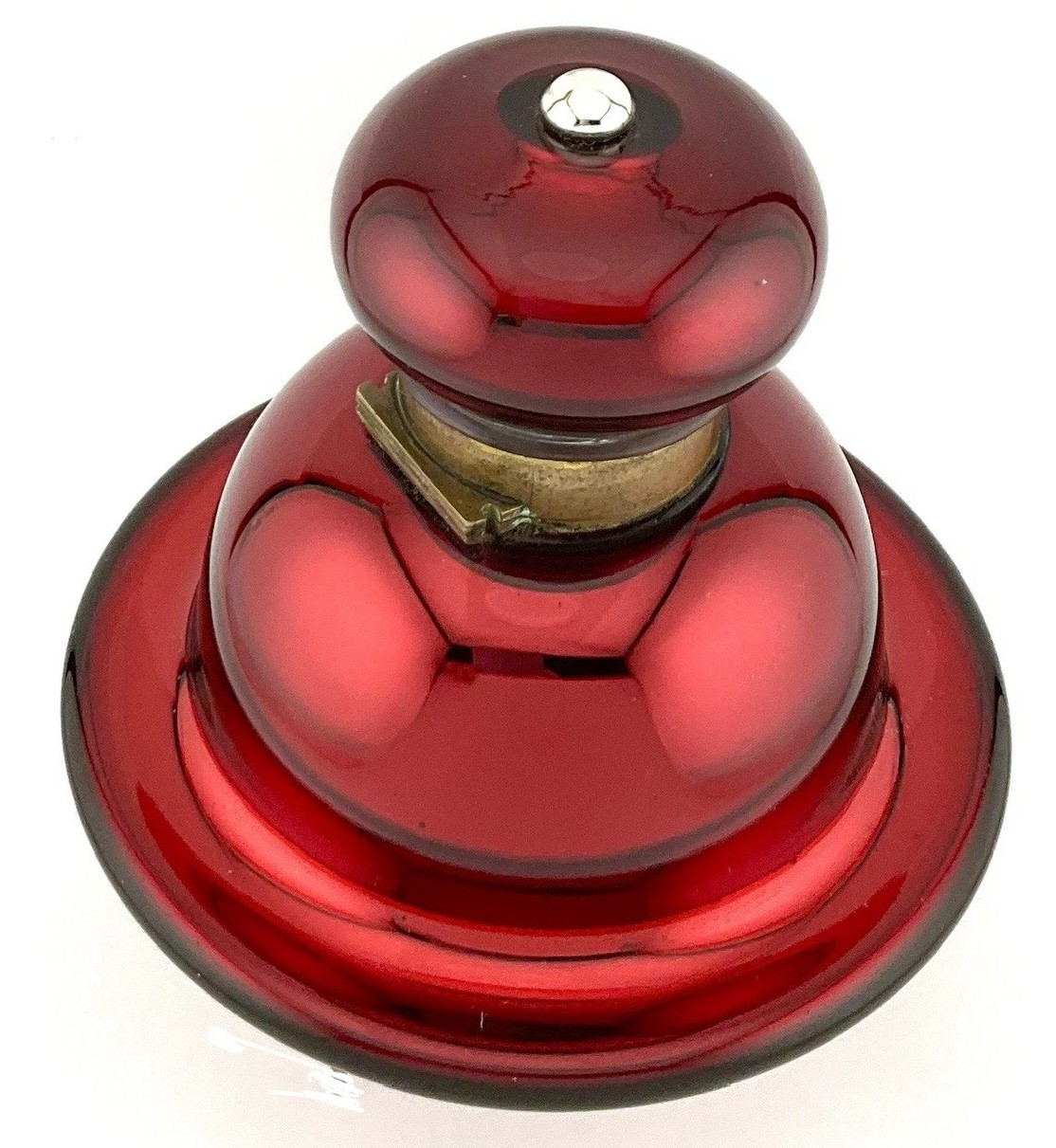
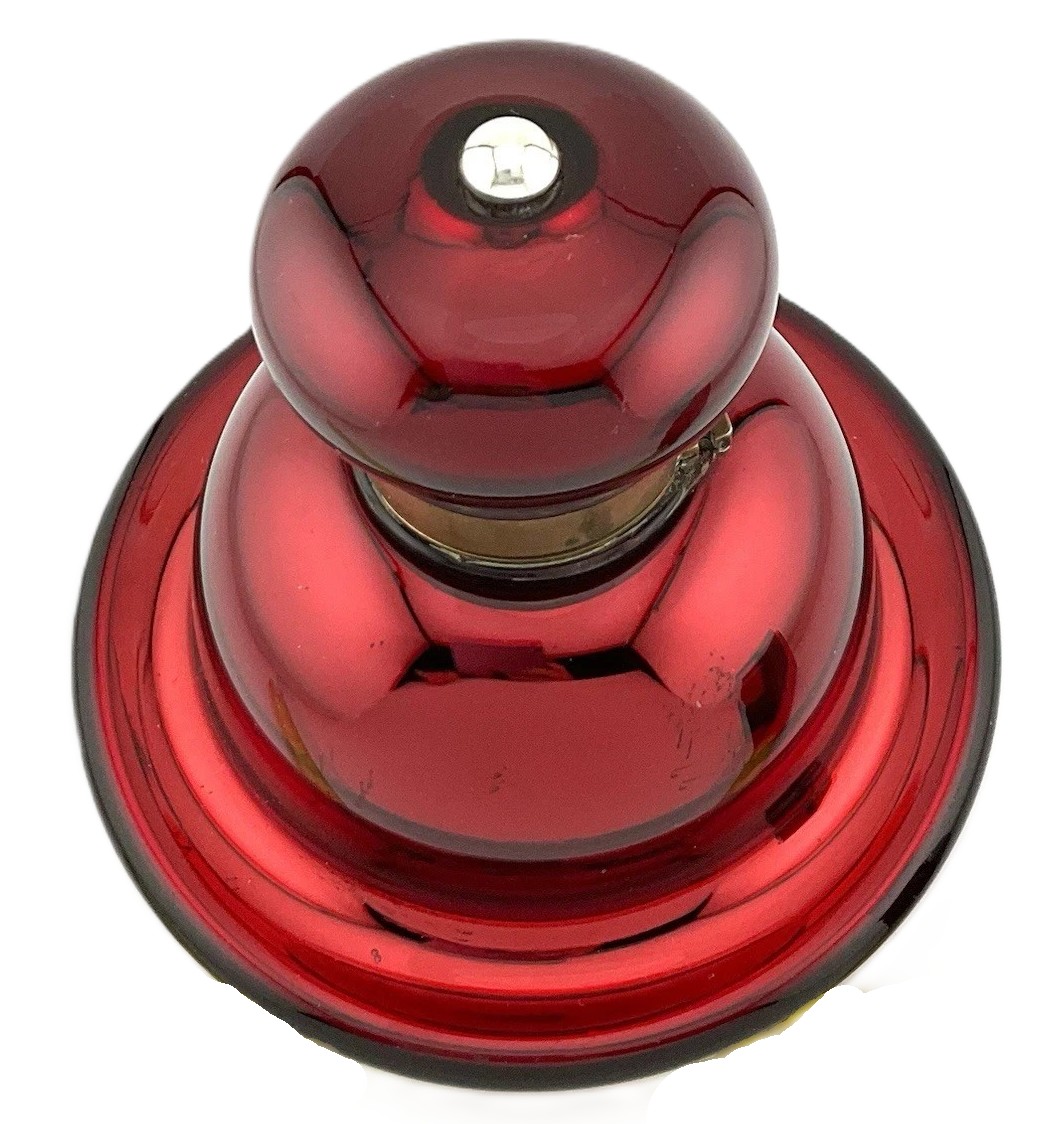
Ruby Glass & Silvered “Mercury” Inkwell
| Categories | Glass - Non-figural |
| Material | Glass |
| Markings | See Narrative |
| Manufacturer | Edward Varnish & Co. |
| Origin | England |
| Date or Era | circa 1850 |
| Measuring | 6" base diameter by 5" overall height |
| Patent | British Patent No. 12,891 |
Description
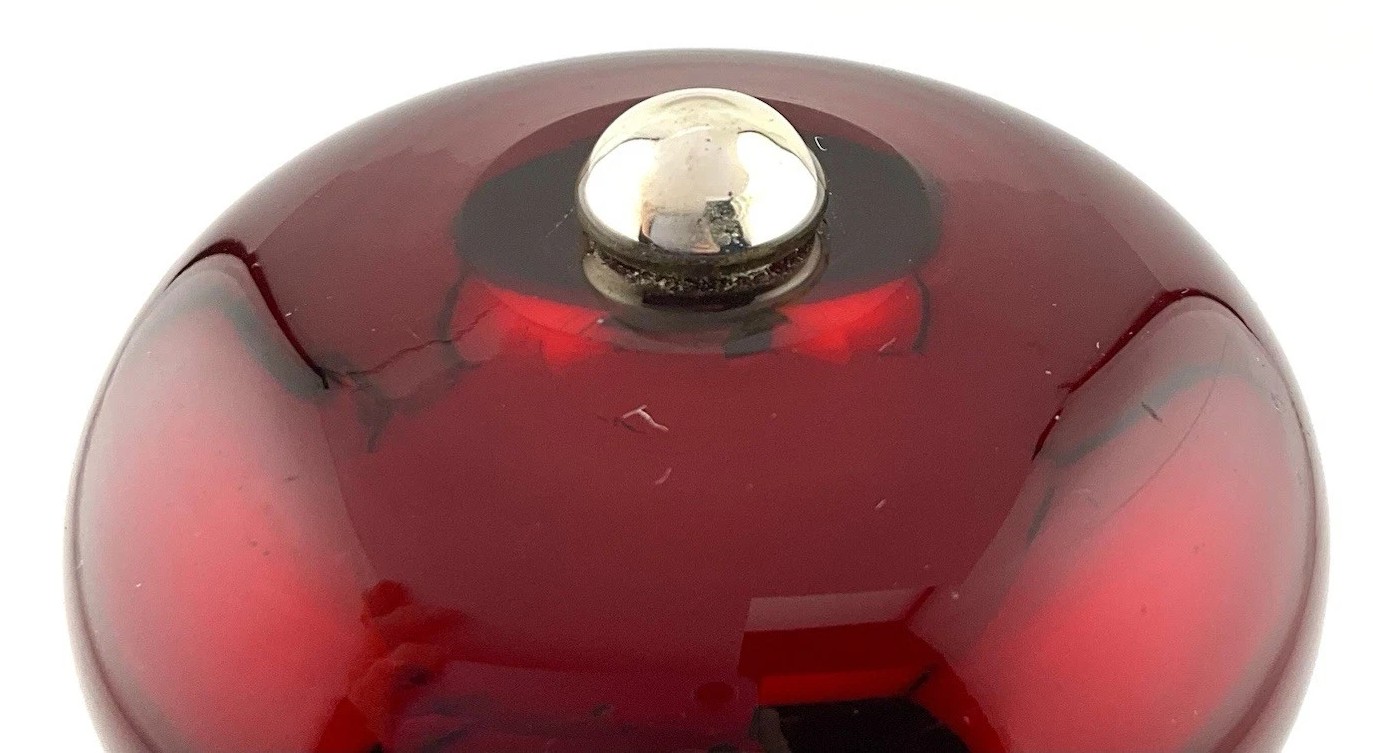
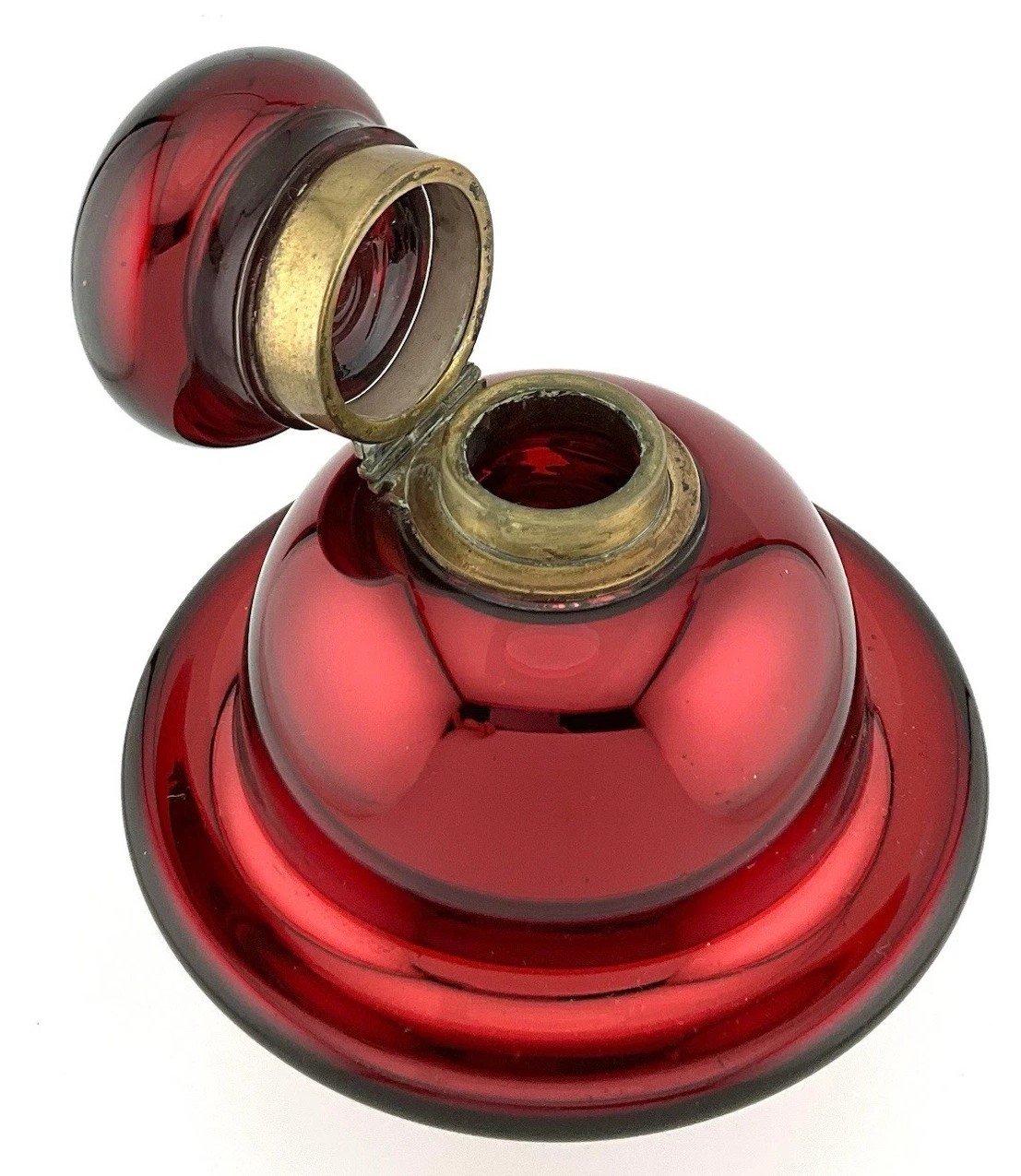
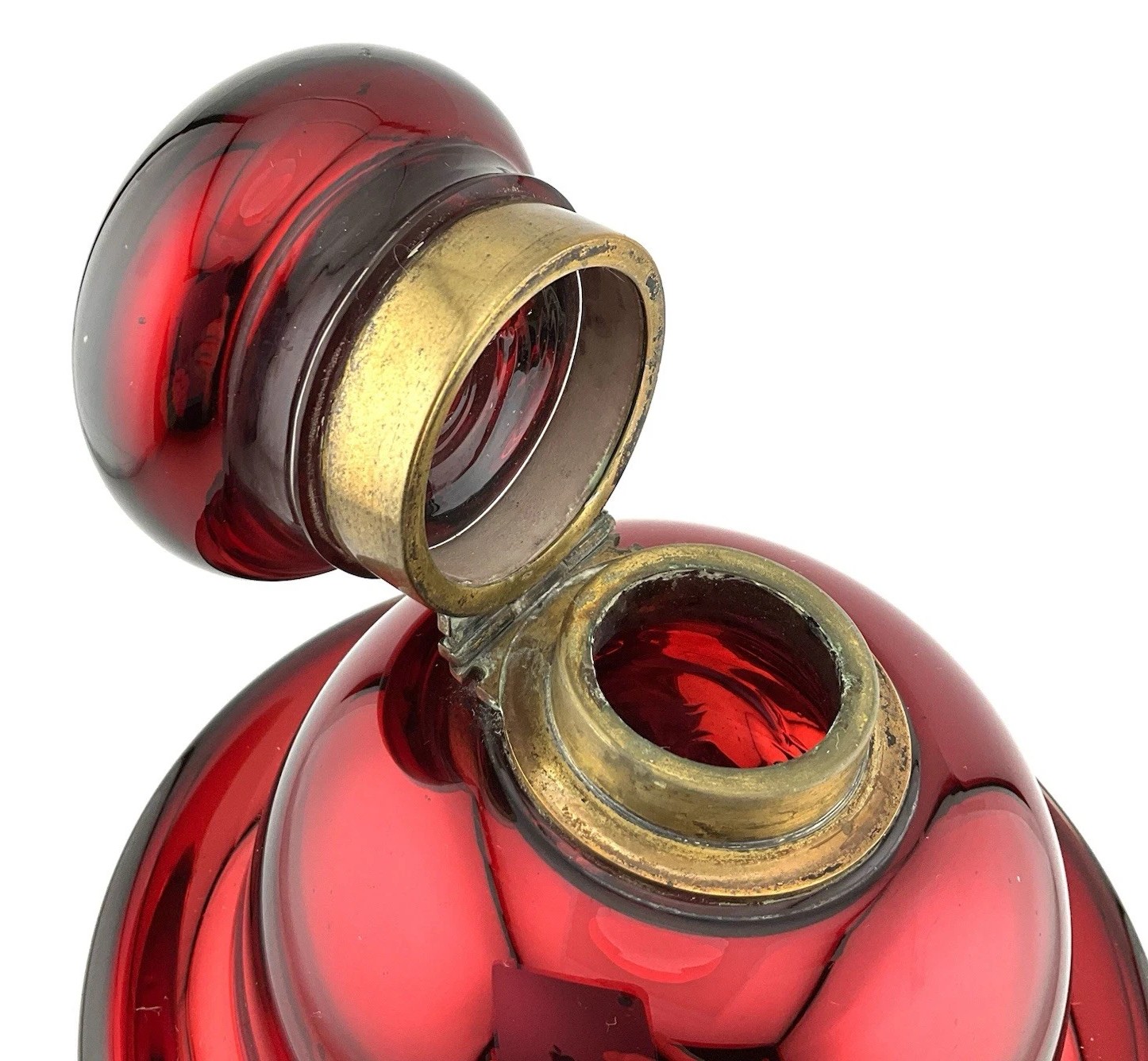
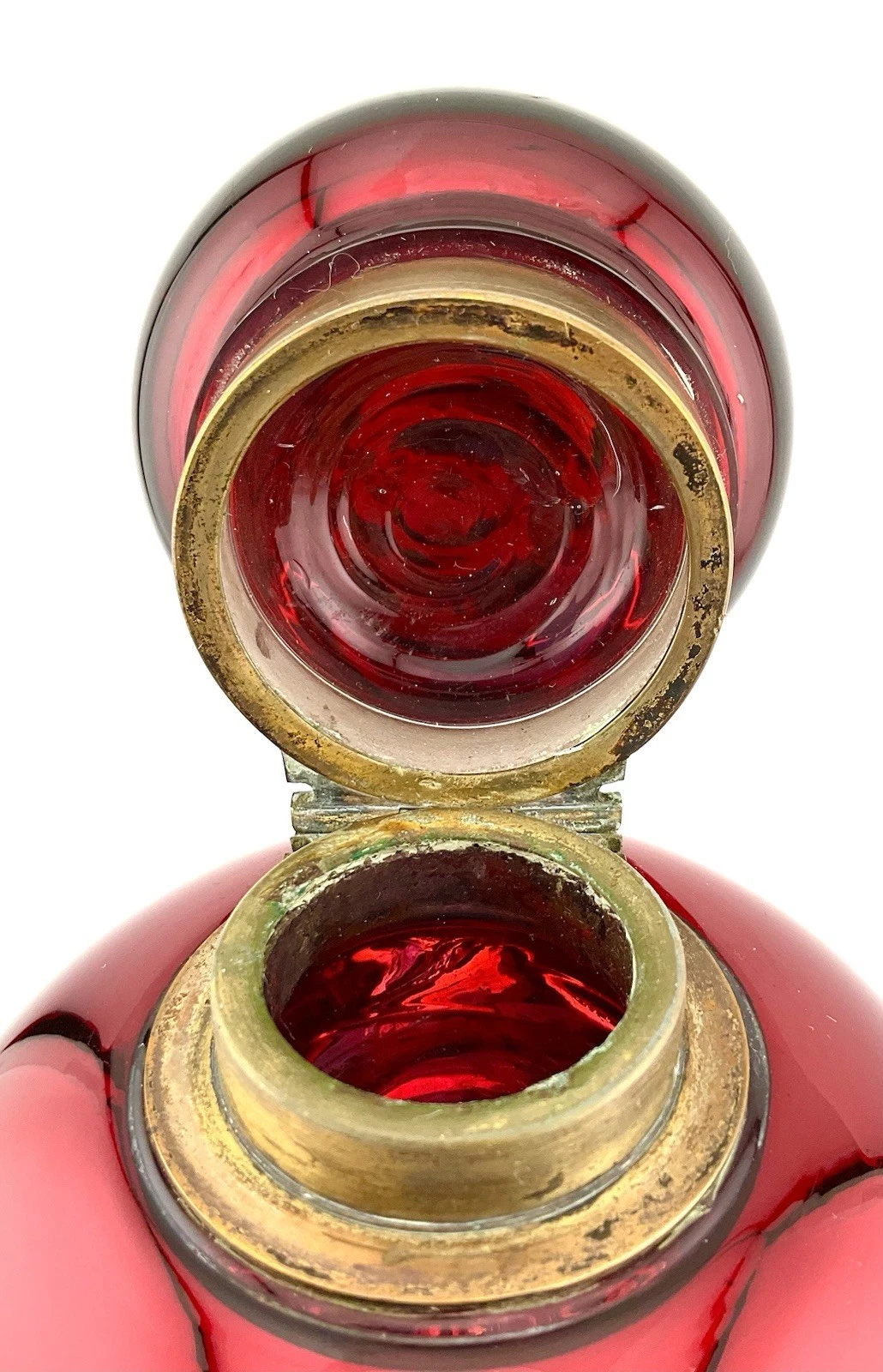
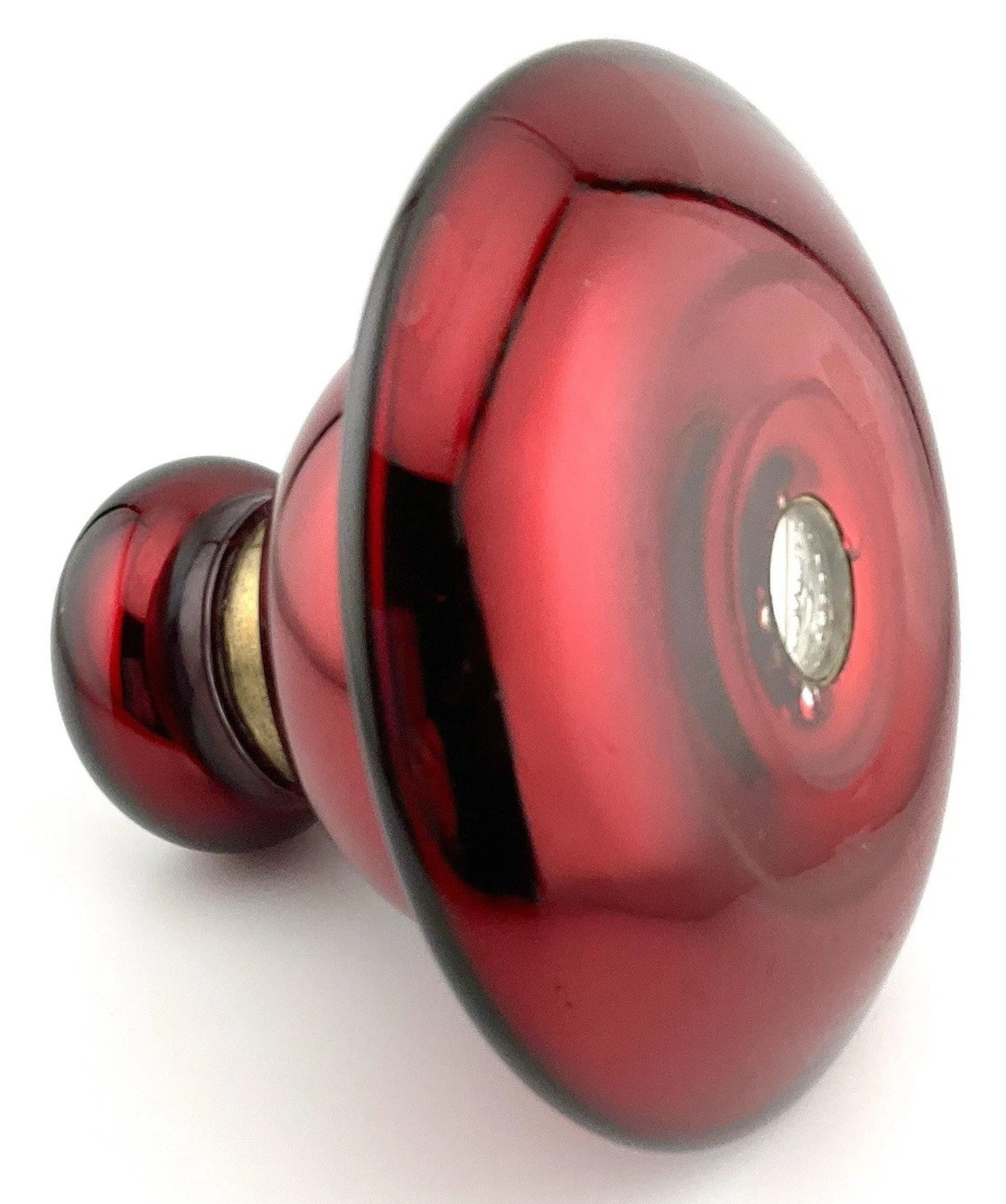
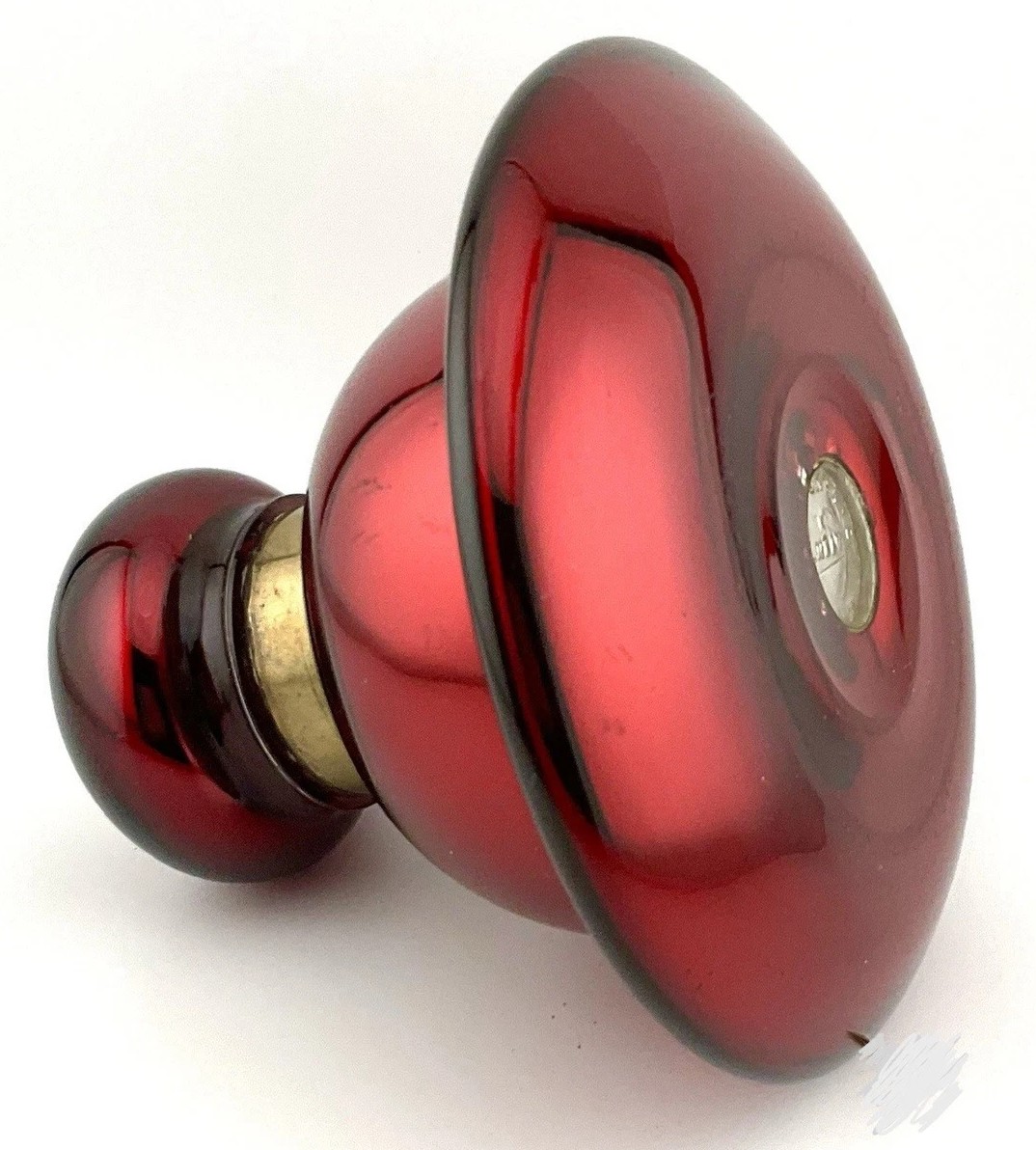
- Form & Structure: The inkwell features a heavy double-walled glass body with a broad, flat, stepped saucer foot, a rounded bulbous ink reservoir, and a matching domed glass lid. The lid is mounted on a hinged brass collar.
- Dimensions: 6″ base diameter by 5″ overall height.
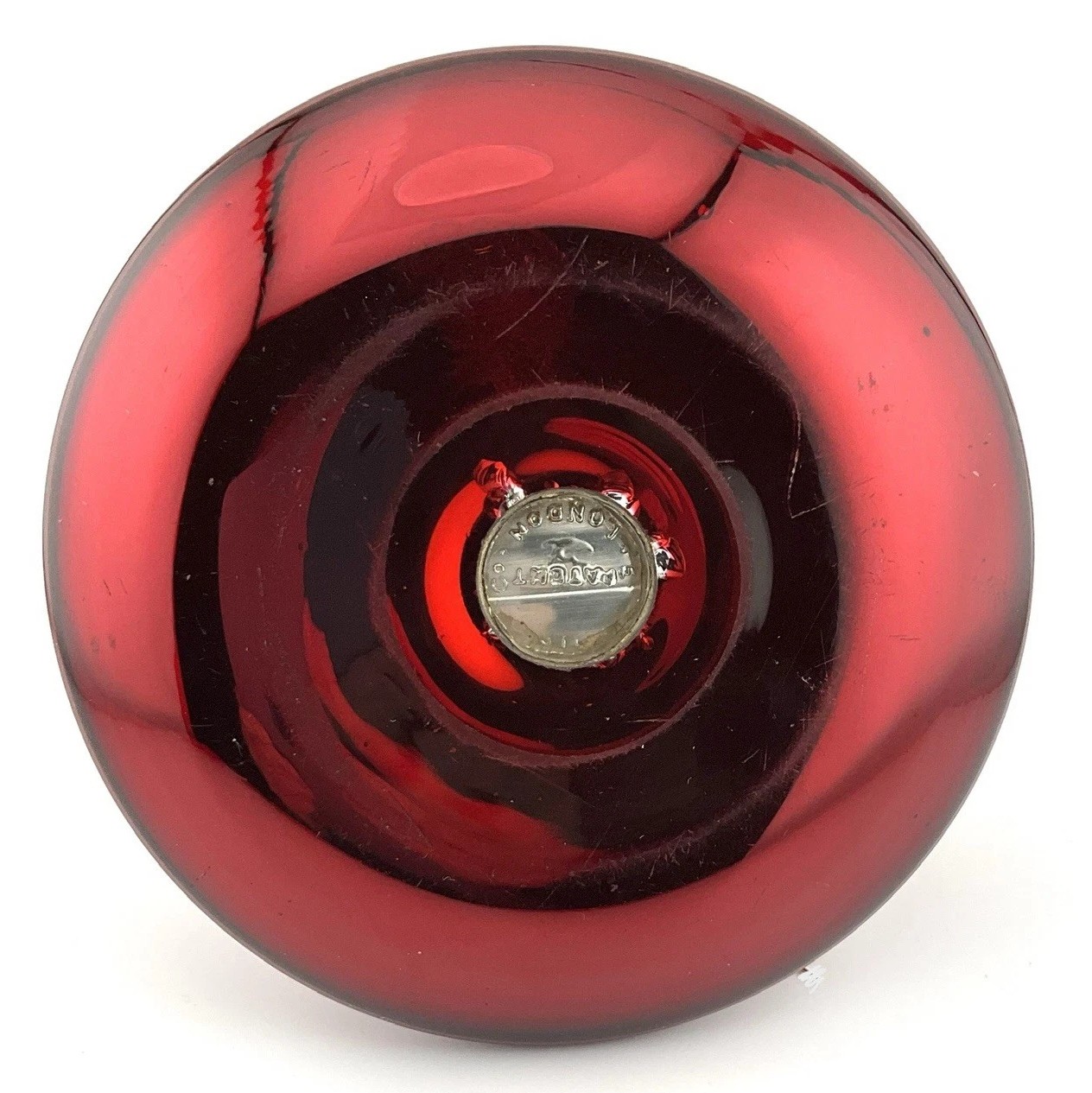
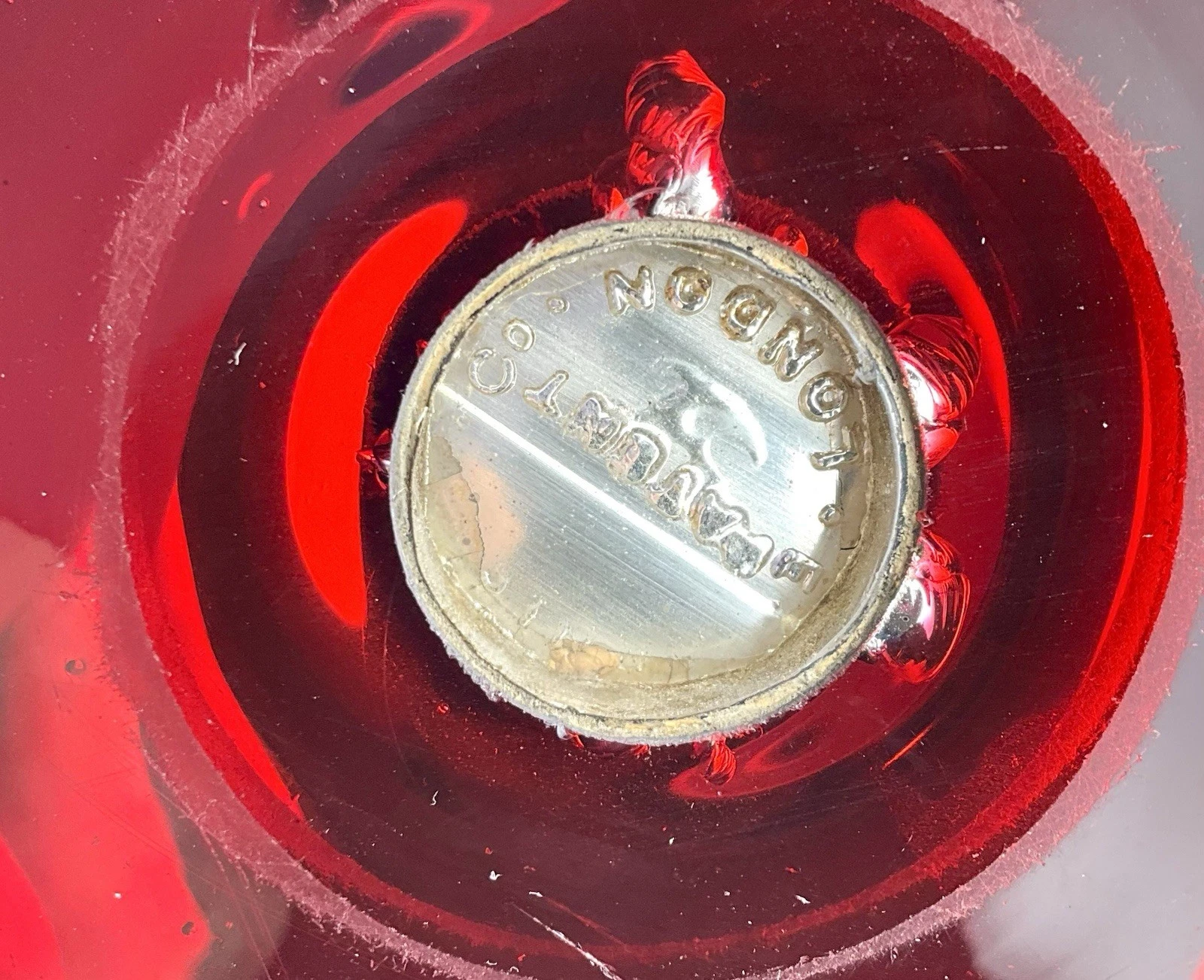
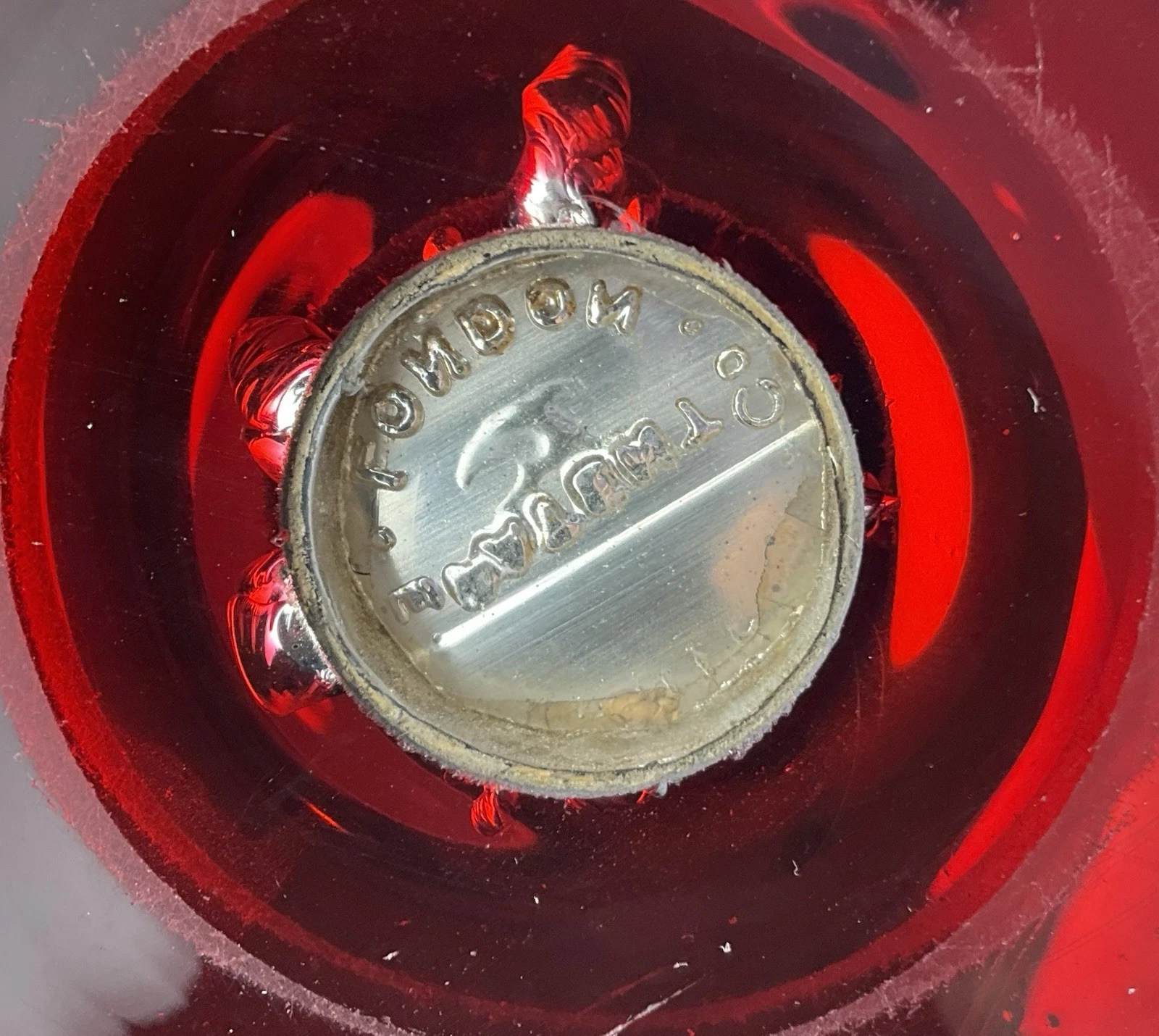
- Base Seal & Marking: In the pontil hole on the underside of the base, there is a circular metal plug recessed into the glass. The mark clearly reads “E. VARNISH & CO. PATENT LONDON” around a central crown emblem.
Makers & Patent Information
- Makers: Made by Edward Varnish & Co. in partnership with Hale Thomson. Varnish & Co. were high-end London glass dealers and retailers who held the patent. The actual glassblowing and physical manufacturing for Varnish was executed by James Powell & Sons at the Whitefriars Glassworks in London.
- Patent: British Patent No. 12,891, granted to Hale Thomson and Edward Varnish in 1849 for their method of silvering double-walled glass vessels.
Date of Production
- Estimated Age: c. 1849–1855 (Early Victorian).
- Historical Context: Edward Varnish & Co. operated for a very limited window (roughly 1849 to the mid-1850s). They famously showcased their patented silvered glass creations at the Great Exhibition of 1851 at the Crystal Palace in London.
How the Bold Red Color Was Achieved The vibrant, deep ruby-red color is the result of a two-step process:
- Ruby Casing/Outer Glass: The vessel itself was blown using cased ruby glass—a layer of rich red glass (colored using copper or gold chloride during the melting process) layered over or fused with clear glass.
- Double-Wall Silvering: The piece was blown with double walls, leaving a hollow vacuum cavity between the inner container and the outer wall. A solution of silver nitrate (mixed with grape juice/glucose as a reducing agent) was poured into this cavity through the access hole at the bottom. Once the liquid coated the inside of the walls and dried, it created a brilliant, mirror-like silver backing.
When viewed from the outside, the reflective silver layer behind the ruby glass amplifies the light passing through, creating that luminous, mirror-polished crimson finish. The plug was then sealed into the bottom to protect the silver coating from oxidization and moisture damage.
Sold for $160 in August 2026
Content disclaimer. The information posted is the owner’s best knowledge and may not have been vetted by the SOIC. We welcome comments, corrections, and additions, working to make our website information comprehensive and accurate.
Join the Society of Inkwell Collectors (SOIC) – it’s free!
Founded in 1981 as a non-profit organization,
we are documenting inkwells (and accessories).
We’re here to help and inform!