

Inkipedia
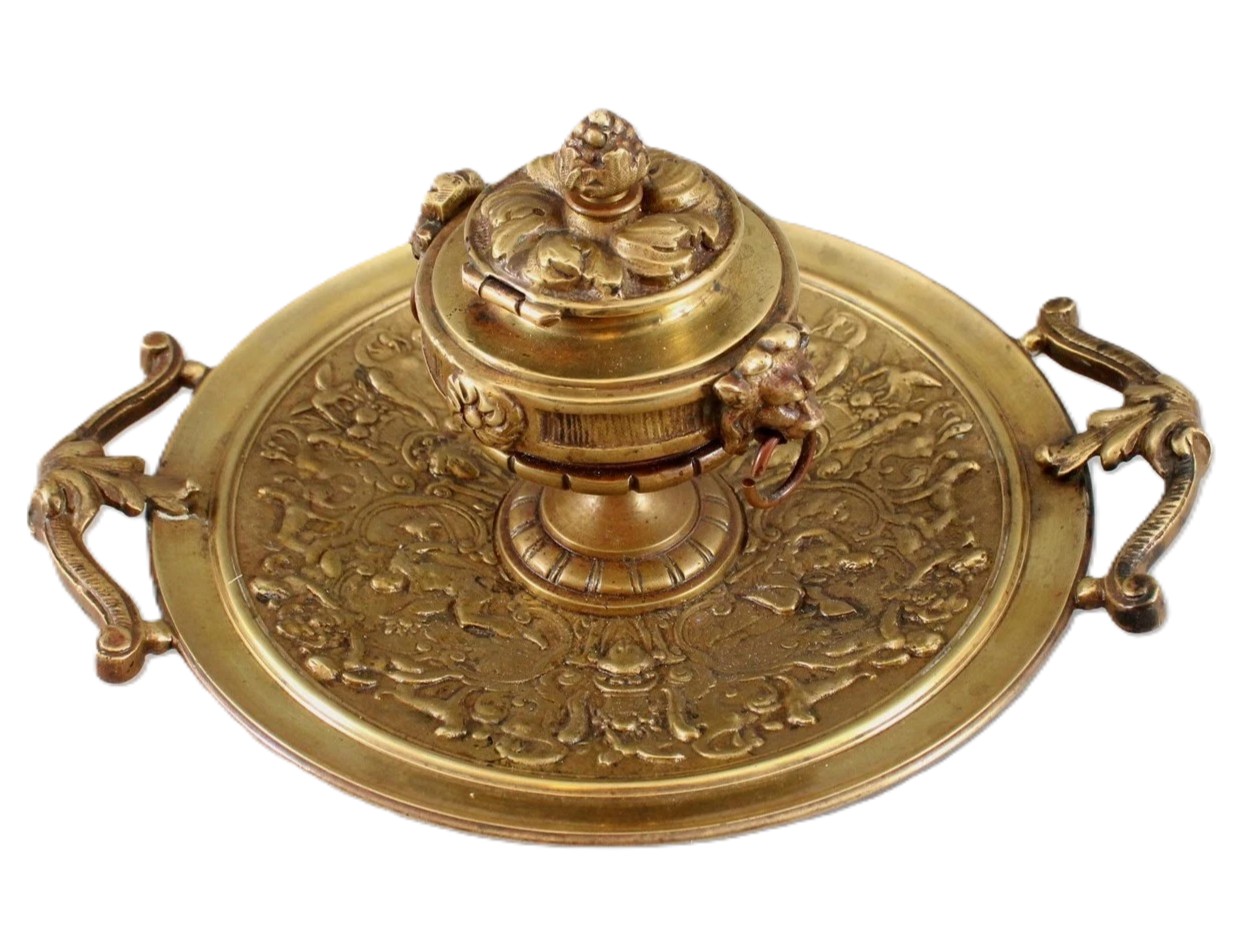
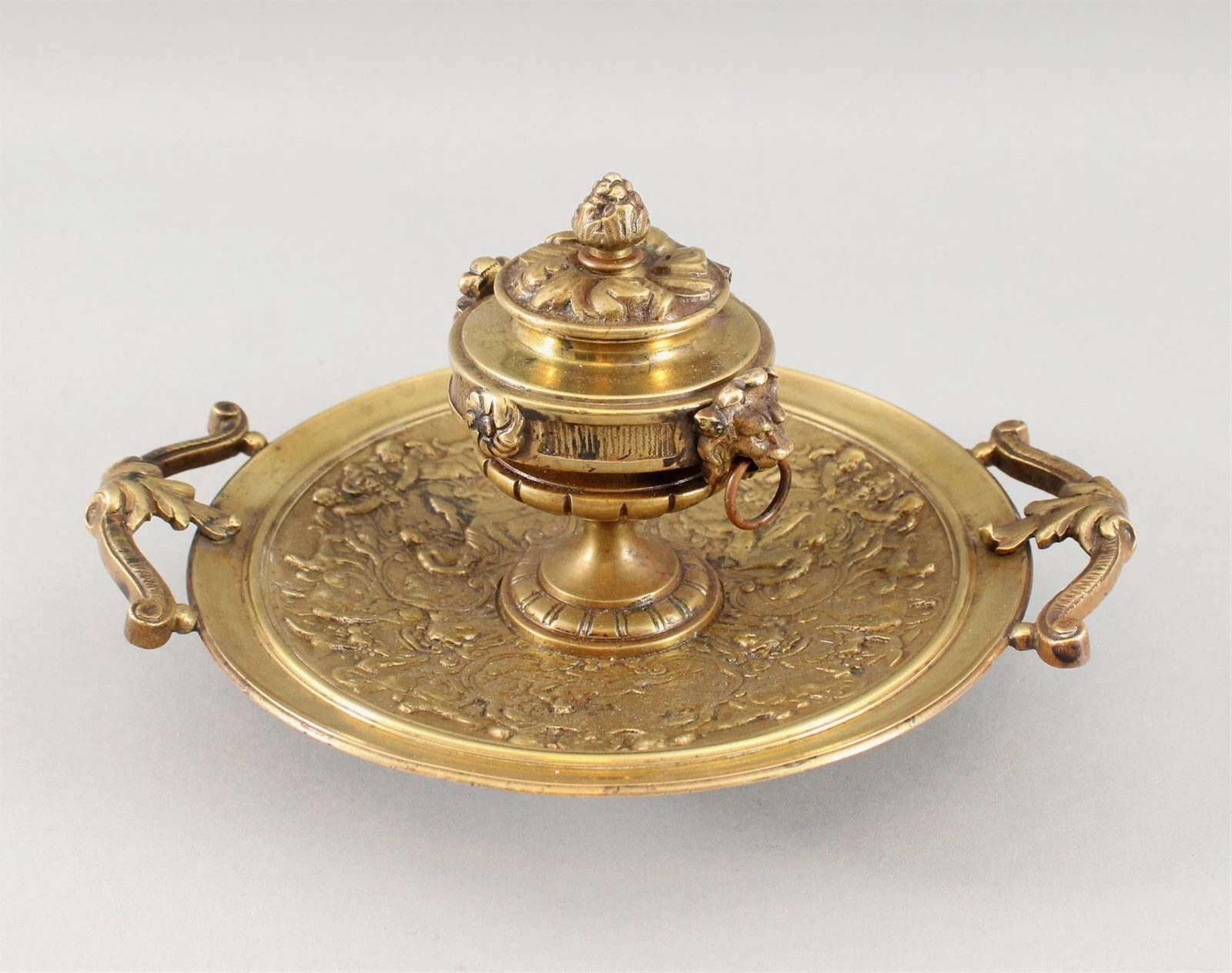
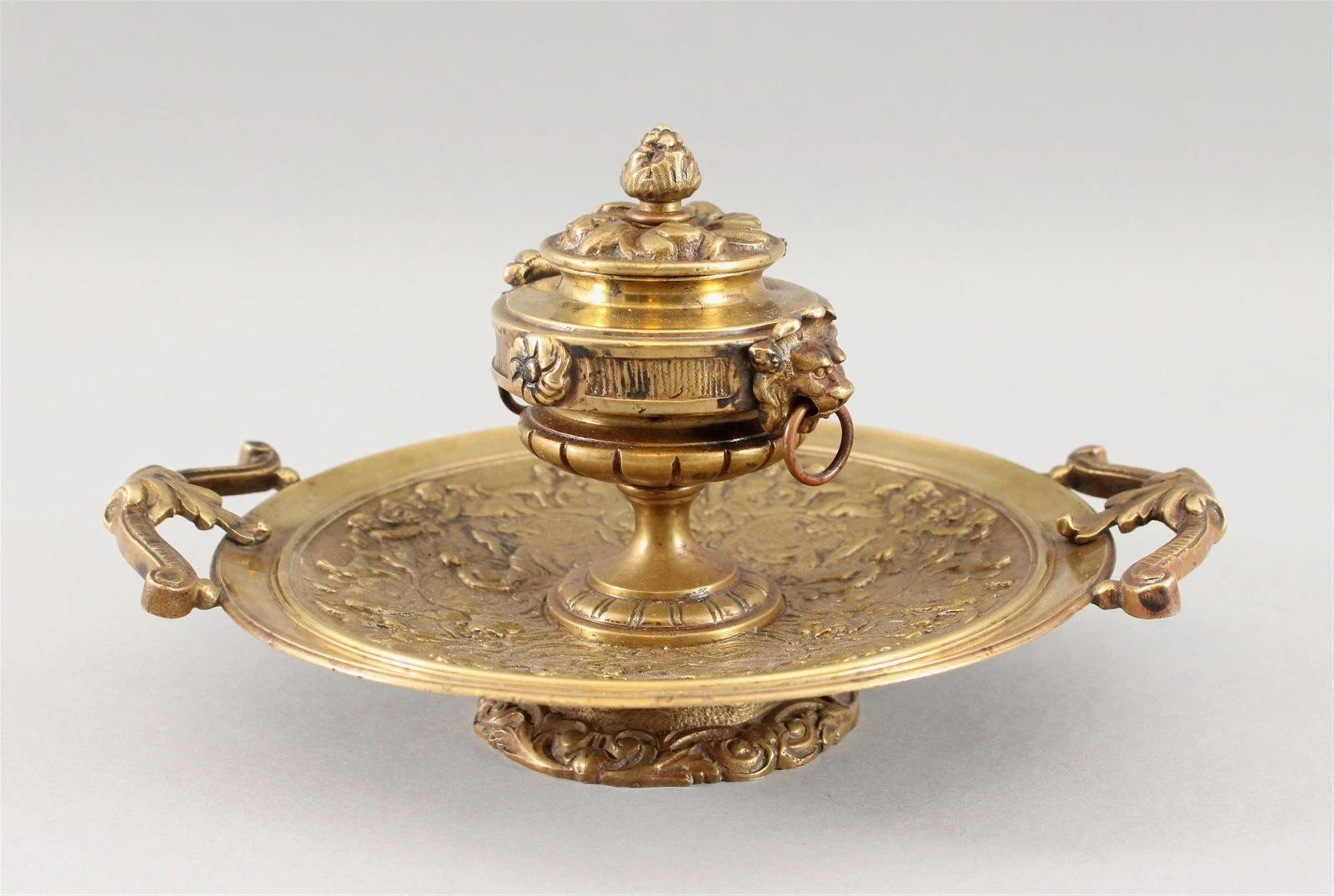
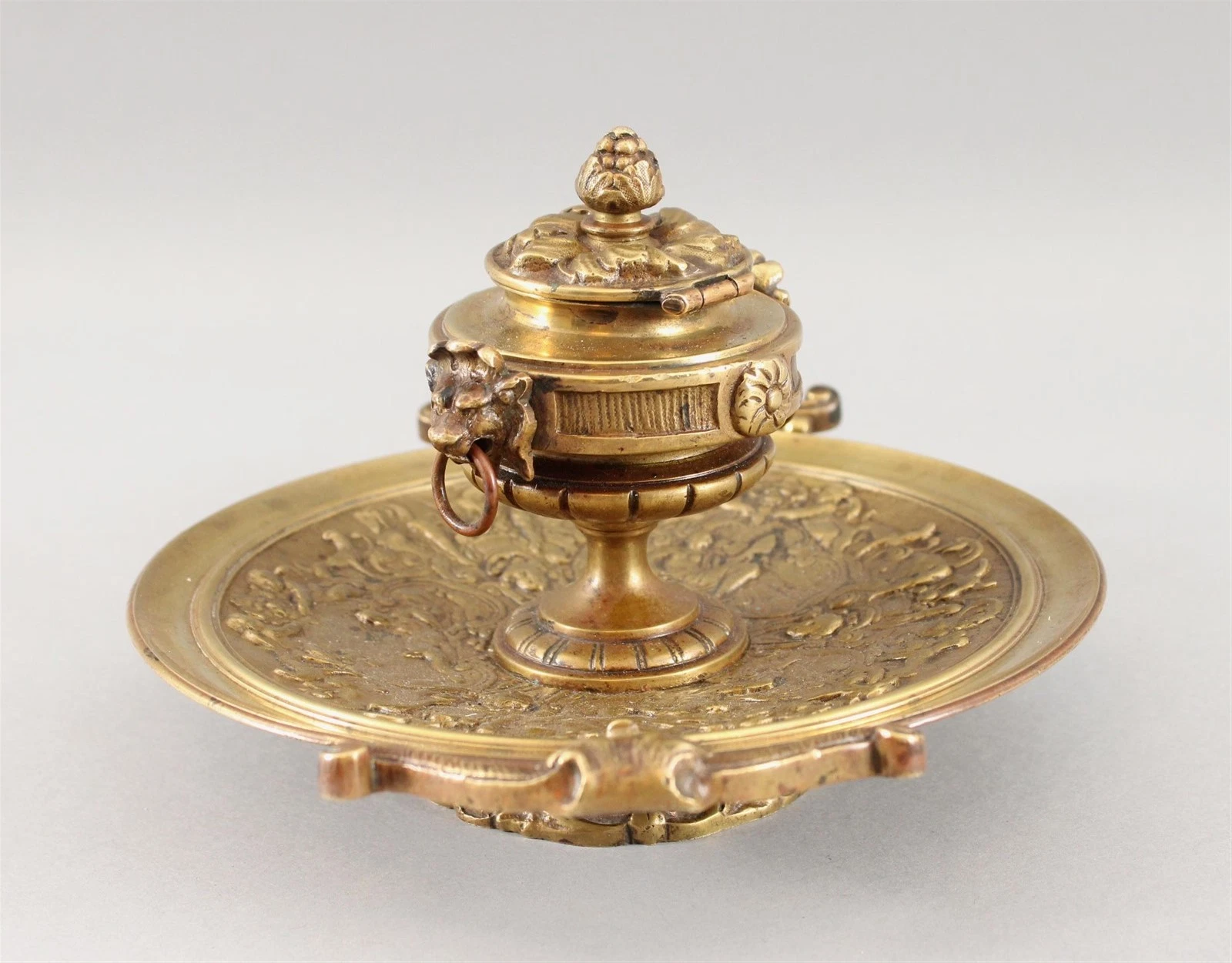
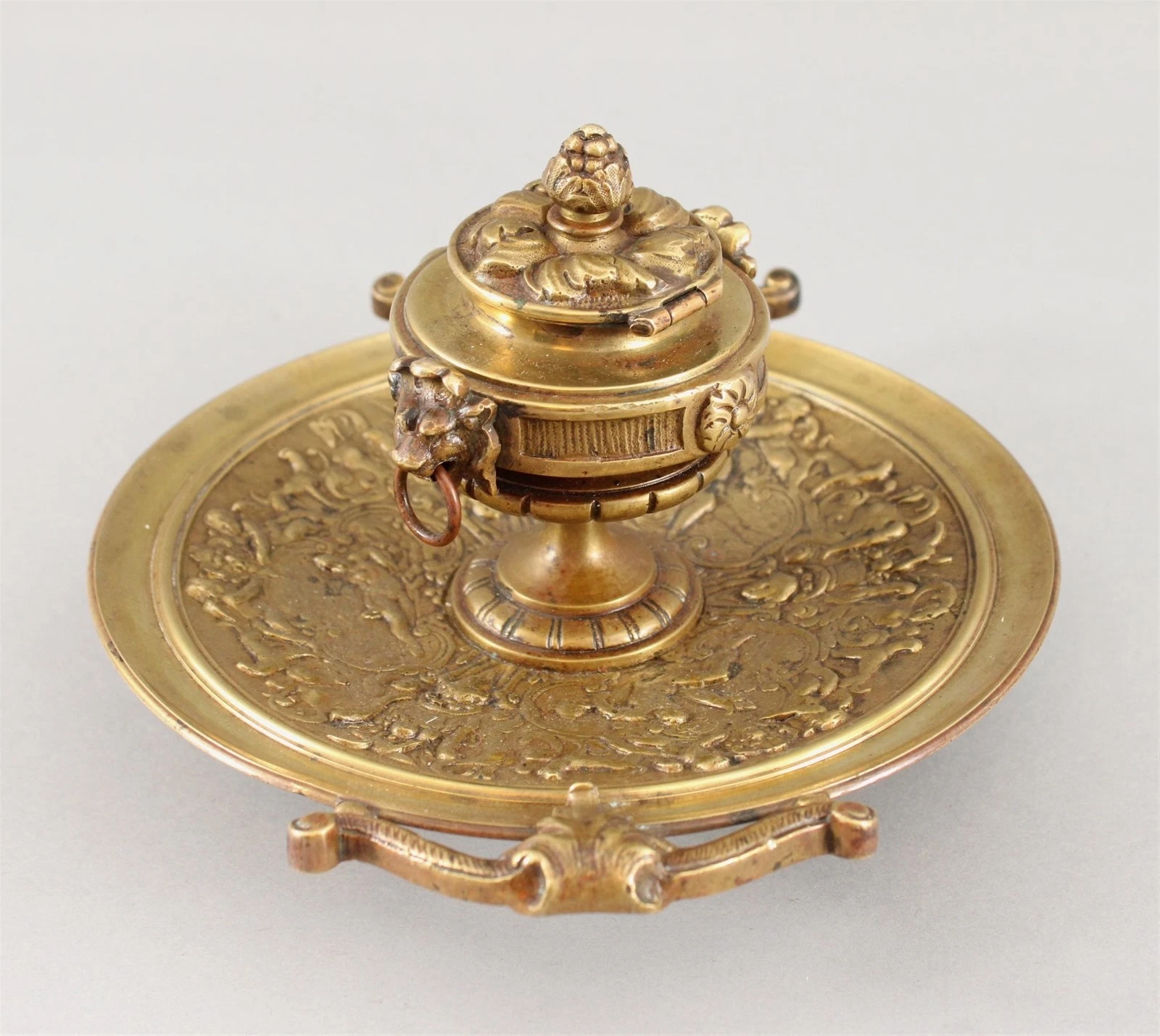
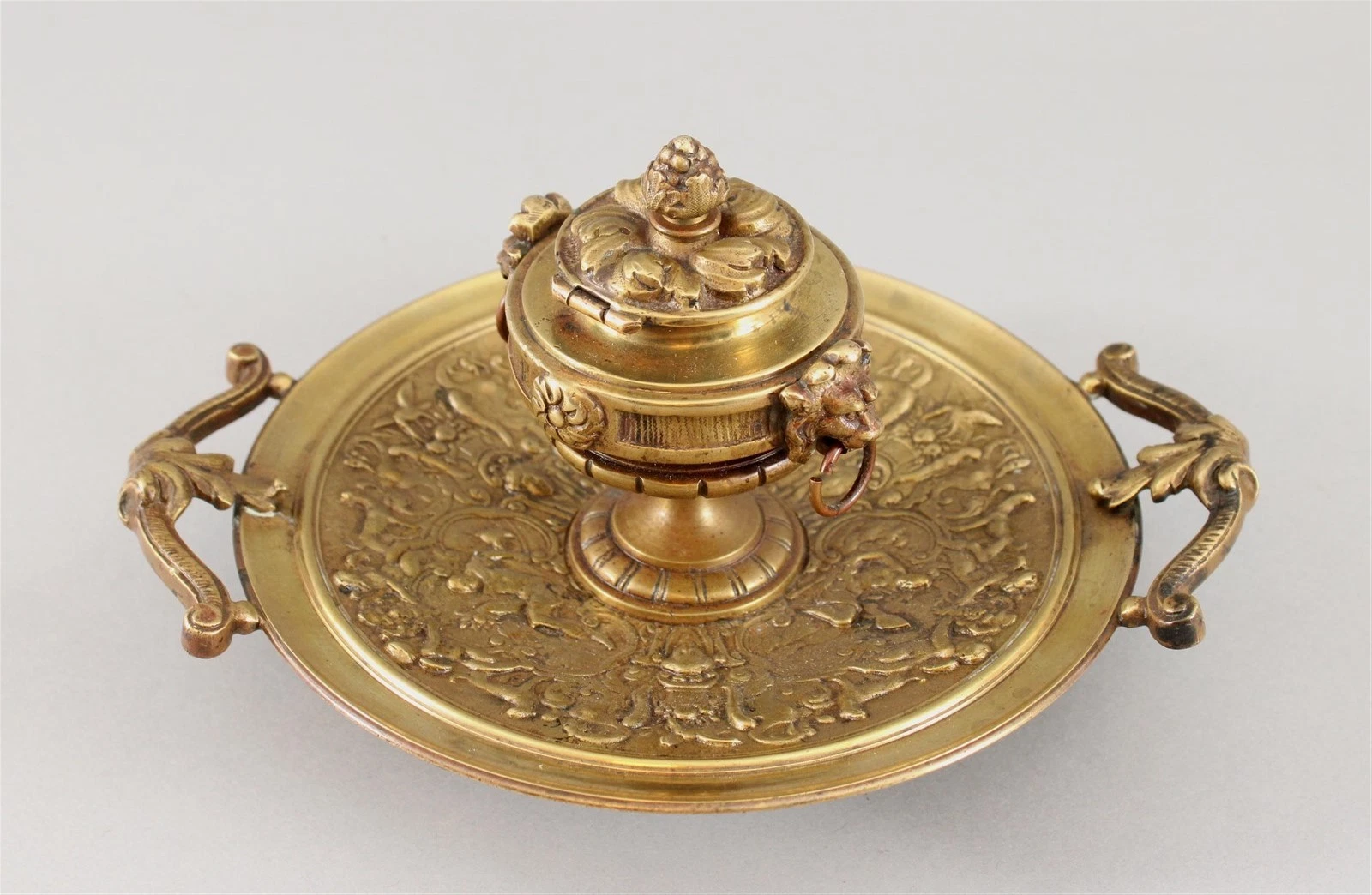
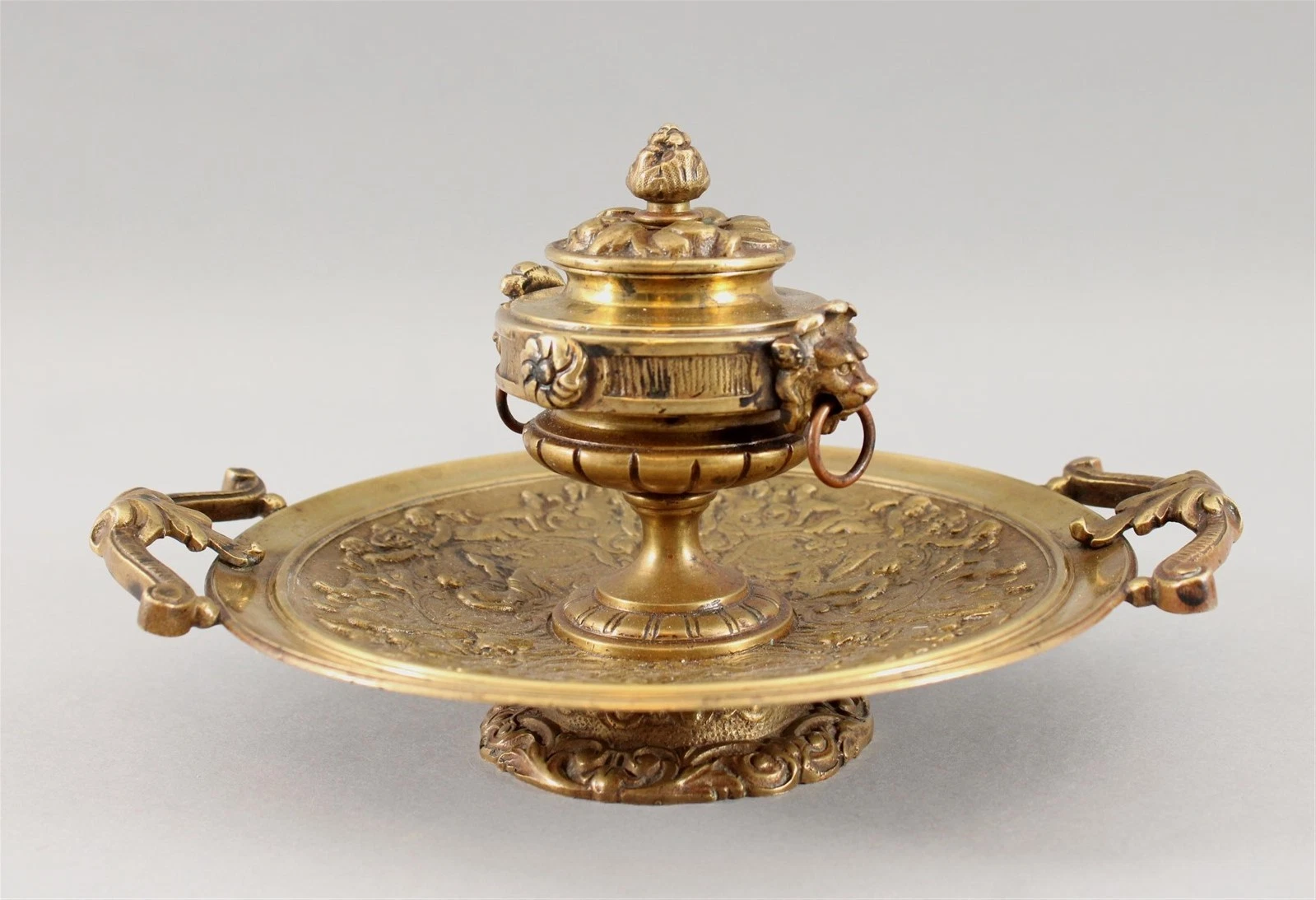
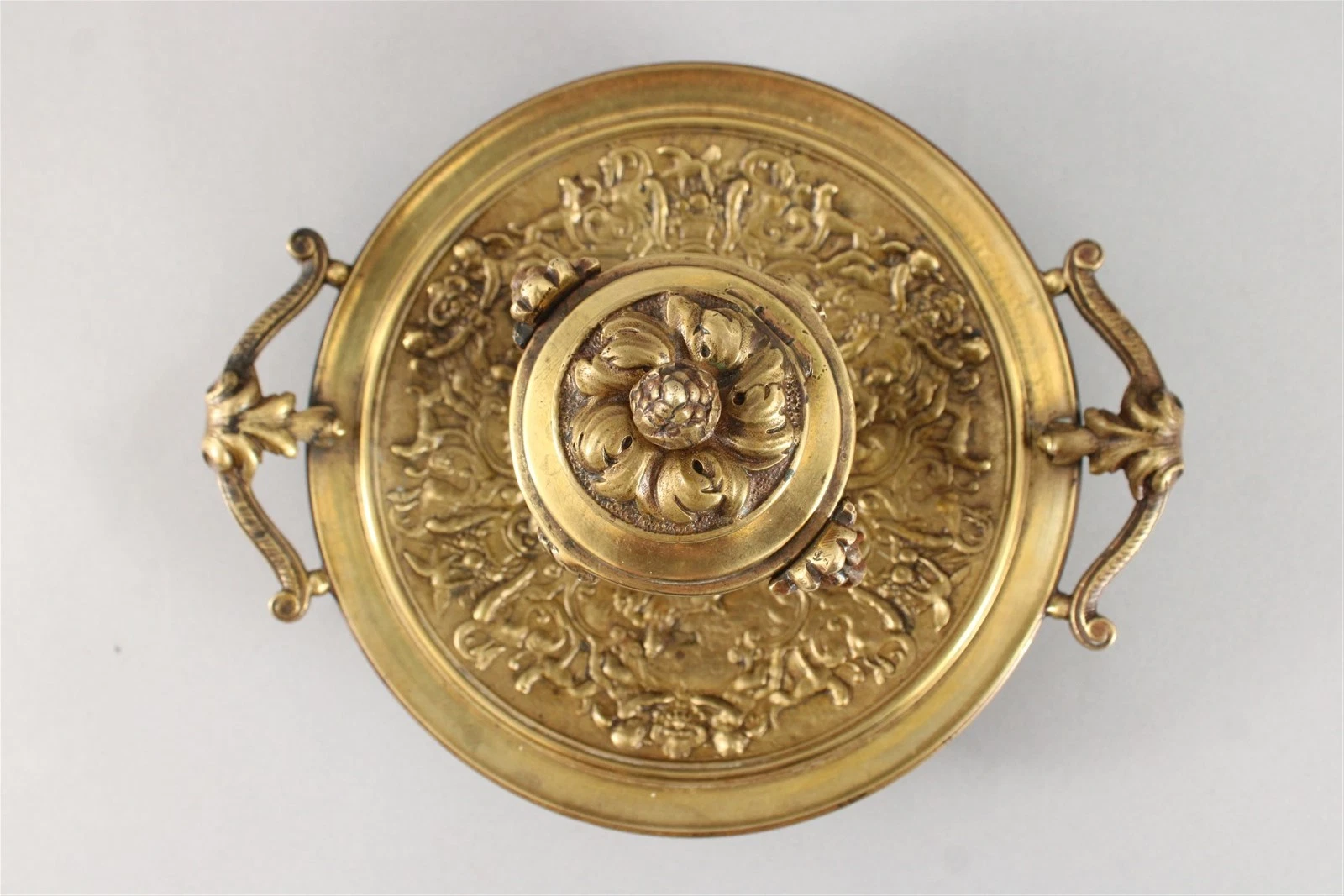
Renaissance Revival Bronze Inkstand with Classical Relief
| Categories | Figural - Mythology; Literature; Religion; Fictional |
| Type | Mythology |
| Material | Bronze |
| Markings | Unmarked |
| Manufacturer | Undetermined |
| Origin | Undetermined |
| Date or Era | circa 1890 |
| Measuring | 8 ½” diameter; 4” high |
Overall Form & Structure
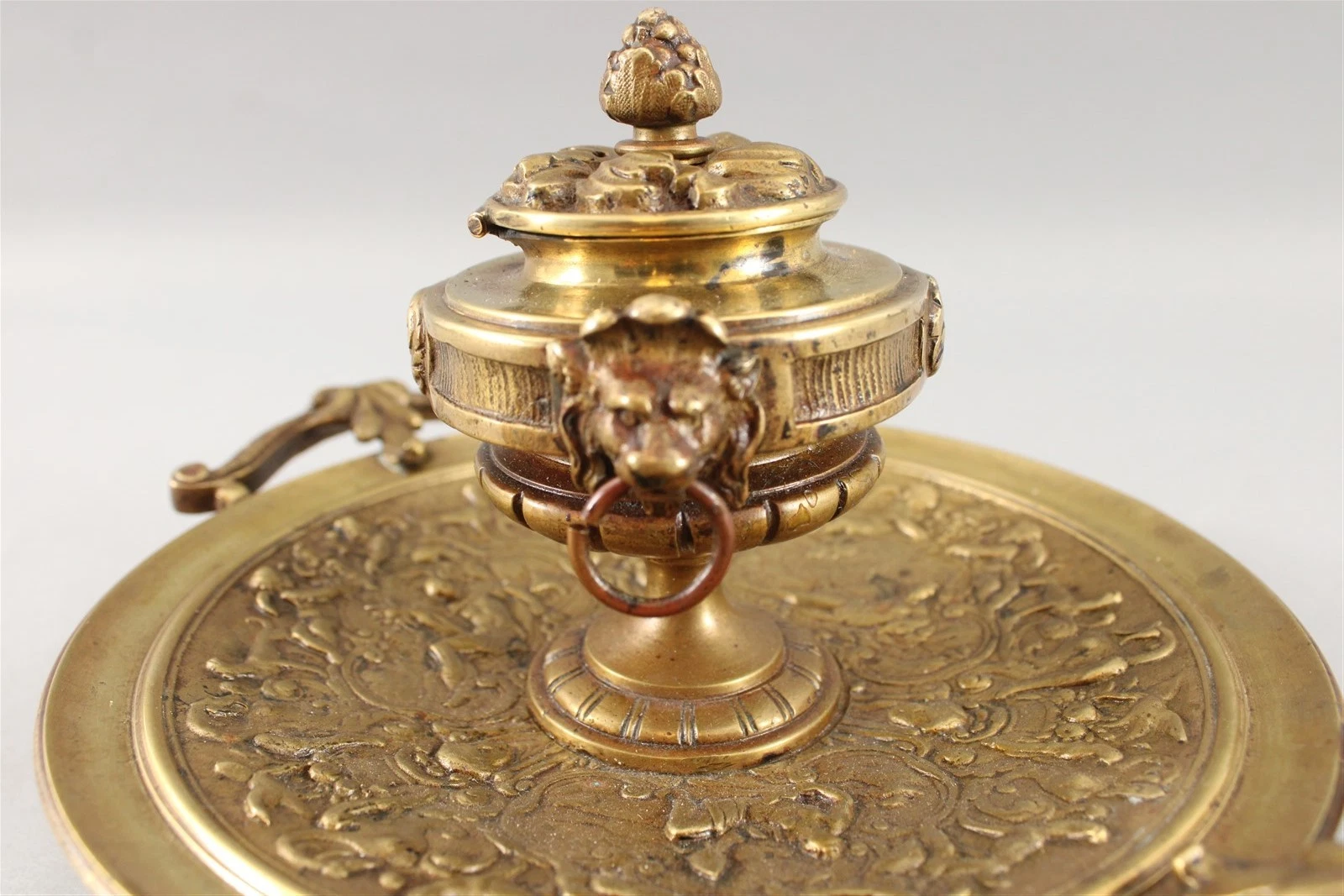
- Configuration: A circular, shallow bronze tray mounted on a low relief pedestal base, featuring a raised central pedestal that supports a hinged urn-shaped inkwell.
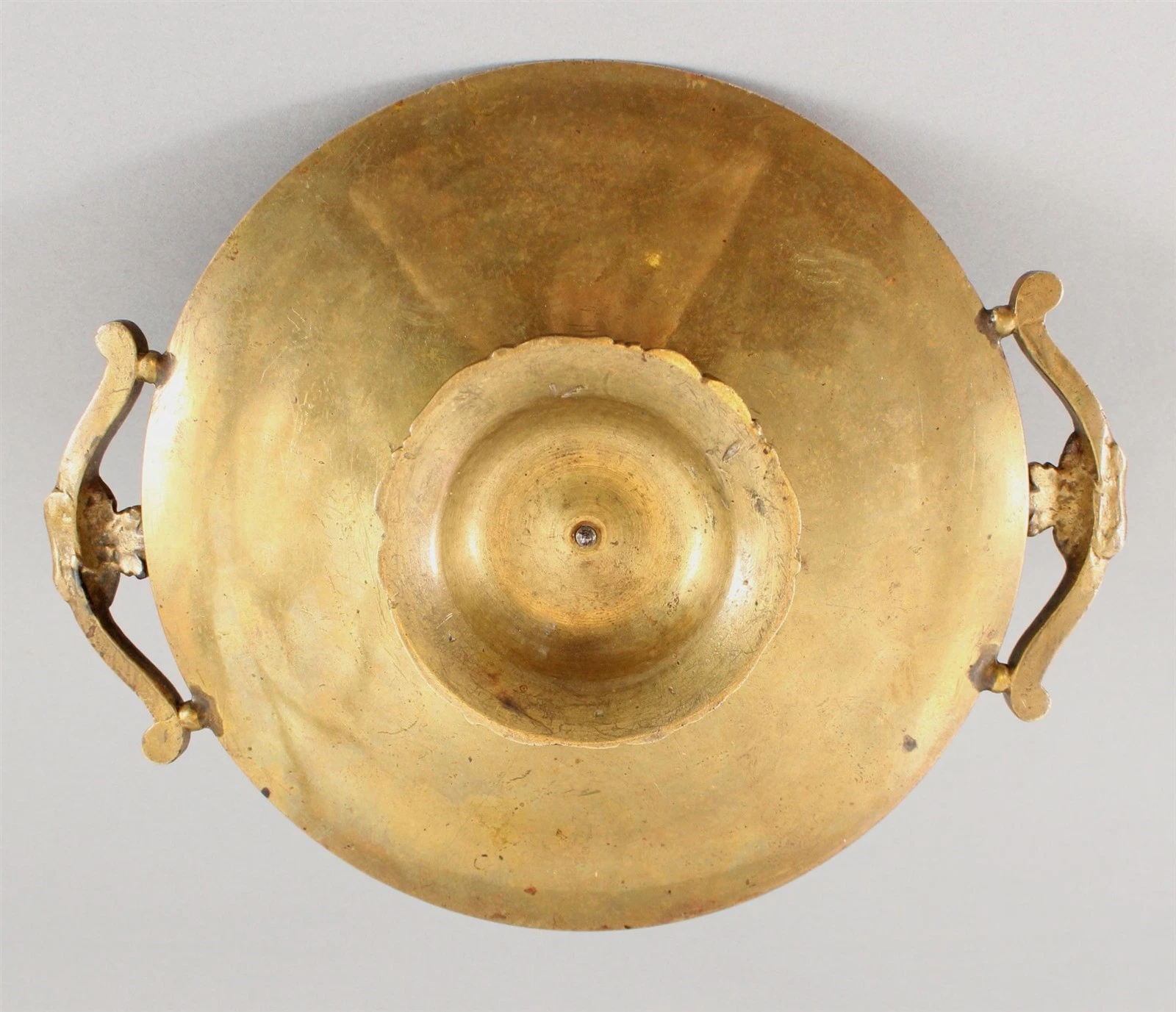
- Handles: Two opposing, applied scroll-form handles adorned with openwork acanthus leaf detailing attached to the outer rim of the tray.
- Central Urn: A goblet- or chalice-shaped central inkwell raised on a fluted pedestal stem. The urn features a hinged lid topped with a carved pinecone or floral finial and gadrooned/leaf-molded decoration.
- Lid & Well Interior: The urn opens at a small metal hinge to reveal a hollow interior designed to house a removable glass or porcelain insert (currently absent).
Ornamentation & Motif Analysis
- Tray Basin: The wide, flat inner basin of the tray is decorated in low-to-medium relief featuring classical and Renaissance Revival iconographic motifs:
- Classical Figures: Winged putti/cherubs playing among foliate scrolls, intermingled with classical warrior profiles and nude female figures/nymphs.
- Grotesques & Mythical Beasts: Stylized dragons, mythical creatures, foliage, and maiden-head medallions woven throughout an intricate arabesque scroll design.
- Urn Body Detail: The middle band of the urn displays two opposing lion-head masks in high relief, each holding a dangling wire ring handle suspended from its jaws. Flanking the lion masks are small rosettes/flowerhead motifs and vertical fluting.
- Base: The short pedestal foot beneath the main tray is encircled with a carved band of scrolling foliage and relief scrollwork.
Attribution, Origin & Dating
- Style & Movement: Renaissance Revival (Neo-Renaissance / Neoclassical). This style draws heavily on 16th-century Italian Renaissance grotteschi metalwork patterns, which often incorporated classical warriors, putti, lion masks, and mythological beasts.
- Estimated Origin: France or Germany (possibly Nuremberg or Paris foundries, or Austro-Hungarian metalworks). Foundries in these regions specialized in high-detail bronze and brass desk accessories utilizing Renaissance-style relief castings during the late 19th century.
- Date of Manufacture: Circa 1870–1900 (Late 19th Century). The casting technique, underside construction with a central spindle/screw fastener, and combination of Renaissance Revival motifs are characteristic of late Victorian/Napoleon III period desktop bronze production.
Sold for $143 in August 2026
Content disclaimer. The information posted is the owner’s best knowledge and may not have been vetted by the SOIC. We welcome comments, corrections, and additions, working to make our website information comprehensive and accurate.
Join the Society of Inkwell Collectors (SOIC) – it’s free!
Founded in 1981 as a non-profit organization,
we are documenting inkwells (and accessories).
We’re here to help and inform!