

Iridescent Glass Inkwell by Kralik
| Categories | Bohemian Art Glass |
| Material | Glass |
| Markings | See Narrative |
| Manufacturer | Kralik |
| Origin | Bohemia |
| Date or Era | circa 1900 |
| Measuring | 4 ¾” diameter; 2 ¾” high |
Bohemian Art Nouveau Iridescent Glass Inkwell by Kralik (c. 1900–1905)
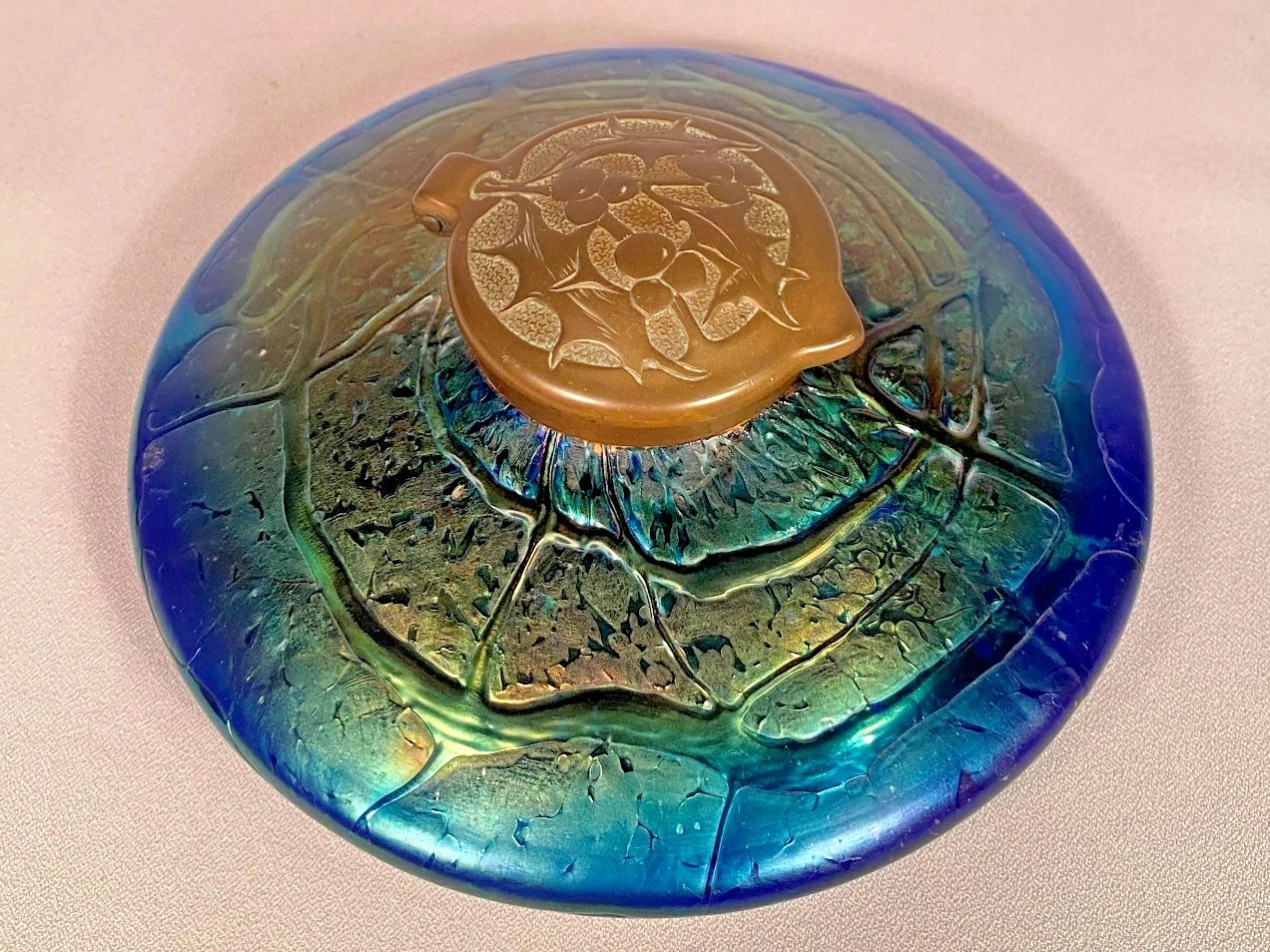
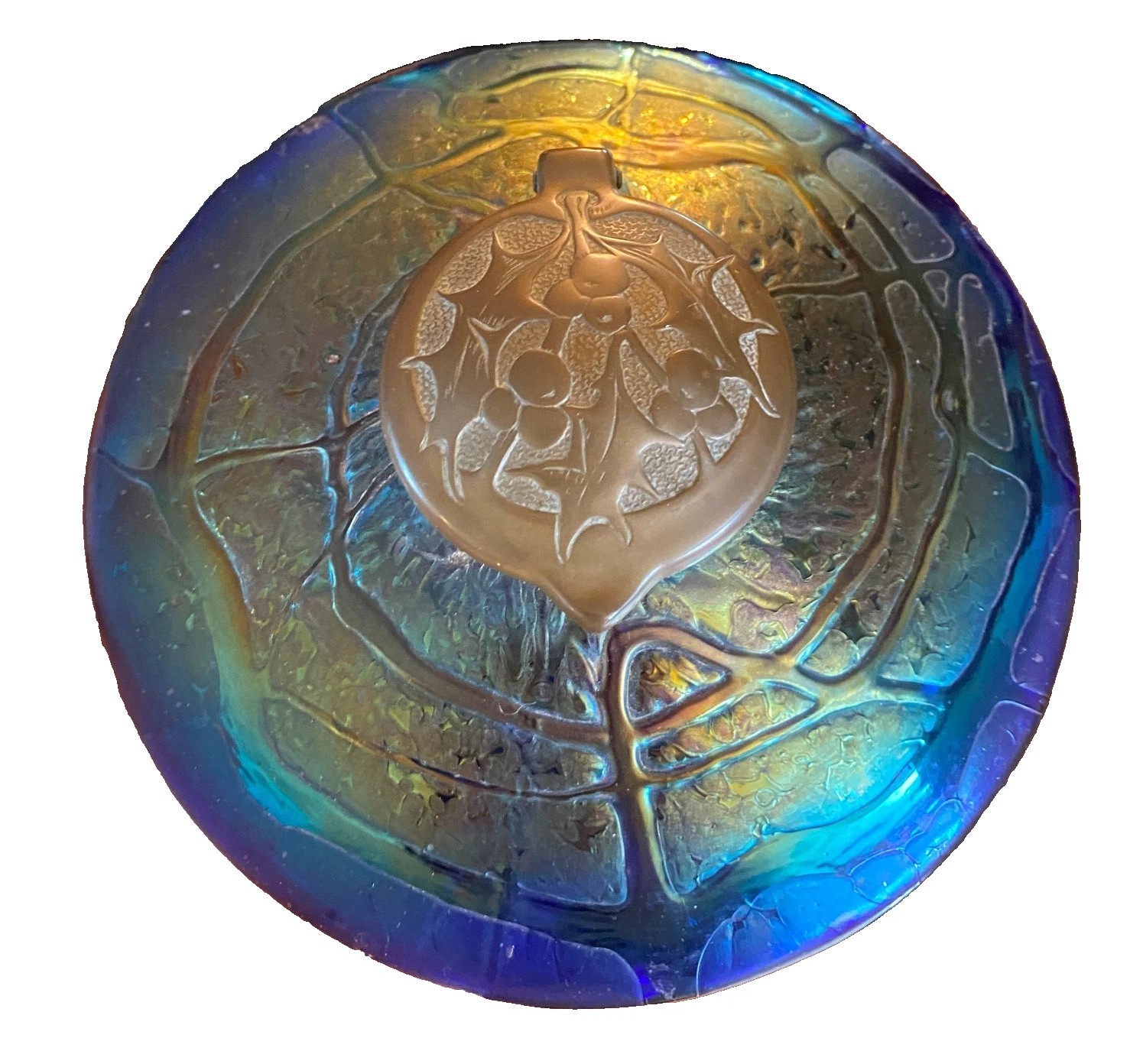
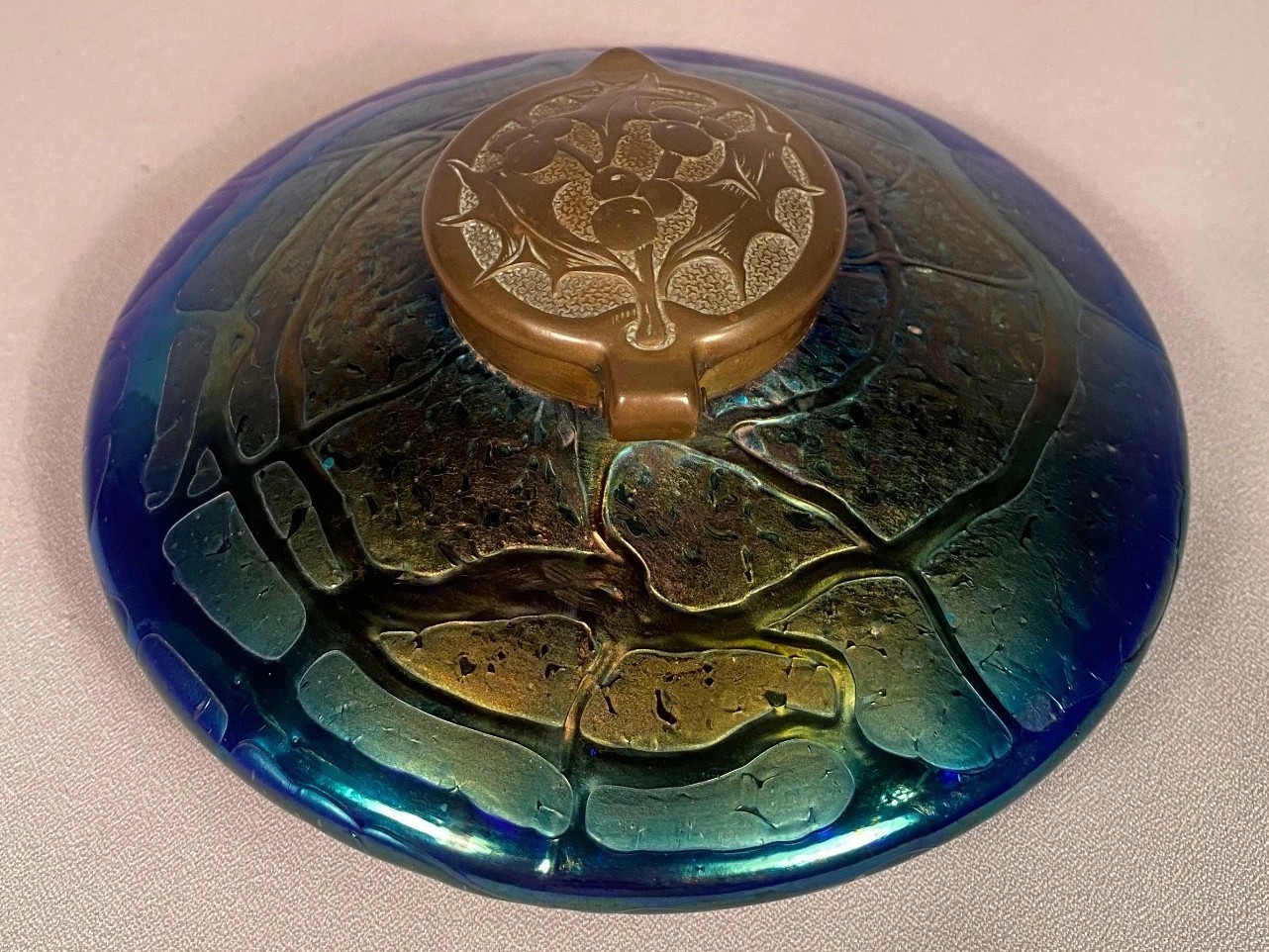
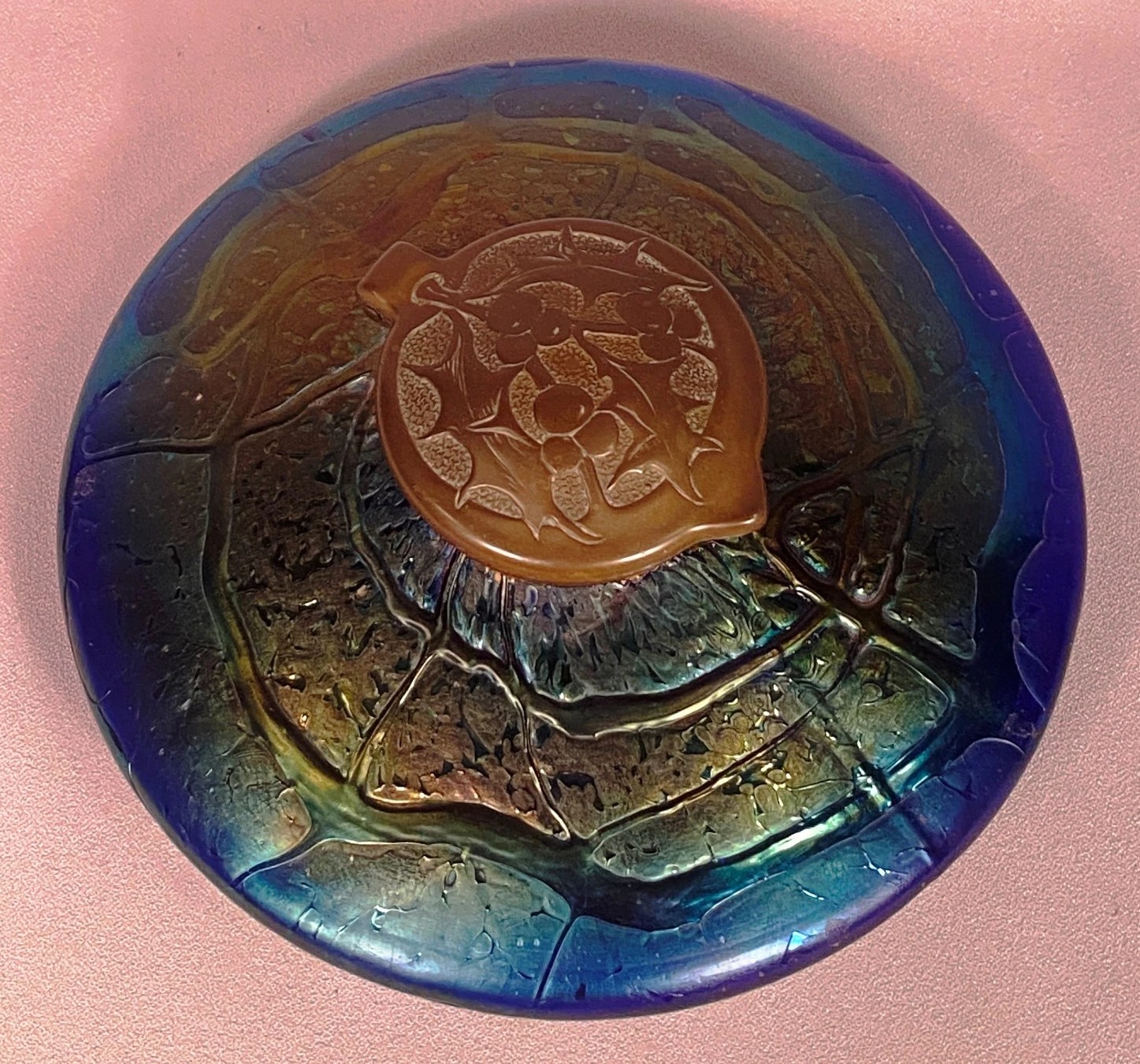
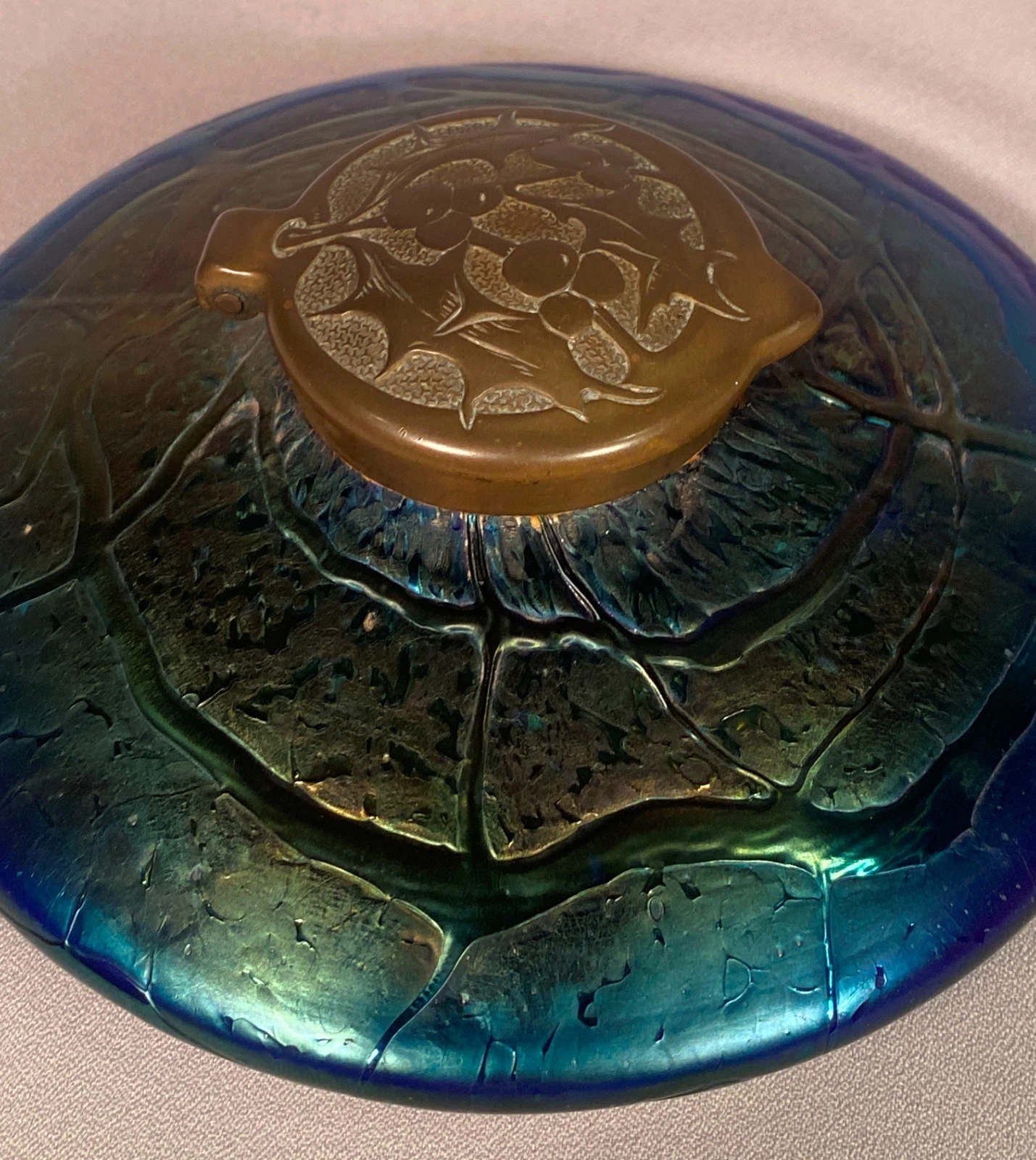
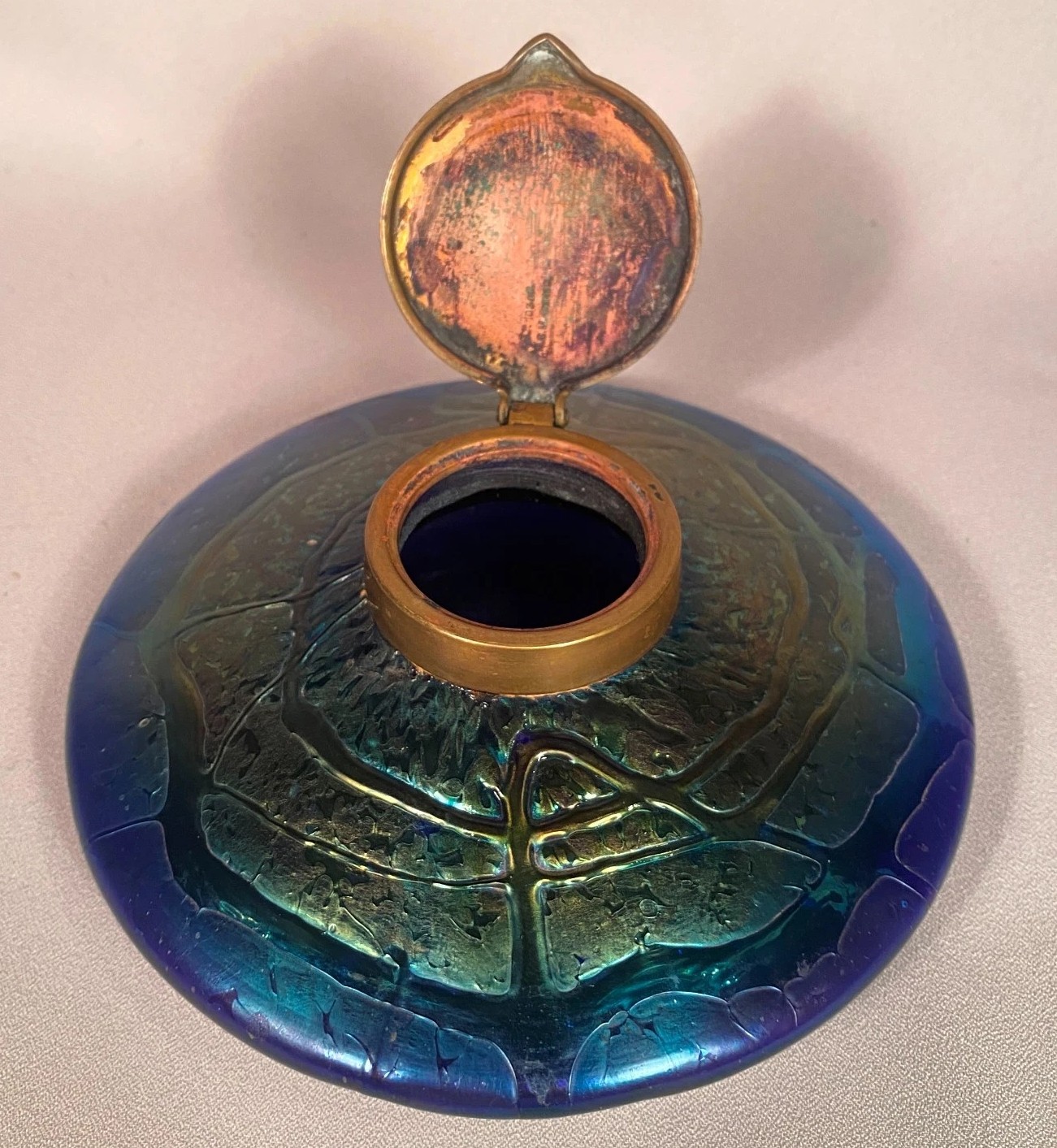
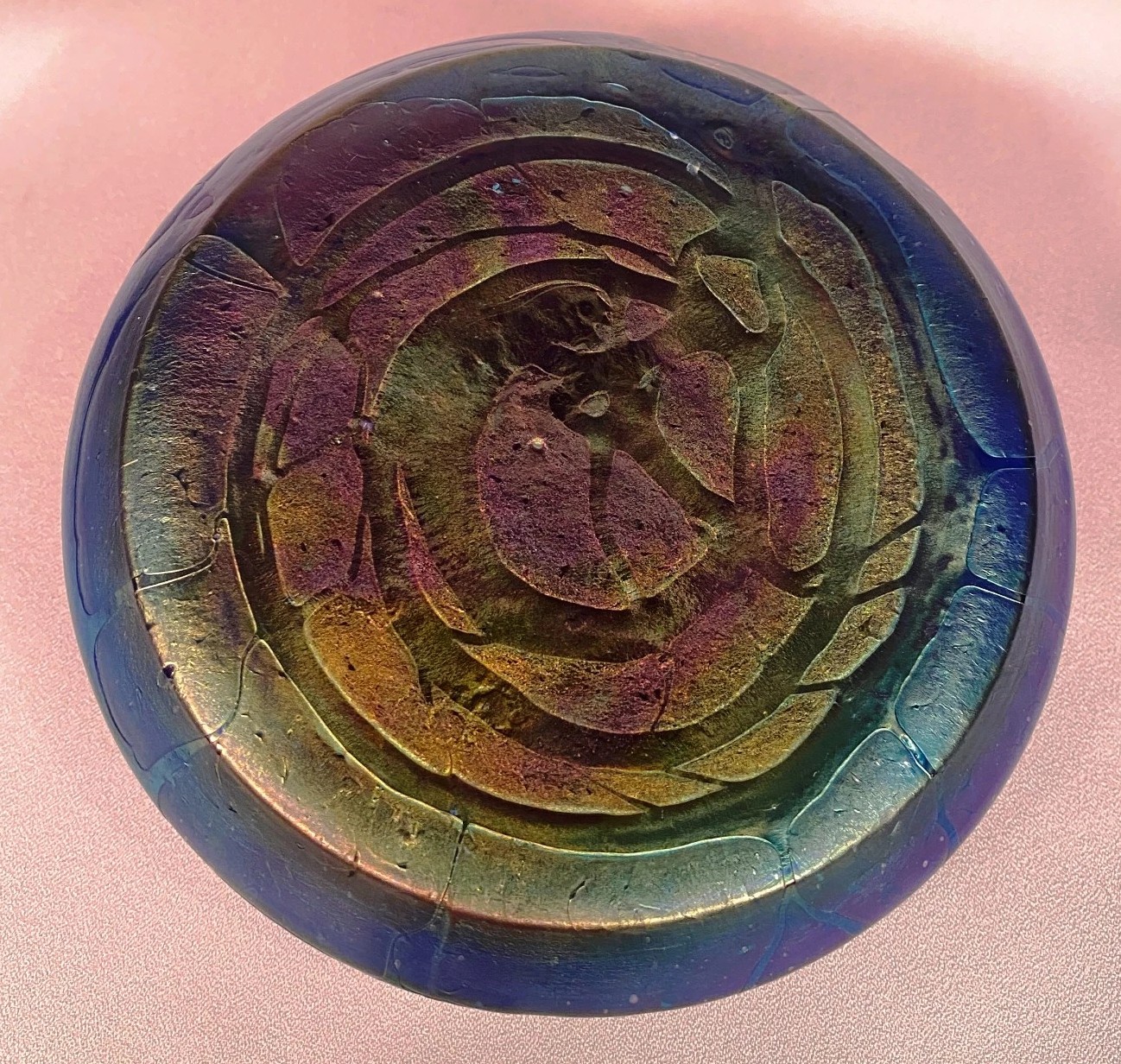
An outstanding Jugendstil Bohemian art glass inkwell produced by Wilhelm Kralik Sohn in the vivid Pampas decor. Formed in a low squat-bun shape, the deep cobalt blue glass body is heavily iridized with iridescent electric blue, violet, and shimmering peacock green hues across a textured, webbed surface.
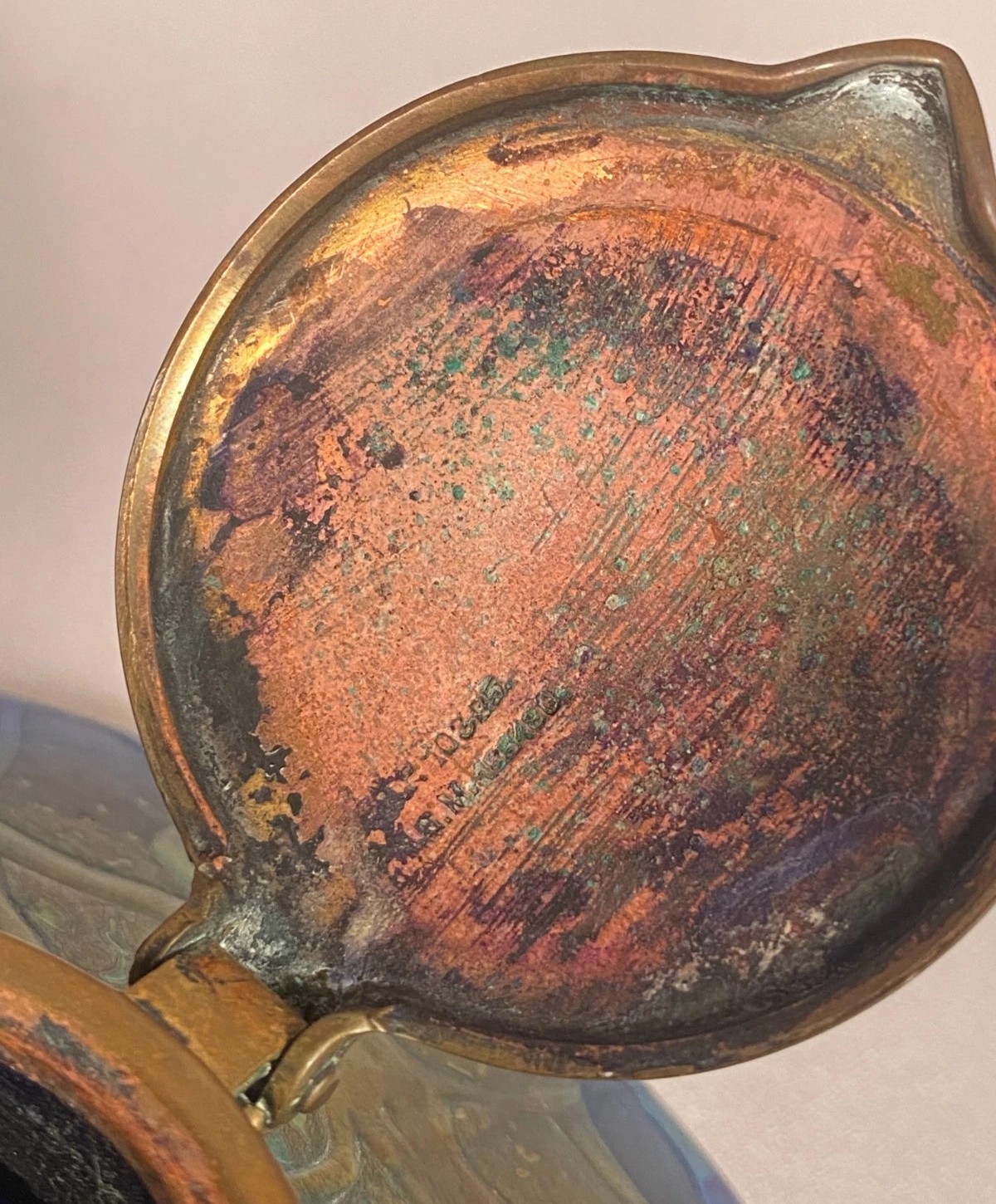
Fitted with its original Art Nouveau brass mount and a hinged, teardrop-shaped lid featuring a relief-embossed holly leaf and berry motif against a stippled ground. The underside of the lid bears historical German patent stampings including D.R.P. (Deutsches Reichs-Patent) and D.R.G.M. (Deutsches Reichs-Gebrauchsmuster).
- Maker: Wilhelm Kralik Sohn (Bohemia)
- Period: Art Nouveau / Jugendstil, c. 1900–1905
- Dimensions: 4 ¾” diameter; 2 ¾” high
- Condition: Glass body and brass hardware in excellent condition with fine age patina; clear glass insert is missing.
Maker & Attribution
This inkwell was produced by Wilhelm Kralik Sohn (Eleonorenhein, Bohemia).
This piece can be attributed to Kralik through two key diagnostic details:
- The Glass Line: The decor is Kralik’s Pampas pattern (often featuring a cobalt or dark base with iridescent, webbed/draped oil-spot and crackle-like textures).
- The Hardware: The distinct metal mount and leaf-and-berry lid mechanism—stamped with German patent numbers on the underside—are standard diagnostic mountings used on Kralik production inkwells circa 1900–1905.
Glass Technique & Color Effects
- Iridescence (Blue, Green, Purple): Achieved by exposing the hot glass to vaporized metallic salts (typically stannous chloride or titanium chloride) inside the kiln before the glass cooled. This creates a thin, light-refracting metallic oxide coating on the surface that shimmers in vibrant tones as the viewing angle changes.
- Striations & Webbed Effects: The textured, vein-like “Pampas” pattern was created by applying glass threads or manipulating an outer layer of iridized glass before blowing the vessel into its final mold, causing the surface layer to pull apart into distinct organic web-like fissures and ridges.
Lid Inscriptions & Patents
The underside of the lid features clear German intellectual property stampings:
- D.R.P. 10385 (or D.R.P. 145366 class variant): Stands for Deutsches Reichs-Patent (German Imperial Patent). This references the German patent registration covering the lid structure.
- D.R.G.M. 165450: Stands for Deutsches Reichs-Gebrauchsmuster (German Reich Registered Utility Model). This was a “mini-patent” protecting the functional utility or ornamental design of the mount for a shorter term in the German market.
Lid Design & Form Assessment
- Motif: The motif on the top of the brass lid is a stylized Holly and Berry pattern (spiky leaves with clustered round holly berries in relief), set against a textured stippled background.
- Is it unusual? While holly-and-berry brass lids were a signature production style for Kralik inkwells during the Art Nouveau era, this specific lid profile is unusually distinct:
- Unlike the standard flat square or diamond-shaped mounts commonly seen on Kralik inkwells, this lid features a teardrop / shaped leaf profile that directly mirrors the organic botanical form on top.
- It fits seamlessly into a fitted circular brass collar that sits low on the wide, squat “bun” glass body.
Date of Production
- Date: Circa 1900–1910 (Peak Jugendstil / Art Nouveau period in Bohemia).
- Note: The missing insert would originally have been a small, removable clear blown glass well that sat inside the brass-collar rim to hold liquid ink.
Sold for $400 in August 2026
Content disclaimer. The information posted is the owner’s best knowledge and may not have been vetted by the SOIC. We welcome comments, corrections, and additions, working to make our website information comprehensive and accurate.
Join the Society of Inkwell Collectors (SOIC) – it’s free!
Founded in 1981 as a non-profit organization,
we are documenting inkwells (and accessories).
We’re here to help and inform!