

Heintz #1099 Desk Set
| Categories | Arts & Crafts |
| Material | Silver on Bronze |
| Markings | See Narrative |
| Manufacturer | Heintz |
| Origin | United States |
| Date or Era | circa 1915 |
| Measuring | Letter 8"; Inkwell 6x6"; Stamp 3"; Blotter 6.5" |
| Patent | U.S. Patent No. 1,037,143 - August 27, 1912 |
Description of the Heintz #1099 Desk Set
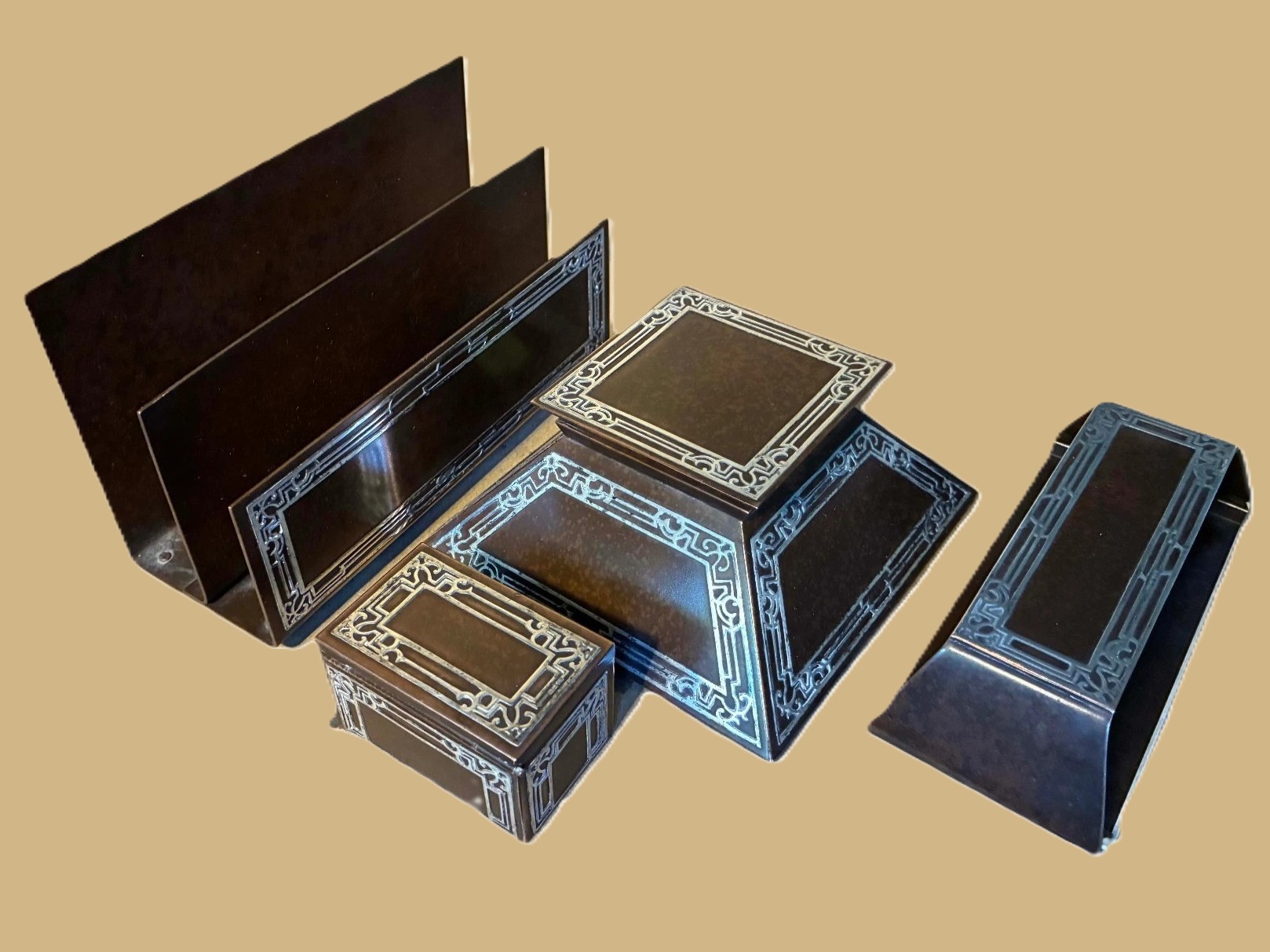
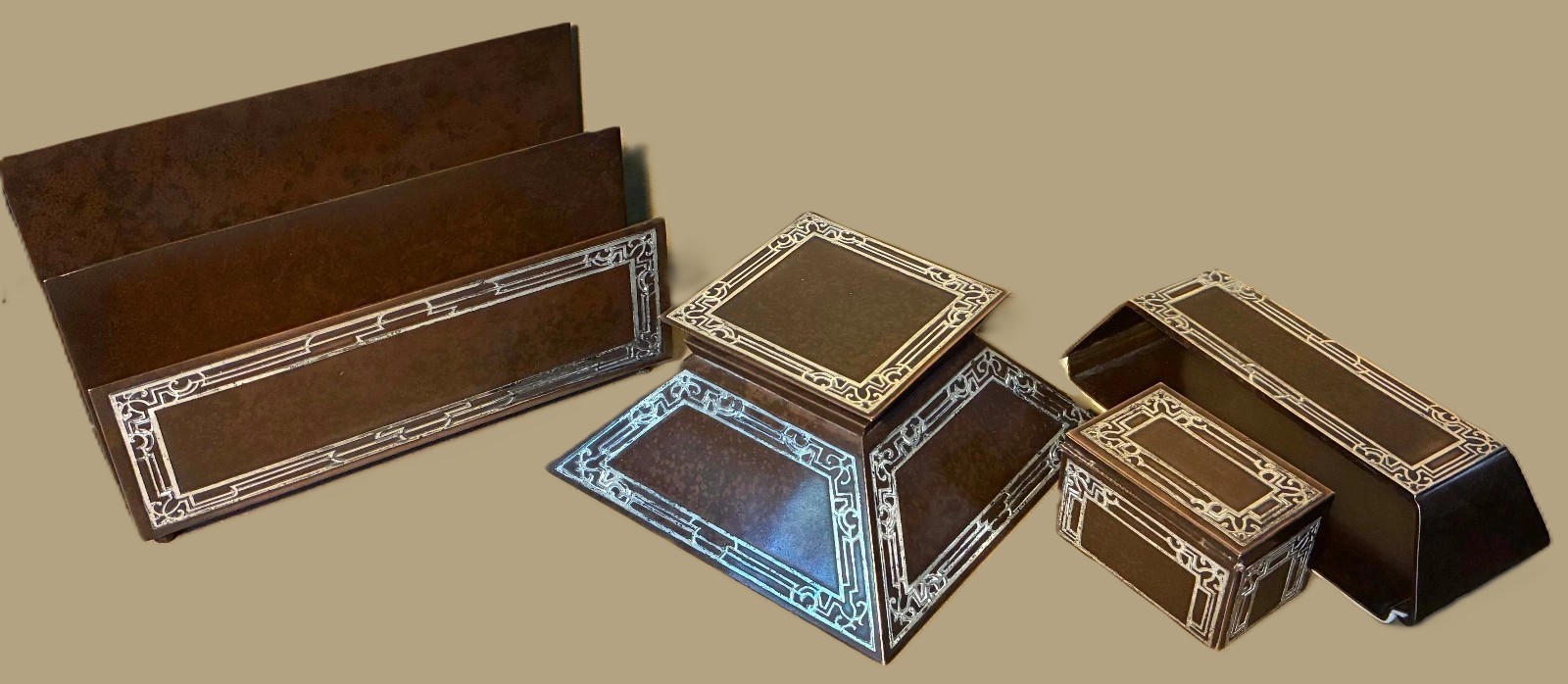
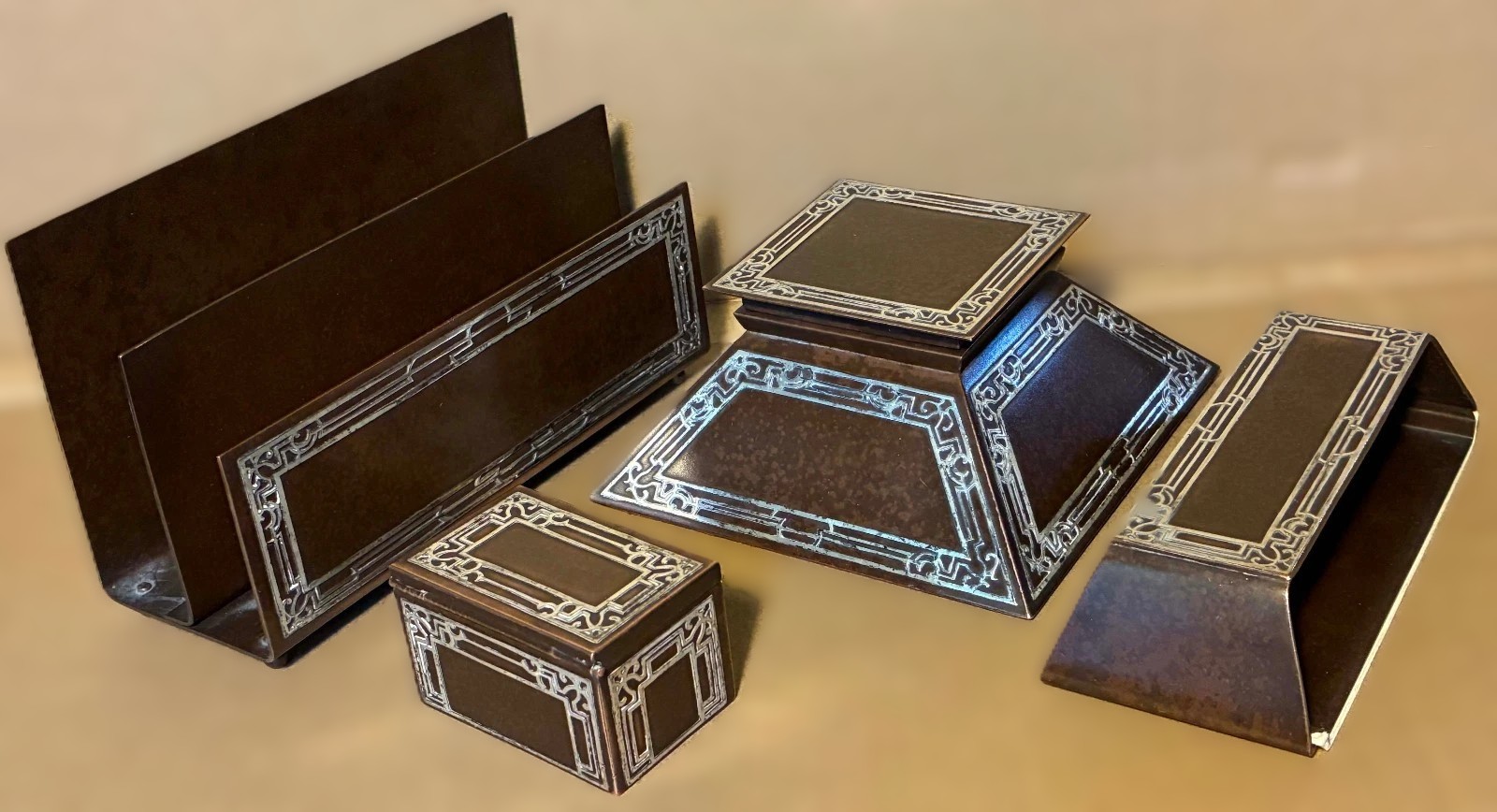
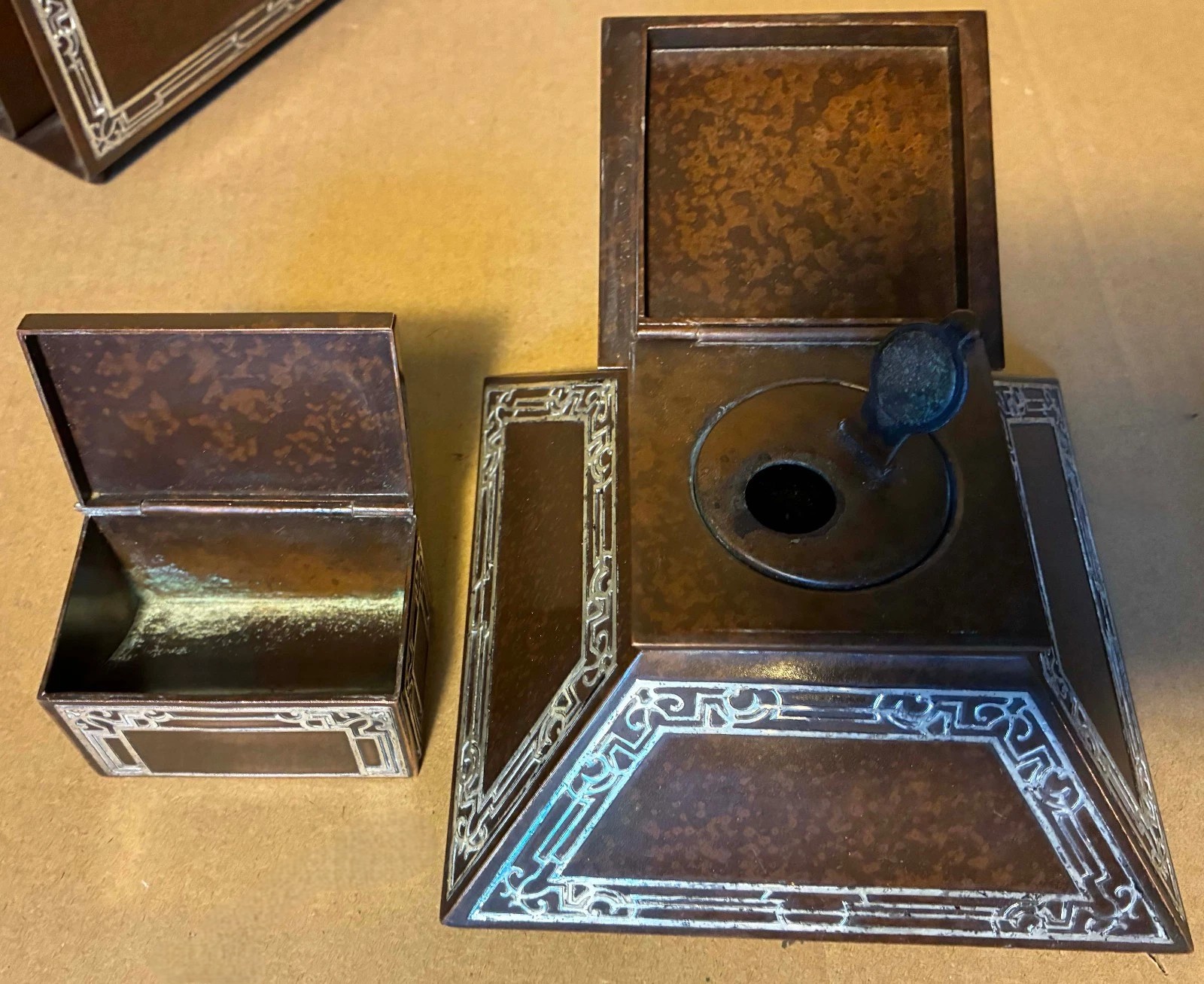
This four-piece Arts and Crafts desk set features Heintz’s signature rich, warm bronze finish adorned with applied sterling silver geometric strapwork and stylized rectilinear borders along the perimeters.
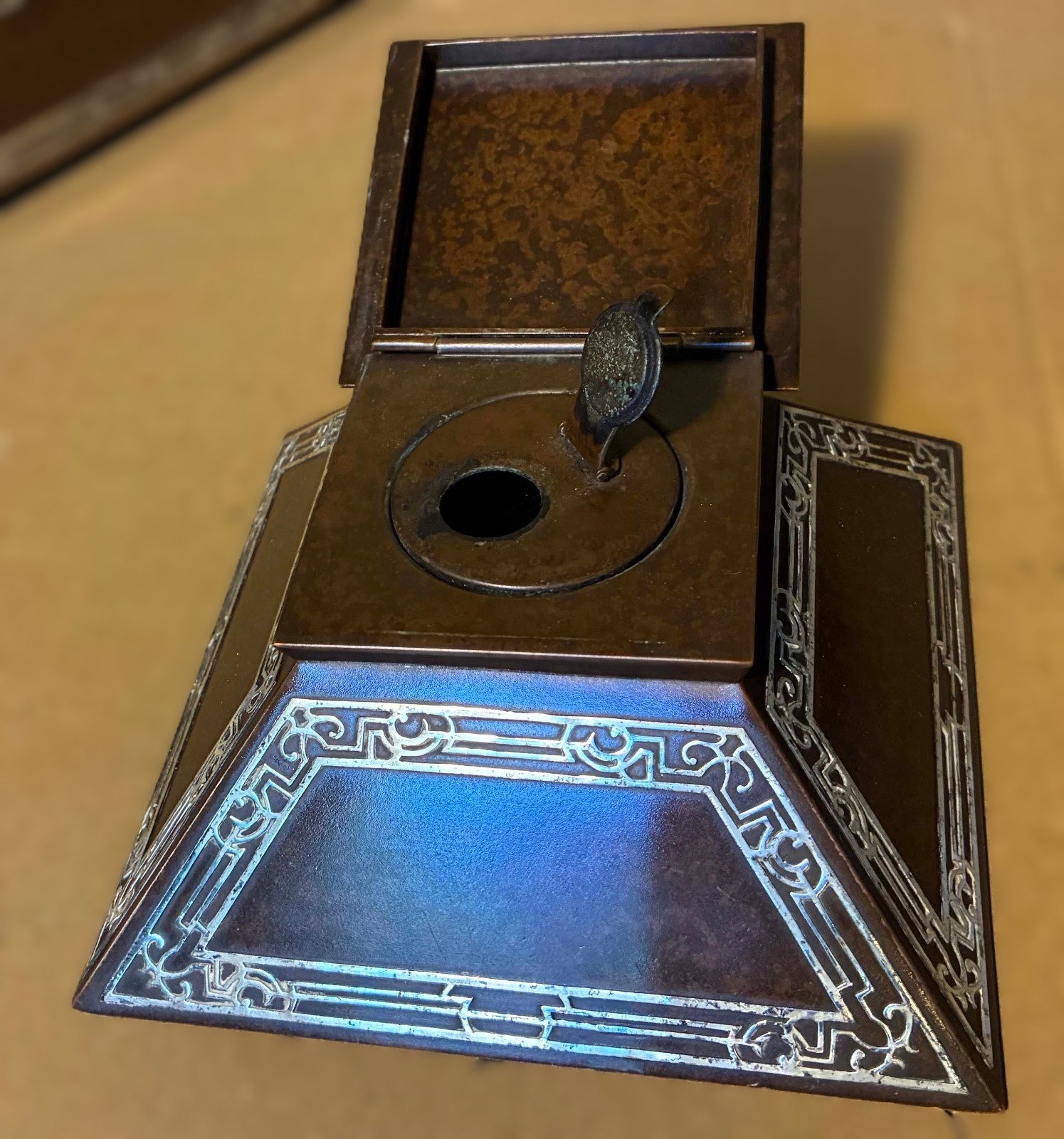
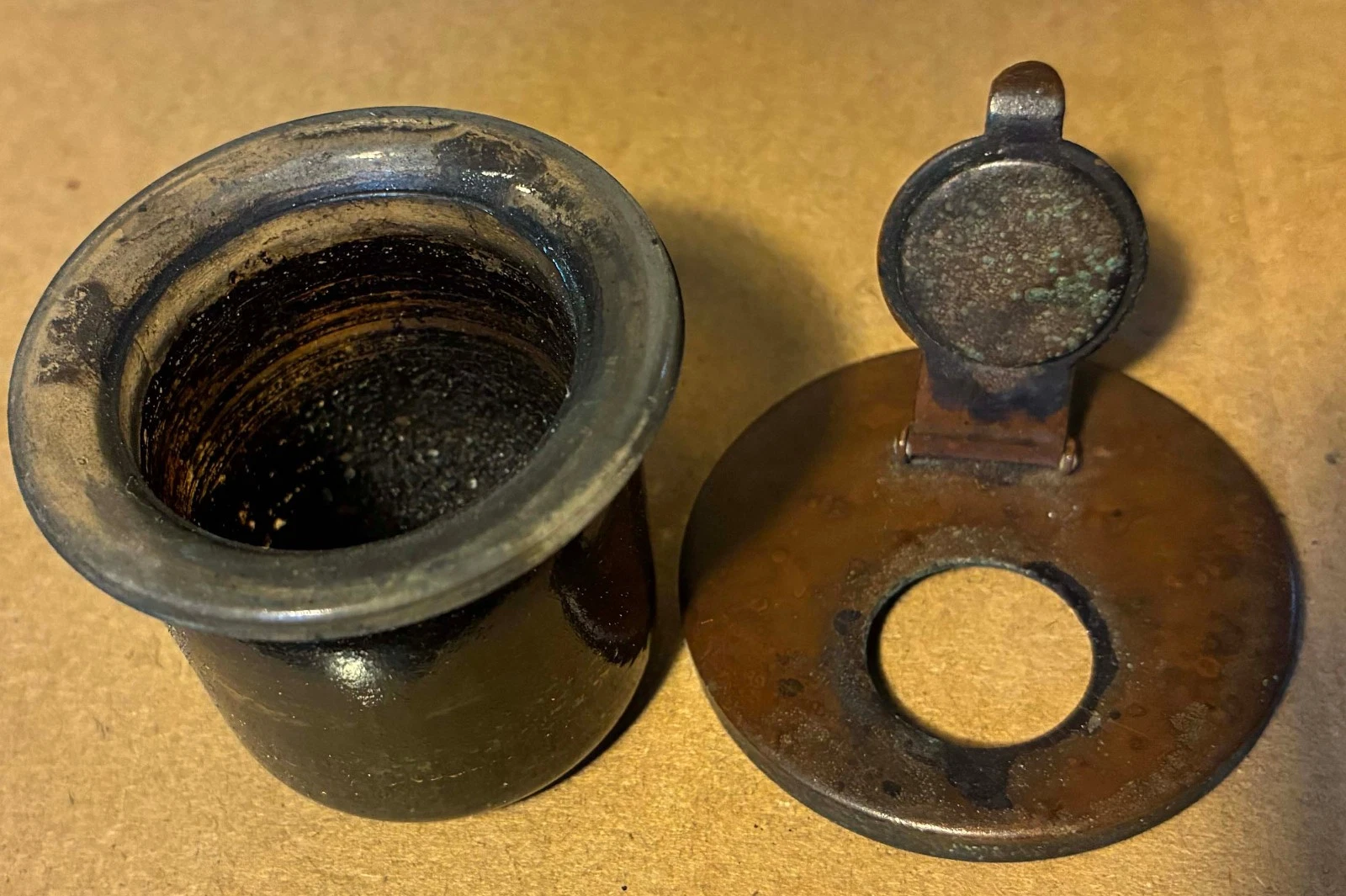
- Inkwell: A substantial, truncated square pyramidal base crowned with a flat, hinged lid. The lid opens to reveal an inner bronze collar with an attached secondary swivel/hinged cap, housing its original glass insert.
- Letter Stand: A two-tier upright sorting rack featuring angled dividers and an inlaid silver perimeter border across the front fascia.
- Stamp Box: A compact rectangular lidded box with a hinged cover, embellished with matching rectilinear silver overlay framing the lid and down the front corner edges.
- Rocker Blotter: A classic curved rocker base framed in the matching geometric border pattern.
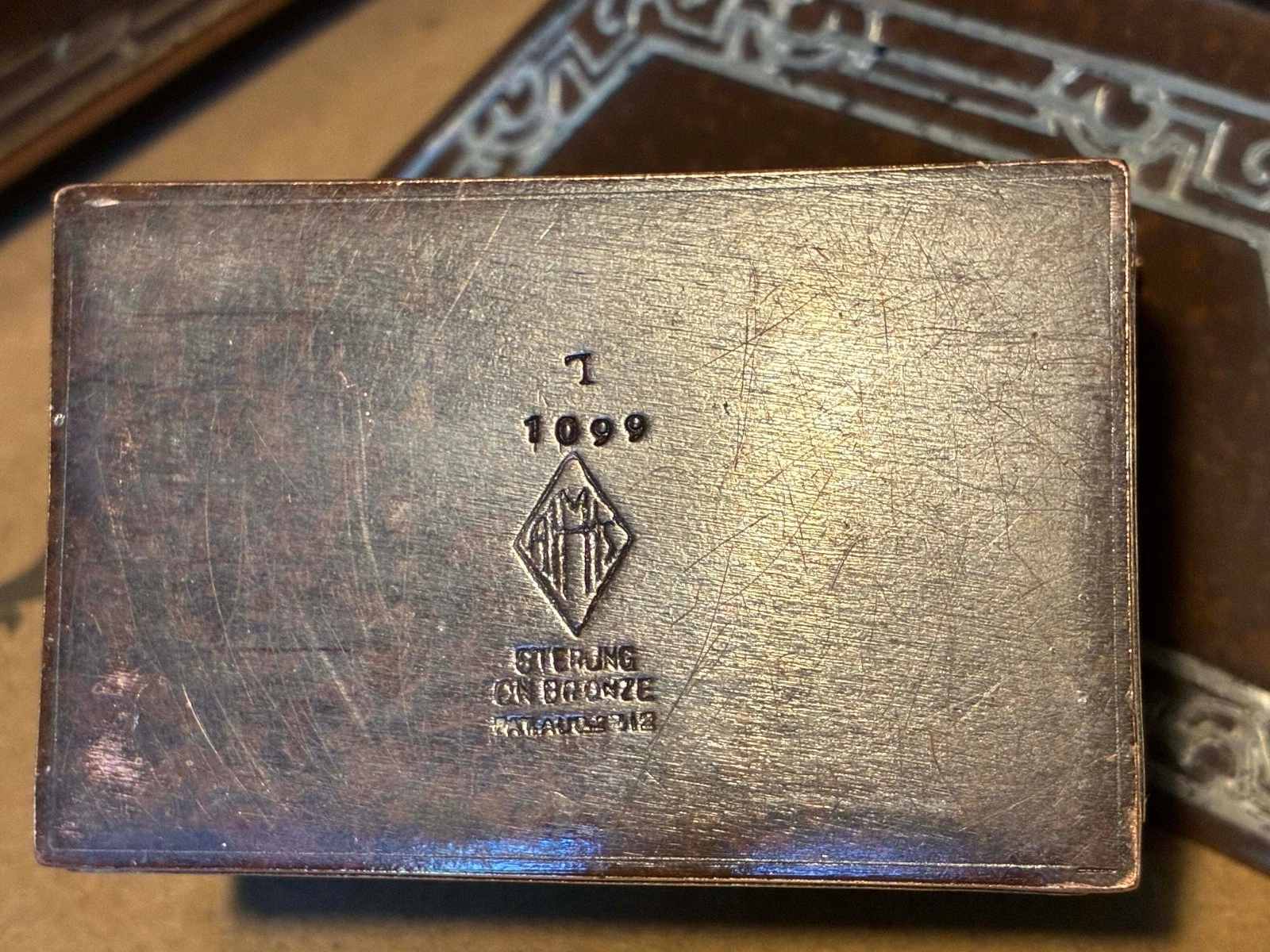
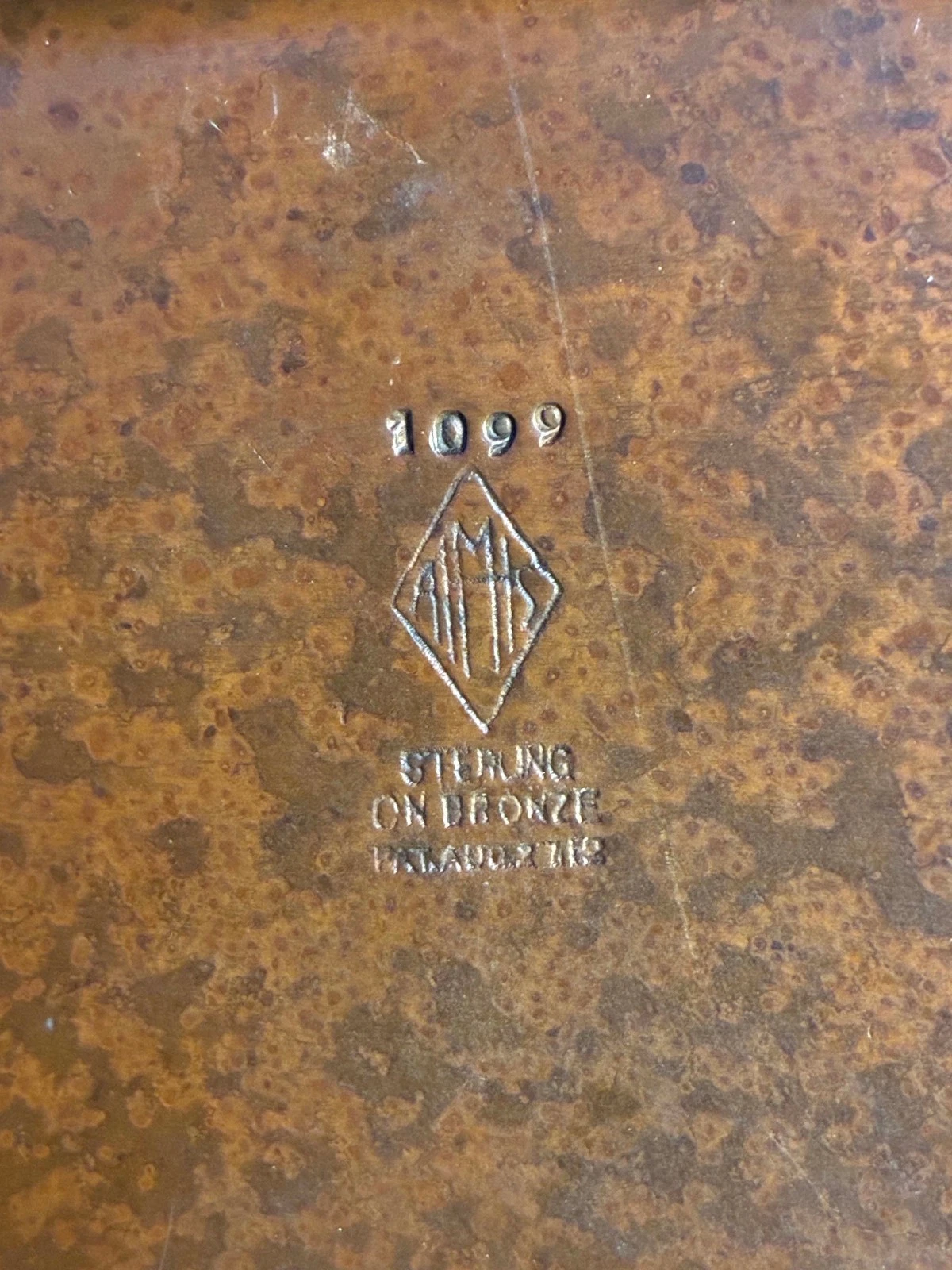
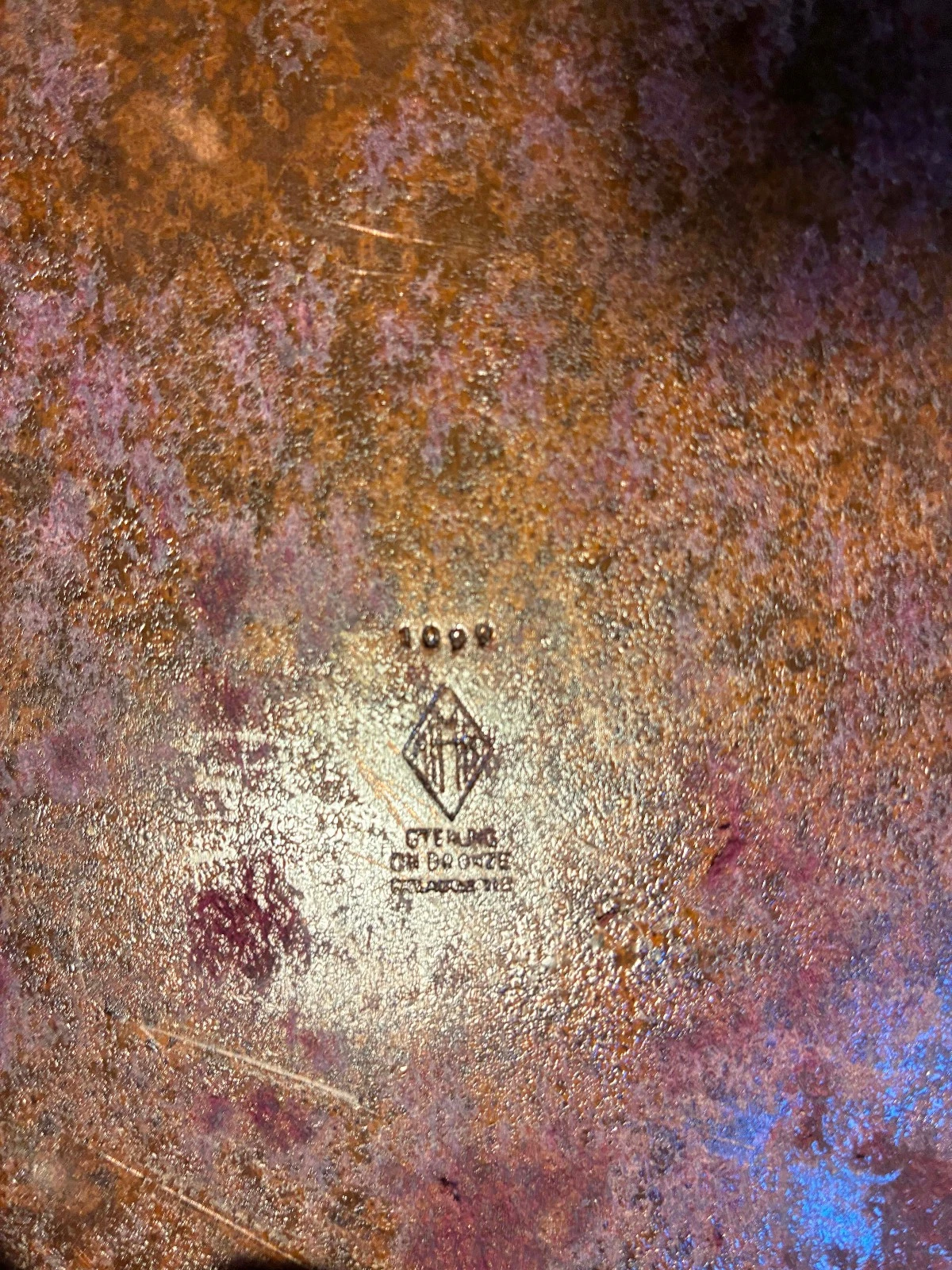
- Markings: The undersides bear the stamped shape number 1099, the diamond-shaped HAMS logo (Heintz Art Metal Shop), STERLING ON BRONZE, and the patent stamping PAT. AUG. 27, 1912.
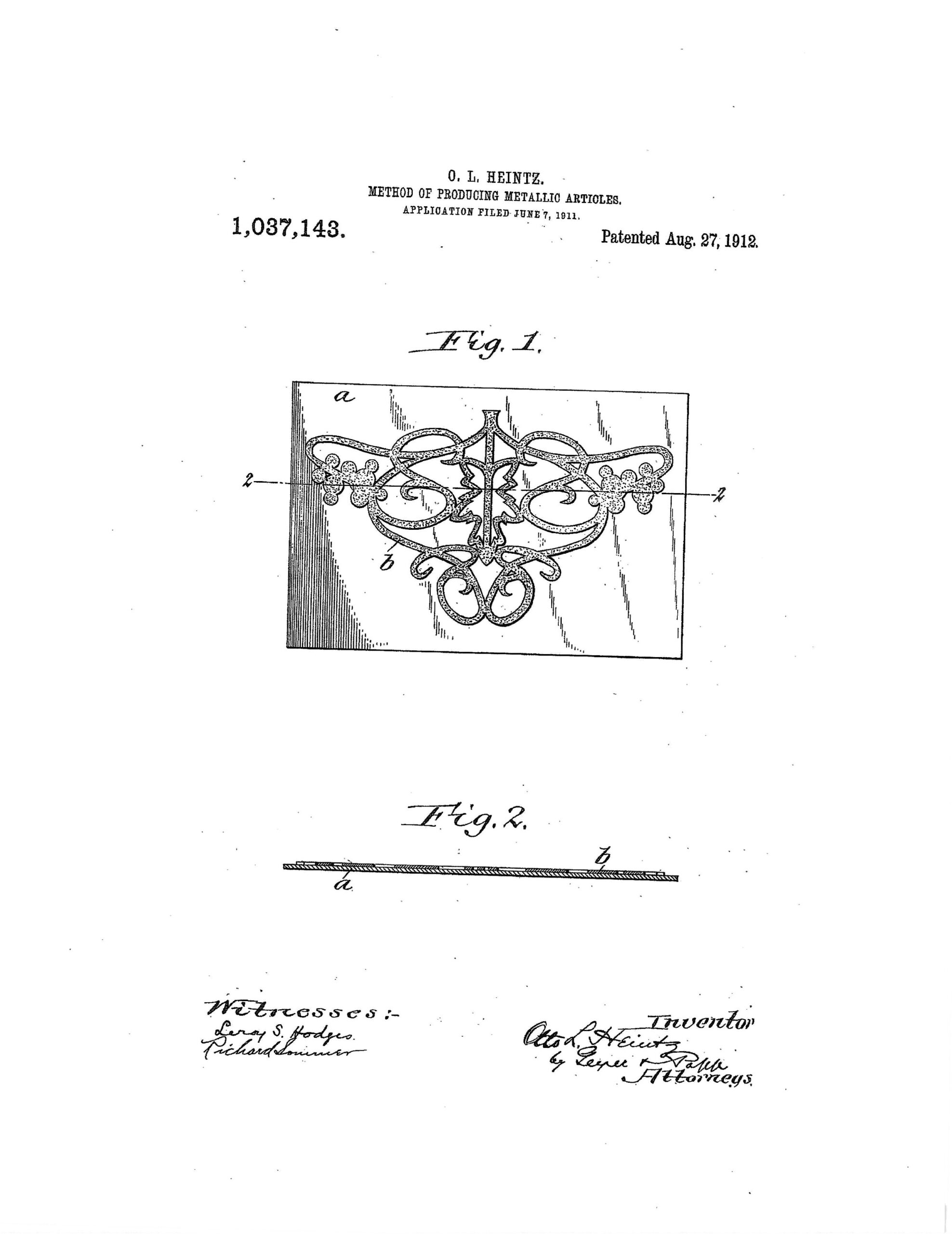
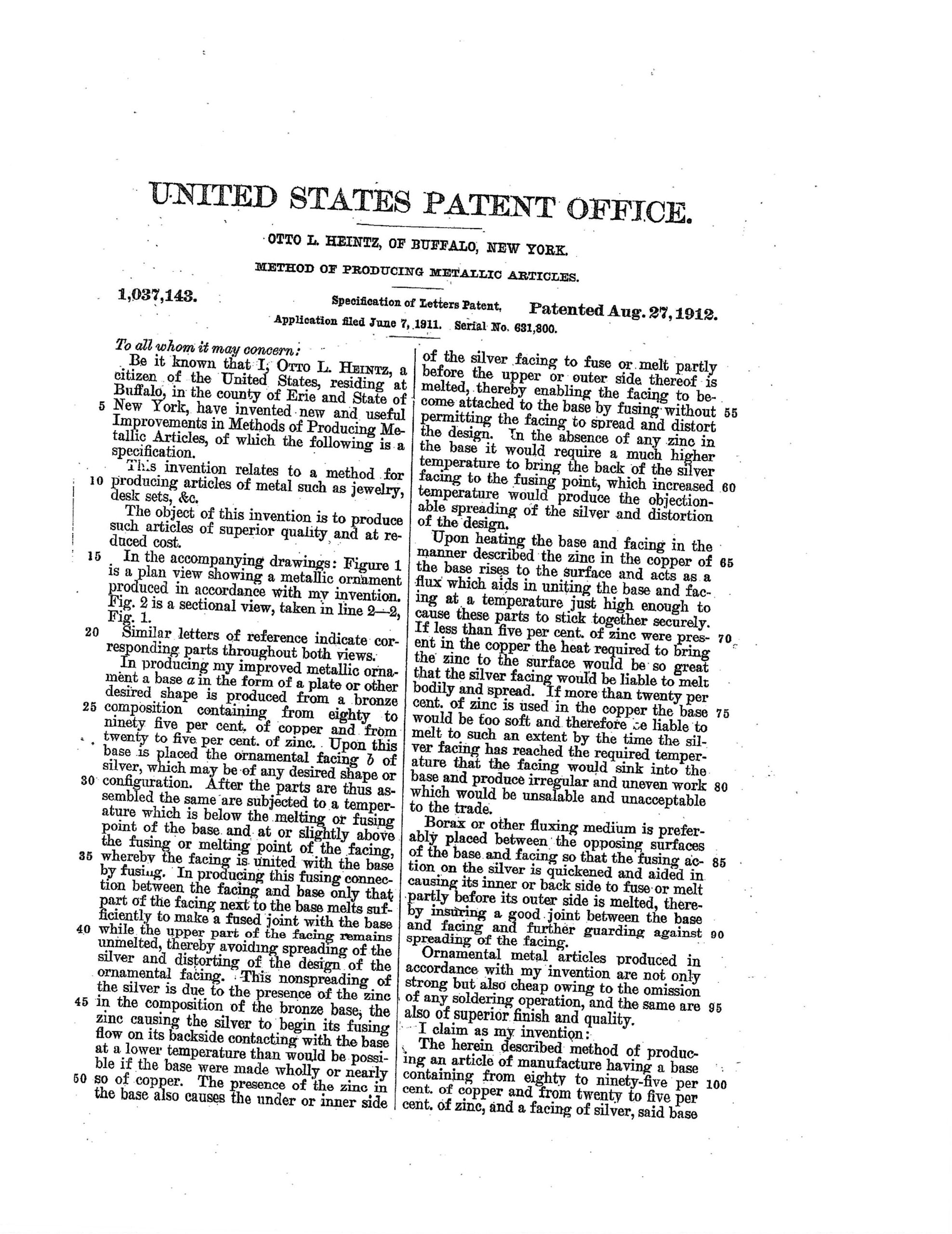
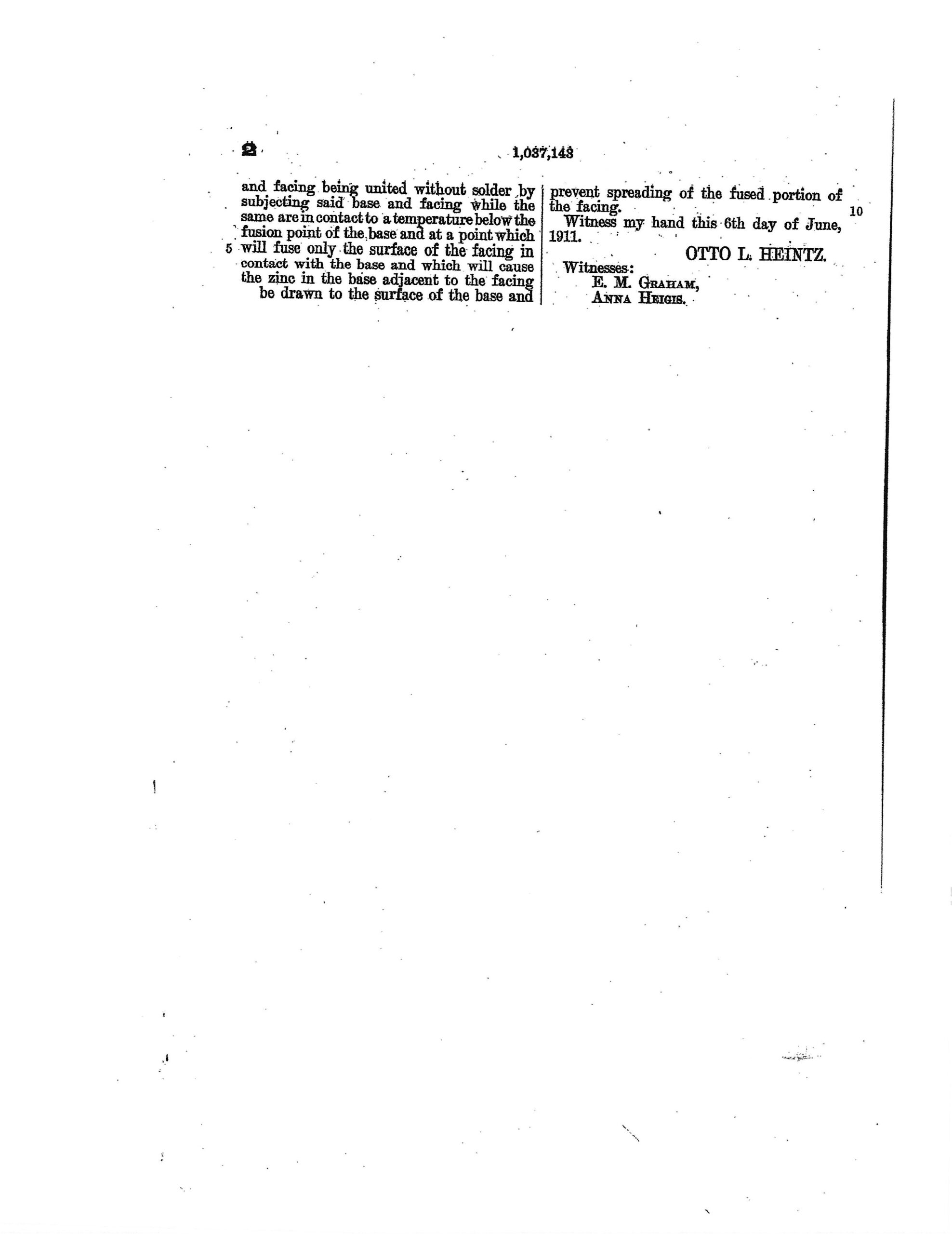
The Patent: U.S. Patent No. 1,037,143
- Filing & Grant Date: Filed by Otto L. Heintz on June 7, 1911, and granted on August 27, 1912.
- The Process: Titled “Method of Producing Metallic Articles,” the patent outlines Heintz’s breakthrough method of applying thin sterling silver sheet designs directly onto bronze bases without using solder.
- The Metallurgy: By formulating a specific bronze alloy containing roughly 80% to 95% copper and 5% to 20% zinc, the piece could be heated with a flux (such as borax) to a temperature just below the bronze melting point but right at the silver fusion point. At this temperature, the zinc drew to the surface, allowing the backside of the silver to fuse seamlessly into the bronze without melting or distorting the outer face of the silver ornament. This created a permanent bond with flush, clean edges that never degraded like soft solder.
Company History: Heintz Art Metal Shop (HAMS)
- Origins: Otto L. Heintz (1877–1918) came from a family of prominent Buffalo, New York jewelers and silversmiths (the Heintz Brothers). In 1902, Otto purchased the Arts and Crafts shop known as the Artcraft Shop, which initially experimented with copper wares overlaid with silver held by rivets or solder.
- Transition to HAMS: In 1906, the business was reorganized as the Heintz Art Metal Shop in Buffalo, shifting its primary focus to heavier bronze vessels, lamps, desk accessories, and vases.
- Peak Production: Following the perfection and patenting of their solderless fusion process in 1912, Heintz pieces gained national acclaim. Sold in high-end department stores and jewelry boutiques across North America, their goods exemplified the American Arts and Crafts aesthetic with subtle transition into early Art Deco geometry.
- Decline: Following Otto Heintz’s sudden death during the 1918 influenza pandemic at age 40, the firm continued operating under general manager Fred Smith and later became the Smith Metal Arts Company (noted for their “Silver Crest” line), eventually pivoting into mid-century executive desk accessories. Original HAMS production wound down by 1930.
This set dates to circa 1912–1918 (and no later than the early 1920s), placed firmly in the transitional era between late Arts and Crafts and early Art Deco.
-
The Patent Date Benchmark: The base stamping explicitly reads PAT. AUG. 27, 1912. Prior to this grant, Heintz wares made between June 1911 and August 1912 were stamped “PAT. APD. FOR”. The presence of the finalized patent date establishes that this set could not have been manufactured before late August 1912.
-
The Production Number (1099): In the Heintz Art Metal Shop catalog system, numbers in the 1000–1200 series were specifically designated for desk accessories and desk sets. The 1000s series was introduced in the early 1910s as Heintz expanded heavily into commercial and luxury home-office wares.
-
Design & Shop History Context: While Heintz operated until February 1930, the shop’s core creative output and prime retail distribution peaked between 1912 and 1918 (ending with Otto Heintz’s death in the 1918 flu epidemic). The stylized, geometric rectilinear border on pattern #1099 reflects the trend popular right around 1914–1918, when American decorative metalwork moved away from naturalistic Art Nouveau florals toward structured, architectural lines.
Set sold for $310 in August 2026
Content disclaimer. The information posted is the owner’s best knowledge and may not have been vetted by the SOIC. We welcome comments, corrections, and additions, working to make our website information comprehensive and accurate.
Join the Society of Inkwell Collectors (SOIC) – it’s free!
Founded in 1981 as a non-profit organization,
we are documenting inkwells (and accessories).
We’re here to help and inform!