

Inkipedia
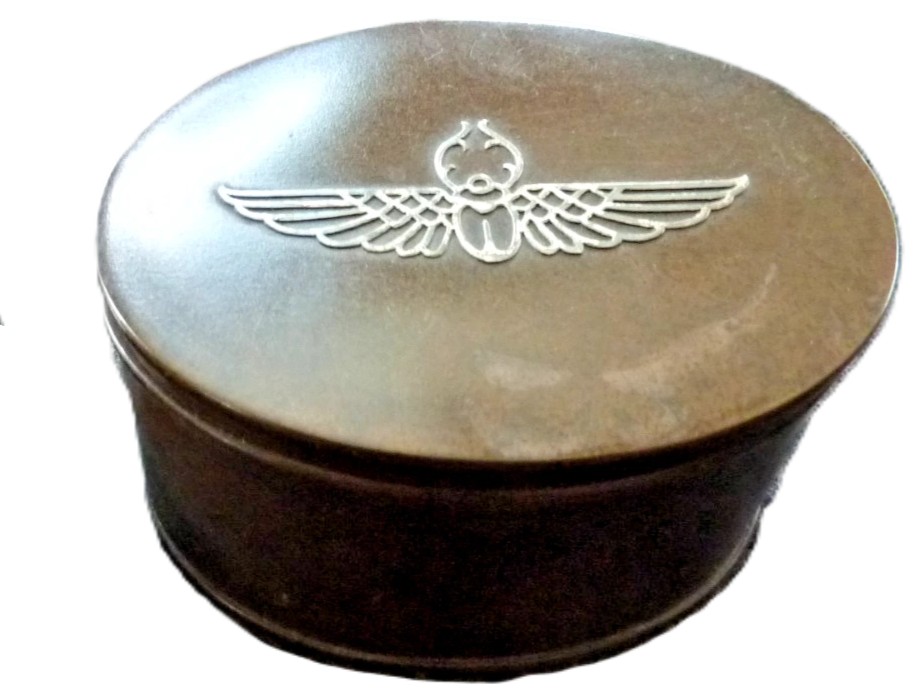
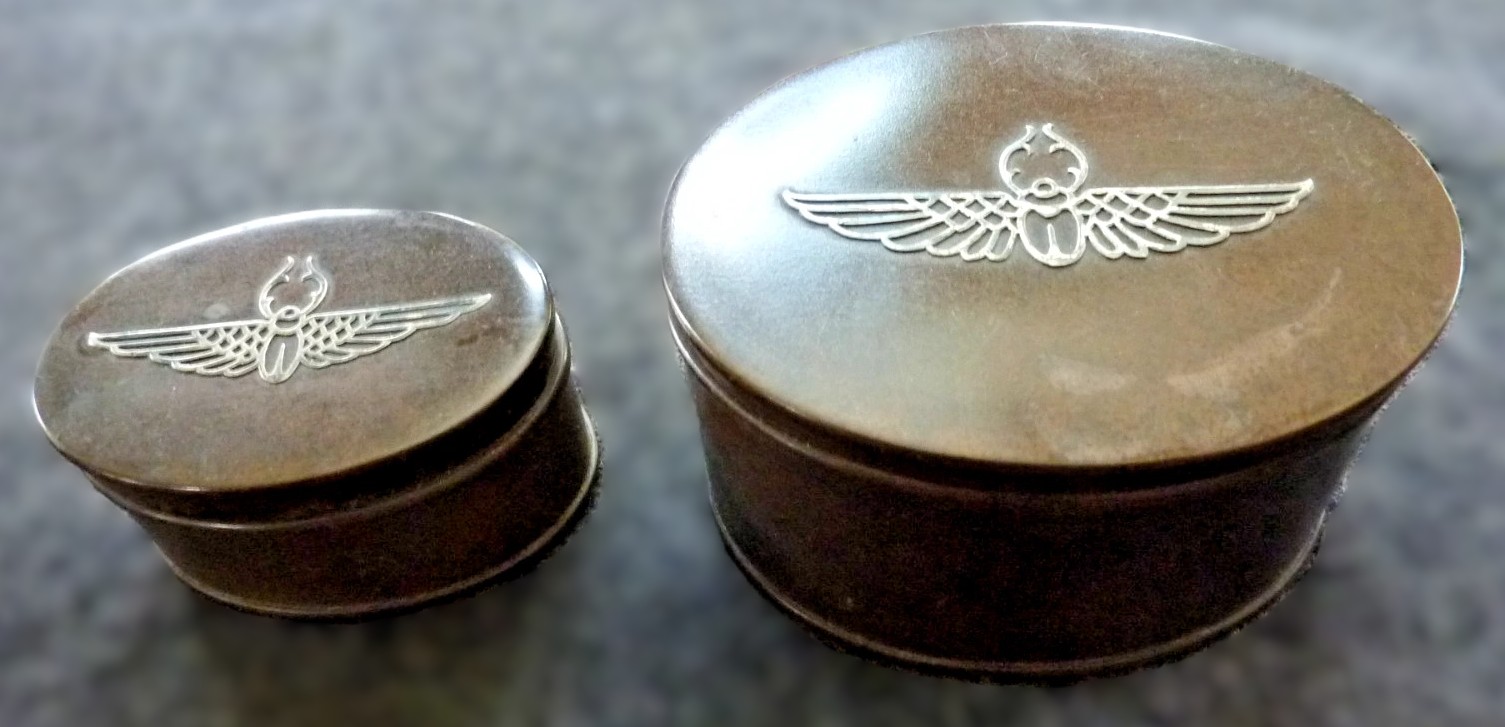
Heintz Art Metal Inkwell and Matching Stamp Box
| Categories | Arts & Crafts |
| Material | Silver on Bronze |
| Markings | See Narrative |
| Manufacturer | Heintz |
| Origin | United States |
| Date or Era | circa 1915 |
| Measuring | 4” x 2 ¾” (inkwell) |
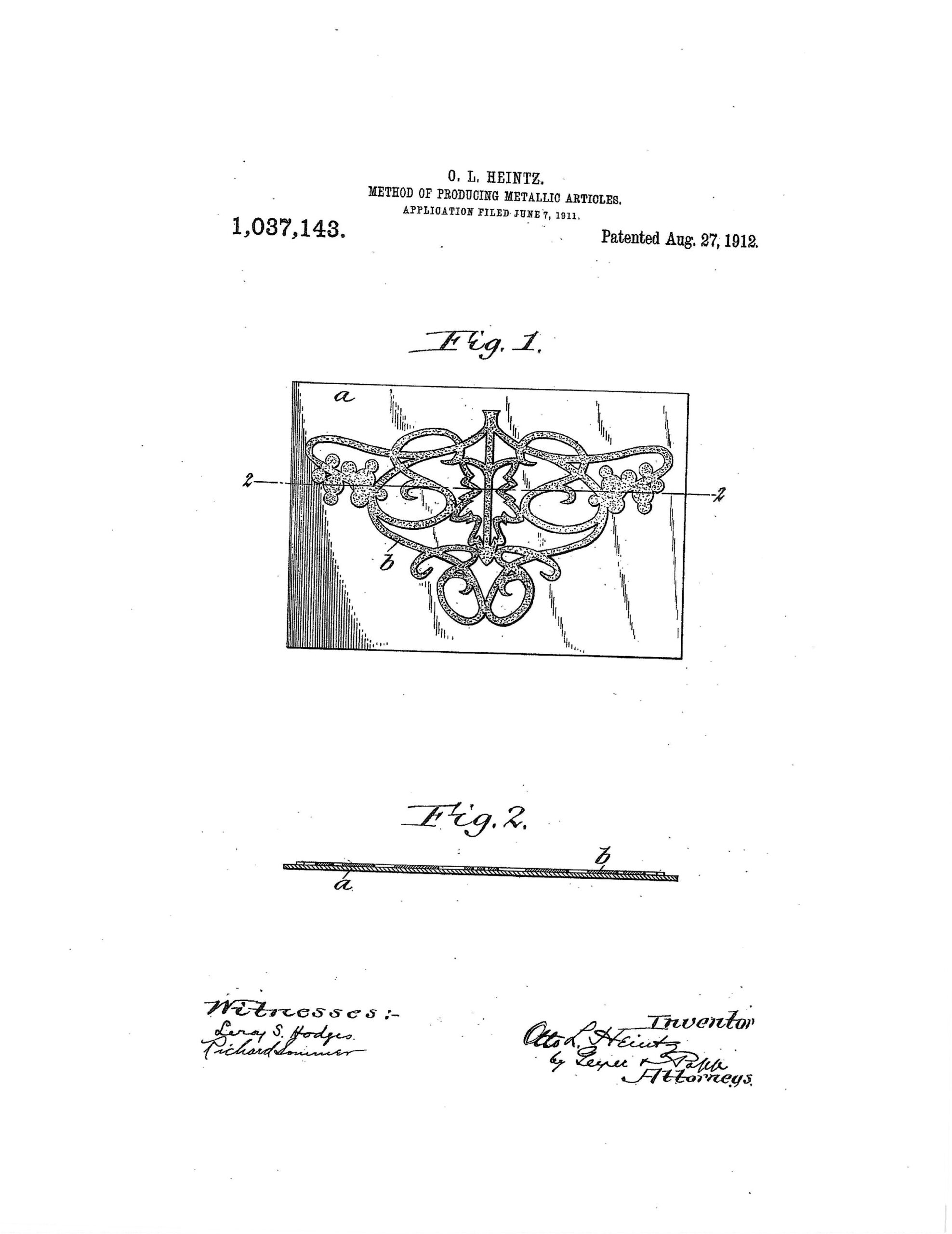
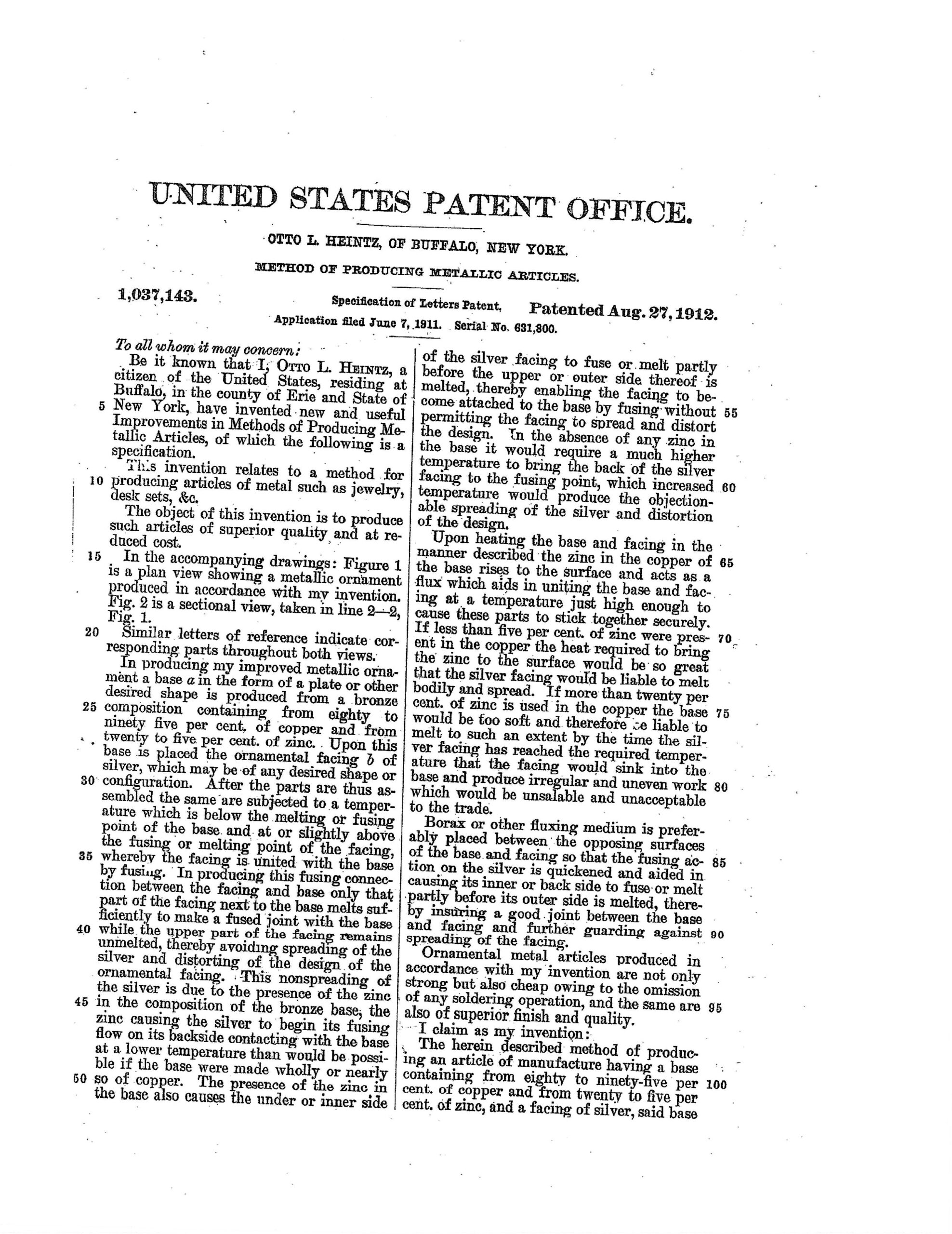
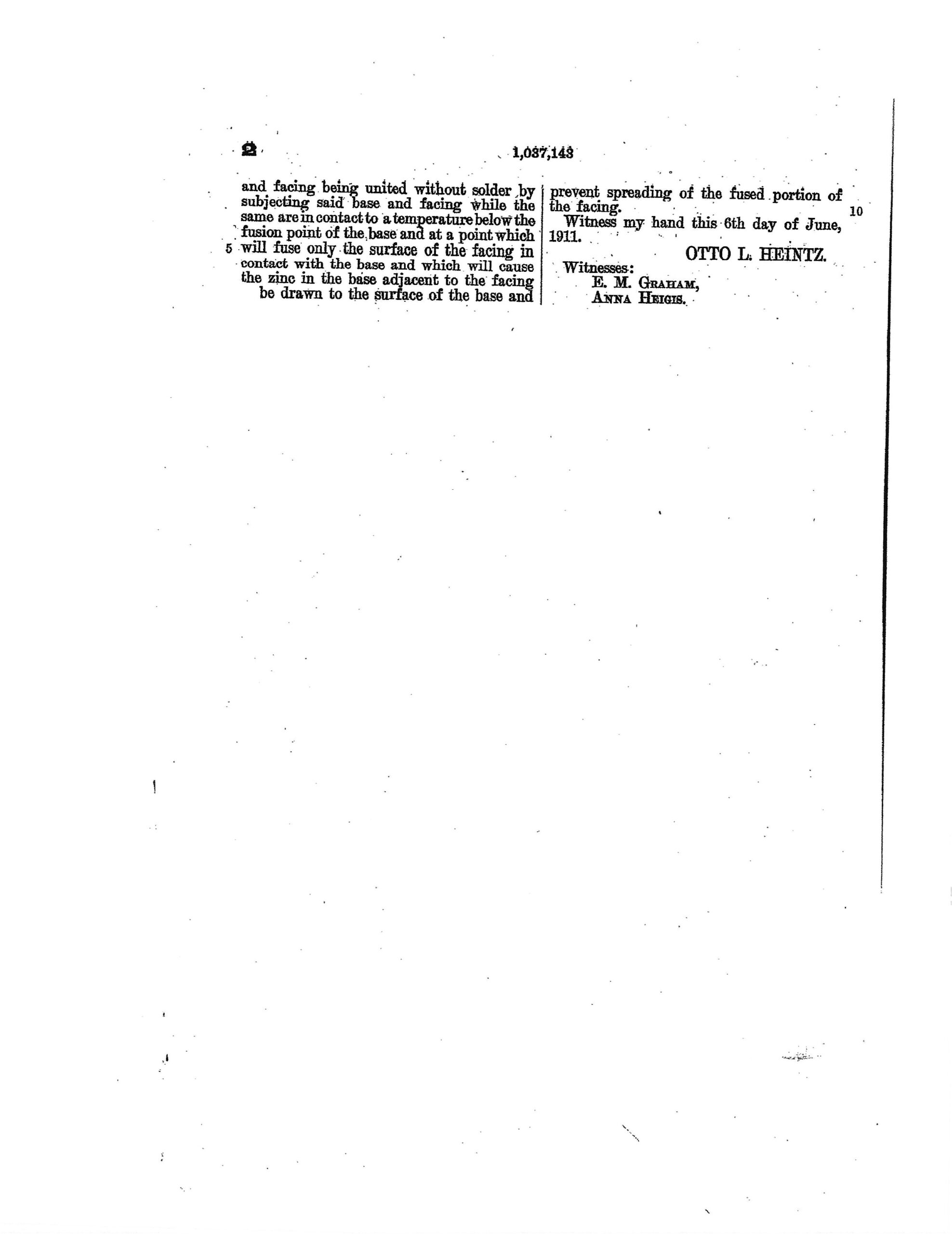
| Patent | Patented August 27, 1912, #1,037,143 |
Description
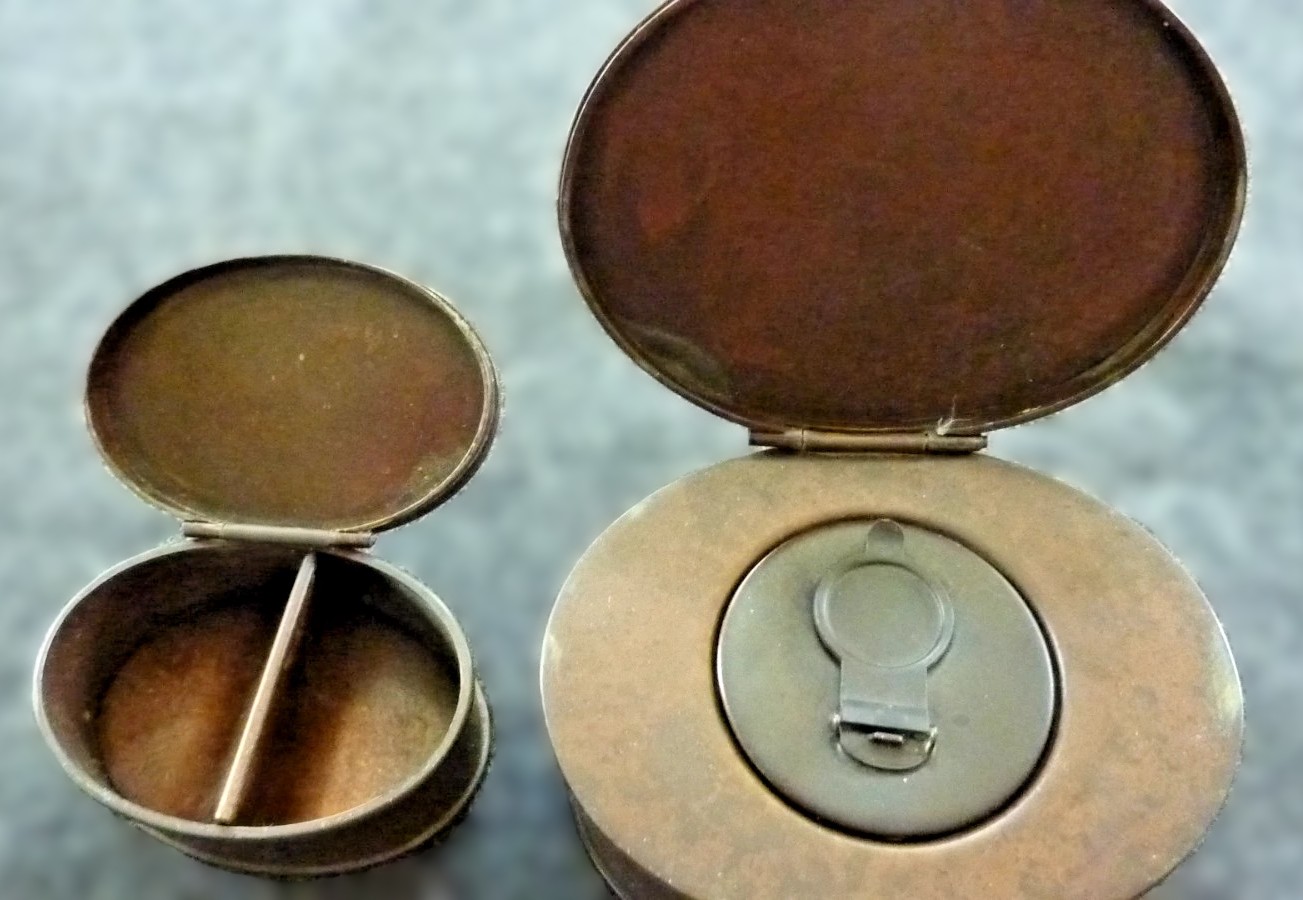
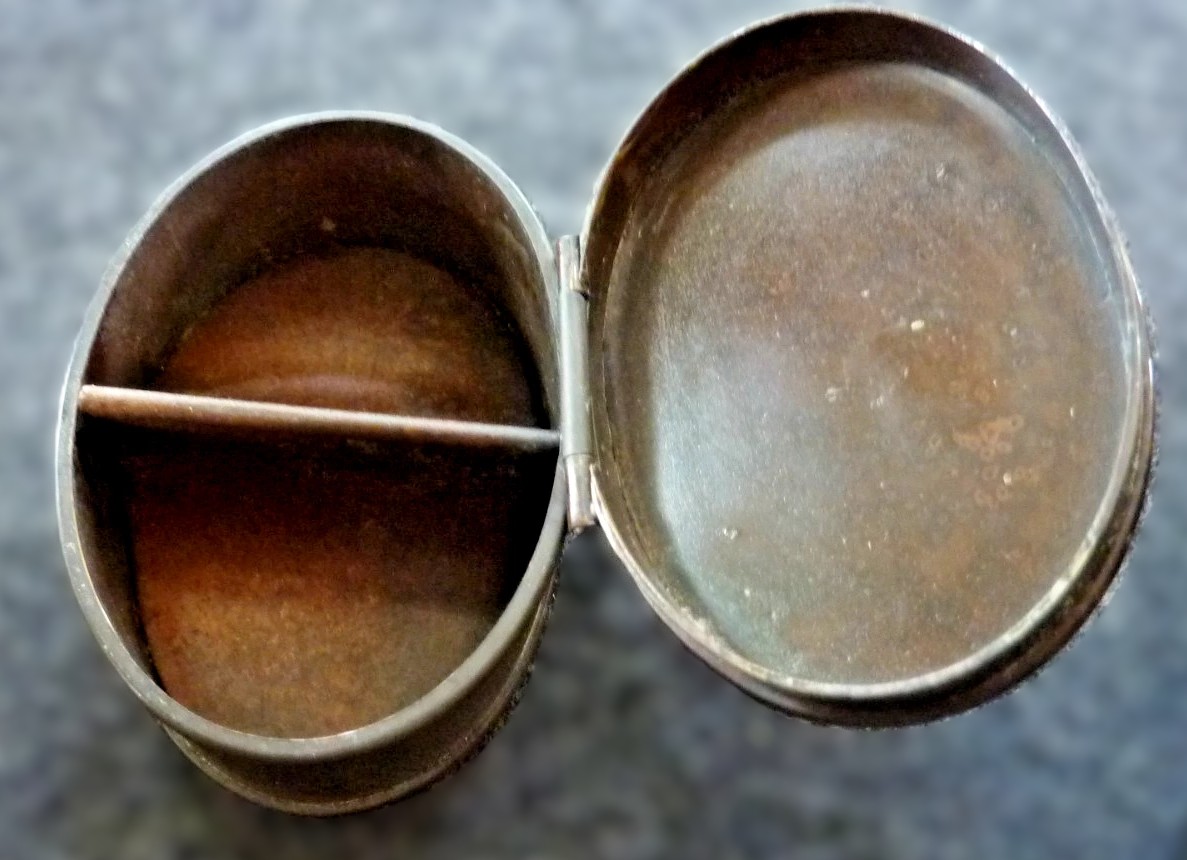
- Stamp Box (Model #1007 S): An oval bronze container with a hinged cover. The interior is fitted with a central vertical divider separating two sloped compartments designed to hold different denominations of postage stamps.
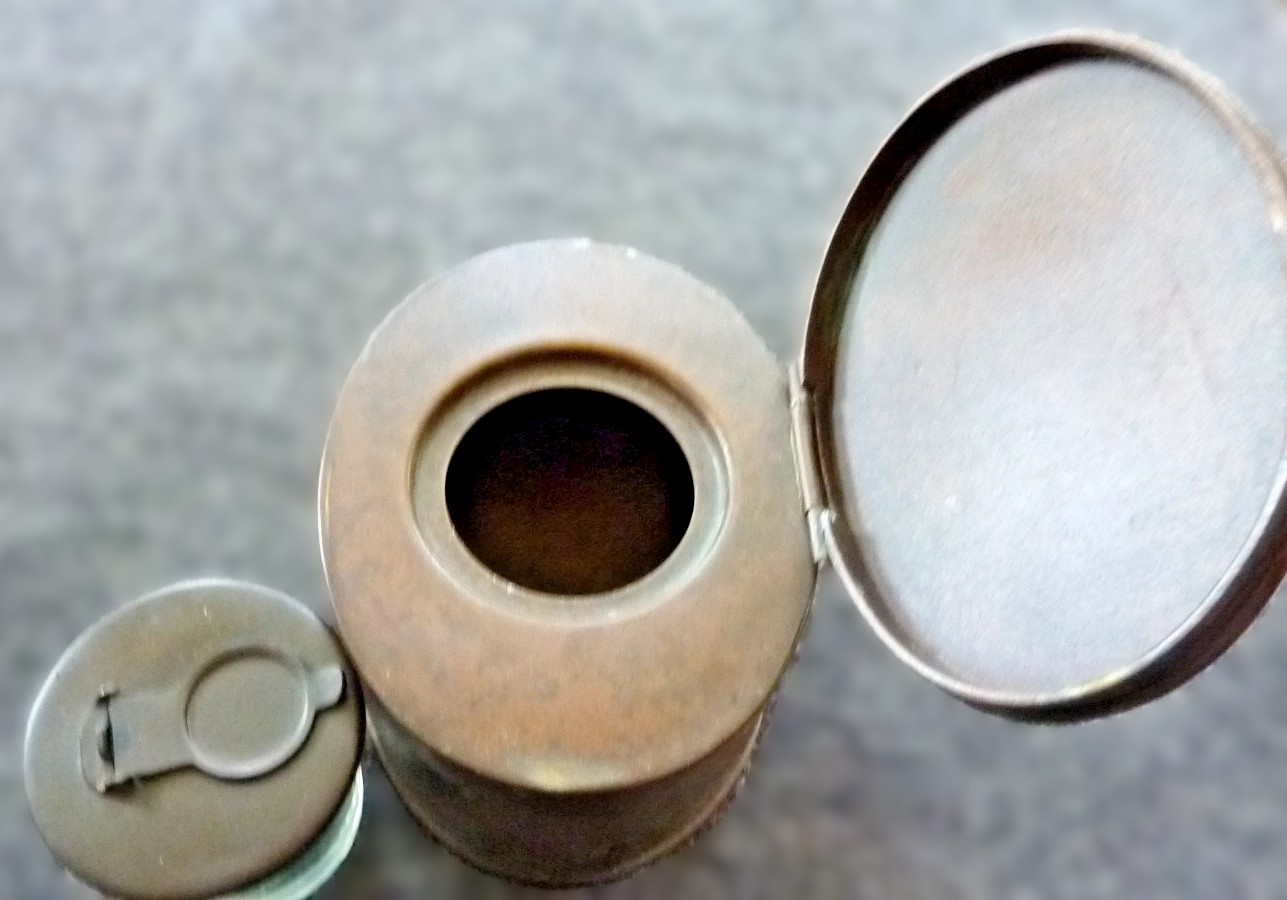
- Inkwell: A matching oval bronze vessel featuring an identical stepped profile and hinged lid. Opening the lid reveals an inner deck holding a removable glass ink bottle fitted with an integrated bronze flip-cap lid.
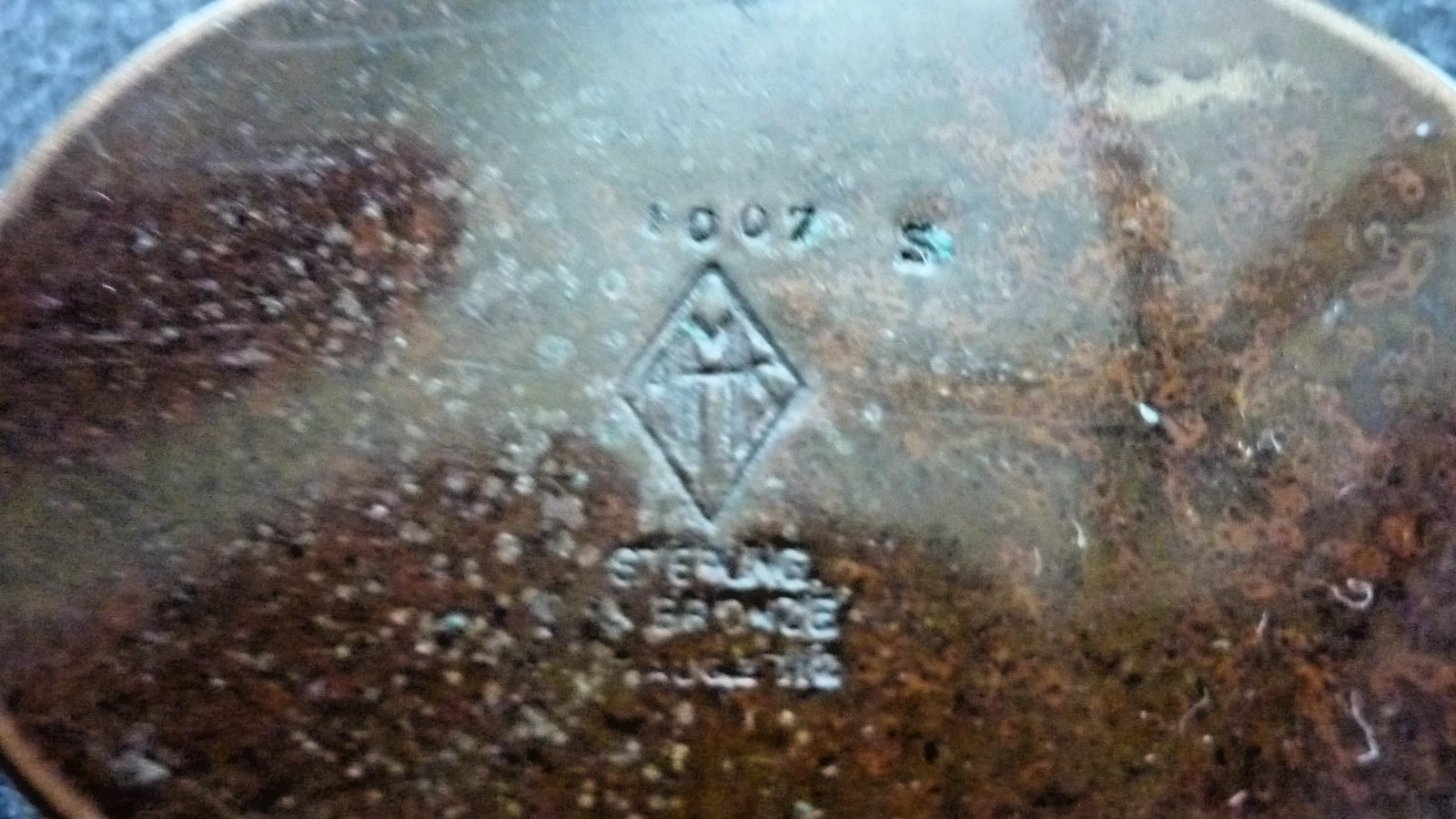
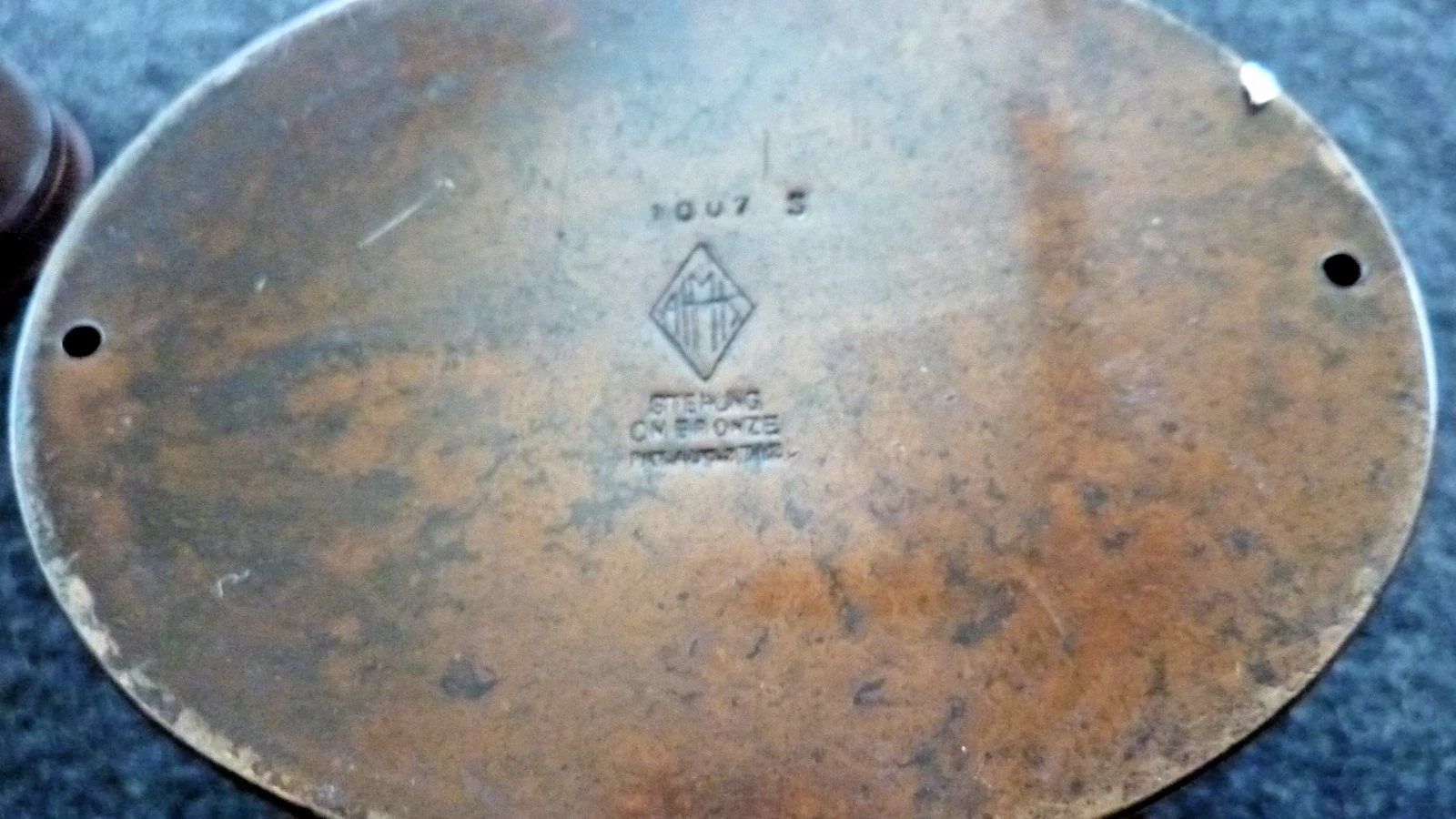
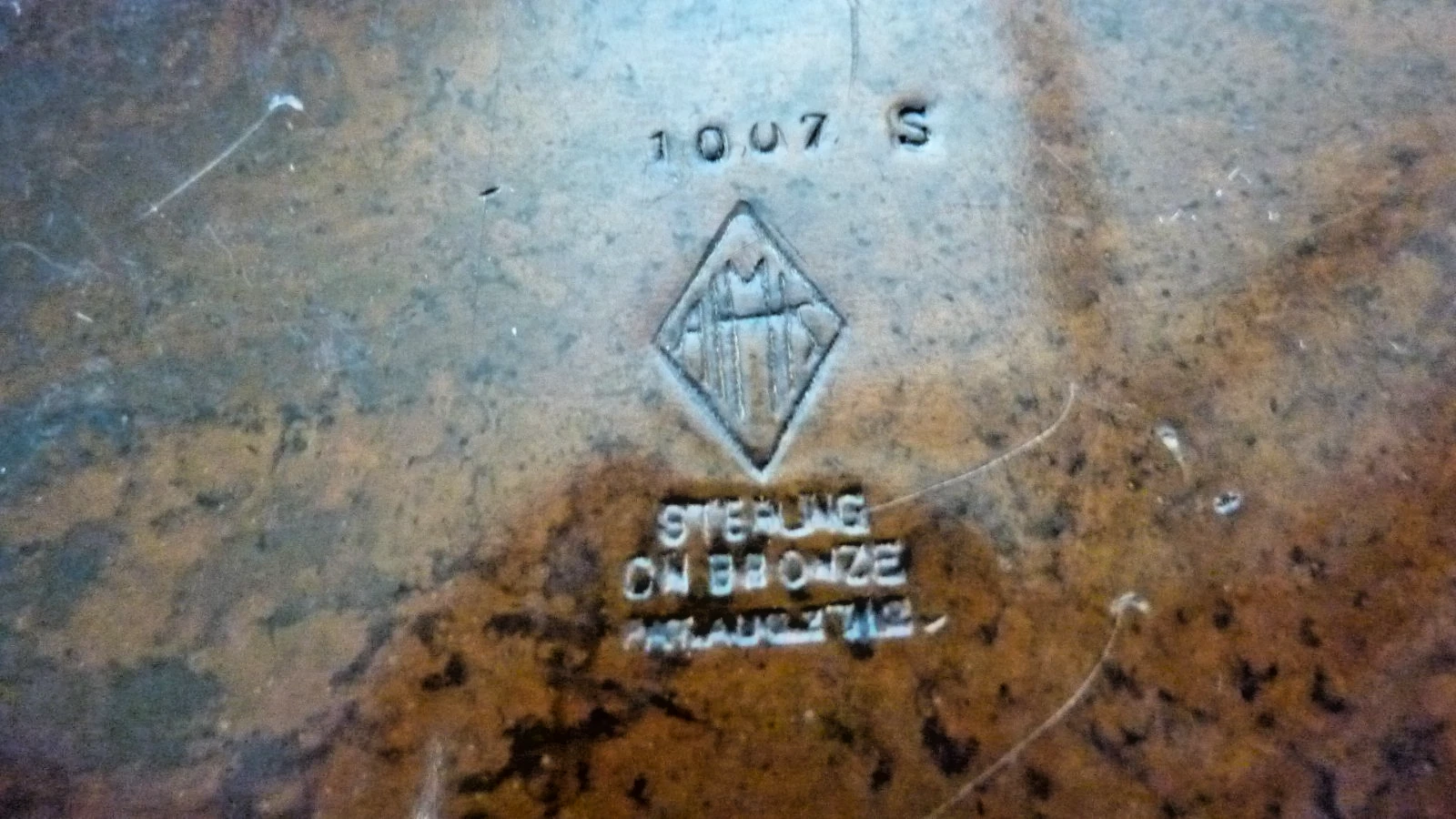
- Markings: Both bases bear the stamped catalog number 1007 S, the diamond-shaped HAMS logo (Heintz Art Metal Shop), and the stamp “STERLING ON BRONZE / PAT. AUG. 27. 12”.
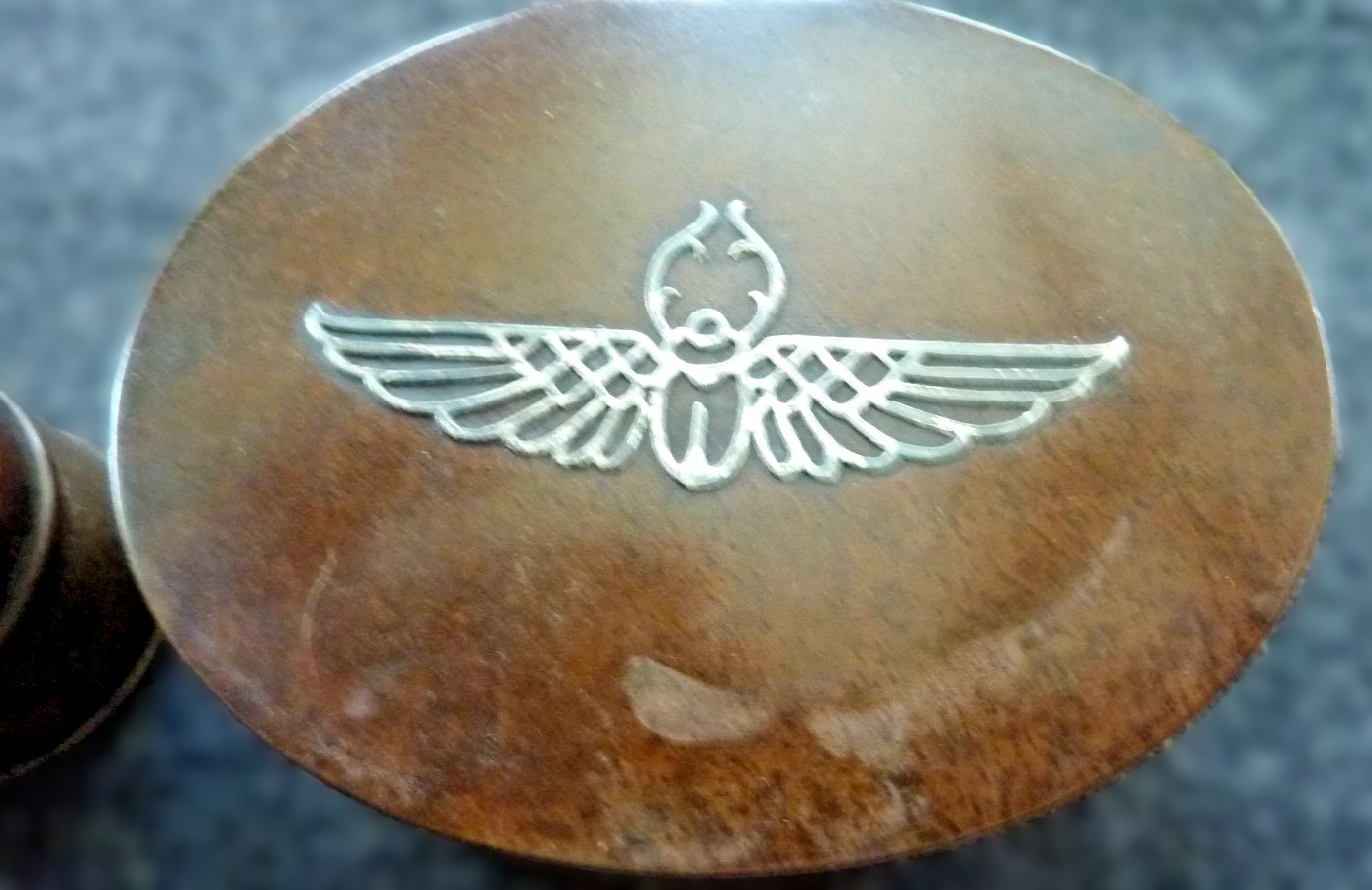
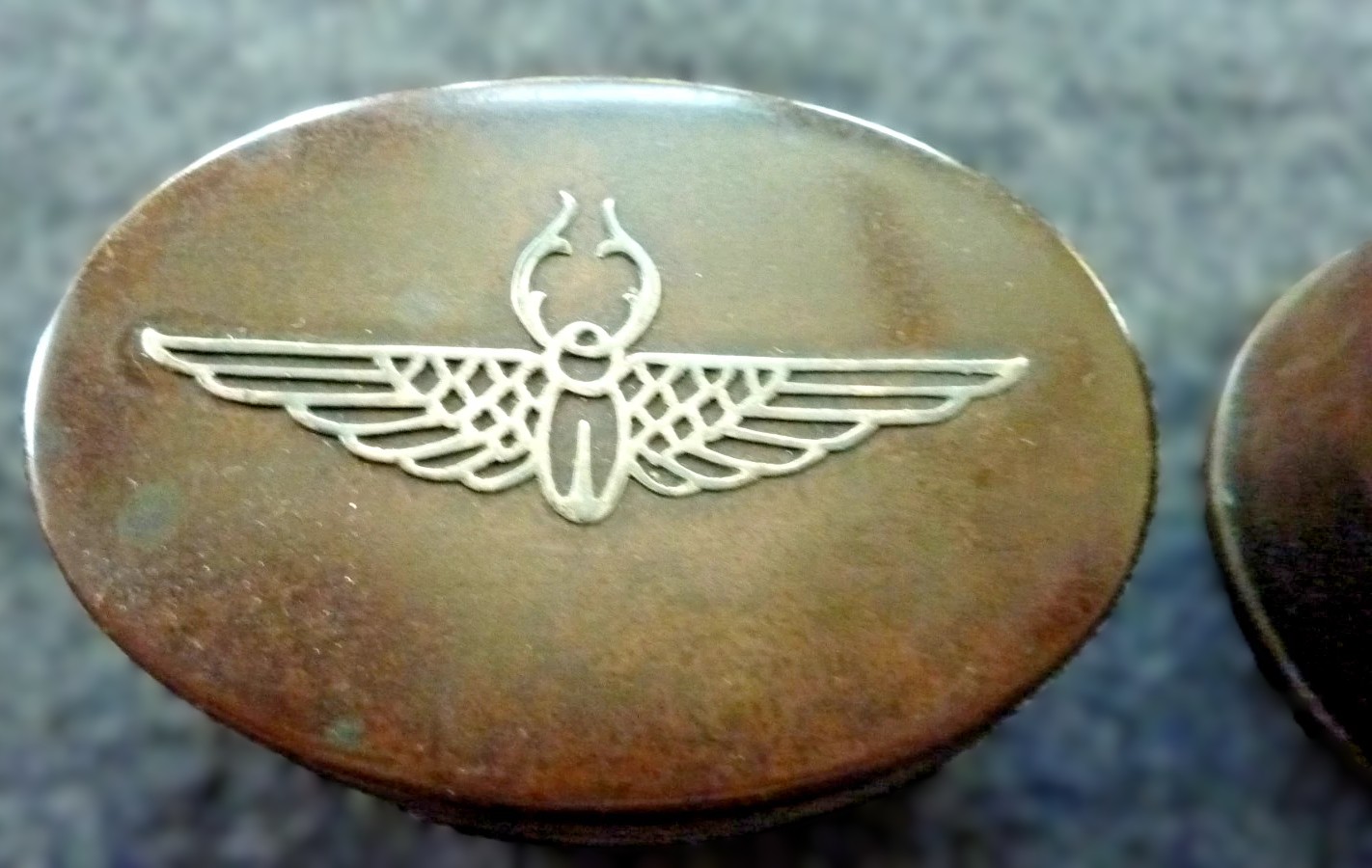
The Silver Design Motif
- Design: A stylized winged scarab (often described in decorative arts as an Egyptian Revival motif). Scarabs and winged beetles were popular motifs in early 20th-century decorative design, symbolizing renewal and protection.
- Technique: The process is known as sterling silver overlay on bronze (commonly stamped as Sterling on Bronze).
Date of Manufacture
- Circa 1912–1920s: The stamped date “PAT. AUG. 27. 12” marks the date the patent was granted, not the exact day of fabrication. Production began after August 1912 and continued until the company closed in February 1930, with the bulk of Arts & Crafts desk sets produced between 1912 and the early 1920s.
Heintz Art Metal Shop Background
- Origins: Otto L. Heintz was raised in a Buffalo, New York, family of manufacturing jewelers. Around 1902, he purchased a small firm and established The Art Crafts Shop, producing copper objects accented with colorful champlevé enamels.
- Shift to Bronze: By 1906, Heintz renamed the business the Heintz Art Metal Shop (HAMS) and transitioned from hand-hammered copper to spun and cast bronze decorated with sterling silver.
- Success and Closure: Heintz became nationally renowned for pairing rich, chemical patinas (such as mottled brown, verde green, and iridescent royal red) with sterling accents. Following Otto Heintz’s death in 1918, the shop continued operations under executive Fred Smith until closing in 1930 amidst the Great Depression.
How It Was Made & The 1912 Patent (#1,037,143)
- The Problem: Prior methods of securing silver designs to bronze relied either on soft/hard soldering or heavy mechanical rivets. Solder seams were unsightly, fragile over time, and caused discoloration when the piece was subjected to the heat and chemical baths required to create fine patinas.
- The Patented Innovation: Granted on August 27, 1912, Otto Heintz’s patent protected a method for applying sterling silver sheet directly onto bronze without solder.
- The Process: The decorative motif was cut or stamped from sheet sterling silver. The bronze base and silver overlay were chemically cleaned, fluxed, and fused under heat and mechanical pressure (or molecular contact bonding), effectively brazing or fusing the metals at an atomic level.
- Why It Succeeded: Because no lead- or tin-based solder was introduced, the finished piece could be turned, chased, and treated with hot liver-of-sulfur or acid patina baths without compromising the bond or discoloring the silver margins.
Inkwell and stamp box together sold for $106 in August 2026
Content disclaimer. The information posted is the owner’s best knowledge and may not have been vetted by the SOIC. We welcome comments, corrections, and additions, working to make our website information comprehensive and accurate.
Join the Society of Inkwell Collectors (SOIC) – it’s free!
Founded in 1981 as a non-profit organization,
we are documenting inkwells (and accessories).
We’re here to help and inform!