

Persian Qajar Dynasty Qalamdan
| Categories | Middle East / Africa |
| Type | Qalamdan / Divit |
| Material | Metal |
| Markings | See Narrative |
| Manufacturer | Undetermined |
| Origin | Iran / Persia |
| Date or Era | circa 1860 |
| Measuring | 9 ½” long |
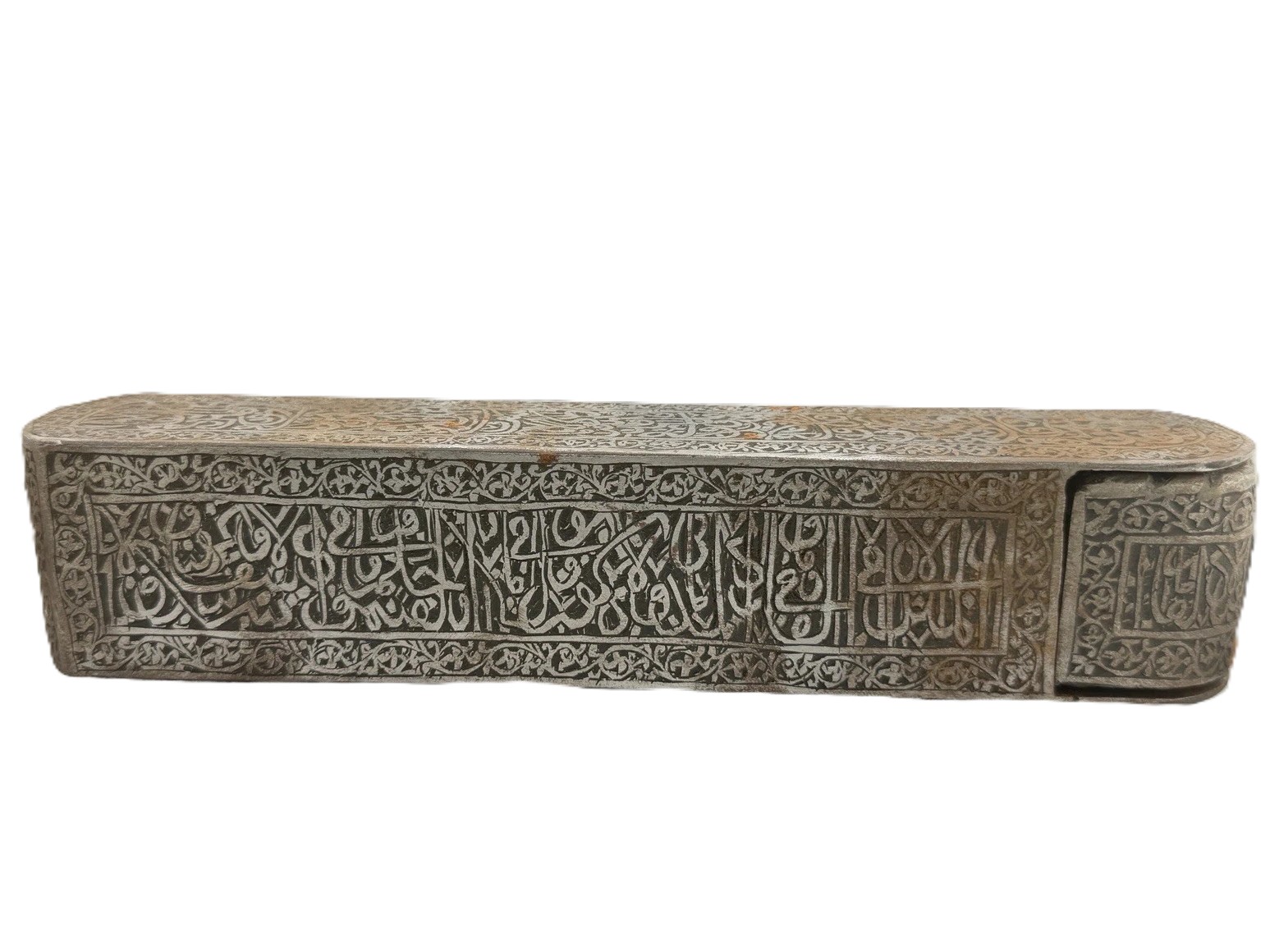
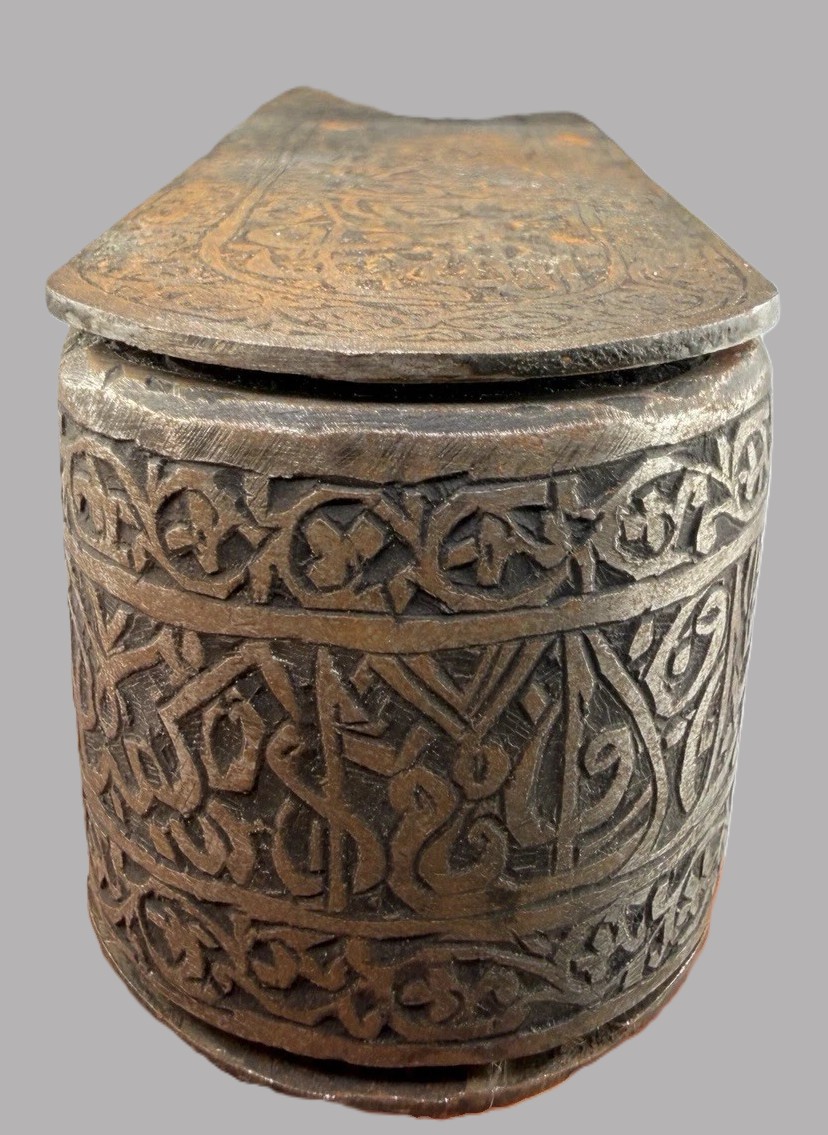
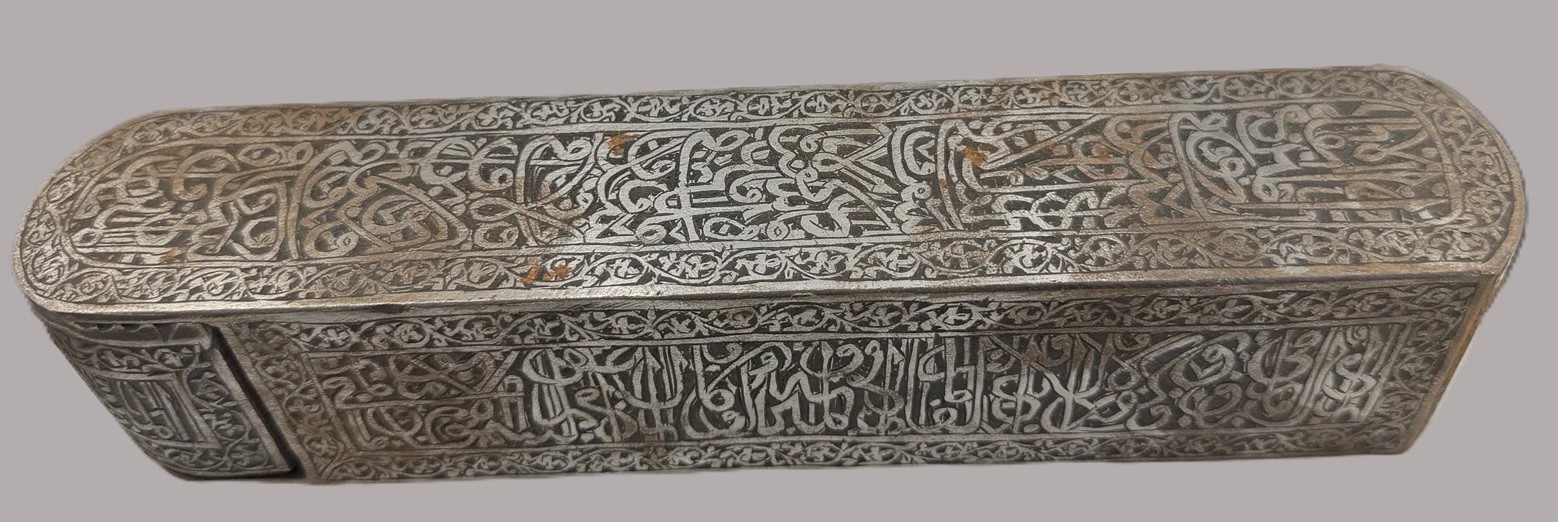
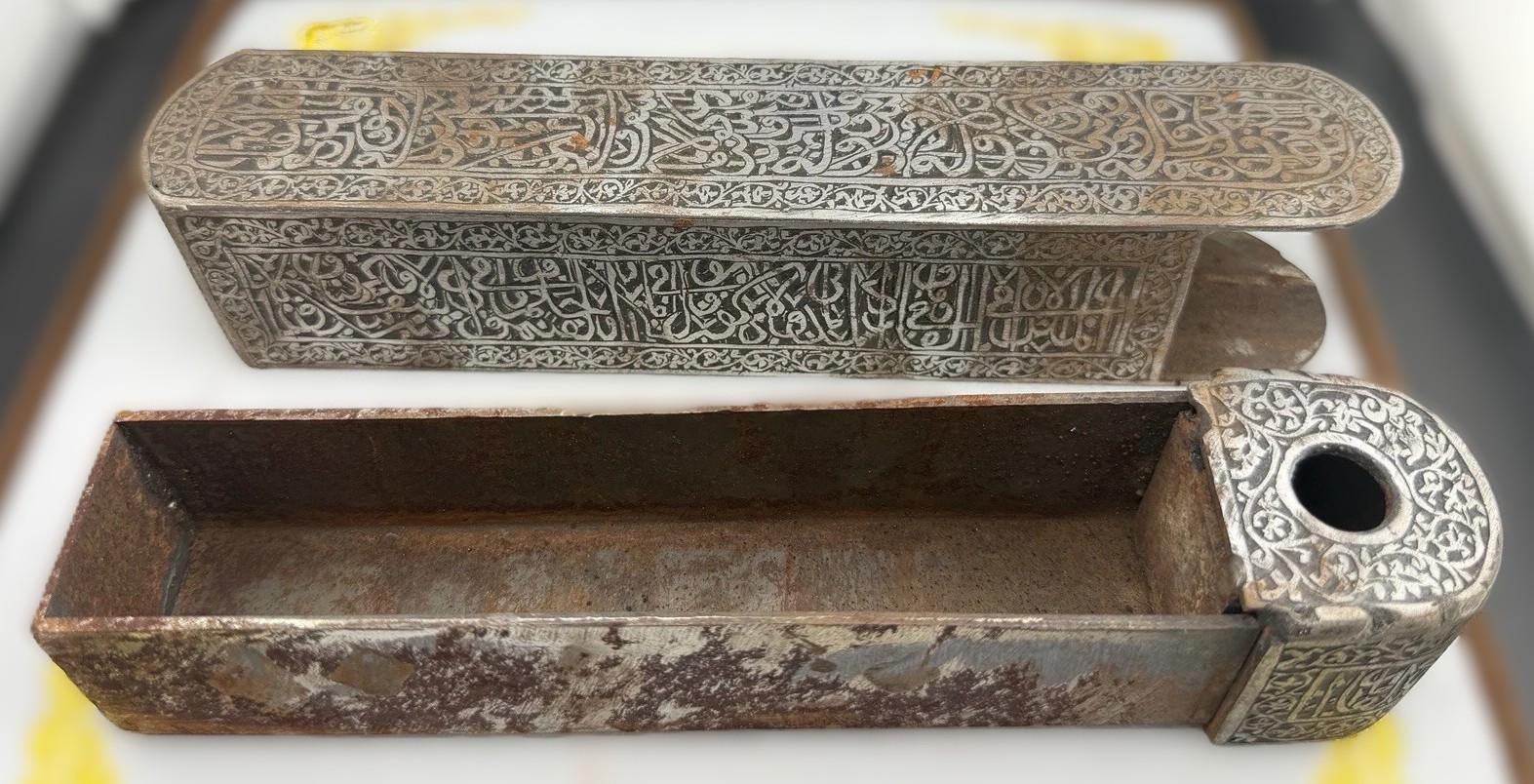
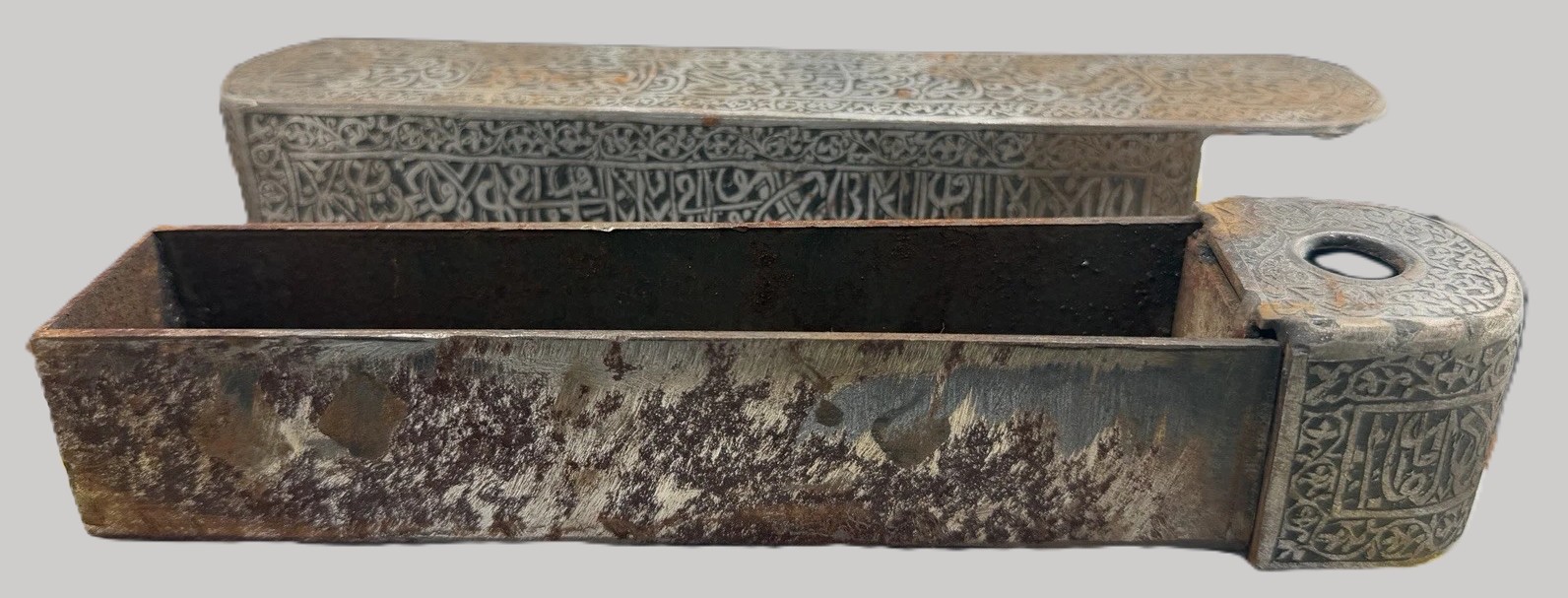
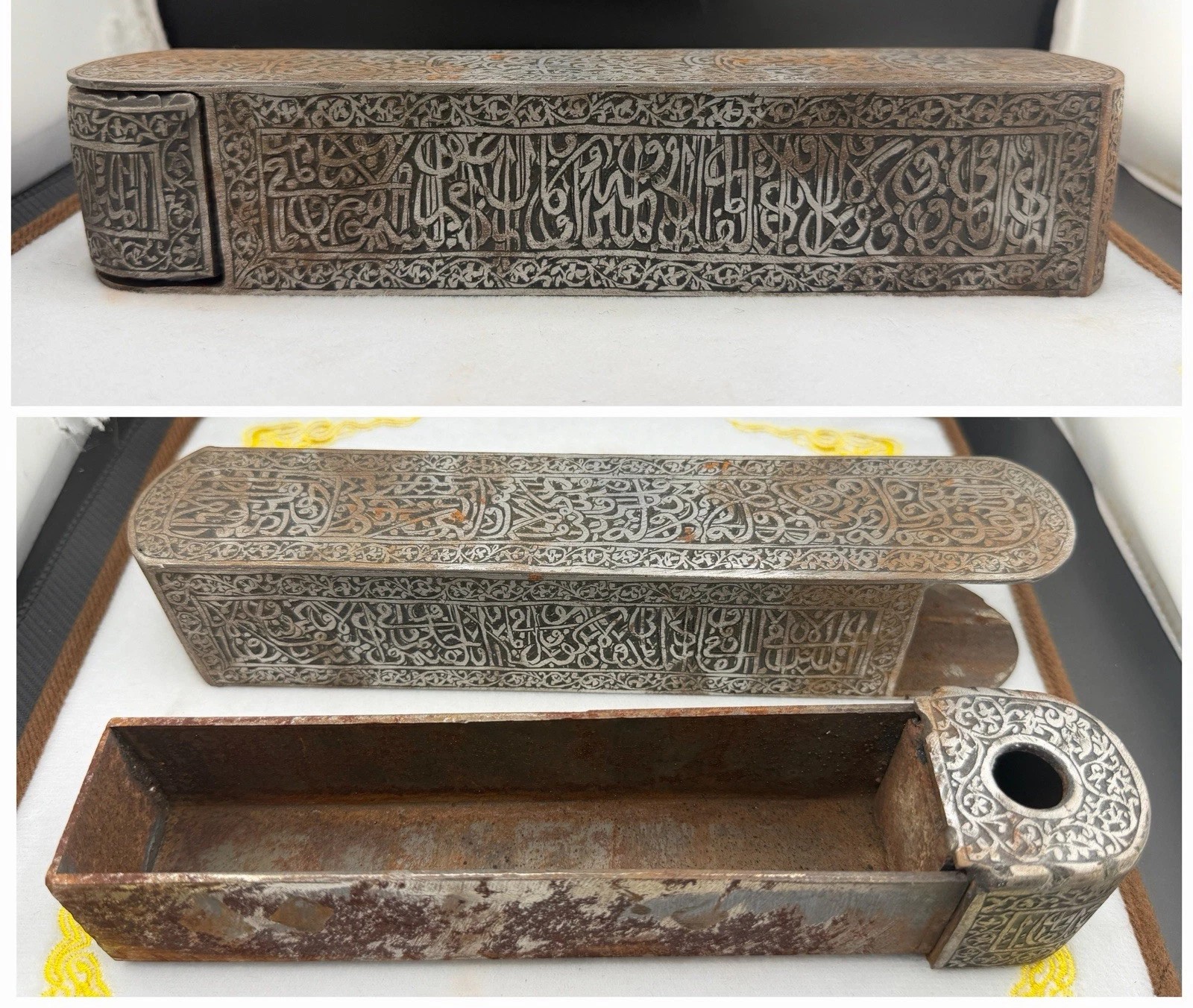
This piece is a classic Persian Qajar Dynasty chiseled steel pen box (qalamdan) with an integrated inkwell (dawat), dating to the 19th century (circa 1830–1890).
Origin: Persian (Qajar Iran)
This specific form, metallurgical craftsmanship, and decorative scheme are quintessential Qajar Persian (Iran).
- Form & Material: 19th-century Qajar metalworkers revived intricate Safavid-style chiseling on hardened iron and steel. Pen boxes from Ottoman Turkey (divit) or Central Asia/Afghanistan typically employed brass or silver-plated bronze and had distinct profiles (such as long tubular barrels with bulbous ink pots).
- Sliding Drawer Architecture: The rounded, elongated oblong sleeve with a sliding drawer directly mimics the form of Persian papier-mâché lacquer qalamdans popular in Isfahan, Shiraz, and Tehran during the Qajar era.
Calligraphy and Decorative Iconography
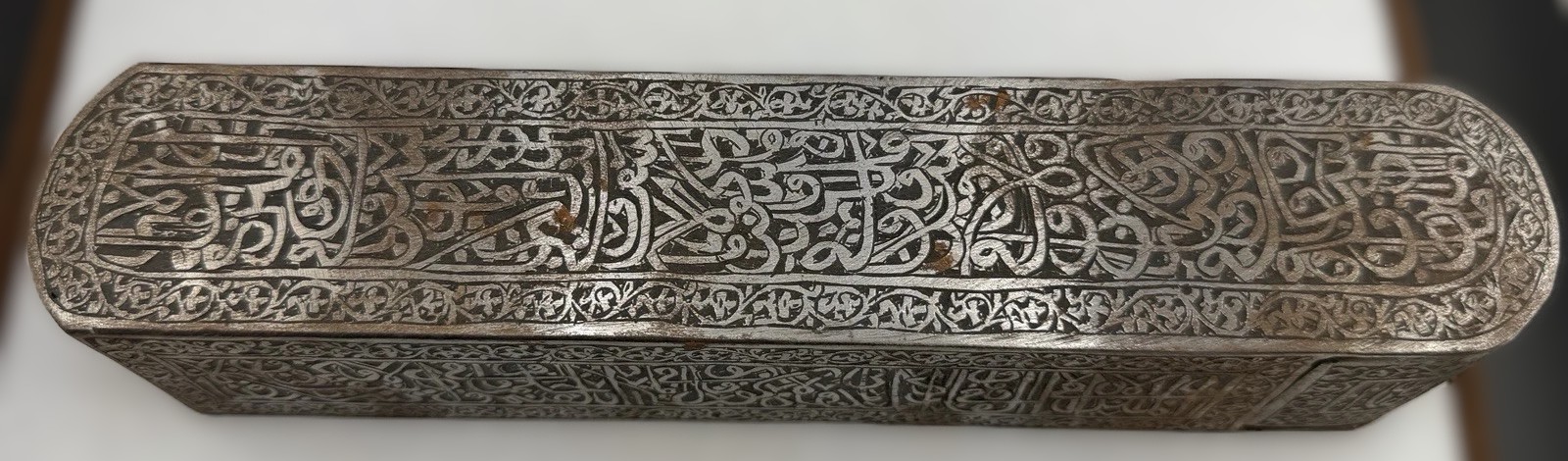
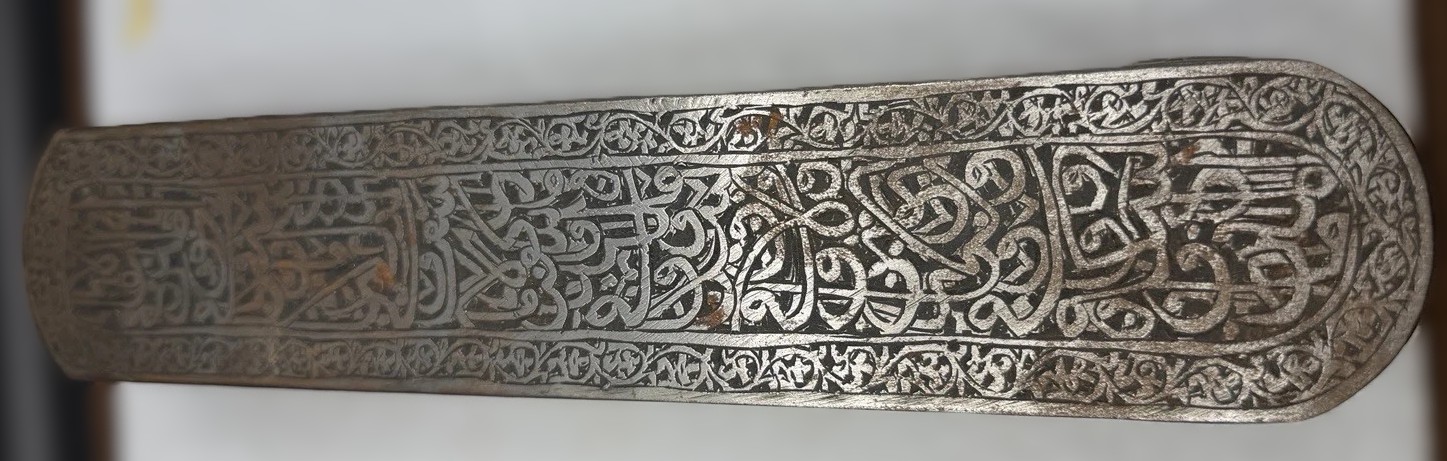
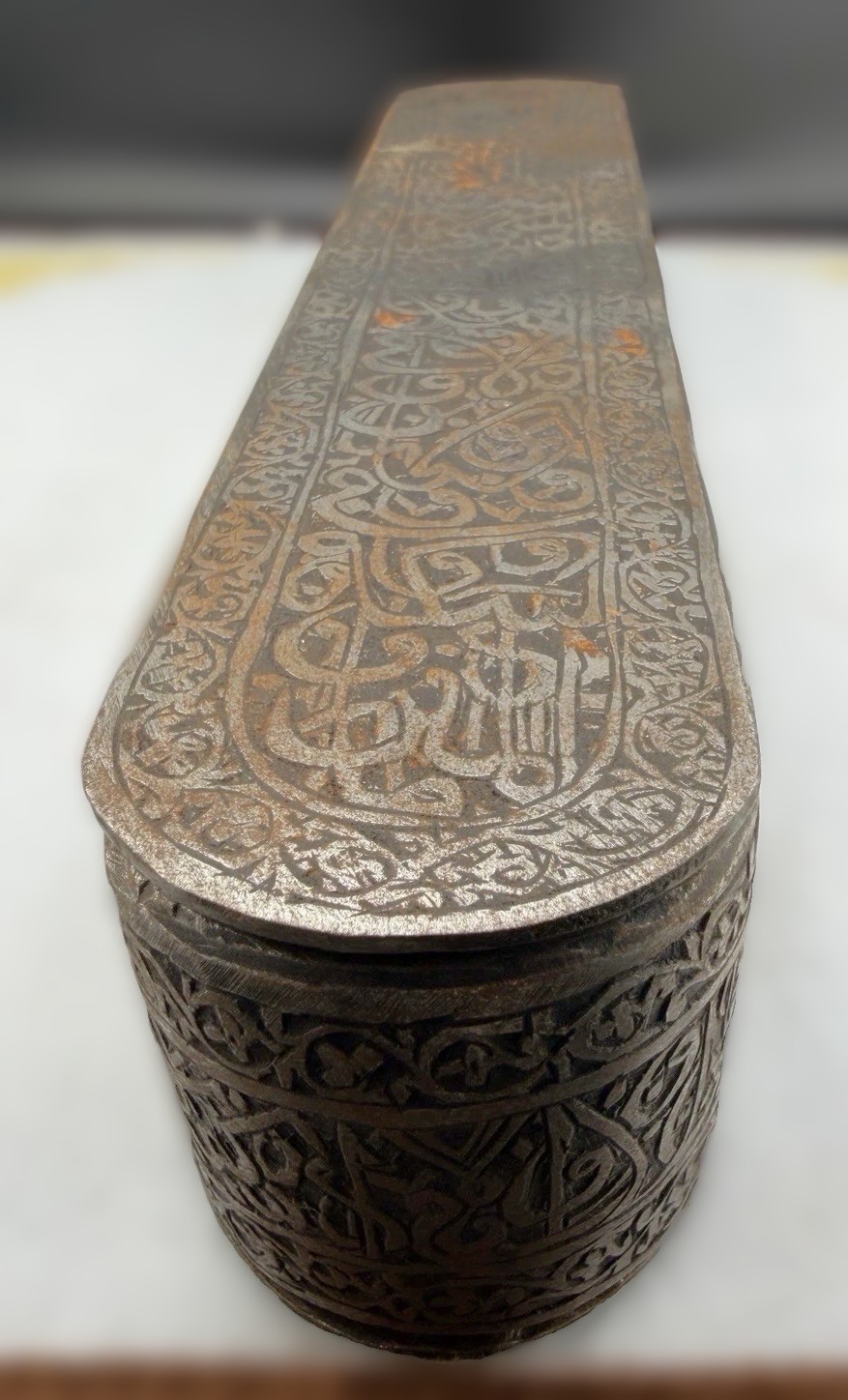
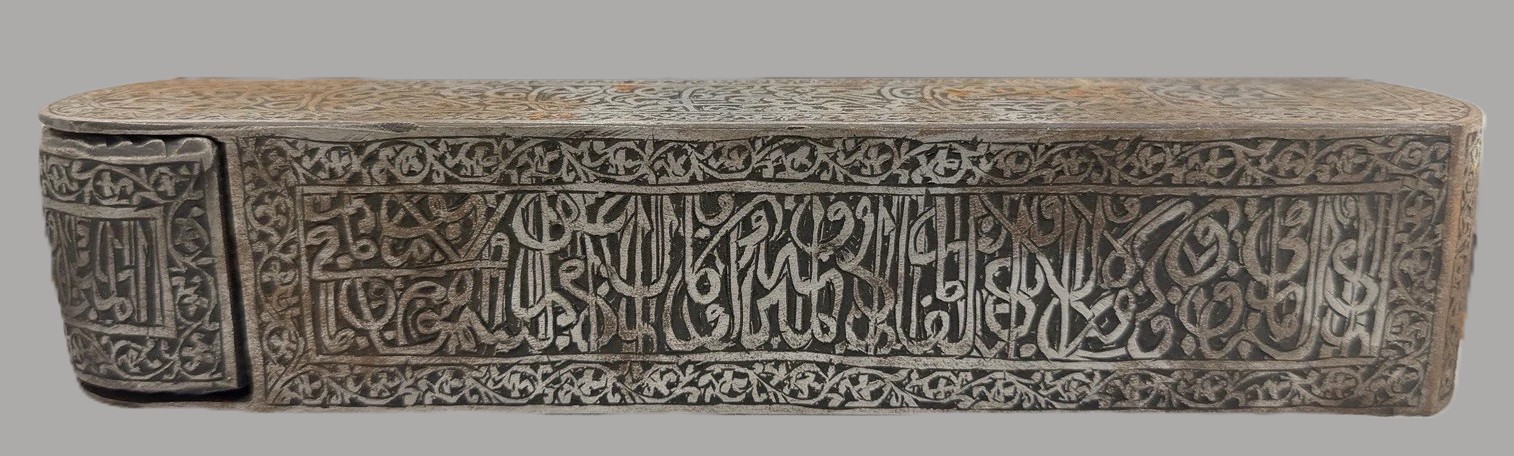
The box is chiseled and acid-etched into high relief, with a blackened, cross-hatched background (niello or oxidization) creating sharp contrast with the burnished steel highlights.
- The Calligraphy (Top & Sides): Rendered in fluid, interwoven cursive script (a stylized Thuluth or Nasta’liq), bordered by intricate floral vine scrolls (islimi or arabesque).
- In Qajar scribal culture, such inscriptions typically consist of Persian poetic verses (often celebrating the noble craft of writing, the pen, or wisdom by poets like Saadi or Hafez), invocations to God and the Prophet Muhammad, or Qur’anic verses (such as the Ayat al-Kursi or Surah Al-Ikhlas).
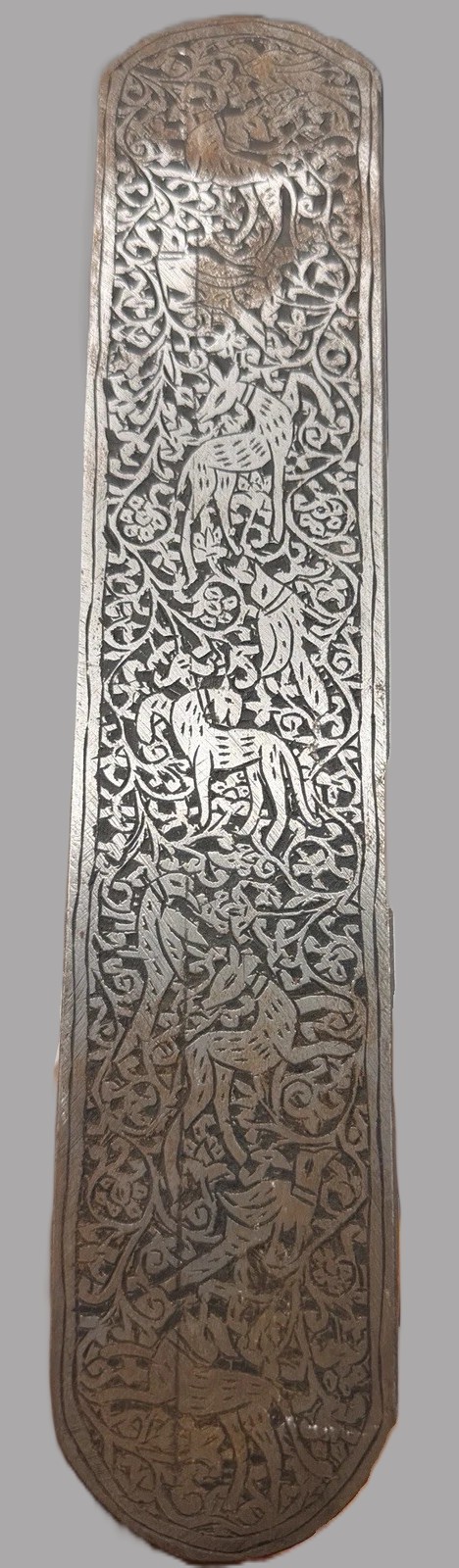
- The Base Iconography (Animal Paradise / Hunting Scene): The underside features an elaborate pictorial composition set against dense spiraling foliage. It depicts fawns/gazelles, birds, and hunting beasts, a classic Persian motif known as a shikargah (hunting ground/wildlife preserve), symbolizing royal leisure, abundance, and the natural paradise.
Anatomy and Function
- The Outer Sheath (Ghilaf / Sleeve)
- Role: A protective sliding case rounded on the forward edge to allow easy pocket or sash transport. In Qajar society, scribes (mirzas), civil administrators, and scholars tucked the qalamdan directly into their waist sashes (shal) as a mark of literacy and high social status.
- The Sliding Tray (Khashkhani / Drawer)
- Role: The interior compartment housed reed pens (qalam), a small penknife for trimming nibs (qalam-tarash), an ivory or bone cutting plaque (makta), and burnishing spoons.
- The Integrated Inkwell (Dawat)
- Role: The circular opening at the rounded head leads to a small reservoir. Rather than holding free-flowing liquid ink, it was packed with raw silk fibers or unspun wool threads (likka) saturated with carbon soot ink. This prevented spills when the box was carried horizontally in a belt and ensured the reed pen drew just the right amount of ink without blotting.
Sold for $175 in September 2026
Content disclaimer. The information posted is the owner’s best knowledge and may not have been vetted by the SOIC. We welcome comments, corrections, and additions, working to make our website information comprehensive and accurate.
Join the Society of Inkwell Collectors (SOIC) – it’s free!
Founded in 1981 as a non-profit organization,
we are documenting inkwells (and accessories).
We’re here to help and inform!