

Inkipedia
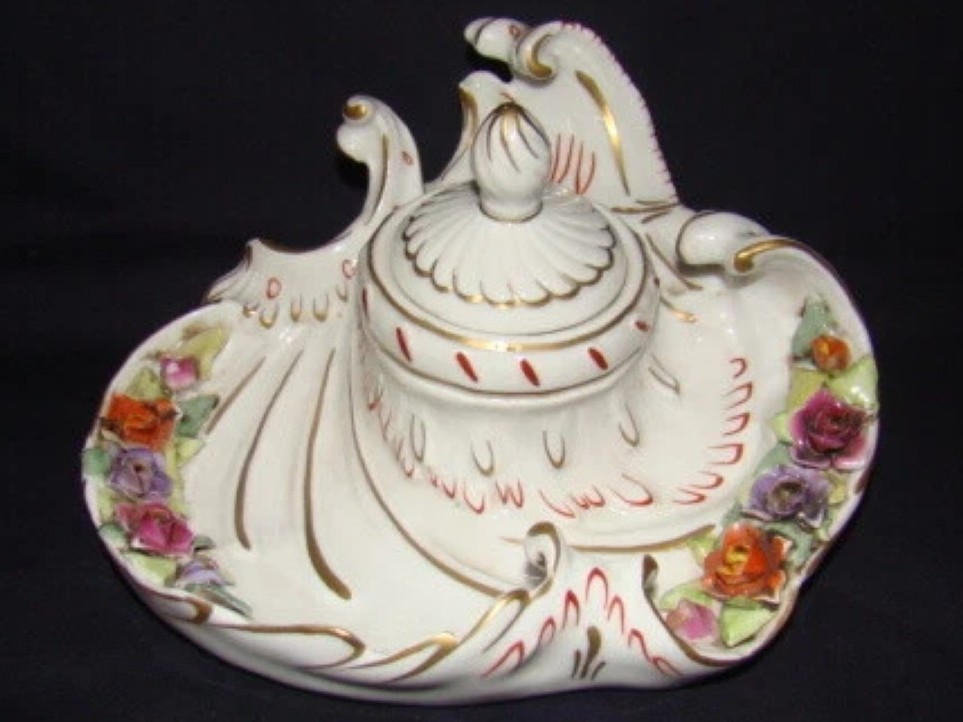
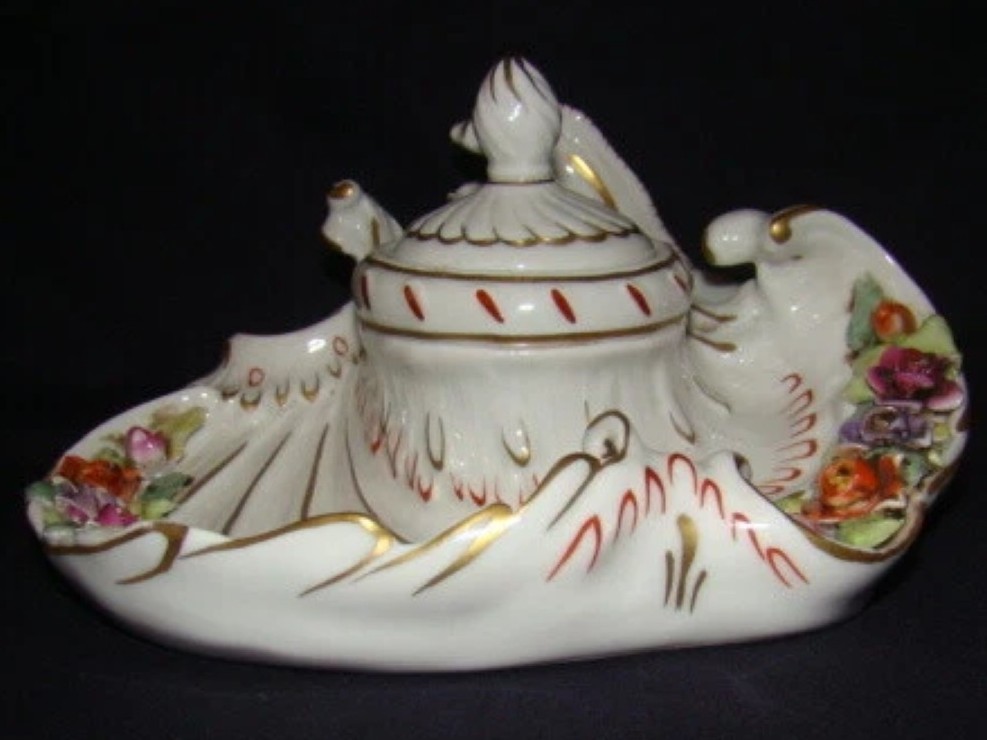
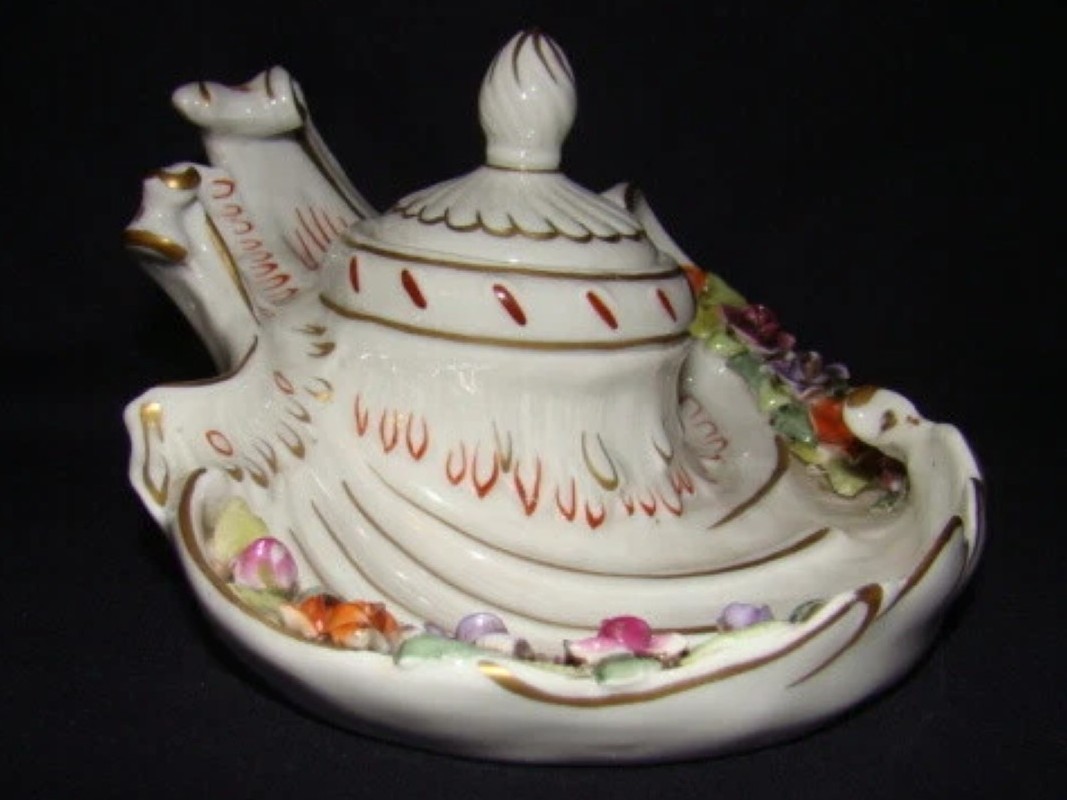
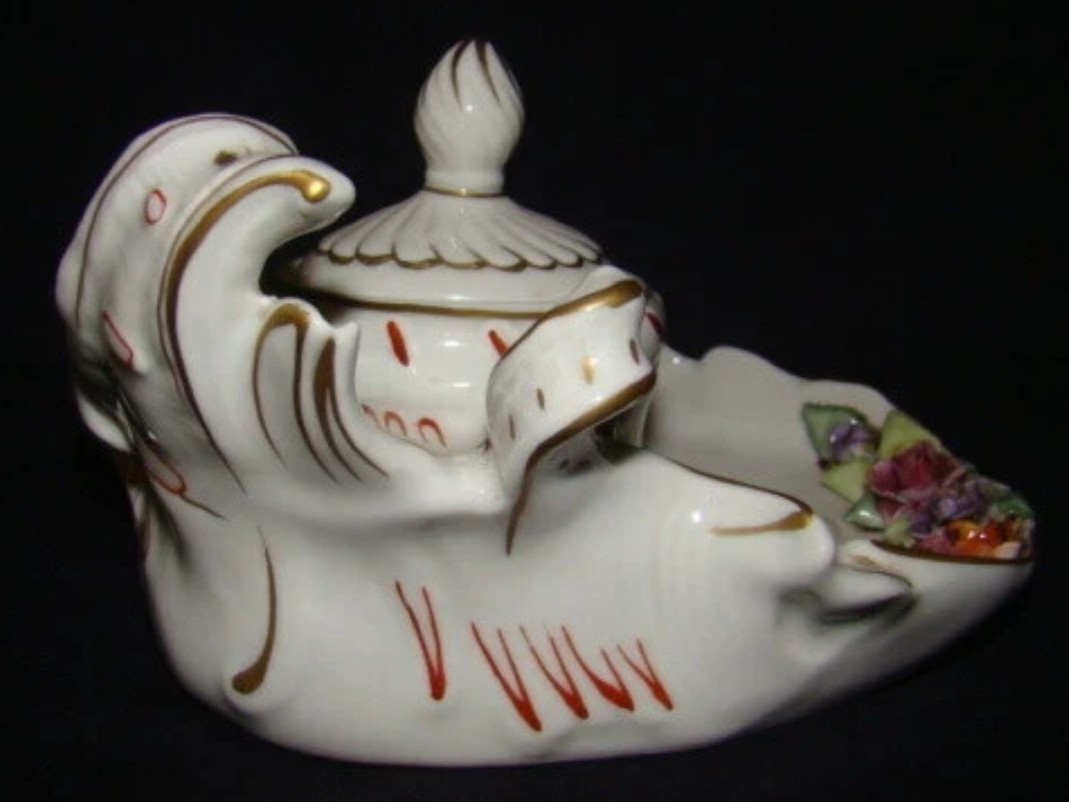
Rococo Revival Porcelain with Applied Flowers
| Categories | Ceramics/Porcelain non-Figural |
| Material | Porcelain |
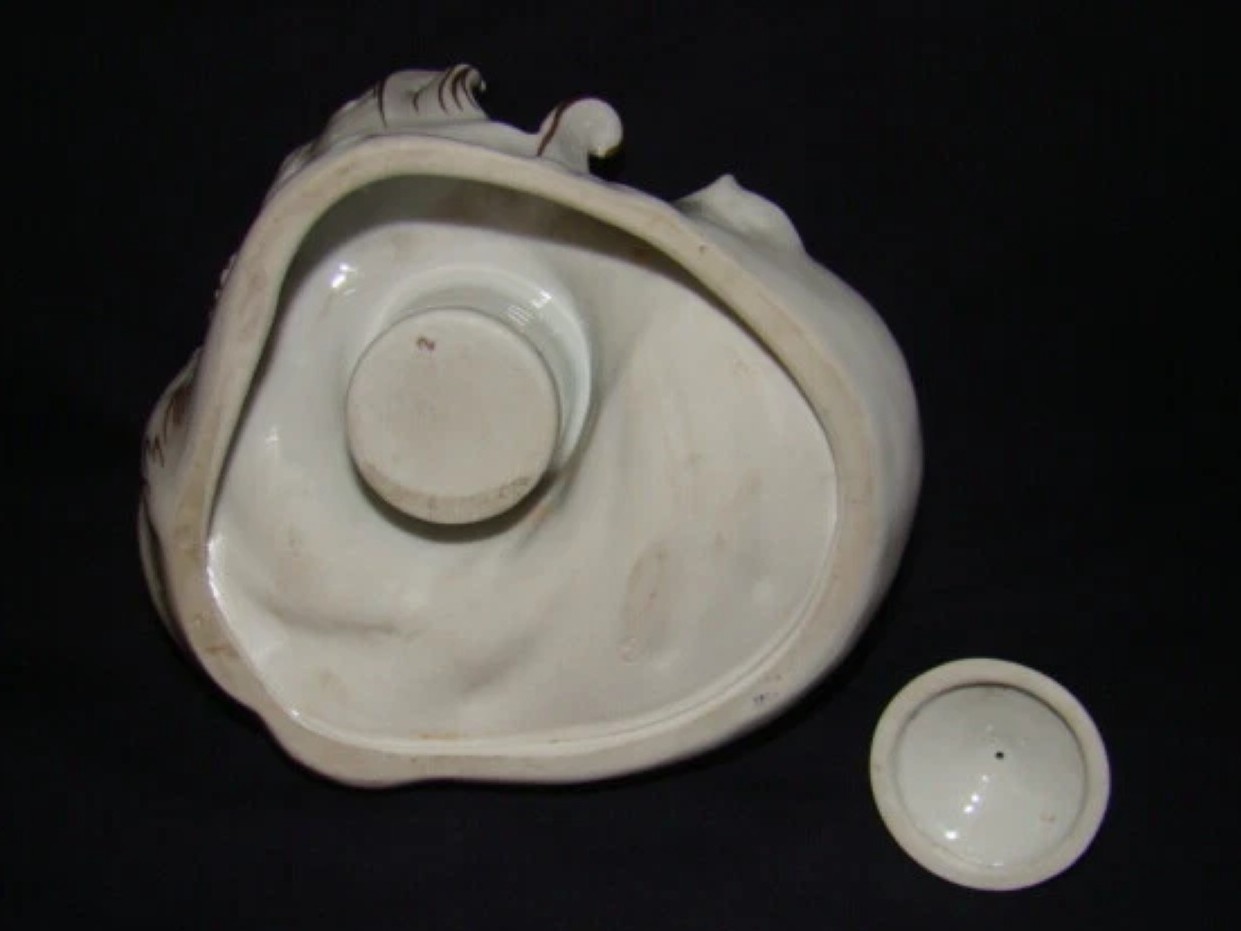
| Markings | Unmarked |
| Manufacturer | Undetermined |
| Origin | Germany |
| Date or Era | circa 1880 |
| Measuring | 6” x 5 ½” |
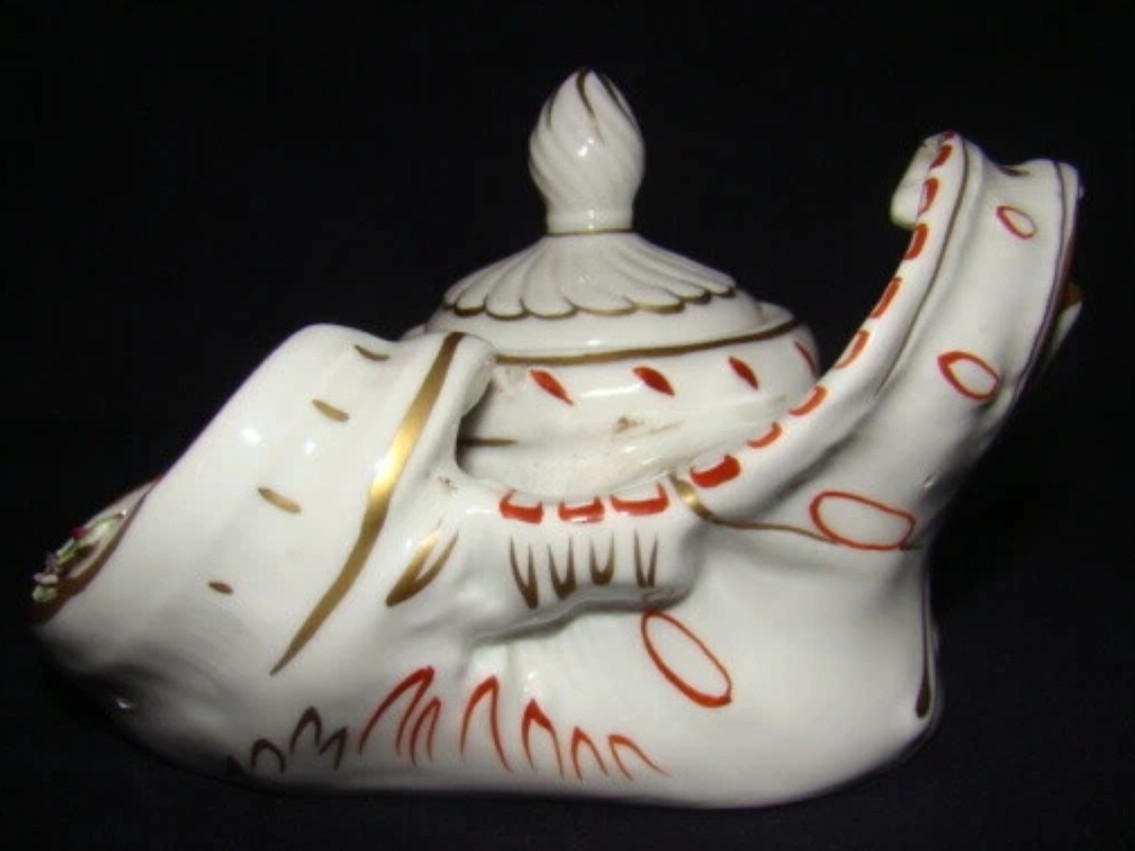
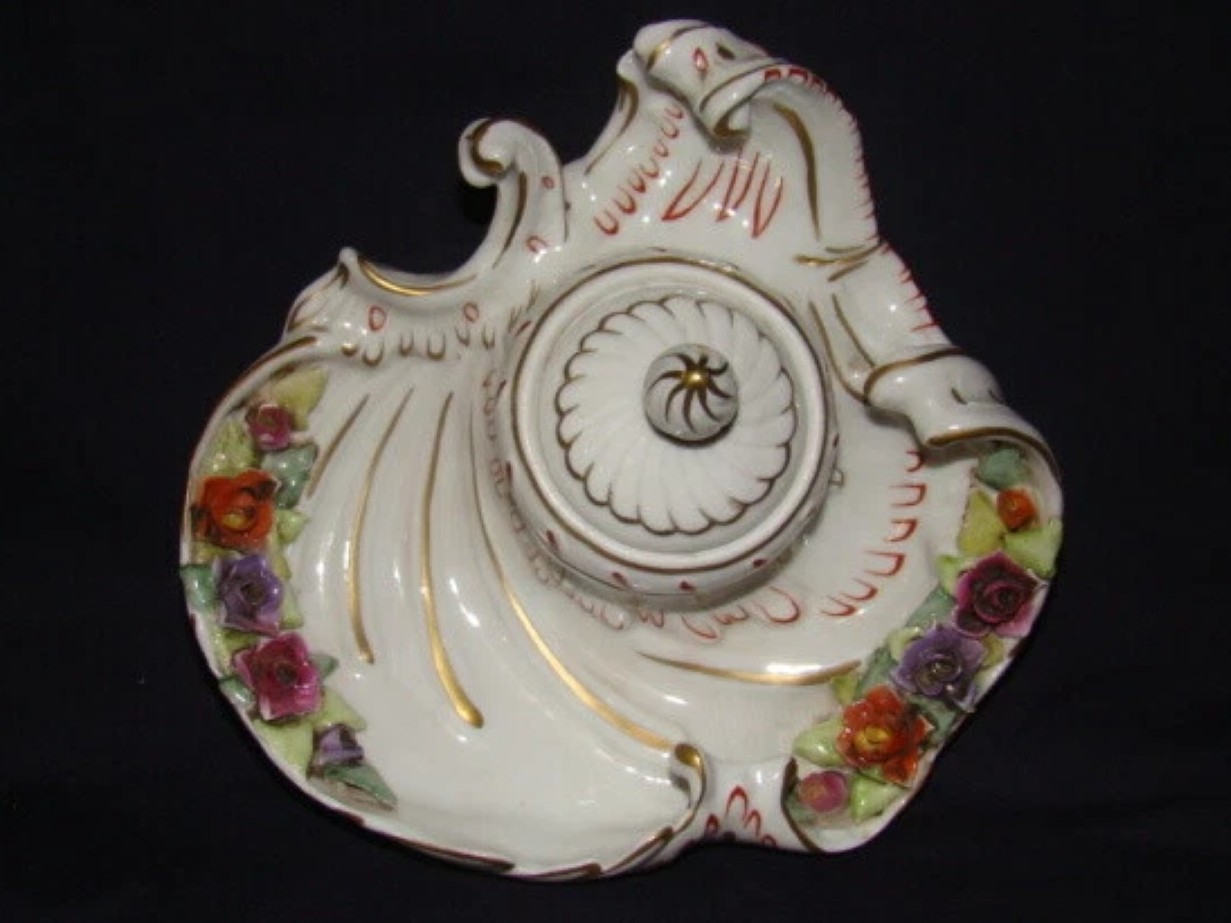
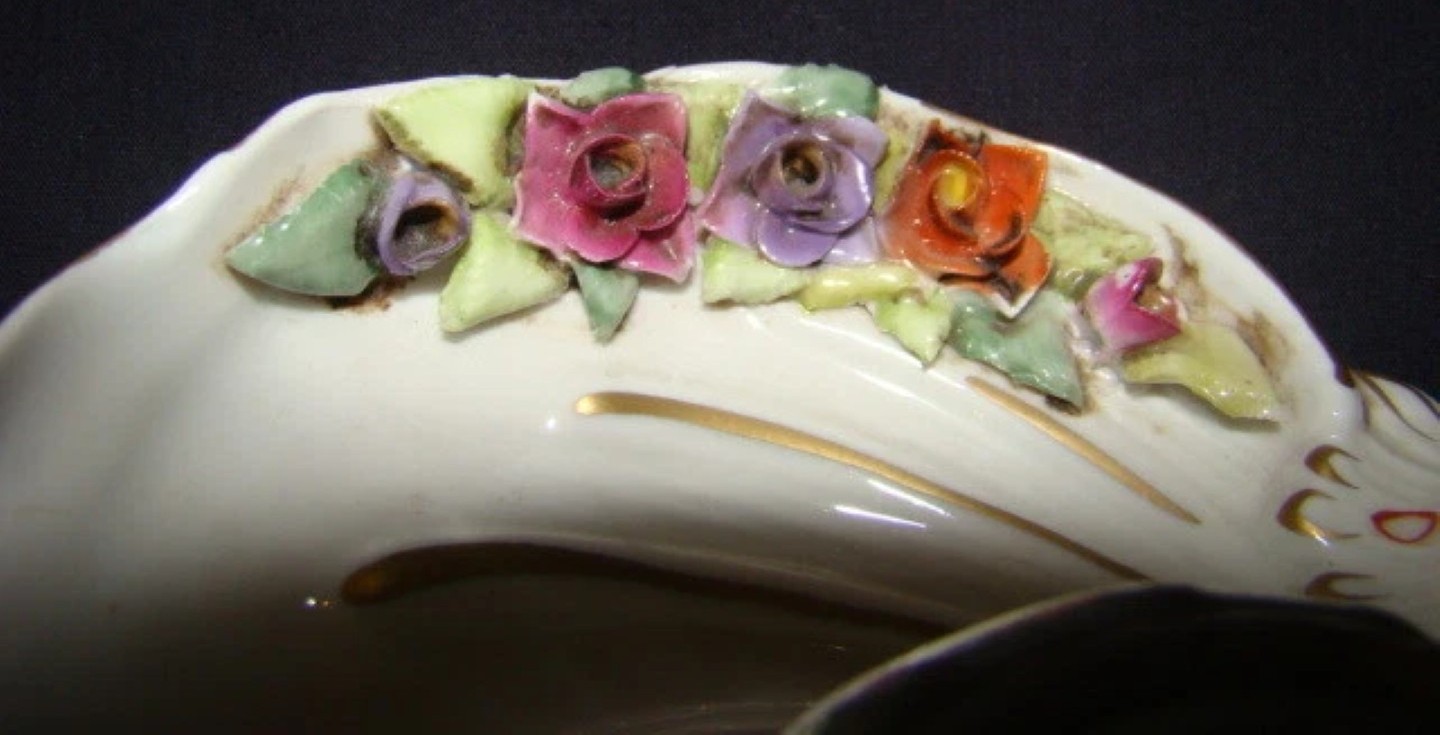
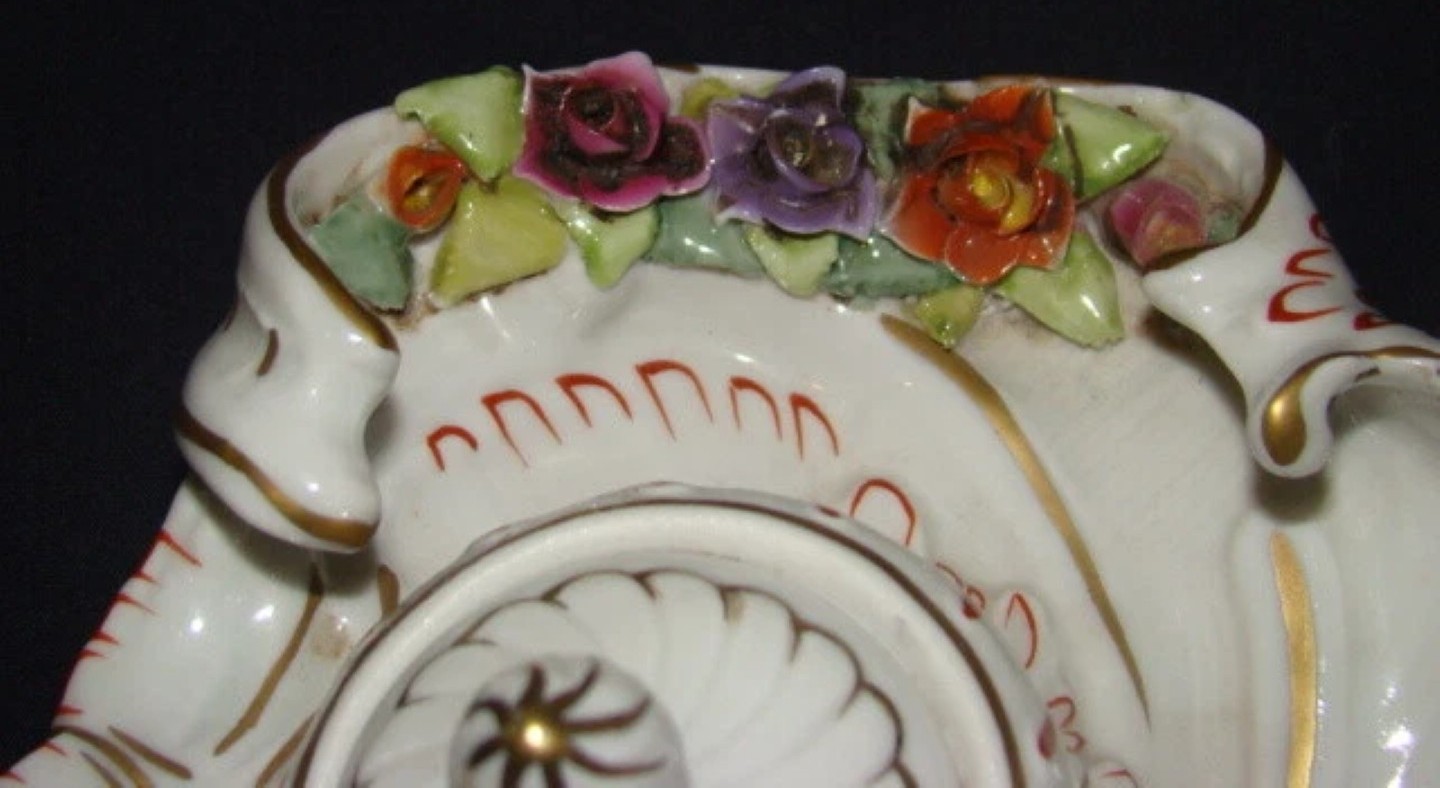
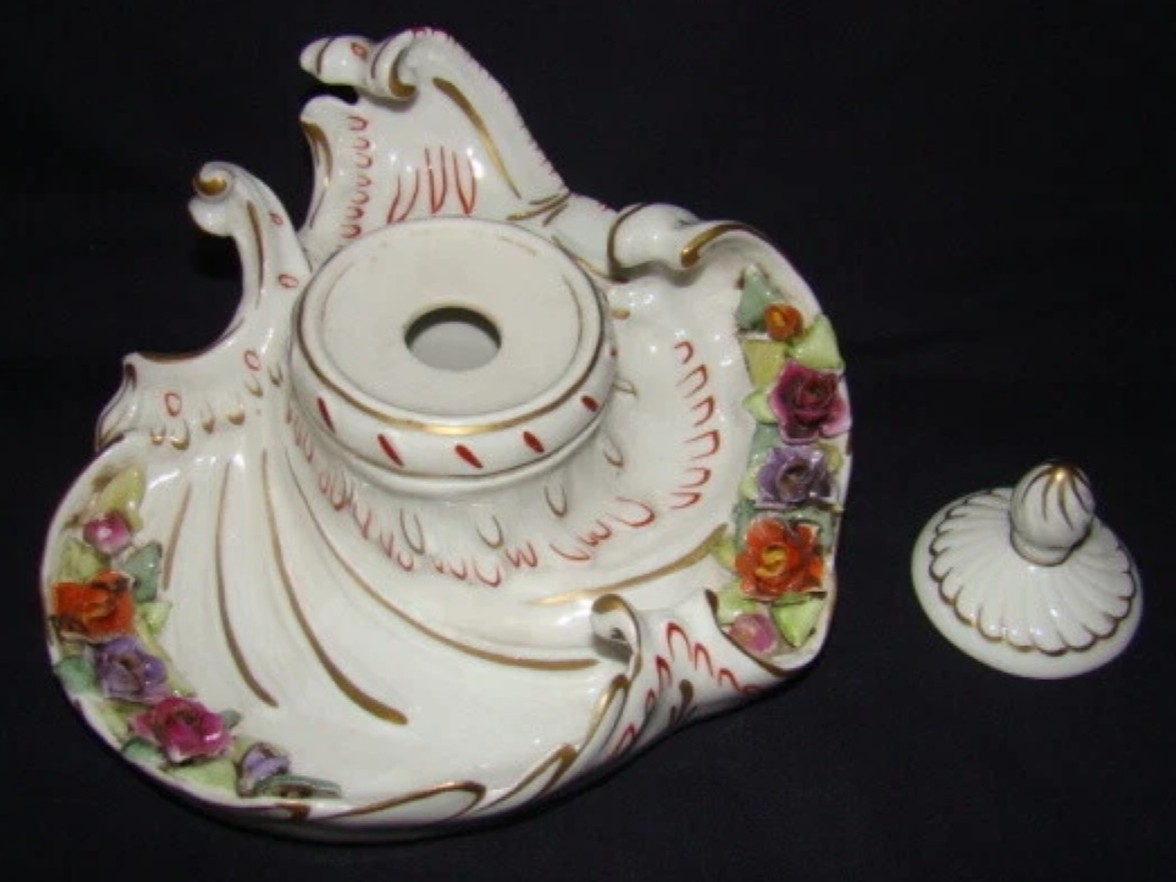
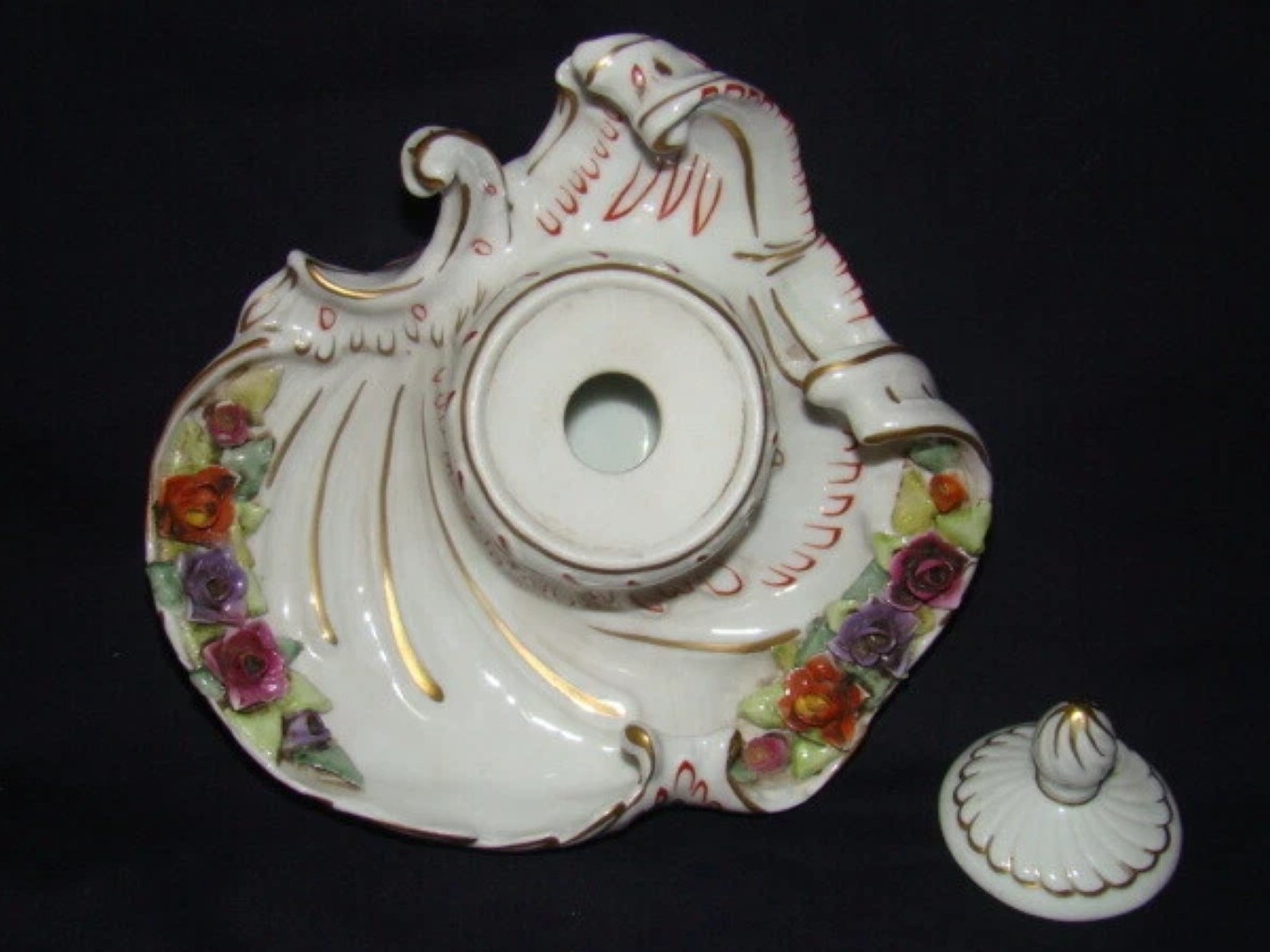
This porcelain inkstand features Rococo Revival styling, shell and acanthus scrollwork, hand-applied floral encrustations, and iron-red painted detailing with gilded accents.
Style and Form
- Molding: Asymmetrical Rococo Revival (Second Rococo) form modeled as an undulating scalloped shell/scroll with integrated pen rests along the front and rear curves.
- Well & Cover: Centrally integrated cylindrical inkwell with fluted molding and a matching domed lid topped by a swirled finial.
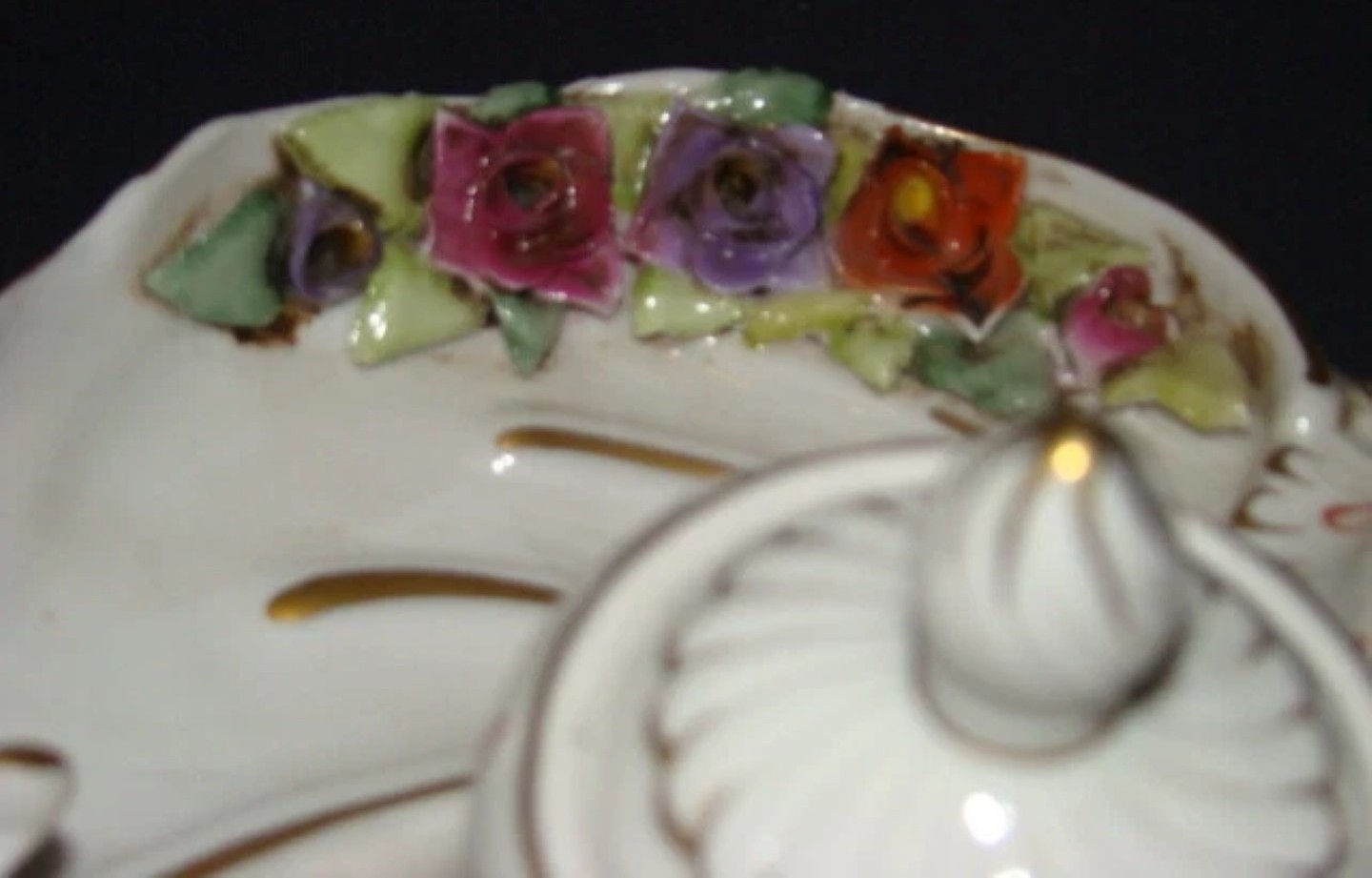
- Decoration: Applied hand-modeled polychrome porcelain roses, rosebuds, and foliage along the rim edges; feathered iron-red painted strokes and gilded highlights along the ridges and rims.
Origin:
- It is almost certainly German. The hard-paste white porcelain body, hollow slip-cast underside, characteristic “Dresden-style” applied encrusted flowers (Blütenbelag), and iron-red feathered brushstrokes are hallmark traits of 19th-century German/Thuringian porcelain production.
- Similar shell-form inkstands and desk sets were also produced in Bohemia/Austria and by French Paris porcelain makers, but the specific combination of applied flower modeling, iron-red stroke accents, and unglazed underside well construction strongly points to a German manufacture.
Maker
- Thuringian or Saxon (Dresden region) Porcelain Manufactory: Without an underglaze blue factory mark, the exact factory cannot be confirmed definitively. However, Thuringia was home to numerous potteries specializing in encrusted floral porcelain and Rococo desk items, such as Sitzendorf, Plaue (Schierholz), or Volkstedt.
- The base shows only a small red painted numeral/mark (typically a gilder/decorator’s batch mark or mold index number), which was standard for decorative export wares from these regional factories.
Period of Manufacture
- Circa 1860–1890 (Late 19th Century): This corresponds to the height of the Rococo Revival movement across German porcelain makers catering to both domestic and export desk-set markets.
Sold for $36 in July 2026
Content disclaimer. The information posted is the owner’s best knowledge and may not have been vetted by the SOIC. We welcome comments, corrections, and additions, working to make our website information comprehensive and accurate.
Join the Society of Inkwell Collectors (SOIC) – it’s free!
Founded in 1981 as a non-profit organization,
we are documenting inkwells (and accessories).
We’re here to help and inform!