

Inkipedia
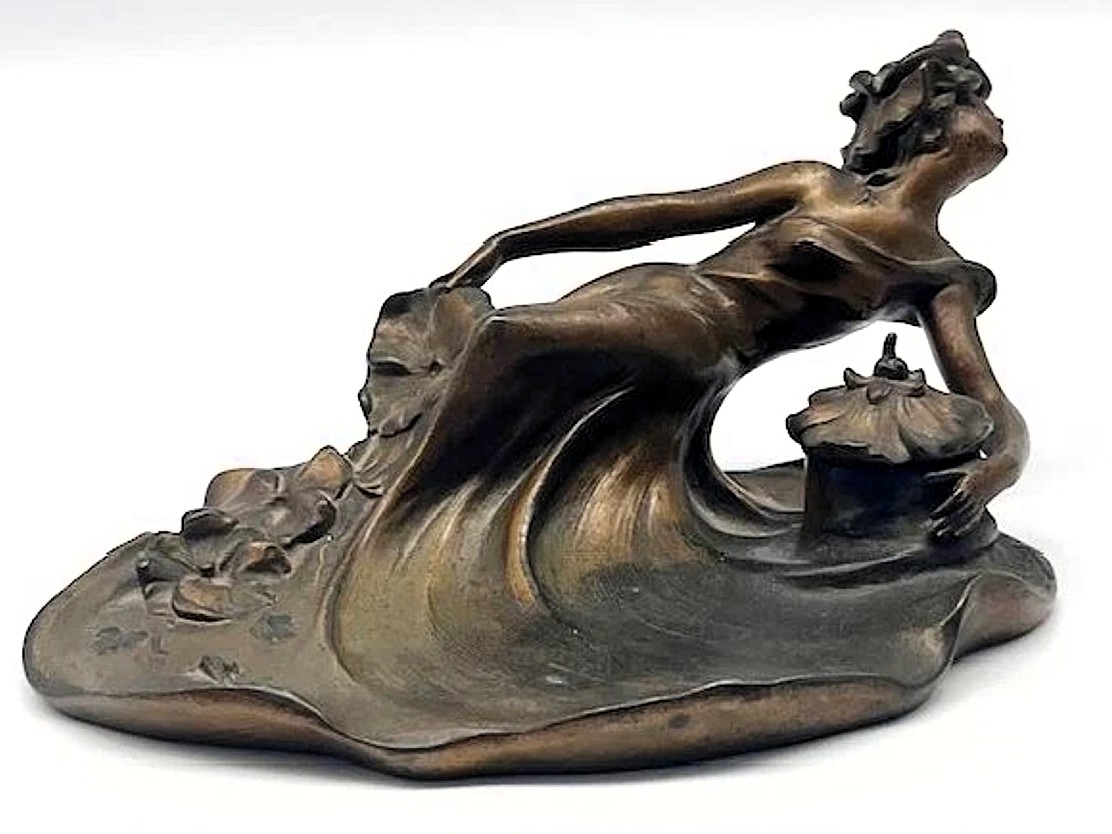
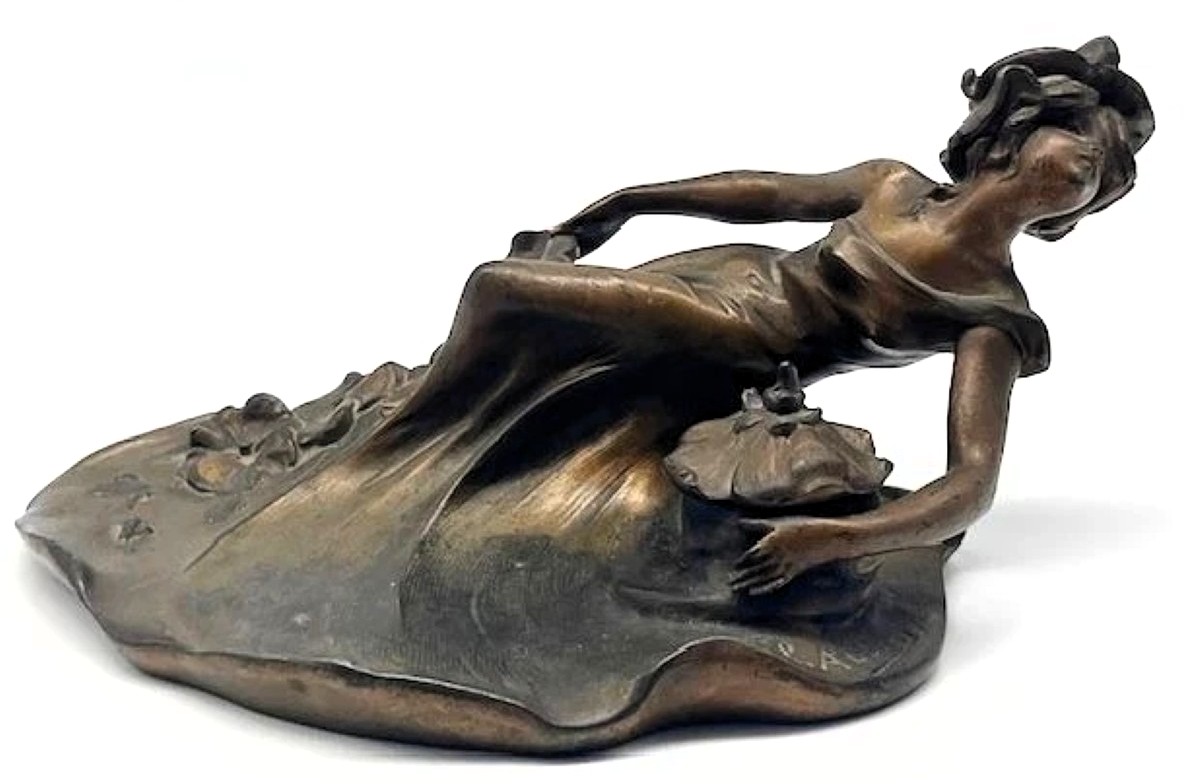
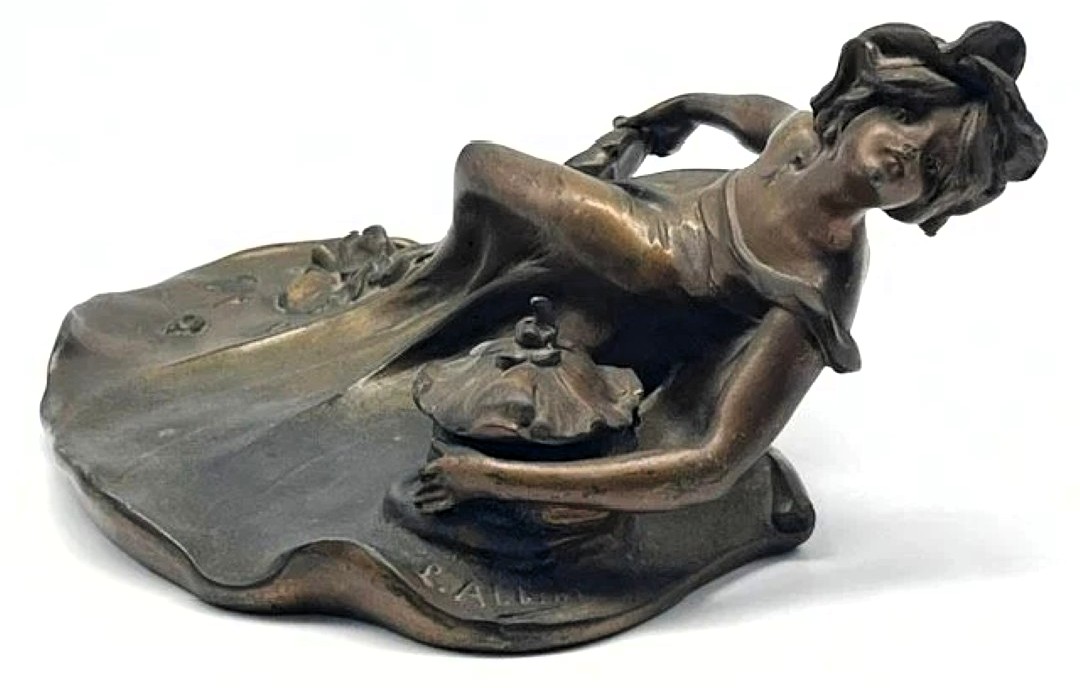
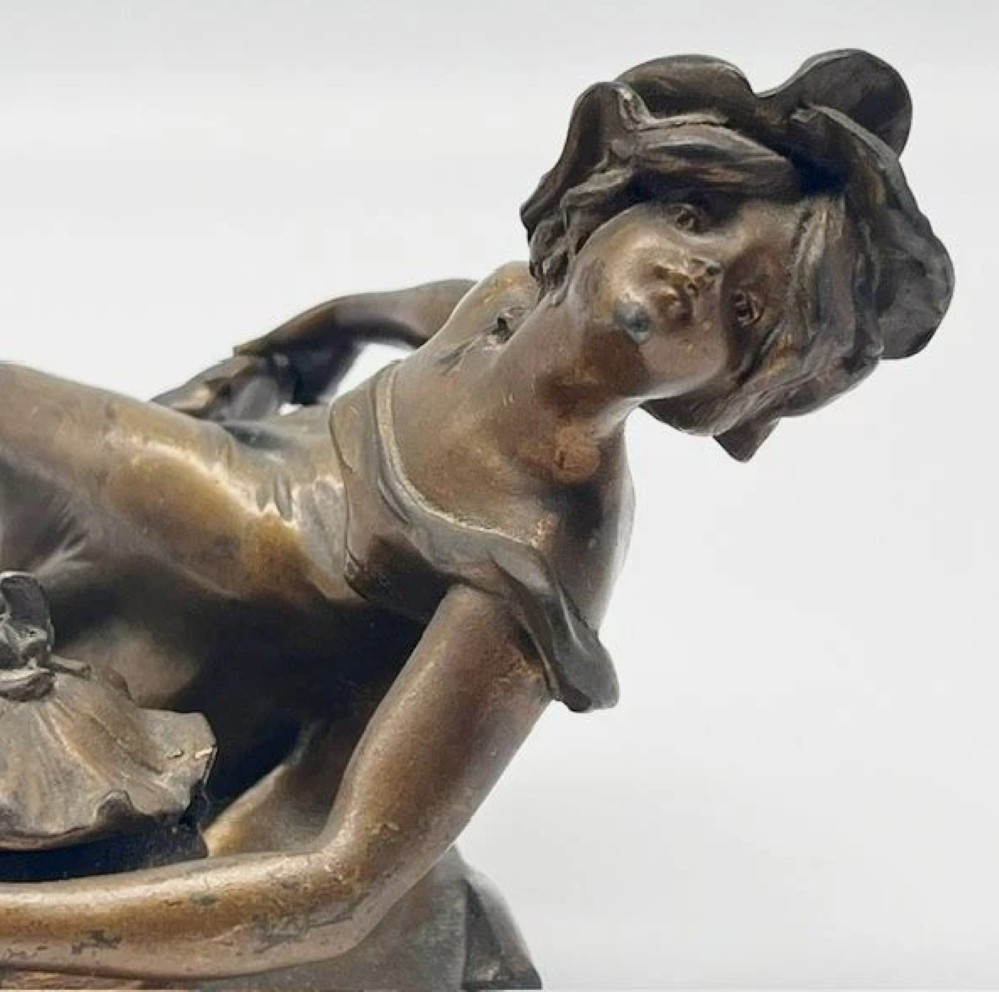
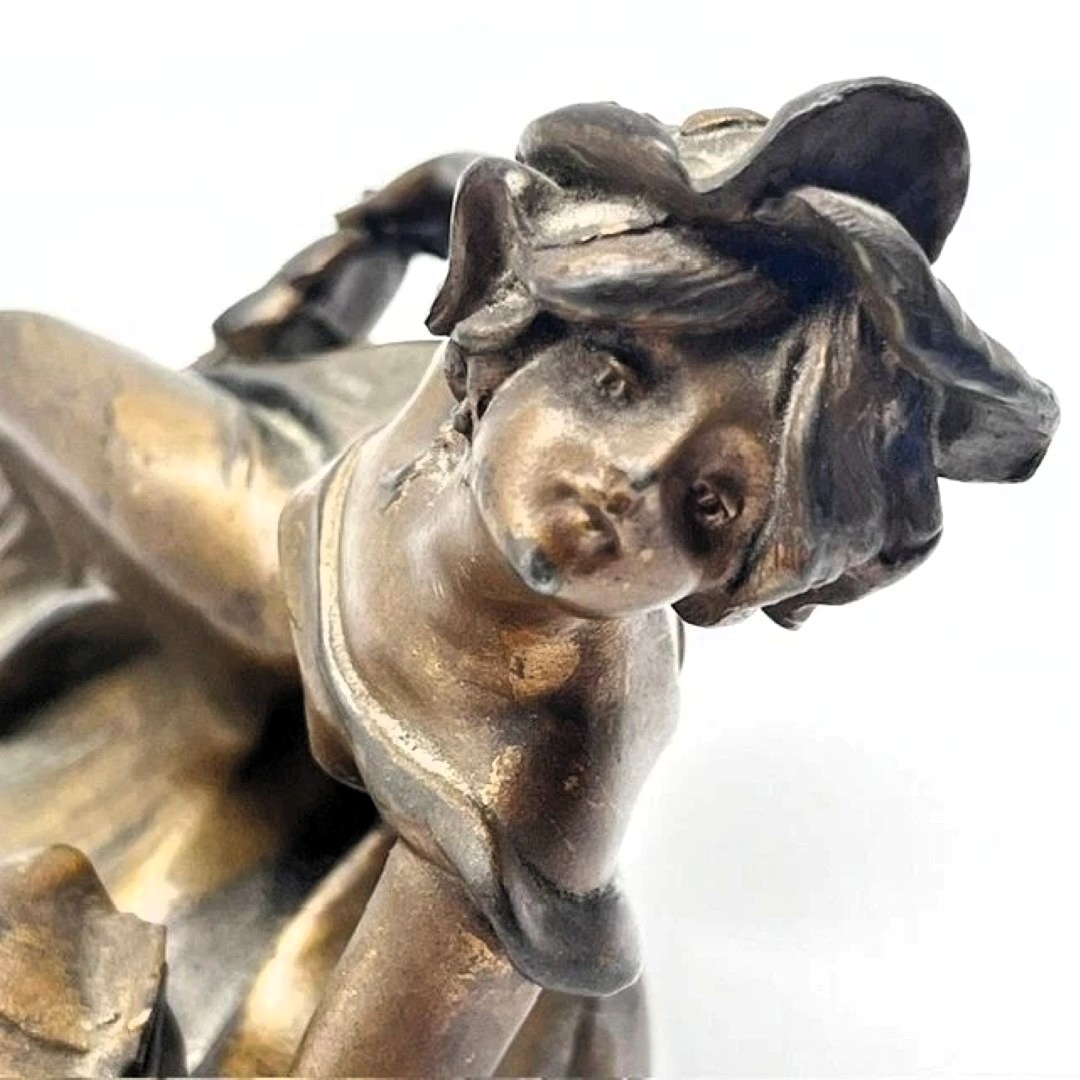
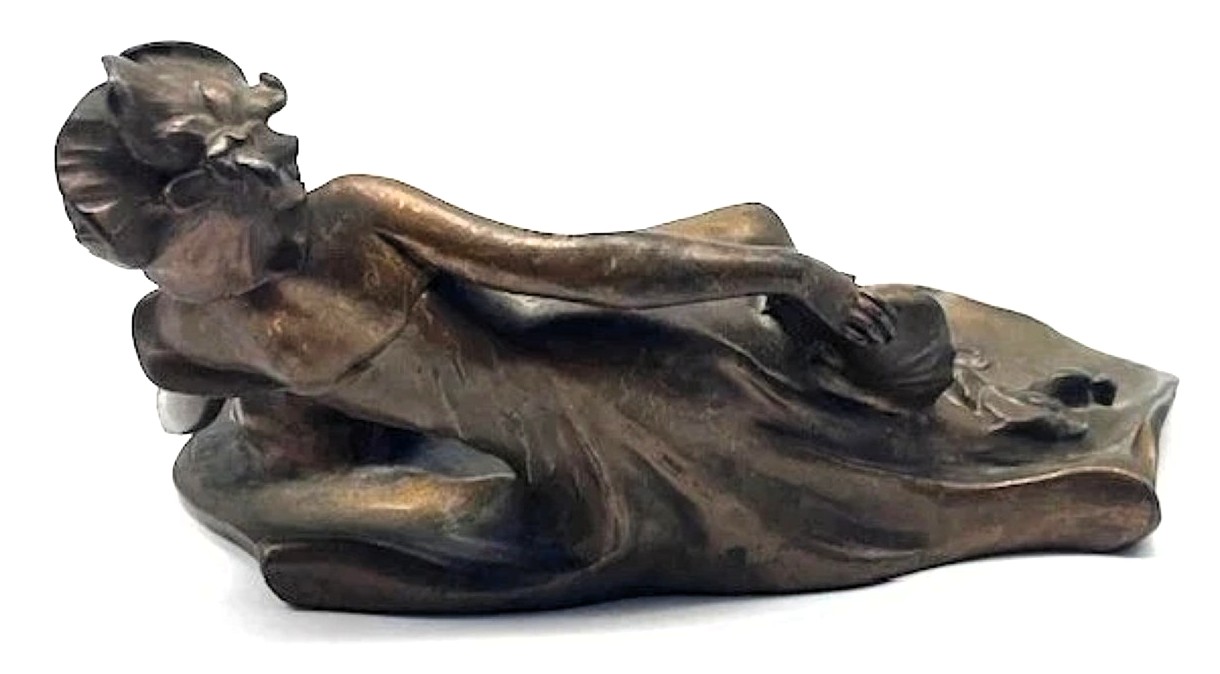
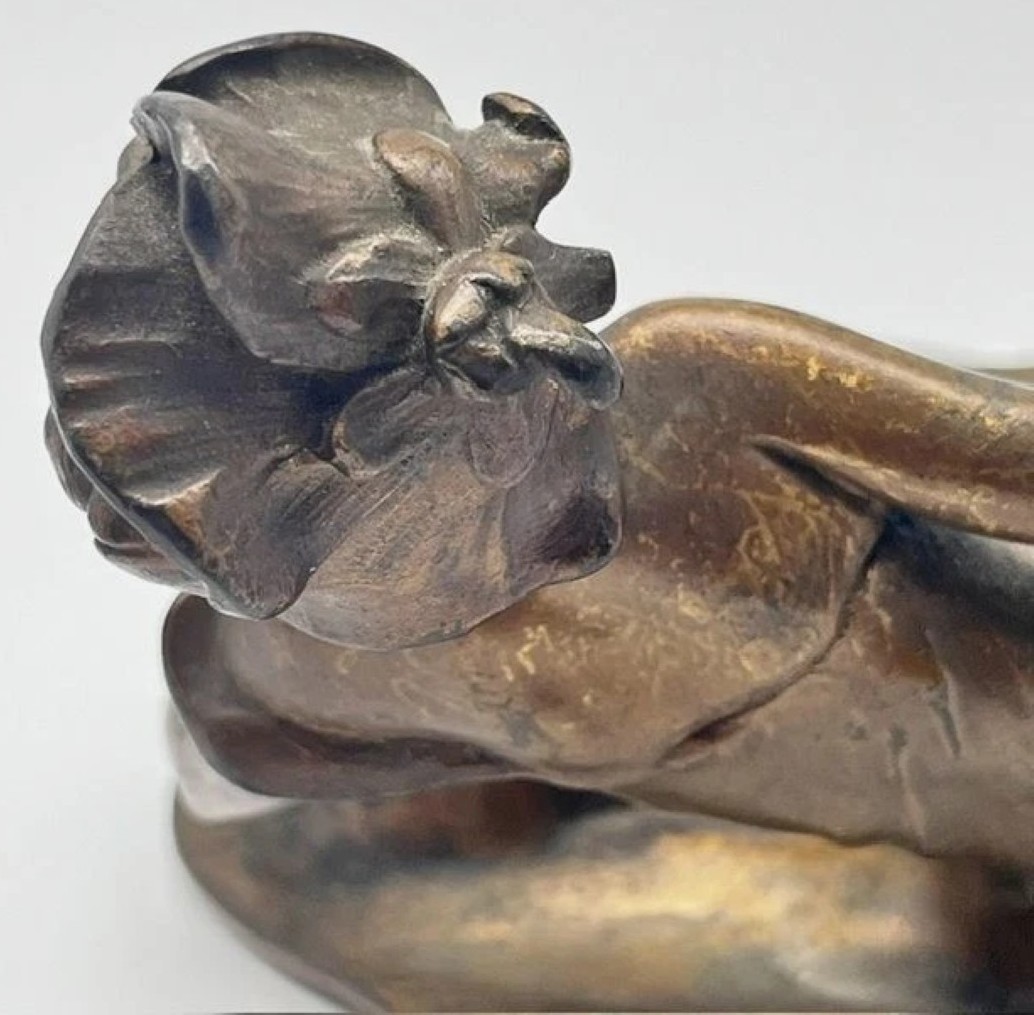
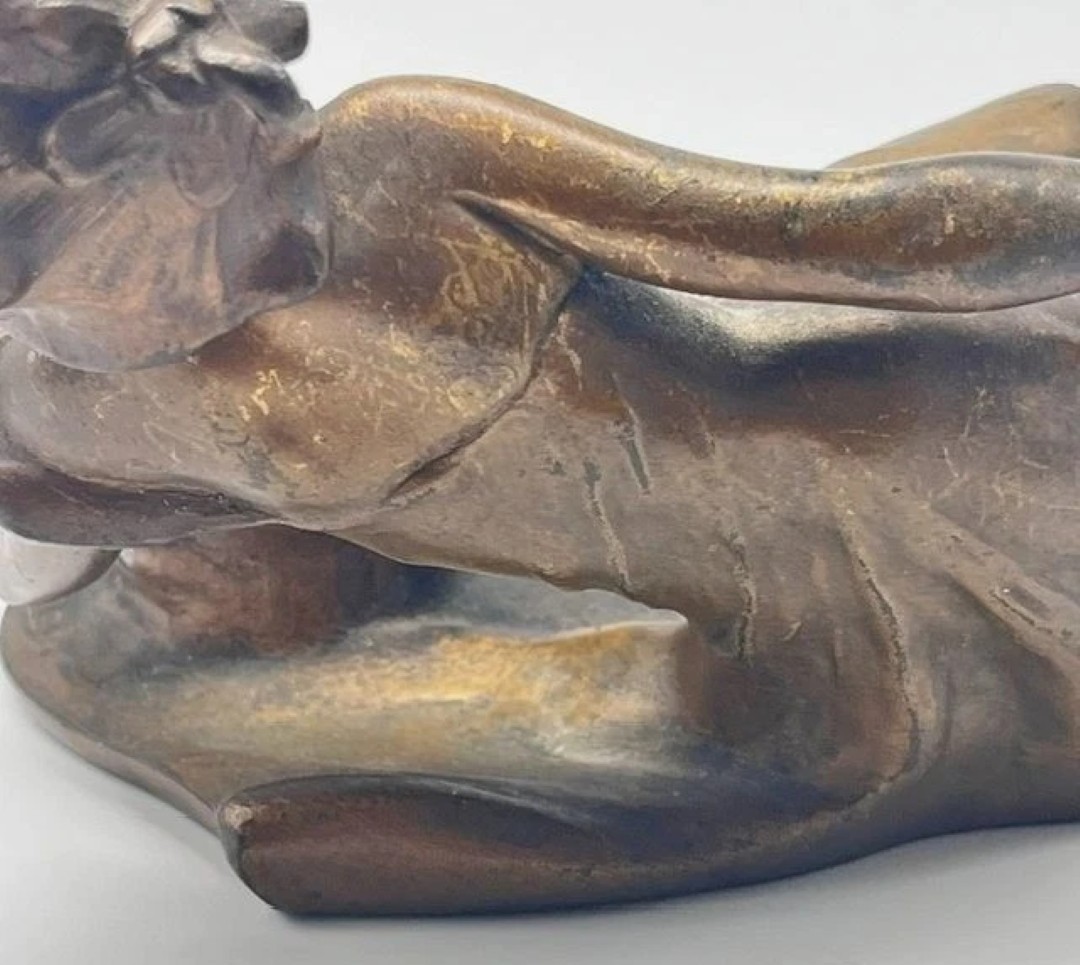
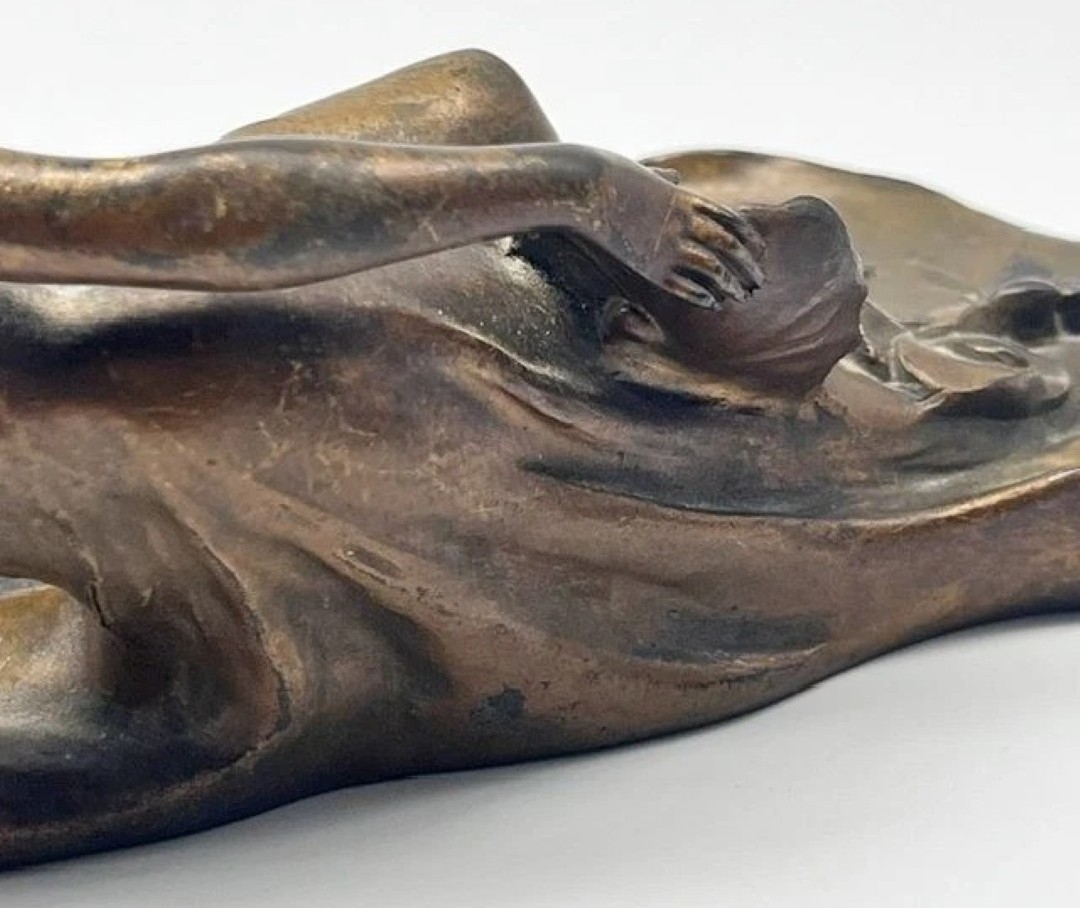
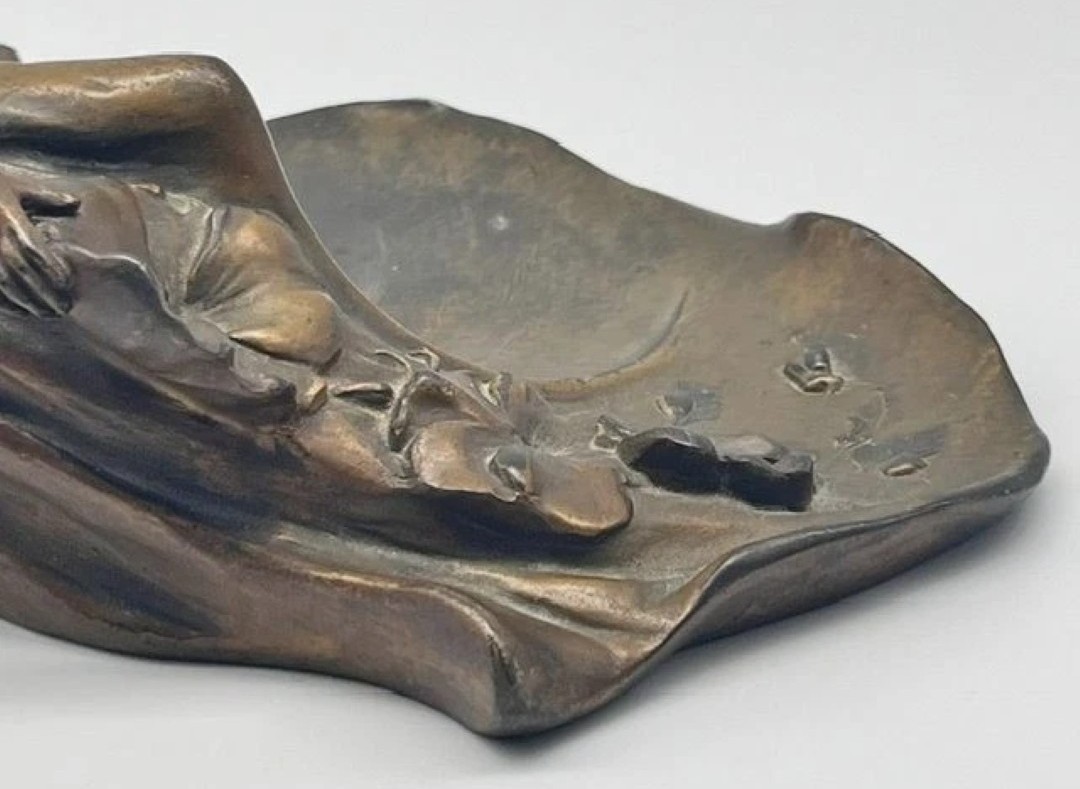
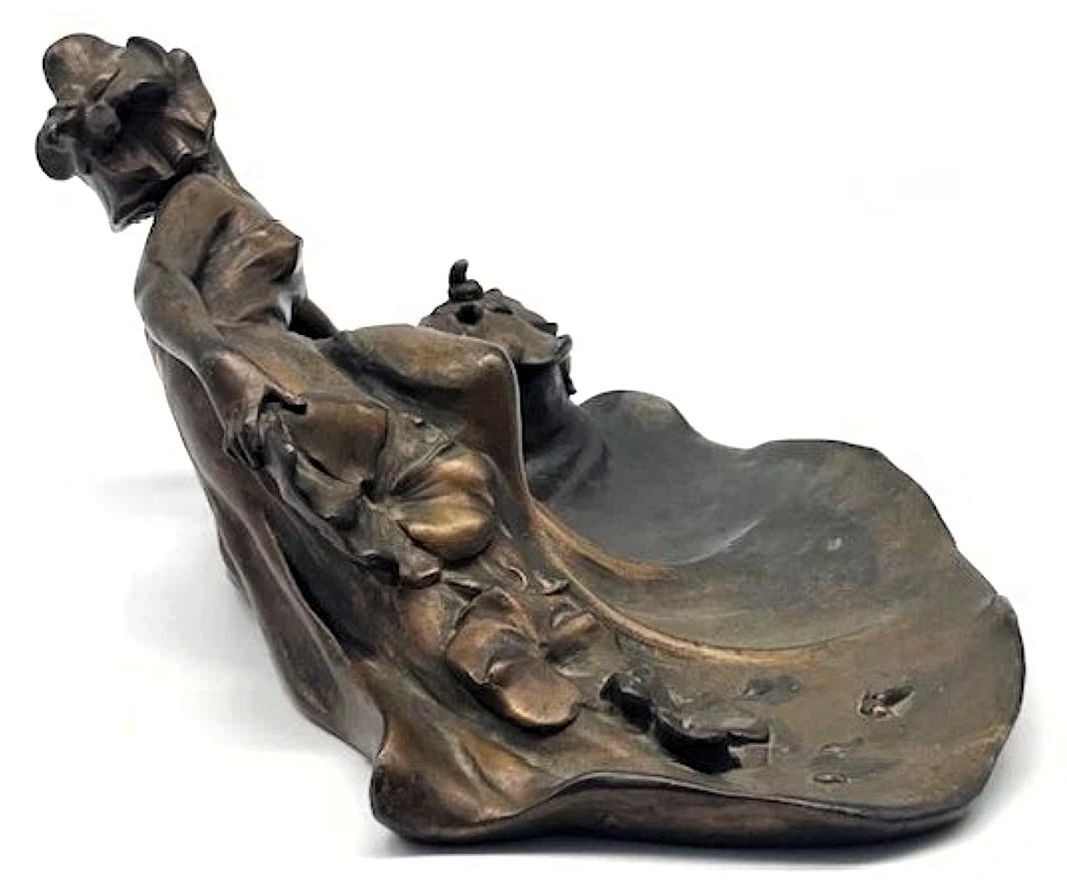
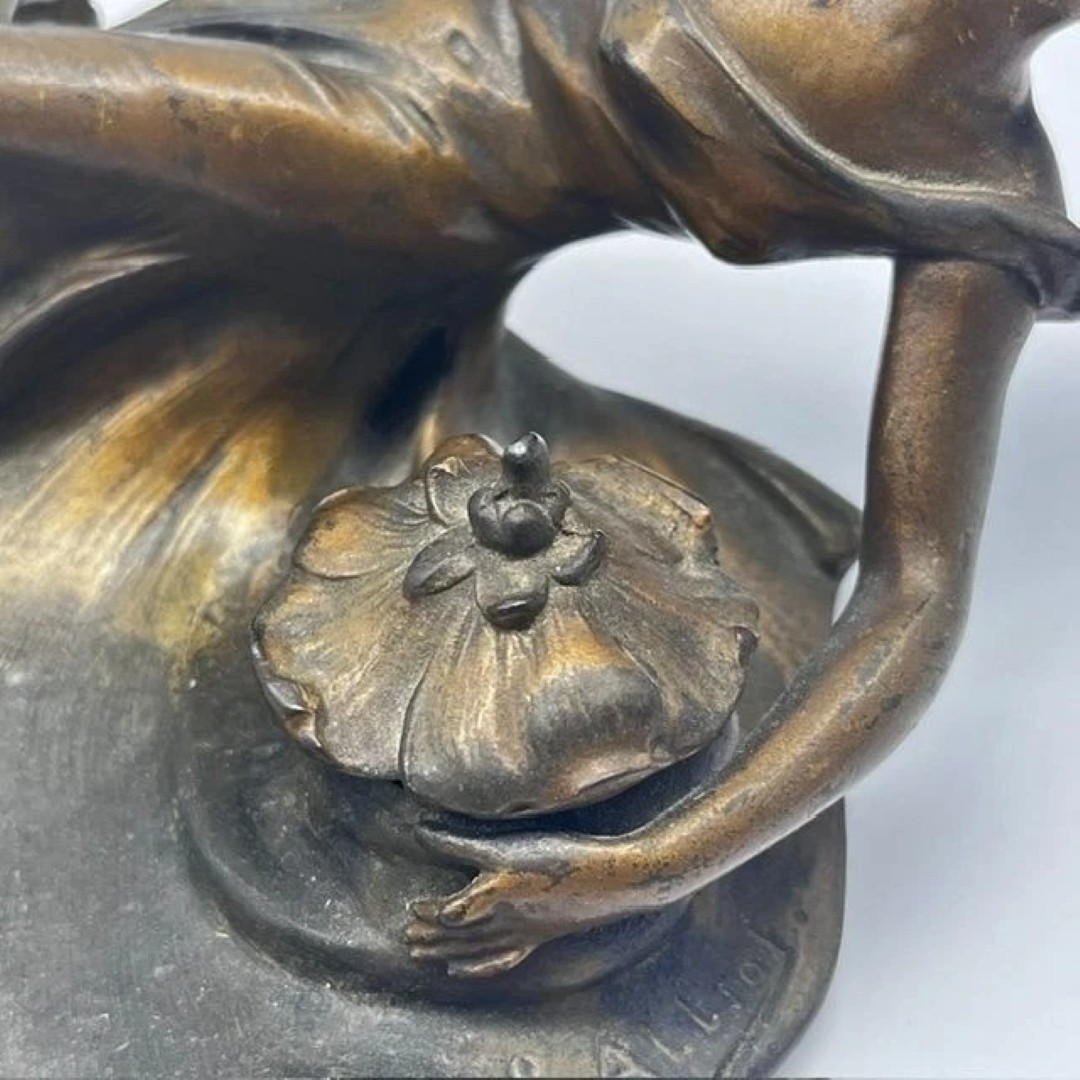
Signed Art Nouveau Reclining Maiden Inkstand
| Categories | Art Nouveau |
| Material | Bronze finish |
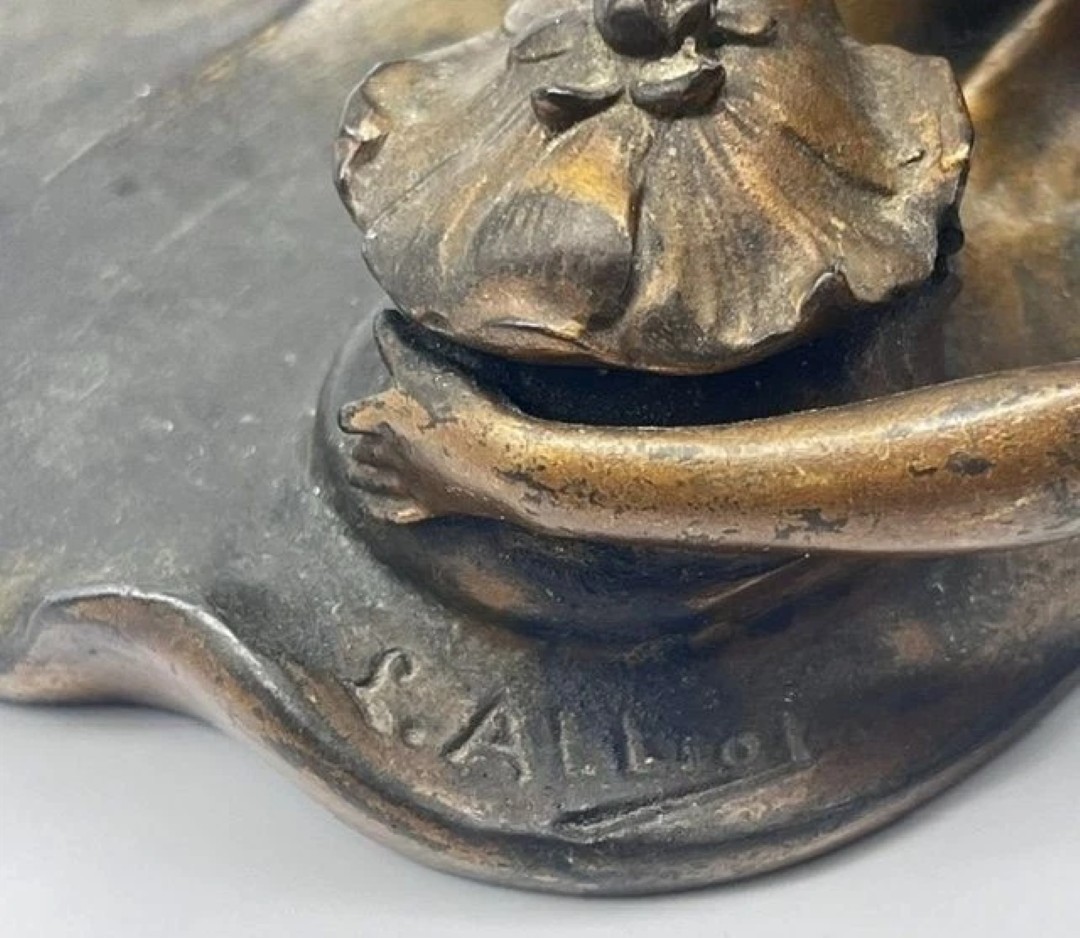
| Markings | L. Alliot |
| Manufacturer | Lucien Charles Édouard Alliot |
| Origin | France |
| Date or Era | circa 1900 |
| Measuring | 8 ½” x 5 ½” x 4” high |
Description
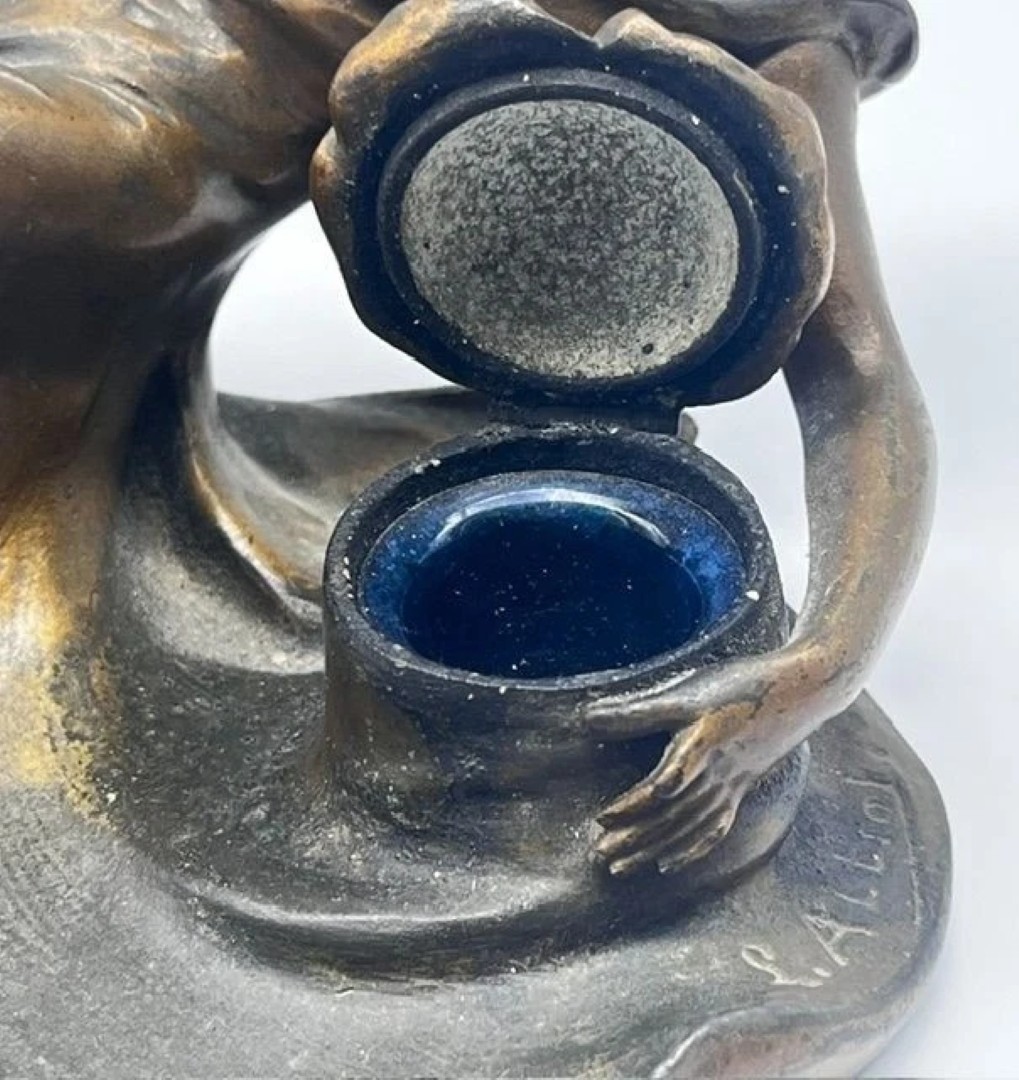
- Composition & Form: The inkstand features an elegant, reclining Art Nouveau female nymph or maiden draped in flowing neoclassical fabric that forms the body of the tray. She is wearing a soft, period bonnet or ruffled cap and leans gracefully on her left arm, extending her hand around the integrated inkwell.
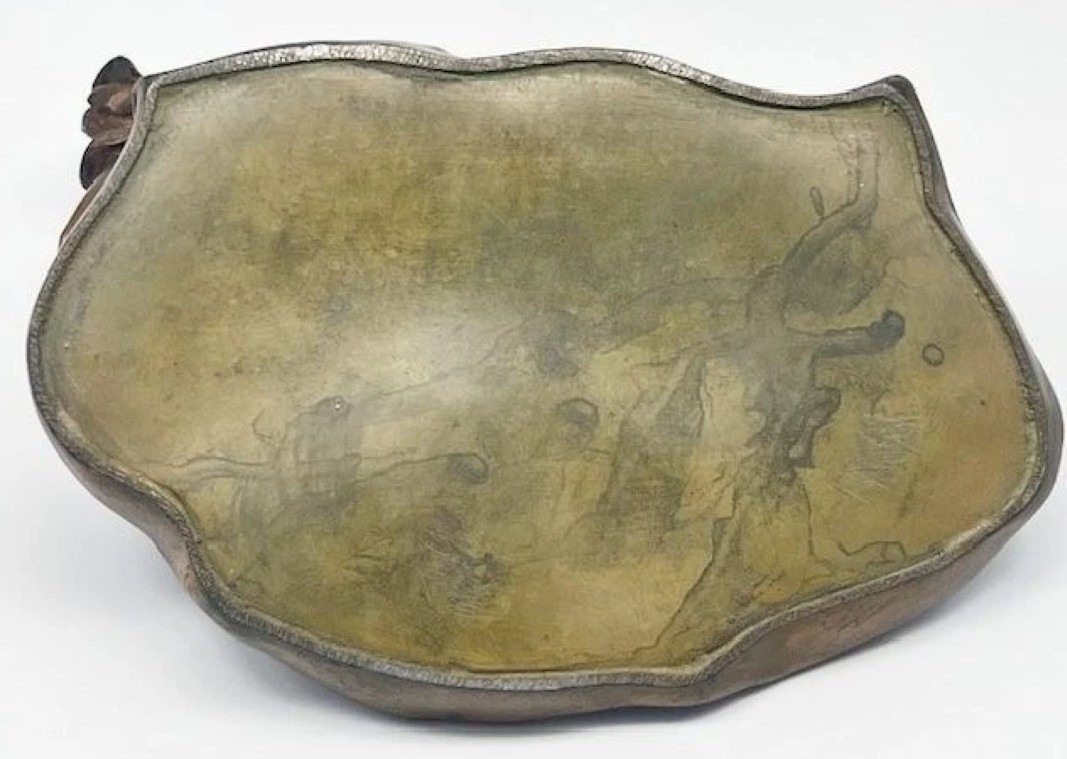
- Integrated Pen Tray: The broad, cascading folds of her gown fan outward to create an undulating pen tray/depression (vide-poche), decorated near the outer edge with low-relief water lily/floral motifs.
- Ink Reservoir: The cylindrical inkwell is modeled as a stylized floral blossom with a hinged, scalloped petal lid that opens via a small central finial/bud. Inside rests its original glass insert.
- Signature & Markings: The piece is incised with the artist’s signature, L. Alliot, visible in script near the base adjacent to the inkwell.
Material & Construction
- Material: This is cast from white metal / spelter (régule in French), a zinc-based alloy widely utilized in France during the Belle Époque for fine decorative arts.
- Finish: It features a multi-tone patinated bronze finish, showing rich brownish-gold highlights.
Origin & Date
- Where Made: France (likely cast in Paris).
- When Made: Circa 1900–1910 (the height of the French Belle Époque / Art Nouveau movement).
About the Sculptor: Lucien Charles Édouard Alliot (1877–1967)
- Background: Lucien Alliot was an acclaimed French sculptor born in Paris. He studied classical and decorative sculpture under two celebrated masters: Louis-Ernest Barrias and Jules-Félix Coutan.
- Exhibitions & Accolades: He exhibited regularly at the prestigious Salon des Artistes Français in Paris. He was awarded a third-class medal in 1907 and a first-class gold medal in 1920, eventually serving on the Salon’s judging jury between 1934 and 1939.
- Style & Works: Alliot bridged the Art Nouveau and Art Deco eras. During the early 1900s, he gained widespread acclaim for functional decorative objects—such as encriers (inkstands), pitchers, vide-poches, and figural lamps—that integrated sensual female figures, flowing drapery, and organic natural forms. In the 1920s and 1930s, he shifted toward Art Deco chryselephantine figures, dancers, and large-scale public and religious allegorical monuments.
Sold for $225 in July 2026
Content disclaimer. The information posted is the owner’s best knowledge and may not have been vetted by the SOIC. We welcome comments, corrections, and additions, working to make our website information comprehensive and accurate.
Join the Society of Inkwell Collectors (SOIC) – it’s free!
Founded in 1981 as a non-profit organization,
we are documenting inkwells (and accessories).
We’re here to help and inform!