

Inkipedia
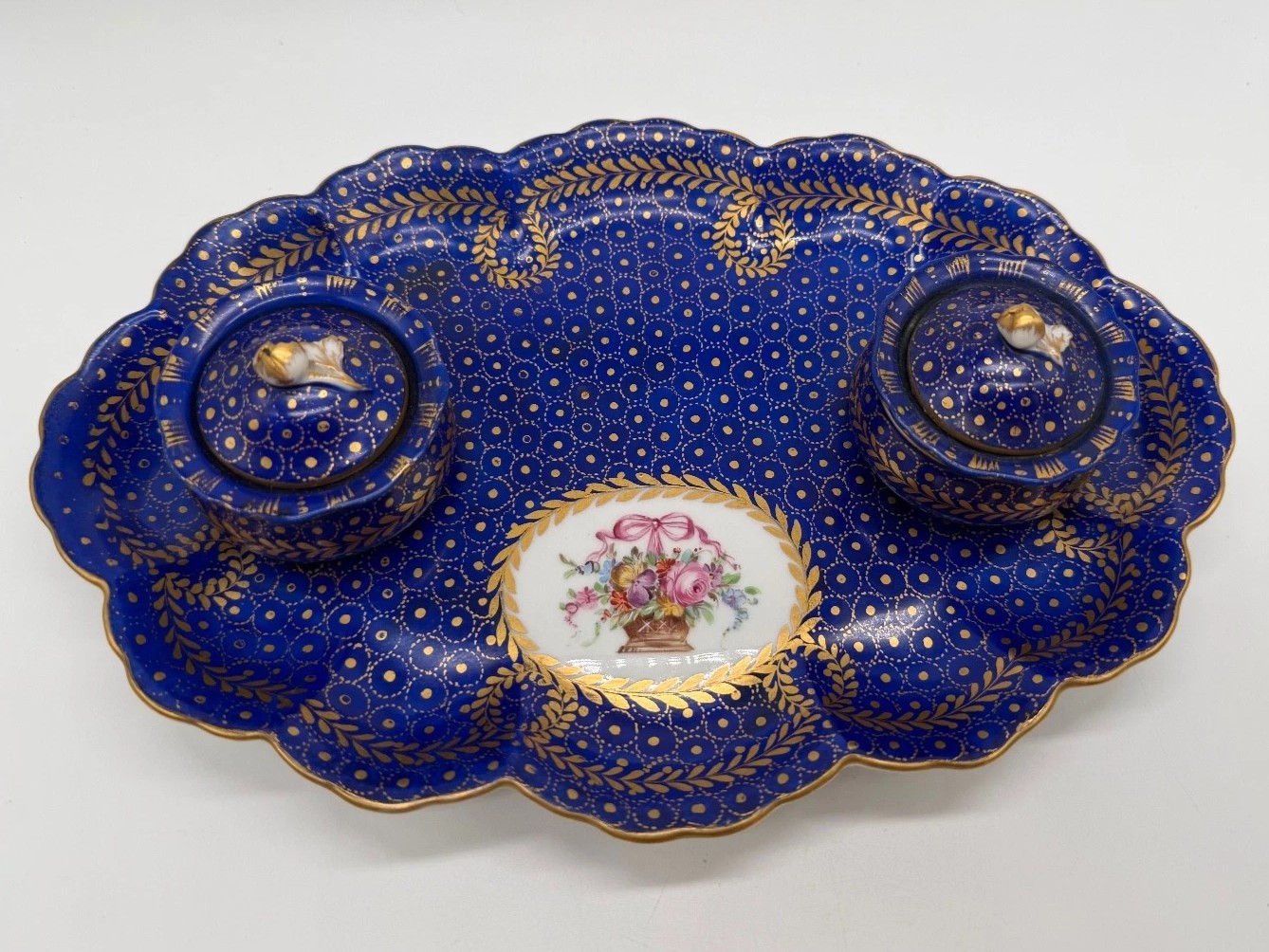
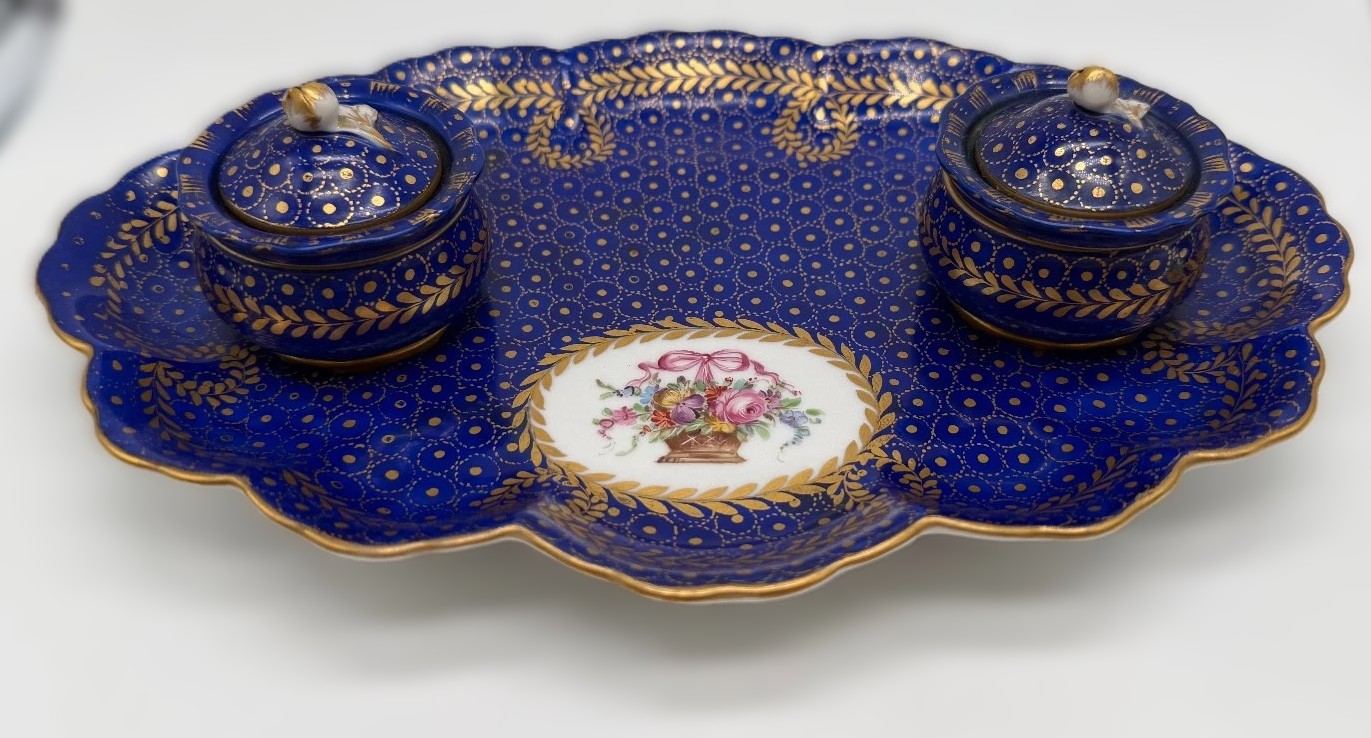
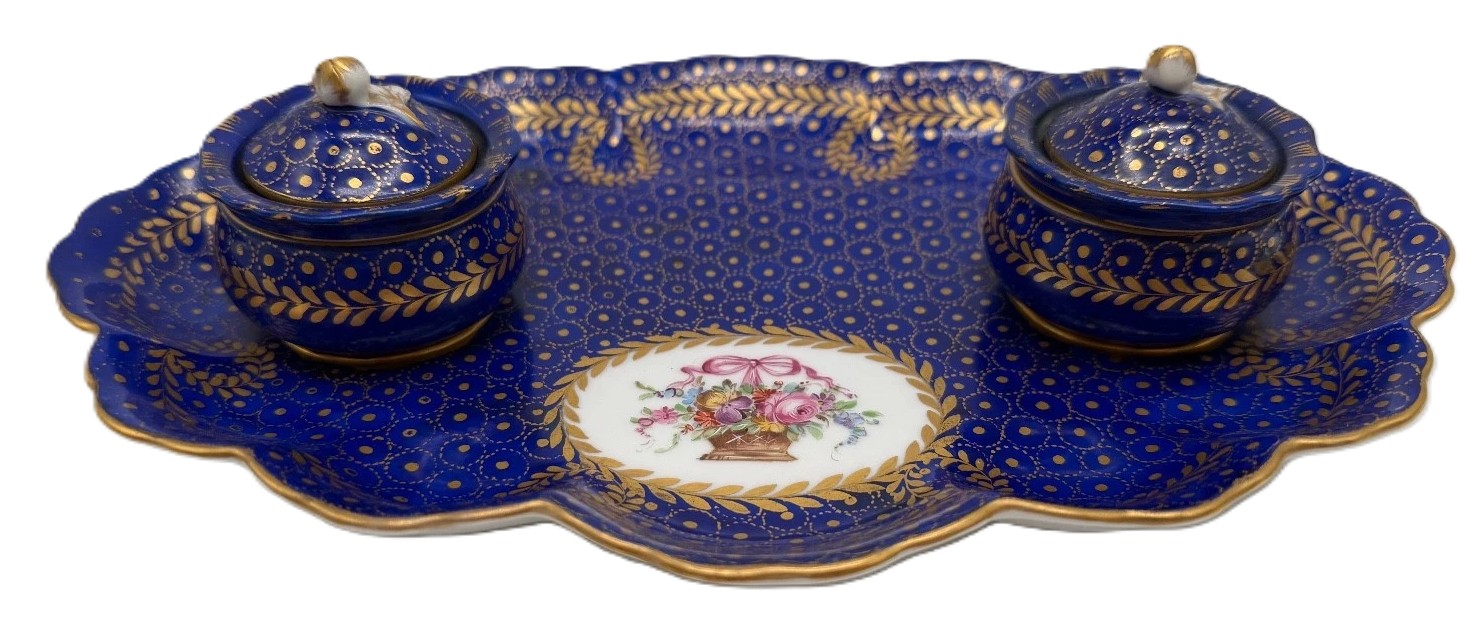
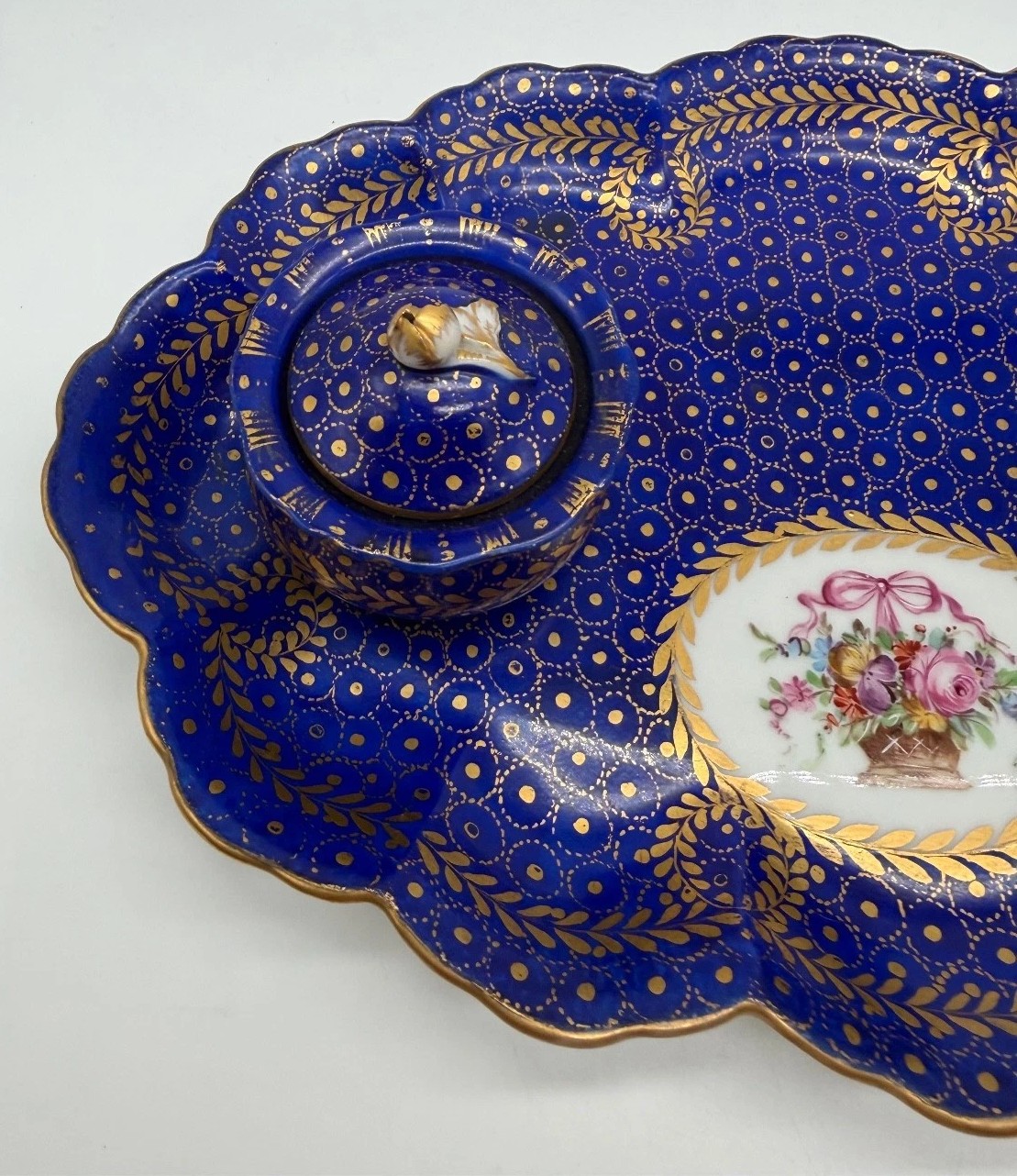
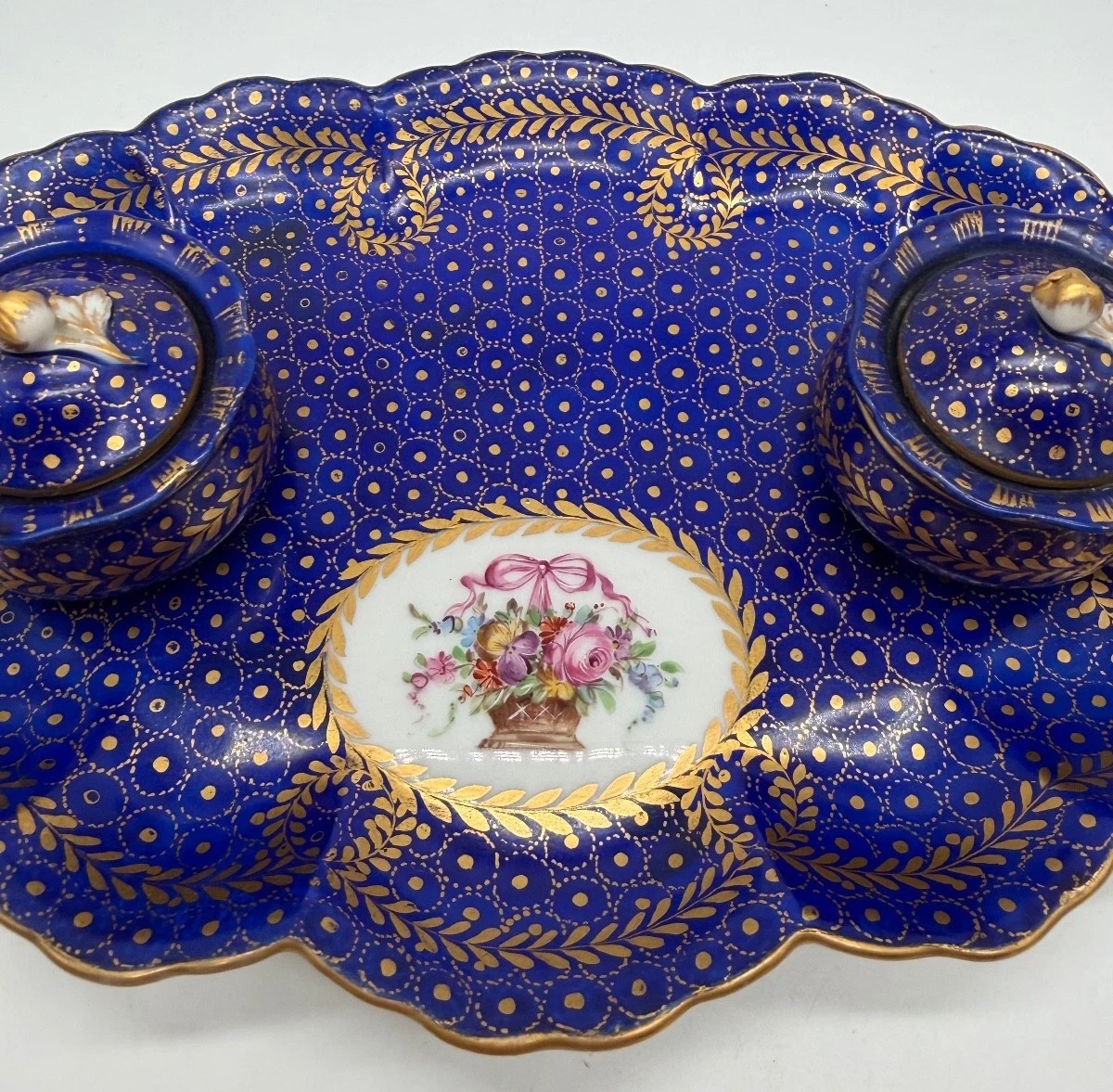
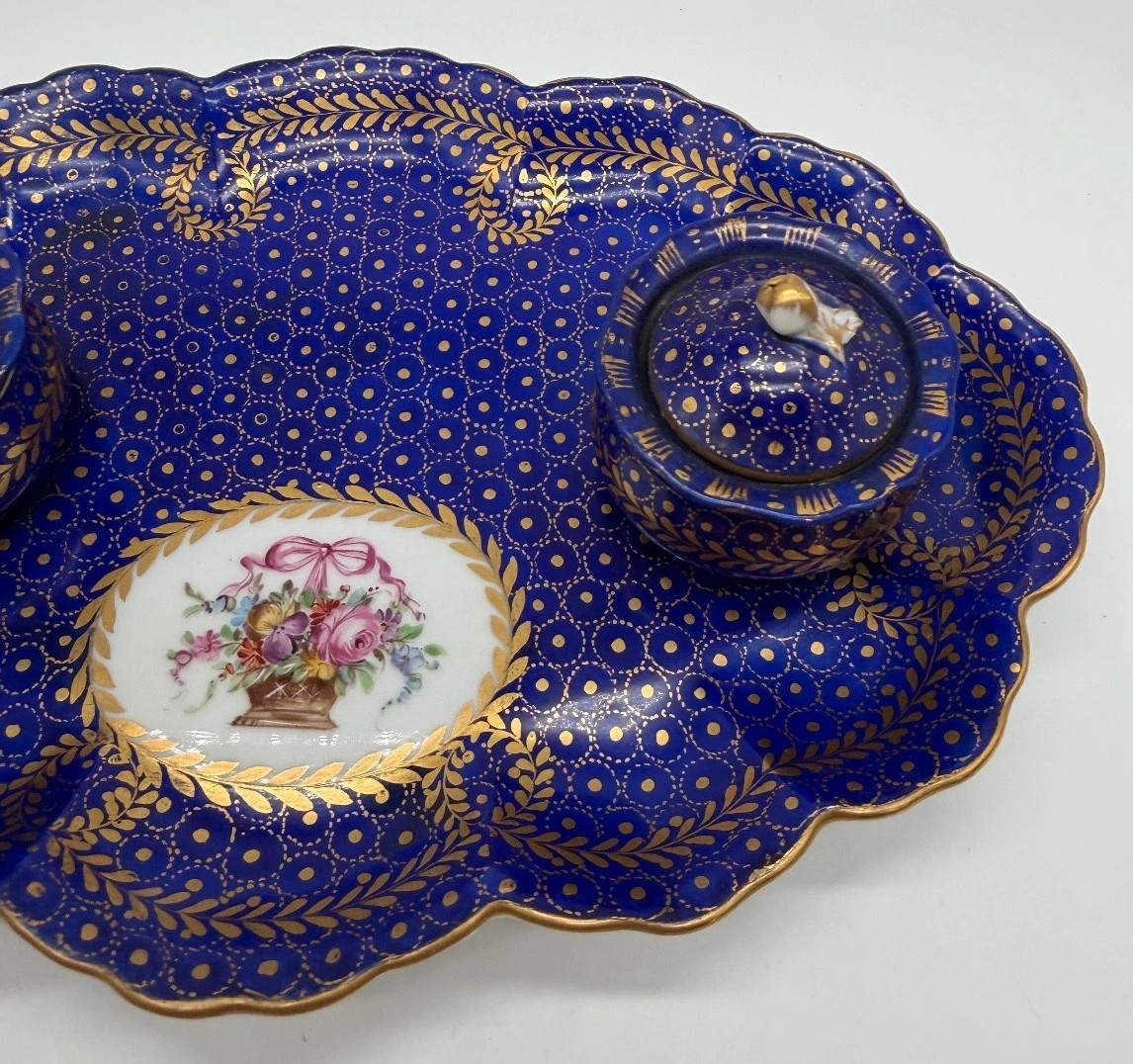
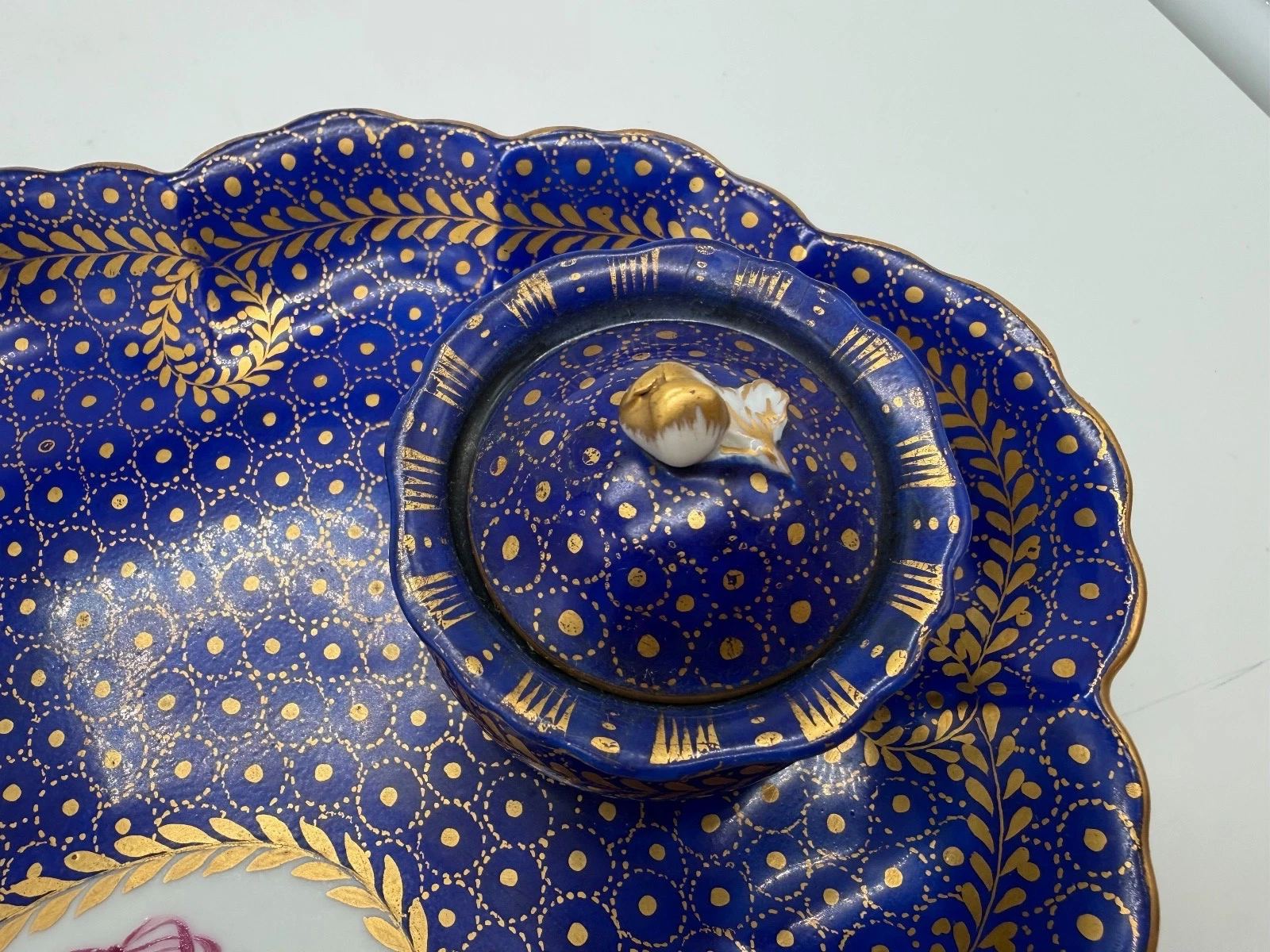
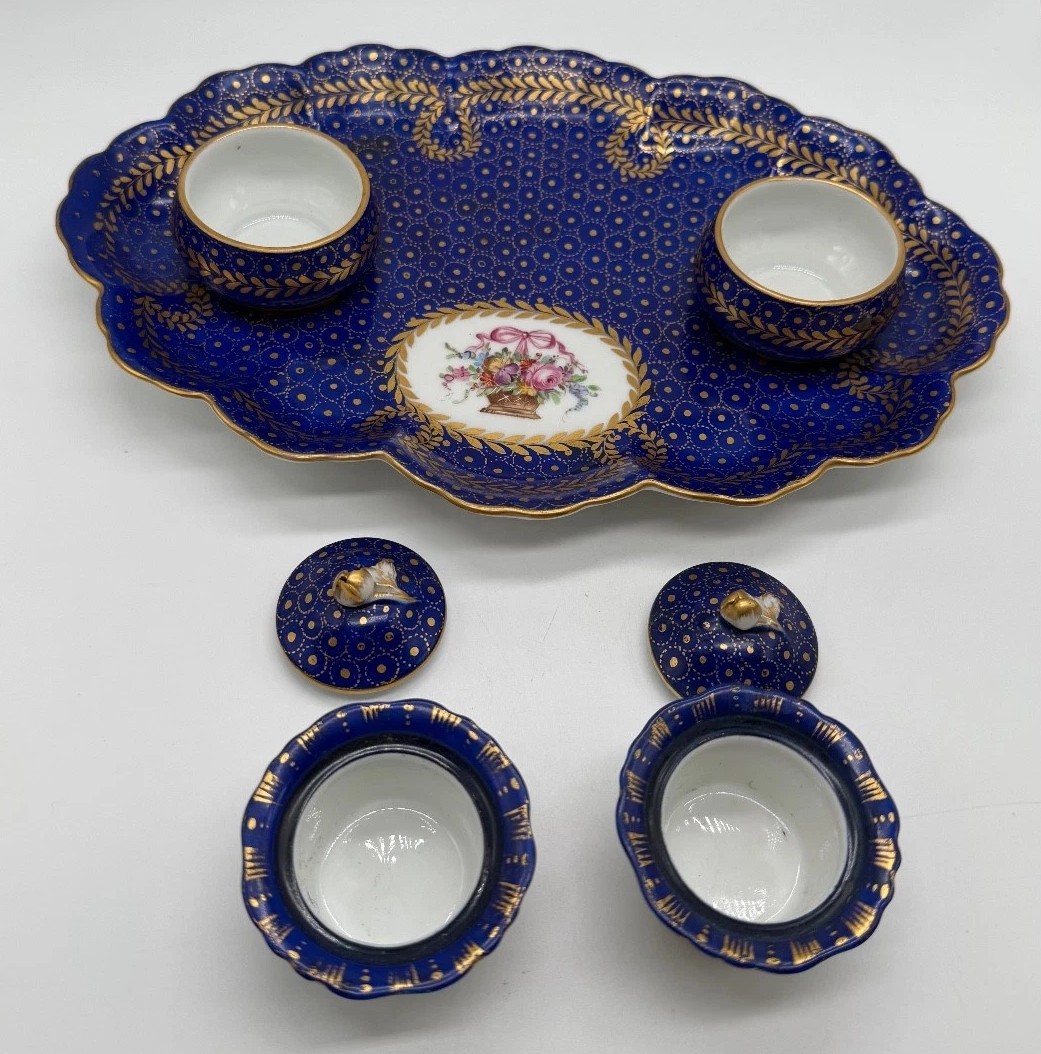
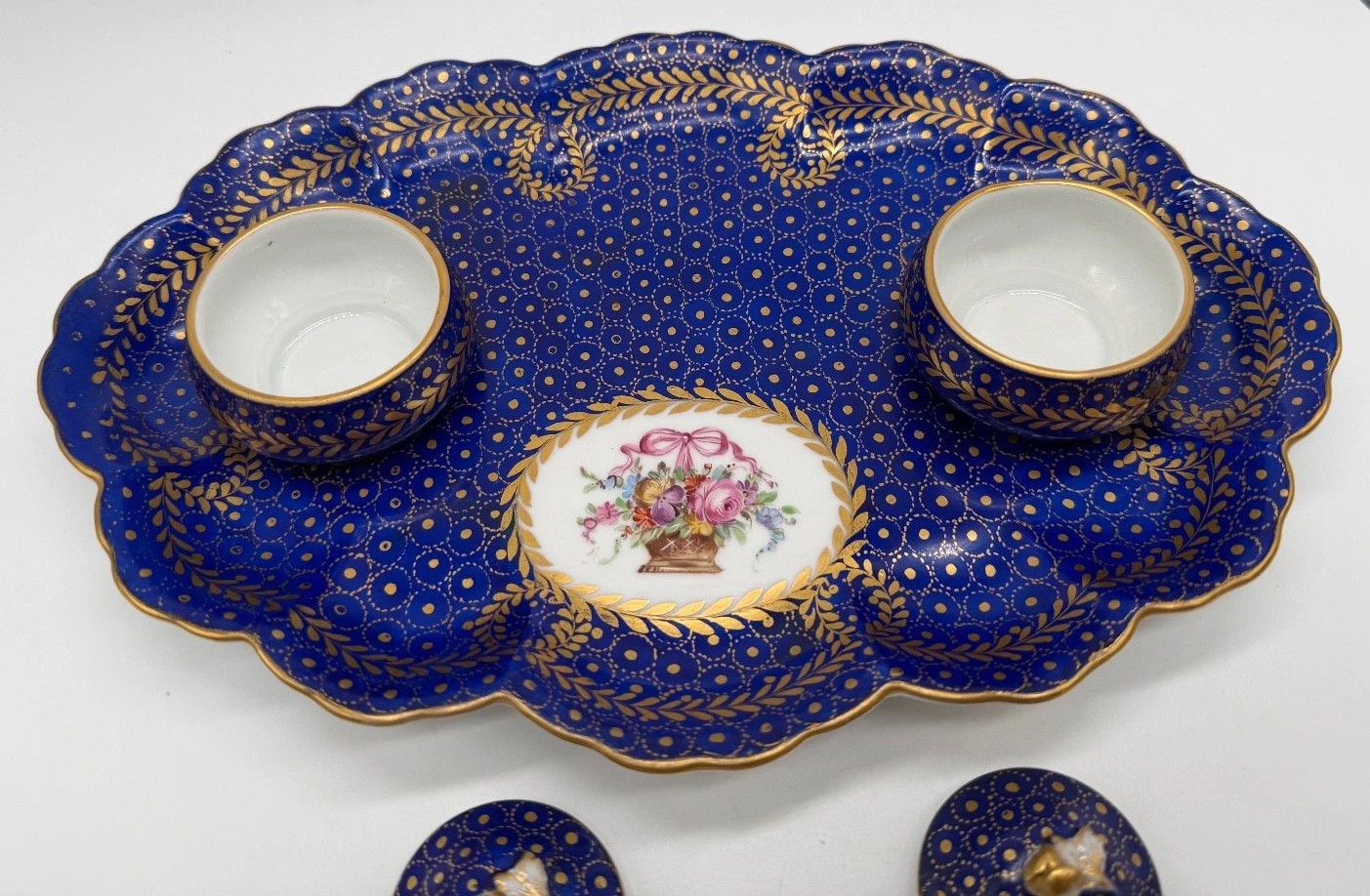
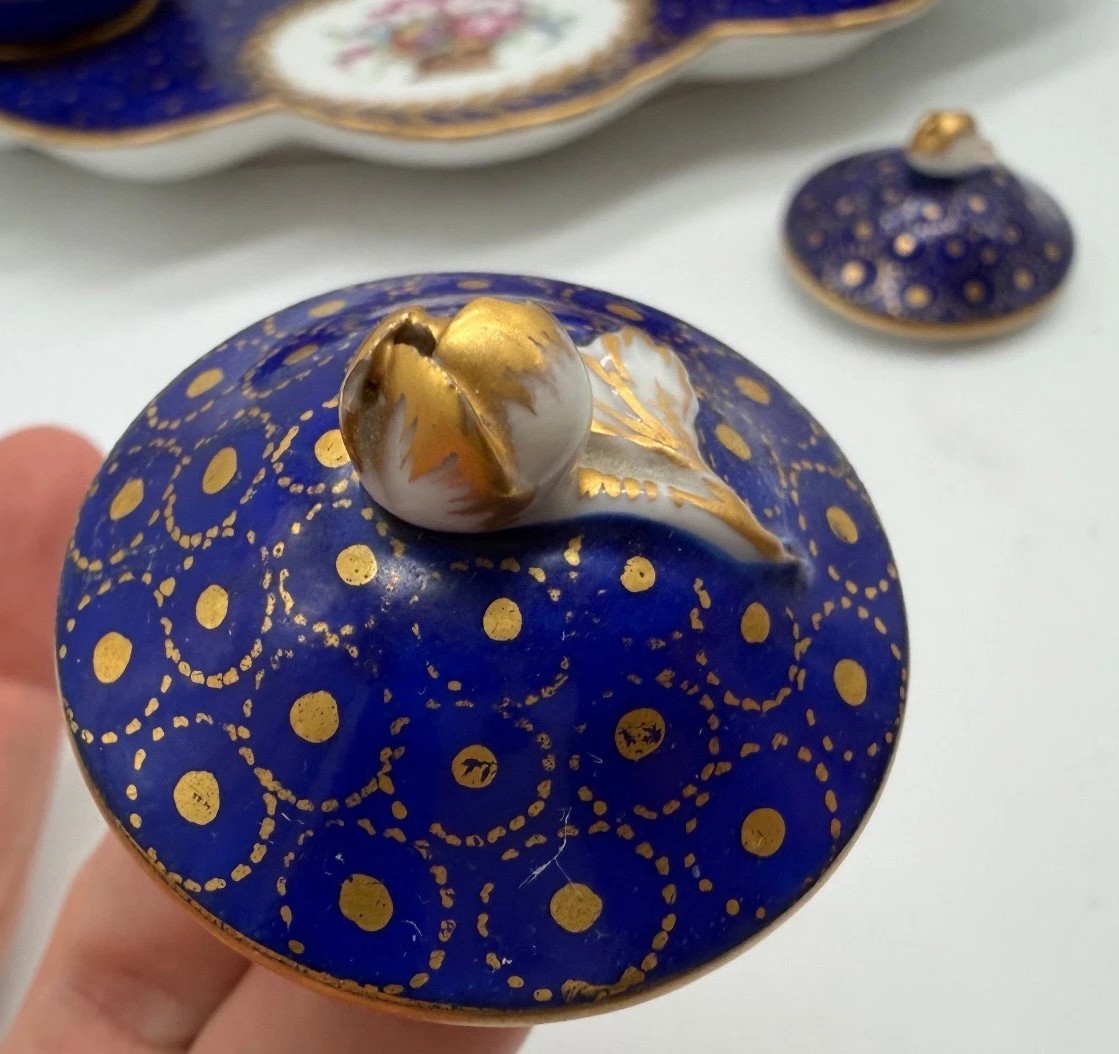
Porcelain Inkstand in the Sèvres Style
| Categories | Ceramics/Porcelain non-Figural |
| Material | Porcelain |
| Markings | Unmarked |
| Manufacturer | Undetermined |
| Origin | France |
| Date or Era | circa 1900 |
| Measuring | 10 ¾” x 7 ¼” x 2 ⅜” high |
Description
This piece is an oval, lobed porcelain double inkstand (écritoire) decorated in the Sèvres style.
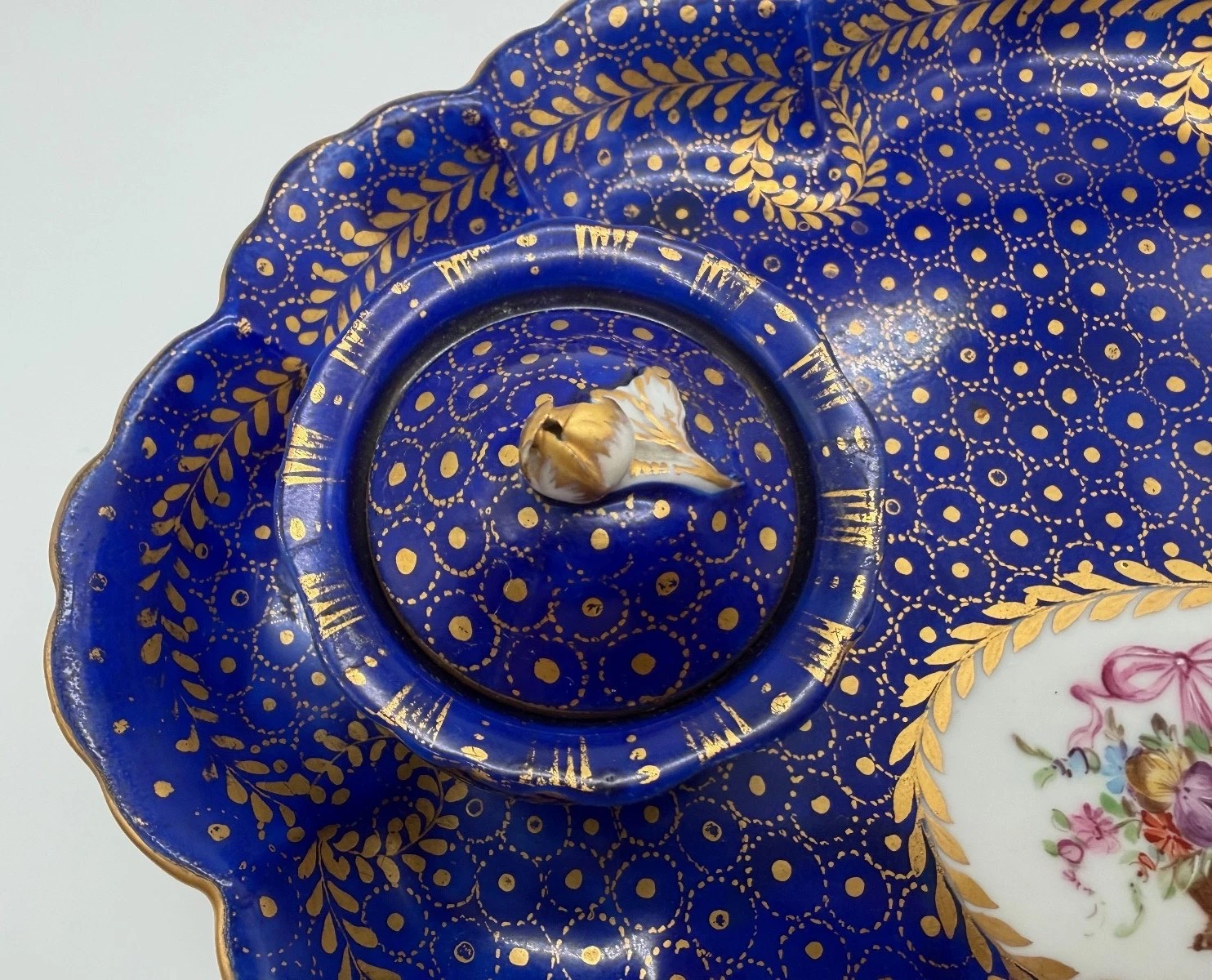
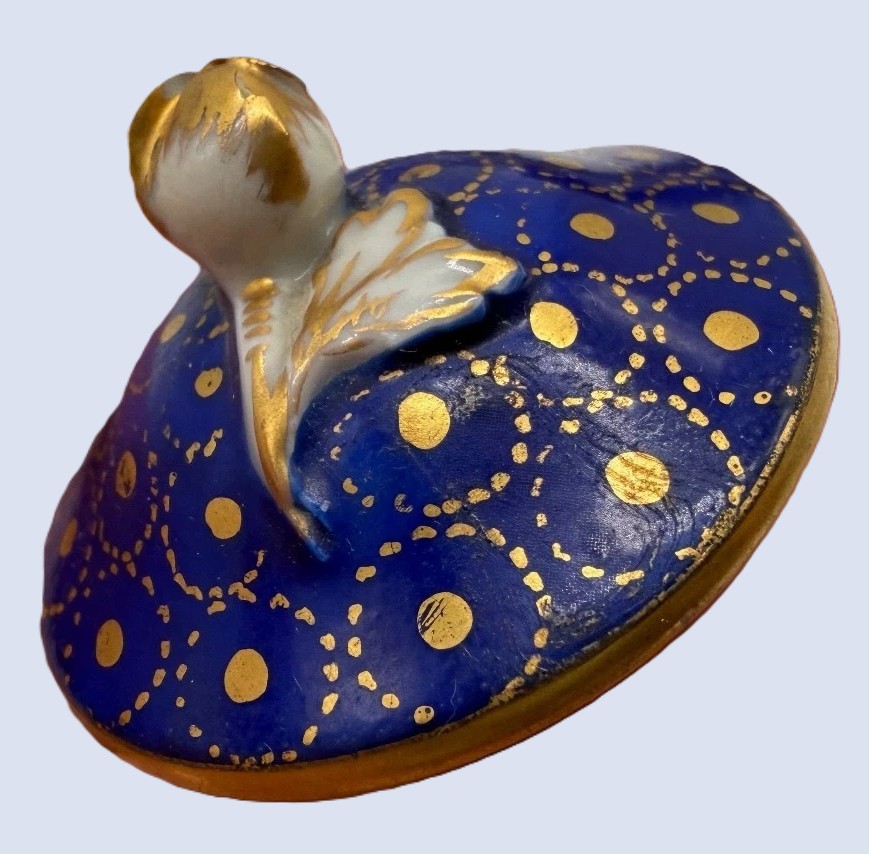
- Tray & Form: The set features a scalloped, lobed porcelain tray housing two inset wells for removable porcelain ink pots, complete with separate, loose porcelain lids topped with gilded bud-form finials.
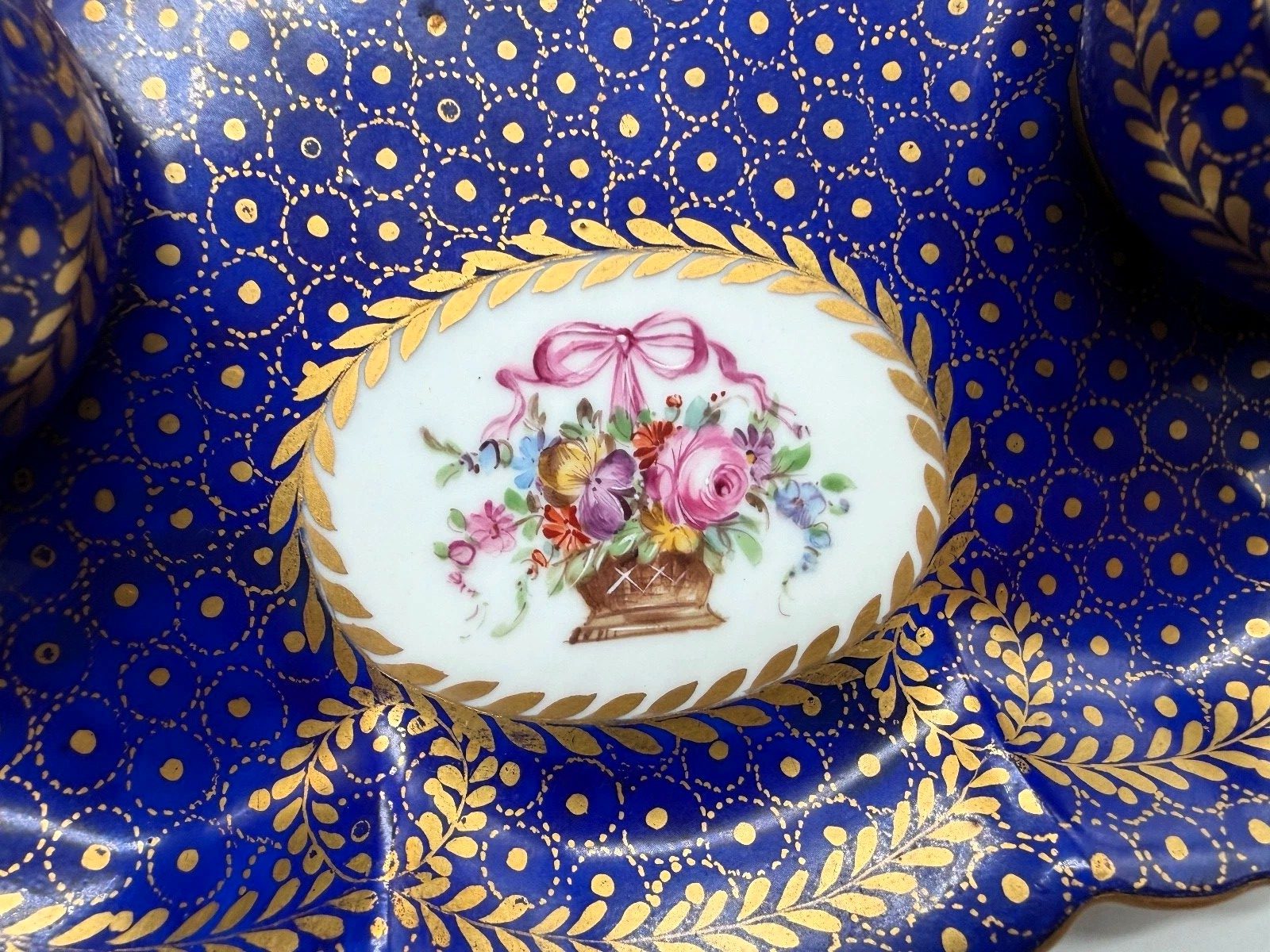
- Ground & Gilding: The surface is finished in a deep cobalt blue ground, richly covered with a gilded “œil-de-perdrix” (partridge eye) pattern—a traditional pattern composed of dotted gilt rings surrounding central dots. The lobed borders and edges are framed with delicate gilded laurel leaf sprays and gilt rimming.
- Central Reserve: Positioned at the center of the tray is an oval white porcelain reserve edged with a gilt laurel wreath. Inside the reserve is a hand-painted polychrome floral vignette depicting a woven flower basket overflowing with roses, pansies, and garden blossoms tied with a pink ribbon.
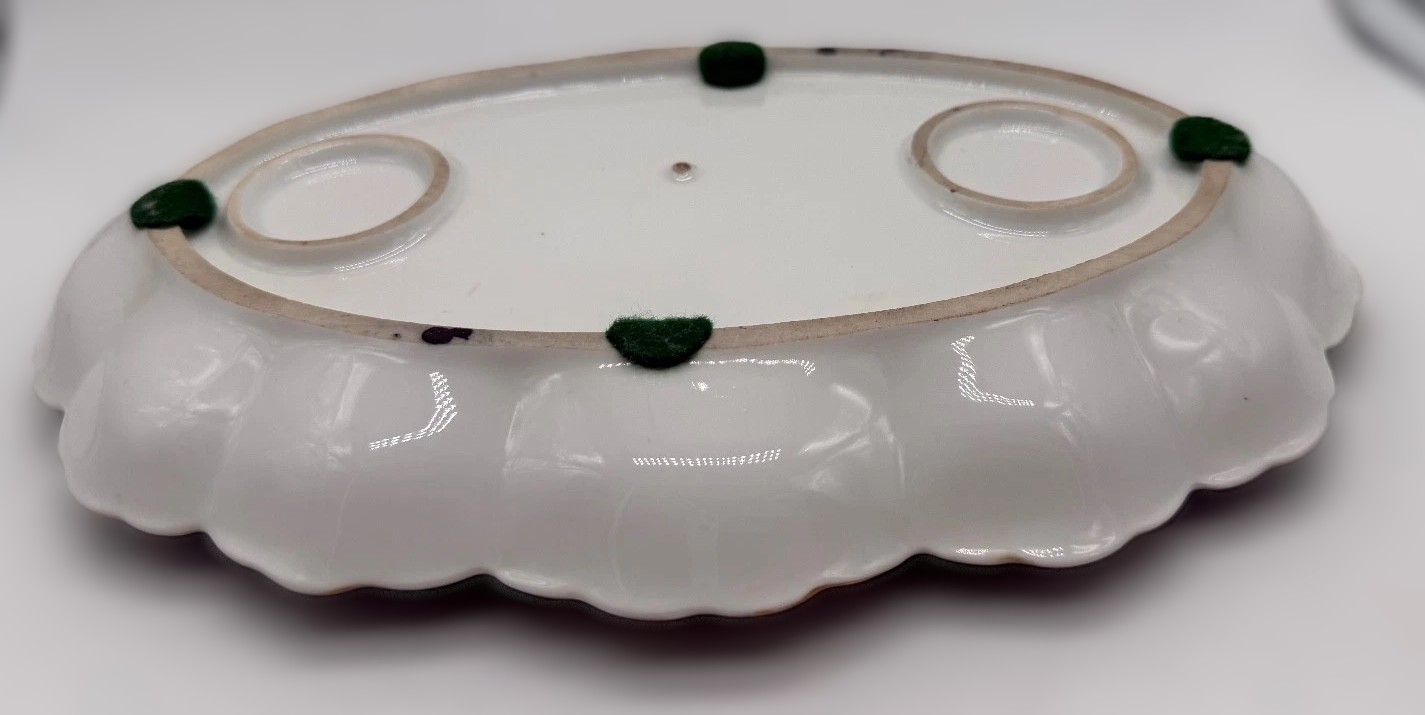
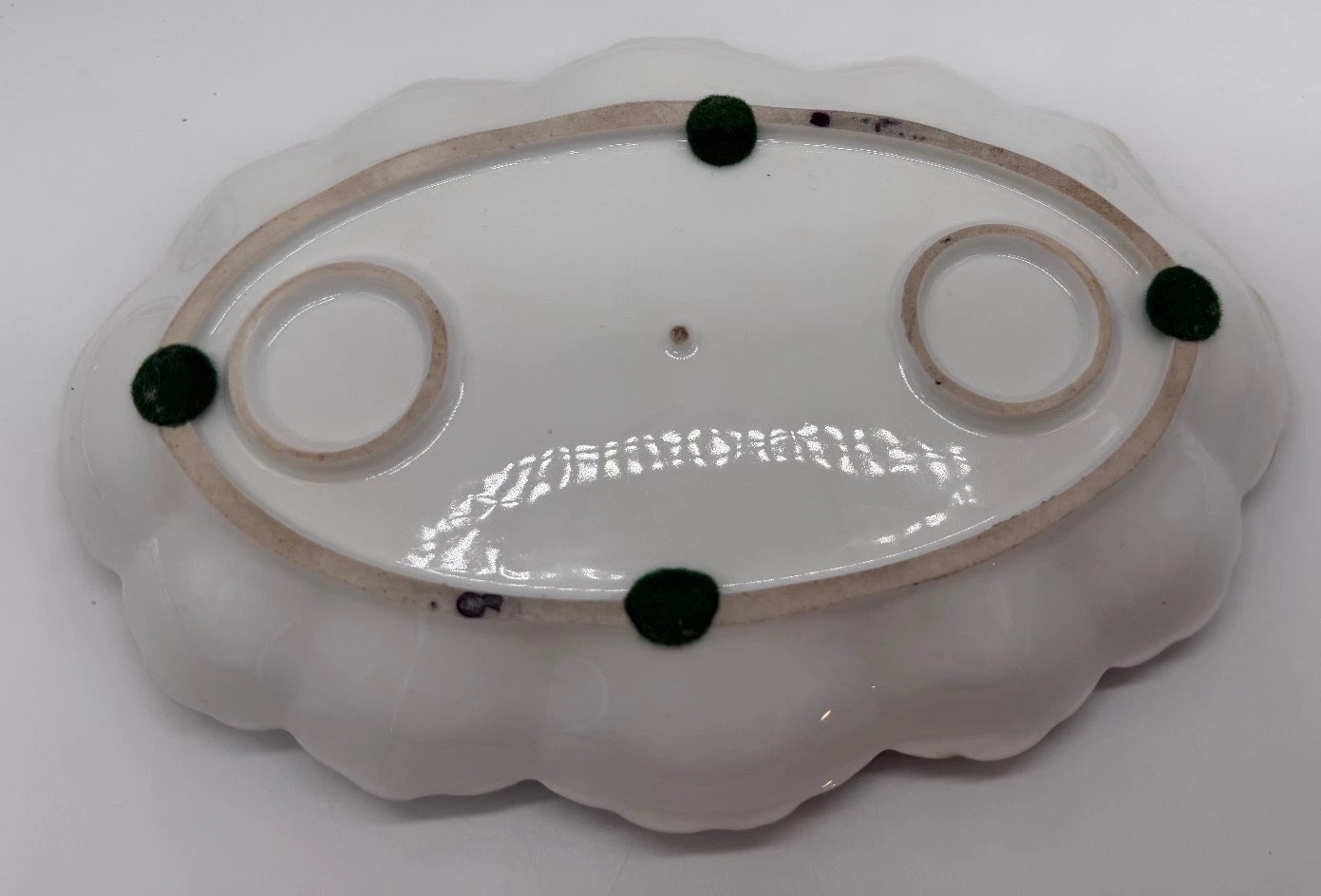
- Underside: The underside is glazed white, showing an unglazed oval foot rim and circular recesses for the inkwell inserts.
Origin, Maker, and Date
- Where was it made? It was produced in France.
- Who made it? It was created in the manner of the Manufacture Nationale de Sèvres (commonly referred to as Sèvres style or French soft-paste/hard-paste revival porcelain). While pieces executed in this high Rococo taste bear the hallmark stylistic traits of 18th-century royal Sèvres production, most extant examples featuring this specific form and condition were manufactured by prestigious late 19th- or early 20th-century Parisian porcelain decorators (such as Samson, Edmé Samson et Cie, or secondary French workshop decorators) operating in the Sèvres tradition.
- When was it made? This piece dates to the late 19th to early 20th century (circa 1880–1920). The design itself pays homage to the mid-to-late 18th-century French Neoclassical and Rococo periods.
Sold for $268 in July 2026
Content disclaimer. The information posted is the owner’s best knowledge and may not have been vetted by the SOIC. We welcome comments, corrections, and additions, working to make our website information comprehensive and accurate.
Join the Society of Inkwell Collectors (SOIC) – it’s free!
Founded in 1981 as a non-profit organization,
we are documenting inkwells (and accessories).
We’re here to help and inform!