

Buyer Be Aware – Cast Brass Inkstand by “Brevettato”
| Categories | Modern-day Production / Reproduction / "Fake" |
| Origin | Italy |
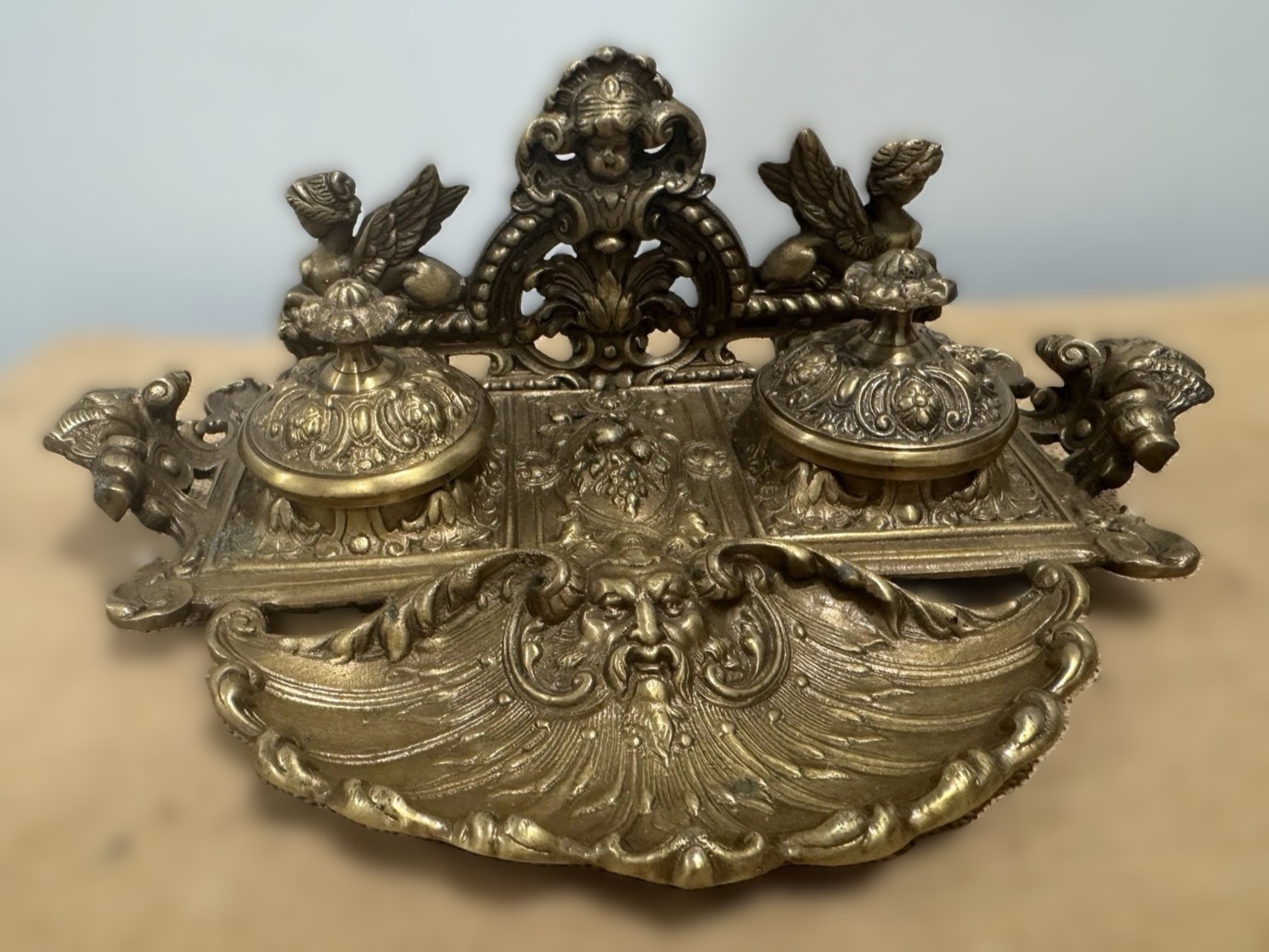
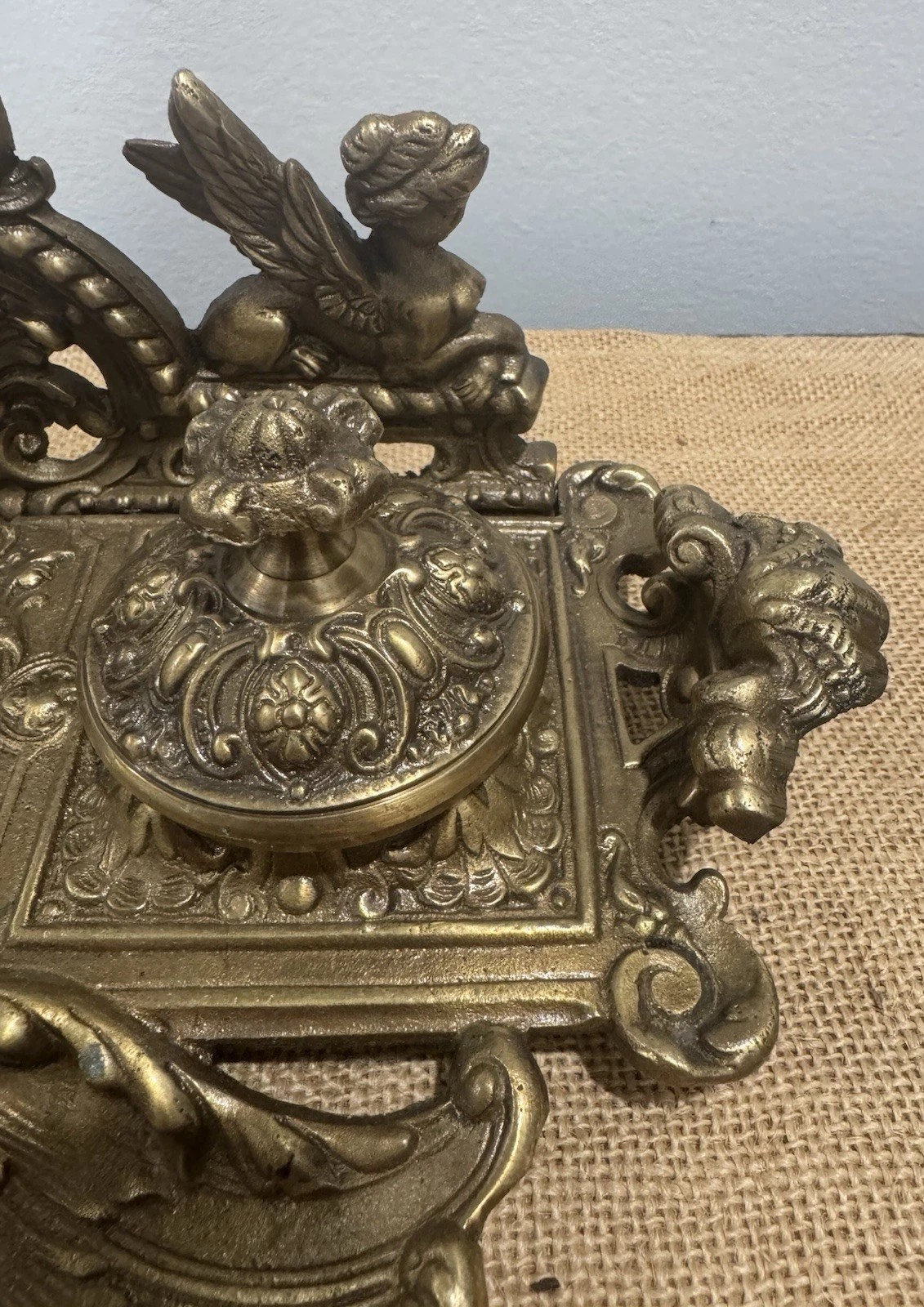
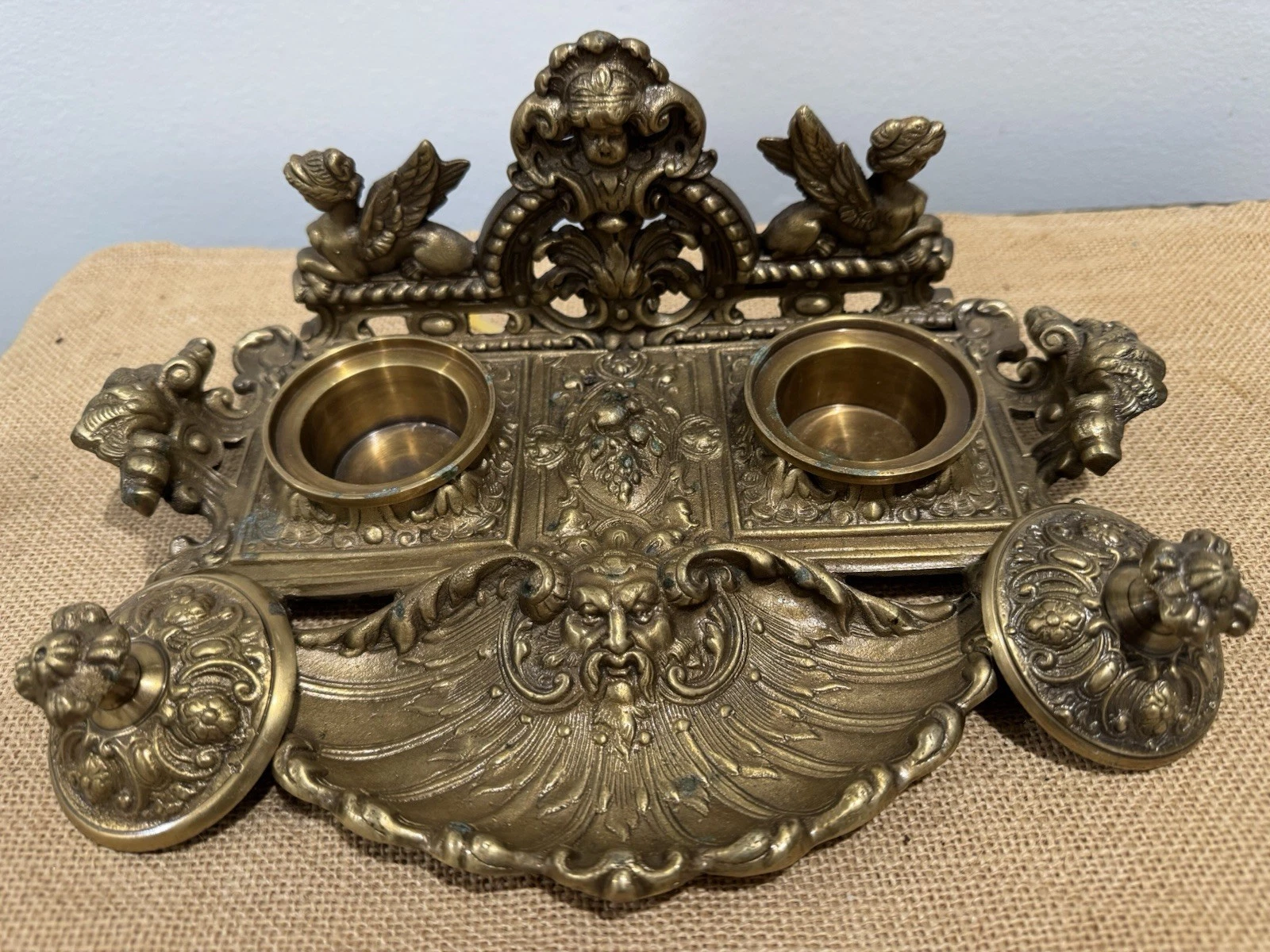
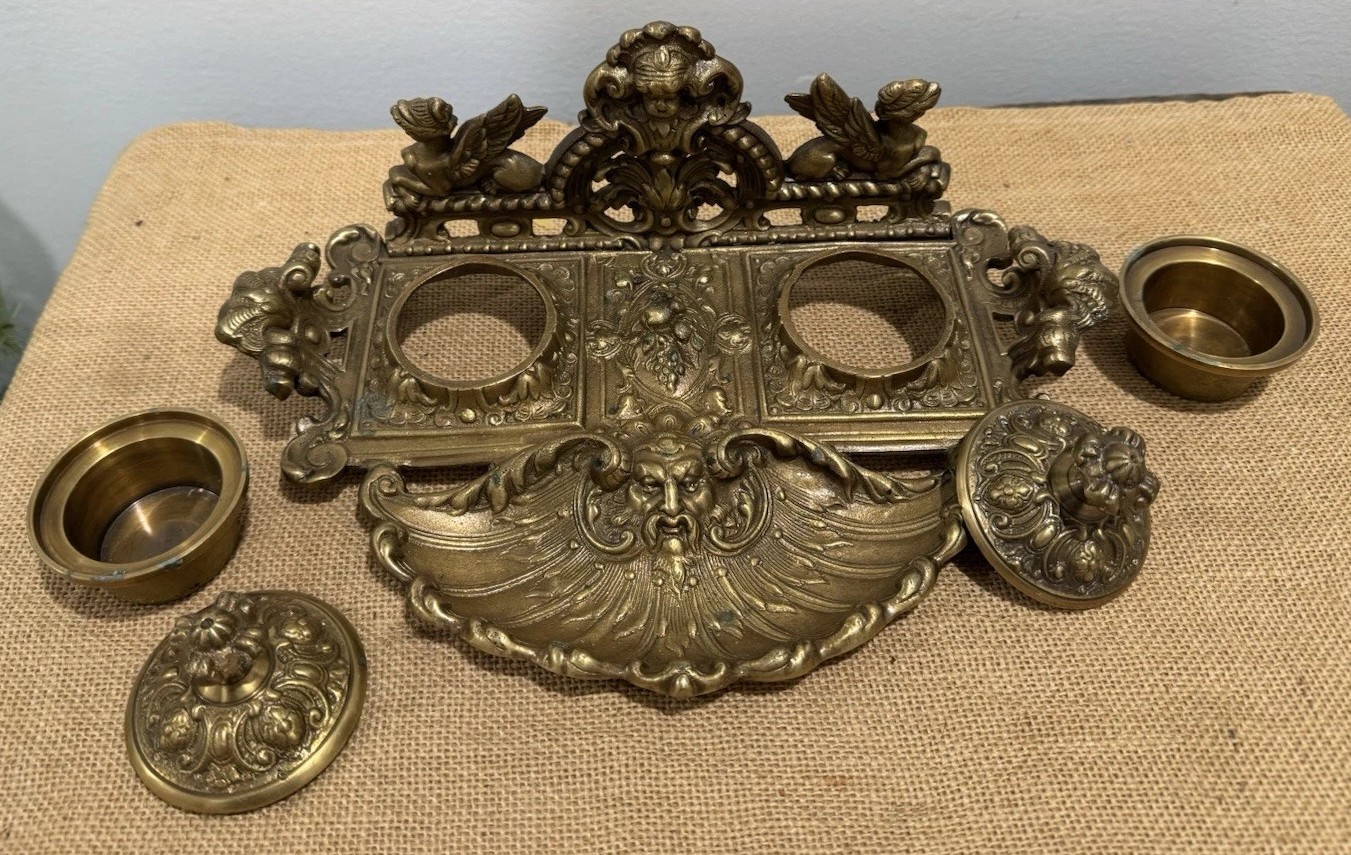
This inkstand sold on eBay in July 2026 for $200. The listing dated it to 1880 – 1920, made by the Italian firm “Brevettato”, famous for high-quality items exported globally to the adorn the desks of the Victorian and Edwardian elite.
This piece is not an 1880–1920 antique, and the seller’s description is based on common misconceptions found in online listings.
Visual Assessment & Signs of Age
Evaluating the construction, finish, and underside of this piece reveals several clear indicators that it is a mid-to-late 20th-century vintage reproduction (likely c. 1960s–1980s), rather than an antique from the turn of the century.
- Casting Quality & Rough Finish:
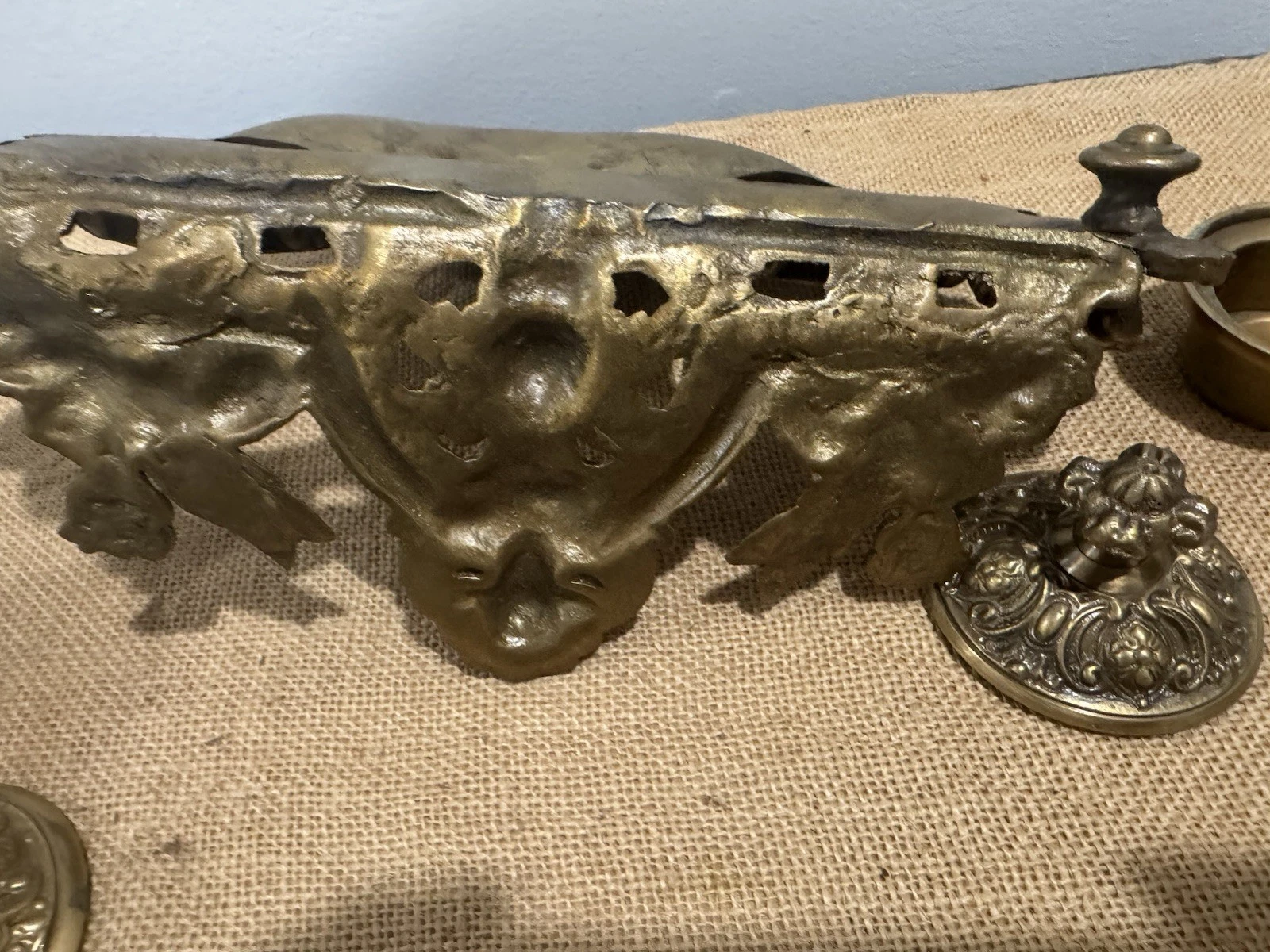
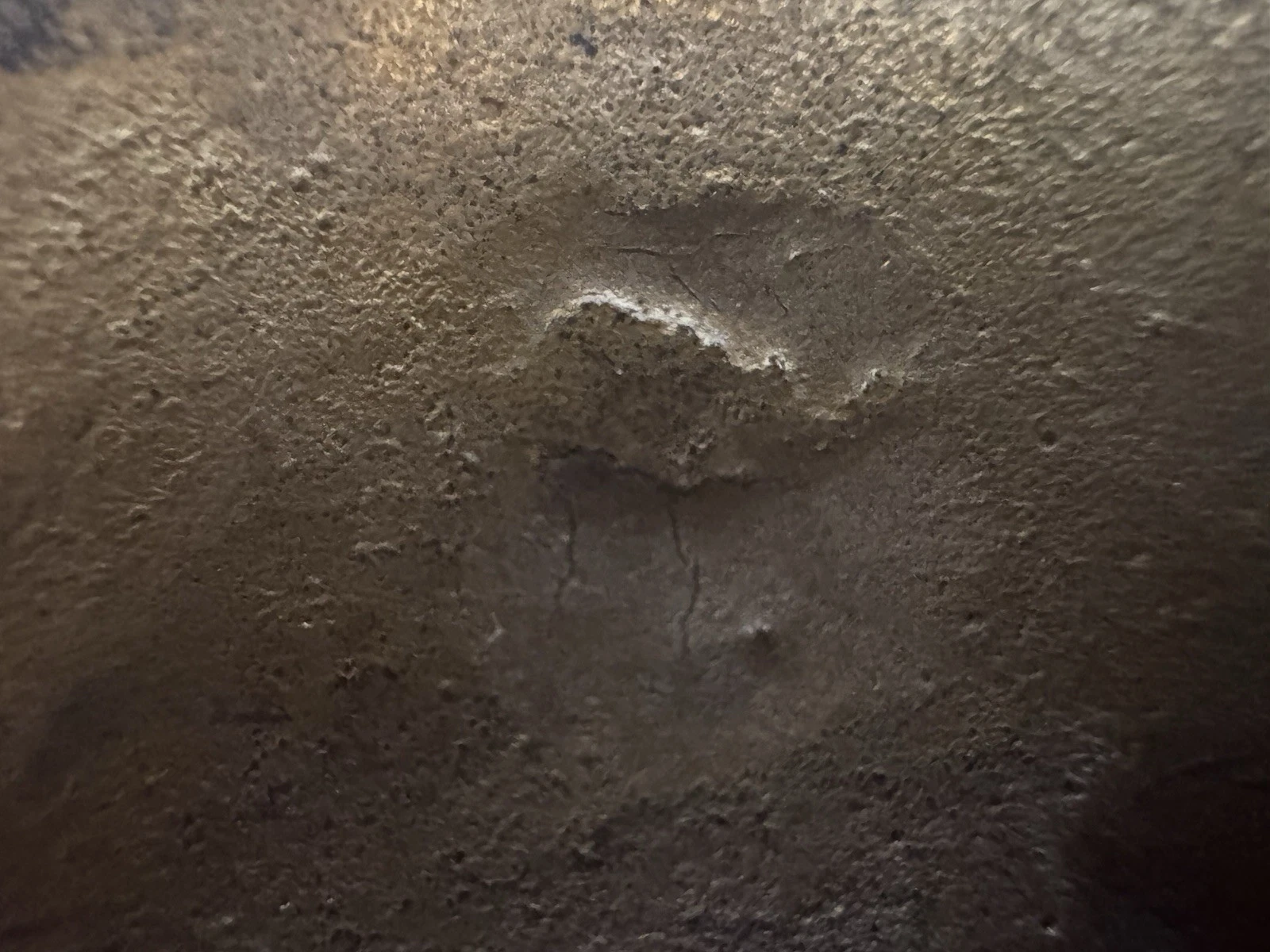
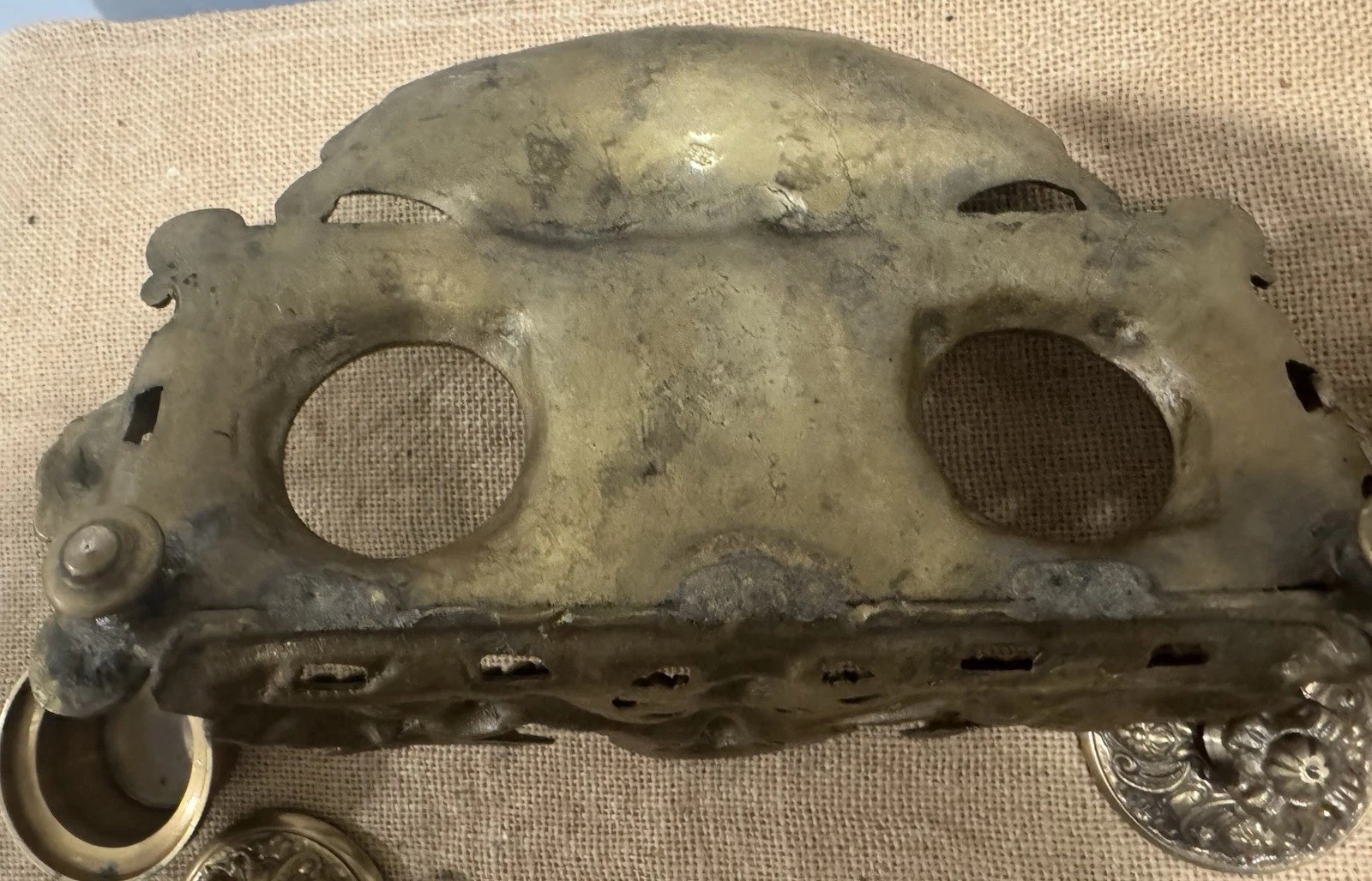
- Looking at the underside, the casting is rough, grainy, and unfinished. True 19th- or early 20th-century high-end brass casting (especially French or Italian decorative bronzes/brasses) was carefully chased, filed, and smoothed on the reverse.
- The webbing, flash marks, and hollow voids under the base and backplate are characteristic of modern, mass-produced sand-casting or pressure-casting where minimal hand-finishing was applied to non-visible areas.
- Patinating and Surface Finish:
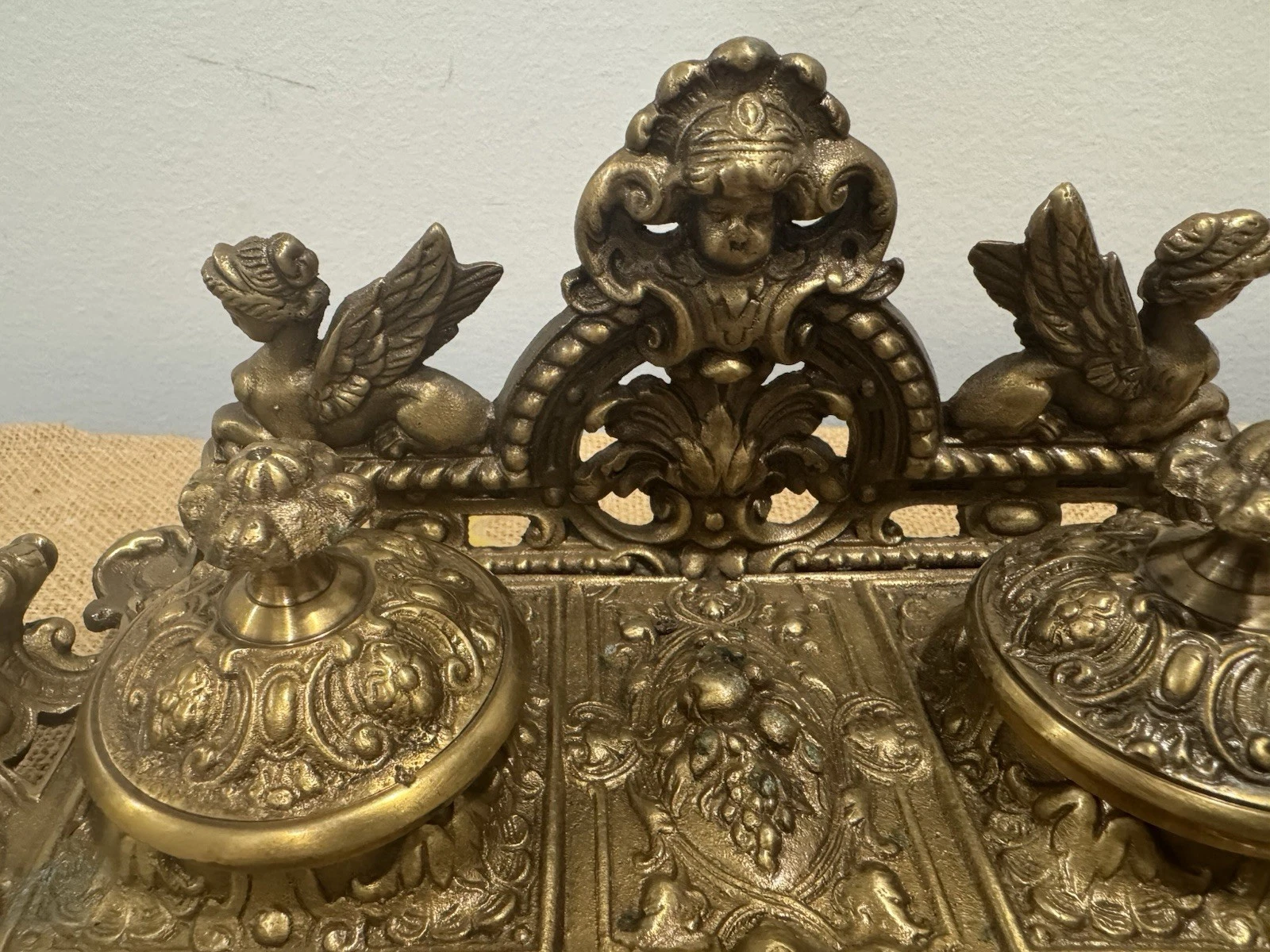
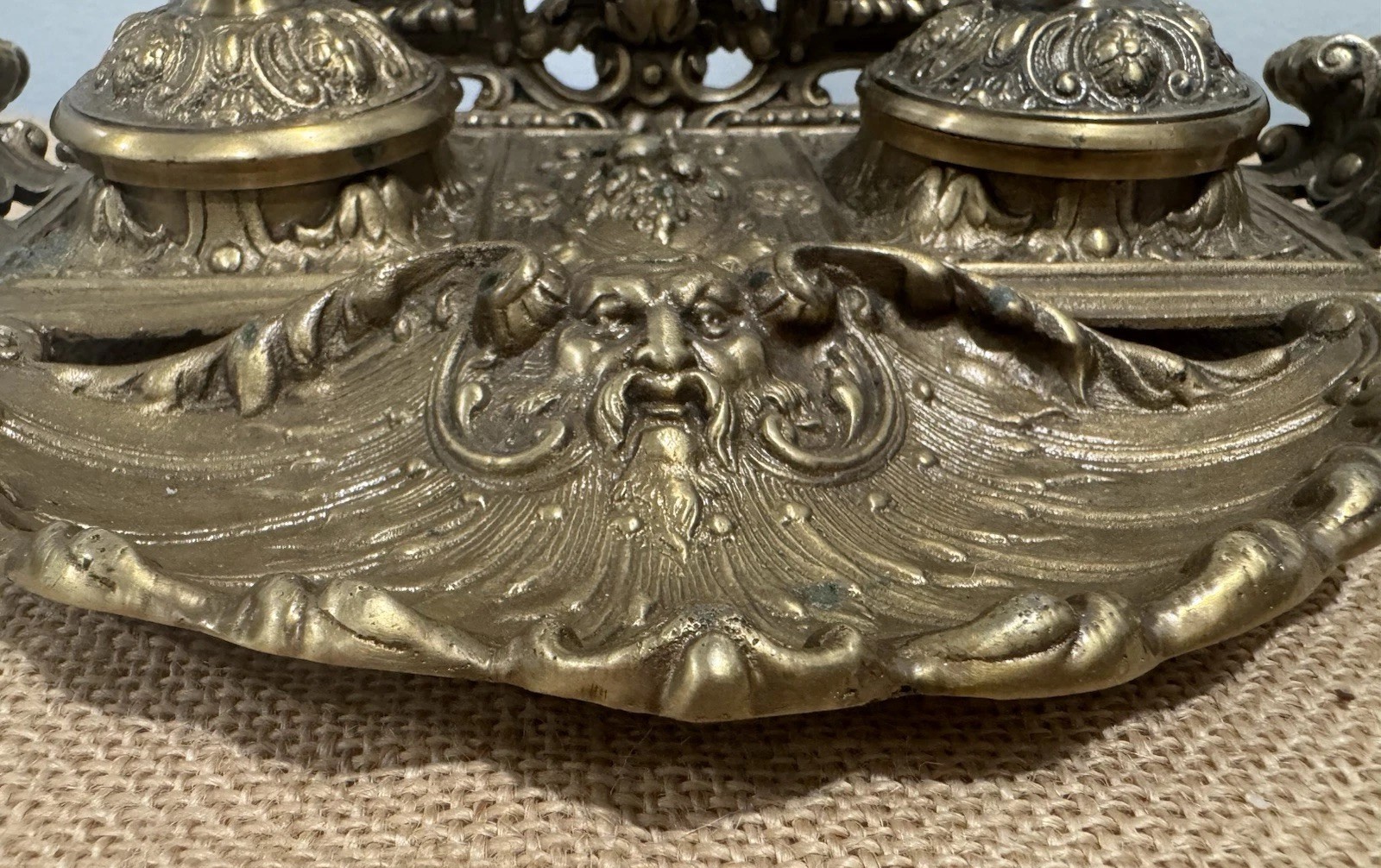
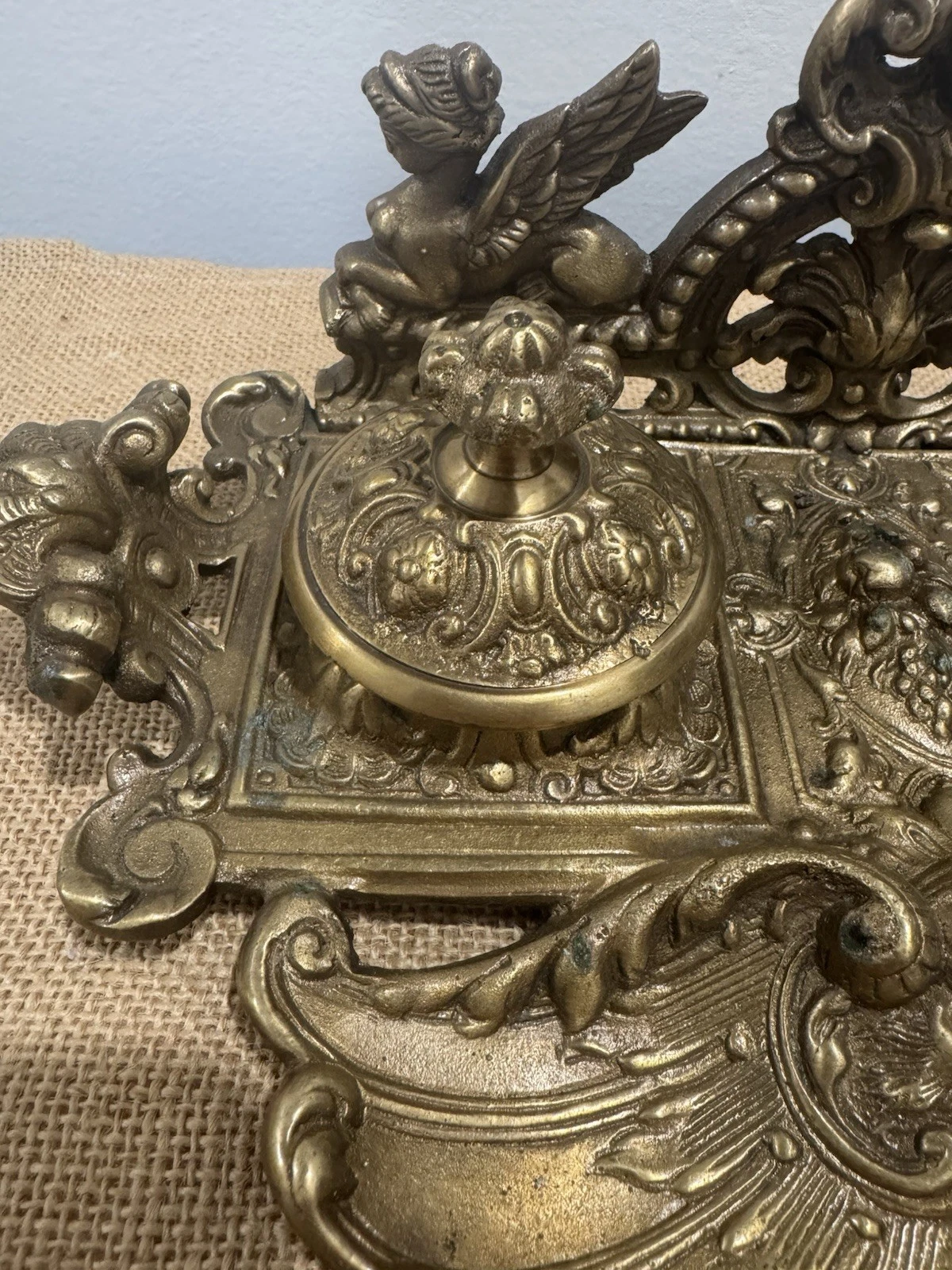
- The golden color exhibits a uniform, sprayed, or chemical “antique brass” lacquer rather than the natural, uneven patina built up by genuine handling, ink spills, or oxidization over a century.
- The areas around the wells and base lack the dark pitting, verdigris, or staining typically seen on working antique brass inkstands.
- Machine-Turned Inserts:
- The inkstand has clean, uniformly machine-lathed brass liner cups. The sharp, uniform lip contours and lack of oxidation are consistent with modern mid-century metal lathe manufacturing rather than hand-fitted antique components.
- Stamping and Texture:
- On pieces like this, stamps like BREVETTATO, MOD. BREV., or MADE IN ITALY are often lightly cast or impressed into pitted surfaces in a manner rarely seen on formal Victorian or Edwardian antiques.
The “Brevettato” Misconception
The seller’s history of the “firm Brevettato” is incorrect.
- “Brevettato” is not a company name. It is simply the Italian past participle for “Patented” (often abbreviated as Brev. or Mod. Brev. for Modello Brevettato, meaning “Patented Design”).
- Attributing these pieces to a famous Italian firm named “Brevettato” that supplied Victorian and Edwardian elites is a persistent legend created by online resellers misinterpreting patent stamps.
- During the 1960s through 1980s, Italian foundries produced a vast array of ornate, Neo-Rococo, Neo-Baroque, and Renaissance Revival brass decorative wares—including inkstands, mantel clock garnitures, candelabras, and valets—specifically for the export and souvenir market. Many of these pieces featured patented casting molds stamped BREVETTATO or MADE IN ITALY on the base.
Final Verdict
- Actual Date Range: Mid-to-late 20th Century (c. 1960s–1980s).
- Origin: Italy (commercial brass foundry export).
Content disclaimer. The information posted is the owner’s best knowledge and may not have been vetted by the SOIC. We welcome comments, corrections, and additions, working to make our website information comprehensive and accurate.
Join the Society of Inkwell Collectors (SOIC) – it’s free!
Founded in 1981 as a non-profit organization,
we are documenting inkwells (and accessories).
We’re here to help and inform!