

Inkipedia
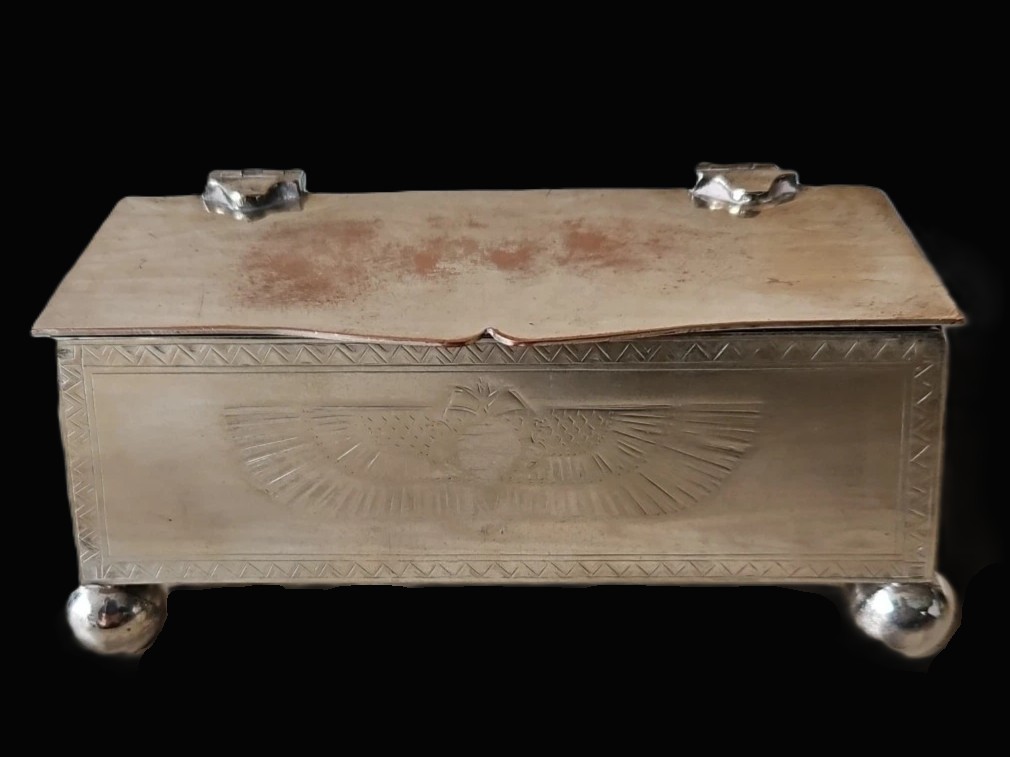
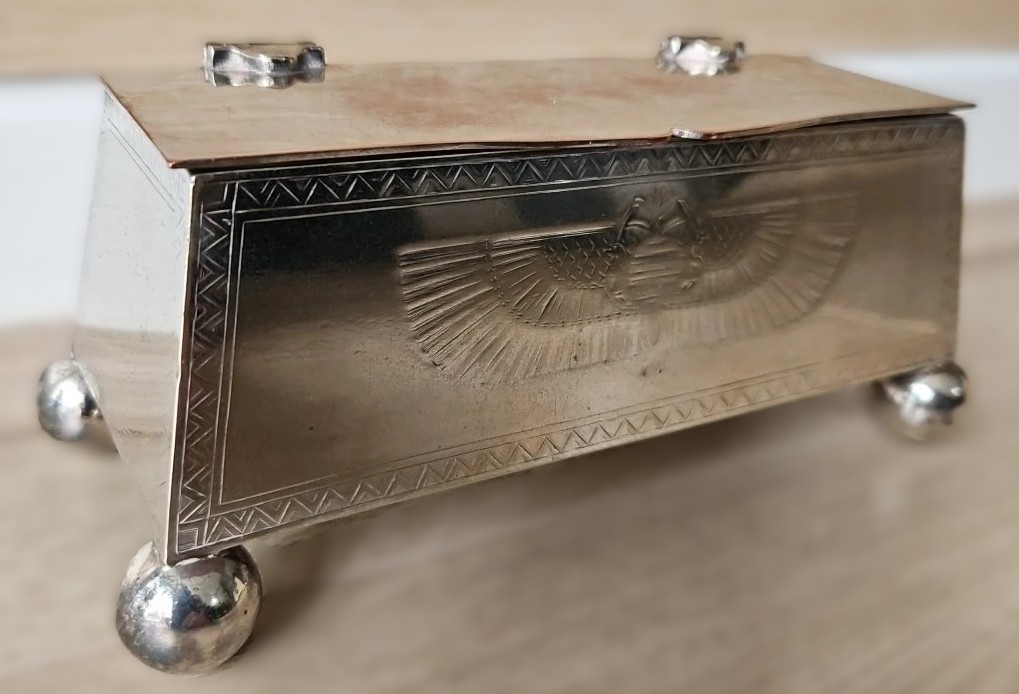
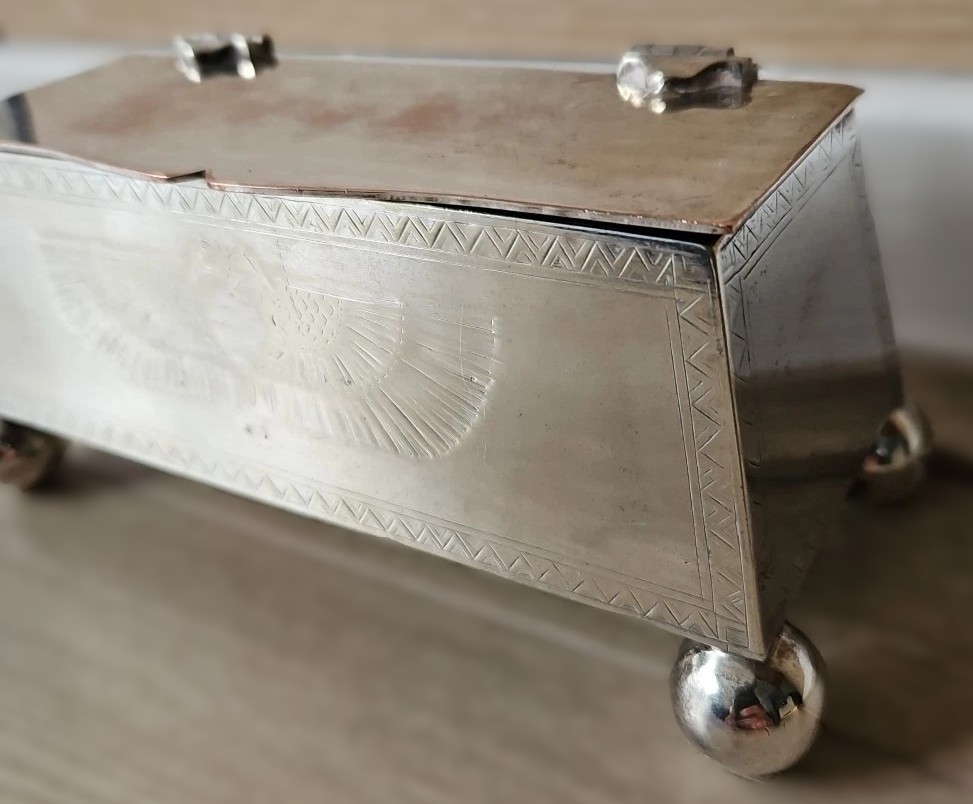
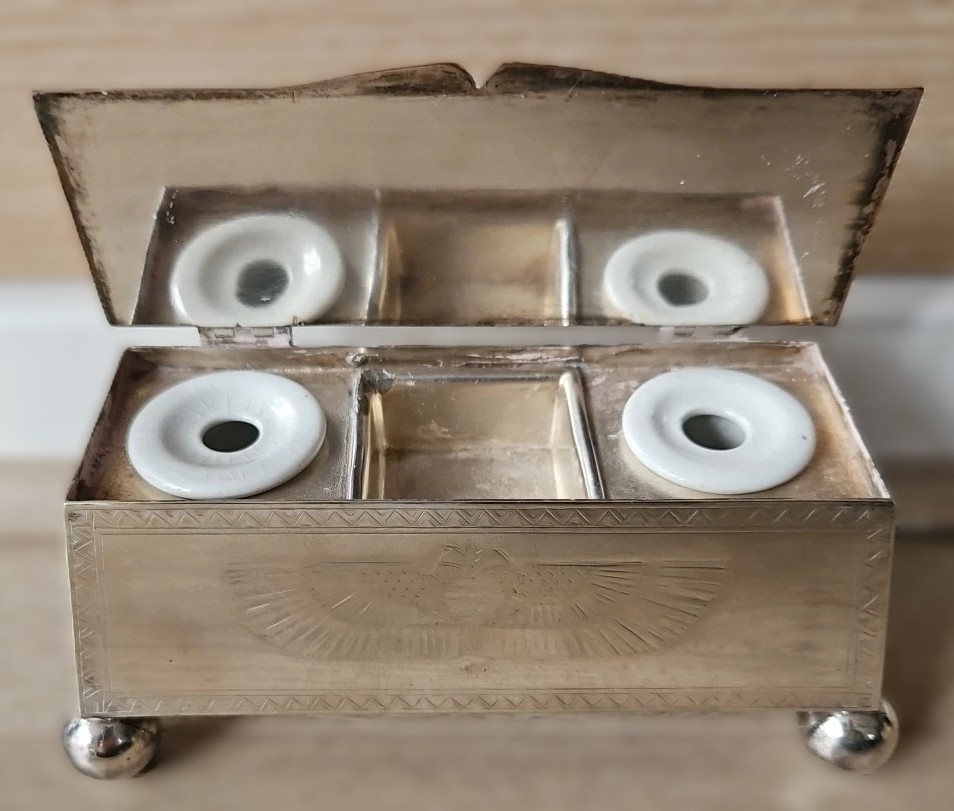
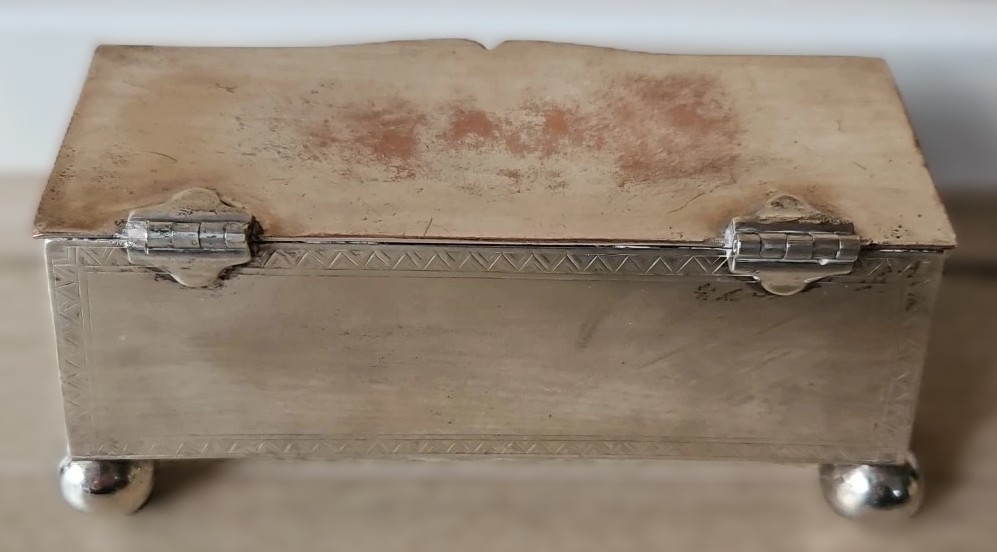
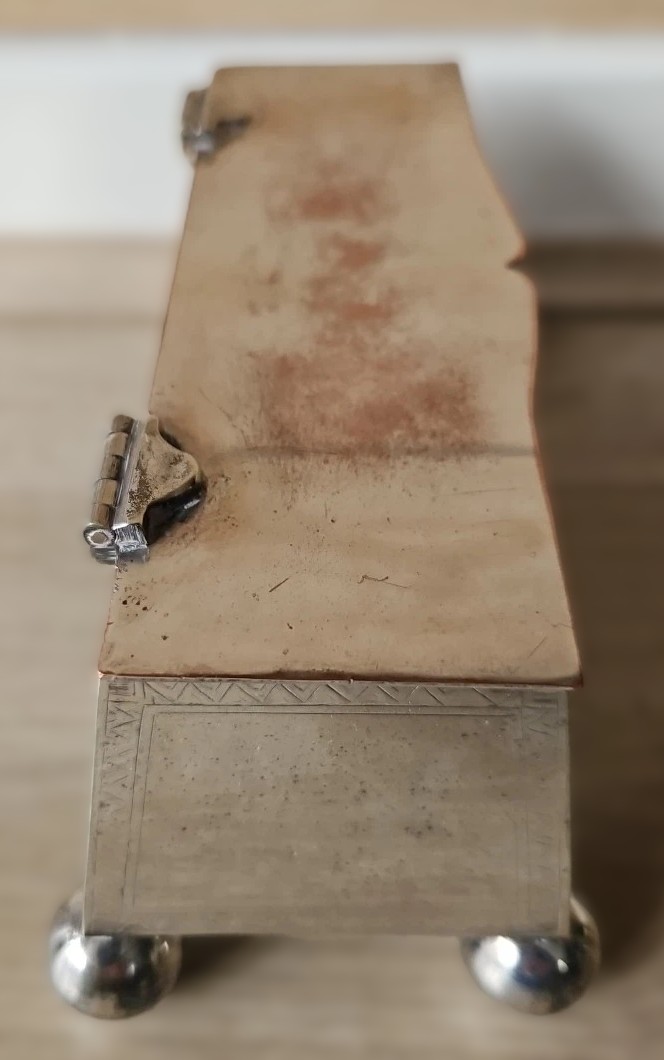
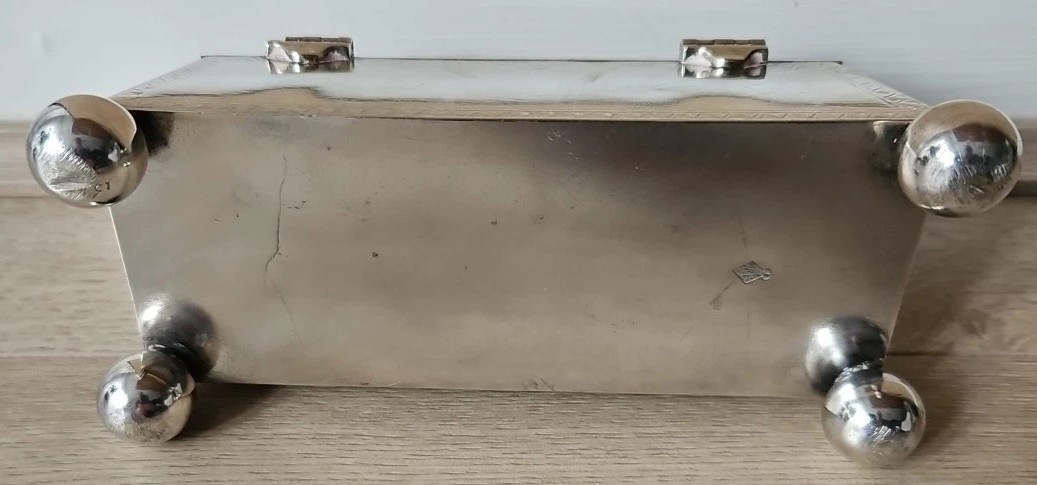
Egyptian Revival Silverplated Double Inkstand
| Categories | Middle East / Africa |
| Type | Egyptian Revival |
| Material | Silverplate |
| Markings | See narrative |
| Manufacturer | Undetermined |
| Origin | Undetermined |
| Date or Era | circa 1922 |
| Measuring | 7” x 3 ¼” |
Description
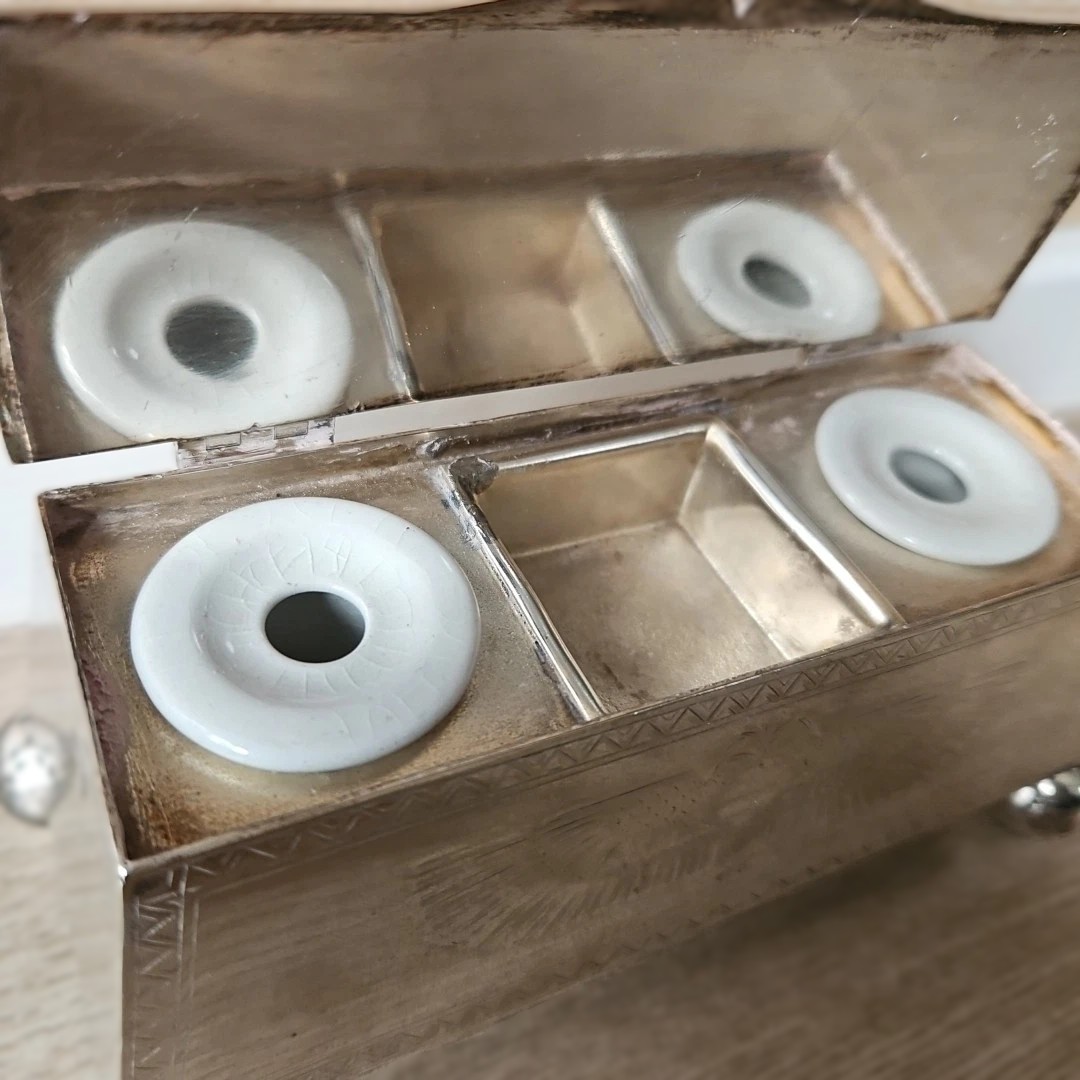
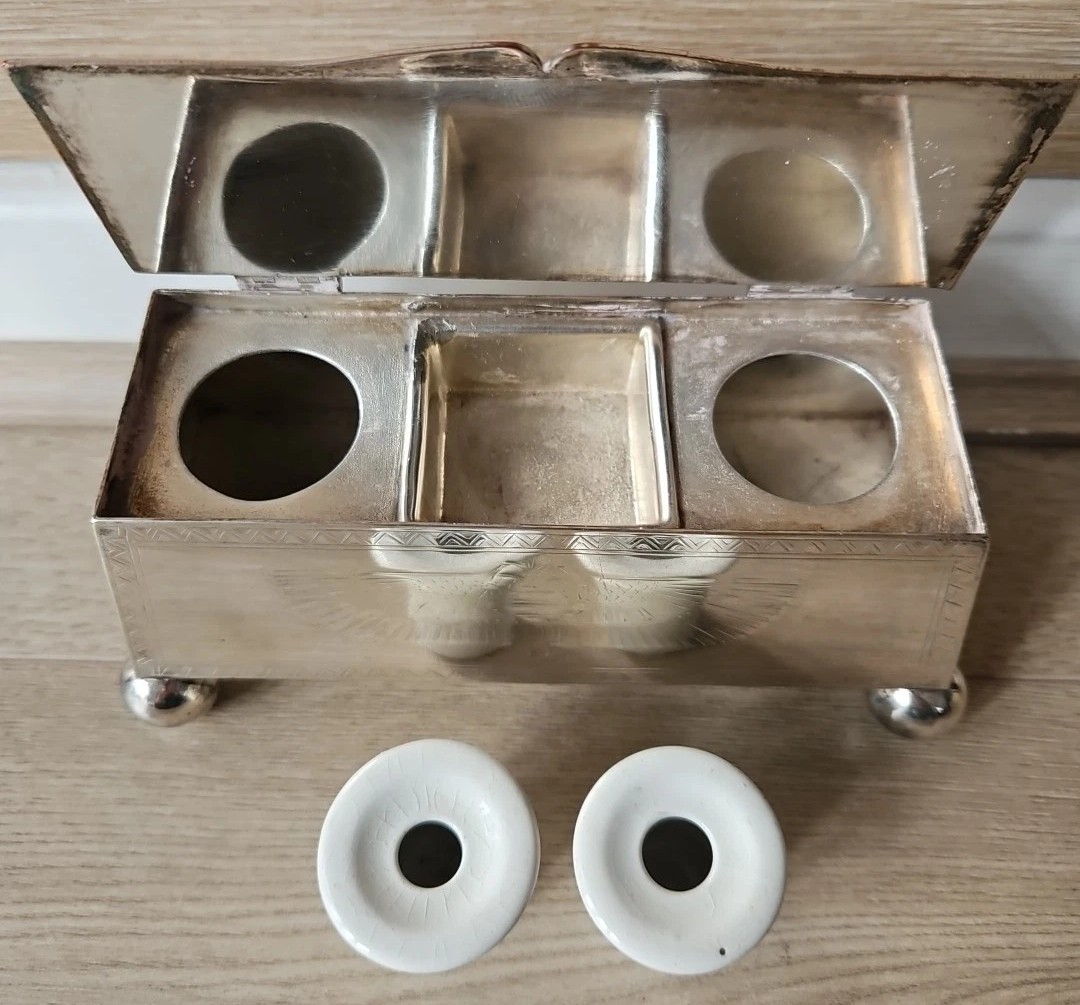
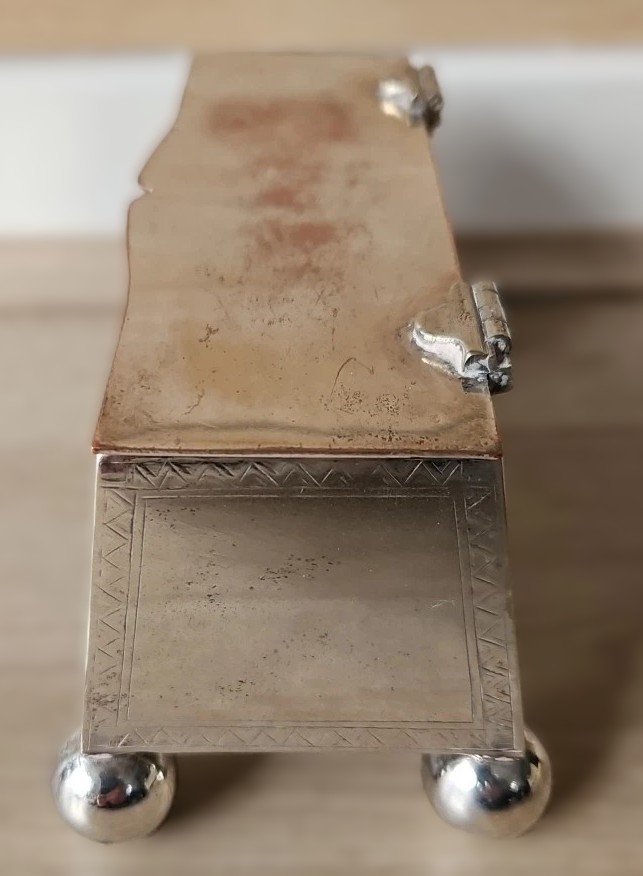
- Form & Structure: Constructed as a tapered, pylon-shaped box (resembling ancient Egyptian architectural pylons) raised on four spherical ball feet.
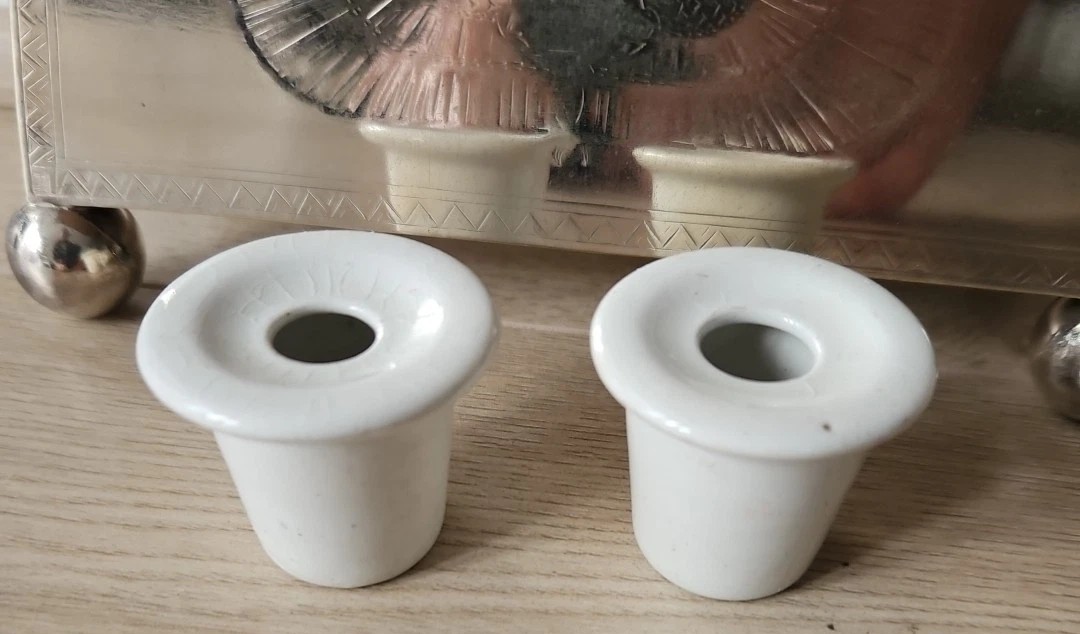
- Hinged Lid & Interior: The hinged top opens to reveal a fitted interior housing two white glazed porcelain inkwells and a central square compartment designed for holding dip-pen nibs, paperclips, or stamps.
- Decorative Engraving:
- Front Panel: Engraved with a winged sun disk (or winged scarab with stylized cobras/uraei), a central motif of ancient Egyptian iconography representing protection and royalty.
- Borders: Framed with geometric chevron / zig-zag frieze borders along the outer edges of each panel.
- Material & Condition: Silverplated base metal (likely nickel silver or brass, as evidenced by light brassy/coppery undertones showing through where the plating has rubbed on the lid).
Maker’s Mark & Attribution
Reading the Mark
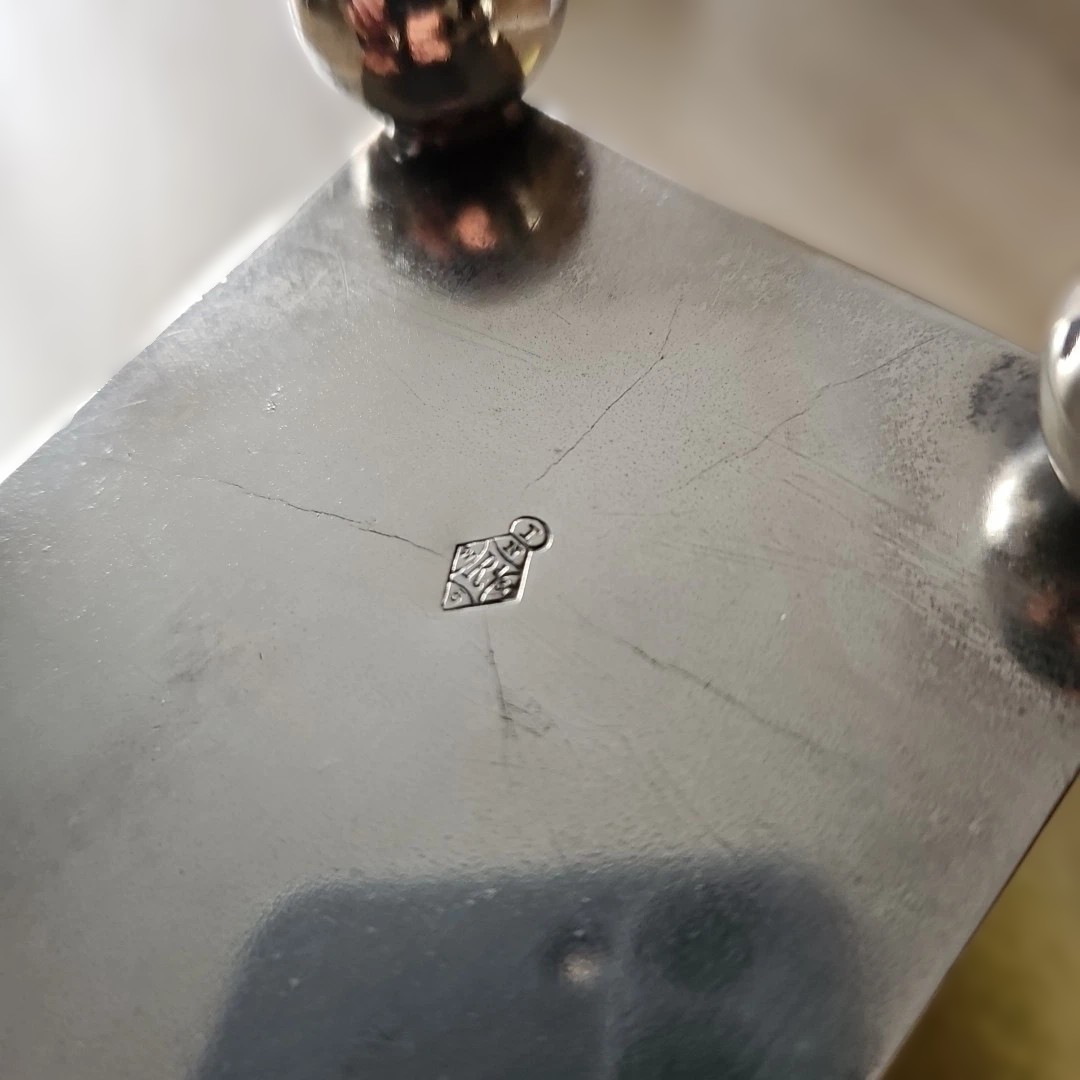
The punch mark stamped into the underside features:
- Cartouche Shape: A vertical lozenge (diamond) cartouche surmounted by a small top ring/circle (resembling a keyhole or pendant punch shape).
- Top Circle: Contains a small single character—likely an I, 1, or T.
- Lozenge Center: Houses a monogram of intertwined initials, most prominently reading VRC (or alternatively ARC / WRC).
Origin & Dating
- Maker: This style of mark—a diamond/lozenge punch with a top ring—is characteristic of French (or Continental European) silversmiths and metalworkers (orfèvrerie).
- Date: Circa 1880–1925.
- Egyptian Revival decor surged in popularity twice during this timeframe: first following the opening of the Suez Canal (1869) and the late 19th-century French/British orientalism movement, and again during the Art Deco Egyptian Revival wave sparked by the discovery of King Tutankhamun’s tomb in 1922.
Sold for $125 in July 2026
Content disclaimer. The information posted is the owner’s best knowledge and may not have been vetted by the SOIC. We welcome comments, corrections, and additions, working to make our website information comprehensive and accurate.
Join the Society of Inkwell Collectors (SOIC) – it’s free!
Founded in 1981 as a non-profit organization,
we are documenting inkwells (and accessories).
We’re here to help and inform!