

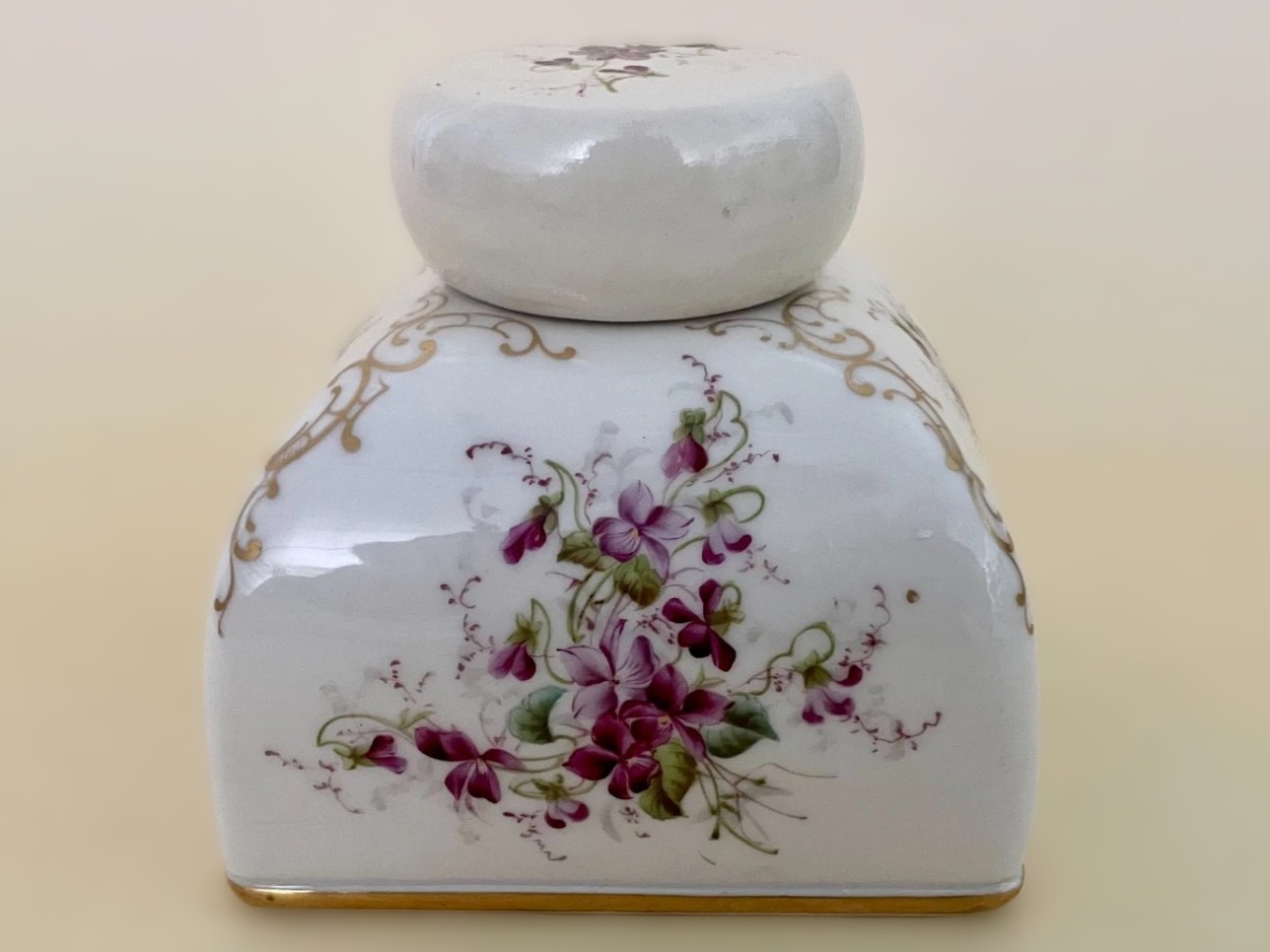
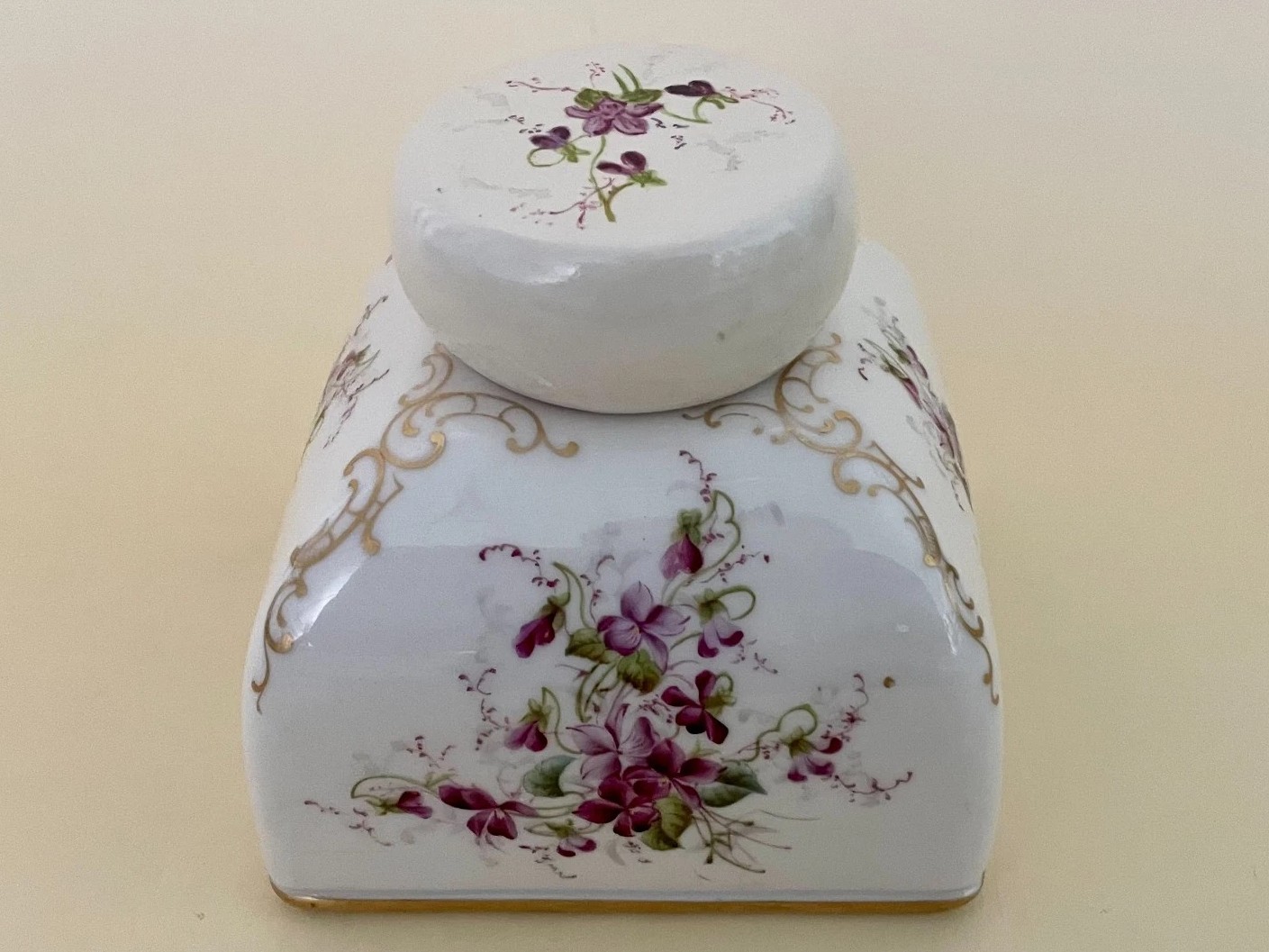
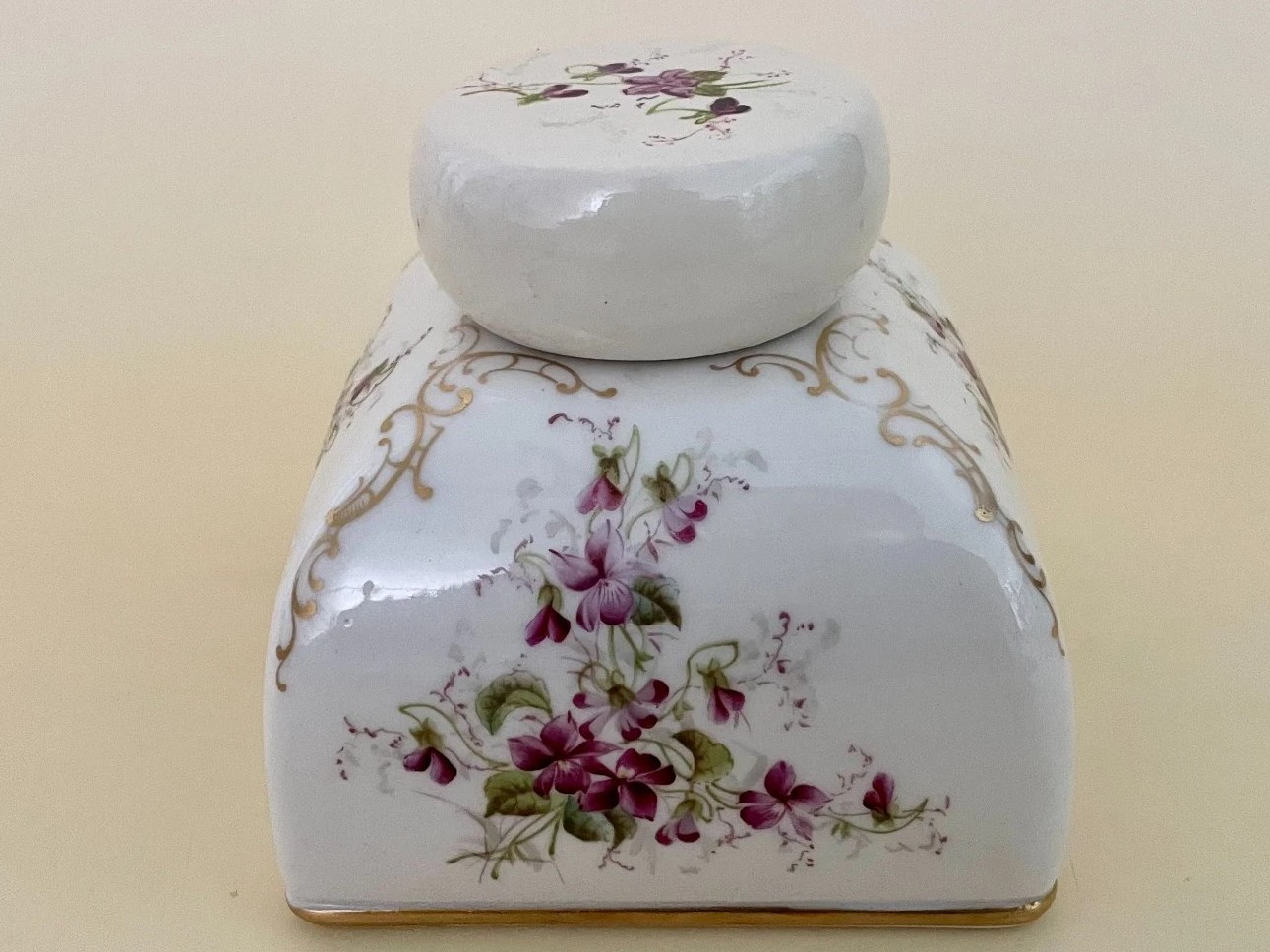
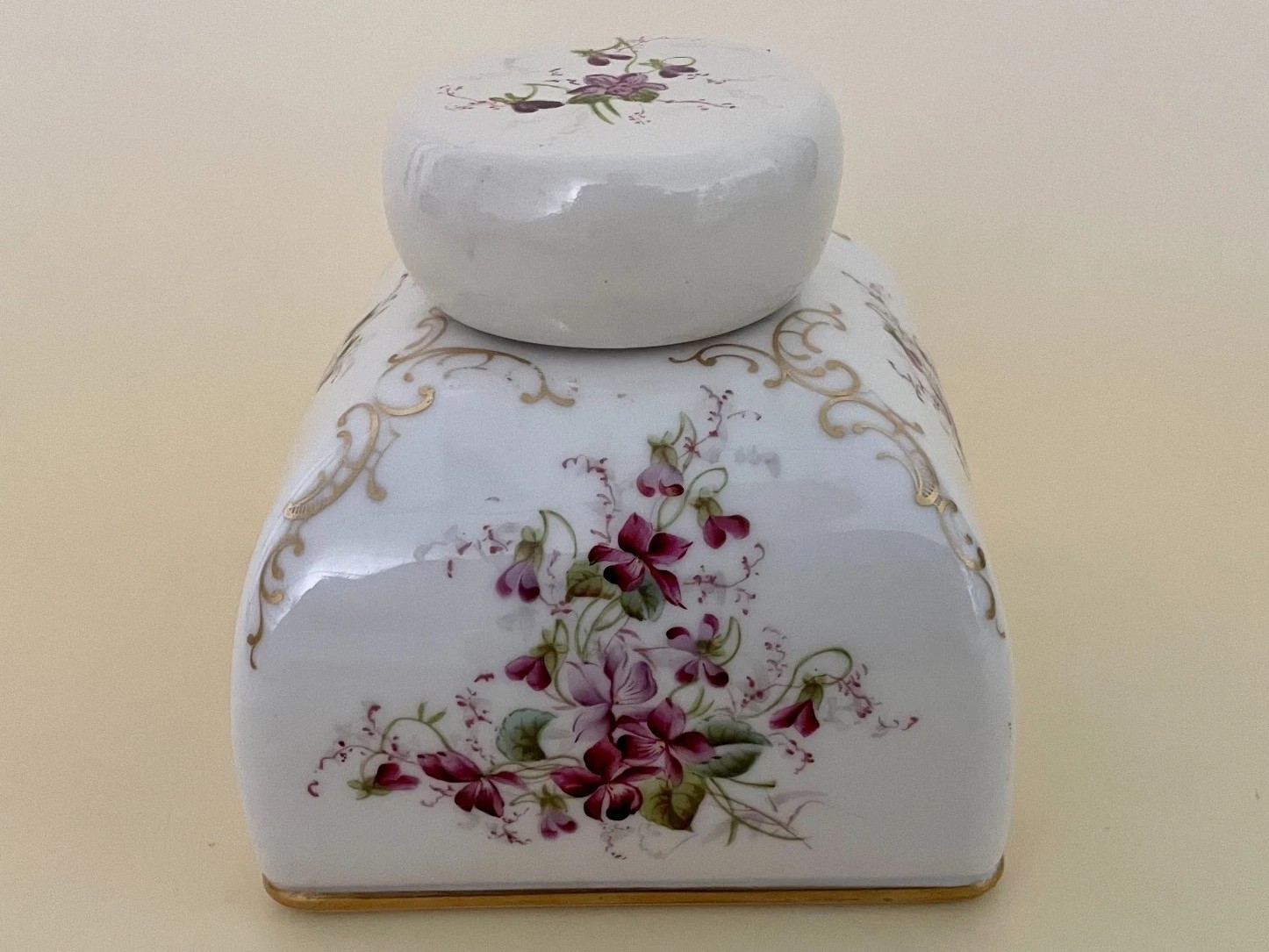
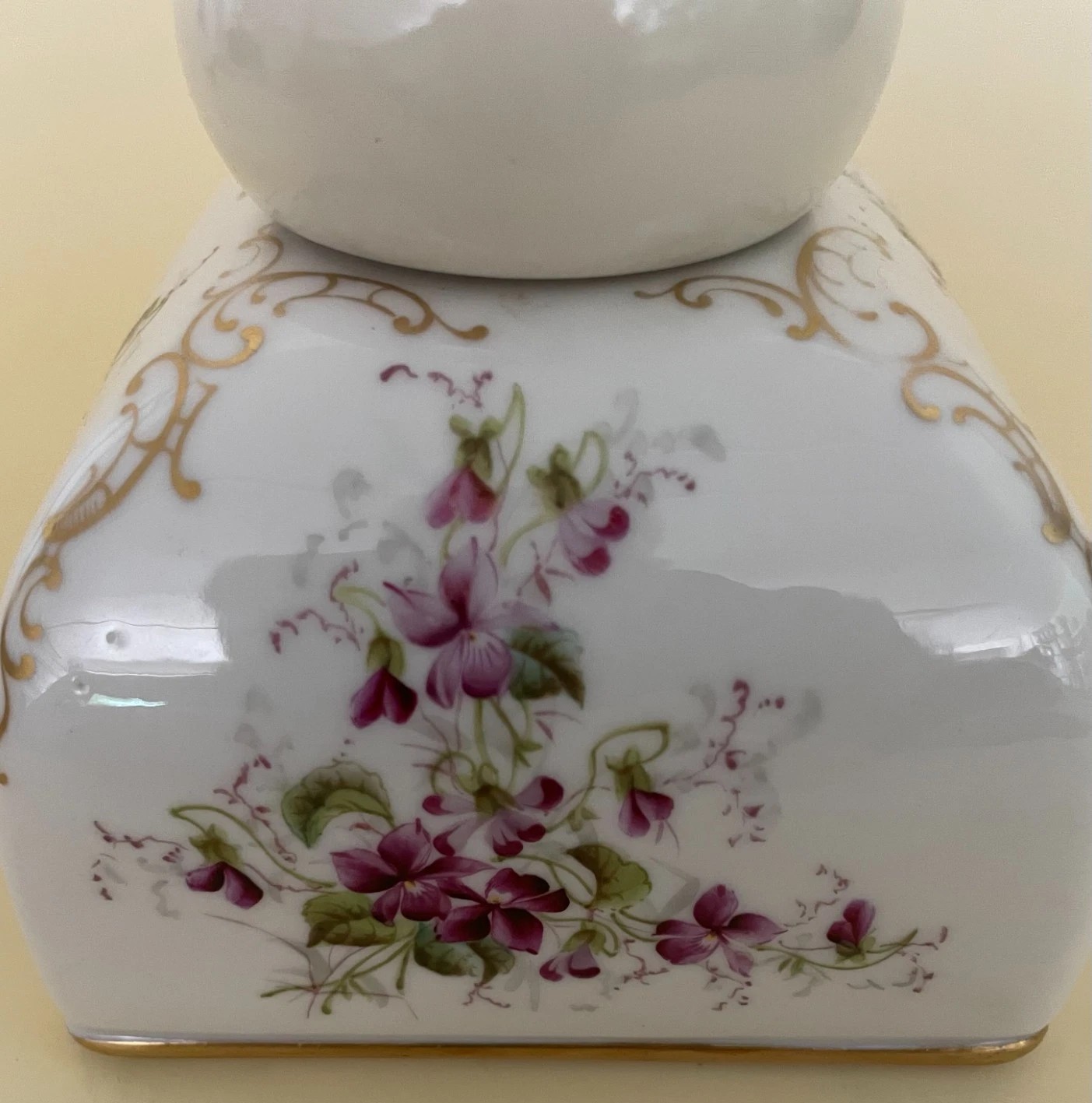
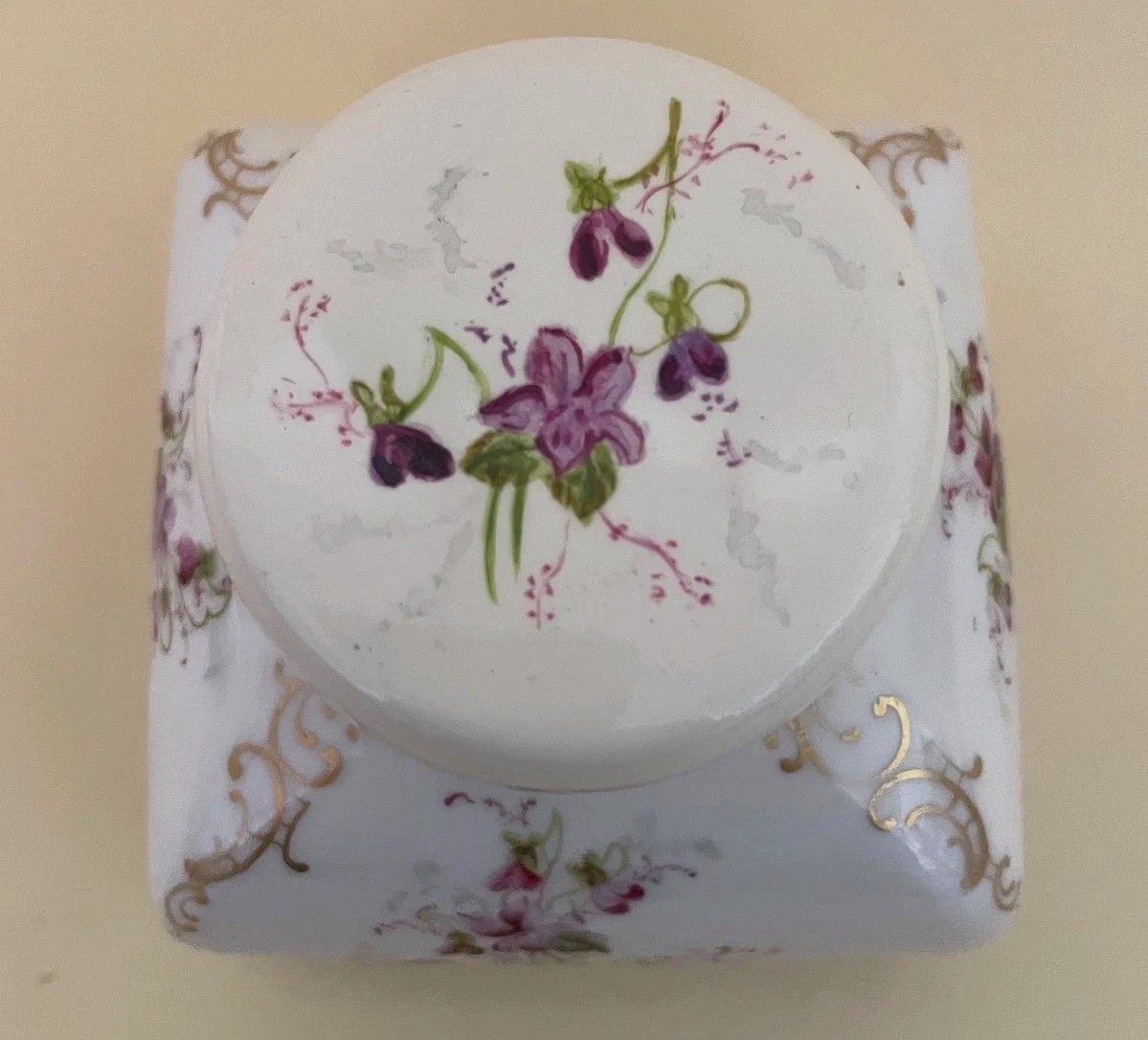

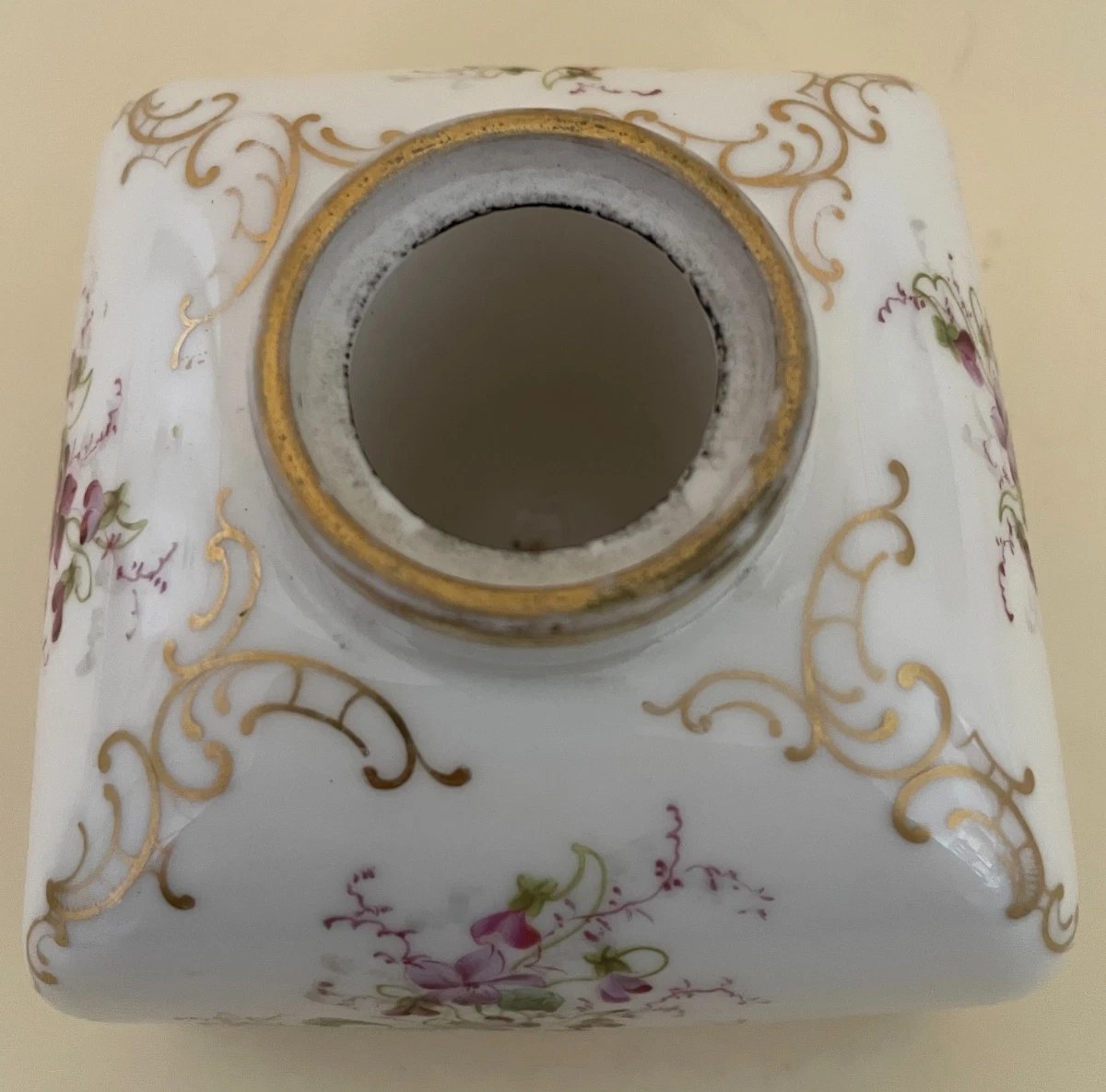
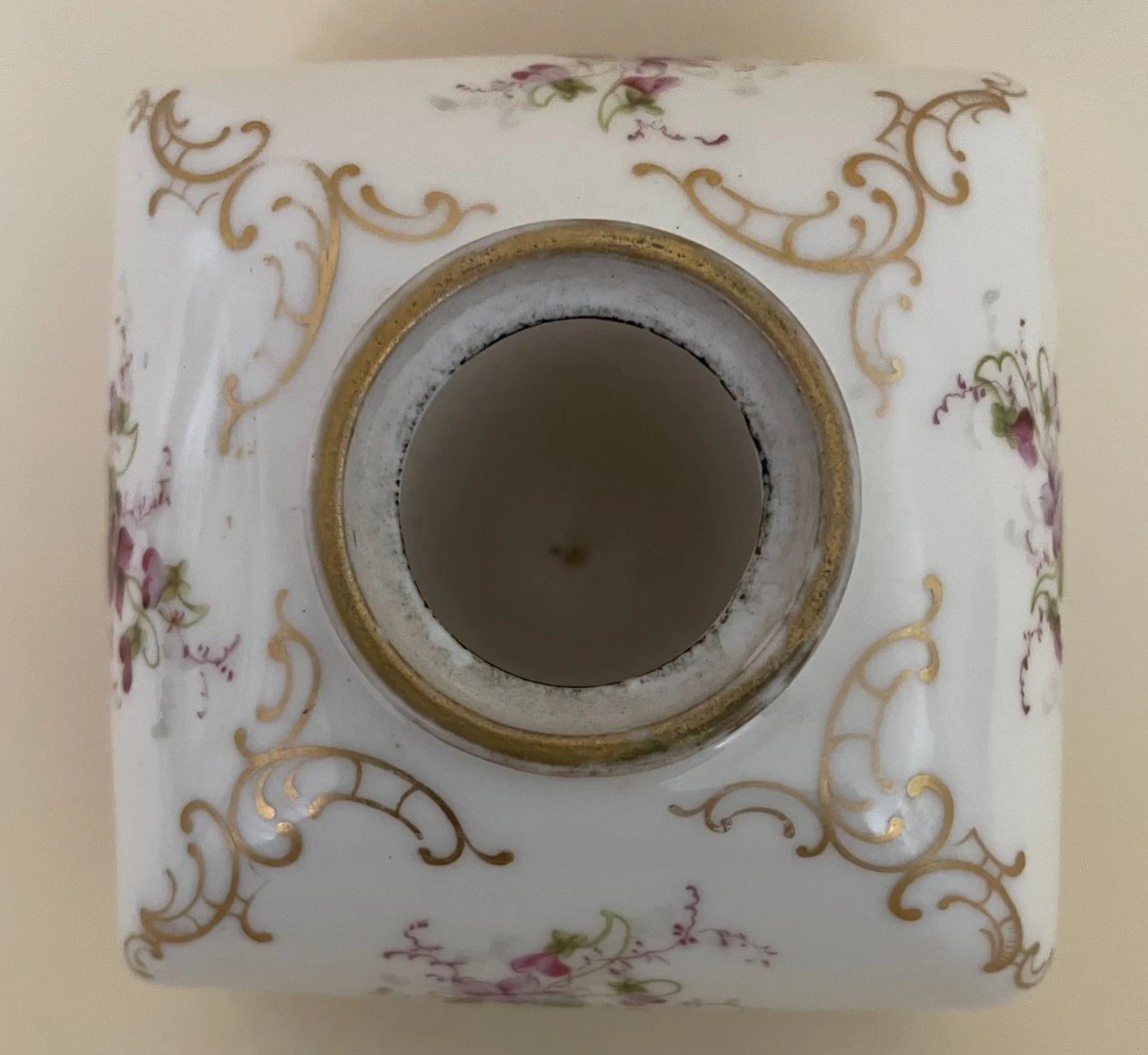
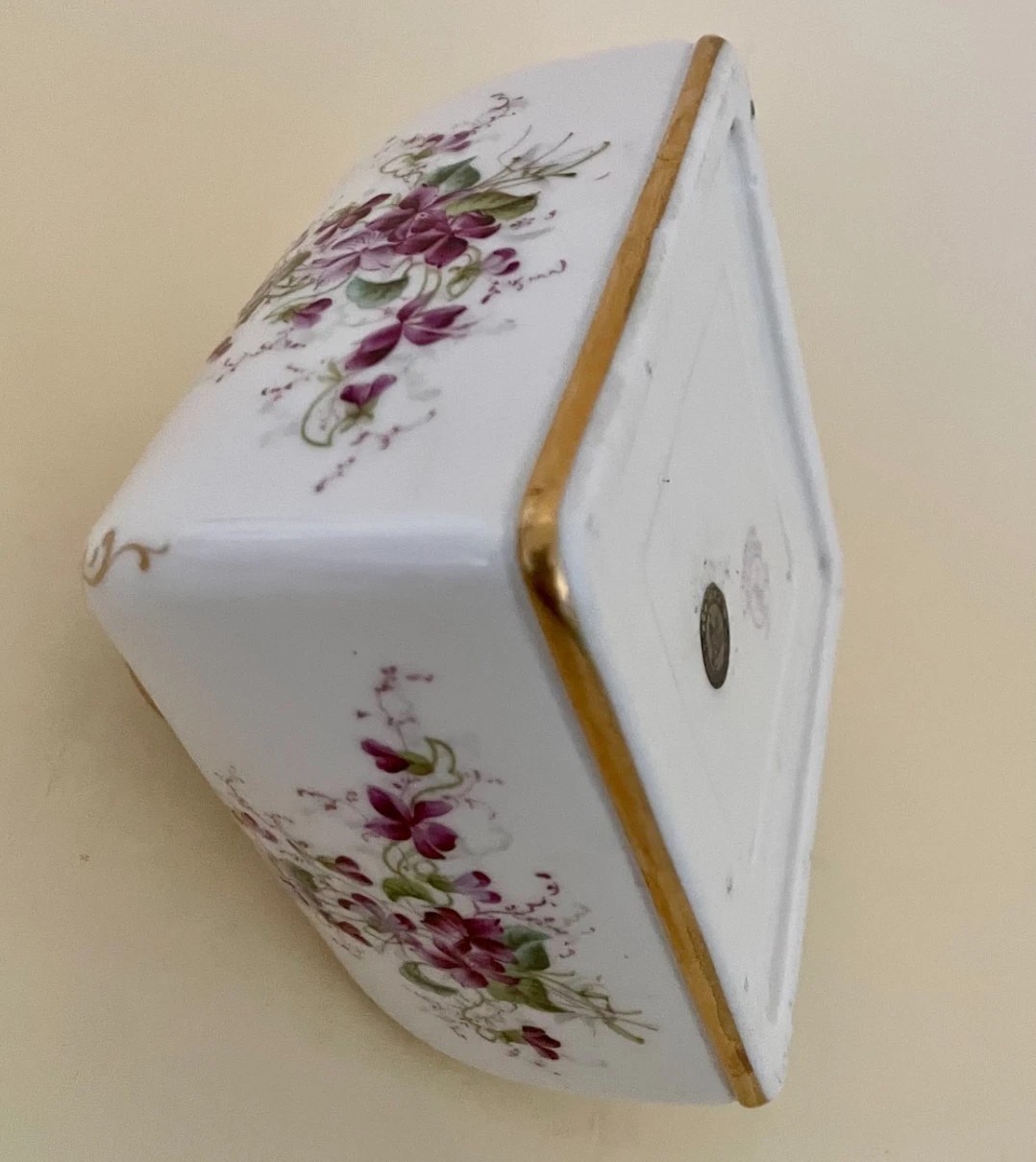

American Belleek Inkwell
| Categories | Ceramics/Porcelain "Named" Makers |
| Material | Porcelain |
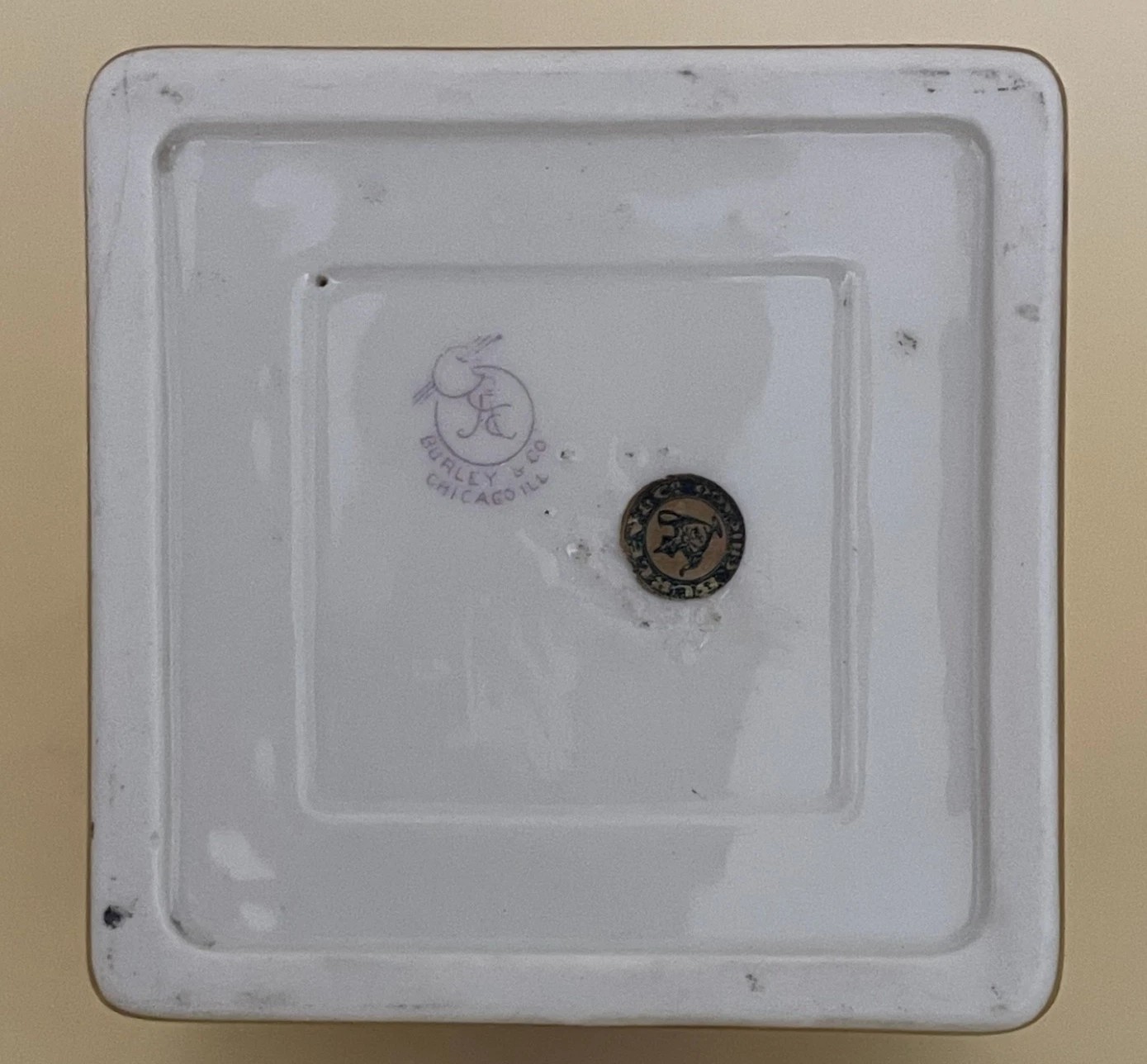
| Markings | See Narrative |
| Manufacturer | Ceramic Art Company (CAC) |
| Origin | United States |
| Date or Era | circa 1900 |
| Measuring | 3 ⅞” x 3 ⅞” x 3 ¾” high |
The Manufacturer: Ceramic Art Company (CAC)
Founded in 1889 in Trenton, New Jersey, by Jonathan Coxon Sr. and Walter Scott Lenox, the Ceramic Art Company (CAC) was established with the specific goal of producing American porcelain that could rival the finest art wares of Europe.
- The Lenox Connection: If the name Walter Scott Lenox sounds familiar, it should—in 1906, Lenox acquired Coxon’s interests, and the company was reorganized to become the world-famous Lenox China. Wares produced prior to 1906 are generally referred to by collectors as “CAC American Belleek.”
- The Retailer: Burley & Co. of Chicago was an elite, high-end department store and luxury retailer famous for importing and commissioning the absolute finest china, glass, and pottery for wealthy Midwestern clients. The dual marking on the base—featuring both the lavender CAC palette mark and the Burley & Co. printed text/paper label — indicates this was a prestigious, custom-commissioned piece of “white ware” sent to Chicago to be retailed.
Dates (c. 1889–1906)
- The lavender artist’s palette mark with the stylized “CAC” initials was used by the Ceramic Art Company from its founding in 1889 until 1906.
- In 1906, the palette mark was phased out and replaced by the famous Lenox “wreath” mark. Because this piece bears the original palette stamp, it can firmly be dated to this specific 17-year window.
Characteristics of American Belleek
The term “Belleek” originally refers to the translucent, iridescent porcelain first created in Belleek, Ireland. American potters in Trenton, New Jersey, hired Irish artisans to replicate the formula, successfully launching a golden era of American Belleek. Key characteristics include:
- The Body (Parian Clay): It is a highly vitrified felspathic porcelain (slip-cast soft-paste porcelain). It is incredibly thin, lightweight, and resonant when tapped.
- The Glaze: True Belleek is famous for its smooth, “creamy” or ivory-toned ground rather than a stark, cold white. It often has an almost velvety feel or a soft, pearlescent luster glaze.
- Translucency: If you hold a piece of CAC Belleek up to a strong light source, you should easily see the silhouette of your fingers right through the porcelain walls.
- The Painting Tonalities: Wares from this era feature masterful, delicate brushwork. Violets were an immense favorite during the late Victorian and Edwardian eras, perfectly capturing the delicate aesthetic expected of a lady’s writing desk set.
Missing Insert
The inkwell is missing its original porcelain insert. internal reservoir.
Sold for $113 in May 2026
Content disclaimer. The information posted is the owner’s best knowledge and may not have been vetted by the SOIC. We welcome comments, corrections, and additions, working to make our website information comprehensive and accurate.
Join the Society of Inkwell Collectors (SOIC) – it’s free!
Founded in 1981 as a non-profit organization,
we are documenting inkwells (and accessories).
We’re here to help and inform!