

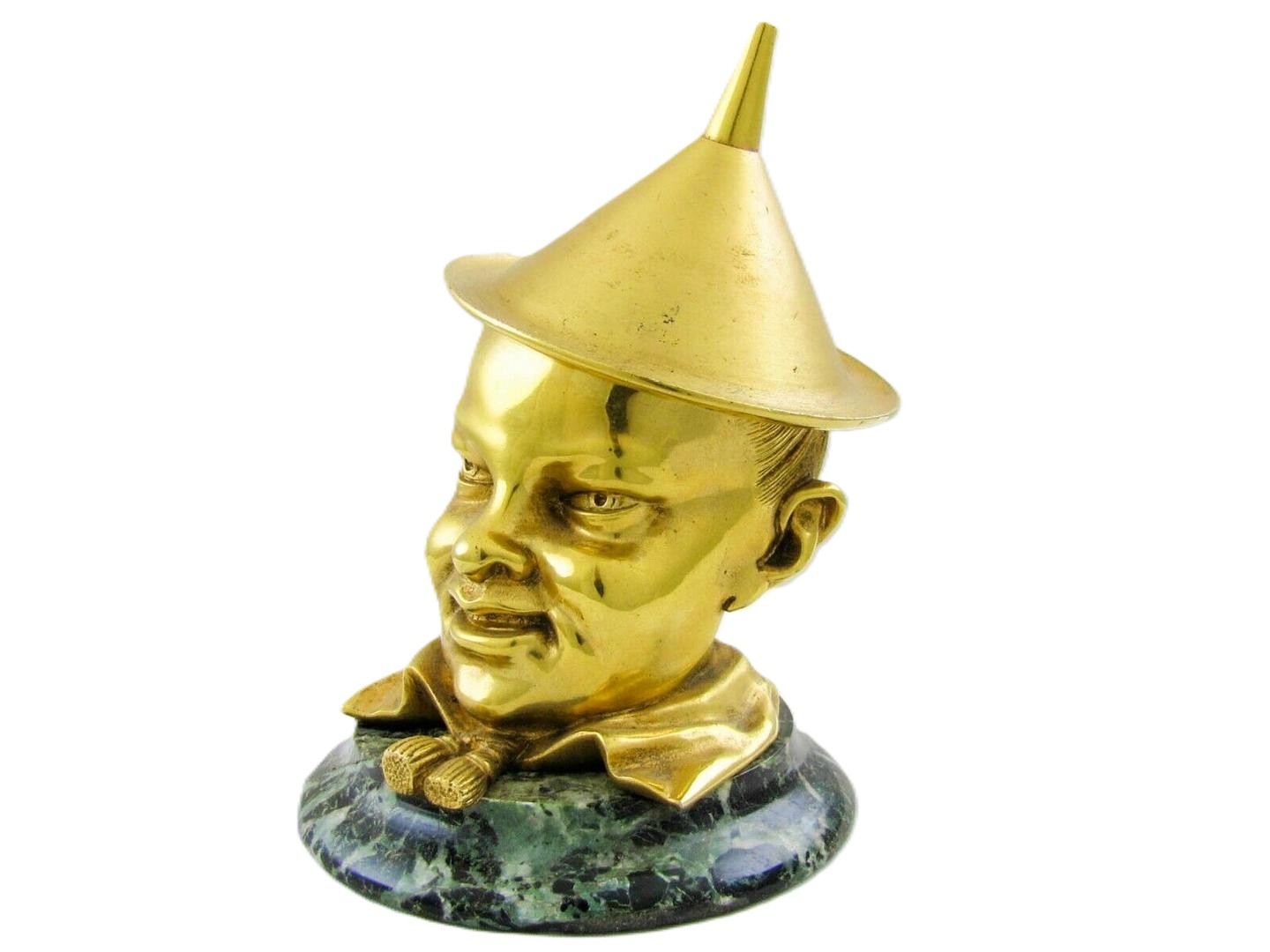
Boy with a Funnel Hat
| Categories | Figural - Persons |
| Type | Boy |
| Material | Gilt Bronze |
| Markings | Unmarked |
| Manufacturer | Undetermined |
| Origin | Undetermined |
| Date or Era | circa 1900 |
| Measuring | 3 ¾” diameter; 5 ¼” high |
A Historical Overview of the “Funnel Hat” Novelty Inkwell
Circa 1895–1910
At first glance, this charming figural inkwell immediately evokes the image of the beloved Tin Man from L. Frank Baum’s The Wonderful Wizard of Oz. However, a closer look at its design, construction, and cultural context reveals that this piece actually pre-dates the famous 1900 American fairy tale.
- The “Boy with a Funnel Hat” Motif
In the late 19th and early 20th centuries, there was a massive trend for whimsical, anthropomorphic, and satirical desk accessories. A boy wearing an upside-down kitchen funnel or colander as a makeshift helmet was a common comic trope in European and American illustrations, typically depicting mischievous children playing “soldier.”
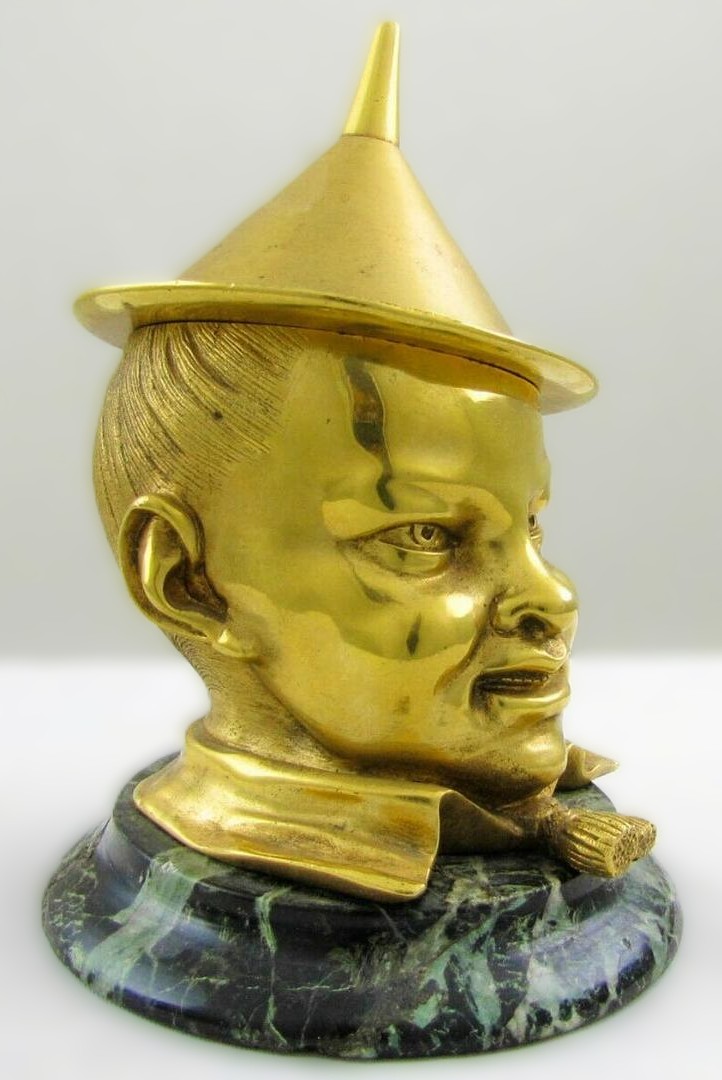
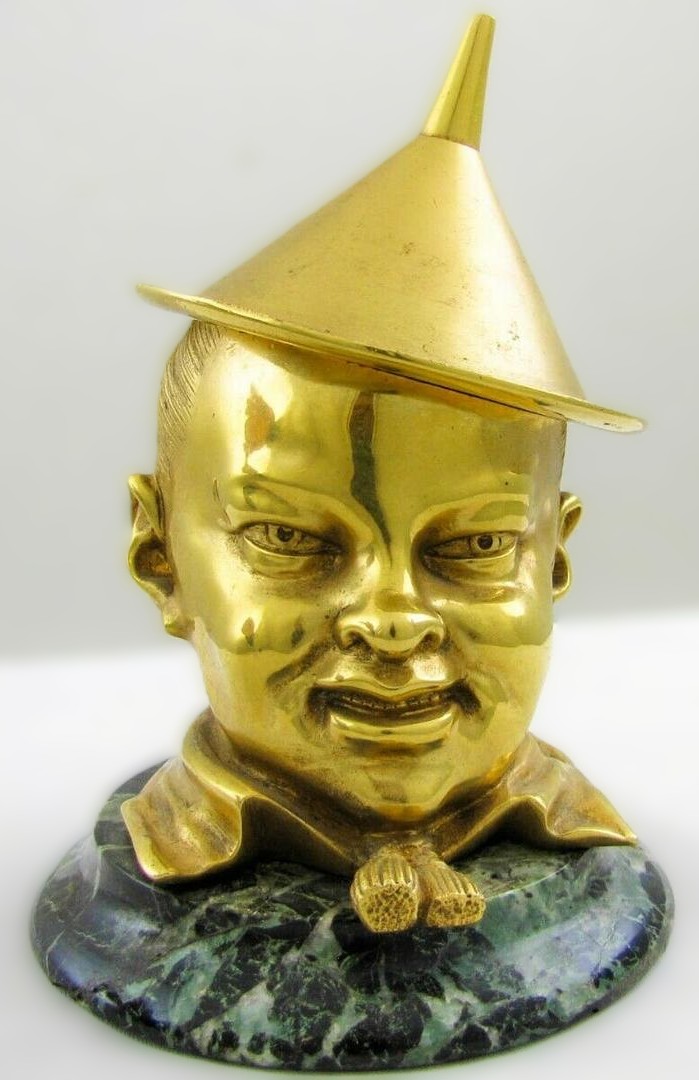
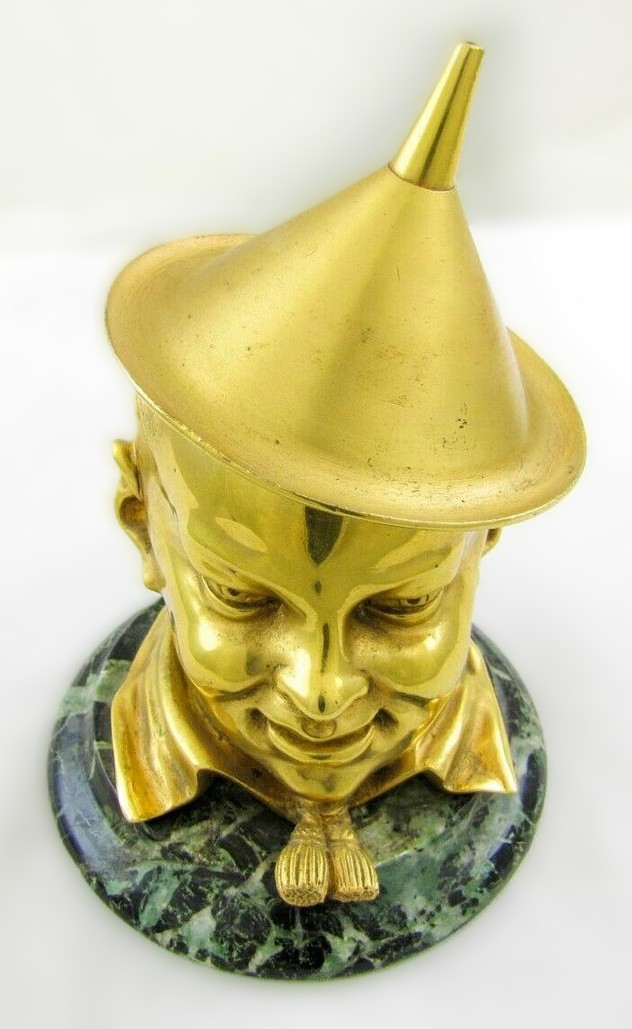
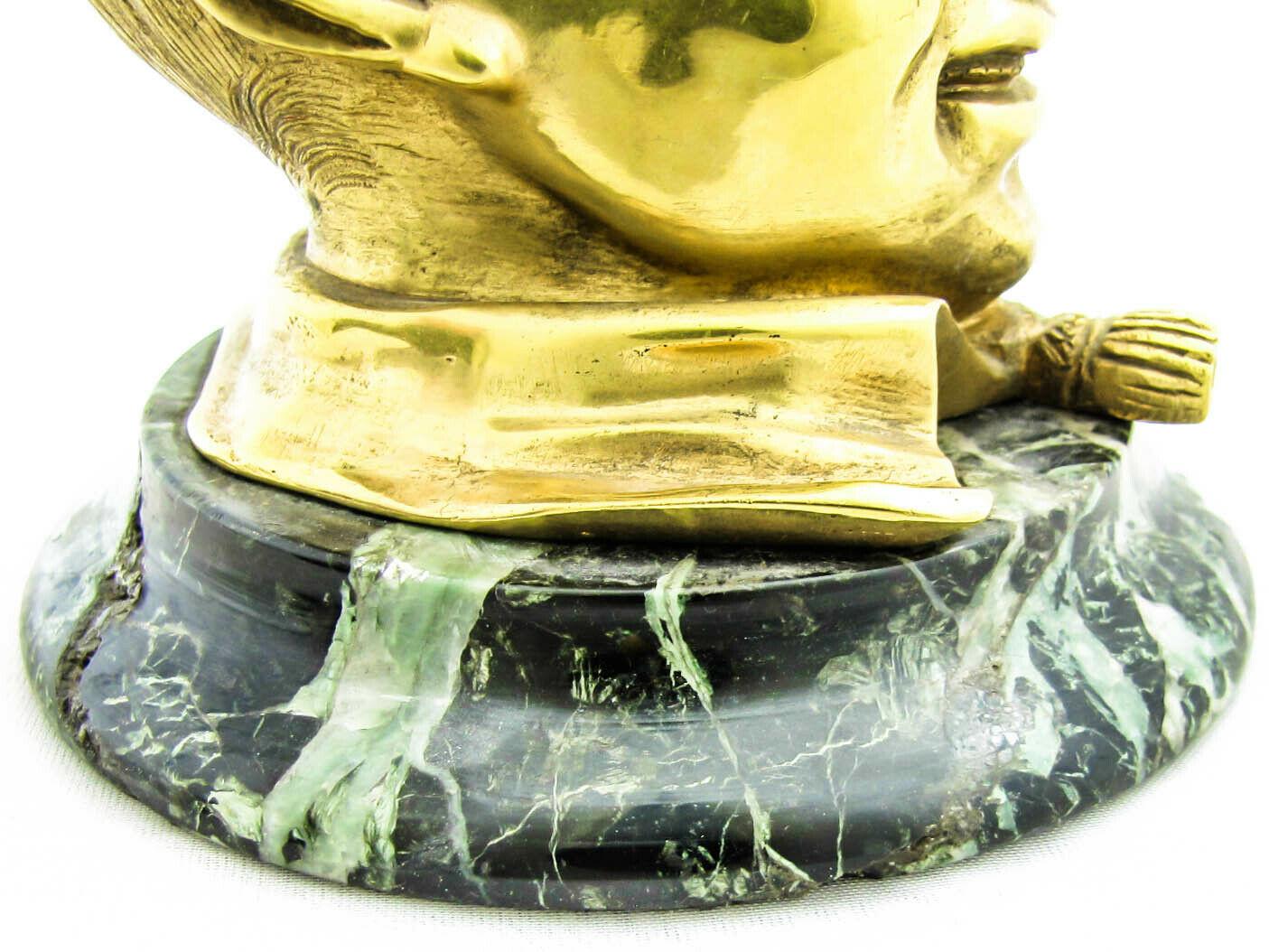
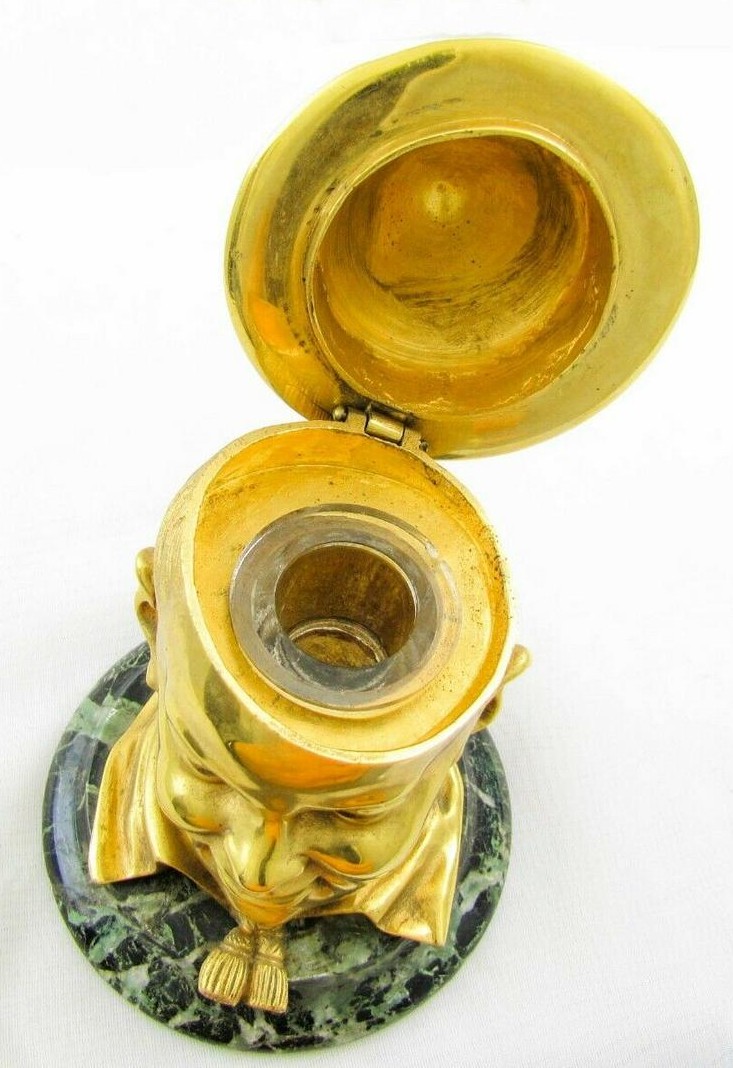
The full profile and direct front views emphasize the boy’s impish, slightly smirking expression, short-cropped hair, and distinct ruffled collar with thick tassels. This specific caricature strongly mirrors the aesthetic of “Max and Moritz,” the wildly famous 1865 German illustrated story by Wilhelm Busch (which later inspired the American Katzenjammer Kids comic strip in 1897).
Because the cone shape of a kitchen funnel perfectly mimics the lid of an inkwell, manufacturers found it to be a brilliant, natural design for a hinged cover. While modern collectors frequently dub this the “Tin Man Inkwell” because the visual shorthand is immediate, the character design is rooted in these earlier European comic archetypes.
- Materials and Continental Craftsmanship
The physical attributes of this piece point directly to a premium Continental workshop—likely French or Austrian—operating between 1895 and 1910.
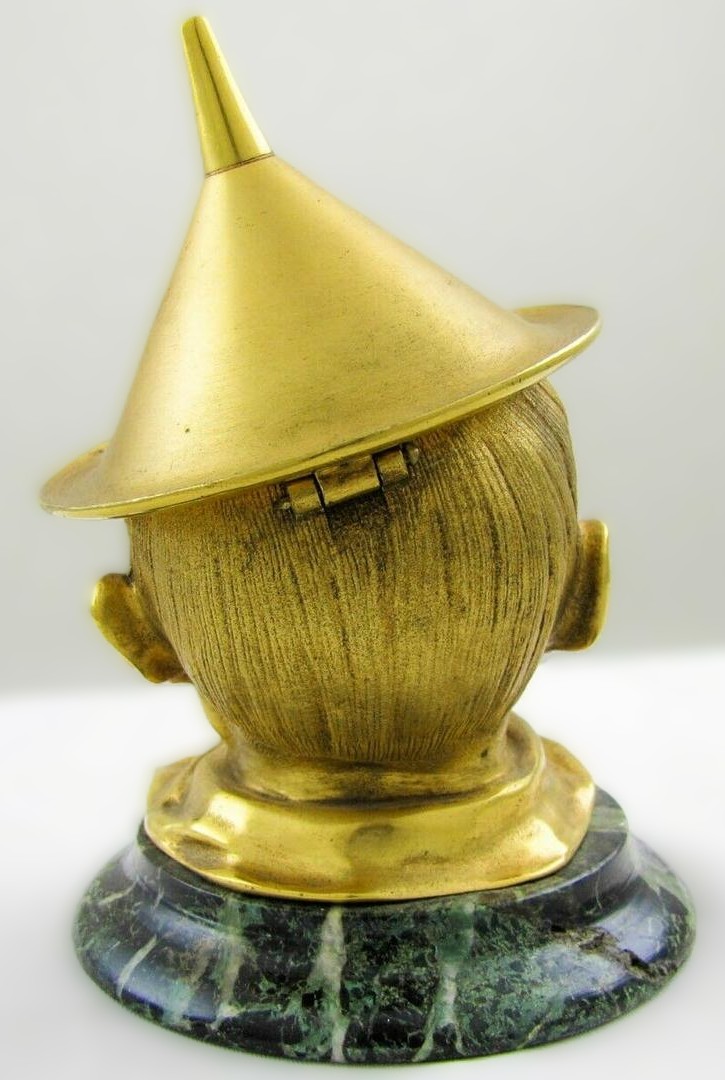
- The Bronze/Brass Bust: The head and collar are beautifully cast in heavy brass or gilt bronze. The casting is remarkably crisp, preserving fine details in the strands of hair, the facial features, and the texture of the necktie tassels.
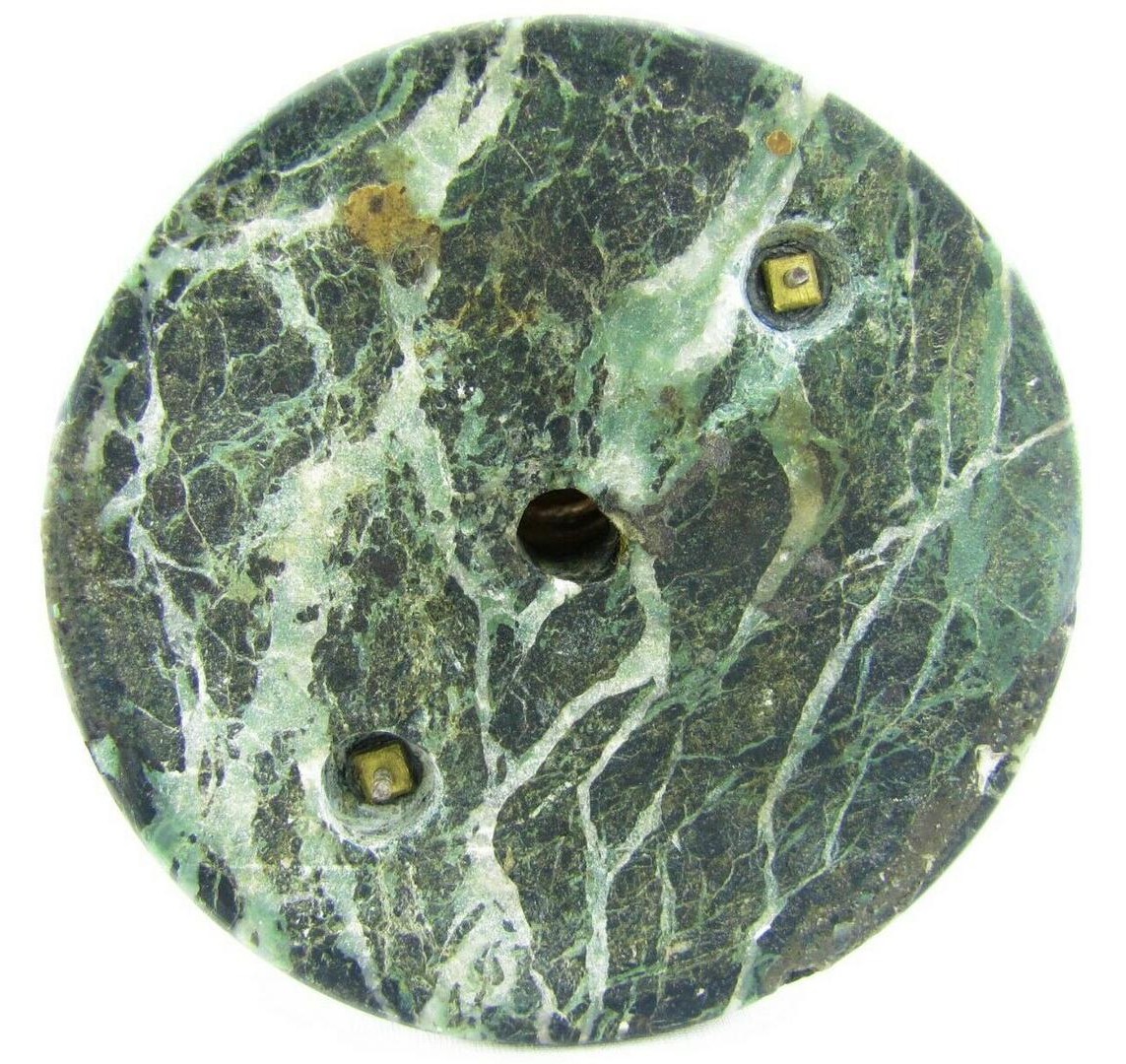
- The Premium Marble Base: The bust is mounted on a thick, polished base of premium green marble, likely Vert Maurin or Vert Campan sourced from the Pyrenees. This heavy, variegated stone features deep green tones with rich black and white veining. It was a favorite material for European bronze foundries, providing the necessary weight to prevent the inkwell from tipping over when a dip pen was inserted.
- Mechanical Assembly: The underside of the marble reveals sophisticated engineering. Rather than relying on a single central bolt or cheap plaster fills—common in lower-end American or British novelties—this piece uses multi-point, mechanically fastened square brass nuts recessed neatly into custom stone channels.
- Internal Mechanism and Condition
The inkwell’s internal design demonstrates how beautifully art and utility were integrated during the golden age of writing instruments:
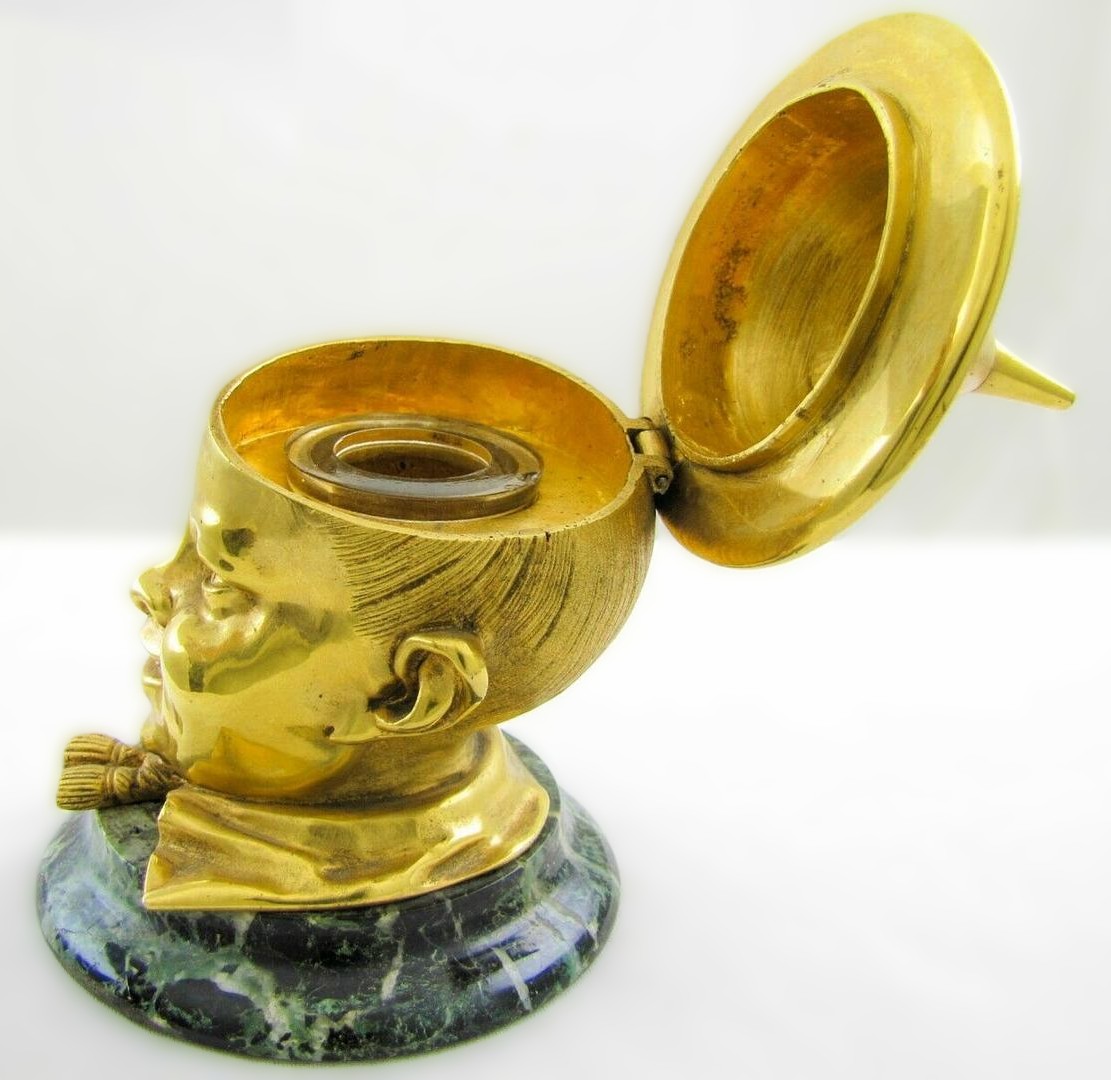
- The Concealed Hinge: To maintain the seamless illusion of the sculpture when closed, the hinge is expertly integrated into the back of the boy’s hair rather than cutting clumsily through the wide brim of the funnel hat. The entire hat tilts back smoothly on this point.
- The Reservoir: The interior features a heavy, finished brass collar that securely houses a thick, clear glass ink insert.
Summary
Rather than a piece of movie or literary merchandise, this inkwell is a beautifully preserved example of turn-of-the-century desk whimsy. It represents a time when utilitarian objects were routinely transformed into miniature works of sculptural humor, executing a playful concept with top-tier materials and European engineering.
Sold for $389 in April 2020
Content disclaimer. The information posted is the owner’s best knowledge and may not have been vetted by the SOIC. We welcome comments, corrections, and additions, working to make our website information comprehensive and accurate.
Join the Society of Inkwell Collectors (SOIC) – it’s free!
Founded in 1981 as a non-profit organization,
we are documenting inkwells (and accessories).
We’re here to help and inform!